9 Best Customer Support Automation Platforms in 2026
This guide evaluates the top customer support automation platforms of 2026, comparing AI-native solutions with traditional helpdesks that have added automation layers. B2B support teams will find practical criteria-based analysis covering AI resolution quality, integration depth, scalability, and deployment ease to help match the right platform to their team's size and technical requirements.
 Grant CooperFounder14 min read
Support teams in B2B environments are facing a familiar but intensifying pressure: ticket volumes keep climbing, customer expectations for fast resolution keep rising, and headcount budgets aren't keeping pace. The answer for most growing companies isn't hiring more agents. It's deploying smarter automation.
The customer support automation landscape in 2026 broadly splits into two camps. There are AI-native platforms built from the ground up around autonomous resolution, and there are established helpdesks that have layered AI capabilities onto proven ticketing infrastructure. Both approaches have merit, and the right choice depends heavily on your team's size, existing tech stack, and how much you prioritize speed-to-value versus deep customization.
To build this list, we evaluated platforms on five criteria: AI capabilities and resolution quality, integration depth with common B2B tool stacks, scalability without proportional cost increases, ease of deployment, and overall value for B2B teams. Here are the top customer support automation platforms worth your consideration in 2026.
1. Halo AI
Best for: B2B SaaS teams that want AI-native support with business intelligence baked in
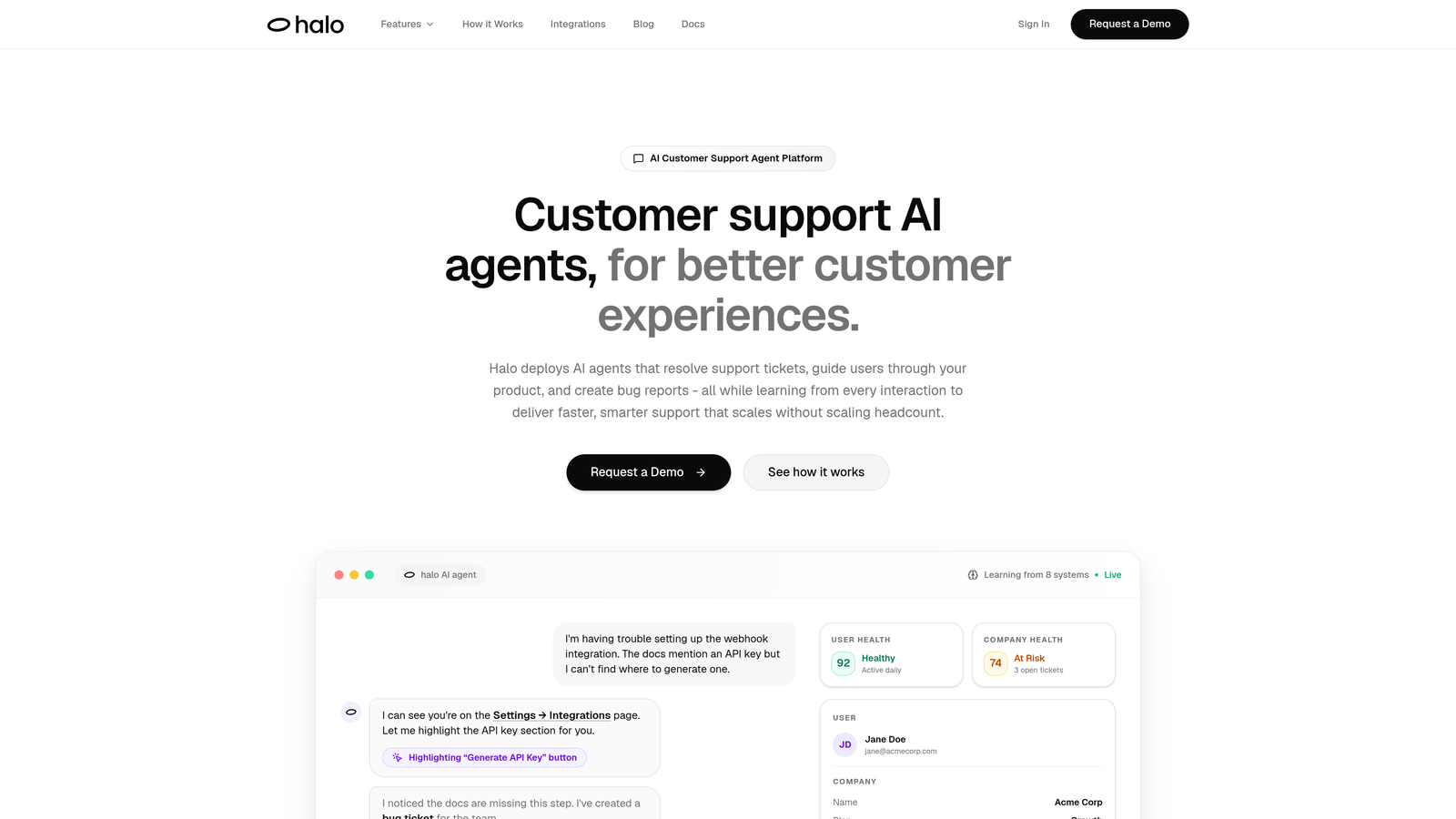
Halo AI is an AI-first customer support platform that deploys intelligent agents to autonomously resolve tickets, guide users with page-aware context, and surface business intelligence across every interaction.
Where This Tool Shines
What sets Halo apart from most platforms on this list is the architecture. Rather than bolting AI onto a traditional helpdesk, Halo is built AI-first, which means the intelligence isn't a feature layer. It's the foundation. Every ticket resolved, every conversation handled, feeds back into the system so agents get smarter over time without manual retraining.
The page-aware chat widget is particularly compelling for SaaS products. Instead of generic support responses, Halo's widget sees what the user sees in the product interface and can provide visual UI guidance in context. For complex products with steep learning curves, this kind of contextual awareness can meaningfully reduce friction before it becomes a ticket.
Key Features
Autonomous AI Agents: Intelligent agents resolve support tickets end-to-end with continuous learning from every interaction, improving resolution quality over time.
Page-Aware Chat Widget: The chat widget understands which page a user is on and provides contextually relevant guidance, including visual UI walkthroughs.
Smart Inbox with Business Intelligence: Beyond support metrics, the smart inbox surfaces customer health signals, revenue intelligence, and anomaly detection to give teams a broader view of account risk and opportunity.
Auto Bug Ticket Creation and Live Agent Handoff: When an issue is identified as a bug, Halo can automatically create a structured bug report. For complex issues, seamless handoff to a live agent preserves full conversation context.
Deep Integrations: Connects natively with Linear, Slack, HubSpot, Intercom, Stripe, Zoom, PandaDoc, and Fathom, covering engineering, sales, and customer success workflows in a single loop.
Best For
B2B SaaS companies and product teams that want more than ticket deflection. Halo is particularly well-suited for teams that need support automation to connect to their broader business stack and surface intelligence beyond resolution rates. If you're currently using Zendesk, Freshdesk, or Intercom and feeling limited by bolt-on AI, Halo is worth a close look.
Pricing
Contact for pricing. Halo is designed to scale without per-seat costs, which makes the economics increasingly favorable as your customer base grows.
2. Intercom
Best for: Teams that want unified messaging, proactive engagement, and AI resolution in one platform
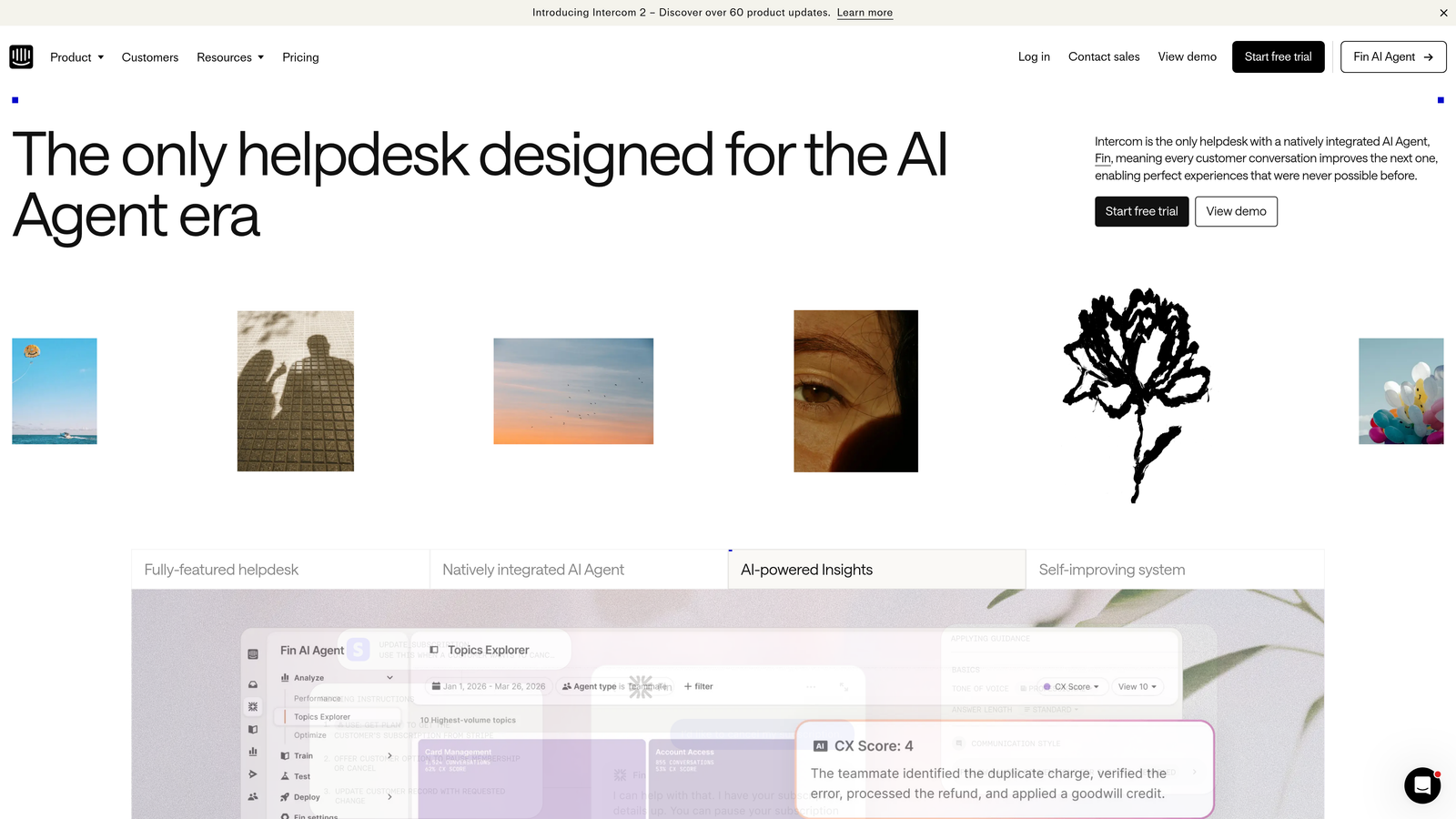
Intercom is a unified customer messaging platform that has evolved well beyond live chat into a comprehensive support and engagement suite anchored by its Fin AI agent.
Where This Tool Shines
Intercom occupies an interesting middle ground. It started as a messaging tool and has steadily built toward a more AI-forward architecture, particularly with the introduction of Fin. The platform's strength is the combination of reactive support and proactive engagement: you can resolve tickets automatically while also triggering product tours, in-app messages, and surveys based on user behavior.
For teams that care about the full customer journey rather than just the support queue, Intercom's breadth is hard to match. The tradeoff is that pricing can escalate quickly, especially with Fin's per-resolution model layered on top of seat costs.
Key Features
Fin AI Agent: Handles autonomous ticket resolution across multiple channels, drawing from help content and custom knowledge sources.
Proactive Engagement Tools: Product tours, in-app surveys, and targeted messaging based on user behavior and lifecycle stage.
Unified Inbox: AI-powered conversation summaries, smart routing, and team assignment in a single shared workspace.
Custom Bots and Workflow Builder: No-code automation builder for creating branching conversation flows and ticket routing logic.
App Marketplace: Strong API and a large app ecosystem for connecting Intercom to CRMs, analytics tools, and custom systems.
Best For
Growth-stage SaaS companies that want to combine support automation with proactive in-product engagement. Less ideal for teams on tight budgets, as costs can compound with seat pricing plus per-resolution fees.
Pricing
Essential plan starts at $39 per seat per month. Fin AI is charged per resolution on top of base plan costs, so total spend scales with usage.
3. Zendesk
Best for: Enterprise teams that need a proven, highly configurable helpdesk with a massive integration ecosystem
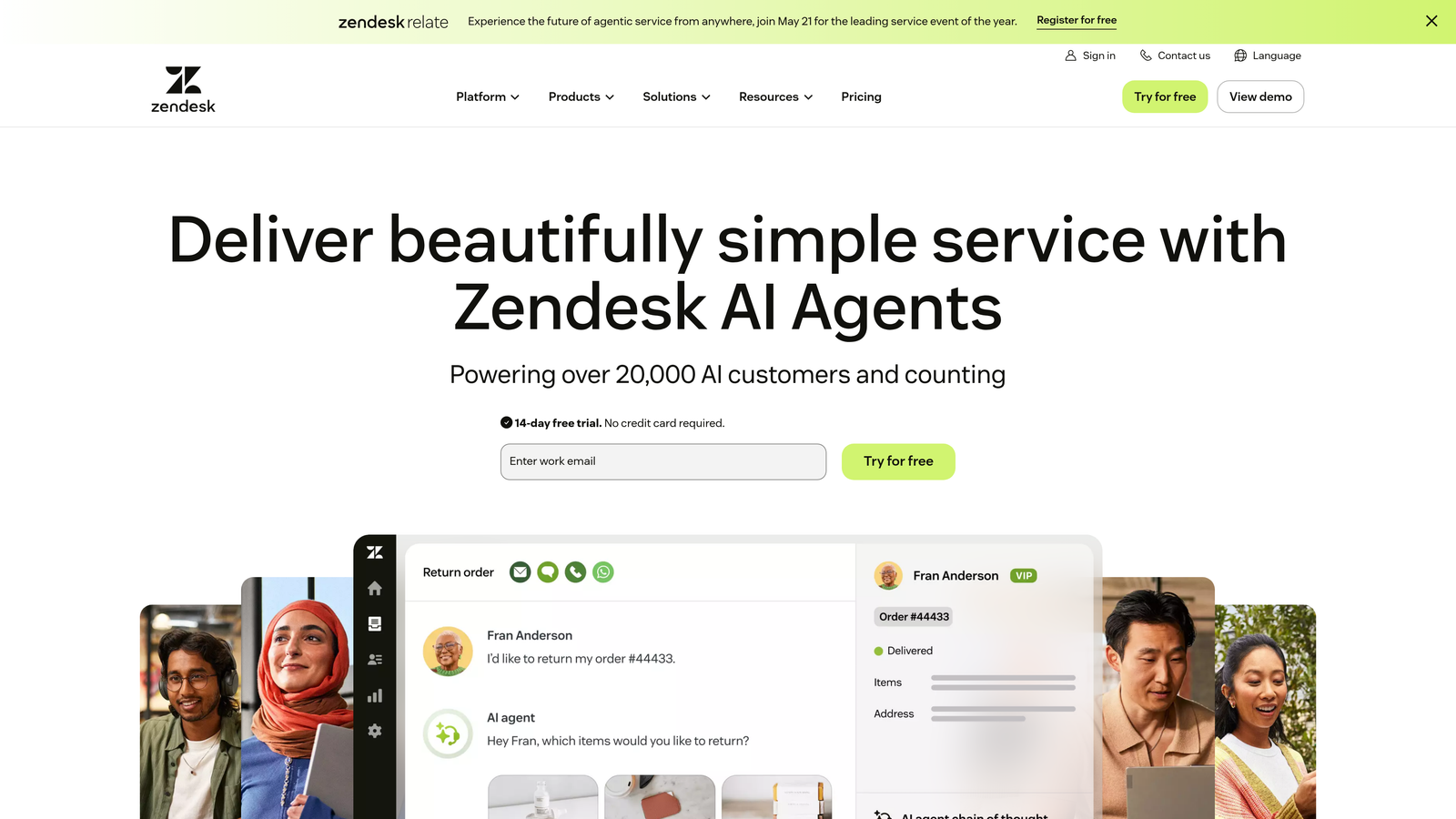
Zendesk is an enterprise-grade helpdesk platform with deep omnichannel capabilities, AI-powered agents and routing, and one of the largest integration marketplaces in the industry.
Where This Tool Shines
Zendesk's core advantage is maturity. The platform has been refined over many years and offers a level of configurability and ecosystem depth that newer platforms simply haven't had time to build. If your support operation spans multiple channels, regions, and product lines with complex SLA requirements, Zendesk has the tooling to handle it.
The AI capabilities have improved meaningfully with recent updates, though they remain layered onto the traditional ticketing architecture rather than native to it. For teams already invested in the Zendesk ecosystem, the AI add-ons are a logical upgrade. For teams starting fresh, the setup complexity and cost may push them toward lighter alternatives.
Key Features
AI Agents: Automated responses, ticket triage, and intent-based routing powered by AI trained on your help content.
Omnichannel Support: Unified handling across email, chat, phone, social media, and messaging apps.
Advanced Reporting: Highly customizable dashboards and analytics covering volume, resolution times, CSAT, and agent performance.
1,500+ Integrations: The Zendesk marketplace is one of the largest in the space, with pre-built connectors for virtually every major business tool.
SLA Management: Configurable SLA policies with escalation rules and compliance tracking across ticket types and tiers.
Best For
Mid-market to enterprise teams with complex, multi-channel support operations and the resources to configure and maintain a sophisticated platform. Less suited for small teams or those looking for fast deployment.
Pricing
Support Team plan starts at $19 per agent per month. AI features and advanced capabilities are available as separate add-ons, which can significantly increase total cost.
4. Freshdesk
Best for: Cost-conscious teams that want omnichannel support with AI automation and a free entry point
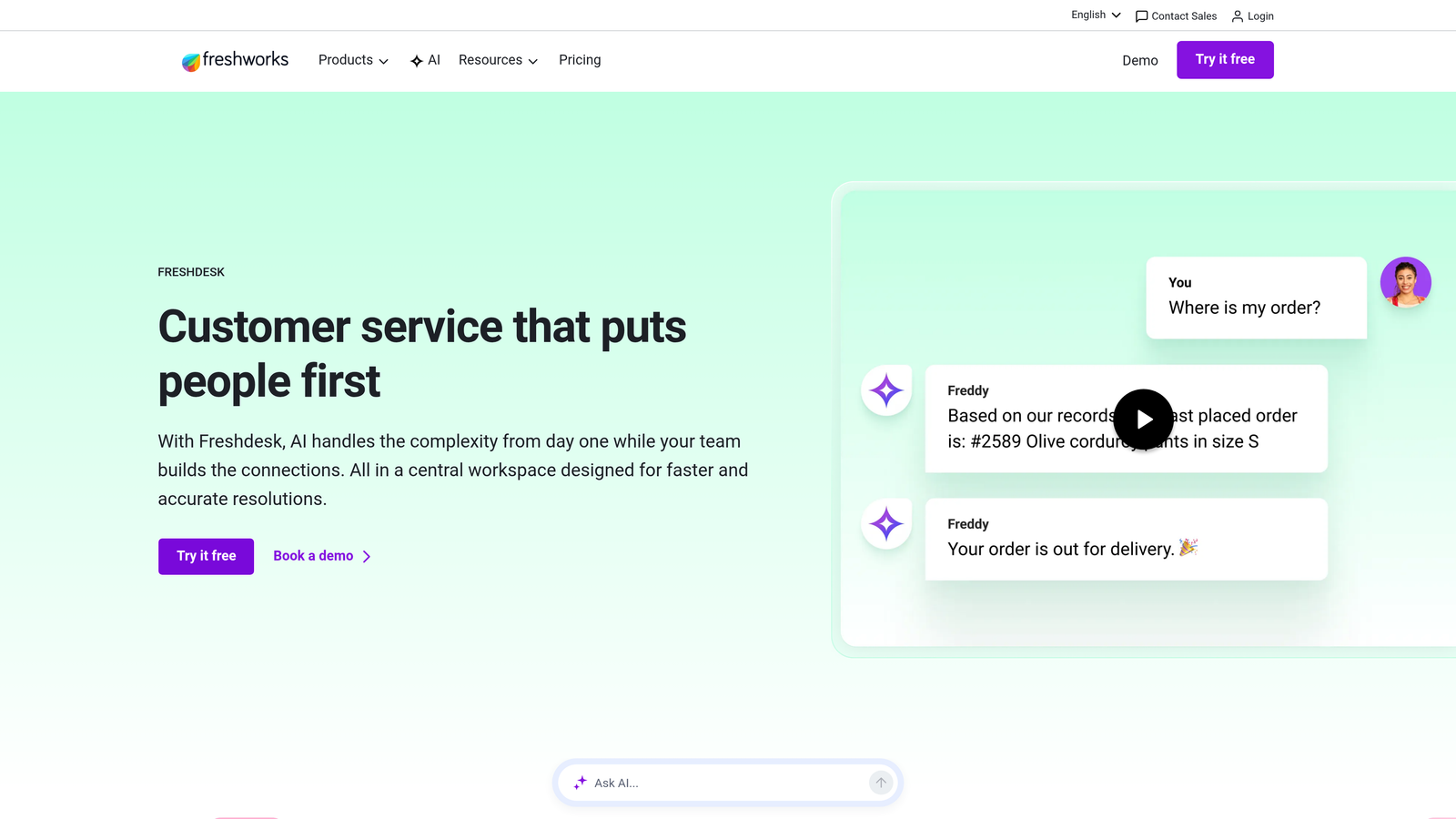
Freshdesk is a helpdesk platform from Freshworks that combines Freddy AI for automation with broad omnichannel coverage and a genuinely accessible pricing model.
Where This Tool Shines
Freshdesk's value proposition is strong for teams that want capable automation without enterprise pricing. The free tier is functional enough to get small teams started, and the paid plans offer a competitive feature set relative to cost. Freddy AI handles auto-triage, suggested responses, and chatbot interactions without requiring significant configuration overhead.
The platform also benefits from being part of the broader Freshworks suite, which means teams using Freshsales or Freshservice can create cross-functional workflows without additional integration work. That ecosystem cohesion is a real advantage for companies standardizing on Freshworks.
Key Features
Freddy AI: Powers auto-triage, suggested replies, sentiment detection, and chatbot conversations across channels.
Omnichannel Ticketing: Handles email, chat, phone, social media, and WhatsApp from a single unified inbox.
Team Collaboration: Shared ownership, parent-child ticketing, and internal notes for complex multi-agent workflows.
Built-in Knowledge Base: Self-service portal with community forums to reduce inbound ticket volume.
Free Tier: A functional free plan makes Freshdesk accessible to early-stage teams with limited budgets.
Best For
Small to mid-sized teams that need omnichannel support with solid AI automation and don't want to overcommit on cost. Also a natural choice for teams already using other Freshworks products.
Pricing
Free plan available for unlimited agents with basic features. Paid plans start at $15 per agent per month, with higher tiers unlocking more advanced AI and automation capabilities.
5. Ada
Best for: Enterprise teams that need autonomous AI resolution at high volume with multilingual support
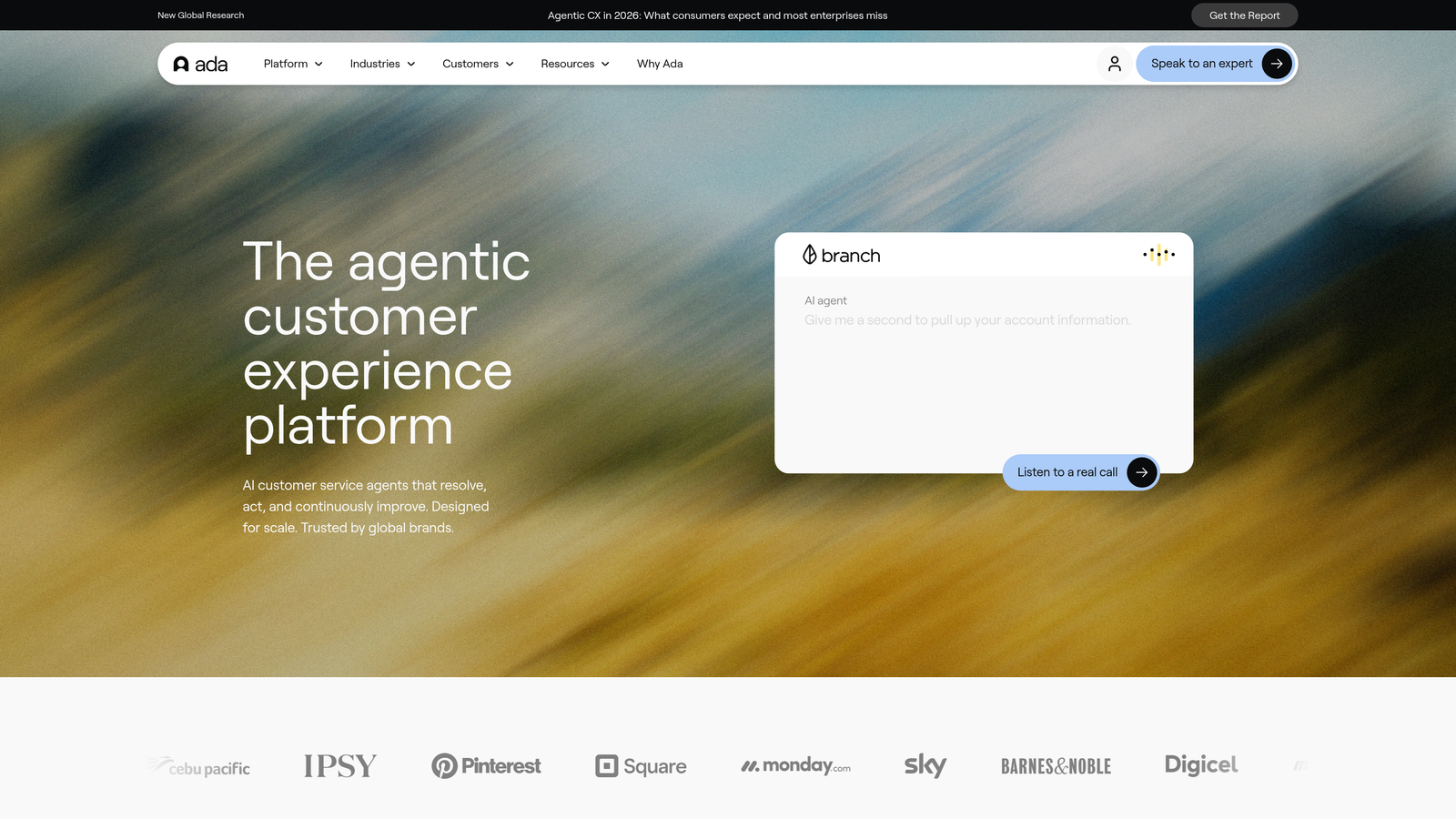
Ada is an enterprise AI agent platform built specifically for autonomous resolution at scale, with strong multilingual capabilities and a no-code customization layer.
Where This Tool Shines
Ada is one of the more philosophically distinct platforms on this list. The focus is explicitly on resolution, not deflection. Many AI chatbot tools are designed to route or redirect users; Ada is designed to actually solve problems. That distinction matters for enterprise buyers who are tired of automation that creates frustration instead of reducing it.
The multilingual capability is genuinely strong, supporting over 50 languages with nuanced understanding rather than basic translation. For companies with global customer bases, this is a meaningful differentiator. Ada works as an AI layer on top of existing helpdesks, which means deployment doesn't require ripping out your current infrastructure.
Key Features
Resolution-Focused AI Agent: Designed to resolve issues end-to-end rather than simply deflect or route tickets to human agents.
Multilingual Support: Handles conversations in 50+ languages with contextual understanding, not just literal translation.
No-Code Workflow Builder: Business teams can build and manage AI conversation flows without engineering involvement.
Helpdesk Integration Layer: Sits on top of Zendesk, Salesforce, and other platforms as an AI enhancement rather than a replacement.
Resolution Analytics: Dashboard tracking resolution rate, CSAT, and containment to measure actual business impact.
Best For
Enterprise teams with high ticket volumes, global customer bases, and existing helpdesk infrastructure they want to enhance rather than replace. Not the right fit for smaller teams or those looking for an all-in-one platform.
Pricing
Custom pricing based on resolution volume. Contact sales for a quote. Pricing is typically structured around outcomes rather than seats.
6. Tidio
Best for: SMBs and e-commerce brands that need fast-deploy conversational automation with minimal setup
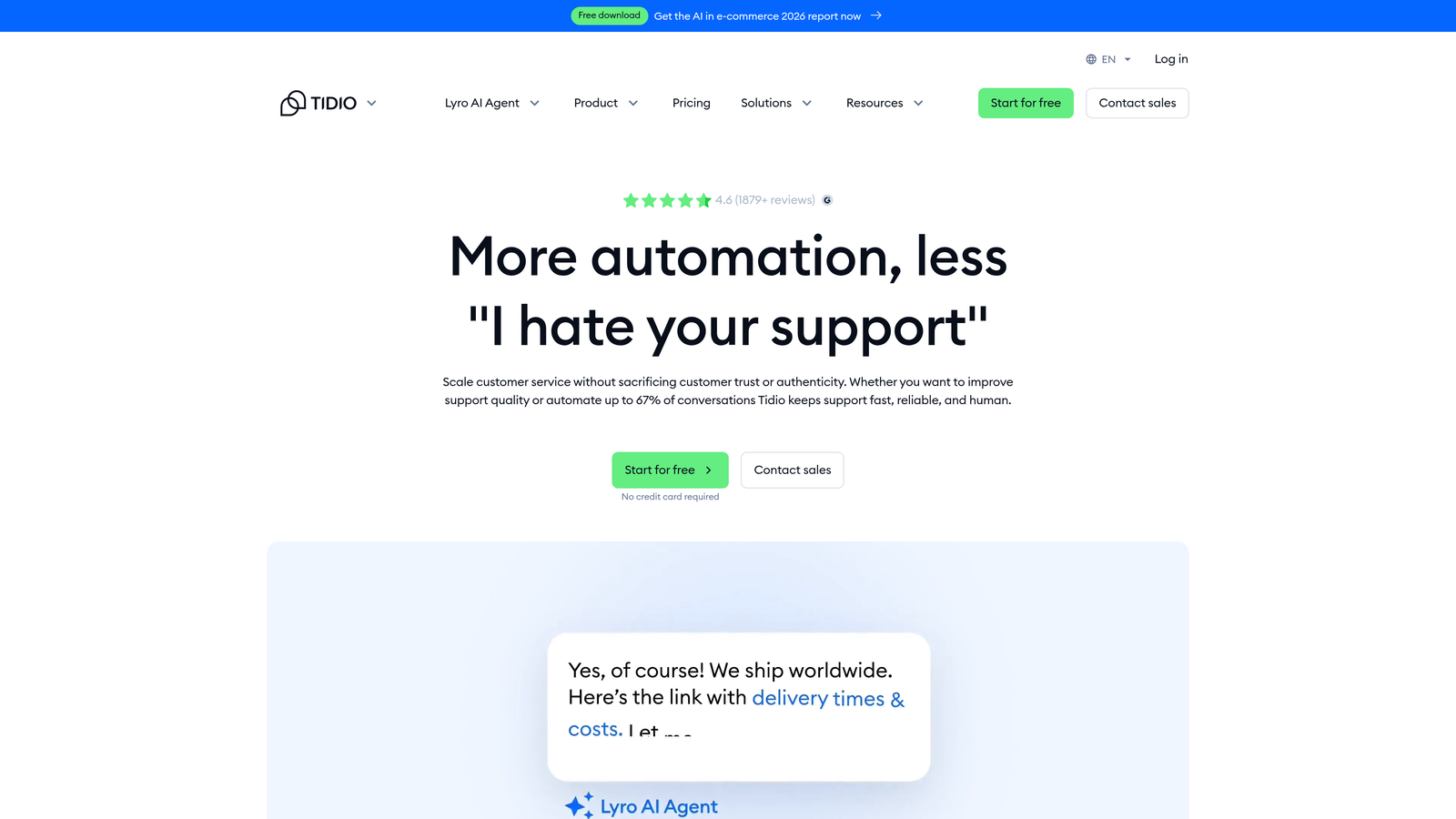
Tidio is a live chat and chatbot platform with Lyro AI, built for quick deployment and particularly popular with e-commerce businesses running on Shopify and WooCommerce.
Where This Tool Shines
Tidio's standout quality is speed to value. The platform can be live within minutes of installation, and Lyro AI learns from your existing knowledge base content without requiring manual training or complex configuration. For small teams that need something working quickly, that accessibility is genuinely valuable.
The visual drag-and-drop bot builder makes it easy for non-technical team members to create conversation flows, and the native e-commerce integrations mean Shopify and WooCommerce merchants can connect order data directly to support conversations. It's not built for enterprise complexity, but it doesn't need to be.
Key Features
Lyro AI Chatbot: Learns from knowledge base content to answer customer questions automatically without manual rule-building.
Visual Flow Builder: Drag-and-drop interface for creating chatbot conversation paths without writing code.
Live Chat with Visitor Tracking: Real-time monitoring of active visitors with the ability to proactively initiate conversations.
E-commerce Integrations: Native connections to Shopify, WooCommerce, and WordPress for order and customer data in support conversations.
Quick Setup: Designed to be operational within minutes, with minimal technical requirements for installation.
Best For
Small businesses, e-commerce brands, and early-stage teams that need functional chat and AI automation without a lengthy implementation process. Less suitable for complex B2B support operations with high customization needs.
Pricing
Free plan available. Paid plans start at $29 per month, making it one of the more affordable options on this list for teams with limited budgets.
7. HubSpot Service Hub
Best for: HubSpot users that want support automation natively connected to their CRM and revenue data
HubSpot Service Hub is a customer service platform built natively within the HubSpot ecosystem, offering ticketing, AI chatbots, knowledge base management, and customer feedback tools all tied to CRM context.
Where This Tool Shines
If your company already runs on HubSpot, Service Hub is the path of least resistance for support automation. Every ticket, conversation, and customer interaction is automatically connected to the contact and deal records in your CRM, giving support agents full context without switching tools. The SLA reporting ties directly to revenue data, which makes it easier to demonstrate the business impact of support quality.
For teams that aren't already in the HubSpot ecosystem, the value proposition is more nuanced. The AI capabilities are solid but not class-leading, and the per-seat pricing at the Professional tier can add up for larger teams.
Key Features
AI Chatbots with CRM Context: Chatbots and ticket routing powered by full CRM data, including contact history, deal stage, and lifecycle status.
Shared Inbox with Conversation Intelligence: Unified inbox with AI-generated summaries and suggested responses for faster agent handling.
Customer Portal and Knowledge Base: Self-service tools for customers to find answers, track tickets, and submit feedback without contacting support.
Feedback Surveys: Built-in NPS, CSAT, and CES surveys connected to contact records for longitudinal satisfaction tracking.
Cross-Hub Integration: Seamless connection to HubSpot Marketing and Sales Hubs for a unified view of the customer lifecycle.
Best For
Companies already invested in the HubSpot ecosystem that want support automation without adding another platform. Also a strong choice for teams where the connection between support activity and revenue impact is a priority.
Pricing
Free tools available for basic ticketing and chat. Starter plan at $20 per month, Professional at $100 per seat per month with full automation and AI capabilities.
8. Forethought
Best for: Teams that want to add AI resolution and triage on top of an existing helpdesk without migrating platforms
Forethought is an AI layer designed to sit on top of existing helpdesk platforms, automating ticket resolution, intelligent triage, and agent assistance without requiring a platform migration.
Where This Tool Shines
Forethought's core insight is that many support teams have significant investment in their current helpdesk infrastructure and aren't ready to replace it. Rather than asking you to start over, Forethought enhances what you already have. The SupportGPT and Solve AI modules handle autonomous ticket resolution, while the Triage AI uses intent and sentiment analysis to route tickets more intelligently than keyword-based rules.
The Assist AI module is particularly useful for human agents, surfacing relevant knowledge articles and prior ticket context in real time so agents can respond faster without searching manually. For teams managing high volumes with mixed complexity, this combination of autonomous resolution and agent augmentation is a practical approach.
Key Features
Solve AI: Autonomous ticket handling powered by SupportGPT, resolving common issues without human involvement.
Triage AI: Intelligent routing based on detected intent, sentiment, and urgency rather than simple keyword matching.
Assist AI: Real-time knowledge surfacing for human agents, reducing handle time on complex tickets.
Helpdesk Compatibility: Works on top of Zendesk, Salesforce Service Cloud, Freshdesk, and other major platforms.
ROI-Focused Analytics: Reporting centered on deflection rate, time saved per ticket, and measurable cost impact.
Best For
Mid-market and enterprise teams with an established helpdesk they want to keep, but who need to meaningfully improve automation rates and agent efficiency without a full platform overhaul.
Pricing
Custom pricing based on ticket volume and which modules are deployed. Contact Forethought for a tailored quote.
9. Salesforce Service Cloud
Best for: Enterprise organizations that need deeply customizable, CRM-powered support automation within the Salesforce ecosystem
Salesforce Service Cloud is an enterprise service platform within the Salesforce ecosystem, featuring Einstein AI and Agentforce for CRM-powered support automation with extensive customization capabilities.
Where This Tool Shines
Service Cloud's primary advantage is its depth of integration with the rest of the Salesforce platform. For enterprises where sales, service, and marketing all run on Salesforce, Service Cloud provides a genuinely unified 360-degree view of every customer interaction. Einstein AI handles case classification and routing, while the newer Agentforce capability allows teams to build autonomous AI service agents that can take action within the Salesforce data model.
The tradeoff is complexity and cost. Service Cloud is not a platform you deploy in an afternoon. Implementation typically requires dedicated resources, and the starting price point is just the beginning of what most enterprise deployments actually cost. It rewards organizations that invest in it fully, but it's overkill for teams that don't need that level of customization.
Key Features
Einstein AI: Handles case classification, intelligent routing, and recommended next actions based on historical data and CRM context.
Agentforce: Enables teams to build and deploy autonomous AI service agents that can take action within Salesforce workflows.
Omnichannel Routing: Unified routing across voice, chat, email, messaging, and social with skill-based assignment logic.
360-Degree Customer View: Full integration with Salesforce CRM gives agents complete account, deal, and interaction history in context.
AppExchange and Salesforce Flow: Extensive customization through the AppExchange marketplace and native workflow automation tools.
Best For
Large enterprises already operating within the Salesforce ecosystem that need deeply customizable, CRM-connected support automation. Not suitable for teams outside the Salesforce ecosystem or those without dedicated implementation resources.
Pricing
Starter plan begins at $25 per user per month. Enterprise and Unlimited tiers are significantly higher, and most enterprise deployments include additional implementation and customization costs.
Which Platform Is Right for Your Team?
The honest answer is that the best platform depends on where you are today and where you're trying to go. Here's a quick way to think about it.
If you're a B2B SaaS team that wants AI-native support with business intelligence baked in from day one, Halo AI is the strongest starting point. The continuous learning architecture, page-aware context, and connections to your broader business stack make it purpose-built for the way modern SaaS support actually works.
If you're already deep in the Salesforce or HubSpot ecosystems, Service Cloud and Service Hub respectively are the natural choices. The CRM integration alone justifies the investment if you're already paying for those platforms.
If you have an existing helpdesk you're not ready to replace, Forethought and Ada both offer compelling AI layers that improve resolution rates without requiring migration. And if you're an SMB or e-commerce brand that needs something live quickly, Tidio gets you there faster than any other option on this list.
For teams evaluating the established helpdesks, Zendesk and Freshdesk both offer proven infrastructure. Zendesk wins on configurability and ecosystem depth; Freshdesk wins on price and ease of entry. Intercom is the right pick when proactive engagement matters as much as reactive support.
Your support team shouldn't scale linearly with your customer base. Let AI agents handle routine tickets, guide users through your product, and surface business intelligence while your team focuses on complex issues that need a human touch. See Halo in action and discover how continuous learning transforms every interaction into smarter, faster support.