7 Best Zendesk Alternatives & AI Support Platforms in 2026
Choosing between Zendesk vs AI support platform options in 2026 requires understanding a fundamental shift: traditional helpdesks with added AI features versus AI-first platforms built for autonomous issue resolution. This comprehensive comparison examines seven leading alternatives based on their autonomous resolution capabilities, continuous learning systems, and integration depth to help you determine whether a legacy ticketing system or modern AI-native platform better fits your support strategy.
 Matt PattoliFounder11 min read
The customer support platform landscape has fundamentally changed. What used to be a straightforward decision—pick a helpdesk, train your team, scale headcount with growth—now involves a more complex question: Do you need a traditional ticketing system with AI bolted on, or an AI-first platform built from the ground up to resolve issues autonomously?
The distinction matters more in 2026 than ever before. AI capabilities have evolved beyond simple chatbots that deflect tickets to knowledge bases. Modern AI agents actually resolve customer issues, learn from every interaction, and see the context of what users are experiencing in your product. Meanwhile, established platforms like Zendesk have added AI features to their existing architecture, creating a hybrid approach that works for some teams but not all.
This guide compares top platforms across what actually matters: autonomous resolution capabilities, continuous learning and improvement, integration depth with your business stack, pricing transparency, and how quickly you'll see real value. Whether you're evaluating alternatives to Zendesk or exploring AI-first support for the first time, here are the platforms leading the category.
1. Halo AI
Best for: Teams ready to deploy AI agents that resolve tickets autonomously while continuously learning from every interaction
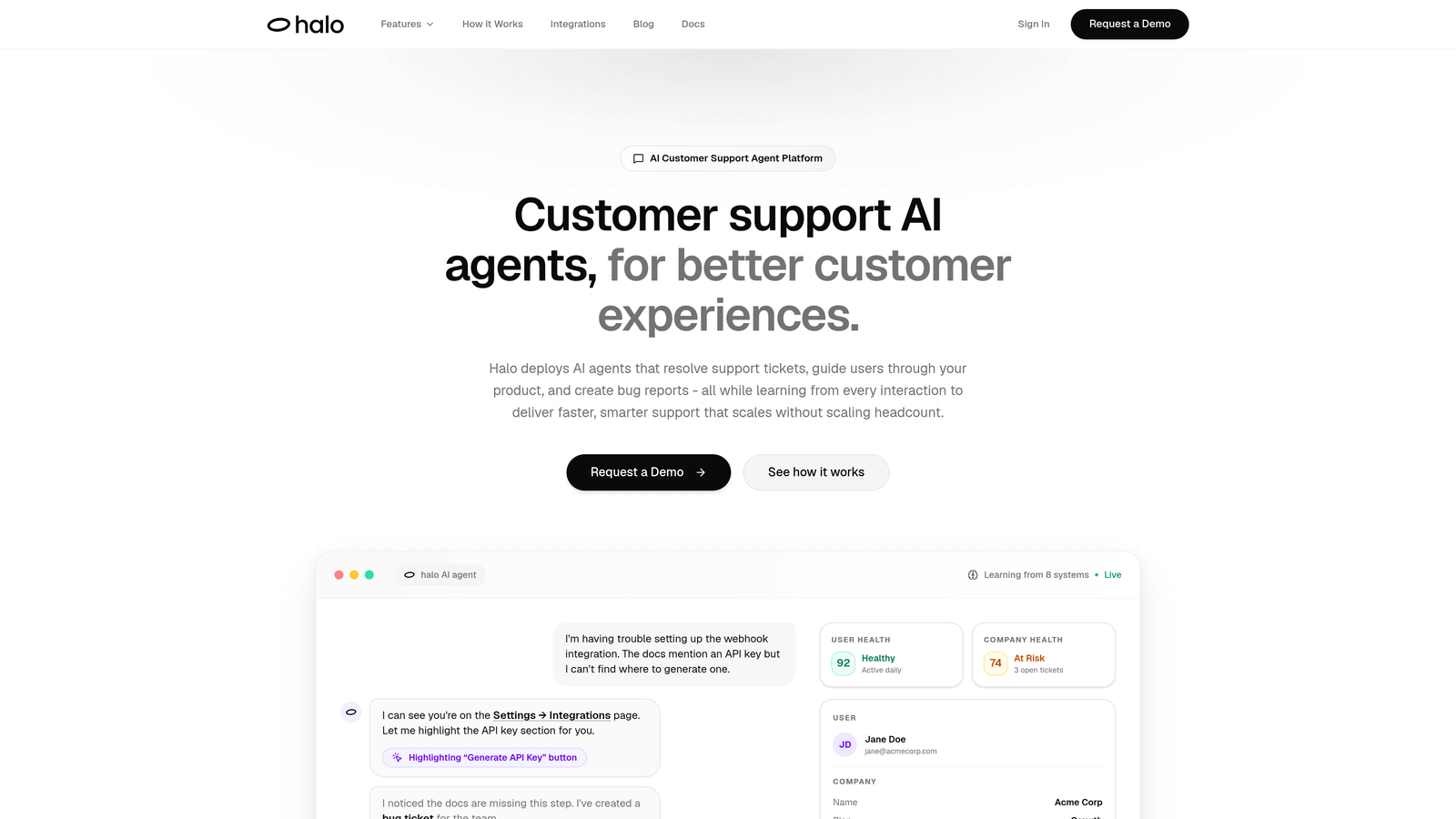
Halo AI represents the AI-first approach to customer support—not a helpdesk with AI features added, but a platform built from the ground up around autonomous AI agents that actually resolve issues.
Where This Platform Shines
The fundamental difference is architectural. While traditional helpdesks route tickets and suggest knowledge base articles, Halo's AI agents take action—resolving tickets, guiding users through your product interface, and creating bug reports automatically. The platform sees what your users see through page-aware context, understanding not just what they're asking but where they are in your product when they ask it.
What sets Halo apart is continuous learning. Every resolved ticket, every escalation to a human agent, every interaction becomes training data that makes the AI smarter. This isn't static automation that requires constant manual updates—it's a system that improves itself over time.
Key Features
Autonomous AI Agents: Resolve support tickets end-to-end without human intervention, handling everything from password resets to complex product questions.
Page-Aware Chat Widget: Provides visual UI guidance based on what users are actually seeing in your product, offering contextual help that adapts to their current screen.
Smart Inbox with Business Intelligence: Goes beyond support metrics to surface customer health signals, revenue intelligence, and anomaly detection across your business.
Auto Bug Ticket Creation: Automatically creates detailed bug reports in Linear when issues are identified, connecting support directly to your development workflow.
Deep Stack Integrations: Connects to your entire business ecosystem—Slack, HubSpot, Stripe, Intercom, Zoom, PandaDoc, Fathom—providing context and enabling actions across systems.
Best For
B2B SaaS companies and product teams who want AI to handle the bulk of support volume while their human agents focus on complex issues requiring judgment and empathy. Particularly valuable for teams currently using Zendesk, Freshdesk, or Intercom who want autonomous resolution rather than just better ticket routing.
Pricing
Contact for pricing. The platform positions itself as a replacement for traditional helpdesk costs plus the headcount savings from autonomous resolution.
2. Zendesk
Best for: Enterprise teams with complex workflows who need comprehensive ticketing and extensive third-party integrations
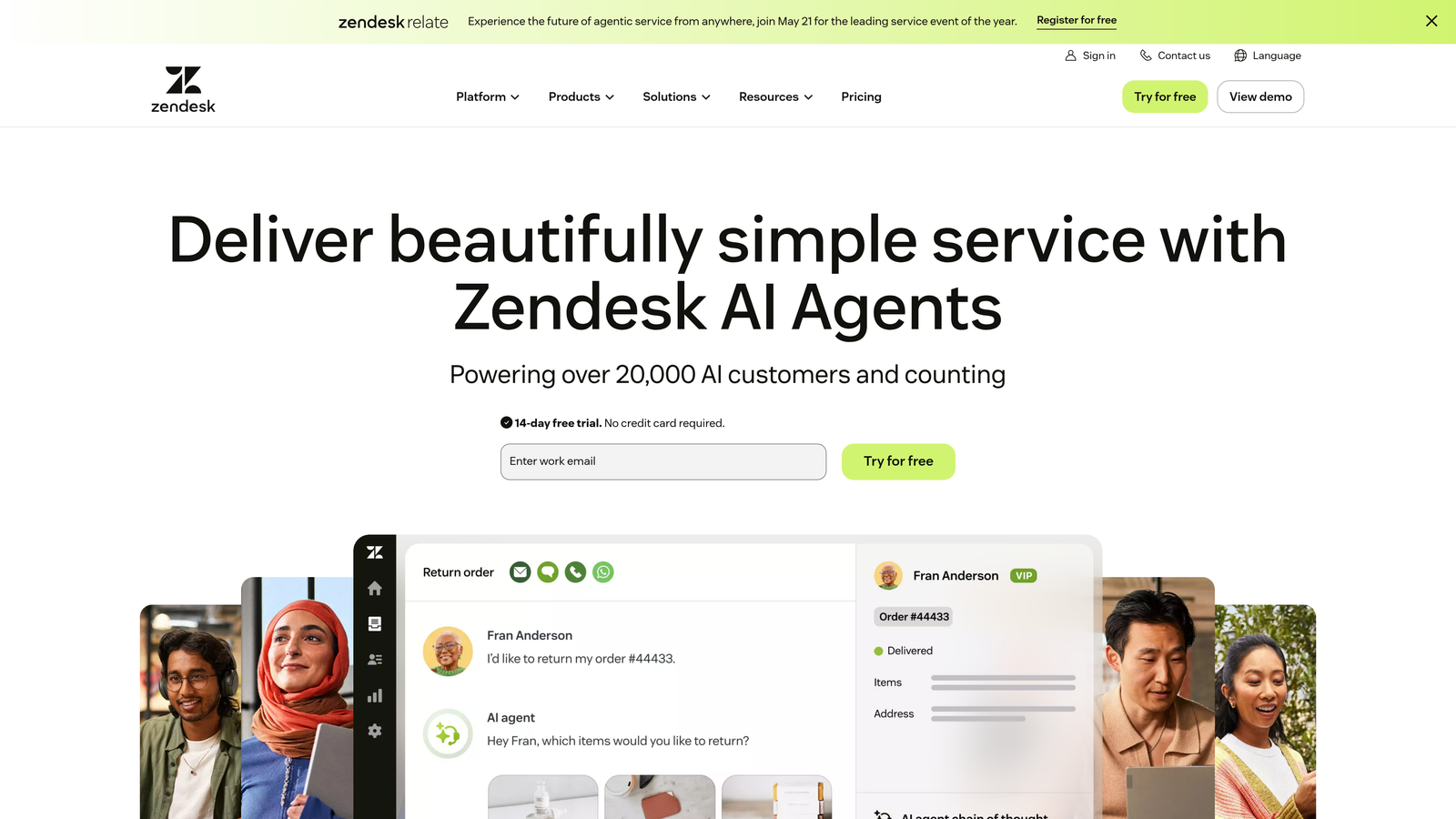
Zendesk is the established enterprise helpdesk platform that's added AI capabilities to its core ticketing system through the Advanced AI add-on.
Where This Platform Shines
Zendesk's strength is comprehensive workflow management and an ecosystem built over years. The platform handles multi-channel support at enterprise scale with sophisticated routing, SLA management, and reporting that large support teams depend on. Their marketplace offers thousands of integrations, meaning you can connect Zendesk to virtually any tool in your stack.
The Advanced AI add-on brings automation to this foundation—intelligent triage, suggested responses, and intent detection. It's AI layered onto a proven helpdesk architecture rather than AI-native design, which works well for teams who need the robustness of traditional ticketing with selective automation.
Key Features
Robust Ticketing System: Industry-standard ticket management with advanced workflows, macros, and automation rules for complex support operations.
Extensive App Marketplace: Thousands of pre-built integrations and apps that extend functionality across nearly every business tool category.
Advanced AI Add-On: Provides intelligent ticket routing, auto-responses, intent detection, and content suggestions to augment agent productivity.
Multi-Channel Support: Unified inbox for email, chat, social media, phone, and messaging apps with consistent workflows across channels.
Enterprise Analytics: Comprehensive reporting and dashboard capabilities for tracking team performance, customer satisfaction, and operational metrics.
Best For
Large support teams with established workflows who need enterprise-grade reliability and extensive customization options. Works well for companies with significant existing investment in Zendesk who want to add AI capabilities incrementally rather than replace their entire stack.
Pricing
Starts at $19/agent/month for basic plans. AI features require the Advanced AI add-on, which adds significant cost. Enterprise pricing scales with team size and feature requirements.
3. Intercom
Best for: Product-led growth companies prioritizing in-app messaging and proactive customer engagement
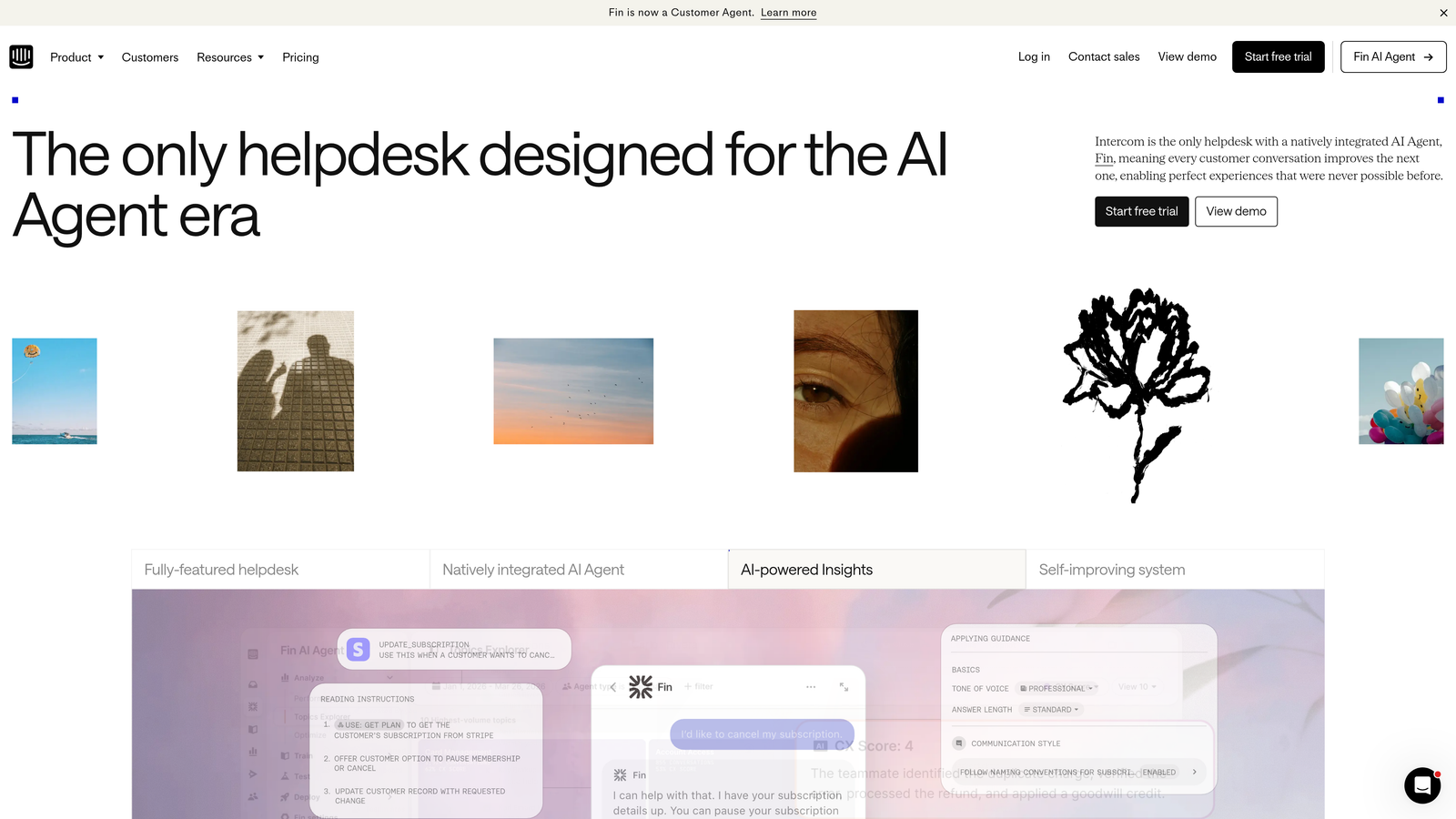
Intercom combines customer messaging with Fin AI agent capabilities, focusing heavily on in-product communication and automated customer journeys.
Where This Platform Shines
Intercom excels at proactive support and product-led engagement. The platform isn't just reactive ticket handling—it's designed for reaching customers at the right moment in their product journey. Product tours, targeted messages, and behavioral triggers help teams prevent support issues before they happen.
Fin AI agent handles resolution with a focus on conversation quality. Rather than just deflecting to help docs, Fin provides conversational answers and can complete actions on behalf of customers. The platform's strength is making automated support feel natural rather than robotic.
Key Features
Fin AI Agent: Conversational AI that resolves customer questions with natural language understanding and the ability to take actions beyond simple responses.
In-App Messaging: Native messenger that lives inside your product, enabling contextual support based on what users are doing in real-time.
Customer Data Platform: Built-in CDP that tracks user behavior, attributes, and events to power personalized messaging and support.
Proactive Support: Outbound messaging triggered by user behavior, enabling teams to reach out before customers need to ask for help.
Series Automation: Automated workflows that guide customers through onboarding, feature adoption, and common processes without agent involvement.
Best For
SaaS companies with product-led growth strategies who want support and product engagement unified in one platform. Particularly strong for teams who value proactive communication and in-app guidance as much as reactive ticket resolution.
Pricing
Starts at $39/seat/month for core platform. Fin AI is priced separately per resolution, which can add up quickly for high-volume support teams but provides predictable costs tied to actual usage.
4. Freshdesk
Best for: Mid-market teams seeking intuitive helpdesk software with AI automation at competitive pricing
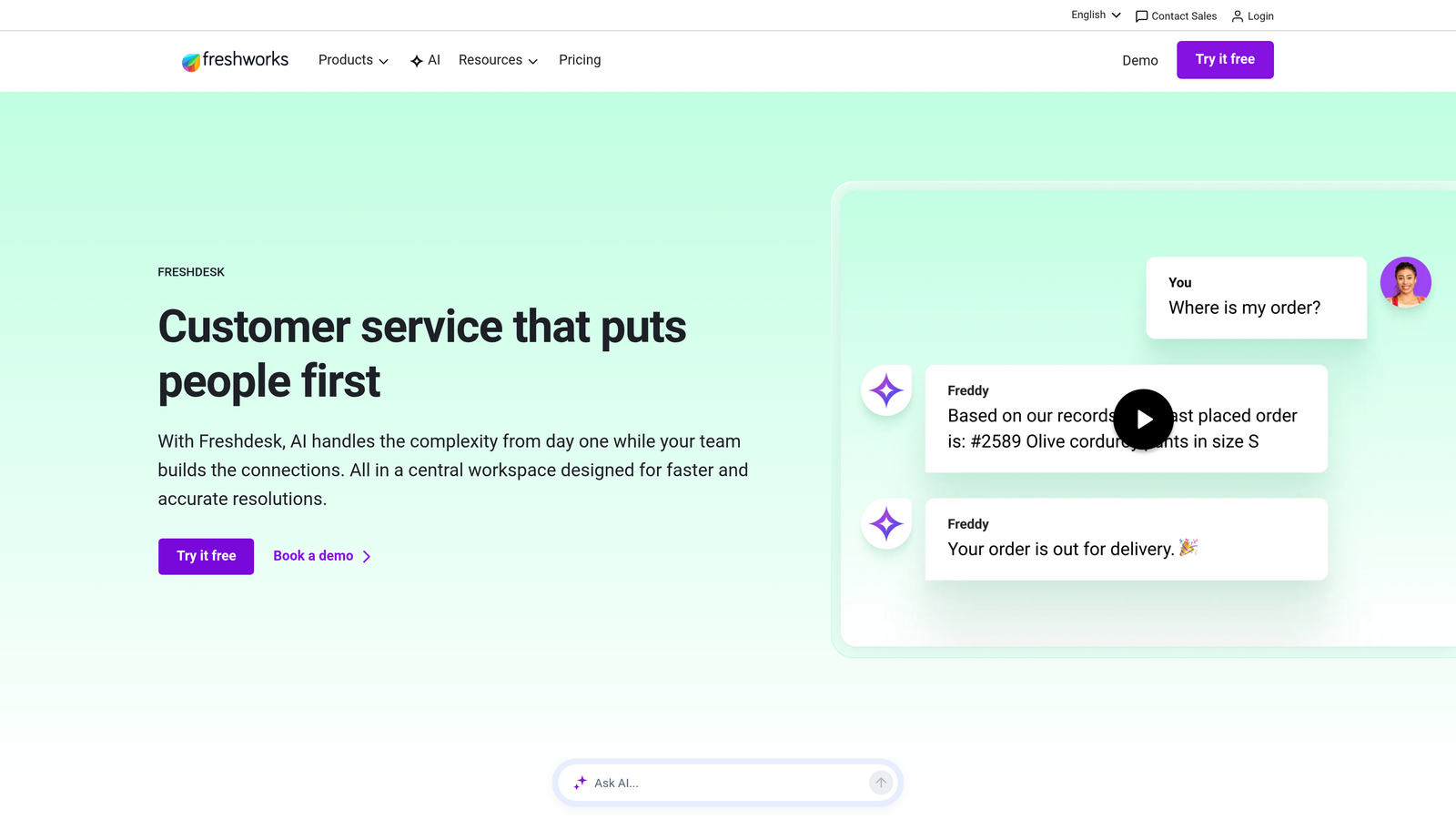
Freshdesk offers comprehensive helpdesk functionality with Freddy AI automation in a more accessible package than enterprise alternatives.
Where This Platform Shines
Freshdesk hits the sweet spot for teams who need serious helpdesk capabilities without enterprise complexity or pricing. The interface is genuinely intuitive—new agents get productive quickly without extensive training. Freddy AI brings automation to ticket categorization, response suggestions, and basic resolution without requiring a separate expensive add-on.
The platform's free tier is actually usable for small teams, and paid plans scale reasonably as you grow. This makes Freshdesk particularly attractive for companies in that middle ground—too sophisticated for basic tools but not ready for enterprise investment.
Key Features
Freddy AI Automation: Handles ticket categorization, sentiment analysis, and suggested responses to help agents work faster without fully autonomous resolution.
Intuitive Agent Interface: Clean, modern UI that reduces training time and keeps agents focused on conversations rather than navigating complex systems.
Built-In Collaboration: Team huddle, shared ownership, and internal notes that keep everyone aligned without external communication tools.
Field Service Management: Optional FSM module for teams that need to manage on-site service alongside digital support channels.
Free Tier: Actually functional free plan for up to 10 agents, making it easy to test before committing to paid features.
Best For
Growing companies that need more than basic support tools but aren't ready for enterprise platforms. Works well for teams who value ease of use and reasonable pricing over cutting-edge AI capabilities or extensive customization.
Pricing
Free tier available for small teams. Paid plans start at $15/agent/month, with AI features included in mid-tier plans rather than requiring expensive add-ons.
5. Ada
Best for: Enterprise organizations handling high conversation volumes across multiple languages and channels
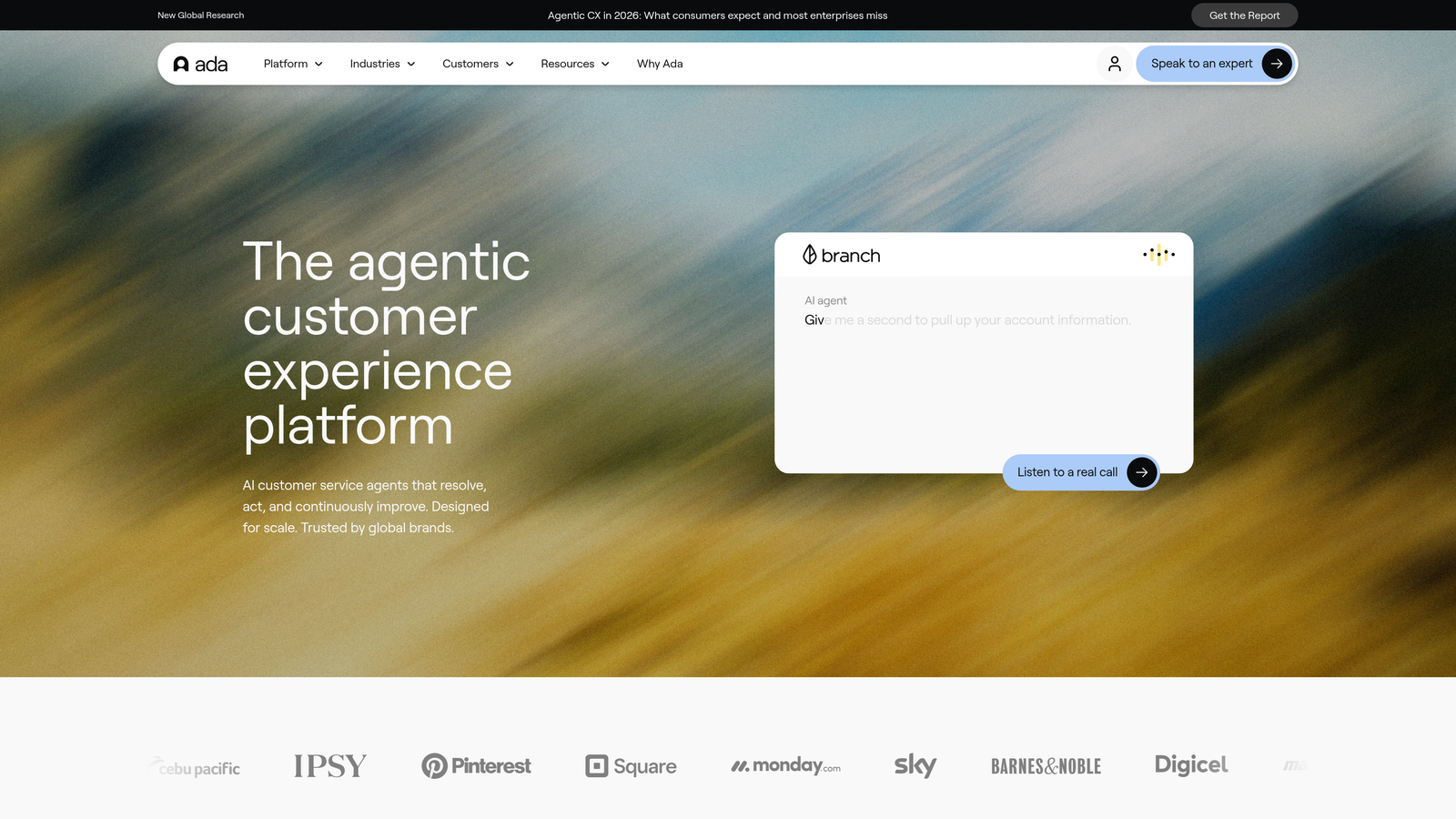
Ada is purpose-built for automated conversation resolution at enterprise scale, with particular strength in multilingual support and voice AI.
Where This Platform Shines
Ada focuses exclusively on automated resolution rather than being a full helpdesk platform. This specialization shows in the depth of their AI capabilities—the platform is designed to handle the majority of customer conversations without human intervention. The no-code automation builder lets non-technical teams create sophisticated conversation flows that adapt based on customer context and intent.
Global enterprises particularly value Ada's 50+ language support and voice AI capabilities. The platform doesn't just translate—it understands cultural context and linguistic nuances that matter for international customer bases. Enterprise security and compliance features are built-in rather than bolted on.
Key Features
AI Resolution Engine: Purpose-built for autonomous conversation handling with focus on actual resolution rather than deflection to other channels.
Multilingual Support: Native support for 50+ languages with cultural context awareness, not just basic translation.
No-Code Automation Builder: Visual workflow creator that lets support teams build complex automation without developer resources.
Voice AI Capabilities: Extends automated resolution to phone channels with natural language understanding in voice conversations.
Enterprise Security: SOC 2 compliance, GDPR adherence, and enterprise-grade security built into the platform architecture.
Best For
Large enterprises with high support volumes, particularly those serving international markets or handling support in multiple languages. Best suited for companies that want to automate the majority of customer conversations and have the volume to justify enterprise pricing.
Pricing
Enterprise pricing model—contact for quote. The platform positions itself as a cost replacement for support headcount rather than a per-agent tool.
6. Help Scout
Best for: Teams prioritizing human-first support with AI as an enhancement rather than replacement
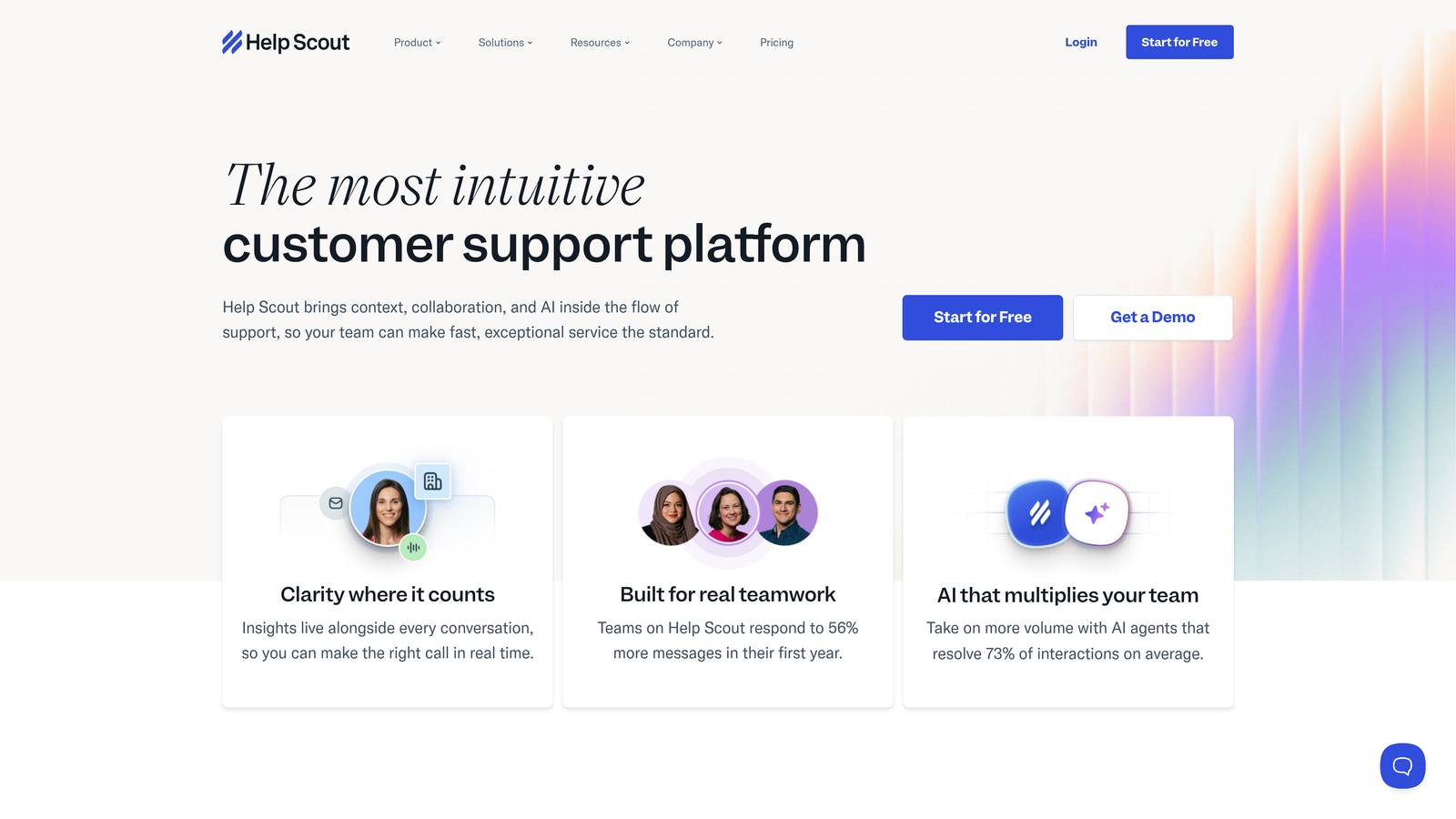
Help Scout takes a different philosophical approach—AI assists human agents rather than replacing them, with focus on making personal support more efficient.
Where This Platform Shines
Help Scout's interface feels like email rather than a complex ticketing system, which many teams find refreshing. The shared inbox approach with collision detection keeps teams coordinated without heavyweight workflow management. AI drafts and summaries help agents respond faster and more consistently, but the platform assumes humans are driving the conversation.
The pricing is transparent and reasonable—no hidden costs for AI features or surprise charges as you scale. The included knowledge base and Beacon widget provide self-service options without requiring separate tools. This simplicity appeals to teams who want effective support software without complexity.
Key Features
Shared Inbox: Email-like interface with collision detection that prevents agents from stepping on each other's responses.
Beacon Widget: Embedded help widget that surfaces relevant docs and enables chat without leaving your product.
AI Drafts and Summaries: AI assistance that helps agents write better responses faster and catch up on conversation history quickly.
Customer Satisfaction Ratings: Built-in CSAT tracking that helps teams understand support quality without external survey tools.
Docs Knowledge Base: Integrated help center that connects directly to support conversations for seamless self-service.
Best For
Small to mid-sized teams who believe great support requires human empathy and want AI to make their agents more effective rather than replace them. Works well for companies where brand voice and personal touch are competitive advantages.
Pricing
Starts at $20/user/month with transparent pricing and no hidden fees. AI features included in standard plans rather than requiring premium add-ons.
7. Kustomer
Best for: Omnichannel support teams needing unified customer history and CRM functionality in one platform
Kustomer combines helpdesk and CRM capabilities with a timeline-based view of customer interactions across all channels.
Where This Platform Shines
Kustomer's timeline approach gives agents complete customer context in a single view—every conversation, purchase, interaction, and attribute displayed chronologically. This eliminates the constant tab-switching and system-hopping that slows down support teams using separate helpdesk and CRM tools.
The platform's omnichannel capabilities shine for teams managing conversations across email, chat, social media, SMS, and messaging apps. Everything flows into unified conversations rather than separate tickets per channel. KIQ AI adds automation to this foundation, handling routing, suggesting responses, and completing routine tasks while agents focus on complex issues.
Key Features
Timeline-Based Customer View: Chronological display of every customer interaction, purchase, and attribute in a single unified interface.
Omnichannel Management: Unified conversations across email, chat, social, SMS, and messaging apps rather than separate tickets per channel.
KIQ AI Automation: Intelligent routing, response suggestions, and automated task completion that augments agent capabilities.
Built-In CRM: Customer relationship management functionality integrated directly rather than requiring separate CRM software.
Meta Ecosystem Integration: Deep integration with Facebook, Instagram, and WhatsApp for teams heavily invested in Meta platforms.
Best For
E-commerce and retail companies managing high volumes of omnichannel conversations who need customer context and CRM data unified with support interactions. Particularly valuable for teams heavily using Meta platforms for customer engagement.
Pricing
Starts at $89/user/month, positioning as a premium platform that replaces both helpdesk and CRM tools rather than adding to existing stack.
Making the Right Choice
The decision between traditional helpdesks and AI-first platforms comes down to your support philosophy and growth trajectory. If you're handling increasing volume with a fixed team size, platforms like Halo AI and Ada focus on autonomous resolution that scales without scaling headcount. If you have complex workflows and significant existing investment in traditional helpdesk systems, Zendesk's AI add-on lets you enhance what you've built rather than replace it.
Budget-conscious teams will find Freshdesk and Help Scout offer solid capabilities without enterprise pricing, though with less sophisticated AI. Intercom makes sense for product-led companies where support and product engagement blur together. Kustomer serves teams needing unified customer context across channels and systems.
The fundamental question is whether you want AI that assists human agents or AI that handles the majority of support autonomously. Traditional helpdesks with AI features optimize the first approach. AI-first platforms like Halo are built for the second, with continuous learning that makes the system smarter over time rather than requiring constant manual updates.
Your support team shouldn't scale linearly with your customer base. Let AI agents handle routine tickets, guide users through your product, and surface business intelligence while your team focuses on complex issues that need a human touch. See Halo in action and discover how continuous learning transforms every interaction into smarter, faster support.