9 Best After Hours Support Coverage Solutions in 2026
Discover the 9 best after hours support coverage solutions for 2026, from AI agents to hybrid tools that resolve tickets autonomously overnight without expanding your team. This guide evaluates each option on autonomous resolution capabilities, stack integration, and scalability—helping B2B SaaS companies reduce churn risk by delivering reliable 24/7 customer support even when human agents are offline.
 Matt PattoliFounder14 min read
When your team logs off, customer issues don't stop. For B2B SaaS companies especially, a customer hitting a critical bug at 11pm or a new user stuck during onboarding on a Sunday isn't just an inconvenience — it's a churn risk. After hours support coverage has shifted from a "nice to have" to a genuine competitive differentiator.
The good news: you no longer need to staff a 24/7 team to deliver 24/7 support. A new generation of AI agents, intelligent chatbots, and hybrid coverage tools can handle the overnight shift, resolving tickets, guiding users, and escalating only what truly needs a human.
Below are nine of the best after hours support coverage solutions available in 2026, evaluated on their ability to resolve issues autonomously, integrate with your existing stack, and scale without adding headcount.
1. Halo AI
Best for: B2B SaaS teams that need autonomous ticket resolution with deep product and stack integrations
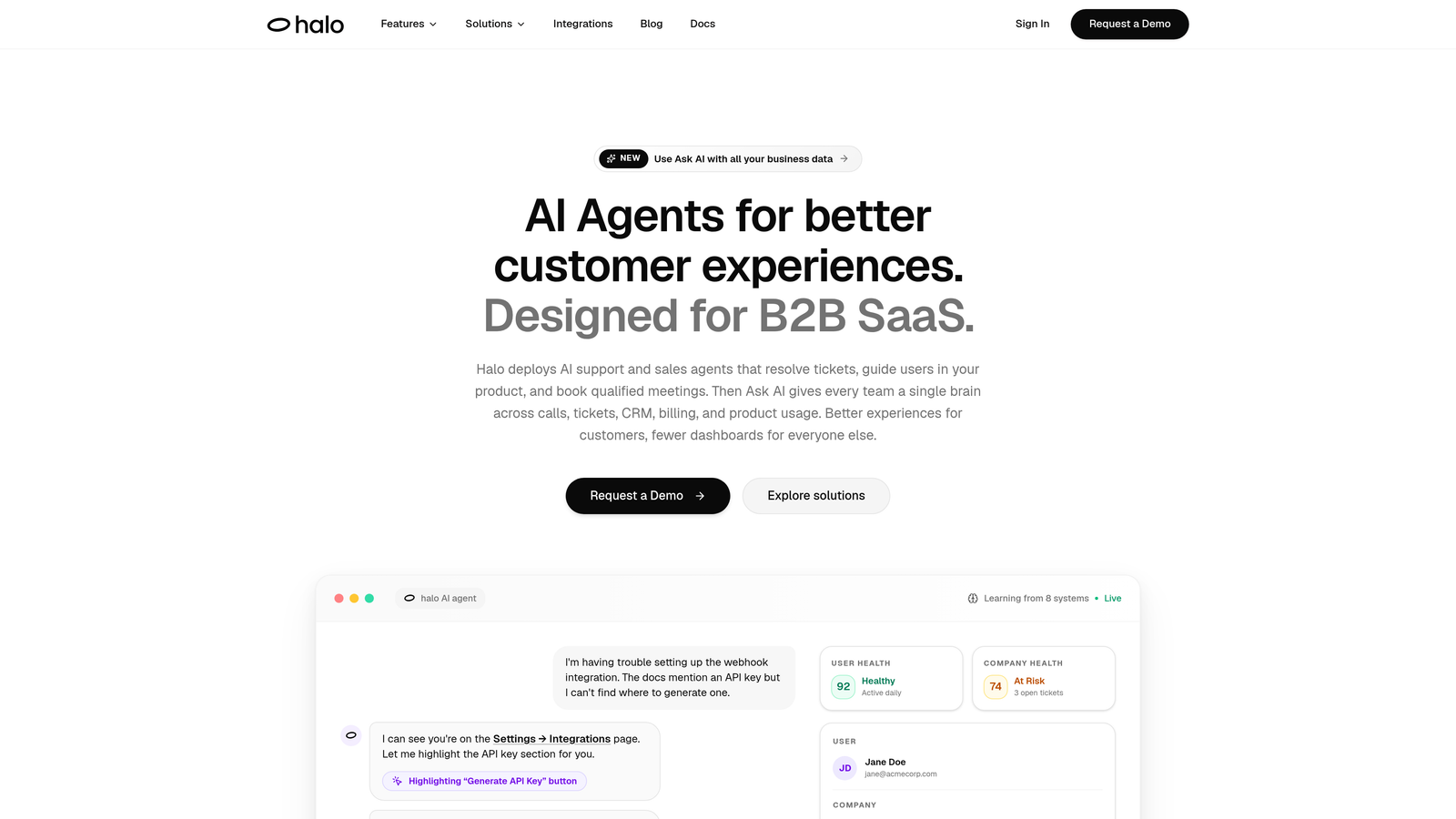
Halo AI is an AI-first customer support platform that deploys intelligent agents to resolve tickets, guide users through your product, and create bug reports — all while learning from every interaction.
Where This Tool Shines
What separates Halo from most tools on this list is its architecture. Rather than bolting AI onto an existing helpdesk, Halo was built AI-first from the ground up. That distinction matters at 2am when a user is stuck on a specific page in your product: Halo's agents are page-aware, meaning they know exactly where a user is and can provide contextual, step-by-step guidance rather than generic help center links.
The continuous learning loop is another standout. Every resolved interaction improves the system's ability to handle similar issues in the future. Over time, your after hours coverage gets meaningfully smarter without any manual retraining effort on your part.
Key Features
Page-Aware AI Agents: The AI sees what users see, providing contextual guidance based on the exact page or workflow they're stuck on.
Autonomous Ticket Resolution: Handles routine support queries end-to-end, with smart escalation to human agents for genuinely complex issues.
Auto Bug Ticket Creation: Automatically identifies and routes bug reports directly to Linear or your issue tracker of choice.
Smart Inbox with Business Intelligence: Surfaces customer health signals, anomaly detection, and revenue intelligence beyond standard support metrics.
Broad Integration Support: Connects with Slack, HubSpot, Intercom, Stripe, Zoom, PandaDoc, Fathom, and more — fitting into your existing stack rather than replacing it.
Best For
Halo is best suited for B2B SaaS companies and product teams that want an AI agent capable of genuinely resolving tickets, not just deflecting them. It's particularly strong for teams that need deep integrations across their business stack and want their support layer to generate intelligence beyond ticket volume.
Pricing
Contact Halo AI directly for pricing details. Given the platform's enterprise-grade capabilities, pricing is tailored to team size and use case.
2. Intercom (Fin AI Agent)
Best for: Teams already on Intercom that want native AI coverage without adding a new tool
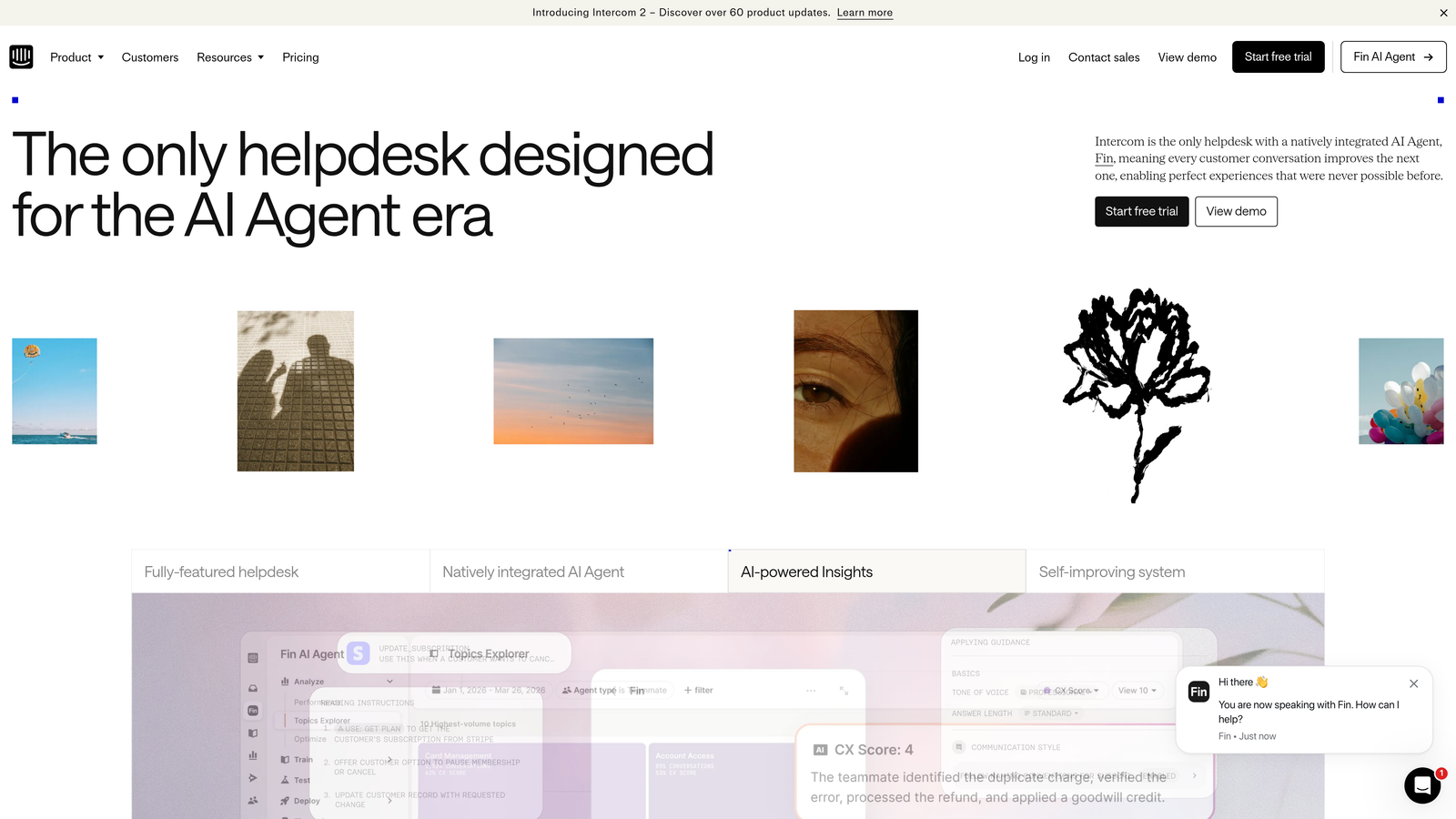
Intercom's Fin is a GPT-4-powered AI agent that handles customer queries using your help content and escalates to human agents when needed, all within the familiar Intercom Messenger experience.
Where This Tool Shines
If your support team already lives inside Intercom, Fin is the path of least resistance to after hours coverage. There's no separate tool to onboard, no new interface to learn, and conversations stay in a single thread whether Fin handles them or a human picks them up. That continuity matters for customer experience.
Fin's multilingual support is also worth noting for SaaS companies with international user bases. It can handle queries in multiple languages without separate configuration, which simplifies global after hours coverage considerably.
Key Features
GPT-4 Powered Responses: Fin draws on your help center content to generate accurate, contextual answers rather than scripted replies.
Seamless Human Handoff: Escalates to a live agent within the same conversation thread, preserving full context.
Native Messenger Integration: Works entirely within Intercom — no third-party widget or parallel system to manage.
Usage-Based Resolution Pricing: You pay per resolved conversation, which aligns cost with actual value delivered.
Multilingual Support: Handles queries across multiple languages out of the box.
Best For
Teams already committed to the Intercom platform who want to extend coverage overnight without changing tools or workflows. Less ideal for teams not on Intercom, as the value is heavily tied to the native integration.
Pricing
Usage-based pricing on top of your Intercom subscription. Intercom plans start at approximately $39/month (Starter tier); Fin costs are based on resolved conversations and can scale significantly at higher volumes.
3. Zendesk AI
Best for: Large support teams on Zendesk Suite that need AI embedded across their entire ticketing workflow
Zendesk AI is the native AI layer embedded across the Zendesk Suite, offering intelligent triage, AI agents, and automated responses for teams already operating on the platform.
Where This Tool Shines
Zendesk AI's strength is depth of integration with the Zendesk ecosystem. Intelligent triage, auto-tagging, routing, suggested replies, and AI agents all work together within the platform your team already uses. For large support organizations, that coherence reduces the friction of adopting AI coverage significantly.
The AI summarization feature is particularly useful for after hours handoffs: when your team comes online in the morning, they can quickly get up to speed on overnight conversations without reading every thread in full.
Key Features
AI Agents: Resolve customer queries using your knowledge base content, handling routine issues without human involvement.
Intelligent Triage: Automatically tags, categorizes, and routes incoming tickets based on content and intent.
AI-Assisted Replies and Summaries: Helps agents draft responses and quickly understand conversation history.
Deep Zendesk Integration: Works natively with ticketing, macros, views, and automations already configured in your account.
Suite-Tier Availability: Full AI capabilities are available on Zendesk Suite Professional and above.
Best For
Established support teams with significant Zendesk investment who want AI capabilities without migrating platforms. The higher price point makes it less practical for smaller teams or those not already on Zendesk.
Pricing
Included within Zendesk Suite plans. Suite Professional starts at approximately $115 per agent per month, making it one of the higher-cost options on this list.
4. Freshdesk Freddy AI
Best for: SMBs on Freshdesk looking for affordable AI-powered after hours deflection
Freshdesk's Freddy AI is the built-in AI layer within the Freshdesk platform, providing self-service chatbot coverage and agent assistance at a more accessible price point than enterprise-tier alternatives.
Where This Tool Shines
Freddy's appeal is straightforward: if you're already on Freshdesk and want to add after hours coverage without a major budget increase, Freddy is the natural next step. The Freddy Self Service chatbot handles common queries and deflects tickets overnight, while Freddy Copilot helps agents move faster during business hours.
For SMBs that don't need the full complexity of enterprise AI platforms, Freddy hits a practical middle ground. Setup is native to Freshdesk, which means no integration headaches, and the pricing remains accessible relative to competitors like Zendesk.
Key Features
Freddy Self Service: A chatbot layer that handles after hours deflection and resolution using your existing knowledge content.
Freddy Copilot: AI-assisted response drafting and suggestions to help agents during business hours.
Auto-Triage and Categorization: Automatically classifies and routes incoming tickets to the right queues.
Native Freshdesk Integration: No additional setup or external integration — works within your existing Freshdesk configuration.
Accessible Pricing: More affordable entry point than Zendesk AI for teams that don't need enterprise-grade complexity.
Best For
Small to mid-sized businesses already using Freshdesk who want to extend support coverage overnight without significant additional investment. Less suited for teams with complex workflows or those needing deep integrations outside the Freshworks ecosystem.
Pricing
Freddy AI features are available on Freshdesk Growth plans and above. Freshdesk plans start at approximately $15 per agent per month, making this one of the more budget-friendly options on this list.
5. Tidio
Best for: Small businesses and early-stage SaaS teams needing lightweight, affordable after hours chat coverage
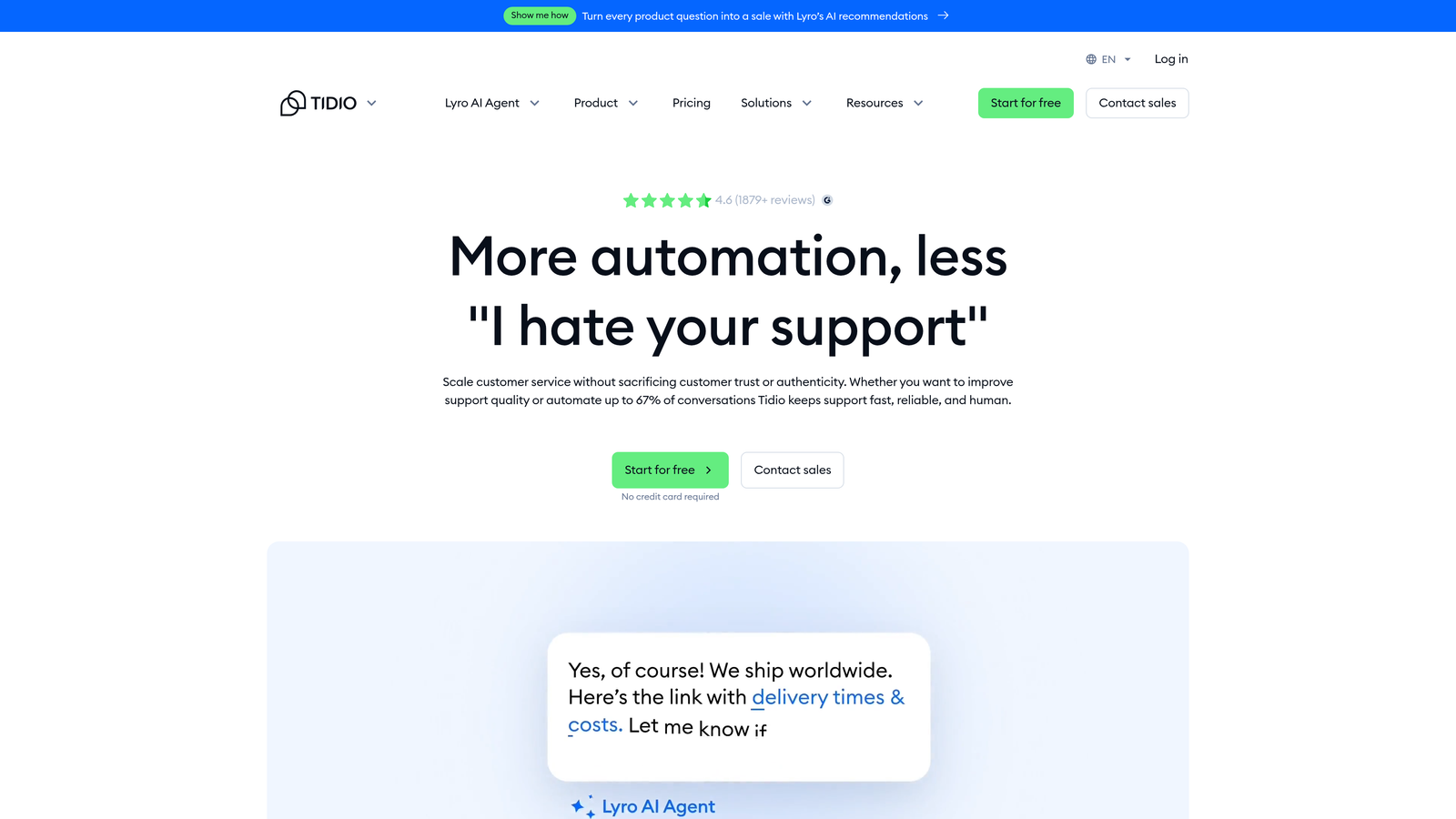
Tidio is a lightweight platform combining live chat and the Lyro AI chatbot, offering a practical and affordable after hours solution for teams that don't need enterprise-grade complexity.
Where This Tool Shines
Tidio's main advantage is speed and simplicity. You can have the Lyro AI chatbot handling after hours queries within hours of signing up, with no-code configuration and a clean interface that doesn't require a dedicated admin to manage. For early-stage teams, that low barrier to entry is genuinely valuable.
The combination of live chat, AI chatbot, and email in a single interface also means you're not juggling multiple tools. When a human is available, they can jump into the same conversations Lyro was handling overnight.
Key Features
Lyro AI Chatbot: Handles autonomous after hours query resolution using your support content.
Unified Interface: Combines live chat, AI chatbot, and email management in one platform.
No-Code Setup: Quick to configure without technical resources or developer involvement.
Ecommerce and SaaS Integrations: Connects with Shopify and other platforms alongside standard SaaS use cases.
Free Plan Available: Allows small teams to get started without upfront cost.
Best For
Small businesses, early-stage startups, and ecommerce teams that need basic after hours coverage quickly and affordably. Tidio is less suited for complex B2B SaaS support workflows with multiple escalation paths or deep product integrations.
Pricing
A free plan is available for small teams. Paid plans start at approximately $29 per month, keeping it accessible for budget-conscious teams.
6. Drift (Salesloft)
Best for: B2B teams where after hours support and revenue qualification overlap
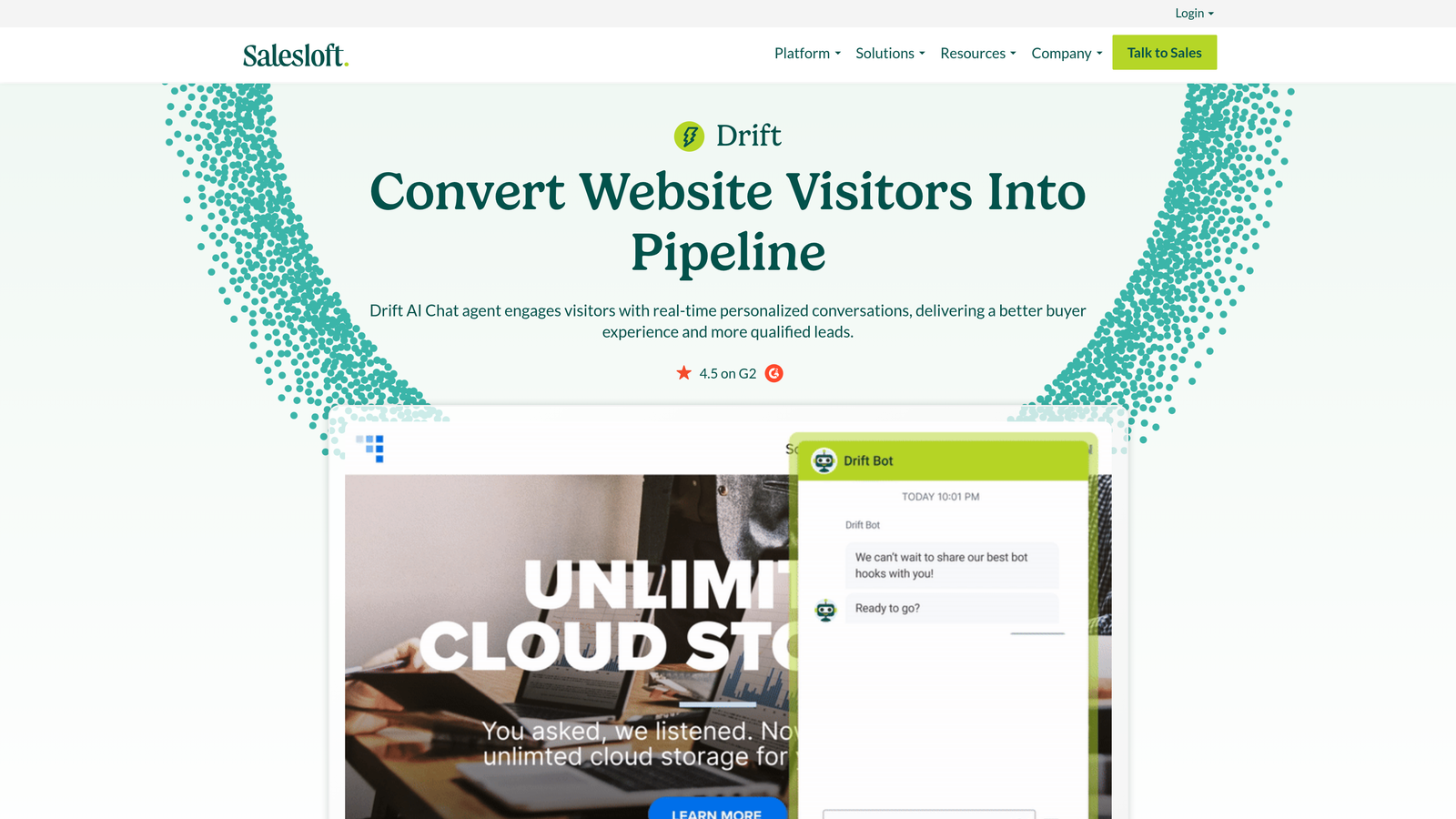
Drift, now part of Salesloft, is a conversational AI platform that handles after hours support queries while simultaneously qualifying leads — a unique fit for B2B companies where support and sales motions share the same front door.
Where This Tool Shines
Drift occupies an interesting position on this list because it serves two masters at once. A visitor at 10pm might be an existing customer with a support question or a prospect evaluating your product. Drift's AI and playbook system can identify which scenario it's dealing with and route accordingly, without either party feeling like they landed in the wrong place.
For product-led growth companies or inbound B2B teams, that dual-purpose capability reduces the need for separate tools handling support chat and sales chat. The trade-off is that Drift is priced at the enterprise tier, which may be difficult to justify if support is the primary use case.
Key Features
Dual-Purpose AI Chat: Handles support queries and lead qualification within the same conversation flow.
Playbooks: Route different visitor types — customers, prospects, enterprise accounts — to appropriate conversation flows.
Meeting Scheduling: Books demos or calls directly from the chat interface, useful for after hours sales captures.
Account-Based Routing: Identifies known accounts and routes accordingly based on CRM data.
CRM Integrations: Deep connections with Salesforce, HubSpot, and other major CRM platforms.
Best For
B2B SaaS companies with a strong inbound motion where the line between support and sales is blurry. Teams that need a pure support-only solution may find Drift's feature set and pricing more than they need.
Pricing
Enterprise pricing; contact Drift or Salesloft directly for current rates. Not well-suited for small teams on tight budgets.
7. Chatbase
Best for: Teams that need the fastest path to basic AI-powered after hours deflection
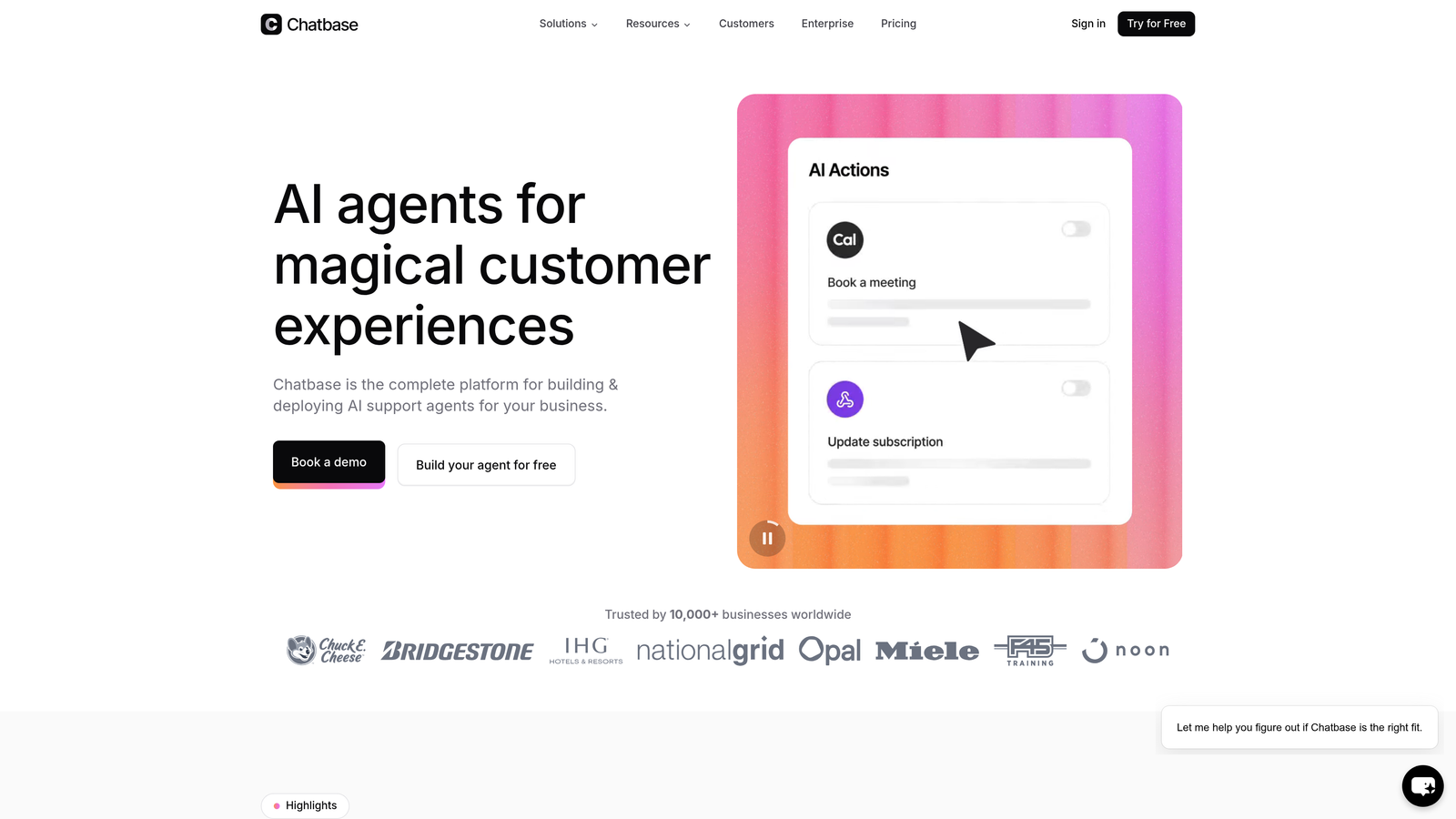
Chatbase is a no-code AI chatbot builder that lets you train a GPT-4-powered bot on your own documentation and embed it on your site in minutes — the lowest-friction entry point to after hours coverage on this list.
Where This Tool Shines
If your primary goal is to stop customers from hitting a dead end overnight, Chatbase gets you there faster than any other tool here. Upload your docs, PDFs, or point it at your help center URL, and you have a functioning AI chatbot grounded in your actual content. The setup genuinely takes minutes rather than days.
Chatbase is intentionally simple, which is both its strength and its limitation. It won't give you intelligent routing, CRM integrations, or business intelligence signals. But for a team that needs basic coverage now and wants to evaluate more sophisticated tools later, it's a practical starting point.
Key Features
Document-Based Training: Upload PDFs, docs, or URLs to train a custom AI chatbot on your specific content.
GPT-4 Powered Responses: Answers are grounded in your uploaded content rather than generic AI knowledge.
Simple Embed: A single embed code deploys the chatbot on any website without developer involvement.
Conversation Analytics: Basic reporting on common topics and resolution patterns.
API Access: Available on higher tiers for teams that want to build custom integrations.
Best For
Small teams, early-stage startups, or any organization that needs a fast, affordable way to deflect common after hours queries. Not the right choice for teams that need deep workflow integration, escalation logic, or CRM connectivity.
Pricing
A free plan is available. Paid plans start at approximately $19 per month, making Chatbase one of the most affordable options on this list.
8. Help Scout
Best for: Teams that prioritize high-quality async email support over real-time after hours chat
Help Scout is an email-first customer support platform with AI drafting assistance and a self-service Docs product — designed for teams that want thoughtful, async after hours coverage rather than real-time chatbot interactions.
Where This Tool Shines
Help Scout takes a different philosophy to after hours coverage: rather than deploying a chatbot to handle queries in real time, it reduces the overnight queue through a well-structured self-service knowledge base (Docs) and helps agents clear that queue efficiently when they come online. It's a passive coverage model rather than an active one.
The AI Drafts feature is a genuine time-saver for morning triage. Agents arrive to a queue of overnight emails and get suggested replies based on conversation history and similar past tickets, reducing the cognitive load of catching up significantly.
Key Features
AI Drafts: Suggests replies based on conversation history and similar resolved tickets, accelerating morning triage.
AI Summarize: Condenses long conversation threads into quick context summaries for fast agent catch-up.
Docs Knowledge Base: A self-service help center that passively handles common queries overnight without any chatbot layer.
Shared Inbox with Collision Detection: Prevents two agents from replying to the same ticket simultaneously.
Customer-Friendly Interface: No ticket numbers or support-portal friction — feels like email to the customer.
Best For
Support teams that primarily communicate via email and want to improve overnight self-service and morning efficiency rather than deploy a real-time AI agent. Less suited for teams that need instant, interactive after hours resolution.
Pricing
Plans start at approximately $50 per month for up to three users. The Standard plan is approximately $20 per user per month for larger teams.
9. Capacity
Best for: Enterprise teams with complex, multi-department support environments needing structured knowledge management
Capacity is an enterprise-grade AI helpdesk that combines a conversational AI layer with structured knowledge management and no-code workflow automation — built for organizations where support complexity runs deep.
Where This Tool Shines
Capacity's differentiator is its knowledge management layer. Rather than simply pointing an AI at your help center, Capacity builds a structured internal knowledge base that the conversational AI draws from. For organizations with complex, multi-department support environments — where the answer to a question might live across HR, IT, and customer success simultaneously — that structured approach reduces hallucination risk and improves response accuracy.
The platform also handles both internal (employee) and external (customer) support from a single system, which is a meaningful operational simplification for larger organizations running separate helpdesk solutions for each audience.
Key Features
Conversational AI with Structured Knowledge Base: AI responses are grounded in a deliberately organized internal knowledge layer, not just unstructured documents.
No-Code Workflow Builder: Create escalation rules, routing logic, and automation without engineering involvement.
Internal and External Support: Handles employee and customer queries from a single platform.
Enterprise Integrations: Connects with Salesforce, Zendesk, Slack, and other enterprise tools.
Multi-Department Knowledge Management: Organizes knowledge across teams and departments for accurate, role-appropriate responses.
Best For
Larger enterprises with complex support environments spanning multiple departments or both internal and external audiences. The platform's depth is its strength, but that same depth makes it more than most small or mid-sized teams need.
Pricing
Contact Capacity directly for enterprise pricing. This is not a self-serve product and is priced accordingly.
Which After Hours Solution Is Right for You
The right tool here depends on three questions: How much autonomous resolution do you need from your AI? What does your current support stack look like? And how much configuration are you willing to invest upfront?
For B2B SaaS teams that want an AI agent that genuinely resolves tickets rather than just deflecting them, Halo AI is the strongest choice on this list. The page-aware context, continuous learning, and deep integrations across your business stack make it purpose-built for the kind of complex, product-adjacent support queries that SaaS customers submit at all hours.
If you're already committed to Zendesk or Intercom, their native AI tiers are the logical starting point. You'll get solid after hours coverage without adding a new vendor, and the integration depth is hard to replicate with a third-party tool. Just be prepared for the cost: both platforms price their AI features at the higher end of the market.
Smaller teams or those looking for a quick win should look seriously at Tidio or Chatbase. Both are fast to deploy, affordable, and capable of handling the most common after hours queries without extensive setup. They won't give you the intelligence or integration depth of Halo or Zendesk, but they'll stop customers from hitting a dead end overnight — which is often the most important first step.
For teams where support and sales share the same front door, Drift's dual-purpose AI is worth evaluating. And if your support motion is primarily email-based, Help Scout's async approach — combining a self-service knowledge base with AI-assisted morning triage — may serve you better than any real-time chatbot.
Your support team shouldn't have to scale linearly with your customer base. See Halo in action and discover how continuous learning transforms every interaction into smarter, faster support — so your team can focus on the complex issues that genuinely need a human touch.