9 Best AI Agent Customer Service Platforms in 2026
Choosing the right AI agent customer service platform in 2026 means evaluating solutions that go far beyond basic chatbots—today's top options autonomously resolve tickets, integrate deeply with existing tools, and scale support without adding headcount. This guide compares the nine best platforms for B2B SaaS and product-led teams, helping you find the solution that best fits your support infrastructure and growth goals.
 Grant CooperFounder12 min read
AI agent customer service platforms have moved well beyond simple chatbots. Today's leading solutions autonomously resolve tickets, guide users through products in real time, escalate complex issues to humans, and surface business intelligence that goes far beyond support metrics. For B2B companies and product teams, choosing the right platform can mean the difference between a support function that scales gracefully and one that becomes a bottleneck as you grow.
This guide covers the best AI agent customer service platforms available in 2026, evaluated on autonomous resolution capability, integration depth, learning mechanisms, and value for product-led and B2B SaaS teams. Whether you're replacing a legacy helpdesk, layering AI onto an existing stack, or building a support function from scratch, this comparison gives you a clear, honest view of your options.
1. Halo AI
Best for: B2B SaaS and product-led growth teams that need AI-first, context-aware support at scale.
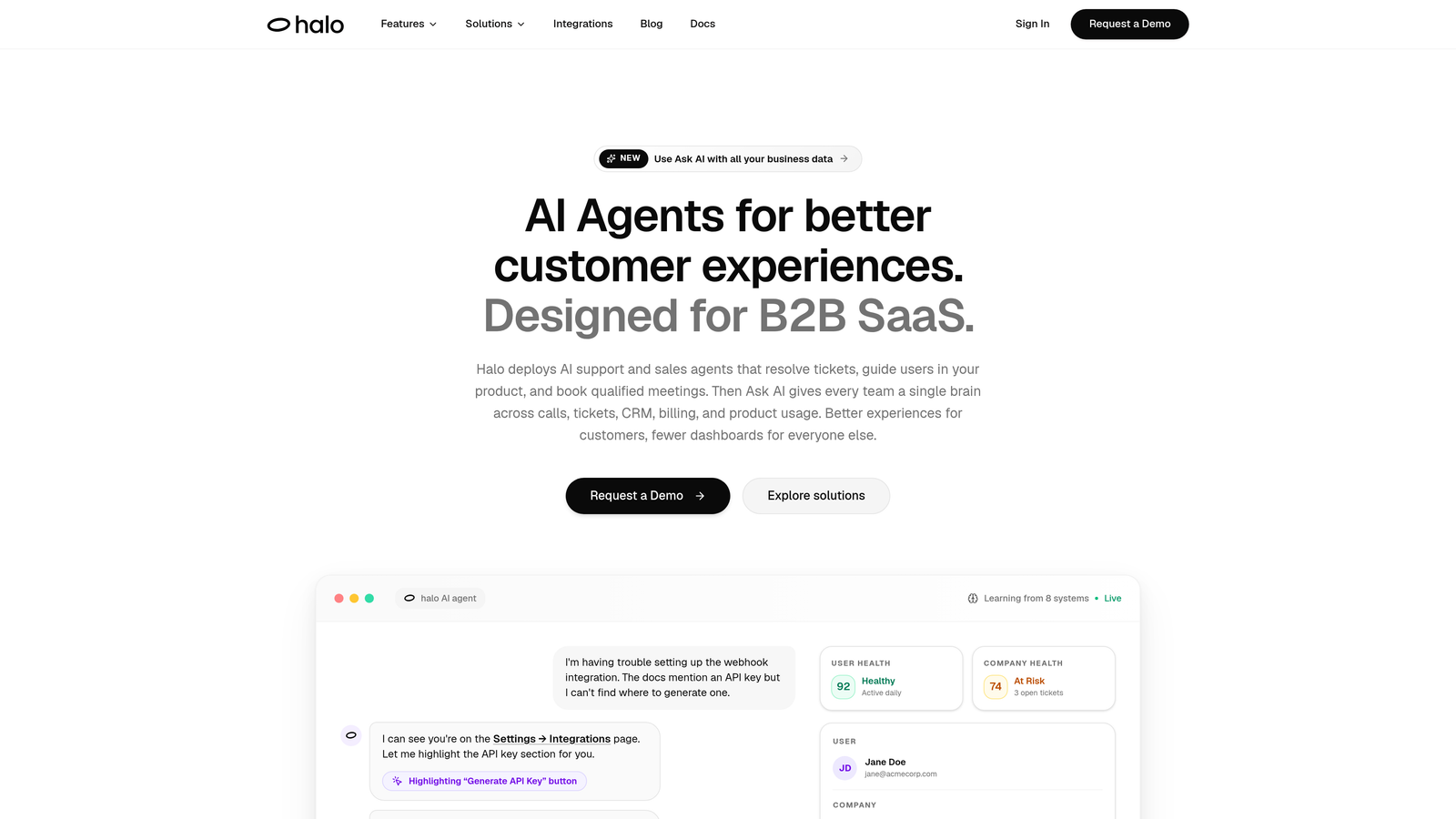
Halo AI is an AI-first customer support platform built specifically for B2B SaaS and product teams, not a traditional helpdesk with AI bolted on.
Where This Tool Shines
Halo's standout capability is its page-aware chat widget. Unlike most AI agents that respond based on a knowledge base alone, Halo understands exactly where a user is inside your product and provides visual UI guidance in that specific context. A user stuck on your billing page gets different, more relevant help than one struggling with an onboarding flow.
The platform also goes beyond support metrics. Halo's smart inbox surfaces customer health signals, revenue intelligence, and anomaly detection, turning your support function into a source of business intelligence that product and revenue teams can act on. Every resolved interaction feeds back into the system automatically, so the AI gets smarter without manual retraining.
Key Features
Page-Aware Chat Widget: Understands the user's exact location within your product and delivers contextually relevant visual guidance.
Smart Inbox with Business Intelligence: Surfaces customer health signals, revenue intelligence, and anomaly detection alongside support data.
Auto Bug Ticket Creation: Automatically generates and routes bug reports directly to Linear, reducing manual handoff between support and engineering.
Live Agent Handoff: Escalates to human agents with full conversation context preserved, so users never have to repeat themselves.
Deep Integration Stack: Connects natively with Linear, Slack, HubSpot, Intercom, Stripe, Zoom, PandaDoc, and Fathom for true cross-functional visibility.
Continuous Learning: Improves from every interaction automatically, no manual retraining or model updates required.
Best For
Halo is purpose-built for B2B SaaS companies and product-led growth teams that want an AI-first architecture rather than an AI add-on. It's particularly well-suited for teams whose support function needs to connect directly to engineering workflows, revenue data, and product analytics.
Pricing
Visit haloagents.ai for current pricing details. Plans are tailored to B2B SaaS teams at various stages of growth.
2. Intercom Fin
Best for: Mid-market SaaS teams already using Intercom who want native AI resolution without a separate setup.
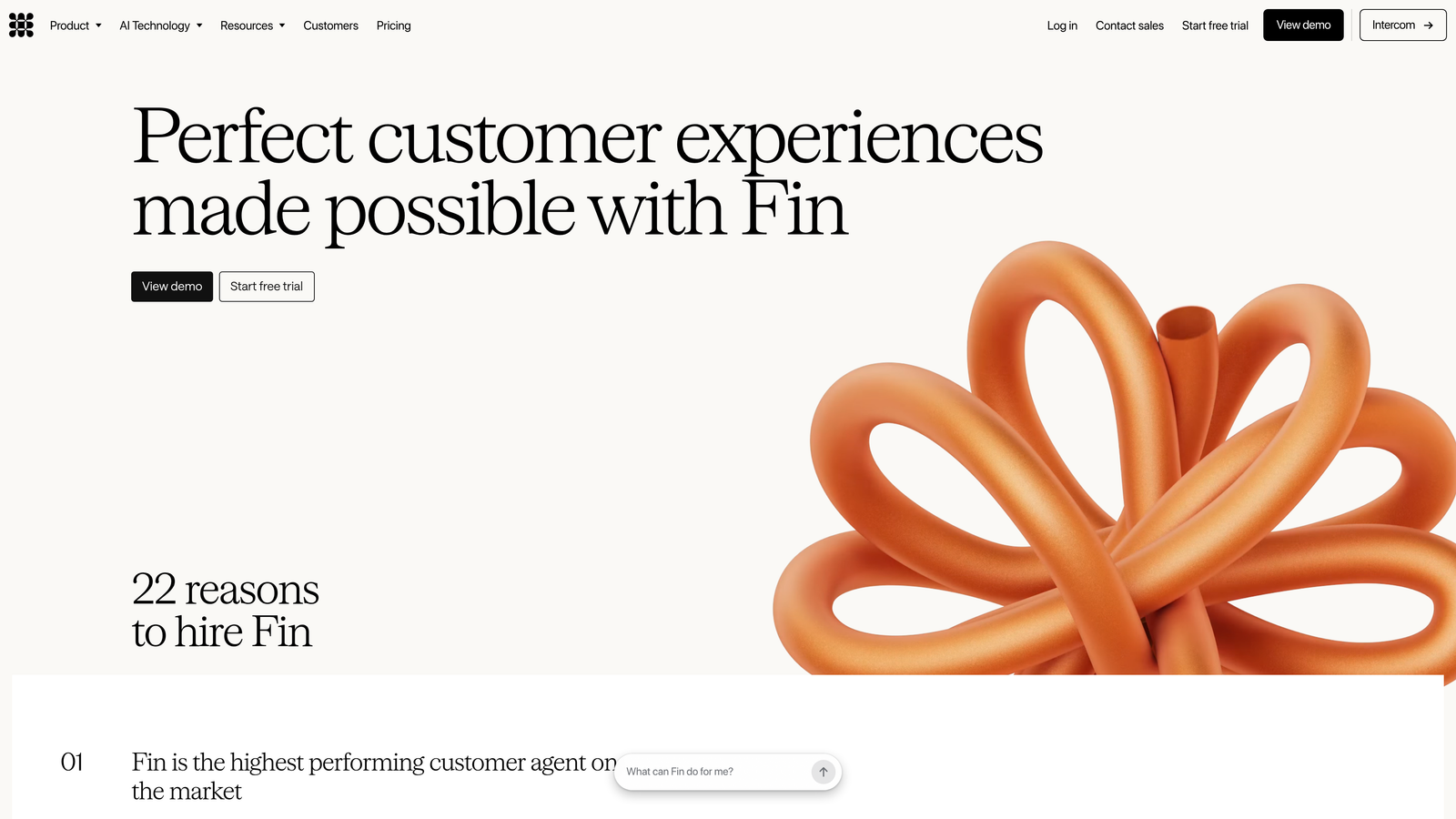
Intercom Fin is Intercom's native AI agent, resolving customer queries autonomously using your knowledge base and handing off to human agents within the Intercom inbox.
Where This Tool Shines
Fin's biggest advantage is how naturally it fits into teams already on Intercom. There's no separate implementation, no data migration, and no new interface to learn. If your team lives in the Intercom inbox, Fin extends that environment with autonomous resolution rather than disrupting it.
The handoff experience is notably smooth. When Fin reaches the limits of what it can resolve, it passes the conversation to a human agent with full context intact, keeping the customer experience seamless.
Key Features
Native Intercom Integration: Works directly within Intercom messenger and inbox with no separate platform configuration needed.
Knowledge Base-Powered Resolution: Draws on your existing Intercom articles and content to resolve queries autonomously.
Contextual Human Handoff: Transfers conversations to live agents with the full thread preserved.
Brand Voice Customization: Allows tone and persona configuration to match your company's communication style.
Resolution Analytics: Tracks resolution rates and conversation quality to help teams refine their knowledge base over time.
Best For
Teams already invested in the Intercom ecosystem who want AI resolution without introducing a new vendor. Less ideal for teams that need deep integrations outside the Intercom stack or want AI that learns beyond their knowledge base content.
Pricing
Fin is an add-on to existing Intercom plans. Visit intercom.com/fin for current pricing.
3. Zendesk AI
Best for: Enterprise teams with large existing Zendesk deployments who want AI without platform migration.
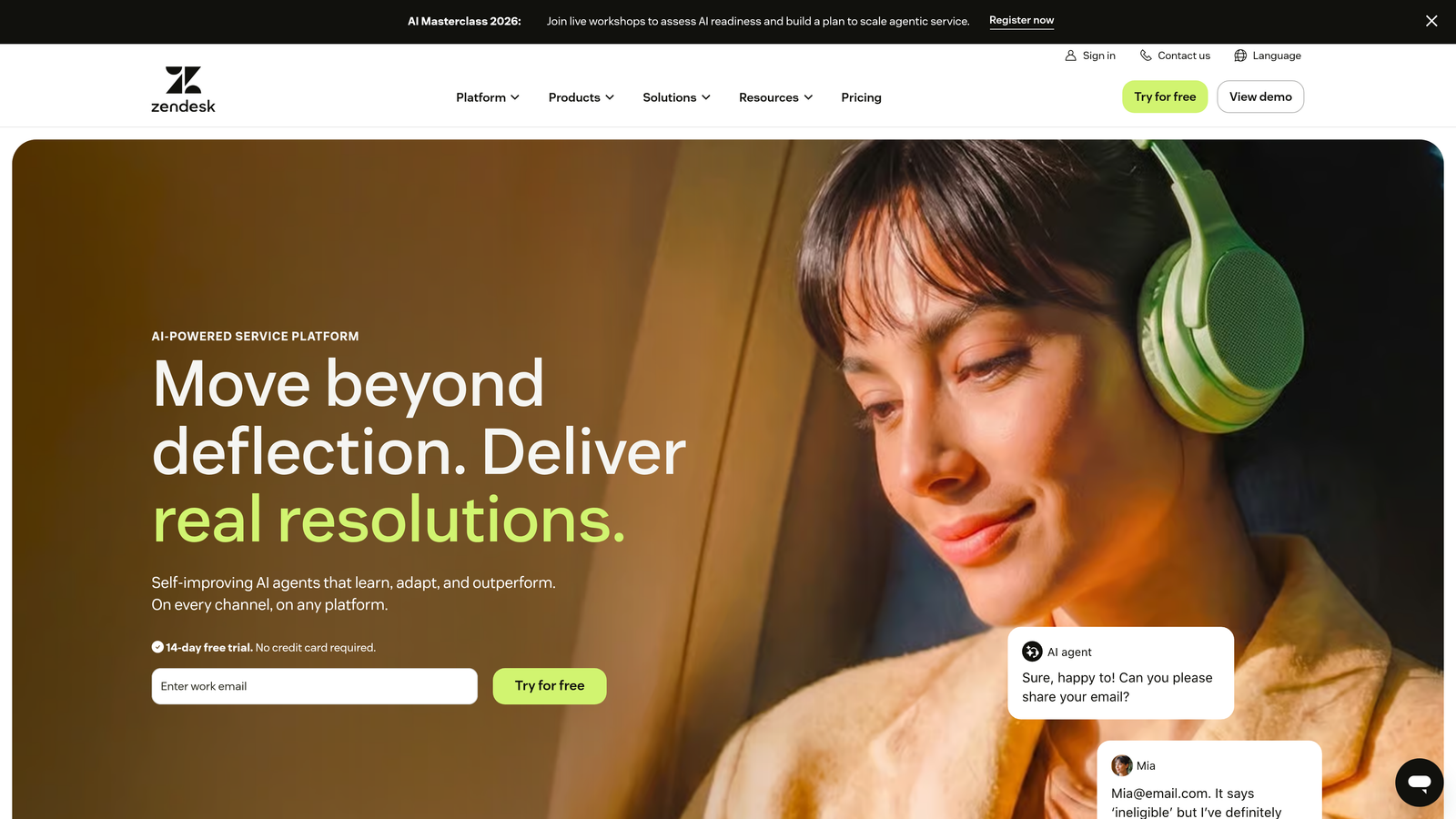
Zendesk AI is Zendesk's embedded AI suite, adding intelligent triage, agent copilot assistance, and automated resolutions directly into the Zendesk Suite.
Where This Tool Shines
Zendesk AI's strength is depth of integration with the existing Zendesk environment. For enterprises that have spent years configuring workflows, macros, and reporting inside Zendesk, this means getting AI capabilities without dismantling what's already working. The agent copilot feature is particularly useful for complex support environments where agents need real-time guidance rather than full automation.
Intelligent triage, which classifies tickets by intent, sentiment, and priority, helps large teams manage high ticket volumes without manual sorting.
Key Features
Intelligent Triage: Automatically routes tickets based on intent, sentiment, and priority signals.
Agent Copilot: Provides real-time response suggestions and next-best-action guidance to human agents.
Automated Resolutions: Handles common, repetitive ticket types without agent involvement.
Workflow Integration: Works within existing Zendesk macros, triggers, and automation rules.
Quality Assurance Reporting: Robust analytics tools for tracking performance and identifying gaps.
Best For
Enterprise support organizations with established Zendesk infrastructure and high ticket volumes. Teams starting fresh or looking for AI-first architecture will likely find better options elsewhere.
Pricing
Bundled into Zendesk Suite tiers. Visit zendesk.com for current pricing details.
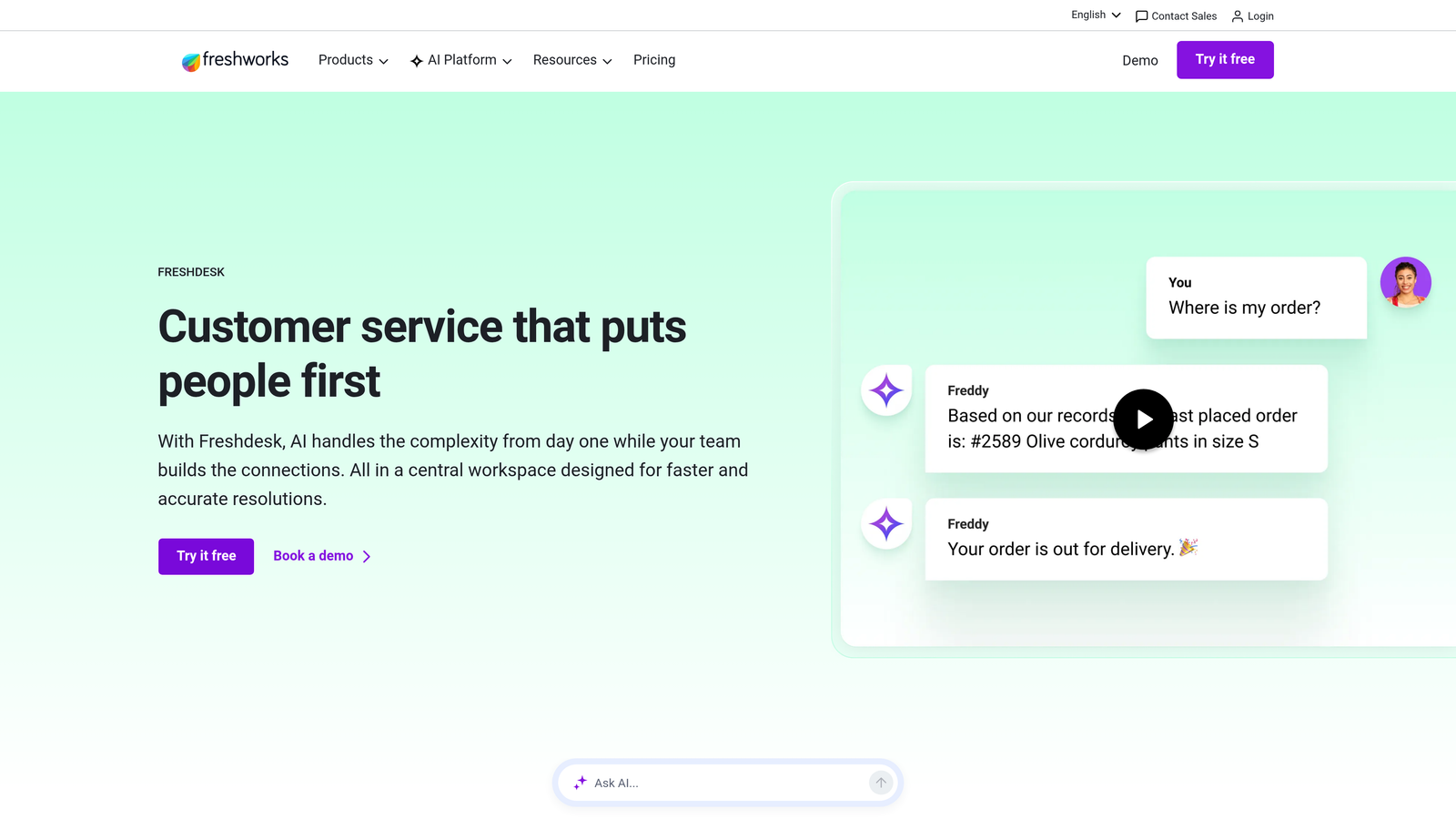
4. Freshdesk Freddy AI
Best for: SMB and mid-market teams wanting an affordable all-in-one helpdesk with embedded AI across self-service, agent assistance, and analytics.
Freshdesk Freddy AI is Freshworks' embedded AI layer, covering autonomous resolution, agent assistance, and analytics in one accessible package.
Where This Tool Shines
Freddy AI spans three distinct modes: self-service resolution facing customers, copilot assistance for agents, and analytics for team leaders. Having all three under one roof, at Freshdesk's price point, makes it unusually accessible for teams that can't justify enterprise AI spend.
The Freshworks ecosystem integration is also a practical advantage. Teams using Freshchat and Freshsales alongside Freshdesk get a connected data layer across customer conversations, sales, and support without stitching together separate tools.
Key Features
Freddy Self Service: Customer-facing AI that resolves queries autonomously before they reach a human agent.
Freddy Copilot: Real-time response drafting and suggestions for agents handling live tickets.
Freddy Insights: AI-powered analytics that surface trends and performance signals for team leaders.
Freshworks Ecosystem: Native connectivity with Freshchat and Freshsales for cross-functional data sharing.
SMB-Friendly Pricing: Tiered plans accessible to teams that don't have enterprise budgets.
Best For
SMB and mid-market teams looking for an embedded AI experience across the full support workflow without enterprise complexity or pricing. Less suited to teams needing deep integrations outside the Freshworks stack.
Pricing
Freddy AI is included in Freshdesk plans. Visit freshworks.com/freshdesk for current pricing tiers.
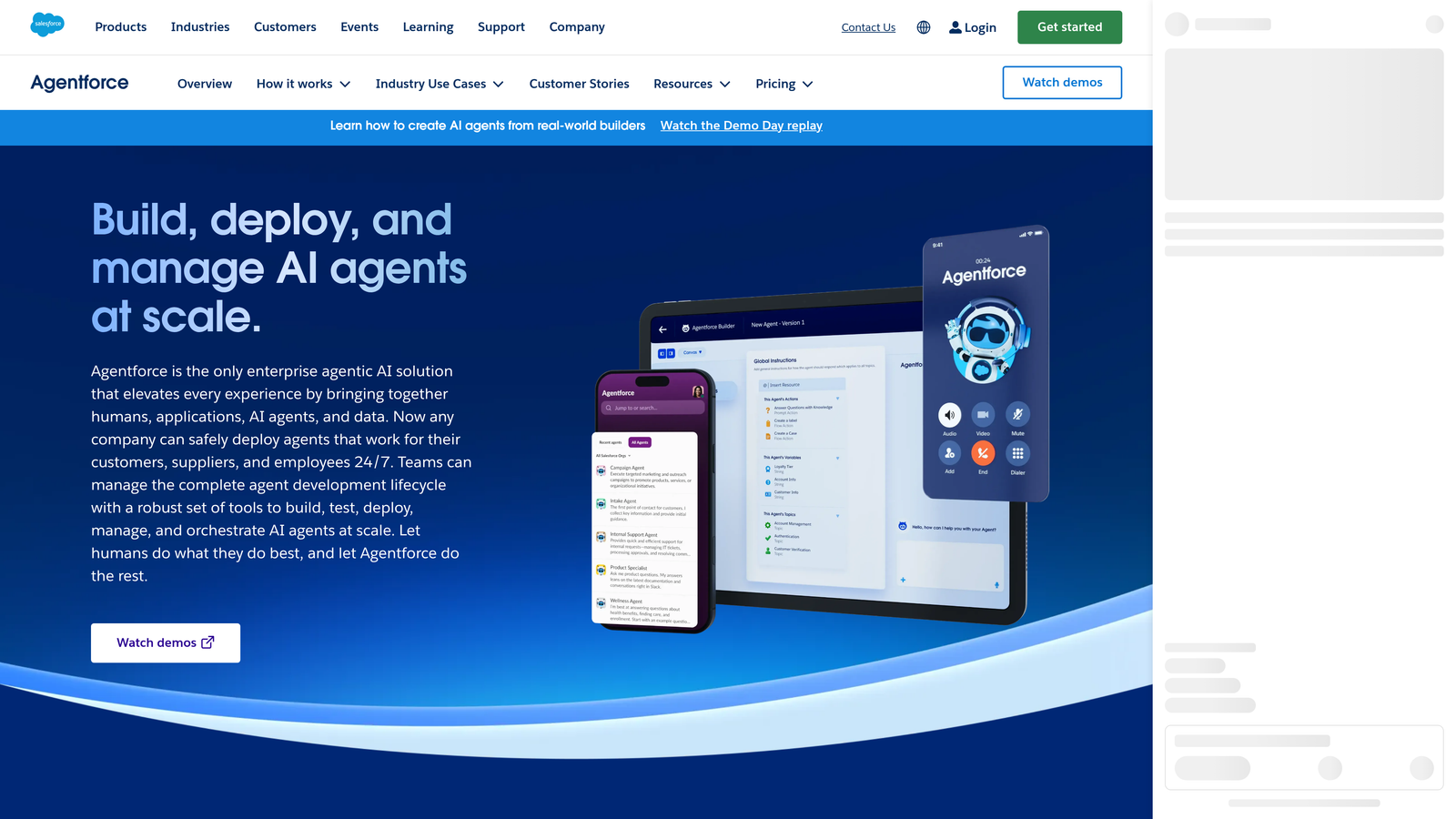
5. Salesforce Agentforce
Best for: Large enterprises already on Salesforce Service Cloud with complex, data-rich customer relationships.
Salesforce Agentforce is Salesforce's autonomous AI agent platform, natively connected to CRM data for highly personalized, context-rich support resolution.
Where This Tool Shines
Agentforce's core advantage is CRM-native context. When an AI agent can see a customer's account history, open opportunities, order status, and case history simultaneously, resolution quality improves significantly. For enterprises where support, sales, and account management share data in Salesforce, this context depth is hard to replicate elsewhere.
The low-code agent builder via Salesforce Flow also means that teams can configure autonomous agent behavior without heavy developer involvement, which matters in large organizations where engineering resources are always constrained.
Key Features
CRM-Native Context: Accesses customer accounts, cases, orders, and history to personalize every interaction.
Autonomous Action-Taking: Can take actions across Salesforce objects, not just respond to queries.
Low-Code Agent Builder: Salesforce Flow enables non-developers to configure agent behavior and workflows.
Multi-Channel Deployment: Operates across chat, email, voice, and messaging channels.
Enterprise Compliance: Built-in security, audit trails, and compliance tooling for regulated industries.
Best For
Large enterprises deeply invested in the Salesforce ecosystem. Teams not already on Salesforce will find the implementation overhead and licensing costs difficult to justify compared to purpose-built alternatives.
Pricing
Pricing is tied to Salesforce licensing. Visit salesforce.com/agentforce for current details.
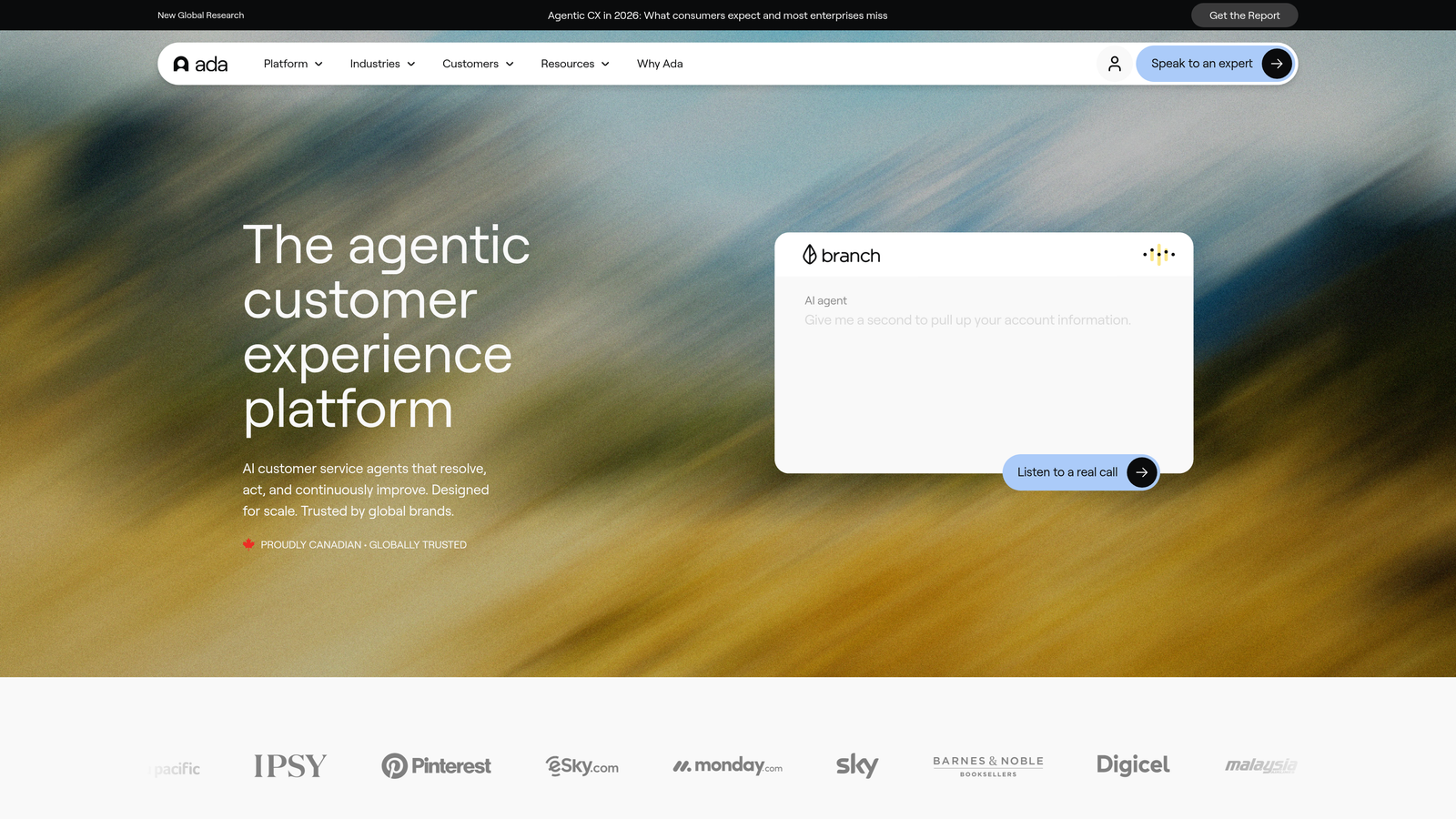
6. Ada
Best for: Non-technical teams in enterprise environments needing multilingual, no-code AI agent deployment.
Ada is a no-code AI agent builder focused on autonomous customer service resolution, with strong multilingual support and enterprise-grade security for high-volume operations.
Where This Tool Shines
Ada's no-code design philosophy sets it apart. Support and operations teams can build, test, and refine AI agents without writing a line of code, which dramatically reduces the time from decision to deployment. For organizations operating across multiple languages and regions, Ada's multilingual capability is a meaningful differentiator.
The coaching tools for improving agent accuracy over time also give non-technical teams a way to continuously refine performance without needing data science resources.
Key Features
No-Code Agent Design: Fully visual builder accessible to support and operations teams without engineering support.
Multilingual Support: Handles customer interactions across dozens of languages for global operations.
Enterprise Security: Compliance certifications and security controls suitable for regulated industries.
Helpdesk Integrations: Connects with Zendesk, Salesforce, Freshdesk, and other major platforms.
Coaching Tools: Built-in mechanisms to review and improve agent accuracy continuously.
Best For
Enterprise teams in e-commerce, fintech, or telecom that need multilingual AI resolution without technical implementation overhead. Custom pricing makes it less transparent for teams early in their evaluation.
Pricing
Custom pricing based on volume and requirements. Visit ada.cx to request a quote.
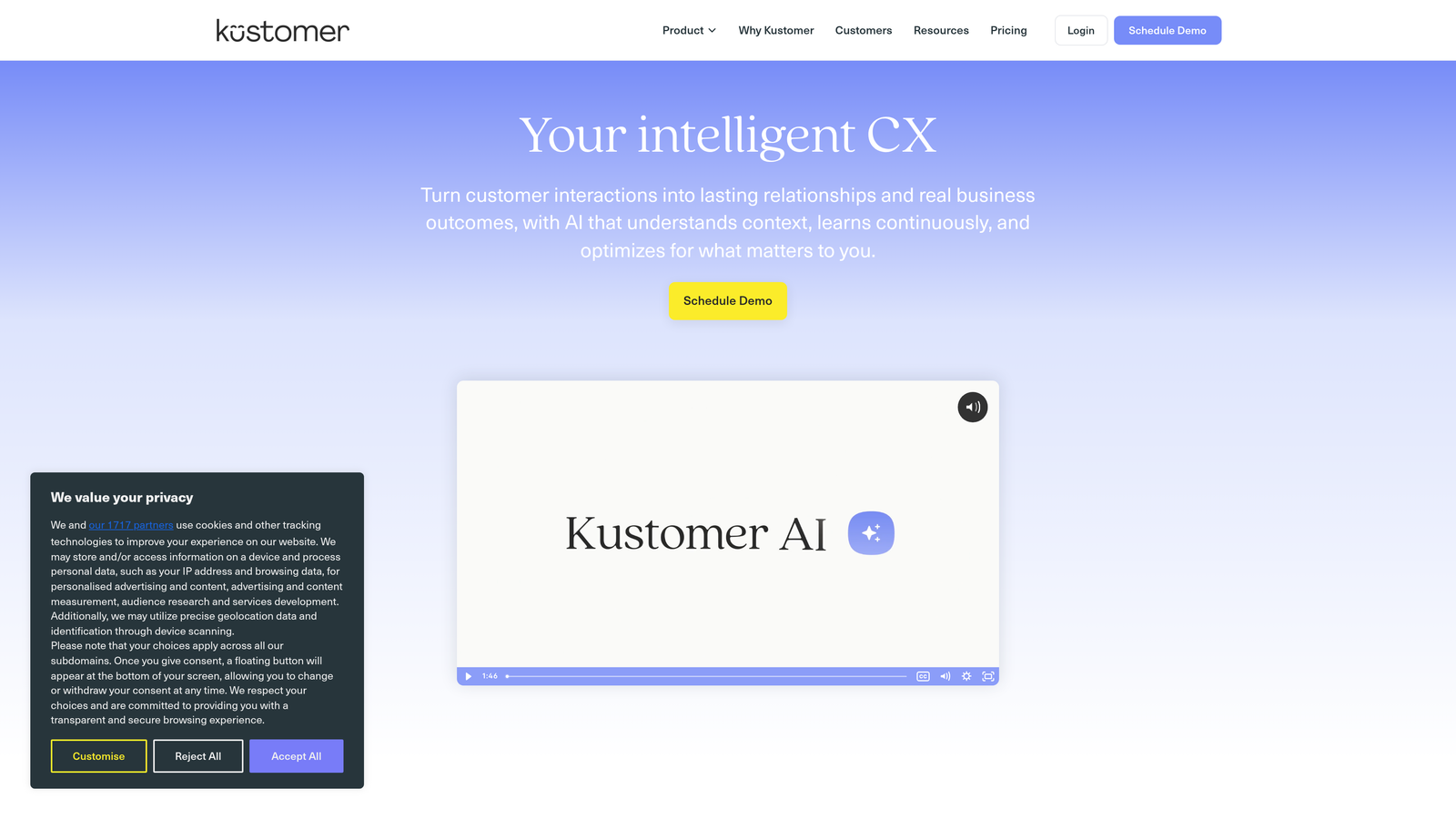
7. Kustomer
Best for: D2C brands and omnichannel support teams that need a unified customer timeline across every interaction channel.
Kustomer is a CRM-native customer service platform that combines a unified customer timeline across all channels with AI automation for faster, more contextual support.
Where This Tool Shines
Kustomer's unified timeline is its defining feature. Every customer interaction, whether via email, chat, social, SMS, or voice, appears in a single chronological view. When AI automation routes or responds to a ticket, it does so with the full picture of that customer's history, not just the current conversation.
The workflow builder for complex support processes gives operations teams flexibility to automate multi-step scenarios that simpler helpdesks can't handle without heavy customization.
Key Features
Unified Customer Timeline: All interactions across every channel consolidated into one view for agents and AI alike.
AI-Powered Automation: Handles routing, tagging, and resolution with customer context built in.
Omnichannel Coverage: Email, chat, social, SMS, and voice in a single platform.
CRM-Native Data Model: Rich customer data available at every point in the support workflow.
Workflow Builder: Visual automation for complex, multi-step support processes.
Best For
D2C brands and omnichannel operations where customer history across multiple touchpoints directly impacts support quality. Less suited to pure B2B SaaS teams that prioritize product-context awareness over channel breadth.
Pricing
Visit kustomer.com for current pricing information.
8. Tidio Lyro
Best for: Small businesses, early-stage SaaS teams, and e-commerce stores that need fast, affordable AI resolution without enterprise complexity.
Tidio Lyro is a conversational AI agent designed for smaller teams, offering quick setup and accessible pricing for AI-powered resolution without the overhead of enterprise platforms.
Where This Tool Shines
Lyro's appeal is simplicity and speed. Non-technical teams can have a working AI agent live in hours, trained on their existing support content. For early-stage companies that need something functional immediately without a lengthy implementation process, that's a genuine advantage.
The e-commerce integrations with Shopify and WooCommerce also make Lyro a practical choice for online retailers who need AI resolution for order-related queries without building custom connections.
Key Features
Fast, Low-Code Setup: Operational in hours without technical implementation support.
Conversational AI Resolution: Trained on your support content to handle common customer queries.
Live Chat Fallback: Seamlessly routes to a human agent when the AI cannot resolve a query.
E-Commerce Integrations: Native connections with Shopify and WooCommerce for retail-focused teams.
Accessible Pricing: Free plan available with paid tiers designed for small team budgets.
Best For
Small businesses, e-commerce stores, and early-stage SaaS teams that need basic AI resolution quickly and affordably. Teams with complex B2B support needs, deep integration requirements, or significant ticket volume will outgrow Lyro relatively quickly.
Pricing
A free plan is available, with paid plans at accessible price points. Visit tidio.com for current rates.
9. Forethought
Best for: Teams with established helpdesk investments that want AI augmentation without platform migration.
Forethought layers generative AI triage, routing, and resolution on top of your existing helpdesk rather than replacing it, making it a strong fit for teams that can't or won't migrate away from Zendesk, Salesforce, or Freshdesk.
Where This Tool Shines
Forethought's positioning is deliberately additive. If your team has years of workflow configuration, reporting, and institutional knowledge built into an existing helpdesk, Forethought lets you add generative AI capabilities without dismantling that investment. The retrieval-augmented generation (RAG) approach grounds AI responses in your actual knowledge base, which reduces hallucination risk and keeps answers accurate.
The separation between Solve (autonomous resolution) and Assist (agent copilot) modules also lets teams adopt AI incrementally, starting with copilot assistance before moving to full autonomous resolution.
Key Features
Generative AI Triage: Intelligent classification and routing on top of Zendesk, Salesforce, and Freshdesk.
Solve Module: Autonomous resolution for common ticket types without human involvement.
Assist Module: Agent copilot that provides real-time guidance and response drafting.
RAG-Powered Responses: Retrieval-augmented generation keeps AI answers grounded in verified knowledge base content.
Deflection and Productivity Analytics: Tracks deflection rates and agent efficiency improvements across both modules.
Best For
Support teams with significant existing helpdesk investments who want to add AI capabilities incrementally. Teams building a support function from scratch will likely find a purpose-built AI platform more efficient than an augmentation layer.
Pricing
Custom pricing based on volume and configuration. Visit forethought.ai for a quote.
Which Platform Is Right for You?
The right choice depends heavily on where you are, what you're already using, and what you need the AI to do beyond resolving tickets.
Building an AI-first support function for B2B SaaS: Halo AI is built specifically for this scenario, with page-aware context, business intelligence output, and deep integrations across the tools product and revenue teams already use.
Already on Intercom and want native AI: Intercom Fin extends your existing environment without adding a new vendor or implementation project.
Large enterprise on Zendesk or Salesforce: Zendesk AI and Salesforce Agentforce both offer deep native integration that protects your existing platform investment while adding autonomous capability.
SMB or mid-market on a budget: Freshdesk Freddy AI delivers self-service, copilot, and analytics at a price point accessible to teams that aren't ready for enterprise spend.
Need AI without migrating your helpdesk: Forethought is purpose-built for augmentation, layering generative AI on top of whatever platform you're already running.
Small business or early-stage team: Tidio Lyro gets you live quickly and affordably without requiring technical resources or a lengthy onboarding process.
Your support team shouldn't scale linearly with your customer base. Let AI agents handle routine tickets, guide users through your product, and surface business intelligence while your team focuses on complex issues that need a human touch. See Halo in action and discover how continuous learning transforms every interaction into smarter, faster support.