9 Best AI Agent Customer Service Software Platforms in 2026
This guide evaluates nine leading AI agent customer service software platforms for 2026, comparing autonomous ticket resolution capabilities, integration depth, and human handoff quality to help B2B teams find the right fit. From AI-first architectures to traditional helpdesks with AI layers, the breakdown covers key selection criteria so support and product teams can make a confident, stack-compatible choice.
 Matt PattoliFounder14 min read
AI agent customer service software has moved well beyond basic chatbots. Today's platforms can autonomously resolve tickets, guide users through complex workflows, detect bugs, escalate to humans at the right moment, and surface business intelligence that helps product and support teams make smarter decisions.
The challenge isn't finding an AI support tool. It's finding one that actually fits your stack, your team size, and the complexity of your customer interactions.
This list covers nine platforms worth evaluating in 2026, ranging from AI-first architectures built for autonomous resolution to established helpdesk giants adding AI layers. Selection criteria include autonomous resolution capability, integration depth, learning and improvement mechanisms, human handoff quality, and overall value for B2B teams.
1. Halo AI
Best for: B2B SaaS teams that want AI-first autonomous support with deep integrations and business intelligence built in.
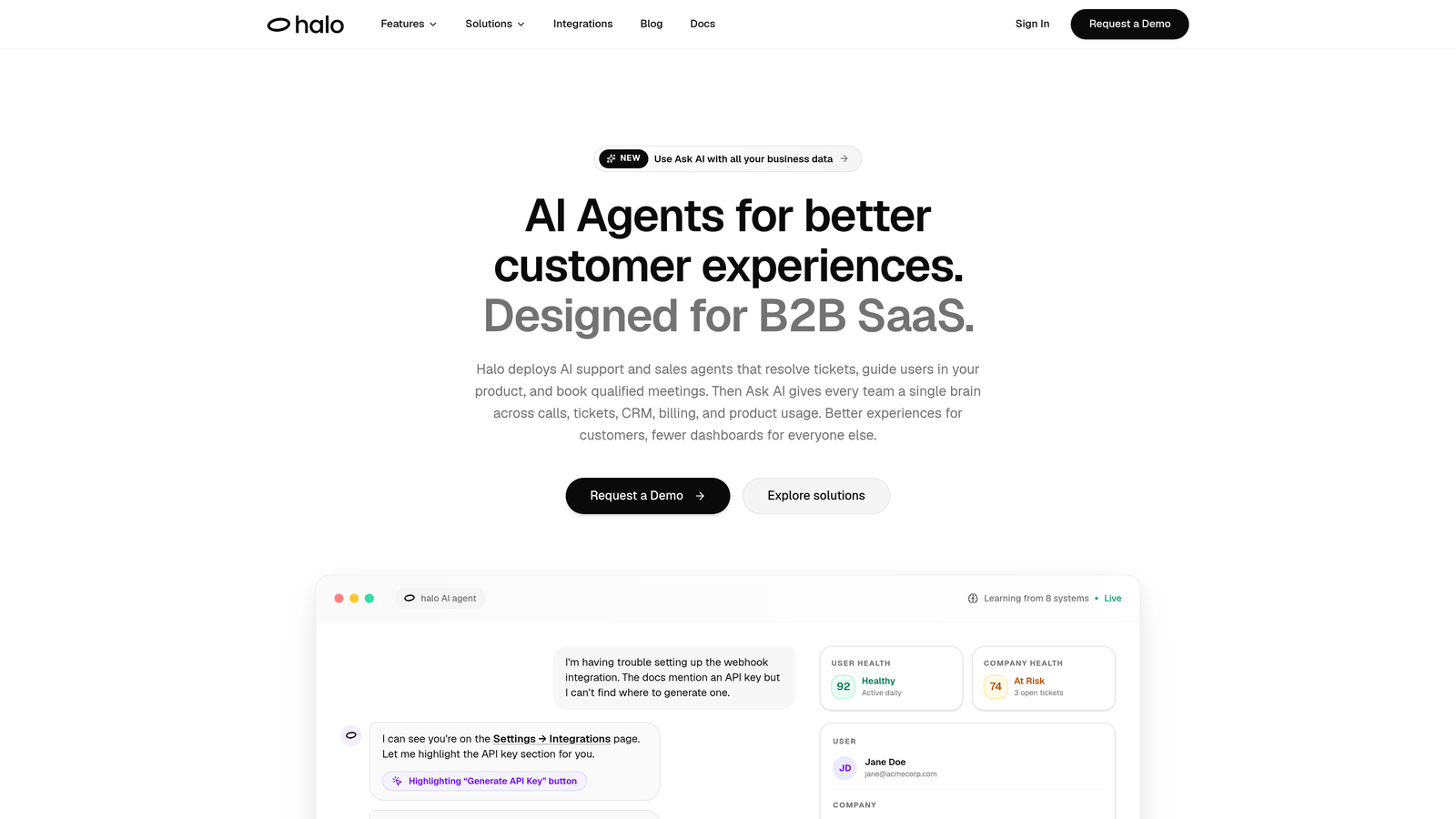
Halo AI is an AI-first customer support platform that deploys autonomous agents to resolve tickets, guide users with page-aware context, auto-create bug reports, and surface business intelligence—all while learning from every interaction.
Where This Tool Shines
Halo was built from the ground up around autonomous resolution, not ticket management. That architectural difference matters: the system is designed to close tickets, not just log them. Because the AI learns continuously from every resolved interaction, the platform gets meaningfully smarter over time rather than staying static.
The page-aware chat widget is a standout capability. Instead of responding to text descriptions of problems, Halo's AI sees what the user sees on their screen, enabling it to provide contextual, step-by-step visual guidance. Pair that with auto bug ticket creation that detects patterns across conversations and generates structured reports automatically, and you have a support layer that feeds directly into your product development workflow.
Key Features
Page-Aware Chat Widget: The AI sees the user's current screen context, enabling precise, visual guidance rather than generic text responses.
Autonomous Ticket Resolution: Resolves support tickets end-to-end with continuous learning that improves accuracy and coverage over time.
Auto Bug Ticket Creation: Detects recurring patterns across conversations and automatically generates structured bug reports for your engineering team.
Smart Inbox with Business Intelligence: Surfaces customer health signals, revenue intelligence, and anomaly detection directly from support interaction data.
Live Agent Handoff: Transfers conversations to human agents with full context preserved, so customers never have to repeat themselves.
Deep Integration Stack: Connects natively with Linear, Slack, HubSpot, Intercom, Stripe, Zoom, PandaDoc, and Fathom.
Best For
Growing SaaS companies and product-led teams that want support to scale without scaling headcount. Particularly well-suited for teams that want support data to feed back into product development, customer success, and revenue intelligence workflows rather than sitting in an isolated helpdesk.
Pricing
Contact Halo AI directly for pricing details at haloagents.ai. Pricing is tailored to team size and usage.
2. Intercom Fin
Best for: Teams already using Intercom who want autonomous AI resolution without switching platforms.
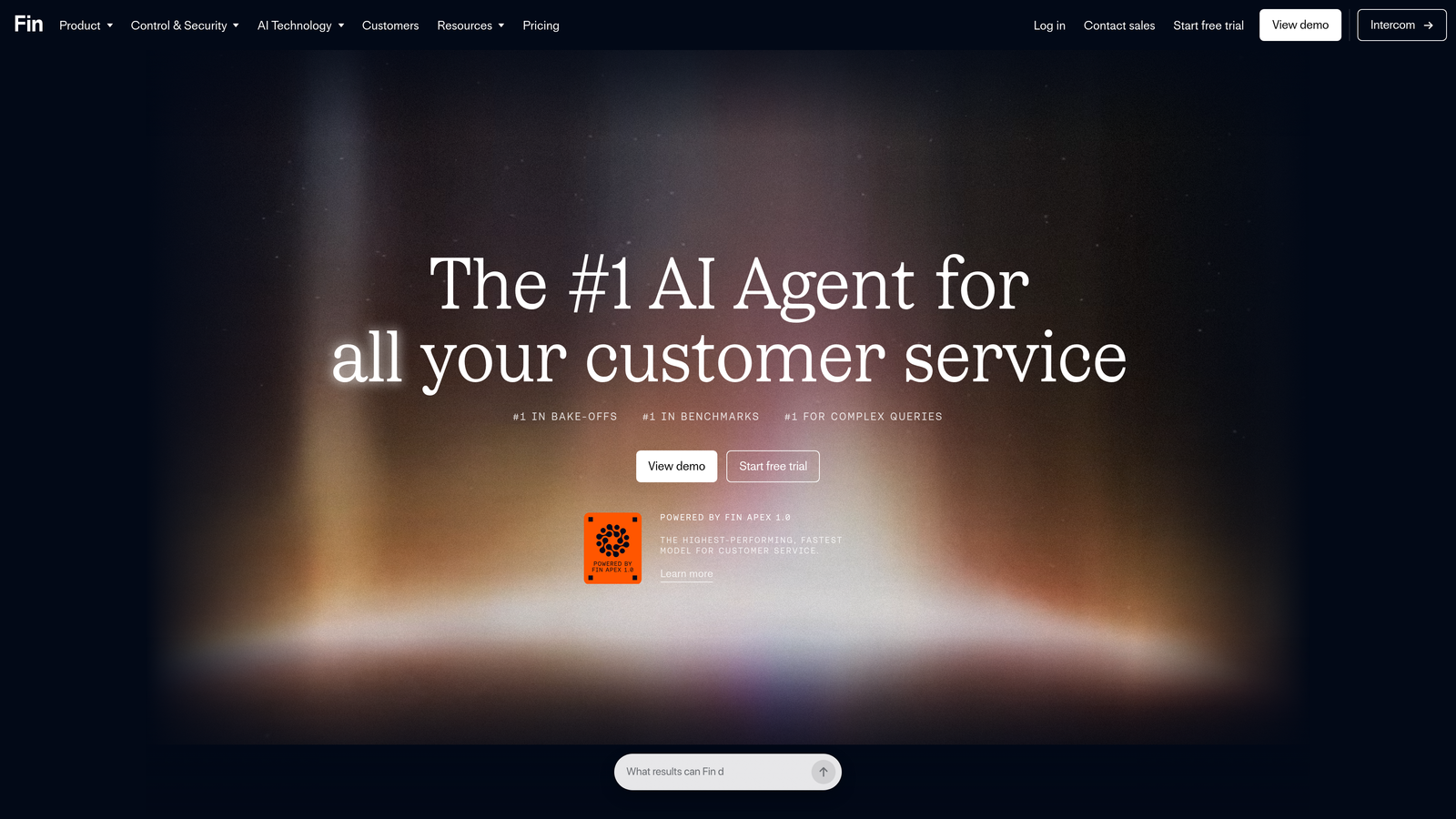
Intercom Fin is Intercom's native AI agent that resolves support conversations autonomously within the Intercom messenger ecosystem, drawing from help center content and custom knowledge sources.
Where This Tool Shines
If your team is already running on Intercom, Fin is the path of least resistance to AI-powered resolution. There's no separate setup, no data migration, and no parallel system to manage. The AI operates inside the same conversation threads your agents already work in, which makes adoption smooth.
Fin 2, released in 2024, introduced more autonomous multi-step action-taking capabilities, moving beyond simple FAQ-style responses toward genuine workflow completion. The per-resolution pricing model is also worth noting: you pay for what actually gets resolved, which aligns vendor incentives with customer outcomes.
Key Features
Native Intercom Integration: Operates directly within Intercom's messenger with no additional configuration for existing users.
Multi-Source Knowledge: Answers from help center articles, URLs, and custom knowledge bases with no manual scripting required.
Fin 2 Autonomous Actions: Handles multi-step resolution tasks, not just single-turn FAQ responses.
Per-Resolution Pricing: Charges only for conversations the AI successfully resolves, not for every interaction attempted.
Seamless Human Handoff: Escalates within the same conversation thread with full context intact.
Best For
Support teams already invested in the Intercom ecosystem who want to add autonomous resolution without introducing a new platform. Less ideal for teams looking to move off Intercom or those needing deep integrations beyond the Intercom stack.
Pricing
Per-resolution pricing; rates vary by volume. Requires an active Intercom subscription. Contact Intercom for current rates based on your conversation volume.
3. Zendesk AI Agents
Best for: Enterprise support teams with complex compliance requirements and high ticket volumes already on Zendesk Suite.
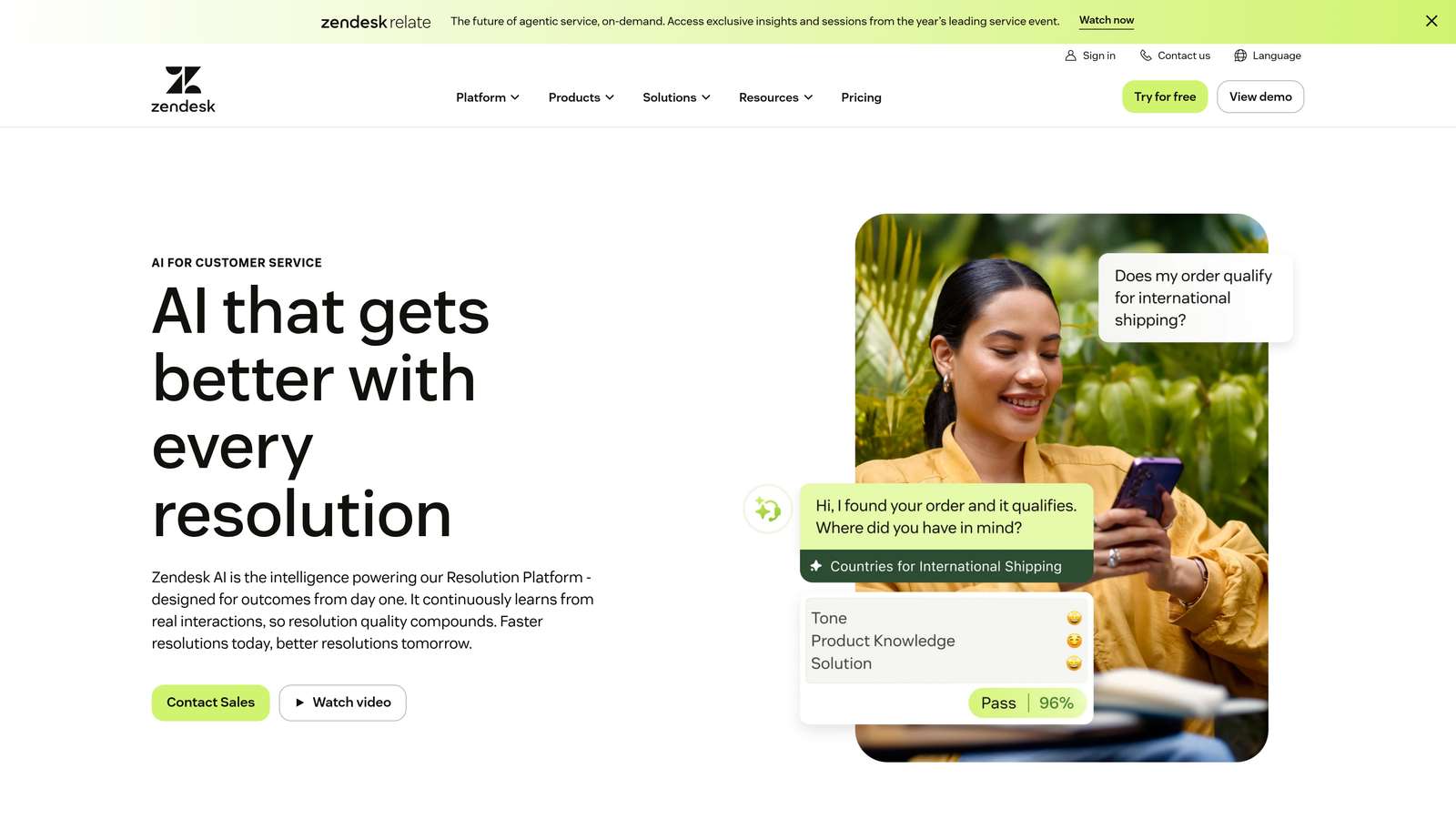
Zendesk AI Agents is Zendesk's enterprise AI layer that enables autonomous end-to-end ticket resolution for defined intents, built on top of the Zendesk Suite's mature helpdesk infrastructure.
Where This Tool Shines
Zendesk's AI layer benefits from decades of helpdesk infrastructure. The analytics, audit trails, compliance certifications, and reporting capabilities that enterprise teams depend on are all present. For organizations where security review and compliance documentation are prerequisites for any new tool, Zendesk checks those boxes out of the box.
The AI Copilot feature sits alongside the autonomous resolution layer, giving human agents real-time suggestions and summarization tools even for tickets that need a human touch. That dual-layer approach means the AI is adding value whether it's resolving tickets fully or just assisting.
Key Features
End-to-End Autonomous Resolution: Handles complete ticket resolution for defined support intents without human involvement.
Enterprise Compliance: Includes audit trails, security certifications, and compliance features required by regulated industries.
Advanced Analytics: Deep reporting built into the Zendesk ecosystem with customizable dashboards and team performance metrics.
Intelligent Triage and Routing: Automatically categorizes and routes tickets across complex team structures and escalation paths.
AI Copilot: Provides real-time agent assist alongside autonomous resolution for hybrid human-AI workflows.
Best For
Enterprise teams with existing Zendesk Suite investments, complex routing requirements, and compliance-heavy environments. The configuration complexity and add-on pricing structure can be a barrier for smaller teams or those without dedicated Zendesk administrators.
Pricing
Zendesk Suite starts at approximately $55 per agent per month. AI features are add-ons with separate pricing. Contact Zendesk for current AI add-on rates, as total cost can be significant at scale.
4. Freshdesk Freddy AI
Best for: Mid-market teams that want an all-in-one helpdesk and AI bundle at competitive price points.
Freshdesk Freddy AI is Freshworks' multi-layer AI system embedded across Freshdesk and Freshchat, covering self-service deflection, agent assist, and support analytics in one bundled package.
Where This Tool Shines
Freddy AI is structured in three distinct layers: Freddy Self Service handles autonomous deflection via chatbot, Freddy Copilot provides real-time suggestions and summarization for human agents, and Freddy Insights delivers AI-powered analytics across the support operation. Getting all three in one platform at Freshworks' price points is genuinely competitive.
For teams that don't want to assemble a separate helpdesk, AI layer, and analytics tool from different vendors, Freshdesk's bundled approach reduces both cost and integration complexity. The omnichannel coverage across chat, email, and phone is solid for teams managing multiple contact channels.
Key Features
Freddy Self Service: Autonomous chatbot deflection that handles common support queries without agent involvement.
Freddy Copilot: Real-time agent suggestions, response drafting, and conversation summarization for human agents.
Freddy Insights: AI-powered analytics that surface patterns, trends, and performance gaps across the support operation.
Bundled Pricing: AI features included in standard Freshdesk plans rather than charged as expensive add-ons.
Omnichannel Coverage: Consistent AI assistance across chat, email, and phone support channels.
Best For
Growing teams that want a complete helpdesk-plus-AI solution without enterprise-level complexity or pricing. A strong fit for companies moving off basic ticketing tools and wanting AI capabilities without a separate implementation project.
Pricing
Freddy AI features are included in the Growth plan at approximately $15 per agent per month, with more advanced capabilities on higher tiers. Check Freshworks directly for current plan details.
5. Salesforce Agentforce
Best for: Companies running both sales and support on Salesforce who want AI agents with native CRM data access.
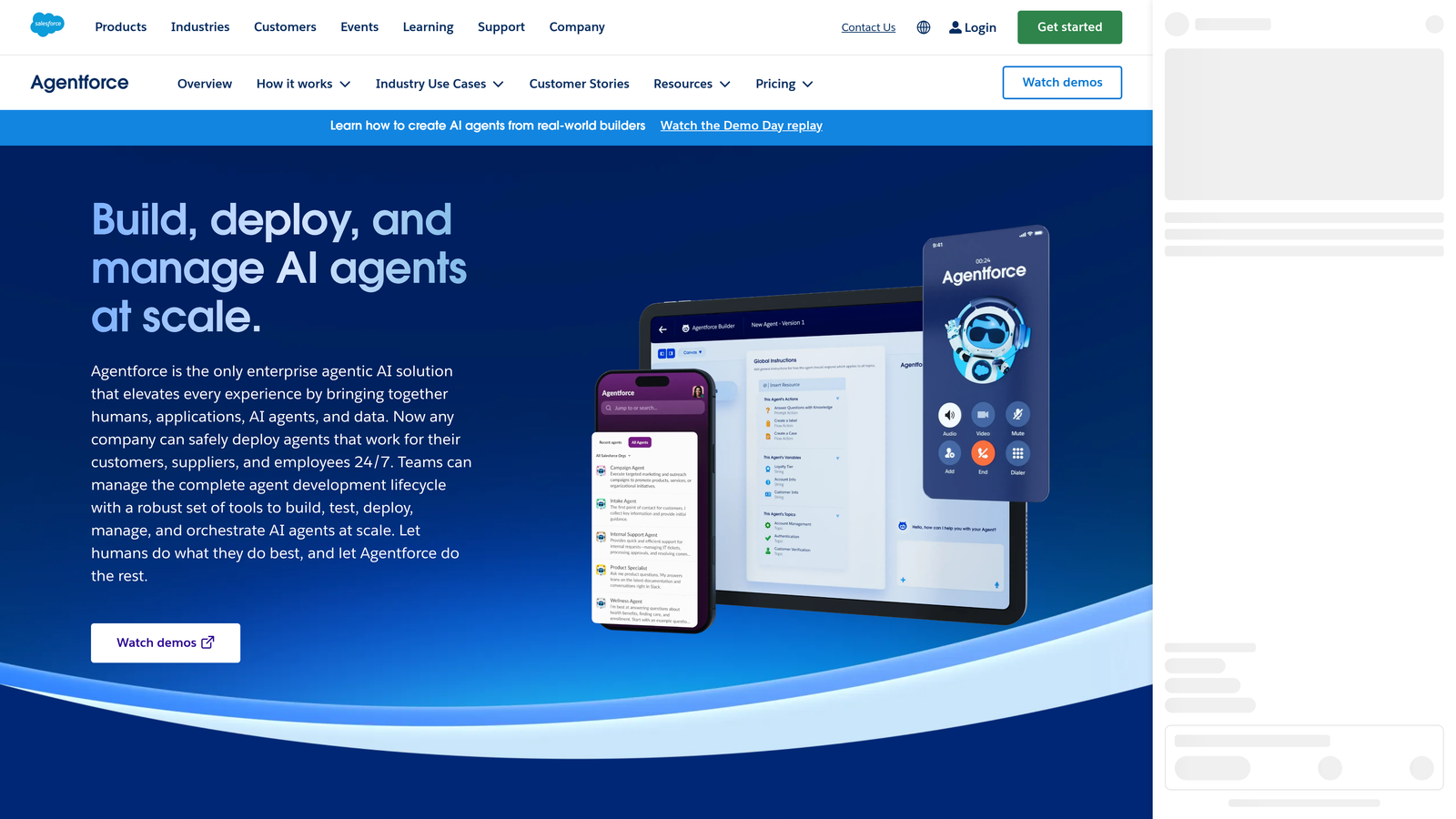
Salesforce Agentforce is Salesforce's autonomous AI agent platform that operates natively across Service Cloud, Sales Cloud, and Commerce Cloud, leveraging the full Salesforce data model for deeply personalized support actions.
Where This Tool Shines
The core advantage of Agentforce is data depth. Because it operates natively within Salesforce, the AI agent has access to the full CRM data model: contacts, cases, entitlements, open opportunities, subscription history, and everything else your team has captured. That context enables more personalized, accurate autonomous responses than a standalone AI tool reading from a knowledge base.
Agent Builder allows teams to configure AI agent behavior without deep coding knowledge, which reduces the technical barrier for support and operations teams. For organizations where sales and support share a Salesforce instance, the cross-cloud action capability is genuinely powerful.
Key Features
Native Salesforce Data Access: AI agents draw on full CRM context including contacts, cases, entitlements, and opportunities in real time.
Cross-Cloud Autonomous Actions: Takes actions across Service Cloud, Sales Cloud, and Commerce Cloud from a single agent configuration.
Agent Builder: Low-code interface for configuring AI agent behavior, topics, and action permissions without deep engineering involvement.
Consumption-Based Pricing: Pay per conversation rather than per seat, which can be cost-effective for lower-volume use cases.
Salesforce Ecosystem Integration: Works natively with Einstein, Flow, Apex, and the broader Salesforce platform.
Best For
Organizations already running Salesforce as their primary CRM and support platform. If your team isn't on Salesforce, the infrastructure requirement makes this a non-starter. For Salesforce shops, it's one of the most contextually rich options available.
Pricing
Consumption-based at approximately $2 per conversation. Requires existing Salesforce infrastructure. Contact Salesforce for volume pricing and bundle options.
6. Kustomer AI (KIQ)
Best for: High-volume, omnichannel support teams that need AI acting on complete cross-channel customer history.
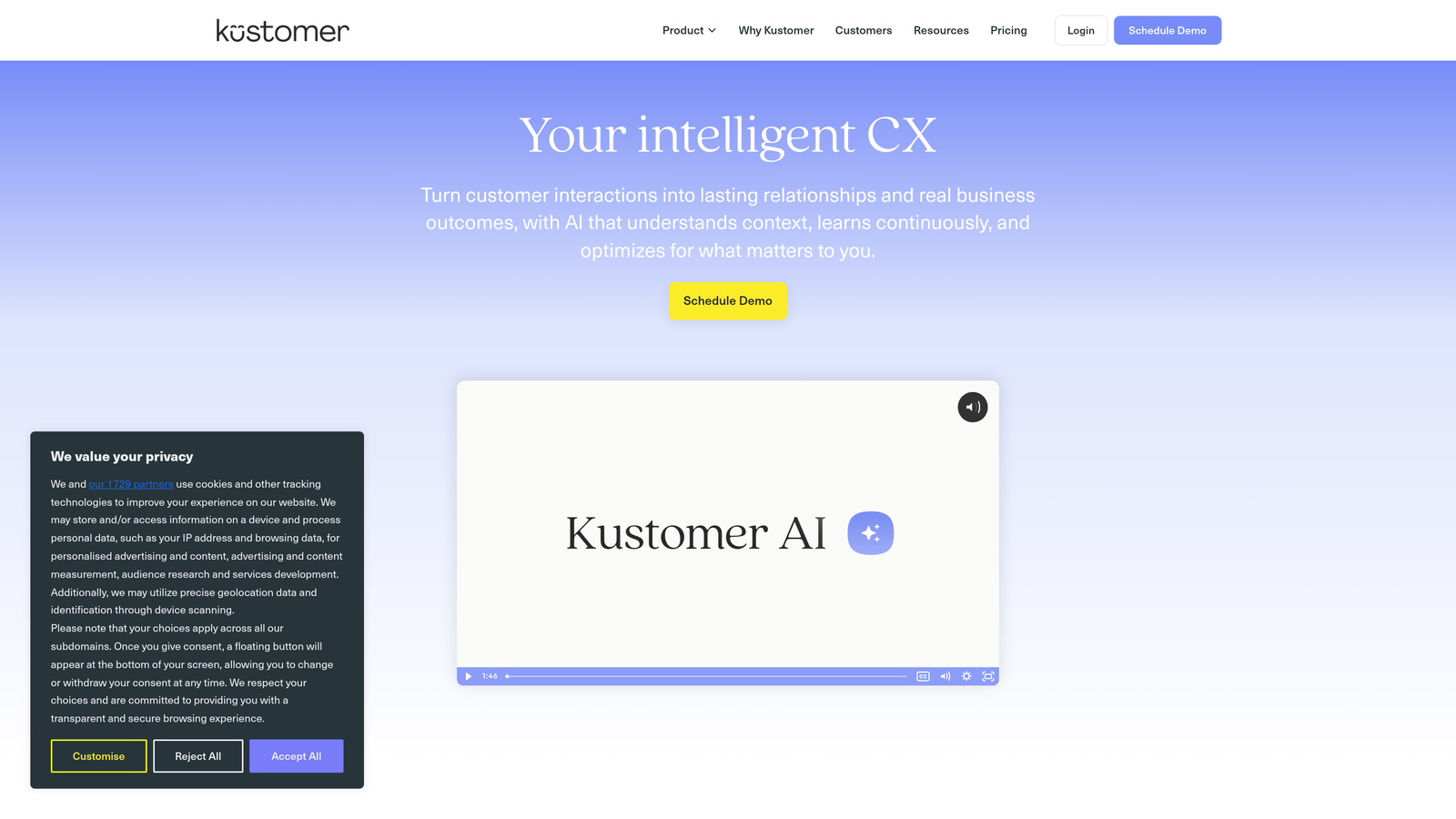
Kustomer is an omnichannel CRM and support platform with AI built around a unified customer timeline, giving the AI agent full interaction history context across every channel before it responds.
Where This Tool Shines
Kustomer's differentiation is the unified timeline. Before the AI responds to any customer, it has visibility into every prior interaction across email, chat, social, SMS, and voice. That historical context makes autonomous responses more accurate and reduces the frustrating "let me look up your account" friction that degrades customer experience.
KIQ (Kustomer IQ) handles both customer-facing deflection through KIQ Customer Assist and agent-side support through KIQ Agent Assist, giving teams flexibility in how much autonomy they want to extend to AI versus keeping humans in the loop.
Key Features
Unified Customer Timeline: AI operates with complete cross-channel interaction history, not just the current conversation.
KIQ Customer Assist: Autonomous self-service resolution for customers across supported channels.
KIQ Agent Assist: Real-time suggestions and context surfacing for human agents handling complex cases.
Omnichannel Reach: Consistent AI support across email, chat, social media, SMS, and voice.
AI-Powered Routing: Intelligent conversation classification and routing based on intent, history, and agent availability.
Best For
Teams managing high volumes of multi-channel support where customer history context is critical to resolution quality. Strong fit for B2C companies with complex customer relationships; also viable for B2B teams with long-term accounts requiring historical context.
Pricing
Enterprise pricing starting at approximately $89 per agent per month for the Enterprise plan. Contact Kustomer directly for AI feature pricing and volume discounts.
7. Ada
Best for: Non-technical support teams that want to configure and deploy autonomous AI agents without engineering resources.
Ada is a no-code AI agent platform built on a deflect-first philosophy, with a visual conversation builder that lets support teams configure and deploy autonomous agents without writing code.
Where This Tool Shines
Ada's visual conversation builder is genuinely accessible for non-technical teams. Support managers and operations leads can configure agent behavior, set escalation rules, and update conversation flows without waiting for engineering resources. That independence is valuable in fast-moving organizations where the support team can't afford a development queue for every AI update.
Ada works as a front-end AI layer over existing helpdesks like Zendesk and Salesforce, which means teams don't have to migrate away from their current infrastructure to get autonomous resolution capabilities. The proactive engagement feature, which allows the AI to reach out before customers ask, adds a differentiated dimension to the deflection-first approach.
Key Features
Visual No-Code Builder: Drag-and-drop conversation configuration that non-technical teams can manage independently.
Ada Reasoning Engine: Autonomous multi-step resolution capability launched in 2024, moving beyond scripted flows.
Helpdesk Overlay: Operates as a front-end AI layer over Zendesk, Salesforce, and other existing helpdesks.
Proactive Engagement: Initiates outreach to customers based on behavioral triggers before they submit a support request.
Multilingual Support: Handles conversations in multiple languages without separate configuration per language.
Best For
Support teams that want autonomy over their AI configuration without depending on engineering. Also well-suited for companies that want to add an AI layer on top of an existing helpdesk rather than replace it entirely.
Pricing
Custom enterprise pricing based on conversation volume. Contact Ada directly for a quote tailored to your team's needs.
8. Forethought AI
Best for: Teams that want to augment existing human agents with AI triage and assist rather than pursue full autonomous resolution.
Forethought AI is an AI platform focused on the triage, routing, and agent-assist layer of support, designed for teams that want to make their human agents faster and more effective rather than replace them entirely.
Where This Tool Shines
Forethought takes a modular approach to AI support. Rather than one monolithic AI agent, it offers distinct modules: Triage AI for routing, Solve AI for autonomous resolution of high-frequency issues, Assist AI for surfacing knowledge to agents mid-conversation, and Discover AI for identifying gaps in your knowledge base and automation coverage.
That modularity makes Forethought practical for teams that want to start with AI-assisted workflows and expand toward more autonomous resolution over time, rather than committing to full automation upfront. It integrates with Zendesk, Salesforce, ServiceNow, and other major helpdesks, which means it slots into existing infrastructure without a platform migration.
Key Features
Triage AI: Automatically categorizes, tags, and routes incoming tickets before any human touches them.
Solve AI: Handles autonomous resolution for straightforward, high-frequency support issues.
Assist AI: Surfaces relevant knowledge articles and suggested responses to agents mid-conversation in real time.
Discover AI: Identifies gaps in knowledge base coverage and automation opportunities based on actual ticket patterns.
Helpdesk Integrations: Works alongside Zendesk, Salesforce, ServiceNow, and other major platforms without replacing them.
Best For
Support teams with established human agent workflows that want AI to make those agents more efficient before moving toward full automation. Also a strong fit for teams with complex, nuanced support interactions where full autonomous resolution isn't yet appropriate.
Pricing
Custom pricing based on ticket volume and modules selected. Contact Forethought directly for a quote tailored to your team's configuration.
9. Tidio Lyro
Best for: Smaller B2B teams or startups that want accessible AI-powered support with fast setup and low entry cost.
Tidio Lyro is Tidio's conversational AI agent built on Anthropic's Claude, designed for fast deployment and accessible pricing—a practical entry point for teams new to AI-powered support.
Where This Tool Shines
Lyro's primary advantage is simplicity. It's built on Claude, which delivers natural and accurate conversational responses without requiring the user to script every possible interaction. Teams can go live in hours rather than weeks, which matters for lean support operations that don't have time for lengthy implementation projects.
The free tier makes it genuinely low-risk to evaluate. For startups or smaller teams handling FAQ-style and moderate-complexity support, Lyro covers a meaningful portion of the ticket volume without a significant upfront investment. The integrations with Shopify, WordPress, and common helpdesk tools make it accessible for teams that don't have enterprise infrastructure.
Key Features
Claude-Powered Conversations: Built on Anthropic's Claude for natural, contextually accurate responses without manual scripting.
Fast Setup: Can be configured and live within hours, requiring minimal technical setup.
FAQ and Moderate-Complexity Resolution: Handles common support queries and moderately complex conversations effectively.
Accessible Free Tier: Free plan includes 50 Lyro conversations per month, allowing low-risk evaluation.
Common Platform Integrations: Connects with Shopify, WordPress, and standard helpdesk tools.
Best For
Startups, small B2B teams, and teams evaluating AI support for the first time. Less suited for complex B2B SaaS support with multi-step workflows, deep integrations, or high-volume enterprise ticket loads where more robust platforms are needed.
Pricing
Free tier available with 50 Lyro conversations per month. Paid plans start at approximately $29 per month. Check Tidio's current pricing page for updated plan details.
Which Platform Fits Your Situation
The right choice depends heavily on where you are in your growth stage and what you're trying to solve. Here's a quick-reference breakdown by use case.
Early-stage startup or first AI support deployment: Tidio Lyro gets you live fast with minimal cost. When you outgrow it, Halo AI or Ada are natural next steps.
Growing SaaS company wanting AI-first autonomous resolution: Halo AI is purpose-built for this. The page-aware context, continuous learning, and business intelligence layer make it particularly well-suited for product-led teams.
Mid-market team wanting an all-in-one bundle: Freshdesk Freddy AI offers the best value-to-capability ratio at this tier. Forethought is worth considering if you want to stay on your existing helpdesk and add AI on top.
Enterprise with existing Zendesk investment: Zendesk AI Agents is the path of least resistance. Ada or Forethought can complement it if you want more flexibility in the AI layer.
Salesforce-centric organization: Agentforce is the clear choice. The native data access advantage is hard to replicate with any external tool.
Before committing to any platform, ask three questions. First: does the AI learn and improve from your specific ticket data, or does it stay static after initial training? Second: how does the platform handle the handoff from AI to human, and does the agent receive full context? Third: what does the total cost look like at your actual ticket volume, including platform fees, AI add-ons, and integration costs?
Your support team shouldn't scale linearly with your customer base. Let AI agents handle routine tickets, guide users through your product, and surface business intelligence while your team focuses on complex issues that need a human touch. See Halo in action and discover how continuous learning transforms every interaction into smarter, faster support.