AI Agent Pricing Models Explained: How to Choose the Right Structure for Your Support Stack
AI agent pricing models vary far more than their surface-level price points suggest, and choosing the wrong structure can cost more than a pricier alternative that actually aligns with your outcomes. This guide breaks down the four core pricing models you'll encounter in the AI customer support market, explaining the incentive logic behind each so you can make a fair, apples-to-apples comparison.
 Matt PattoliFounder12 min read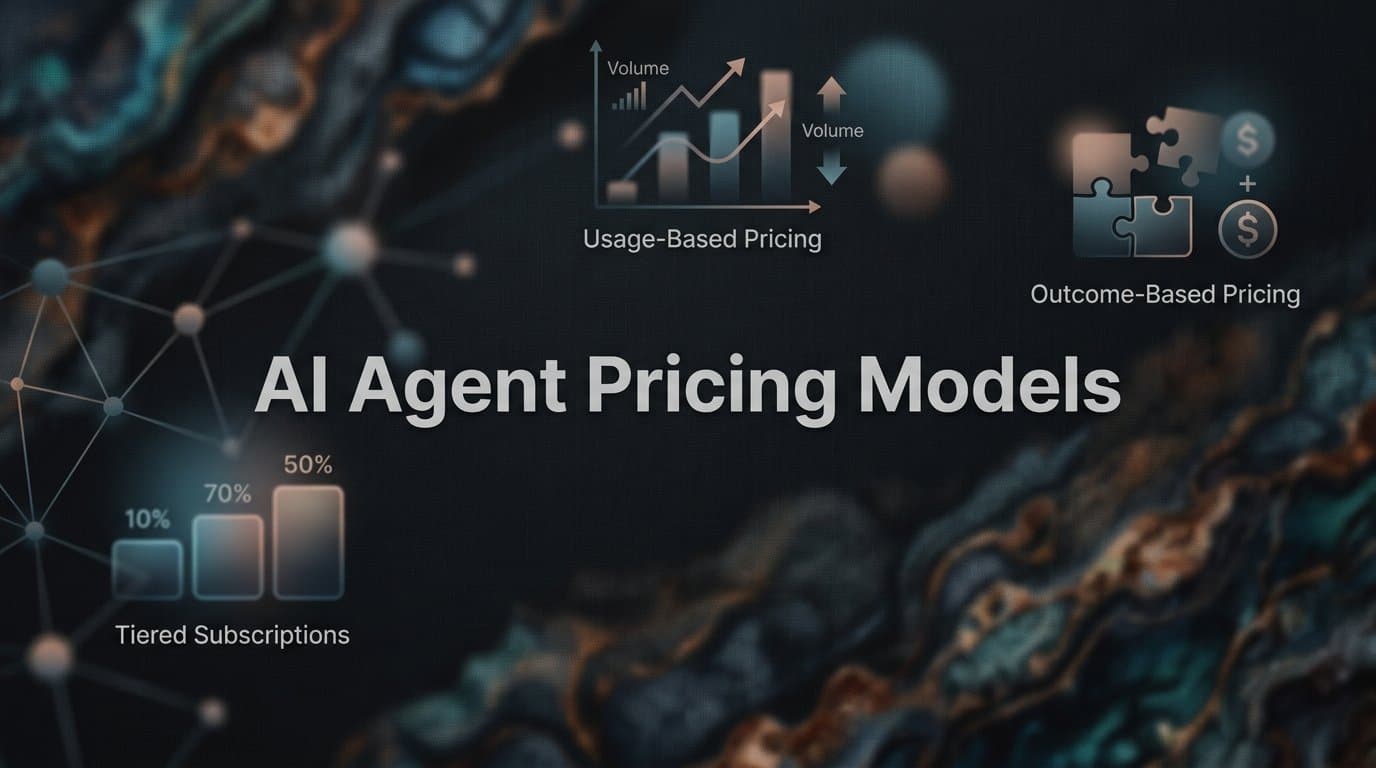
If you've recently sat through a round of AI support tool demos, you've probably noticed something frustrating: the pricing pages tell you almost nothing useful. One vendor charges per seat. Another charges per resolution. A third has a "conversation-based" model that sounds simple until you realize you have no idea what counts as a conversation. And somewhere buried in the fine print is a line about integration fees that could double your year-one cost.
This confusion isn't accidental. The AI customer support market has matured quickly enough that vendors now operate from genuinely different pricing philosophies, not just different price points. And because most buyers are comparing tools that use incompatible models, it's nearly impossible to do an apples-to-apples cost analysis without first understanding the structural logic behind each approach.
Here's the thing: the pricing model you choose matters as much as the price itself. A model that misaligns vendor incentives with your outcomes will cost you more than a higher headline number that actually reflects value delivered. This guide breaks down the four core ai agent pricing models you'll encounter, explains why some are better suited to modern AI-first architectures than others, and gives you the questions you need to ask before signing anything.
The Four Core Pricing Structures You'll Encounter
Before comparing vendors, you need a mental map of the pricing landscape. Most AI support platforms fall into one of four structural models, and each carries its own assumptions about how value is created and measured.
Per-seat or per-user pricing: This is the model you already know from traditional helpdesk software. You pay a monthly fee for each agent who has access to the platform. It's simple to understand and easy to budget, but it was designed for a world where every ticket required a human. When an AI agent is handling the majority of your ticket volume autonomously, you're essentially paying for seats that don't reflect the actual work being done.
Per-resolution or outcome-based pricing: You pay only when the AI successfully closes a ticket without requiring human escalation. This model directly ties vendor revenue to value delivered, which creates a powerful alignment of incentives. If the AI doesn't resolve the issue, you don't pay. For buyers, this feels like the most honest pricing structure available, though the definition of "resolved" requires careful scrutiny (more on that shortly).
Usage-based or consumption pricing: Charges are tied to volume metrics: conversations initiated, API calls made, or messages exchanged. This model is common on platforms with developer-facing APIs and works well for teams with predictable, low-to-moderate volumes. The risk is cost unpredictability at scale. A traffic spike or a product launch can generate unexpected support volume, and your bill follows accordingly.
Flat-rate or tiered subscription pricing: A fixed monthly fee covers a defined feature set, often with a conversation or ticket cap. This is the easiest model to budget against and works well for teams with stable, predictable support demand. The limitation is inflexibility: if your volume grows significantly or drops seasonally, you're either paying for capacity you're not using or bumping into limits that require an upgrade.
None of these models is inherently superior. Each makes sense under specific conditions, and the right choice depends on your team's size, ticket patterns, and growth trajectory. The sections that follow will help you map those conditions to the model that fits.
Why Per-Seat Pricing Is Structurally Outdated for AI Support
Per-seat pricing made perfect sense when the core resource in customer support was human attention. You hired agents, gave them tools, and paid for those tools proportionally to the number of people using them. The model reflected the actual cost structure of the work.
That logic breaks down when an AI agent can handle hundreds of simultaneous conversations without any additional marginal cost. The AI doesn't occupy a seat in any meaningful sense. It doesn't get tired, doesn't need a login for each conversation, and doesn't scale with headcount. Charging per seat for an AI-driven platform is like paying for parking spaces at a remote office where nobody drives.
The misalignment goes deeper than just the math. Per-seat pricing creates incentives for vendors to keep humans in the loop, because more human agents means more seats means more revenue. An AI-first vendor whose business model depends on per-seat fees has a subtle financial interest in not fully automating your support. That's not a conspiracy theory; it's just how incentive structures work.
This is one of the clearest arguments for platforms built on AI-first architectures rather than AI bolted onto traditional helpdesk infrastructure. When the underlying system was designed to operate autonomously, the pricing model should reflect autonomous operation. Paying per seat for a platform where the AI is doing the heavy lifting means you're subsidizing a pricing structure inherited from a different era of support tooling.
For rapidly scaling teams, per-seat pricing compounds the problem. As your customer base grows, you hire more agents, and your platform costs grow in lockstep, even if AI automation is absorbing a larger share of ticket volume. You end up in a situation where growing your team increases your software costs without a corresponding increase in the value the software delivers per dollar.
The natural question becomes: if not per-seat, then what? The answer depends on your volume and risk tolerance, but outcome-based pricing has emerged as the model that most directly addresses the misalignment problem.
Outcome-Based Pricing: Paying Only for What Actually Works
The appeal of resolution-based pricing is straightforward: if the AI doesn't solve your customer's problem, you don't pay. Your costs scale with value delivered, not with platform access. For teams evaluating AI support tools for the first time, this model significantly reduces the financial risk of a failed implementation.
In practice, a "resolved" ticket is typically defined as one that is closed without requiring escalation to a human agent within a defined timeframe. The customer submits a ticket, the AI responds, and if the conversation closes without a handoff, it counts as a resolution and triggers a charge. Simple in concept, but the devil lives in the definition.
Here's where buyers need to pay close attention. "Resolution" is not a standardized term across vendors. Some platforms define it narrowly and honestly: the customer's issue was addressed and they confirmed satisfaction. Others define it more loosely, counting any conversation that closes without escalation as resolved, even if the customer simply gave up and left. This is sometimes called deflection, and it is not the same as resolution.
Deflection-based counting inflates resolution metrics without improving customer experience. A customer who couldn't get an answer and abandoned the chat is not a resolved customer. They're a frustrated one who may churn quietly without ever registering as a problem in your support data. When evaluating outcome-based pricing, ask specifically how resolution is defined and whether customer satisfaction signals factor into the metric at all.
Resolution quality also matters beyond the binary resolved/unresolved distinction. An AI that provides technically accurate answers but requires five back-and-forth exchanges to get there is delivering a worse experience than one that resolves the issue in two messages. Some vendors are beginning to incorporate resolution quality signals, like interaction length, customer sentiment, and repeat contact rates, into their definitions. These more nuanced definitions are worth seeking out.
For B2B buyers, outcome-based pricing is particularly attractive during onboarding and ramp-up periods. When you're still training the AI on your product knowledge base and refining its responses, you're not paying full freight for imperfect results. The model creates a natural incentive for vendors to invest in your onboarding success, because their revenue depends on the AI actually working.
Matching the Right Pricing Model to Your Team's Scale
The best pricing model for your team is the one that fits your actual usage patterns, not the one with the most attractive headline number. Here's how to think about the match.
Low-volume teams handling fewer than roughly 500 tickets per month are usually better served by flat-rate or tiered subscription pricing. At this scale, the variability of outcome-based or consumption pricing doesn't offer meaningful cost savings, and the predictability of a fixed monthly fee makes budgeting straightforward. You're not generating enough volume for per-resolution pricing to deliver significant savings, and usage-based models at low volumes often carry minimum commitments that eliminate the cost advantage.
High-volume teams with repetitive, structured ticket patterns are where outcome-based and usage-based models really shine. If your support queue is dominated by SaaS onboarding questions, billing FAQs, password resets, and product how-tos, your AI resolution rate should be high and your cost-per-resolution should be low. In this scenario, paying per successful resolution rewards your investment in automation density and gives you a clear, defensible ROI metric to report internally.
Rapidly scaling teams face the most complex pricing decision. You need a model that doesn't penalize growth. Per-seat structures become increasingly expensive as headcount grows, even if AI is absorbing more of the ticket load. Consumption-based models can scale well if you negotiate volume commitments upfront, which most vendors will accommodate. Outcome-based models scale naturally with your ticket volume, though you'll want to ensure your contract includes volume tiers that reduce per-resolution costs as your numbers grow.
One practical approach for scaling teams: look for vendors who offer hybrid models that combine a flat base fee with outcome-based charges above a certain volume threshold. This gives you cost predictability at baseline and cost efficiency at scale, without the all-or-nothing exposure of a pure consumption model.
Regardless of your scale, the most important structural question is whether the pricing model creates aligned incentives between you and your vendor. You want a vendor who makes more money when your customers get better support, not one who makes more money by keeping humans in the loop or by counting deflection as resolution.
Hidden Cost Factors That Don't Appear on Pricing Pages
The headline pricing model is only part of the total cost picture. Several cost categories are routinely excluded from vendor pricing pages and can significantly affect your year-one total cost of ownership.
Integration depth and API costs: Most B2B support teams run on a stack that includes a CRM, a helpdesk, a billing system, and various communication tools. Connecting your AI support platform to that stack is not always included in the base price. Some vendors charge separately for each integration, others offer a limited set of native connectors and charge for anything beyond that, and a few build native integrations across the full stack as a core part of the product. Before signing, get explicit confirmation about which integrations are included and which carry additional fees. For teams running on Zendesk, Intercom, HubSpot, Slack, Stripe, or project management tools like Linear, this question is not optional.
Human escalation and live agent handoff fees: Some platforms charge a separate fee each time the AI escalates a conversation to a human agent. On the surface, this sounds minor. In practice, it creates a troubling incentive: the AI is financially motivated to avoid escalation, even when escalation is the right outcome for the customer. A well-designed AI support system should escalate gracefully when it hits the boundaries of its knowledge. Charging per escalation punishes that behavior and can quietly degrade your customer experience in ways that don't show up in resolution metrics.
Onboarding, training data, and model customization fees: Getting an AI support agent performing well on your specific product requires feeding it your knowledge base, your documentation, your historical ticket data, and your tone guidelines. Some vendors include this onboarding work in the contract. Others charge separately for it, and those charges can be substantial. A platform that learns continuously from every interaction reduces the ongoing customization overhead over time, but the initial setup cost is still worth clarifying before you commit.
Knowledge base maintenance and retraining costs: Your product evolves. Features change, pricing updates, new workflows get introduced. An AI that was trained on your product six months ago needs to be updated to reflect current reality. Ask vendors how knowledge base updates are handled, whether they're included in the subscription, and what happens to resolution quality during the gap between a product change and a model update.
Questions to Ask Every AI Support Vendor Before You Sign
Armed with an understanding of the pricing landscape and the hidden cost factors, here are the specific questions that will separate vendors who have thought carefully about alignment from those who haven't.
How is "resolution" defined in your contract, and what happens if our definition differs? Push for a written definition. Ask whether deflection counts as resolution, how long the window is before an unresponded ticket is marked closed, and whether customer satisfaction signals factor into the metric. If a vendor is vague on this question, that vagueness will cost you money.
Are integrations with our existing stack included, or priced separately? Name your specific tools. If you're running Zendesk, Intercom, HubSpot, Slack, Stripe, Linear, or any other platform, ask explicitly whether the connector is native and included or whether it requires an add-on. Get this in writing before the contract stage.
How does pricing change if our ticket volume doubles? This is the growth stress test. A vendor who can't answer this question clearly doesn't have a well-designed pricing structure. You want to understand whether there are volume tiers, whether discounts apply automatically or require renegotiation, and whether there are caps or overages that could create budget surprises.
What are the escalation mechanics, and is there a fee per handoff? Understand how the AI decides to escalate, what the handoff experience looks like for the customer, and whether escalations affect your billing. A platform that penalizes escalation is one you should approach with caution.
What is included in onboarding, and what does ongoing model improvement look like? Ask specifically about knowledge base ingestion, initial training, and how the model improves over time. A system that learns continuously from every resolved interaction reduces your long-term customization costs and improves resolution quality without requiring manual retraining cycles.
The Bottom Line on AI Agent Pricing Models
The best ai agent pricing model isn't the cheapest number on the pricing page. It's the structure that aligns your vendor's incentives with your team's actual outcomes and scales without punishing your growth. A per-seat model that made sense for a human-first helpdesk doesn't make sense for an AI-first support platform. An outcome-based model that counts deflection as resolution doesn't make sense for a team that cares about customer satisfaction. And a flat-rate subscription that doesn't flex with your volume doesn't make sense for a team that's scaling quickly.
The framework is straightforward: understand the four core structures, pressure-test the hidden cost factors, and ask the definition questions before you sign. The vendors who answer those questions clearly and confidently are the ones who have built their pricing to reflect genuine value delivery.
Your support team shouldn't scale linearly with your customer base. AI agents should handle routine tickets, guide users through your product, and surface business intelligence while your team focuses on complex issues that need a human touch. See Halo in action and discover how continuous learning transforms every interaction into smarter, faster support, with pricing built around the outcomes that actually matter to your business.