9 Best AI Chat Widgets for SaaS in 2026
Choosing the right AI chat widget for SaaS can mean the difference between users getting instant, contextual help and frustrated customers waiting for human support. This guide evaluates the 9 best options in 2026 based on AI autonomy, product-aware features, and scalability—helping SaaS teams find a solution that resolves tickets independently and improves the overall user experience.
 Matt PattoliFounder13 min read
Your chat widget is often the first thing a struggling user reaches for. If it can't understand where they are in your product, can't resolve their issue without a human, and can't tell your team anything useful afterward, you're leaving a lot of value on the table.
Generic live chat tools weren't built for software products. SaaS users need contextual help tied to their specific workflow, not just a box to type into and wait. The good news: AI chat widgets purpose-built for SaaS have matured considerably. The best ones now resolve tickets autonomously, guide users through complex product flows, and hand off gracefully to a human when things get complicated.
Here are the top AI chat widgets for SaaS teams in 2026, evaluated on AI quality and autonomy, SaaS-specific features like page awareness and bug reporting, pricing transparency, and how well each option scales with your team.
1. Halo AI
Best for: B2B SaaS teams that want an AI-first support layer with deep product context
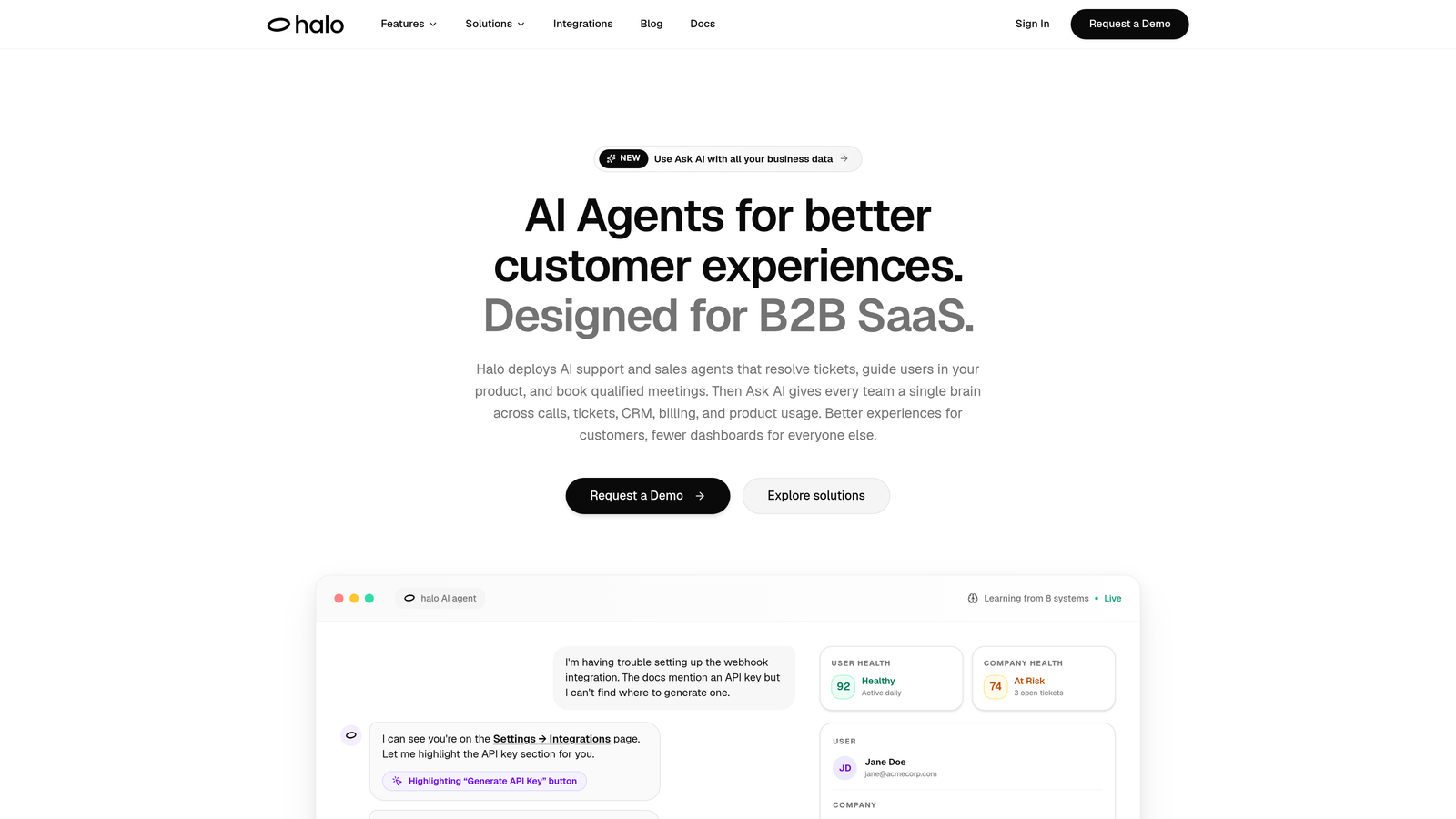
Halo AI is an AI-first customer support platform built specifically for SaaS teams, combining a page-aware chat widget with autonomous ticket resolution, smart business intelligence, and continuous learning from every interaction.
Where This Tool Shines
Most chat widgets know a user is on your site. Halo knows which page they're on, what they're looking at, and what they're likely trying to do. That page-awareness lets the AI provide genuinely contextual guidance rather than generic answers pulled from a knowledge base.
Beyond resolution, Halo surfaces business intelligence from support interactions: customer health signals, anomaly detection, and revenue intelligence that helps product and success teams understand what's actually happening across their user base. It's not just a support tool; it's a signal layer for your entire product organization.
Key Features
Page-Aware Chat Widget: The AI understands where users are in your product and provides visual UI guidance tied to their current context.
Autonomous Ticket Resolution: AI agents resolve support tickets end-to-end, with intelligent handoff to live agents when complexity warrants it.
Auto Bug Ticket Creation: Automatically generates and routes bug reports to Linear or your preferred issue tracker, eliminating manual triage.
Smart Inbox with Business Intelligence: Goes beyond support metrics to surface customer health signals, anomaly detection, and revenue intelligence.
Native Integration Stack: Connects with Linear, Slack, HubSpot, Intercom, Stripe, Zoom, PandaDoc, and Fathom out of the box.
Best For
B2B SaaS teams that want an AI-first architecture rather than AI bolted onto a legacy helpdesk. Particularly strong for product-led companies where support data should inform product decisions, and for teams that need bug reporting automation as part of their support workflow.
Pricing
Visit haloagents.ai for current pricing details. Pricing is tailored to SaaS team size and usage.
2. Intercom
Best for: SaaS teams that want mature AI resolution layered onto a full CRM and messaging platform
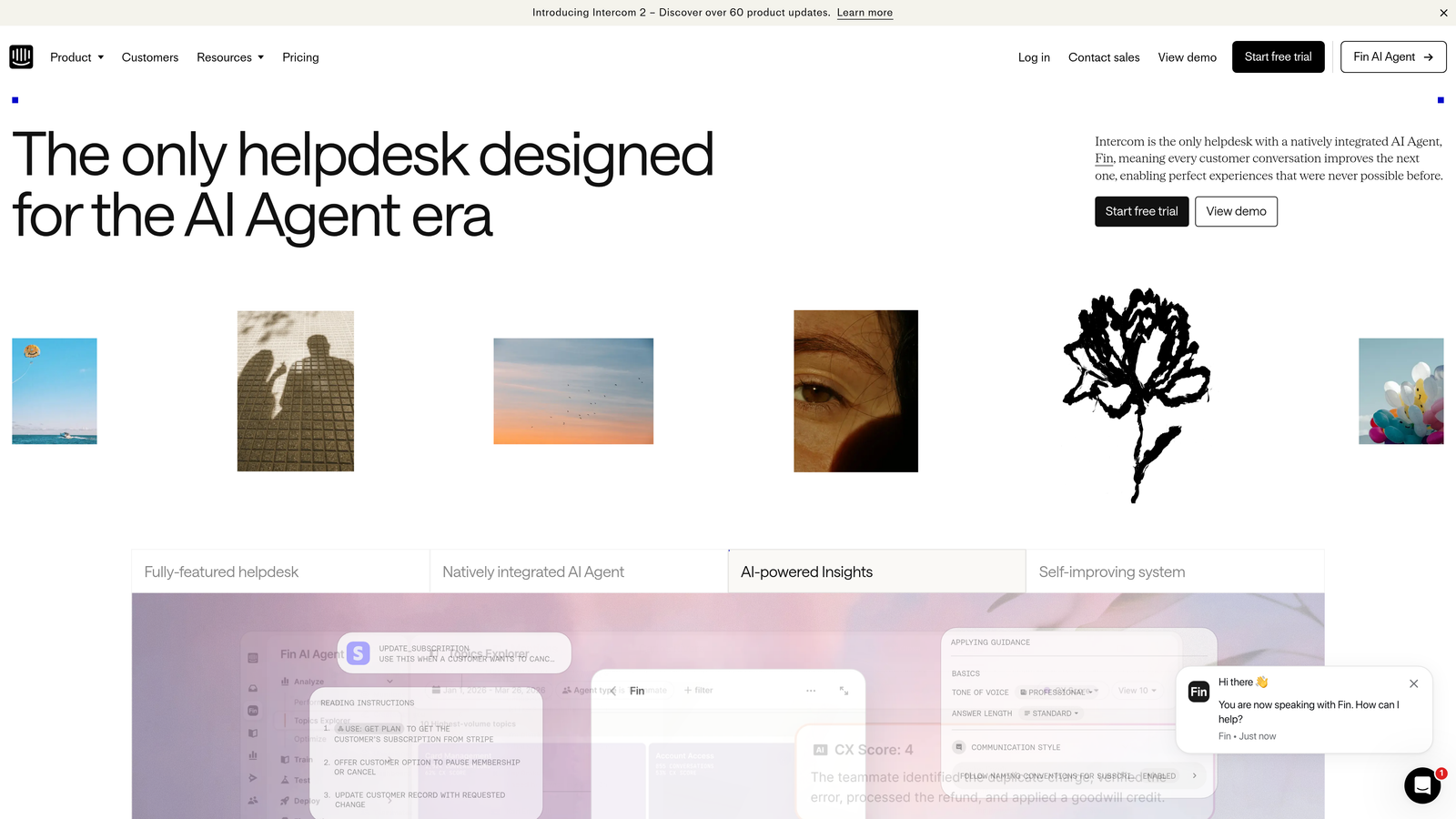
Intercom is one of the most established platforms in SaaS customer messaging, with its Fin AI agent built directly into a mature product suite that spans support, CRM, and proactive outbound messaging.
Where This Tool Shines
Intercom's strength is the combination of AI resolution and a rich customer data layer. Fin can resolve tickets autonomously across chat and email, but the real value is that every conversation sits inside a contact timeline with full history. That context makes both the AI and your human agents more effective.
The proactive messaging and product tour capabilities also set Intercom apart from pure support tools. If you want to deflect tickets before they happen by guiding users proactively through key product moments, Intercom has the infrastructure for it.
Key Features
Fin AI Agent: Handles autonomous ticket resolution across chat and email channels without human intervention.
Deep CRM Integration: Every conversation is tied to a contact record with full timeline and conversation history.
Proactive Messaging and Product Tours: Reach users in-app before they need to ask for help.
Conversation Routing: AI-assisted inbox management to prioritize and direct conversations to the right team.
App Marketplace: Extensive third-party integrations for tools your team already uses.
Best For
Mid-market and enterprise SaaS teams that want a single platform for support, CRM, and proactive engagement. Also a strong fit for teams that have already built workflows around Intercom and want to layer Fin AI onto existing infrastructure.
Pricing
Starter plans begin around $39/seat/month; AI features are available on higher tiers. Pricing scales significantly for larger teams and higher resolution volumes. Verify current plans at intercom.com.
3. Drift
Best for: SaaS teams where sales qualification and support conversations overlap heavily
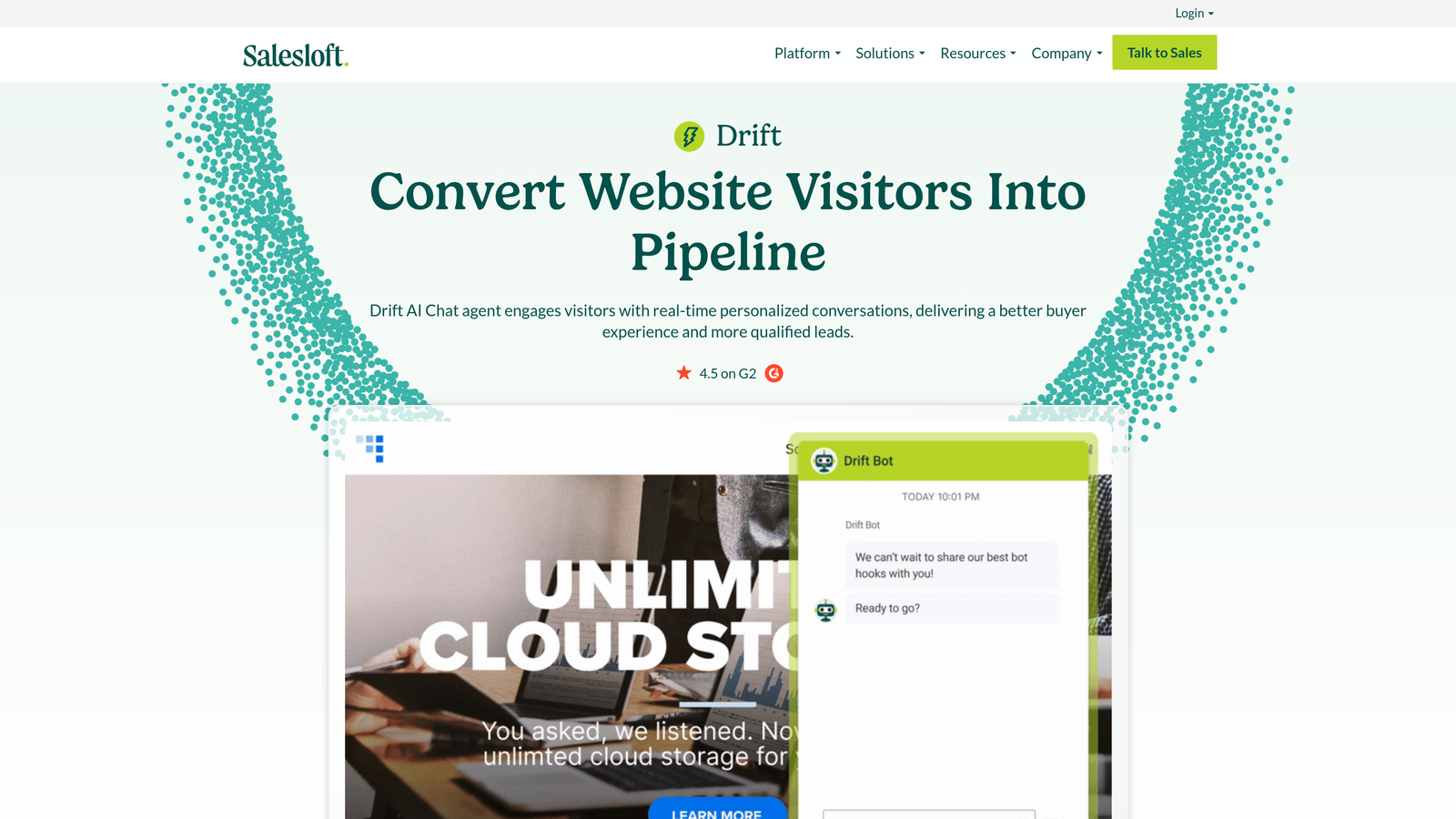
Drift, now part of Salesloft, blends conversational sales and support into a single AI-powered chat platform designed for revenue-focused SaaS organizations.
Where This Tool Shines
Drift was built for the reality that in many SaaS companies, a support conversation and a sales conversation can look nearly identical. A user asking how to upgrade their plan, or whether a feature exists, is both a support ticket and a sales opportunity. Drift's AI handles both sides of that interaction.
The account-based targeting capabilities let you personalize chat experiences based on company size, industry, or deal stage, which is genuinely useful for SaaS teams running account-based go-to-market motions.
Key Features
AI Lead Qualification and Demo Booking: Qualifies inbound visitors and books meetings automatically alongside handling support queries.
Conversational Landing Pages: Turns high-intent pages into interactive chat experiences for key accounts.
Account-Based Targeting: Personalizes chat experiences based on visitor firmographics and deal stage.
CRM Integrations: Native connections with Salesforce, HubSpot, and Marketo.
AI Suggested Replies: Assists human agents with response recommendations and conversation summaries.
Best For
SaaS companies with a strong outbound or account-based sales motion where the line between support and sales is intentionally blurred. Less ideal for teams that need deep technical support automation or bug reporting workflows.
Pricing
Custom pricing; contact Drift or Salesloft directly for current plans. Enterprise-focused post-acquisition, so expect pricing to reflect that positioning.
4. Tidio
Best for: Smaller SaaS teams that need accessible AI-powered chat without engineering overhead
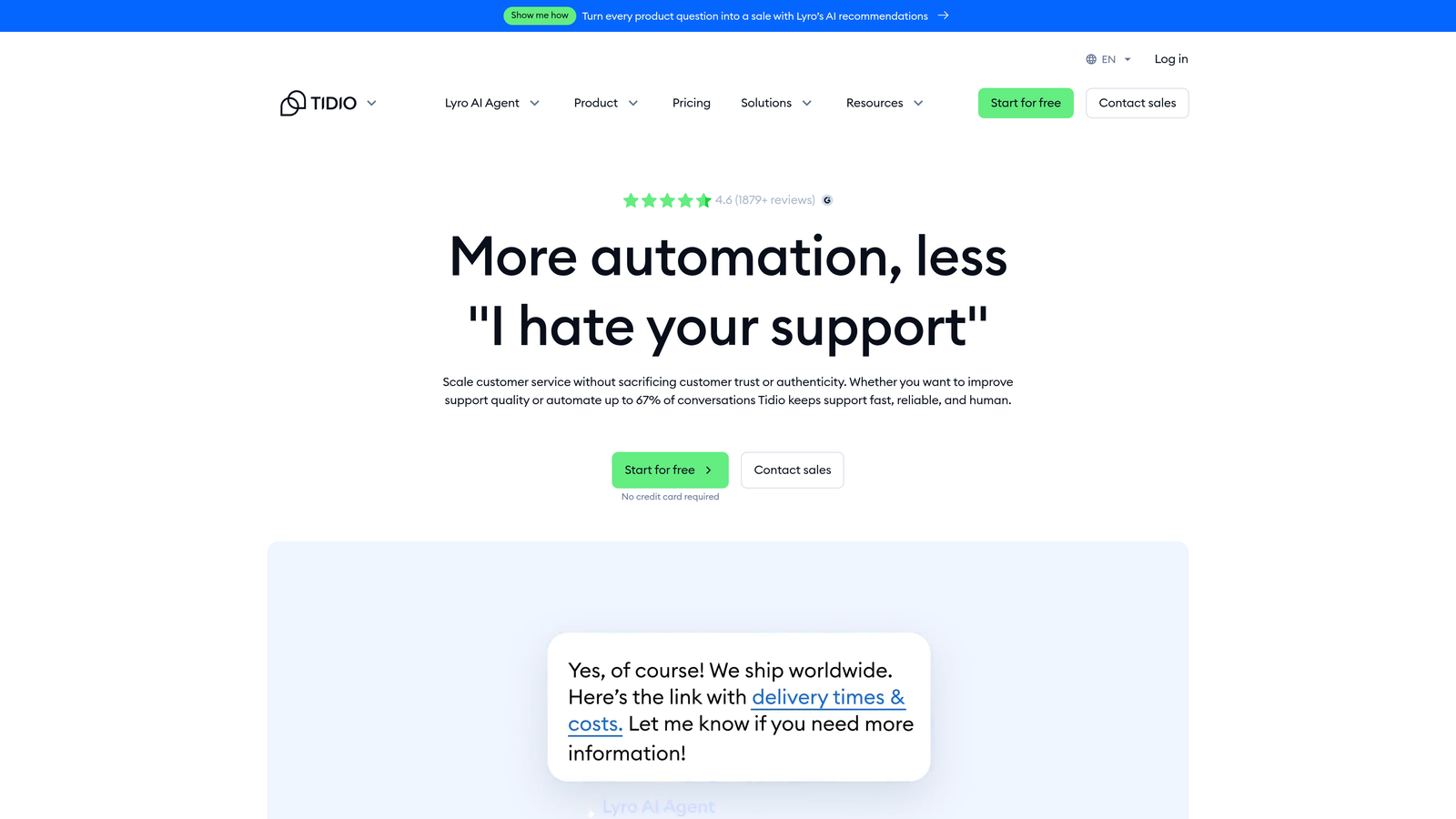
Tidio makes AI-powered customer support accessible for teams that don't have dedicated support engineers, combining the Lyro AI agent with a visual flow builder that non-technical users can operate confidently.
Where This Tool Shines
The Lyro AI agent handles common support queries autonomously, and the visual chatbot builder lets your team create and adjust conversation logic without touching code. For early-stage SaaS teams that need to move fast and don't have engineering cycles to spare, that combination is genuinely valuable.
Tidio also offers one of the more accessible pricing models in this category, with a free tier and AI features starting at a price point that fits startup budgets. You're not getting the depth of an enterprise platform, but for straightforward support automation, it delivers well.
Key Features
Lyro AI Agent: Autonomously resolves common FAQ and support queries without human intervention.
Visual Chatbot Flow Builder: Drag-and-drop interface for building conversation logic without code.
Live Chat with Human Takeover: Seamless handoff from AI to a human agent when needed.
Multi-Channel Support: Email and Messenger integration alongside website chat.
Analytics Dashboard: Conversation performance tracking and resolution rate monitoring.
Best For
Early-stage and SMB SaaS teams looking for their first AI support layer without significant setup complexity or budget commitment. Less suited for teams that need deep product integrations or business intelligence from support data.
Pricing
Free tier available. Lyro AI starts from approximately $29/month. Verify current plan details at tidio.com before committing.
5. Zendesk (with AI)
Best for: Enterprise SaaS teams already invested in the Zendesk ecosystem
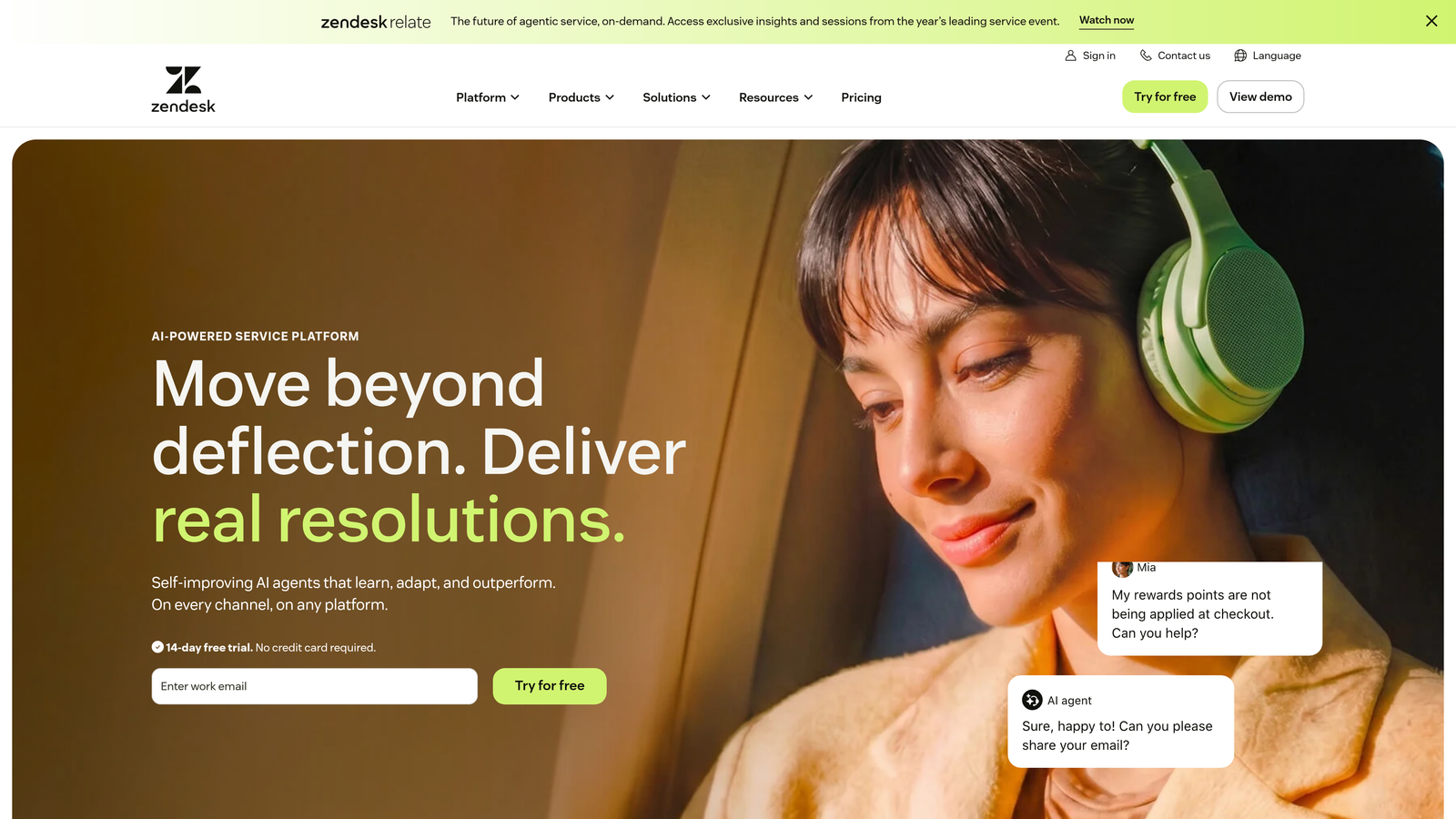
Zendesk is the enterprise helpdesk standard, with an AI layer that adds intelligent triage, automated bots, and suggested replies on top of battle-tested ticketing infrastructure.
Where This Tool Shines
Zendesk's AI capabilities are most powerful for teams already operating within its ecosystem. The intelligent triage and routing features work because they have years of ticket history to learn from. If you're processing high volumes of tickets across multiple channels, the AI layer meaningfully reduces the manual sorting burden on your team.
The enterprise compliance, security controls, and SLA management also make Zendesk the default choice for larger organizations where those requirements are non-negotiable. The tradeoff is that AI is an add-on architecture here, not a core design principle.
Key Features
AI-Powered Triage and Routing: Automatically categorizes and routes tickets across channels based on content and priority.
Zendesk AI Bot: Chat deflection and self-service resolution for common queries.
Suggested Replies and Macros: AI-assisted recommendations to help agents respond faster and more consistently.
Robust Reporting and SLA Management: Comprehensive analytics with configurable service level tracking.
Enterprise Security and Compliance: Role-based access controls and enterprise-grade data governance.
Best For
Mid-market and enterprise SaaS teams with established Zendesk workflows who want to layer AI onto existing infrastructure. Not the best starting point for teams evaluating AI-first architectures from scratch.
Pricing
Suite plans start around $55/agent/month; AI features are priced as separate add-ons. Total cost can scale significantly for larger teams. Confirm current pricing at zendesk.com.
6. Freshdesk (Freddy AI)
Best for: SMB SaaS teams that need a full-featured helpdesk with AI at an accessible price point
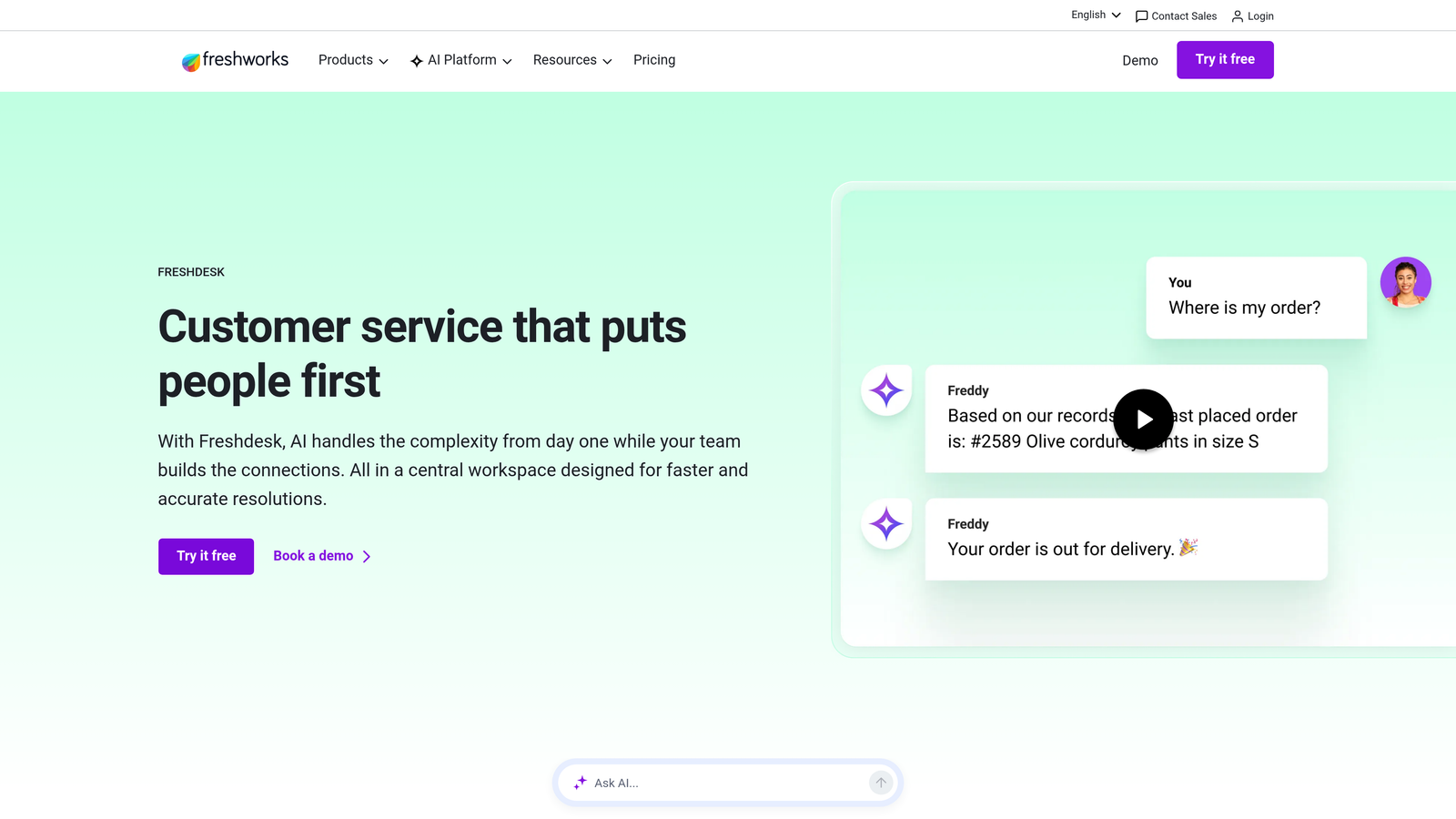
Freshdesk brings AI into a comprehensive helpdesk suite at pricing that works for smaller SaaS organizations, with Freddy AI embedded across ticketing, chat deflection, and agent assistance.
Where This Tool Shines
Freshdesk's value proposition is breadth at a competitive price. Freddy AI handles chat deflection, ticket auto-categorization, and agent suggestions without requiring a premium tier that prices out smaller teams. The omnichannel coverage across chat, email, phone, and social is also broader than many tools in this category.
Freddy Insights adds support analytics and trend identification that helps team leads understand where volume is coming from and which issues are recurring. It's not the deep business intelligence you get from AI-first platforms, but it's meaningful for teams that need basic pattern recognition.
Key Features
Freddy AI: Chat deflection, ticket auto-categorization, and agent response suggestions across the platform.
Omnichannel Support: Unified inbox across chat, email, phone, and social channels.
Self-Service Portal: AI-powered article suggestions to help users find answers before submitting tickets.
Collision Detection: Prevents multiple agents from working the same ticket simultaneously.
Freddy Insights: Support analytics and trend identification for team leads and managers.
Best For
SMB SaaS teams that need omnichannel helpdesk coverage with AI assistance and don't want to pay enterprise-level pricing. Also a good fit for teams that need phone support alongside chat, which many competitors don't handle as cleanly.
Pricing
Free tier available. Growth plans start around $15/agent/month. Freddy AI features are available on higher tiers. Verify current plan structure at freshdesk.com.
7. Crisp
Best for: Technical SaaS teams that want fine-grained control over their chat widget experience
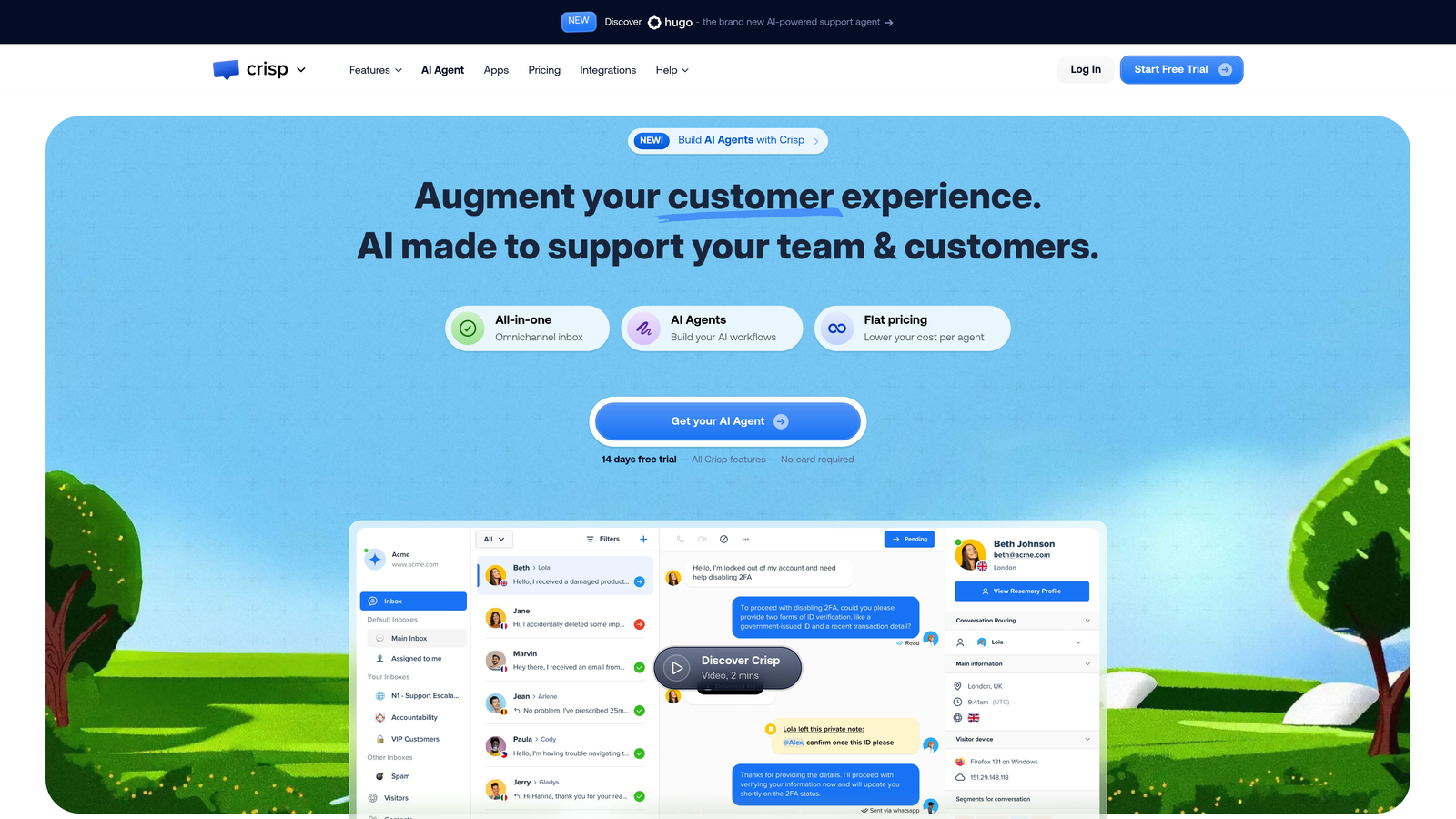
Crisp is a developer-friendly customer communication platform that gives technical teams precise control over the widget experience, with co-browsing, a shared inbox, and lightweight AI automation built in.
Where This Tool Shines
Crisp's co-browsing capability is genuinely useful for SaaS support. When a user is stuck in your product, being able to see exactly what they're seeing in real time cuts resolution time considerably. Combined with the chat widget, it creates a support experience that's closer to a screen share without the friction of scheduling one.
The clean REST API and JavaScript SDK give engineering teams the flexibility to build custom integrations and extend the widget behavior in ways that more opinionated platforms won't allow. If your team wants control over the implementation rather than a black-box widget, Crisp is worth evaluating.
Key Features
Co-Browsing: Real-time visual support that lets agents see and interact with what the user is seeing.
Shared Inbox: Team inbox with assignment, tagging, and conversation management.
Chatbot Builder: Basic AI automation for routing and FAQ handling without code.
REST API and JavaScript SDK: Developer-friendly integration layer for custom implementations.
MagicReply AI: Suggested responses to help human agents reply faster and more consistently.
Best For
Developer-led SaaS teams that prioritize customization and control over out-of-the-box AI autonomy. Also a strong fit for teams where co-browsing is a core support workflow, particularly in complex B2B products with nuanced UI.
Pricing
Free tier available. Pro plans start around $25/month per workspace. Pricing is workspace-based rather than per seat, which can be favorable for larger teams. Confirm current plans at crisp.chat.
8. Chatwoot
Best for: SaaS teams with data sovereignty requirements or a preference for self-hosted infrastructure
Chatwoot is an open-source customer support platform that SaaS teams can self-host for full data control, with growing AI capabilities and strong multi-channel inbox coverage.
Where This Tool Shines
The self-hosting option is Chatwoot's defining feature. For SaaS companies operating in regulated industries, serving enterprise customers with strict data requirements, or simply preferring to own their infrastructure, having a fully open-source support platform is a meaningful differentiator. You control where the data lives and how it's processed.
The active community and plugin ecosystem also mean that gaps in the core product can often be addressed through community contributions or custom development. For teams with engineering resources, this flexibility is valuable in ways that closed-source platforms can't match.
Key Features
Open-Source Self-Hosting: Full codebase available for self-hosted deployment with complete data control.
Multi-Channel Inbox: Unified inbox across chat, email, social media, and WhatsApp.
AI Assist: Agent reply suggestions via OpenAI integration for faster response drafting.
Conversation Management: Labels, assignments, and CSAT tracking for structured support workflows.
Community and Plugin Ecosystem: Active open-source community with extensibility options.
Best For
Developer-led SaaS teams with infrastructure preferences, data sovereignty requirements, or a desire to avoid vendor lock-in. Teams that want to contribute to or customize their support platform at the code level will find Chatwoot uniquely accommodating.
Pricing
Open-source self-hosted version is free. Cloud-hosted plans start around $19/month. Verify current cloud pricing at chatwoot.com.
9. HubSpot Live Chat (with AI)
Best for: SaaS teams running their go-to-market on HubSpot that want support tied to CRM data
HubSpot Live Chat sits natively inside HubSpot's CRM, making it a natural fit for SaaS teams that want support conversations connected directly to contact records, deal data, and the broader customer journey.
Where This Tool Shines
The native CRM sync is what sets HubSpot Live Chat apart. Every conversation is automatically tied to a contact record, which means your support, sales, and customer success teams are all looking at the same data. For SaaS teams where those functions overlap significantly, that shared context is genuinely useful.
The meeting booking bot is also a practical feature for teams where support conversations frequently convert into demos or renewal calls. Rather than exchanging emails to schedule a follow-up, the bot handles it inline during the chat.
Key Features
Native CRM Sync: Every chat conversation automatically tied to a contact record with full history.
Visual Chatbot Builder: Conditional logic and AI-assisted responses without engineering resources.
Meeting Booking Bot: In-chat scheduling for sales, support, and customer success follow-ups.
Shared Conversation Inbox: Unified inbox across support, sales, and success teams.
CRM-Tied Reporting: Conversation analytics connected to deal and contact data for revenue context.
Best For
SaaS teams that have built their go-to-market on HubSpot and want live chat as an extension of that system rather than a standalone tool. Less compelling for teams that aren't already in the HubSpot ecosystem, where the CRM sync advantage disappears.
Pricing
Live chat is available free with HubSpot CRM Free. AI features and advanced chatbot capabilities are on paid tiers starting around $45/month. Confirm current plan details at hubspot.com.
Which AI Chat Widget Is Right for Your SaaS Team?
The most important distinction in this category isn't which tool has the longest feature list. It's whether you need an AI-first platform built around autonomous resolution, or AI layered onto an existing helpdesk you're already committed to.
If you're starting fresh and want the most contextual, intelligent support experience for your users, Halo AI is the strongest AI-first option for B2B SaaS teams. The page-aware widget, automatic bug reporting, and business intelligence layer make it meaningfully different from tools that treat AI as a deflection add-on.
For teams already running on Zendesk or Freshdesk, the AI features within those platforms are a reasonable path if switching costs are high. Intercom is the strongest choice if you want mature AI resolution alongside a full CRM and proactive messaging layer. Drift makes sense when your sales and support motions are intentionally blended.
For smaller teams or specific requirements: Tidio for accessible pricing and quick setup, Crisp for developer control and co-browsing, Chatwoot for self-hosted data sovereignty, and HubSpot Live Chat for teams already living in HubSpot's ecosystem.
Your support team shouldn't scale linearly with your customer base. Let AI agents handle routine tickets, guide users through your product, and surface business intelligence while your team focuses on complex issues that need a human touch. See Halo in action and discover how continuous learning transforms every interaction into smarter, faster support.