9 Best AI Chatbots for SaaS Products in 2026
Discover the 9 best AI chatbots for SaaS products in 2026, evaluated on autonomous ticket resolution, product integrations, and scalability. This guide helps SaaS teams identify purpose-built AI solutions that go beyond basic FAQ bots to genuinely reduce support workload, whether you're a lean startup or a growing B2B company managing thousands of active users.
 Matt PattoliFounder12 min read
SaaS teams are under constant pressure to support more users without proportionally growing headcount. AI chatbots have moved well beyond scripted FAQ bots: today's best tools can resolve tickets autonomously, guide users through complex workflows, detect bugs, and hand off seamlessly to live agents when needed.
But not every tool is built with SaaS products in mind. Some are generic website chat widgets; others are purpose-built for product-led growth teams managing thousands of active users across a helpdesk stack. The distinction that matters most now is between AI layers bolted onto existing helpdesks and AI-first platforms built natively around intelligent agents.
This list focuses on tools that genuinely serve SaaS companies, evaluated on depth of product integrations, autonomous resolution capability, contextual awareness, and scalability. Whether you're a lean startup looking to automate tier-1 support or a scaling B2B team needing business intelligence layered on top of your support data, there's a right tool here for you.
1. Halo AI
Best for: SaaS teams wanting autonomous ticket resolution, page-aware guidance, and business intelligence from support data
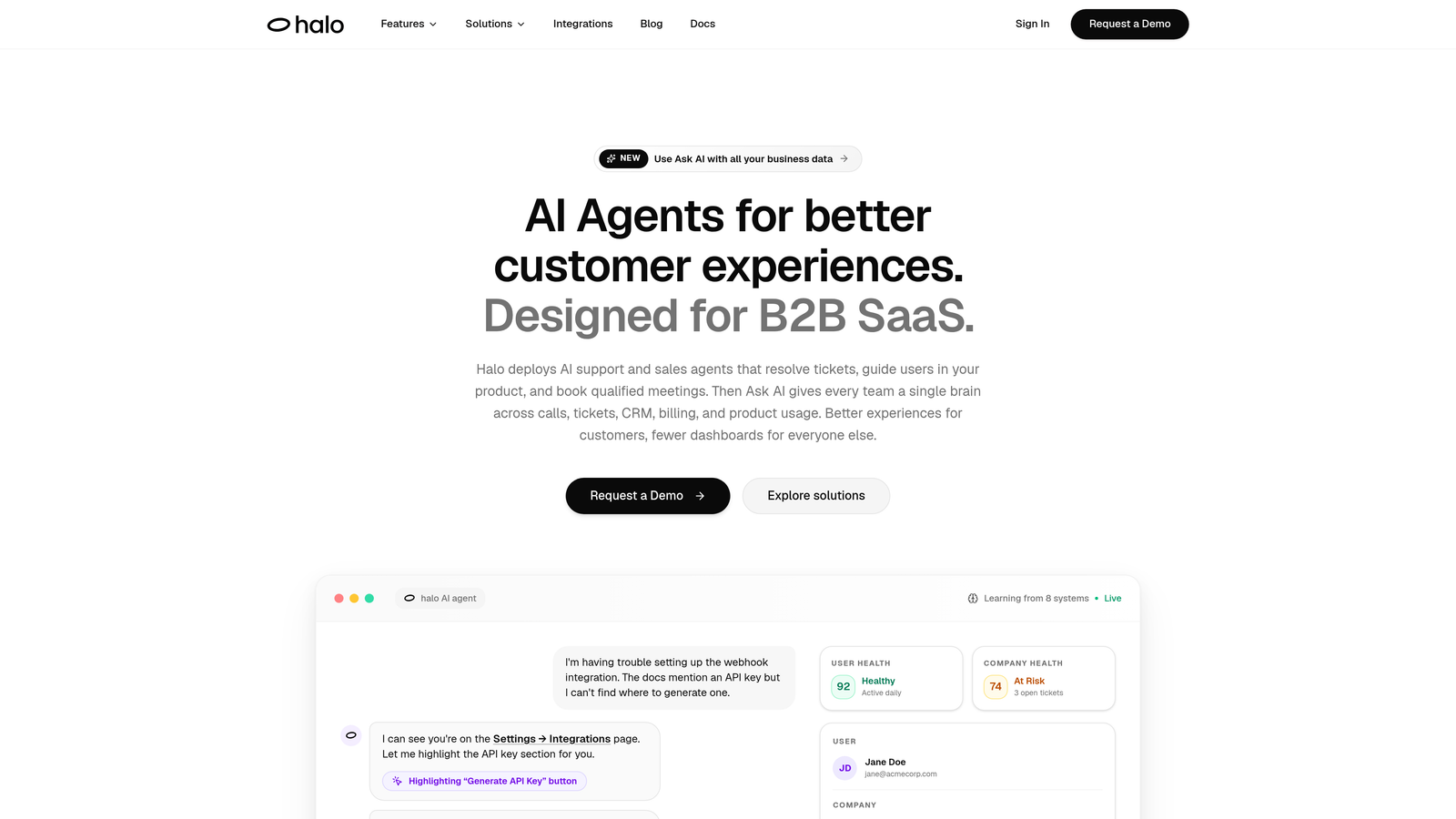
Halo AI is an AI-first customer support platform built specifically for SaaS products, not a chatbot bolted onto an existing helpdesk.
Where This Tool Shines
What separates Halo from most tools on this list is its architecture. Rather than adding AI features to a traditional helpdesk, Halo was built from the ground up around intelligent agents. That means every part of the platform, from ticket resolution to bug detection to user guidance, is designed to learn and improve continuously rather than follow static rules.
The page-aware chat widget is a standout capability. It understands the specific page a user is on and can provide visual UI guidance in context, the way a knowledgeable colleague would walk someone through a product rather than pointing them to a help article. For SaaS products with complex workflows, this is a meaningful differentiator.
Key Features
Page-Aware Chat Widget: Sees what the user sees and delivers contextual visual guidance based on their current location in your product.
Autonomous Ticket Resolution: AI agents handle routine support queries end-to-end, with intelligent handoff to live agents for complex issues that need a human.
Auto Bug Ticket Creation: Automatically detects and creates bug tickets in Linear, reducing the manual triage burden on your engineering and support teams.
Smart Inbox with Business Intelligence: Goes beyond support metrics to surface customer health signals, revenue intelligence, and anomaly detection from your support data.
Full-Stack Integrations: Connects natively with Slack, HubSpot, Intercom, Stripe, Zoom, PandaDoc, and Fathom, so your support data flows across your entire business stack.
Continuous Learning: Every interaction makes the AI smarter, so resolution quality improves over time without manual retraining.
Best For
SaaS companies that want more than a chat widget: teams looking for autonomous resolution, product-aware guidance, and support data that feeds business intelligence. Particularly well-suited to B2B SaaS teams managing complex product workflows and multi-system stacks.
Pricing
Contact haloagents.ai directly for pricing. Plans are tailored to team size and support volume.
2. Intercom Fin
Best for: Teams already running Intercom as their primary helpdesk
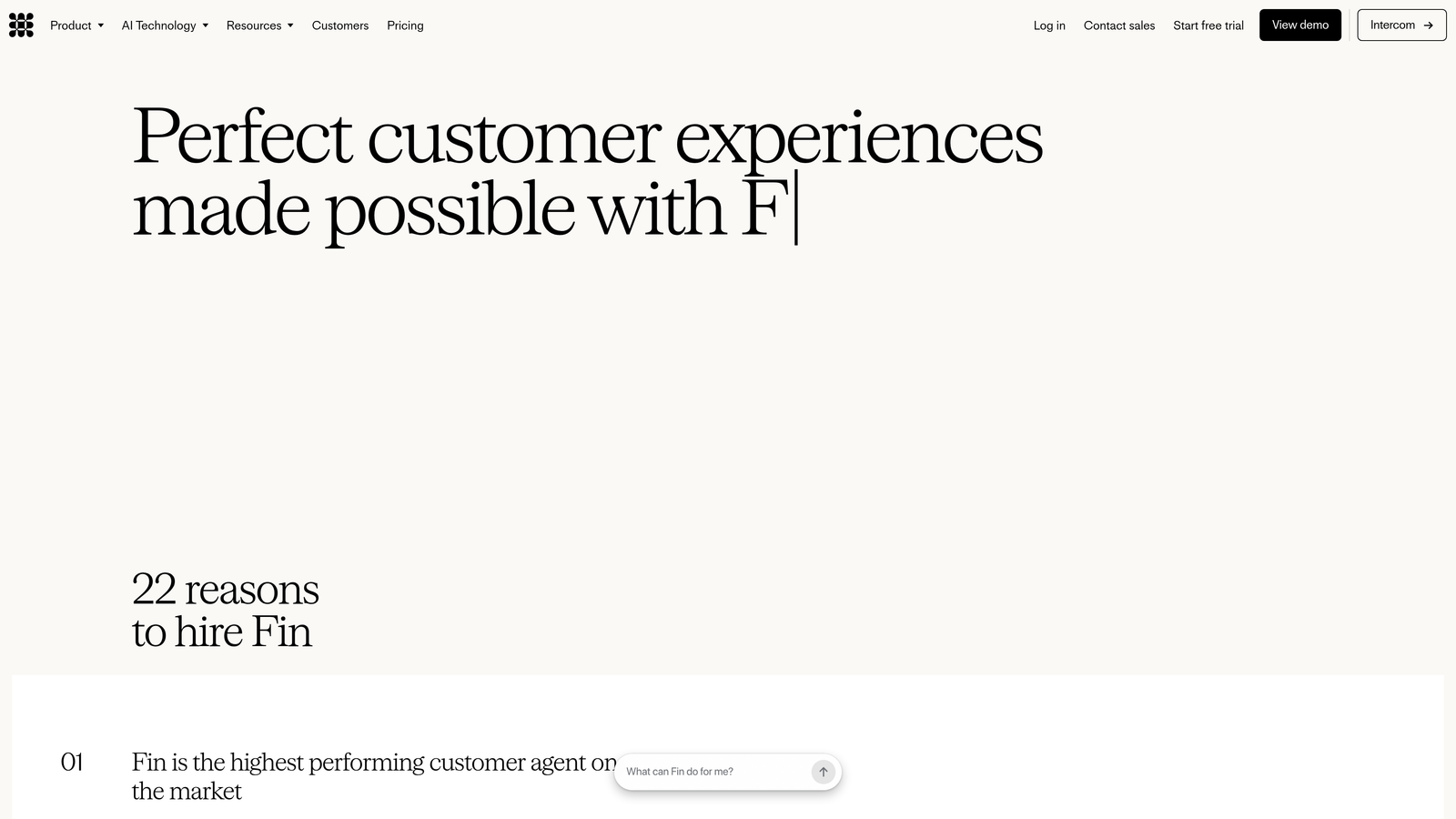
Intercom Fin is Intercom's native LLM-powered AI agent, designed to resolve customer queries directly from your existing Intercom knowledge base and articles.
Where This Tool Shines
If your team is already deep in the Intercom ecosystem, Fin is a natural extension. It draws on your existing help content to generate accurate, conversational answers without requiring a separate knowledge base setup. The native handoff to human agents inside the Intercom inbox is smooth and well-integrated.
The resolution-based pricing model is worth understanding before committing. You pay per resolved conversation, which can make costs predictable at low volumes but harder to forecast as support demand scales.
Key Features
LLM-Powered Resolution: Generates responses from your existing Intercom articles and help content using large language models.
Native Agent Handoff: Escalates unresolved conversations directly to human agents within the Intercom inbox without context loss.
Customizable Tone and Persona: Adjust how Fin communicates to match your brand voice.
Multi-Language Support: Handles conversations in multiple languages out of the box.
Resolution-Based Pricing: Pay per resolved query rather than a flat seat fee.
Best For
SaaS teams already using Intercom as their primary support platform who want to add AI resolution without switching tools. Less compelling if Intercom isn't already central to your support workflow.
Pricing
Priced per resolution; requires an active Intercom subscription. Contact Intercom for current resolution pricing tiers.
3. Zendesk AI
Best for: Enterprises already invested in the Zendesk Suite wanting AI across the full support lifecycle
Zendesk AI is Zendesk's expanded AI suite layered across its entire support platform, covering intelligent triage, generative agent replies, and customer-facing bot resolution.
Where This Tool Shines
Zendesk AI has evolved significantly from its earlier Answer Bot roots. The current suite includes Agent Copilot for real-time reply suggestions and ticket summaries, plus intelligent triage that routes tickets based on intent and sentiment rather than simple keyword rules. For teams already running Zendesk, this is a meaningful upgrade to existing workflows.
The main consideration is ecosystem dependency. Zendesk AI is deeply embedded in the Zendesk Suite and doesn't translate well to teams using other helpdesks or looking for a standalone AI layer.
Key Features
Intelligent Triage and Routing: Automatically categorizes and routes incoming tickets based on detected intent and sentiment.
Agent Copilot: Provides agents with suggested replies, ticket summaries, and next-step recommendations in real time.
Generative Self-Service Bot: Customer-facing AI bot that resolves queries using your knowledge base content.
Intent and Sentiment Detection: Identifies the emotional tone and purpose behind incoming tickets to prioritize and personalize responses.
Zendesk Suite Integration: Embedded natively across the full Zendesk platform rather than bolted on as a separate product.
Best For
Mid-market to enterprise SaaS teams already on Zendesk Suite who want AI capabilities without migrating platforms. Less suited to teams evaluating fresh-start AI-first alternatives.
Pricing
Zendesk Suite starts at approximately $55 per agent per month; AI features are included in higher-tier plans or available as add-ons. Verify current pricing at zendesk.com.
4. Freshdesk Freddy AI
Best for: SMB SaaS teams scaling up within the Freshworks ecosystem
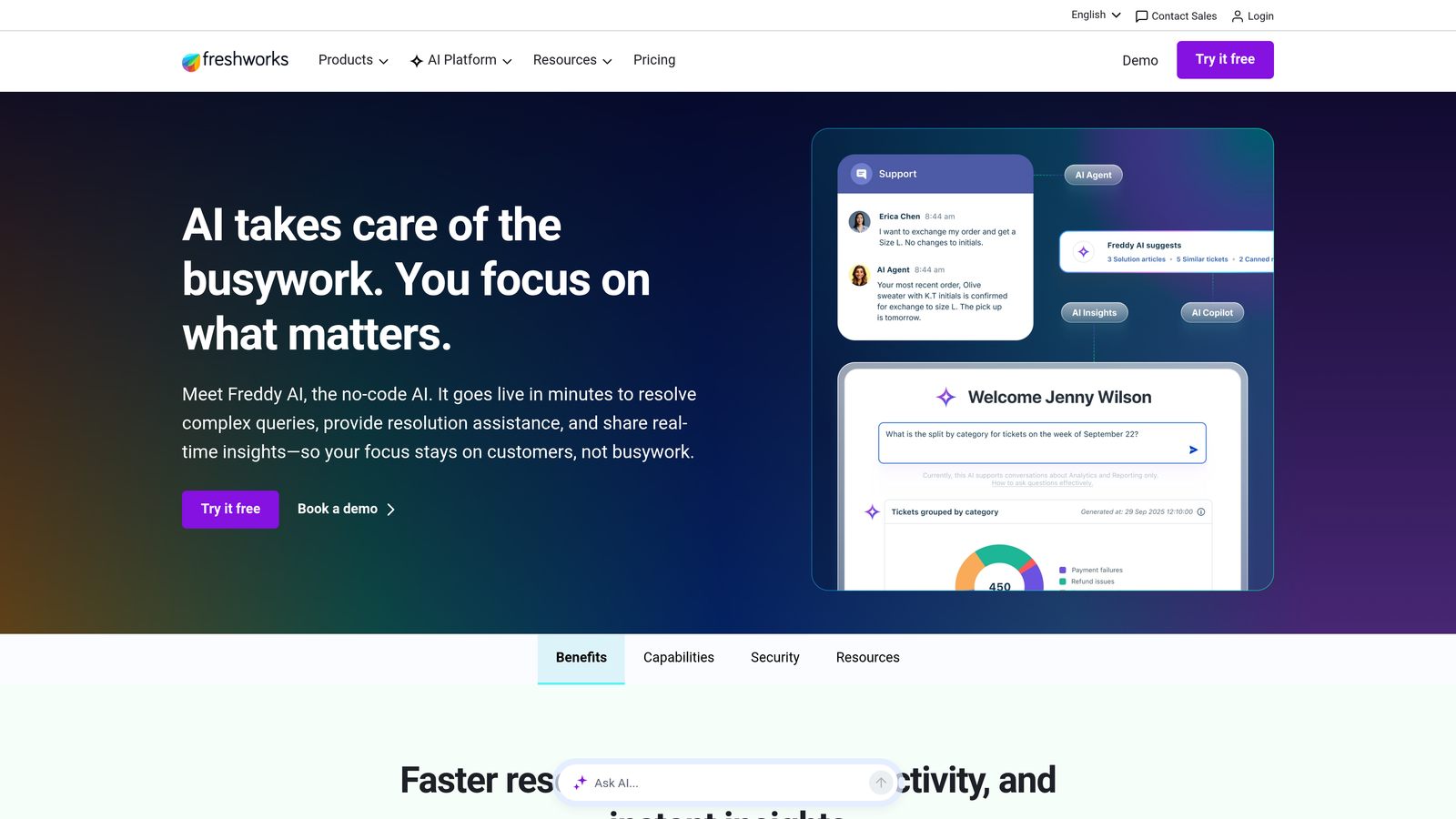
Freshdesk Freddy AI is Freshworks' three-layer AI system covering customer self-service, agent assistance, and support analytics, all within the Freshdesk platform.
Where This Tool Shines
Freddy's three-layer structure is a practical way to think about AI in support: one layer faces customers, one assists agents, and one surfaces insights for team leads. This separation makes it easier to roll out incrementally rather than overhauling everything at once.
Freshworks' competitive pricing within the broader ecosystem makes Freddy a strong option for growing SaaS teams that are cost-conscious but want genuine AI capabilities rather than basic rule-based automation.
Key Features
Freddy Self Service: Customer-facing AI bot for query deflection and self-service resolution.
Freddy Copilot: Real-time suggestions, ticket summaries, and response drafts for support agents.
Freddy Insights: AI-powered analytics that detect trends and anomalies across your support data.
Omnichannel Support: Handles chat, email, and social channels within a unified inbox.
Competitive Pricing: Freddy features are accessible across Freshdesk's mid-tier plans without premium add-on costs.
Best For
SMB and mid-market SaaS teams using Freshdesk who want a structured AI rollout across self-service, agent assist, and analytics without jumping to enterprise-tier pricing.
Pricing
Freddy features are available from the Freshdesk Growth plan at approximately $15 per agent per month. Higher-tier plans unlock additional Freddy capabilities.
5. Drift
Best for: Sales-led SaaS teams where support and pipeline conversations overlap
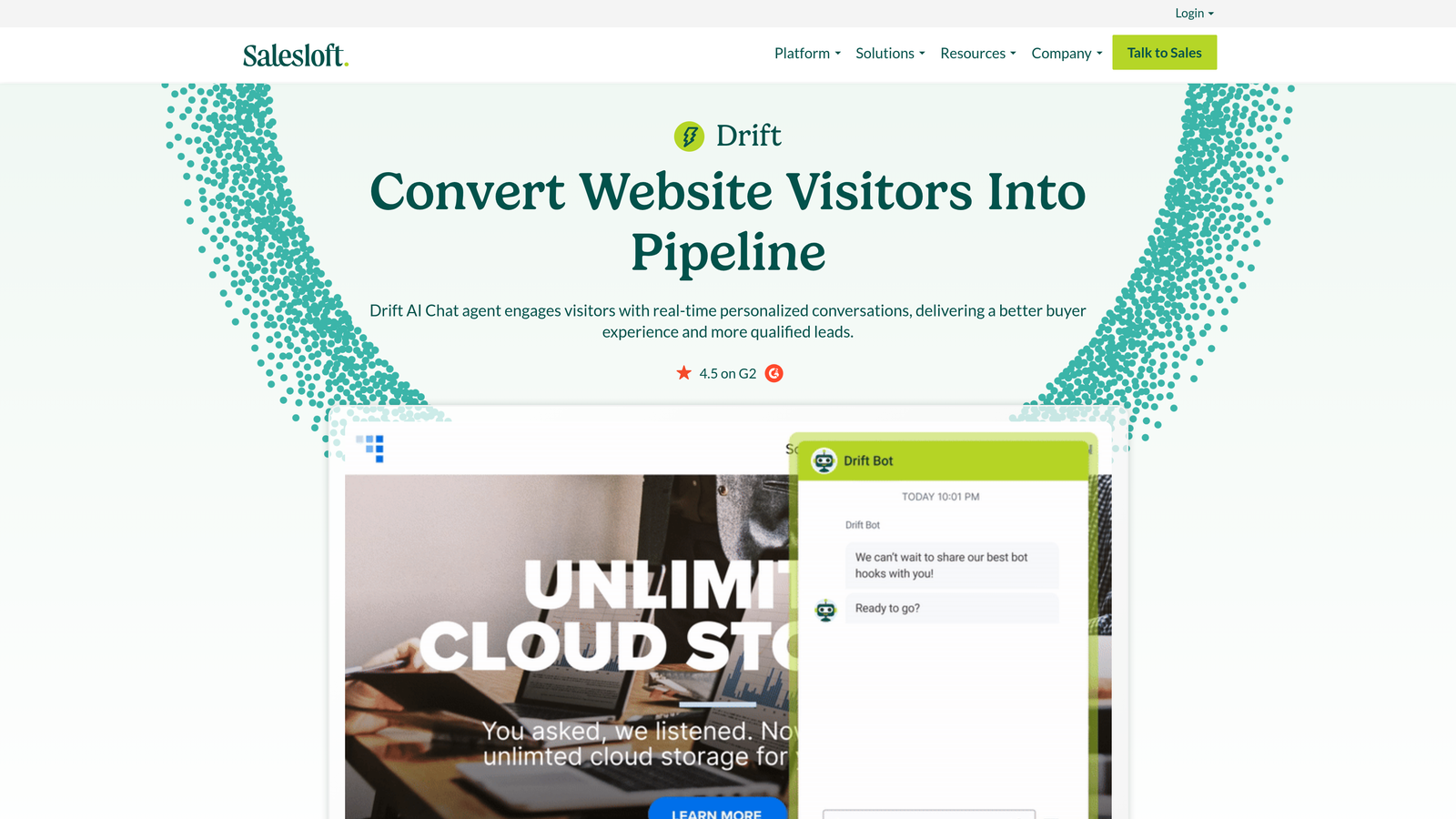
Drift is a conversational AI platform, now part of Salesloft, that blends sales engagement and support automation with strong pipeline routing and revenue-focused chat flows.
Where This Tool Shines
Drift was never a pure support tool, and that's actually its strength in certain SaaS contexts. For sales-led growth companies where a product inquiry can quickly become a sales conversation, Drift's ability to qualify visitors, route to the right rep, and schedule meetings in the same flow is genuinely useful.
Post-acquisition by Salesloft, the CRM integration story has strengthened. Teams running Salesloft for their sales motion can now connect support and sales conversations more tightly than most tools allow.
Key Features
AI-Powered Conversation Routing: Routes visitors to the right sales or support flow based on behavior and intent signals.
Meeting Scheduling and Pipeline Qualification: Built-in meeting booking and lead qualification within the chat experience.
Salesloft CRM Integration: Deep connection to Salesloft's revenue platform post-acquisition.
Personalized Playbooks: Customizable conversation flows based on visitor segment, page, or behavior.
Real-Time Agent Notifications: Alerts live agents when high-value conversations need human involvement.
Best For
Sales-led SaaS companies where chat serves both support and revenue functions. Less suited to product-led teams focused purely on support resolution without a sales overlay.
Pricing
Custom pricing; contact Drift or Salesloft directly for current plan details.
6. Tidio
Best for: Early-stage SaaS teams wanting fast deployment and affordable entry-level pricing
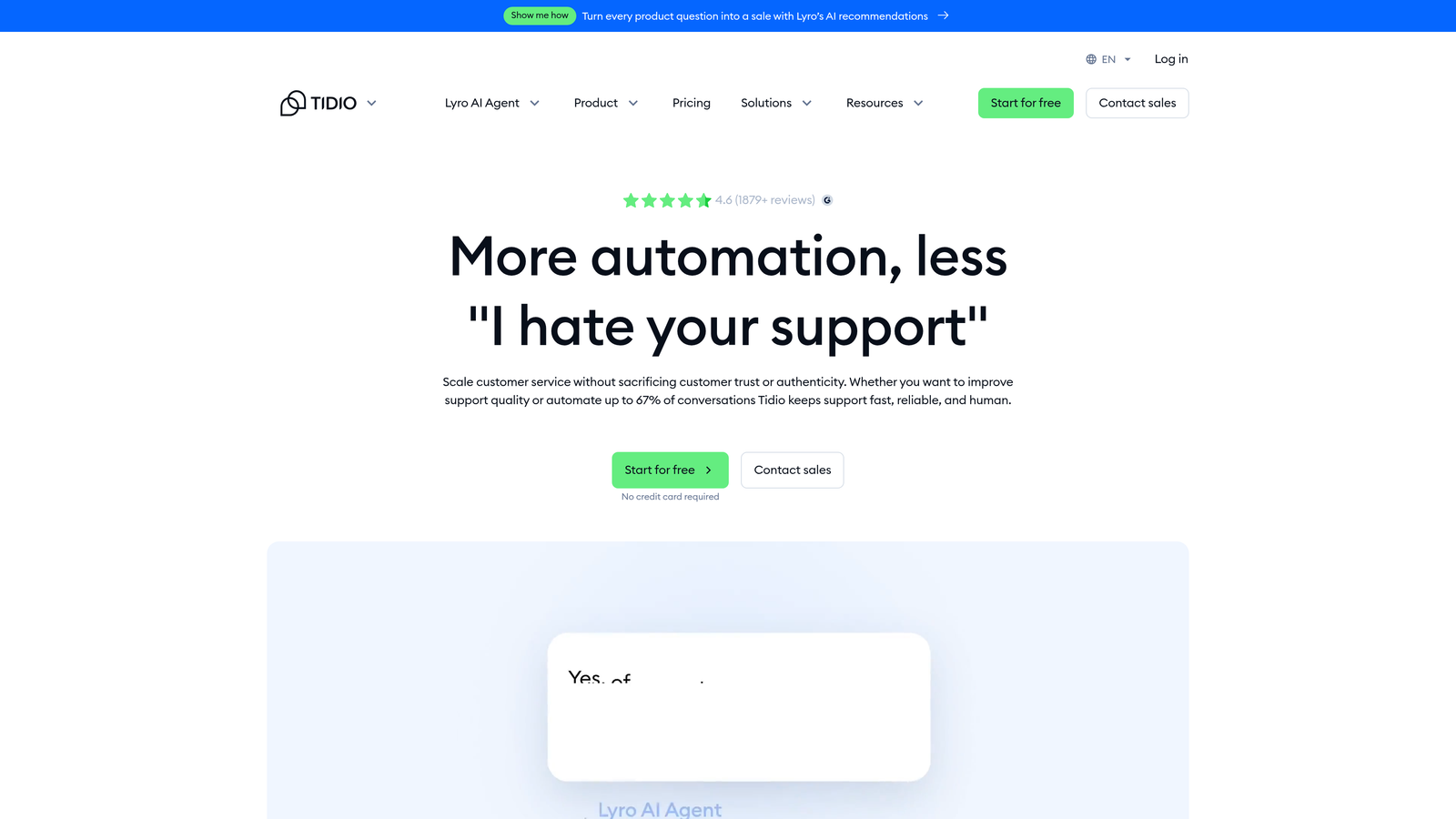
Tidio is an accessible chat and AI platform with Lyro AI for automated support responses, built for teams that need to get up and running quickly without heavy technical investment.
Where This Tool Shines
Tidio's main advantage is speed and simplicity. The visual flow builder requires no coding, Lyro AI connects to your knowledge base to answer questions automatically, and the setup process is measured in hours rather than weeks. For early-stage SaaS teams without dedicated support engineers, that matters.
The free tier and affordable paid plans make Tidio genuinely accessible for bootstrapped or early-funded teams. The trade-off is depth: Tidio doesn't offer the integration breadth or business intelligence capabilities that more mature SaaS teams tend to need.
Key Features
Lyro AI: Automated response engine trained on your knowledge base to handle common customer questions.
Visual Flow Builder: No-code chatbot builder for creating custom conversation flows without developer involvement.
Unified Inbox: Live chat, email, and Messenger conversations managed in a single view.
Platform Integrations: Connects with Shopify, WordPress, and other common platforms.
Accessible Pricing: Free plan available with paid tiers starting at an approachable price point for early-stage teams.
Best For
Early-stage SaaS startups and small teams that need a functional AI chat solution quickly without a large budget or technical implementation effort.
Pricing
Free plan available; paid plans from approximately $29 per month. Lyro AI is available as a conversation-based add-on. Verify current pricing at tidio.com.
7. Chatbase
Best for: Technical founders wanting a lightweight, custom GPT-powered chatbot without vendor lock-in
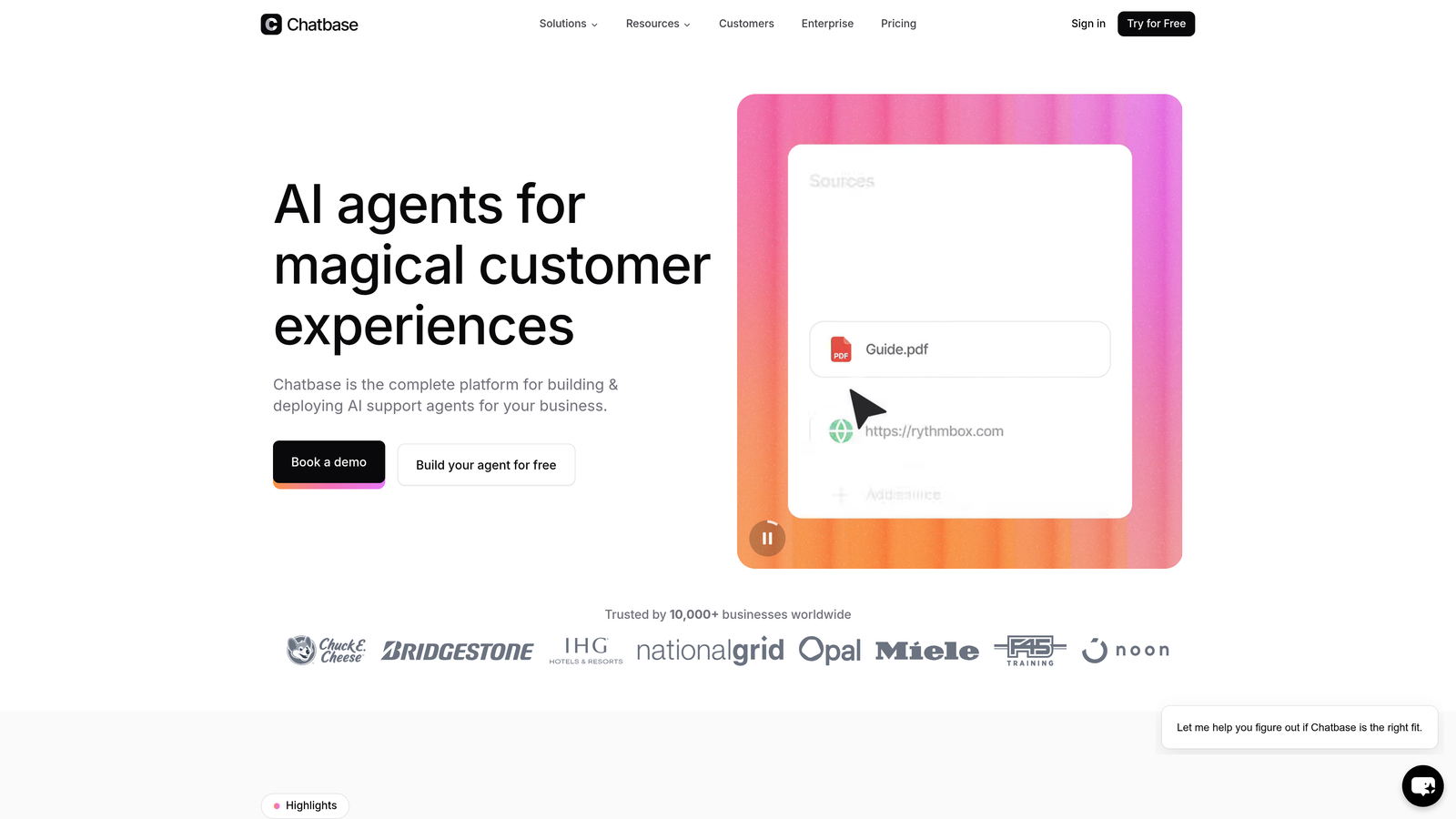
Chatbase is a tool for building custom GPT-4 chatbots trained on your own documentation, URLs, or uploaded files, deployable as an embeddable widget or via API.
Where This Tool Shines
Chatbase appeals to technically-minded founders who want a capable AI chatbot without committing to a full support platform. You upload your docs, train the bot, and embed it. The API access means you can integrate it into your own product in ways that off-the-shelf tools don't always allow.
The simplicity is both its strength and its ceiling. Chatbase works well for documentation-heavy products where users frequently ask questions that are already answered in your help content. It's less suited to teams that need deep CRM integrations, business intelligence, or autonomous workflow handling.
Key Features
Custom Training Sources: Train your chatbot on PDFs, documentation URLs, plain text, or uploaded files.
Embeddable Widget: Deploy as a chat widget on any website or product with minimal setup.
API Access: Connect Chatbase to custom integrations and build your own workflows around the AI.
Multiple Workspaces: Manage separate chatbots for different products or use cases within one account.
Lead Capture and Conversation History: Collect leads through chat and review full conversation logs.
Best For
Technical SaaS founders who want a fast, lightweight AI chatbot trained on their own content without the overhead of a full support platform. Good for documentation-heavy products at early to mid-stage.
Pricing
Free plan available; paid plans from approximately $19 per month. Verify current pricing at chatbase.co.
8. Gorgias
Best for: SaaS companies with subscription billing and transactional support needs
Gorgias is a helpdesk and AI automation platform with deep ecommerce integrations, increasingly adopted by SaaS companies that manage subscription billing and transactional customer queries.
Where This Tool Shines
Gorgias built its reputation in ecommerce, and its deep Shopify and Stripe integrations reflect that. For SaaS companies with a transactional layer, particularly those handling subscription management, billing disputes, or order-adjacent queries, those integrations become directly relevant.
The AI ticket tagging and auto-close features are practical for reducing manual triage on high-volume, routine queries. The revenue statistics tied to support interactions give team leads a clearer picture of how support activity connects to customer retention and billing outcomes.
Key Features
AI Ticket Tagging and Intent Detection: Automatically categorizes incoming tickets and closes routine queries without agent involvement.
Deep Shopify, Stripe, and Recharge Integrations: Pulls transaction and billing data directly into the support context.
Automation Rules: Configurable rules for handling order and billing support scenarios automatically.
Omnichannel Inbox: Manages email, chat, social, and SMS in a unified view.
Revenue Statistics: Ties support interaction data to revenue outcomes for team reporting.
Best For
SaaS companies with a subscription commerce layer: teams handling billing queries, subscription changes, or transactional support alongside product questions. Less suited to pure SaaS product support without a transactional commerce component.
Pricing
Starter plan from approximately $10 per month; scales by ticket volume. Verify current pricing at gorgias.com.
9. Botpress
Best for: SaaS engineering teams wanting full control with open-source, LLM-native architecture
Botpress is an open-source, developer-first chatbot platform with LLM-native architecture, a visual flow builder, and full code-level customization for SaaS engineering teams.
Where This Tool Shines
Botpress sits at the opposite end of the plug-and-play spectrum from tools like Tidio. It gives engineering teams complete control: the visual flow builder handles common use cases, but everything can be extended with TypeScript or JavaScript when you need behavior that no off-the-shelf tool supports. The open-source core means no vendor lock-in and a genuinely active community contributing extensions and integrations.
The LLM-native architecture means Botpress isn't tied to a single AI model. Teams can configure which models power which parts of their bot, which matters as the AI landscape continues to evolve rapidly.
Key Features
LLM-Native Architecture: Supports multiple AI models and can be configured to use different LLMs for different tasks.
Visual Flow Builder plus Code Extensibility: Build flows visually and extend them with full TypeScript and JavaScript when needed.
Open-Source Core: Active community, no vendor lock-in, and full transparency into the platform's internals.
API-Based Integrations: Connect to any external system via API, giving engineering teams complete flexibility.
Flexible Deployment: Self-hosted or cloud deployment depending on your infrastructure and compliance requirements.
Best For
SaaS engineering teams that want full control over their chatbot architecture and are willing to invest technical resources in exchange for complete flexibility and zero vendor dependency.
Pricing
Free plan available; pay-as-you-go and Team plans available for growing usage. Enterprise pricing on request. Verify current pricing at botpress.com.
Which Tool Is Right for Your SaaS Team?
The right AI chatbot depends almost entirely on where you are as a company and what you're actually trying to solve.
For AI-first SaaS teams wanting autonomous resolution and business intelligence: Halo AI is built specifically for this. Page-aware guidance, auto bug ticket creation, smart inbox intelligence, and continuous learning make it the most complete option for product-led teams that want their support platform to do more than answer questions.
For teams already committed to a major helpdesk: Intercom Fin, Zendesk AI, and Freshdesk Freddy AI are all strong within their respective ecosystems. Choose the one that matches your existing stack rather than switching platforms for AI alone.
For sales-led SaaS where chat serves both support and pipeline: Drift's integration with Salesloft makes it a natural fit where revenue conversations and support conversations overlap.
For early-stage teams on a budget: Tidio and Chatbase both offer accessible entry points. Tidio wins on speed of deployment; Chatbase wins if you want API flexibility and lightweight vendor commitment.
For subscription-commerce SaaS: Gorgias brings billing and transactional integrations that most pure support tools lack. For developer-led teams wanting full architectural control, Botpress is in a category of its own.
Your support team shouldn't scale linearly with your customer base. Let AI agents handle routine tickets, guide users through your product, and surface business intelligence while your team focuses on complex issues that need a human touch. See Halo in action and discover how continuous learning transforms every interaction into smarter, faster support.