9 Best AI Chatbot & Support Platforms Compared in 2026
This comprehensive comparison of 9 tools breaks down the key differences in the ai chatbot vs support platform debate, helping support teams identify the right solution for their specific needs and scale. From lightweight chatbot builders to full-stack AI platforms, the guide covers strengths, limitations, and ideal use cases so you can choose confidently without wasting time on unnecessary demos.
 Matt PattoliFounder13 min read
Not all AI support tools are built the same, and the difference between a standalone chatbot and a full support platform can mean the difference between deflecting a few tickets and actually transforming your support operation. If you're evaluating options right now, you've probably noticed the lines are blurring: chatbots are gaining platform features, and platforms are adding AI layers on top of legacy infrastructure. So how do you choose?
This guide cuts through the noise by comparing nine tools across both categories, from lightweight chatbot builders to full-stack AI support platforms. We'll cover what each tool does best, who it's built for, and where it falls short, so you can make a confident decision without booking a dozen demos.
Whether you're a lean SaaS team trying to scale support without hiring, or a larger operation looking to replace a heavyweight helpdesk, there's a right fit for your stage and stack. Here are the top AI chatbot and support platforms worth your attention in 2026.
1. Halo AI
Best for: B2B SaaS teams that need autonomous ticket resolution with product-aware context and business intelligence
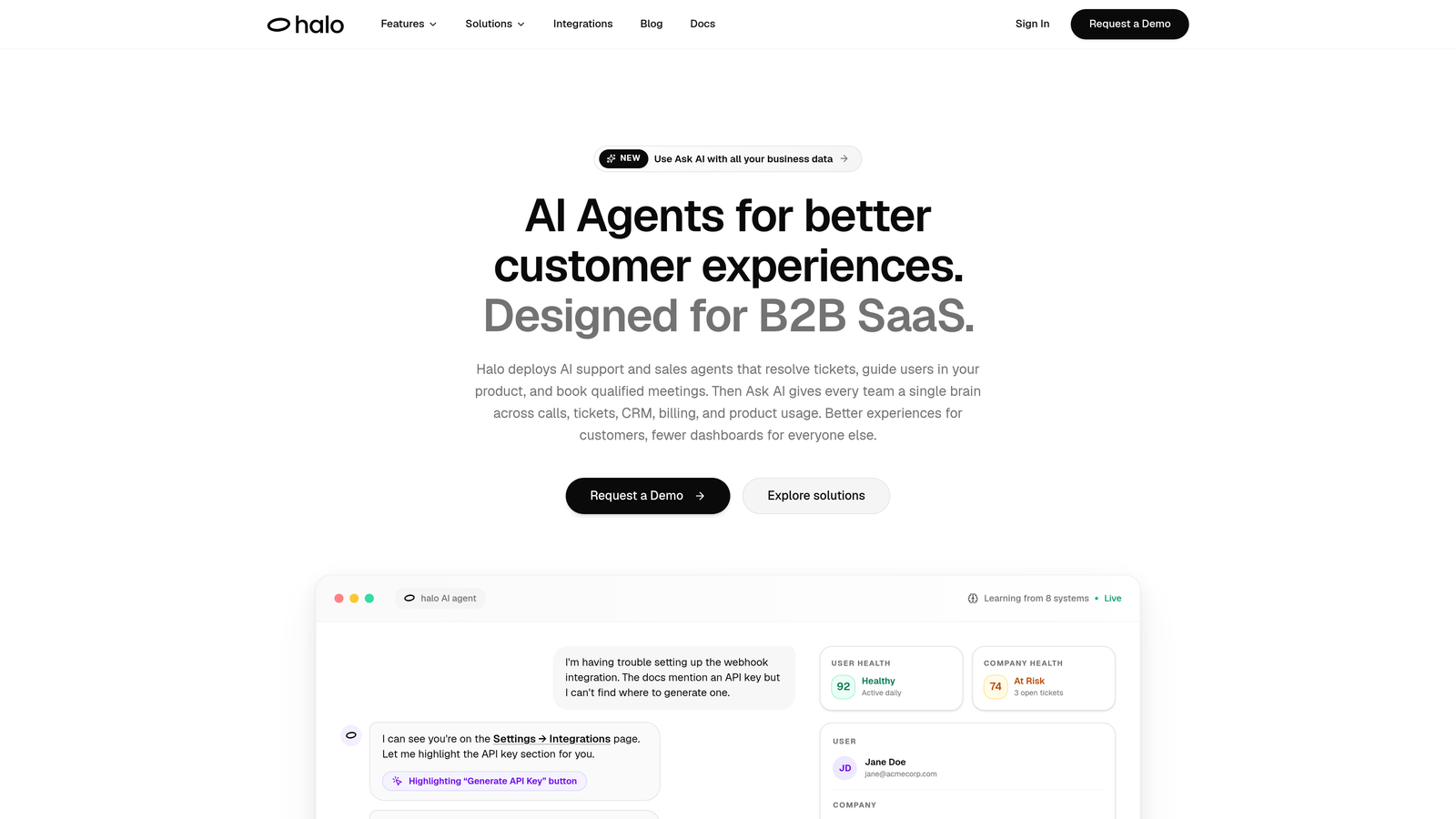
Halo AI is an AI-first customer support platform built specifically for B2B SaaS companies that need more than FAQ deflection.
Where This Tool Shines
What separates Halo from most tools on this list is its architecture. Rather than bolting AI onto an existing helpdesk, Halo was built AI-first from the ground up. That design decision shows up in meaningful ways: the platform doesn't just respond to tickets, it understands context, learns from every resolved interaction, and gets measurably smarter over time.
The page-aware chat widget is particularly compelling for product-led SaaS teams. The agent knows which screen a user is on and can provide step-by-step UI guidance in context, not just generic help article links. Combined with smart escalation to human agents when complexity warrants it, the result is a support experience that feels genuinely intelligent rather than scripted.
Key Features
Page-Aware AI Agents: Understands which product screen the user is on and delivers contextual guidance, not generic responses.
Autonomous Ticket Resolution: Resolves support tickets end-to-end with smart handoff to human agents when needed.
Smart Inbox with Business Intelligence: Surfaces customer health signals, revenue anomalies, and churn indicators from support interactions, turning your inbox into a strategic data source.
Auto Bug Ticket Creation: Automatically creates and routes bug reports to Linear, closing the loop between support and engineering without manual handoffs.
Broad Integration Stack: Connects natively with Slack, HubSpot, Stripe, Zoom, PandaDoc, Fathom, and Intercom, covering the modern SaaS toolchain.
Best For
Halo is purpose-built for B2B SaaS product teams and support leaders who need more than a chatbot layer. It's especially well-suited for teams where support, engineering, and customer success overlap, and where surfacing revenue signals from support data is as valuable as resolving the tickets themselves.
Pricing
Pricing is available on request and is designed for B2B SaaS teams. Given the platform's depth, it's positioned as a strategic investment rather than a per-seat commodity tool.
2. Intercom
Best for: Teams already in the Intercom ecosystem looking to add AI-powered ticket resolution
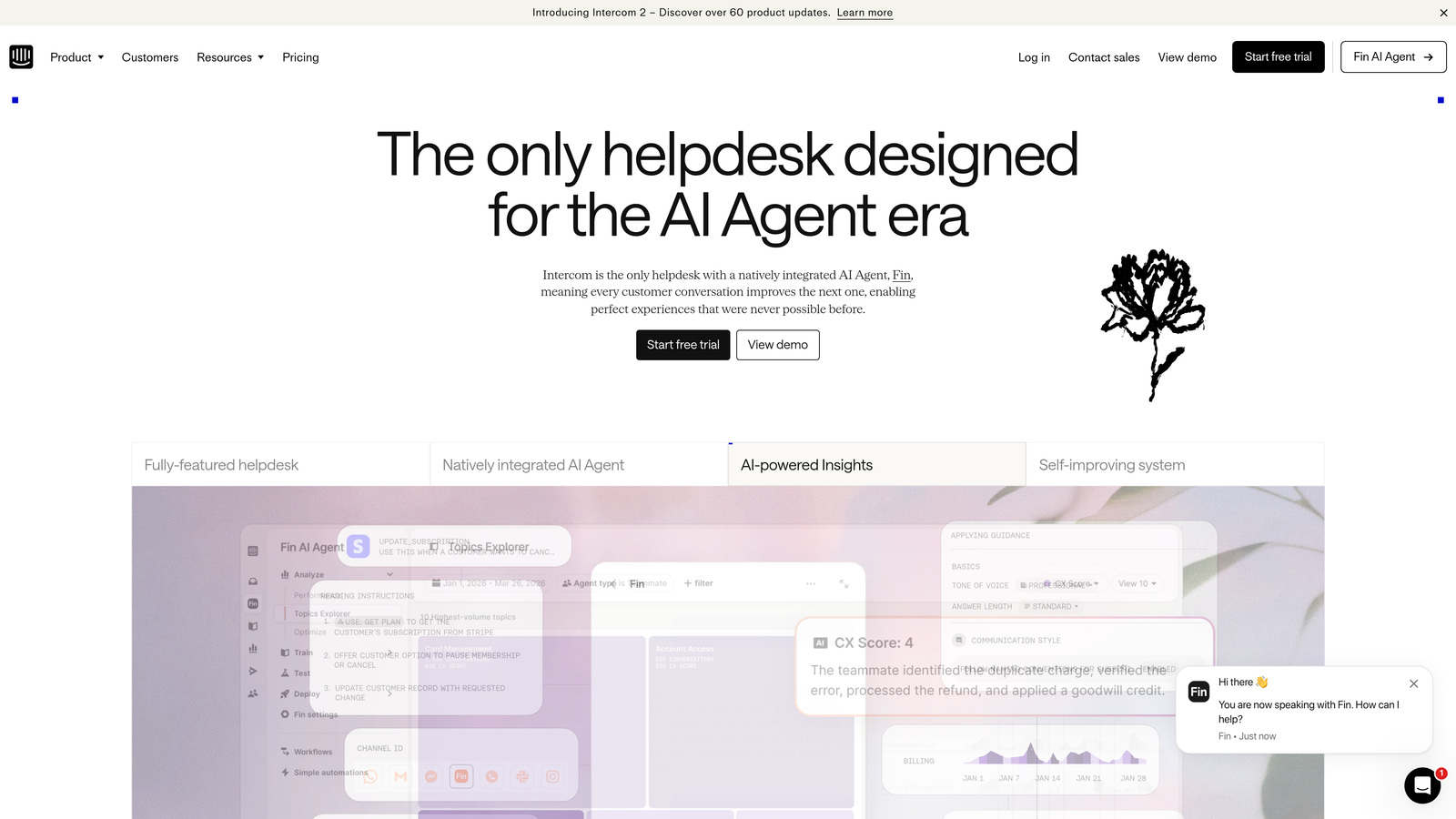
Intercom is a mature conversational support platform with Fin, its AI agent, built on top of established messenger and inbox infrastructure.
Where This Tool Shines
Intercom's strength is its ecosystem maturity. If your team already uses Intercom for customer messaging, onboarding sequences, or product tours, adding Fin as an AI resolution layer is a natural extension rather than a platform switch. Fin has iterated significantly and handles a solid range of support queries across chat and email channels.
The shared inbox, routing rules, and help center integrations are genuinely polished. For teams that value a single platform for support, outbound messaging, and product engagement, Intercom bundles a lot of capability in one place.
Key Features
Fin AI Agent: Handles autonomous ticket resolution across chat and email channels using your existing help content.
Shared Inbox: Robust team routing, assignment rules, and conversation management for human agents.
Help Center Integration: Knowledge base content feeds directly into AI deflection, reducing setup friction.
Outbound Messaging: Product tours, targeted messages, and campaigns alongside support, all from one platform.
Wide Integration Marketplace: Connects with hundreds of third-party tools across CRM, billing, and analytics.
Best For
Teams that are already Intercom customers or that want a single platform for support and customer engagement. Less compelling as a greenfield choice if you need deep business intelligence or product-specific context from your support data.
Pricing
Base plans start at approximately $39 per seat per month. Fin AI resolution is priced per resolution, which can add up quickly at higher ticket volumes.
3. Zendesk
Best for: Enterprise teams with complex workflows, high ticket volume, and multi-channel support requirements
Zendesk is the enterprise-grade helpdesk standard, now with AI Agents and AI-powered triage layered onto deep ticketing and workflow infrastructure.

Where This Tool Shines
Zendesk's core strength is configurability. Few platforms match its depth of workflow customization: SLA management, routing rules, custom ticket fields, and a reporting suite that can satisfy even demanding enterprise requirements. If your support operation has complex escalation paths or strict compliance needs, Zendesk has likely already solved for it.
The AI additions, including AI Agents and intelligent triage, are meaningful upgrades. That said, they're layered onto legacy infrastructure rather than native to the architecture, which means setup and maintenance require more investment than newer AI-first platforms.
Key Features
AI Agents: Automated ticket resolution across channels, with handoff to human agents for complex issues.
Customizable Ticket Workflows: Highly configurable routing, SLA management, and escalation rules.
Enterprise Reporting: Deep analytics and reporting across channels, teams, and time periods.
Large Integration Marketplace: One of the broadest app ecosystems in the support category.
Multi-Channel Coverage: Voice, email, chat, and social support in a unified platform.
Best For
Larger support teams with complex operational requirements, dedicated IT or admin resources for configuration, and existing Zendesk investments. Can feel heavyweight for teams under 20 agents or those without a dedicated implementation resource.
Pricing
Suite plans start at approximately $55 per agent per month. AI features are available on higher-tier plans, which increases the effective cost significantly.
4. Freshdesk
Best for: SMBs and mid-market teams that want helpdesk structure without enterprise-level pricing
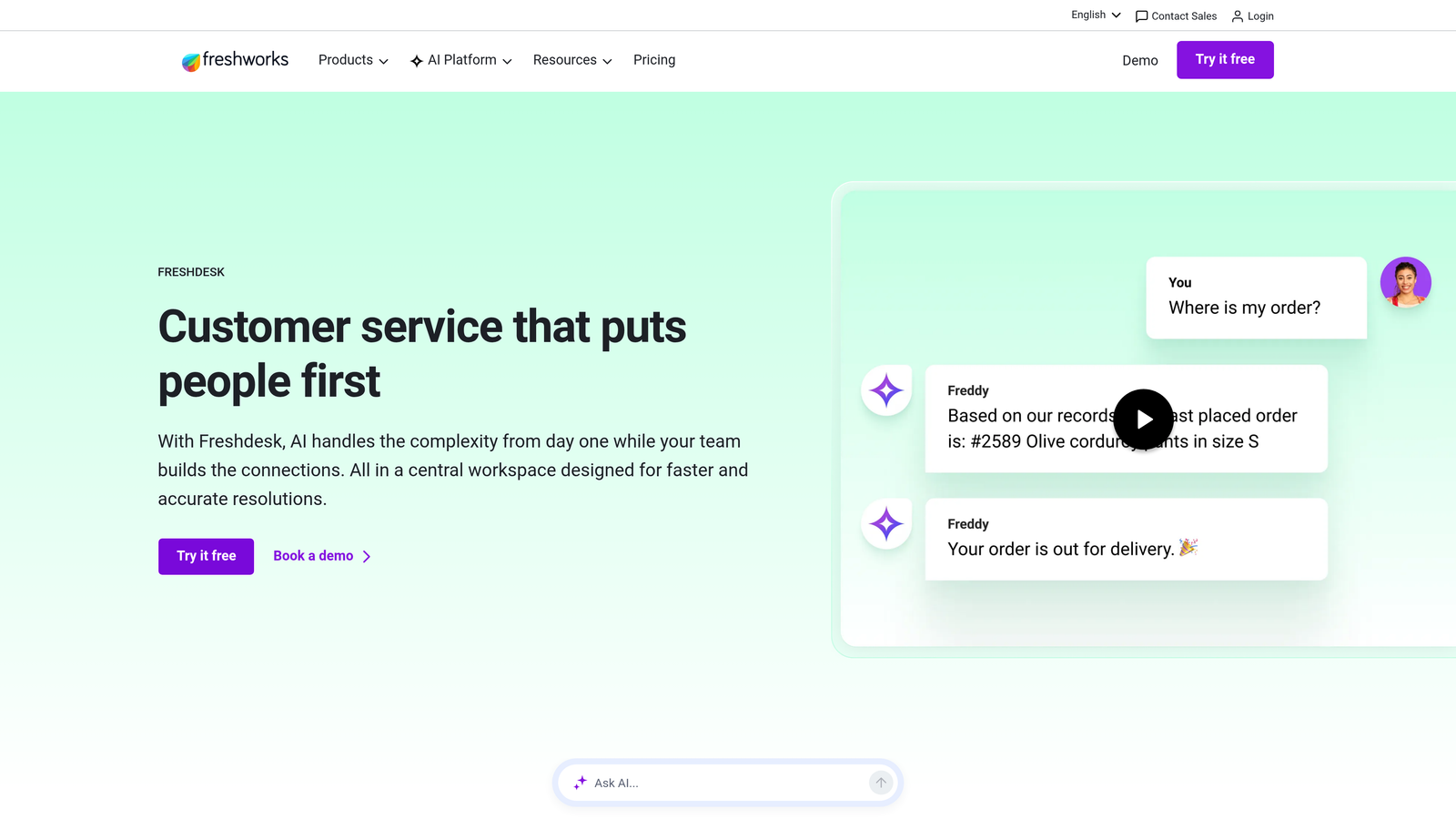
Freshdesk is a cost-competitive helpdesk platform from Freshworks with Freddy AI embedded across ticketing, chat, and agent assistance workflows.
Where This Tool Shines
Freshdesk occupies a smart middle ground: more capable than a basic chatbot tool, more affordable than Zendesk, and increasingly AI-powered through the Freddy layer. Freddy AI Copilot helps agents with suggested responses and summaries, while Freddy Self Service handles autonomous deflection for common queries.
For teams that need helpdesk fundamentals, including shared inbox, collision detection, and multi-channel support, at a price point that doesn't require executive sign-off, Freshdesk delivers solid value. The UI is clean and onboarding is faster than Zendesk.
Key Features
Freddy AI Copilot: Assists human agents with suggested responses, summaries, and next-best-action recommendations.
Freddy Self Service: Autonomous customer deflection for common queries before they reach a human agent.
Multi-Channel Support: Email, chat, phone, and social channels managed from a unified inbox.
Collision Detection: Prevents multiple agents from responding to the same ticket simultaneously.
Affordable Tiering: Pricing structure that scales more gently than Zendesk for growing teams.
Best For
Growing SMBs and mid-market teams that need structured helpdesk workflows with AI assistance, but aren't ready for the complexity or cost of enterprise platforms like Zendesk.
Pricing
A free tier is available for small teams. Paid plans start at approximately $15 per agent per month, making it one of the more accessible options in the full-platform category.
5. Drift
Best for: Teams where sales qualification and support conversations overlap significantly
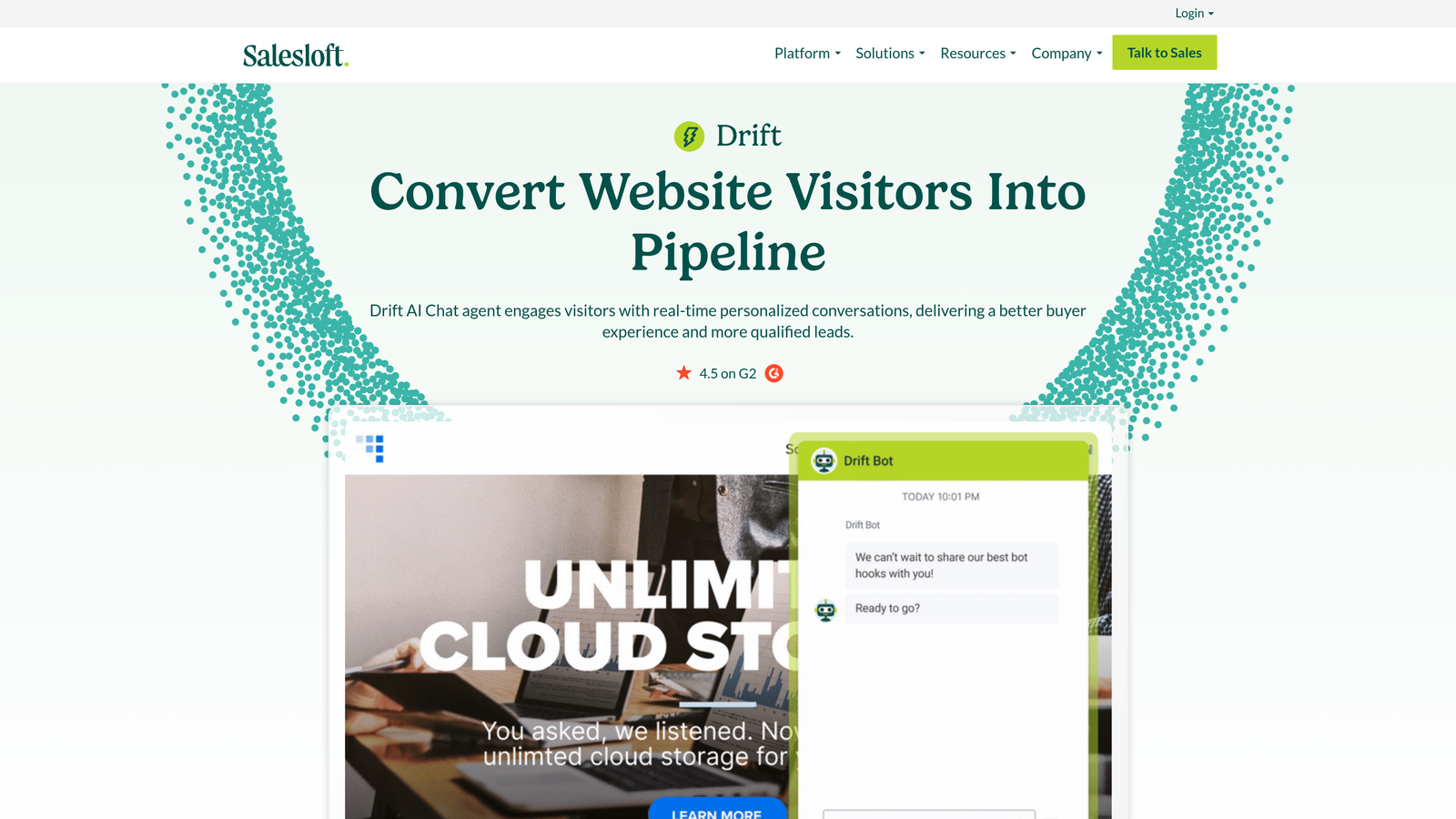
Drift is a conversational platform originally built for marketing that has expanded into support, particularly suited for teams where inbound sales and support blur together.
Where This Tool Shines
Drift's playbook-based chatbot flows are well-designed for routing, qualification, and deflection in high-intent environments. If your support team regularly handles pre-sales questions, trial user queries, or conversations that could convert to pipeline, Drift's account-based targeting and CRM integrations add genuine value that pure support tools don't offer.
The meeting scheduling integration is a practical differentiator: visitors can book directly from a chat conversation without leaving the page. Worth noting, Drift was acquired by Salesloft in 2024, and its product direction is increasingly tilted toward sales-first use cases.
Key Features
Playbook-Based Flows: Visual chatbot builder for routing, qualification, and deflection without code.
AI Intent Detection: Identifies visitor intent and surfaces relevant responses or routing paths.
Meeting Scheduling: Integrated calendar booking within chat conversations for demos and follow-ups.
Account-Based Targeting: Personalizes chat experiences based on company, industry, or account tier.
CRM Integrations: Deep Salesforce integration alongside other major CRM platforms.
Best For
B2B teams where the line between support and sales is thin, particularly those using Salesforce. Less suited for pure support operations with high ticket volume or complex post-sale support needs.
Pricing
Premium plans require a direct conversation with sales. Pricing is not publicly listed, and Drift tends to be positioned at higher price points relative to pure support tools.
6. Tidio
Best for: Small ecommerce and early-stage SaaS teams that need fast setup and accessible pricing
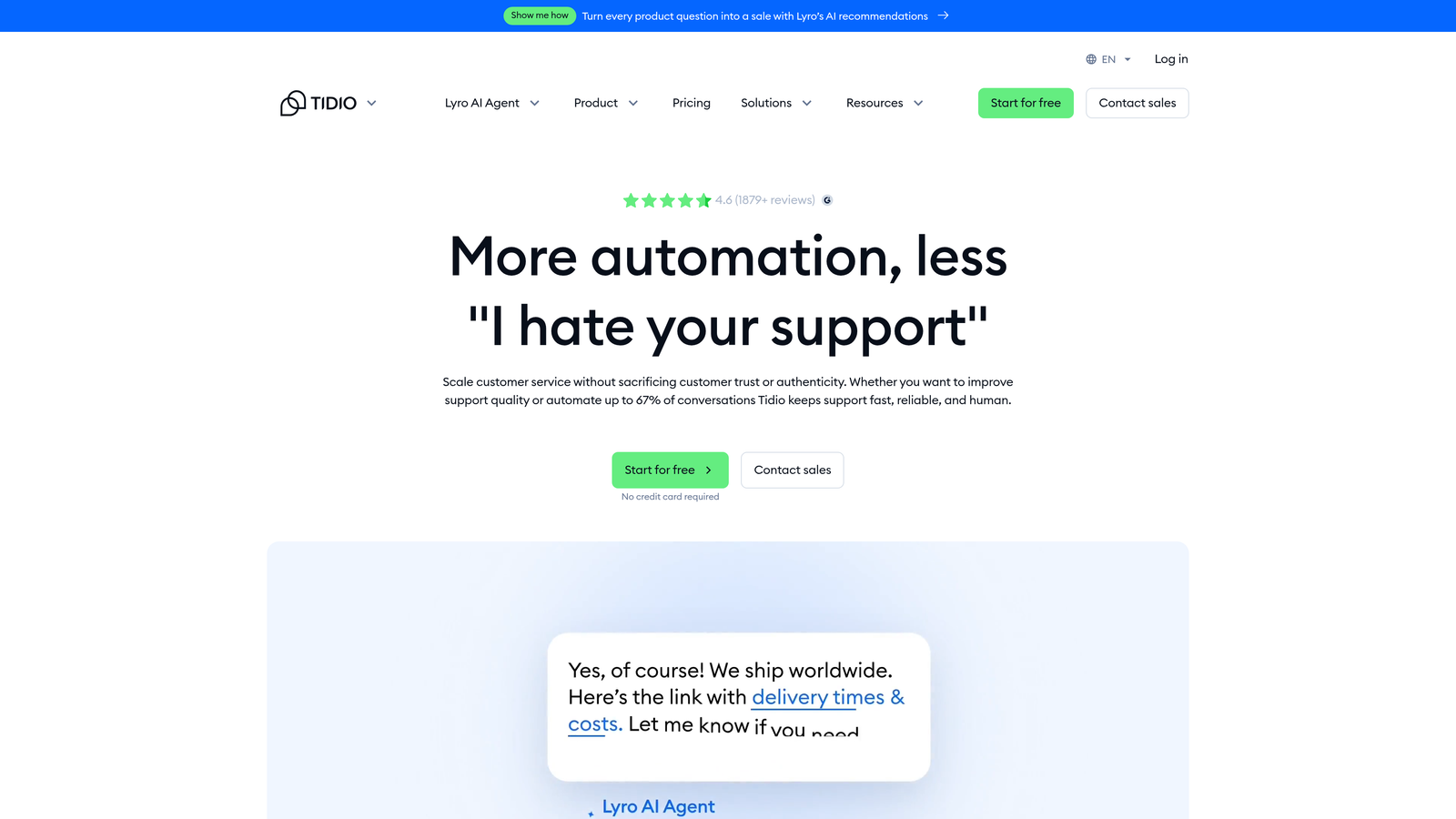
Tidio is a lightweight AI chatbot and live chat tool popular with small teams for its quick deployment and clean interface.
Where This Tool Shines
If you need something live within a day and don't want to navigate a complex implementation, Tidio is hard to beat at its price point. The Lyro AI chatbot handles FAQ deflection competently, and the handoff to a live agent is smooth when queries exceed what the bot can handle. For teams getting started with chat support, it removes a lot of friction.
The ecommerce integrations with Shopify and WooCommerce make it a natural fit for DTC brands. For SaaS teams, it works well as a first layer of support automation before more sophisticated tooling becomes necessary.
Key Features
Lyro AI Chatbot: Handles FAQ deflection and basic conversational support using your existing help content.
Live Chat Fallback: Smooth handoff to human agents when queries require a personal response.
Multi-Channel Integration: Email and Facebook Messenger alongside the core chat widget.
Ecommerce Integrations: Native Shopify and WooCommerce connections for order-related queries.
No-Code Flow Builder: Visual editor for building custom chatbot flows without engineering resources.
Best For
Small ecommerce brands and early-stage SaaS teams that want an accessible entry point to AI-assisted chat support. Not the right fit for teams that need deep workflow automation, ticketing, or business intelligence from their support data.
Pricing
A free tier is available. Lyro AI starts at approximately $29 per month, making it one of the most affordable AI chatbot options in the market.
7. Chatbase
Best for: Teams that want a custom GPT-powered chatbot trained on their own documentation with minimal setup
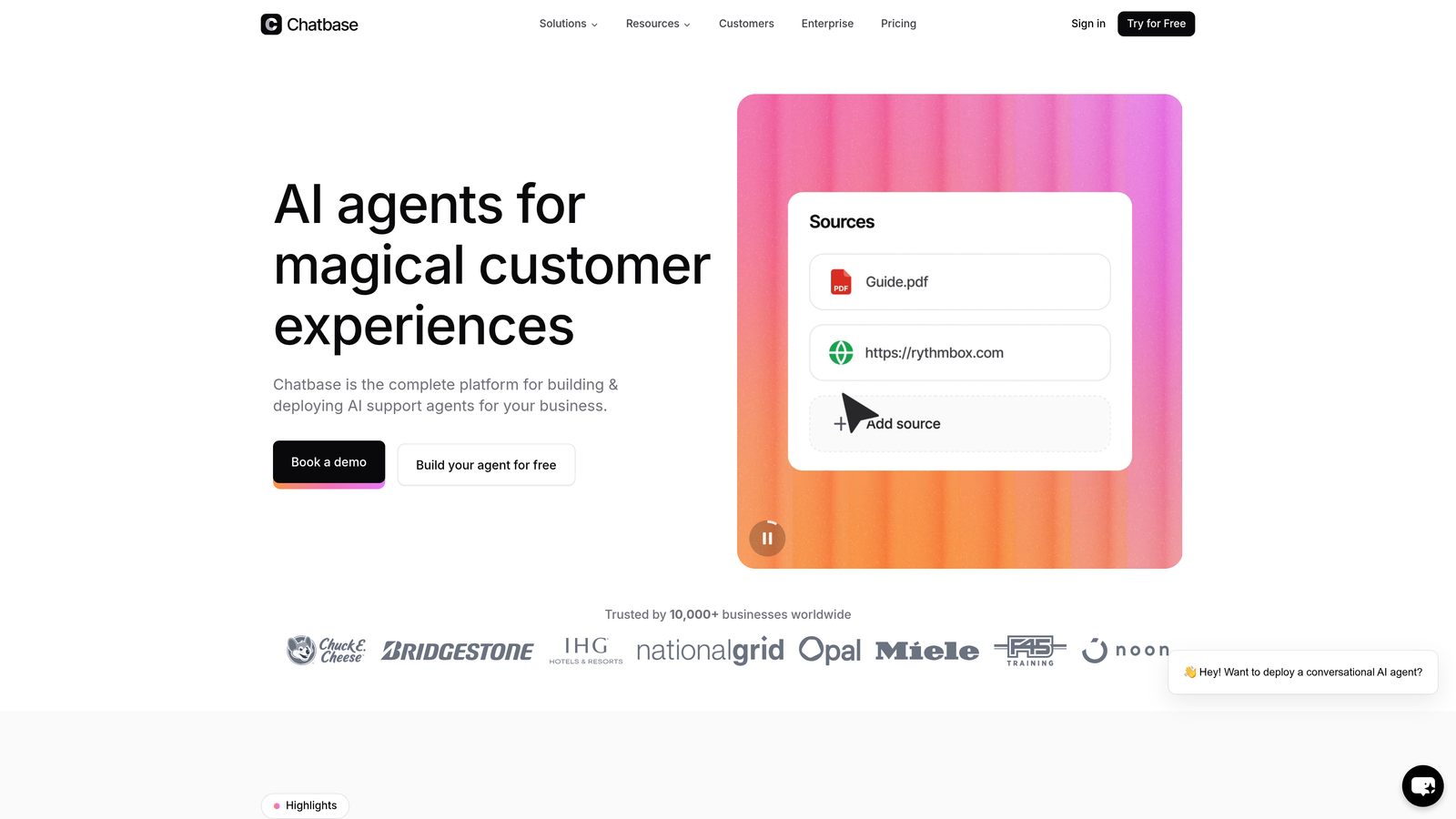
Chatbase is a no-code chatbot builder that lets teams create a custom AI chatbot trained on their own docs, PDFs, or website content.
Where This Tool Shines
Chatbase has a specific, well-defined value proposition: upload your content, get a trained chatbot, embed it on your site. For teams that need a focused knowledge-base bot without operational complexity, that simplicity is the product. Setup is genuinely fast, and the output quality depends heavily on the quality of your source material.
It's particularly popular with startups, developer tools teams, and agencies that want to offer clients a branded chatbot experience without building one from scratch. The API access opens up more custom integration scenarios for technical teams.
Key Features
Custom Training: Upload docs, PDFs, URLs, or plain text to train a GPT-based chatbot on your specific content.
Embeddable Widget: Customizable chat widget with branding controls for seamless site integration.
API Access: Developer-friendly API for teams that want to integrate the chatbot into custom workflows.
Conversation Analytics: Basic conversation history and analytics to track what users are asking.
Multi-Language Support: Handles queries in multiple languages based on the underlying model's capabilities.
Best For
Startups, agencies, and developer-focused teams that want a focused AI chatbot trained on their own content without needing ticketing, routing, or escalation infrastructure. Not a fit for teams needing end-to-end support operations.
Pricing
A free tier is available. Paid plans start at approximately $19 per month, making it one of the most affordable entry points in the AI chatbot category.
8. Crisp
Best for: Early-stage teams that need multi-channel shared inbox capabilities with a genuinely useful free tier
Crisp is a shared inbox and live chat platform with multi-channel support and basic chatbot automation, best known for its clean interface and accessible pricing.
Where This Tool Shines
Crisp's free tier is one of the most generous in the category, covering up to two agents with live chat, a shared inbox, and basic automation. For very early-stage teams that need a professional support interface without a monthly commitment, it's a practical starting point.
The multi-channel coverage, spanning email, chat, WhatsApp, and social, is impressive for the price. The chatbot automation is functional but not deeply AI-powered; it's better understood as a rule-based flow builder than an intelligent agent.
Key Features
Multi-Channel Shared Inbox: Consolidates email, chat, WhatsApp, and social conversations in one view.
Basic Chatbot Automation: Visual flow builder for routing and FAQ deflection without code.
Knowledge Base: Self-service help center for customers to find answers independently.
CRM-Lite Features: Contact profiles and conversation history for basic relationship context.
Generous Free Tier: Two-agent free plan that's functional enough for early-stage teams.
Best For
Early-stage startups and small teams that need multi-channel support coverage at minimal cost. Crisp scales poorly for high-volume or complex support operations, and its AI capabilities are limited compared to dedicated AI platforms.
Pricing
Free for up to two agents. Pro plans start at approximately $25 per month per workspace, making it a budget-friendly option for small teams.
9. Gorgias
Best for: Ecommerce brands with high Shopify or WooCommerce ticket volume that want order data in every support conversation
Gorgias is a purpose-built support platform for ecommerce brands with deep native integrations that pull order data directly into support conversations.
Where This Tool Shines
If your support queue is dominated by order status, returns, and shipping queries, Gorgias solves for that specific problem better than almost any other tool. The Shopify, WooCommerce, and BigCommerce integrations surface order history, shipping status, and customer data directly in the ticket view, which eliminates a lot of agent tab-switching and speeds up resolution times for common ecommerce queries.
The AI automation handles order-related tickets well, and the macro and rules system is well-designed for high-volume, repetitive ecommerce support. Revenue statistics tied to support interactions are a useful feature for teams that want to understand the commercial impact of their support operation.
Key Features
Native Ecommerce Integrations: Shopify, WooCommerce, and BigCommerce data appears directly in the ticket view.
AI Order Automation: Handles order status, returns, and shipping queries autonomously at scale.
Macros and Rules: Powerful automation for high-volume, repetitive ticket types common in ecommerce.
Revenue Attribution: Tracks revenue influenced by support conversations to quantify team impact.
Multi-Channel Coverage: Email, chat, social, and SMS support from a unified platform.
Best For
Ecommerce brands, particularly Shopify-native businesses, with significant ticket volume around orders and fulfillment. Gorgias is very specifically designed for ecommerce and is not a good fit for B2B SaaS teams or businesses without transactional order data at the core of their support operation.
Pricing
Entry plans start at approximately $10 per month for 50 tickets. Pricing scales by ticket volume, which can become unpredictable as support demand grows.
Making the Right Choice for Your Team
The tools on this list serve genuinely different needs, and the right choice depends less on feature checklists and more on what kind of support operation you're trying to build.
For enterprise teams with complex workflows: Zendesk remains the standard for organizations with deep customization requirements, large agent teams, and multi-channel complexity. Freshdesk is a strong alternative if enterprise pricing is a barrier.
For lightweight chatbot deployment: Chatbase and Tidio are the fastest paths to getting an AI chatbot live. Both are well-suited as a first layer of automation, but plan for a platform upgrade as your support needs mature.
For ecommerce brands: Gorgias is purpose-built for your context and hard to beat if Shopify or WooCommerce is central to your business. Tidio is a lighter-weight alternative for smaller ecommerce teams.
For B2B SaaS teams ready to go beyond basic deflection: This is where the distinction between a chatbot layer and a full AI support platform matters most. B2B support tickets often require product context, account history, cross-team coordination, and the ability to flag signals that matter to revenue and retention. A chatbot trained on your docs can handle FAQs. It can't create a Linear bug ticket, surface a churning account in HubSpot, or guide a user through a UI step by step.
That's the gap Halo AI is built to fill. If you're evaluating tools for a SaaS team that wants AI agents to handle routine tickets, provide contextual product guidance, and surface business intelligence from every support interaction, it's worth seeing what an AI-first architecture actually looks like in practice.
Your support team shouldn't have to scale linearly with your customer base. See Halo in action and discover how continuous learning transforms every interaction into smarter, faster support that gets better over time.