9 Best AI Customer Service Tools for B2B Companies in 2026
B2B customer support demands more than generic helpdesks can offer — multi-stakeholder accounts, technical complexity, and high-value relationships require smarter tools. This guide ranks the 9 best AI customer service solutions for B2B companies in 2026, evaluated on B2B fit, AI sophistication, integration depth, and escalation handling.
 Grant CooperFounder13 min read
B2B customer support has a complexity problem that most tools weren't designed to solve. Unlike consumer support, B2B tickets often involve multi-stakeholder accounts, technical integrations, billing nuance, and high-value relationships where a single bad experience can cost a six-figure contract. Generic helpdesks weren't built for this reality, and neither were most AI chatbots.
The tools in this list are purpose-built or well-adapted for B2B realities: deep integrations with your business stack, intelligent escalation to human agents, and the ability to handle technical queries without frustrating your best customers. Whether you're a SaaS company drowning in Zendesk tickets or a product team trying to reduce support load without sacrificing quality, one of these platforms belongs in your stack.
Selection criteria: B2B fit, AI sophistication, integration depth, escalation handling, and pricing transparency. Let's get into it.
1. Halo AI
Best for: B2B SaaS teams that want an AI-first support platform with deep business stack integrations
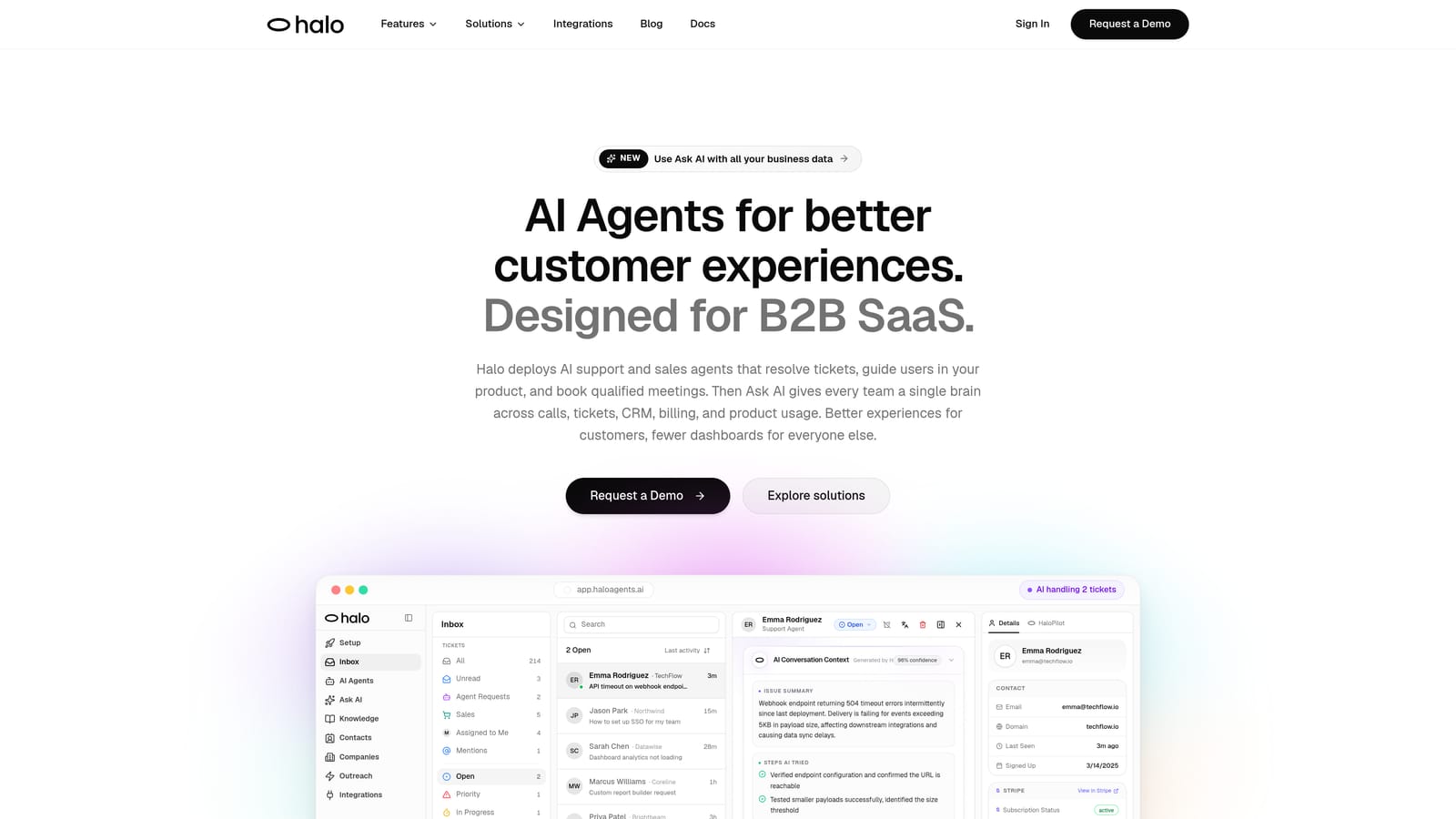
Halo AI is an AI-native customer support platform built specifically for B2B SaaS teams, deploying intelligent agents that resolve tickets, guide users through your product, and surface business intelligence across every interaction.
Where This Tool Shines
Halo's standout capability is its page-aware chat widget, which sees exactly what the user sees on their screen and delivers in-context UI guidance rather than generic help center links. This is a meaningful step beyond traditional chatbots that respond based on keywords alone.
What separates Halo from AI-augmented helpdesks is its architecture: it was built AI-first, not retrofitted. Every interaction feeds a continuous learning loop, meaning the system gets smarter over time without manual retraining. For B2B teams where tickets often carry account-level stakes, that compound intelligence matters.
Key Features
Page-Aware Chat Widget: Sees what users see on-screen and provides contextual UI guidance, not just static documentation links.
Intelligent Ticket Resolution: AI agents handle resolution autonomously, with continuous learning from every interaction to improve accuracy over time.
Auto Bug Ticket Creation: Automatically generates bug reports and routes them to Linear or Slack, closing the loop between support and engineering.
Smart Inbox with Business Intelligence: Surfaces customer health signals, revenue anomalies, and product insights from within the support stream.
Live Agent Handoff: Seamlessly escalates complex issues to human agents with full context preserved.
Deep Integrations: Connects natively with HubSpot, Intercom, Stripe, Zoom, PandaDoc, Fathom, Slack, and Linear.
Best For
Product-led SaaS companies and customer success teams that want support to function as a business intelligence layer, not just a cost center. Particularly strong for teams already running HubSpot, Slack, or Linear who want their support tool to speak the same language as the rest of their stack.
Pricing
Contact for pricing; a demo is available at haloagents.ai. Demo-first approach means you can see the platform in action before any commercial conversation.
2. Intercom
Best for: SaaS companies that want mature in-app messaging combined with autonomous AI resolution
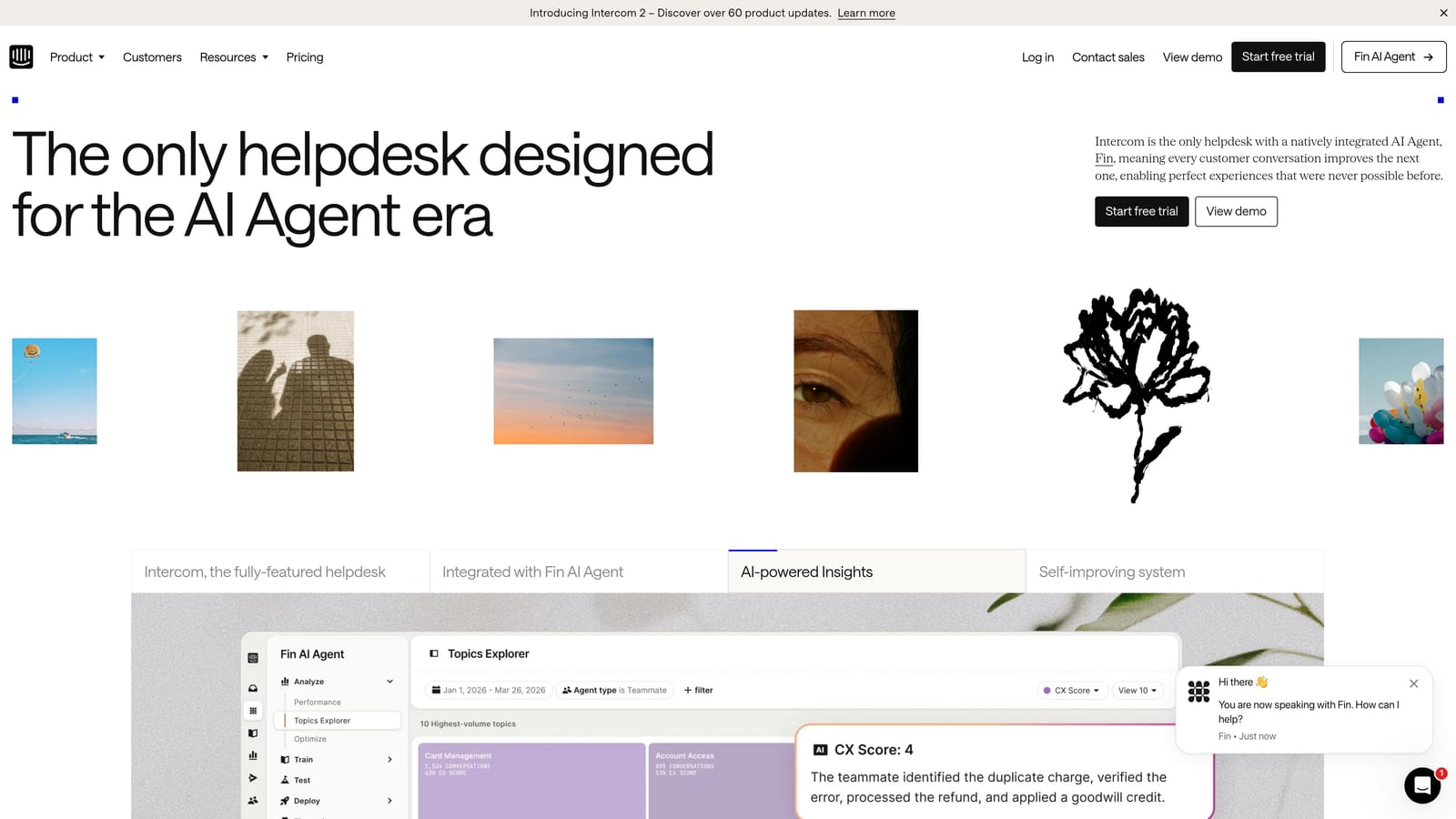
Intercom is one of the most established B2B messaging and support platforms available, with Fin, its AI agent, designed to resolve queries autonomously using your help center content and knowledge base.
Where This Tool Shines
Intercom's Fin AI agent handles a wide range of queries without human involvement, drawing on your existing documentation to generate accurate responses. For SaaS teams with a well-maintained knowledge base, this can meaningfully reduce ticket volume.
The platform's in-app messaging infrastructure is genuinely best-in-class for product-led companies. Conversation routing, user segmentation, and a large integration marketplace give support and success teams a lot of flexibility in how they structure their workflows.
Key Features
Fin AI Agent: Resolves queries autonomously using help center content, with a per-resolution pricing model that aligns cost to value.
In-App Messaging: Strong conversation routing and user targeting for product-led companies.
AI-Suggested Responses: Surfaces recommended replies for human agents to speed up resolution time.
Conversation Analytics: Tracks CSAT, resolution rates, and conversation trends across your support operation.
Integration Marketplace: Extensive third-party integrations covering CRM, billing, and engineering tools.
Best For
Mid-market SaaS companies with an established help center and in-app support needs. Less ideal for smaller teams on tight budgets, as Intercom's pricing has moved upmarket and can become expensive as usage scales.
Pricing
Seats from approximately $39/month; Fin AI is charged per resolution, which keeps costs variable but can add up quickly at higher volumes.
3. Zendesk AI
Best for: Large B2B support teams with complex workflows and enterprise compliance requirements
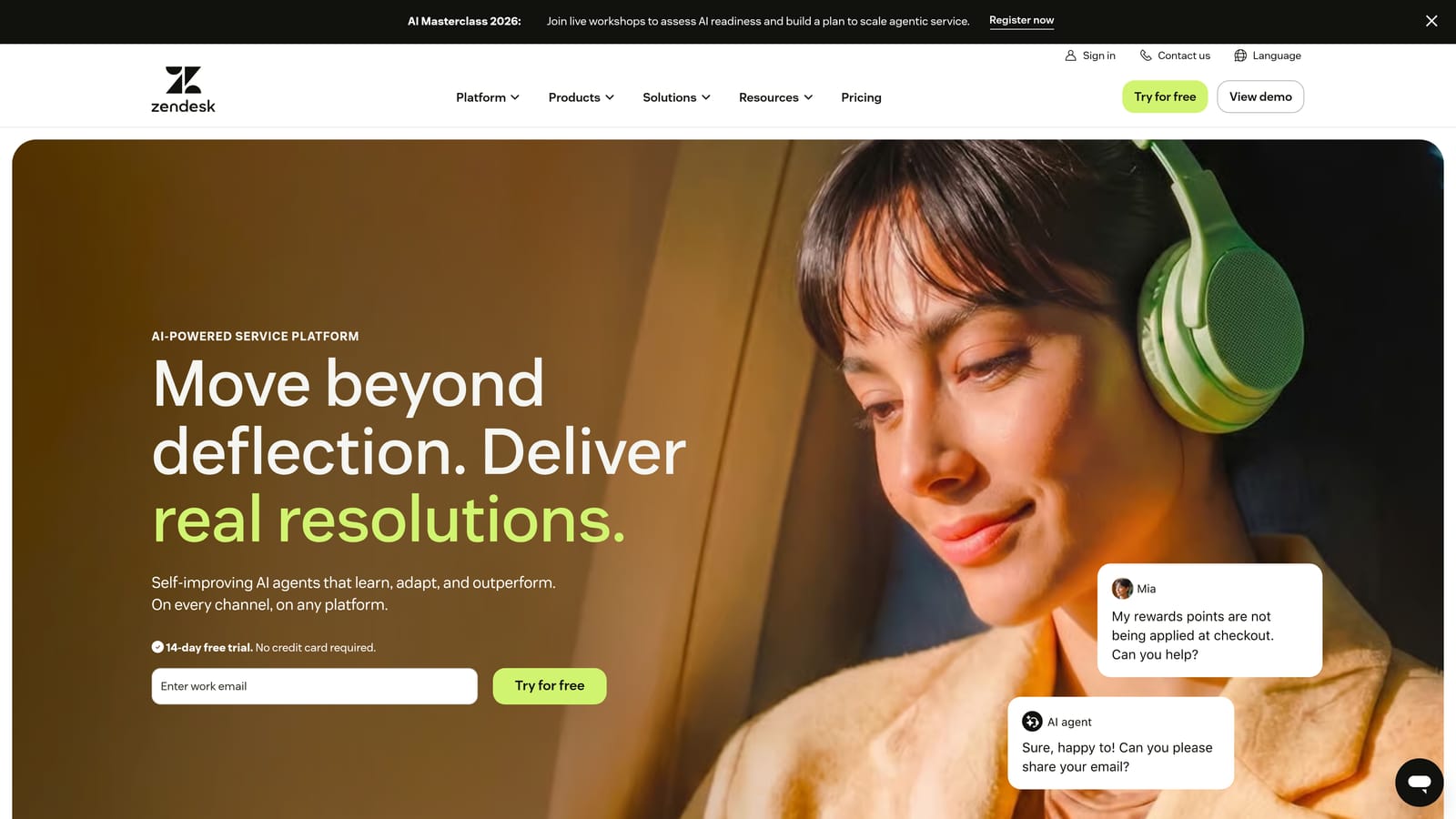
Zendesk is the enterprise-grade helpdesk most support leaders already know, now with an AI layer that adds intelligent triage, automated responses, and autonomous ticket handling on top of its established infrastructure.
Where This Tool Shines
Zendesk's strength is its depth. The platform handles complex multi-channel workflows, advanced reporting, and compliance tooling that enterprise B2B teams often require. The AI layer integrates into existing workflows rather than replacing them, which matters for teams with years of established processes.
For large support organizations with dedicated operations teams, Zendesk AI adds meaningful efficiency without requiring a rearchitecture of how support runs. That said, it can feel heavy for smaller B2B teams who don't need that level of infrastructure.
Key Features
AI-Powered Triage: Automatically detects intent and routes tickets to the right team or workflow.
Autonomous AI Agents: Handles self-service resolution for common queries without agent involvement.
Advanced Reporting: Deep analytics on team performance, SLA compliance, and ticket trends.
Workflow Automation: Triggers, macros, and automation rules for complex support operations.
Large Integration Ecosystem: Hundreds of integrations covering CRM, billing, ITSM, and developer tools.
Best For
Enterprise B2B support teams with high ticket volumes, complex routing requirements, and compliance needs. Teams with fewer than 20 agents may find the platform's complexity and cost difficult to justify.
Pricing
Suite plans start at approximately $55/agent/month; AI features are available on higher-tier plans, which adds to the total cost of ownership.
4. Freshdesk Freddy AI
Best for: Growing B2B teams looking for competitive pricing with both agent-assist and autonomous AI capabilities
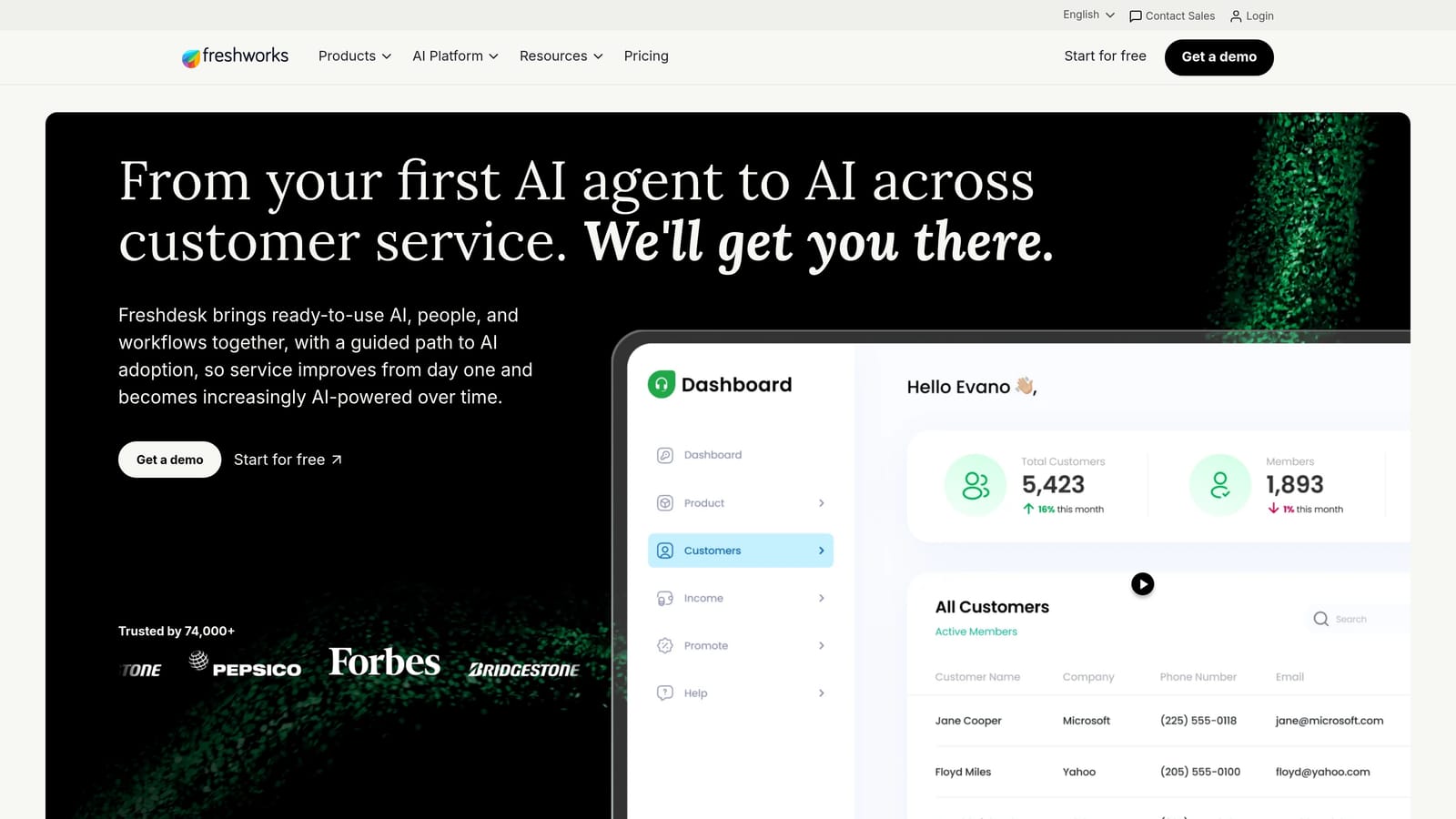
Freshdesk is Freshworks' helpdesk platform, with Freddy AI embedded across the suite to provide both agent assistance and autonomous self-service resolution for teams that want AI without enterprise pricing.
Where This Tool Shines
Freddy AI operates in two modes: Copilot, which assists human agents with suggestions and summarization, and Self Service, which handles autonomous ticket deflection. This dual approach gives teams flexibility to decide where AI takes the lead and where humans stay in control.
Freshdesk's pricing is genuinely competitive compared to Zendesk, making it an attractive option for B2B teams in growth mode who need capable AI without a significant budget commitment. The Freshworks ecosystem also covers CRM and ITSM, which simplifies the stack for companies already in that world.
Key Features
Freddy Copilot: Provides agents with suggested responses, ticket summarization, and next-step recommendations.
Freddy Self Service: Handles autonomous ticket deflection for common queries without human intervention.
Omnichannel Support: Covers email, chat, phone, and social channels within a single platform.
Native Freshworks Integration: Connects directly with Freshworks CRM and ITSM for teams in the ecosystem.
Competitive Pricing: More accessible entry point than most enterprise alternatives.
Best For
Mid-sized B2B teams looking for a cost-effective helpdesk with solid AI capabilities, particularly those already using other Freshworks products. Integration depth outside the Freshworks ecosystem is more limited than some alternatives.
Pricing
Free tier available; Growth plan from approximately $15/agent/month; Freddy AI features are available on higher-tier plans.
5. Salesforce Agentforce
Best for: Enterprise B2B companies where sales and support are tightly linked within the Salesforce ecosystem
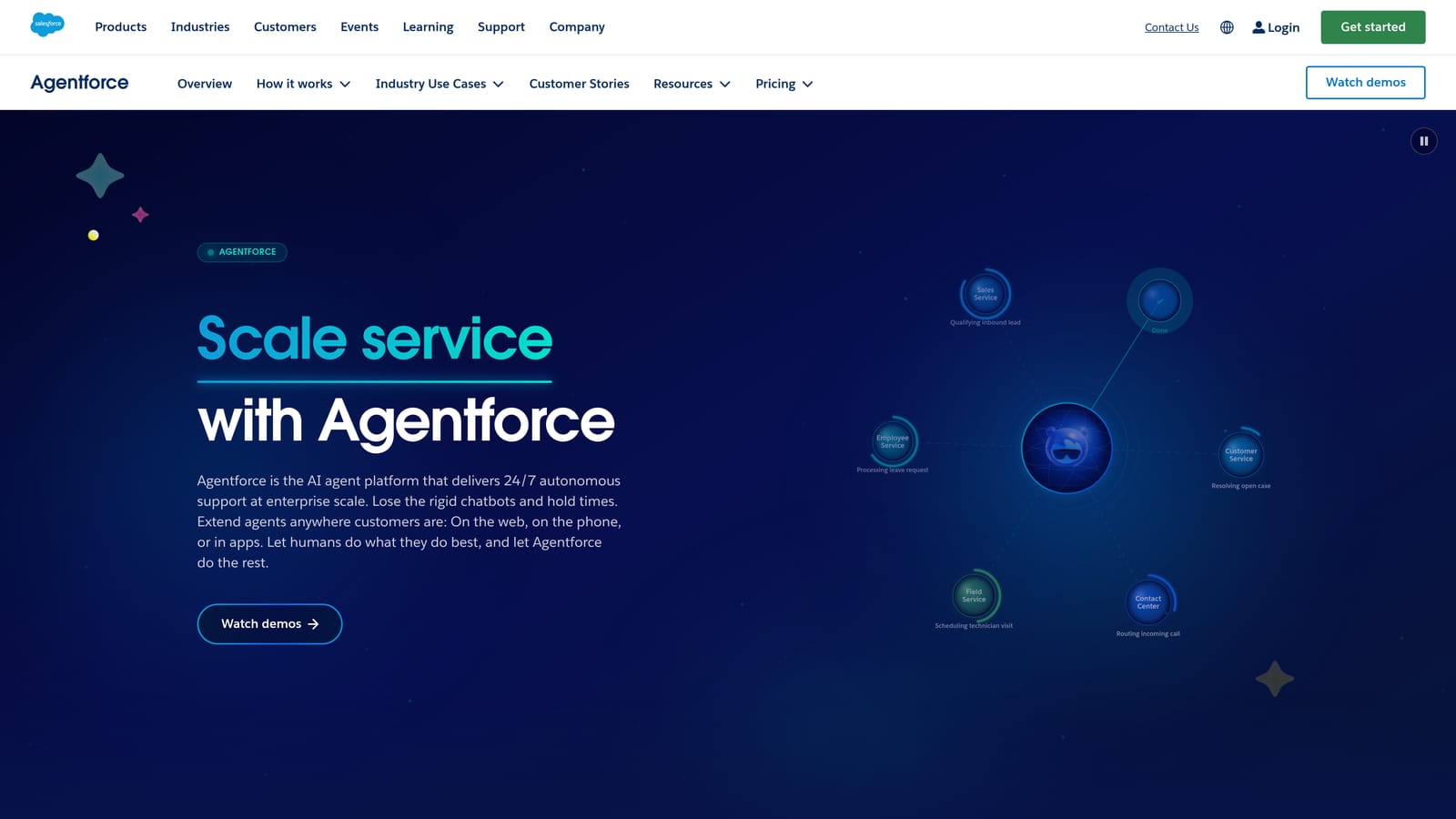
Salesforce Agentforce brings AI agents with full CRM context into the support experience, giving teams access to account history, entitlements, and deal stage when resolving customer issues at enterprise scale.
Where This Tool Shines
The defining advantage of Agentforce is context depth. When an AI agent handles a support conversation, it has access to the full Salesforce data model: account entitlements, case history, deal stage, and relationship history. For enterprise B2B companies where a single account might involve dozens of stakeholders, that context is invaluable.
Agentforce also benefits from Salesforce's enterprise-grade security and compliance infrastructure, which matters for regulated industries or large organizations with strict data governance requirements.
Key Features
Full CRM Context: AI agents draw on account history, entitlements, and deal data from Salesforce's data model.
Pre-Built Agent Actions: Out-of-the-box actions tied to CRM data and workflows reduce configuration time.
Cross-Cloud Integration: Deep native integration with Sales Cloud, Service Cloud, and Data Cloud.
Natural Language Customization: Agent behavior can be configured via natural language prompts rather than code.
Enterprise Security: Inherits Salesforce's compliance and data governance infrastructure.
Best For
Large enterprise B2B organizations already deeply invested in Salesforce who want AI agents with full CRM awareness. Setup complexity and cost make this a poor fit for smaller teams or those outside the Salesforce ecosystem.
Pricing
Enterprise pricing; Agentforce is approximately $2/conversation. Full cost depends on existing Salesforce licensing and configuration scope.
6. Drift (Salesloft)
Best for: B2B teams that want conversational AI bridging pre-sale website engagement and post-sale support
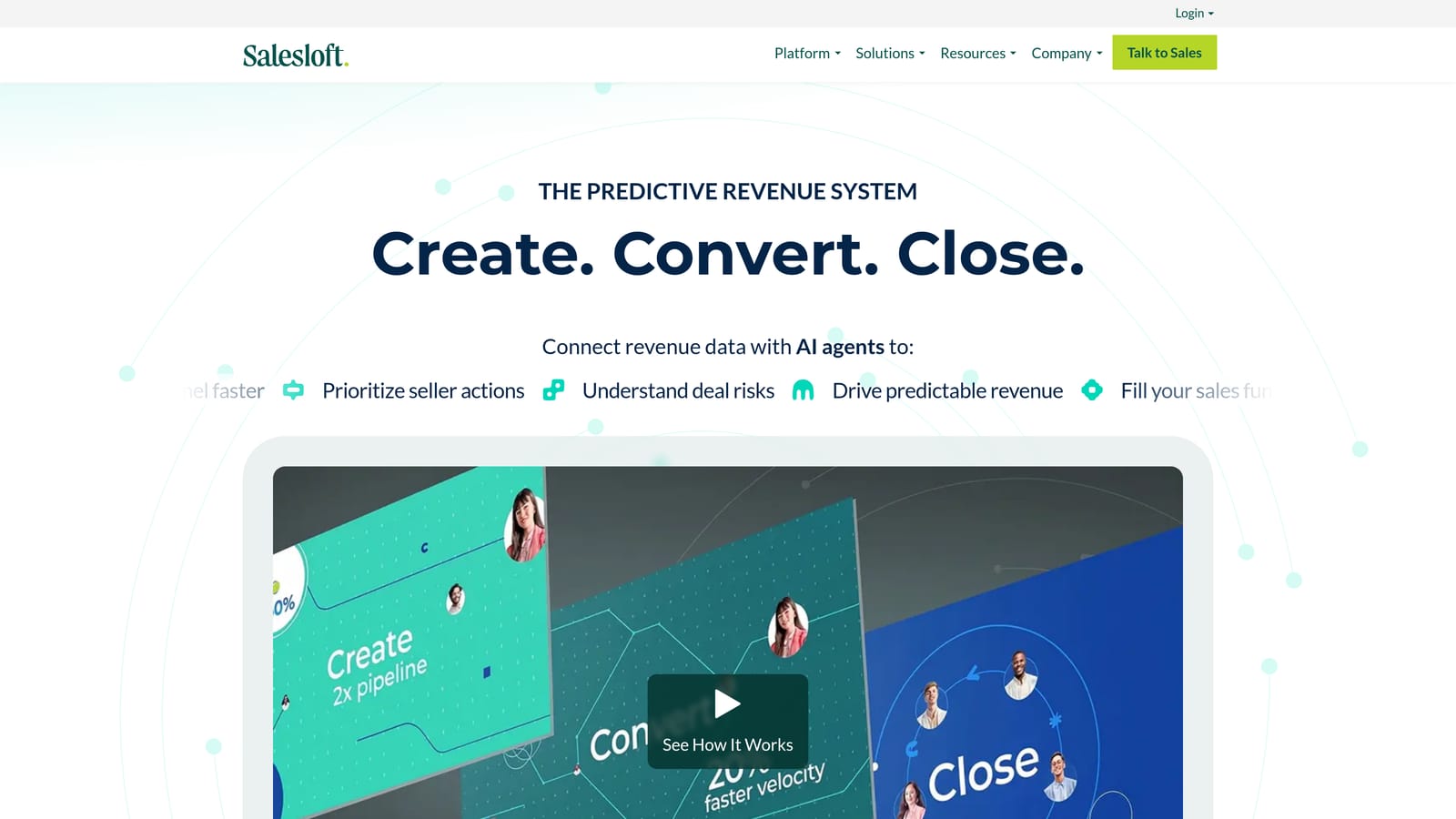
Drift, now part of the Salesloft revenue platform, is a conversational AI tool originally built for B2B sales qualification that has expanded to cover support use cases, particularly for website-based conversations.
Where This Tool Shines
Drift's strength is at the intersection of sales and support. For B2B companies where website visitors might be prospects, existing customers, or partners, Drift's playbooks can route conversations based on intent, routing a prospect to sales while sending a support query to the right team.
The integration with Salesloft's revenue platform makes this particularly powerful for teams that want pipeline acceleration and support deflection in a single conversational layer. It's less focused on deep post-sale ticket resolution than purpose-built support platforms.
Key Features
Conversational AI: Engages website visitors with intelligent, intent-aware conversations.
Intent-Based Playbooks: Routes conversations based on visitor behavior, company data, and stated intent.
Salesloft Integration: Connects directly to the Salesloft revenue platform for pipeline and support alignment.
Meeting Booking: Allows prospects and customers to book meetings directly from the chat experience.
Support Deflection: Handles common pre-sale and post-sale queries without human involvement.
Best For
B2B companies with significant website traffic where sales qualification and support overlap. Less suited as a standalone post-sale support platform for teams with complex ticket workflows.
Pricing
Enterprise pricing; contact Salesloft directly for current packages, as pricing is not publicly listed.
7. Tidio
Best for: Smaller B2B teams that need quick deployment and an affordable AI support entry point
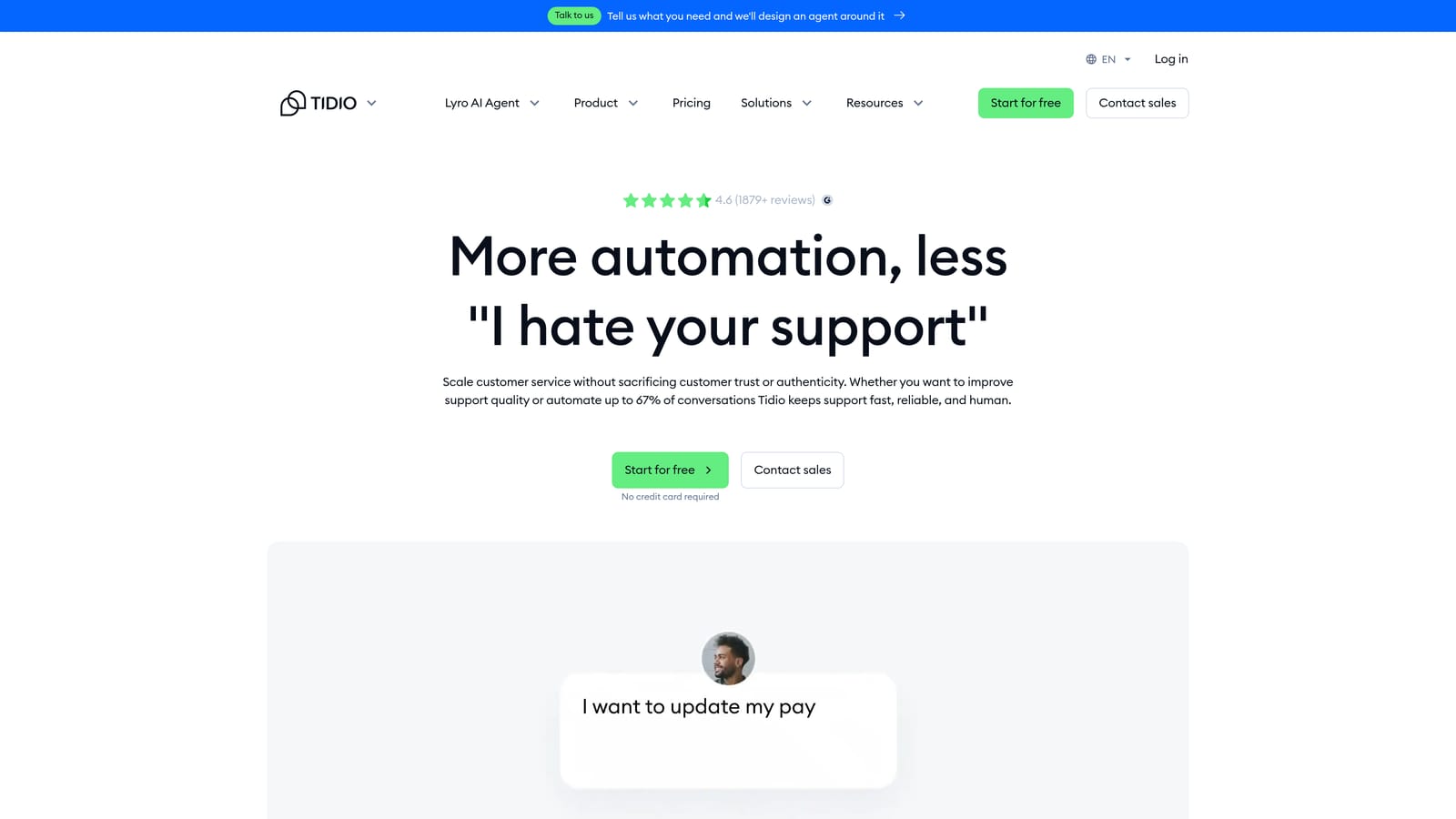
Tidio is an accessible AI customer service platform with Lyro, its AI agent, designed for smaller B2B teams that need to get up and running quickly without complex configuration or enterprise-level investment.
Where This Tool Shines
Tidio's primary advantage is simplicity and speed to value. The no-code setup means most teams can deploy Lyro AI and have it handling conversations within hours rather than weeks. For smaller B2B companies that don't have a dedicated support operations team, that matters.
The live chat fallback is clean and reliable, ensuring that when Lyro reaches the limits of what it can handle, a human agent takes over without friction. It's a solid starting point for teams that haven't yet invested in a full helpdesk infrastructure.
Key Features
Lyro AI Agent: Handles autonomous query resolution for common questions without human involvement.
Live Chat with Human Handoff: Seamless escalation to human agents when AI resolution isn't appropriate.
No-Code Setup: Quick deployment without technical configuration requirements.
Multichannel Support: Covers website chat, email, and Messenger from a single platform.
Analytics Dashboard: Tracks conversation volume, resolution rates, and team performance.
Best For
Small to mid-sized B2B teams in early growth stages that need an affordable, easy-to-deploy AI support tool. Less suited for complex B2B workflows with multi-stakeholder accounts or deep integration requirements.
Pricing
Free tier available; Lyro AI from approximately $29/month, making it one of the most accessible entry points on this list.
8. HubSpot Service Hub AI
Best for: HubSpot-native B2B teams that want support, marketing, and sales data unified in one platform
HubSpot Service Hub is HubSpot's customer service platform with AI-powered help desk, chatbot, and knowledge base capabilities, fully unified with HubSpot CRM for teams already living in the HubSpot ecosystem.
Where This Tool Shines
The compelling case for Service Hub is data unification. When your AI chatbot has access to a contact's full lifecycle history, deal stage, and marketing engagement, support conversations become significantly more personalized. A customer asking about a billing issue can be handled with full context of their account value and relationship history.
For teams already using HubSpot for marketing and sales, adding Service Hub avoids the integration overhead of connecting a separate support platform. The tradeoff is that the AI capabilities are still maturing compared to dedicated AI-first platforms.
Key Features
AI Chatbot with CRM Context: Draws on contact history, lifecycle stage, and deal data to personalize support conversations.
AI-Assisted Ticket Management: Summarization and suggested replies help agents resolve tickets faster.
Knowledge Base with AI Suggestions: Recommends content improvements based on support conversation patterns.
Unified Inbox: Consolidates email, chat, and social conversations in a single view.
Native HubSpot Integration: Full connection to Marketing Hub and Sales Hub without additional configuration.
Best For
B2B companies already running HubSpot for CRM, marketing, or sales who want to extend that investment into customer support. Teams that prioritize deep AI sophistication over CRM unification may find dedicated platforms more capable.
Pricing
Starter from approximately $15/seat/month; AI features are available on Professional and Enterprise tiers, which carry a higher price point.
9. Kustomer
Best for: B2B companies that want relationship-driven support built around a unified customer timeline
Kustomer is a CRM-native support platform with AI automation built around a unified customer timeline, designed for B2B companies where relationship context matters as much as ticket throughput.
Where This Tool Shines
Kustomer's core philosophy is that support should be relationship-first, not ticket-first. Rather than organizing work around individual tickets, the platform surfaces a complete timeline of every interaction, order, and account event. For B2B companies managing complex accounts with long relationship histories, this view changes how support conversations feel.
The AI automation layer handles routing, tagging, and resolution for common queries, while the no-code workflow builder lets operations teams configure business processes without engineering involvement. One consideration worth noting for enterprise buyers: Kustomer is owned by Meta, which raises data privacy questions some organizations will want to evaluate carefully.
Key Features
Unified Customer Timeline: All interactions, orders, and account history in a single view rather than individual tickets.
AI-Powered Automation: Handles routing, tagging, and resolution for common queries automatically.
Omnichannel Consistency: Maintains full context across email, chat, phone, and social channels.
No-Code Workflow Builder: Allows operations teams to configure business processes without engineering support.
Deep Reporting: Tracks team performance, customer trends, and resolution quality over time.
Best For
B2B companies with complex, long-term customer relationships where account history and relationship context are central to support quality. Enterprise teams with data governance requirements should evaluate Meta's ownership carefully before committing.
Pricing
Enterprise pricing; starts at approximately $89/agent/month, making it one of the higher-cost options on this list.
Which Tool Is Right for Your B2B Team?
The right choice depends on three things: your existing stack, your team size, and whether you see support as a cost center to minimize or a growth lever to invest in.
Here's a quick way to think through the decision:
If you want AI-first architecture with business intelligence built in: Halo AI is the strongest fit for B2B SaaS teams that want support to surface customer health signals and product insights, not just resolve tickets. The page-aware context and continuous learning loop set it apart from AI-augmented helpdesks.
If you're already deep in Salesforce: Agentforce gives you AI agents with full CRM context that no other platform can match within that ecosystem. The setup investment is real, but so is the payoff for enterprise teams.
If HubSpot is your source of truth: Service Hub makes sense as a natural extension, particularly for teams that want support, marketing, and sales data unified without additional integration work.
If you need enterprise helpdesk infrastructure: Zendesk AI is the proven choice for large support organizations with complex workflows and compliance requirements. Freshdesk is a more affordable alternative for teams with similar needs at smaller scale.
If you're a smaller team getting started: Tidio offers the fastest path to AI-assisted support without significant budget or technical overhead.
Your support team shouldn't scale linearly with your customer base. Let AI agents handle routine tickets, guide users through your product, and surface business intelligence while your team focuses on complex issues that need a human touch. See Halo in action and discover how continuous learning transforms every interaction into smarter, faster support.