9 Best AI Customer Service Tools for Ecommerce in 2026
Ecommerce businesses struggling to handle high-volume customer inquiries around the clock can leverage AI customer service for ecommerce to automate routine questions, personalize responses using order data, and seamlessly escalate complex issues to human agents. This guide evaluates nine top-rated platforms selected specifically for online retailers based on ecommerce integrations, multilingual support, flash-sale scalability, and pricing flexibility.
 Grant CooperFounder13 min read
Ecommerce customers expect instant, accurate answers whether they're asking about shipping timelines at 2 AM or requesting a return on a holiday weekend. As order volumes scale and product catalogs grow, traditional support teams struggle to keep pace without ballooning headcount.
AI customer service tools solve this by automating routine inquiries, personalizing responses with order data, and escalating complex issues to human agents seamlessly. But not every AI tool is built for the unique demands of ecommerce: high ticket volumes during flash sales, deep integrations with Shopify or WooCommerce, real-time order tracking, and multilingual support for global storefronts.
We evaluated dozens of platforms and narrowed the field to nine that genuinely deliver for online retailers, based on ecommerce-specific features, integration depth, ease of setup, and pricing flexibility. Here are the best AI customer service tools for ecommerce in 2026.
1. Halo AI
Best for: Ecommerce teams that need intelligent automation, business insights, and continuous learning in one platform.
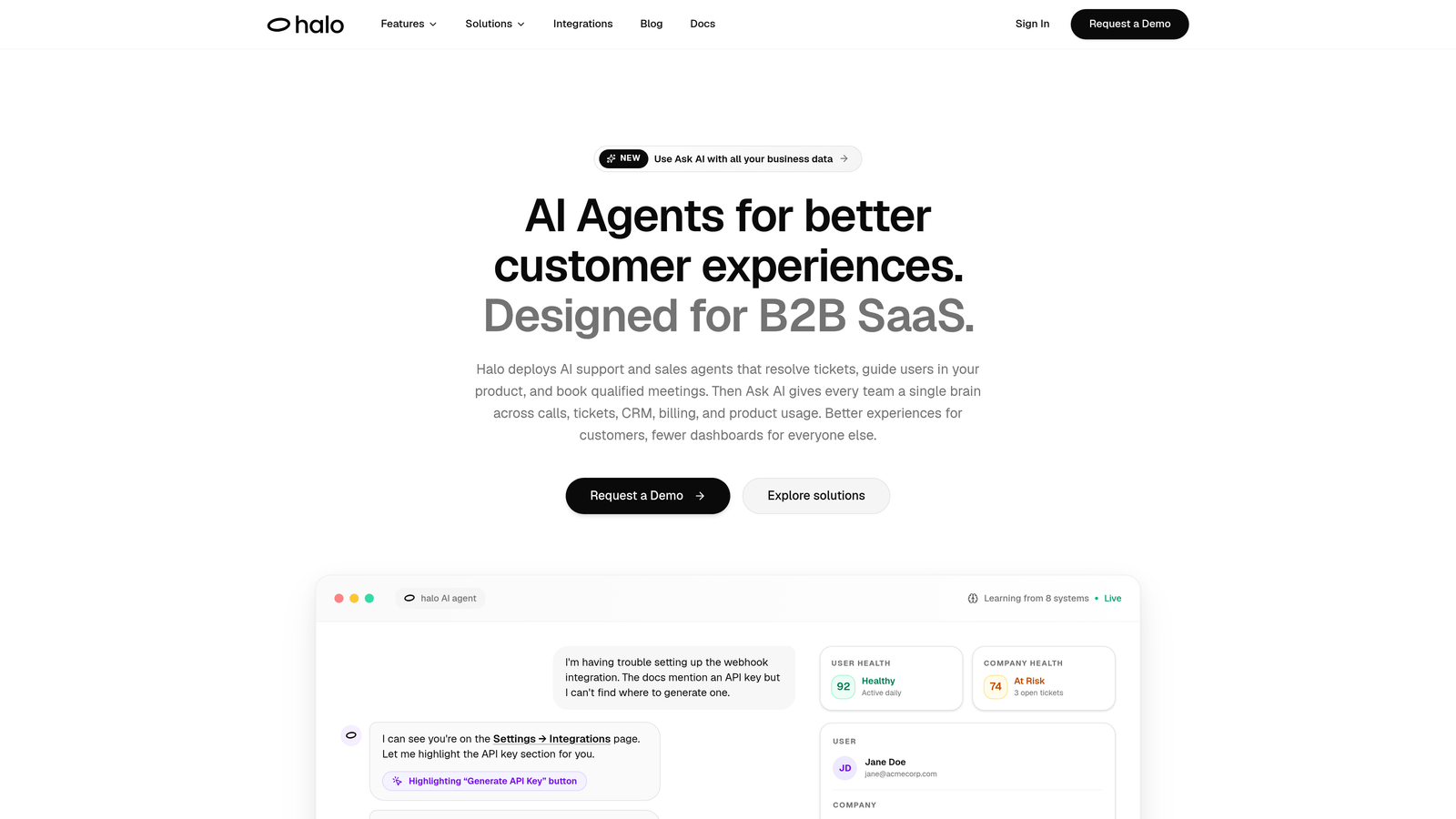
Halo AI is an AI-first customer support platform with intelligent agents that autonomously resolve tickets, provide page-aware visual guidance, and surface business intelligence insights from every interaction.
Where This Tool Shines
What separates Halo from most support tools is its architecture. Rather than layering AI onto an existing helpdesk, Halo was built AI-first, which means the intelligence runs deeper. Its page-aware chat widget actually sees what the customer sees, allowing it to provide contextual, visual guidance rather than generic scripted responses. Think of it like having a support agent who can look over the customer's shoulder and point to exactly what they need to click.
The continuous learning engine is another standout. Every resolved ticket, every escalation, every customer interaction feeds back into the system to make future responses smarter. For ecommerce operations that experience seasonal surges, this means the AI gets progressively better at handling your specific customers and product catalog over time.
Key Features
Page-Aware AI Chat Widget: Understands the customer's current page context to deliver visually guided, relevant support rather than one-size-fits-all answers.
Continuous Learning Engine: Improves with every interaction, so resolution quality compounds over time rather than staying static.
Smart Inbox with Business Intelligence: Goes beyond ticket management to surface customer health signals, revenue intelligence, and anomaly detection that inform business decisions.
Auto Bug Ticket Creation and Live Agent Handoff: Automatically routes technical issues to your development pipeline and escalates complex cases to human agents without friction.
Deep Integration Stack: Connects with Stripe, HubSpot, Shopify, Intercom, Slack, Linear, Zoom, PandaDoc, and more, so support data flows across your entire business stack.
Best For
Ecommerce brands that want more than a FAQ bot. Halo is particularly strong for product-led growth companies and B2B-adjacent retailers who need their support data to feed into broader business intelligence. If you want support that learns, scales, and informs strategy, this is the platform to evaluate first.
Pricing
Contact for pricing. Halo offers scalable plans based on usage, making it suitable for growing ecommerce operations that need flexibility as ticket volumes fluctuate.
2. Tidio
Best for: Small-to-midsize ecommerce stores looking for an affordable, easy-to-deploy AI chatbot with live chat.
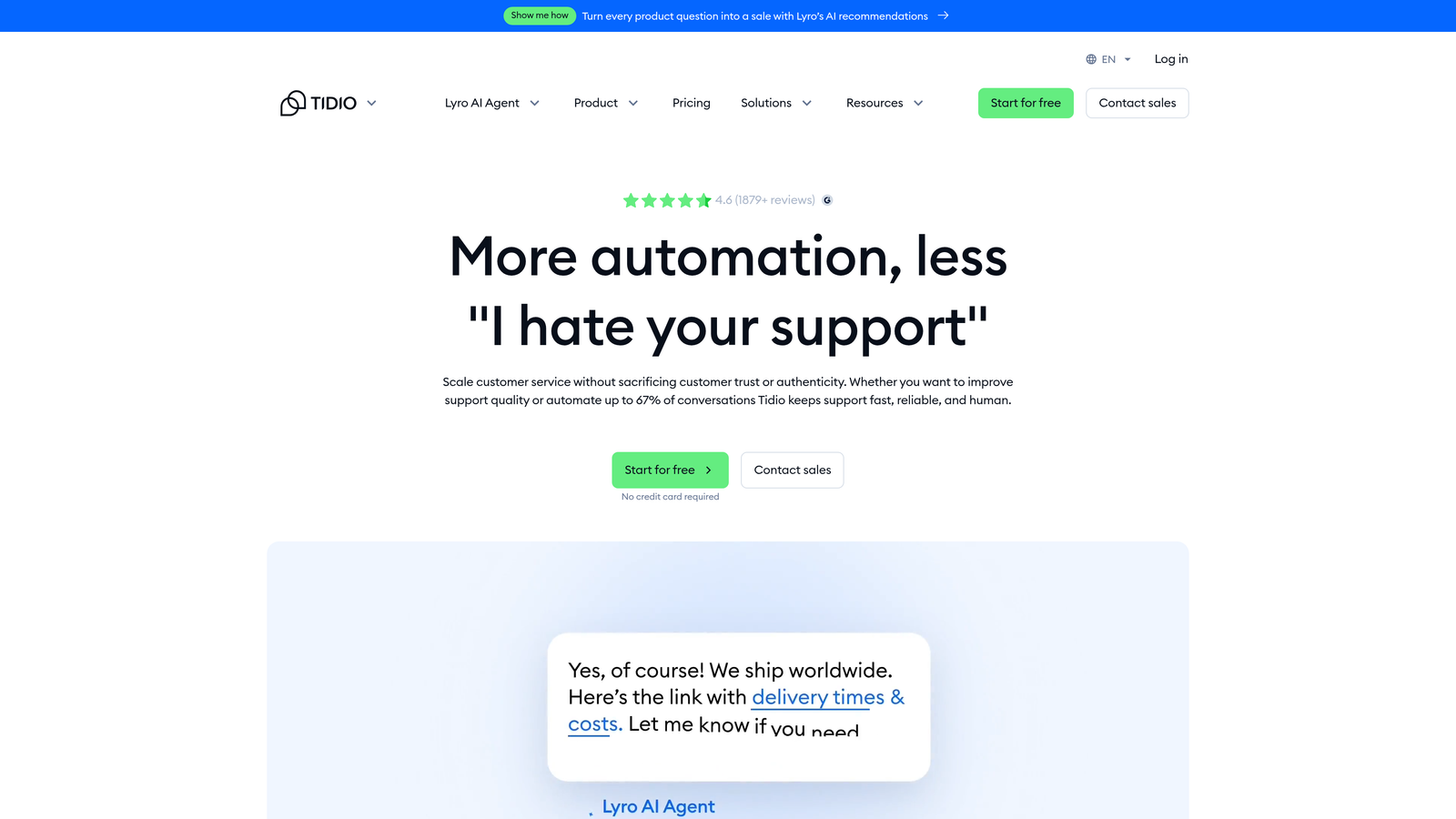
Tidio is a combined live chat and AI chatbot platform featuring the Lyro AI assistant, designed to answer customer questions automatically by learning from your existing content.
Where This Tool Shines
Tidio's strength is accessibility. For a small Shopify or WooCommerce store without a dedicated support team, getting Tidio up and running takes hours, not weeks. The Lyro AI assistant trains on your FAQ content and product knowledge base, handling common questions about shipping, returns, and product details without any manual scripting.
The combination of live chat and AI in a single widget is genuinely useful. When Lyro can't resolve something, the handoff to a live agent happens within the same conversation thread, keeping the experience seamless for the customer.
Key Features
Lyro AI Chatbot: Trains on your FAQ and knowledge base content to answer customer questions automatically, without requiring manual flow-building for every scenario.
Native Ecommerce Integrations: Connects directly with Shopify, WooCommerce, and BigCommerce for order context within conversations.
Visual Chatbot Builder: Drag-and-drop interface for creating custom conversation flows when you need more structured automation.
Unified Live Chat and AI Widget: Both channels operate from the same interface, reducing the complexity of managing separate tools.
Free Tier: A functional free plan makes it accessible for stores just starting to explore AI support automation.
Best For
Independent retailers and small ecommerce teams that need a budget-friendly entry point into AI customer service. Tidio works especially well for stores with a manageable product catalog and relatively predictable support questions.
Pricing
Free plan available. Paid plans start at around $29/month, with Lyro AI conversations priced separately based on usage volume.
3. Gorgias
Best for: Shopify-native ecommerce brands that need support agents and AI working directly with order data.
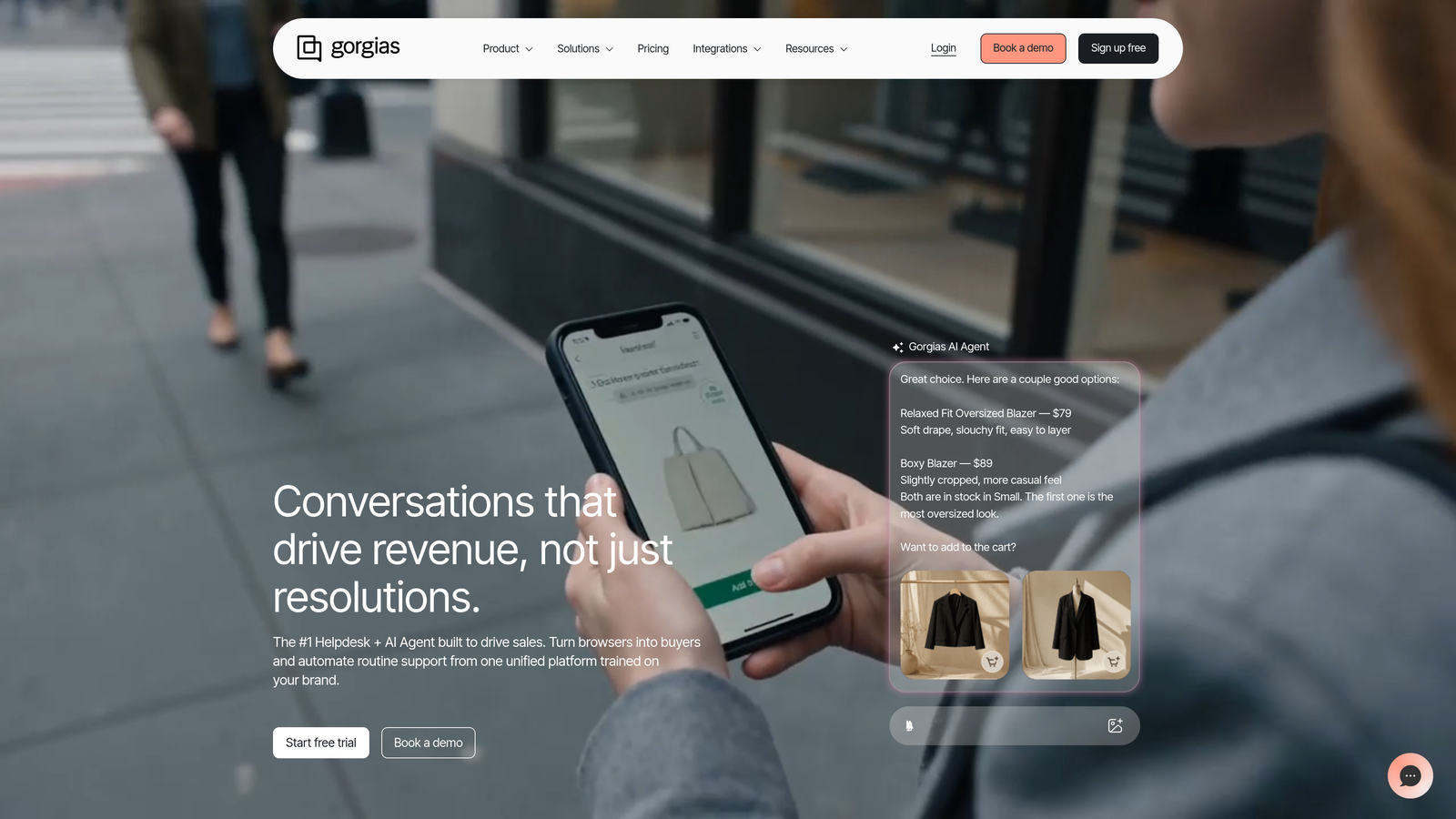
Gorgias is a purpose-built ecommerce helpdesk with AI-powered automation that connects deeply with Shopify, allowing both agents and AI to view order data and take actions like refunds directly within the support interface.
Where This Tool Shines
Gorgias is arguably the most Shopify-native support tool on this list. The integration isn't just a data sync: agents can issue refunds, cancel orders, and apply discount codes without ever leaving the support ticket. For high-volume Shopify stores, this eliminates the constant tab-switching that slows response times during peak periods.
The revenue attribution feature is a nice differentiator. Gorgias tracks which support interactions lead to purchases, giving you a clearer picture of how your support investment contributes to top-line revenue rather than just cost reduction.
Key Features
Deep Shopify Integration: View and take actions on orders, refunds, cancellations, and subscriptions directly within the helpdesk interface.
AI-Powered Auto-Responses: Automatically handles common inquiries like order status, return policy questions, and shipping updates.
Macro Templates with Dynamic Variables: Pre-built responses that pull in real order data for personalized, accurate replies at scale.
Revenue Attribution: Tracks support-to-sale conversions to quantify the business impact of your customer service team.
Multi-Channel Support: Manages email, chat, social media comments, and SMS from a unified inbox.
Best For
Mid-to-large Shopify and Shopify Plus merchants with dedicated support teams. Gorgias shines when you have agents who need order management capabilities baked into their workflow, not just a chatbot handling the front line.
Pricing
Starts at around $10/month for basic plans, with pricing scaling based on ticket volume rather than agent seats, which works well for ecommerce stores with variable support demand.
4. Zendesk AI
Best for: Large ecommerce operations with complex, multi-channel support needs and existing Zendesk infrastructure.
Zendesk AI is an enterprise-grade customer service platform with AI agents, intelligent triage, and a massive integration marketplace suited for high-volume, multi-channel ecommerce support.

Where This Tool Shines
Zendesk's scale is unmatched. For enterprise ecommerce brands managing thousands of tickets per day across email, chat, social, voice, and messaging apps, Zendesk provides the infrastructure to handle it all from a single platform. The AI layer, added in recent years, brings automated triage, intent classification, and agent assistance to a system many large retailers already rely on.
The 1,500+ integration marketplace is a genuine advantage. If you run a complex ecommerce tech stack spanning multiple platforms, fulfillment systems, and CRMs, Zendesk almost certainly has a pre-built connector for it.
Key Features
AI Agents: Customer-facing bots that resolve common issues autonomously across every supported channel.
Intelligent Triage: Automatically classifies incoming tickets by intent, language, and sentiment to route them to the right team or automation.
Agent Copilot: Surfaces AI-suggested replies and next-best-actions for human agents handling complex escalations.
1,500+ Marketplace Integrations: Connects with virtually every major ecommerce platform, shipping provider, and business tool.
Advanced Analytics: Robust reporting dashboards for tracking resolution rates, CSAT, agent performance, and ticket trends.
Best For
Enterprise ecommerce brands and multi-brand retailers with large support teams, complex workflows, and the resources to configure and maintain a sophisticated platform. Zendesk rewards investment in setup with significant operational capability.
Pricing
Starts at $19/agent/month for the Support Team plan. AI features and advanced capabilities are priced as add-ons, so total cost scales with the features you activate.
5. Intercom Fin
Best for: Ecommerce brands that want a conversational AI agent capable of taking real actions, not just answering questions.
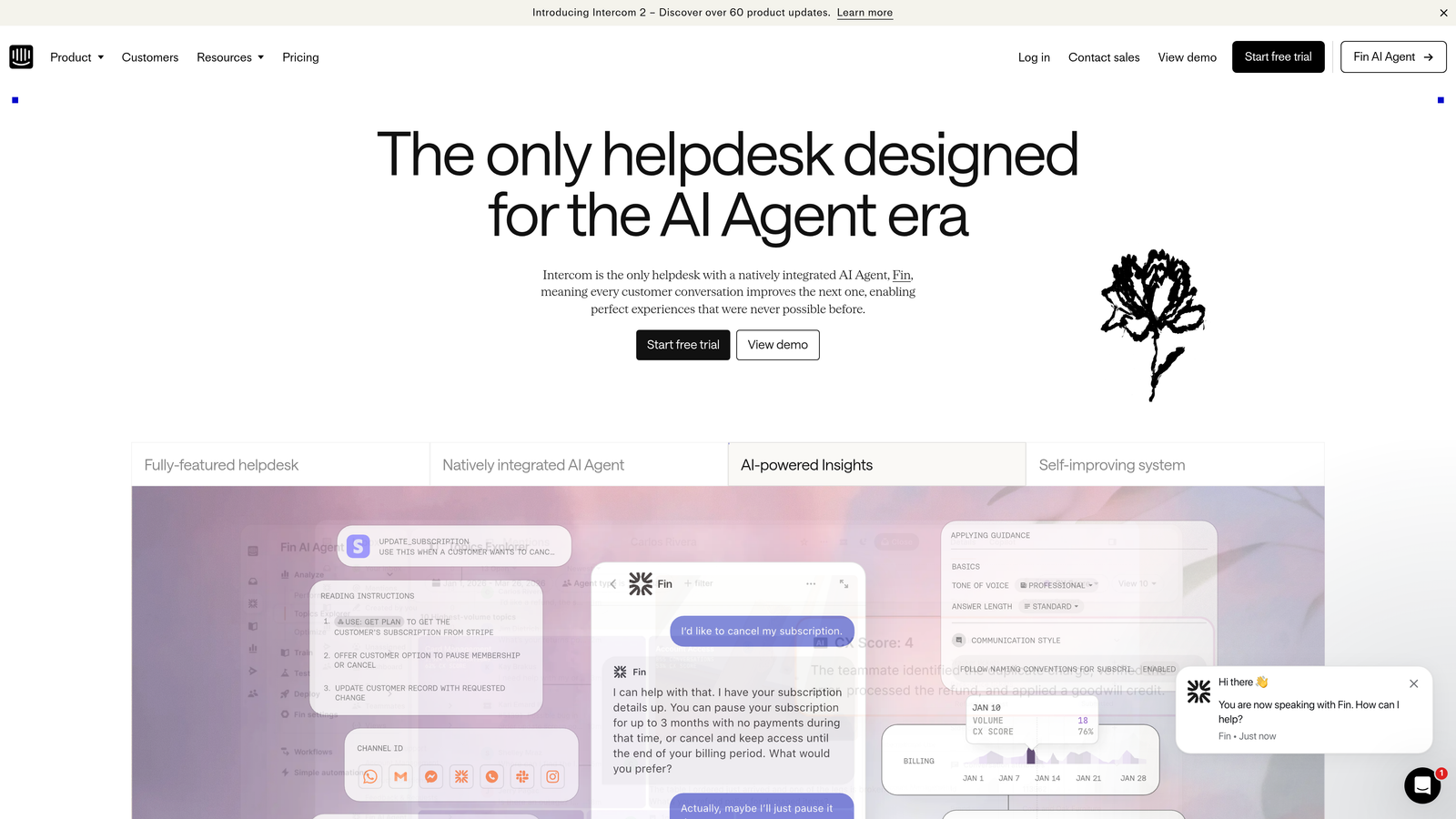
Intercom Fin is a conversational AI agent that goes beyond answering questions to resolve customer issues end-to-end, with a per-resolution pricing model that aligns cost directly with value delivered.
Where This Tool Shines
Fin's differentiator is agentic capability. Rather than just retrieving answers from a knowledge base, Fin can take actions: processing returns, updating order details, and completing workflows that previously required a human agent. For ecommerce, this means a customer asking "can I change my shipping address?" can actually get it done within the same conversation.
The per-resolution pricing model is worth noting. Instead of paying for seats or message volume, you pay for outcomes. This aligns incentives well for ecommerce businesses where support demand spikes unpredictably during promotions and sales events.
Key Features
Action-Capable AI Agent: Fin can process returns, update orders, and complete multi-step workflows, not just retrieve information.
Per-Resolution Pricing: Pay per resolved conversation rather than per seat, which suits variable ecommerce support volumes.
Omnichannel Support: Operates across chat, email, SMS, and social from a unified platform.
Custom AI Workflows: Build tailored conversation routing and resolution logic for your specific ecommerce scenarios.
Proactive Messaging: Trigger outbound messages based on customer behavior to prevent support tickets before they're submitted.
Best For
Growth-stage and mid-market ecommerce brands already using Intercom for product communication who want to extend AI resolution capabilities into their support workflow without switching platforms.
Pricing
Essential plan starts at $29/seat/month. Fin AI is charged per resolution, with pricing that varies based on volume and plan tier.
6. Freshdesk Freddy AI
Best for: Mid-market ecommerce brands within the Freshworks ecosystem looking for AI-assisted support at a competitive price.
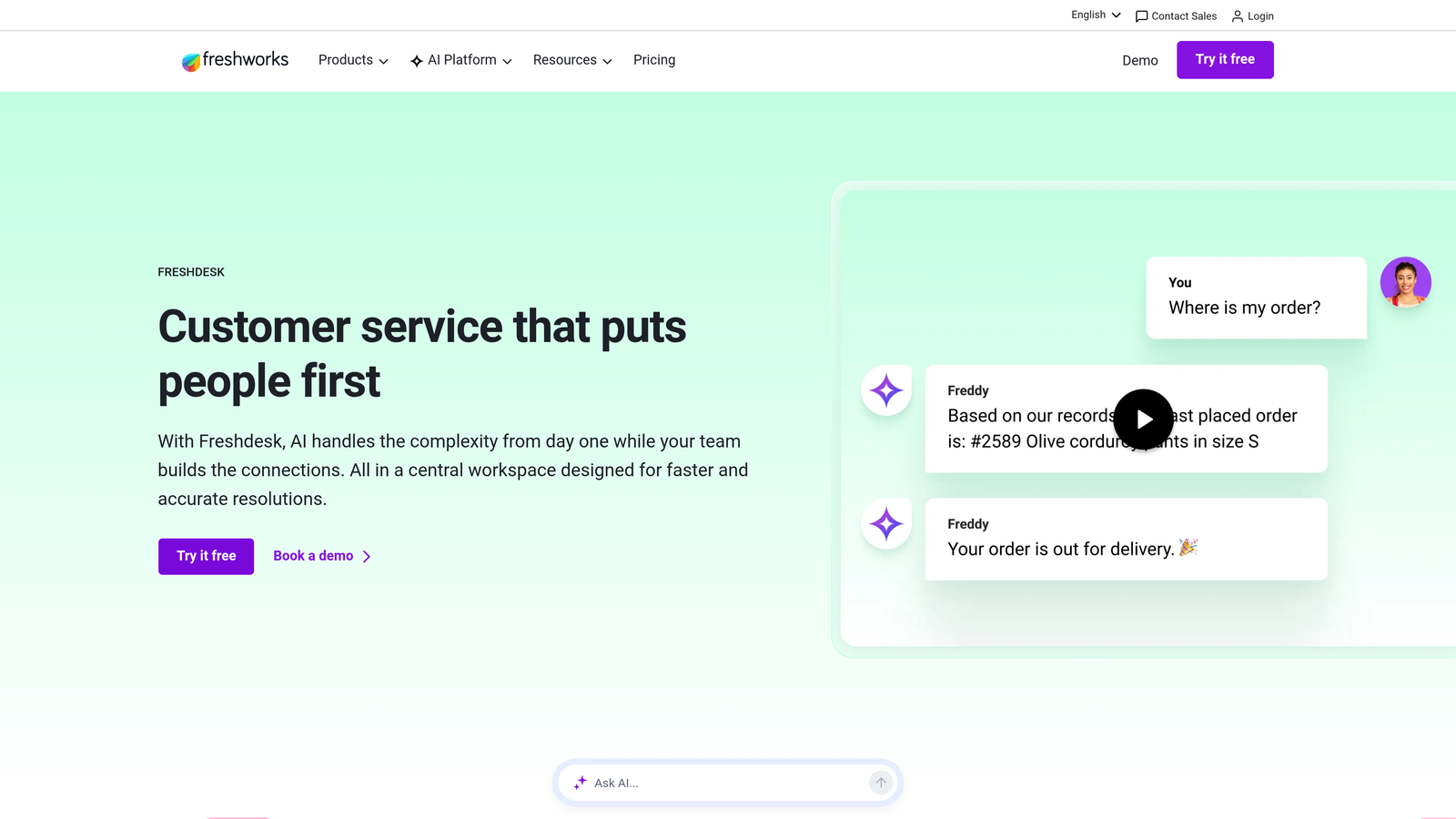
Freshdesk Freddy AI is an AI-powered helpdesk offering automated triage, agent assistance, and customer-facing bots as part of the broader Freshworks suite.
Where This Tool Shines
Freshdesk's value proposition centers on breadth and affordability. Freddy AI handles auto-triage, suggests responses to agents, and powers customer-facing chatbots, all within a platform that also connects to Freshworks' CRM, marketing, and sales tools. For ecommerce teams that want a unified business platform rather than a standalone support tool, this integration depth matters.
The free tier for up to two agents makes Freshdesk a practical starting point for early-stage stores that want to test AI-assisted support before committing to a paid plan.
Key Features
Freddy AI for Triage and Assist: Automatically classifies incoming tickets and surfaces suggested responses to help agents resolve issues faster.
Customer-Facing Chatbot: Handles common inquiries on your storefront without requiring agent involvement.
Omnichannel Ticketing: Manages email, chat, phone, and social from a single inbox.
Ecommerce Marketplace Integrations: Native connectors for Shopify, WooCommerce, and Magento bring order context into the helpdesk.
Freshworks Ecosystem: Connects seamlessly with Freshsales, Freshmarketer, and other Freshworks products for a unified customer data view.
Best For
Mid-market ecommerce businesses already using or considering the Freshworks suite, or brands that want solid AI-assisted support without the enterprise price tag of Zendesk or the complexity of a full-scale deployment.
Pricing
Free plan available for up to two agents. The Growth plan starts at $15/agent/month, making it one of the more affordable full-featured options on this list.
7. Ada
Best for: Enterprise ecommerce brands that need complex, multi-step AI resolution workflows across multiple languages and channels.
Ada is an enterprise AI agent platform built for automation-first support, enabling ecommerce brands to build sophisticated workflows that resolve customer issues autonomously at scale.
Where This Tool Shines
Ada is designed for complexity. Where simpler tools handle FAQ-style questions well, Ada's reasoning engine can navigate nuanced, multi-step customer issues that require pulling data from multiple systems and making conditional decisions. For global ecommerce brands managing diverse product lines and customer segments, this capability matters.
The multilingual support across 50+ languages out of the box is a genuine differentiator for international retailers. Rather than building separate bots for each market, Ada handles language detection and response generation natively.
Key Features
No-Code AI Agent Builder: Create complex, multi-step resolution workflows without engineering resources, using a visual interface.
50+ Language Support: Native multilingual capability for global ecommerce storefronts serving diverse customer bases.
Reasoning Engine: Handles nuanced queries that go beyond simple keyword matching, drawing on integrated data sources to resolve issues accurately.
Deep Ecommerce Integrations: Connects with major ecommerce platforms, CRMs, and order management systems to enable action-taking, not just answering.
Resolution Rate Dashboard: Tracks AI resolution rates and customer satisfaction to measure automation ROI clearly.
Best For
Enterprise ecommerce brands with high international order volumes, complex product catalogs, or support workflows that require multi-system data coordination. Ada is overkill for small stores but a strong fit for retailers operating at serious scale.
Pricing
Custom enterprise pricing. Contact Ada directly for a quote tailored to your volume and workflow requirements.
8. Richpanel
Best for: Ecommerce brands that want to deflect support volume through a customer self-service portal before tickets ever reach an agent.
Richpanel is an ecommerce-focused customer support platform combining an AI-powered self-service portal with a unified agent workspace, enabling shoppers to resolve common issues independently.
Where This Tool Shines
Richpanel's self-service portal is its standout feature. Customers can track orders, initiate returns, manage exchanges, and handle subscription changes without ever submitting a ticket. For ecommerce brands where WISMO (Where Is My Order) inquiries dominate support volume, this deflection capability can meaningfully reduce the load on your team.
The agent workspace complements the self-service layer by surfacing full order context alongside every ticket that does reach a human. Agents see the customer's order history, previous interactions, and current issue without switching between tools.
Key Features
Customer Self-Service Portal: Lets shoppers resolve order tracking, returns, exchanges, and subscription management independently, without agent involvement.
AI-Powered Agent Workspace: Provides agents with complete order context and AI-assisted responses for tickets that require human handling.
Native Ecommerce Integrations: Connects with Shopify, WooCommerce, and Magento for real-time order data within the platform.
Multi-Channel Support: Handles email, chat, social media, and phone from a unified inbox.
Ecommerce Automation Workflows: Pre-built automations for common scenarios like order confirmation follow-ups, return status updates, and shipping delay notifications.
Best For
Ecommerce brands with high volumes of repetitive, transactional inquiries where self-service deflection is the primary goal. Richpanel works especially well for stores with active subscription programs or high return rates.
Pricing
Starts at around $29/month, with pricing scaling based on features and agent count. The entry-level plan covers core self-service and ticketing functionality.
9. Siena AI
Best for: Ecommerce brands with a strong brand voice that want AI automation without sounding robotic or generic.
Siena AI is an empathetic AI customer service agent designed for ecommerce brands that want automation without sacrificing brand personality, using persona-based AI to mirror your unique voice across every interaction.
Where This Tool Shines
Most AI support tools prioritize resolution speed and accuracy, which is right. But Siena adds a third dimension: brand consistency. The persona-based AI learns your brand's tone, vocabulary, and communication style, then applies it consistently whether it's responding to a billing question or a frustrated customer complaint. For DTC brands where voice is a competitive differentiator, this matters more than most tools acknowledge.
The empathy engine is designed to recognize emotional context in customer messages and adjust tone accordingly, moving from informational to genuinely supportive when the situation calls for it.
Key Features
Persona-Based AI: Adapts to your brand voice and tone guidelines so every automated response sounds like your brand, not a generic bot.
Empathy Engine: Detects emotional context in customer messages and calibrates response tone for nuanced, human-feeling interactions.
Ecommerce Integrations: Connects with Shopify, Gorgias, and Recharge for order context and action-taking capability.
AI-Driven Actions: Handles order modifications, refund processing, and WISMO resolution autonomously within the conversation.
Omnichannel Support: Operates across email, social DMs, and chat to maintain consistent brand voice regardless of channel.
Best For
DTC and lifestyle ecommerce brands where brand voice is a core part of the customer experience. Siena is the right choice when you need automation that feels human, not just automation that's fast.
Pricing
Custom pricing. Contact Siena for a demo and quote tailored to your brand's support volume and channel mix.
Which AI Customer Service Tool Is Right for Your Store?
The right tool depends heavily on where your operation sits today and where you're trying to go. Here's a quick guide to cut through the decision:
Best overall intelligence and business insights: Halo AI, particularly if you want support data to inform broader business decisions through customer health signals and revenue intelligence.
Best for Shopify-native operations: Gorgias, especially if your agents need to take order actions directly within the helpdesk without leaving their workflow.
Best for enterprise scale: Zendesk AI, for large operations with complex multi-channel needs and existing Zendesk infrastructure.
Best conversational AI with action capability: Intercom Fin, for brands that want an AI agent that actually resolves issues rather than just answering questions.
Best for budget-conscious stores: Tidio, offering a functional free tier and affordable paid plans for smaller catalogs and teams.
Best for self-service deflection: Richpanel, for stores with high WISMO and return inquiry volumes that want customers to resolve issues independently.
Best for brand voice consistency: Siena AI, for DTC brands where tone and empathy are as important as resolution speed.
Best for complex multilingual workflows: Ada, for global enterprise retailers managing diverse markets and multi-step resolution logic.
Best within the Freshworks ecosystem: Freshdesk Freddy AI, for teams already invested in Freshworks products.
Your support team shouldn't scale linearly with your customer base. Let AI agents handle routine tickets, guide users through your product, and surface business intelligence while your team focuses on complex issues that need a human touch. See Halo in action and discover how continuous learning transforms every interaction into smarter, faster support.