9 Best AI Customer Service Tools for Healthcare Tech in 2026
Healthcare technology companies managing complex support needs from clinicians, IT administrators, and billing staff can leverage AI customer service for healthcare tech to handle high ticket volumes, ensure compliance awareness, and deliver faster resolutions. This guide evaluates the nine best AI-powered support platforms in 2026 built to handle the unique technical depth and regulatory demands of health tech environments.
 Grant CooperFounder13 min read
Healthcare technology companies face a support challenge unlike almost any other SaaS vertical. Your users aren't just technical — they're clinicians navigating EHR integrations, hospital IT administrators troubleshooting API connections, and billing staff trying to reconcile system errors under time pressure. Every support interaction touches workflows where downtime has real consequences.
Traditional support teams struggle to scale across this complexity, especially when ticket volumes spike after product updates or regulatory changes. AI-powered customer service tools can bridge the gap, offering faster resolution, intelligent routing, and always-on availability. But not every platform is built for the nuances of health tech: compliance awareness, technical depth, and integration with your existing stack all matter enormously.
Here are the top AI customer service tools worth evaluating for healthcare technology companies in 2026.
1. Halo AI
Best for: B2B health tech teams that need autonomous ticket resolution, page-aware user guidance, and business intelligence in one platform.
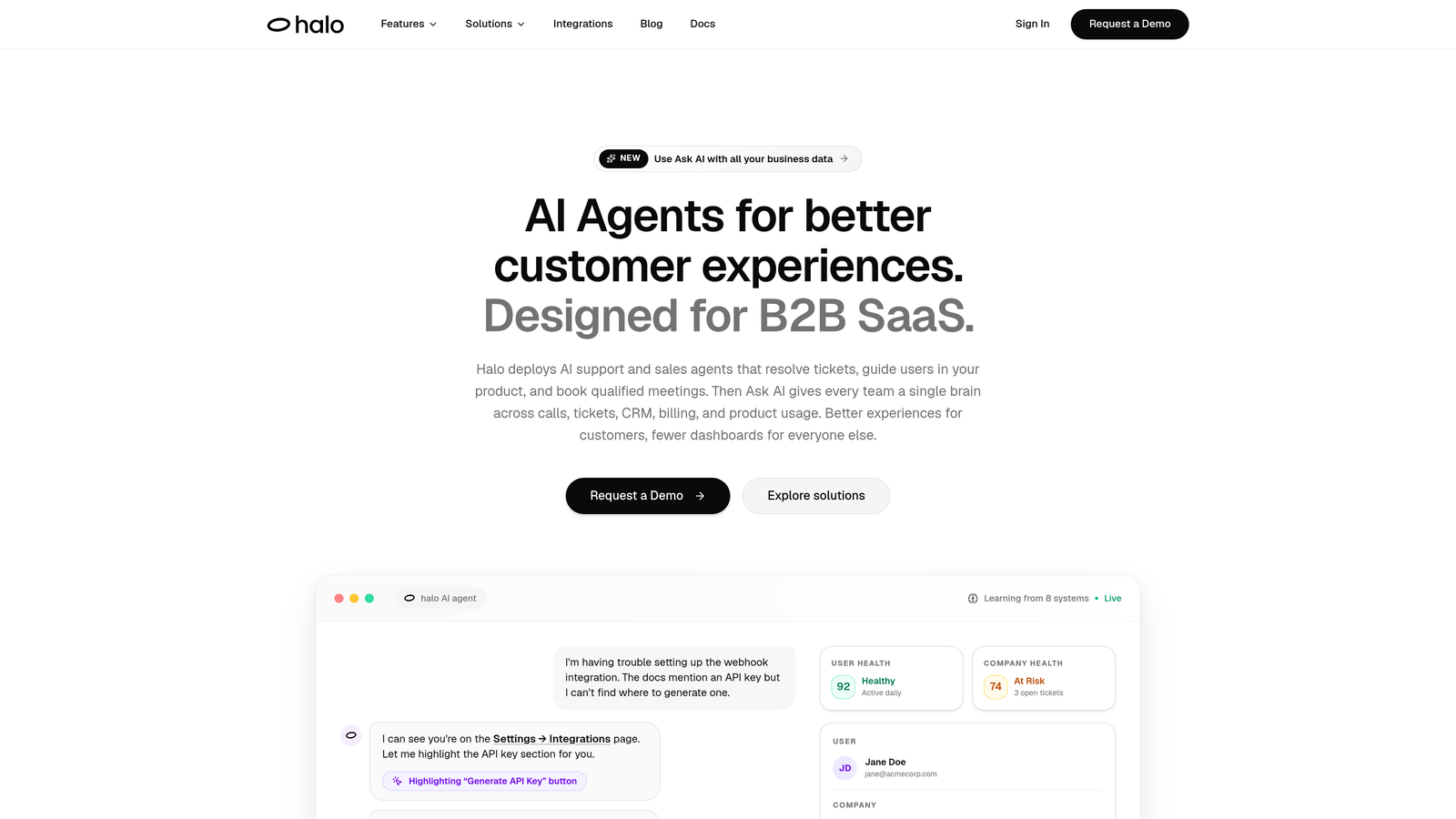
Halo AI is an AI-first customer support platform that deploys autonomous agents to resolve tickets, guide users through your product with page-aware context, and surface business intelligence — all while learning from every interaction.
Where This Tool Shines
What separates Halo from most support tools is that it wasn't built as a bolt-on to an existing helpdesk. The AI is the architecture. That matters for healthcare tech teams whose users encounter problems in deeply contextual moments — inside a specific workflow, on a particular screen, mid-integration. Halo's page-aware chat widget sees what the user sees, enabling it to deliver visual guidance that's actually relevant rather than generic.
The platform also goes beyond support metrics. Its smart inbox surfaces customer health signals, revenue intelligence, and anomaly detection — giving your team visibility into patterns that would otherwise stay buried in ticket data. For health tech companies managing complex customer relationships, that business intelligence layer is a meaningful differentiator.
Key Features
Page-Aware Chat Widget: Understands the user's current location in your product to deliver contextually relevant guidance and visual walkthroughs.
Autonomous Ticket Resolution: AI agents resolve common support requests end-to-end, with intelligent handoff to live agents for complex issues.
Smart Inbox with Business Intelligence: Surfaces customer health signals, anomaly detection, and revenue intelligence beyond standard support analytics.
Auto Bug Ticket Creation: Automatically generates bug reports connected to Linear, Slack, and other developer tools when issues are detected.
Broad Integration Support: Connects natively with Intercom, Zendesk, Freshdesk, HubSpot, Stripe, Zoom, PandaDoc, Fathom, and more.
Best For
Health tech SaaS companies scaling their support operations without scaling headcount. Particularly strong for teams that want AI to do more than deflect tickets — teams that want it to resolve, learn, and generate intelligence about their customer base over time.
Pricing
Contact for pricing. Halo is designed for B2B SaaS teams with meaningful support volume and a need for deep integration with their existing business stack.
2. Ada
Best for: Enterprise health tech teams needing automated resolution across multiple channels with multilingual capability.
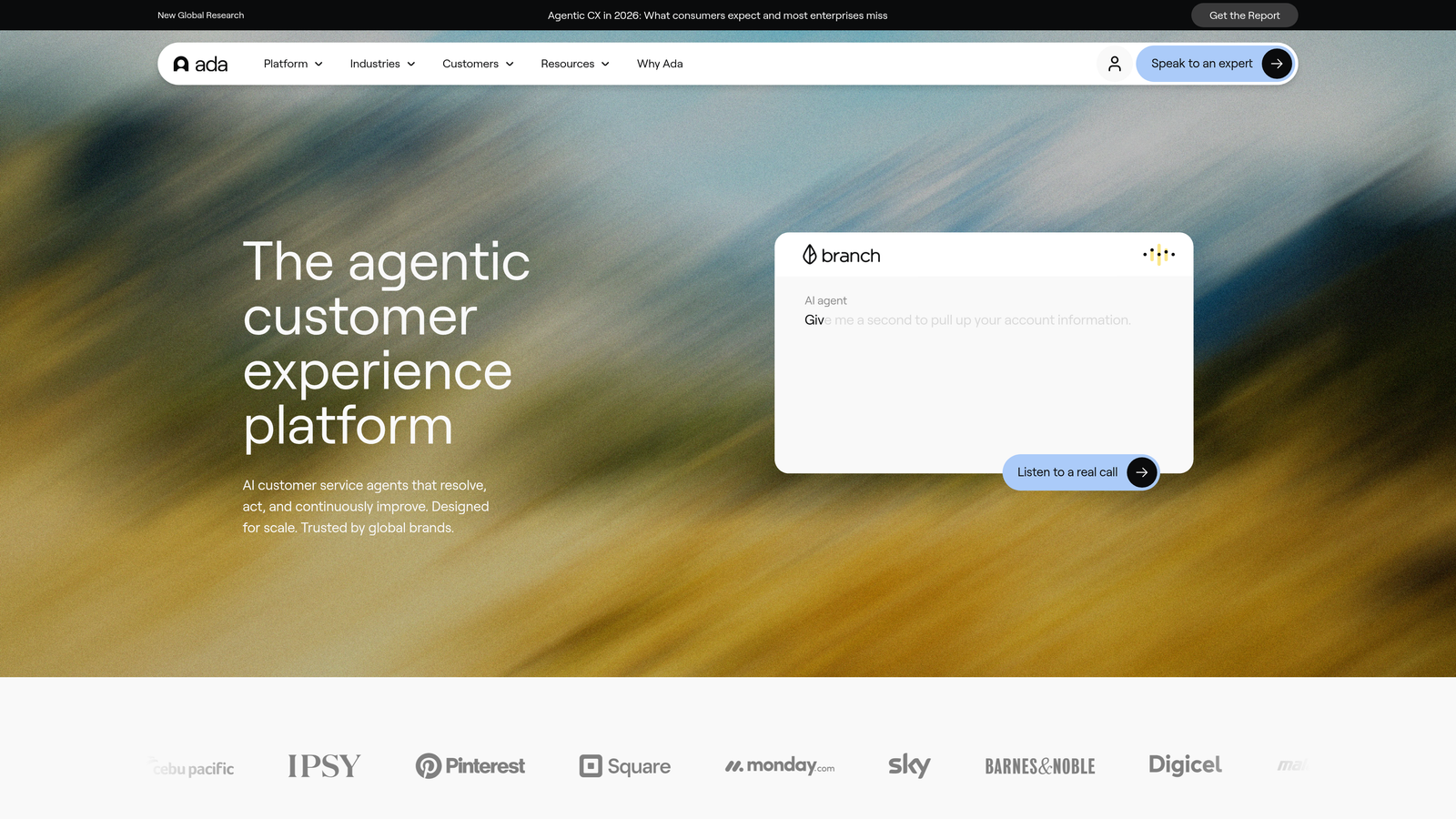
Ada is an enterprise-grade AI customer service platform focused on automated resolution across chat, email, and messaging channels with multilingual support.
Where This Tool Shines
Ada has built a reputation in enterprise environments for its automated resolution engine, which is designed to handle high volumes without requiring heavy agent involvement. For health tech companies serving global markets — or those with diverse user bases that span multiple languages — Ada's multilingual capabilities reduce the friction of scaling support internationally.
The platform also takes enterprise security and compliance seriously, which matters when you're evaluating tools for a regulated industry context. Its no-code bot builder allows non-technical teams to configure and update conversation flows without developer dependency.
Key Features
Automated Resolution Engine: Handles customer inquiries across chat, email, and messaging with AI-driven responses at scale.
Multilingual Support: Serves global health tech customer bases across multiple languages without separate configurations.
No-Code Bot Builder: Allows support teams to build and modify conversation flows without engineering involvement.
Enterprise Security and Compliance: Built-in features designed for regulated enterprise environments.
CRM and Helpdesk Integrations: Connects with major platforms to fit into existing support stacks.
Best For
Large health tech organizations with international customer bases, complex enterprise security requirements, and support teams that need to configure automations without relying on developer resources.
Pricing
Custom enterprise pricing. Contact Ada's sales team for a quote based on your volume and requirements.
3. Zendesk AI
Best for: Health tech teams already running Zendesk who want to layer AI capabilities onto their existing workflows.
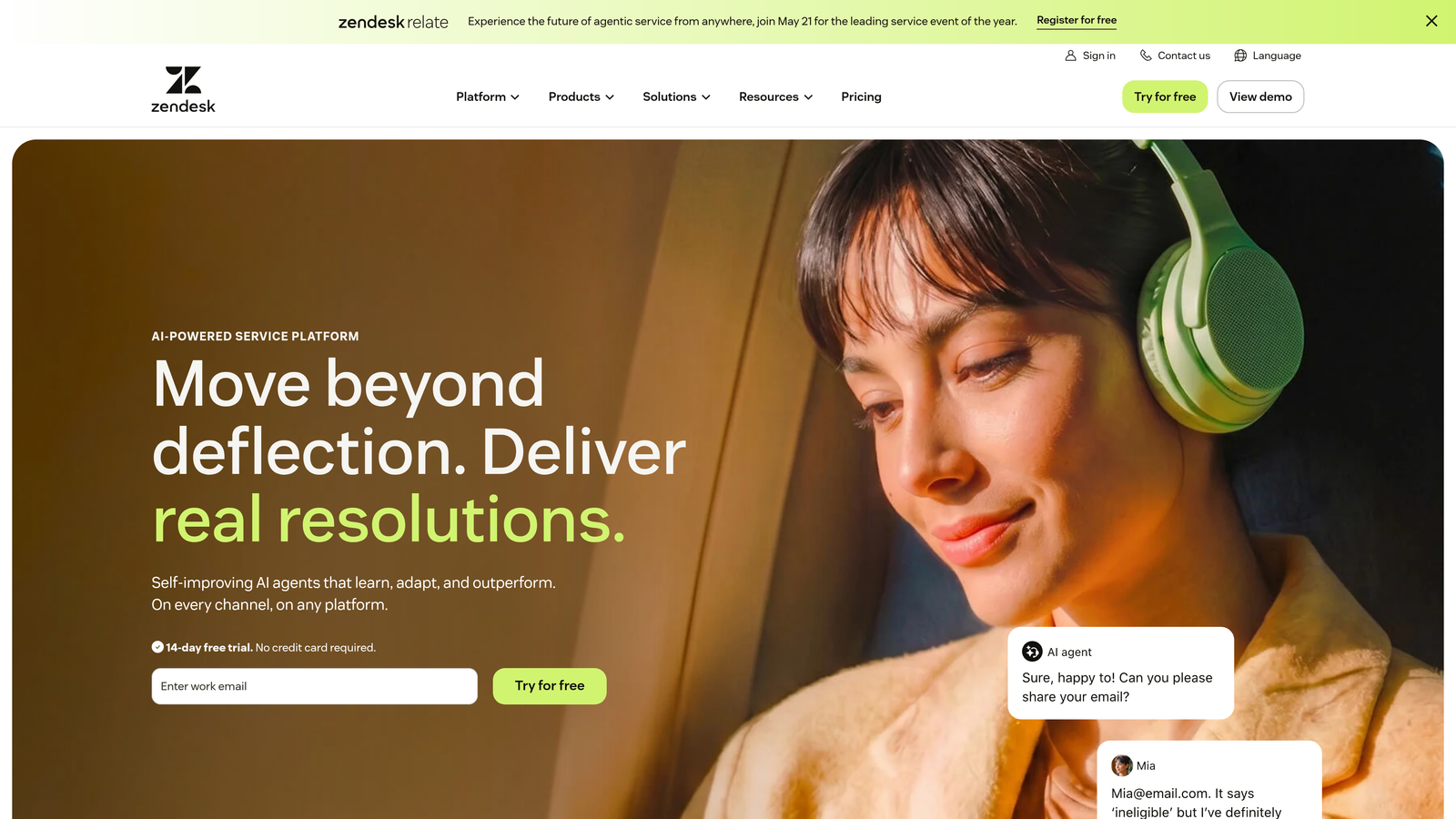
Zendesk AI is a suite of AI capabilities built natively into Zendesk, including AI agents, intelligent triage, and agent assist tools.
Where This Tool Shines
If your team is already on Zendesk, the path of least resistance for adding AI is often to use what's already there. Zendesk AI integrates directly into your existing ticket workflows, meaning agents don't need to learn a new interface or context-switch between platforms. The intelligent triage feature is particularly useful for health tech teams dealing with high ticket variety: it classifies and routes incoming tickets automatically based on content and intent.
The agent assist layer is also well-developed, surfacing AI-suggested replies and relevant knowledge base articles in real time as agents work through tickets. This is valuable when your support team is handling technically complex questions from IT administrators or integration specialists.
Key Features
AI Agents: Automated ticket resolution built directly into the Zendesk workflow.
Intelligent Triage: Classifies and routes incoming tickets automatically based on content analysis.
Agent Assist: Surfaces AI-suggested replies and knowledge articles to agents as they work.
Advanced Analytics: Reporting on AI performance, resolution rates, and support trends.
Best For
Health tech teams with an established Zendesk deployment who want to add AI without migrating platforms. Less ideal for teams starting fresh who want an AI-native architecture from day one.
Pricing
AI features are available as add-ons to Zendesk Suite plans. The Advanced AI add-on carries separate pricing; contact Zendesk for current rates.
4. Intercom Fin
Best for: Teams using Intercom for product messaging who want AI support deeply integrated with their in-app experience.
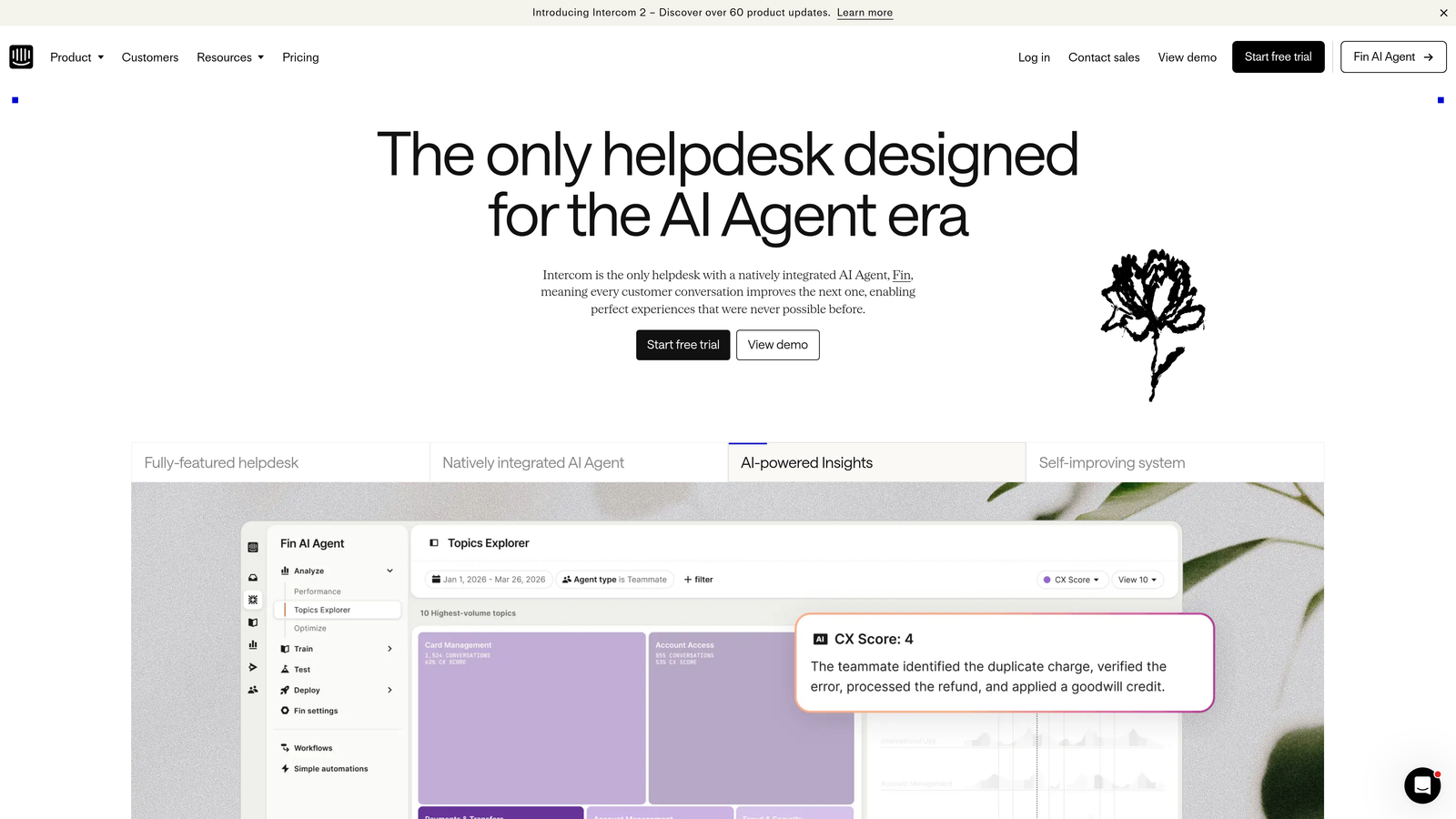
Intercom Fin is an AI-powered support agent that resolves customer questions using your help center content, deeply integrated with Intercom's messaging and product tours.
Where This Tool Shines
Fin's core strength is how naturally it fits into the Intercom ecosystem. If your health tech product already uses Intercom for onboarding, product tours, or in-app messaging, Fin extends that experience into support without requiring users to leave the product context. The AI is trained on your existing help center content, which means setup can be relatively fast if your documentation is already in good shape.
Human handoff is handled cleanly, with full conversation context passed to the live agent so customers don't have to repeat themselves — a small but meaningful detail in high-stakes healthcare tech environments where frustration compounds quickly.
Key Features
Help Center-Trained AI: Fin learns from your existing documentation and knowledge base without requiring separate training workflows.
In-App Conversational Support: Integrated with Intercom's product messaging for a seamless in-product support experience.
Context-Preserving Handoff: Passes full conversation history to live agents during escalation.
Usage-Based Pricing: Tied to resolution volume rather than seat count.
Best For
Health tech teams already invested in the Intercom platform who want AI support that feels native to their existing product experience rather than a separate tool.
Pricing
Per-resolution pricing model. Costs vary based on volume; review Intercom's current pricing page for up-to-date rates.
5. Freshdesk Freddy AI
Best for: Mid-market health tech teams that need capable AI support at a price point more accessible than enterprise alternatives.
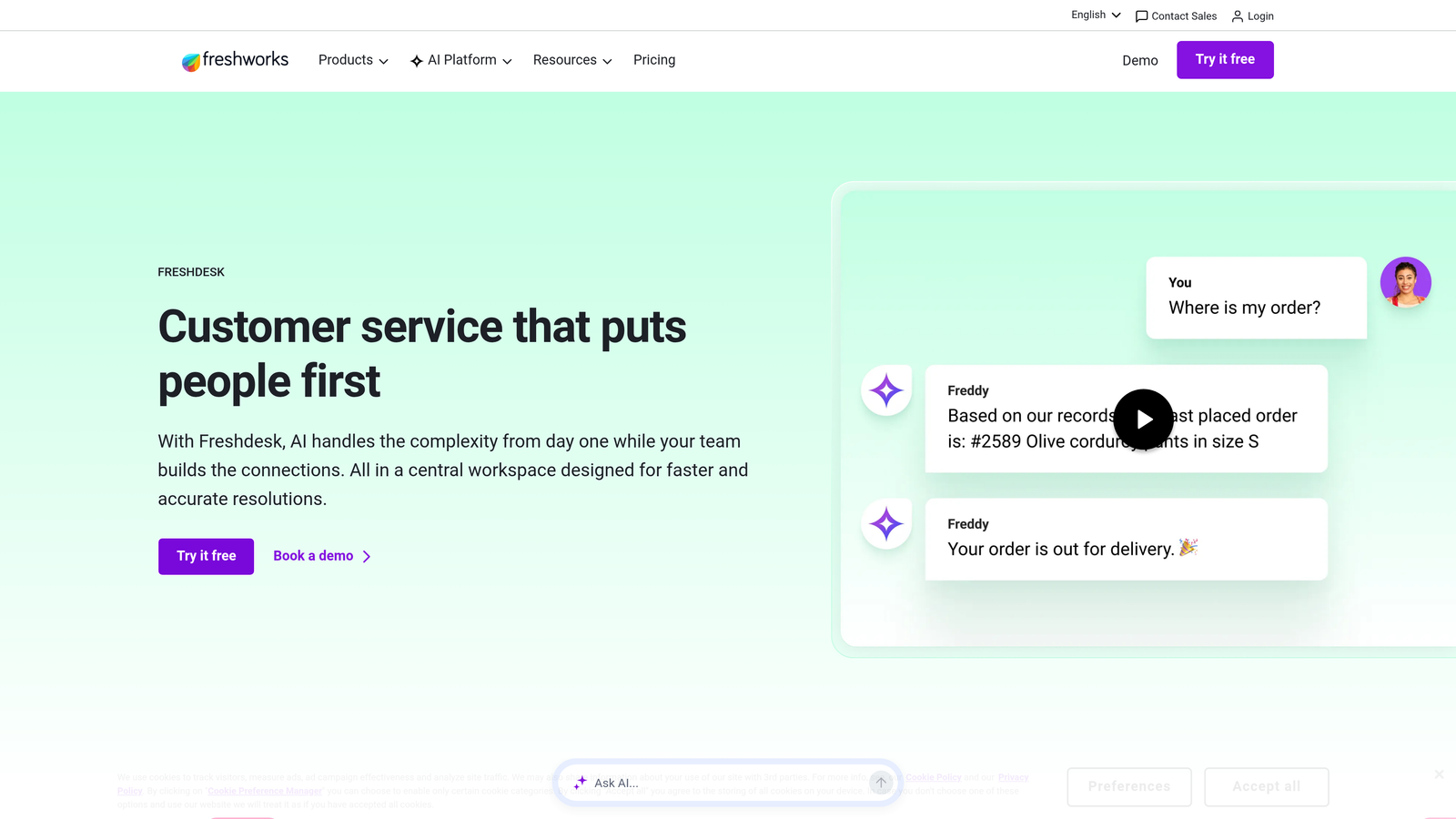
Freshdesk Freddy AI is Freshworks' AI layer across Freshdesk, offering automated responses, ticket classification, and agent assist for growing teams.
Where This Tool Shines
Freddy AI's appeal in the health tech mid-market is straightforward: it delivers meaningful AI functionality without the enterprise price tag. For companies that are scaling their support operations but aren't yet at the volume that justifies a premium platform, Freshdesk with Freddy AI offers a practical middle ground.
The omnichannel coverage is solid, spanning email, chat, phone, and social channels. For health tech companies with diverse user personas — some who prefer chat, others who default to email — that breadth matters. Ticket classification and prioritization help ensure urgent issues from high-value accounts don't get buried.
Key Features
Freddy AI Agent: Automated chat and ticket resolution for common support requests.
AI-Powered Ticket Classification: Automatically categorizes and prioritizes incoming tickets based on content.
Omnichannel Support: Covers email, chat, phone, and social from a single platform.
Agent Assist: AI-suggested responses and knowledge surfacing for human agents.
Best For
Growing health tech companies that need reliable AI support capabilities across multiple channels without committing to enterprise-tier pricing. Also a good fit for teams already using other Freshworks products.
Pricing
Freshdesk plans start with a free tier. AI features are available in Pro and Enterprise tiers; review Freshworks' current pricing page for specifics.
6. Forethought
Best for: Data-rich health tech teams that want AI triage and resolution built on top of their historical support data.
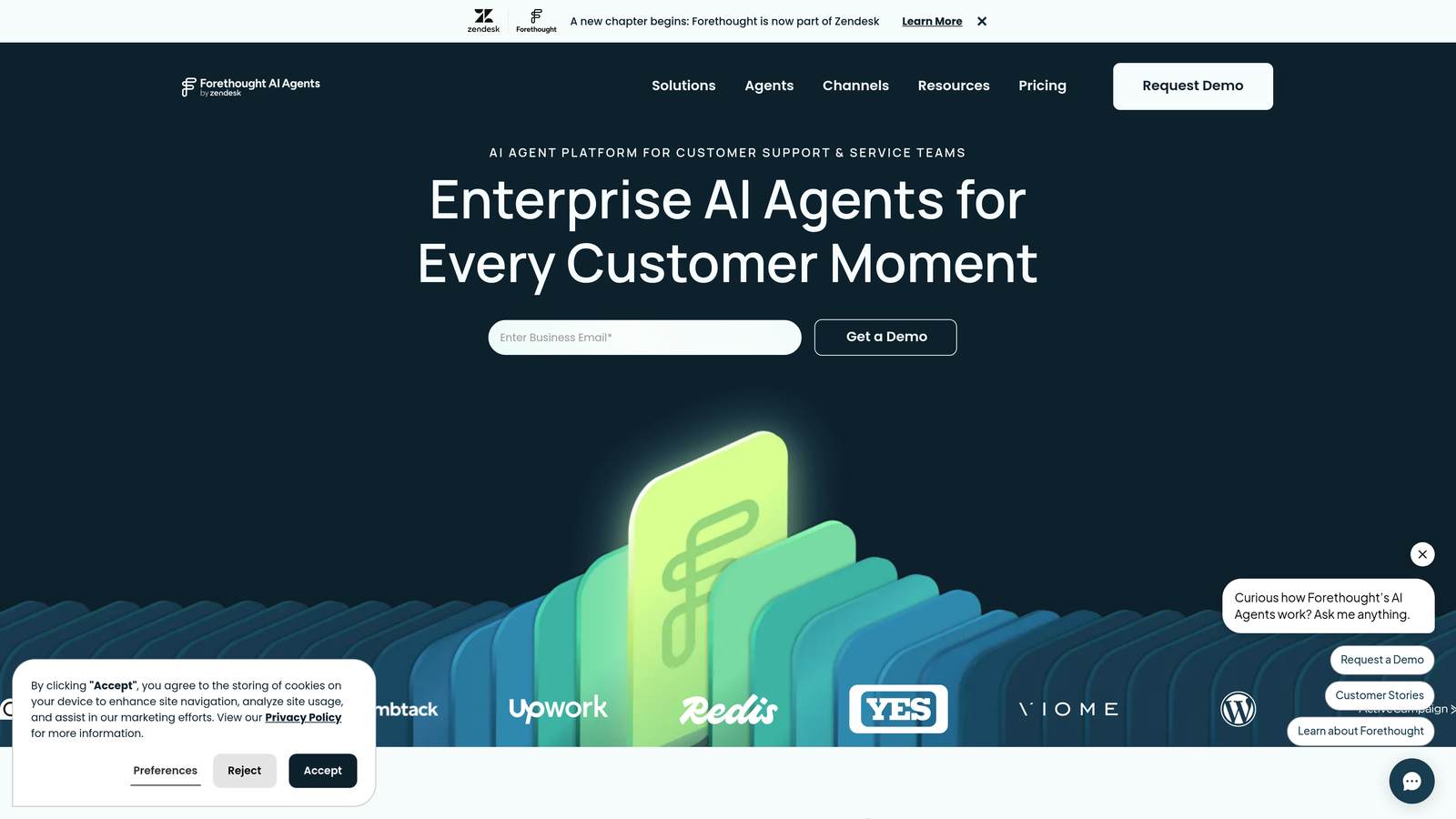
Forethought is an AI platform focused on intelligent ticket triage, automated resolution, and predictive workflows that learn from your existing support history.
Where This Tool Shines
Forethought's differentiator is how deeply it learns from your historical ticket data. Rather than starting from scratch, the platform analyzes past support interactions to build models that understand what your customers actually ask and how those questions have been resolved. For health tech companies with years of support history, this can produce meaningfully more accurate triage and resolution from day one.
The platform is structured around two distinct products: Solve handles automated resolution for common requests, while Assist surfaces AI-suggested responses and relevant knowledge for agents handling more complex issues. That separation gives teams flexibility in where they apply automation and where they keep humans in the loop.
Key Features
Historical Data-Driven Triage: Classifies and routes tickets based on patterns learned from your past support interactions.
Solve: Automated resolution engine for high-frequency, predictable support requests.
Assist: AI-suggested responses and knowledge surfacing for agents handling complex tickets.
Platform Integrations: Connects with Zendesk, Salesforce, and other major helpdesk platforms.
Best For
Health tech companies with substantial support history and high ticket volumes who want AI that improves faster because it can learn from existing data rather than building from zero.
Pricing
Custom pricing based on ticket volume and feature selection. Contact Forethought's sales team for a quote.
7. Tidio
Best for: Smaller health tech teams that need fast AI chatbot deployment without heavy configuration or enterprise overhead.
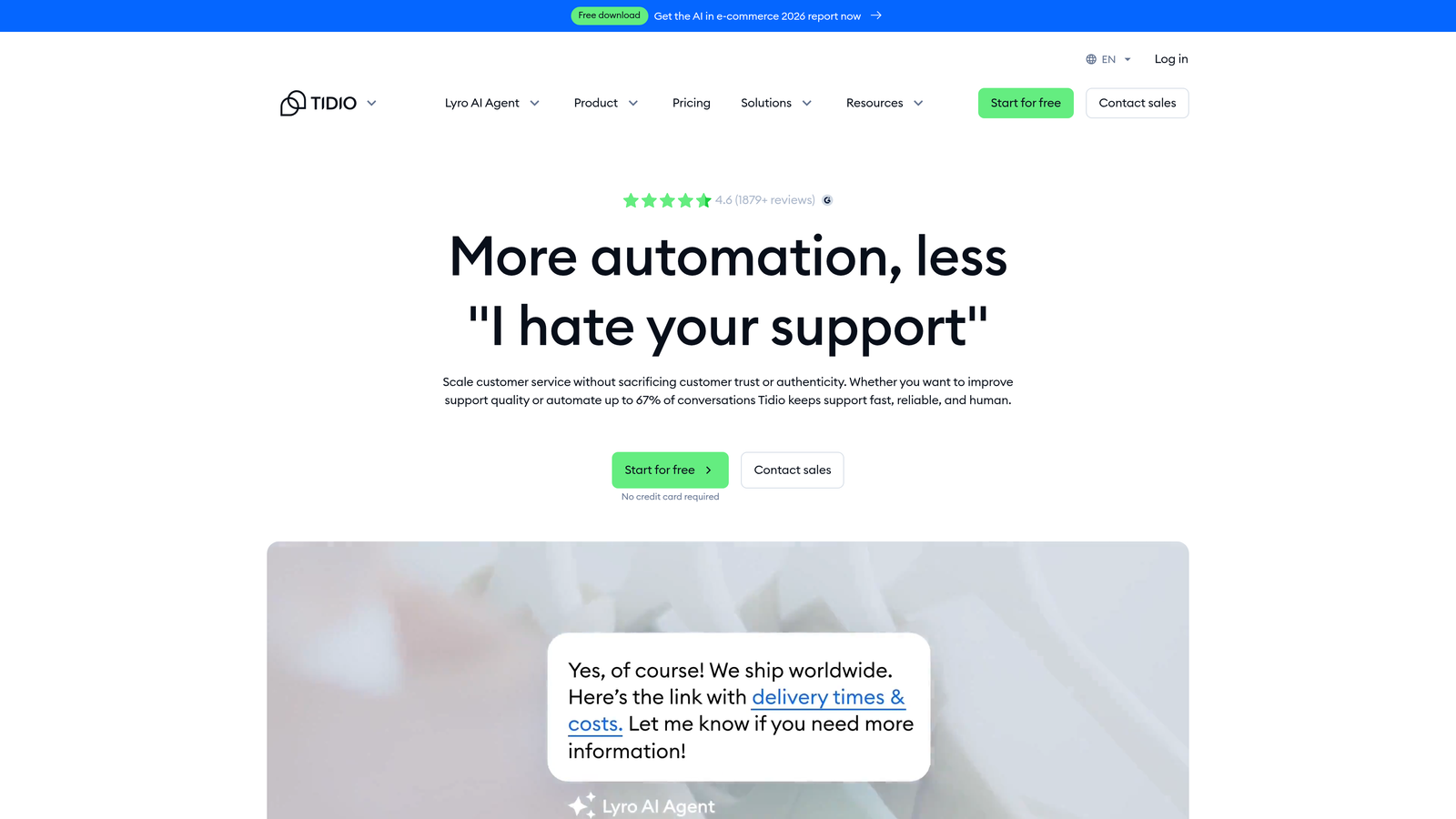
Tidio is a lightweight AI chatbot and live chat platform with a visual builder, designed for quick deployment with minimal technical requirements.
Where This Tool Shines
Not every health tech company is operating at enterprise scale, and Tidio is built for teams that need something running quickly without a lengthy implementation process. The visual drag-and-drop builder makes it accessible to support leads who don't have developer bandwidth to configure complex conversation flows.
Lyro, Tidio's AI chatbot, handles automated conversations with reasonable capability for common support scenarios. The bot-to-human handoff is smooth, which matters when a customer conversation escalates beyond what the AI can handle. For early-stage health tech companies managing lean support teams, Tidio offers a practical entry point into AI-assisted support.
Key Features
Lyro AI Chatbot: Automated customer conversations powered by AI for common support requests.
Visual Flow Builder: Drag-and-drop interface for building and modifying chatbot flows without coding.
Live Chat with Bot-to-Human Handoff: Seamless escalation from AI to a live agent when needed.
Fast Setup: Designed to be operational quickly with minimal technical requirements.
Best For
Early-stage or smaller health tech companies that need an accessible, affordable entry into AI chat support without the complexity or cost of enterprise platforms.
Pricing
Free tier available. Paid plans start around $29/month, making it one of the more accessible options on this list.
8. Cognigy
Best for: Enterprise health tech companies that need voice AI and omnichannel automation in heavily regulated environments.
Cognigy is an enterprise conversational AI platform with strong voice and chat capabilities, built for complex, regulated industries that need omnichannel automation at scale.
Where This Tool Shines
Cognigy stands out in this list for one capability that most others don't prioritize: voice. For health tech companies whose customers still rely on phone-based support — hospital IT departments, for example, often operate with phone-first workflows — having voice AI agents alongside chat and messaging is a meaningful advantage. Cognigy's voice AI can handle phone interactions with the same automation logic applied to digital channels.
The platform's enterprise-grade compliance and security architecture also makes it a serious consideration for health tech companies operating in regulated environments. Its low-code flow editor supports complex conversational workflows that would be difficult to build in lighter-weight tools.
Key Features
Voice AI Agents: Handles phone-based support interactions with conversational AI, not just IVR menus.
Omnichannel Orchestration: Unified automation across voice, chat, and messaging channels.
Enterprise Compliance Architecture: Security and compliance features built for regulated industry requirements.
Low-Code Flow Editor: Enables complex conversational workflow design without heavy engineering involvement.
Best For
Enterprise health tech companies with significant phone support volume or complex omnichannel requirements, particularly those in regulated environments where compliance architecture is a primary evaluation criterion.
Pricing
Enterprise pricing. Contact Cognigy's sales team for a custom quote based on your deployment requirements.
9. Salesforce Einstein Service Cloud
Best for: Health tech teams running Salesforce as their CRM who want AI support capabilities natively embedded in their existing ecosystem.
Salesforce Einstein Service Cloud is AI-powered service functionality embedded in Salesforce, offering case routing, knowledge recommendations, and predictive insights for CRM-centric support teams.
Where This Tool Shines
For health tech companies where Salesforce is the system of record, Einstein Service Cloud removes the integration complexity that comes with adopting a separate AI support tool. Case classification, routing, and next-best-action recommendations all operate within the Salesforce environment your team already knows, which reduces adoption friction significantly.
The Agentforce bots extend automation into customer-facing interactions, while Einstein's knowledge article suggestions help agents find relevant documentation faster during complex support conversations. If your sales, customer success, and support teams all live in Salesforce, the unified data picture this creates is genuinely valuable for understanding customer health across the full lifecycle.
Key Features
Einstein AI Case Routing: Classifies and routes cases automatically with next-best-action recommendations.
Knowledge Article Suggestions: AI surfaces relevant knowledge content to agents in real time during case resolution.
Agentforce Bots: Automated customer-facing interactions built within the Salesforce ecosystem.
Native Salesforce Integration: Full access to CRM data, customer history, and account context within every support interaction.
Best For
Health tech companies with Salesforce as their primary CRM and a preference for keeping their support operations inside a single, unified platform rather than managing multiple tool integrations.
Pricing
Service Cloud plans start at $25/user/month. Einstein AI features are available in higher tiers; review Salesforce's current pricing page for current rates.
Choosing the Right AI Support Tool for Your Health Tech Stack
The right tool depends heavily on where your team is today and where you need to go. A few frameworks to help you decide.
If you're starting fresh and want AI-native architecture: Halo AI is built from the ground up as an AI-first platform, not a feature layer added to an existing helpdesk. That distinction matters when you want the AI to do real work — resolving tickets autonomously, learning from every interaction, and surfacing business intelligence beyond basic support metrics.
If you're already on a major helpdesk platform: Zendesk AI, Intercom Fin, and Freshdesk Freddy AI each offer natural upgrade paths. The tradeoff is that you're working within the constraints of that platform's AI roadmap rather than one built specifically for autonomous resolution.
If voice support is a requirement: Cognigy is the standout choice. Most platforms on this list are built primarily for chat and messaging; Cognigy takes voice seriously in a way that matters for health tech customers who still rely heavily on phone.
If you're an early-stage team with limited resources: Tidio offers the fastest path to AI chat support without enterprise complexity or cost. It's not built for the scale of a large health tech company, but it's a smart starting point.
One evaluation criterion worth emphasizing across all of these tools: depth of AI autonomy. There's a meaningful difference between a tool that deflects tickets and one that actually resolves them. As your support volume grows, that distinction compounds. Tools that learn continuously from interactions — rather than requiring manual retraining — will serve health tech teams better over time as your product evolves and your customer base grows.
Your support team shouldn't scale linearly with your customer base. Let AI agents handle routine tickets, guide users through your product, and surface business intelligence while your team focuses on complex issues that need a human touch. See Halo in action and discover how continuous learning transforms every interaction into smarter, faster support.