9 Best AI Customer Service Tools for Mobile Apps in 2026
Mobile app users expect instant support, and AI customer service for mobile apps delivers it — resolving issues in real time, inside the app, without a human on standby. This guide reviews the 9 best tools available in 2026, helping teams find genuinely mobile-ready solutions that combine conversational AI, context-awareness, and smart escalation to scale support without scaling headcount.
 Grant CooperFounder13 min read
Mobile app users don't have patience for ticket queues. When someone hits a wall at 11pm — a bug mid-checkout, a feature they can't figure out during onboarding — a slow response doesn't just frustrate them. It loses them. AI customer service tools built for mobile apps solve this by resolving issues in real time, inside the app, without requiring a human on standby.
The challenge is that not all AI support tools are genuinely mobile-ready. Many are repurposed web chat widgets bolted onto a mobile SDK. Others lack the context-awareness to understand what a user is actually doing when they reach out. The best tools combine conversational AI, in-app delivery, smart escalation, and deep integrations — so your support scales as your user base grows without scaling your headcount alongside it.
Here are the top AI customer service tools worth evaluating for mobile apps in 2026, covering everything from purpose-built mobile platforms to full-stack support suites with strong AI layers.
1. Halo AI
Best for: B2B SaaS teams that need AI support connected to their entire product and revenue stack.
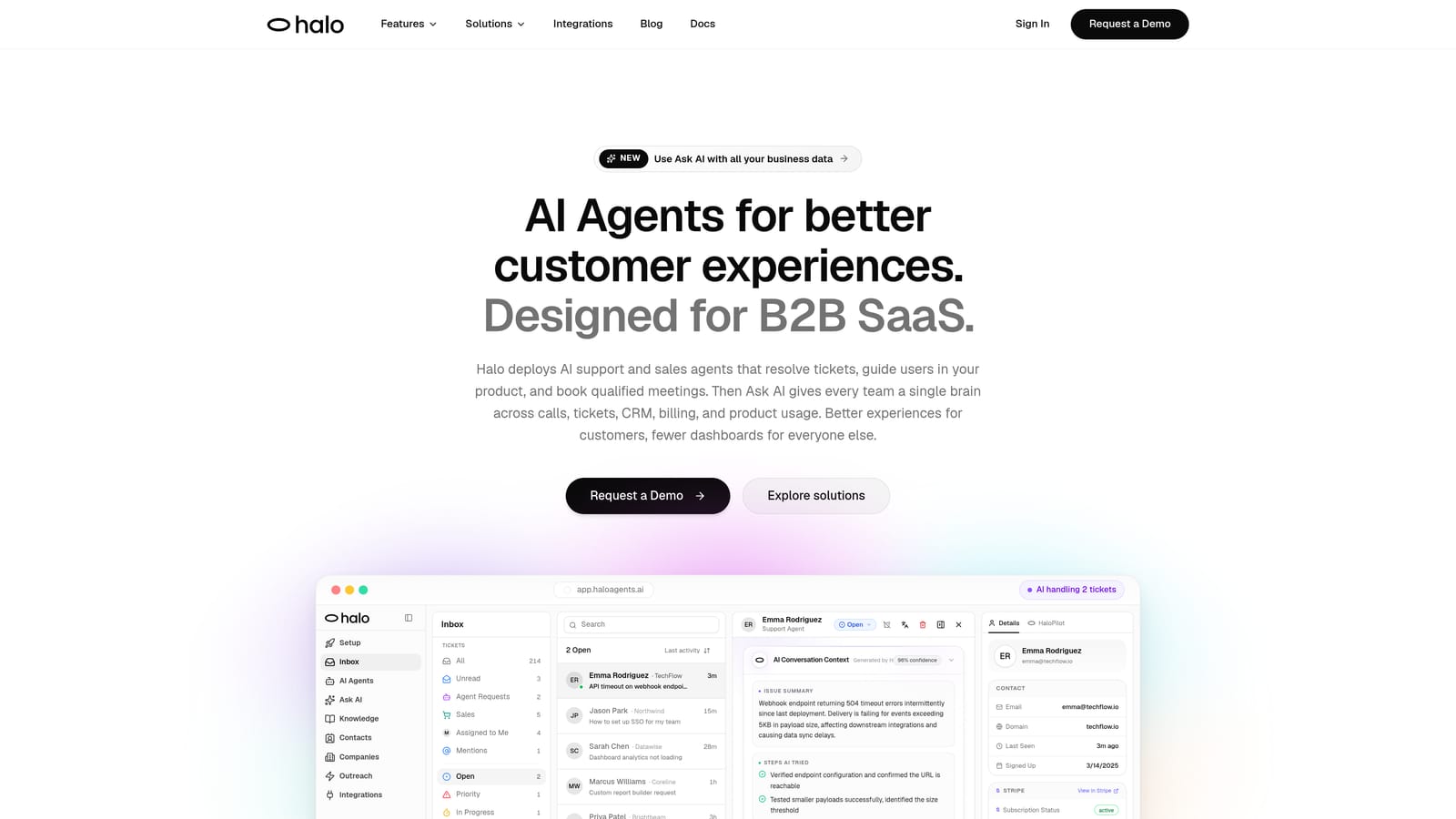
Halo AI is an AI-first customer support platform built around page-aware agents, business intelligence analytics, and deep integrations across product and revenue workflows.
Where This Tool Shines
What sets Halo apart from most tools on this list is context depth. The AI agent knows what screen a user is on, can provide visual UI guidance, and resolves tickets with that in-app context baked in. This isn't a generic chatbot that asks users to describe their problem — it already understands where they are and what they're likely trying to do.
Beyond support resolution, Halo surfaces business intelligence signals that most helpdesks ignore entirely. Customer health scores, revenue anomalies, and churn indicators flow into a smart inbox alongside tickets, giving product and success teams visibility that goes well beyond "how fast did we close this ticket."
Key Features
Page-Aware AI Agents: Understands which screen a user is on and delivers visual UI guidance specific to that context — not generic answers.
Continuous Learning: Improves resolution quality from every interaction, so the AI gets smarter the more it handles.
Auto Bug Ticket Creation: Automatically creates and routes bug reports to Linear or your preferred issue tracker without agent involvement.
Smart Inbox with Business Intelligence: Surfaces customer health signals, revenue anomalies, and churn indicators alongside support tickets.
Live Agent Handoff: Escalates complex issues to human agents with full conversation context preserved — no repeating themselves.
Integration Depth: Connects natively with Linear, Slack, HubSpot, Intercom, Stripe, Zoom, PandaDoc, and Fathom.
Best For
B2B product teams and SaaS companies that want support to feed back into product development and revenue workflows. If your team wants AI that does more than close tickets — and actually surfaces signals that improve your product and protect revenue — Halo is built for that use case specifically.
Pricing
Contact for pricing. A demo is available at haloagents.ai/demo.
2. Intercom
Best for: Teams already in the Intercom ecosystem who want AI-powered support, onboarding, and engagement in one platform.
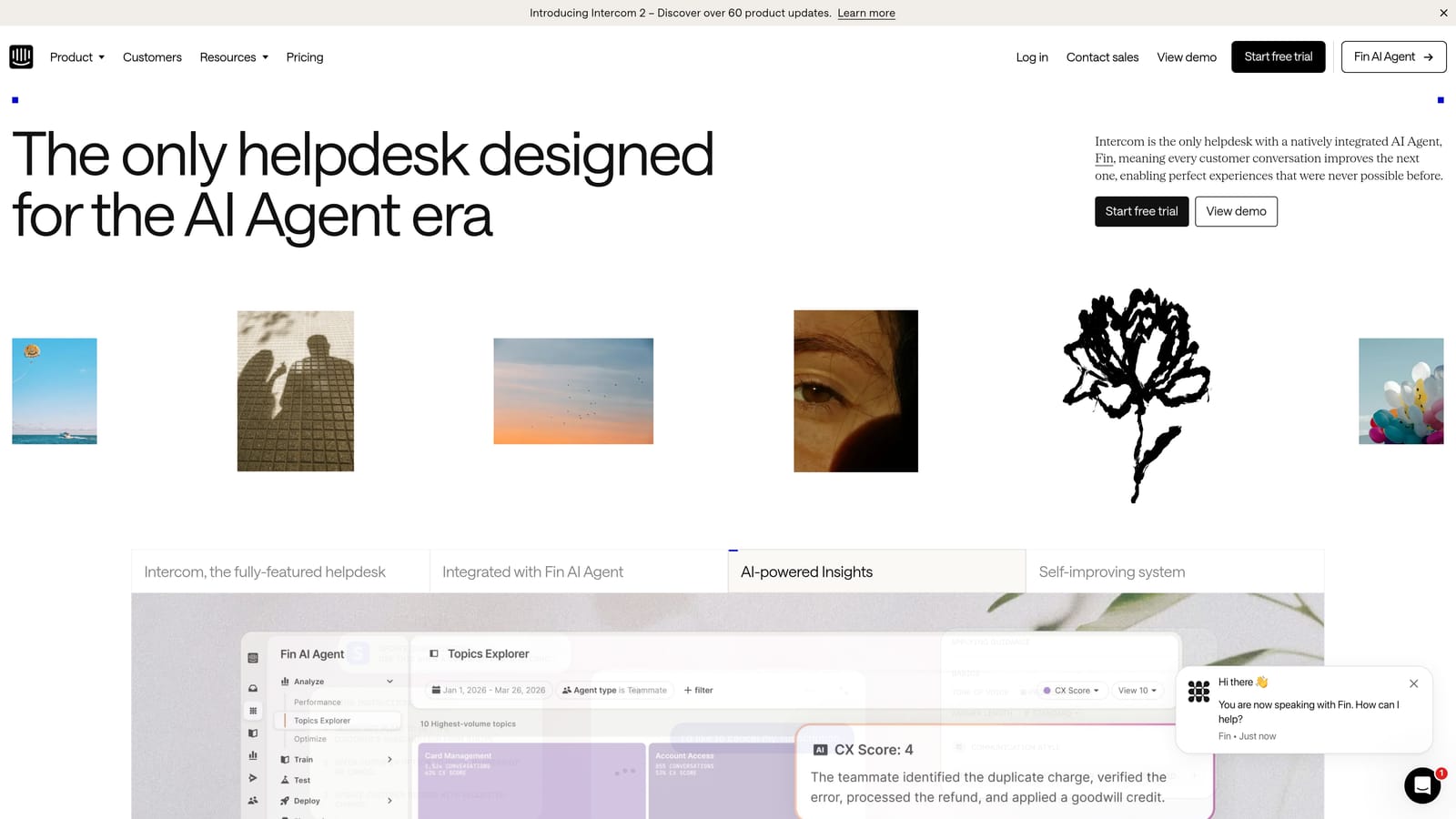
Intercom is a full-featured customer messaging platform with a mature AI agent, strong mobile SDK, and a broad ecosystem covering support, onboarding, and product engagement.
Where This Tool Shines
Intercom's Fin AI agent is one of the more capable autonomous support bots available, built on large language models and trained to handle a wide range of query types without human intervention. For teams that want a single platform managing support conversations, product tours, push notifications, and in-app messaging, Intercom covers a lot of ground.
The mobile SDK is well-maintained and widely adopted, making in-app delivery reliable across iOS and Android. The tradeoff is pricing — Intercom has moved upmarket in recent years, and Fin's per-resolution pricing at enterprise tiers can add up quickly for high-volume apps.
Key Features
Fin AI Agent: LLM-powered autonomous agent that handles support queries without human involvement for a broad range of issues.
Native Mobile SDK: Solid iOS and Android support for in-app delivery of conversations and notifications.
In-App Messaging and Product Tours: Combines support with onboarding and engagement features in one platform.
AI-Assisted Inbox: Smart routing and suggested responses for agents handling escalated conversations.
App Marketplace: Extensive integrations with CRMs, analytics tools, and third-party platforms.
Best For
Teams that want a mature, all-in-one platform and are comfortable with premium pricing. Particularly well-suited for SaaS companies that want to unify support, onboarding, and user engagement without stitching together multiple tools.
Pricing
Starts at approximately $39/month for base plans. Fin AI agent is priced per resolution at enterprise tiers — verify current pricing on Intercom's website.
3. Zendesk
Best for: Enterprise teams with complex support workflows, large agent teams, and omnichannel coverage requirements.
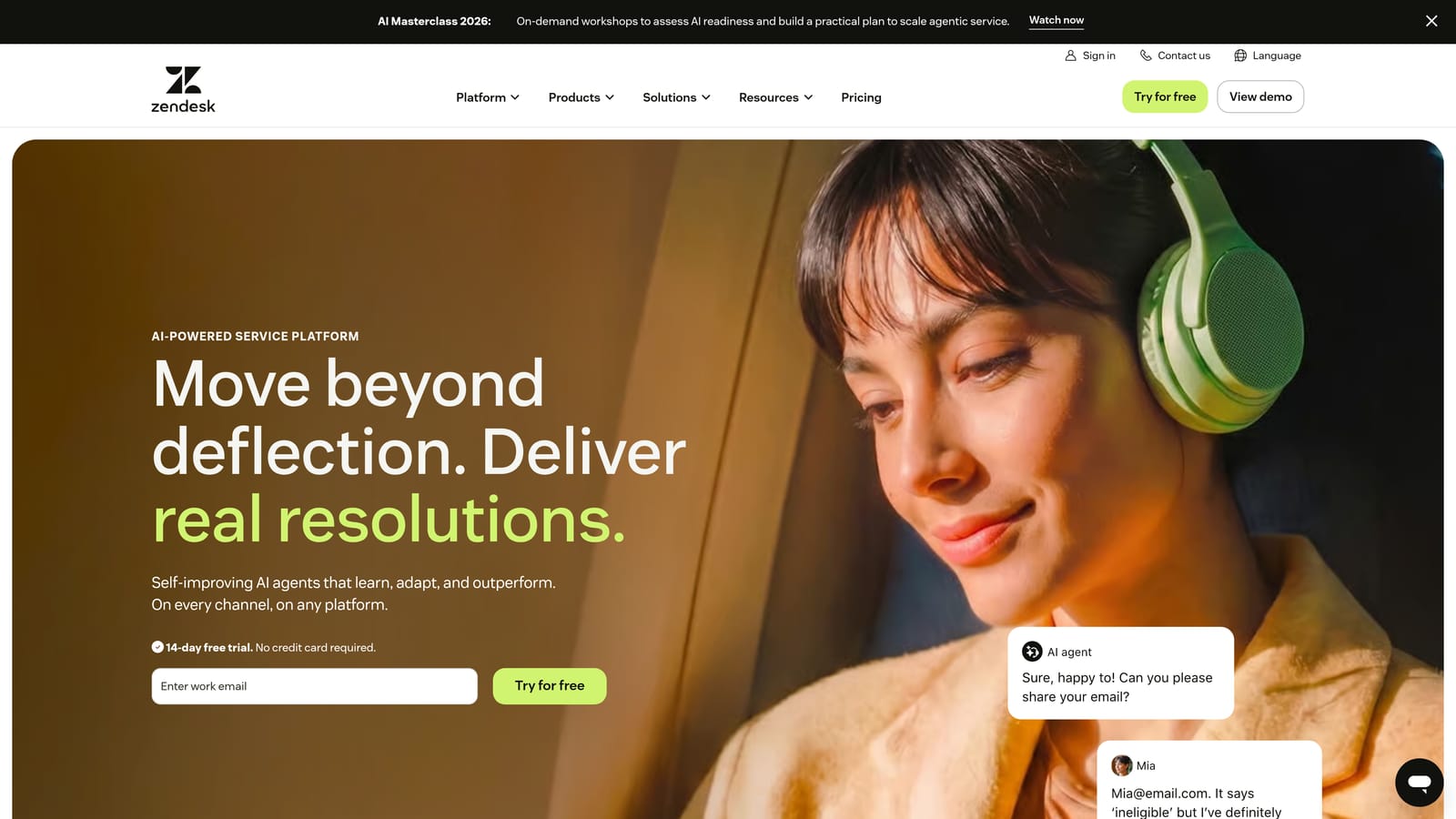
Zendesk is an enterprise support suite with AI-powered triage, broad channel coverage, and a deep ecosystem — now with Zendesk AI built natively into the platform.
Where This Tool Shines
Zendesk's strength is breadth and maturity. For large teams managing high ticket volumes across multiple channels, the platform handles complexity well — SLA management, advanced routing, and detailed reporting are all built in. Zendesk AI adds intelligent triage and intent detection on top of that foundation.
The mobile SDK is available, but Zendesk's core is built around a traditional ticketing model that has been enhanced with AI rather than redesigned around it. That's worth knowing going in: if you want AI-first architecture, Zendesk is a powerful tool with AI layered on, not an AI-native platform.
Key Features
Zendesk AI: Intelligent triage, intent detection, and suggested replies built into the support workflow.
Mobile SDK: Enables in-app support delivery on iOS and Android.
Ticketing with SLA Management: Robust queue management for teams with defined service level agreements.
1,000+ Integrations: Extensive marketplace covering CRMs, analytics, e-commerce, and more.
Advanced Reporting: Detailed analytics on support operations, agent performance, and resolution trends.
Best For
Large support teams and enterprise organizations with complex workflows, multiple channels, and significant volume. Less ideal for lean mobile app teams looking for a lightweight, AI-first deployment.
Pricing
Suite plans start at approximately $55/agent/month. AI features are available on higher tiers — verify current pricing on Zendesk's website.
4. Freshdesk
Best for: Growing mobile app teams that need solid AI automation without enterprise-level pricing.
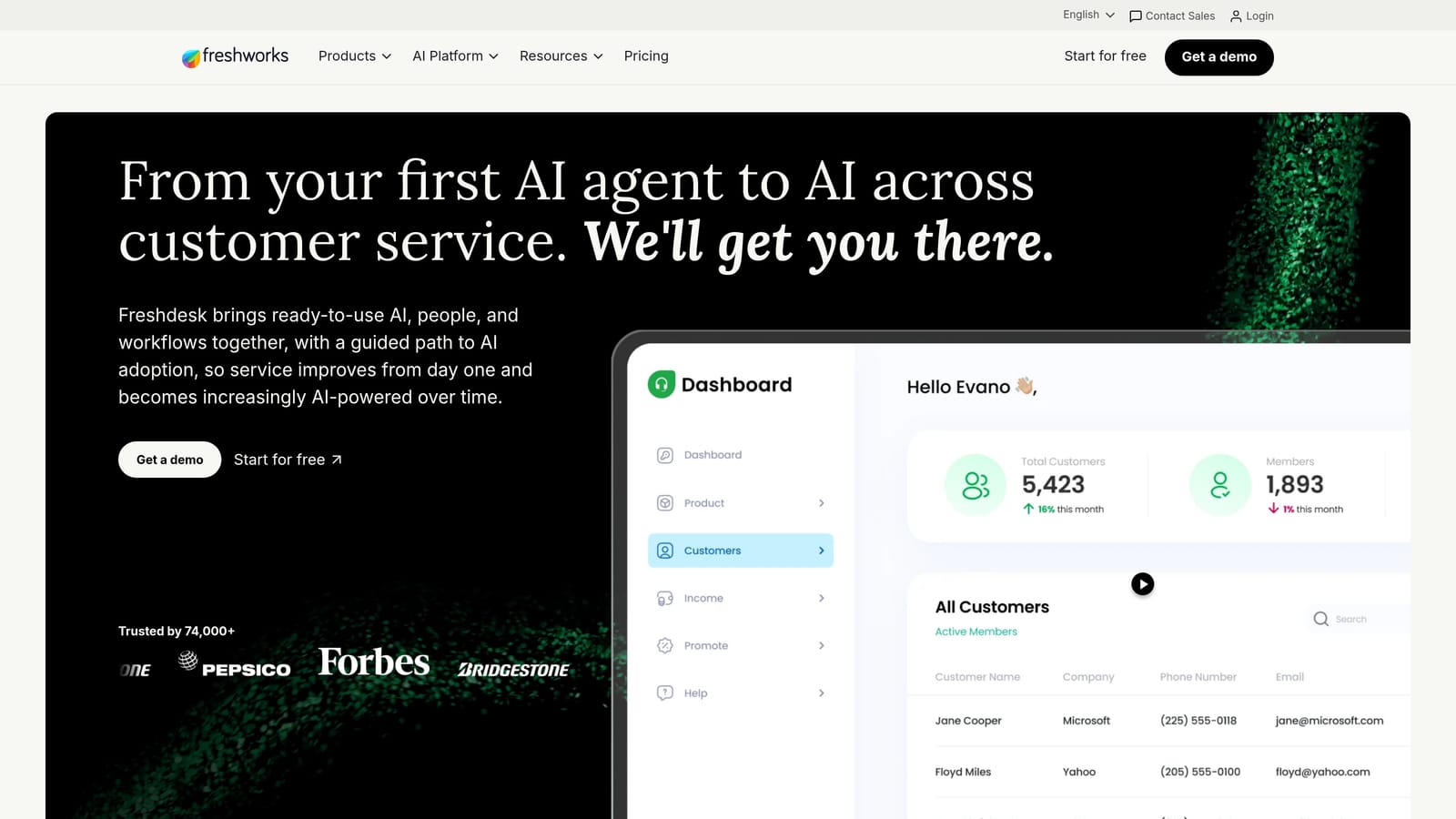
Freshdesk is an omnichannel support platform with Freddy AI built in, offering a cost-effective path to AI-assisted support for teams watching their budget.
Where This Tool Shines
Freshdesk's value proposition is competitive pricing at a feature set that rivals more expensive alternatives. Freddy AI handles auto-triage, suggested responses, and self-service bot flows — covering the core AI automation needs without requiring an enterprise contract to access them.
For growing teams that need to cover email, chat, phone, and social from a single inbox while keeping costs manageable, Freshdesk hits a practical sweet spot. The mobile SDK is available, though teams with highly mobile-specific requirements may find purpose-built tools offer more depth.
Key Features
Freddy AI: Covers auto-triage, suggested responses, and a self-service bot for common query resolution.
Omnichannel Inbox: Unified inbox covering email, chat, phone, and social channels.
Freddy Copilot: AI assistant for agents handling complex or escalated conversations.
Accessible Pricing: Free plan available, with paid tiers that scale without jumping to enterprise pricing immediately.
Best For
Startups and growing teams that need reliable AI-assisted support across channels without committing to enterprise pricing. A practical choice for teams that want to grow into more advanced features over time.
Pricing
Free plan available. Paid plans start at approximately $15/agent/month — verify current pricing on Freshdesk's website.
5. Drift
Best for: B2B mobile apps where support and sales qualification happen through the same conversational channel.
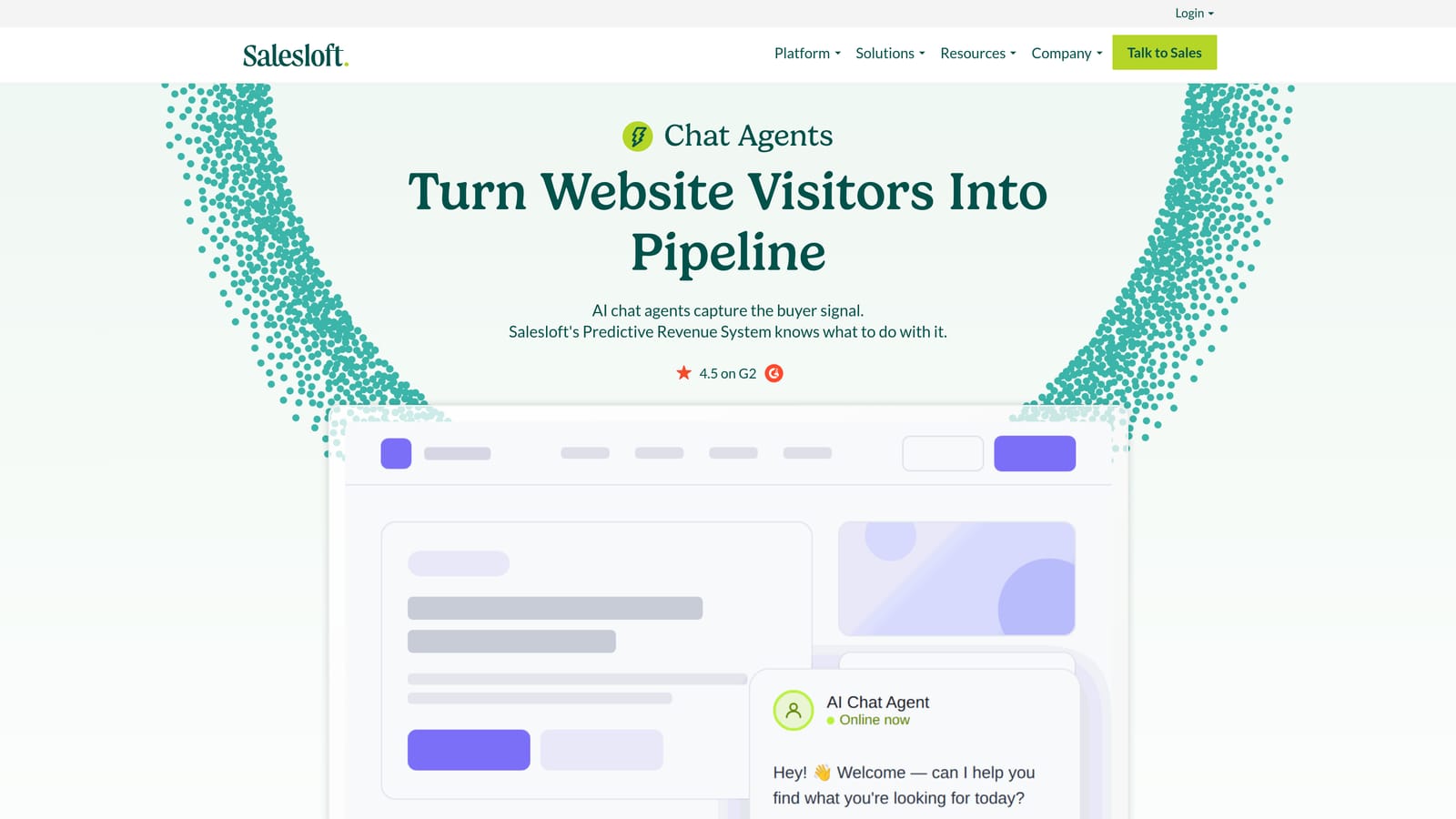
Drift is a conversational AI platform that blends support and revenue workflows, making it a distinctive option for B2B apps where inbound conversations serve dual purposes.
Where This Tool Shines
Drift occupies a unique position: it's less a pure support tool and more a revenue-and-support hybrid. For B2B mobile apps where a user asking a support question might also be a qualified buyer, Drift's AI routing handles both without requiring separate systems. Playbooks automate qualification and triage flows simultaneously.
The tradeoff is focus. If your primary need is high-volume in-app support resolution, Drift's strengths in sales alignment may not justify the premium pricing. But for B2B teams where support and pipeline are genuinely intertwined, it's a thoughtful fit.
Key Features
AI Conversation Routing: Handles both support triage and sales qualification through a single conversational interface.
Playbooks: Automated flows for qualification, triage, and routing based on user signals.
CRM Integrations: Native connections to Salesforce, HubSpot, and major CRM platforms.
Meeting Scheduling and Live Handoff: Enables direct booking and seamless handoff to human reps or agents.
Conversation Analytics: Tracks outcomes across both support and revenue conversations.
Best For
B2B SaaS teams where sales and support overlap significantly in their inbound conversation volume. Less suited to consumer apps or teams focused purely on support resolution efficiency.
Pricing
Premium plans — contact Drift for current pricing. No public self-serve tier available.
6. Tidio
Best for: Early-stage mobile app teams that need fast AI support deployment without lengthy implementation cycles.
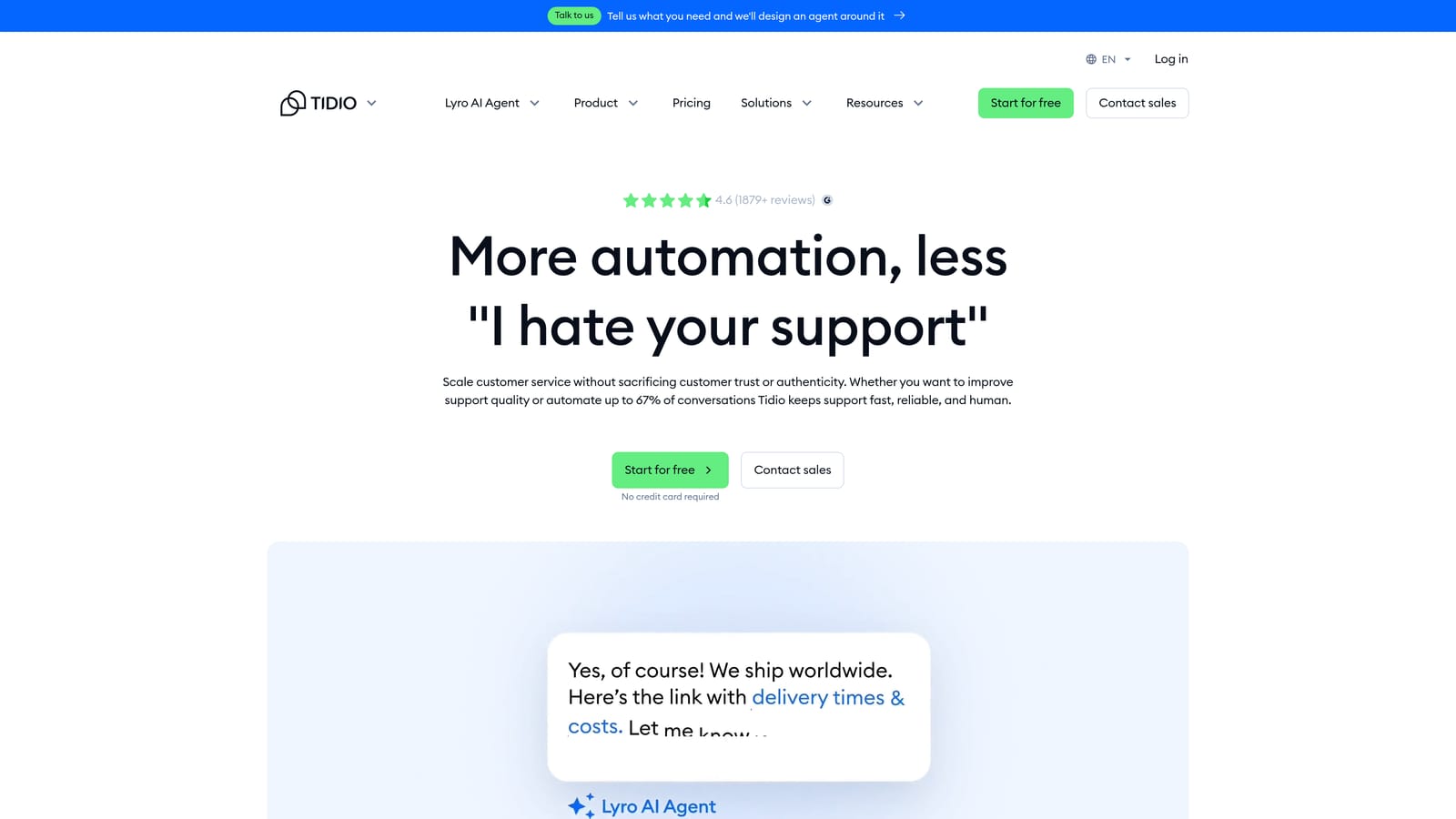
Tidio is an accessible AI chat platform with Lyro AI, designed to get teams up and running quickly with minimal technical overhead.
Where This Tool Shines
Speed to deployment is Tidio's headline advantage. For early-stage teams that need AI support running quickly — without dedicated engineering time or a lengthy onboarding process — Tidio's setup is genuinely fast. Lyro handles automated query resolution, and the visual chatbot builder lets non-technical team members build and adjust flows without code.
Mobile integration is available, though Tidio's roots are in web chat. Teams with highly mobile-specific support needs may find the mobile experience less polished than purpose-built alternatives. For early-stage validation and lean operations, however, it's a practical starting point.
Key Features
Lyro AI: Automated chatbot for resolving common queries without human agent involvement.
Visual Flow Builder: No-code chatbot builder that non-technical team members can operate independently.
Live Chat: Clean, fast live chat interface for agent-handled conversations.
Email and Messenger Integrations: Extends support coverage beyond chat to additional channels.
Accessible Pricing: Free plan and low-cost paid tiers make it viable for bootstrapped teams.
Best For
Early-stage startups and small teams that need to activate AI support quickly and affordably, with the flexibility to upgrade as their needs grow.
Pricing
Free plan available. Lyro AI plans start at approximately $29/month — verify current pricing on Tidio's website.
7. Ada
Best for: Consumer mobile apps with global audiences that need sophisticated self-service flows without requiring engineering resources to maintain them.
Ada is a no-code AI agent builder designed for brands that need to deploy and maintain complex self-service automation at scale.
Where This Tool Shines
Ada's core strength is putting AI agent creation in the hands of non-technical teams. Building, updating, and maintaining support flows doesn't require engineering involvement — which matters significantly for consumer apps with rapidly changing products and global user bases. The multilingual support across dozens of languages is a genuine differentiator for teams serving international markets.
The brand control features are also worth noting. Ada gives teams control over the AI's persona, tone, and escalation behavior — useful for consumer brands where voice consistency matters as much as resolution quality.
Key Features
No-Code AI Agent Builder: Non-technical teams can build, update, and maintain support flows independently.
Multilingual Support: Handles conversations across dozens of languages for global user bases.
Live Agent Handoff: Escalates to human agents with full conversation context preserved.
CRM and Helpdesk Integrations: Connects with major CRM and support platforms.
Brand-Controlled AI Persona: Teams can configure tone, personality, and escalation rules to match brand standards.
Best For
Consumer apps with large or global audiences, particularly those where the marketing or CX team — rather than engineering — owns the support experience. Well-suited for brands that prioritize self-service automation at scale.
Pricing
Enterprise pricing — contact Ada for a quote tailored to your volume and requirements.
8. Kustomer
Best for: Consumer apps and marketplaces where relationship history and full customer context drive resolution quality.
Kustomer is a CRM-native support platform where AI automation is built around complete customer timelines rather than isolated tickets.
Where This Tool Shines
Kustomer's differentiator is the unified customer timeline. Rather than treating each support conversation as a standalone ticket, agents see a complete view of the customer — their order history, previous interactions, account status, and behavioral signals — all in a single interface. For consumer apps and marketplaces, that context often determines how a conversation should be handled.
AI automation handles routing, tagging, and suggested responses, but it operates on top of that rich CRM data rather than in isolation. The result is AI-assisted support that's informed by relationship context, not just the current message.
Key Features
Unified Customer Timeline: Combines support history, orders, and interactions into a single view for agents and AI.
AI-Powered Automation: Handles routing, tagging, and suggested responses informed by full customer context.
Omnichannel Support: Covers in-app, email, chat, and social in a unified inbox.
Visual Workflow Builder: Creates automation rules without requiring engineering involvement.
Deep CRM Data Access: Agents see complete customer context during every conversation.
Best For
Consumer apps, e-commerce platforms, and marketplaces where relationship history meaningfully affects how support interactions should be handled. Less suited to lean B2B SaaS teams that don't need CRM-depth in their support layer.
Pricing
Enterprise pricing starting at approximately $89/agent/month — verify current pricing on Kustomer's website.
9. Helpshift
Best for: High-DAU consumer apps and game studios that need a support platform built natively for mobile from the ground up.
Helpshift is one of the few purpose-built mobile support platforms on this list, designed specifically for in-app support rather than adapted from a web-first foundation.
Where This Tool Shines
Most tools on this list started as web or desktop platforms and added mobile SDKs over time. Helpshift went the other direction — it was built mobile-first, and that shows in the depth of its in-app experience. Asynchronous messaging is a standout feature: users can pick up conversations where they left off without losing context, which matters enormously for mobile users who switch between apps constantly.
The gaming industry presence is strong, and for good reason. High-DAU consumer apps with large volumes of in-app support requests — where keeping users inside the app experience is critical — benefit from Helpshift's native approach more than they would from a repurposed web tool.
Key Features
Native Mobile SDK: Built specifically for iOS and Android — not a web widget adapted for mobile.
In-App AI Bots: Supports both decision-tree and NLP-based flows for automated query resolution.
Asynchronous Messaging: Users resume conversations without losing context, matching how mobile users actually behave.
In-App FAQ and Help Content: Searchable self-service content delivered inside the app experience.
Smart Campaigns: Proactive in-app support outreach based on user behavior signals.
Best For
Game studios, high-DAU consumer apps, and any mobile team where keeping users inside the app experience during support interactions is a priority. Particularly strong for teams dealing with high support volume where asynchronous messaging reduces friction significantly.
Pricing
Starter plans available. Full pricing scales with monthly active users — contact Helpshift for a quote based on your volume.
Which Tool Is Right for Your Mobile App?
The right choice depends on a few key factors: your team size, your audience type (B2B vs. consumer), how mobile-native you need the architecture to be, and how deeply you want support integrated with the rest of your business stack.
For B2B SaaS teams that want support connected to product, revenue, and engineering workflows, Halo AI is the standout. The page-aware context, auto bug ticket creation, and business intelligence signals make it genuinely different from tools that just close tickets. It's built for teams that want support to do more than support.
If you're already in the Intercom ecosystem or need a mature all-in-one platform, Intercom is a reliable choice with strong AI capabilities and a well-maintained mobile SDK. For enterprise teams with complex multi-channel workflows, Zendesk remains the industry benchmark.
Growing teams watching budget will find Freshdesk offers the most practical value-to-price ratio. Early-stage teams that need to move fast should look at Tidio for its speed of deployment. Consumer apps with global audiences and a need for no-code flexibility will find Ada purpose-built for that use case. And for high-DAU mobile apps — especially in gaming — Helpshift's mobile-first architecture is hard to beat.
The common thread across all of these: your support experience shouldn't be an afterthought bolted onto your mobile app. It should be as intentional as the product itself.
Your support team shouldn't scale linearly with your customer base. Let AI agents handle routine tickets, guide users through your product, and surface business intelligence while your team focuses on complex issues that need a human touch. See Halo in action and discover how continuous learning transforms every interaction into smarter, faster support.