9 Best AI Customer Service Tools for SaaS Companies in 2026
AI customer service for SaaS companies has evolved well beyond basic chatbots — today's purpose-built tools resolve tickets autonomously, integrate with developer workflows, and scale support without growing headcount. This guide evaluates the 9 best options in 2026 across AI capability, SaaS-specific integrations, and resolution quality to help support teams find the right fit.
 Matt PattoliFounder12 min read
SaaS support teams face a pressure that's genuinely different from everyone else. Your users are technical, your product ships updates constantly, and leadership expects you to scale support without scaling headcount. Generic chatbots weren't built for this. Legacy helpdesks weren't either.
AI customer service tools purpose-built for SaaS change the equation. They resolve tickets autonomously, surface product intelligence, connect to your developer tools, and hand off complex issues to humans without losing context. The category has matured significantly in 2026, and the best tools now go far beyond simple deflection.
Here are the top AI customer service tools for SaaS companies, evaluated on AI capability depth, SaaS-specific integrations, autonomous resolution quality, and how well they handle the full support lifecycle.
1. Halo AI
Best for: SaaS teams that want AI-first support with deep product and developer integrations
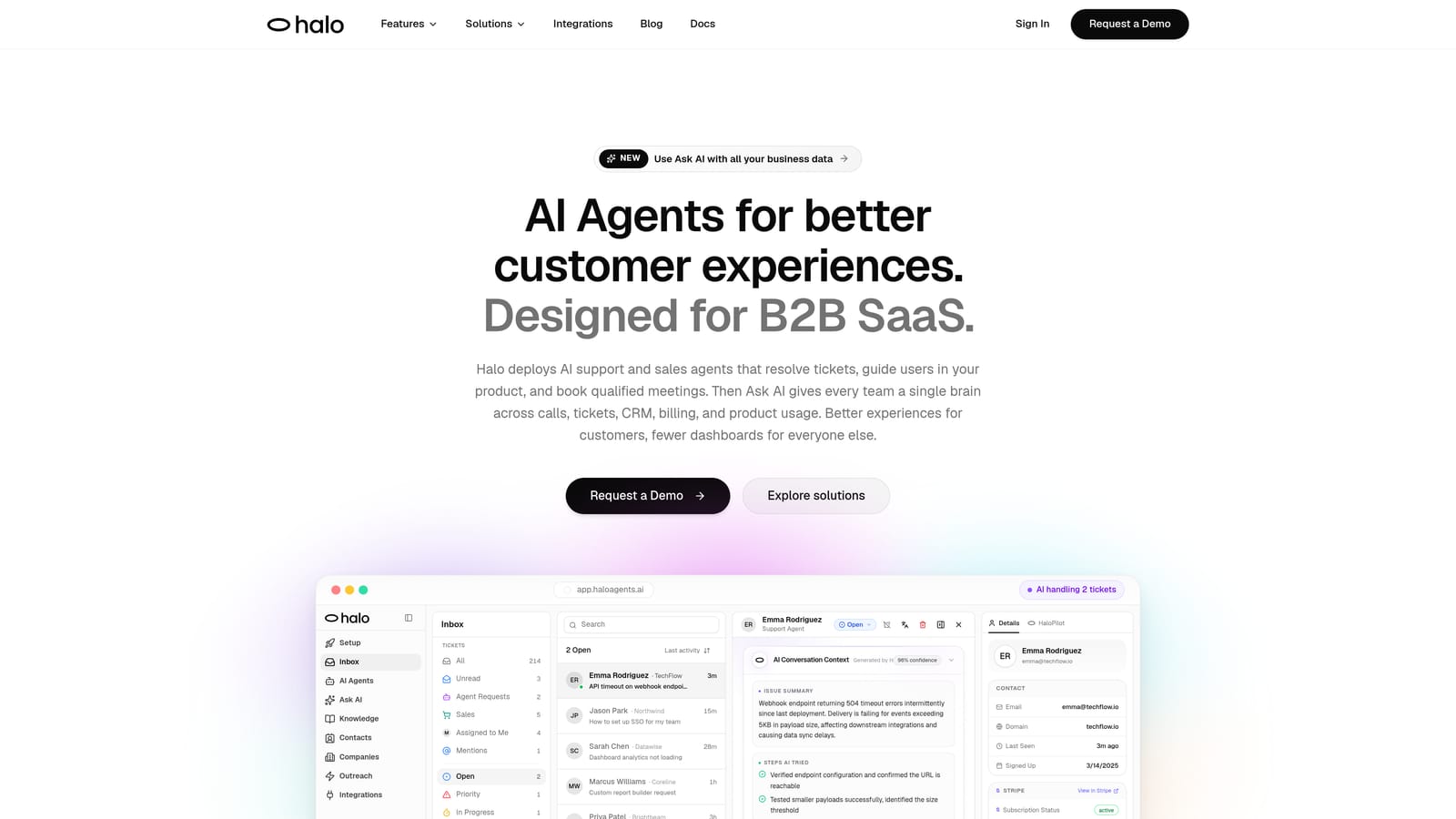
Halo AI is an AI-first customer support platform built specifically for SaaS teams, not adapted from a general-purpose helpdesk.
Where This Tool Shines
Most AI support tools bolt AI onto existing workflows. Halo was architected from the ground up as an AI platform, which means the intelligence runs deeper. The standout capability is page-aware context: Halo's chat widget actually sees what the user sees, allowing the AI to provide visual UI guidance specific to where someone is in your product. That's a meaningful step beyond keyword matching or generic knowledge base lookups.
The business intelligence layer is equally distinctive. Halo's smart inbox surfaces customer health signals, revenue anomalies, and churn indicators from support interactions, turning your support queue into a source of product and commercial intelligence. For SaaS teams that want support to do more than close tickets, this is where Halo separates itself.
Key Features
Page-Aware Chat Widget: The AI sees the user's current product context and delivers visual UI guidance relevant to exactly where they are in your application.
Autonomous Ticket Resolution: Intelligent AI agents handle routine tickets end-to-end, with seamless live agent handoff when complexity warrants a human.
Auto Bug Ticket Creation: Automatically creates and routes bug reports to Linear, Jira, or your existing dev workflow without requiring manual triage.
Smart Inbox with Business Intelligence: Surfaces customer health signals, revenue anomalies, and churn indicators from support data — not just support metrics.
Deep SaaS Integrations: Connects natively with Linear, Slack, HubSpot, Intercom, Stripe, Zoom, PandaDoc, and Fathom.
Best For
SaaS companies and B2B product teams that want AI to do more than deflect tickets. Particularly strong for teams with active development workflows who need support and engineering to stay in sync, and for companies where support interactions carry commercial signals worth capturing.
Pricing
Contact for pricing. A demo is available at haloagents.ai.
2. Intercom
Best for: SaaS teams wanting proven AI resolution on top of a mature messaging platform
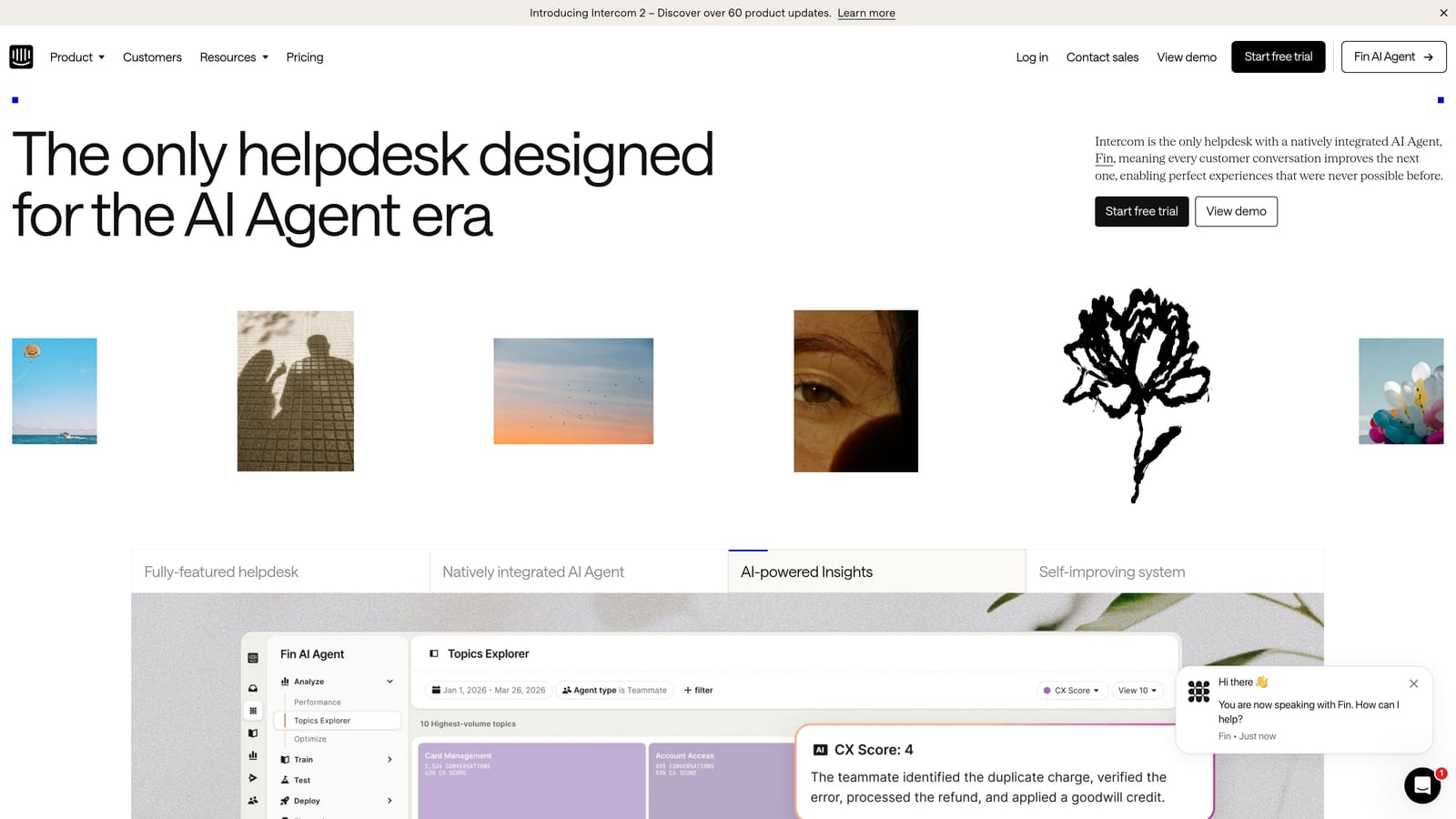
Intercom is one of the most widely adopted customer messaging platforms in SaaS, with its Fin AI agent delivering autonomous resolution powered by GPT-4.
Where This Tool Shines
Intercom's strength is the combination of a mature product and a genuinely capable AI layer. Fin AI pulls from your existing help center content to resolve tickets without human involvement, and it works well when your documentation is solid. The platform's breadth is also a real advantage: chat, email, and in-app messaging are unified, and product tours and onboarding flows sit alongside support features.
The AI Copilot feature helps agents with suggested replies, ticket summaries, and next-step recommendations, making it useful for teams running a hybrid model where humans and AI work in parallel.
Key Features
Fin AI Agent: Autonomous ticket resolution drawing from your existing help center, with solid performance on well-documented products.
AI Copilot: Real-time agent assist with suggested replies, conversation summaries, and recommended next steps.
Omnichannel Messaging: Chat, email, and in-app messaging managed from a single platform.
Product Tours and Onboarding: Built-in tools for user onboarding and feature adoption alongside support workflows.
Best For
SaaS teams that want a proven, widely adopted platform with strong AI resolution capabilities. Works best when your help center content is comprehensive. Pricing can scale quickly at volume, so it's worth modeling out costs as you grow.
Pricing
Starts at approximately $39 per seat per month. Fin AI is usage-based pricing on top of the base plan.
3. Zendesk AI
Best for: Enterprise SaaS teams with high ticket volume and complex compliance requirements
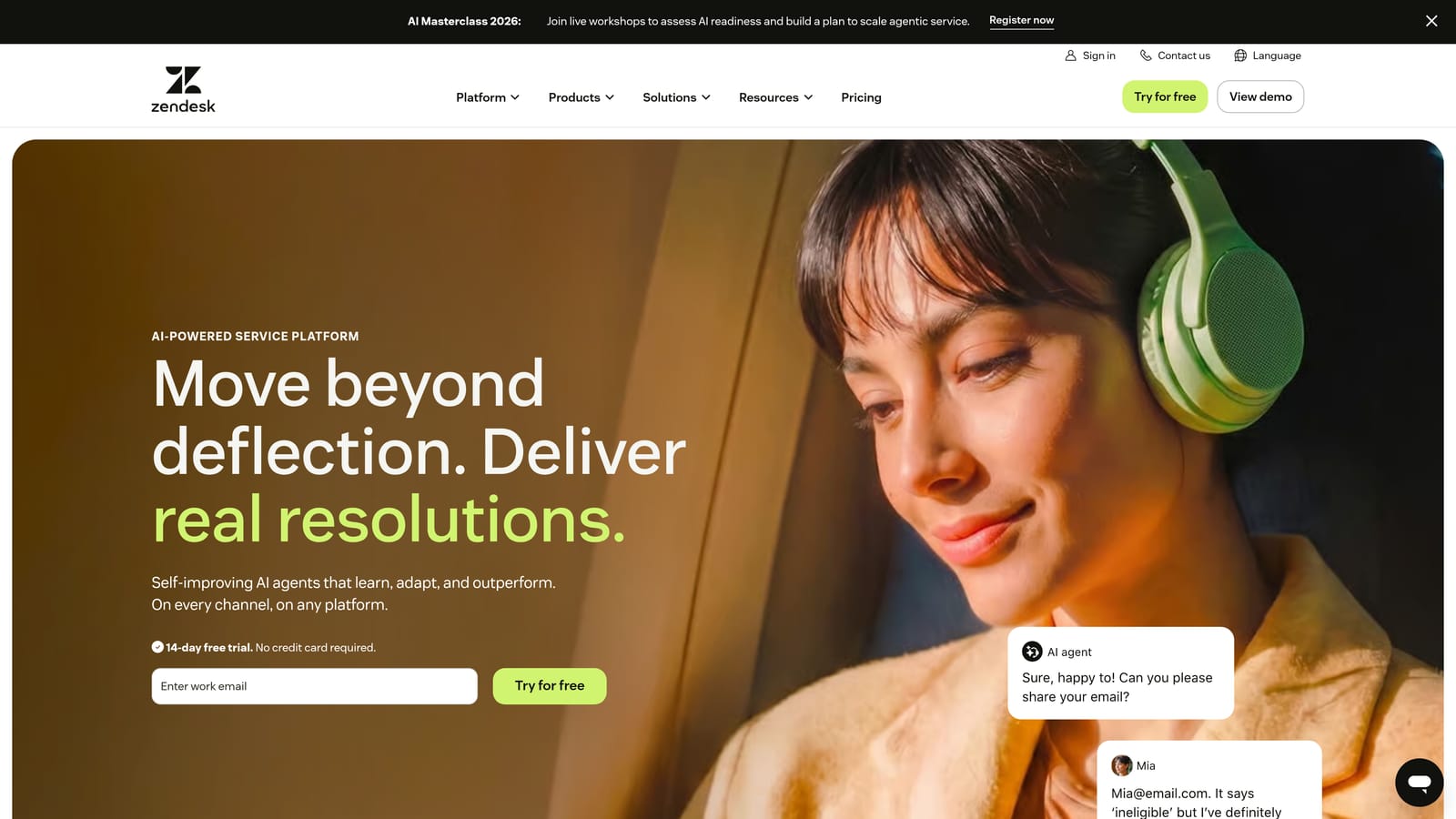
Zendesk is the enterprise standard for support ticketing, now with AI triage, intent detection, and intelligent routing layered into its established workflow engine.
Where This Tool Shines
Zendesk's AI capabilities feel more augmentative than autonomous compared to newer entrants, but that's not necessarily a weakness for larger organizations. AI-powered triage, intent detection, and macro suggestions meaningfully accelerate agent productivity in high-volume environments. The routing intelligence, which factors in topic, sentiment, and priority, reduces the overhead of manual queue management.
Where Zendesk genuinely excels is in enterprise infrastructure: deep reporting, SLA management, and compliance controls that regulated industries or larger B2B companies require. If your organization has invested heavily in Zendesk workflows, the AI layer adds value without requiring a platform migration.
Key Features
AI Triage and Intent Detection: Automatically classifies and prioritizes incoming tickets based on content and intent.
Macro and Response Suggestions: Surfaces relevant macros and draft responses to reduce agent time per ticket.
Advanced Routing: Routes tickets based on topic, sentiment, priority, and agent skill sets.
Enterprise Compliance and Reporting: Deep SLA management, audit logs, and compliance controls for regulated environments.
Best For
Larger SaaS organizations with established Zendesk workflows, high ticket volume, and enterprise compliance needs. Teams looking for fully autonomous AI resolution may find newer platforms more capable in that specific dimension.
Pricing
Suite plans from approximately $55 per agent per month. AI add-ons are available separately.
4. Freshdesk (Freddy AI)
Best for: SaaS teams already in the Freshworks ecosystem seeking an all-in-one AI support solution
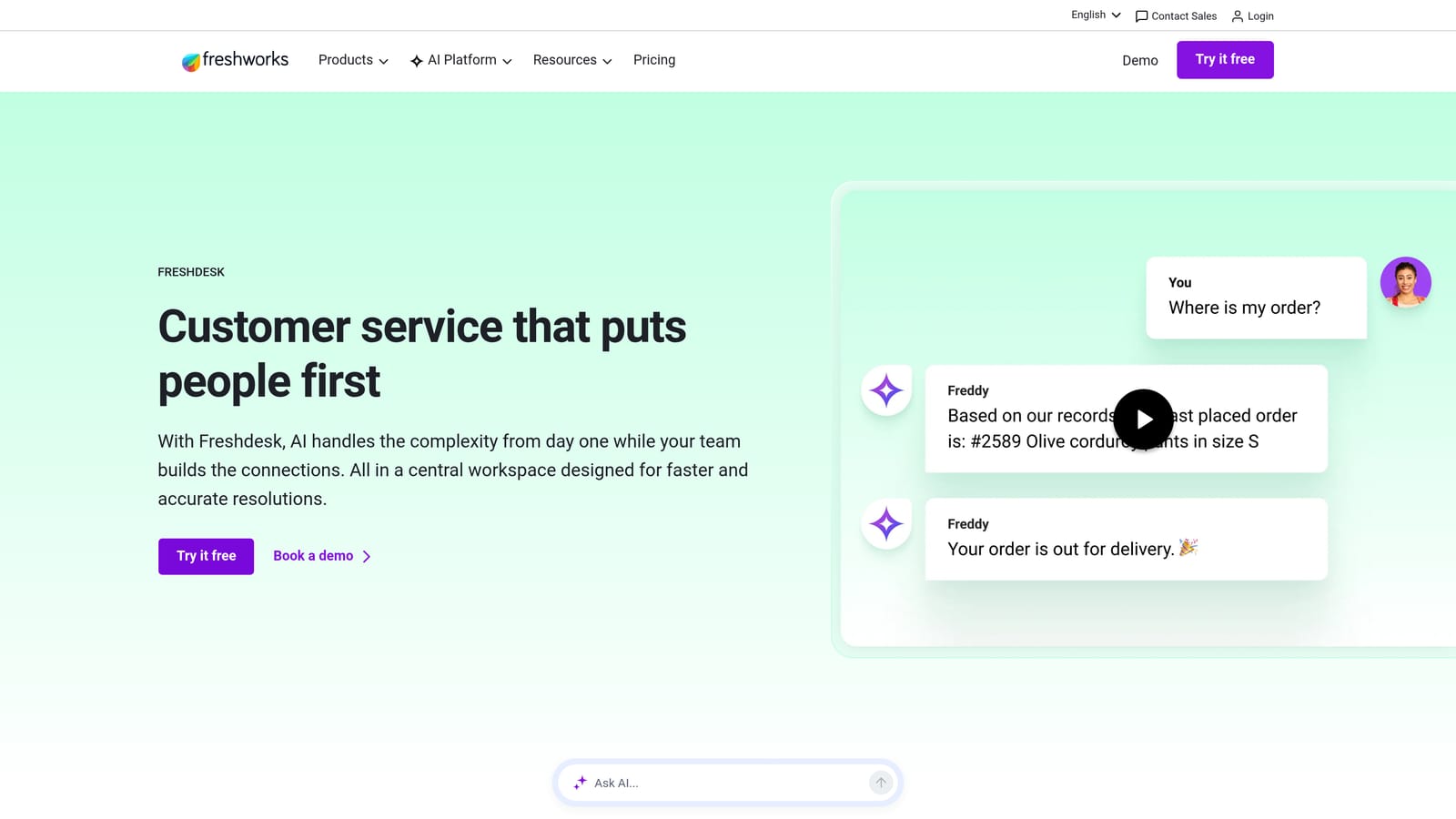
Freshdesk's Freddy AI spans self-service, agent assist, and analytics, making it a capable all-in-one option for teams building on the Freshworks stack.
Where This Tool Shines
Freddy AI is notable because it operates across three distinct layers: customer-facing resolution (Freddy Self Service), agent productivity (Freddy Copilot), and performance intelligence (Freddy Insights). Most tools specialize in one or two of these areas. Having all three in a single platform, with native integration to Freshworks CRM and ITSM products, reduces the integration overhead that SaaS teams often underestimate.
Freshdesk also offers competitive pricing relative to Zendesk, which makes it an attractive option for mid-market SaaS companies that need enterprise-adjacent features without enterprise-level spend.
Key Features
Freddy Self Service: Customer-facing AI that resolves common queries autonomously before they reach an agent.
Freddy Copilot: Agent assist with suggested replies, ticket summaries, and next-best-action recommendations.
Freddy Insights: Analytics and performance intelligence that surfaces trends and support quality signals.
Freshworks Ecosystem Integration: Native connections to Freshworks CRM, ITSM, and other products in the suite.
Best For
SaaS teams already using Freshworks products, or those looking for a Zendesk alternative with strong AI coverage across self-service, agent assist, and analytics at a more accessible price point.
Pricing
Free tier available. Paid plans from approximately $15 per agent per month. Freddy AI features are included on higher tiers.
5. Drift (Salesloft)
Best for: PLG SaaS companies where support and revenue conversations overlap
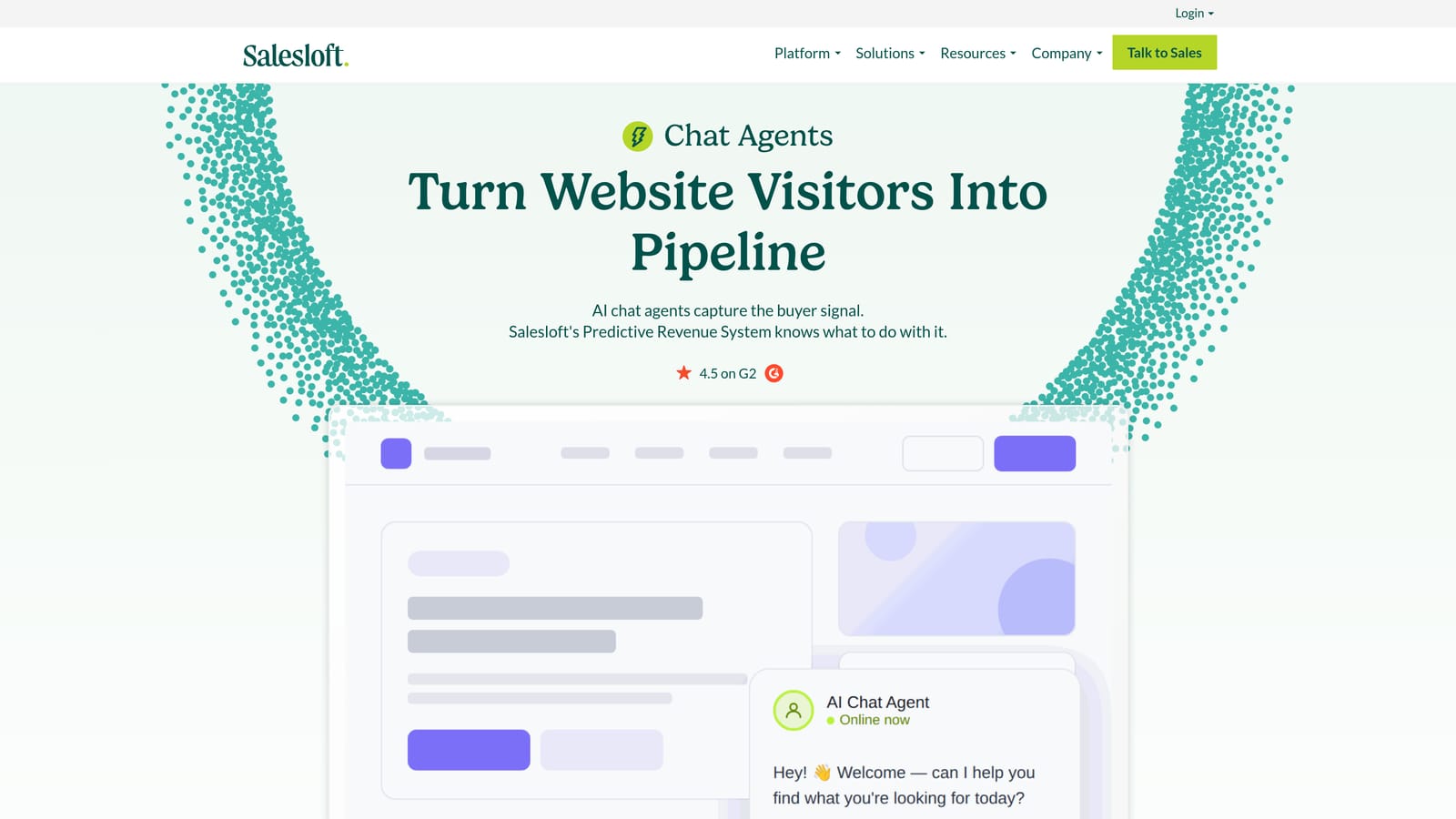
Drift is a conversational AI platform that bridges support and sales, now part of Salesloft's broader revenue platform following its 2024 acquisition.
Where This Tool Shines
Drift's original design intent was revenue-focused, and that DNA shows. For product-led growth SaaS companies, support interactions and purchase decisions often happen in the same conversation. Drift handles both: real-time visitor intelligence, account-based routing, and meeting booking sit alongside support conversation flows. This makes it genuinely useful for teams where the line between support and sales is deliberately blurry.
The Salesloft integration expands Drift's value for teams running coordinated revenue motions. If your support team surfaces expansion opportunities or feeds pipeline signals to sales, Drift's positioning within a broader revenue platform becomes a structural advantage.
Key Features
Revenue-Aware Conversational AI: Designed for conversations that span both support resolution and revenue generation.
Real-Time Visitor Intelligence: Identifies accounts and routes conversations based on company data and intent signals.
Meeting Booking in Chat: Allows prospects or customers to schedule calls directly from a support or sales conversation.
Salesloft Platform Integration: Connects to Salesloft's broader revenue workflow for pipeline acceleration and coordination.
Best For
PLG SaaS companies and B2B teams where support interactions influence purchase decisions. Less suited for teams focused purely on support efficiency without a sales motion attached.
Pricing
Contact for pricing. Enterprise-focused model.
6. Tidio
Best for: Early-stage SaaS teams that need autonomous support without enterprise complexity
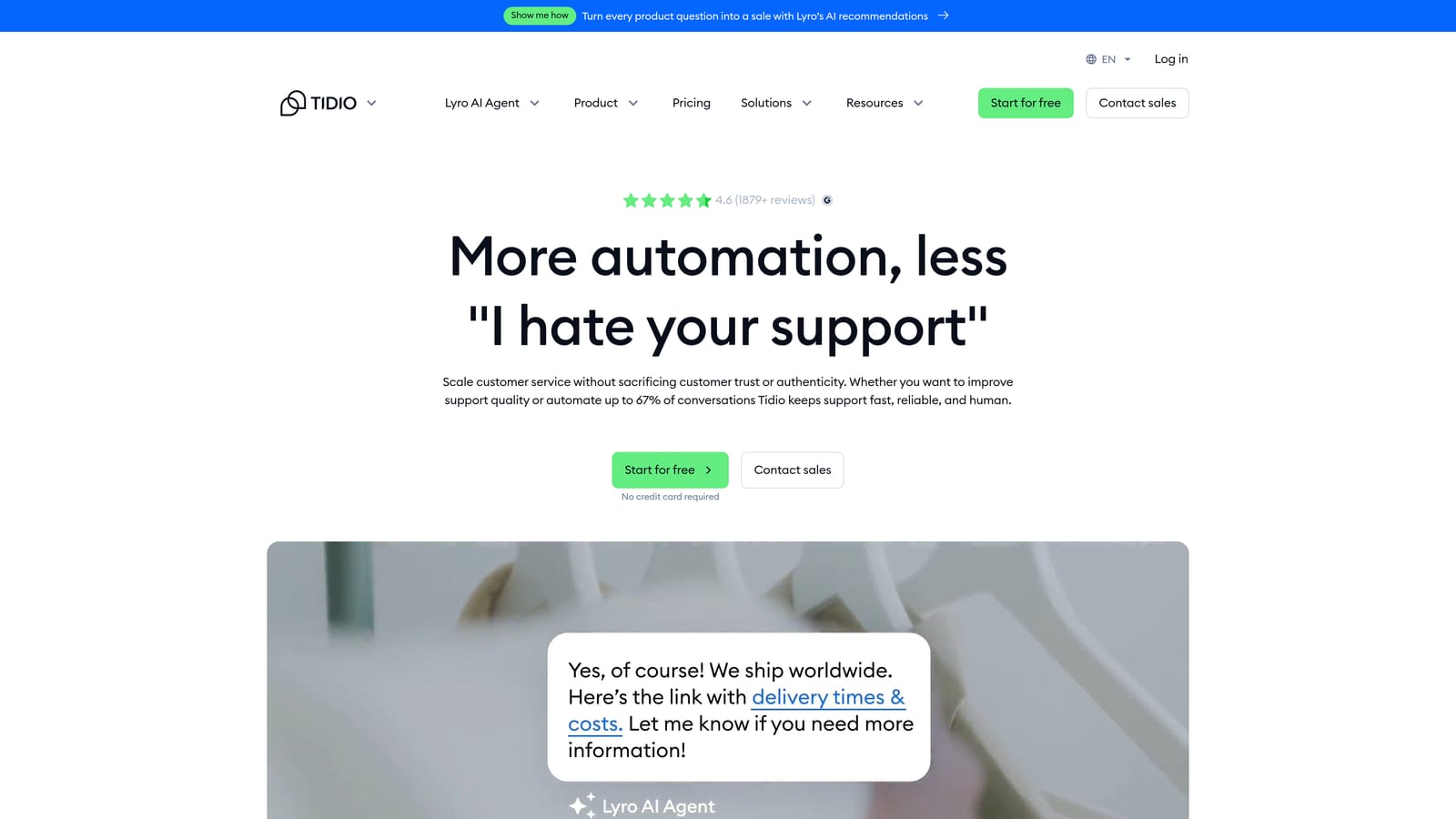
Tidio is a lightweight, fast-to-deploy AI chat platform with its Lyro AI agent, offering an accessible entry point for startups and smaller SaaS teams.
Where This Tool Shines
Tidio's primary advantage is speed and simplicity. The platform is typically deployable in under a day, requires no coding, and includes a generous free tier that gives early-stage teams access to live chat and basic AI without upfront commitment. Lyro AI handles common support queries autonomously, which is often enough coverage for a startup's most frequent ticket types.
The no-code flow builder lets non-technical team members build custom conversation paths without involving engineering. For a lean SaaS team where everyone wears multiple hats, that matters.
Key Features
Lyro AI Agent: Autonomous resolution of common support queries without requiring agent involvement.
No-Code Flow Builder: Visual conversation builder for creating custom support paths without technical resources.
Generous Free Tier: Live chat and basic AI included at no cost, with paid tiers unlocking more AI conversations.
Fast Deployment: Designed to go live quickly, typically within a single day of setup.
Best For
Early-stage SaaS companies and startups that need functional AI support without enterprise pricing or implementation complexity. Teams that outgrow Tidio often migrate to more capable platforms, but it serves as an excellent starting point.
Pricing
Free tier available. Lyro AI from approximately $29 per month.
7. Help Scout
Best for: SaaS teams where relationship quality and brand voice take priority over maximum automation
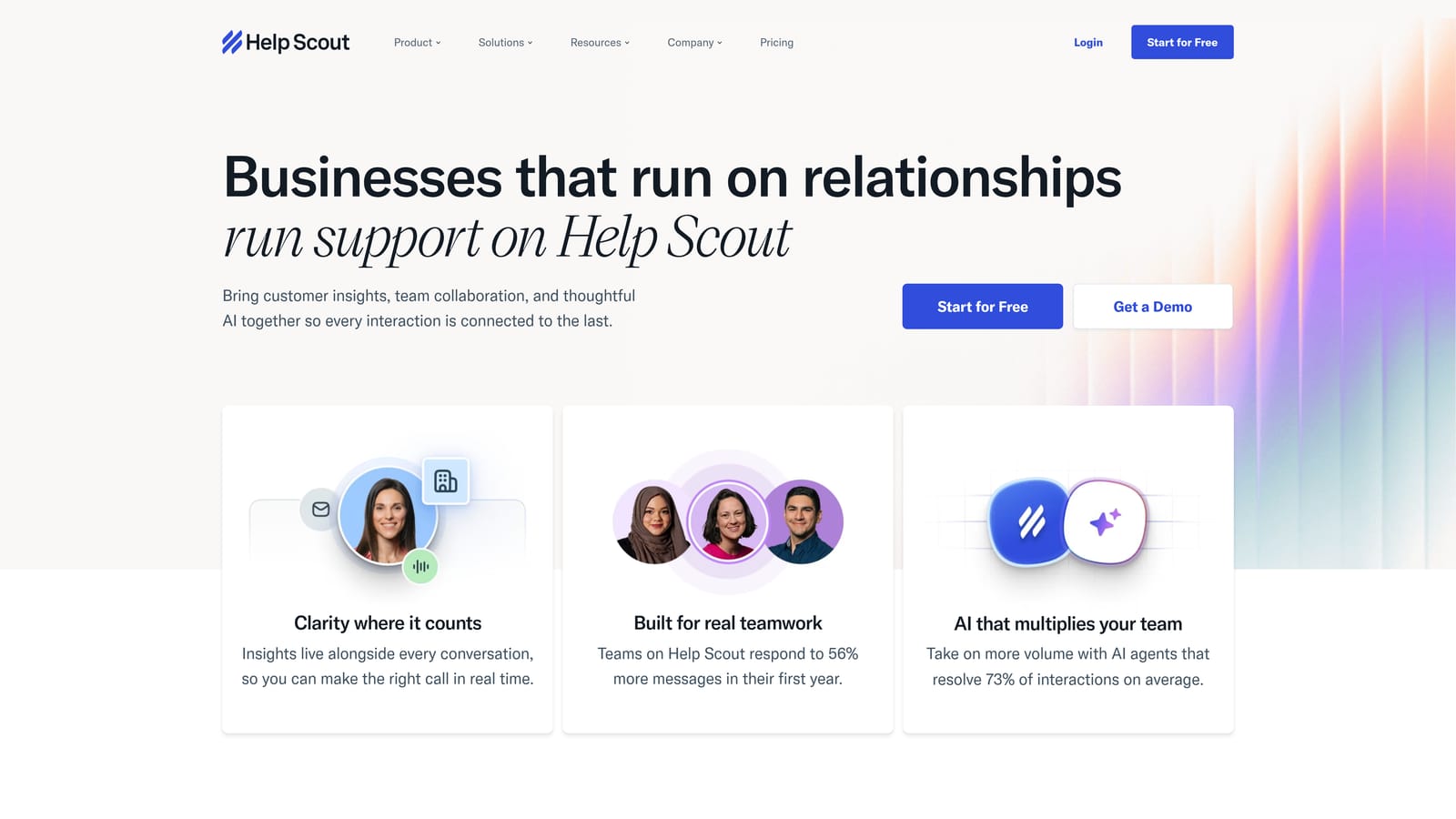
Help Scout is a human-first support platform that layers AI assistance on top of agent workflows rather than replacing them.
Where This Tool Shines
Help Scout's philosophy is refreshingly clear: AI should make humans better, not replace them. AI Summarize gives agents instant context on long threads without reading every message. AI Assist helps with reply drafting, tone adjustment, and translation. The result is a platform that meaningfully reduces agent effort without pushing toward full automation.
The interface is notably clean and minimal, which reduces cognitive load for support teams handling high volumes. For SaaS companies with high-touch support models where the relationship quality matters as much as resolution speed, Help Scout's approach is genuinely well-suited.
Key Features
AI Summarize: Instant thread summaries that give agents full context without reading entire conversation histories.
AI Assist: Reply drafting, tone adjustment, and translation to help agents respond faster and more effectively.
Shared Inbox, Docs, and Chat: All three core support channels unified in a single, clean platform.
Minimal, Low-Friction UI: Designed to reduce agent cognitive load and keep focus on the customer conversation.
Best For
SMB SaaS teams and companies with high-touch support models where brand voice, relationship quality, and agent empowerment matter more than autonomous deflection rates.
Pricing
From approximately $20 per user per month.
8. Kustomer
Best for: B2B SaaS with complex, multi-stakeholder accounts requiring full customer context
Kustomer is a CRM-native support platform that builds AI resolution on a unified customer timeline, capturing every interaction, order, and touchpoint in one view.
Where This Tool Shines
Kustomer's core differentiator is the unified customer timeline. Rather than treating each support ticket as an isolated event, Kustomer surfaces the full history of a customer's interactions across channels, giving agents and AI alike the context needed to respond intelligently. For B2B SaaS with complex accounts involving multiple stakeholders and a long interaction history, this is a meaningful structural advantage.
AI-powered routing and response suggestions are informed by that full context, not just the current message. Proactive outreach and workflow automation triggered by customer events add a layer of intelligence that reactive-only support platforms can't match.
Key Features
Unified Customer Timeline: Every interaction, across all channels and touchpoints, visible in a single chronological view.
Context-Aware AI Routing and Suggestions: Routes tickets and surfaces response suggestions based on full customer history, not just current ticket content.
Proactive Outreach Automation: Triggers outreach and workflows based on customer events, not just inbound requests.
Multi-Stakeholder Account Support: Designed for the complexity of B2B accounts with multiple contacts and interaction streams.
Best For
B2B SaaS companies with complex accounts, long customer relationships, and multiple stakeholders. The CRM-native approach makes it particularly strong for teams where support context and customer history are inseparable.
Pricing
From approximately $89 per user per month.
9. Forethought
Best for: Teams with existing helpdesk investments who want to add AI without migrating platforms
Forethought is an AI layer that sits on top of existing helpdesks, adding triage, routing, and autonomous resolution to Zendesk, Salesforce, or Freshdesk without requiring a platform switch.
Where This Tool Shines
Forethought's value proposition is minimal disruption. If your team has invested significantly in Zendesk or Salesforce Service Cloud, ripping and replacing that infrastructure is a real cost in time, training, and workflow rebuilding. Forethought adds AI capabilities incrementally, letting you capture autonomous resolution and smarter triage without touching the underlying system your team already knows.
The three-layer AI model is well-structured: Triage AI classifies and prioritizes, Solve AI handles autonomous resolution before tickets reach agents, and Assist AI surfaces knowledge and suggestions within the agent workflow. Each layer can be adopted independently, which gives teams flexibility in how aggressively they automate.
Key Features
Triage AI: Automatic ticket classification and priority assignment based on content, intent, and urgency.
Solve AI: Autonomous resolution that intercepts and resolves tickets before they enter the agent queue.
Assist AI: In-workflow knowledge surfacing and response suggestions for agents handling complex tickets.
Helpdesk Compatibility: Integrates with Zendesk, Salesforce Service Cloud, Freshdesk, and other established platforms.
Best For
SaaS teams with significant investment in existing helpdesk platforms who want to add AI capabilities incrementally without a full migration. Also useful as a bridge solution while evaluating longer-term platform decisions.
Pricing
Contact for pricing. Usage-based model.
Which Tool Is Right for Your SaaS Team?
The right choice depends on where you are as a company and what you need AI to actually do. Here's a quick way to think through it.
Startups on a budget: Start with Tidio. The free tier gives you functional AI support, fast deployment, and room to grow without upfront commitment.
Human-first, high-touch teams: Help Scout's AI-assisted approach keeps agents in control while reducing the friction of high-volume support. It's the right call when brand voice and relationship quality drive retention.
Enterprise ticket volume: Zendesk AI or Freshdesk with Freddy AI are the natural fits. Both handle scale, compliance, and complex routing well, with Freshdesk offering a more competitive price point for mid-market teams.
PLG companies bridging support and sales: Drift's conversational AI handles revenue-generating conversations alongside support, making it the strongest option when the two motions overlap.
Helpdesk lock-in: Forethought adds AI capabilities to your existing platform without requiring migration. It's the least disruptive path to meaningful automation.
AI-first with business intelligence: Halo AI is the standout option for SaaS teams that want more than ticket resolution. Page-aware context, auto bug ticket creation, deep developer integrations, and a smart inbox that surfaces churn signals and revenue anomalies make it the most purpose-built option in this list for SaaS-specific needs.
Your support team shouldn't scale linearly with your customer base. Let AI agents handle routine tickets, guide users through your product, and surface business intelligence while your team focuses on complex issues that need a human touch. See Halo in action and discover how continuous learning transforms every interaction into smarter, faster support.