9 Best AI Customer Service Tools for Tech Companies in 2026
Discover the 9 best AI customer service tools for tech companies in 2026, purpose-built to handle complex technical queries at scale—going far beyond basic FAQ bots to autonomously resolve tickets, integrate with developer workflows, and deliver actionable product intelligence that benefits your entire organization, not just your support team.
 Grant CooperFounder13 min read
Tech companies face a support challenge that generic helpdesk tools weren't designed to solve. Your users are technical, their questions are complex, and support volume scales with product growth in ways that headcount simply can't keep up with. The answer isn't more agents. It's smarter AI.
The best AI customer service tools for tech companies go well beyond FAQ deflection. They resolve tickets autonomously, understand product context, integrate with developer toolchains, and surface intelligence that helps your whole business, not just your support team. The difference between a bolted-on AI feature and a purpose-built AI platform matters enormously when you're handling technical queries at scale.
Here are the top AI customer service tools worth evaluating in 2026. For a deeper look at what separates strong AI support platforms from basic chatbots, see our AI support tool features guide and customer support AI software comparison.
1. Halo AI
Best for: B2B SaaS and tech companies wanting AI-first support with built-in product intelligence.
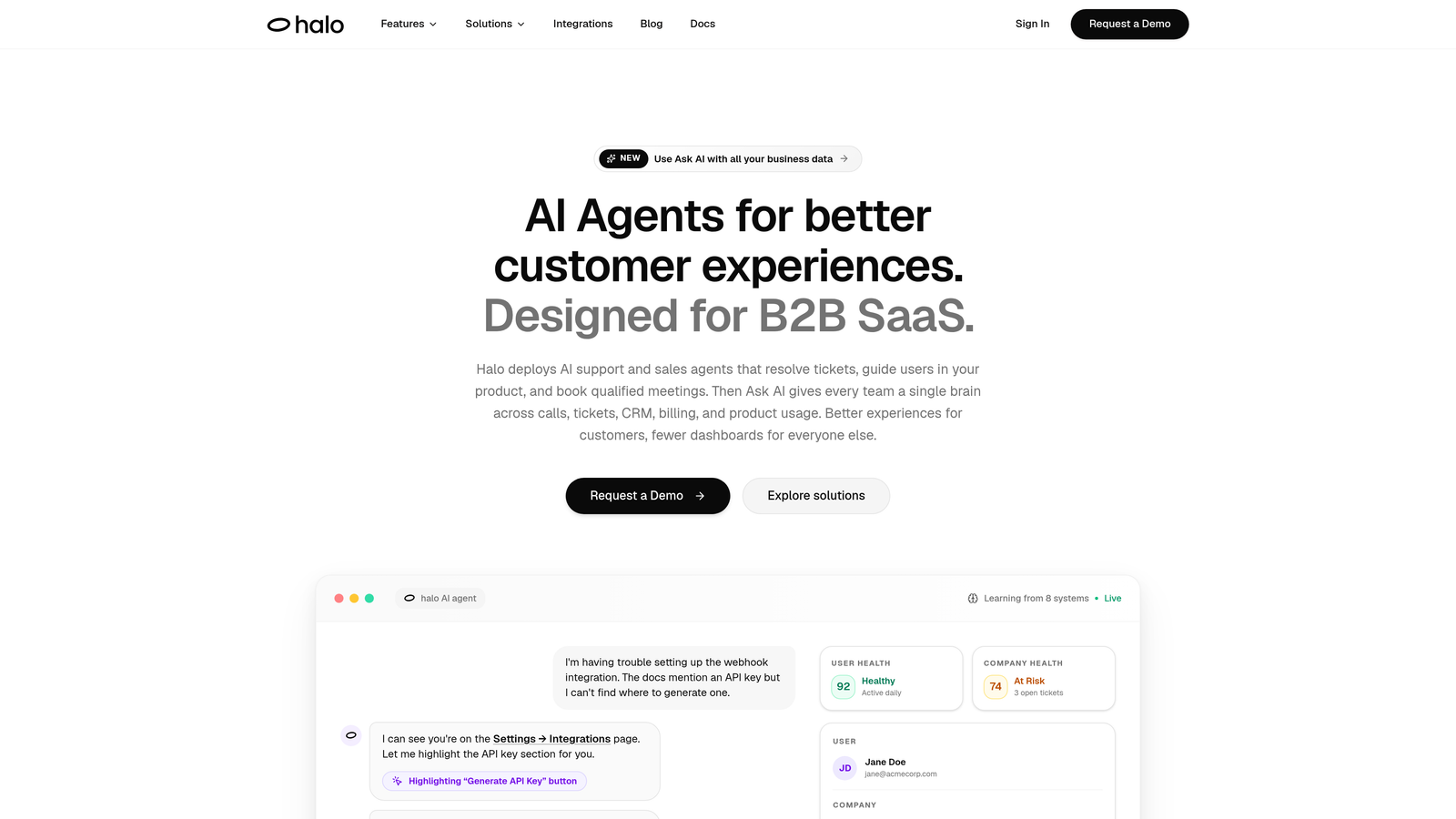
Halo AI is an AI-first customer support platform built specifically for B2B SaaS and tech companies, not a helpdesk with AI features added on top.
Where This Tool Shines
What sets Halo apart is its page-aware architecture. The chat widget understands what the user is actually looking at inside your product, which means AI guidance is contextual and visual, not generic. A user stuck on your billing settings gets help specific to that page, not a link to your documentation homepage.
Beyond ticket resolution, Halo's smart inbox surfaces business intelligence from every support interaction: customer health signals, revenue anomalies, and churn indicators. For tech companies, this transforms support from a cost center into a source of product and revenue intelligence.
Key Features
Page-Aware Chat Widget: The AI sees what the user sees and delivers visual UI guidance based on their current location inside your product.
Autonomous AI Agents: Resolves support tickets end-to-end with continuous learning from every interaction, improving accuracy over time without manual retraining.
Auto Bug Ticket Creation: Automatically creates and routes bug reports directly to Linear or Jira, closing the loop between support and engineering.
Smart Inbox with Business Intelligence: Surfaces customer health signals, revenue anomalies, and churn indicators from support data in real time.
Live Agent Handoff: Escalates complex issues to human agents with full conversation context preserved, so nothing gets lost in the transfer.
Deep Integration Stack: Connects natively with Linear, Slack, HubSpot, Intercom, Stripe, Zoom, PandaDoc, and Fathom.
Best For
Halo is the strongest fit for product-led growth companies and B2B SaaS teams that want AI to do more than close tickets. If your support team is also expected to surface product feedback, flag at-risk accounts, and integrate with your engineering workflow, Halo's architecture is built for exactly that use case.
Pricing
Contact Halo AI directly for pricing. The platform operates on an enterprise SaaS model tailored to team size and usage volume.
2. Intercom (Fin AI Agent)
Best for: Teams already using Intercom who want autonomous AI without switching platforms.
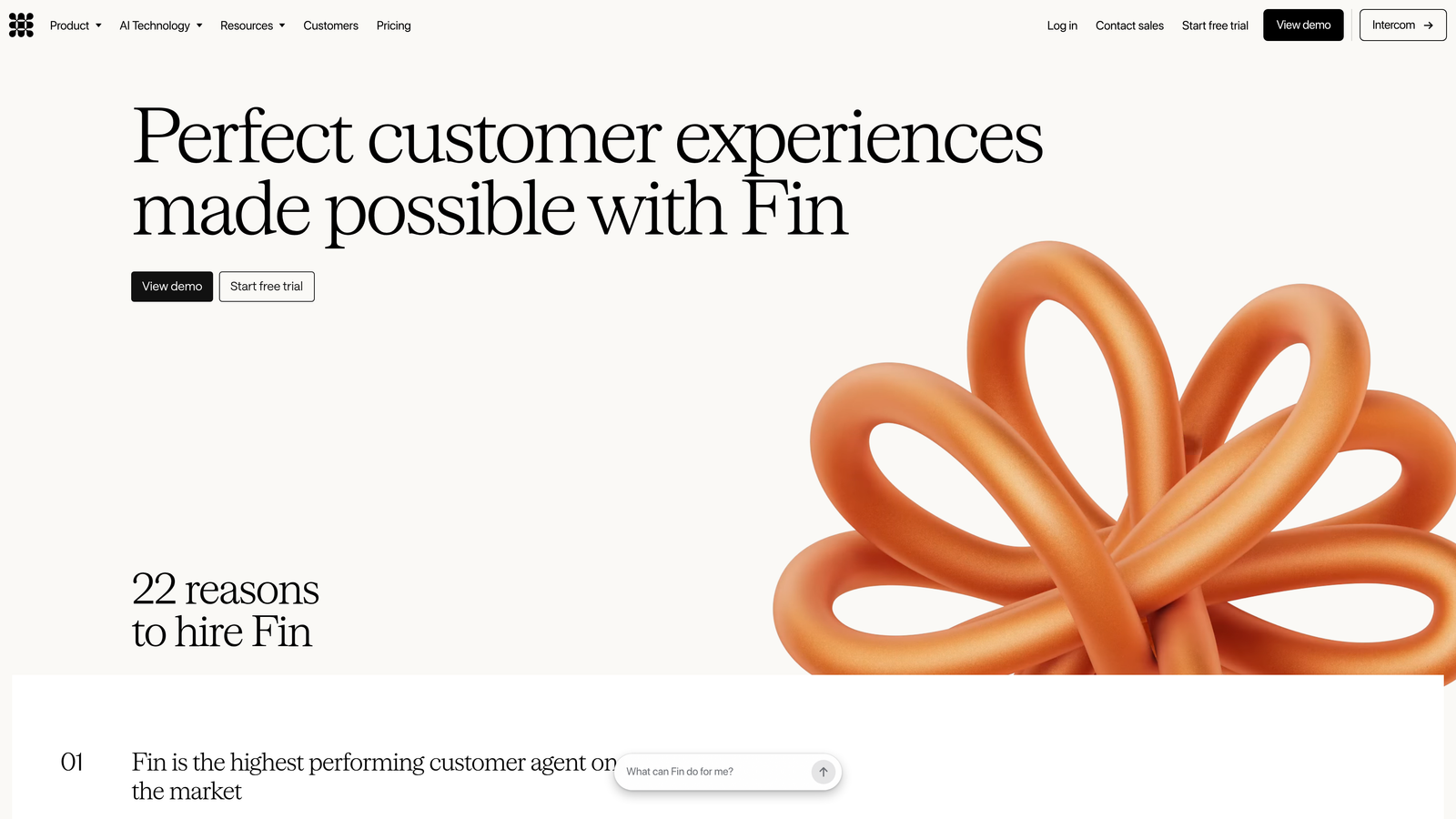
Intercom Fin is Intercom's flagship autonomous AI agent, built natively into the Intercom messenger for end-to-end conversation handling.
Where This Tool Shines
Fin's biggest advantage is how seamlessly it sits inside Intercom's existing ecosystem. If your team already relies on Intercom for inbox management, help center, and ticketing, Fin adds autonomous resolution without requiring any migration or parallel system management. It handles multi-step conversations using your knowledge base and escalates gracefully when it reaches its limits.
The consumption-based pricing model is worth noting: you pay per resolution rather than per seat. For high-volume teams with strong deflection rates, this can work in your favor. For lower-volume teams, the base platform cost remains a factor.
Key Features
End-to-End Autonomous Conversations: Fin handles full customer conversations using your company's knowledge base without requiring agent involvement for resolvable queries.
Multi-Step Reasoning: Capable of handling complex, multi-turn support queries rather than just single-question deflection.
Native Intercom Integration: Works directly within Intercom's inbox, ticketing, and help center without third-party connectors.
Human Handoff with Context: Escalates to agents with the complete conversation history intact, preserving continuity for the customer.
Consumption-Based Pricing: Charges per resolution rather than per seat, aligning cost directly with value delivered.
Best For
Teams already standardized on Intercom who want to add autonomous AI resolution without introducing a new platform. Less suited for teams wanting deep integrations with developer toolchains outside the Intercom ecosystem.
Pricing
Consumption-based pricing per resolution. Requires an active Intercom base subscription; contact Intercom for plan details.
3. Zendesk AI
Best for: Enterprise support teams running large-scale operations on Zendesk Suite.
Zendesk AI is a suite of AI capabilities embedded across the Zendesk platform, covering triage, agent assistance, autonomous resolution, and analytics.
Where This Tool Shines
Zendesk AI is designed for scale. Its intelligent triage layer detects intent, sentiment, and language on every inbound ticket before it ever reaches an agent, which makes a meaningful difference when you're handling thousands of tickets daily. The Agent Copilot feature sits alongside agents in real time, suggesting replies and guiding next-best actions.
For enterprise tech companies that have already built their support operations around Zendesk, the AI augmentation approach makes practical sense. You get meaningful capability improvements without the disruption of a platform migration.
Key Features
Intelligent Triage: Automatically detects intent, sentiment, and language on every inbound ticket to enable smarter routing from the start.
Agent Copilot: Provides real-time reply suggestions and next-best-action guidance to help agents resolve tickets faster.
Autonomous Resolution Bot: Handles common, deflectable queries without agent involvement.
Advanced Analytics and QA: AI-powered quality assurance tools to monitor agent performance and identify improvement opportunities.
Enterprise Security and Compliance: Built to meet enterprise-grade security, privacy, and compliance requirements.
Best For
Large support organizations already invested in Zendesk Suite that want AI augmentation rather than a platform change. Advanced AI features require higher-tier plan access, so budget planning matters here.
Pricing
Bundled into Zendesk Suite plans; advanced AI capabilities are available on higher-tier subscriptions. Contact Zendesk for enterprise pricing.
4. Freshdesk Freddy AI
Best for: Growing tech teams on Freshdesk wanting incremental AI without platform migration.
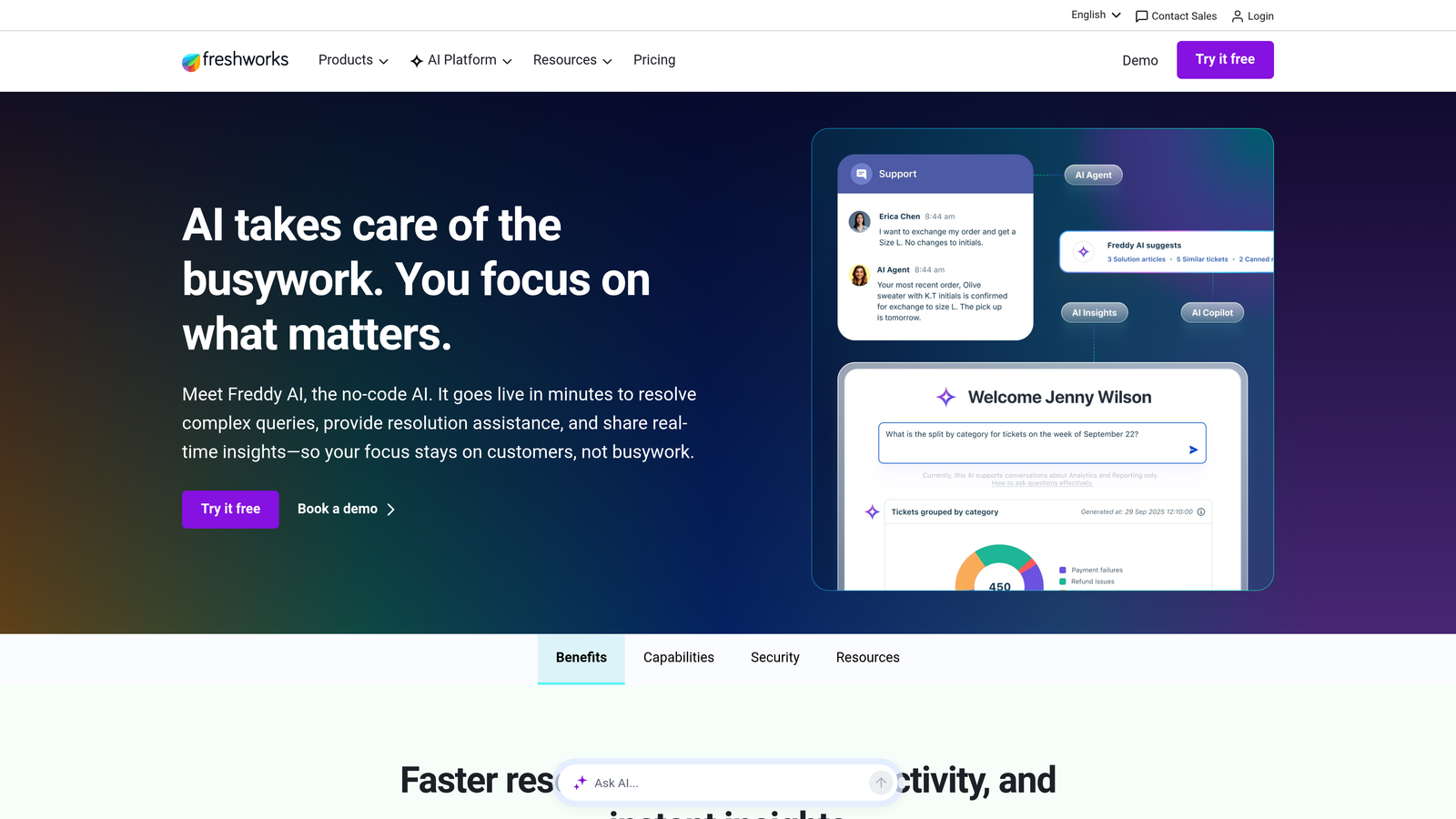
Freshdesk Freddy AI is Freshworks' AI layer for Freshdesk, offering both agent-side assistance and autonomous customer self-service in a single platform.
Where This Tool Shines
Freddy AI operates in two distinct modes, which gives teams flexibility in how they deploy AI. Freddy Copilot assists agents with reply suggestions, thread summaries, and next-best-action recommendations. Freddy Self Service operates as an autonomous deflection bot trained on your existing content. Teams can start with one and expand to both as confidence in AI grows.
Freddy Insights adds a third layer: AI-generated analytics and anomaly detection that surface patterns in your support data without requiring manual reporting work.
Key Features
Freddy Copilot: Provides agents with AI-generated reply suggestions, conversation summaries, and next-best-action guidance in real time.
Freddy Self Service: Autonomous deflection bot trained on your knowledge base content to handle common queries before they reach agents.
Freddy Insights: AI-generated analytics that surface trends, anomalies, and performance patterns from support data.
Native Freshdesk Integration: No migration required for existing Freshdesk users; AI capabilities layer directly onto your current setup.
Tiered Access: AI features scale with your Freshdesk plan level, allowing gradual adoption.
Best For
Tech teams already running on Freshdesk who want to add AI capabilities incrementally without the cost or disruption of switching platforms. Freddy Copilot is available from the Growth plan upward.
Pricing
Tiered pricing aligned with Freshdesk plan levels. Freddy Copilot is available on the Growth plan and above; contact Freshworks for full details.
5. Forethought
Best for: High-volume support teams needing intelligent triage and routing on top of existing helpdesks.
Forethought is an AI triage and routing platform that layers on top of existing helpdesk systems, specializing in predicting ticket intent before agents ever touch a ticket.
Where This Tool Shines
Forethought's core strength is pre-routing intelligence. Its Triage AI analyzes every inbound ticket for intent, urgency, and sentiment, then routes it to the right queue or agent before any human involvement. For tech companies with complex support org structures, multi-tier routing, or high inbound volume, this upstream intelligence prevents the misrouting and rework that slows teams down.
The platform works as a layer on top of Zendesk, Salesforce Service Cloud, Freshdesk, and others, which means you're augmenting your existing investment rather than replacing it. Forethought is less of an all-in-one platform and more of a precision instrument for routing and triage.
Key Features
Triage AI: Predicts intent, urgency, and sentiment on every inbound ticket to enable intelligent pre-routing.
Solve AI: Handles autonomous resolution for deflectable queries before they enter the agent queue.
Assist AI: Surfaces relevant knowledge articles and context to agents at the right moment during a conversation.
Multi-Helpdesk Compatibility: Works across Zendesk, Salesforce Service Cloud, Freshdesk, and other major platforms.
Complex Routing Logic: Supports detailed, multi-condition routing rules suited to large or specialized support organizations.
Best For
Enterprise tech companies with high inbound volume, complex routing requirements, or multi-tier support structures who want AI intelligence layered onto their existing helpdesk rather than a full platform replacement.
Pricing
Custom enterprise pricing. Contact Forethought directly for a quote based on volume and use case.
6. Tidio
Best for: Early-stage tech companies and startups wanting fast, affordable AI chat deployment.
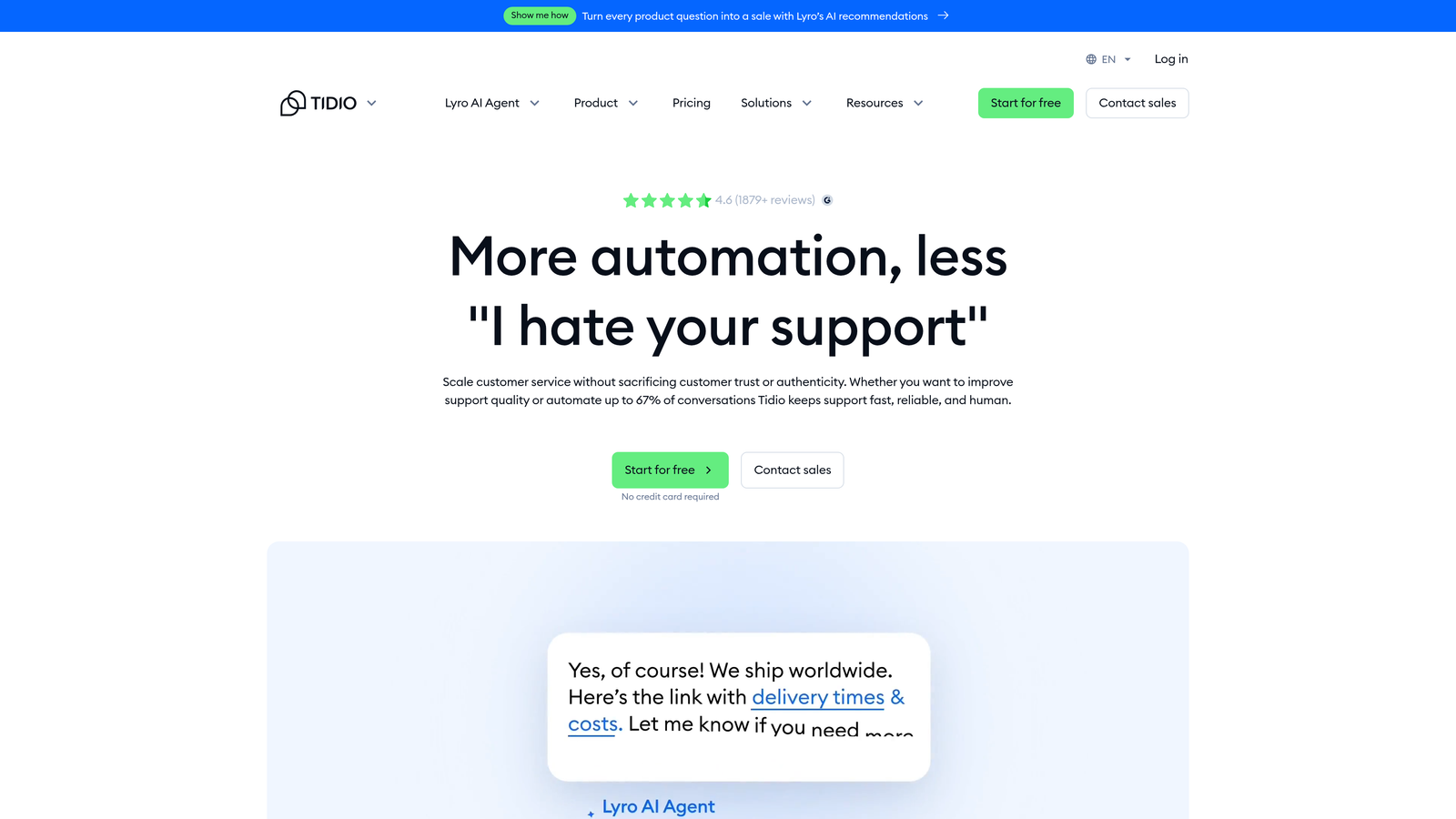
Tidio is an AI chat platform featuring Lyro AI, designed for SMBs and early-stage companies that need functional AI customer service without enterprise complexity or pricing.
Where This Tool Shines
Tidio's appeal is speed and simplicity. Lyro AI can be trained on your existing support content and deployed quickly, without requiring a dedicated technical implementation. For startups that need to handle growing support volume before they have a full support team, Tidio offers a practical on-ramp to AI-assisted service.
The free tier makes it particularly accessible for companies in early stages who want to test AI chat without a budget commitment. As needs grow, paid plans unlock Lyro AI's full autonomous deflection capabilities.
Key Features
Lyro AI Chatbot: Trained on your support content to handle common queries autonomously, reducing the load on human agents.
Fast Onboarding: Can be deployed quickly without extensive technical setup or dedicated implementation resources.
Live Chat Fallback: Seamlessly passes conversations to human agents when Lyro reaches the limits of its knowledge.
SaaS and E-commerce Integrations: Connects with common platforms used by early-stage tech and e-commerce companies.
Free Tier: Allows teams to get started and test core functionality before committing to a paid plan.
Best For
Startups and early-stage tech companies that need affordable, quickly deployable AI chat. Not the right fit for enterprise teams with complex routing needs or deep developer toolchain integration requirements.
Pricing
Free tier available for getting started. Lyro AI is included on paid plans; visit Tidio's pricing page for current plan details.
7. Kustomer
Best for: Tech companies where deep customer history context is essential to every support interaction.
Kustomer is a CRM-native customer service platform with AI automation built on full customer timeline data, now operating under Meta's enterprise infrastructure.
Where This Tool Shines
Kustomer's differentiator is its CRM-first architecture. Every support interaction is viewed through the lens of the complete customer relationship, not just the current ticket. For tech companies where support agents need to understand a customer's full history, subscription status, past issues, and account health before responding, this context-first approach changes the quality of every interaction.
AI automation in Kustomer handles routing, tagging, and resolution, but the intelligence is enriched by customer timeline data in a way that pure helpdesk tools can't replicate. Omnichannel support across email, chat, social, and voice all feeds into the same unified timeline.
Key Features
CRM-Native Architecture: Every support interaction is enriched with full customer history, relationship data, and account context.
AI-Powered Automation: Handles routing, tagging, and resolution using both conversation content and customer history signals.
Unified Omnichannel Timeline: Email, chat, social, and voice interactions all appear in a single customer timeline for agents.
Proactive Outreach: Enables outbound support based on customer signals, not just inbound ticket volume.
Enterprise Infrastructure: Backed by Meta's enterprise-grade reliability and security standards.
Best For
B2C tech companies or high-touch B2B businesses where customer relationship data is as important as ticket data. Teams where support context depends heavily on account history and customer lifecycle stage.
Pricing
Per-user monthly pricing. Contact Kustomer for enterprise rates and custom plan options.
8. Drift (Salesloft)
Best for: Tech companies where support and revenue conversations overlap and expansion matters.
Drift is a conversational AI platform, now part of Salesloft, designed for tech companies where support and sales interactions happen in the same conversation.
Where This Tool Shines
Drift operates at the intersection of support and revenue. Its AI-powered chat can qualify visitors, handle support queries, and identify expansion opportunities within a single conversation thread. For tech companies with product-led growth motions or account expansion goals, this dual-purpose capability is genuinely useful: a support interaction that surfaces an upsell signal gets routed to a rep, not just closed as a ticket.
The integration with Salesloft's broader revenue platform means that conversation data flows into sales workflows, giving revenue teams visibility into what customers are asking about before deals or renewals come up.
Key Features
AI-Powered Conversational Chat: Handles both support queries and sales qualification within the same chat interface.
Revenue-Aware Routing: Identifies expansion and upsell opportunities during support conversations and routes accordingly.
Salesloft Platform Integration: Connects Drift conversation data into Salesloft's broader sales engagement and revenue intelligence tools.
Meeting Scheduling and Rep Routing: Allows customers to book meetings or connect with the right rep directly from a support conversation.
Playbook-Based Conversation Flows: Configurable conversation playbooks ensure consistent experiences across different query types.
Best For
Tech companies with a strong revenue expansion motion where support conversations frequently overlap with sales opportunities. Less suited for teams wanting pure support automation without a revenue component.
Pricing
Custom pricing following Drift's acquisition by Salesloft. Contact Salesloft directly for current plan options.
9. Help Scout
Best for: Teams that want AI efficiency gains while keeping humans in control of every interaction.
Help Scout is a human-first helpdesk with AI assist features layered in, built for teams that value agent control and clean workflow over full automation.
Where This Tool Shines
Help Scout takes a deliberately different philosophy from autonomous AI platforms. Rather than replacing agents, its AI features make agents faster and more effective. AI Summarize condenses long email threads so agents can get context in seconds. AI Drafts suggests reply content that agents review and send. AI Answers deflects common questions through the help center before they hit the inbox at all.
For tech companies that handle sensitive, high-stakes, or relationship-driven support where a human touch is non-negotiable, Help Scout's approach is a practical middle ground between fully manual support and fully autonomous AI.
Key Features
AI Summarize: Condenses long email threads into concise summaries so agents can get up to speed quickly without reading every message.
AI Drafts: Suggests reply content for agents to review, edit, and send, reducing the time spent composing responses from scratch.
AI Answers: Deflects common questions through the help center before they reach the agent inbox.
Clean Agent UI: Minimal, focused interface designed specifically for agent productivity without unnecessary complexity.
Beacon Widget: In-product support widget with integrated help center search for self-service before chat escalation.
Best For
Tech teams that want meaningful AI efficiency improvements while keeping humans in the loop on every sent response. Strong fit for companies handling sensitive enterprise support, complex technical relationships, or interactions where brand voice consistency is critical.
Pricing
Per-user monthly pricing. AI features are included on standard plans; visit Help Scout's pricing page for current rates.
Choosing the Right Tool for Your Tech Team
The right AI customer service tool depends less on feature lists and more on where your team actually is today and where your support needs to go.
If you want an AI-first platform with page-aware context, business intelligence, and deep developer toolchain integration, Halo AI is the strongest fit for B2B SaaS and product-led growth companies. It's built for teams that want support to do more than close tickets.
If your team is already standardized on a major helpdesk, the calculus changes. Intercom's Fin AI Agent is the natural choice for Intercom shops. Zendesk AI makes sense for enterprise teams already running Zendesk Suite at scale. Freshdesk users can adopt Freddy AI incrementally without any migration cost.
For teams with specific needs: Forethought excels at intelligent triage and routing layered on top of existing platforms. Tidio is the fastest path to AI chat for startups with limited budgets. Kustomer is the right call when customer relationship history needs to inform every support interaction. Drift fits tech companies where support and revenue conversations overlap. Help Scout is ideal when human oversight of every response is a priority.
The common thread across all of these: generic helpdesk tools with basic automation won't keep pace with technical users and scaling support volume. The companies getting ahead in 2026 are the ones treating AI support infrastructure as a strategic investment, not an afterthought.
Your support team shouldn't scale linearly with your customer base. Let AI agents handle routine tickets, guide users through your product, and surface business intelligence while your team focuses on complex issues that need a human touch. See Halo in action and discover how continuous learning transforms every interaction into smarter, faster support.