9 Best AI Customer Service Platforms Compared for 2026
This comprehensive ai customer service platform comparison evaluates nine leading solutions for 2026, examining their genuine AI capabilities beyond basic chatbot functionality. The guide helps businesses of all sizes select platforms based on integration depth, pricing transparency, and ability to automate repetitive tasks while enabling human agents to focus on complex customer issues requiring personal attention.
 Matt PattoliFounder12 min read
Finding the right AI customer service platform can transform how your support team operates—automating repetitive tickets, providing instant responses, and freeing agents to handle complex issues that actually need human touch. But with dozens of platforms claiming AI capabilities, separating genuine intelligence from glorified chatbots requires careful evaluation.
This comparison breaks down leading platforms based on real AI capabilities, integration depth, pricing transparency, and how well they handle the nuanced reality of customer support. Whether you're scaling a startup or modernizing enterprise operations, you'll find options matched to different team sizes, technical requirements, and budget constraints.
1. Halo AI
Best for: Teams wanting AI-first architecture with continuous learning and deep business stack integration
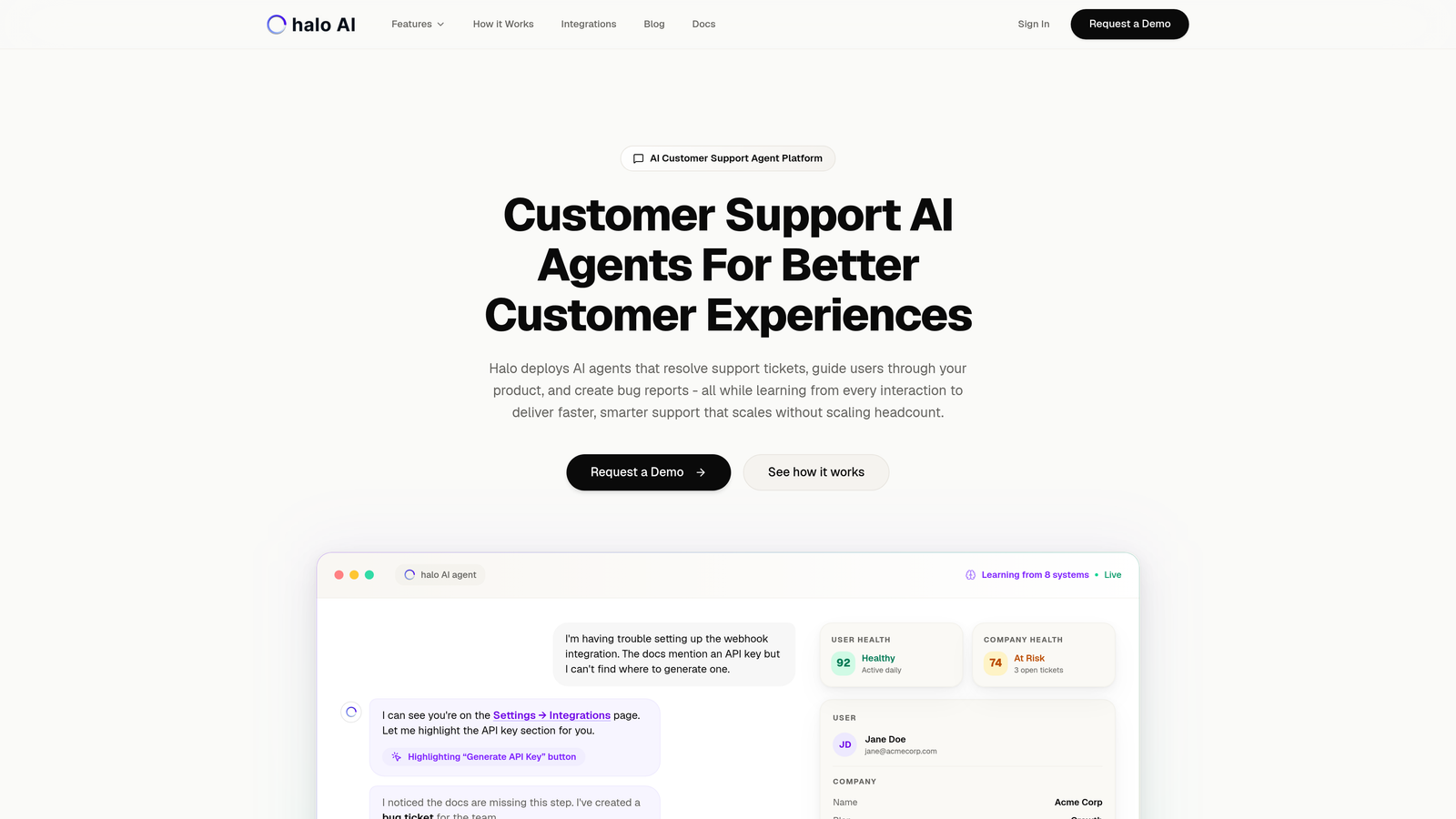
Halo AI represents a fundamentally different approach to customer support automation—built AI-first rather than retrofitting intelligence onto existing helpdesk infrastructure.
Where This Tool Shines
The platform's page-aware context gives it an edge in product support scenarios. When a user asks for help, Halo's AI agents can see exactly what the user sees on their screen, enabling precise guidance through UI elements rather than generic instructions.
The continuous learning architecture means every resolved ticket makes the system smarter. Unlike static chatbots that require manual updates, Halo's agents improve autonomously from each interaction, building institutional knowledge that typically lives only in senior support agents' heads.
Key Features
Page-Aware Chat Widget: Sees the user's current screen to provide contextual guidance through specific UI elements and workflows.
Auto Bug Ticket Creation: Automatically generates engineering tickets from support conversations, capturing technical context without manual agent effort.
Smart Inbox with Business Intelligence: Surfaces customer health signals, revenue intelligence, and anomaly detection beyond basic support metrics.
Live Agent Handoff: Seamlessly escalates complex issues to human agents with full conversation context and attempted resolution history.
Multi-System Integrations: Connects natively with Linear, Slack, HubSpot, Intercom, Stripe, Zoom, PandaDoc, and Fathom for unified business context.
Best For
B2B companies with complex products where support requires understanding user context and product state. Particularly strong for SaaS teams already using modern tools like Linear and Slack who want support intelligence integrated across their business stack.
Pricing
Contact for custom pricing based on ticket volume and feature requirements.
2. Intercom Fin
Best for: Companies already using Intercom who want native AI trained on existing conversation data
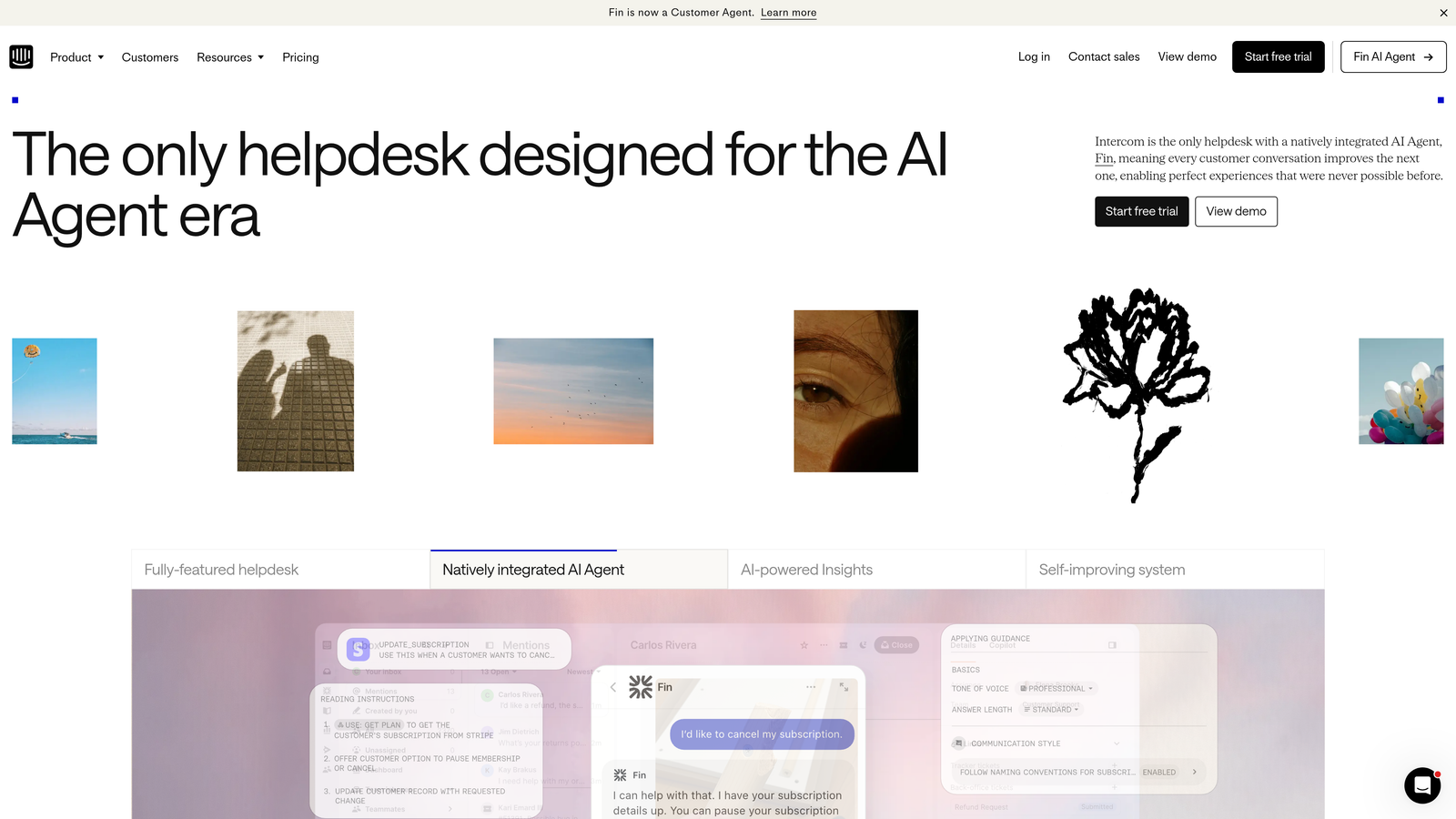
Intercom Fin brings AI capabilities directly into the Intercom platform that many companies already use for customer messaging.
Where This Tool Shines
The native integration means zero friction for existing Intercom users. Fin learns from your help center content and past conversation history without requiring migration or duplicate setup. When the AI can't resolve an issue, handoff to human agents happens within the same interface customers are already using.
The usage-based pricing model aligns cost directly with value delivered. You pay per successful resolution rather than per seat or conversation, making it easier to justify ROI when presenting to finance teams.
Key Features
Help Center Training: Automatically learns from existing documentation and knowledge base articles to provide accurate answers.
Conversation History Learning: Analyzes past support interactions to understand how your team resolves common issues.
Seamless Human Handoff: Transfers complex conversations to agents without context loss or platform switching.
Custom Answer Creation: Allows training on company-specific information beyond standard help documentation.
Resolution-Based Pricing: Charges only for successful AI resolutions rather than per-seat or per-conversation.
Best For
Companies already invested in the Intercom ecosystem who want to add AI capabilities without platform migration. Works well for teams with strong help center content that can serve as training foundation.
Pricing
Starts at $0.99 per AI resolution, with volume discounts available for high-ticket environments.
3. Zendesk AI
Best for: Enterprise teams needing advanced intent detection with established helpdesk infrastructure
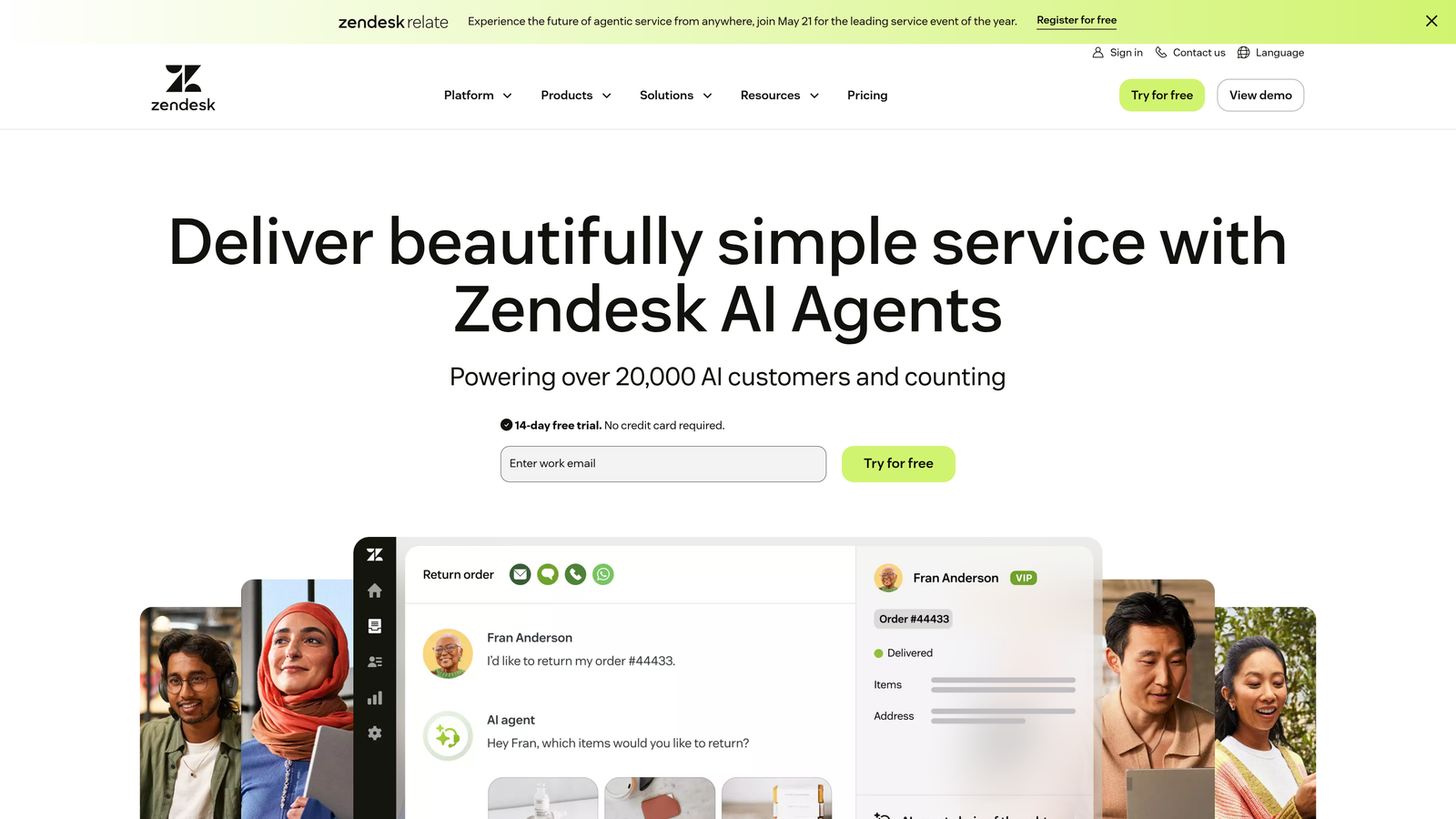
Zendesk AI adds sophisticated intelligence capabilities to one of the most widely deployed enterprise helpdesk platforms.
Where This Tool Shines
The intent detection engine, trained on massive datasets from Zendesk's customer base, excels at understanding what customers actually need even when they phrase requests poorly. This powers intelligent routing that gets tickets to the right specialized agent from the start.
For large support organizations, the workforce management integration helps optimize staffing based on predicted ticket volume and complexity patterns. The advanced analytics go beyond basic metrics to surface trends that inform product and process improvements.
Key Features
Intent Detection Engine: Analyzes ticket content to understand customer needs and route appropriately regardless of phrasing.
Intelligent Routing: Directs tickets to agents with relevant expertise based on content analysis and historical resolution patterns.
Agent Assist: Provides suggested responses and relevant knowledge base articles to speed agent resolution time.
Workforce Management: Predicts ticket volume patterns to optimize agent scheduling and capacity planning.
Advanced Analytics: Surfaces trends, identifies emerging issues, and provides actionable insights for support operations improvement.
Best For
Enterprise organizations with large support teams and complex routing needs. Particularly valuable for companies already standardized on Zendesk who want to enhance existing infrastructure rather than replace it.
Pricing
Advanced AI capabilities available as add-on from $50 per agent per month on top of base Zendesk subscription.
4. Freshdesk Freddy AI
Best for: Mid-market teams wanting AI productivity tools integrated with affordable helpdesk platform
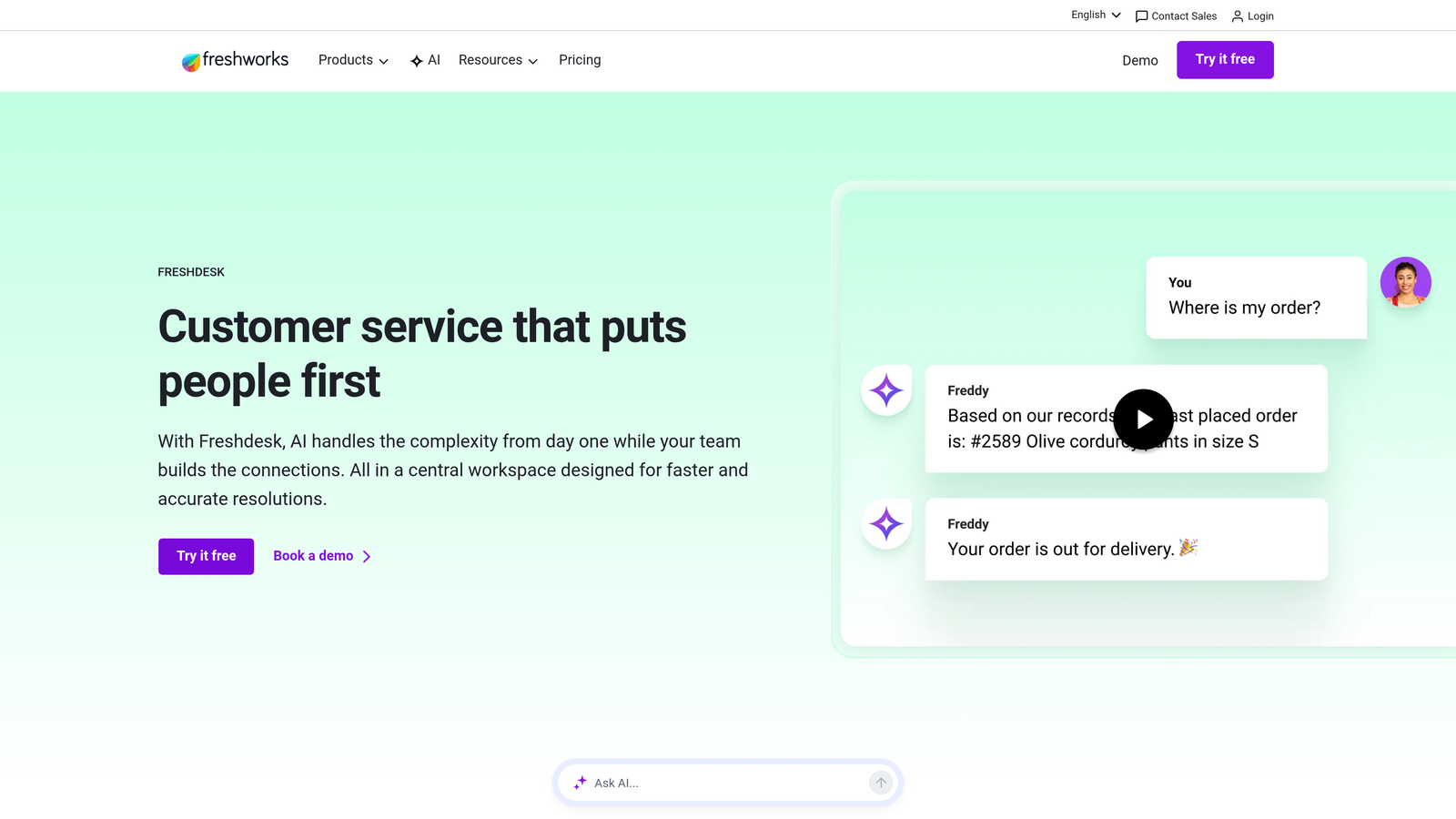
Freshdesk Freddy AI brings automation and agent productivity features to Freshworks' customer service platform.
Where This Tool Shines
The ticket summarization feature dramatically reduces the time agents spend reading through long conversation threads. When picking up a ticket that's been through multiple interactions, agents get a concise summary of the issue and attempted resolutions rather than scrolling through dozens of messages.
Being part of the broader Freshworks ecosystem means unified customer context across support, sales, and marketing. Customer sentiment analysis helps prioritize responses and identify accounts at risk before they churn.
Key Features
Ticket Summarization: Automatically generates concise summaries of long conversation threads for faster agent review.
Auto-Triage and Categorization: Analyzes incoming tickets to assign priority levels and route to appropriate queues.
Canned Response Suggestions: Recommends relevant pre-written responses based on ticket content to speed resolution.
Sentiment Analysis: Detects customer emotion and urgency to help prioritize responses appropriately.
Freshworks Platform Integration: Connects with Freshsales and Freshmarketer for unified customer view across departments.
Best For
Growing companies that want solid AI-enhanced support capabilities without enterprise-level complexity or pricing. Strong fit for teams using multiple Freshworks products who value unified customer data.
Pricing
Freddy AI capabilities included in Pro plan starting at $49 per agent per month.
5. Ada
Best for: High-volume environments needing multilingual deflection with no-code conversation design
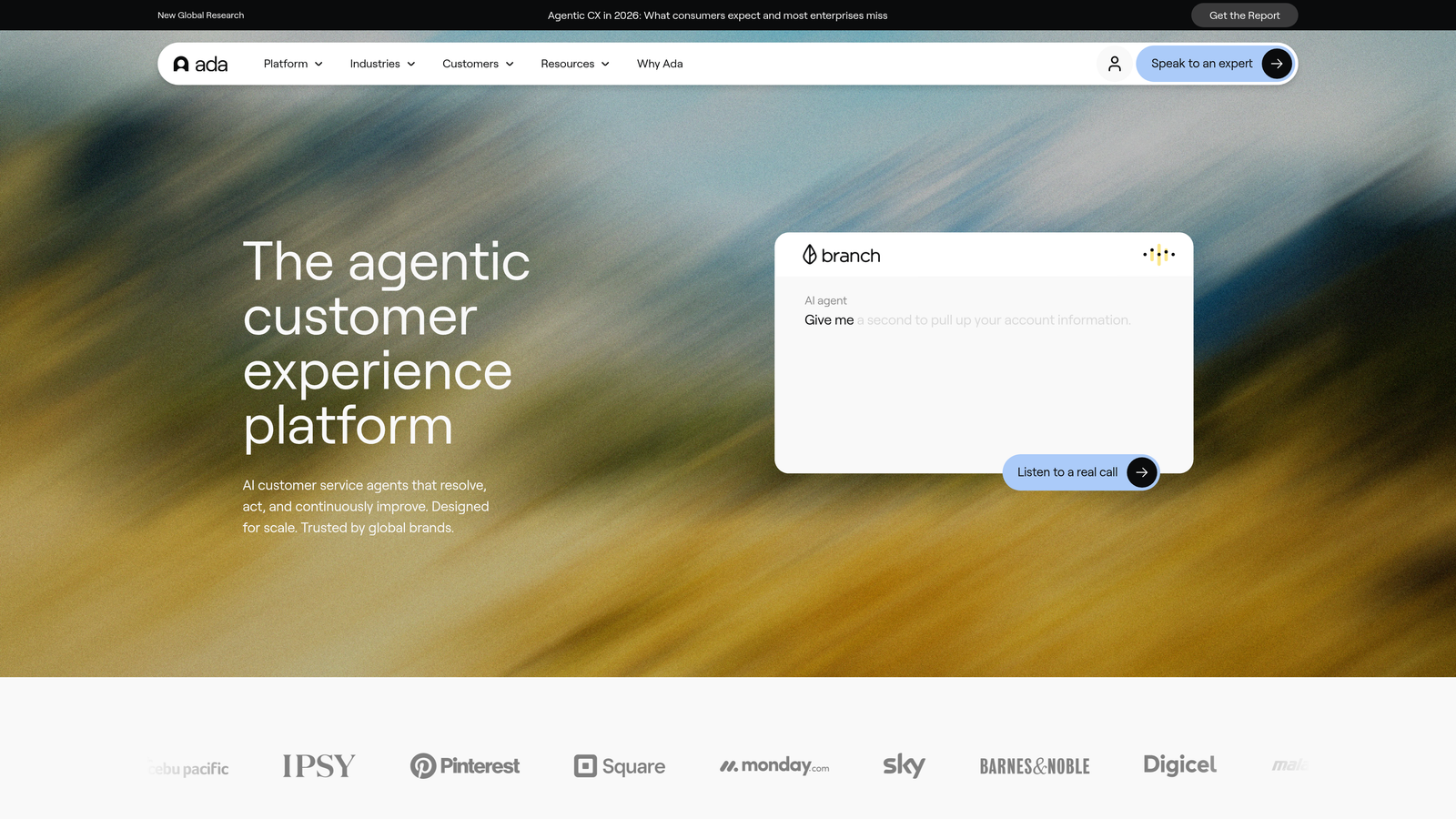
Ada focuses squarely on automation and ticket deflection, particularly for companies serving global customer bases.
Where This Tool Shines
The no-code conversation builder lets non-technical team members create and modify automated flows without developer involvement. This democratizes bot management, allowing support leads to iterate on conversation design based on what they're seeing in real interactions.
Support for over 50 languages makes Ada particularly valuable for companies with international customer bases. The platform handles translation and localization automatically, maintaining consistent support quality across markets without requiring separate bot configurations per language.
Key Features
No-Code Flow Builder: Visual interface for creating conversation paths without programming knowledge or developer resources.
50+ Language Support: Automatically handles multilingual conversations with translation and localization capabilities.
E-commerce Integrations: Native connections to Shopify, BigCommerce, and other platforms for order status and account queries.
Proactive Messaging: Initiates conversations based on customer behavior patterns and page activity.
Automation Analytics: Detailed reporting on deflection rates, conversation paths, and optimization opportunities.
Best For
E-commerce companies and global businesses with high ticket volumes where deflection ROI justifies platform investment. Works well for teams without dedicated developers who need to manage automation themselves.
Pricing
Custom pricing based on monthly conversation volume and required features.
6. Kustomer IQ
Best for: Teams wanting unified customer timeline with AI suggestions across omnichannel conversations
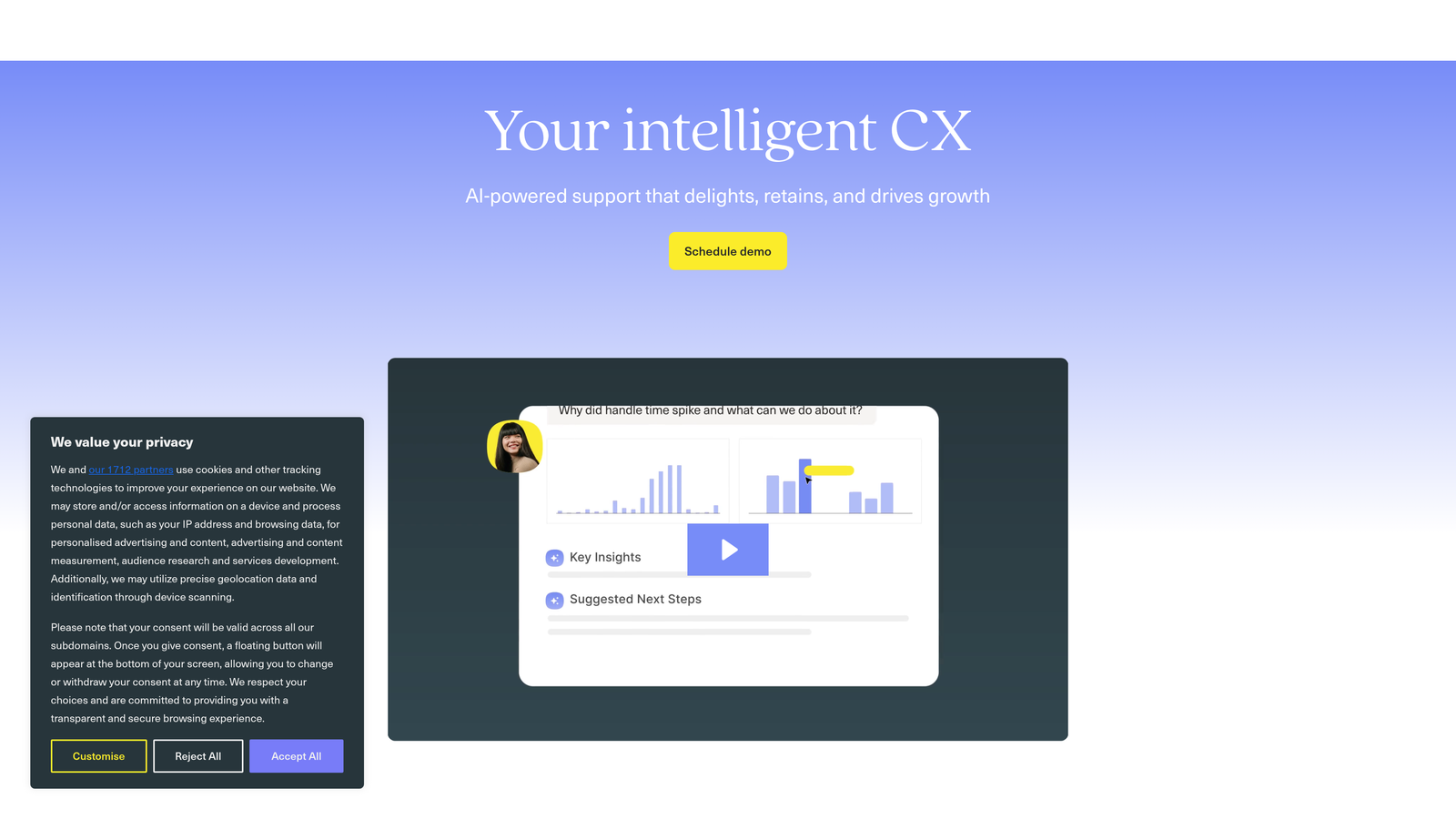
Kustomer IQ adds intelligence to Kustomer's customer service CRM platform focused on unified customer context.
Where This Tool Shines
The unified timeline view gives agents complete customer history across every channel in a single interface. When a customer switches from email to chat to phone, agents see the full context without asking customers to repeat themselves.
The AI-powered response suggestions learn from your best agents' resolutions. Rather than generic templates, suggestions reflect your company's specific tone and approach to common issues, maintaining brand consistency while speeding response time.
Key Features
Unified Customer Timeline: Displays complete interaction history across all channels in chronological view for full context.
AI Response Suggestions: Recommends replies based on conversation content and historical resolution patterns.
Omnichannel Management: Handles email, chat, phone, SMS, and social media conversations in single agent interface.
Sentiment and Intent Detection: Analyzes customer messages to understand emotion and underlying needs.
Workflow Automation: Creates custom automation rules for routing, tagging, and escalation based on conversation attributes.
Best For
Companies managing high-value customer relationships where complete context matters more than maximum deflection. Particularly strong for B2B businesses where customer lifetime value justifies personalized support.
Pricing
Enterprise plan starts at $89 per user per month with volume discounts available.
7. Tidio AI (Lyro)
Best for: Small businesses and e-commerce stores wanting affordable AI with quick setup
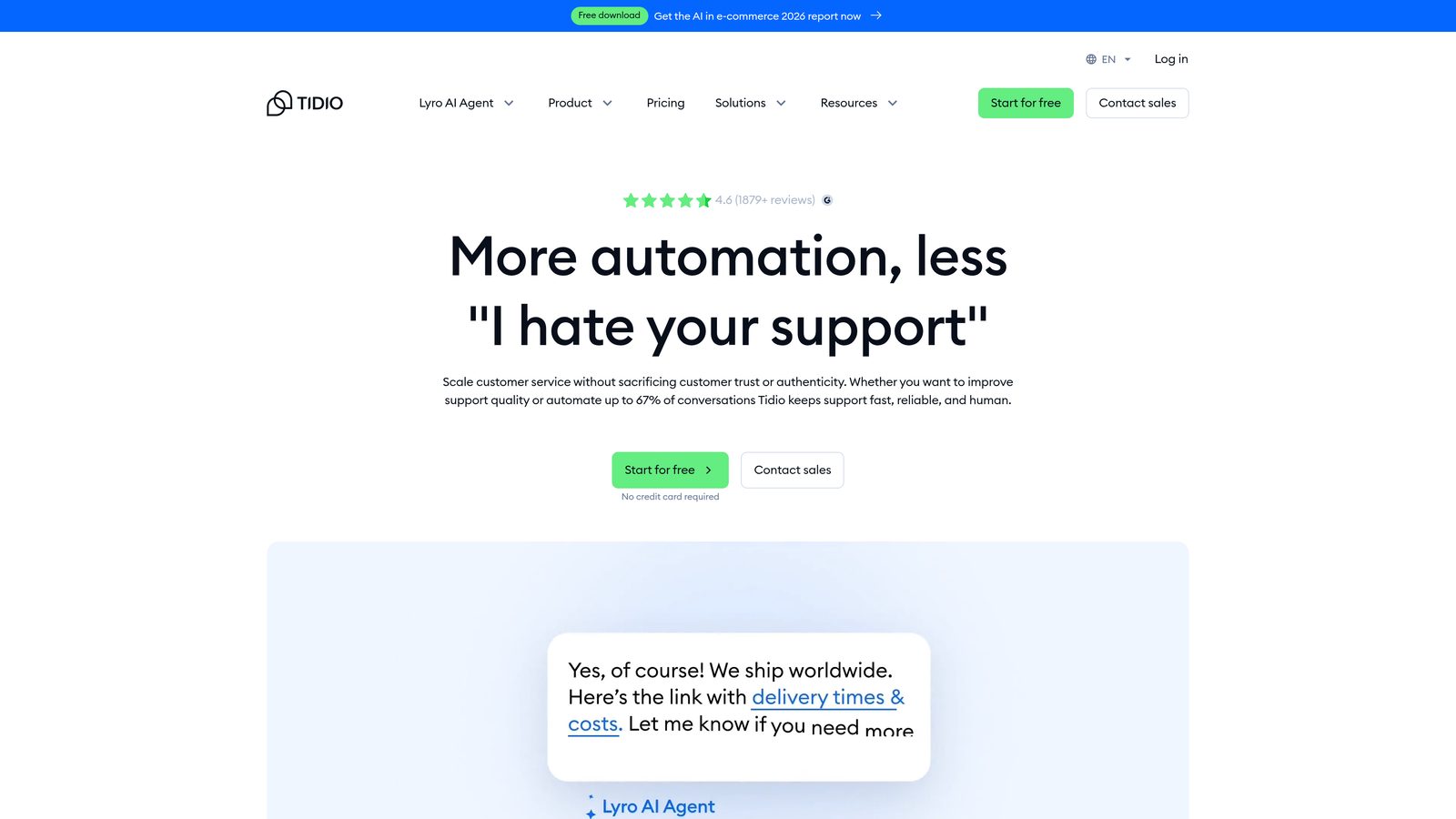
Tidio AI brings accessible automation to small businesses through Lyro, their AI chatbot designed for simplicity.
Where This Tool Shines
The setup process takes minutes rather than weeks. Lyro trains on your FAQ content and help documentation automatically, getting you from signup to functional AI support faster than enterprise platforms that require extensive configuration.
The visual chatbot builder lets you create custom flows for specific scenarios without technical knowledge. Combined with strong e-commerce integrations for Shopify and WooCommerce, small online retailers can automate order status queries and common product questions immediately.
Key Features
Lyro AI Training: Automatically learns from FAQ pages and help center content for quick deployment.
Visual Flow Builder: Drag-and-drop interface for creating custom conversation paths and automation rules.
E-commerce Integrations: Native connections to Shopify, WooCommerce, and other platforms for order tracking and product information.
Live Chat with AI: Combines automated responses with human agent handoff when needed.
Visitor Tracking: Shows who's on your site and their browsing behavior to enable proactive support.
Best For
Small businesses, startups, and e-commerce stores with limited budgets who need functional AI support without enterprise complexity or pricing.
Pricing
Free tier available for basic features. Lyro AI capabilities start at $39 per month.
8. Salesforce Einstein for Service
Best for: Enterprise teams deeply invested in Salesforce ecosystem needing predictive routing and CRM integration
Salesforce Einstein for Service embeds AI capabilities throughout Service Cloud for enterprise support operations.
Where This Tool Shines
The predictive case classification uses machine learning trained on your historical ticket data to automatically categorize and route incoming cases with high accuracy. This eliminates manual triage work and gets cases to specialized agents immediately.
For companies already running sales, marketing, and operations on Salesforce, the unified customer view across departments provides context impossible to achieve with standalone support tools. Support agents see purchase history, open opportunities, and account health without switching systems.
Key Features
Predictive Classification: Automatically categorizes cases and predicts routing based on historical patterns and content analysis.
Einstein Bots: Handles routine inquiries with automated responses trained on your knowledge base and case history.
Deep CRM Integration: Provides complete customer context from sales, marketing, and service data in unified interface.
Article Recommendations: Suggests relevant knowledge base articles to agents based on case content and past resolutions.
Enterprise Security: Meets compliance requirements for regulated industries with comprehensive data governance and audit capabilities.
Best For
Large enterprises standardized on Salesforce platform who need support intelligence integrated with broader CRM data. Particularly valuable in regulated industries requiring enterprise-grade security and compliance.
Pricing
Service Cloud starts at $150 per user per month, with Einstein AI capabilities requiring additional license fees.
9. HubSpot Service Hub AI
Best for: Companies using HubSpot CRM wanting unified customer view across marketing, sales, and support
HubSpot Service Hub integrates AI-powered support tools with HubSpot's CRM platform for complete customer lifecycle visibility.
Where This Tool Shines
The unified CRM approach means marketing, sales, and support teams work from the same customer data. Support agents see which marketing campaigns brought a customer in, what sales promised during the deal, and complete interaction history without asking other departments.
The conversation intelligence analyzes support interactions to surface insights about product issues, feature requests, and customer sentiment. This feedback loop helps product and marketing teams understand real customer needs beyond what gets formally logged as feature requests.
Key Features
AI Ticket Routing: Automatically assigns incoming tickets to appropriate agents based on content, priority, and workload.
Knowledge Base with AI: Suggests relevant articles to agents and customers based on query analysis and past successful resolutions.
Unified CRM View: Displays complete customer journey across marketing, sales, and support in single platform.
Conversation Intelligence: Analyzes support interactions to identify trends, common issues, and improvement opportunities.
Customer Feedback Tools: Collects and analyzes survey responses, NPS scores, and satisfaction ratings to measure support quality.
Best For
Growing companies already using HubSpot for marketing and sales who want to add support capabilities within the same platform. Strong fit for teams that value departmental alignment and unified customer data.
Pricing
Professional tier starts at $90 per month for two users. Enterprise tier with advanced AI features starts at $130 per month.
Finding Your Best Fit
The right AI customer service platform depends less on feature checklists and more on how you actually operate. Teams already committed to specific ecosystems—Intercom, Zendesk, Salesforce, or HubSpot—often benefit most from native AI additions rather than platform switching. The integration depth and unified data make up for potentially less sophisticated AI compared to purpose-built alternatives.
For companies evaluating platforms without existing commitments, the decision hinges on whether you want AI augmentation or AI-first architecture. Traditional helpdesks with AI bolted on excel at enhancing human agent productivity through suggestions and automation. AI-native platforms like Halo prioritize autonomous resolution and continuous learning, treating human escalation as the exception rather than the norm.
Budget constraints naturally segment the market. Small businesses and startups find solid value in Tidio's accessible pricing and quick setup. Mid-market companies typically land in the Freshdesk or Kustomer range, balancing capability with cost. Enterprise buyers choosing between Zendesk and Salesforce usually decide based on broader platform strategy rather than support features alone.
The most critical evaluation criterion remains resolution accuracy—how often the AI actually solves problems without human intervention. Many platforms claim high deflection rates that crumble under scrutiny when you examine what counts as "resolved." Request detailed metrics during trials: What percentage of conversations never reach human agents? Of those escalated, how many could have been avoided with better AI? How does accuracy trend over time as the system learns?
Integration depth matters more than most buyers initially realize. An AI that can't access your CRM, ticketing system, and product data operates with one hand tied behind its back. Look for platforms that connect natively to your existing stack rather than requiring middleware or custom development. The best AI uses context from across your business to provide genuinely helpful responses rather than generic help center regurgitation.
Your support team shouldn't scale linearly with your customer base. Let AI agents handle routine tickets, guide users through your product, and surface business intelligence while your team focuses on complex issues that need a human touch. See Halo in action and discover how continuous learning transforms every interaction into smarter, faster support.