9 Best AI Customer Service Platforms for B2B in 2026
B2B customer support demands more than generic helpdesks can deliver — and this guide reviews the 9 best AI customer service platforms for B2B in 2026, evaluated on autonomous ticket resolution, integration depth, contextual awareness, and fit for complex enterprise workflows. Whether you're augmenting an existing stack or replacing it entirely, this list helps you find the right platform for your team.
 Matt PattoliFounder13 min read
B2B customer support has a complexity problem that generic tools weren't built to solve. Enterprise buyers expect fast, accurate answers about contracts, integrations, billing, and technical issues — often across multiple stakeholders and time zones. Traditional helpdesks pile on ticket volume; basic chatbots frustrate users with scripted dead ends.
AI customer service platforms purpose-built for B2B change this equation. They resolve tickets autonomously, surface business intelligence from support interactions, and escalate intelligently when a human touch is needed — all without proportionally scaling headcount.
This list covers the top AI customer service platforms for B2B in 2026, evaluated on autonomous resolution capability, integration depth, contextual awareness, analytics quality, and fit for complex B2B workflows. Whether you're running support on Zendesk, Freshdesk, or Intercom — or ready to replace them entirely — there's a strong option here for your team.
1. Halo AI
Best for: B2B SaaS teams needing autonomous ticket resolution, product-aware guidance, and business intelligence from support data.
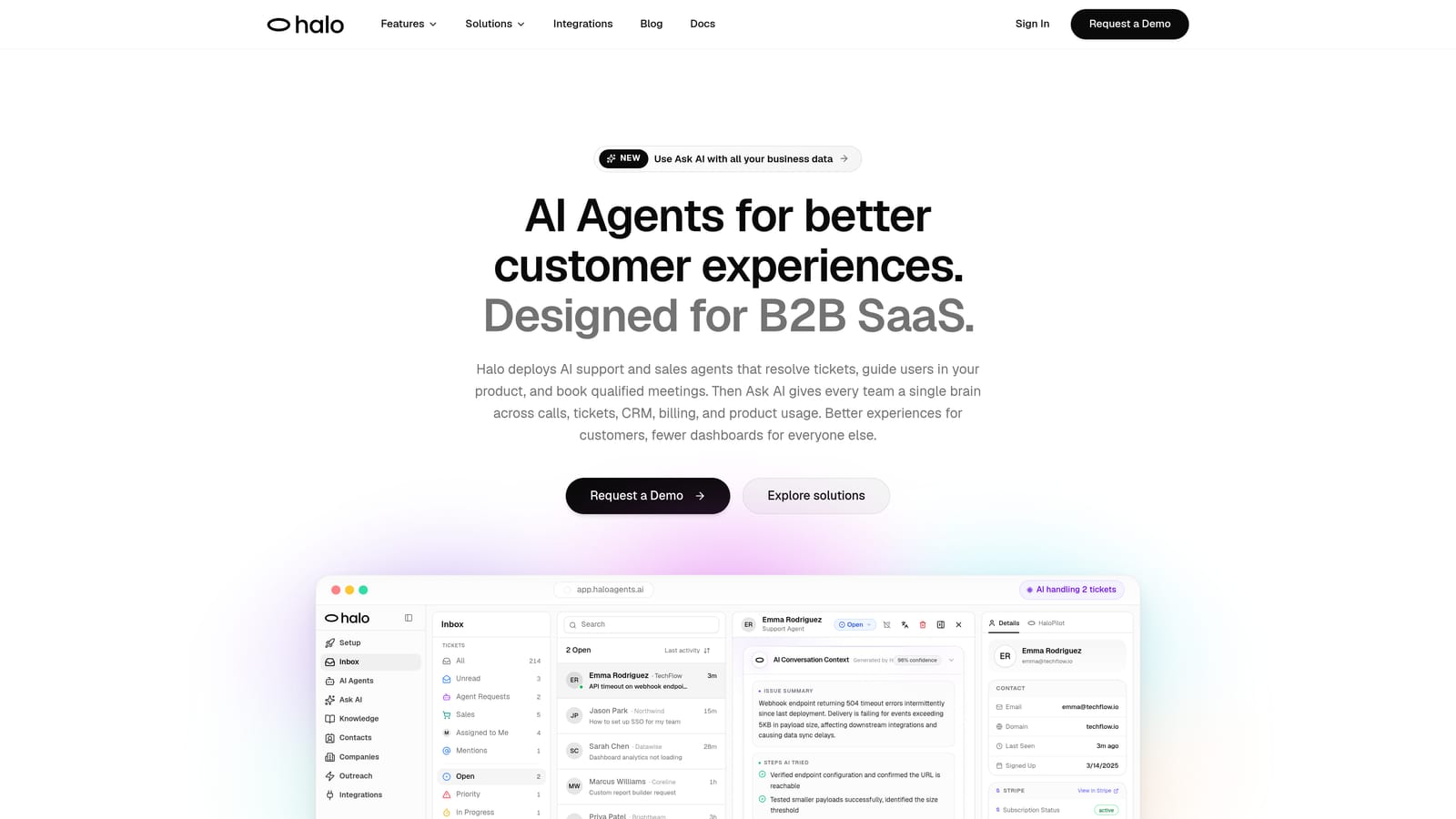
Halo AI is an AI-first customer support platform built specifically for B2B SaaS teams who need more than a chatbot in front of a ticketing queue.
Where This Tool Shines
Halo's standout capability is its page-aware intelligence. The chat widget doesn't just know what a user types — it sees what they're looking at, allowing the AI agent to provide visual UI guidance that's actually contextual rather than generic. This matters enormously in B2B SaaS, where a user struggling with a billing settings page needs a different answer than one stuck on an API configuration screen.
Beyond resolution, Halo's smart inbox surfaces business intelligence that most support platforms don't attempt: customer health signals, revenue intelligence, and anomaly detection. Your support data stops being a cost center and starts informing decisions across the business.
Key Features
Page-Aware Chat Widget: The AI agent sees what users see and delivers visual UI guidance tailored to the specific page or workflow they're on.
Autonomous Ticket Resolution with Continuous Learning: AI agents resolve tickets independently and improve with every interaction, getting smarter over time rather than staying static.
Smart Inbox with Business Intelligence: Surfaces customer health signals, revenue intelligence, and anomaly detection directly from support interactions.
Auto Bug Ticket Creation: Automatically generates and routes bug reports to Linear, removing manual steps between support and engineering.
Live Agent Handoff: Escalates complex issues to human agents seamlessly when the situation requires judgment beyond AI resolution.
Deep Integration Stack: Connects with Slack, HubSpot, Stripe, Zoom, PandaDoc, Fathom, Intercom, and Linear — covering the full B2B SaaS operational stack.
Best For
Halo AI is the strongest fit for B2B SaaS companies scaling support without scaling headcount. If your team needs an AI agent that understands product context, auto-creates bug reports, and feeds intelligence back into your business operations, Halo is built for exactly that use case.
Pricing
Contact for pricing. A demo is available at haloagents.ai.
2. Intercom
Best for: B2B teams wanting a mature, omnichannel platform with a capable autonomous AI agent built in.
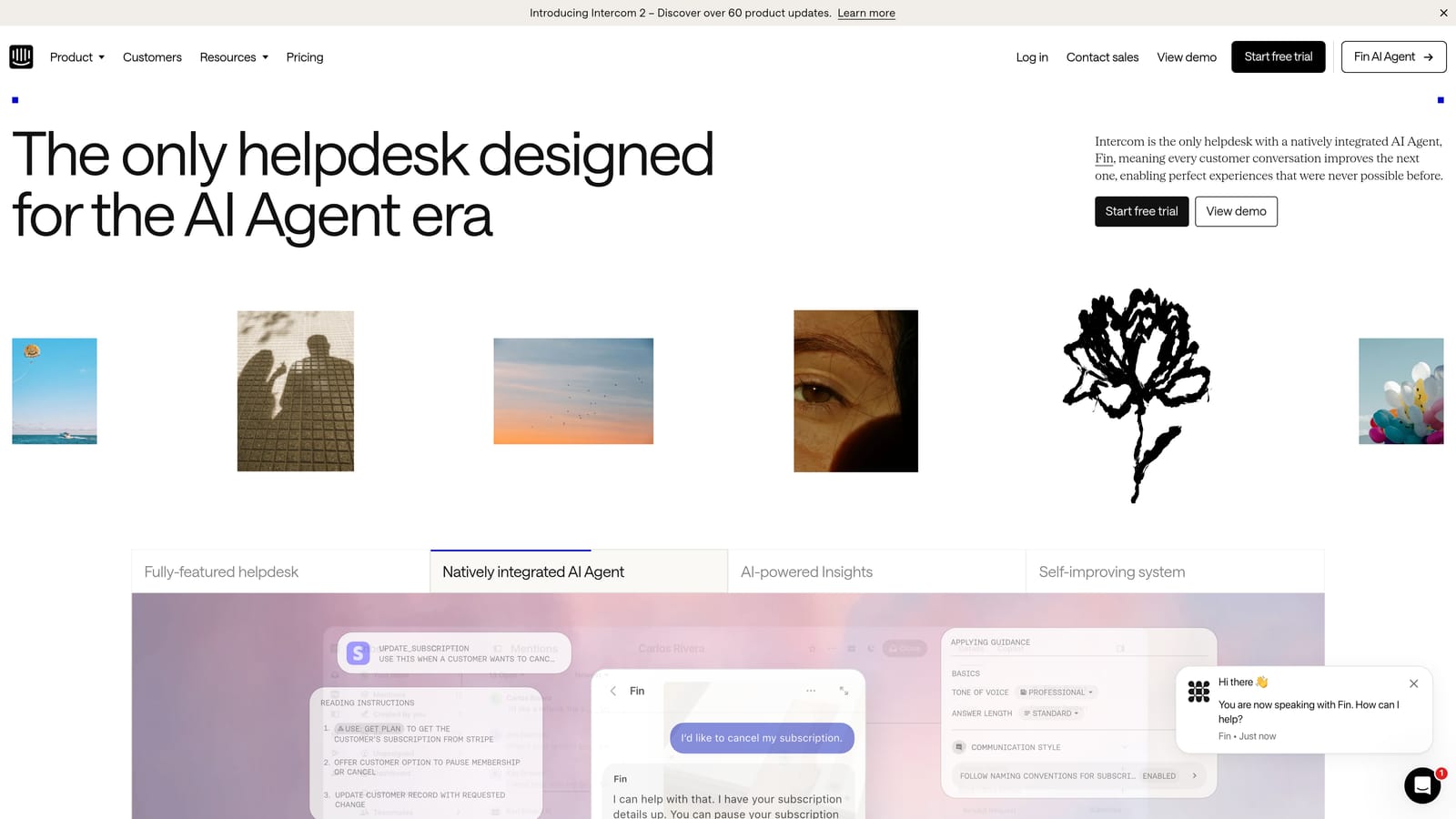
Intercom is a conversational support platform with Fin, its GPT-4-powered AI agent, designed to resolve customer queries across chat, email, and messaging without human intervention.
Where This Tool Shines
Fin is one of the more capable AI agents in the market for handling knowledge base-driven queries autonomously. It pulls from your existing content and resolves a meaningful portion of inbound questions before they ever reach a human agent. For B2B teams with solid documentation, this translates into real deflection.
Intercom's omnichannel coverage is also genuinely broad — chat, email, WhatsApp, and more — all managed through a unified inbox. The conversation management tooling for live agents is polished and well-developed after years of iteration.
Key Features
Fin AI Agent: Autonomous query resolution drawing from your knowledge base, with GPT-4 powering natural language understanding.
Omnichannel Coverage: Chat, email, WhatsApp, and additional channels managed in a single inbox.
Robust Live Agent Inbox: Mature conversation management tools for human agents handling escalations.
Extensive App Marketplace: Wide range of integrations and API access for custom workflows.
Reporting and CSAT Tracking: Strong analytics for monitoring resolution rates, satisfaction scores, and team performance.
Best For
Intercom suits B2B teams that want a well-rounded platform with proven omnichannel capability and a capable AI agent. It's particularly strong for teams with a well-maintained knowledge base that Fin can draw from effectively.
Pricing
Starts at approximately $39/seat/month. Fin AI resolution fees apply separately, which can make total cost significant at higher volumes. Verify current pricing directly with Intercom.
3. Zendesk AI
Best for: Large enterprise teams already on Zendesk who need intelligent triage, routing, and workflow automation layered onto an existing helpdesk.
Zendesk AI adds intelligent triage, routing, and auto-reply capabilities to one of the most widely deployed enterprise helpdesk platforms in the market.
Where This Tool Shines
Zendesk's core strength is its enterprise-grade workflow engine. The AI layer adds intent detection, sentiment analysis, and routing intelligence on top of a platform that already handles complex multi-team, multi-tier support operations at scale. For organizations with deeply configured Zendesk environments, the AI features slot in without a rebuild.
The app marketplace with over 1,000 integrations is a genuine differentiator for enterprise teams with complex toolchains. If your support operation touches many systems, Zendesk likely has a connector for it.
Key Features
Intelligent Ticket Triage and Routing: AI classifies tickets by intent and sentiment, routing them to the right team or workflow automatically.
AI-Generated Reply Suggestions: Surfaces recommended responses and macro suggestions to speed up agent handling time.
Advanced Workflow Automation: Handles complex, multi-step support processes across teams and channels.
Enterprise App Marketplace: Over 1,000 integrations covering virtually every enterprise tool category.
SLA Management and Reporting: Robust tools for tracking service level compliance and team performance metrics.
Best For
Zendesk AI is best for large enterprises already invested in the Zendesk ecosystem. Teams starting fresh may find the AI features feel like add-ons rather than a native architecture — because they are.
Pricing
AI features available on Suite Professional and above, starting at approximately $115/agent/month. Confirm current pricing with Zendesk directly.
4. Freshdesk Freddy AI
Best for: Growing B2B teams wanting omnichannel support with both agent-assist AI and self-service automation at accessible price points.
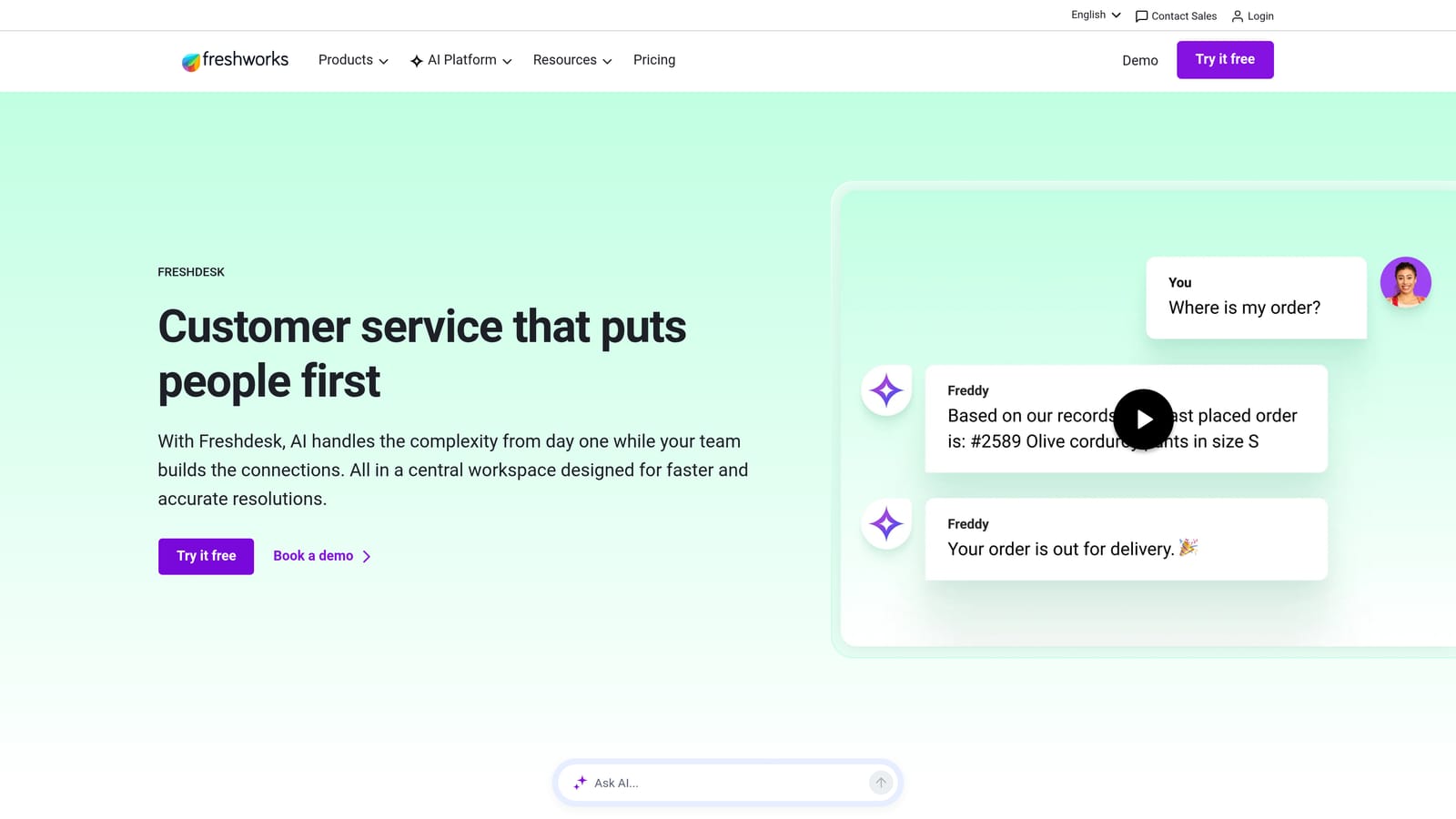
Freshdesk brings Freddy AI across two modes: Copilot for agent assistance and Self Service for autonomous bot handling, all within a full omnichannel helpdesk platform.
Where This Tool Shines
Freshdesk's pricing accessibility is a genuine differentiator compared to Zendesk and Salesforce at comparable feature tiers. For mid-market B2B teams that need omnichannel coverage and AI assistance without enterprise-level spend, Freshdesk hits a useful middle ground.
Freddy Copilot is particularly useful for agent productivity, helping draft replies and summarize long conversation threads. It won't replace the depth of a purpose-built AI agent, but it meaningfully reduces handle time for human agents managing high volumes.
Key Features
Freddy Copilot: AI-assisted reply drafting and conversation summarization to accelerate human agent workflows.
Freddy Self Service: Conversational bot that handles common queries autonomously before escalating to a human agent.
Omnichannel Platform: Email, chat, phone, and social media managed within a single unified platform.
AI-Powered CSAT Prediction: Surfaces tickets at risk of poor satisfaction scores so agents can prioritize proactively.
Marketplace Integrations and Open API: Solid integration options for common B2B tools, with API access for custom connections.
Best For
Freshdesk is a strong choice for growing B2B teams that need solid omnichannel coverage and AI assistance without the cost structure of enterprise platforms. Less suited for teams that need deep autonomous resolution or account-level intelligence.
Pricing
Free plan available. Paid plans from approximately $15/agent/month. Freddy AI features are priced as add-ons. Verify current add-on pricing directly with Freshworks.
5. Salesforce Service Cloud
Best for: B2B enterprise teams already in the Salesforce ecosystem who need account-aware support deeply integrated with CRM data.
Salesforce Service Cloud combines enterprise-grade case management with Einstein AI, providing account-aware support tightly integrated with CRM data for B2B teams living in the Salesforce platform.
Where This Tool Shines
The core value proposition here is CRM-native context. When a support agent opens a case, they see the full account history, open opportunities, contract details, and relationship data — all without switching tabs. For complex B2B support where relationship context shapes how you handle an issue, this integration is genuinely valuable.
Einstein AI adds intelligent routing, case classification, and next-best-action recommendations on top of that CRM foundation. The platform is powerful, but it comes with corresponding implementation complexity and cost.
Key Features
Einstein AI: Case classification, routing, and next-best-action recommendations powered by AI across the full case lifecycle.
Full CRM Integration: Agents see complete account, contact, and opportunity context directly within the support interface.
Omni-Channel Routing: Distributes cases across email, chat, phone, and social based on agent capacity and skill.
Einstein Bots: Self-service automation for common queries, integrated with the broader Salesforce data model.
Advanced Analytics: Customizable dashboards and reporting across support operations and agent performance.
Best For
Service Cloud is the right choice for enterprise B2B organizations already committed to Salesforce. For teams not in that ecosystem, the implementation overhead and cost are difficult to justify compared to alternatives.
Pricing
Starter plans from approximately $25/user/month. Enterprise plans from approximately $165/user/month. Implementation costs are typically significant. Confirm current pricing with Salesforce.
6. Drift (Salesloft)
Best for: B2B teams where inbound conversations blur the line between sales qualification and customer support.
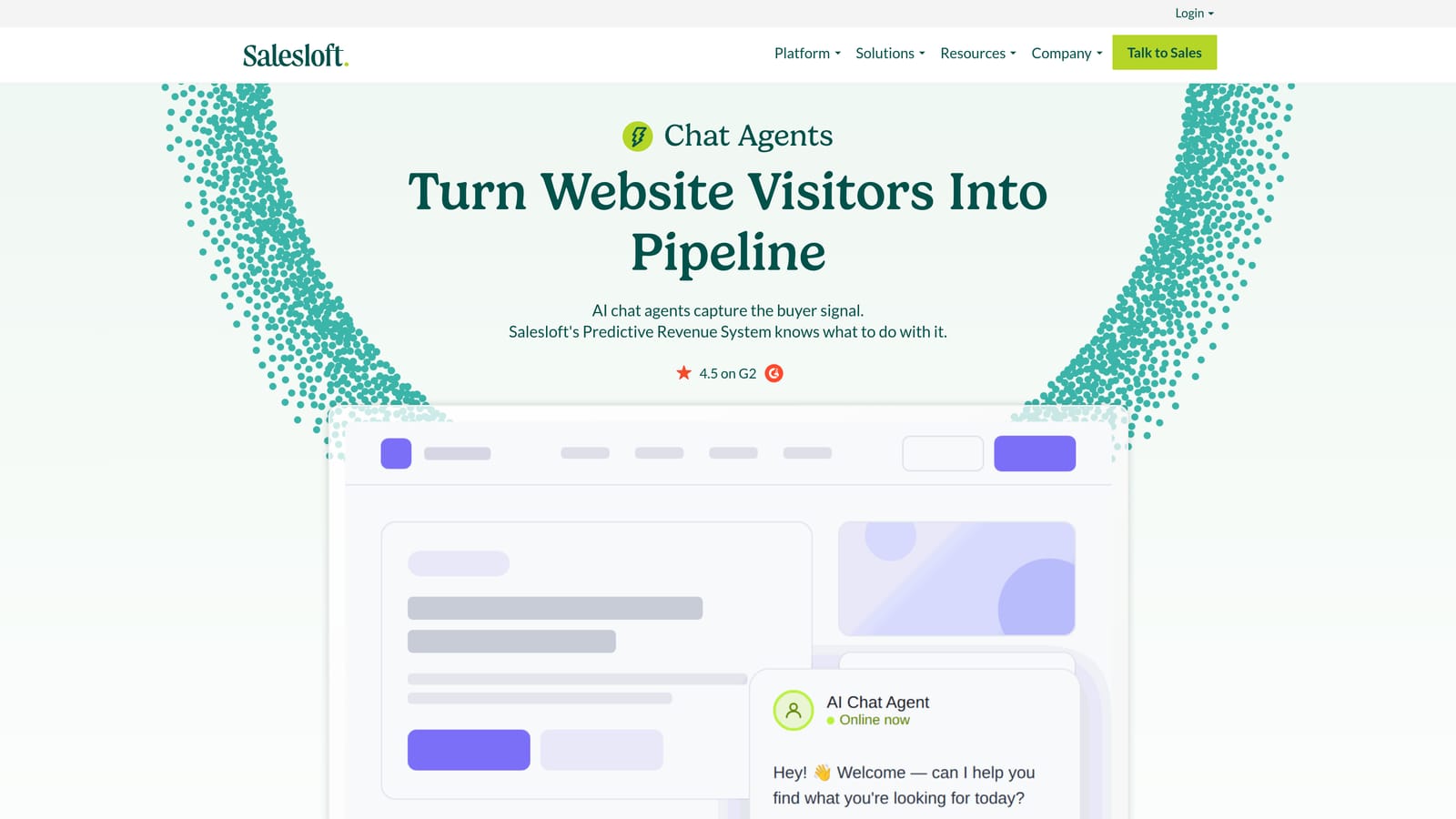
Drift is a conversational AI platform, now part of Salesloft, that blends sales qualification and customer support in a single interface designed for B2B revenue teams.
Where This Tool Shines
Drift's differentiation is its account-based targeting layer. Conversations can be personalized based on the company visiting, their segment, or their stage in the customer lifecycle. For B2B teams where an inbound chat might be a prospect, a customer, or a churning account, Drift's routing intelligence handles that complexity in a way general support tools don't.
The integration with Salesloft adds a sales execution layer that makes Drift particularly useful when support and sales teams share responsibility for inbound conversations. Meeting scheduling built directly into chat flows removes friction from the handoff.
Key Features
AI-Powered Conversational Bots: Qualification, routing, and support automation in a single conversational interface.
Account-Based Targeting: Personalizes conversations based on company identity, segment, or customer lifecycle stage.
Sales and Support Handoff: Seamless escalation between bot, sales team, and support team within one platform.
CRM and MAP Integrations: Native connections with Salesforce, HubSpot, Marketo, and Salesloft.
Meeting Scheduling in Chat: Allows prospects or customers to book meetings directly within the conversation flow.
Best For
Drift is best for B2B teams where sales and support overlap significantly in inbound conversations. It's less focused on deep ticket resolution and more on conversation management and qualification — a meaningful distinction when evaluating fit.
Pricing
Premium plan starts at approximately $2,500/month. Enterprise pricing available. Confirm current pricing with Drift/Salesloft directly.
7. HubSpot Service Hub
Best for: B2B teams already using HubSpot CRM who want AI-assisted support natively connected to their existing contact and company data.
HubSpot Service Hub provides AI-assisted ticket management, a customer knowledge base, and live chat natively connected to HubSpot CRM — without requiring a separate platform investment.
Where This Tool Shines
The native CRM connection is the clearest reason to choose HubSpot Service Hub over a standalone support tool. Support agents see full contact and company records, deal history, and lifecycle stage without any integration overhead. For B2B teams already running marketing and sales in HubSpot, this unified view is genuinely useful.
Breeze AI Copilot adds reply suggestions and conversation summarization, reducing the cognitive load on agents handling high volumes. The knowledge base is well-integrated and SEO-optimized, which helps deflect common queries before they become tickets.
Key Features
AI-Assisted Ticket Management: Automated ticket creation, categorization, and routing based on incoming request content.
Breeze AI Copilot: Surfaces reply suggestions and conversation summaries to help agents respond faster and more consistently.
Native Knowledge Base: Built-in self-service content with SEO optimization to drive organic deflection.
Customer Portal: Allows customers to submit and track their own tickets without contacting support directly.
Unified HubSpot CRM Data: Full contact and company context available within every support interaction.
Best For
HubSpot Service Hub is the natural choice for B2B teams already on HubSpot who want to avoid managing a separate support platform. Teams needing deep autonomous AI resolution may find the AI features less capable than dedicated AI-first platforms.
Pricing
Free tools available. Starter from approximately $15/seat/month. Professional from approximately $90/seat/month. Confirm current pricing at HubSpot's pricing page.
8. Tidio
Best for: Smaller B2B teams and startups needing accessible AI-powered support with fast setup and minimal technical overhead.
Tidio offers an accessible entry point into AI-powered customer support with its Lyro AI agent, combining live chat, email automation, and conversational bot capabilities at price points suited for smaller teams.
Where This Tool Shines
Tidio's strongest advantage is time-to-value. Setup is fast, the interface is approachable, and Lyro AI begins handling common queries without extensive configuration. For a smaller B2B team that needs to move quickly without a dedicated implementation project, this matters.
The visual chatbot builder also allows non-technical team members to create and adjust conversation flows without developer support. This keeps the tool accessible as support needs evolve.
Key Features
Lyro AI Agent: Handles common support queries autonomously, drawing from your knowledge content to resolve questions without human intervention.
Unified Inbox: Live chat, email, and Messenger conversations managed in a single interface.
Visual Chatbot Builder: Drag-and-drop flow builder for creating custom conversation paths without coding.
Platform Integrations: Connects with Shopify, WordPress, and common CRM tools for basic workflow connectivity.
Fast Setup: Minimal technical overhead to get AI-assisted support running quickly.
Best For
Tidio is well-suited for smaller B2B teams and startups that need AI-assisted support without enterprise complexity or cost. Growing teams with complex account-level support needs may find the platform's depth limiting as they scale.
Pricing
Free plan available. Lyro AI from approximately $29/month. Paid plans scale with conversation volume. Confirm current pricing at Tidio's pricing page.
9. Kustomer
Best for: High-touch B2B support teams where relationship history and full customer context are central to resolution quality.
Kustomer is a CRM-native customer service platform, now owned by Meta, that uses AI to surface complete customer timelines and account context across every support interaction.
Where This Tool Shines
Kustomer's timeline view is genuinely differentiated. Rather than working from a ticket queue, agents see every interaction a customer has ever had — across every channel, in chronological order. For high-touch B2B support where a customer's history shapes how you handle their current issue, this context is valuable in ways that ticket-centric platforms don't replicate well.
AI-powered routing and suggested responses draw on that historical context rather than just the current message, which improves the relevance of automated suggestions. One consideration worth noting: Kustomer's acquisition by Meta introduces some roadmap uncertainty that buyers in regulated or risk-sensitive industries may want to factor into their evaluation.
Key Features
Full Customer Timeline: Aggregates every interaction across all channels into a single chronological view per customer.
AI-Powered Routing and Suggested Responses: Uses historical context to route cases and surface relevant response recommendations.
Omnichannel Coverage: Email, chat, phone, social, and SMS managed within a unified platform.
No-Code Workflow Automation: Visual builder for creating automated support workflows without developer involvement.
Deep CRM Data Model: Account and contact management built into the platform's core architecture rather than bolted on.
Best For
Kustomer is best for B2B teams running high-touch, relationship-driven support where historical context meaningfully affects resolution quality. Less suited for teams prioritizing autonomous AI deflection at scale over relationship depth.
Pricing
Enterprise plan from approximately $89/user/month. Ultimate plan from approximately $139/user/month. Confirm current pricing with Kustomer directly.
Which Platform Is Right for Your B2B Team?
The right AI customer service platform depends on where your B2B team sits today and where you need to go. If you're deeply embedded in Salesforce or HubSpot, platforms like Service Cloud or HubSpot Service Hub offer the path of least resistance — your CRM data is already there, and the support layer connects to it natively.
If you're scaling a SaaS product and need an AI agent that understands product context, resolves tickets autonomously, and surfaces intelligence beyond support tickets, an AI-first platform like Halo AI is worth a closer look. The difference between AI layered onto a helpdesk and AI built as the foundation is significant when autonomous resolution and business intelligence are priorities.
For teams still running on Zendesk or Freshdesk, the AI add-ons improve efficiency — but they're building on a foundation designed for human agents, not autonomous resolution. If ticket deflection, contextual guidance, and business intelligence matter to your roadmap, you may find yourself outgrowing bolt-on AI faster than expected.
Drift and Kustomer serve more specific niches: Drift for teams where sales and support conversations overlap, Kustomer for high-touch relationship-driven support where history drives resolution. Tidio fills a useful gap for smaller teams that need accessible AI support without enterprise overhead.
Your support team shouldn't scale linearly with your customer base. Let AI agents handle routine tickets, guide users through your product, and surface business intelligence while your team focuses on complex issues that need a human touch. See Halo in action and discover how continuous learning transforms every interaction into smarter, faster support.