9 Best AI Customer Service Platforms Compared: Pricing, Features & Value in 2026
This comprehensive comparison examines ai customer service platform pricing across 9 leading solutions in 2026, revealing hidden costs like per-resolution fees, overage charges, and implementation expenses that impact total ownership costs. The guide analyzes pricing tiers, included features, and value propositions from AI-first platforms like Halo AI to established solutions, helping support teams select the right platform based on actual ROI rather than advertised monthly rates.
 Grant CooperFounder12 min read
Choosing an AI customer service platform involves more than comparing monthly fees. Hidden costs, per-resolution pricing, overage charges, and implementation fees can turn an affordable-looking solution into a budget nightmare. This guide breaks down pricing structures across leading platforms, helping you understand not just what you'll pay, but what you'll actually get for your investment.
We'll examine each platform's pricing model, included features at each tier, and total cost of ownership considerations so you can make an informed decision for your support team.
1. Halo AI
Best for: Companies seeking AI-first support with continuous learning and resolution-based pricing aligned to value delivered.
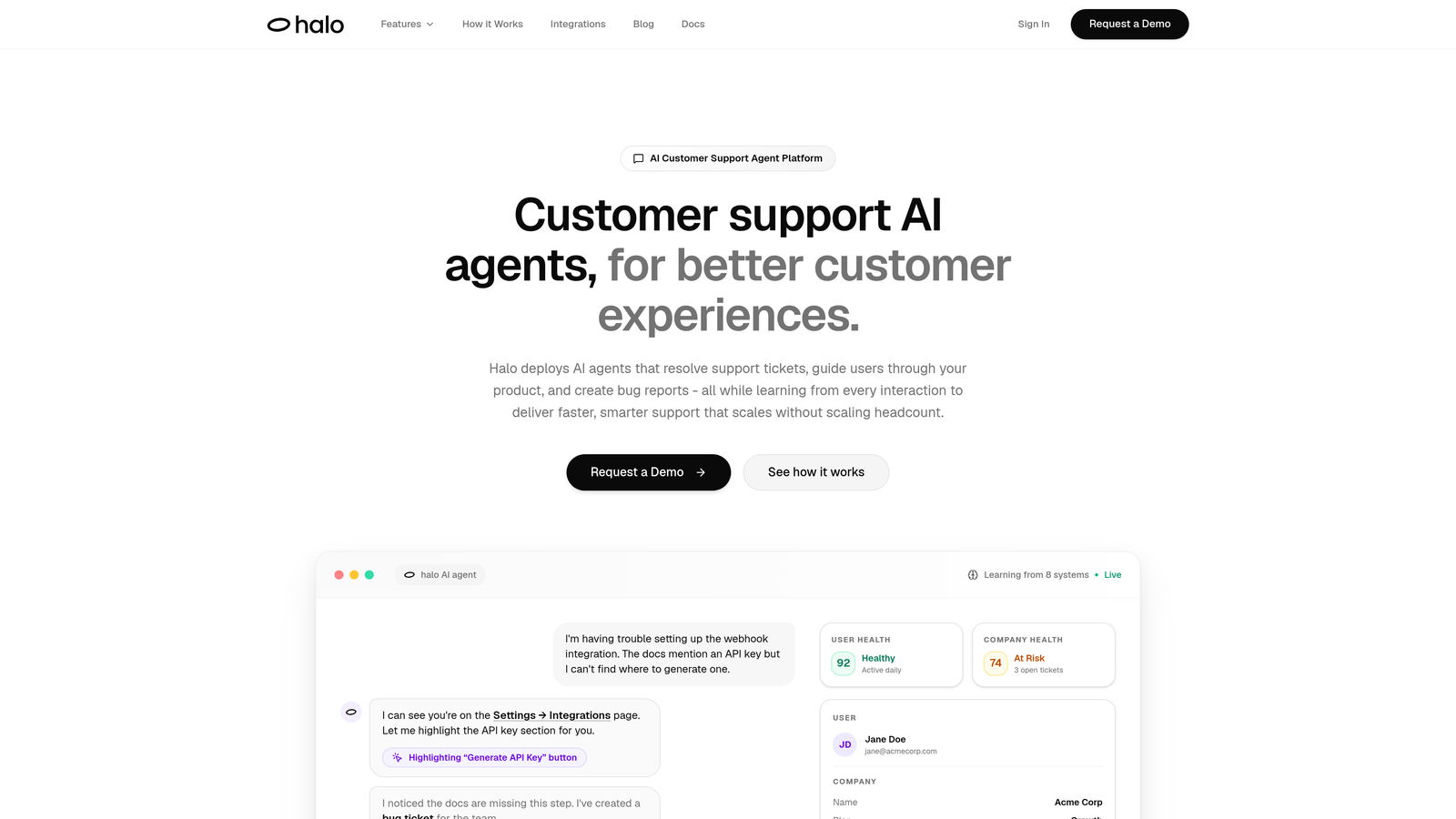
Halo AI takes a fundamentally different approach to customer support automation by building intelligence into every layer of the platform.
Where This Tool Shines
Unlike platforms that bolt AI onto existing helpdesk infrastructure, Halo was designed from the ground up as an AI-native solution. The platform's agents don't just respond to tickets—they understand the context of what users are seeing on your product pages, guide them through visual UI elements, and learn from every interaction to improve future responses.
The resolution-based pricing model shifts risk away from you. Instead of paying per seat regardless of performance, you pay based on actual resolutions delivered, which means Halo's success is directly tied to solving your customers' problems.
Key Features
Page-Aware Chat Widget: Sees what users see and provides visual guidance through your product interface, not just text responses.
Smart Inbox with Business Intelligence: Goes beyond support metrics to surface customer health signals, revenue intelligence, and anomaly detection across your business.
Auto Bug Ticket Creation: Automatically identifies technical issues and creates properly formatted tickets in Linear with relevant context and reproduction steps.
Continuous Learning Architecture: Every interaction trains the system, making it smarter over time without manual knowledge base updates.
Native Integrations: Connects directly to Linear, Slack, HubSpot, Intercom, Stripe, Zoom, PandaDoc, and Fathom for complete business context.
Best For
B2B SaaS companies and product teams who want support that scales without scaling headcount. Particularly valuable for teams using Zendesk, Freshdesk, or Intercom who need more intelligent automation than traditional helpdesk AI add-ons provide.
Pricing
Contact for custom pricing. Resolution-based model means you pay for actual value delivered rather than seat licenses, making costs predictable and aligned with business outcomes.
2. Intercom Fin
Best for: Existing Intercom customers who want to add GPT-4 powered resolution capabilities to their current setup.
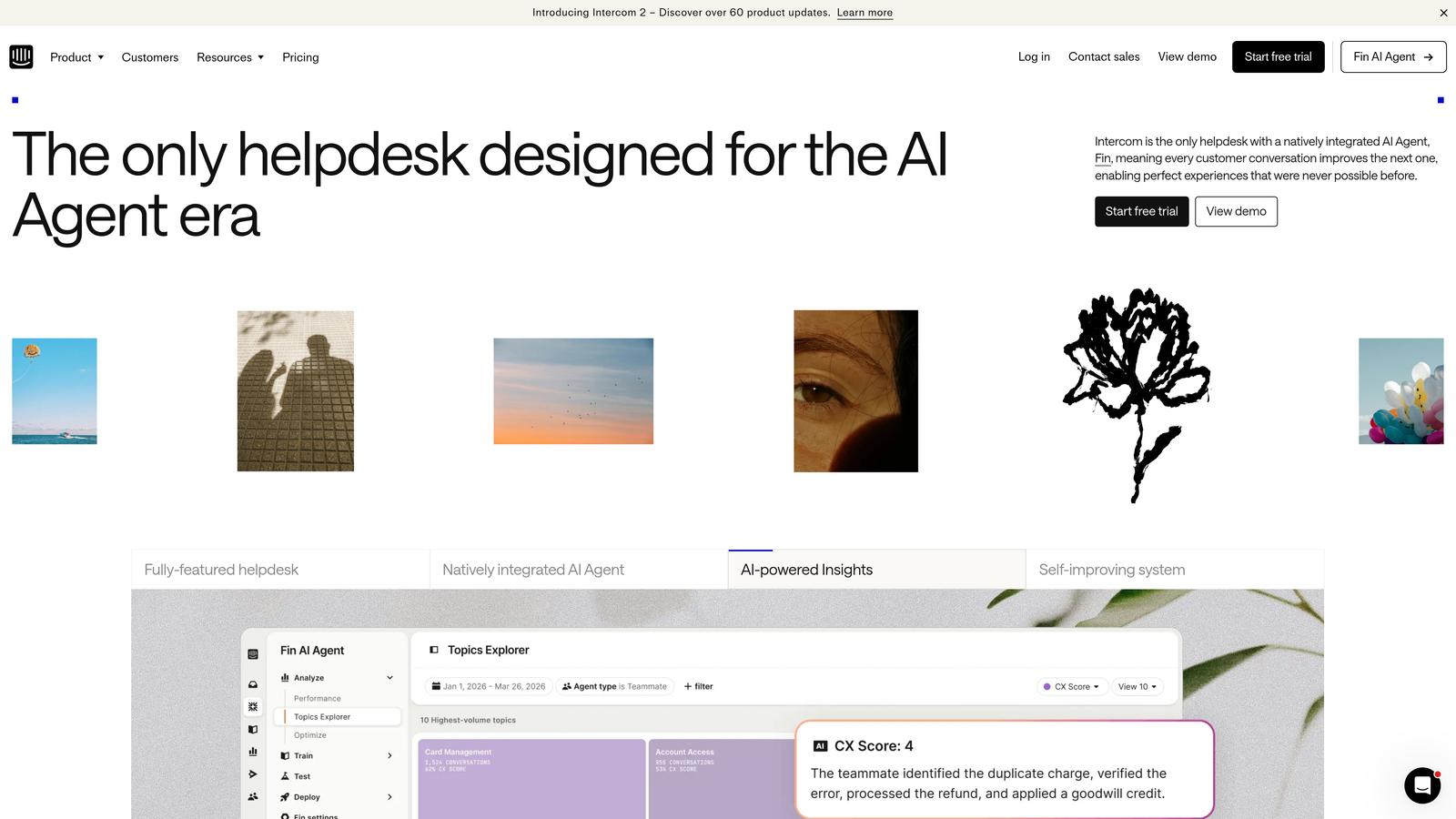
Intercom Fin is an AI agent that leverages your existing help center content to resolve customer questions automatically.
Where This Tool Shines
Fin's strength lies in its seamless integration with the Intercom ecosystem. If you're already using Intercom for messaging and support, adding Fin is straightforward—it trains directly on your existing help center articles, macros, and conversation history without requiring separate knowledge base setup.
The per-resolution pricing at $0.99 makes costs transparent and predictable. You know exactly what each automated resolution costs, which simplifies budget planning compared to seat-based models with usage caps.
Key Features
GPT-4 Foundation: Built on OpenAI's latest language model for natural, contextual responses that feel genuinely helpful.
Automatic Training: Learns from your Intercom help center, articles, and previous conversations without manual configuration.
Smart Handoff: Recognizes when issues require human expertise and transfers seamlessly to your support team with full context.
Multi-Language Support: Handles customer inquiries in multiple languages automatically, expanding your support reach.
Custom Answer Configuration: Lets you define specific responses for particular questions to maintain brand voice and accuracy.
Best For
Teams already invested in the Intercom platform who want to add AI resolution capabilities without switching systems. Works best for companies with well-maintained help centers that Fin can leverage immediately.
Pricing
$0.99 per resolution, plus your existing Intercom subscription (starts at $74/month for basic plans). The per-resolution model means you only pay when Fin successfully resolves a customer issue.
3. Zendesk AI
Best for: Enterprise teams already using Zendesk Suite who want AI capabilities integrated into their existing workflows.
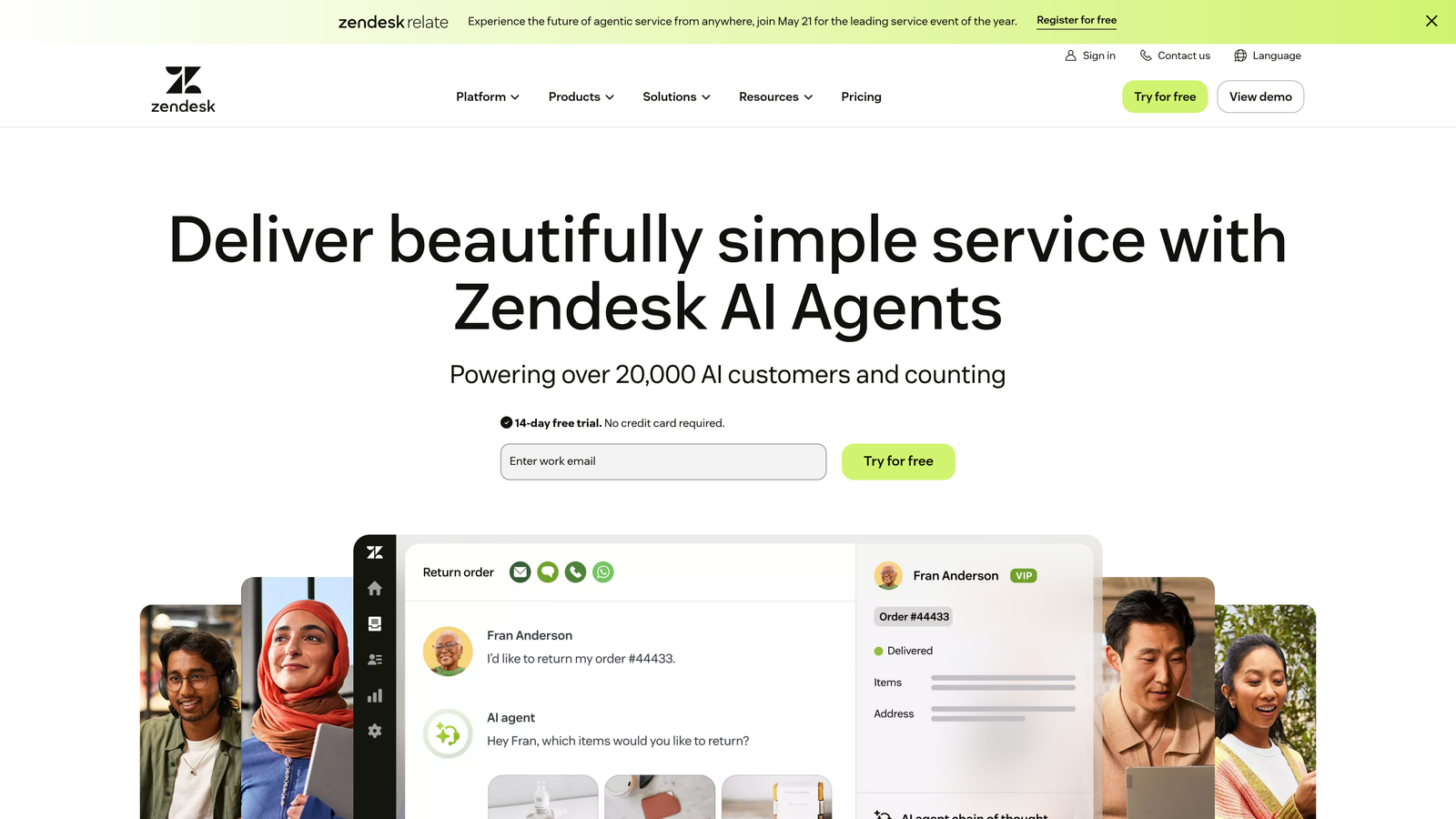
Zendesk AI layers intelligent automation into the Zendesk ecosystem, offering triage, suggested replies, and automated resolutions.
Where This Tool Shines
For organizations deeply embedded in the Zendesk ecosystem, the native AI integration means no additional platforms to manage or separate logins for agents. The AI features work within familiar Zendesk interfaces, reducing training time and adoption friction.
Sentiment analysis and intent detection help prioritize urgent issues automatically, ensuring high-value customers or critical problems get immediate attention while routine queries flow to automation.
Key Features
Intelligent Triage and Routing: Automatically categorizes incoming tickets and routes them to the right team or agent based on content and urgency.
Agent Assist: Suggests relevant responses and knowledge base articles while agents compose replies, speeding up resolution times.
Automated Resolutions: Handles common questions and issues without human intervention, freeing agents for complex problems.
Sentiment Analysis: Detects customer emotion and flags frustrated or at-risk customers for priority handling.
Deep Zendesk Integration: Works seamlessly across Zendesk Suite products including Support, Chat, Talk, and Guide.
Best For
Large support teams already using Zendesk Suite Professional or Enterprise who want to enhance existing workflows with AI rather than replace their current platform.
Pricing
Advanced AI features require Suite Professional ($115/agent/month) or higher. Some AI capabilities are included in Suite Enterprise pricing. The per-agent model means costs scale linearly with team size.
4. Freshdesk Freddy AI
Best for: Small to mid-sized teams seeking affordable AI automation within a full-featured helpdesk platform.
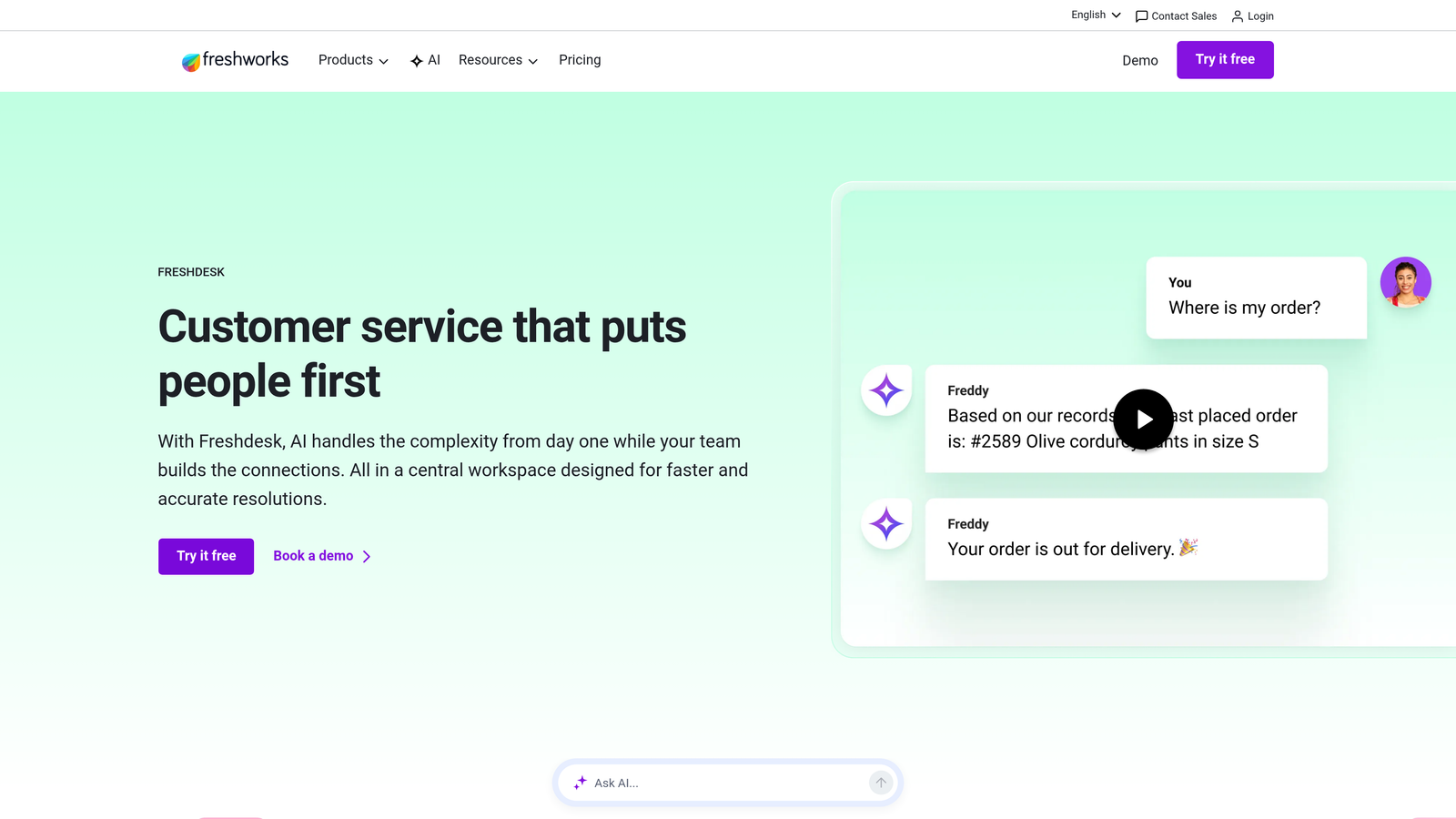
Freshdesk Freddy AI provides AI-powered assistance for customer queries, response suggestions, and workflow automation within Freshdesk.
Where This Tool Shines
Freddy AI delivers solid automation capabilities at a price point accessible to growing teams. Unlike enterprise-focused solutions requiring five-figure monthly commitments, Freshdesk includes Freddy in plans starting at $49 per agent, making AI support automation financially viable for smaller organizations.
The self-service deflection capabilities help reduce ticket volume by intelligently suggesting knowledge base articles and community posts before customers submit tickets, lowering overall support costs.
Key Features
Natural Language Chatbot: Understands customer intent and provides relevant answers using conversational AI.
Auto-Triage and Classification: Automatically categorizes and prioritizes tickets based on content, reducing manual sorting work.
Agent Response Suggestions: Recommends relevant replies and knowledge base articles to help agents respond faster and more consistently.
Self-Service Deflection: Proactively suggests help articles and community solutions to customers before they create tickets.
Integrated Analytics: Tracks bot performance, resolution rates, and automation effectiveness within the Freshdesk dashboard.
Best For
Growing companies that need professional AI support capabilities without enterprise-level budgets. Particularly suitable for teams transitioning from basic helpdesk tools to AI-enhanced support.
Pricing
Freddy AI is included in Pro ($49/agent/month) and Enterprise ($79/agent/month) plans. Bot conversation limits vary by tier, with higher plans offering more automated interactions per month.
5. Ada
Best for: Enterprise organizations requiring high-volume automation with sophisticated conversation design and compliance controls.
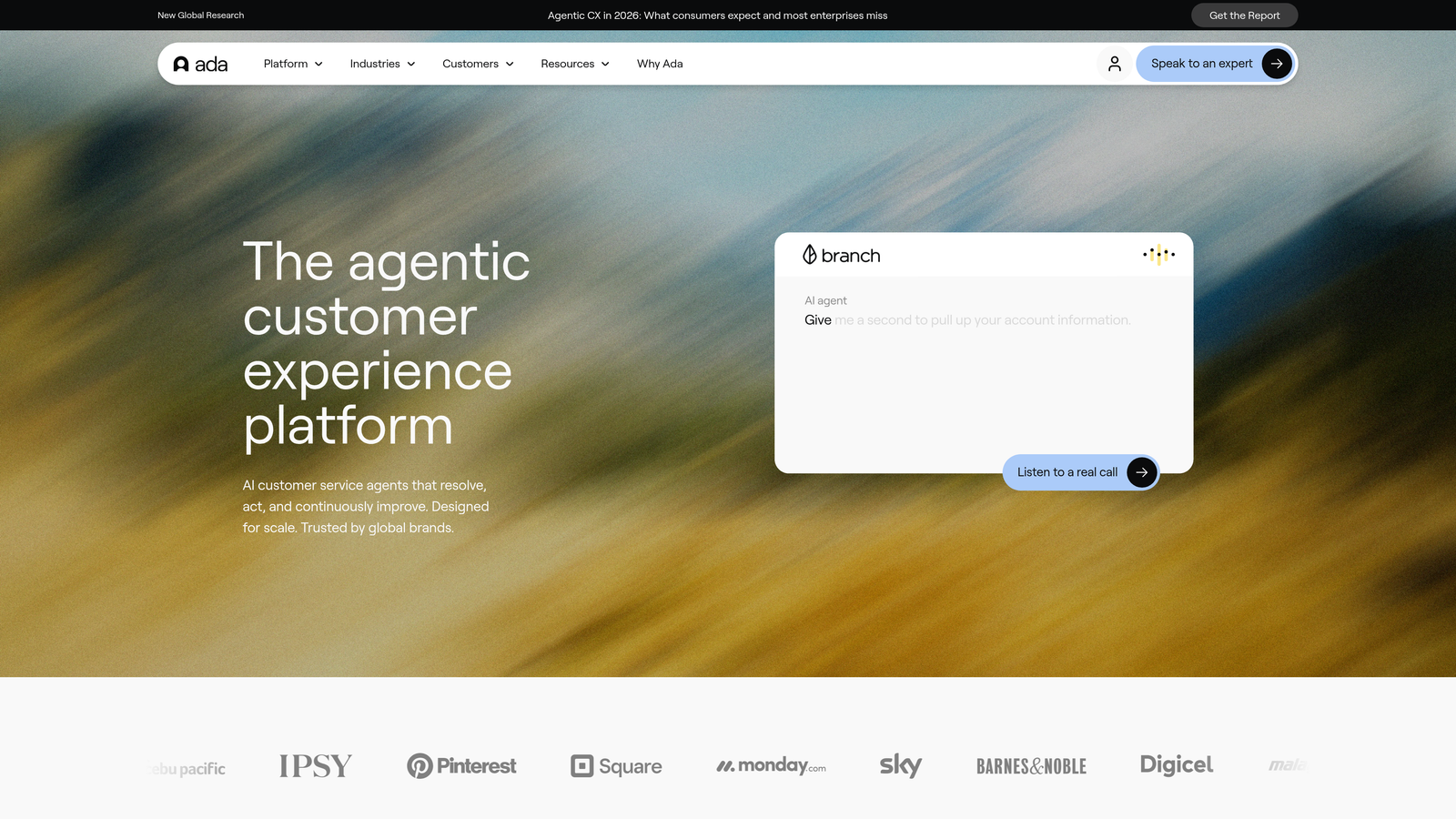
Ada is an enterprise-focused AI customer service platform built for companies handling thousands of customer interactions daily.
Where This Tool Shines
Ada's enterprise guardrails provide the control and compliance features that large organizations need. The platform lets you define specific boundaries for AI behavior, ensuring responses stay on-brand and compliant with industry regulations—critical for financial services, healthcare, and other regulated industries.
The no-code conversation builder empowers non-technical team members to design and modify customer interaction flows without developer support, reducing dependency on engineering resources and speeding up iteration.
Key Features
Generative AI with Guardrails: Combines the flexibility of generative AI with enterprise controls that prevent off-brand or inappropriate responses.
Multi-Channel Deployment: Provides consistent AI support across web, mobile apps, social media platforms, and messaging channels from a single platform.
Advanced Analytics Dashboard: Offers detailed insights into conversation flows, resolution rates, customer satisfaction, and automation performance.
No-Code Builder: Enables business users to create and modify conversation paths through visual interfaces without coding skills.
Resolution-Based Pricing: Aligns costs with actual value delivered rather than charging per seat or conversation.
Best For
Large enterprises with high support volumes who need sophisticated automation, compliance controls, and the ability to customize conversation flows extensively. Best suited for organizations with dedicated support operations teams.
Pricing
Custom enterprise pricing based on resolution volume and feature requirements. Typically starts around $10,000+ per month, making it a significant investment suitable for companies handling tens of thousands of monthly interactions.
6. Tidio
Best for: Small businesses and e-commerce stores needing affordable AI chat without complex enterprise features.
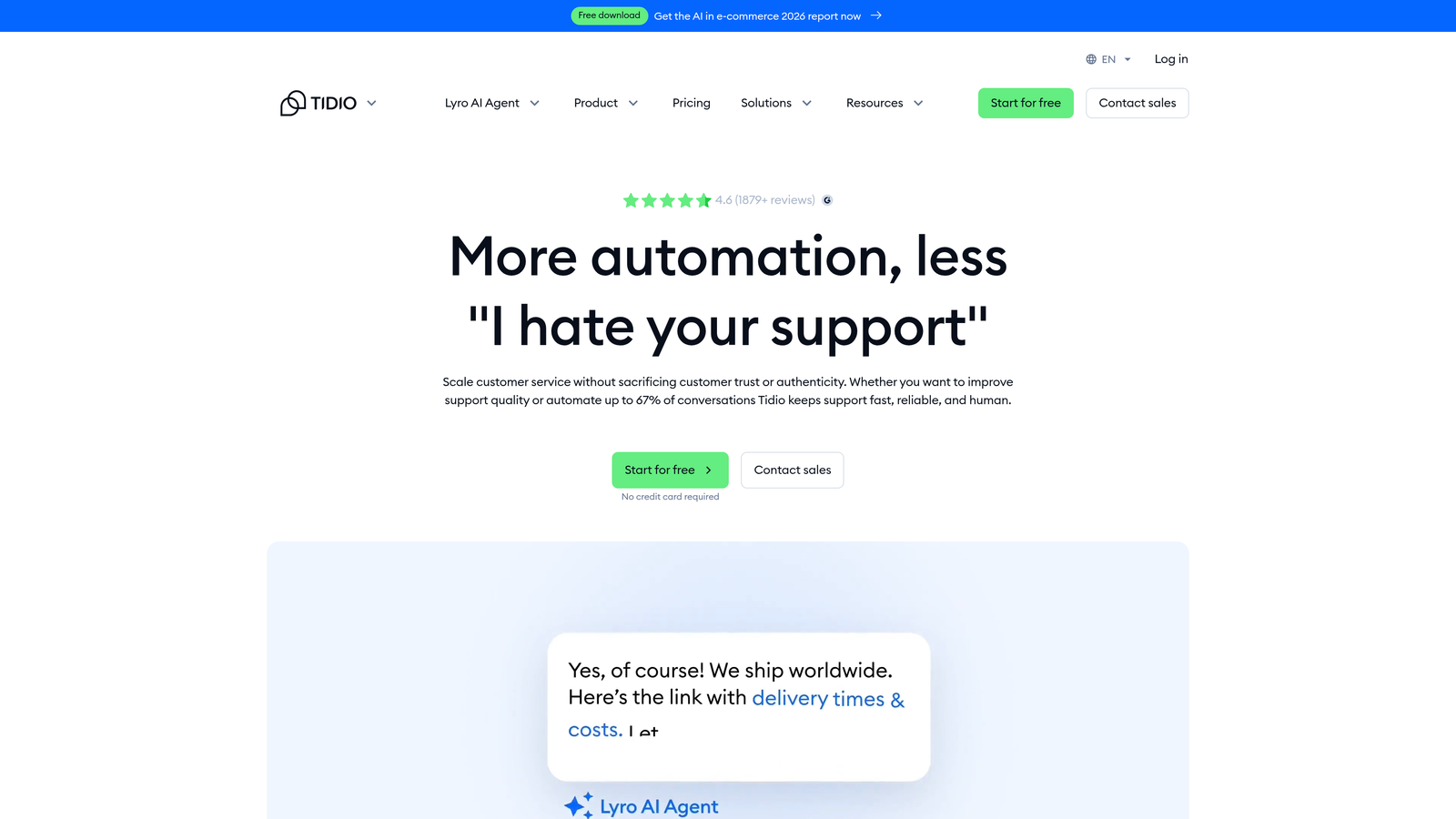
Tidio combines AI chatbot capabilities with live chat in a package designed for small business budgets and simplicity.
Where This Tool Shines
Tidio's free tier and low entry price make AI customer service accessible to businesses just starting to explore automation. You can begin with basic live chat at no cost, then add Lyro AI conversations as your needs grow, avoiding the financial commitment of enterprise platforms.
The e-commerce integrations work particularly well for online stores using Shopify or WooCommerce, helping automate order status questions, return policies, and product recommendations—the most common queries e-commerce businesses face.
Key Features
Lyro AI Chatbot: Conversational AI that handles common customer questions using natural language understanding.
Visual Chatbot Builder: Drag-and-drop interface for creating custom conversation flows without technical knowledge.
Live Chat with AI Assist: Combines automated responses with the ability for human agents to jump in when needed.
E-Commerce Integrations: Native connections to Shopify, WooCommerce, and other platforms for order tracking and product information.
Visitor Tracking: Shows what pages visitors are viewing in real-time, helping agents provide contextual assistance.
Best For
Small e-commerce businesses, solopreneurs, and startups that need basic AI chat capabilities without enterprise complexity or pricing. Ideal for teams with limited technical resources who value simplicity.
Pricing
Free tier available with basic live chat. Lyro AI starts at $29/month for 50 AI conversations. Tidio+ at $394/month provides unlimited conversations and advanced features, still significantly cheaper than enterprise alternatives.
7. Drift
Best for: B2B companies focused on revenue acceleration who want conversational AI that bridges sales and support.
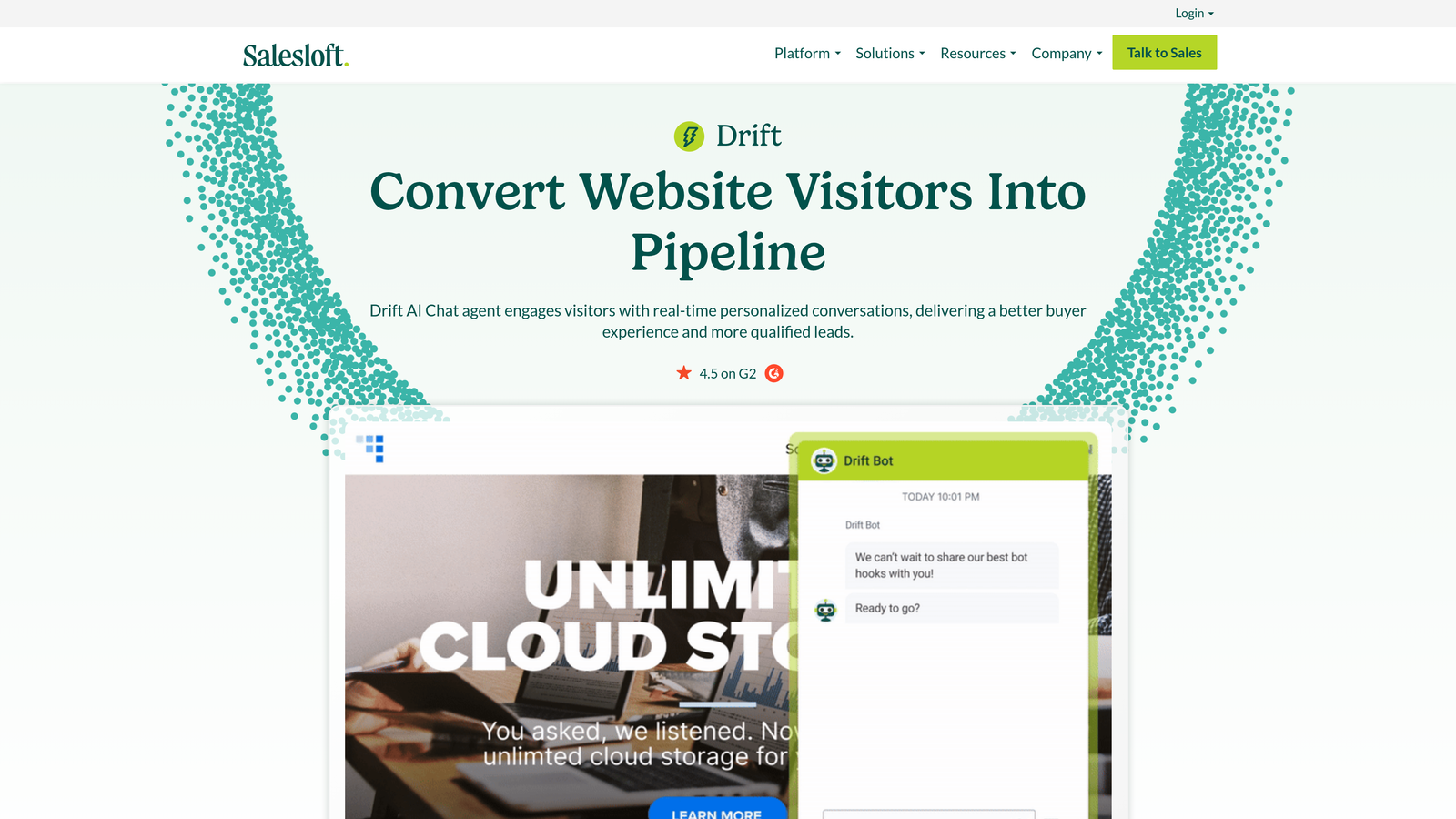
Drift positions itself as a conversational AI platform that combines customer support with sales engagement and revenue attribution.
Where This Tool Shines
Drift's account-based targeting capabilities make it particularly valuable for B2B sales teams. The platform can identify high-value accounts visiting your website and route them to specific sales reps or provide customized conversation flows based on company size, industry, or engagement history.
The revenue attribution analytics connect customer conversations directly to pipeline and closed deals, helping you understand which automated interactions actually contribute to revenue—something traditional support-focused platforms don't track.
Key Features
AI-Powered Conversation Routing: Intelligently directs conversations to the right sales or support team member based on context and account data.
Meeting Scheduling Automation: Books qualified prospects directly into sales calendars without back-and-forth email exchanges.
Account-Based Targeting: Delivers personalized experiences to specific companies or segments based on firmographic data.
Revenue Attribution: Tracks how conversations influence pipeline generation and revenue, connecting support interactions to business outcomes.
Sales Tool Integration: Native connections to Salesforce, Outreach, and other sales platforms for seamless workflow integration.
Best For
B2B companies where customer conversations span both sales and support, particularly those with account-based marketing strategies and sales teams who need conversation intelligence tied to revenue metrics.
Pricing
Premium tier starts at $2,500/month. Advanced and Enterprise plans with full AI capabilities require custom quotes. The high entry price reflects Drift's positioning as a revenue platform rather than just a support tool.
8. Kustomer
Best for: Companies wanting a unified CRM and customer service platform with AI capabilities built into customer timelines.
Kustomer combines CRM functionality with customer service tools, using AI to provide context-aware support across channels.
Where This Tool Shines
The unified customer timeline gives agents complete context before they respond. Instead of seeing just the current ticket, agents view the customer's entire history—previous purchases, past support issues, sentiment trends, and interactions across all channels—enabling more personalized and effective support.
Proactive outreach capabilities let you contact customers before they report problems. The system can detect patterns like failed payments, shipping delays, or product issues and trigger automated or human outreach, turning potential support tickets into proactive relationship-building moments.
Key Features
Unified Customer Timeline: Displays complete customer history across all channels and touchpoints in a single view.
AI-Powered Chatbots and IVR: Automates responses across chat and phone channels using intelligent routing and resolution.
Sentiment Analysis: Tracks customer emotion over time to identify at-risk accounts and satisfaction trends.
Proactive Outreach: Enables automated or agent-initiated contact based on customer behavior patterns and predictive signals.
Native CRM: Includes full customer relationship management without requiring separate CRM software.
Best For
Mid-market to enterprise companies who want to consolidate CRM and customer service into a single platform. Particularly valuable for subscription businesses that need to track customer health and reduce churn.
Pricing
Enterprise plan at $89/user/month; Ultimate at $139/user/month. AI features are add-ons priced separately, which can significantly increase total costs depending on which capabilities you enable.
9. HubSpot Service Hub
Best for: Companies already using HubSpot CRM who want integrated customer service with unified customer data.
HubSpot Service Hub extends the HubSpot platform with customer service capabilities, AI chatbots, and automation tools.
Where This Tool Shines
The full HubSpot CRM integration means your support team works from the same customer database as marketing and sales. When a customer submits a ticket, agents see their marketing campaign interactions, sales conversations, and deal history automatically—no manual lookup or switching between systems required.
The knowledge base with AI search helps customers find answers themselves while providing your team with insights into which topics generate the most questions, helping you identify documentation gaps and product friction points.
Key Features
AI Chatbot Builder: Create automated conversation flows with GPT integration for natural language understanding and responses.
Ticket Automation and Routing: Automatically assign tickets to the right team members based on topic, priority, and workload.
Knowledge Base with AI Search: Self-service portal where customers find answers, with intelligent search that understands intent rather than just matching keywords.
Customer Feedback Surveys: Automated NPS, CSAT, and custom surveys that integrate with customer records for trend analysis.
Complete HubSpot Integration: All customer service data connects to marketing, sales, and operations data in the unified CRM.
Best For
Companies already using HubSpot for marketing or sales who want to add customer service without introducing a separate platform. Most valuable when you need unified reporting across the entire customer lifecycle.
Pricing
Starter at $20/month for basic features; Professional at $500/month includes AI chatbot and automation; Enterprise at $1,200/month adds advanced AI capabilities. Pricing assumes you're already paying for HubSpot CRM or other Hubs.
Making the Right Choice
The right AI customer service platform depends less on feature lists and more on how pricing aligns with your business model and growth trajectory.
If you're a small e-commerce business just starting with AI, Tidio's free tier and low-cost AI conversations let you experiment without financial risk. For teams already embedded in Intercom or Zendesk, adding their native AI capabilities avoids platform switching costs, though you'll pay premium prices for that convenience.
Enterprise teams handling massive volumes should look at Ada or Kustomer, where higher upfront costs make sense when spread across tens of thousands of monthly interactions. B2B companies focused on revenue attribution will find Drift's sales-support integration valuable despite the steep entry price.
The critical question isn't which platform has the most features—it's which pricing model aligns with how you measure success. Per-seat pricing makes sense when you know exactly how many agents you need. Per-resolution models like Intercom Fin's $0.99 charge or Halo AI's resolution-based approach shift risk to the vendor, ensuring you only pay when the AI actually solves problems.
Watch for hidden costs that inflate your total investment. Implementation fees can add thousands to first-year costs. Integration charges for connecting existing tools compound quickly. Overage fees when you exceed tier limits can double your monthly bill during busy periods. Annual contracts often come with significant discounts but lock you in before you've fully tested the platform.
The smartest approach is calculating total cost of ownership over 12-24 months, including setup, training, integrations, and expected usage growth. A platform with higher base pricing but inclusive features may cost less than a cheaper option that charges separately for every capability you need.
Your support team shouldn't scale linearly with your customer base. Let AI agents handle routine tickets, guide users through your product, and surface business intelligence while your team focuses on complex issues that need a human touch. See Halo in action and discover how continuous learning transforms every interaction into smarter, faster support.