9 Best AI Customer Service Platforms Compared by Pricing in 2026
This guide compares nine leading AI customer service platforms side by side, breaking down AI customer service pricing structures, tier inclusions, and hidden costs that can dramatically inflate your bill. Whether you're a startup or enterprise, it cuts through confusing per-seat, per-resolution, and custom pricing models to help you identify the most transparent and scalable solution for your support team.
 Grant CooperFounder14 min read
Evaluating AI customer service platforms sounds straightforward until you realize that pricing models vary so dramatically that comparing them is like comparing apples to helicopters. One platform charges per seat. Another charges per resolution. A third quotes you a custom number after three discovery calls. Meanwhile, the "affordable" option buries its AI features behind an add-on that doubles your bill.
This guide cuts through that confusion. Below, you'll find nine leading AI customer service platforms compared side by side, with a clear breakdown of pricing structure, what's actually included at each tier, and where hidden costs tend to appear.
The platforms here were selected based on four criteria: pricing transparency, genuine AI-native capabilities (not just a chatbot bolted onto a legacy helpdesk), integration depth with modern business stacks, and demonstrated value as teams scale. Whether you're a startup exploring your first AI support tool or an enterprise renegotiating a contract, this comparison gives you a framework for making a confident decision.
1. Halo AI
Best for: B2B SaaS teams wanting AI-native support that scales without adding headcount
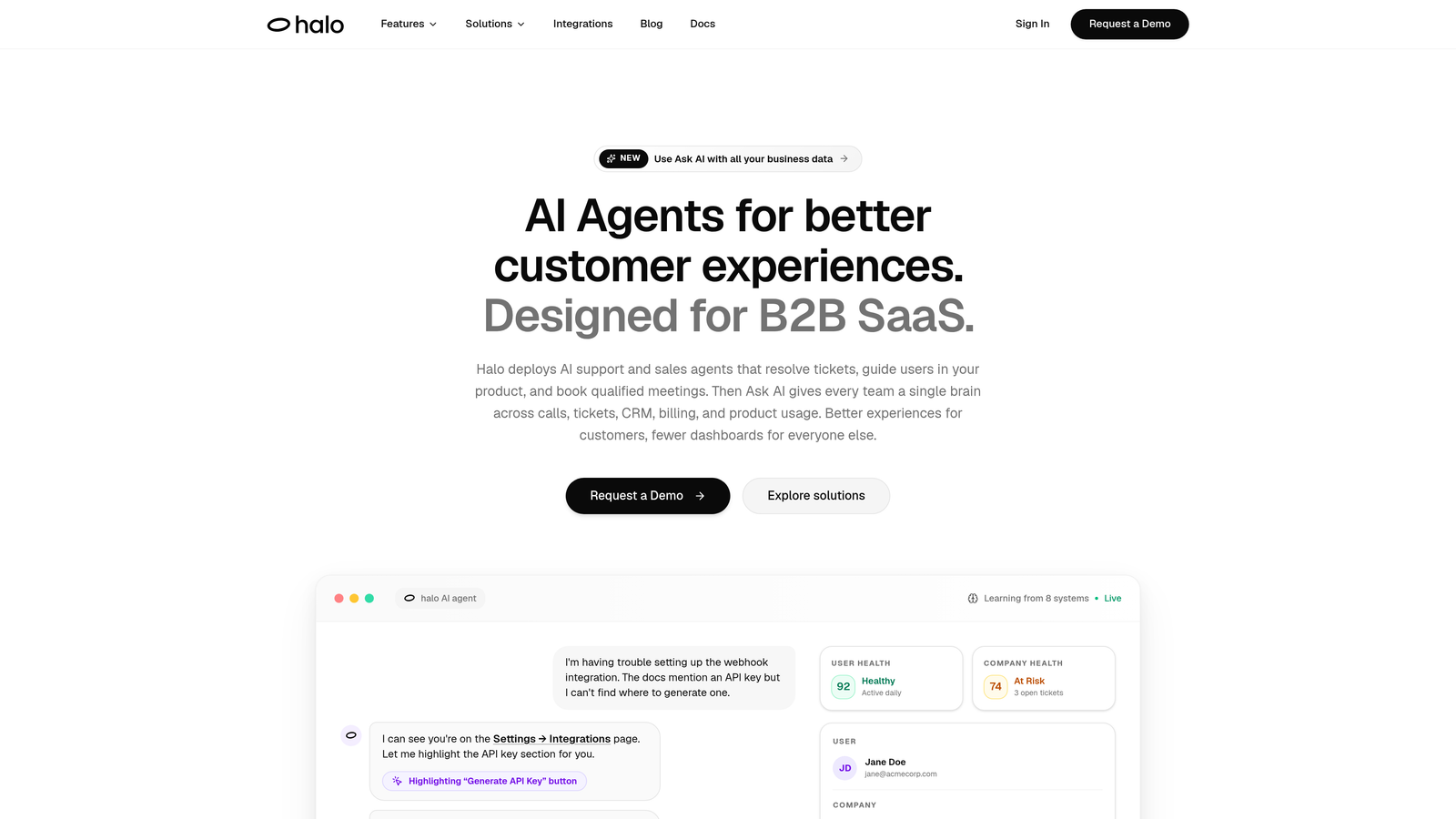
Halo AI is an AI-first customer support platform where intelligent agents resolve tickets, guide users visually through your product, and surface business intelligence from every interaction.
Where This Tool Shines
Most platforms treat AI as a feature layered onto a traditional helpdesk. Halo is built the other way around: the AI is the foundation, and everything else serves it. That architectural difference shows up in the product's most distinctive capability, which is page-aware context. Halo's chat widget actually sees what a user is looking at in your product, allowing it to give precise, visual UI guidance rather than generic help center links.
The smart inbox goes beyond ticket management. It analyzes conversations for customer health signals, revenue intelligence, and anomalies, turning your support queue into a source of business insight. And because Halo learns continuously from every interaction, the system gets measurably smarter over time rather than staying static.
Key Features
Autonomous AI Agents: Resolve support tickets end-to-end with continuous learning that improves accuracy across every interaction.
Page-Aware Chat Widget: Understands the exact page and UI state a user is on, enabling precise visual guidance rather than generic answers.
Smart Inbox with Business Intelligence: Surfaces customer health signals, revenue intelligence, and anomaly detection directly from support data.
Auto Bug Ticket Creation and Live Agent Handoff: Automatically logs bugs to tools like Linear and escalates complex issues to human agents seamlessly.
Deep Integration Stack: Connects natively with Linear, Slack, HubSpot, Intercom, Stripe, Zoom, PandaDoc, and Fathom for a unified workflow.
Best For
Product-led B2B SaaS companies that want support automation without the overhead of per-agent pricing. Particularly well-suited for teams already using modern tooling like Linear, HubSpot, or Slack who need their support layer to connect intelligently across the entire stack.
Pricing
Tier-based pricing that scales without per-agent seat costs, meaning your support costs don't balloon as your team grows. Visit haloagents.ai for current plan details.
2. Zendesk AI
Best for: Established support teams already in the Zendesk ecosystem wanting AI layered on top
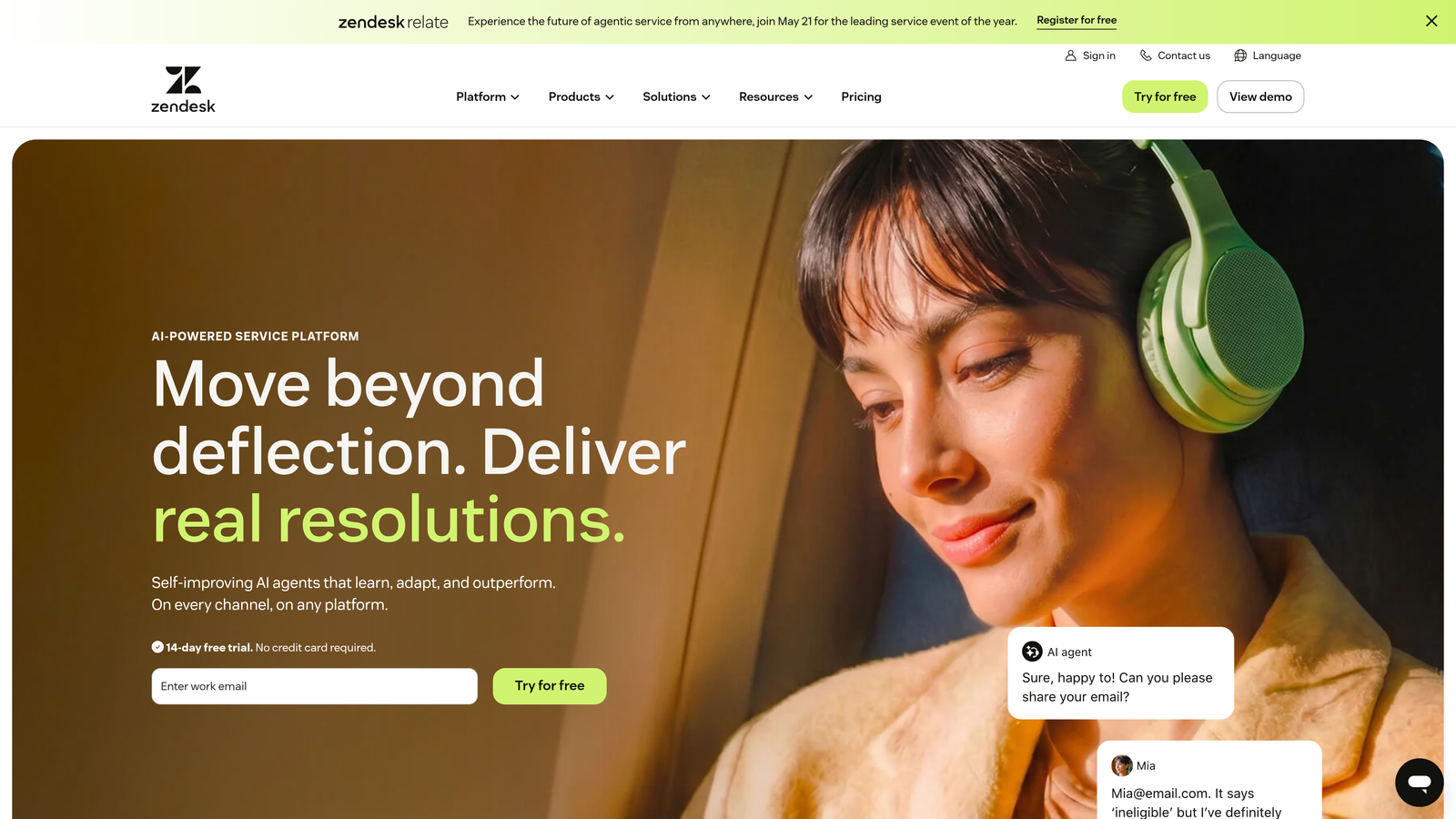
Zendesk AI brings intelligent automation and agent productivity tools to the industry's most widely deployed helpdesk platform.
Where This Tool Shines
Zendesk's AI capabilities benefit enormously from the platform's maturity. If your team has years of ticket data in Zendesk, the AI has rich training material to work with from day one. Intelligent triage, AI-generated responses, and conversation summaries all integrate naturally into workflows your agents already know.
That said, the AI story here is additive rather than foundational. The advanced AI features sit above the base platform as a paid add-on, which means your total cost requires careful calculation before signing anything.
Key Features
AI Agents: Automated ticket resolution across email, chat, and messaging channels using your existing knowledge base.
Intelligent Triage: Auto-classifies, prioritizes, and routes incoming tickets based on intent and sentiment.
Agent Productivity Tools: AI-generated reply drafts, conversation summaries, and next-step suggestions for human agents.
Zendesk Suite Integration: Deep native connection with Zendesk's broader product suite including Guide, Talk, and Explore.
Advanced AI Add-On: Additional AI capabilities available as a separate purchase on Professional plans and above.
Best For
Mid-market and enterprise teams already invested in the Zendesk ecosystem who want to layer AI onto existing workflows without migrating to a new platform. Less ideal for teams starting fresh who want an AI-first architecture from the ground up.
Pricing
Suite plans start at $55/agent/month (Team tier). The Advanced AI add-on carries an additional per-agent cost on Professional plans and above, so factor that into your total cost of ownership calculation.
3. Intercom Fin
Best for: Teams that want outcome-based pricing and are confident in their help content quality
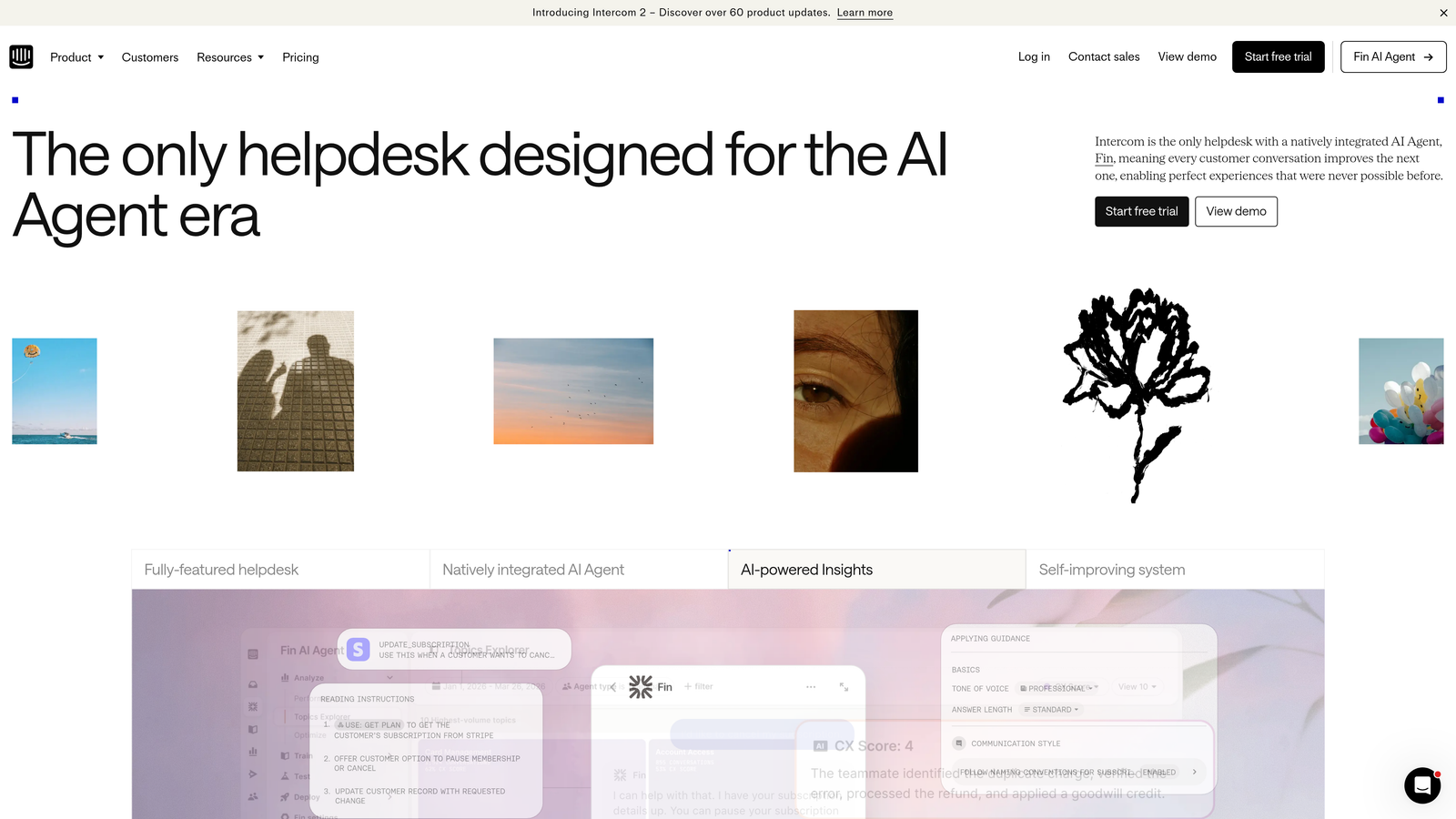
Intercom Fin is an AI-first support agent that charges per successful resolution, aligning platform cost directly with value delivered.
Where This Tool Shines
Fin's per-resolution model is genuinely distinctive. You pay $0.99 for each conversation Fin actually resolves, not for seats or monthly conversation volume. For teams with high resolution rates and strong help content, this can be highly cost-effective. It also creates a natural incentive alignment: Intercom wins when Fin resolves more tickets.
The flip side is predictability. If your ticket volume spikes or your resolution rate drops, your costs can swing significantly. Teams with inconsistent volume or complex product questions should model out worst-case scenarios before committing.
Key Features
Per-Resolution Pricing: Pay only when Fin successfully resolves a conversation, with no charge for failed or handed-off interactions.
Multi-Source Learning: Learns from help center content, past conversations, and custom data sources you provide.
Multichannel Support: Handles chat, email, and SMS across multiple languages.
Customizable Behavior: Configure tone, handoff rules, and escalation workflows to match your brand and support policies.
Intercom Platform Integration: Works within Intercom's broader messenger, inbox, and reporting ecosystem.
Best For
Companies with well-documented products, strong help center content, and relatively straightforward support questions where Fin's resolution rate will be high. Also a strong fit for teams already using Intercom who want to add AI without switching platforms.
Pricing
Fin AI Agent charges $0.99 per resolution. The base Intercom platform starts at $29/seat/month on the Essential plan. Total cost depends heavily on your resolution volume.
4. Freshdesk Freddy AI
Best for: Small to mid-sized teams wanting affordable per-agent pricing with AI bundled into higher tiers
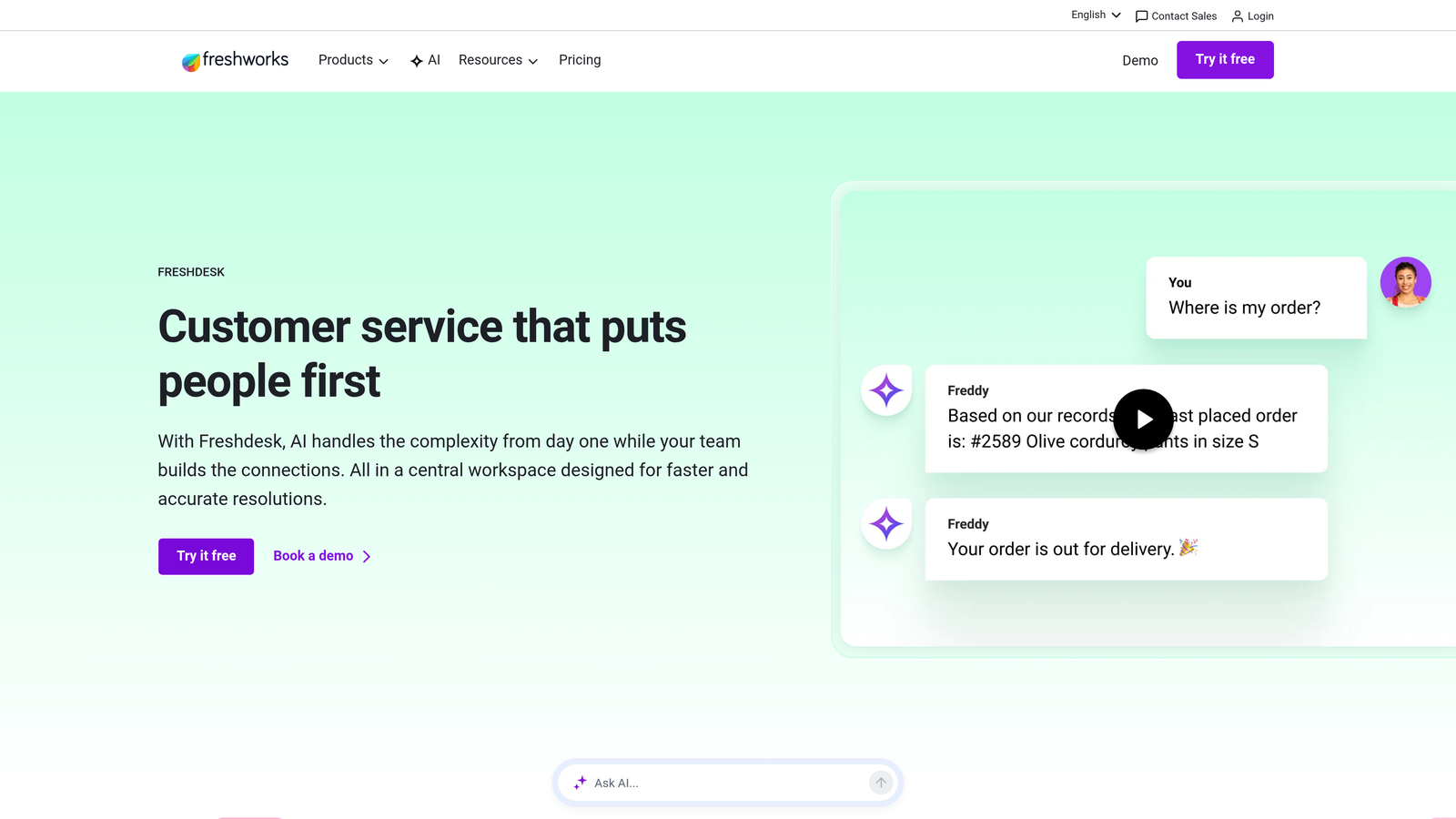
Freshdesk's Freddy AI delivers automation and agent-assist capabilities within one of the most competitively priced helpdesk platforms on the market.
Where This Tool Shines
Freshdesk's free tier is a genuine on-ramp for small teams, and the pricing ladder is gradual enough that growing companies can stay on the platform without sticker shock. Freddy AI covers both sides of the support equation: the Freddy AI Agent handles customer self-service, while Freddy Copilot assists human agents with drafts, summaries, and suggestions.
The trade-off is that meaningful AI features require upgrading to Pro or Enterprise. Teams on the Growth tier will find themselves doing more manual work than the marketing materials might suggest.
Key Features
Freddy AI Agent: Automated self-service resolution for common customer questions using your knowledge base.
Freddy Copilot: Agent-assist tools including response suggestions, conversation summaries, and next-step recommendations.
Free Tier: Basic ticketing for up to 2 agents at no cost, making it accessible for very small teams.
Omnichannel Support: Email, chat, phone, and social channels covered across tiers.
Bundled AI on Higher Tiers: No separate AI add-on cost at Pro and Enterprise levels.
Best For
Small businesses and growing startups that want a predictable per-agent cost structure with a clear upgrade path. The free tier makes it easy to get started, and the Pro tier's bundled AI is solid value for teams handling moderate ticket volumes.
Pricing
Free plan available. Growth at $15/agent/month. Pro at $49/agent/month (includes Freddy AI features). Enterprise at $79/agent/month with advanced capabilities.
5. Ada
Best for: Enterprise organizations needing high-volume automated resolution across multiple channels
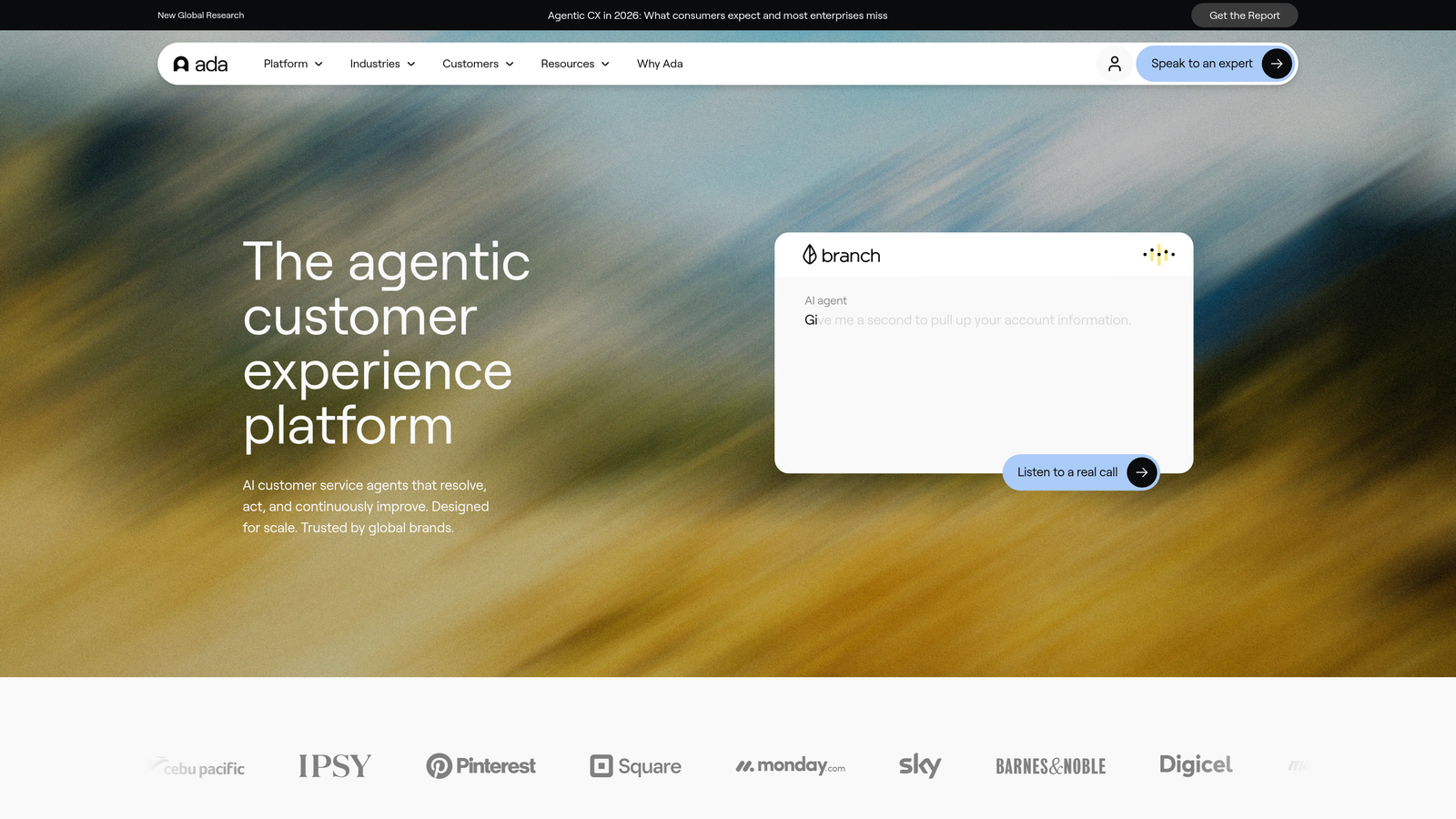
Ada is an enterprise-grade AI agent platform purpose-built to automate customer service resolution at scale, with a strong emphasis on measurable deflection outcomes.
Where This Tool Shines
Ada's focus is singular: resolution rate. The platform is designed from the ground up to automate as many customer interactions as possible across web, mobile, social, SMS, and voice channels. Its coaching and reasoning tools let teams continuously improve AI performance based on real conversation data, which makes it particularly strong for organizations with complex, evolving products.
The enterprise-grade security and compliance posture is a meaningful differentiator for regulated industries. If your support operation handles sensitive customer data at scale, Ada's infrastructure is built to meet those requirements.
Key Features
Resolution-Focused AI Agent: Automated resolution as the primary design goal, with performance metrics centered on deflection and containment rates.
Omnichannel Deployment: Web, mobile, social, SMS, and phone all supported from a single platform.
Action-Oriented Responses: Connects to backend business systems to take actions on behalf of customers, not just answer questions.
Coaching and Reasoning Tools: Continuous AI performance improvement through structured feedback and reasoning workflows.
Enterprise Security: Compliance and security features suited for regulated industries and large-scale deployments.
Best For
Enterprise companies with high conversation volumes across multiple channels who need a dedicated AI resolution platform with enterprise-grade compliance. Not the right fit for small teams or organizations that want transparent, self-serve pricing.
Pricing
Custom enterprise pricing based on conversation volume and channels. No public pricing is available; a sales consultation is required to get a quote.
6. Tidio
Best for: Small businesses and e-commerce stores wanting fast AI chat deployment at low cost
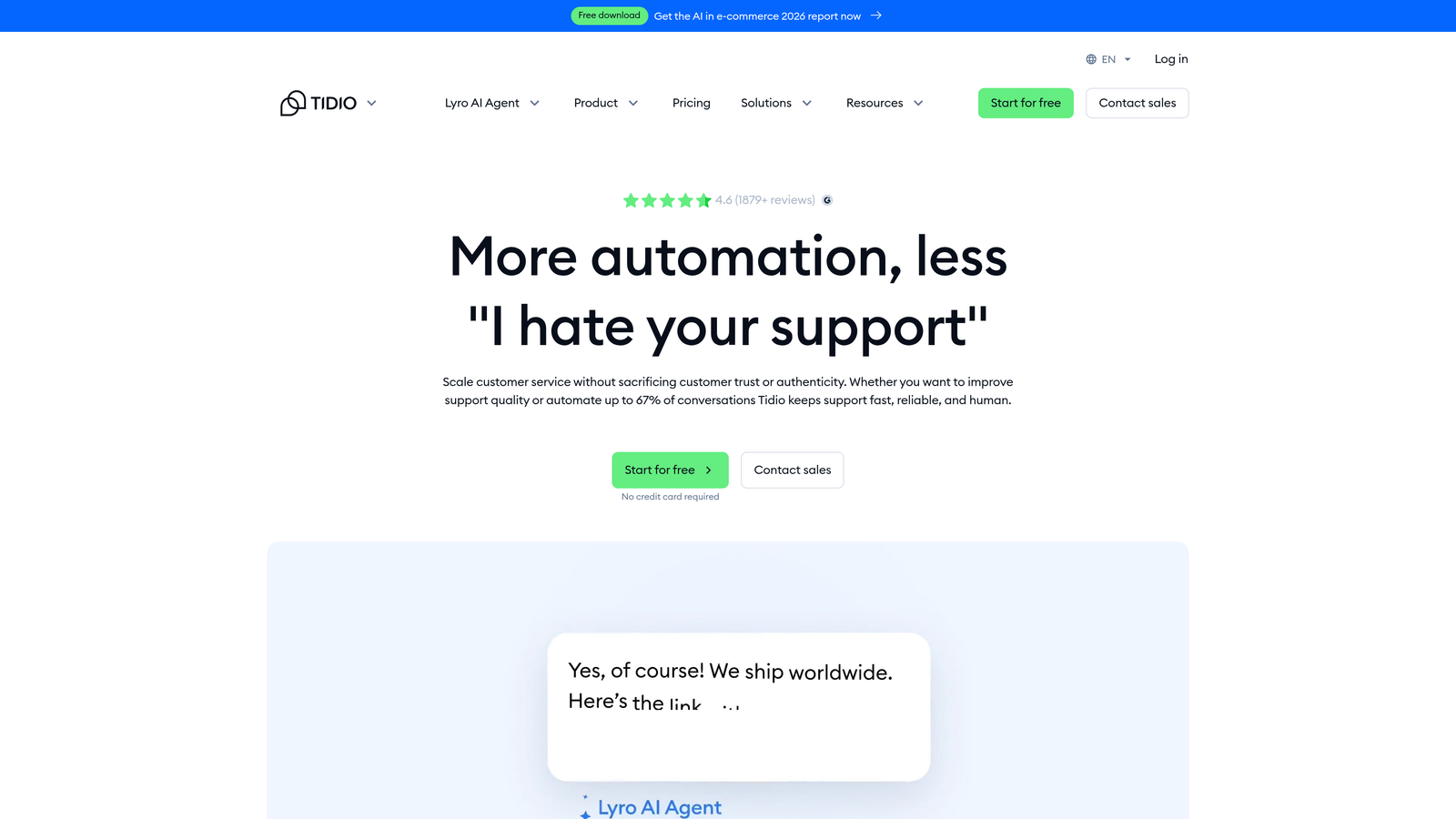
Tidio combines live chat, AI automation, and e-commerce integrations in an accessible package designed for teams without dedicated support operations.
Where This Tool Shines
Tidio's Lyro AI chatbot is genuinely quick to set up. It learns from your FAQ content and help documentation without requiring complex configuration, which makes it ideal for small teams that need something working today rather than after a lengthy implementation. The visual chatbot flow builder adds flexibility for teams that want custom automation paths without writing code.
The free plan is a real free plan, not a trial. It gives small businesses a meaningful entry point to test AI chat before committing to paid tiers.
Key Features
Lyro AI Chatbot: Learns from FAQ and help content to handle common customer questions automatically.
Visual Flow Builder: Drag-and-drop chatbot workflow creation for custom automation without coding.
Live Chat with AI Suggestions: Human agents get AI-powered response recommendations during live conversations.
E-Commerce Integrations: Native connections with Shopify, WooCommerce, and other major e-commerce platforms.
Free Plan: Limited conversation volume at no cost, with paid tiers unlocking higher limits and advanced features.
Best For
E-commerce businesses and small service companies that need affordable AI chat without enterprise complexity. Tidio+ at $749/month serves growing businesses with advanced automation needs, but most small teams will find the Starter tier sufficient.
Pricing
Free plan available. Starter at $29/month. Lyro AI conversations available as an add-on or bundled in higher tiers. Tidio+ starts at $749/month for advanced requirements.
7. Forethought
Best for: Mid-market and enterprise teams wanting modular AI across triage, resolution, and agent-assist
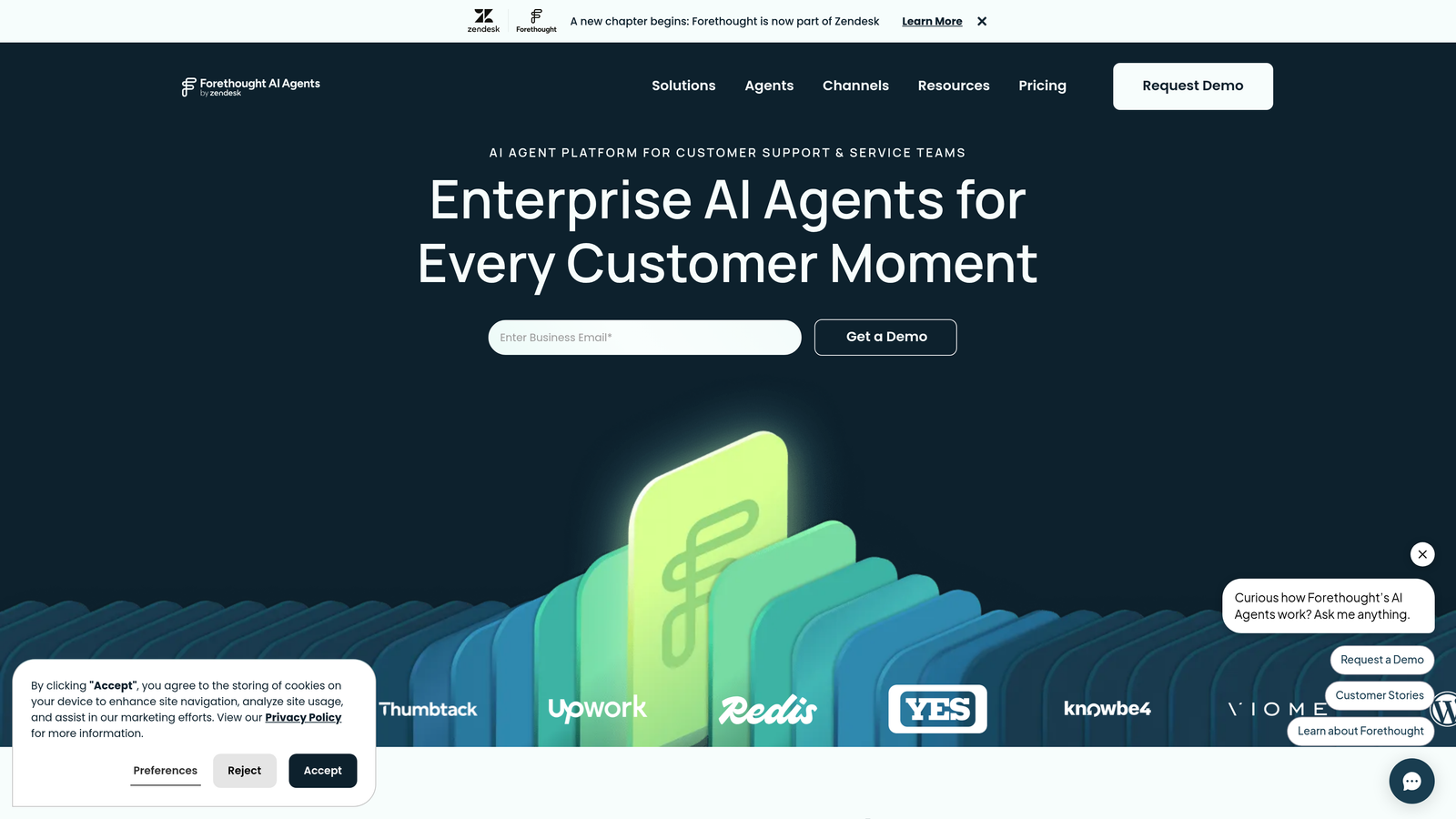
Forethought is an AI support platform built around three distinct modules: triage, solve, and assist, each targeting a different layer of the support workflow.
Where This Tool Shines
The modular architecture is Forethought's defining characteristic. Rather than buying a monolithic platform and hoping it fits, teams can deploy the triage module to improve routing, the solve module to automate resolution, and the assist module to augment human agents, independently or together. This makes it practical to start with one use case and expand over time.
SupportGPT powers the AI across all three modules, and the platform integrates with major helpdesks including Zendesk, Salesforce, and ServiceNow, making it a strong choice for teams that want AI capabilities without replacing their existing infrastructure.
Key Features
SupportGPT-Powered Modules: AI capabilities across triage, solve, and assist functions, all sharing the same underlying intelligence.
Triage Module: Auto-classifies, prioritizes, and routes incoming tickets based on content and intent.
Solve Module: Automated self-service resolution for customers without human involvement.
Assist Module: Suggested responses, knowledge surfacing, and next-step recommendations for human agents.
Helpdesk Integrations: Native connections with Zendesk, Salesforce Service Cloud, and ServiceNow.
Best For
Operations-focused support teams at mid-market and enterprise companies who want to add AI incrementally to an existing helpdesk setup. The modular approach suits organizations that need to justify AI investment one use case at a time.
Pricing
Custom pricing based on ticket volume and selected modules. No public pricing is listed; a demo and sales consultation are required.
8. Kustomer
Best for: Support teams that need deep CRM context woven into every customer interaction
Kustomer is a CRM-powered customer service platform that layers AI on top of a unified customer timeline, giving agents full context before they type a single word.
Where This Tool Shines
Kustomer's central idea is that better context produces better support. The unified customer timeline aggregates every interaction, order, and data point from across your business into a single view, and the AI uses that context to power more relevant automated responses and agent suggestions. For teams handling complex, relationship-intensive support, this CRM-first approach is genuinely differentiated.
The platform also supports proactive support, triggering outreach based on customer behavior data before a ticket is even submitted. That's a meaningful capability for teams trying to reduce inbound volume rather than just respond to it faster.
Key Features
Unified Customer Timeline: All interactions, orders, and data points consolidated into a single customer view for every agent.
AI Chatbots and Workflows: Automated responses and process automation powered by customer context.
CRM-First Architecture: Deep customer data informs every AI and human interaction rather than treating each ticket in isolation.
Omnichannel Coverage: Email, chat, social, SMS, and voice all handled within the same platform.
Proactive Support: Behavior-triggered outreach and alerts before customers reach out with problems.
Best For
Customer-centric companies with complex, high-value customer relationships where context and history matter as much as resolution speed. Well-suited for e-commerce, subscription businesses, and any team where a customer's full history is essential to resolving their issue correctly.
Pricing
Enterprise plan at $89/user/month. Ultimate plan at $139/user/month with advanced AI and analytics. Custom pricing available for larger deployments.
9. Help Scout
Best for: Small support teams that want AI to make human agents faster without full automation
Help Scout is a human-centered support platform where AI features are designed to augment agents rather than replace them, with no separate AI add-on cost across any plan.
Where This Tool Shines
Help Scout's approach to AI is intentionally modest, and that's a feature, not a limitation. The platform focuses on making human agents faster and more accurate: AI drafts generate reply suggestions, AI summaries compress long threads into quick context, and article recommendations surface relevant self-service content. For teams that believe human judgment should stay central to support, this philosophy resonates.
The no-add-on pricing model is also worth noting. Every Help Scout plan includes AI features at no extra charge, which makes total cost of ownership genuinely predictable. What you see in the pricing page is what you pay.
Key Features
AI Drafts: Reply suggestions generated from your knowledge base and past conversations, ready for agents to review and send.
AI Summaries: Long conversation threads condensed into concise context blocks so agents can get up to speed instantly.
AI Article Recommendations: Self-service content surfaced automatically based on the customer's question.
Clean, Simple Interface: Designed for small support teams that need clarity and speed over feature density.
AI Included in All Plans: No separate AI tier or add-on cost, making pricing straightforward and predictable.
Best For
Small and mid-sized teams that prioritize human-led support with AI as a productivity layer. Particularly well-suited for companies where customer relationships are personal and agents need tools that help them respond thoughtfully, not tools that respond for them.
Pricing
Standard at $50/user/month. Plus at $75/user/month. Pro available with custom pricing. AI features included across all plans at no additional cost.
Picking the Right Platform for Your Budget
The platform that's right for your team depends less on raw price and more on how your costs scale with your support volume and what you actually need the AI to do.
Here's a practical breakdown by team size and stage:
Early-stage startups: Start with Freshdesk's free tier or Tidio's free plan to validate your support workflows before committing to a platform. Help Scout is also worth considering if your team values simplicity and wants AI included without the math of add-ons.
Growing mid-market teams: This is where the per-agent model starts to hurt. Platforms like Halo AI, which scale on tier-based pricing rather than per-seat costs, become meaningfully more economical as your customer base grows without a proportional headcount increase. Intercom Fin's per-resolution model is also worth modeling out if your help content is strong and your resolution rate would be high.
Enterprise organizations: Ada and Forethought are built for this segment, though the lack of public pricing requires a sales process before you can make a real comparison. Kustomer is the strongest choice if CRM context and relationship depth are central to your support model. Zendesk remains a safe default for enterprises already in that ecosystem, but factor in the Advanced AI add-on cost before assuming the base plan price tells the full story.
One principle holds across every segment: the cheapest plan is rarely the best value. A $15/agent/month plan that requires three add-ons to do what you actually need will cost more than a $49 plan that includes everything. Always model your total cost of ownership, including AI features, integrations, overage charges, and onboarding fees, before comparing headline prices.
Before signing anything, take advantage of free tiers and demo offers. Most platforms on this list offer a way to test the product before committing, and the difference between a platform that fits your workflow and one that doesn't is something you'll feel immediately.
Your support team shouldn't scale linearly with your customer base. AI agents should handle routine tickets, guide users through your product, and surface business intelligence while your team focuses on complex issues that need a human touch. See Halo in action and discover how continuous learning transforms every interaction into smarter, faster support.