9 Best AI Customer Service Pricing Plans Compared for 2026
Navigating AI customer service pricing plans can be overwhelming when platforms charge per seat, per conversation, or per resolved ticket at vastly different rates. This comparison of nine leading platforms breaks down exactly what you get at each price point, helping SaaS startups and enterprise teams identify the most cost-effective solution and avoid unexpected pricing surprises as support volume scales.
 Grant CooperFounder12 min read
Shopping for an AI customer service platform is surprisingly tricky. Not because the tools are hard to evaluate, but because the pricing models vary wildly. Some charge per seat, others per conversation, others per resolved ticket. A plan that looks affordable at 500 tickets a month can become eye-wateringly expensive at 5,000.
This guide cuts through the noise by comparing nine leading AI customer service platforms on what actually matters: what you get, what it costs, and when the pricing model works in your favor. Whether you're a lean SaaS startup looking to automate tier-1 support or an enterprise team replacing a legacy helpdesk, this breakdown will help you find the right fit and avoid pricing surprises down the road.
We've evaluated each platform on transparency, scalability, and feature depth relative to cost. Let's get into it.
1. Halo AI
Best for: B2B SaaS teams that want AI-native support with built-in business intelligence
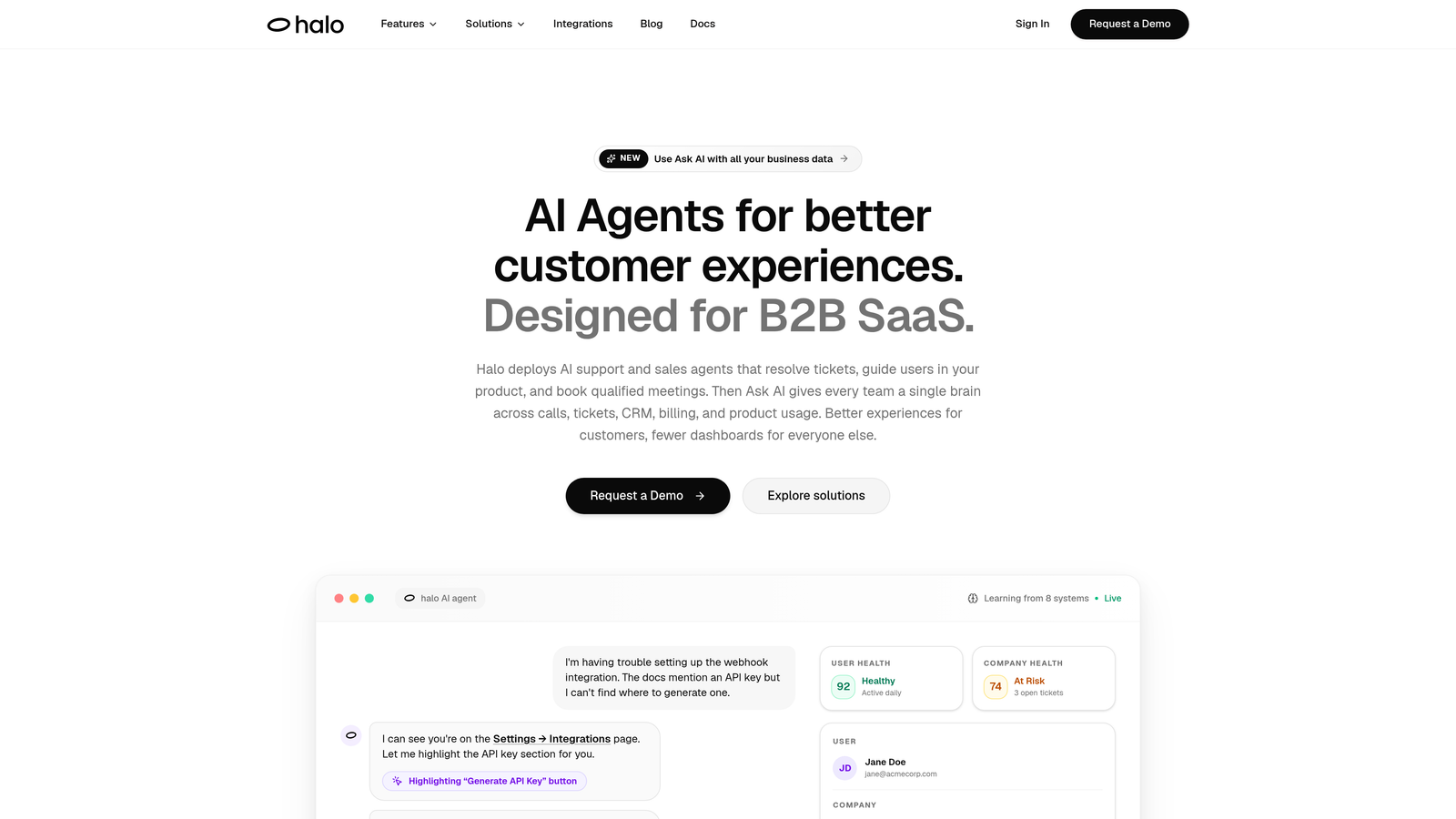
Halo AI is an AI-first customer support platform purpose-built for B2B SaaS companies that want intelligent automation without bolting AI onto an existing helpdesk.
Where This Tool Shines
Halo's biggest differentiator is its page-aware context engine. The chat widget doesn't just know who the user is — it sees what they're looking at, which means it can provide visual UI guidance specific to the exact screen a customer is stuck on. That's a meaningful step beyond generic chatbots that respond to keywords.
The platform also goes beyond support. Its smart inbox surfaces customer health signals, revenue intelligence, and anomaly detection, turning your support queue into a source of business insight. When a bug pattern emerges across tickets, Halo automatically creates a structured bug report and routes it to engineering tools like Linear — no manual triage required.
Key Features
Intelligent AI Agents: Autonomously resolve support tickets and learn from every interaction without manual retraining.
Page-Aware Chat Widget: Understands the user's current screen context to deliver precise, visual UI guidance.
Smart Inbox with Business Intelligence: Surfaces customer health signals, revenue intelligence, and anomaly detection from support data.
Auto Bug Ticket Creation: Detects recurring issues and automatically routes structured bug reports to Linear and connected engineering tools.
Live Agent Handoff: Escalates complex issues to human agents with full conversation context preserved.
Native Integrations: Connects with Slack, HubSpot, Intercom, Stripe, Zoom, PandaDoc, and Fathom out of the box.
Best For
B2B SaaS product and support teams that want AI to do more than deflect tickets. If you want support data to inform product decisions, customer success, and engineering priorities, Halo's intelligence layer is built for that use case specifically.
Pricing
Pricing is available directly at haloagents.ai. Contact the team for current plan details and to discuss volume-based options for your team size.
2. Intercom (Fin AI)
Best for: Teams already on Intercom who want per-resolution AI pricing
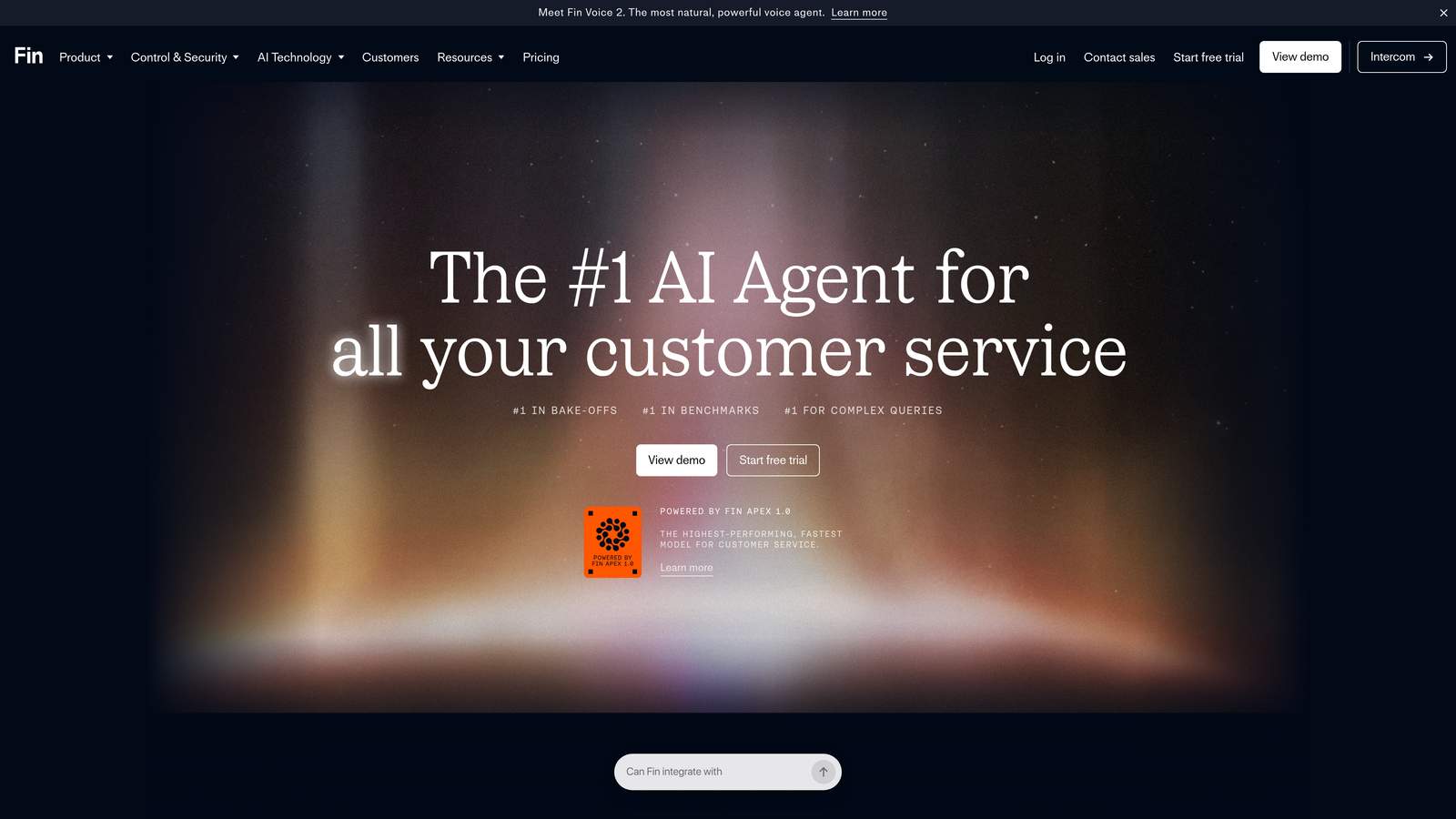
Intercom Fin is an AI agent built natively into the Intercom platform, designed to resolve customer queries autonomously before escalating to a human.
Where This Tool Shines
Fin's per-resolution pricing model is genuinely interesting: you only pay when the AI successfully resolves a ticket without human intervention. In theory, this aligns cost directly with value delivered. In practice, it means you need to understand exactly how Intercom defines "resolved" before committing.
For teams already invested in the Intercom ecosystem, Fin is a natural extension. The handoff to human agents is seamless, full conversation context transfers, and the setup is relatively quick for existing users.
Key Features
Per-Resolution Pricing: Costs are tied to successful AI resolutions, not seat count or conversation volume.
Native Messenger Integration: Sits directly inside Intercom's existing chat and inbox infrastructure.
Multi-Language Support: Handles conversations across multiple languages without additional configuration.
Customizable AI Persona: Adjust tone and personality to match your brand voice.
Contextual Handoff: Transfers to human agents with full conversation history intact.
Best For
Companies already using Intercom as their primary support and messaging platform. Switching costs are low, and the per-resolution model works well for teams with high deflection rates on predictable query types.
Pricing
Fin charges a per-resolution fee on top of your existing Intercom base plan. Verify current rates at intercom.com/pricing, as the structure can change.
3. Zendesk AI
Best for: Enterprise teams with complex routing needs and large agent workforces
Zendesk AI adds intelligent automation, agent assist, and autonomous resolution capabilities on top of the world's most widely deployed enterprise helpdesk.
Where This Tool Shines
Zendesk's strength is its depth. The AI layer includes intent detection, intelligent triage, AI-generated ticket summaries, and suggested responses that help agents work faster even when they're handling tickets manually. For large teams processing thousands of tickets daily, the agent-assist features alone can meaningfully reduce handle time.
The ecosystem is also unmatched. With over 1,000 integrations in the Zendesk marketplace, it fits into almost any enterprise tech stack. The tradeoff is complexity: Advanced AI is a per-agent add-on on top of already tiered Suite plans, so total cost can escalate quickly.
Key Features
Intelligent Triage and Intent Detection: Automatically categorizes and routes tickets based on detected intent and sentiment.
AI-Generated Summaries and Suggested Replies: Speeds up agent response time without requiring full automation.
Autonomous AI Agents: Deflects common queries before they reach the human queue.
Enterprise Compliance Controls: Deep customization for routing rules, data handling, and compliance requirements.
1,000+ App Integrations: Connects to virtually any enterprise tool via the Zendesk marketplace.
Best For
Large enterprise support operations that are already on Zendesk Suite and want to layer AI on top of existing workflows. Less ideal for smaller teams where the cost-per-agent model becomes disproportionately expensive.
Pricing
Advanced AI is a per-agent monthly add-on to Zendesk Suite plans. Verify current pricing at zendesk.com/pricing.
4. Freshdesk (Freddy AI)
Best for: Cost-conscious teams wanting modular AI adoption on a budget-friendly base
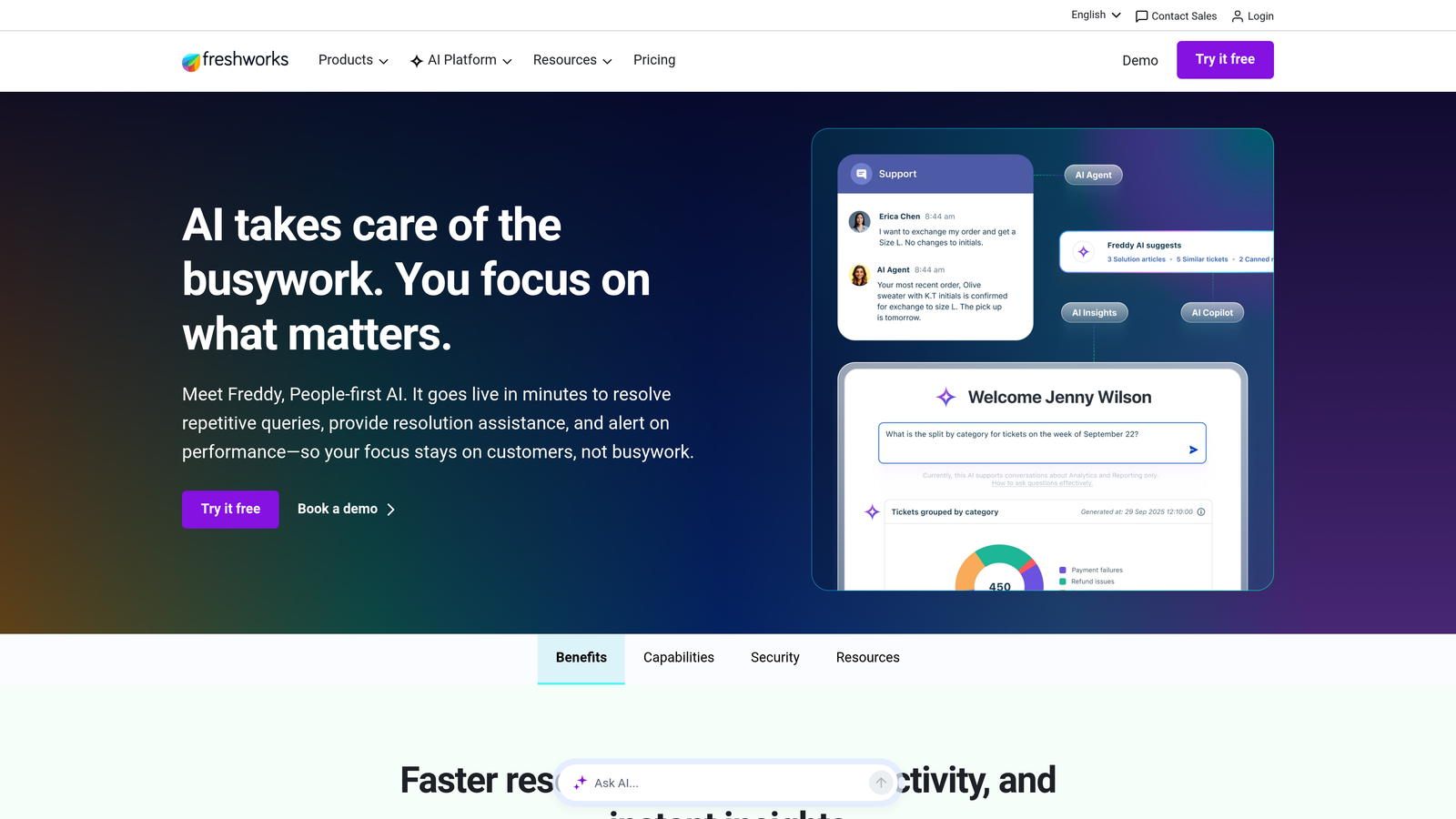
Freshdesk's Freddy AI brings both agent-assist and autonomous AI capabilities to one of the most competitively priced helpdesk platforms on the market.
Where This Tool Shines
Freddy AI comes in two distinct flavors: Copilot handles agent-assist tasks like suggested replies and ticket summarization, while Freddy AI Agent handles autonomous deflection of repetitive queries. This modular structure means you can adopt AI incrementally rather than committing to a full platform overhaul.
Freshdesk's base pricing is consistently more accessible than Zendesk and Intercom at comparable feature tiers. For teams that want to experiment with AI without a large upfront commitment, the add-on model gives meaningful flexibility.
Key Features
Freddy AI Copilot: Provides agents with suggested replies, ticket summaries, and next-best-action recommendations.
Freddy AI Agent: Autonomously deflects repetitive queries before they reach the human queue.
Modular Add-On Structure: Adopt Copilot, Agent, or both — based on your current needs and budget.
Omnichannel Coverage: Handles email, chat, phone, and social from a single interface.
Competitive Base Pricing: Freshdesk's underlying platform costs less than most enterprise alternatives at comparable feature levels.
Best For
Growing teams that want a capable AI layer without Zendesk-level pricing. Also a good fit for companies that want to start with agent-assist before committing to full autonomous resolution.
Pricing
Freddy AI add-ons are priced per agent per month on top of Freshdesk base plans. Verify current add-on rates at freshdesk.com/pricing.
5. Tidio
Best for: Small businesses and e-commerce stores with lower support volumes
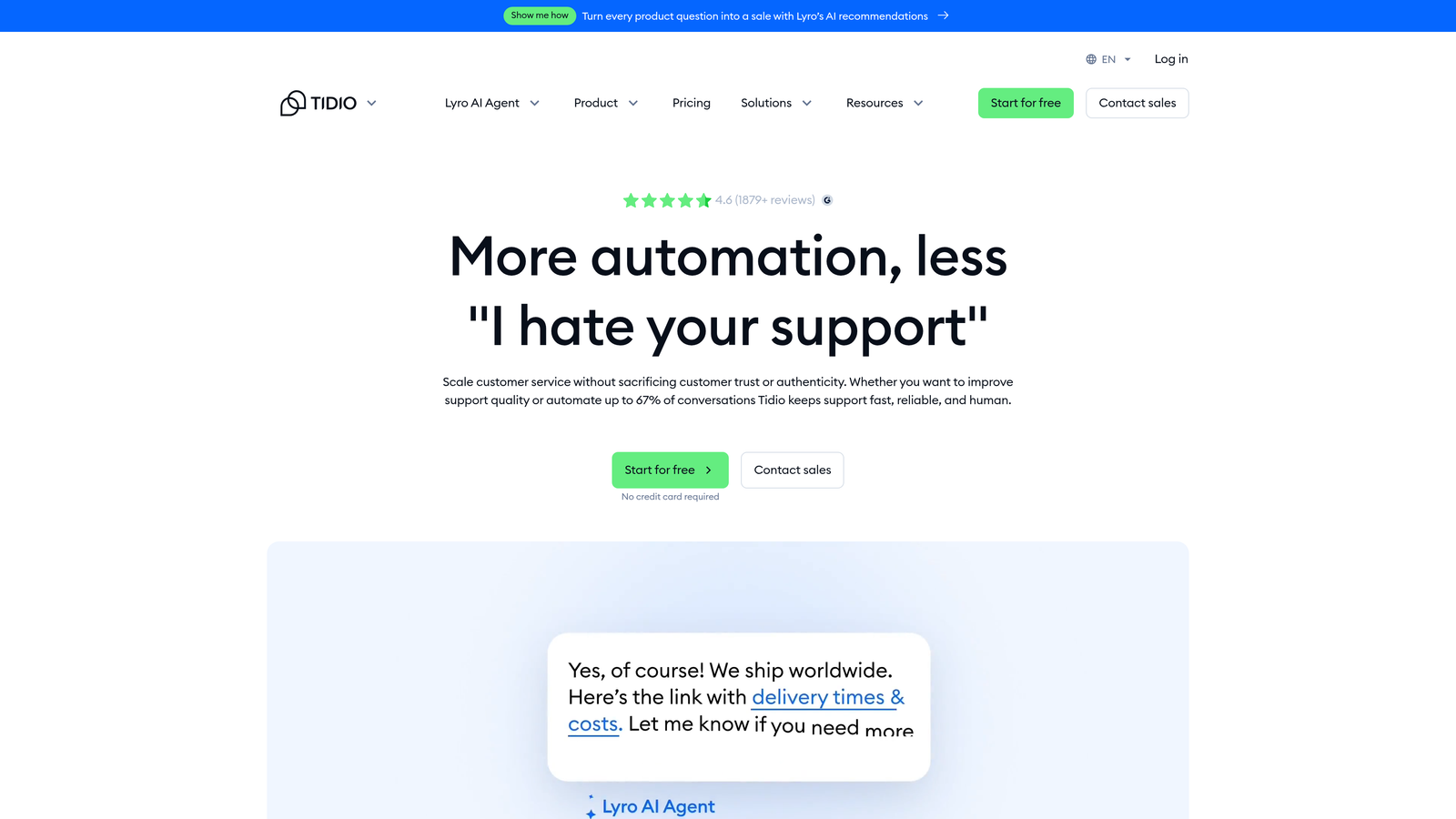
Tidio offers Lyro, an AI chatbot with a generous free tier and conversation-volume-based paid plans designed to scale with traffic rather than headcount.
Where This Tool Shines
Tidio's free tier is genuinely useful, not just a marketing hook. Lyro handles a limited number of AI conversations per month at no cost, which makes it a practical entry point for small teams testing AI support for the first time. The live chat and AI hybrid sits in a single interface, so agents and automation work from the same view.
The conversation-volume pricing model is intuitive for businesses with predictable traffic patterns. The risk is cost spikes during promotional periods or seasonal surges — worth modeling before committing to a plan tier.
Key Features
Lyro AI Free Tier: Limited monthly AI conversations at no cost — useful for low-volume testing.
Conversation-Volume Pricing: Paid plans scale with monthly conversation volume rather than agent seats.
Live Chat and AI Hybrid: Agents and AI operate within the same unified interface.
No-Code Configuration: Set up AI responses and flows without technical resources.
E-Commerce Integrations: Native connections to Shopify and other e-commerce platforms.
Best For
Small businesses, e-commerce stores, and early-stage startups with modest support volumes. Less suited for B2B SaaS teams needing deep integrations, business intelligence, or complex escalation logic.
Pricing
Free tier available for Lyro; paid plans scale by monthly conversation volume. Verify current tiers at tidio.com/pricing.
6. Drift (Salesloft)
Best for: Revenue-focused teams blending sales qualification with support automation
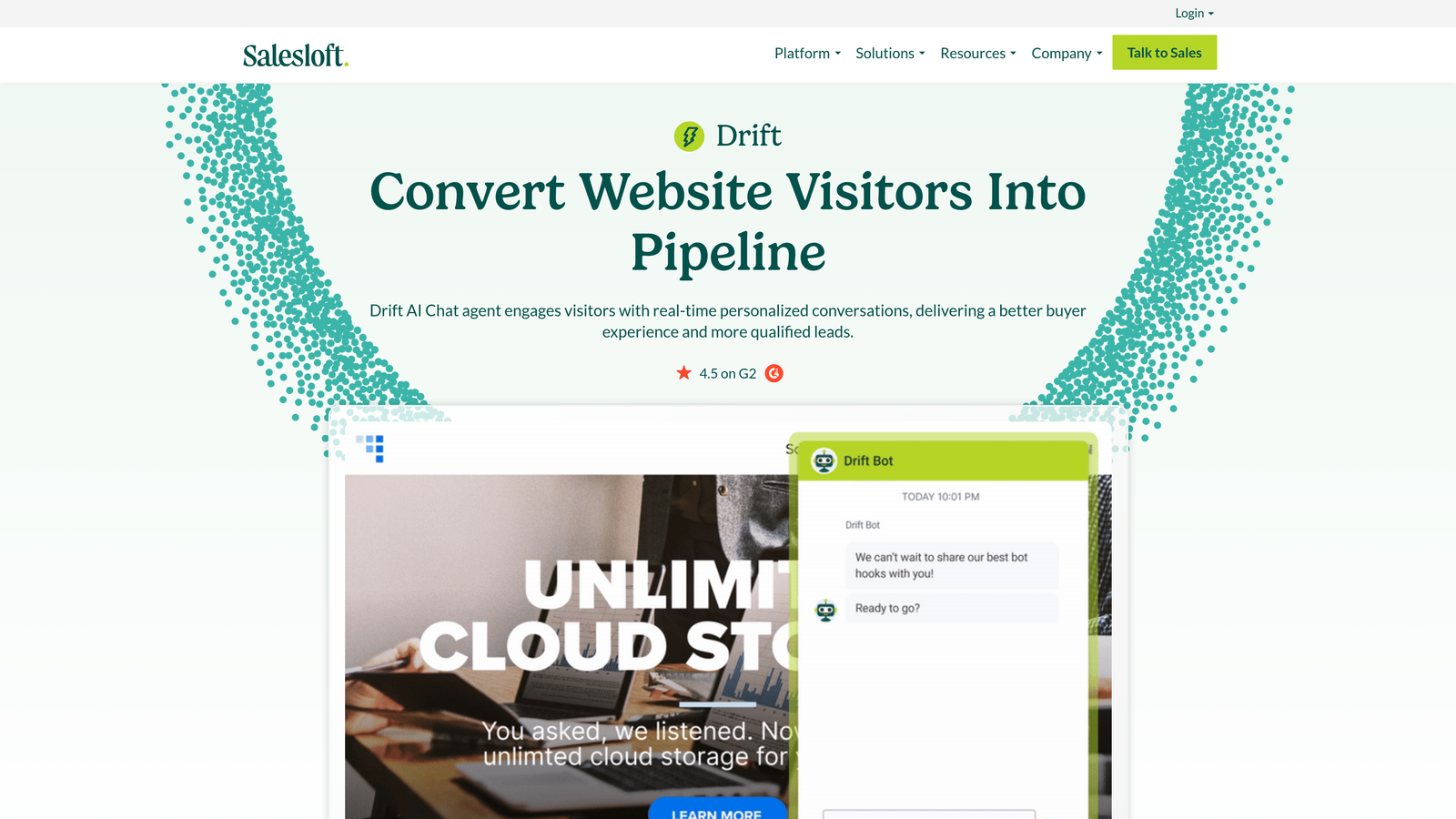
Drift, now part of Salesloft, is a conversational AI platform that combines sales qualification and customer support in a single AI-powered interface.
Where This Tool Shines
Drift occupies a unique position in this list: it's less a pure support tool and more a revenue engagement platform that also handles support conversations. Its account-based targeting capability recognizes high-value website visitors and routes them accordingly, which is useful for B2B companies where the same chat widget serves both prospects and existing customers.
Meeting scheduling automation is baked directly into chat flows, which removes friction for sales-adjacent support interactions. The tradeoff is that Drift's pricing is enterprise-oriented and typically requires a custom quote, which makes it harder to evaluate without a sales conversation.
Key Features
AI-Powered Conversation Routing: Routes incoming conversations to sales, support, or automation based on visitor context.
Account-Based Targeting: Identifies and prioritizes high-value accounts visiting your site in real time.
CRM Integration: Deep connections to Salesforce and HubSpot for bidirectional data sync.
Meeting Scheduling Automation: Books meetings directly within chat flows without leaving the conversation.
Revenue Intelligence Reporting: Tracks pipeline influence and conversation outcomes tied to revenue.
Best For
Mid-market and enterprise B2B companies where sales and support overlap significantly, and where the chat widget needs to serve both functions without separate tooling.
Pricing
Enterprise-oriented with custom pricing. Contact Drift or Salesloft directly for current plan structures and to get a quote tailored to your team size.
7. Gorgias
Best for: E-commerce brands on Shopify or BigCommerce with ticket-heavy support queues
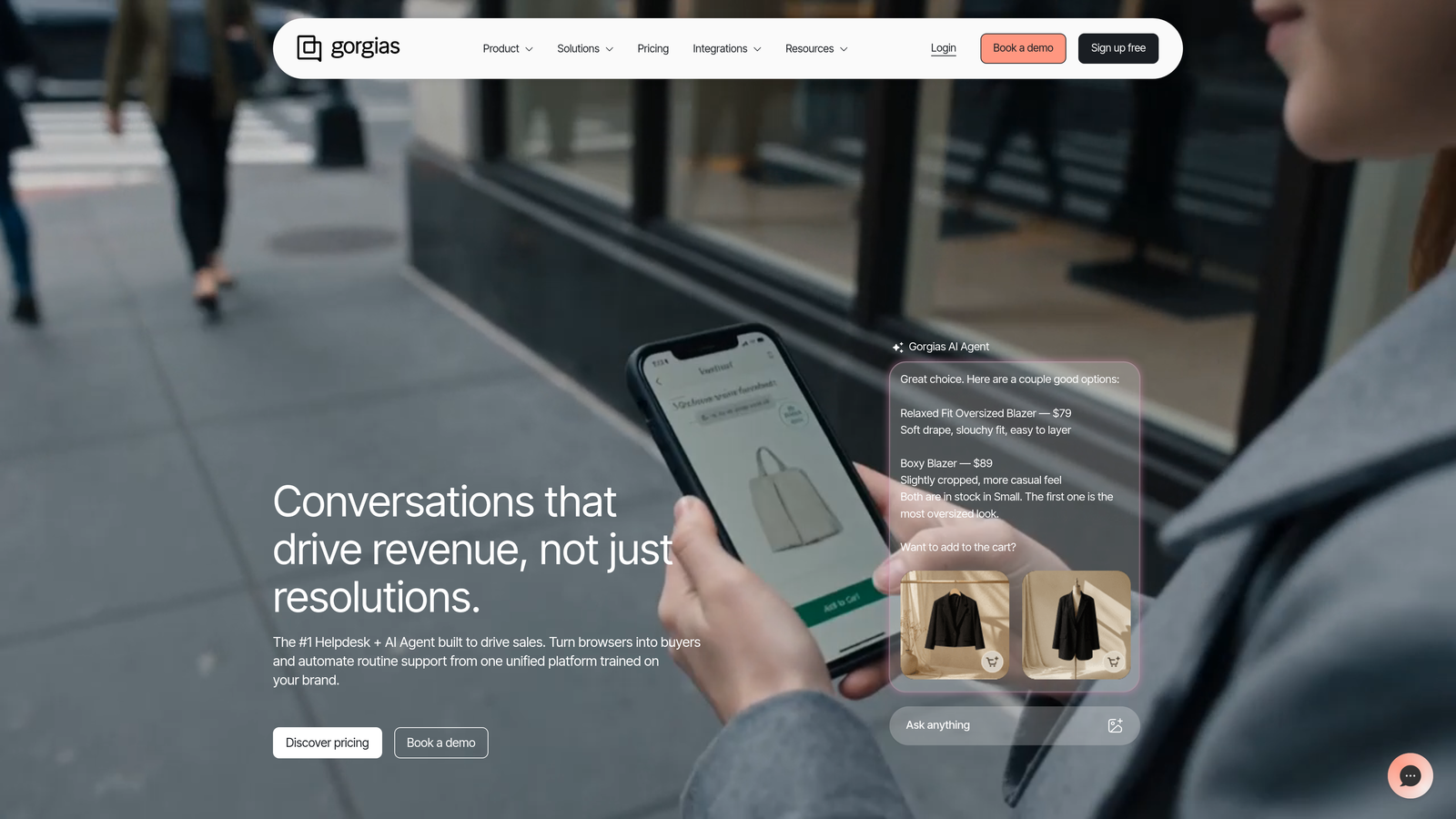
Gorgias is built specifically for e-commerce support, with a ticket-based pricing model and deep integrations with Shopify, BigCommerce, and Magento.
Where This Tool Shines
The ticket-based pricing model is Gorgias's most distinctive feature. You pay per ticket rather than per agent seat, which can be more economical for lean teams handling high volumes. The Shopify integration is particularly deep: order data, return status, and customer history surface directly inside the ticket view, so agents don't need to switch tabs to resolve common e-commerce queries.
AI auto-replies handle the most predictable e-commerce questions, such as order status and return policies, without human involvement. This makes Gorgias effective at deflection for brands with repetitive, high-volume query patterns.
Key Features
Ticket-Based Pricing: Costs scale with ticket volume rather than agent headcount.
Deep Shopify Integration: Order data and customer history surface natively inside the ticket interface.
AI Auto-Replies: Automatically resolves common e-commerce queries like order status and return requests.
Macros and Automation Rules: Streamlines repetitive workflows without requiring AI for every task.
Omnichannel Coverage: Handles email, chat, social DMs, and SMS from a single interface.
Best For
E-commerce brands with high ticket volumes and predictable query patterns, particularly those built on Shopify. Not a natural fit for B2B SaaS teams or companies without an e-commerce component.
Pricing
Plans are based on monthly ticket volume. Verify current tiers and overage policies at gorgias.com/pricing.
8. Kustomer
Best for: High-volume B2C brands managing complex omnichannel support at scale
Kustomer provides a unified customer timeline view with AI features bundled into higher tiers, targeting brands that need a complete picture of every customer interaction across all channels.
Where This Tool Shines
Kustomer's unified timeline is genuinely useful for support teams dealing with customers who contact you across multiple channels over time. Instead of isolated tickets, agents see a chronological view of every interaction — email, chat, voice, social, SMS — in a single thread. This context dramatically reduces time spent reconstructing history at the start of each conversation.
AI features including deflection and suggested responses are bundled into upper-tier plans rather than sold as separate add-ons. For teams that need both AI and omnichannel coverage, this can represent better value than platforms that charge separately for each layer.
Key Features
Unified Customer Timeline: Aggregates all interactions across every channel into a single chronological view.
AI-Powered Deflection and Suggestions: Reduces agent workload on repetitive queries with automated responses.
Per-User Pricing with Bundled AI: Higher-tier plans include AI features without separate add-on fees.
Workflow Automation: Handles complex, multi-step support processes with conditional logic.
Full Omnichannel Coverage: Email, chat, voice, social, and SMS managed from one interface.
Best For
High-volume B2C brands with complex omnichannel support needs, particularly those where customer history and context across channels is critical to resolution quality.
Pricing
Per-user per-month pricing with AI included in higher-tier plans. Verify current plan structure at kustomer.com/pricing.
9. Help Scout
Best for: Teams that want AI included without upsell tiers or per-feature charges
Help Scout is a human-first support platform that includes AI features across all plans without separate AI add-on tiers, which is genuinely uncommon in this market.
Where This Tool Shines
Help Scout's approach to pricing is refreshingly straightforward. AI Summarize, Drafts, and Answers are included across plans, not gated behind a premium tier or charged as a separate add-on. For teams that have experienced pricing fatigue from platforms that charge extra for every AI feature, this is a meaningful differentiator.
The platform is also designed for fast onboarding. The clean, minimal UI reduces the learning curve for new agents, and the Docs knowledge base builder is included without additional cost. It won't win on raw AI sophistication compared to purpose-built AI platforms, but for teams that value simplicity and predictable pricing, it's a strong contender.
Key Features
AI Included Across All Plans: Summarize, Drafts, and Answers features ship with every plan tier — no AI add-on fees.
Flat Per-User Pricing: No conversation limits or ticket volume caps on most plans.
Clean Minimal UI: Designed for fast agent onboarding with minimal training required.
Docs Knowledge Base Builder: Create and maintain a self-service knowledge base included in the platform.
Beacon Chat Widget: AI-powered self-service embedded directly in your product or website.
Best For
Small to mid-size teams that want AI-assisted support without navigating complex pricing tiers. Particularly appealing for companies that have been burned by unexpected add-on costs elsewhere.
Pricing
Per-user per-month pricing with AI features included across plans. Verify current rates at helpscout.com/pricing.
Which Platform Fits Your Situation
The right choice depends less on which platform has the most features and more on which pricing model aligns with how your support volume actually grows. Here's a quick way to think through it.
For B2B SaaS teams wanting AI-native intelligence: Halo AI is purpose-built for this use case. The combination of page-aware context, smart inbox business intelligence, and auto bug ticket creation goes well beyond ticket deflection. If you want your support platform to inform product and engineering decisions, not just resolve queries, it's worth exploring.
For teams already on Intercom: Fin AI is the natural next step. The per-resolution model is interesting if your deflection rates are high, but model the cost carefully before scaling up.
For large enterprise teams on Zendesk: The Advanced AI add-on is the path of least resistance if you're already embedded in the Zendesk ecosystem. Just account for the per-agent cost stacking at scale.
For budget-conscious growing teams: Freshdesk's modular approach lets you adopt AI incrementally without a large upfront commitment. Help Scout is worth considering if you want AI included without upsell friction.
For e-commerce brands: Gorgias's ticket-based model and deep Shopify integration make it the most purpose-fit option. Tidio works well for smaller stores with lower volumes.
For revenue-focused B2B teams: Drift makes sense where the chat widget needs to serve both sales and support simultaneously.
One final consideration across all platforms: always check overage policies, onboarding fees, and annual versus monthly contract discounts before signing. Pricing pages show the base rate, but the real cost often lives in the details.
Your support team shouldn't scale linearly with your customer base. Let AI agents handle routine tickets, guide users through your product, and surface business intelligence while your team focuses on complex issues that need a human touch. See Halo in action and discover how continuous learning transforms every interaction into smarter, faster support.