9 Best AI Customer Service Software Compared for 2026
This ai customer service software comparison evaluates nine leading platforms across six key criteria—including AI autonomy, learning capability, and integration depth—to help B2B teams cut through vendor hype and identify the right solution for their support operation, whether lean or high-volume.
 Grant CooperFounder13 min read
Choosing the right AI customer service platform has never been harder. Not because there aren't enough options, but because there are too many — and most of them look similar at first glance. Every vendor now claims "AI-powered support," but the difference between a tool that suggests responses to your agents and one that autonomously resolves tickets end-to-end is enormous.
The market has matured significantly heading into 2026. To help you cut through the noise, we evaluated each platform on six criteria: AI autonomy (how much it handles without human intervention), learning capability, integration ecosystem, ease of deployment, analytics and reporting depth, and pricing transparency.
This guide is built specifically for B2B teams evaluating or switching AI support solutions. Whether you're running a lean support operation or managing a high-volume helpdesk, you'll find a clear breakdown of what each platform actually does well. If you want foundational context before diving in, our guides on AI customer service and automated customer support are good starting points. Now, let's get into the tools.
1. Halo AI
Best for: B2B SaaS teams that want AI-first, autonomous support with deep workflow integrations and business intelligence.
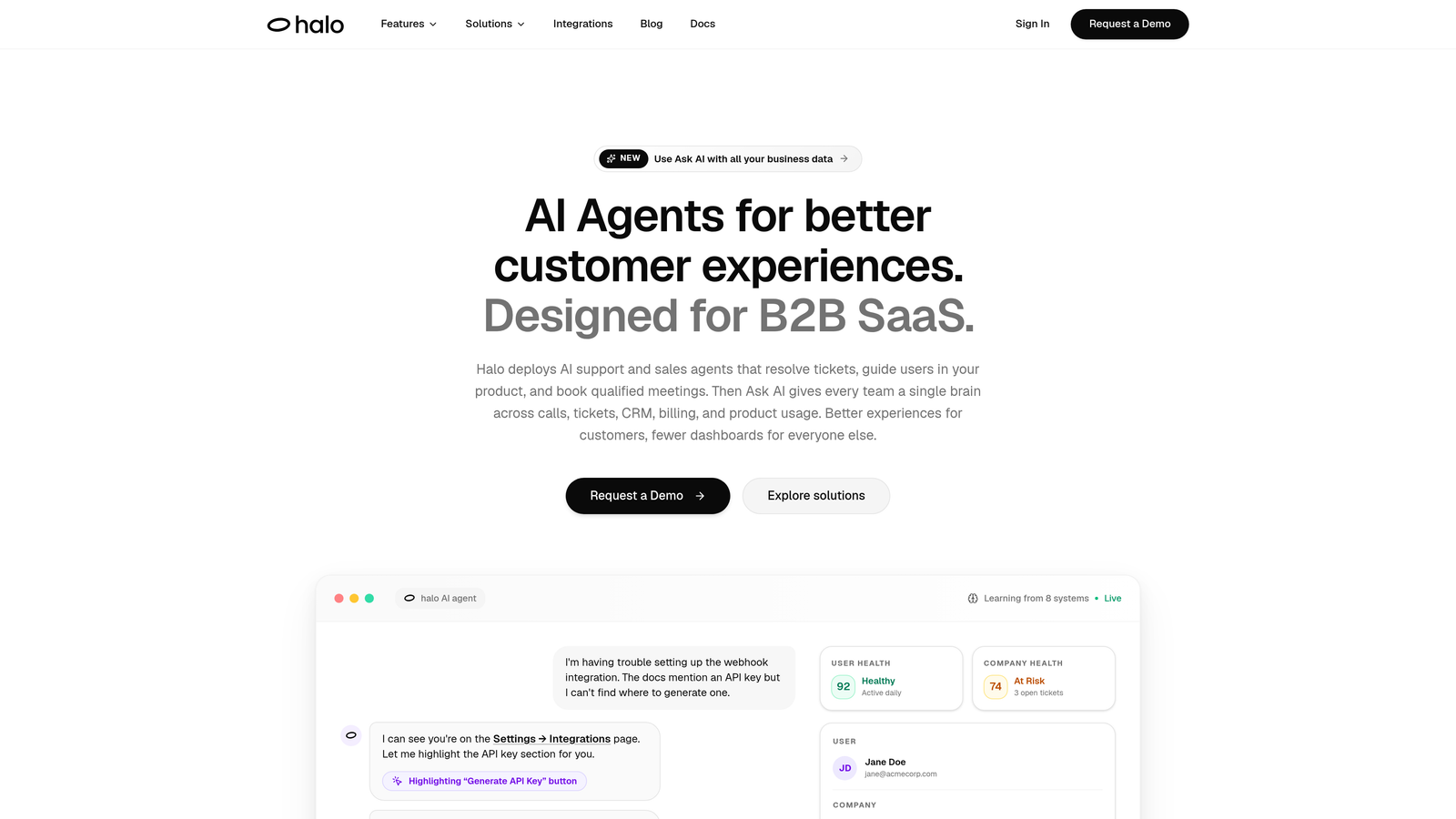
Halo AI is an AI-first customer support platform built to deploy autonomous agents that resolve tickets, guide users through your product, and surface business intelligence — continuously learning from every interaction.
Where This Tool Shines
What separates Halo from most platforms on this list is the architecture. It wasn't built as a helpdesk with AI bolted on later. The entire platform is designed around autonomous resolution from the ground up, which means the AI handles the full lifecycle of a support interaction rather than just the easy parts.
The page-aware chat widget is a standout capability. It sees what the user is actually looking at inside your product and can provide contextual, visual guidance rather than generic knowledge-base lookups. For SaaS products with complex UIs, this is a meaningful difference in the quality of support delivered.
Key Features
Page-Aware Chat Widget: Understands the user's current product context to deliver precise, UI-aware guidance rather than generic responses.
Autonomous Ticket Resolution: AI agents resolve support tickets end-to-end with continuous learning that improves accuracy over time.
Auto Bug Ticket Creation: Automatically identifies and creates bug reports, integrated directly with Linear and other developer tooling.
Smart Inbox with Business Intelligence: Surfaces customer health signals, revenue intelligence, and anomaly detection — turning support data into product and business insights.
Deep Integration Ecosystem: Connects with Slack, HubSpot, Intercom, Stripe, Zoom, PandaDoc, and Fathom for genuine workflow integration rather than surface-level connectors.
Best For
B2B SaaS teams that want AI to handle routine support autonomously while surfacing meaningful business intelligence from every interaction. Particularly well-suited for product-led growth companies where support quality directly impacts retention and expansion revenue.
Pricing
Contact for pricing. Designed for B2B SaaS teams scaling support operations without scaling headcount proportionally.
2. Zendesk AI
Best for: Established support teams already operating within the Zendesk ecosystem who want AI layered into existing workflows.
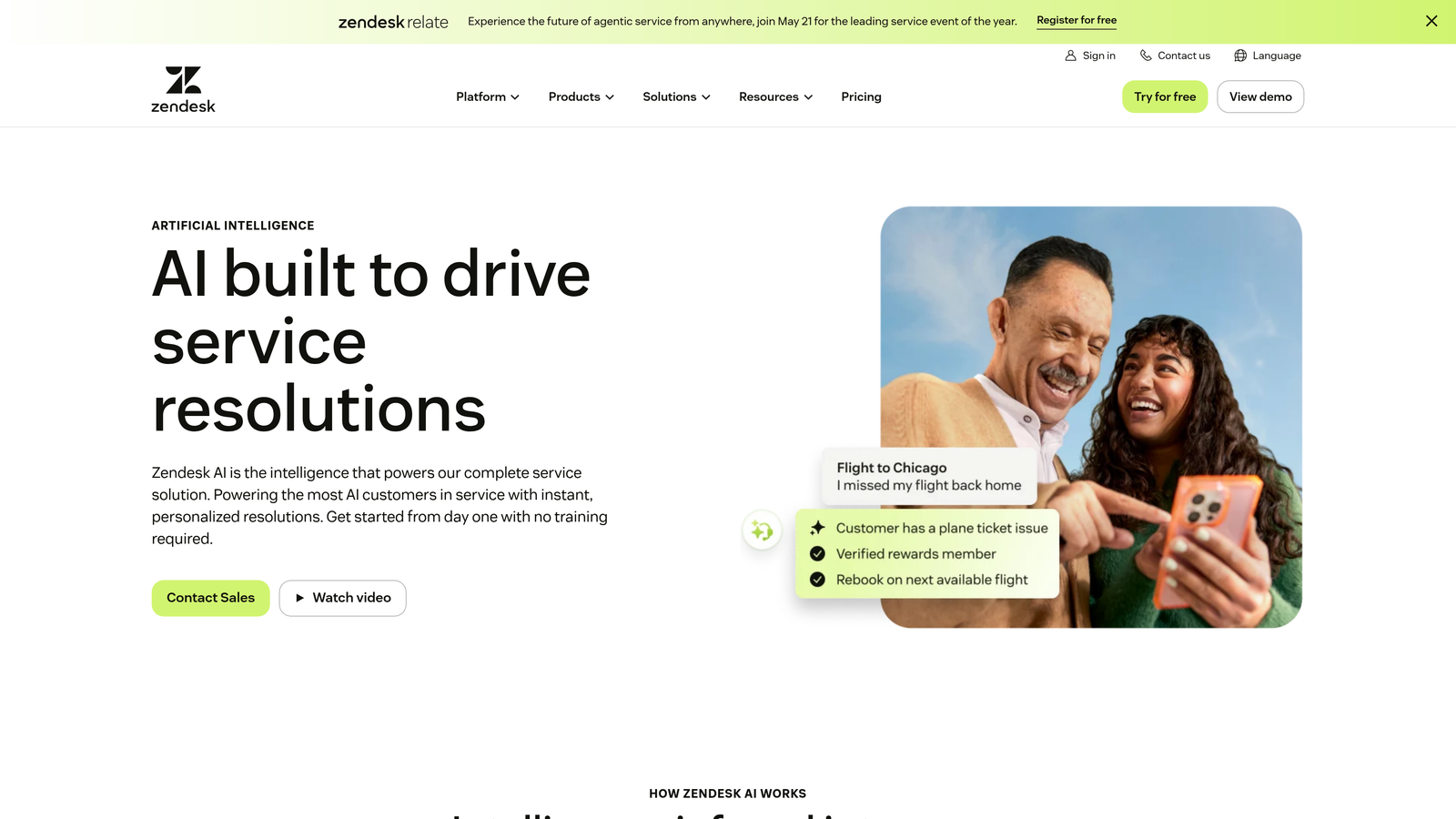
Zendesk AI brings AI agents, intelligent triage, and agent assist tools into the Zendesk Suite, leveraging the platform's long history in enterprise support.
Where This Tool Shines
Zendesk's biggest advantage is its training data. The platform has processed an enormous volume of customer interactions across industries, and that breadth shows in how well the AI handles diverse query types out of the box. If your team is already in Zendesk, the AI features slot in without a migration headache.
The agent copilot is genuinely useful for teams that want AI assistance without full automation. It handles ticket summarization, drafts suggested responses, and helps agents move faster without removing the human from the loop.
Key Features
AI Agents for Self-Service: Automated resolution for common queries before they reach a human agent.
Intelligent Triage: Detects intent, language, and sentiment to route tickets to the right team automatically.
Agent Copilot: Provides response suggestions, ticket summaries, and next-step recommendations to speed up human agents.
Pre-Trained Models: Built on billions of customer interactions, reducing time-to-value for new deployments.
Native Suite Integration: AI features are woven throughout the full Zendesk product suite, not siloed.
Best For
Mid-market to enterprise teams already invested in the Zendesk ecosystem who want to add AI capabilities incrementally without disrupting existing workflows or migrating data.
Pricing
Suite plans start around $55 per agent per month with AI features included. An Advanced AI add-on is available at additional cost for teams needing more sophisticated automation.
3. Intercom Fin
Best for: Product-led SaaS companies that want a conversational AI agent tightly integrated with in-app messaging and onboarding.
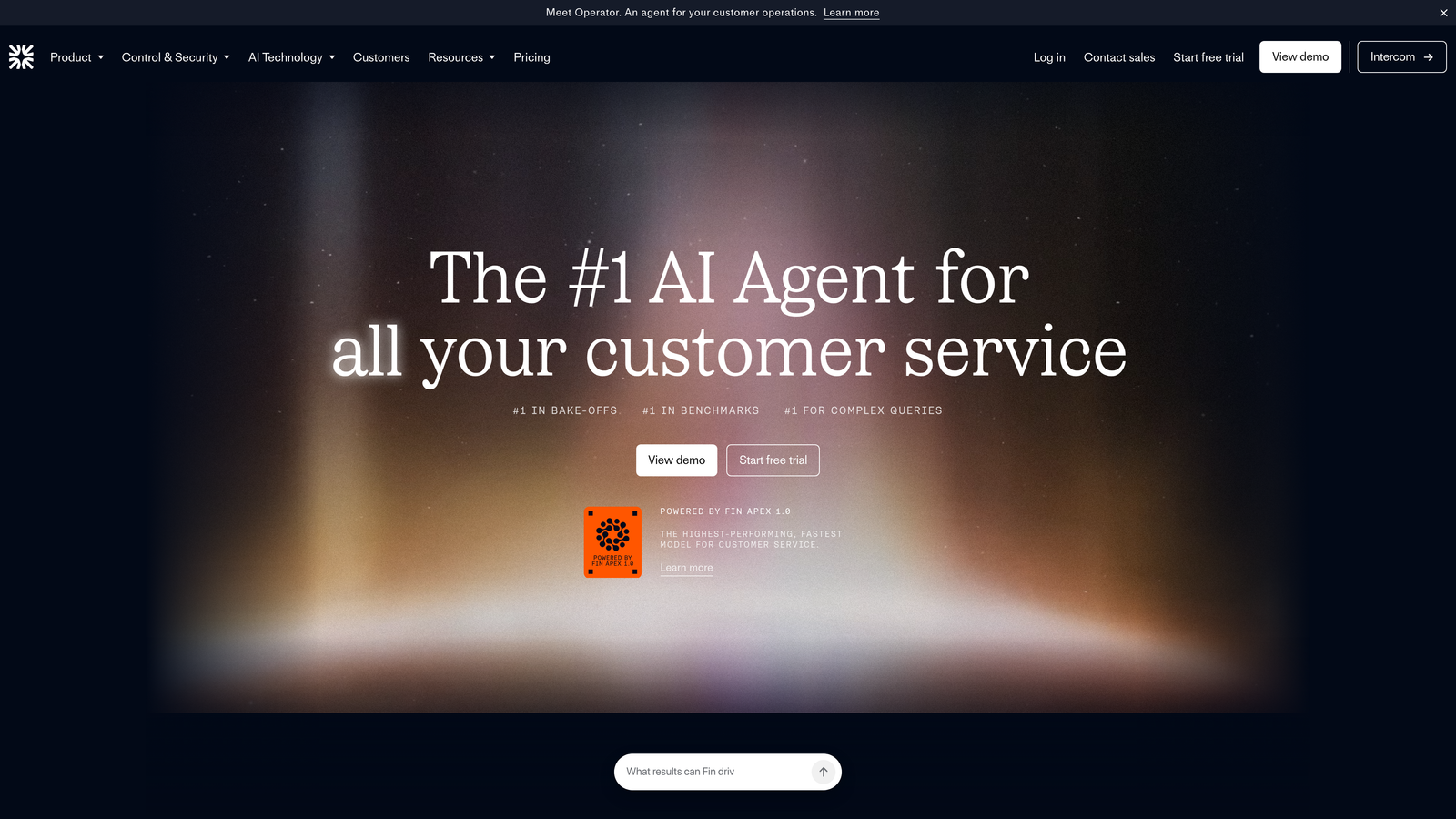
Intercom Fin is a conversational AI agent built natively into Intercom's messaging platform, designed to resolve support questions using your help center content with a natural, chat-first experience.
Where This Tool Shines
Fin's strength is how naturally it fits into the Intercom experience. If you're already using Intercom for in-app messaging, product tours, and onboarding, Fin extends that same conversational layer into support resolution. The handoff experience to a human agent is smooth, preserving full conversation context rather than forcing users to repeat themselves.
The per-resolution pricing model is worth noting. For teams with variable support volumes, paying only for successful resolutions can be more economical than per-seat pricing — though it can also become unpredictable at scale.
Key Features
Fin AI Agent: Answers questions using your help center content and custom knowledge sources with a natural conversational tone.
Seamless Human Handoff: Passes full conversation context to live agents when escalation is needed.
Intercom Platform Integration: Works alongside in-app messaging, product tours, and onboarding flows natively.
Customizable Behavior: Tone and response controls let you adjust how Fin represents your brand.
Multilingual Support: Handles conversations across many languages without separate configuration.
Best For
SaaS teams already on Intercom that want AI resolution without switching platforms, particularly those with strong help center content they can immediately leverage.
Pricing
Fin is charged per resolution at around $0.99 per resolved conversation. Intercom base plans start at $39 per seat per month.
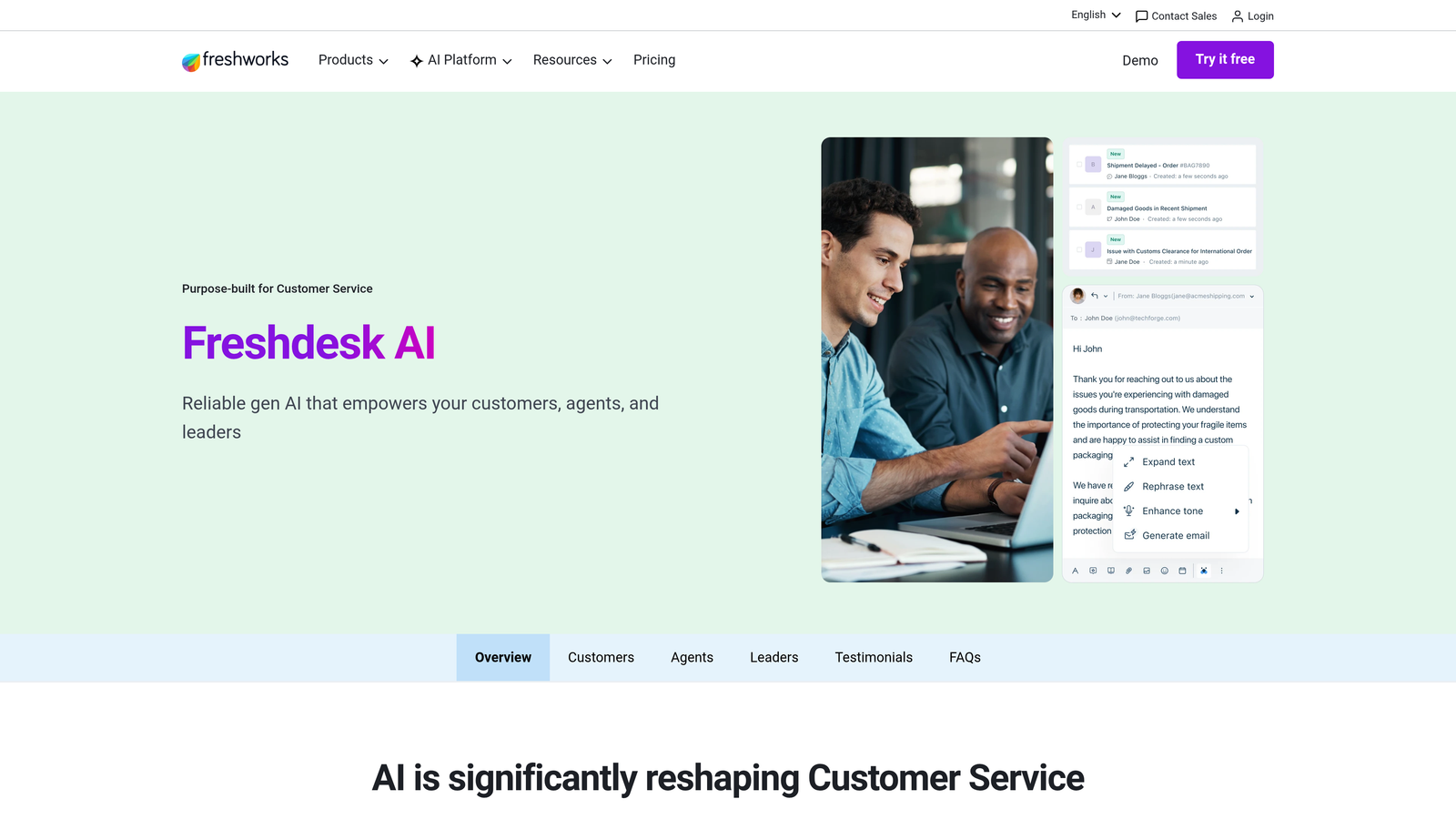
4. Freshdesk Freddy AI
Best for: Cost-conscious teams looking for a full-featured AI support suite within a broader Freshworks ecosystem.
Freshdesk Freddy AI delivers self-service automation, agent assist, and AI-driven analytics across the Freshworks product family, positioned as an accessible alternative to pricier enterprise platforms.
Where This Tool Shines
Freddy's value proposition is breadth at an accessible price point. The combination of self-service deflection, agent copilot, and analytics in a single platform means smaller teams can get meaningful AI coverage without stitching together multiple tools.
The no-code bot builder lowers the barrier to building custom workflows significantly. Teams without dedicated technical resources can configure and adjust automation without developer support, which matters a lot for lean support operations.
Key Features
Freddy Self Service: Automated ticket deflection through AI-powered self-service before queries reach agents.
Freddy Copilot: Response suggestions and ticket summarization to accelerate agent productivity.
Freddy Insights: AI-driven analytics that surface patterns and recommendations from support data.
No-Code Bot Builder: Visual workflow builder for creating custom automation without engineering resources.
Freshworks Ecosystem: Connects natively with Freshworks CRM and ITSM products for a unified view.
Best For
Small to mid-market teams that want comprehensive AI support features at a lower price point, especially those already using or considering other Freshworks products like CRM or ITSM.
Pricing
Free tier available. Paid plans start around $15 per agent per month, with AI features unlocked in higher tiers.
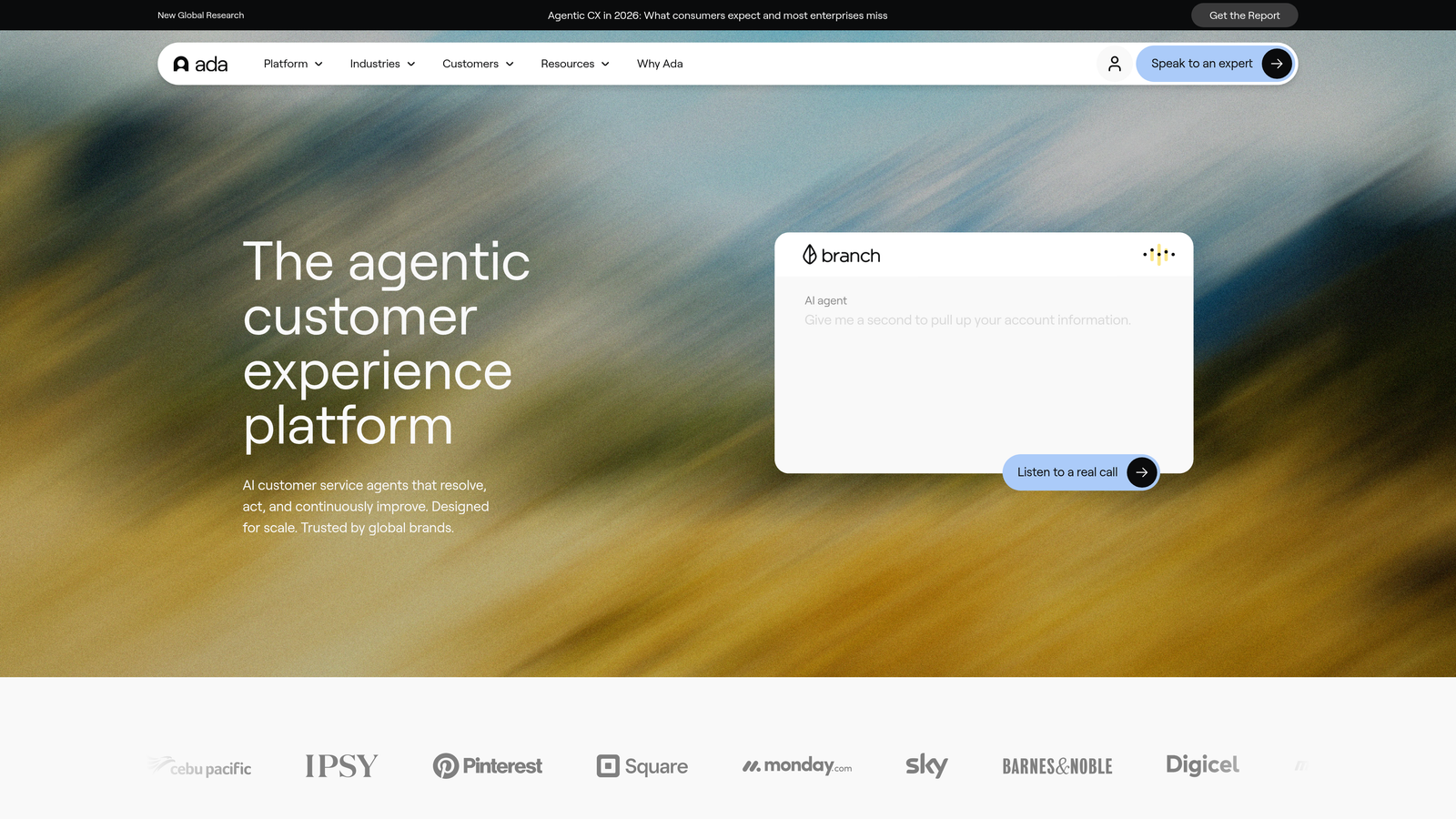
5. Ada
Best for: Mid-market to enterprise teams that want a dedicated AI resolution layer that sits on top of their existing helpdesk.
Ada is a purpose-built AI agent platform focused on maximizing automated resolution rates across web, mobile, social, and messaging channels without replacing your existing helpdesk infrastructure.
Where This Tool Shines
Ada's positioning as an AI layer rather than a full helpdesk replacement is genuinely useful for organizations with significant existing investments in platforms like Zendesk or Salesforce. You get dedicated AI resolution capability without a rip-and-replace migration.
The emphasis on end-to-end resolution rather than deflection is a meaningful distinction. Ada is designed to actually complete support interactions autonomously, not just redirect users to a knowledge base and hope for the best.
Key Features
End-to-End AI Resolution: Built to complete support interactions fully, not just deflect tickets to self-service content.
No-Code Agent Builder: Non-technical teams can build, test, and adjust AI agents without engineering involvement.
Omnichannel Deployment: Operates across web, mobile, social, SMS, and phone channels from a single configuration.
Multilingual Capabilities: Strong support for many languages, useful for global support operations.
Helpdesk Integrations: Connects with Zendesk, Salesforce, and other major platforms rather than competing with them.
Best For
Mid-market to enterprise teams with omnichannel support needs and existing helpdesk investments who want to add a dedicated, high-autonomy AI resolution layer without migrating their core ticketing system.
Pricing
Custom pricing. Typically positioned for mid-market to enterprise budgets. Contact Ada directly for a quote.
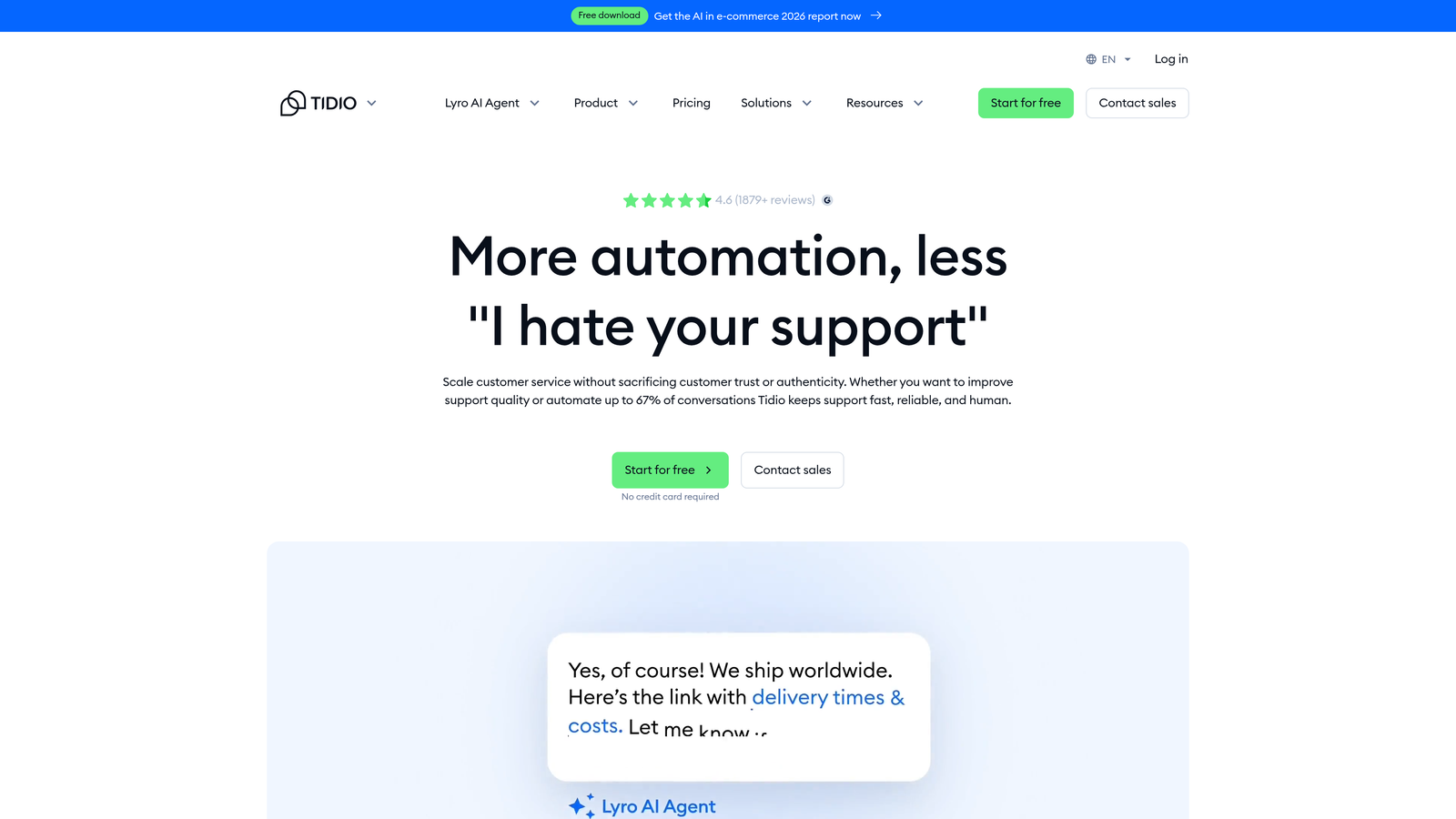
6. Tidio
Best for: Small businesses and e-commerce teams that need affordable AI chat and live chat in a single, easy-to-deploy package.
Tidio combines an AI chatbot (Lyro) with traditional live chat in one widget, offering a cost-effective entry point for businesses that are earlier in their automation journey.
Where This Tool Shines
Tidio's main draw is accessibility. The free tier, low-cost entry plans, and drag-and-drop bot builder make it genuinely approachable for small teams without dedicated technical resources or large support budgets. For e-commerce businesses in particular, the Shopify and WooCommerce integrations are well-developed.
The combination of AI chat and live chat in a single widget simplifies deployment and avoids the fragmented experience of running separate tools for automated and human conversations.
Key Features
Lyro AI Chatbot: Automated conversations for FAQ handling and basic support queries using your existing content.
Unified Chat Widget: Combines AI automation and live chat in one interface for a seamless customer experience.
Visual Bot Builder: Drag-and-drop flow builder for creating custom chatbot conversations without coding.
E-Commerce Integrations: Native connections to Shopify, WooCommerce, and other e-commerce platforms.
Generous Free Tier: Meaningful functionality available at no cost, making it accessible for early-stage teams.
Best For
Small businesses, e-commerce stores, and early-stage startups that need affordable AI chat support with minimal setup complexity and a low-risk entry point.
Pricing
Free plan available. Paid plans start around $29 per month. Lyro AI conversations are available as an add-on for teams needing higher automated conversation volumes.
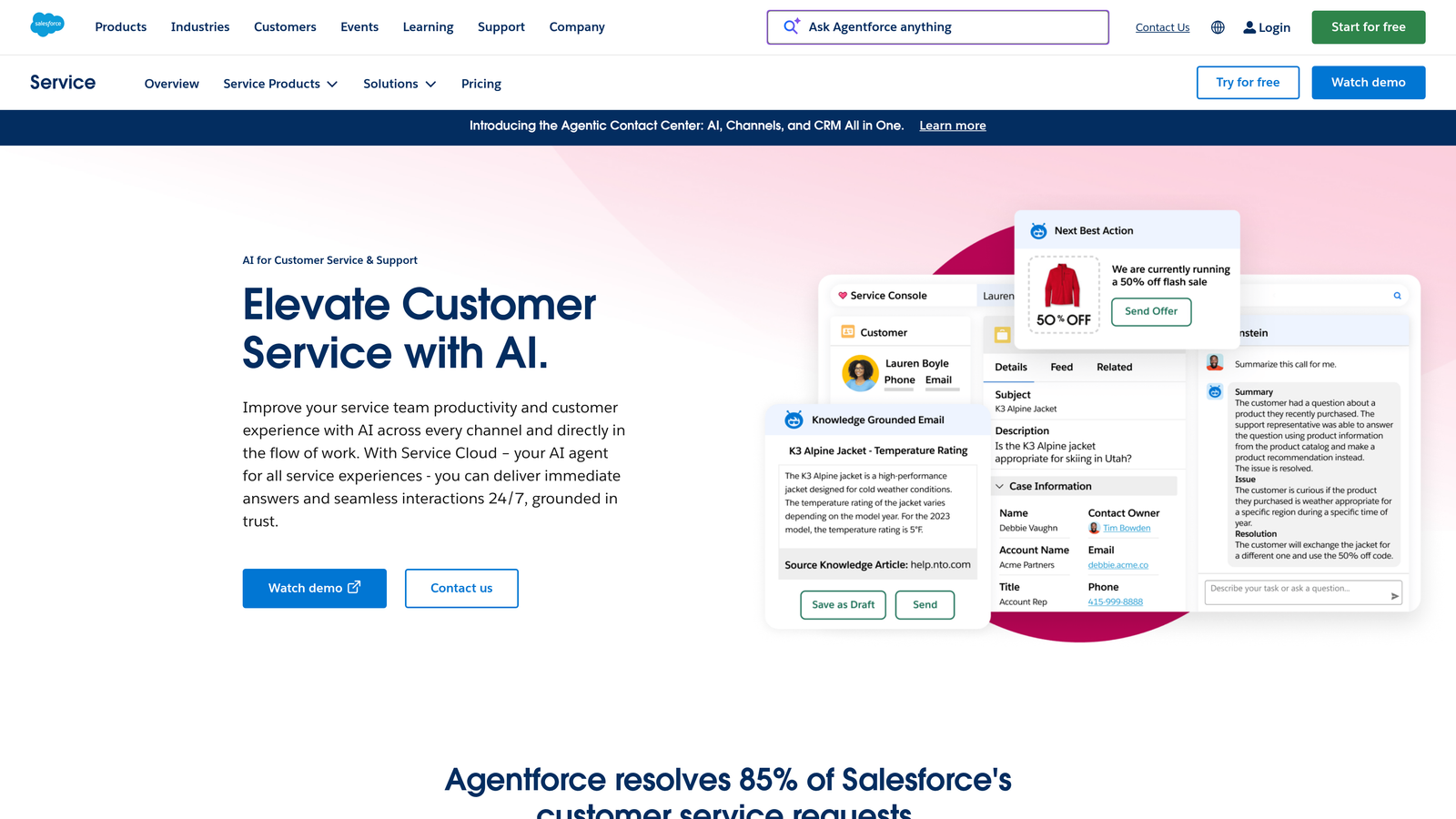
7. Salesforce Einstein Service Cloud
Best for: Enterprise organizations already in the Salesforce ecosystem that want support AI deeply connected to CRM, sales, and marketing data.
Salesforce Einstein Service Cloud embeds AI capabilities across the Service Cloud platform, using CRM data to power personalized, context-rich support experiences at enterprise scale.
Where This Tool Shines
The core advantage here is data connectivity. When your AI can see the full customer record — purchase history, open opportunities, past cases, marketing interactions — the quality of support responses improves significantly. For enterprise teams where support, sales, and success operate from shared data, this integration depth is hard to replicate outside the Salesforce ecosystem.
The Agentforce platform gives technical teams the ability to build custom AI service agents tailored to specific workflows, which provides flexibility that off-the-shelf solutions can't always match.
Key Features
Einstein AI Bots: Automated service bots and generative AI replies powered by live CRM data.
Case Classification and Routing: AI-driven prioritization and routing based on case content and customer context.
Agent Assist: Knowledge article recommendations and reply suggestions surfaced directly in the agent workspace.
Unified Data View: Support AI draws from sales, marketing, commerce, and service data simultaneously.
Agentforce: Platform for building custom AI service agents tailored to specific enterprise workflows.
Best For
Enterprise organizations with existing Salesforce investments where support operations are tightly connected to sales and customer success workflows and where CRM data depth is a strategic advantage.
Pricing
Service Cloud starts around $25 per user per month. Einstein AI features require higher tiers or add-ons. Enterprise pricing varies significantly based on configuration.
8. Forethought
Best for: Teams that want AI triage, classification, and generative responses layered on top of an existing helpdesk without replacing it.
Forethought is an AI platform built to sit on top of existing support infrastructure, adding intelligent triage, ticket classification, and generative AI responses without requiring a platform migration.
Where This Tool Shines
Forethought's positioning as an AI layer rather than a standalone helpdesk gives it a specific advantage: teams with significant existing investment in Zendesk or Salesforce can add meaningful AI capability without disrupting their current workflows or migrating historical data.
The SupportGPT generative AI is designed for response quality, producing contextually relevant answers rather than template-based replies. For teams where response quality is a key differentiator, this focus on generation rather than just retrieval matters.
Key Features
SupportGPT: Generative AI-powered responses that go beyond template retrieval to produce contextually relevant answers.
Intelligent Triage: Automatic ticket classification and routing based on content, intent, and historical patterns.
Helpdesk Integration: Designed to work on top of Zendesk, Salesforce, and other major platforms.
Solve and Assist: Separate modules for customer-facing AI resolution and agent productivity improvement.
Analytics Dashboard: Measures AI impact on support metrics to quantify value and identify improvement areas.
Best For
Mid-market to enterprise support teams with existing helpdesk infrastructure who want to add AI resolution and triage capability without a full platform switch.
Pricing
Custom pricing. Typically positioned for mid-market to enterprise budgets. Contact Forethought directly for a tailored quote.
9. HubSpot Service Hub with Breeze AI
Best for: Teams already in the HubSpot ecosystem that want support AI tightly connected to CRM, marketing, and sales data.
HubSpot Service Hub with Breeze AI brings AI-assisted customer service into the HubSpot platform, making it a natural fit for teams that want support, sales, and marketing operating from a unified data foundation.
Where This Tool Shines
The primary advantage of Service Hub is context. When your support tool is the same platform your sales and marketing teams use, agents have immediate visibility into the full customer relationship. Breeze AI builds on that context to deliver more relevant responses and smarter ticket handling.
For teams that aren't ready to invest in a dedicated AI support platform, the free tools and accessible Starter tier provide a meaningful entry point. The built-in knowledge base, feedback tools, and survey capabilities reduce the need for additional point solutions.
Key Features
Breeze AI Agents: Automated customer-facing resolution for common queries using your knowledge base and CRM data.
Breeze Copilot: Agent assist features including ticket summarization and response suggestions.
HubSpot CRM Integration: Full visibility into marketing, sales, and service data from a single platform.
AI-Powered Knowledge Base: Smart search and content recommendations that surface relevant articles automatically.
Customer Feedback Tools: Built-in surveys and feedback collection to close the loop on support quality.
Best For
Growing B2B teams already using HubSpot for CRM, marketing, or sales who want support AI that shares the same data foundation without adding another vendor to the stack.
Pricing
Free tools available. Service Hub Starter from $20 per seat per month. Professional tier from $100 per seat per month with more advanced AI and automation features.
How to Pick the Right AI Support Platform for Your Team
The right choice depends less on which tool has the most features and more on where you're starting from and what "AI support" actually means for your team's goals.
If you're a B2B SaaS company that wants AI to handle support autonomously while surfacing business intelligence from every interaction, Halo AI is purpose-built for that outcome. The page-aware context, continuous learning architecture, and deep integration with workflow tools like Linear, Slack, and Stripe make it the strongest fit for product-led SaaS teams.
If you're already deeply embedded in an existing platform, the AI-native extensions of those platforms are worth serious consideration. Zendesk AI and Intercom Fin offer strong AI capabilities with minimal migration friction. Salesforce Einstein and HubSpot Breeze make sense when CRM data depth is central to your support strategy.
For teams that want AI resolution without replacing their helpdesk, Ada and Forethought are designed specifically for that layered approach. And if you're a smaller team with budget constraints, Tidio and Freshdesk Freddy offer accessible entry points without sacrificing core functionality.
The key decision criteria to revisit: How much do you want AI to handle autonomously versus assist humans? How important is integration with your specific workflow tools? And do you need support data to generate business intelligence beyond ticket metrics?
Your support team shouldn't scale linearly with your customer base. Let AI agents handle routine tickets, guide users through your product, and surface business intelligence while your team focuses on complex issues that need a human touch. See Halo in action and discover how continuous learning transforms every interaction into smarter, faster support.