9 Best AI Customer Service Software for Small Business in 2026
This guide evaluates nine of the best AI customer service software for small business platforms available in 2026, comparing each on ease of setup, AI quality, integration depth, scalability, and pricing. It helps small and scaling businesses cut through enterprise-heavy options to find tools that genuinely fit their needs and budget.
 Matt PattoliFounder13 min read
Small businesses face a familiar tension: customers expect fast, personalized support, but hiring a full support team isn't always feasible. AI customer service software has changed that equation. Today's tools can handle ticket resolution, live chat, and even bug reporting autonomously, without adding headcount.
But not every AI support tool is built with small businesses in mind. Some are enterprise-heavy with pricing to match. Others bolt AI onto legacy helpdesk workflows and call it innovation. This list focuses on tools that genuinely work for small and scaling businesses: platforms that are fast to deploy, integrate with the tools you already use, and get smarter over time.
We've evaluated each tool on ease of setup, AI quality, integration depth, scalability, and pricing transparency. Halo AI is listed first because it's the platform behind this article, but every other tool on this list earned its place on merit.
1. Halo AI
Best for: B2B SaaS small businesses that want intelligence, not just ticket deflection.
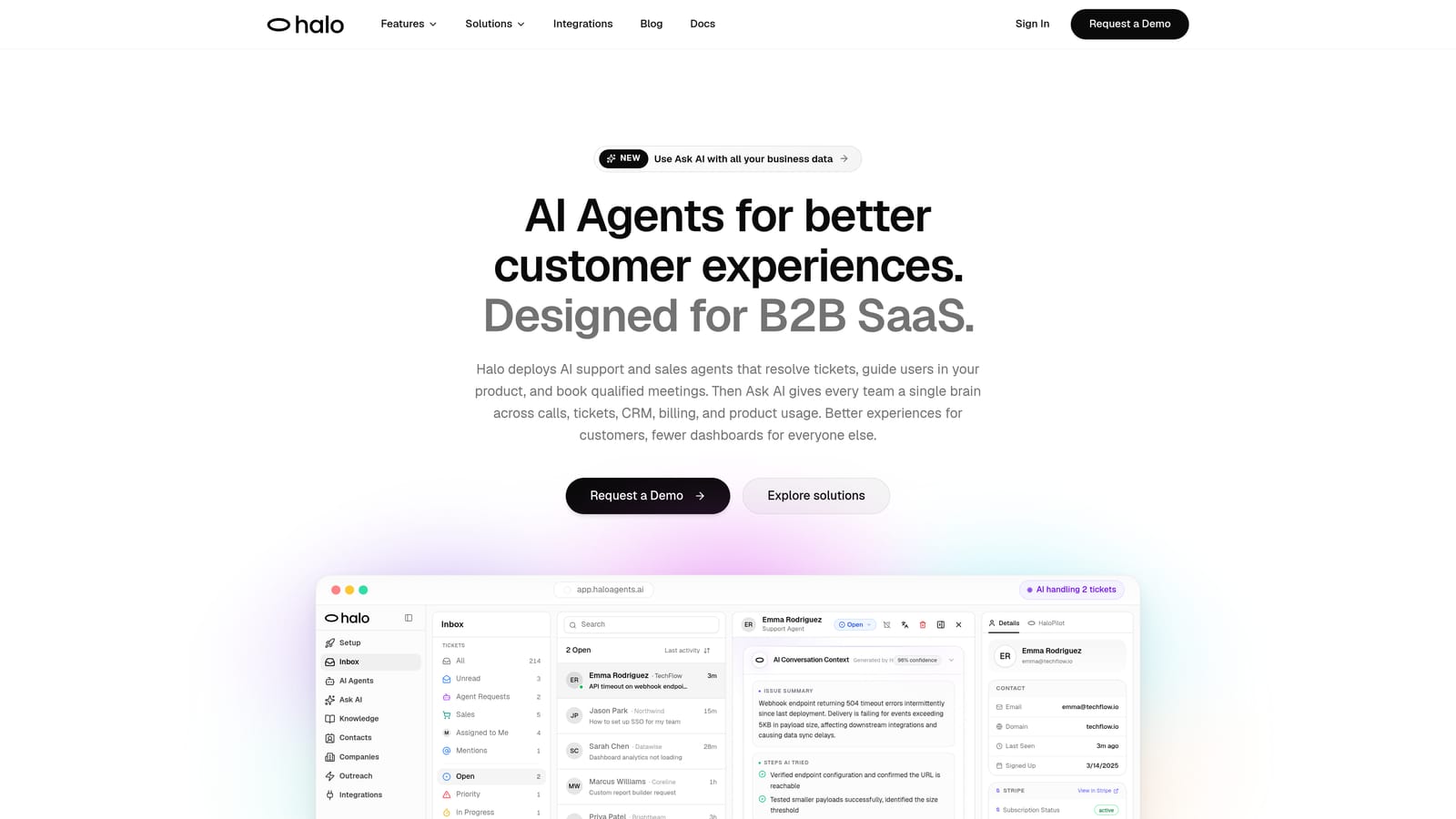
Halo AI is an AI-first customer support platform that deploys intelligent agents to resolve tickets, guide users through your product with page-aware context, auto-create bug reports, and surface business intelligence — all while learning from every interaction.
Where This Tool Shines
Halo is built from the ground up as an AI-native platform, not a legacy helpdesk with an AI layer bolted on afterward. That architectural difference matters: the AI isn't an add-on feature, it's the foundation. Every resolved ticket feeds back into the system, improving future responses without requiring manual retraining.
The standout capability is page-aware context. Halo's chat widget understands which screen a user is on and can provide visual UI guidance specific to that moment. For SaaS products where users get stuck in specific flows, this is a meaningful differentiator compared to generic chatbots that respond the same way regardless of where the user is in your product.
Key Features
Page-Aware AI Agents: The AI understands which screen the user is on and delivers contextual guidance tied to that specific UI state.
Continuous Learning: Every resolved ticket improves the system automatically, without manual retraining or rule updates.
Auto Bug Ticket Creation: When users report product issues, Halo automatically creates structured bug reports in Linear, closing the loop between support and engineering.
Smart Inbox with Business Intelligence: Goes beyond support metrics to surface customer health signals, revenue anomalies, and product insights from support conversations.
Live Agent Handoff: Complex escalations are routed to human agents with full conversation context preserved.
Integration Ecosystem: Connects to Linear, Slack, HubSpot, Intercom, Stripe, Zoom, PandaDoc, and Fathom.
Best For
Halo is best suited for B2B SaaS startups and product-led companies that want their support function to generate business intelligence, not just close tickets. If you're a small team supporting a software product and want AI that understands your product's UI, learns continuously, and connects to your entire business stack, Halo is worth a close look.
Pricing
Pricing is available on request through a demo-first process. Not ideal if you want instant self-serve sign-up, but appropriate for teams that want a tailored setup.
2. Intercom
Best for: SaaS companies with budget that want a proven, polished AI agent.
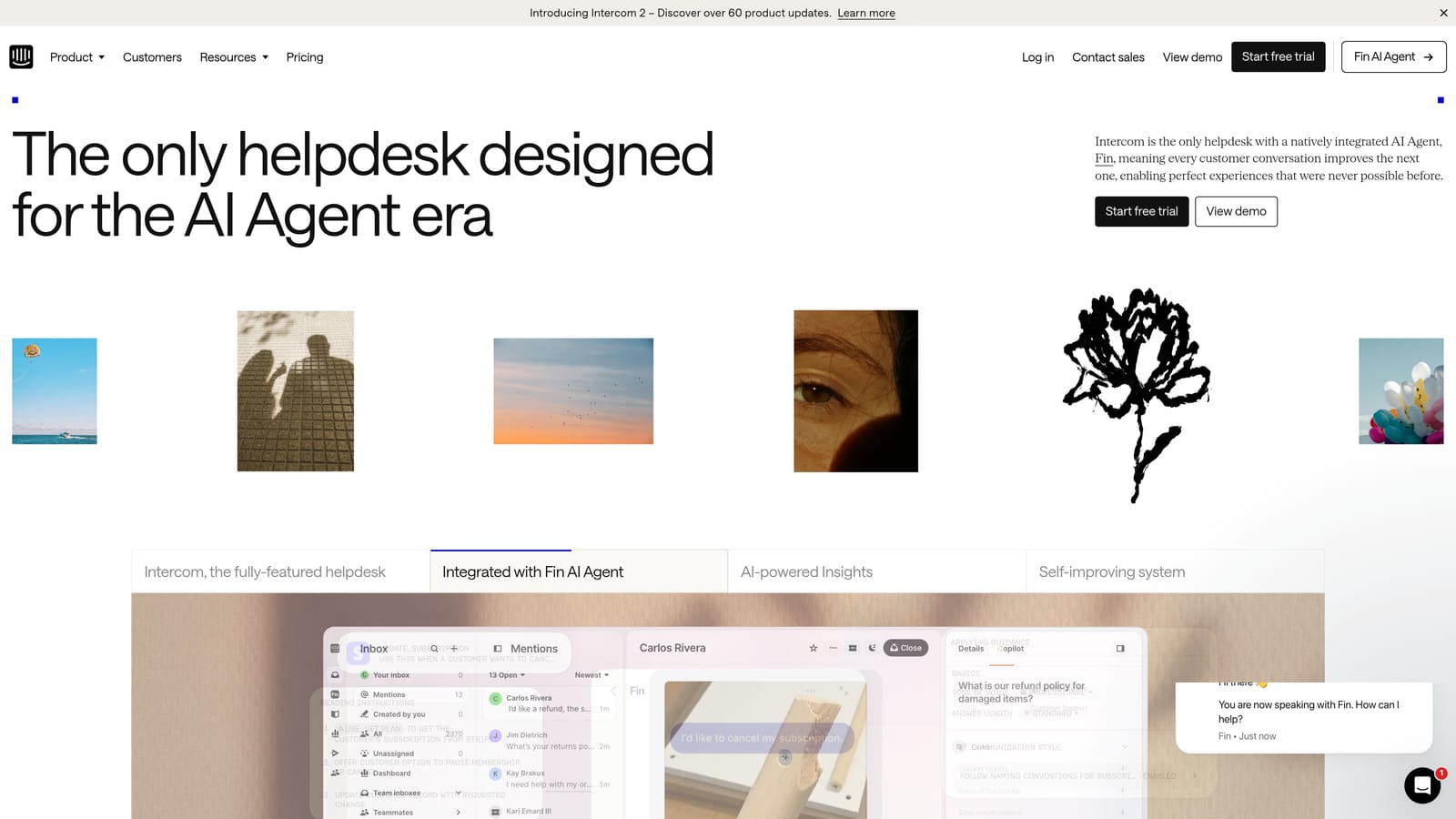
Intercom is a mature customer communications platform with Fin, an AI agent built on advanced language models that handles complex support queries and routes conversations intelligently.
Where This Tool Shines
Fin is one of the most widely recognized AI support agents in the market, and for good reason. It handles multi-turn, nuanced conversations with a high autonomous resolution rate, and the underlying model has been refined specifically for support use cases. Intercom's inbox, help center, and proactive messaging tools are equally polished.
The latest iteration, Fin 2, includes improved reasoning and multi-step resolution capabilities. For small businesses that have outgrown basic chatbot tools and want something that can genuinely handle complex queries without constant human intervention, Intercom is a strong contender.
Key Features
Fin AI Agent: Handles complex, multi-turn support queries with high autonomous resolution capability.
Smart Conversation Routing: Polished shared inbox with intelligent routing based on topic, urgency, and team capacity.
Help Center: Built-in self-service tools that Fin draws from to answer customer questions.
In-App Messaging: Proactive support and onboarding messages triggered by user behavior.
Integration Ecosystem: Hundreds of integrations covering CRMs, analytics, and productivity tools.
Best For
Intercom works best for SaaS companies that have budget to invest and want a platform with a proven track record. It may be a stretch for very early-stage businesses, but teams with growing support volume and revenue to match will find the investment justified.
Pricing
Starts at approximately $39/month for core features; Fin AI usage is billed per resolution, so costs scale with volume. Evaluate total cost carefully based on your expected ticket volume.
3. Freshdesk
Best for: Small teams that want a full-featured helpdesk with a free starting point.
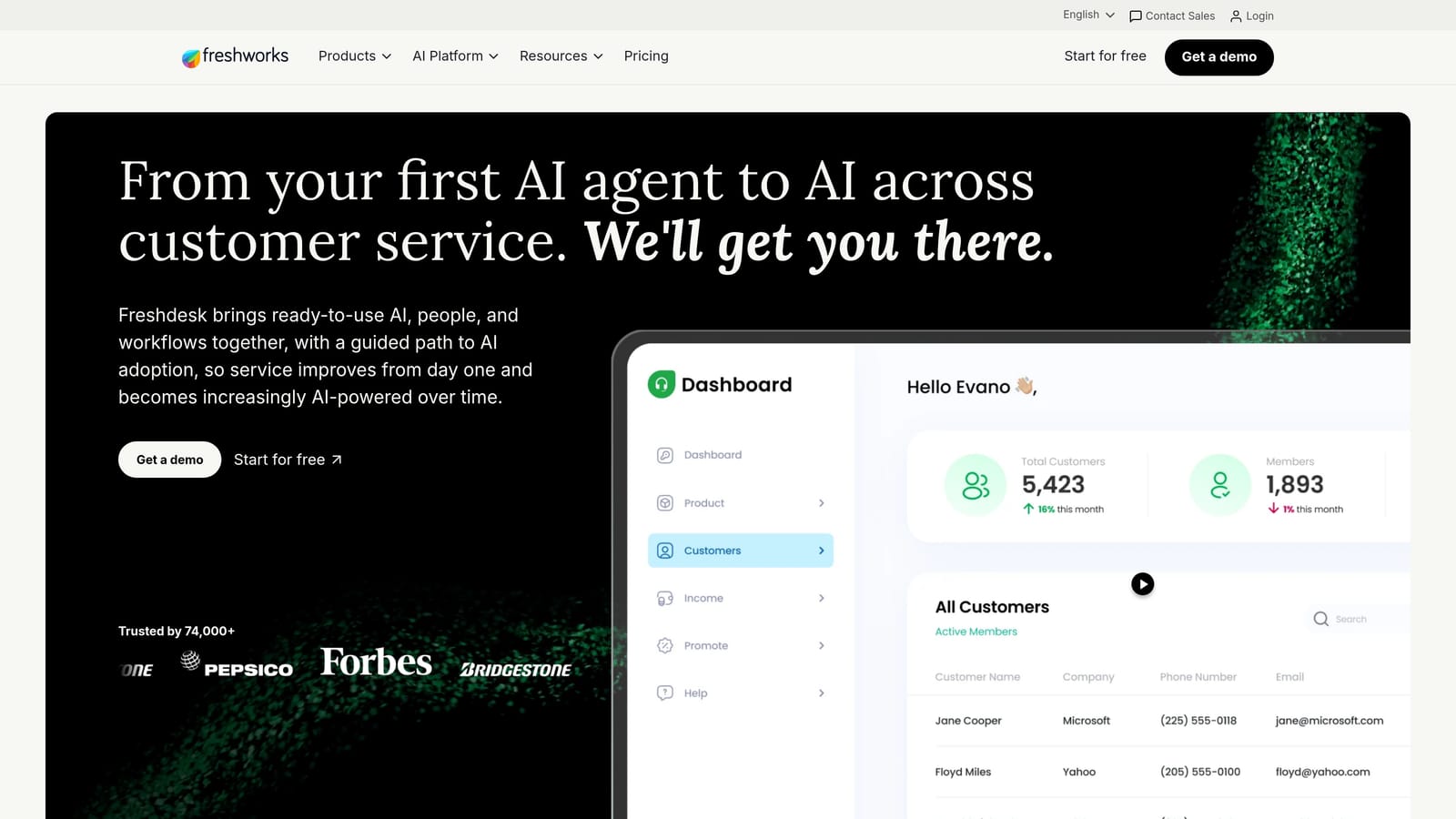
Freshdesk is a full-featured helpdesk platform from Freshworks with Freddy AI layered across ticketing, self-service, and analytics, backed by accessible pricing and a free tier.
Where This Tool Shines
Freshdesk's biggest advantage for small businesses is its free plan, which gives very small teams a real helpdesk experience without upfront cost. As teams grow, Freddy AI adds meaningful capabilities: suggested replies, conversation summarization, and autonomous deflection through the knowledge base and chatbot.
The multichannel support coverage is also strong. Email, live chat, phone, and social channels are all handled within a single platform, which reduces the need for multiple tools when your support channels start to diversify.
Key Features
Freddy Copilot: Assists agents with AI-suggested replies, conversation summaries, and next-action recommendations.
Freddy Self Service: Autonomous deflection via chatbot and knowledge base, reducing ticket volume before it reaches agents.
Multichannel Support: Email, live chat, phone, and social media managed from a single inbox.
Freddy Insights: AI-powered analytics with anomaly detection for ticket trends and team performance.
Free Plan: Available for small teams with core ticketing features included.
Best For
Freshdesk is a strong fit for small businesses that want a comprehensive helpdesk with room to grow, especially those starting with a tight budget. Teams that need multichannel coverage from day one will also find it well-suited.
Pricing
Free plan available for unlimited agents with core features; paid plans start at approximately $15/agent/month with Freddy AI features available on higher tiers.
4. Tidio
Best for: Small e-commerce and DTC businesses that need live chat and AI in one lightweight platform.
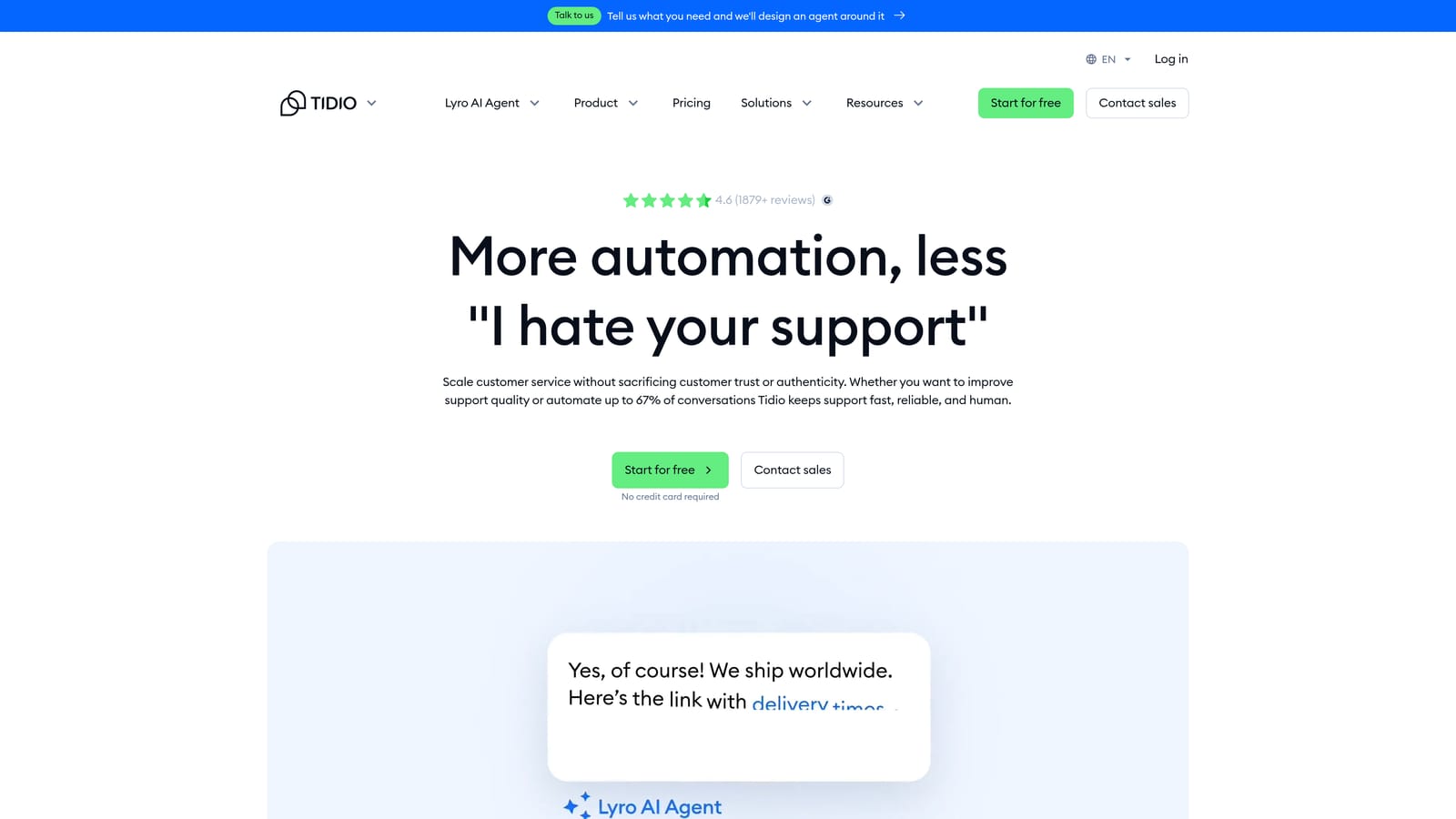
Tidio is a lightweight live chat and AI chatbot platform built for small businesses, with Lyro AI handling common queries autonomously and strong e-commerce integrations out of the box.
Where This Tool Shines
Tidio's defining characteristic is speed of deployment. Most small teams can have it up and running in under an hour, which matters when you don't have a dedicated IT team or a complex implementation process to manage. The combination of live chat and AI in a single platform also eliminates the need to stitch together separate tools.
Lyro AI handles conversational support autonomously, drawing from your existing knowledge base to answer common questions without agent involvement. For e-commerce businesses dealing with repetitive queries about orders, shipping, and returns, Lyro can absorb a significant portion of incoming volume.
Key Features
Lyro AI Chatbot: Handles common queries conversationally and autonomously, without requiring rule-based flow building.
Fast Setup: Deployable in under an hour with no technical expertise required.
E-Commerce Integrations: Native integrations with Shopify, WooCommerce, and WordPress.
Unified Platform: Live chat and AI automation in a single interface, no separate tools needed.
Free Plan: Available with limited Lyro AI conversations included.
Best For
Tidio is ideal for small e-commerce stores, DTC brands, and WordPress-based businesses that need fast, affordable AI support without a complex setup. It's less suited for complex B2B SaaS support scenarios where multi-step, technical queries are common.
Pricing
Free plan available; Lyro AI plans start at approximately $29/month, making it one of the more accessible options for very small teams.
5. Zendesk
Best for: Small businesses planning significant scale that want enterprise infrastructure from day one.
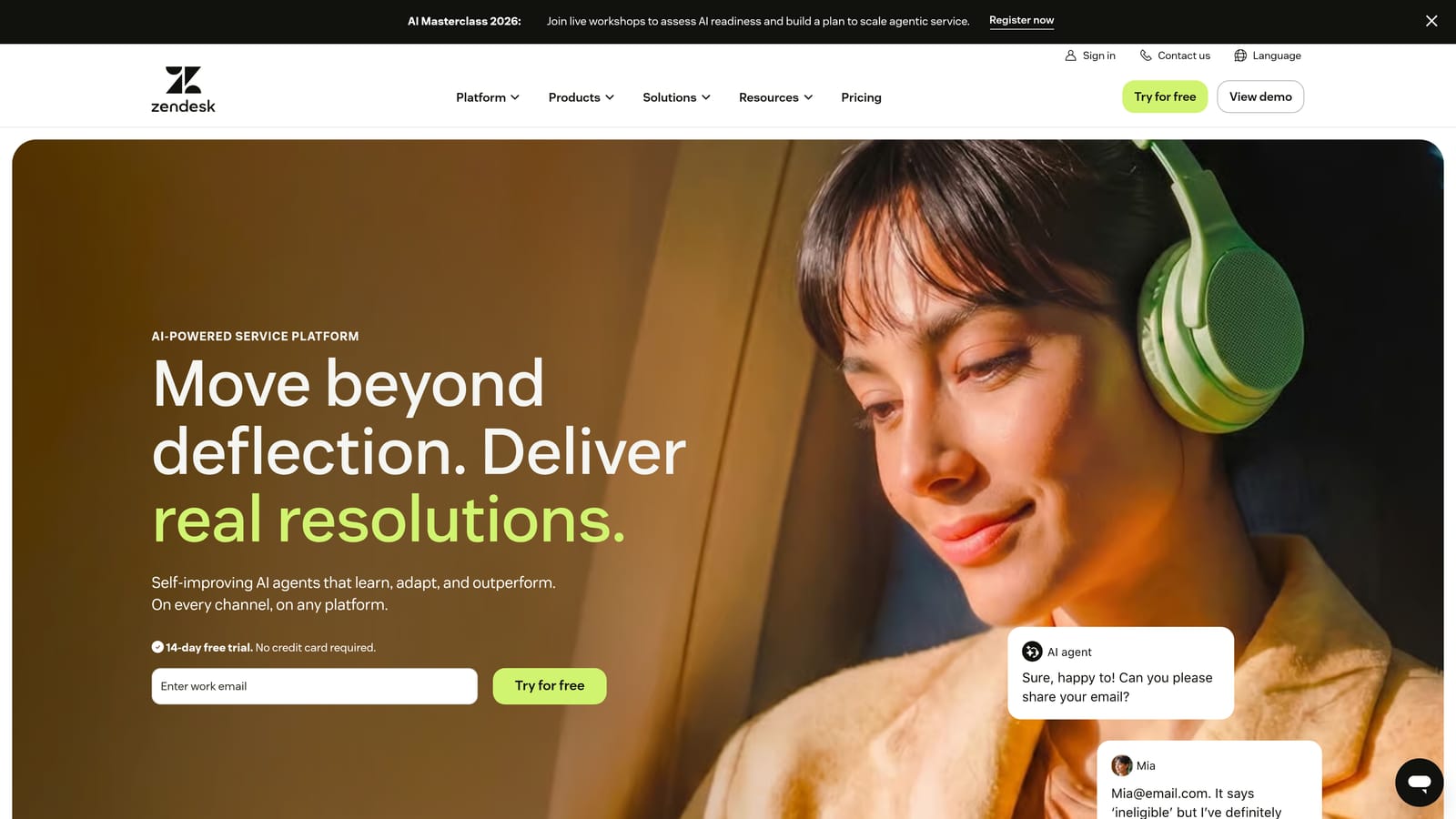
Zendesk is the market-leading helpdesk platform with a comprehensive AI suite covering intelligent triage, agent copilot, and autonomous ticket resolution.
Where This Tool Shines
Zendesk's strength is its depth. The platform has been refined over many years, and the AI suite layered on top, covering triage, suggested macros, agent copilot, and autonomous agents, is comprehensive. The app marketplace with hundreds of integrations means you can connect virtually any tool your business uses.
The honest caveat for small businesses: Zendesk can be complex to set up and administer without a dedicated operations person. It's best approached as a long-term infrastructure investment rather than a quick-deploy solution. If your business is growing fast and you want to avoid switching platforms later, Zendesk's scalability justifies the upfront complexity.
Key Features
Intelligent Triage: AI-powered ticket routing and prioritization based on intent, sentiment, and urgency.
Agent Copilot: Suggests macros and next-best-action guidance to help agents resolve tickets faster.
Autonomous AI Agents: Handles self-service resolution for common queries without agent involvement.
Advanced Reporting: SLA management and detailed analytics across all support channels.
App Marketplace: Hundreds of integrations covering CRM, e-commerce, analytics, and communication tools.
Best For
Zendesk suits small businesses that are growing quickly and want to invest in infrastructure that won't need replacing at 50 or 100 employees. Teams that need enterprise-grade reporting and compliance features will also find it well-equipped.
Pricing
Suite plans start at approximately $55/agent/month; full AI features require higher tiers, making it one of the pricier options on this list for small teams.
6. Help Scout
Best for: Small teams where support tone, relationship quality, and human touch are top priorities.
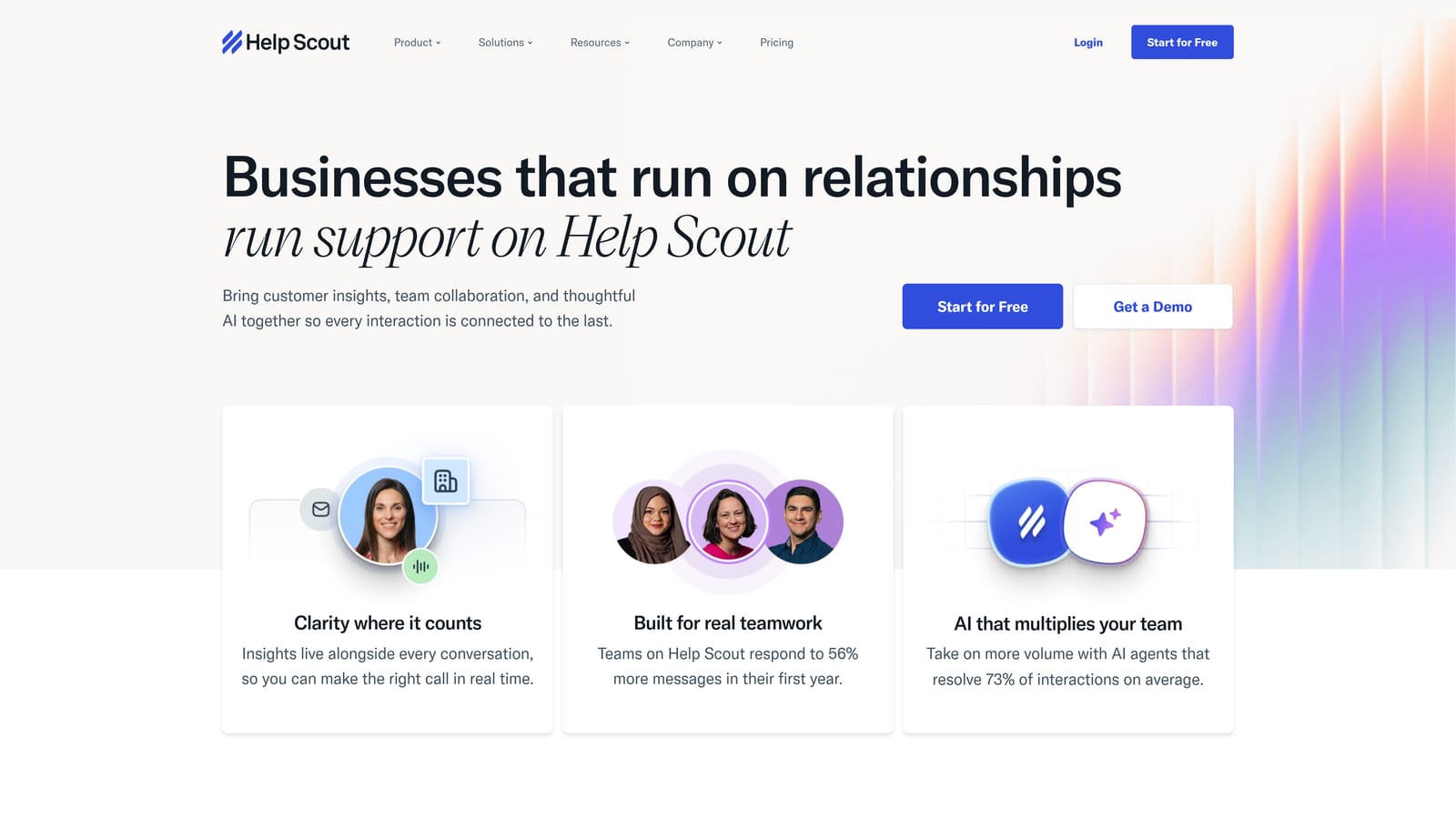
Help Scout is a small-team-friendly helpdesk with an email-like interface and AI tools designed to assist human agents rather than replace them.
Where This Tool Shines
Help Scout's philosophy is refreshingly clear: AI should make your support team better, not invisible. Rather than pushing autonomous resolution as the primary goal, Help Scout uses AI to help agents respond faster and with more context. The result is support that feels genuinely human while still benefiting from AI efficiency.
The interface deserves a mention too. It looks and feels like email, which means minimal onboarding friction for teams coming from Gmail or Outlook-based support workflows. New agents can be productive quickly, which matters when you're a small team without dedicated training resources.
Key Features
AI Summarize: Condenses long conversation threads so agents can get up to speed instantly without reading every message.
AI Drafts: Suggests response drafts for agents to review, edit, and send, keeping the human in the loop.
Beacon Widget: In-app chat and self-service widget for customer-facing support.
Shared Inbox: Clean, email-like interface with minimal learning curve and strong collaboration features.
Customer Profiles: Full conversation history and customer context visible alongside every ticket.
Best For
Help Scout is the right choice for businesses where the tone and quality of support interactions directly affect customer relationships, such as professional services, consulting, and relationship-driven SaaS products. Teams that want AI assistance without full automation will find it a natural fit.
Pricing
Starts at approximately $22/user/month, which is straightforward and predictable for small teams budgeting support costs.
7. Zoho Desk
Best for: Small businesses already using Zoho CRM that want unified customer context across support and sales.
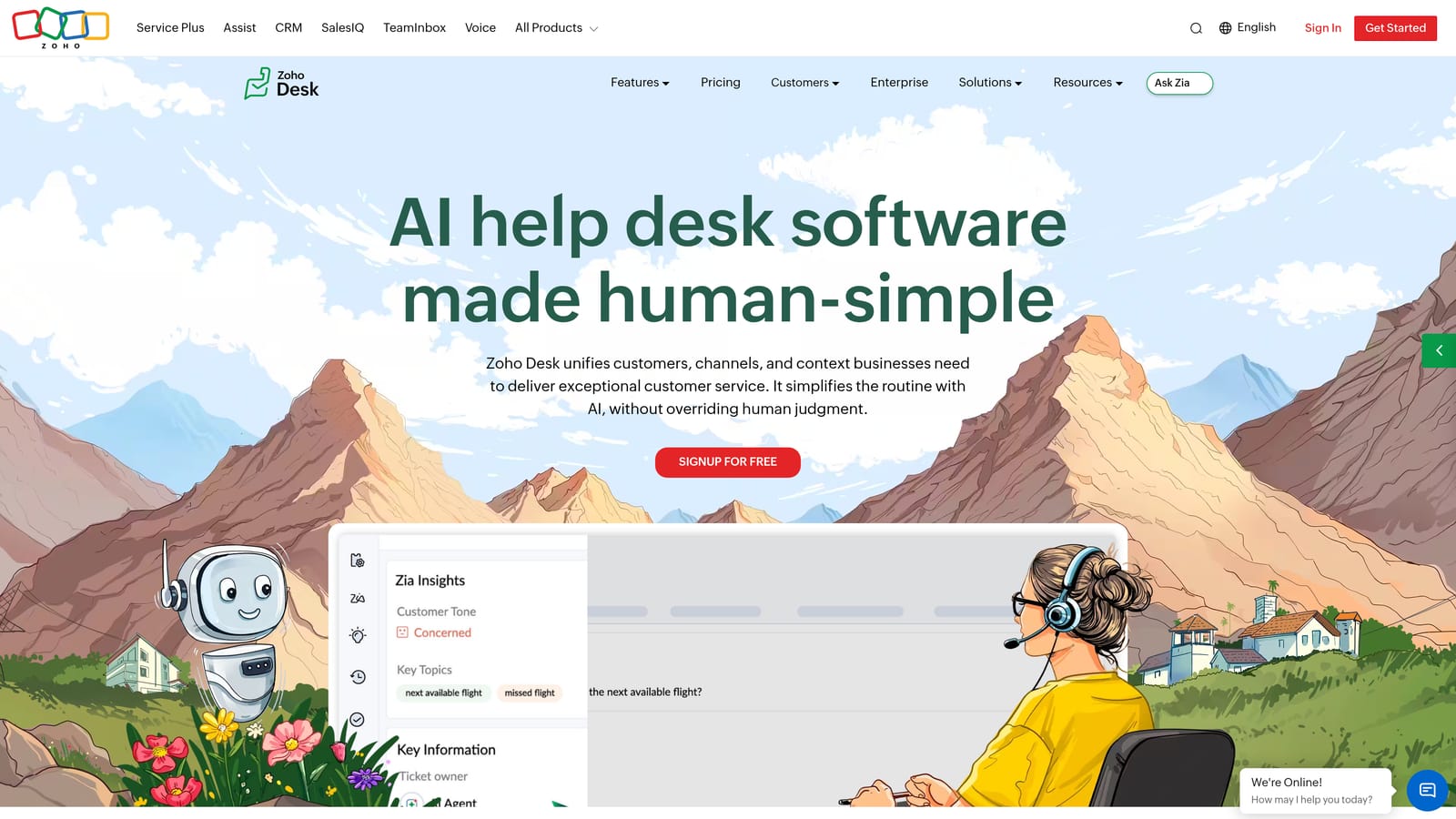
Zoho Desk is a helpdesk platform tightly integrated with the Zoho ecosystem, featuring Zia AI for sentiment analysis, smart tagging, and response suggestions.
Where This Tool Shines
If your business already runs on Zoho CRM, Zoho Books, or other Zoho products, Zoho Desk is the natural support layer. The integration is deep and native, meaning agents can see full customer context from CRM records, purchase history, and open deals without switching between tools.
Zia AI adds practical value across the support workflow. Sentiment analysis helps agents gauge customer mood before responding. Auto-tagging reduces manual categorization work. Anomaly detection flags unusual spikes in ticket volume before they become a crisis. These aren't flashy features, but they're genuinely useful for small teams managing support without dedicated ops staff.
Key Features
Zia Sentiment Analysis: Detects customer mood and flags negative sentiment tickets for priority handling.
Auto-Tagging: AI automatically classifies and tags incoming tickets to reduce manual sorting.
Response Suggestions: AI-powered reply recommendations based on ticket content and historical resolutions.
Anomaly Detection: Alerts when ticket volume deviates significantly from normal patterns.
Zoho Ecosystem Integration: Deep, native connection to Zoho CRM, Books, Projects, and other Zoho applications.
Best For
Zoho Desk delivers the strongest value for businesses already invested in the Zoho ecosystem. For teams outside that ecosystem, the platform can feel complex to configure, and other options on this list may offer a faster path to value.
Pricing
Free plan available for up to 3 agents; paid plans start at approximately $14/agent/month, making it one of the better value options for small teams.
8. Crisp
Best for: Bootstrapped startups and micro-teams that need multichannel messaging basics at minimal cost.
Crisp is a lightweight shared inbox and chatbot platform built for early-stage startups and micro-teams, offering basic AI automation and multichannel messaging at a very low cost.
Where This Tool Shines
Crisp occupies a distinct position on this list: it's the option for teams that aren't ready for a full helpdesk investment but need more than a basic contact form. The free plan is genuinely usable, and the paid tiers are priced in a way that doesn't punish very small teams.
The multichannel coverage is a practical strength. Email, live chat, Facebook Messenger, and WhatsApp are all consolidated into a single shared inbox, which is valuable for small businesses managing customer conversations across multiple channels without a dedicated support team.
Key Features
Multichannel Inbox: Consolidates email, live chat, Messenger, and WhatsApp into a single shared workspace.
AI Chatbot Builder: Simple automation flows for handling common queries without agent involvement.
AI Assistant: Suggests responses to agents based on conversation context.
Knowledge Base: Self-service widget that customers can access before reaching out to an agent.
Free Plan: Available with core features; paid tiers remain affordable as teams grow.
Best For
Crisp is best for bootstrapped teams, early-stage startups, and micro-businesses that need a functional multichannel support setup without significant investment. Teams looking for deep AI capabilities will eventually outgrow it, but as a starting point it's hard to beat on value.
Pricing
Free plan available; paid plans start at approximately $25/month for up to 4 agents, making it one of the most affordable options on this list.
9. Gorgias
Best for: Small e-commerce businesses on Shopify that need AI to handle order-related queries autonomously.
Gorgias is an e-commerce-specialized AI support platform with deep Shopify integration, enabling autonomous handling of order status, returns, and WISMO queries using live order data.
Where This Tool Shines
Gorgias is built for one thing and does it exceptionally well: e-commerce support. The Shopify integration isn't a surface-level connector. It pulls live order data directly into the support interface, allowing AI to handle order status checks, initiate returns, and answer shipping questions without any agent involvement and without any risk of providing outdated information.
The ticket volume-based pricing model is also worth noting. Unlike per-seat pricing, which penalizes small teams for having multiple agents, Gorgias charges based on how many tickets you process. For e-commerce businesses with variable seasonal demand, this is a more natural fit.
Key Features
Deep E-Commerce Integration: Native connections to Shopify, Magento, and BigCommerce with live order data access inside every ticket.
Autonomous Order Support: AI handles order edits, return initiations, and WISMO queries using real-time order data.
Revenue Statistics: Tracks support ROI by connecting support interactions to revenue outcomes.
Volume-Based Pricing: Scales with ticket volume rather than agent seats, suiting variable e-commerce demand patterns.
Macros and Automation: Pre-built and custom automation rules for repetitive e-commerce query types.
Best For
Gorgias is the clear choice for small e-commerce businesses, particularly those on Shopify, where a significant portion of support volume involves order-related queries. It's less relevant for SaaS companies or service businesses where order data isn't central to the support workflow.
Pricing
Starts at approximately $10/month for 50 tickets; pricing scales with ticket volume, making it accessible for businesses just starting to formalize their support operations.
Which Tool Is Right for Your Business?
The right AI customer service platform depends less on feature lists and more on where your business is today and where it's heading. Here's a practical breakdown to help you decide.
B2B SaaS startups: Halo AI is built specifically for this use case. Page-aware context, continuous learning, and business intelligence from support conversations make it a strong fit for product-led companies that want more than ticket deflection.
E-commerce businesses: Gorgias is the specialized choice if Shopify is your platform and order-related queries dominate your support volume. Tidio is a lighter-weight alternative if you're earlier stage or need fast deployment.
Budget-conscious teams: Freshdesk's free plan gives you a real helpdesk at no cost. Crisp is the best option for micro-teams that need multichannel basics without a monthly commitment.
Scaling teams: Zendesk is the infrastructure play. It's more complex and expensive upfront, but it won't need replacing as you grow.
Human-touch priority: Help Scout is built for teams where the quality of the support relationship matters as much as resolution speed.
Zoho ecosystem users: Zoho Desk is the natural extension of your existing stack, with native CRM integration that no other tool on this list can replicate.
Your support team shouldn't scale linearly with your customer base. Let AI agents handle routine tickets, guide users through your product, and surface business intelligence while your team focuses on complex issues that need a human touch. See Halo in action and discover how continuous learning transforms every interaction into smarter, faster support.