9 Best AI Customer Service Software to Buy in 2026
This guide helps B2B teams navigate the AI Customer Service Software Purchase decision in 2026 by ranking 9 leading platforms on autonomous ticket resolution, integration depth, escalation handling, and total cost impact. Whether you're replacing a legacy helpdesk or building from scratch, these picks represent the strongest AI-first options on the market today.
 Matt PattoliFounder14 min read
Buying AI customer service software is no longer a question of "if" — it's a question of which one actually fits how your team works. The market has matured fast, and the gap between tools that bolt AI onto legacy helpdesks and tools built AI-first is now significant.
This guide cuts through the noise for B2B teams evaluating platforms that can resolve tickets autonomously, guide users through products, and surface business intelligence — not just auto-respond to FAQs. We evaluated tools based on autonomous resolution capability, integration depth, learning over time, escalation handling, and total cost relative to headcount impact.
Whether you're replacing a traditional helpdesk, augmenting an existing setup, or starting from scratch, these platforms represent the strongest options on the market right now.
1. Halo AI
Best for: B2B SaaS teams that need AI-first autonomous resolution with deep stack integration
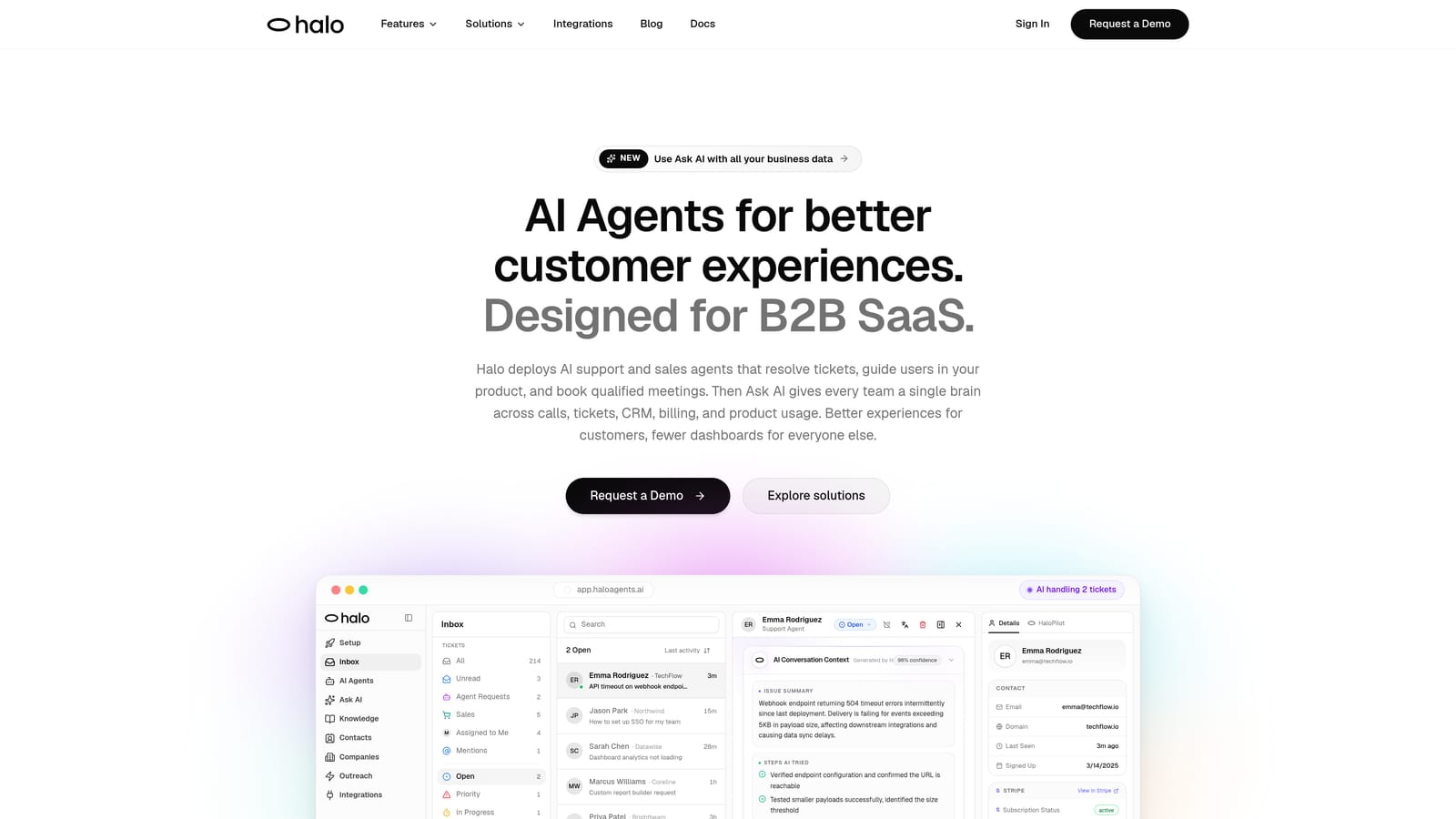
Halo AI is an AI-native customer support platform that deploys intelligent agents to resolve tickets autonomously, guide users through your product, and surface business intelligence — all while continuously learning from every interaction.
Where This Tool Shines
The core differentiator here is architecture. Halo wasn't built as a feature layer on top of an existing helpdesk — it was designed from the ground up around autonomous resolution. That distinction matters because AI bolted onto legacy systems tends to inherit the constraints of those systems: rigid workflows, limited context, and slow improvement cycles.
One technically distinctive capability is the page-aware chat widget. The AI sees what the user sees on screen, which means it can provide contextual, visual guidance rather than generic FAQ responses. For SaaS products with complex UIs, that's a meaningful difference in resolution quality.
Key Features
Page-Aware Chat Widget: The AI understands the user's current screen context, enabling precise product guidance rather than generic answers.
Smart Inbox with Business Intelligence: Surfaces customer health signals, revenue anomalies, and product friction patterns beyond standard support metrics — turning your support queue into a source of strategic insight.
Auto Bug Ticket Creation: Integrates with Linear to automatically convert support signals into engineering tickets, closing the loop between customer issues and product fixes.
Live Agent Handoff: When escalation is needed, full conversation context transfers intact — no dead ends, no "can you repeat that?" moments for your customers.
Deep Integration Stack: Connects natively with Slack, HubSpot, Intercom, Stripe, Zoom, PandaDoc, Fathom, and Linear, covering the full B2B SaaS operational stack.
Continuous Learning: Resolution quality improves with every ticket processed, meaning the platform gets smarter the longer you use it.
Best For
B2B SaaS companies that want AI to do more than deflect tickets — teams that need autonomous resolution, product-aware guidance, and business intelligence in a single platform. Particularly strong for product-led growth companies where the support and product experience are tightly connected.
Pricing
Not publicly listed. Contact Halo AI directly for a demo and custom pricing based on your team's needs and scale.
2. Intercom
Best for: B2B teams that want a mature messaging platform with capable AI layered in
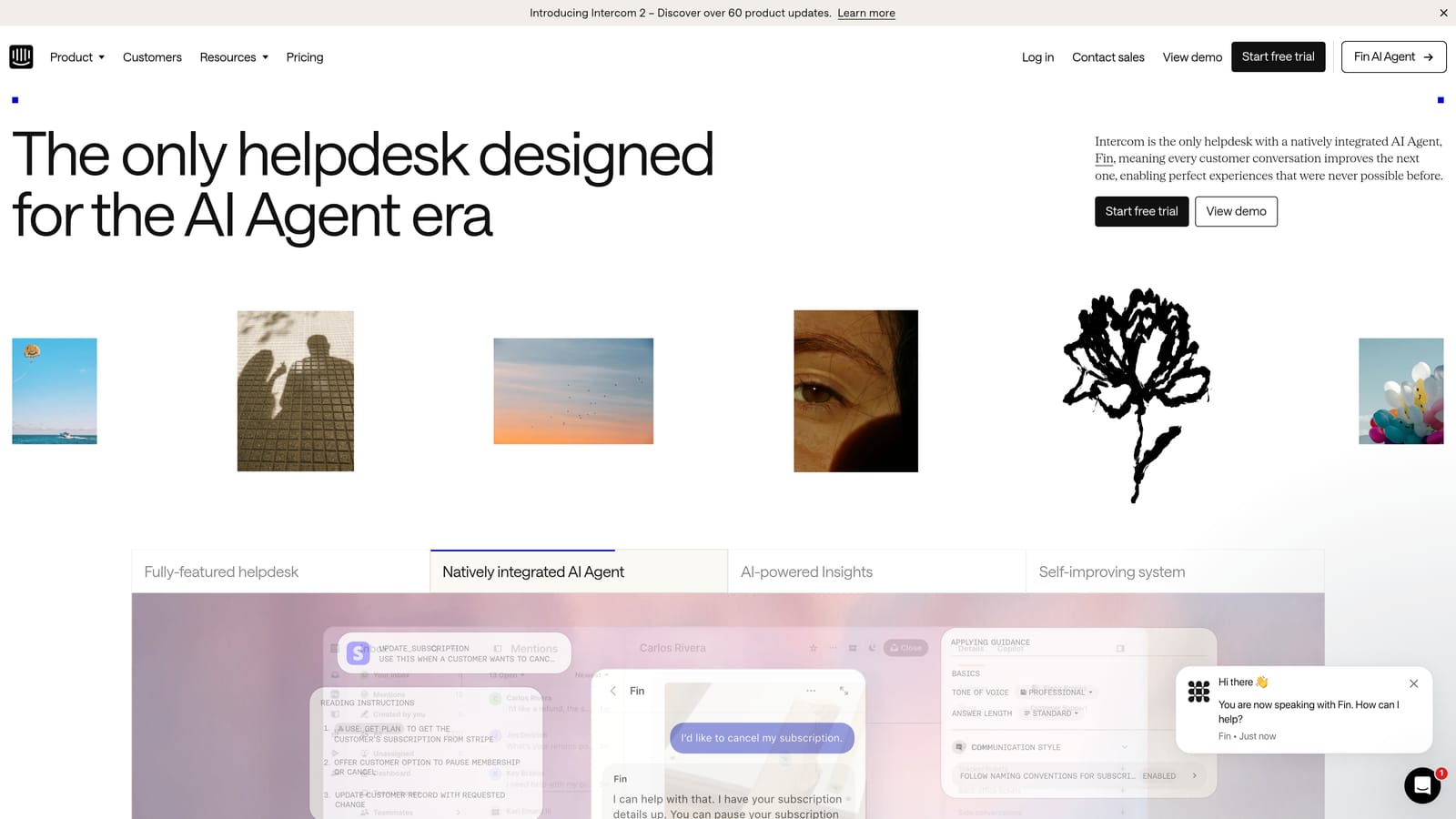
Intercom is one of the most established B2B customer messaging platforms, with Fin — its AI agent built on large language models — handling support conversations using your existing help content.
Where This Tool Shines
Intercom's strength is its ecosystem maturity. If you're already using Intercom for in-app messaging, product tours, and customer communication, Fin slots in without requiring a platform migration. The AI is trained on your help center content and can handle a solid range of common questions without human intervention.
The broader platform — omnichannel inbox, conversation routing, CSAT tracking — is genuinely polished after years of iteration. For teams that prioritize a unified messaging experience over pure AI resolution depth, Intercom is a compelling choice.
Key Features
Fin AI Agent: Trained on your help center content to handle common support conversations autonomously using large language models.
In-App Messaging and Product Tours: A mature ecosystem for customer engagement beyond reactive support.
Omnichannel Inbox: Manages chat, email, and social conversations in a single unified workspace.
AI-Powered Routing and Tagging: Automatically classifies and routes incoming conversations to the right team or workflow.
Reporting and CSAT Tracking: Strong analytics for measuring support performance and customer satisfaction.
Best For
Teams already invested in the Intercom ecosystem, or those that want a well-rounded messaging platform with AI capabilities rather than a purpose-built AI resolution engine. Works well for mid-market B2B companies with established help center content.
Pricing
Starts at $39/seat/month. Fin AI usage is billed separately per resolution, so costs can scale with volume — model this carefully before committing.
3. Zendesk AI
Best for: Enterprise teams with high-volume support operations already running on Zendesk
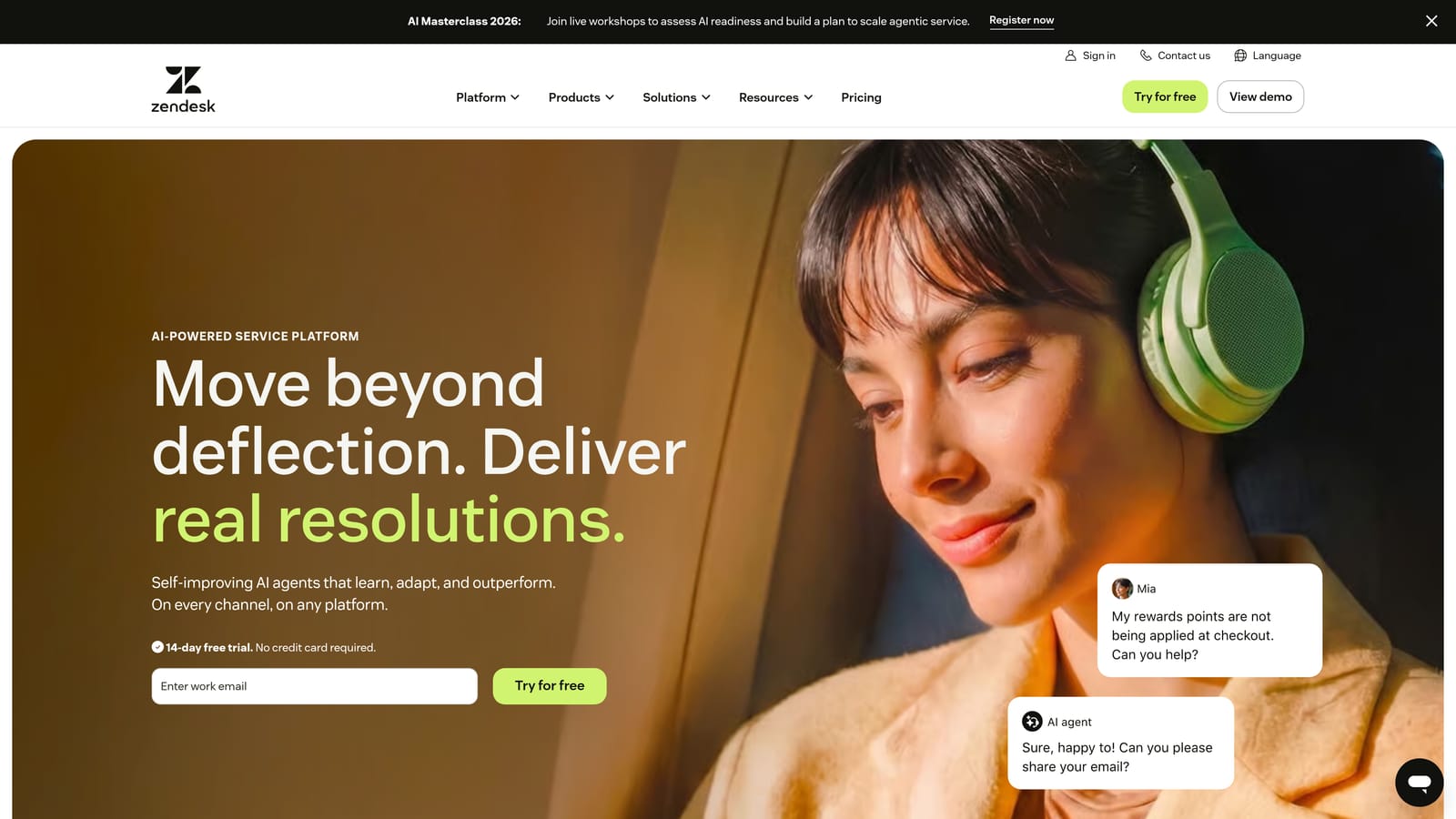
Zendesk AI is the AI layer built on top of Zendesk's industry-leading enterprise helpdesk, offering intelligent triage, AI agents, and automation for complex, high-volume support environments.
Where This Tool Shines
Zendesk's scale and enterprise credibility are hard to argue with. If your organization has strict compliance requirements, a large agent team, and deeply customized workflows already built in Zendesk, the AI add-ons extend what you have rather than requiring a rip-and-replace. The third-party app marketplace is extensive, and enterprise security controls are well-established.
That said, many buyers describe Zendesk AI as a bolt-on rather than a native capability — the AI features have improved significantly, but the underlying architecture is still a traditional ticketing system at its core. For teams prioritizing autonomous resolution over augmentation, that's worth weighing carefully.
Key Features
AI-Powered Ticket Triage: Automatically categorizes and routes incoming tickets based on content and intent.
AI Agent for Customer-Facing Resolution: Handles common questions autonomously before escalating to human agents.
Macro and Response Suggestions: Helps human agents respond faster with AI-recommended replies and templates.
Enterprise Compliance and Security: Meets the requirements of regulated industries with robust data controls.
Third-Party App Marketplace: Hundreds of integrations available, making it adaptable to complex tech stacks.
Best For
Large enterprise teams already on Zendesk who want to extend their investment with AI capabilities rather than migrate platforms. Less ideal for teams starting fresh who want AI-native architecture from day one.
Pricing
Suite plans from approximately $55/agent/month. AI features are available on higher tiers, so the total cost for full AI functionality is meaningfully higher than the base price suggests.
4. Freshdesk Freddy AI
Best for: SMBs and growing teams that need solid omnichannel AI support at an accessible price point
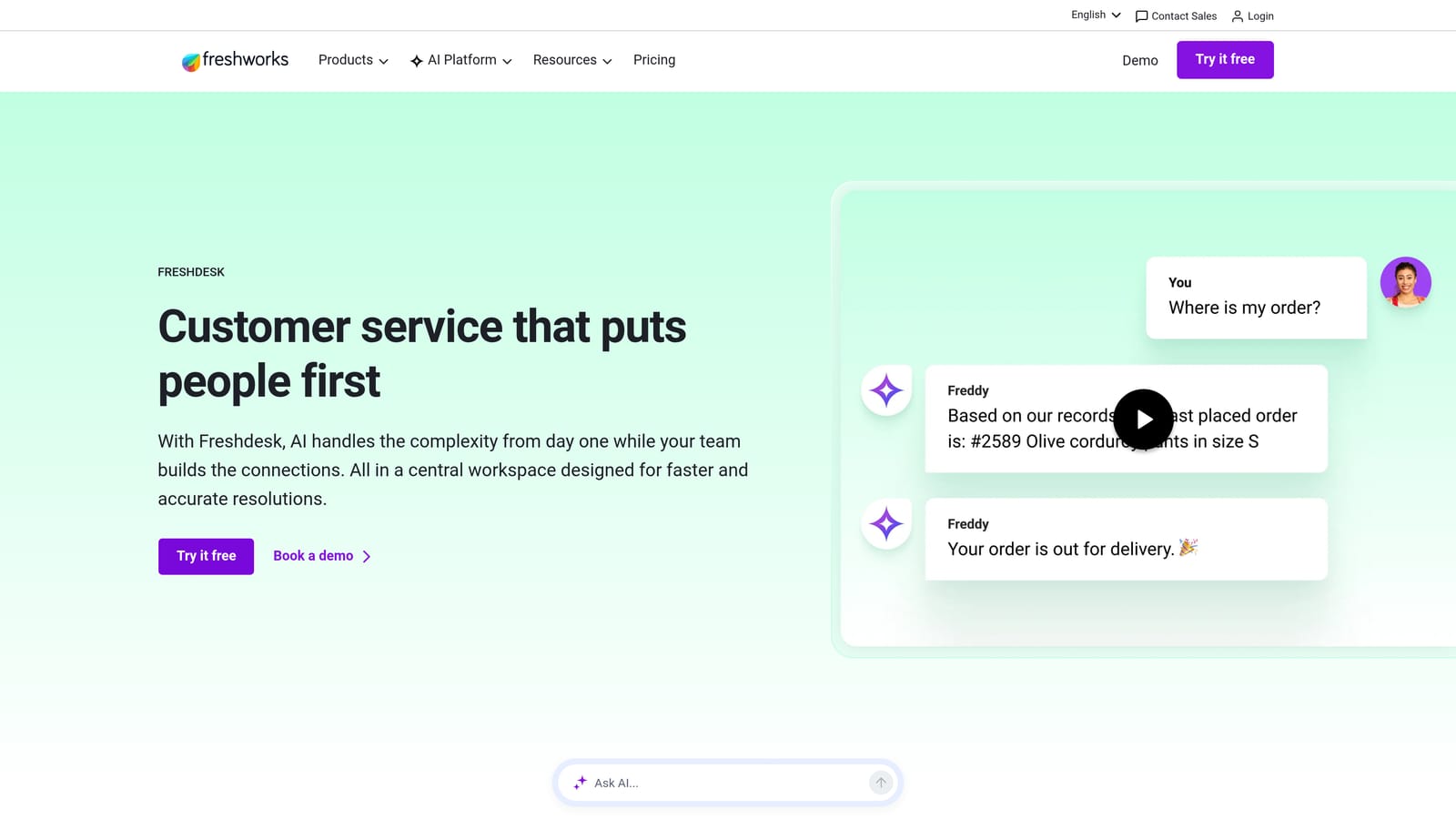
Freshdesk Freddy AI is Freshworks' AI layer embedded across its support suite, offering automated ticket handling, response suggestions, and a conversational bot with one of the more accessible pricing structures in the market.
Where This Tool Shines
Freshdesk's competitive advantage is value. The platform covers email, chat, phone, and social in a single omnichannel setup, and Freddy AI spans across the Freshworks suite — connecting support, CRM, and messaging with shared AI capabilities. For teams that don't need enterprise-grade complexity but do need genuine automation, this hits a practical sweet spot.
The cross-suite intelligence is worth noting: if you're using Freshsales alongside Freshdesk, Freddy can draw on CRM context to improve support interactions. It's not as deep as Salesforce's native integration, but it's more accessible for teams that aren't ready for Salesforce-level investment.
Key Features
Freddy AI for Ticket Management: Handles categorization, auto-assignment, and response drafting to reduce manual agent workload.
Freddy Self Service Bot: Conversational deflection for common questions before they reach your human team.
Omnichannel Coverage: Email, chat, phone, and social managed from a single platform.
Cross-Suite AI: Freddy intelligence spans Freshdesk, Freshsales, and Freshchat for connected context.
Free Tier Available: Genuine entry point for small teams testing AI-assisted support before scaling.
Best For
SMBs, growing startups, and teams with budget constraints who need reliable omnichannel support automation without the complexity or cost of enterprise platforms. Also a good fit for Freshworks suite users who want AI to span their entire customer stack.
Pricing
Free plan available. Growth tier from $15/agent/month. AI features unlock at Pro and Enterprise tiers — check which Freddy capabilities require the higher plans before choosing your tier.
5. Salesforce Einstein for Service
Best for: Organizations where Salesforce is already the system of record for customer data
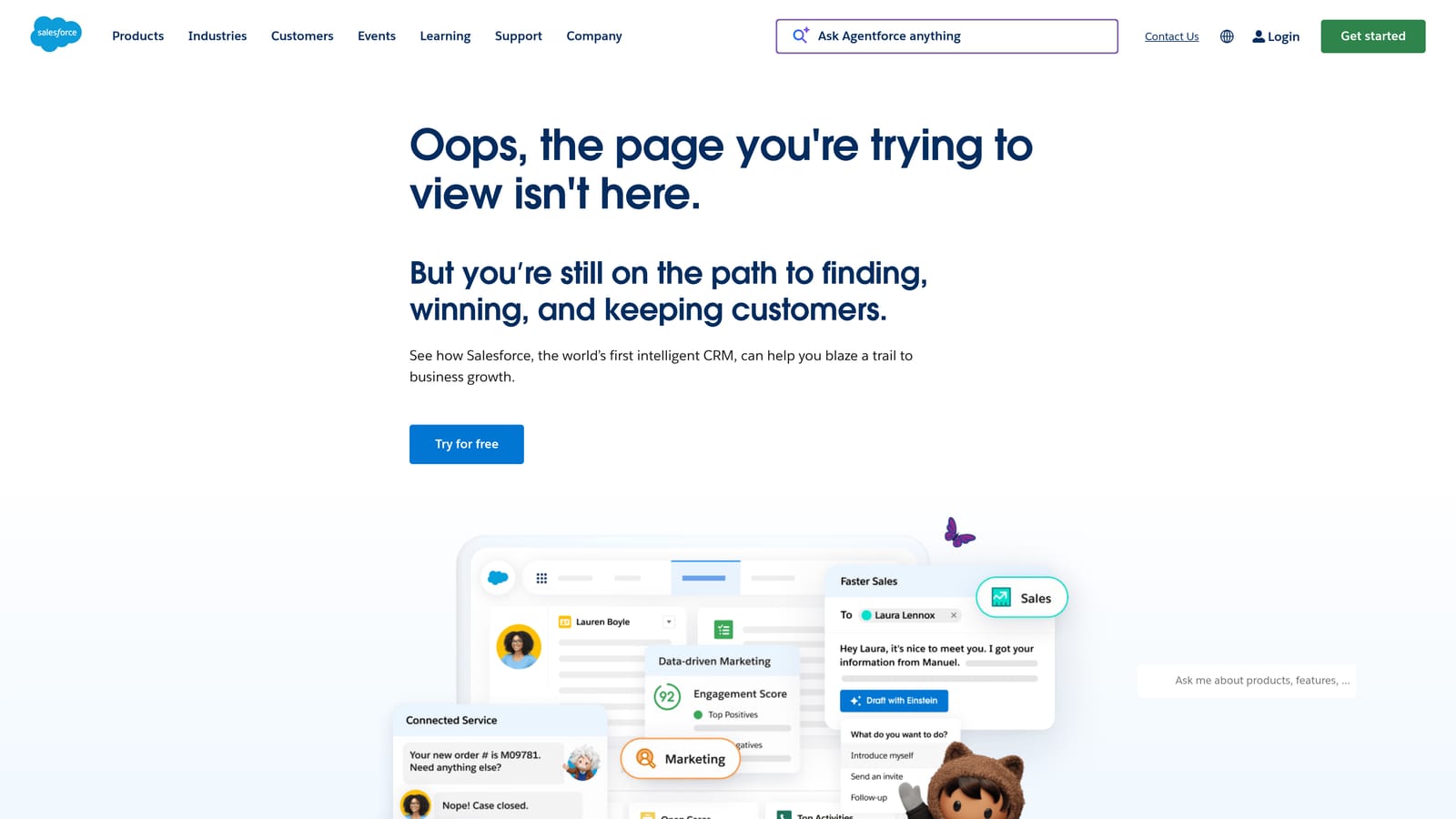
Salesforce Einstein for Service embeds AI natively within Service Cloud, leveraging full CRM data to deliver personalized, context-rich customer service automation at enterprise scale.
Where This Tool Shines
The core argument for Einstein is data depth. When your AI has native access to account history, purchase records, case history, and pipeline data — all within the same system — the quality and personalization of responses improves significantly. For organizations already running their business on Salesforce, adding Einstein to Service Cloud is an extension of existing infrastructure rather than a new platform.
Einstein Copilot for agent assistance is particularly useful for complex cases where the AI surfaces relevant knowledge articles, suggests next steps, and summarizes case context — reducing the cognitive load on human agents handling nuanced issues.
Key Features
Native CRM Data Access: AI responses draw on full account, purchase, and case history for highly personalized interactions.
Einstein Copilot: Agent assistance tool that summarizes cases, suggests responses, and recommends knowledge articles in real time.
AI-Powered Case Classification and Routing: Automatically categorizes and assigns incoming cases based on content and priority signals.
Knowledge Article Recommendations: Surfaces relevant documentation for both agents and customers during active cases.
Cross-Cloud Integration: Deeply connected with Salesforce Sales and Marketing Clouds for unified customer intelligence.
Best For
Enterprise organizations where Salesforce is the primary system of record and the team needs AI that draws on the full depth of that data. Implementation complexity and cost make this a poor fit for teams without existing Salesforce investment or dedicated admin resources.
Pricing
Service Cloud from approximately $75/user/month. Einstein AI capabilities are priced as add-ons, and total cost of ownership can be substantial — budget accordingly.
6. Tidio Lyro
Best for: E-commerce and small business teams that need fast deployment with minimal technical overhead
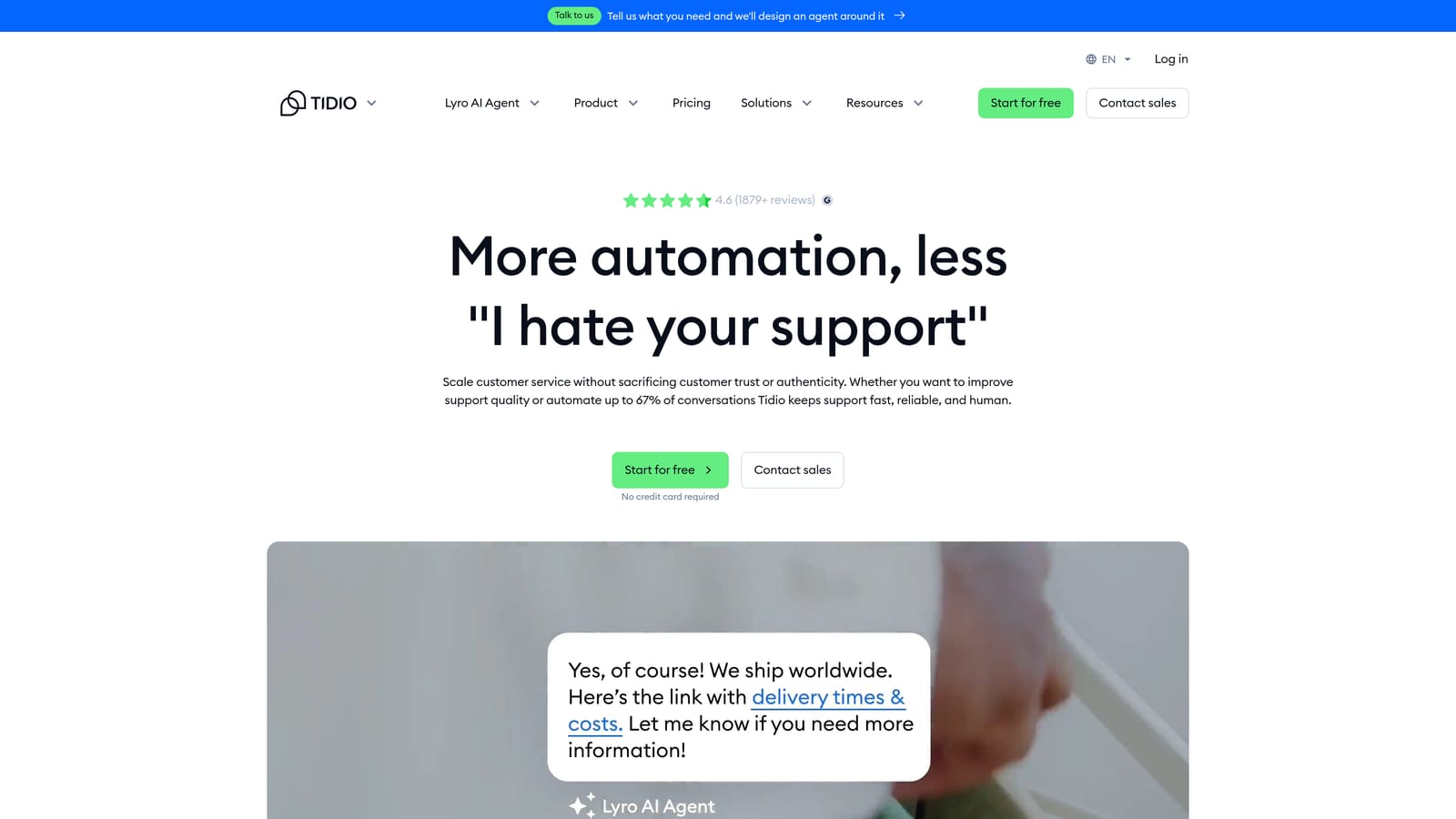
Tidio Lyro is a conversational AI agent designed for fast deployment, particularly popular with e-commerce and small business teams that need immediate support automation without developer involvement.
Where This Tool Shines
Lyro is built for speed of setup. If you need an AI handling common customer questions within hours rather than weeks, Tidio delivers. The live chat and chatbot are combined in a single interface, and the e-commerce integrations — Shopify, WooCommerce — are well-implemented for product and order-related queries.
For B2B SaaS teams with complex integration requirements or multi-system workflows, Tidio will likely feel limited. But for smaller teams or e-commerce operators who need a reliable conversational AI without heavy configuration, it's a practical and cost-effective entry point.
Key Features
Lyro AI Agent: Handles common questions autonomously from day one with minimal training required.
Low-Friction Setup: No developer resources required — teams can deploy and configure without engineering support.
Combined Live Chat and Chatbot Interface: Manages both AI and human conversations in a single unified workspace.
E-Commerce Integrations: Native connections with Shopify and WooCommerce for product and order query handling.
Conversation Analytics and Handoff: Tracks conversation performance and escalates to human agents when needed.
Best For
Small businesses, e-commerce operators, and early-stage teams that need conversational AI running quickly without technical complexity. Less suited to B2B SaaS environments that require deep integration with CRM, product, and billing systems.
Pricing
Free plan available. Lyro AI from $29/month, scaling with conversation volume. Transparent and accessible pricing compared to enterprise alternatives.
7. Kustomer
Best for: High-volume consumer brands that need AI with full customer history context across every channel
Kustomer is a CRM-native customer service platform that gives AI full context across every customer interaction via a unified timeline, suited to brands managing complex, high-volume consumer journeys.
Where This Tool Shines
The unified customer timeline is Kustomer's defining feature. Rather than treating each ticket as an isolated event, Kustomer shows every interaction across every channel in a single chronological view. That context — available to both the AI and human agents — meaningfully improves the quality of responses and the continuity of customer experience.
AI-powered intelligent routing and suggested responses draw on that full history, which is particularly valuable for consumer brands where customers may have had dozens of past interactions. The workflow automation capabilities handle complex multi-step processes that simpler tools can't manage.
Key Features
Unified Customer Timeline: Complete interaction history across all channels and touchpoints in a single view for AI and agents.
AI-Powered Intelligent Routing: Prioritizes and routes conversations based on customer history and issue complexity.
Suggested Responses: AI recommendations informed by the full context of the customer's history, not just the current message.
Workflow Automation: Handles complex, multi-step processes that go beyond simple ticket routing.
Omnichannel Coverage: Email, chat, SMS, social, and voice managed from a unified platform.
Best For
High-volume consumer brands and DTC companies with complex customer journeys where historical context is critical to resolution quality. Enterprise pricing makes it less accessible for smaller teams.
Pricing
Enterprise pricing — contact for a quote. Typically ranges from $89 to $139/user/month based on publicly available information.
8. Ada
Best for: Enterprise CX teams that need brand-safe, policy-compliant AI without engineering involvement
Ada is a no-code AI agent builder designed for enterprise teams that need to deploy brand-safe, policy-compliant AI automation at scale without requiring engineering resources to build or maintain it.
Where This Tool Shines
Ada's core value proposition is governance and control. For enterprises where brand voice, compliance requirements, and policy guardrails are non-negotiable, Ada provides the tooling to build AI agents that stay within defined boundaries. The visual workflow editor lets CX teams build, test, and iterate on AI behavior without writing a line of code.
The multi-language support is a genuine strength for global deployments, and the AI performance coaching tools help teams systematically improve resolution quality over time. Ada integrates with major helpdesks and CRMs, so it can layer onto existing infrastructure rather than replacing it.
Key Features
No-Code AI Agent Builder: Visual workflow editor lets CX teams build and deploy AI agents without engineering support.
Enterprise Governance Controls: Brand and policy compliance guardrails ensure AI behavior stays within defined parameters.
Multi-Language Support: Handles global deployments across multiple languages from a single platform.
Helpdesk and CRM Integrations: Connects with Zendesk, Salesforce, Freshdesk, and other major platforms.
AI Performance Coaching: Tools for systematically improving agent behavior and resolution quality over time.
Best For
Enterprise CX teams in regulated industries or brand-sensitive environments where AI governance is as important as automation capability. Also strong for global companies that need multilingual AI without building separate configurations per language.
Pricing
Enterprise pricing — contact Ada directly for a quote. Not suited for teams with limited budgets or those needing rapid self-serve deployment.
9. Drift (Salesloft)
Best for: B2B companies where support and sales conversations overlap and pipeline matters
Drift, now part of the Salesloft revenue orchestration platform, is a conversational AI tool built for B2B companies where the line between support and sales is blurry — handling qualification, routing, and meeting booking alongside customer service conversations.
Where This Tool Shines
Drift occupies a unique position in this list: it's less a pure support tool and more a revenue-aware conversational AI. If your inbound traffic includes a mix of existing customers needing help and prospects needing qualification, Drift can handle both in a unified conversational layer. The account-based targeting capabilities let you serve high-value visitors differently from general traffic.
The integration with Salesloft's broader revenue orchestration suite is the key differentiator post-acquisition. For B2B teams already using Salesloft for sales engagement, Drift adds a conversational front door that connects support interactions to pipeline activity. For teams that just need support automation, the revenue focus may feel like unnecessary complexity.
Key Features
Conversational AI for Support and Sales: Handles customer support, lead qualification, and routing within a single conversational interface.
AI-Powered Meeting Booking: Automatically schedules meetings with the right rep based on conversation context and routing rules.
Real-Time Personalization: Adapts conversations based on visitor data, account status, and behavioral signals.
Salesloft Integration: Connects conversational AI to the broader revenue orchestration and sales engagement platform.
Account-Based Targeting: Identifies and prioritizes high-value inbound conversations for premium handling.
Best For
B2B companies with significant inbound traffic where support and sales conversations intersect, particularly teams already invested in the Salesloft ecosystem. Less compelling as a standalone support automation tool for teams with clean separation between support and sales functions.
Pricing
Premium plans from approximately $2,500/month. Enterprise pricing available on request — a significant investment that makes most sense when the full Salesloft suite is in play.
Which Tool Is Right for Your Team?
The right choice depends less on feature lists and more on where you're starting from and what you need AI to actually do.
If you're a B2B SaaS company starting fresh or ready to move beyond a legacy helpdesk: Halo AI's AI-native architecture, page-aware guidance, and business intelligence capabilities make it the strongest choice for teams that want autonomous resolution and strategic insight — not just ticket deflection.
If you're deeply embedded in Salesforce: Einstein for Service is the logical extension of your existing infrastructure, especially if CRM data depth is critical to your support quality.
If you're on Zendesk or Intercom and not ready to migrate: Both platforms offer meaningful AI capabilities that extend your current investment. Intercom's Fin is particularly strong for teams with well-developed help content.
If budget is the primary constraint: Freshdesk Freddy AI offers genuine omnichannel automation at a price point that's hard to beat. Tidio Lyro is the fastest path to conversational AI for smaller teams.
If enterprise governance is non-negotiable: Ada's no-code builder with policy controls is built for exactly that environment.
One principle worth holding onto across any evaluation: ask every vendor for their autonomous resolution rate — the percentage of tickets fully resolved without human intervention. That number tells you more about real-world AI capability than any feature comparison chart.
Your support team shouldn't scale linearly with your customer base. Let AI agents handle routine tickets, guide users through your product, and surface business intelligence while your team focuses on complex issues that need a human touch. See Halo in action and discover how continuous learning transforms every interaction into smarter, faster support.