9 Best AI Customer Support Tools for Mobile Apps in 2026
This guide evaluates nine AI customer support for mobile apps platforms on the criteria that matter most to mobile-first product teams — in-app chat, SDK availability, automation depth, and integration ecosystems. Whether you run a lean startup or a scaling B2B SaaS product, it pinpoints the right tool to deliver instant, intelligent support and protect your ratings and renewals.
 Matt PattoliFounder13 min read
Mobile app users expect instant answers. When someone hits a bug at 2am or can't figure out a feature mid-session, a slow support response doesn't just frustrate them — it costs you a rating, a renewal, or both.
AI-powered customer support has fundamentally changed what's possible here. Modern platforms can resolve tickets autonomously, guide users through in-app workflows, detect bugs before they escalate, and hand off to human agents only when it truly matters. The challenge is that not every AI support tool is built with mobile-first product teams in mind. Some are retrofitted helpdesks with a chatbot layer bolted on. Others are lightweight widgets without the intelligence to handle complex SaaS queries.
This list cuts through the noise. We've evaluated nine platforms specifically for mobile app use cases, looking at in-app chat capabilities, SDK availability, context-awareness, automation depth, and integration ecosystems. Whether you're a lean startup or a scaling B2B product team, there's a right fit here.
1. Halo AI
Best for: B2B SaaS product teams that want AI-first support, not a retrofitted helpdesk
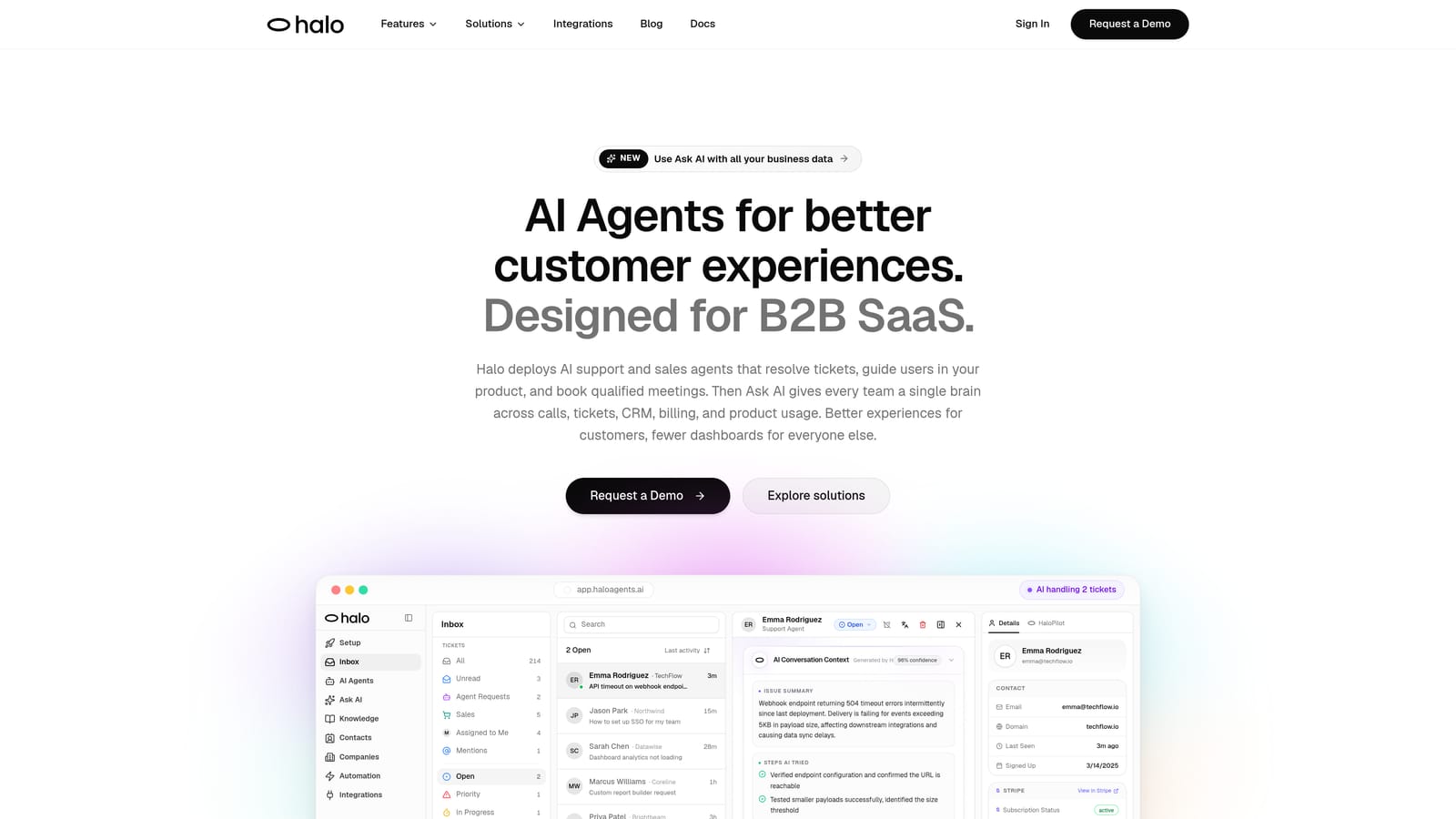
Halo AI is an AI-native customer support platform that deploys intelligent agents to resolve tickets, guide users through your product, and surface business intelligence — all while continuously learning from every interaction.
Where This Tool Shines
What sets Halo apart from most tools on this list is its architecture. Rather than adding AI capabilities to an existing helpdesk, Halo was built AI-first from the ground up. That distinction matters in practice: the system is designed to operate autonomously, not just assist human agents.
The page-aware chat widget is a standout feature for mobile app teams specifically. It understands which screen a user is on and can provide visual UI guidance in context — so instead of sending a user to a generic FAQ, Halo can walk them through the exact workflow they're stuck on. Combined with auto bug ticket creation connected to Linear and a smart inbox that surfaces customer health signals and anomaly detection, it functions more like a product intelligence layer than a support tool.
Key Features
Page-Aware Chat Widget: Understands the user's current screen and delivers contextual visual UI guidance rather than generic help content.
Autonomous Ticket Resolution: AI agents resolve support tickets independently, with continuous learning that improves accuracy over every interaction.
Smart Inbox with Business Intelligence: Surfaces customer health signals, revenue intelligence, and anomaly detection — turning support data into product insights.
Auto Bug Ticket Creation: Automatically generates bug reports connected to Linear, reducing the manual handoff between support and engineering.
Live Agent Handoff: Escalates complex issues to human agents seamlessly, with full conversation context preserved.
Deep Integration Ecosystem: Connects with Slack, HubSpot, Intercom, Stripe, Zoom, PandaDoc, and Fathom for a unified view across your business stack.
Best For
Product-led B2B SaaS teams that want support to operate as a strategic layer, not just a ticket queue. Particularly strong for teams that need their support system to connect with engineering tools like Linear and revenue tools like HubSpot in a meaningful way.
Pricing
Contact for pricing. A demo is available at haloagents.ai.
2. Intercom
Best for: Teams already in the Intercom ecosystem seeking a mature in-app messaging solution
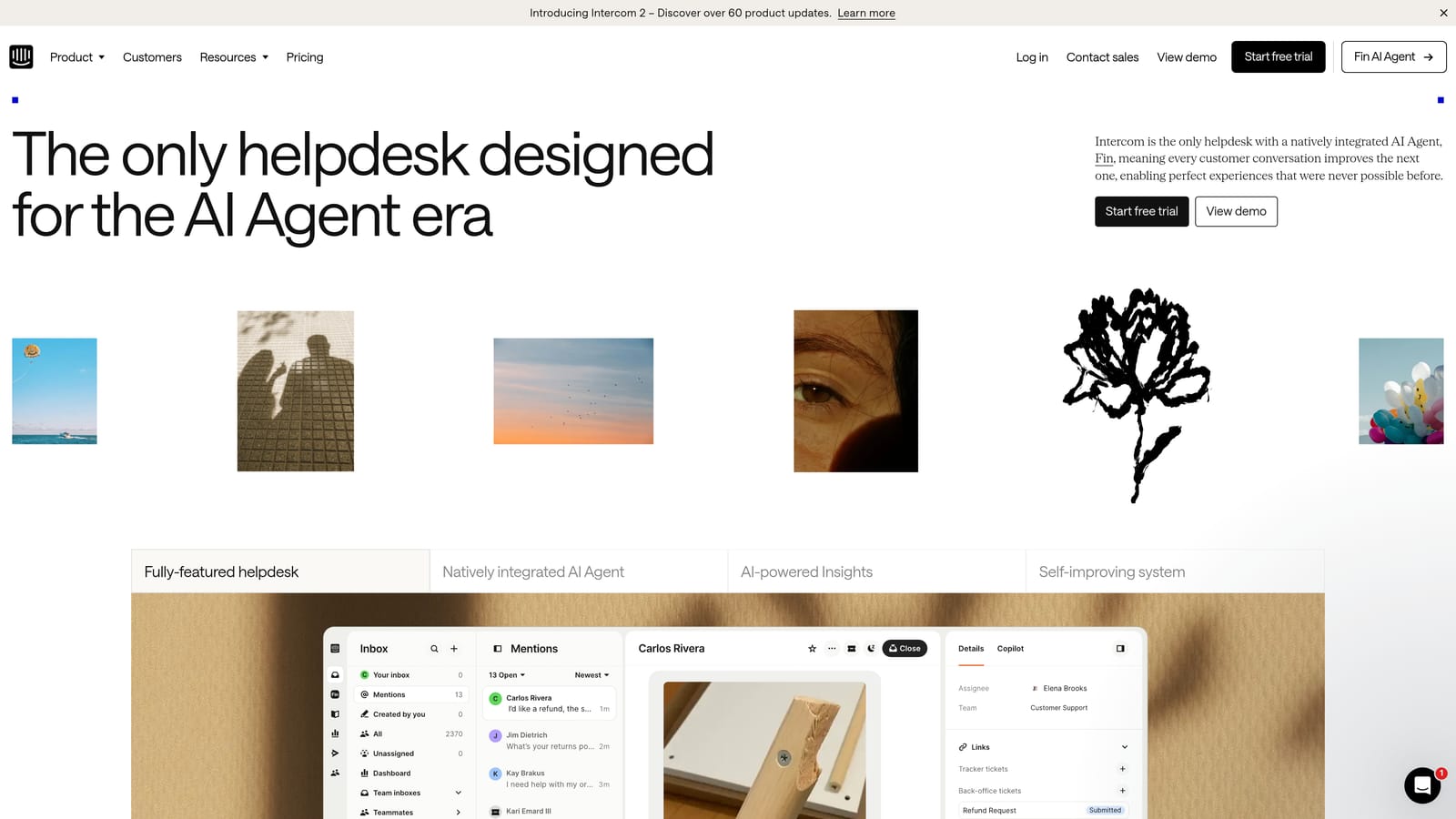
Intercom is a leading in-app messaging platform with Fin, its GPT-4-powered AI agent that resolves customer queries using your help center content.
Where This Tool Shines
Intercom's maturity shows in its mobile SDK quality. The native iOS and Android SDKs are well-documented and widely adopted, making in-app chat implementation relatively straightforward for engineering teams. Fin, the AI agent, can handle a solid range of queries by drawing from your existing knowledge base without requiring you to rebuild your content from scratch.
The platform's breadth is both a strength and a consideration. You get live agent inbox, custom bots, workflow automation, and a broad integration ecosystem under one roof. For teams already running Intercom for product messaging or onboarding, adding Fin for support deflection is a natural extension rather than a new vendor relationship.
Key Features
Fin AI Agent: GPT-4-powered agent that resolves queries autonomously using your existing help center content.
Native Mobile SDKs: Mature iOS and Android SDKs for seamless in-app messaging integration.
Custom Bots and Workflow Automation: Build automated conversation flows for common support scenarios without heavy engineering involvement.
Live Agent Inbox: Human agents receive AI-assisted reply suggestions to speed up resolution time.
Broad Integration Ecosystem: Connects with CRMs, analytics tools, and product platforms across the SaaS stack.
Best For
Teams already using Intercom for product communications who want to extend it into AI-powered support. Also well-suited for mid-market SaaS companies that want a single platform for messaging, onboarding, and support.
Pricing
Starts at approximately $39/month. Fin AI agent usage is billed per resolution, so costs can scale significantly with volume.
3. Zendesk
Best for: Enterprise teams managing high ticket volumes across multiple channels
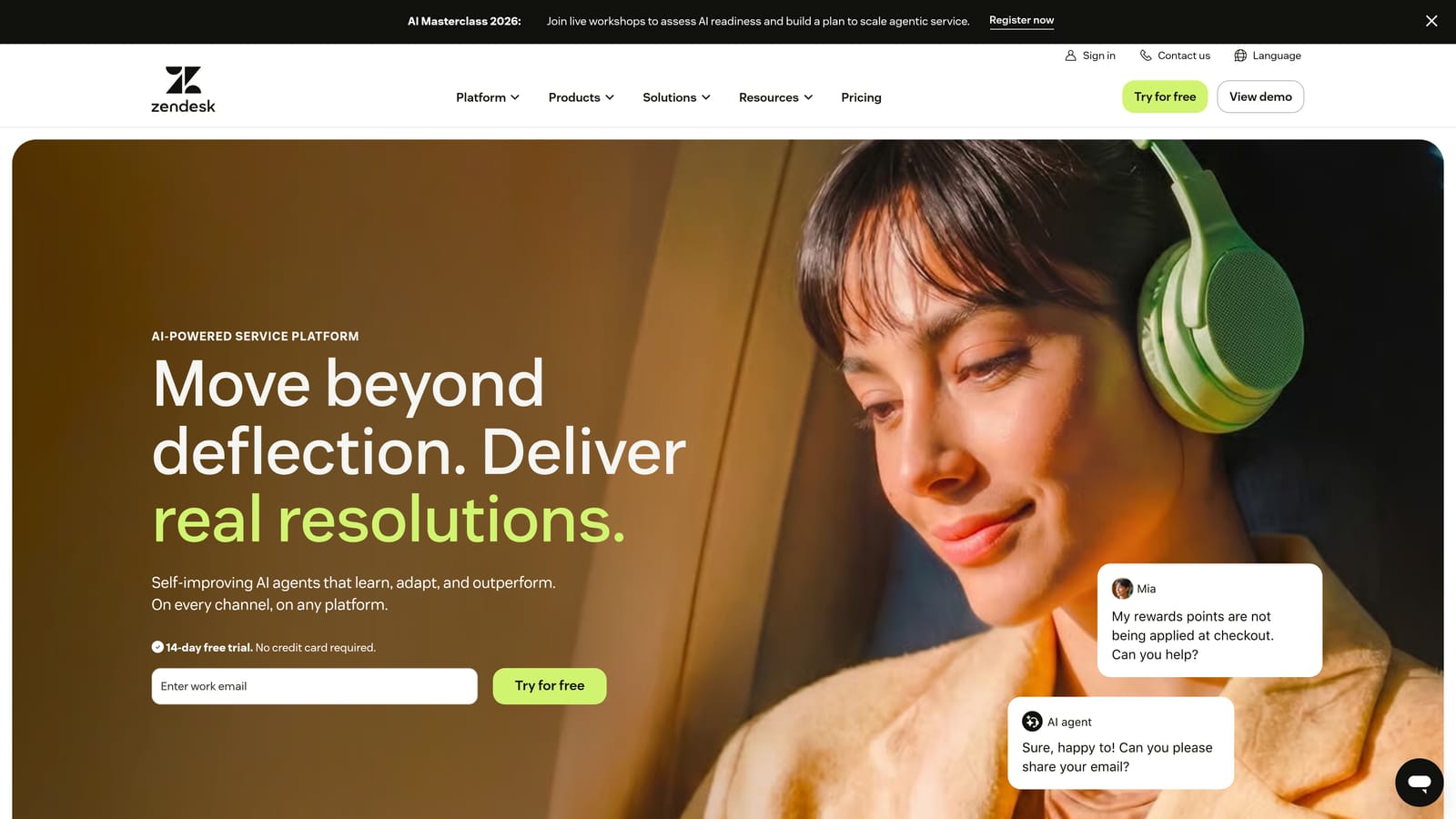
Zendesk is an enterprise-grade helpdesk with AI-powered triage, routing, and deflection built on OpenAI technology, offering a mobile SDK and strong omnichannel support.
Where This Tool Shines
Zendesk's AI capabilities have matured considerably. The platform can auto-classify incoming tickets, suggest responses to agents, and deflect common queries before they reach the queue. For teams managing support across email, chat, social, and voice simultaneously, Zendesk's omnichannel architecture handles that complexity well.
The mobile SDK is available for iOS and Android, though Zendesk's primary strength is in its broader helpdesk infrastructure rather than mobile-native experiences specifically. Teams with existing Zendesk investments will find the AI features a logical upgrade path rather than a platform migration.
Key Features
AI-Powered Ticket Triage: Automatically classifies, prioritizes, and routes incoming tickets based on content and intent.
Mobile SDK: Available for iOS and Android, enabling in-app support within the Zendesk ecosystem.
Intelligent Deflection: AI-generated suggested answers reduce ticket volume before queries reach human agents.
Omnichannel Support: Unified inbox across email, chat, social media, and voice channels.
Extensive App Marketplace: Hundreds of integrations available through the Zendesk marketplace.
Best For
Larger organizations with established Zendesk infrastructure and complex, multi-channel support operations. Less ideal for lean teams that want AI to operate autonomously from day one without significant configuration overhead.
Pricing
Suite plans start at approximately $55/agent/month. AI features are available on higher tiers, which adds to the total cost of ownership at scale.
4. Freshdesk
Best for: Growing SMB and mid-market teams that need solid AI automation at a competitive price point
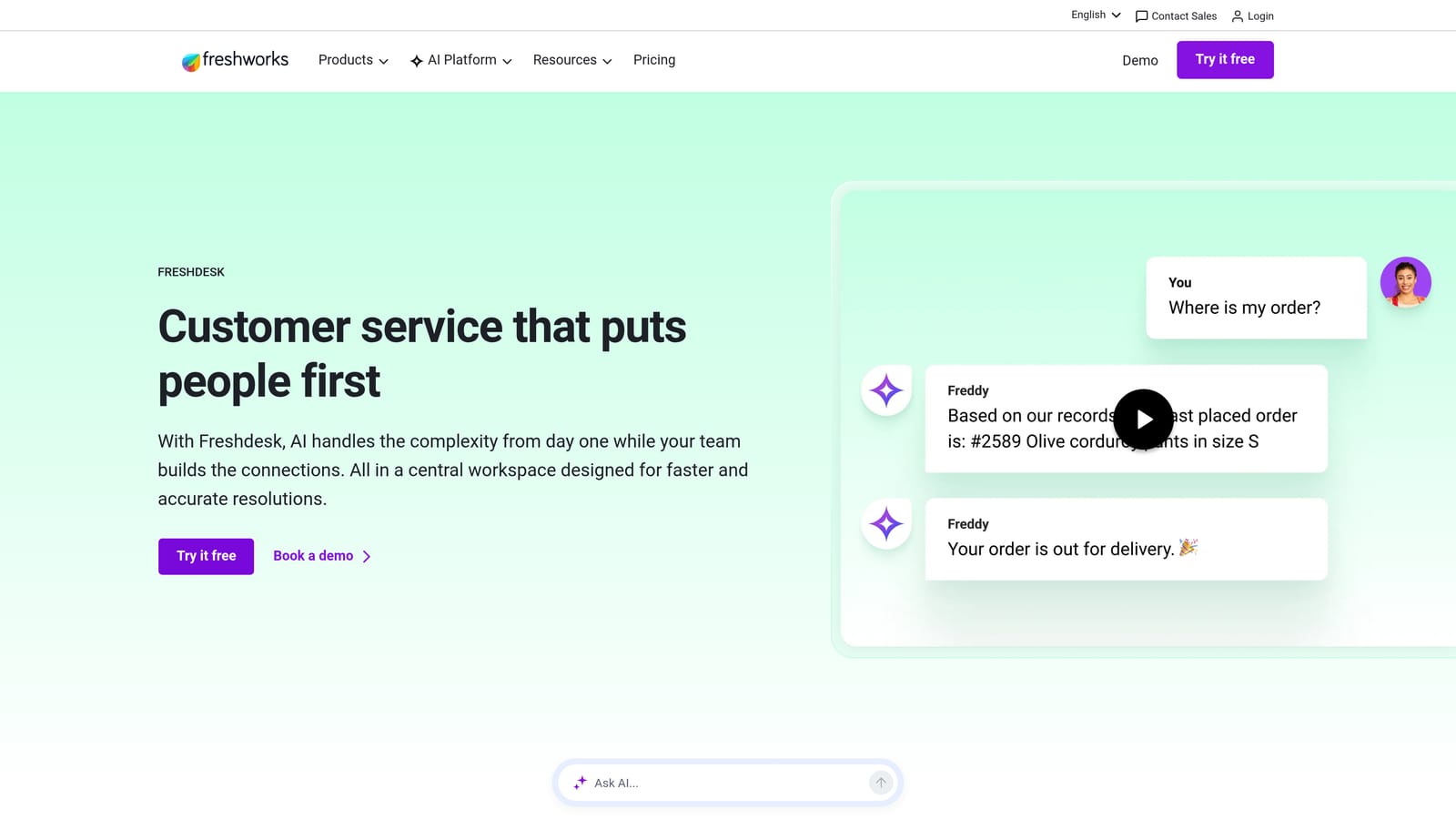
Freshdesk is a cost-competitive helpdesk platform where Freddy AI handles ticket deflection, sentiment analysis, and agent assist across a mobile SDK and web channels.
Where This Tool Shines
Freshdesk's value proposition is straightforward: you get meaningful AI capabilities without the price tag of Zendesk or Intercom at comparable tiers. Freddy AI covers the core use cases — deflecting common queries, analyzing ticket sentiment, and suggesting replies to agents — which handles the majority of what most growing teams need.
The free tier makes it genuinely accessible for early-stage teams, and the mobile SDK allows for in-app support integration without requiring an enterprise contract. The trade-off is that Freddy Copilot and Freddy Self Service are separate add-ons, so the full AI feature set requires additional spend beyond the base plan.
Key Features
Freddy AI for Deflection: Handles ticket deflection and self-service resolution using your knowledge base content.
Freddy Copilot: AI-assisted reply suggestions that help agents respond faster and more accurately.
Mobile SDK: Enables in-app support experiences on iOS and Android.
Automation Rules: Configurable routing rules and SLA management to keep tickets moving through the right workflows.
Free Tier: Functional free plan for small teams, with paid plans scaling from an accessible starting price.
Best For
SMB and mid-market teams that want AI-assisted support without committing to enterprise pricing. A practical choice for teams moving off spreadsheets or basic email support who want structure and automation without complexity.
Pricing
Free tier available. Paid plans start at approximately $15/agent/month. Freddy AI add-ons are priced separately, so factor those in when calculating total cost.
5. Tidio
Best for: Early-stage consumer apps and e-commerce products needing fast AI deployment with minimal engineering lift
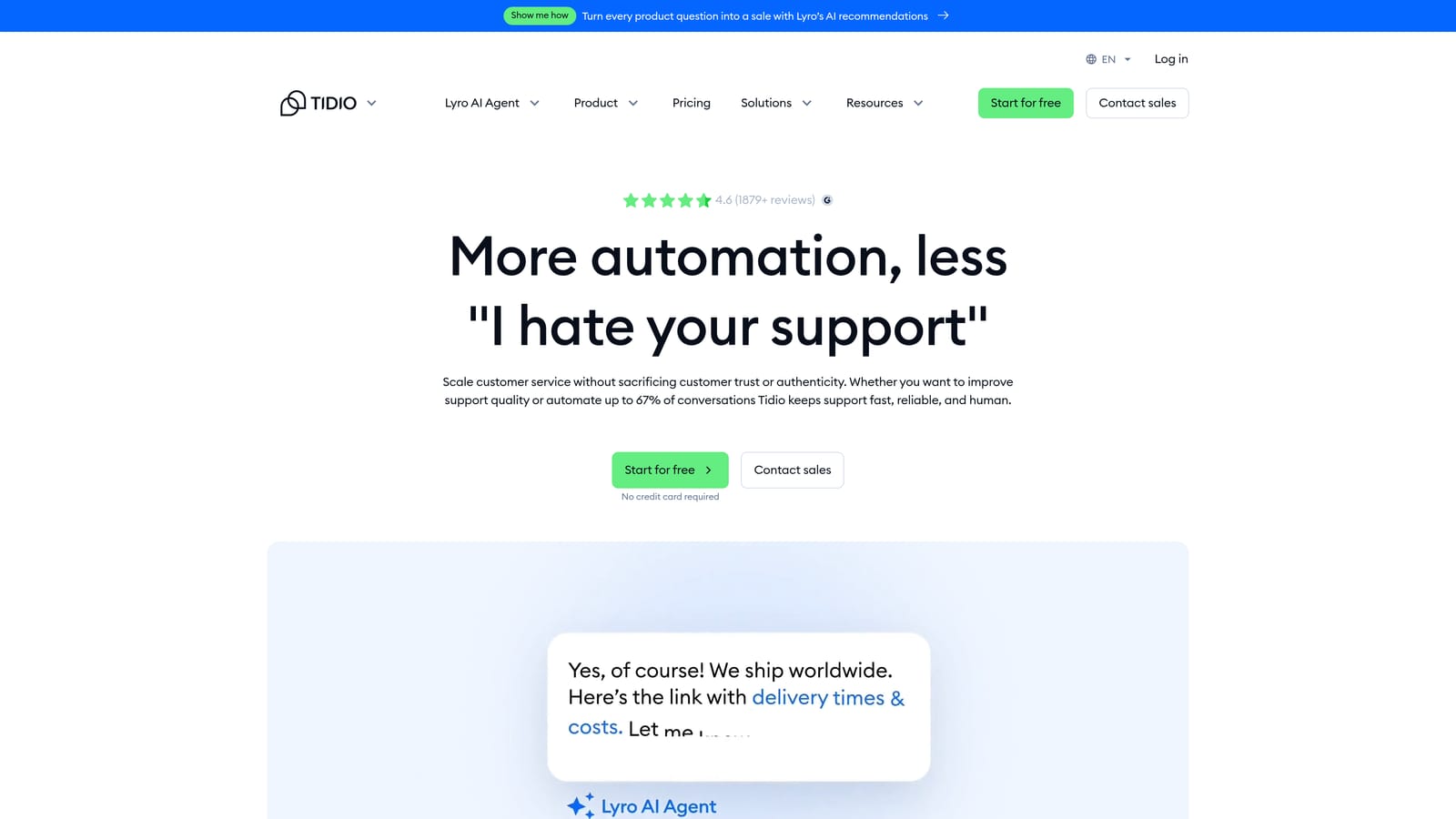
Tidio is a lightweight AI chat platform featuring Lyro, its conversational AI agent designed for fast deployment and straightforward configuration.
Where This Tool Shines
Tidio's strongest asset is speed to value. Teams can get Lyro handling basic queries within hours rather than weeks. The platform is primarily web-focused, but it integrates with mobile environments and is well-suited for consumer apps where the support queries tend to be relatively predictable and high-volume.
For early-stage teams where engineering bandwidth is limited and support volume is still manageable, Tidio's simplicity is a genuine advantage. It won't handle complex B2B SaaS workflows or deep product integrations, but for consumer apps focused on e-commerce or simple utility use cases, it covers the fundamentals cleanly.
Key Features
Lyro AI: Conversational AI agent that handles self-service queries using your existing content.
Fast Deployment: Minimal engineering requirement — teams can be live quickly without dedicated technical resources.
Live Chat with Handoff: Smooth escalation from Lyro to a human agent when queries exceed the bot's scope.
E-commerce and CRM Integrations: Connects with common platforms relevant to consumer app and e-commerce teams.
Free Tier: Accessible starting point for low-volume teams testing AI deflection for the first time.
Best For
Early-stage consumer apps, e-commerce products, and teams that prioritize quick deployment over deep customization. Not the right fit for complex B2B SaaS workflows or teams that need their support system to integrate deeply with their product stack.
Pricing
Free tier available. Lyro AI plans start at approximately $29/month, making it one of the more accessible entry points on this list.
6. Drift (Salesloft)
Best for: B2B apps where customer support and revenue conversations overlap significantly
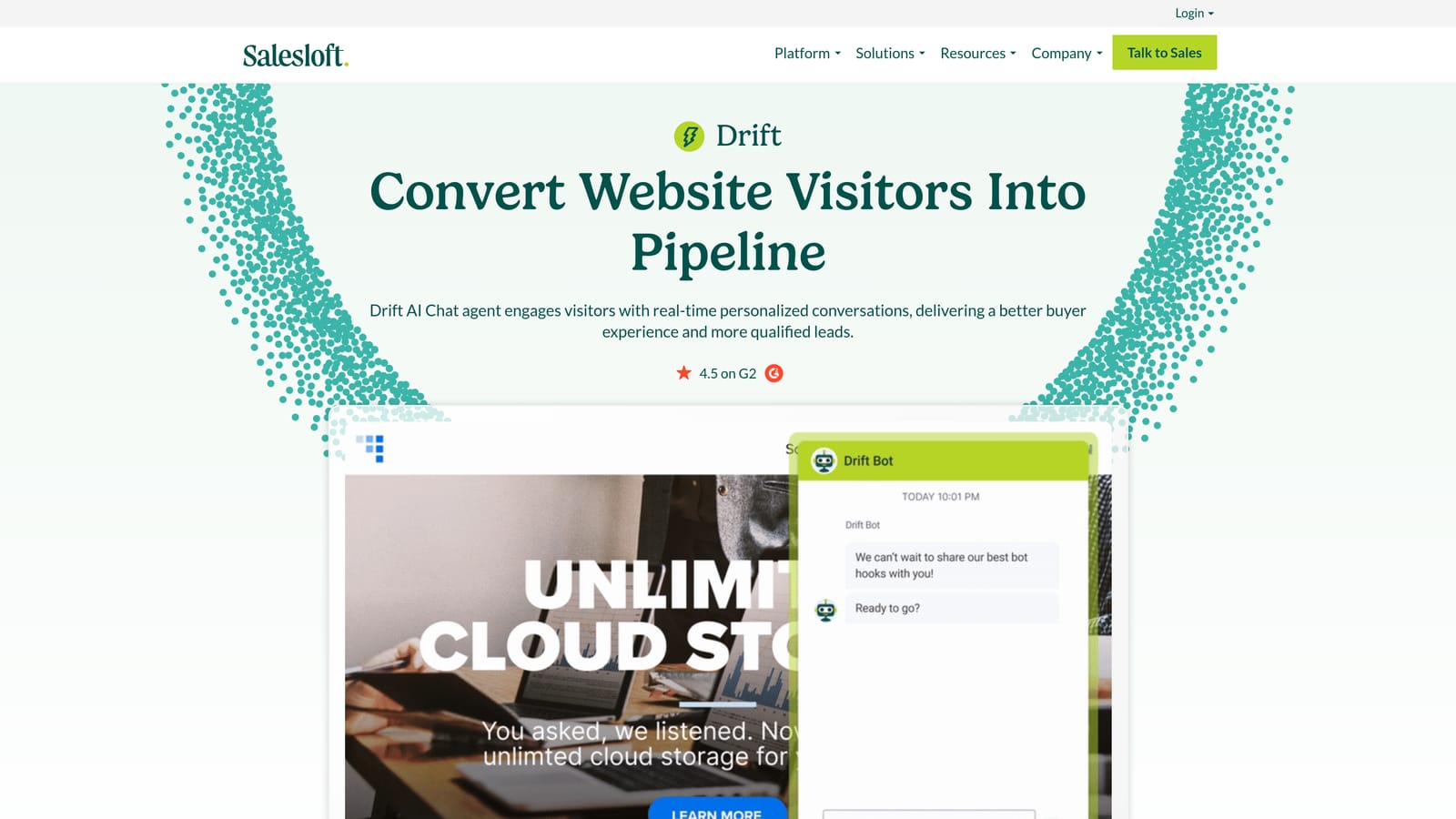
Drift, now part of Salesloft, is a conversational AI platform designed for B2B teams where support interactions and sales opportunities frequently intersect.
Where This Tool Shines
Drift's differentiation is its revenue focus. Where most support tools treat every conversation as a cost to minimize, Drift treats conversations as potential pipeline. AI playbooks can handle common support queries while simultaneously qualifying leads and routing high-value conversations to sales or customer success reps based on real-time visitor intelligence.
For B2B product teams where the line between support and expansion revenue is blurry — think enterprise SaaS apps where CS teams carry revenue targets — Drift's combined approach can reduce the number of platforms in the stack. That said, it's not purpose-built for pure support at scale, and the pricing reflects its positioning as a premium, revenue-oriented tool.
Key Features
AI Conversation Playbooks: Automated flows that handle support queries and sales qualification within the same conversation.
Meeting Scheduling: Built-in calendar booking for routing conversations directly to reps without leaving the chat.
Real-Time Visitor Intelligence: Identifies and routes high-value visitors based on firmographic and behavioral data.
CRM and Marketing Integrations: Deep connections with Salesforce, HubSpot, and marketing automation platforms.
Blended CS and Sales Workflows: Designed for teams where customer support and revenue generation share the same conversation channel.
Best For
B2B SaaS apps where customer success teams have revenue responsibilities and where support conversations frequently lead to expansion opportunities. Less suited for teams focused purely on support efficiency or consumer app use cases.
Pricing
Premium plans start at approximately $2,500/month, positioning Drift firmly in the enterprise and upper mid-market segment.
7. Ada
Best for: Large consumer apps with high ticket volumes that need sophisticated automation without engineering dependency
Ada is a no-code AI agent builder with strong enterprise adoption, enabling non-technical teams to build and deploy complex automation flows across channels including mobile.
Where This Tool Shines
Ada's no-code approach is genuinely powerful at enterprise scale. Customer success and operations teams can build sophisticated conversation flows, update content, and iterate on automation without filing engineering tickets. That operational independence matters enormously when support teams need to move quickly in response to product changes or support spikes.
The platform supports multi-channel deployment including mobile web and in-app environments, and its multilingual support makes it a strong candidate for consumer apps with a global user base. Enterprise-grade security and compliance controls are built in, which matters for organizations in regulated industries or those with strict data governance requirements.
Key Features
No-Code Agent Builder: Non-technical teams can build and modify automation flows without engineering involvement.
Multi-Channel Deployment: Supports mobile web, in-app, and other channels from a single platform.
Automated Resolution with Escalation: Handles common queries autonomously with defined escalation paths to live agents.
Multilingual Support: Out-of-the-box support for multiple languages, making it suitable for global consumer apps.
Enterprise Security and Compliance: Built-in controls for organizations with strict data governance requirements.
Best For
Large consumer apps and enterprise organizations with high ticket volumes, global audiences, and support teams that need operational independence from engineering. The enterprise pricing puts it out of reach for early-stage teams.
Pricing
Enterprise pricing — contact Ada directly for a quote. Not designed for small teams or startups with limited budgets.
8. Kustomer
Best for: Consumer apps and marketplaces where full customer history drives better support outcomes
Kustomer is a CRM-native customer service platform owned by Meta that layers AI automation on top of a comprehensive customer timeline view.
Where This Tool Shines
Kustomer's defining feature is its CRM-native architecture. Every customer interaction — across every channel, over the entire relationship — is surfaced in a single timeline view. For consumer apps and marketplaces where a customer might have placed dozens of orders, filed multiple tickets, and contacted support through several channels, that unified context dramatically changes what agents can do in a conversation.
AI automation handles routing, tagging, and deflection on top of that rich data layer, which means the automation is working with more context than most platforms can access. The mobile SDK extends this into in-app support, and the omnichannel inbox consolidates email, chat, SMS, and social into one workspace.
Key Features
Full Customer Timeline: CRM-native view of every interaction across channels and the entire customer relationship history.
AI Automation: Handles routing, tagging, and deflection with the benefit of full customer context.
Mobile SDK: Enables in-app support integration on iOS and Android.
Omnichannel Inbox: Consolidates email, chat, SMS, and social media into a single agent workspace.
Repeat-Contact Optimization: Particularly effective for high-repeat-contact environments where history shapes every interaction.
Best For
Consumer apps, e-commerce platforms, and marketplaces where repeat customer relationships are central to the support experience. Less compelling for B2B SaaS teams that don't need the depth of CRM-native customer history at the support layer.
Pricing
Starts at approximately $89/agent/month, positioning it in the mid-market to enterprise range.
9. Helpshift
Best for: Consumer mobile app teams — particularly mobile gaming — that prioritize a seamless native in-app support experience
Helpshift is purpose-built for mobile support, offering native iOS and Android SDKs, in-app messaging, AI-powered bots, and searchable in-app FAQs from day one.
Where This Tool Shines
Helpshift's origin story is mobile-first, and that heritage shows in the product. The native SDKs are built specifically for mobile environments rather than adapted from web implementations, which translates into smoother in-app experiences and better performance on constrained mobile connections. In-app FAQs are searchable without leaving the app, and push notification support enables async support conversations that fit how mobile users actually behave.
The platform has a strong track record in mobile gaming, where support volumes can be enormous and the user tolerance for being redirected outside the app is essentially zero. That same logic applies to any high-volume consumer mobile app where the in-app experience is non-negotiable.
Key Features
Native Mobile SDKs: Purpose-built iOS and Android SDKs designed specifically for mobile environments, not adapted from web.
In-App Messaging and FAQs: Searchable help content and messaging that users access without leaving the app.
AI-Powered Issue Classification: Automatically categorizes and routes incoming support requests based on content.
Smart Automation Bots: Handles common mobile support queries autonomously before escalating to human agents.
Push Notification Support: Enables async support conversations that align with mobile user behavior patterns.
Best For
Consumer mobile app teams, particularly in mobile gaming, entertainment, and any high-volume consumer app where the in-app support experience is a core part of product quality. Less feature-rich for complex B2B SaaS workflows that require deep product stack integrations.
Pricing
Contact Helpshift for pricing. Plans are tiered by monthly active users, making costs predictable as your app scales.
Which Tool Is Right for Your Team?
The right choice depends less on feature checklists and more on where your team is today and where your product is headed. Here's a quick framework for thinking through it.
Lean startup or early-stage consumer app: Tidio's fast deployment and free tier make it the lowest-friction starting point. Freshdesk is the right step up when you need more structure without a large budget commitment.
Scaling B2B SaaS product team: Halo AI is the strongest fit here. Its AI-first architecture, page-aware context, auto bug ticket creation connected to Linear, and business intelligence layer are built for exactly this use case. You're not adding a chatbot to a helpdesk — you're deploying an autonomous support layer that learns and improves with every interaction.
Enterprise with existing infrastructure: Zendesk or Ada depending on your priority. Zendesk if you're extending existing infrastructure with AI capabilities. Ada if your support team needs operational independence from engineering at scale.
Mobile-first consumer app: Helpshift's purpose-built mobile SDKs and in-app experience make it the specialist choice. Kustomer is worth considering if repeat customer history is central to your support quality.
B2B app where CS and sales overlap: Drift's revenue-focused conversation architecture handles that blended use case better than pure support tools.
Your support team shouldn't scale linearly with your customer base. Let AI agents handle routine tickets, guide users through your product, and surface business intelligence while your team focuses on complex issues that need a human touch. See Halo in action and discover how continuous learning transforms every interaction into smarter, faster support.