9 Best AI Customer Support Software for B2B in 2026
This guide evaluates the 9 best AI customer support software for B2B teams in 2026, comparing tools on AI capability depth, integration ecosystems, and ability to handle complex multi-step issues that enterprise and SaaS customers demand. Whether you're a lean startup or managing enterprise-scale operations, the breakdown helps you identify the right fit for sophisticated B2B support workflows.
 Grant CooperFounder13 min read
B2B support is a different beast entirely. Your customers aren't casual shoppers browsing a returns policy. They're power users, procurement teams, and technical stakeholders who expect fast, accurate, and contextually aware responses. A generic chatbot that deflects tickets with FAQ links isn't going to cut it.
The right AI customer support software for B2B needs to handle complex multi-step issues, integrate with your existing stack, escalate intelligently to human agents, and ideally surface business intelligence beyond just ticket counts. The good news: the tools have gotten significantly better at all of this.
This list covers tools genuinely built, or well-adapted, for B2B use cases. We've evaluated them on depth of AI capability, integration ecosystems, scalability, and how well they handle the nuance B2B support demands. Whether you're running a lean support team at a growing SaaS company or managing enterprise-scale operations, there's a fit here.
1. Halo AI
Best for: AI-first B2B SaaS teams that want support and business intelligence in one platform
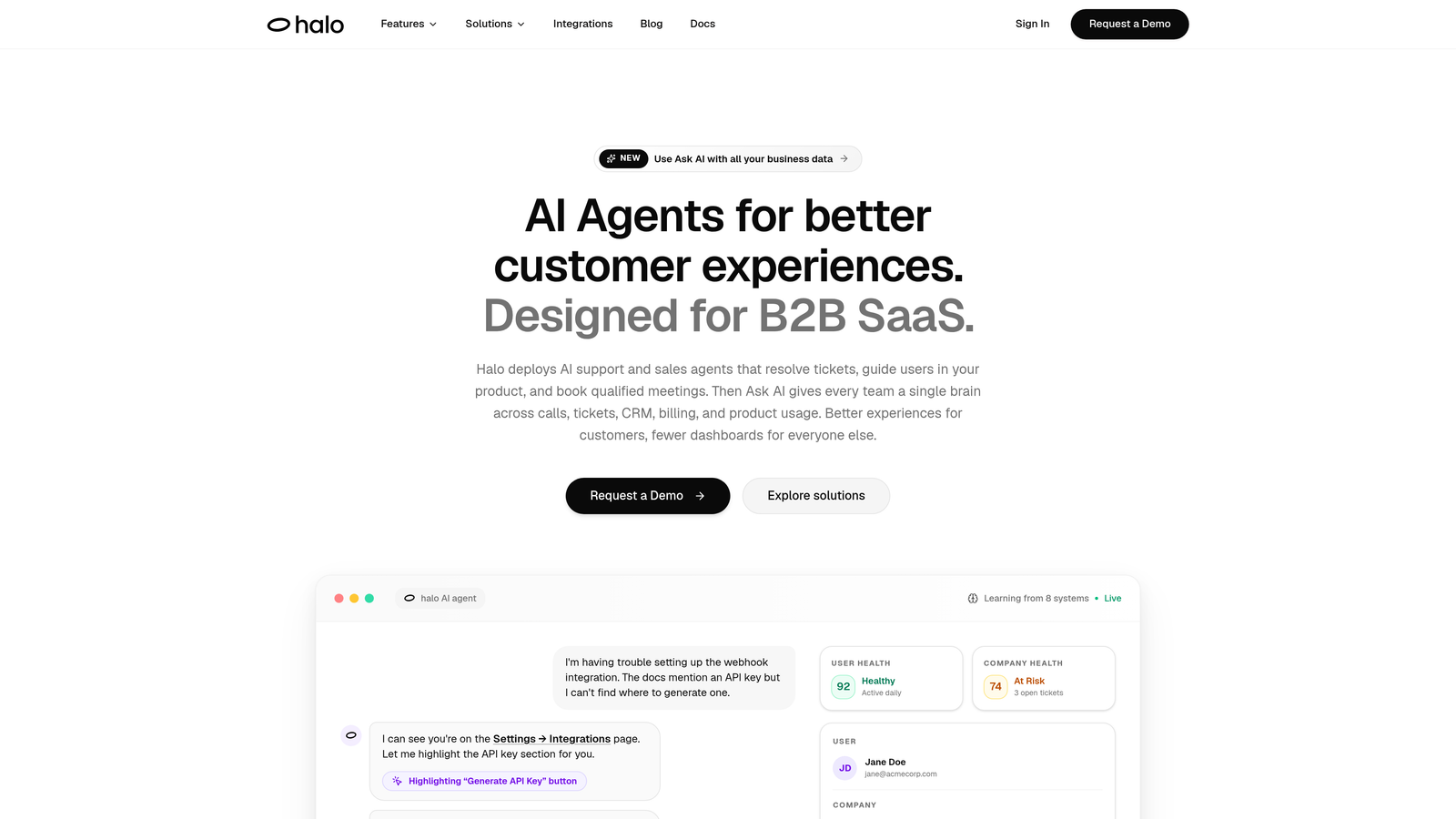
Halo AI is an AI-first customer support platform built specifically for B2B SaaS teams, deploying intelligent agents that resolve tickets, guide users through your product, and surface actionable business intelligence.
Where This Tool Shines
What separates Halo from most tools on this list is its architecture. Rather than layering AI onto a legacy helpdesk, Halo is built AI-first from the ground up. The most distinctive capability is page-aware context: Halo's AI agents see exactly what the user is looking at in real time, which means they can provide visual, step-by-step guidance that's specific to the current screen rather than generic documentation links.
The business intelligence layer is another genuine differentiator. Halo's smart inbox surfaces customer health signals, revenue anomalies, and churn indicators alongside support conversations. For B2B teams where a single churned account can represent significant revenue, this kind of proactive visibility is genuinely valuable. The auto bug ticket creation feature, which routes issues directly to Linear or your issue tracker, is a standout for SaaS teams managing product feedback loops.
Key Features
Page-Aware AI Agents: The AI sees what the user is looking at in real time, enabling precise visual guidance rather than generic instructions.
Continuous Learning: Every resolved interaction feeds back into the model, so the AI gets smarter with each ticket rather than staying static.
Auto Bug Ticket Creation: Automatically generates and routes bug reports to Linear or your preferred issue tracker, closing the loop between support and engineering.
Smart Inbox with Business Intelligence: Surfaces customer health signals, revenue anomalies, and churn indicators so support becomes a proactive revenue protection function.
Live Agent Handoff: Escalates to human agents with full conversation context preserved, so customers never have to repeat themselves.
Integration Ecosystem: Connects natively with Linear, Slack, HubSpot, Intercom, Stripe, Zoom, PandaDoc, and Fathom.
Best For
B2B SaaS companies that want more than ticket deflection. Halo is particularly well-suited for product-led growth teams, lean support organizations that need AI to carry significant workload, and any team that wants support data to feed into customer success and revenue operations.
Pricing
Visit haloagents.ai for current pricing details. Pricing is tailored to team size and usage.
2. Intercom
Best for: Mid-market SaaS teams already using Intercom for customer communications
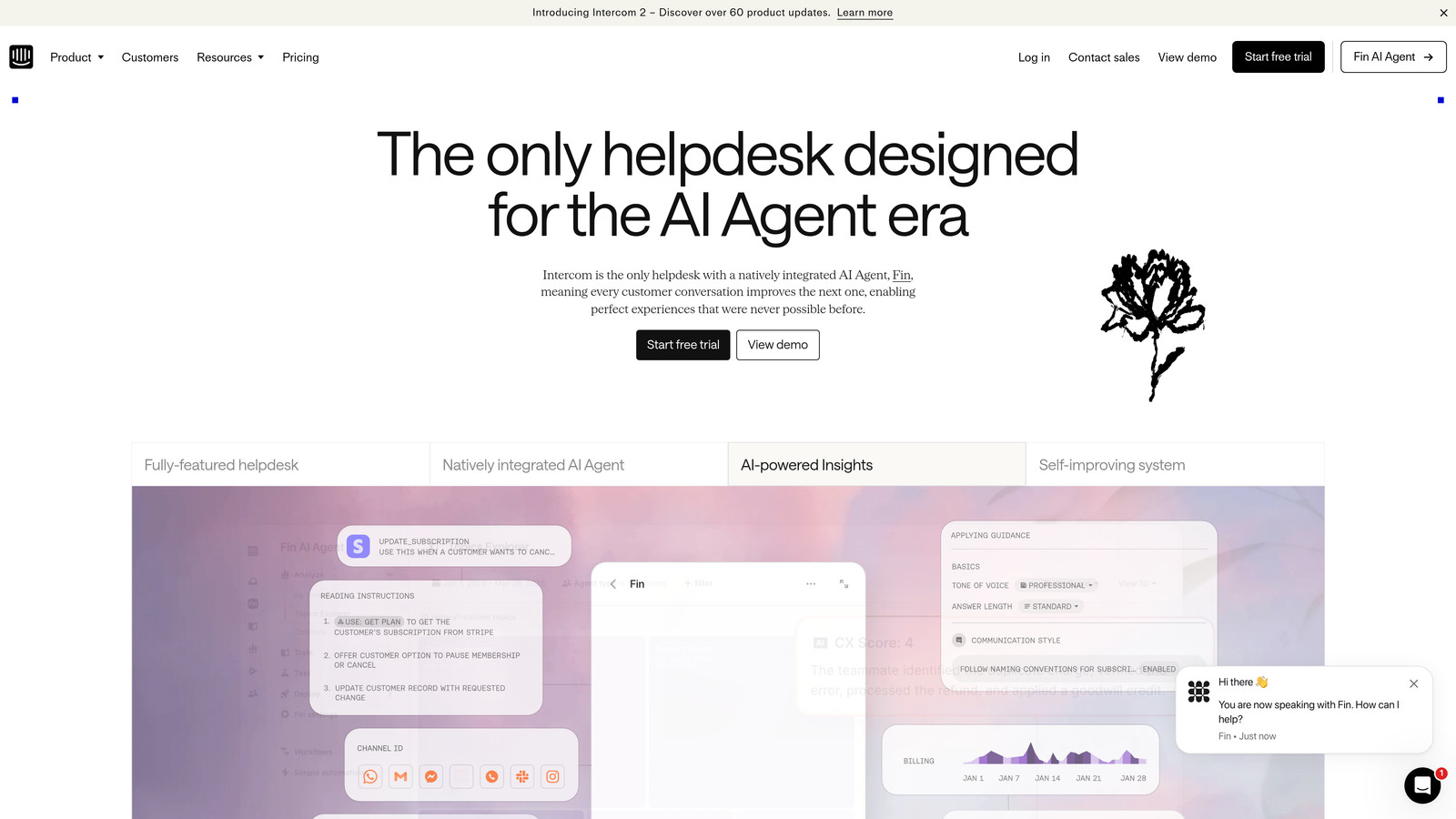
Intercom is a mature customer communications platform with Fin AI, a GPT-4-powered agent that handles conversational support across chat, email, and in-app messaging.
Where This Tool Shines
Intercom has evolved well beyond its live chat roots into a full customer communications platform. Fin AI is one of the more capable conversational agents in the market, handling nuanced queries with a natural tone and routing intelligently when it hits the boundaries of its knowledge. The in-app messaging and product tour capabilities make it particularly useful for SaaS teams managing onboarding alongside support.
The integration marketplace is extensive, and Intercom's reporting gives teams solid visibility into conversation quality and CSAT. One consideration: pricing scales quickly as usage and seat count grow, which can make it a significant line item for fast-growing teams.
Key Features
Fin AI Agent: GPT-4-powered autonomous resolution for common support queries across multiple channels.
Intelligent Handoff: Smooth conversation routing to human agents with context intact when Fin reaches its limits.
In-App Messaging and Product Tours: Proactive communication tools that sit alongside reactive support in one platform.
Integration Marketplace: Broad ecosystem of third-party integrations covering CRM, analytics, and productivity tools.
CSAT and Reporting: Built-in tracking for customer satisfaction and conversation performance metrics.
Best For
Mid-market SaaS companies that want a unified platform for support, onboarding, and customer communications. Particularly strong for teams already using Intercom and looking to extend it with AI capabilities rather than switching platforms.
Pricing
Starts at approximately $39/month; scales significantly with usage, seat count, and AI conversation volume. Enterprise pricing available on request.
3. Zendesk AI
Best for: Enterprise teams needing a proven helpdesk with deep compliance and security requirements
Zendesk AI is the enterprise helpdesk incumbent with AI automation layered across its ticketing, self-service, and agent assist workflows.
Where This Tool Shines
Zendesk's depth is hard to argue with. It has one of the largest integration marketplaces in the category, with over a thousand apps, and its compliance and security features make it a natural choice for regulated industries or enterprise procurement processes that require audit trails and data residency controls.
The AI capabilities, including intelligent triage, agent assist with macro suggestions, and Answer Bot for self-service deflection, are mature and reliable. The honest caveat is that Zendesk's AI is layered onto a legacy ticketing architecture rather than being natively AI-first, which means the experience can feel like automation added to an existing workflow rather than AI reimagining the workflow entirely.
Key Features
Intelligent Triage: Automatically categorizes and routes incoming tickets based on content, intent, and priority signals.
Agent Assist: Surfaces macro suggestions and knowledge base articles to agents in real time as they work tickets.
Answer Bot: Self-service deflection bot that resolves common queries before they reach the queue.
Compliance and Security: Enterprise-grade audit features, data residency options, and security controls.
Integration Marketplace: 1,000+ app integrations covering virtually every tool in a modern support stack.
Best For
Enterprise B2B organizations with complex compliance requirements, large agent teams, and existing investment in the Zendesk ecosystem. Also well-suited for teams that need the breadth of the integration marketplace.
Pricing
Suite plans from approximately $55/agent/month. AI features are available on higher-tier plans. Enterprise pricing available on request.
4. Freshdesk (Freddy AI)
Best for: Growing B2B teams that want capable AI automation at a more accessible price point
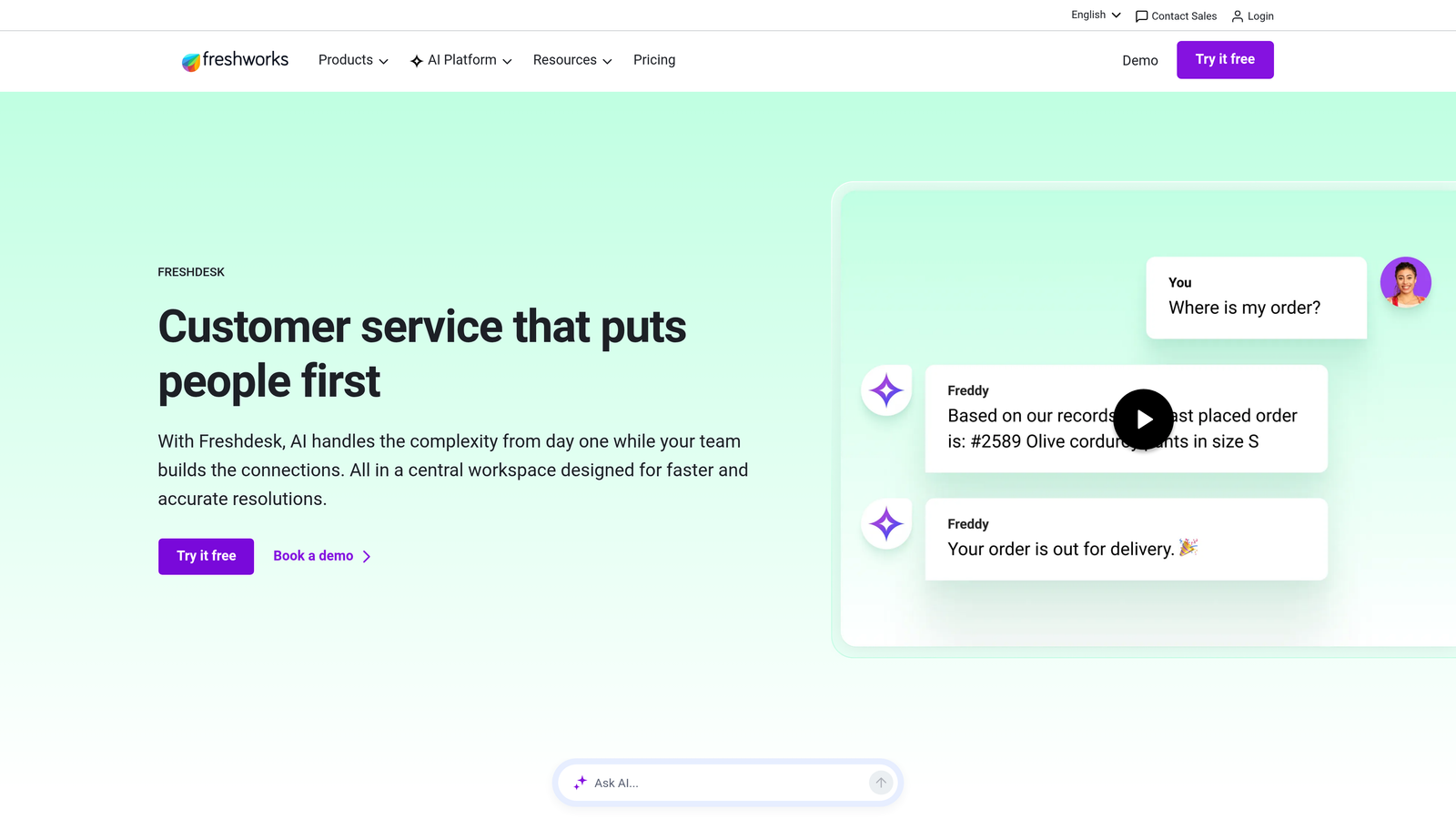
Freshdesk is Freshworks' support platform with Freddy AI handling auto-triage, suggested responses, and self-service automation at a price point that works for scaling teams.
Where This Tool Shines
Freshdesk's value proposition is strong AI capability without the enterprise price tag. Freddy AI covers the core automation needs well: auto-categorization, priority assignment, suggested responses for agents, and a self-service bot for common query deflection. For teams moving from manual support workflows to AI-assisted ones, the learning curve is manageable.
The native integration with Freshsales CRM is useful for B2B teams that want support and sales data in the same ecosystem without committing to a Salesforce-scale implementation. Omnichannel support across email, chat, phone, and social is included across plans.
Key Features
Freddy Copilot: Agent assist tool that suggests responses and surfaces relevant knowledge base content during live conversations.
Freddy Self Service: Autonomous bot that resolves common queries before they reach the support queue.
Auto-Categorization: Automatically assigns categories, priorities, and routing based on ticket content.
Omnichannel Support: Unified inbox across email, chat, phone, and social channels.
Freshsales CRM Integration: Native connection to Freshworks' CRM for a joined-up view of customer and prospect data.
Best For
Growing B2B SaaS teams that need solid AI automation without enterprise-tier costs. Also a strong choice for organizations already using Freshworks products who want to keep their stack consolidated.
Pricing
Free plan available. Growth plans from approximately $15/agent/month. AI features (Freddy Copilot and Self Service) available on Pro and Enterprise tiers.
5. Salesforce Einstein Service Cloud
Best for: Enterprise B2B organizations already running on the Salesforce platform
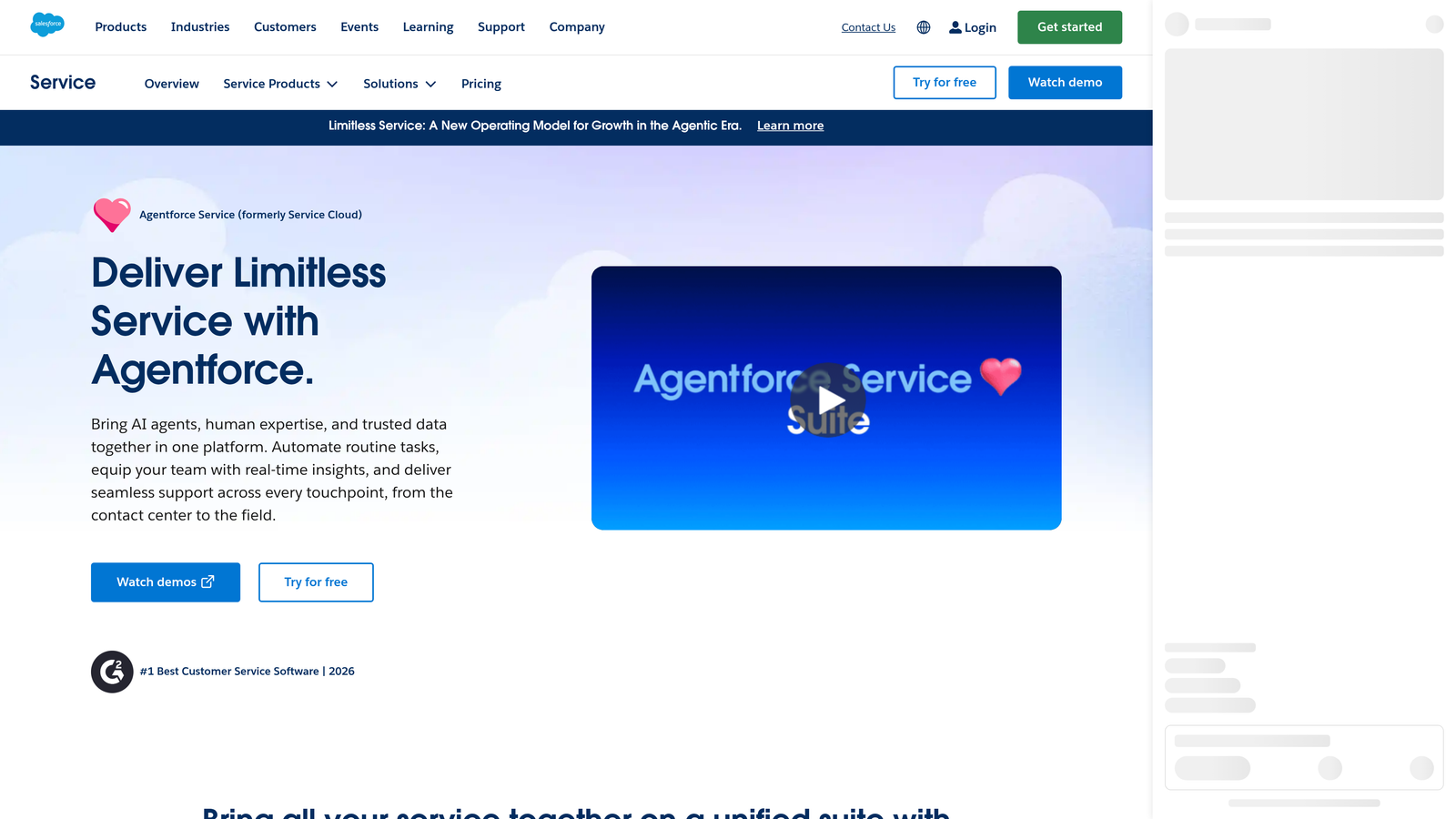
Salesforce Einstein Service Cloud is an enterprise-grade support platform deeply integrated with the Salesforce CRM, with Einstein AI surfacing recommendations powered by the full account data graph.
Where This Tool Shines
If your organization runs on Salesforce, Einstein Service Cloud is the natural choice for support. The core differentiator is data convergence: Einstein's AI recommendations are powered by the full Salesforce account graph, meaning support agents can see deal stage, account health, renewal date, and full interaction history alongside the open ticket. For enterprise B2B where support and sales are tightly linked, this context is genuinely powerful.
The trade-off is complexity and cost. Einstein Service Cloud is a significant implementation project, and the per-user pricing is among the highest in this list. It rewards organizations that are already deeply committed to the Salesforce ecosystem; for those who aren't, the overhead may outweigh the benefits.
Key Features
Einstein AI Recommendations: AI-powered suggestions driven by the full Salesforce account and deal data graph.
Case Classification and Routing: Automated case assignment based on content, account tier, and business rules.
Einstein Bots: Self-service deflection bots integrated with Salesforce data for personalized responses.
Unified Account View: Full visibility into account history, deal stage, and support tickets in one interface.
Enterprise Compliance: Deep security controls and compliance features suited for regulated industries.
Best For
Large enterprise B2B organizations with existing Salesforce investment where aligning support data with CRM and sales data is a strategic priority. Less suitable as a standalone support tool for teams outside the Salesforce ecosystem.
Pricing
Enterprise plans from approximately $165/user/month. Implementation costs vary significantly based on customization requirements. Contact Salesforce for current pricing.
6. HubSpot Service Hub
Best for: HubSpot-centric B2B teams that want support integrated with their CRM and marketing data
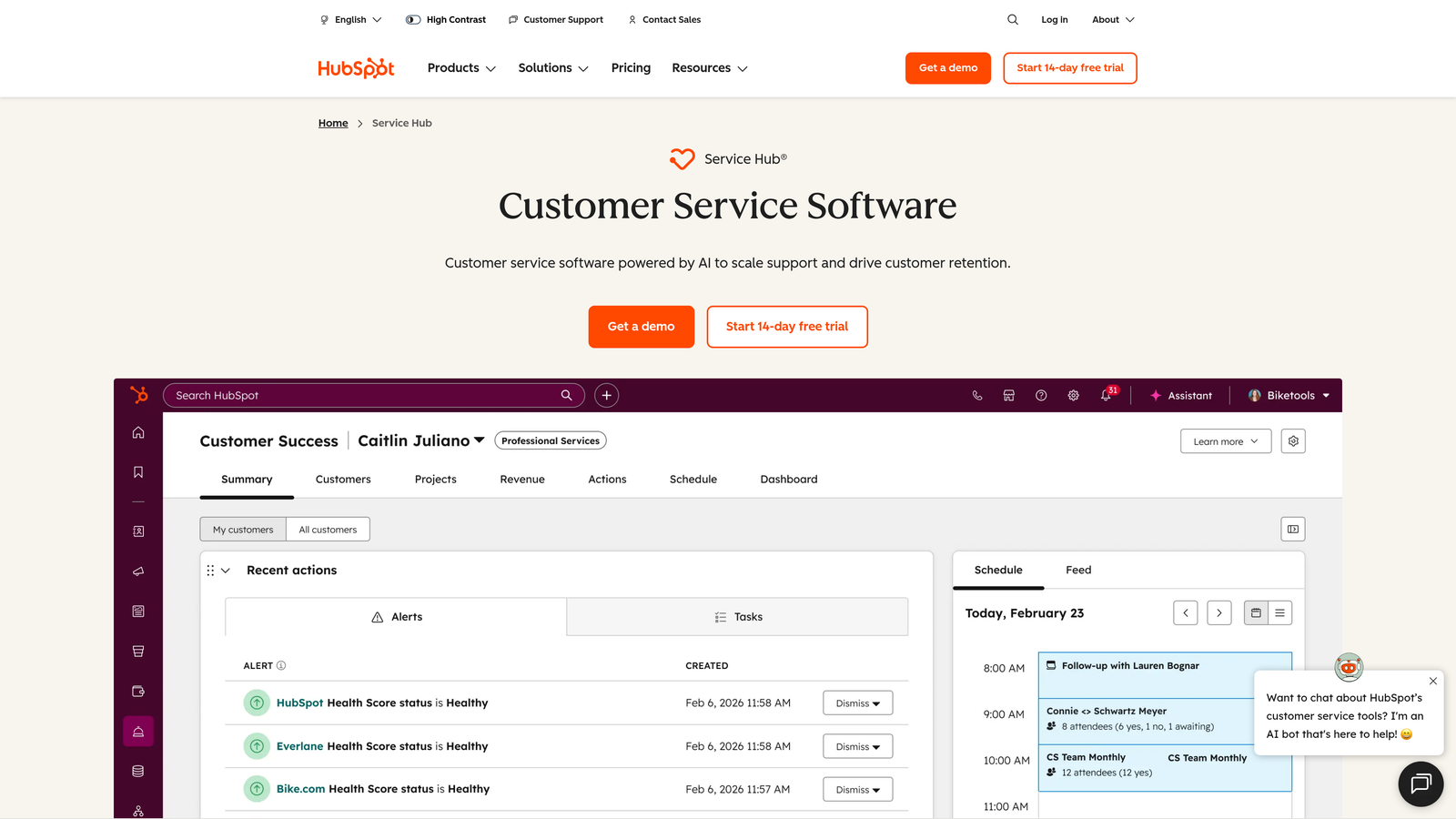
HubSpot Service Hub is HubSpot's customer service product, tightly integrated with its CRM so support agents have full visibility into a contact's marketing, sales, and support history in one place.
Where This Tool Shines
The core value of Service Hub is the HubSpot CRM integration. Support agents see the complete customer journey without switching tools: what content a contact engaged with, where they are in the sales cycle, previous support interactions, and NPS history. For B2B teams where support agents often need to be aware of account context, this unified view reduces friction considerably.
AI features include conversation intelligence and ticket automation, which cover the essential automation needs. Service Hub is less powerful as a pure support platform compared to Zendesk or Intercom, but for organizations already using HubSpot for marketing and sales, the consolidation value is real.
Key Features
Native HubSpot CRM Integration: Full customer journey visibility including marketing, sales, and support history in one interface.
AI Ticket Automation: Automated ticket routing, prioritization, and conversation intelligence.
Knowledge Base and Customer Portal: Self-service resources with a branded customer-facing portal.
SLA Management: Built-in SLA tracking and escalation rules for B2B service agreements.
CSAT and NPS Tracking: Native satisfaction measurement integrated with the broader HubSpot contact record.
Best For
B2B teams already using HubSpot for CRM, marketing, or sales who want to bring support into the same ecosystem. The consolidation benefit is strongest for teams that would otherwise manage separate tools for each function.
Pricing
Starter from approximately $15/month. Professional from approximately $90/month. Enterprise pricing available on request.
7. Tidio
Best for: Smaller B2B teams or early-stage companies beginning to automate support
Tidio is an accessible live chat and AI support platform featuring Lyro AI, which handles common queries autonomously with minimal setup and a low barrier to entry.
Where This Tool Shines
Tidio's appeal is speed and simplicity. Lyro AI can be up and running quickly, handling common queries without the extensive configuration that enterprise platforms often require. For smaller B2B teams or companies that are just beginning to think about support automation, this is a meaningful advantage.
The visual chatbot builder allows teams to create custom conversation flows without engineering involvement, and the live chat experience is clean and easy for agents to manage. Tidio is less suited for complex enterprise B2B workflows, but for teams that need a solid foundation at a manageable cost, it delivers well on its core promise.
Key Features
Lyro AI: Conversational AI that handles common support queries autonomously with minimal configuration.
Live Chat with Agent Takeover: Smooth handoff from AI to human agents when queries exceed Lyro's scope.
Visual Chatbot Builder: No-code flow builder for custom conversation paths and routing logic.
CRM and E-Commerce Integrations: Connects with popular CRM platforms and e-commerce tools.
Analytics Dashboard: Straightforward reporting on conversation volume, resolution rates, and agent performance.
Best For
Early-stage or smaller B2B companies that need an accessible entry point into AI-assisted support. Also useful for teams with straightforward support workflows that don't require the complexity of an enterprise platform.
Pricing
Free plan available. Lyro AI from approximately $29/month. Pricing scales with conversation volume. See Tidio's website for current tier details.
8. Gorgias
Best for: B2B companies with e-commerce or product-heavy, transactional support workflows
Gorgias is a support platform built around e-commerce automation with deep Shopify integration, relevant for B2B companies where a significant portion of support is transactional or order-related.
Where This Tool Shines
Gorgias is the strongest platform in this list for e-commerce-adjacent B2B support. Its deep integrations with Shopify, WooCommerce, and BigCommerce mean that support agents have full order context directly in the ticket view, and AI automation handles order-related queries, status updates, and returns without agent involvement. For B2B brands selling physical products or managing high-volume transactional support, this is a significant efficiency gain.
The revenue tracking tied to support interactions is a distinctive feature: Gorgias can attribute revenue to support conversations, making it easier to demonstrate the business impact of the support function. The caveat is that Gorgias is less suited for purely software or SaaS B2B support where the ticket complexity goes beyond transactional queries.
Key Features
E-Commerce Integrations: Deep native integrations with Shopify, WooCommerce, and BigCommerce for full order context in every ticket.
AI Automation for Transactional Queries: Handles order status, returns, and common product questions autonomously.
Macros and Rules: High-volume ticket deflection through templated responses and automated routing rules.
Omnichannel Inbox: Unified view across email, chat, social, and SMS.
Revenue Attribution: Tracks revenue influenced by support conversations to quantify team impact.
Best For
B2B companies with product-heavy or transactional support needs, particularly those selling through Shopify or other major e-commerce platforms. Less suited for SaaS-only B2B teams with complex technical support workflows.
Pricing
Starter from approximately $10/month. Pricing scales by ticket volume rather than seat count. See Gorgias's website for current plan details.
9. Kustomer
Best for: B2B teams managing complex customer histories across multiple channels and touchpoints
Kustomer is a CRM-native support platform with a unified customer timeline across all channels, AI-driven routing, and strong omnichannel capabilities for teams managing rich customer histories.
Where This Tool Shines
Kustomer's core differentiator is the unified customer timeline. Every interaction, across email, chat, voice, social, and SMS, is surfaced in a single chronological view. For B2B teams managing accounts with long, complex histories across multiple stakeholders and channels, this eliminates the fragmentation that plagues multi-tool support stacks.
The CRM-native architecture means customer context is always present, not something agents have to look up separately. AI-driven routing and the no-code workflow automation builder add meaningful efficiency for teams with complex routing logic. Kustomer competes directly with Zendesk for omnichannel enterprise use cases and is worth evaluating if the unified timeline is a priority.
Key Features
Unified Customer Timeline: Complete interaction history across all channels in a single chronological view.
AI-Driven Routing: Intelligent conversation assignment based on content, customer tier, and team availability.
CRM-Native Architecture: Customer context is built into the platform rather than pulled from an external system.
No-Code Workflow Automation: Visual workflow builder for complex routing rules and automation without engineering involvement.
Omnichannel Inbox: Unified management across email, chat, voice, social, and SMS channels.
Best For
Enterprise and mid-market B2B teams that manage complex, multi-channel customer relationships and need a single source of truth for the customer record. Strong fit for organizations that find Zendesk's ticketing model too rigid for their omnichannel needs.
Pricing
Enterprise pricing. Contact Kustomer directly for current rates and plan details.
Which Tool Is Right for Your B2B Team?
The honest answer is that the best choice depends on where your biggest gap is: AI architecture, CRM integration, pricing, or channel coverage.
Here's a quick orientation by use case. If you're an AI-first B2B SaaS team that wants support to generate business intelligence, not just close tickets, Halo AI is the strongest fit. If you're already in the Intercom ecosystem, Fin AI extends it well. Enterprise teams with compliance requirements will gravitate toward Zendesk AI. Growing teams watching budget will find Freshdesk's Freddy AI punches above its price point. Salesforce shops should look at Einstein before anything else, and the same logic applies to HubSpot-centric organizations with Service Hub.
For smaller or early-stage B2B teams, Tidio provides a low-friction entry point. B2B companies with transactional or e-commerce-adjacent support workflows should evaluate Gorgias seriously. And for omnichannel teams managing complex multi-touchpoint customer histories, Kustomer's unified timeline is a genuine differentiator.
Two questions worth asking before you decide: First, is the AI in this platform native to its architecture, or bolted onto a legacy system? The distinction matters for how well it learns and adapts over time. Second, does the tool surface intelligence beyond deflection metrics? In B2B, where a single churned account can represent significant revenue, support data that feeds into customer health and revenue operations is worth paying for.
Your support team shouldn't scale linearly with your customer base. Let AI agents handle routine tickets, guide users through your product, and surface business intelligence while your team focuses on complex issues that need a human touch. See Halo in action and discover how continuous learning transforms every interaction into smarter, faster support.