9 Best AI Customer Support Software Pricing Plans Compared in 2026
Navigating ai customer support software pricing can be challenging with models ranging from per-resolution fees to unlimited seat subscriptions and custom enterprise rates. This comprehensive comparison examines nine leading platforms' pricing structures, included features at each tier, and which solutions offer the best value based on your team size and support volume—helping you avoid hidden costs and find transparent, scalable pricing that fits your budget.
 Grant CooperFounder13 min read
Choosing AI customer support software isn't just about features—it's about finding pricing that scales with your business without surprise costs eating into your budget. With pricing models ranging from per-resolution fees to unlimited agent seats, understanding what you're actually paying for matters more than ever.
The landscape has shifted dramatically. Some platforms charge you every time their AI resolves a ticket. Others bundle AI into existing helpdesk subscriptions. A few offer transparent monthly rates, while many require custom enterprise negotiations that leave you guessing until the sales call.
This guide breaks down the real costs of leading AI support platforms, comparing pricing structures, what's included at each tier, and which solutions deliver the best value for different team sizes and support volumes.
1. Halo AI
Best for: Teams seeking predictable AI support costs with continuous learning capabilities
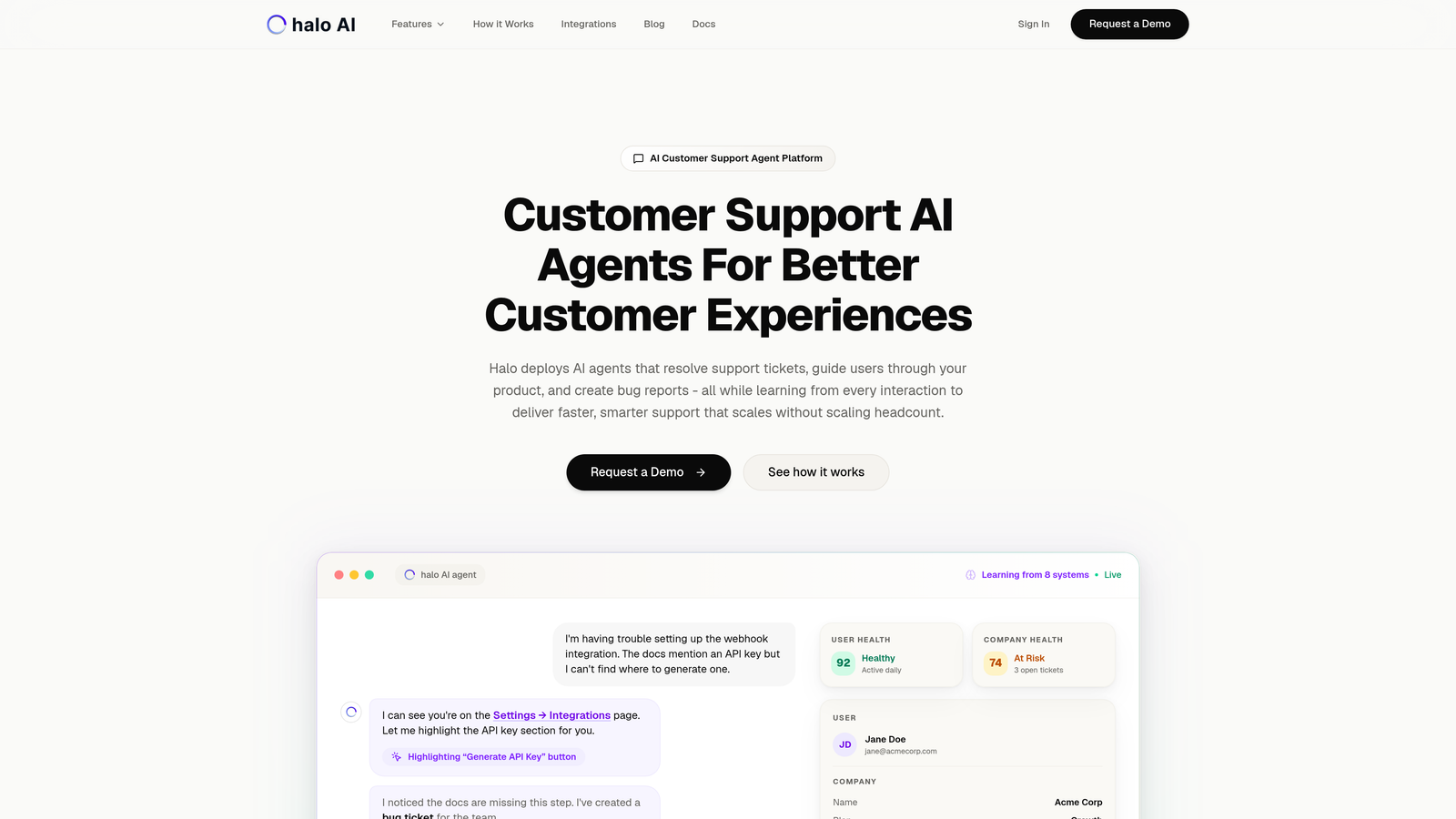
Halo AI is an AI-first customer support platform where intelligent agents autonomously resolve tickets, guide users through your product with visual context, and create bug reports while learning from every interaction.
Where This Tool Shines
Unlike platforms that bolt AI onto existing helpdesk systems, Halo's architecture was built specifically for autonomous support. The AI agents don't just answer questions—they see what users see on your product pages, providing contextual guidance that reduces back-and-forth.
The continuous learning model means your AI gets smarter with every ticket, every product change, and every user interaction. This isn't a static chatbot you configure once and forget—it's an intelligence layer that evolves with your business.
Key Features
AI Agents for Autonomous Resolution: Handles routine tickets end-to-end without human intervention, escalating only when complexity requires it.
Page-Aware Chat Widget: Sees exactly what users see on your product, providing visual UI guidance instead of generic text responses.
Smart Inbox with Business Intelligence: Surfaces customer health signals, revenue intelligence, and anomaly detection beyond basic support metrics.
Auto Bug Ticket Creation: Automatically generates engineering tickets in Linear when product issues are detected through support conversations.
Multi-System Integrations: Connects to your entire business stack including Slack, HubSpot, Intercom, Stripe, Zoom, and PandaDoc for unified context.
Best For
B2B companies and product teams looking to scale support without scaling headcount. Particularly valuable for SaaS businesses with complex products where context matters, and teams currently using helpdesk systems like Zendesk, Freshdesk, or Intercom who want more intelligent automation.
Pricing
Contact for pricing. Designed for predictable scaling without per-resolution fees that create unpredictable monthly costs as your AI improves and handles more tickets.
2. Intercom Fin
Best for: Existing Intercom customers wanting native AI without platform switching
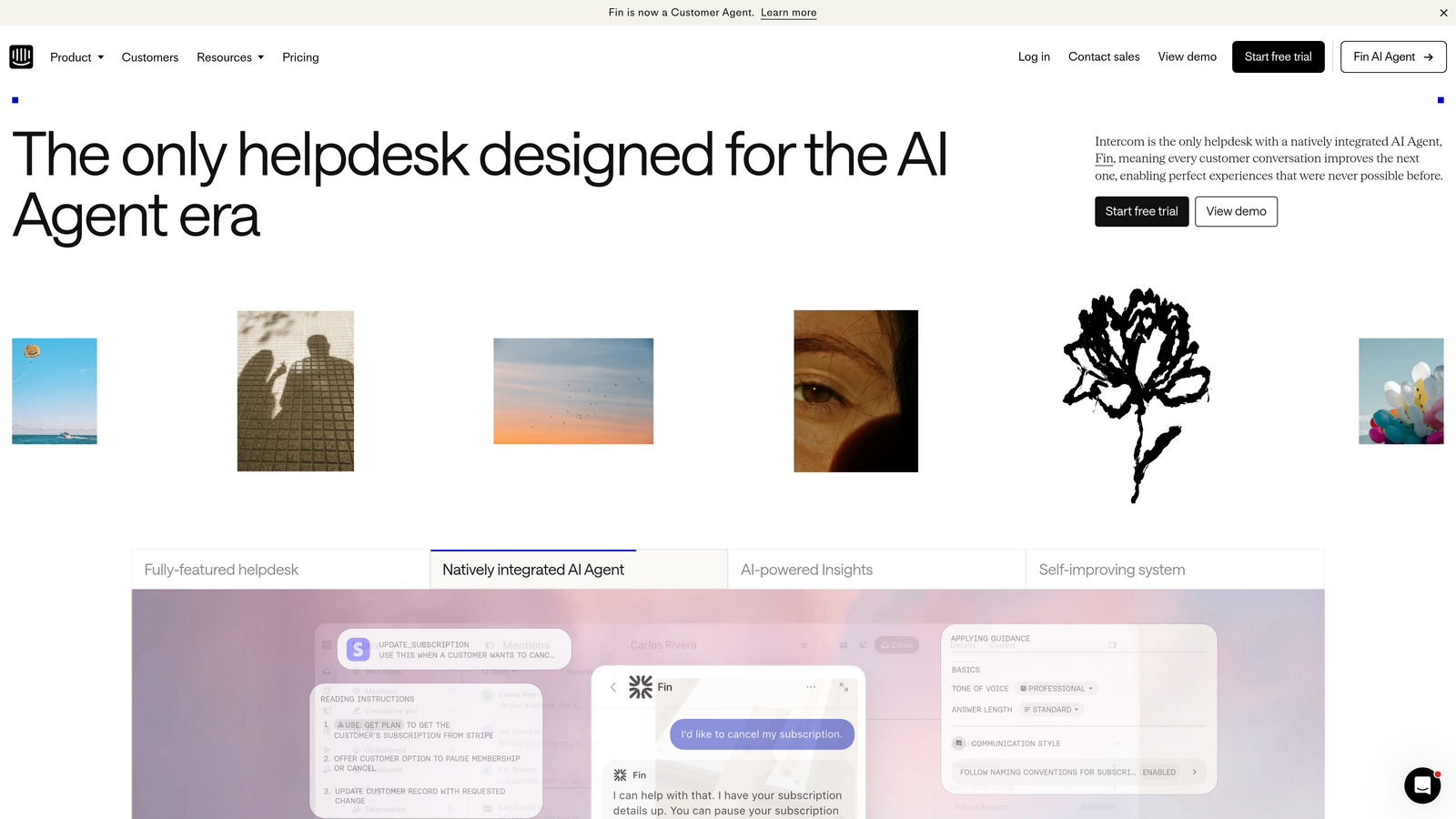
Intercom Fin is an AI chatbot built directly into the Intercom platform, using GPT-4 to answer customer questions based on your help center content and historical conversation data.
Where This Tool Shines
If you're already invested in the Intercom ecosystem, Fin offers the smoothest integration path. The AI trains automatically on your existing help center articles and past conversations, requiring minimal setup beyond activating the feature.
The native integration means no data syncing issues, no separate dashboards to monitor, and seamless handoff to human agents when the AI reaches its limits. For teams heavily reliant on Intercom's messaging platform, this native approach eliminates integration headaches.
Key Features
Per-Resolution Pricing Model: You only pay when Fin successfully resolves a customer conversation, aligning costs with delivered value.
Native Intercom Integration: Works directly within your existing Intercom workspace without third-party connections or data syncing.
Trains on Help Center Content: Automatically learns from your knowledge base articles and updates responses as you modify documentation.
Human Handoff Capabilities: Smoothly transfers complex conversations to your support team when AI confidence drops below thresholds.
Multilingual Support: Handles customer conversations in multiple languages without separate configuration per language.
Best For
Companies already using Intercom who want to add AI capabilities without migrating platforms. Works well for teams with comprehensive help centers and straightforward support queries that map cleanly to existing documentation.
Pricing
$0.99 per resolution as of published 2025 rates. This per-resolution model means costs scale directly with AI usage, which can be advantageous for low-volume support or concerning for high-volume operations where costs become unpredictable.
3. Zendesk AI
Best for: Large support teams already on Zendesk Suite seeking AI augmentation
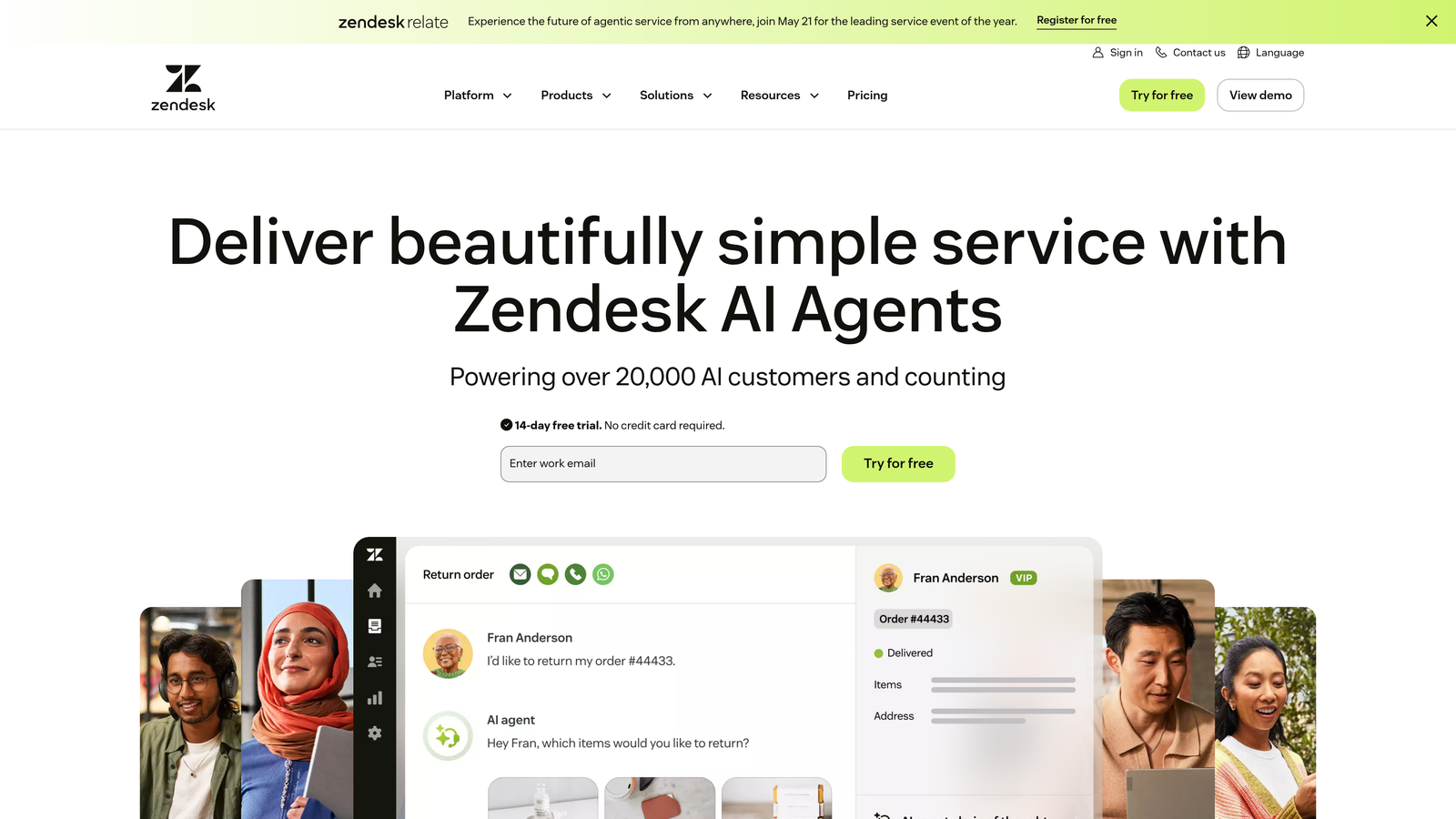
Zendesk AI integrates AI-powered features into the Zendesk Suite, including intelligent triage, suggested replies for agents, and automated resolution capabilities.
Where This Tool Shines
Zendesk's AI focuses heavily on agent assistance rather than full automation. The intelligent triage automatically routes tickets to the right team members based on content analysis, while suggested replies help agents respond faster without starting from scratch.
For established support operations with large teams, this augmentation approach reduces agent workload without completely replacing human interaction. The AI learns from your team's best responses, essentially codifying institutional knowledge.
Key Features
Intelligent Ticket Triage: Automatically categorizes and routes incoming tickets based on content analysis and historical patterns.
Agent Assist with Suggested Replies: Provides response suggestions to agents based on similar past tickets and knowledge base content.
Automated Resolution Capabilities: Handles straightforward tickets automatically while flagging complex issues for human review.
Intent Detection and Sentiment Analysis: Identifies customer intent and emotional state to prioritize urgent or frustrated customers.
Knowledge Base Integration: Pulls relevant articles and suggests them to both customers and agents during conversations.
Best For
Enterprises with established Zendesk deployments and large support teams who want to enhance agent productivity rather than replace human support entirely. Best suited for organizations prioritizing agent augmentation over full automation.
Pricing
AI features are add-ons to Zendesk Suite plans. Advanced AI capabilities start at higher pricing tiers, typically requiring Suite Professional or Enterprise subscriptions. Expect to budget beyond base platform costs for meaningful AI functionality.
4. Freshdesk Freddy AI
Best for: Mid-market companies wanting affordable AI within a complete helpdesk platform
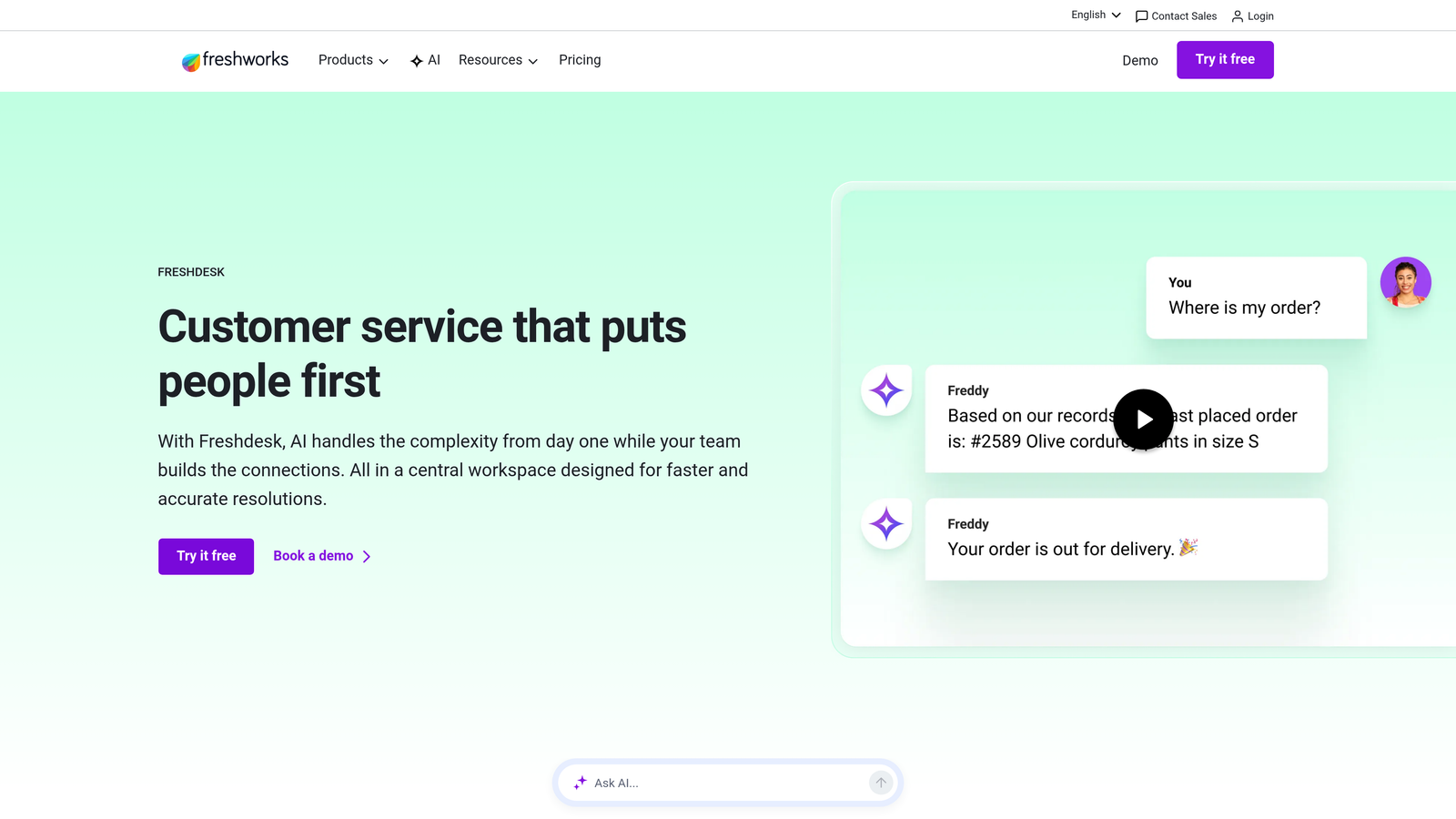
Freshdesk Freddy AI is an AI assistant within Freshworks' customer support platform, offering chatbots, agent assist features, and automated workflow capabilities.
Where This Tool Shines
Freshdesk positions Freddy AI as an accessible entry point for teams new to AI support automation. The pricing structure includes AI features in mid-tier plans, making it more approachable than enterprise-only solutions that require custom pricing negotiations.
The self-service chatbots handle common questions while the agent assist features provide canned response recommendations and auto-categorization. For teams graduating from purely manual support, this represents a manageable first step into automation.
Key Features
Freddy Self-Service Chatbots: Deploys AI-powered chatbots across your website and messaging channels to handle routine inquiries.
Agent Assist Suggestions: Recommends responses and knowledge base articles to agents as they work tickets.
Auto-Triage and Categorization: Automatically sorts incoming tickets by type, urgency, and appropriate team assignment.
Canned Response Recommendations: Suggests pre-written responses based on ticket content, speeding up agent workflows.
Session-Based Bot Pricing: Bot interactions are priced separately from agent seats, allowing predictable budgeting for automation volume.
Best For
Small to mid-sized businesses seeking affordable AI support automation without enterprise-level complexity. Particularly suited for teams with 10-50 support agents who want to test AI capabilities before committing to more expensive platforms.
Pricing
AI features included starting at Pro tier ($49 per agent per month). Bot sessions are priced separately, allowing you to scale automation independently from agent seats. This hybrid model provides flexibility but requires monitoring both components.
5. Ada
Best for: Enterprise organizations with high support volumes requiring custom AI deployments
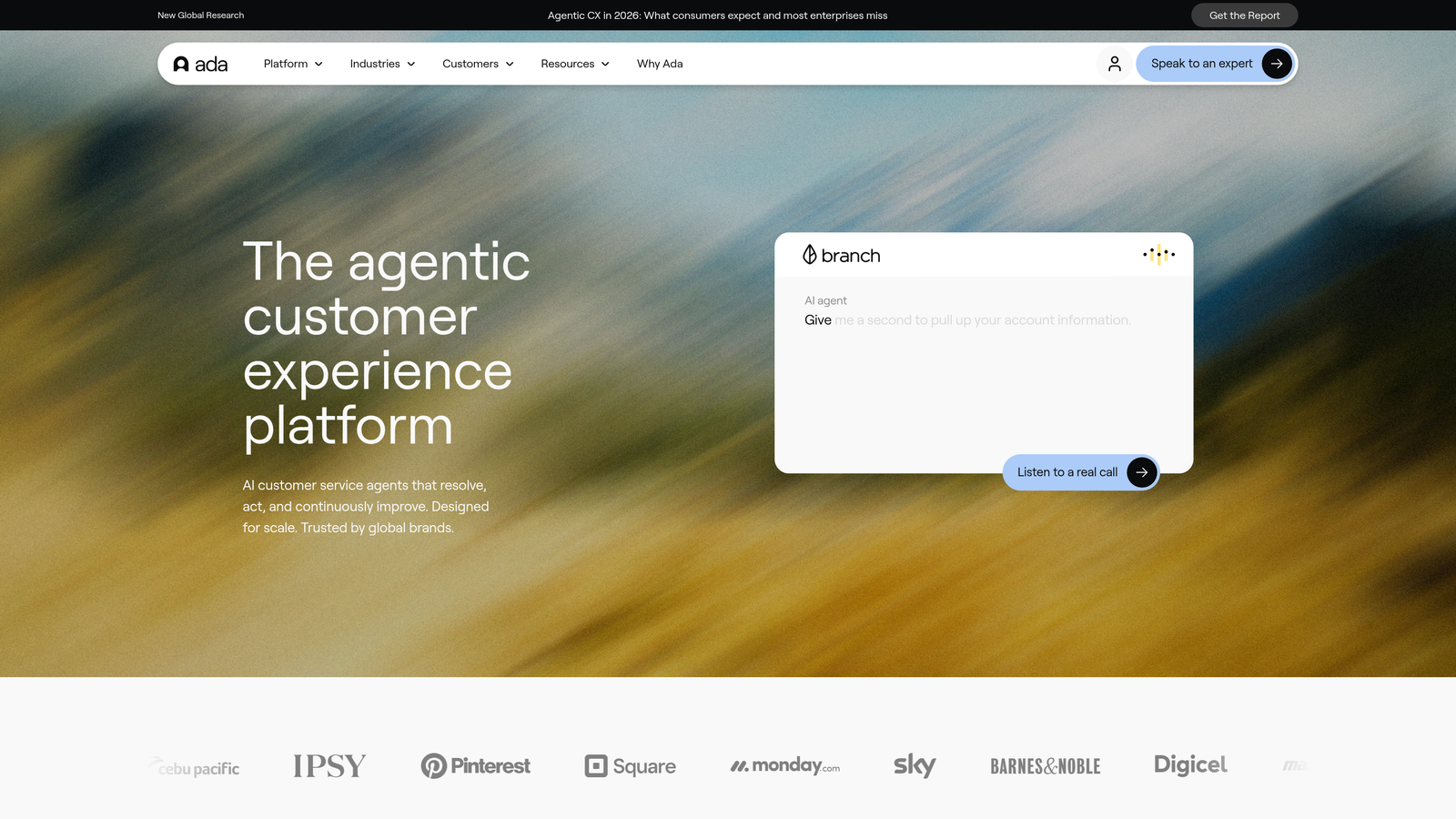
Ada is an enterprise-focused AI customer service automation platform designed specifically for high-volume support operations across multiple channels.
Where This Tool Shines
Ada targets enterprise buyers who need sophisticated automation at scale. The no-code bot builder allows non-technical teams to create complex conversation flows, while generative AI capabilities handle questions beyond pre-programmed responses.
The platform emphasizes compliance and security features required by large organizations, including SOC 2 certification and enterprise-grade data handling. For companies processing thousands of support interactions daily, Ada's architecture handles volume without degrading performance.
Key Features
No-Code Bot Builder: Enables business users to create and modify conversation flows without engineering resources.
Generative AI Responses: Combines scripted flows with generative AI to handle unexpected questions beyond pre-programmed scenarios.
Multi-Channel Deployment: Deploys the same AI across web, mobile, social media, and messaging platforms with consistent behavior.
Advanced Analytics and Reporting: Provides detailed insights into automation performance, containment rates, and customer satisfaction metrics.
Enterprise Security Compliance: Meets enterprise security requirements including SOC 2, GDPR, and industry-specific regulations.
Best For
Large enterprises with support volumes exceeding 10,000 monthly interactions who need custom AI deployments with enterprise security compliance. Common in retail, financial services, and telecommunications sectors where support volume justifies significant automation investment.
Pricing
Custom enterprise pricing based on conversation volume and deployment complexity. Typically follows a resolution-based model with minimum annual commitments. Expect pricing discussions to start in the mid-five-figure range annually.
6. Tidio
Best for: Small businesses and e-commerce stores needing affordable entry-level AI chat
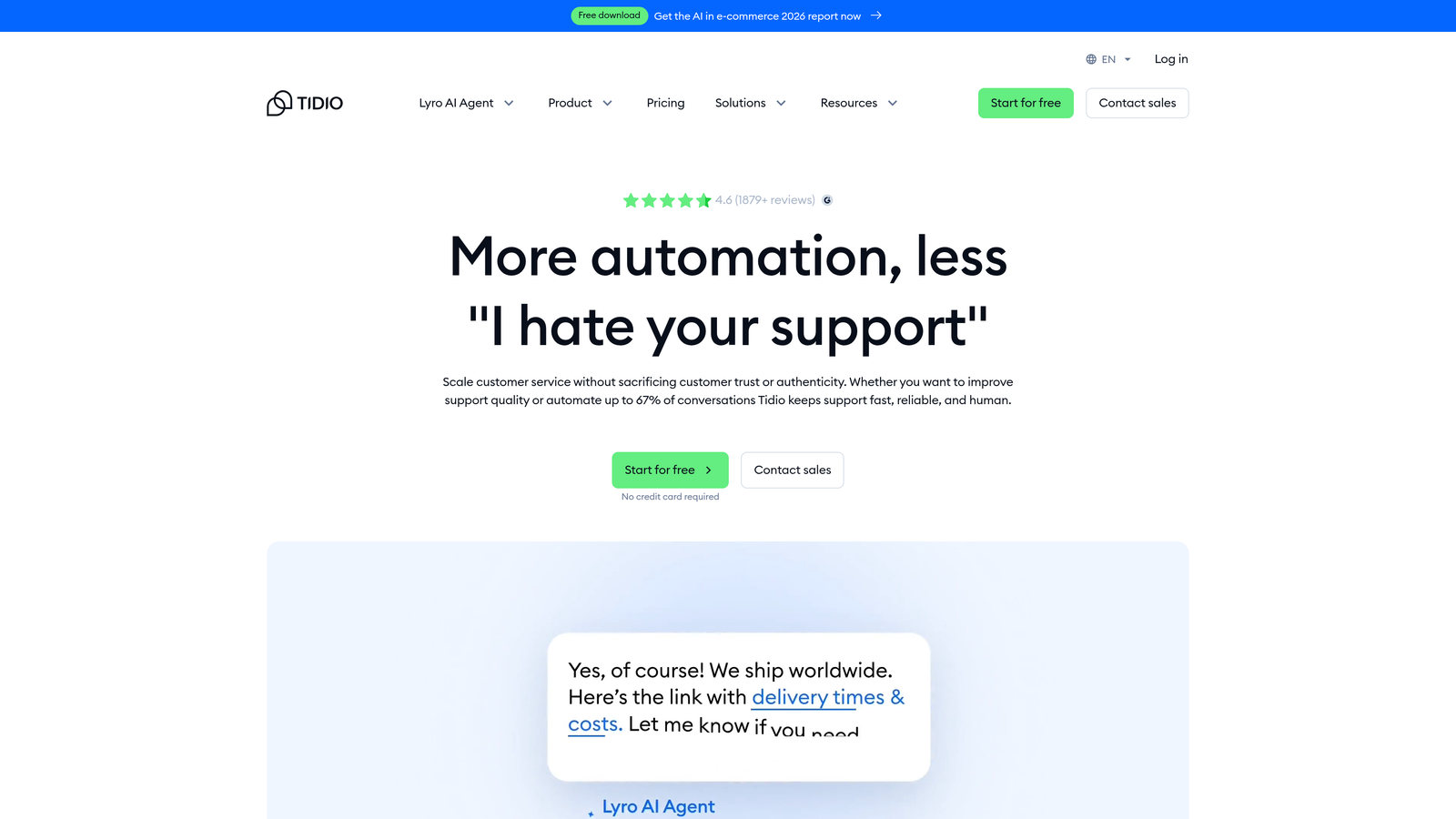
Tidio is an affordable AI chatbot and live chat solution designed for small to medium businesses seeking basic automation without enterprise complexity.
Where This Tool Shines
Tidio focuses on accessibility for small businesses who can't justify enterprise-level support software. The Lyro AI chatbot handles common questions while the visual chatbot builder lets non-technical users create simple flows.
The platform integrates particularly well with e-commerce platforms like Shopify and WooCommerce, making it popular among online retailers who need quick answers about shipping, returns, and product availability. For businesses just starting with AI support, Tidio's free tier allows experimentation without financial commitment.
Key Features
Lyro AI Chatbot: Conversational AI that answers customer questions based on your website content and FAQ data.
Visual Chatbot Builder: Drag-and-drop interface for creating custom conversation flows without coding knowledge.
Live Chat Integration: Seamlessly combines AI responses with human agent handoff when needed.
E-commerce Integrations: Native connections to Shopify, WooCommerce, and other e-commerce platforms for order tracking and product information.
Conversation-Based AI Limits: Pricing tiers based on monthly AI conversation volume rather than per-seat or per-resolution models.
Best For
Small businesses, solo entrepreneurs, and e-commerce stores with limited support budgets who need basic AI chat capabilities. Best suited for straightforward support scenarios with clear FAQ-style questions rather than complex product troubleshooting.
Pricing
Free tier available with limited features. Lyro AI starts at $29 per month for 50 AI conversations, with pricing scaling based on conversation volume. This conversation-based limit means you'll need to upgrade as customer interactions increase.
7. Kustomer IQ
Best for: Retail and e-commerce companies needing omnichannel CRM with AI capabilities
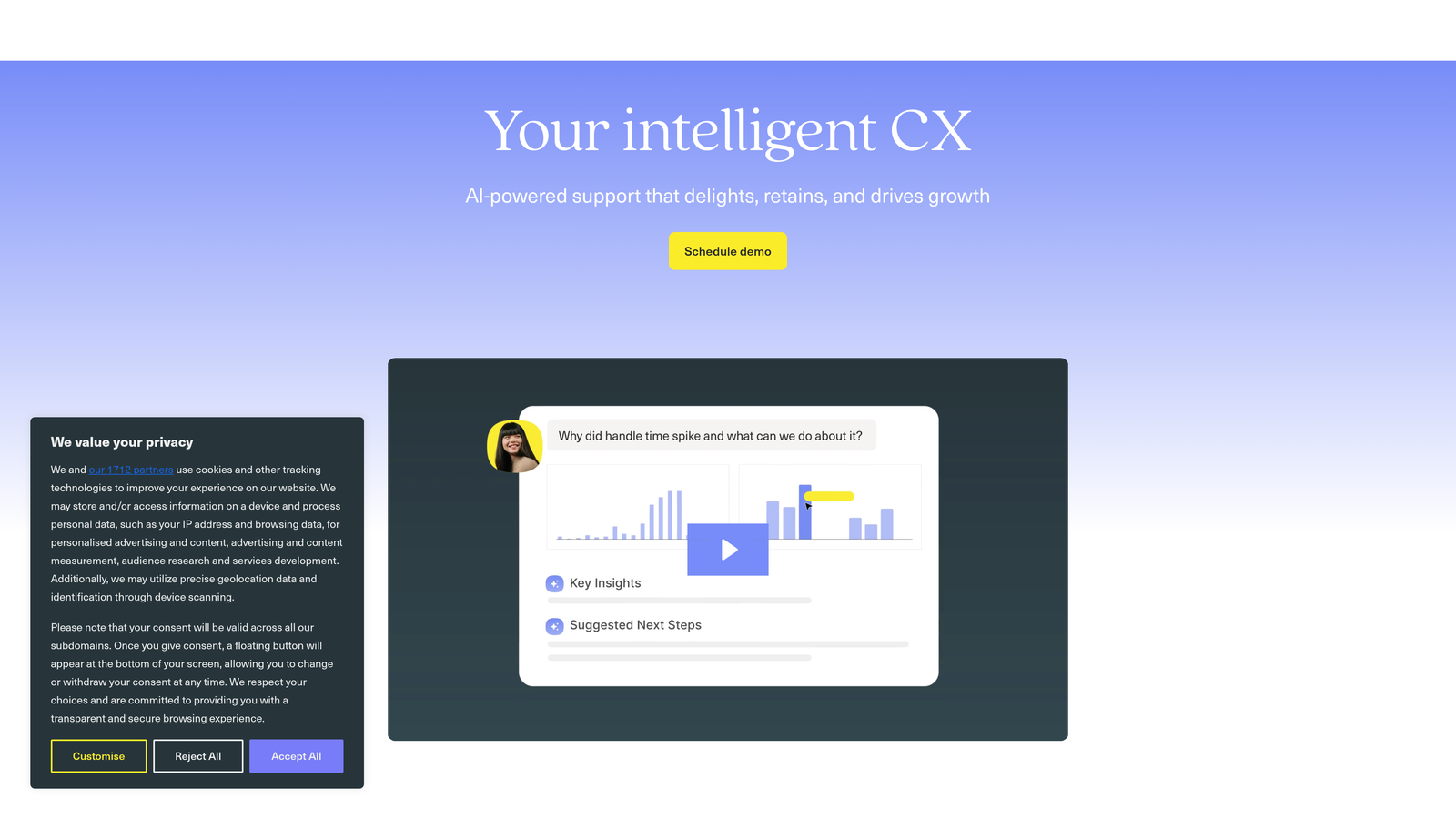
Kustomer IQ provides AI capabilities within the Kustomer CRM platform, focused on omnichannel customer service for retail and e-commerce operations.
Where This Tool Shines
Kustomer approaches AI through the lens of customer relationship management rather than isolated support tickets. The platform maintains a unified customer timeline across all interaction channels, allowing AI to reference purchase history, past conversations, and customer preferences when responding.
For retail and e-commerce businesses, this context matters significantly. The AI can reference specific orders, suggest products based on purchase history, and understand customer value when prioritizing responses. The omnichannel approach means customers get consistent experiences whether they contact you via email, chat, social media, or SMS.
Key Features
AI-Powered Classification: Automatically categorizes conversations by intent, sentiment, and appropriate routing destination.
Suggested Responses for Agents: Provides context-aware response suggestions based on customer history and conversation content.
Automated Workflows: Triggers actions based on conversation content, customer status, or business rules without manual intervention.
Omnichannel Conversation Management: Unifies customer interactions across email, chat, social media, SMS, and voice in a single timeline.
Customer Timeline Intelligence: AI leverages complete customer history including purchases, past conversations, and account status when responding.
Best For
Retail and e-commerce companies with significant customer data who want AI that understands purchase history and customer value. Works well for brands managing high volumes of order-related inquiries across multiple communication channels.
Pricing
Platform starts at $89 per user per month with AI features available in higher tiers. Includes usage-based components for AI interactions beyond base allocations. Total costs vary significantly based on conversation volume and required AI capabilities.
8. HubSpot Service Hub AI
Best for: Companies already using HubSpot CRM wanting unified customer data across sales and support
HubSpot Service Hub AI integrates AI features into HubSpot's service platform, leveraging unified CRM data to power intelligent customer support.
Where This Tool Shines
The compelling value proposition here is unified customer intelligence. If your sales team uses HubSpot CRM, your support AI automatically knows deal status, contact history, and account details without integration work.
The AI-powered chatbot builder creates conversational flows that reference CRM data, allowing personalized responses based on customer tier, contract status, or sales stage. For companies already invested in HubSpot's ecosystem, this native integration eliminates data silos between sales and support teams.
Key Features
AI-Powered Chatbot Builder: Creates conversational bots that access unified CRM data for personalized customer interactions.
Conversation Intelligence: Analyzes support conversations to identify trends, sentiment patterns, and common issues.
Ticket Automation: Automatically creates, routes, and categorizes support tickets based on conversation content and customer data.
Knowledge Base AI Suggestions: Recommends relevant knowledge base articles to both customers and agents during conversations.
Unified CRM Data Access: AI leverages complete customer context including sales interactions, marketing engagement, and support history.
Best For
Companies with existing HubSpot CRM deployments who want support AI that accesses the same customer data as sales and marketing teams. Particularly valuable for B2B companies where support context benefits from knowing deal status and account relationships.
Pricing
Professional tier starts at $90 per month with basic AI features. Advanced AI capabilities expand significantly in Enterprise tier with higher monthly costs. Consider this an incremental investment on top of existing HubSpot CRM costs.
9. Drift
Best for: Sales-focused teams wanting AI chat that qualifies leads while handling support
Drift is a conversational AI platform with strong sales and marketing focus, offering AI-powered chat for both support and lead qualification.
Where This Tool Shines
Drift approaches AI chat from a revenue perspective rather than purely support efficiency. The AI doesn't just answer questions—it qualifies visitors, schedules sales meetings, and routes high-value prospects to appropriate team members.
For businesses where website chat serves dual purposes of support and lead generation, Drift's account-based targeting identifies high-value visitors and adjusts conversation strategy accordingly. A visitor from a target account gets routed to sales, while existing customers receive support assistance.
Key Features
AI-Powered Conversational Bots: Handles both support inquiries and lead qualification through intelligent conversation flows.
Revenue Acceleration Focus: Prioritizes conversations based on potential deal value and account targeting criteria.
Meeting Scheduling Automation: Books sales meetings directly from chat conversations without manual calendar coordination.
Account-Based Targeting: Identifies visitors from target accounts and adjusts conversation strategy based on account priority.
Sales and Support Integration: Unifies lead generation and customer support in a single conversational interface.
Best For
B2B companies where website chat serves both sales and support functions, particularly those with account-based marketing strategies. Best suited for businesses that view chat primarily as a revenue channel with support as a secondary benefit.
Pricing
Premium tier required for AI features with custom pricing for enterprise deployments. Drift positions itself as a revenue platform rather than pure support software, which typically means higher price points than support-focused alternatives.
Finding the Right Pricing Model for Your Team
The pricing landscape for AI customer support software breaks down into distinct categories, each with different cost implications as you scale.
Per-resolution models like Intercom Fin ($0.99 per resolution) create variable costs that align with AI performance but become unpredictable at high volumes. If your AI resolves 5,000 tickets monthly, you're looking at nearly $5,000 just for AI resolutions—before platform fees. This works well when testing AI capabilities but can become expensive as automation improves and handles more tickets.
Platform add-on models like Zendesk AI and HubSpot Service Hub require base platform subscriptions plus AI feature upgrades. You're essentially paying twice—once for the helpdesk infrastructure and again for AI capabilities. This makes sense if you're already committed to these platforms but represents higher total costs for new deployments.
Conversation-based limits like Tidio's approach cap AI interactions per month. This creates predictable costs but potentially frustrating limitations. When you hit your conversation limit mid-month, you either upgrade immediately or stop automation until the next billing cycle.
Custom enterprise pricing dominates the high-volume market with platforms like Ada and Kustomer IQ. These negotiations typically result in annual commitments with minimum spend requirements, offering volume discounts but requiring accurate forecasting of support needs.
Beyond sticker prices, consider total cost of ownership. Implementation time affects how quickly you see ROI. Integration complexity determines whether you need dedicated engineering resources. Training requirements impact both direct costs and team productivity during rollout. Ongoing maintenance varies significantly—some platforms require constant tuning while others learn autonomously.
For small teams under 10 agents, Tidio and Freshdesk offer accessible entry points without enterprise complexity. Mid-market companies with 10-50 agents typically find better value in platforms like Freshdesk or HubSpot that balance capabilities with transparent pricing. Enterprise operations above 50 agents often justify custom deployments from Ada or Kustomer IQ where volume discounts offset higher base costs.
Your support team shouldn't scale linearly with your customer base. Let AI agents handle routine tickets, guide users through your product, and surface business intelligence while your team focuses on complex issues that need a human touch. See Halo in action and discover how continuous learning transforms every interaction into smarter, faster support.