9 Best AI Tools for Customer Service Teams in 2026
As ticket volumes rise and customer expectations grow, finding the right ai for customer service teams has never been more critical. This guide evaluates the 9 best AI-powered support tools available in 2026, comparing automation depth, integration flexibility, and deployment ease to help teams reduce support load while maintaining a strong customer experience.
 Grant CooperFounder13 min read
Customer service teams are under more pressure than ever. Ticket volumes keep climbing, customer expectations keep rising, and the pressure to do more without adding headcount is relentless. AI has moved from a nice-to-have to a genuine operational necessity for support teams that want to stay competitive.
But not all AI customer service tools are built the same. Some bolt AI onto legacy helpdesk workflows. Others are built AI-first from the ground up. Some focus on chat deflection; others go deeper into analytics, routing, and business intelligence.
This list covers the best AI tools for customer service teams in 2026, evaluated on depth of automation, integration flexibility, ease of deployment, and the ability to genuinely reduce support load without sacrificing customer experience. Whether you're running a lean support team at a SaaS startup or managing a complex multi-channel operation, there's a tool here worth your attention.
1. Halo AI
Best for: SaaS and B2B teams that want AI-first support with business intelligence built in
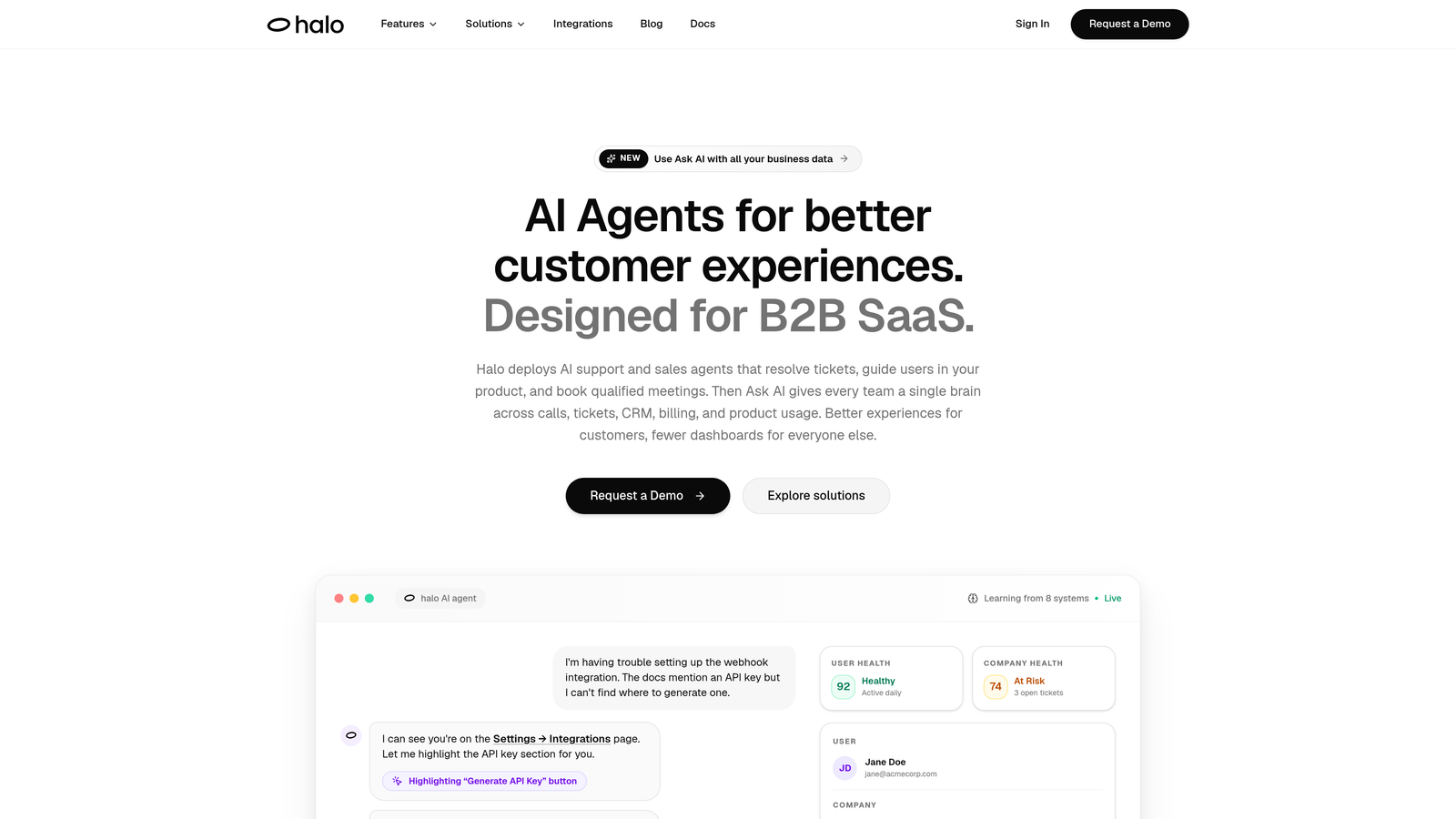
Halo AI is an AI-native customer support platform that deploys autonomous agents to resolve tickets, guide users through your product with page-aware context, and surface business intelligence signals — all while learning from every resolved interaction.
Where This Tool Shines
What separates Halo from most tools on this list is the intelligence layer beyond support. While other platforms focus on deflecting tickets, Halo surfaces customer health signals, revenue risk indicators, and anomaly detection through its Smart Inbox. Your support data becomes a business intelligence feed, not just a queue to be cleared.
The page-aware chat widget is another genuine differentiator. The AI understands exactly where a user is in your product and can provide contextual visual UI guidance, rather than generic knowledge base responses. That context awareness closes the gap between "AI answered something" and "AI actually helped."
Key Features
Page-Aware AI Agents: The AI sees what your user sees, delivering contextual guidance and visual UI walkthroughs based on their exact location in your product.
Smart Inbox with Business Intelligence: Customer health scores, revenue signals, and anomaly detection surface directly in your support inbox, turning tickets into strategic data.
Auto Bug Ticket Creation: Automatically generates bug reports routed directly to Linear, closing the loop between support and engineering without manual handoffs.
Live Agent Handoff: Complex issues escalate seamlessly to human agents with full context preserved, so customers never have to repeat themselves.
Deep Integration Stack: Connects with Slack, HubSpot, Intercom, Stripe, Zoom, PandaDoc, and Fathom, covering the full business stack rather than just helpdesk tools.
Continuous Learning Loop: Every resolved interaction improves the AI's accuracy and resolution rate over time, compounding value with usage.
Best For
SaaS companies and B2B product teams that want more than ticket deflection. Particularly strong for teams that need support automation and business intelligence in a single platform, or those looking to replace a legacy helpdesk rather than add another layer on top of one.
Pricing
Contact for pricing. See haloagents.ai for details and to book a demo.
2. Intercom (Fin AI)
Best for: Teams already in the Intercom ecosystem who want a native AI agent with smooth handoff
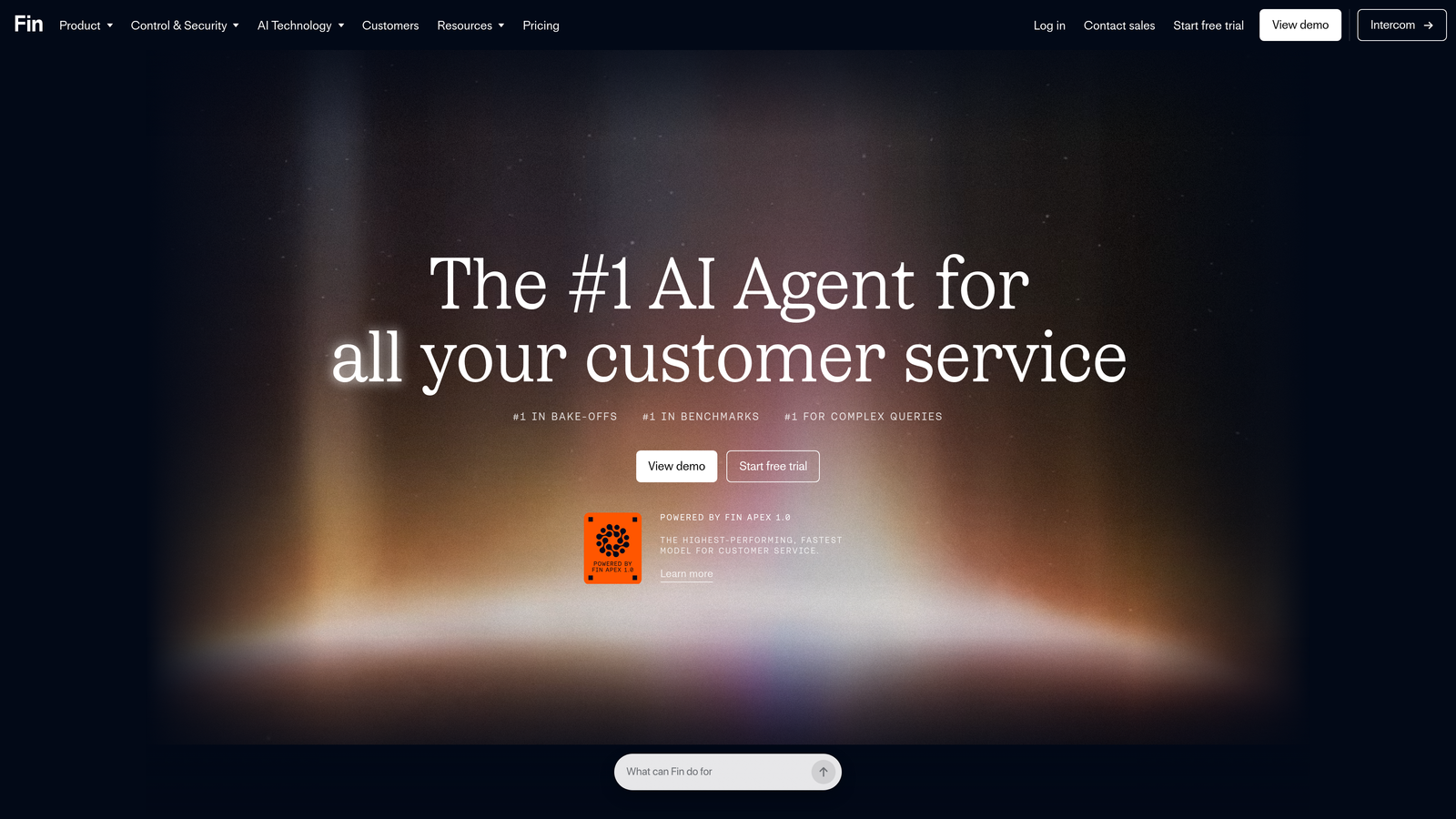
Intercom's Fin is a native AI agent trained on your help center content that handles conversational resolution and escalates to human agents with full context preserved.
Where This Tool Shines
Fin's strength is its tight integration with Intercom's existing infrastructure. If your team is already running support through Intercom, adding Fin requires minimal configuration. The handoff experience from AI to human agent is one of the smoother implementations in this category, with full conversation context passed along rather than dropped.
The AI Copilot feature adds value for agents handling complex queries, offering real-time suggestions and context during live conversations. It's a solid productivity layer for teams where human agents still handle a significant share of interactions.
Key Features
Fin AI Agent: Trained on your existing help content to handle common queries conversationally without human input.
Human Handoff with Context: Escalations preserve the full conversation thread so agents can pick up without asking customers to repeat themselves.
AI Copilot: Real-time agent-assist for complex queries, offering suggested responses and relevant context during live conversations.
Usage-Based Pricing: Fin is charged per resolution, which aligns cost with actual value delivered rather than seat count.
Best For
Teams already invested in the Intercom platform who want to add AI resolution without switching tools. Less compelling as a standalone choice if you're not already in the Intercom ecosystem.
Pricing
Fin AI is charged per resolution on top of Intercom's base plans. Check intercom.com for current rates, as pricing updates frequently.
3. Zendesk AI
Best for: Enterprise support teams that need AI layered onto a mature, configurable helpdesk infrastructure
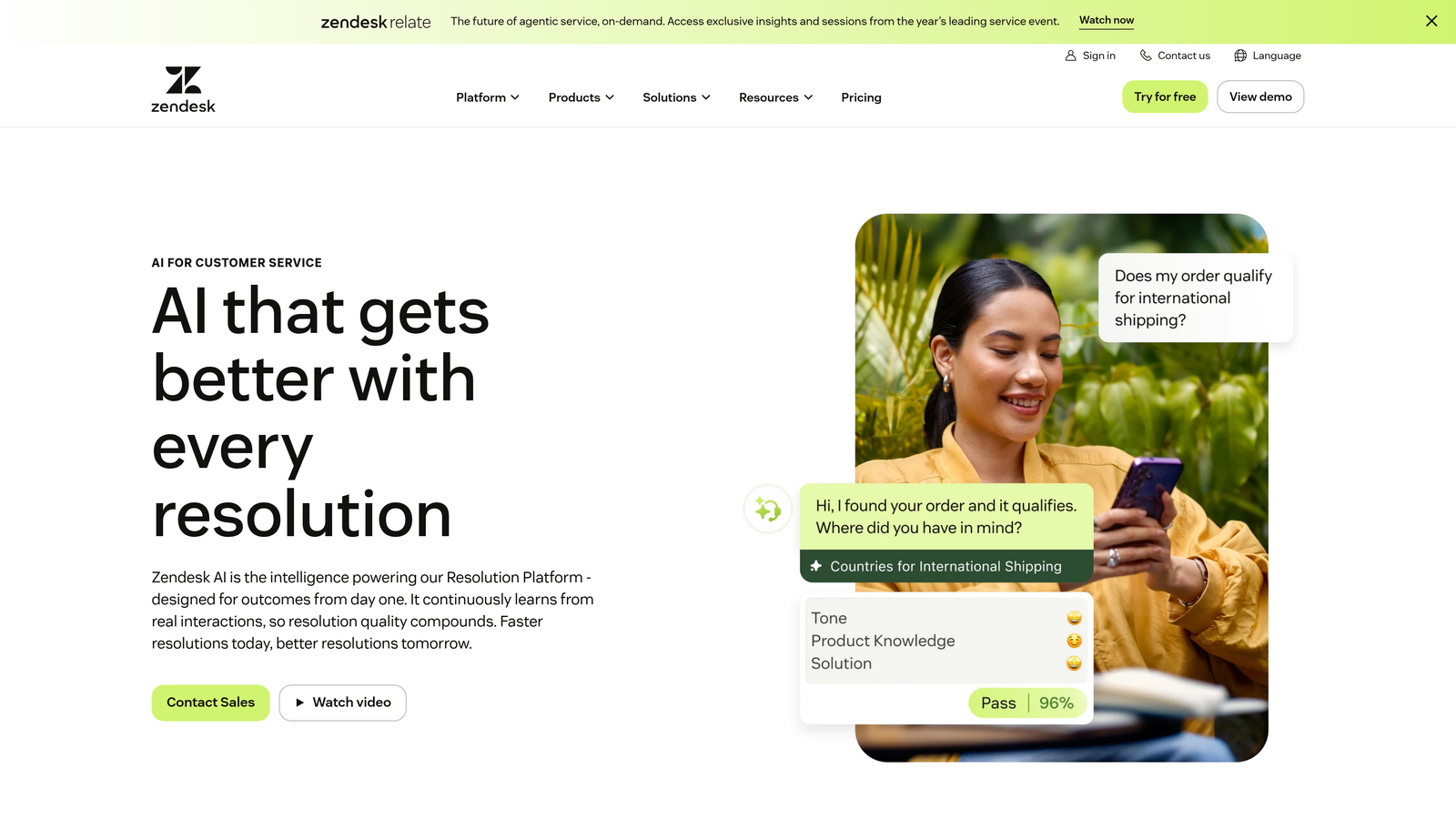
Zendesk AI is the AI-enhanced version of Zendesk's enterprise helpdesk, adding triage, intent detection, intelligent routing, and an agent copilot to one of the most established platforms in support.
Where This Tool Shines
Zendesk's core advantage is scale and configurability. For large support operations with complex routing rules, multiple teams, and high ticket volumes, the AI triage and intent detection capabilities reduce manual overhead significantly. Intelligent routing ensures tickets land with the right agent or team from the start.
The AI Copilot feature helps agents work faster with suggested macros and reply drafts based on ticket context. Ticket summarization is particularly useful for agents picking up mid-thread conversations without having to read every prior message.
Key Features
AI-Powered Triage: Intent and sentiment detection on incoming tickets to prioritize and categorize automatically.
Intelligent Routing: Routes tickets to the right agent or team based on topic, priority, and agent skill.
AI Copilot: Suggests macros and reply drafts to help agents respond faster and more consistently.
Ticket Summarization: Instant summaries of long ticket threads so agents load context in seconds rather than minutes.
Best For
Enterprise teams and larger support operations already using Zendesk who want to add AI productivity without migrating to a new platform. Smaller teams may find the setup complexity and cost difficult to justify.
Pricing
Suite plans start at $55/agent/month. AI features and add-ons are priced separately. Verify current rates at zendesk.com before budgeting.
4. Freshdesk (Freddy AI)
Best for: SMB support teams that want accessible AI across self-service, agent assist, and analytics
Freshdesk's Freddy AI is Freshworks' AI suite covering self-service chatbots, agent copilot assistance, and analytics insights in a package that's accessible at SMB price points.
Where This Tool Shines
Freddy AI's appeal is breadth at a reasonable price. The three-part structure, covering self-service, agent assist, and analytics, means teams get coverage across the full support workflow without paying enterprise rates. Freddy Copilot's reply drafting and thread summarization features deliver real productivity gains for agents handling high volumes.
Freddy Insights adds a layer of trend detection and analytics that helps support managers spot patterns and identify areas for improvement. It's not as deep as dedicated BI tools, but it's a meaningful step beyond basic reporting.
Key Features
Freddy Self Service: Chatbot-based ticket deflection trained on your help content for common query resolution.
Freddy Copilot: Agent reply drafting and thread summarization to reduce time spent on each ticket.
Freddy Insights: Support analytics and trend detection to surface patterns in ticket volume, topics, and agent performance.
SMB-Friendly Pricing: Accessible entry points make AI features available to teams that can't justify enterprise-tier costs.
Best For
Small to mid-sized support teams looking for a cost-effective way to add AI across self-service, agent productivity, and analytics. Less autonomous than AI-native platforms but strong value for the price.
Pricing
Freddy Copilot is available from the Growth plan at approximately $15/agent/month. Self Service is priced separately. Check freshworks.com for current plan details.
5. Tidio
Best for: E-commerce and small business teams that want fast AI deployment without deep configuration
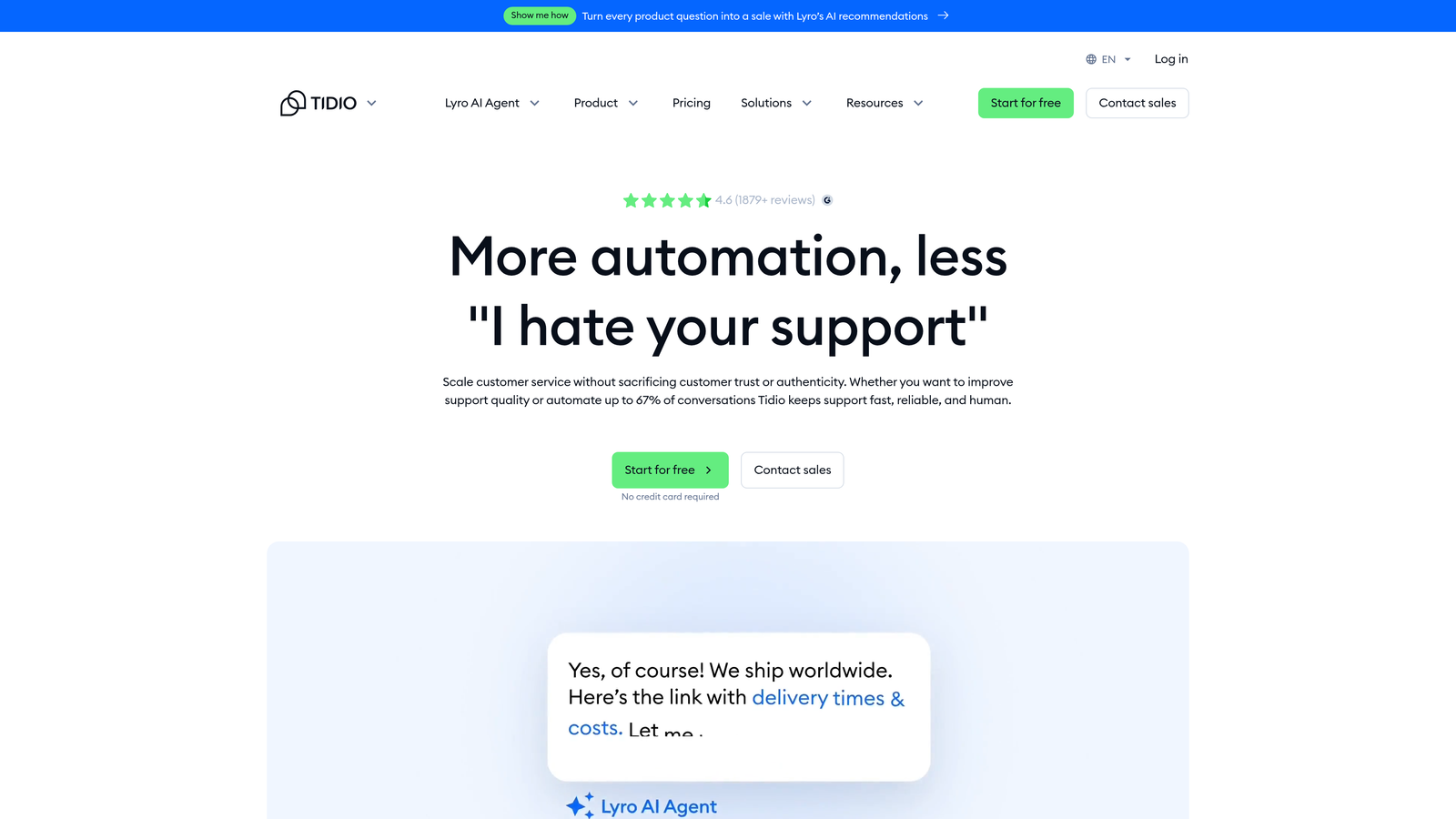
Tidio is a customer service platform featuring Lyro AI, a conversational agent designed for rapid deployment that's particularly popular with e-commerce and small business support teams.
Where This Tool Shines
Tidio's standout quality is speed to value. Many teams get Lyro AI live within hours, not days or weeks. The visual chatbot builder requires no coding knowledge, making it genuinely accessible for small teams without dedicated technical resources. Lyro is trained on your existing support content, so it starts handling common questions almost immediately.
The unified inbox combining live chat, email, and Messenger is a practical feature for small teams managing multiple channels without dedicated tooling for each. It reduces the context-switching overhead that often slows down lean support operations.
Key Features
Lyro AI: Conversational AI agent trained on your support content for fast, accurate resolution of common queries.
Visual Chatbot Builder: No-code flow creation for teams that want to customize without developer involvement.
Unified Inbox: Live chat, email, and Messenger combined into a single agent workspace.
Fast Deployment: Designed to be live within hours, with minimal setup required to start deflecting tickets.
Best For
E-commerce stores and small businesses that need conversational AI without lengthy implementation. Less suited for complex SaaS support environments where product context and deep integrations are critical.
Pricing
Free plan available. Lyro AI starts from $29/month, with paid plans scaling based on conversation volume.
6. Drift (Salesloft)
Best for: B2B revenue teams where support and sales conversations overlap on the same buyer journey
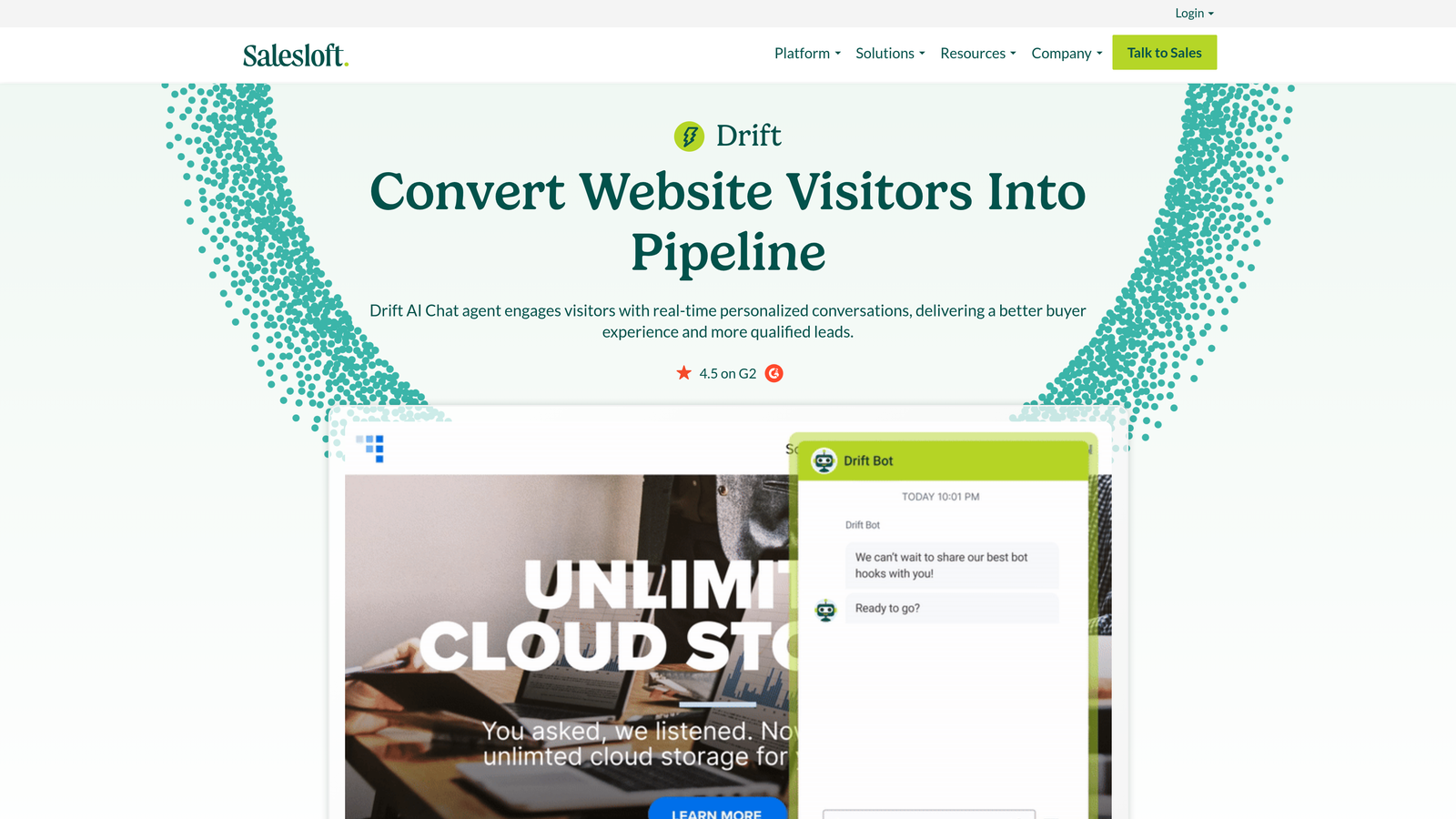
Drift, now part of Salesloft, is a conversational AI platform that blends support resolution with lead qualification, designed for B2B teams where the line between support and sales is often blurry.
Where This Tool Shines
Drift's differentiation is its dual-purpose AI: a single conversation can resolve a support query and qualify a sales opportunity simultaneously. For B2B companies where the same buyer contacts support and evaluates an upsell in the same week, that continuity has real value. Playbook-based routing sends conversations to support or sales based on detected intent signals.
The Salesloft acquisition has deepened integrations with CRM and sales engagement workflows. Meeting booking directly from chat is a practical feature for teams where support interactions frequently surface expansion opportunities.
Key Features
Dual-Purpose AI: Handles support queries and sales qualification within a single conversation flow.
Intent-Based Routing: Playbooks route conversations to support or sales based on real-time intent signals.
CRM Integrations: Native connections with Salesforce, HubSpot, and Salesloft for seamless handoff between support and revenue teams.
In-Chat Meeting Booking: Buyers can schedule directly from a chat conversation without leaving the interface.
Best For
B2B companies with revenue teams where support and sales touch the same buyer. Less specialized for pure support operations where ticket resolution efficiency is the primary metric.
Pricing
Custom pricing. Contact Drift or Salesloft directly for current plan details and packaging.
7. Forethought
Best for: Enterprise teams that want AI capabilities on top of their existing helpdesk without replacing it
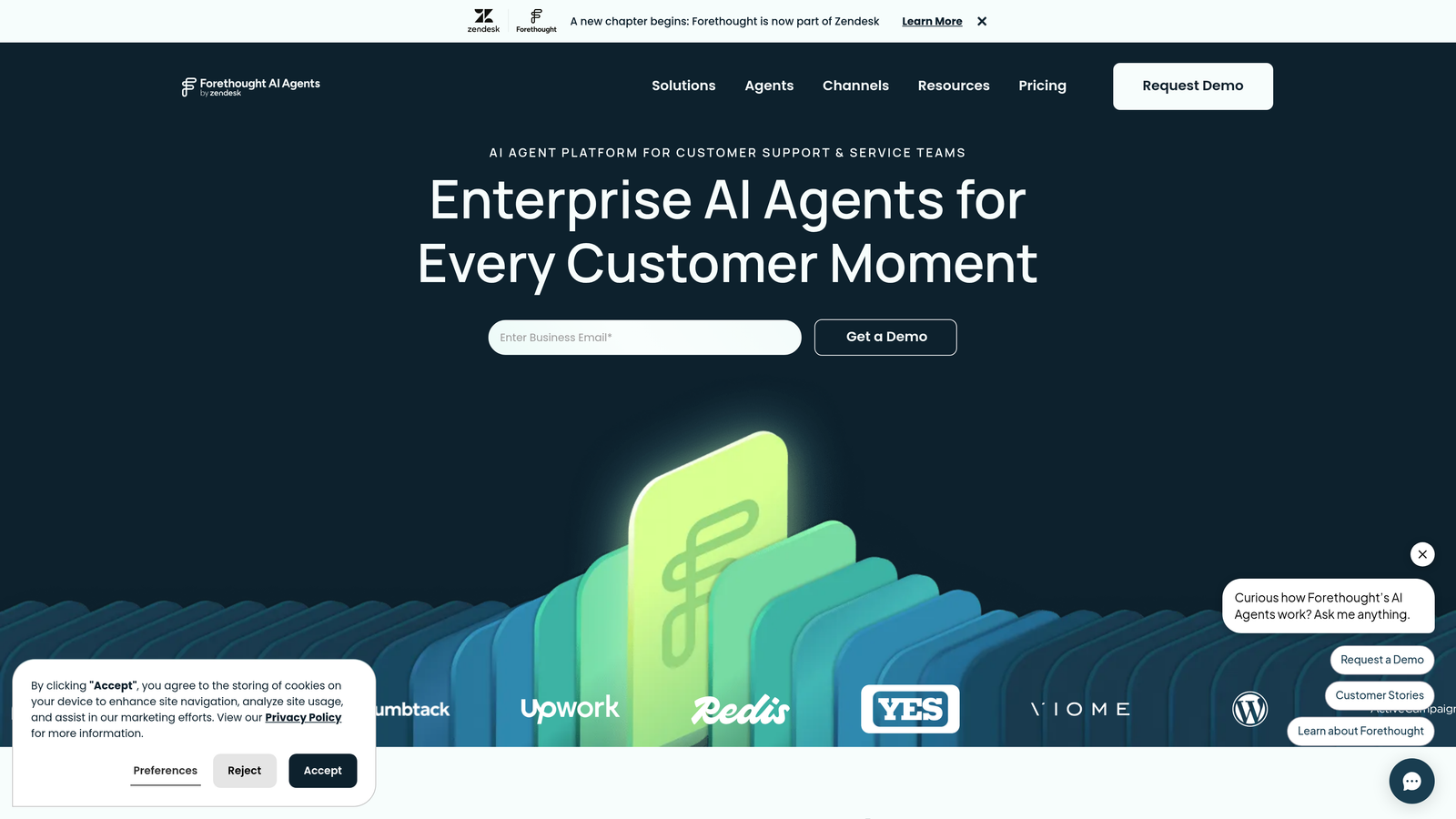
Forethought is an AI layer that sits on top of existing helpdesks like Zendesk and Salesforce Service Cloud, adding intelligent triage, deflection, and agent assist without requiring a platform migration.
Where This Tool Shines
Forethought's core value proposition is additive intelligence. If your organization has significant investment in an existing helpdesk and migration isn't on the table, Forethought lets you add meaningful AI capabilities without disrupting established workflows. The three-product structure maps cleanly to the three phases of a support interaction: deflection before the ticket, routing when it arrives, and assist while the agent works it.
Enterprise teams with complex helpdesk configurations often find Forethought easier to justify than a full platform switch. It's a pragmatic choice for organizations where the bottleneck is AI capability, not the underlying helpdesk infrastructure.
Key Features
Solve: AI deflection for common support queries before they reach an agent queue.
Triage: Intelligent routing and prioritization to ensure tickets land in the right place immediately.
Assist: Real-time suggested responses for human agents during active ticket resolution.
Broad Helpdesk Compatibility: Integrates with Zendesk, Salesforce Service Cloud, ServiceNow, and other enterprise platforms.
Best For
Enterprise support teams with existing helpdesk infrastructure who want to add AI without a platform change. Not the right fit for teams looking to consolidate onto a single AI-native platform.
Pricing
Custom enterprise pricing. Contact Forethought directly for a quote tailored to your team size and helpdesk environment.
8. Help Scout
Best for: Teams that prioritize relationship quality and want AI to enhance agents rather than replace them
Help Scout is a human-centric helpdesk platform with AI features designed to enhance agent productivity while preserving the personal quality of customer interactions.
Where This Tool Shines
Help Scout's philosophy is that great support is fundamentally human, and AI should make agents better rather than invisible. The AI features reflect this: Summarize helps agents load context instantly, Drafts suggests replies without mandating them, and Answers provides self-service without removing the path to a human. The result is a tool that feels thoughtful rather than automated.
The clean, agent-friendly UI is consistently cited as a strength. Shared inboxes, conversation threads, and documentation all work together in a way that reduces friction for agents rather than adding configuration overhead. For teams where agent experience and customer relationship quality are priorities, Help Scout delivers a coherent, well-considered product.
Key Features
AI Summarize: Instant thread summaries that give agents full context before they respond, reducing time spent reading long conversation histories.
AI Drafts: Suggested reply generation that agents can review, edit, and send rather than compose from scratch.
AI Answers: Self-service resolution in the Beacon widget for customers who want to find answers without opening a ticket.
Clean Shared Inbox: An agent-friendly UI that prioritizes usability over feature density.
Best For
Teams that value relationship-driven support and want AI as a productivity layer rather than a replacement for human interaction. Strong fit for SaaS companies, agencies, and service businesses where customer relationships are a competitive advantage.
Pricing
Standard plan from $22/user/month; Plus from $44/user/month. AI features are included on paid plans.
9. Kustomer
Best for: High-volume omnichannel support teams in DTC, retail, and consumer-facing operations
Kustomer is a CRM-native customer service platform with AI automation across the full customer timeline, built for omnichannel support operations handling email, chat, social, and voice at scale.
Where This Tool Shines
Kustomer's unified customer timeline is its most distinctive feature. Rather than treating each support interaction as an isolated ticket, Kustomer shows agents the complete history of every customer interaction across every channel in a single view. For high-volume consumer brands managing support across multiple touchpoints, that context reduces resolution time and repeat contacts significantly.
KustomerIQ handles intent detection, automated tagging, and common resolution flows, reducing manual triage for large teams. The platform is owned by Meta, which is worth noting for enterprise buyers who have data residency or vendor considerations to evaluate.
Key Features
Unified Customer Timeline: Full interaction history across email, chat, social, and voice in a single agent view.
KustomerIQ: AI-powered intent detection, automated tagging, and resolution flows for common query types.
Workflow Automation: Routing, escalation, and follow-up workflows that reduce manual overhead for large teams.
Omnichannel Coverage: Native support for email, chat, social, and voice without requiring separate channel tools.
Best For
High-volume DTC brands, retail operations, and consumer-facing businesses managing support across multiple channels. Less optimized for pure SaaS or B2B environments where product context and engineering integrations are primary requirements.
Pricing
Enterprise pricing, typically in the $89 to $139/user/month range depending on plan. Contact Kustomer directly for current rates.
Which Tool Is Right for Your Team?
The right AI customer service tool depends almost entirely on what your team actually needs, not on which platform has the longest feature list.
Lean SaaS teams that want AI-first architecture, product-aware context, and business intelligence beyond ticket deflection should look hard at Halo AI. It's built for exactly this use case, and the continuous learning loop means it compounds value over time rather than plateauing.
Enterprise organizations with existing helpdesk infrastructure and no appetite for migration have two strong options: Zendesk AI if you're already in the Zendesk ecosystem, or Forethought if you want AI capabilities layered on top of whatever platform you're currently running.
E-commerce and small business teams that need fast deployment and accessible pricing should evaluate Tidio. Lyro AI gets you live quickly, and the unified inbox handles the multi-channel reality most small teams face.
Revenue-focused B2B teams where support and sales conversations overlap on the same buyer journey will find Drift's dual-purpose AI worth exploring, particularly if you're already in the Salesloft ecosystem.
For teams that want to move beyond ticket management and into genuine business intelligence, the gap between AI-native platforms and AI-layered helpdesks is meaningful. Your support data contains signals about customer health, revenue risk, and product friction that most tools never surface.
Your support team shouldn't scale linearly with your customer base. Let AI agents handle routine tickets, guide users through your product, and surface business intelligence while your team focuses on complex issues that need a human touch. See Halo in action and discover how continuous learning transforms every interaction into smarter, faster support.