9 Best AI Tools for SaaS Customer Support in 2026
This guide evaluates the 9 best AI tools for SaaS customer support in 2026, helping teams move beyond basic chatbots to purpose-built solutions that autonomously resolve tickets, integrate deeply with existing stacks, and deliver personalized responses at scale without expanding headcount.
 Grant CooperFounder13 min read
If your support team is drowning in repetitive tickets while customers wait hours for answers, AI isn't a luxury anymore. It's the infrastructure. The SaaS support landscape has shifted dramatically: teams are now expected to deliver instant, accurate, personalized responses at scale without proportionally growing headcount.
But not all AI support tools are built the same. Some bolt AI onto legacy helpdesk workflows. Others are purpose-built to understand your product, your users, and your entire business context. The difference in outcomes is significant.
This list covers the top AI tools for SaaS customer support in 2026, evaluated on autonomous resolution capability, integration depth, learning intelligence, and fit for B2B SaaS teams. Whether you're replacing a clunky chatbot or building a fully automated support layer, there's a right tool for your stage and stack.
1. Halo AI
Best for: SaaS teams that want AI-native autonomous support with deep product and business context
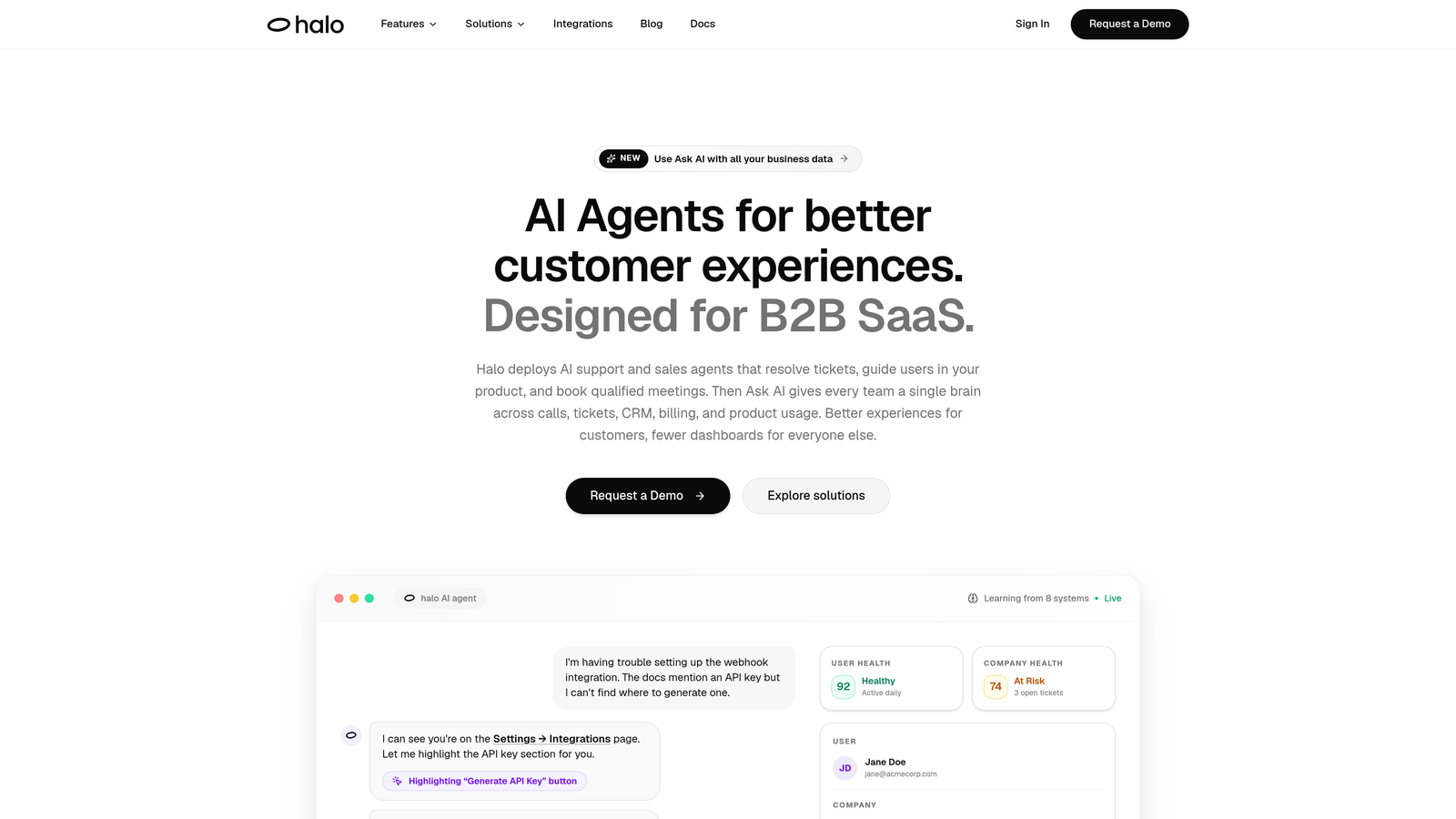
Halo AI is an AI-first customer support platform built specifically for SaaS teams, deploying intelligent agents that resolve tickets, guide users through your product, and surface business intelligence.
Where This Tool Shines
What separates Halo from the field is its page-aware architecture. The AI agent actually sees what the user sees on their current page, which means it can offer contextual, step-by-step guidance rather than generic help article links. That's a meaningful difference when your users are stuck mid-workflow at 11pm with no human agent available.
Beyond ticket resolution, Halo operates as a layer of business intelligence. Its smart inbox surfaces customer health signals, revenue anomalies, and product friction patterns, turning support data into insights that matter to your product and customer success teams, not just your support managers.
Key Features
Page-Aware Chat Widget: The AI understands the user's current page context, enabling precise in-product guidance rather than generic responses.
Autonomous Ticket Resolution: Handles routine queries end-to-end with graceful handoff to live agents when complexity exceeds AI confidence.
Auto Bug Ticket Creation: Automatically identifies product issues and routes them directly to engineering tools like Linear, closing the loop between support and development.
Smart Inbox with Business Intelligence: Surfaces customer health signals, revenue anomalies, and product friction detection beyond standard ticket analytics.
Continuous Learning Loop: Improves resolution quality from every interaction, compounding intelligence over time rather than staying static.
Integration Ecosystem: Connects to Linear, Slack, HubSpot, Intercom, Stripe, Zoom, PandaDoc, and Fathom for full business stack awareness.
Best For
B2B SaaS teams that want AI-first architecture rather than an AI add-on to an existing helpdesk. Particularly well-suited for product-led growth companies where in-product guidance and bug detection are as important as ticket deflection. Also a strong fit for teams that want support data to feed product and revenue decisions.
Pricing
Visit haloagents.ai for current plan details. Pricing is not published as a flat rate, so it's worth reaching out directly to understand fit for your team size and volume.
2. Intercom Fin
Best for: Teams already on Intercom who want native LLM-powered resolution without a platform change
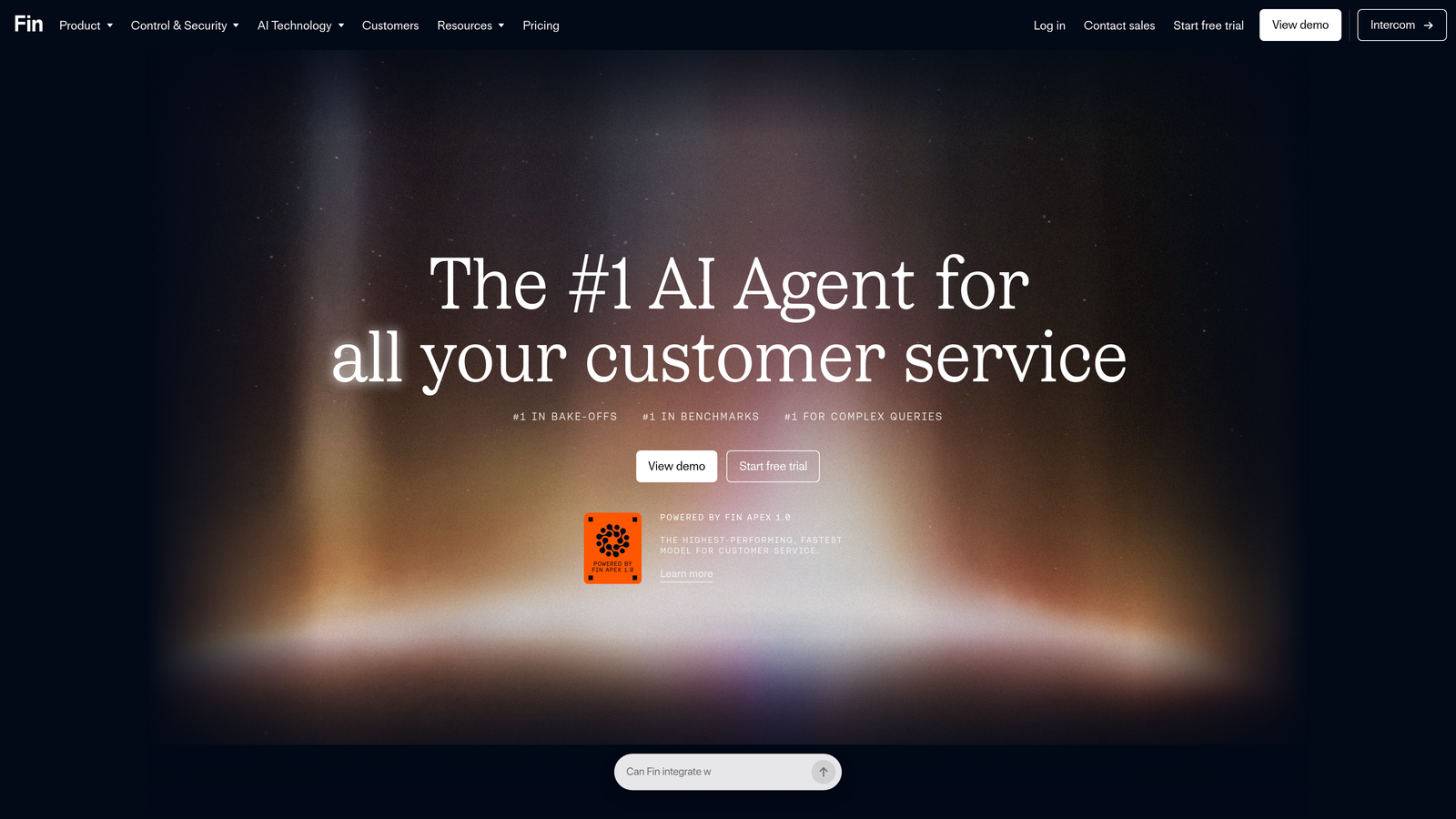
Intercom Fin is Intercom's native AI agent, powered by large language models, that resolves customer queries using your existing knowledge base and content.
Where This Tool Shines
Fin's biggest advantage is how deeply it lives inside the Intercom experience. If your team already works out of Intercom's inbox, Fin requires no separate platform, no new interface to learn, and no migration headaches. It reads your existing articles, PDFs, and URLs and starts resolving queries from day one.
Fin 2, released in 2024, meaningfully improved multi-step query handling and reasoning. It can now work through more complex questions rather than deflecting anything that isn't a simple FAQ lookup. The handoff experience to human agents is also seamless, keeping the entire conversation in one thread.
Key Features
Multi-Source Knowledge: Ingests articles, PDFs, and external URLs to build a comprehensive resolution knowledge base.
Improved Reasoning (Fin 2): Handles multi-step and nuanced queries with better accuracy than first-generation AI chatbots.
Native Inbox Integration: Operates entirely within Intercom's messenger, with no separate platform to manage.
Seamless Human Handoff: Escalates to live agents within the same conversation thread, preserving full context.
Resolution-Based Pricing Option: Pay per resolved conversation rather than per seat, which aligns cost with actual value delivered.
Best For
Teams that have already standardized on Intercom and want to add autonomous resolution without introducing another vendor. Less ideal for teams looking for a standalone AI support layer or those who want deep product-context awareness beyond what Intercom natively captures.
Pricing
Fin is available as an add-on to Intercom plans, with a resolution-based pricing model available. See intercom.com for current pricing details.
3. Zendesk AI
Best for: Enterprise support teams with complex routing logic and large agent workforces
Zendesk AI spans intelligent triage, agent copilot assistance, and autonomous resolution across the full Zendesk Suite.
Where This Tool Shines
Zendesk AI is built for scale and complexity. Its triage layer uses intent, sentiment, and language detection to route tickets accurately across large, multi-team support organizations. For enterprises managing thousands of tickets daily across multiple product lines, that routing intelligence alone can have a significant operational impact.
The agent copilot functionality is also mature. It surfaces response suggestions and next-best-action guidance in real time, which helps newer agents perform at a higher level faster. This makes Zendesk AI a strong fit for organizations where agent quality consistency is a priority alongside automation.
Key Features
Intelligent Triage: Uses intent, sentiment, and language detection to route tickets accurately before a human ever sees them.
Agent Copilot: Provides real-time response suggestions and next-best-action guidance directly in the agent's workspace.
Automated Ticket Routing and Priority Scoring: Reduces manual queue management for large support teams.
AI-Powered Bots: Handles autonomous resolution for common queries without human involvement.
Full Suite Integration: AI features work natively across Zendesk's ticketing, messaging, and analytics products.
Best For
Enterprise SaaS teams already on Zendesk Suite with large agent teams and complex routing requirements. Teams earlier in their growth or those seeking a more lightweight, AI-native setup may find Zendesk's depth adds overhead rather than simplicity.
Pricing
AI features are add-ons to Zendesk Suite plans. See zendesk.com for current pricing, as costs vary significantly by plan tier and add-on selection.
4. Freshdesk Freddy AI
Best for: Teams invested in the Freshworks ecosystem who want AI across the full support stack
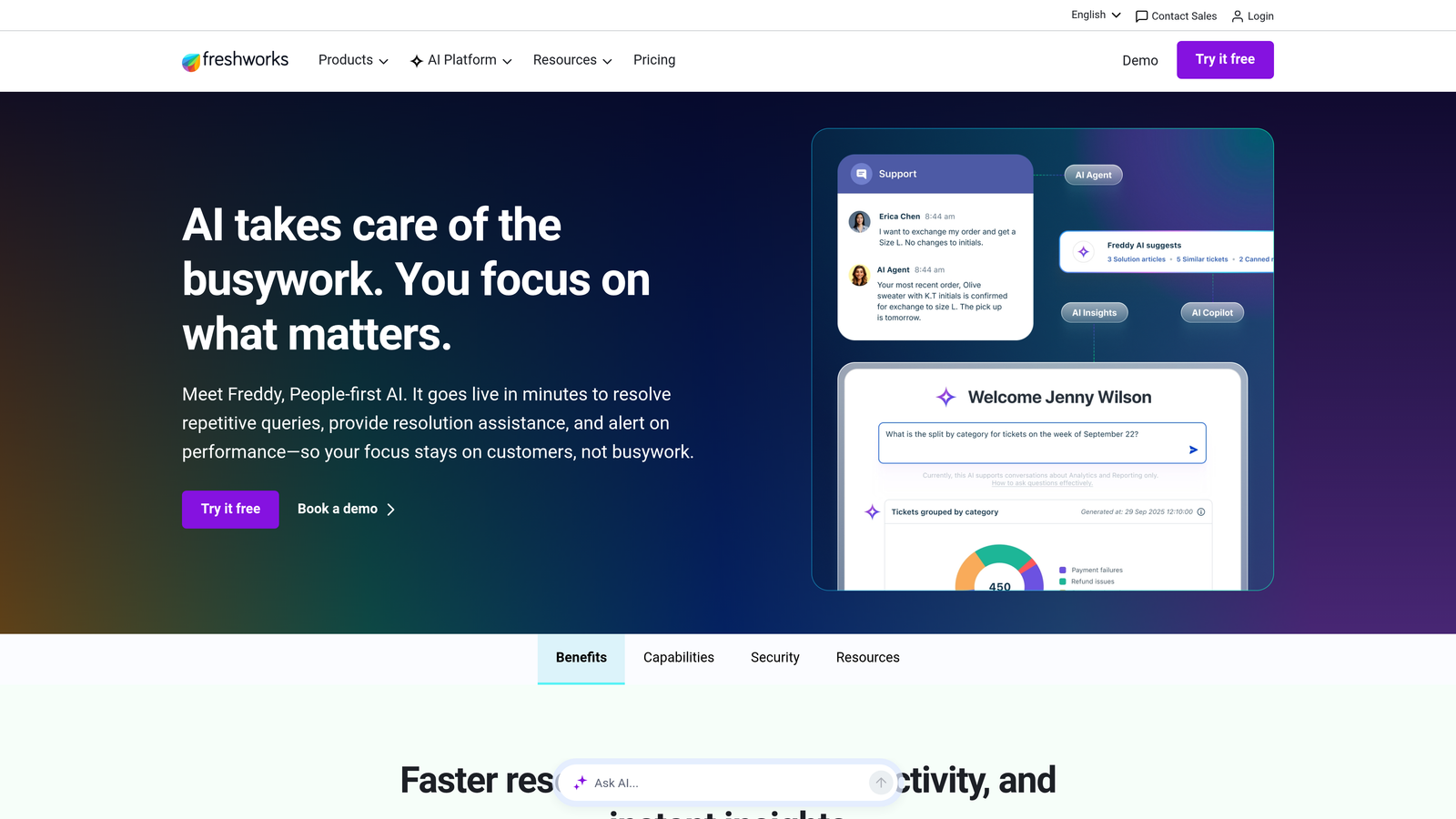
Freshdesk Freddy AI is Freshworks' AI layer across Freshdesk, Freshchat, and Freshservice, offering self-service resolution, in-inbox agent assistance, and AI-generated analytics.
Where This Tool Shines
Freddy's strength is coverage. It operates across three distinct modes: autonomous resolution for end users, in-inbox assistance for agents, and analytics for support managers. If your team runs on Freshworks products, Freddy provides a consistent AI layer without requiring any additional platforms or integrations.
Freddy Insights is particularly useful for teams that want AI to go beyond ticket resolution and actually surface performance recommendations. It identifies patterns in support data and suggests operational improvements, which is a step beyond basic reporting dashboards.
Key Features
Freddy Self Service: Autonomous chatbot resolution that handles common queries without agent involvement.
Freddy Copilot: In-inbox AI that suggests responses, summarizes tickets, and assists agents in real time.
Freddy Insights: AI-generated analytics with performance recommendations for support team optimization.
Cross-Product Consistency: Works uniformly across Freshdesk, Freshchat, and Freshservice in a single ecosystem.
Multilingual Support: Handles queries in multiple languages, useful for SaaS teams with a global customer base.
Best For
Teams already using Freshworks products who want AI capabilities without introducing a new vendor. Less compelling for teams not in the Freshworks ecosystem, since the value is closely tied to the platform's native integrations.
Pricing
Freddy Copilot and Self Service are available as add-ons; pricing varies by plan tier. See freshworks.com for details.
5. Forethought
Best for: Teams that want AI triage and resolution layered on top of an existing helpdesk without migrating
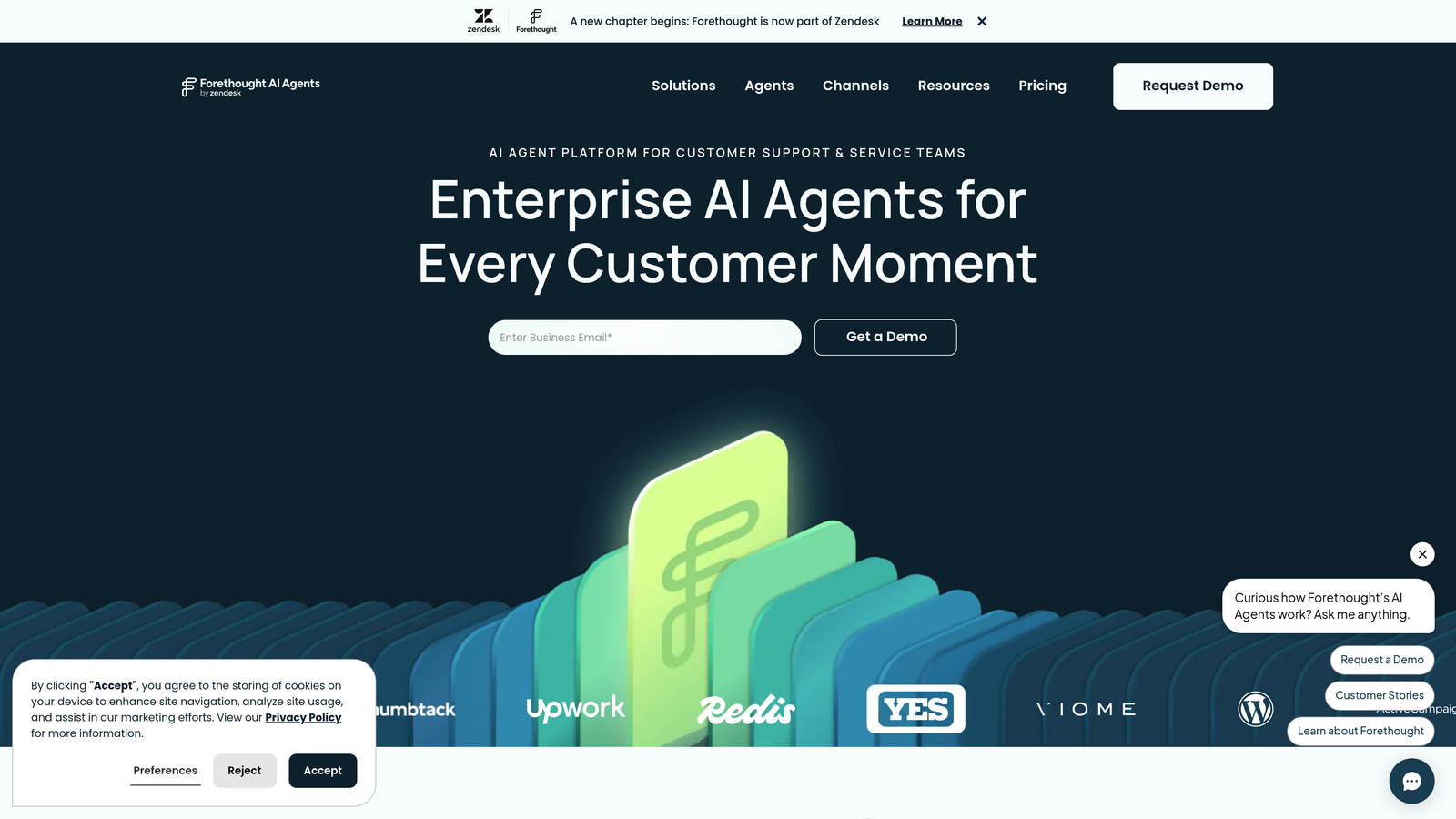
Forethought is an AI support platform that adds intelligent triage, autonomous resolution, and agent assistance on top of existing helpdesks like Zendesk and Salesforce Service Cloud.
Where This Tool Shines
Forethought's positioning as a layer rather than a replacement is its core value proposition. If your team has invested years in Zendesk workflows, custom fields, and routing logic, Forethought lets you add AI intelligence without dismantling that infrastructure. It reads your existing ticket history to improve its routing and resolution accuracy from the start.
Its sentiment analysis is notably strong. Forethought can identify frustrated or at-risk customers based on message signals and escalate or prioritize accordingly, which is valuable for SaaS teams where a churning enterprise customer requires a different response than a standard support query.
Key Features
Solve: Autonomous resolution for common queries without requiring human agent involvement.
Triage: AI-powered routing based on intent, sentiment, and priority signals extracted from ticket content.
Assist: Real-time response suggestions and knowledge surfacing for agents handling complex issues.
Helpdesk-Agnostic Architecture: Works on top of Zendesk, Salesforce, and other platforms without requiring migration.
Sentiment Analysis: Identifies frustrated or at-risk customers and adjusts routing and priority accordingly.
Best For
Mid-market to enterprise SaaS teams with established helpdesk infrastructure who want to add AI capabilities incrementally. Teams starting fresh or looking for an AI-native platform may find better value in a purpose-built solution.
Pricing
Enterprise-focused; contact Forethought directly at forethought.ai for pricing.
6. Tidio Lyro
Best for: Early-stage SaaS teams or those with straightforward support needs and budget constraints
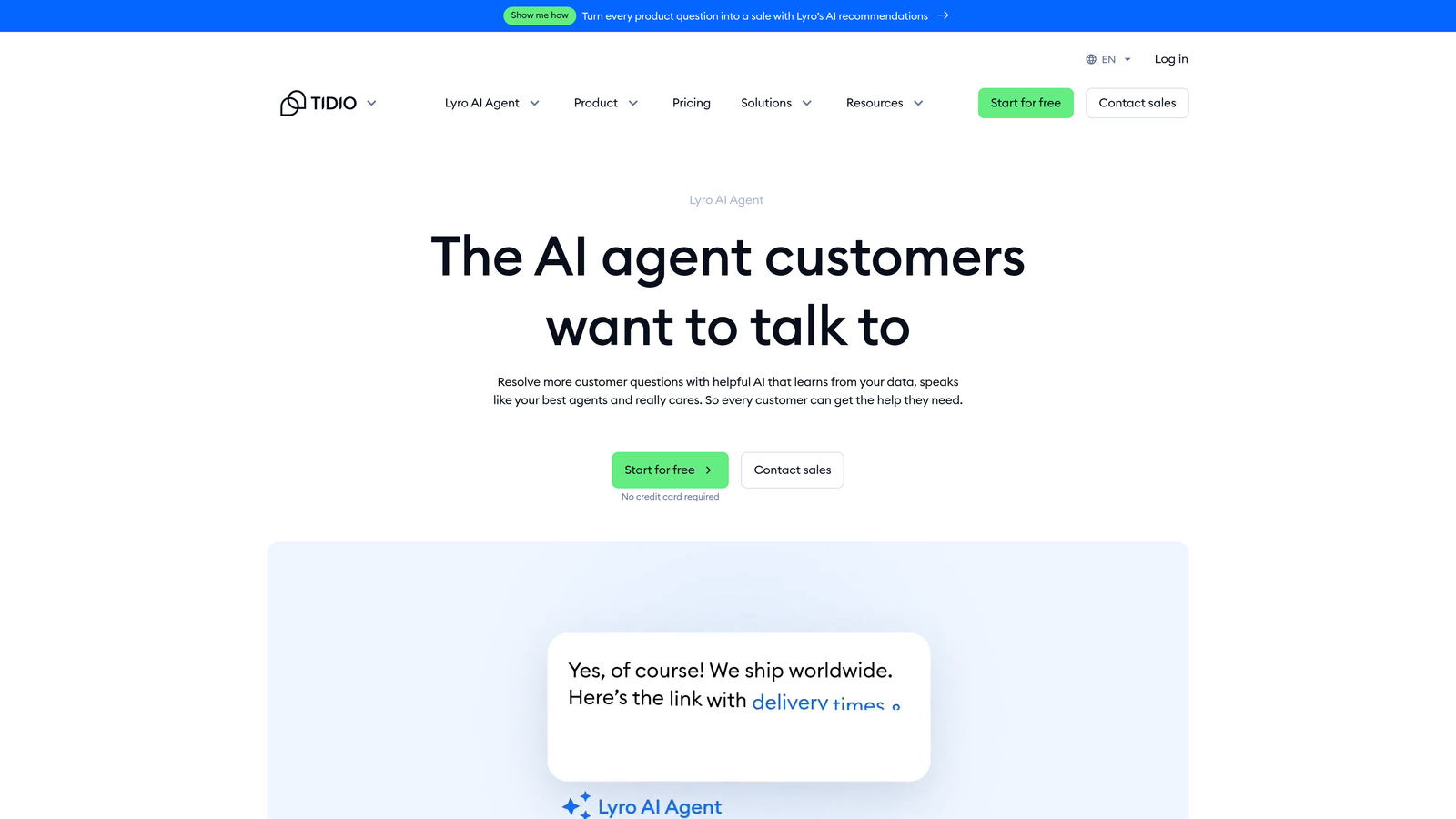
Tidio Lyro is Tidio's conversational AI agent, powered by Anthropic's Claude, designed for fast deployment and accessible pricing.
Where This Tool Shines
Lyro gets you from zero to live AI support faster than most tools on this list. It connects to your existing FAQs and help content with minimal configuration, and because it's built on Claude, the conversational quality is naturally strong. For teams that don't have dedicated implementation resources, that low-friction setup matters.
The free tier also makes Lyro genuinely accessible for early-stage teams who want to test AI support before committing to enterprise pricing. The tradeoff is that Lyro is better suited to straightforward, FAQ-style queries than complex technical SaaS support scenarios.
Key Features
Claude-Powered Conversations: Anthropic's Claude model delivers natural, accurate responses with good handling of nuanced language.
Fast Setup: Connects to existing FAQs and help content with minimal configuration time.
Multi-Turn Conversations: Handles follow-up questions and conversation context across a single support session.
Free Tier Available: Allows low-volume teams to test AI support without upfront cost commitment.
Live Agent Takeover: Escalates to human agents when the AI reaches the limits of its knowledge or confidence.
Best For
Early-stage SaaS teams, smaller companies with high-volume but low-complexity support needs, or teams that want a fast proof-of-concept before investing in a more sophisticated platform. Less suited for complex B2B technical support or teams needing deep integration with engineering and product workflows.
Pricing
Free tier available for low-volume use; paid plans scale by conversation volume. See tidio.com for current plan details.
7. Kustomer
Best for: Teams where full customer relationship context is as important as resolution speed
Kustomer is a CRM-native customer service platform that unifies complete customer history with AI-powered support workflows.
Where This Tool Shines
Kustomer's differentiation is its unified customer timeline. Rather than treating each support ticket as an isolated event, Kustomer surfaces the full picture: previous support interactions, purchase history, product usage data, and behavioral signals, all in a single view. For SaaS teams where context is critical to delivering the right response, that unified view changes how agents work.
The AI layer builds on that foundation by detecting intent, automating routing, and surfacing response suggestions with full customer context already loaded. It's a different orientation than pure ticket-deflection tools, more focused on relationship quality than raw resolution volume.
Key Features
Unified Customer Timeline: Combines support history, purchase data, and product interactions in a single agent view.
AI Intent Detection: Automatically identifies query type and routes to the appropriate workflow or team.
Response Suggestions: Provides agents with next-best-action recommendations informed by full customer context.
Omnichannel Support: Manages email, chat, social, and phone conversations in a single unified workspace.
Proactive Outreach: Triggers outbound messages based on customer behavior signals before issues escalate.
Best For
SaaS teams with high-value customer relationships where context and history inform every interaction. Less focused on autonomous AI resolution than other tools on this list, so teams prioritizing deflection rates over relationship depth may find better fit elsewhere.
Pricing
Per-agent per-month pricing; contact Kustomer for enterprise plan details.
8. Gorgias
Best for: Product-led SaaS teams with transactional support needs alongside e-commerce operations
Gorgias is a support platform with deep e-commerce integrations and AI automation built for high-volume, transactional support workflows.
Where This Tool Shines
Gorgias is purpose-built for teams managing large volumes of transactional queries: order status, subscription changes, returns, and billing questions. Its native integrations with Shopify, Magento, and BigCommerce mean the AI has direct access to order data when resolving these queries, which dramatically improves accuracy and reduces back-and-forth.
Its revenue attribution feature is genuinely useful for teams that want to understand the business impact of support. Gorgias tracks how support interactions influence purchase decisions, which gives support teams a commercial argument for investment that most other platforms don't provide.
Key Features
Transactional Query Automation: AI handles order status, returns, and subscription queries autonomously using live commerce data.
Deep E-Commerce Integrations: Native connections to Shopify, Magento, and BigCommerce for real-time order and customer data.
Revenue Attribution: Tracks how support interactions influence sales, providing commercial visibility for support teams.
Macros and Rules Engine: Automates repetitive workflows with conditional logic for common support scenarios.
Ticket-Based Pricing: Scales with actual support volume rather than agent headcount, which suits seasonal or variable demand.
Best For
Product-led SaaS teams that also run e-commerce operations, or companies with high-volume transactional support needs. Less suited for complex technical B2B SaaS support where deep product context and engineering integration matter more than commerce data.
Pricing
Ticket-based pricing that scales with monthly support volume. See gorgias.com for current plan details.
9. Help Scout
Best for: Teams that want AI to reduce agent effort without replacing the human touch
Help Scout is a human-first support platform that has added AI features including AI Drafts, AI Summarize, and Beacon AI to reduce agent effort while preserving relationship-driven support.
Where This Tool Shines
Help Scout's AI additions are deliberately assistive rather than autonomous. AI Drafts generates reply suggestions so agents can respond faster without starting from a blank page. AI Summarize condenses long conversation threads so agents joining mid-ticket get up to speed in seconds rather than minutes. These are practical, friction-reducing features that make human agents meaningfully more efficient.
Beacon AI adds proactive help content surfacing inside your product, which reduces inbound volume by getting users to the right answer before they open a ticket. The overall philosophy here is clear: AI as a force multiplier for human agents, not a replacement for them.
Key Features
AI Drafts: Generates reply suggestions based on full conversation context, reducing time-to-response for agents.
AI Summarize: Condenses long ticket threads so agents can get up to speed instantly without reading every message.
Beacon AI: Proactively surfaces relevant help content inside your product before users submit a ticket.
AI Assist: Handles tone adjustment, translation, and message expansion to improve reply quality and consistency.
Human-First Philosophy: Designed for AI-augmented support, not AI-autonomous replacement, preserving the personal tone Help Scout is known for.
Best For
Teams that prioritize relationship quality and personal communication tone, particularly those in professional services, consulting-adjacent SaaS, or industries where customers expect a human voice. Teams focused on maximizing autonomous resolution rates will likely need a more AI-autonomous platform.
Pricing
Per-user per-month pricing; AI features are included in higher-tier plans. See helpscout.com for current plan details.
Making the Right Choice for Your Team
The right AI support tool depends on where you are, what you're building, and how you define success. Here's a quick way to orient your decision.
If you want AI-native architecture with product context and business intelligence: Halo AI is purpose-built for this. Its page-aware guidance, auto bug detection, and smart inbox intelligence go beyond ticket deflection into genuine operational value for SaaS teams.
If you're already on Intercom or Zendesk and want to add AI without migrating: Intercom Fin and Zendesk AI are the natural paths, with Fin being the stronger choice for teams prioritizing conversational resolution and Zendesk AI better suited to enterprise routing complexity.
If you're early-stage and need something live quickly on a budget: Tidio Lyro gives you a capable AI agent with a free entry point and minimal setup overhead.
If human relationship quality is non-negotiable: Help Scout's AI-augmented approach keeps agents in control while reducing their workload meaningfully.
If your support is primarily transactional with e-commerce overlap: Gorgias is the specialist here, with commerce data integrations that other tools simply don't match.
Your support team shouldn't scale linearly with your customer base. Let AI agents handle routine tickets, guide users through your product, and surface business intelligence while your team focuses on complex issues that need a human touch. See Halo in action and discover how continuous learning transforms every interaction into smarter, faster support.