9 Best AI Helpdesk Assistant Software Tools in 2026
AI helpdesk assistant software has evolved from agent-assist suggestions to fully autonomous resolution engines that deflect tickets, route complex cases, and close issues faster. This guide ranks the 9 best platforms of 2026, evaluating each on native AI architecture, integration depth, ticket deflection capability, analytics quality, and pricing transparency to help support teams find the right fit.
 Matt PattoliFounder13 min read
Support teams are drowning in repetitive tickets while customers wait longer than ever for answers. AI helpdesk assistant software changes that equation, resolving common issues instantly, routing complex cases intelligently, and giving human agents the context they need to close tickets faster.
The tools in this list were evaluated on five criteria: native AI architecture (not a bolt-on layer), integration ecosystem depth, ticket deflection capability, analytics quality, and pricing transparency. Whether you're running a lean support operation or scaling a growing B2B SaaS product, these tools represent the current state of the art in 2026.
The market has shifted decisively from AI-assisted (suggestions to human agents) toward AI-autonomous (AI resolves end-to-end, escalates only when needed). That distinction matters when you're choosing a platform, and it shapes how each tool below is evaluated.
1. Halo AI
Best for: B2B SaaS teams wanting AI-first autonomy with deep product and business context
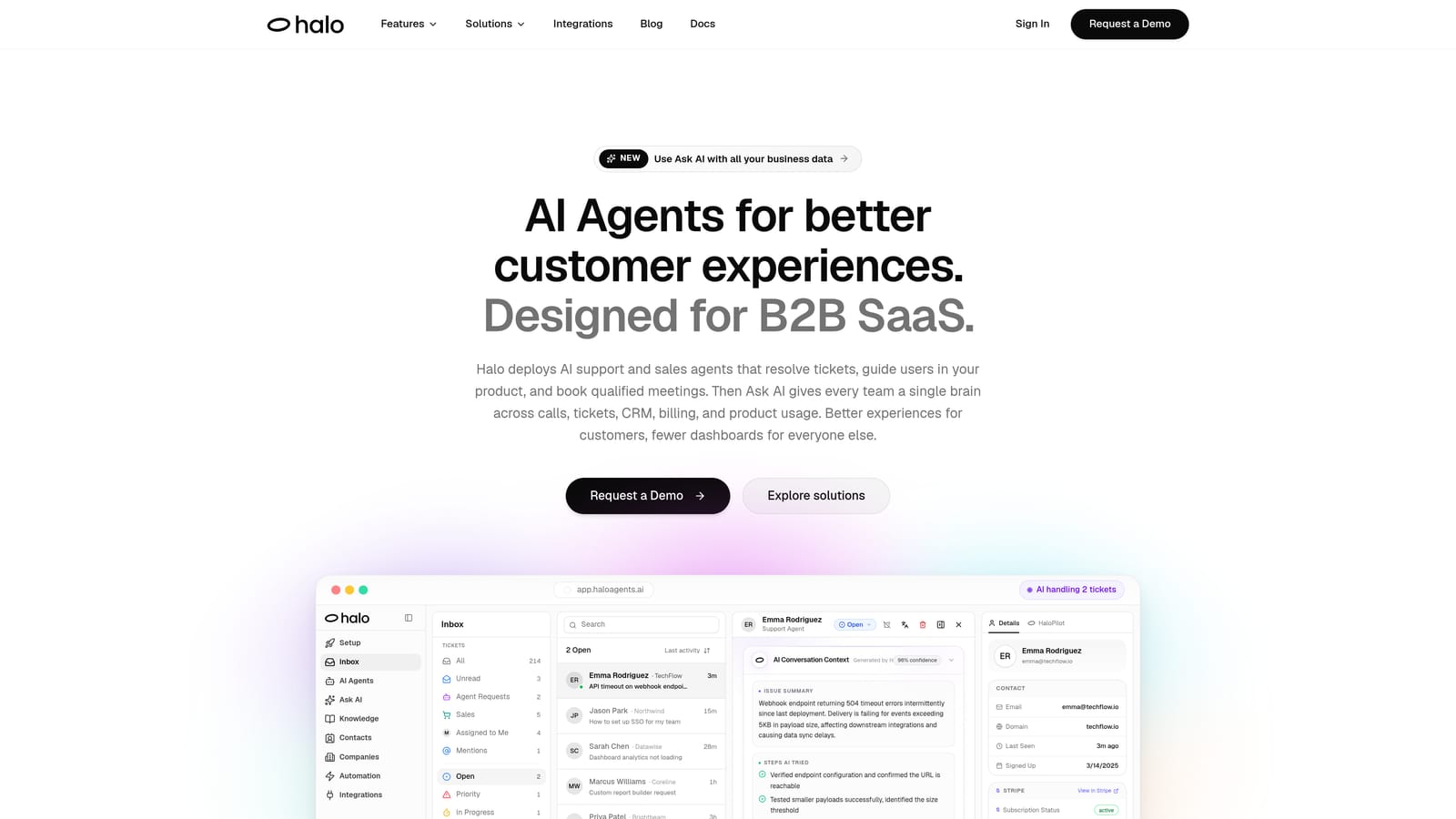
Halo AI is an AI-first customer support platform that deploys autonomous agents to resolve tickets, guide users through your product, and surface business intelligence signals while continuously learning from every interaction.
Where This Tool Shines
What separates Halo from most tools on this list is its architecture. It wasn't built by bolting AI onto a legacy helpdesk. The AI is the operating layer, which means learning loops are tighter, context awareness is deeper, and the system improves meaningfully with every resolved interaction rather than requiring manual retraining.
The page-aware chat widget is particularly distinctive for B2B SaaS teams. Instead of serving generic responses, Halo sees what the user is actually looking at in your product and delivers contextual visual guidance tied to that specific screen. That kind of situational awareness closes a gap that most AI support tools leave wide open.
Key Features
Page-Aware Chat Widget: Sees what users see in real time and delivers contextual guidance specific to their current product view.
Autonomous AI Agents: Resolve support tickets end-to-end without human involvement, improving with every interaction through continuous learning.
Smart Inbox with Business Intelligence: Surfaces customer health signals, revenue anomalies, and trend detection beyond standard ticket analytics.
Auto Bug Ticket Creation: Connects support signals directly to engineering workflows via Linear integration, so product issues get flagged automatically.
Live Agent Handoff: Escalates gracefully with full conversation context preserved, so human agents never start from scratch.
Deep Integration Stack: Connects to Slack, HubSpot, Intercom, Stripe, Zoom, PandaDoc, Fathom, and Linear out of the box.
Best For
B2B SaaS companies and product-led growth teams who want genuine AI autonomy, not just agent suggestions. Also well-suited for teams currently using Zendesk, Freshdesk, or Intercom who want to augment or replace their current setup with a platform built around AI from the ground up.
Pricing
Visit haloagents.ai for current pricing and plan details.
2. Zendesk AI
Best for: Enterprise teams already invested in the Zendesk ecosystem
Zendesk AI is a suite of native AI capabilities built directly into Zendesk Suite, covering autonomous ticket resolution, intelligent triage, and real-time agent assistance.
Where This Tool Shines
If your organization has already built a mature Zendesk environment with a large knowledge base and established workflows, Zendesk AI is the path of least resistance. The AI capabilities integrate seamlessly into existing processes without requiring a platform migration or major re-training for your team.
Agent Copilot is particularly strong for hybrid teams that want AI to assist rather than fully replace human agents. It surfaces relevant knowledge articles and suggests replies in real time, reducing handle time without removing the human from the loop entirely.
Key Features
AI Agents: Resolve common tickets autonomously without requiring human intervention.
Intelligent Triage: Automatically detects ticket intent and routes conversations to the right team or workflow.
Agent Copilot: Surfaces knowledge and suggests replies to human agents in real time during live conversations.
AI-Powered Analytics: Includes CSAT prediction and conversation intelligence layered across the Zendesk reporting suite.
Native Ecosystem Integration: Works within the full Zendesk Suite without third-party connectors or additional configuration.
Best For
Enterprise support organizations already operating on Zendesk Suite with large documentation libraries. Teams that want AI capabilities without changing their existing helpdesk infrastructure.
Pricing
AI features are available on higher-tier Zendesk Suite plans. Visit zendesk.com for current pricing details.
3. Intercom Fin
Best for: Intercom users who want high-quality autonomous deflection from existing help content
Intercom Fin is Intercom's AI agent, trained directly on your help center content to handle multi-turn customer conversations autonomously before escalating to human agents when needed.
Where This Tool Shines
Fin's strength is in conversation quality. Rather than matching keywords to canned responses, it handles nuanced, multi-turn exchanges with genuine comprehension of customer intent. For teams with well-documented help centers, Fin can deflect a substantial portion of incoming volume without customers feeling like they're talking to a rigid bot.
The outcome-based pricing model is also worth noting. You pay per resolution rather than per seat or per conversation, which aligns cost directly with value delivered. That's a meaningful structural difference from most competitors.
Key Features
Help Center Training: Fin trains directly on your existing documentation and articles, with no manual intent mapping required.
Multi-Turn Conversation Handling: Understands nuanced customer intent across extended exchanges, not just single-message queries.
Seamless Escalation: Hands off to the Intercom inbox when a query exceeds its capability, with full context preserved.
Outcome-Based Pricing: Charges per resolution, aligning cost with actual deflection performance.
Messenger Infrastructure: Works natively within Intercom's existing chat and inbox environment.
Best For
Teams already using Intercom with a mature, well-maintained help center. Companies that want meaningful deflection without overhauling their support infrastructure and prefer paying for results rather than capacity.
Pricing
Per-resolution pricing model. Visit intercom.com for current rates.
4. Freshdesk Freddy AI
Best for: Mid-market teams already on the Freshworks platform seeking incremental AI adoption
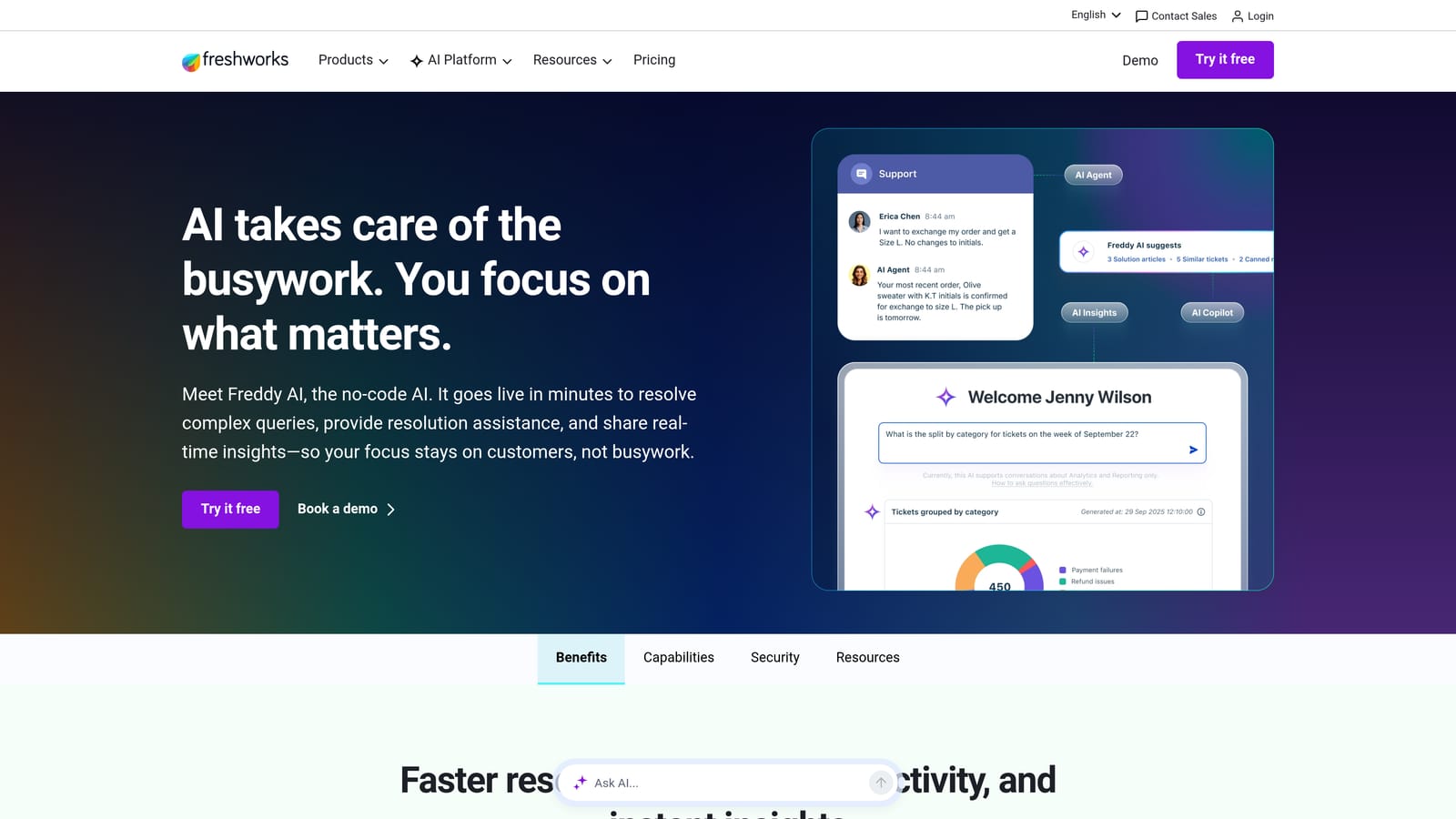
Freshdesk Freddy AI is Freshworks' AI layer spanning Freshdesk, Freshchat, and Freshservice, covering self-service bots, agent assistance, and analytics in one connected ecosystem.
Where This Tool Shines
Freddy's biggest advantage is flexibility in adoption. You can start with a single feature, like Freddy Self Service for basic deflection, and expand to Freddy Copilot for agent assistance or Freddy Insights for analytics as your team's comfort with AI grows. That incremental path reduces the organizational friction that often derails AI rollouts.
For teams already on Freshworks, the cross-product consistency is genuinely useful. The same AI layer spans your customer-facing chat, agent inbox, and IT service management workflows, so context doesn't get siloed across tools.
Key Features
Freddy Self Service: Customer-facing AI bot for deflecting common inquiries before they reach a human agent.
Freddy Copilot: Real-time reply drafting and suggestions for human agents during live conversations.
Freddy Insights: AI-powered analytics that surfaces trends and anomalies across your support data.
Cross-Product Consistency: Spans Freshdesk, Freshchat, and Freshservice with a unified AI layer.
Incremental Adoption Path: Teams can enable individual features without committing to full AI automation immediately.
Best For
Mid-market support teams already invested in the Freshworks ecosystem who want to add AI capabilities progressively. Less suited for teams seeking deep AI autonomy from day one.
Pricing
Available as add-ons across Freshdesk plans. Visit freshworks.com for current pricing.
5. Salesforce Einstein for Service
Best for: Organizations with Salesforce as their system of record needing CRM-informed AI support
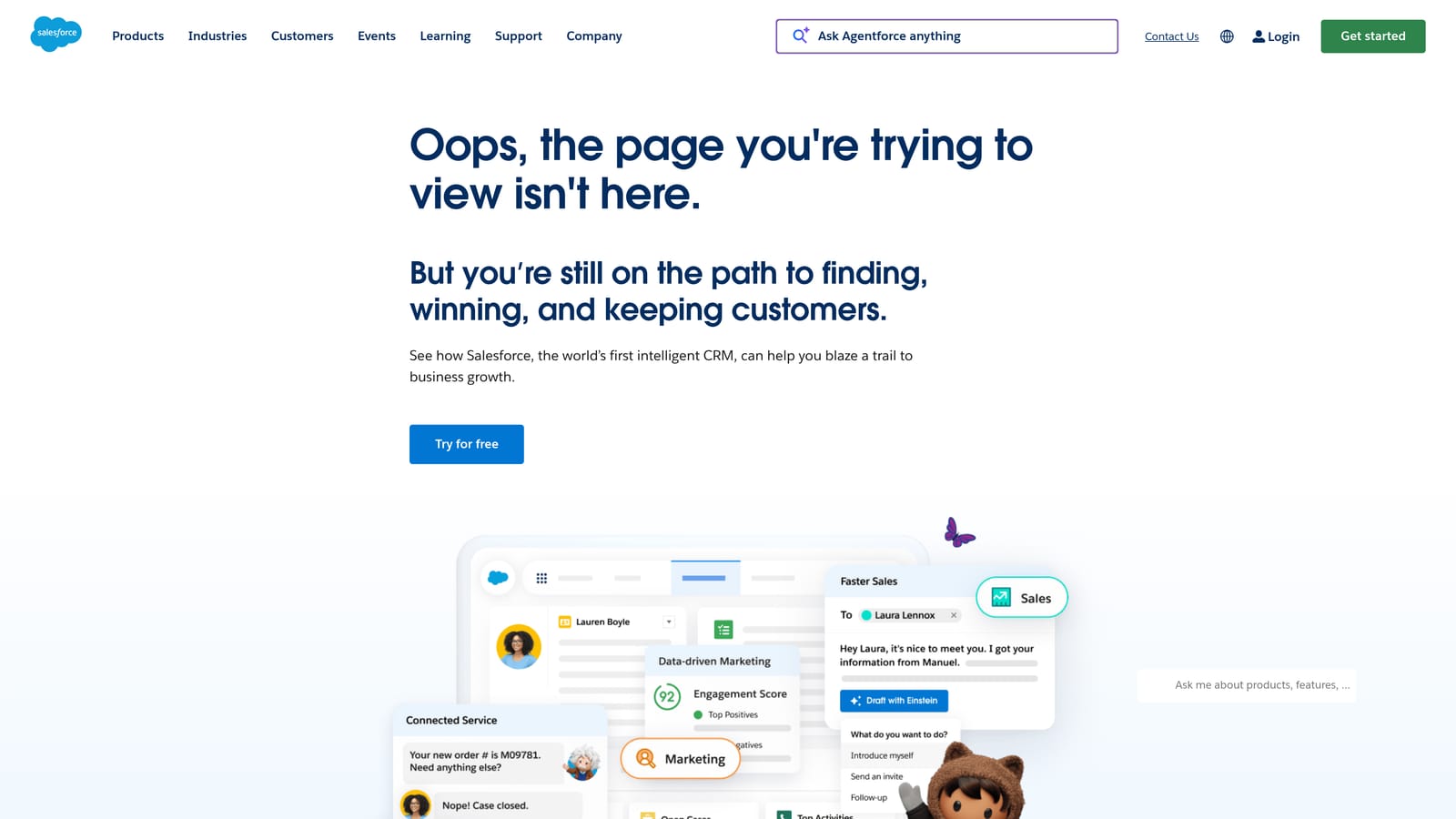
Salesforce Einstein for Service embeds AI across Salesforce Service Cloud, using full CRM data including purchase history, account status, and prior cases to inform every automated response and agent suggestion.
Where This Tool Shines
The core advantage here is data depth. When an AI agent or agent assist feature has access to a customer's complete Salesforce record, the quality of responses improves substantially. Einstein doesn't just see the current ticket; it sees the full account context, which matters enormously in B2B support scenarios where customer tier and history should shape every interaction.
For organizations already running Sales Cloud and Service Cloud together, Einstein creates genuine continuity between revenue and support data. That cross-functional visibility is difficult to replicate with standalone tools.
Key Features
Einstein Case Classification: Automatically tags and routes incoming cases based on predicted intent and historical patterns.
Einstein Reply Recommendations: Surfaces contextually relevant response options for agents based on full CRM data.
Einstein Bots: Self-service resolution across multiple channels with access to Salesforce customer records.
Full CRM Context: Every AI interaction is informed by purchase history, account status, and prior case data.
Cross-Cloud Integration: Connected across Service Cloud, Sales Cloud, and Marketing Cloud for unified intelligence.
Best For
Enterprise organizations with Salesforce as their primary system of record. Implementation complexity is significant, so this tool is best suited for teams with Salesforce already deeply embedded in their operations.
Pricing
Included in select Salesforce Service Cloud editions. Visit salesforce.com for current pricing and edition details.
6. Help Scout AI
Best for: Small to mid-size teams wanting lightweight AI without platform complexity
Help Scout AI offers a focused set of AI features including AI Summarize, AI Assist, and AI Answers, designed for teams that want incremental AI adoption without overhauling their support workflow.
Where This Tool Shines
Help Scout AI earns its place by not overcomplicating things. The AI features are genuinely useful and immediately accessible without technical setup, custom training pipelines, or dedicated implementation time. For a small team managing email-heavy support, AI Summarize alone can meaningfully reduce the time agents spend getting up to speed on long threads.
It's worth being clear about the positioning: this is AI assistance, not AI autonomy. Help Scout AI makes human agents faster and more effective. It doesn't replace them. For teams that want that balance, it's a strong fit.
Key Features
AI Summarize: Condenses long email threads into a concise brief so agents can respond without reading every message.
AI Assist: Drafts replies and adjusts tone based on conversation context, speeding up agent response time.
AI Answers: Self-service bot trained on your Help Scout Docs knowledge base for customer-facing deflection.
Zero Technical Setup: AI features are accessible within existing Help Scout plans without configuration work.
Simplicity-First Design: Built for teams that value ease of use over advanced automation depth.
Best For
Small and mid-size teams that want practical AI assistance without the overhead of an enterprise platform. Particularly well-suited for email-heavy support operations where thread summarization and reply drafting deliver immediate value.
Pricing
AI features are included in Help Scout plans. Visit helpscout.com for current pricing tiers.
7. Tidio Lyro
Best for: SMBs and e-commerce brands with high-volume, repetitive customer inquiries
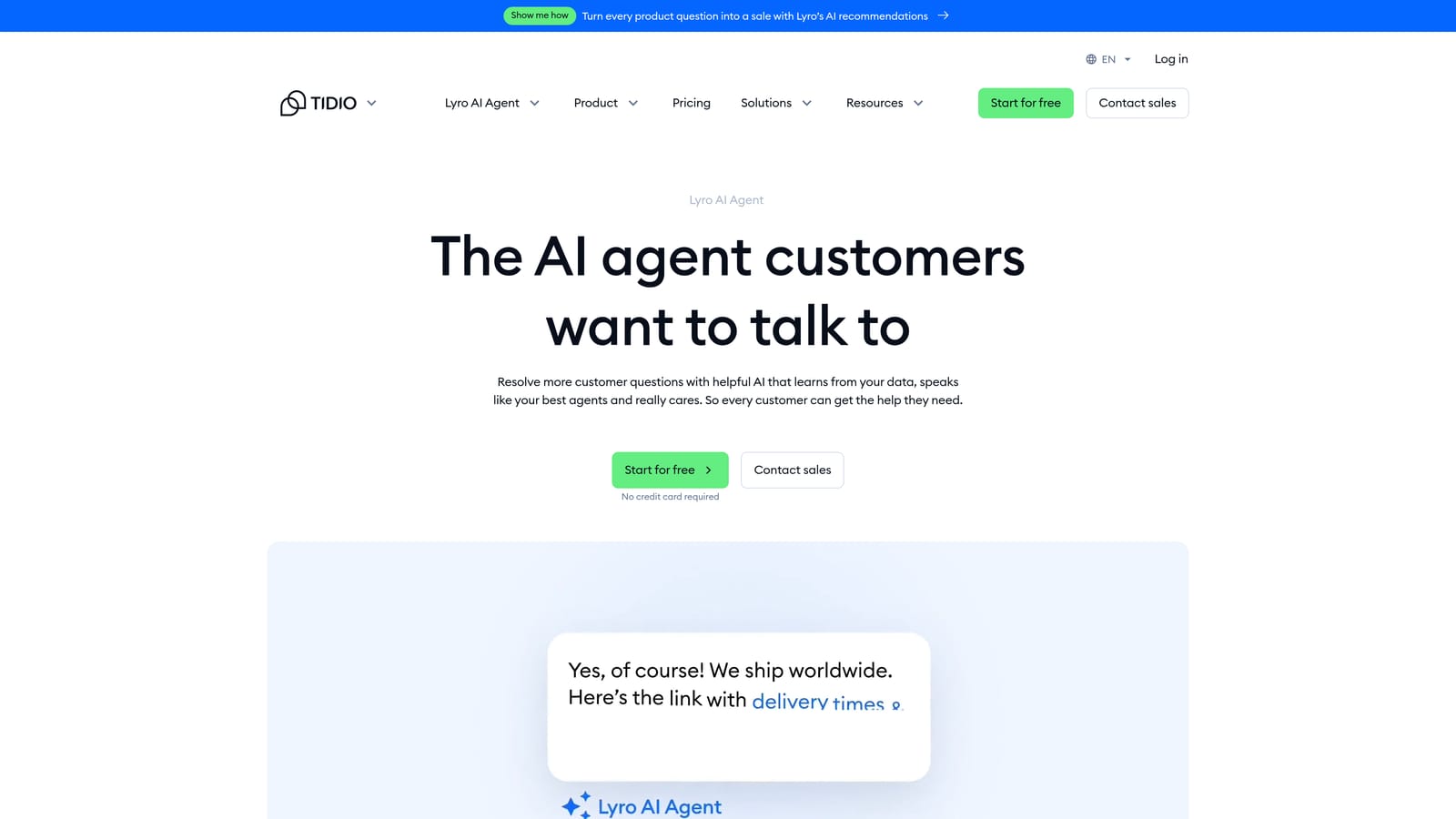
Tidio Lyro is Tidio's conversational AI built specifically for smaller businesses and e-commerce operations, handling common customer inquiries with minimal setup using your existing FAQ content.
Where This Tool Shines
Lyro's setup speed is genuinely impressive for its category. Connect it to your existing FAQ content and it begins deflecting common questions almost immediately, without requiring intent mapping, training sessions, or technical configuration. For an e-commerce brand fielding hundreds of identical questions about order status or return policies, that fast time-to-value is a real differentiator.
The conversation-based pricing model also makes Lyro accessible for SMB budgets that can't absorb per-seat enterprise costs. You pay based on what the AI actually handles, which keeps costs proportional to volume.
Key Features
FAQ-Based Training: Connects to existing FAQ content and starts deflecting immediately with minimal configuration.
Common Inquiry Handling: Covers order status, product questions, return policies, and other high-frequency query types.
Live Chat Fallback: Escalates to a human agent when the AI cannot resolve the query.
Conversation-Based Pricing: Costs scale with usage rather than seat count, suited to SMB budget structures.
E-Commerce Integrations: Connects with major e-commerce platforms and websites without custom development.
Best For
SMBs and e-commerce brands with high volumes of repetitive, lower-complexity inquiries. Less suited for complex B2B support scenarios that require deep product context or multi-system integration.
Pricing
Conversation-based pricing. Visit tidio.com for current rates.
8. Forethought Agatha
Best for: High-volume operations where intelligent triage is the primary bottleneck
Forethought Agatha is a specialized AI platform focused on intelligent ticket triage, classification, and pre-resolution, reducing the volume of tickets that ever reach a human agent through smart deflection and routing.
Where This Tool Shines
Most AI helpdesk tools try to do everything. Forethought has made a deliberate choice to go deep on triage. If your primary problem is that tickets aren't getting to the right place fast enough, or that agents are spending too much time classifying and routing before they can even start resolving, Agatha addresses that specific pain with real precision.
The integration story is also strong for enterprise teams. Agatha connects natively with Zendesk, Salesforce, and ServiceNow, which means it can slot into existing enterprise helpdesk infrastructure as an intelligence layer without requiring a platform change.
Key Features
Agatha Solve: Autonomous AI resolution for common, repeatable ticket types without human involvement.
Agatha Triage: Predicts ticket intent and routes conversations before an agent ever touches them.
Agatha Assist: Surfaces relevant knowledge articles to agents in real time during live handling.
Enterprise Integrations: Native connectors for Zendesk, Salesforce, and ServiceNow.
Triage Specialization: Particularly effective for high-volume environments where classification speed is the core operational constraint.
Best For
High-volume support operations where triage accuracy and routing speed are the biggest constraints. Enterprise teams already on Zendesk, Salesforce, or ServiceNow who want to add an intelligent classification layer without replacing their existing helpdesk.
Pricing
Enterprise-focused pricing. Visit forethought.ai for current rates.
9. Kustomer AI
Best for: Omnichannel brands with complex, multi-touchpoint customer journeys
Kustomer AI is a CRM-native omnichannel support platform with AI spanning email, chat, social, SMS, and voice, giving agents and AI bots a unified customer timeline across every touchpoint.
Where This Tool Shines
The unified customer timeline is Kustomer's defining feature. When a customer contacts you via Instagram DM, then follows up by email, then calls your support line, Kustomer's AI sees all of that as one continuous conversation. That context richness directly improves the quality of automated responses and agent suggestions, because neither is operating in a channel silo.
For brands with genuinely complex, multi-channel customer journeys, this unified view is difficult to replicate by stitching together point solutions. The AI's intent detection and workflow automation become significantly more effective when they have the full picture.
Key Features
Unified Customer Timeline: Aggregates all channel interactions into a single view that informs every AI decision.
Intent Detection and Workflows: Automated routing and response workflows across email, chat, social, and SMS.
AI-Suggested Responses: Recommendations based on full customer history rather than just the current message.
Omnichannel Routing: Intelligently assigns conversations across channels based on content, history, and agent availability.
Multi-Touchpoint Context: Built specifically for brands where customer journeys span multiple channels and time periods.
Best For
Omnichannel retailers, D2C brands, and companies with complex multi-channel support environments. Less suited for B2B SaaS teams with primarily in-product or email-based support needs.
Pricing
Visit kustomer.com for current pricing and plan details.
Which Tool Is Right for Your Team
The right AI helpdesk assistant depends less on feature lists and more on where you're starting from and what your primary constraint actually is. Here's a quick orientation by use case.
B2B SaaS teams wanting AI-first autonomy: Halo AI is built for this. The AI-first architecture, page-aware context, and continuous learning loops are designed specifically for product-led teams that want AI to do real work, not just assist.
Enterprise Zendesk shops: Zendesk AI is the obvious choice if you've already built your support infrastructure on Zendesk Suite. Deep native integration with no migration required.
Intercom users wanting better deflection: Fin is a natural upgrade if your help center is well-documented and you want outcome-based pricing tied directly to resolution performance.
Budget-conscious mid-market teams: Freshdesk Freddy AI offers solid value for teams already on Freshworks who want to add AI incrementally without a platform change.
Salesforce-native organizations: Einstein for Service is the strongest option when Salesforce is already your system of record and CRM context should inform every support interaction.
Small teams wanting simplicity: Help Scout AI delivers practical, immediately useful AI assistance without technical overhead or complex configuration.
SMB and e-commerce brands: Tidio Lyro handles high-volume, repetitive inquiries with fast setup and pricing that scales with actual usage.
Triage-focused operations: Forethought Agatha goes deeper on classification and routing than any other tool here, making it the right call when triage is the bottleneck.
Omnichannel retailers: Kustomer's unified customer timeline makes it the strongest fit for brands with complex, multi-channel customer journeys.
Your support team shouldn't scale linearly with your customer base. Let AI agents handle routine tickets, guide users through your product, and surface business intelligence while your team focuses on complex issues that need a human touch. See Halo in action and discover how continuous learning transforms every interaction into smarter, faster support.