9 Best AI Helpdesk Tools for Enterprise Pricing Comparison in 2026
This comprehensive guide cuts through the opacity of AI helpdesk enterprise pricing by mapping real cost structures across nine leading platforms for 2026, comparing per-seat versus usage-based models, bundled features versus paid add-ons, and genuine AI capability versus legacy chatbot wrappers—saving enterprise support teams weeks of unnecessary vendor discovery calls.
 Matt PattoliFounder13 min read
Enterprise support teams face a frustrating reality: most AI helpdesk vendors hide their actual pricing behind "contact sales" walls, making it nearly impossible to compare options without committing to a full demo cycle. By the time you've sat through nine discovery calls, you've already invested weeks you didn't have.
This guide cuts through that friction. We've mapped the real pricing structures for the most capable AI helpdesk platforms available in 2026, covering what you actually get at enterprise tiers: per-seat versus usage-based models, what's bundled versus gated behind add-ons, and which platforms deliver genuine AI capability versus a chatbot wrapper on legacy infrastructure.
Selection criteria for this comparison: enterprise-grade AI capability, transparent or publicly documented pricing, integration depth, and scalability for teams handling high ticket volumes. Here are the top AI helpdesk tools worth evaluating.
1. Halo AI
Best for: B2B SaaS teams wanting AI-native support with business intelligence built in
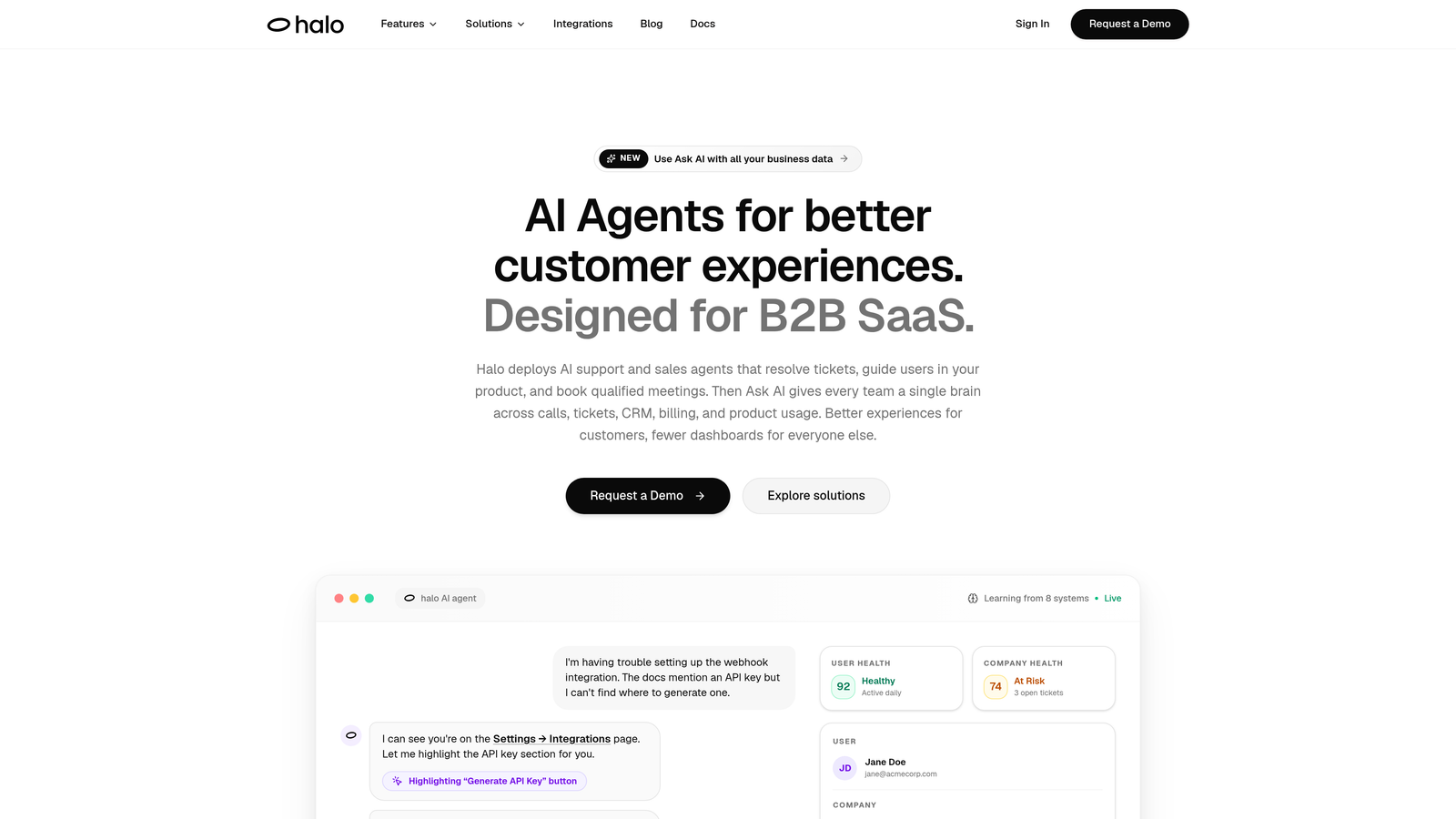
Halo AI is an AI-native customer support platform with page-aware agents, business intelligence analytics, and autonomous ticket resolution designed for B2B SaaS teams.
Where This Tool Shines
Most helpdesks were built as ticketing systems first, with AI bolted on later. Halo was architected from the ground up around AI agents, which means the intelligence isn't a layer on top of legacy infrastructure. It's the core of how the platform operates.
The standout capability is page-awareness: Halo's AI agents can see what users see inside your product UI, enabling contextual guidance that generic chatbots simply cannot replicate. Beyond support, the smart inbox surfaces customer health signals, revenue anomalies, and churn indicators, turning your support queue into a source of business intelligence.
Key Features
Page-Aware AI Agents: The AI sees your user's current product context, enabling precise in-app guidance rather than generic responses.
Smart Inbox with Business Intelligence: Surfaces customer health signals, revenue anomalies, and churn indicators alongside standard support metrics.
Auto Bug Ticket Creation: Automatically routes identified bugs to Linear or connected development tools without manual triage.
Live Agent Handoff: Escalates to human agents with full conversation context preserved, so customers never repeat themselves.
Continuous Learning: Resolution accuracy improves with every interaction, making the system measurably smarter over time.
Deep Integrations: Connects natively with Linear, Slack, HubSpot, Intercom, Stripe, Zoom, PandaDoc, and Fathom.
Best For
B2B SaaS product teams that want AI agents doing real resolution work, not just routing tickets. Particularly strong for teams that want support to feed business intelligence back into product and revenue workflows, and for companies evaluating their first AI-native platform rather than adding AI features to an existing helpdesk.
Pricing
Positioned as a cost-effective alternative to per-seat helpdesk pricing at scale. Visit haloagents.ai for current plans and enterprise tier details.
2. Zendesk
Best for: Large enterprises with complex support operations needing a mature, ecosystem-rich platform
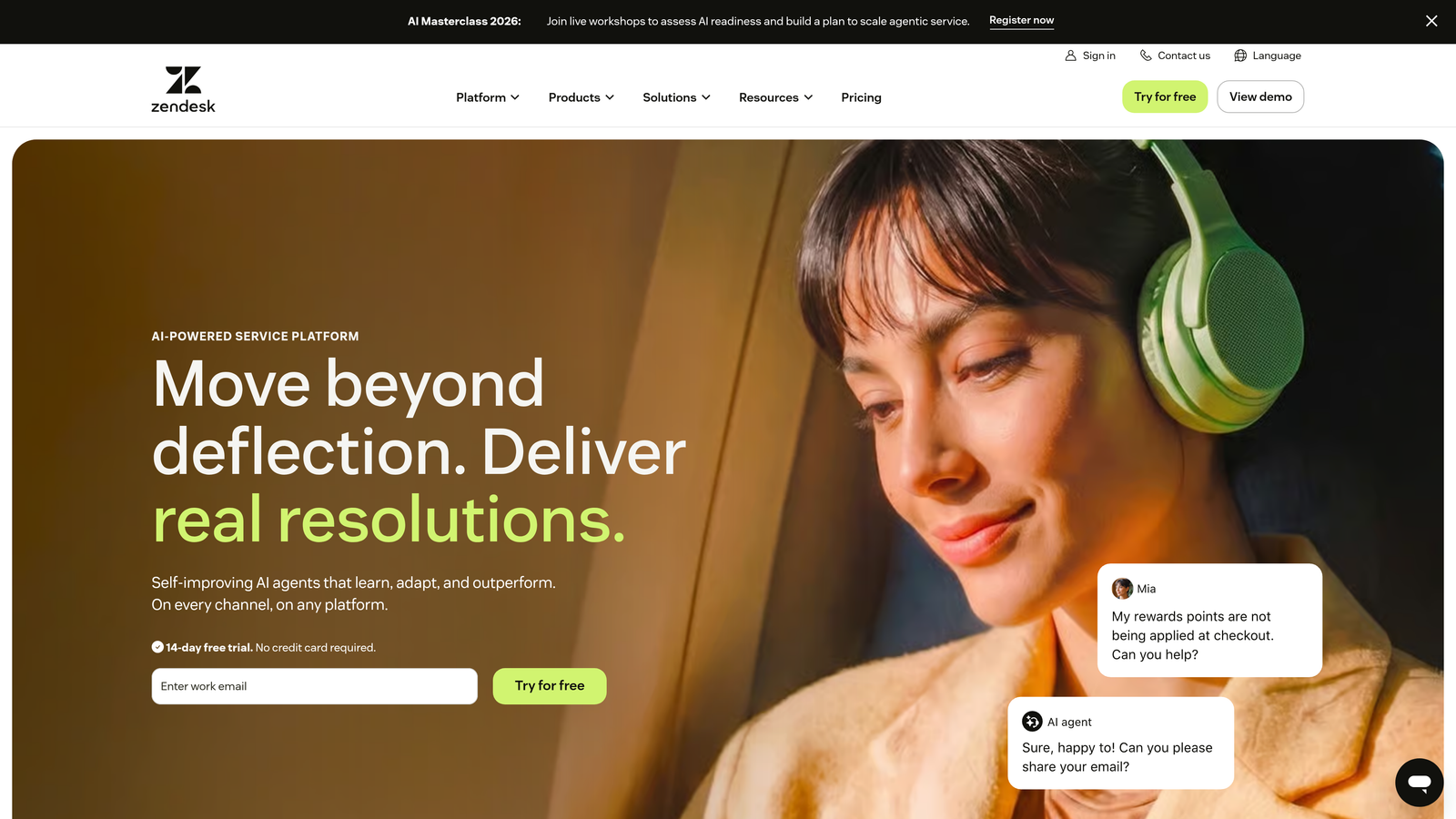
Zendesk is an established enterprise helpdesk platform with a broad ecosystem and modular AI capabilities layered onto mature ticketing infrastructure.
Where This Tool Shines
Zendesk's strength is its maturity. After years of enterprise deployments, the platform has deep SLA management, sophisticated routing logic, and one of the largest integration marketplaces in the industry with over 1,000 apps. If your team needs a battle-tested system with extensive documentation and a large partner ecosystem, Zendesk delivers.
The tradeoff is that AI capabilities are modular add-ons rather than a native architecture. Zendesk AI and Advanced AI are available as enterprise inclusions or separate purchases, which means the cost picture can become complex as you layer in the AI features you actually need.
Key Features
Suite Tiers: Team through Enterprise with custom enterprise pricing for large-scale deployments.
Zendesk AI / Advanced AI: Available as an add-on or enterprise inclusion for agent assist, intelligent triage, and automation.
1,000+ Integrations: Extensive Zendesk Marketplace covering CRM, ecommerce, analytics, and development tools.
Omnichannel Support: Email, chat, voice, social, and messaging channels unified in one workspace.
SLA Management: Robust service level tracking, escalation rules, and compliance reporting.
Best For
Enterprises that have already invested in the Zendesk ecosystem or need a platform with extensive third-party integrations. Also a strong choice for teams with dedicated Zendesk admins who can manage configuration complexity.
Pricing
Suite Professional starts around $115/agent/month; Enterprise is custom pricing. Advanced AI is priced separately at some tiers. Verify current rates at zendesk.com as pricing is updated regularly.
3. Intercom
Best for: Product-led SaaS companies prioritizing in-app messaging and AI-resolved conversations
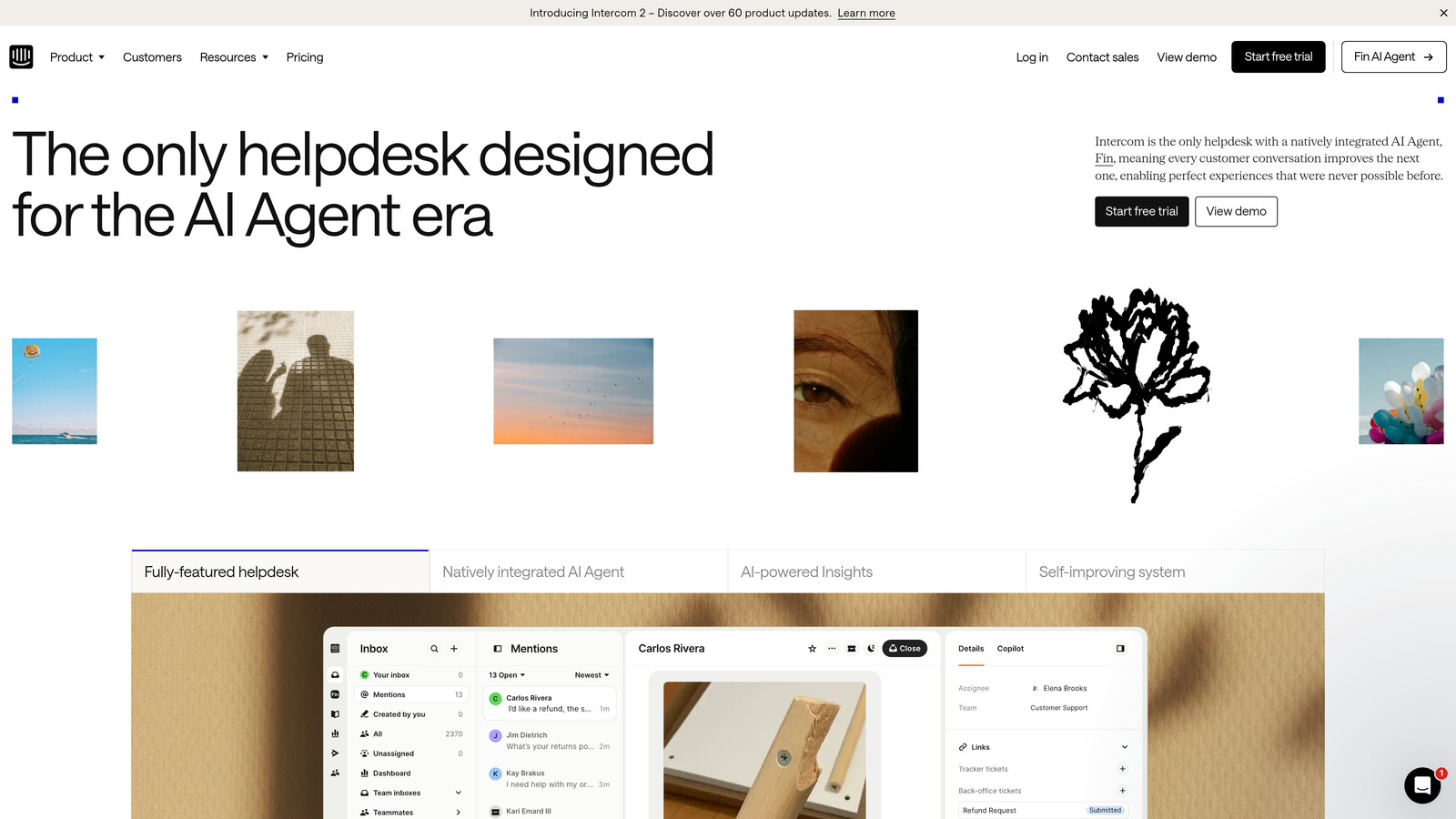
Intercom is a conversational support platform with Fin AI agent, built around in-app messaging and resolution-based AI pricing for SaaS companies.
Where This Tool Shines
Intercom's Fin AI agent is genuinely capable for SaaS in-app support scenarios. The platform's resolution-based pricing model is philosophically interesting: you pay per AI-resolved conversation, which aligns cost directly with deflection value. When Fin resolves a ticket, you pay; when it can't, a human handles it at no AI cost.
The in-app messenger is deeply integrated and supports proactive messaging, product tours, and onboarding flows alongside reactive support. For product-led growth companies where the product experience and support experience overlap, Intercom's unified approach is genuinely differentiated.
Key Features
Fin AI Agent: Per-resolution pricing model at enterprise tiers, with genuine autonomous resolution capability.
In-App Messenger: Deeply integrated messenger for web and in-app support with proactive messaging capabilities.
Enterprise AI Training: Custom AI training and SAML SSO included at enterprise tier.
Product Tours: Proactive onboarding and feature adoption flows alongside reactive support.
Omnichannel Conversations: Email, chat, and in-app messaging unified across the customer lifecycle.
Best For
SaaS companies with strong product-led growth motions where support and product engagement overlap. Teams that want resolution-based pricing aligned with AI ROI rather than per-seat costs.
Pricing
Platform tiers plus per-resolution Fin AI pricing at enterprise. Enterprise tier is custom. Verify current per-resolution rates and platform pricing at intercom.com.
4. Freshdesk
Best for: Mid-market teams wanting published AI pricing with Freddy AI bundled at higher tiers
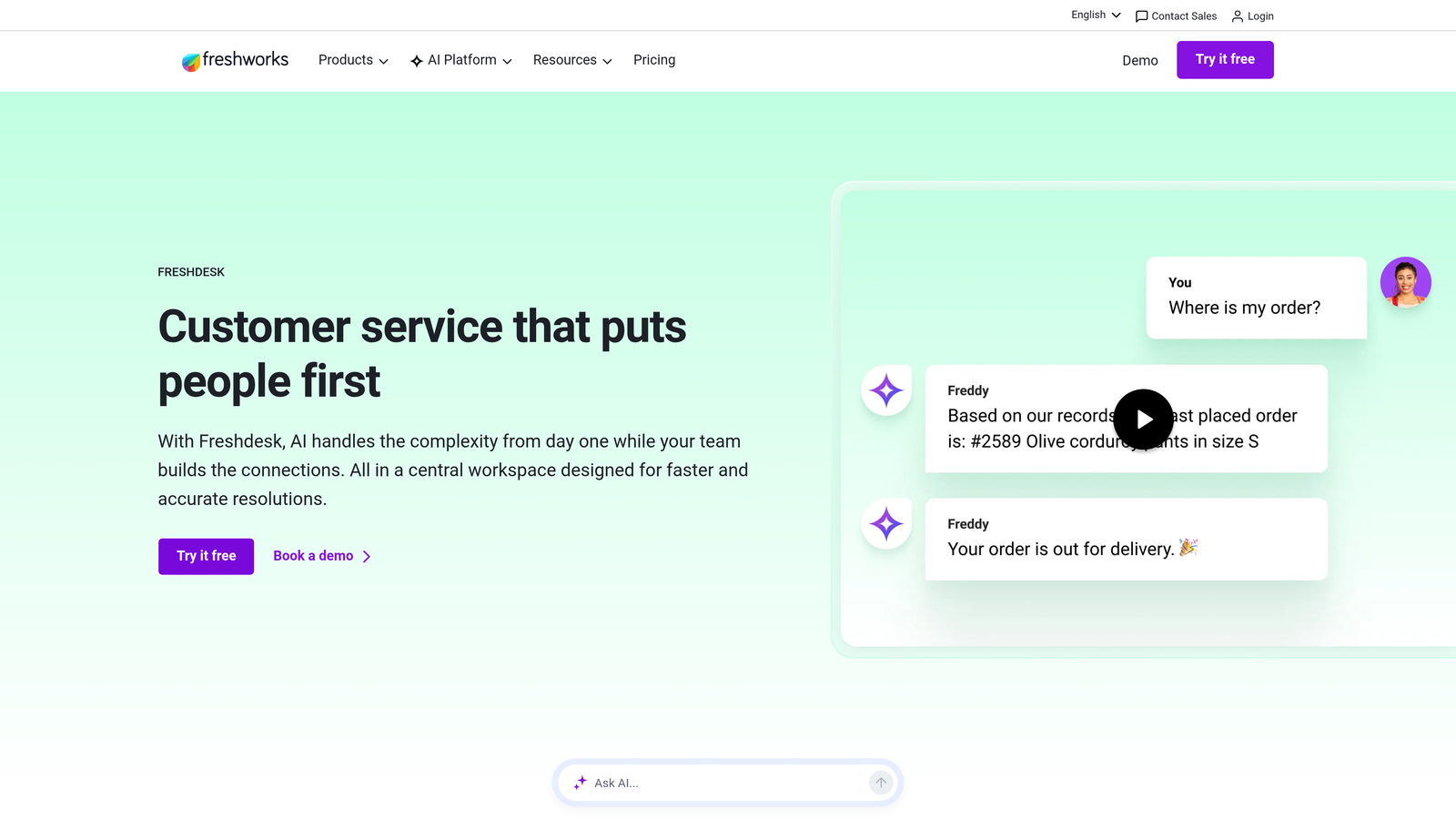
Freshdesk is a mid-market to enterprise helpdesk with Freddy AI bundled at higher tiers, offering more pricing transparency than many enterprise competitors.
Where This Tool Shines
In a market where enterprise pricing is frequently hidden, Freshdesk stands out for publishing its tier structure. You can meaningfully evaluate what you're getting at Growth, Pro, and Enterprise levels without a sales call. Freddy AI Copilot (agent assist) and Freddy Self Service (bot) are included at Pro and Enterprise tiers, making the AI value proposition clearer than platforms that price AI as a separate module.
Freshdesk also benefits from the broader Freshworks suite, so teams already using Freshsales or Freshservice get native connectivity without additional integration overhead.
Key Features
Freddy AI Copilot: Agent assist functionality included at Pro and Enterprise tiers for suggested responses and next-best-action.
Freddy Self Service: AI bot for autonomous customer query resolution, included at higher tiers.
Transparent Pricing Tiers: Published pricing structure with clearer AI feature bundling than many competitors.
Omnichannel Support: Email, chat, phone, and social channels with unified agent workspace.
Freddy Insights: Analytics and CSAT trending powered by AI to surface support performance patterns.
Best For
Mid-market teams that want to evaluate AI helpdesk options without a lengthy sales process, and organizations already in the Freshworks ecosystem looking to consolidate tooling.
Pricing
Growth, Pro, and Enterprise tiers with published pricing; Enterprise AI features may include a per-agent Freddy add-on. Verify current rates at freshdesk.com as Freshworks restructures pricing periodically.
5. Salesforce Service Cloud
Best for: Enterprises already on Salesforce CRM needing unified customer data across service workflows
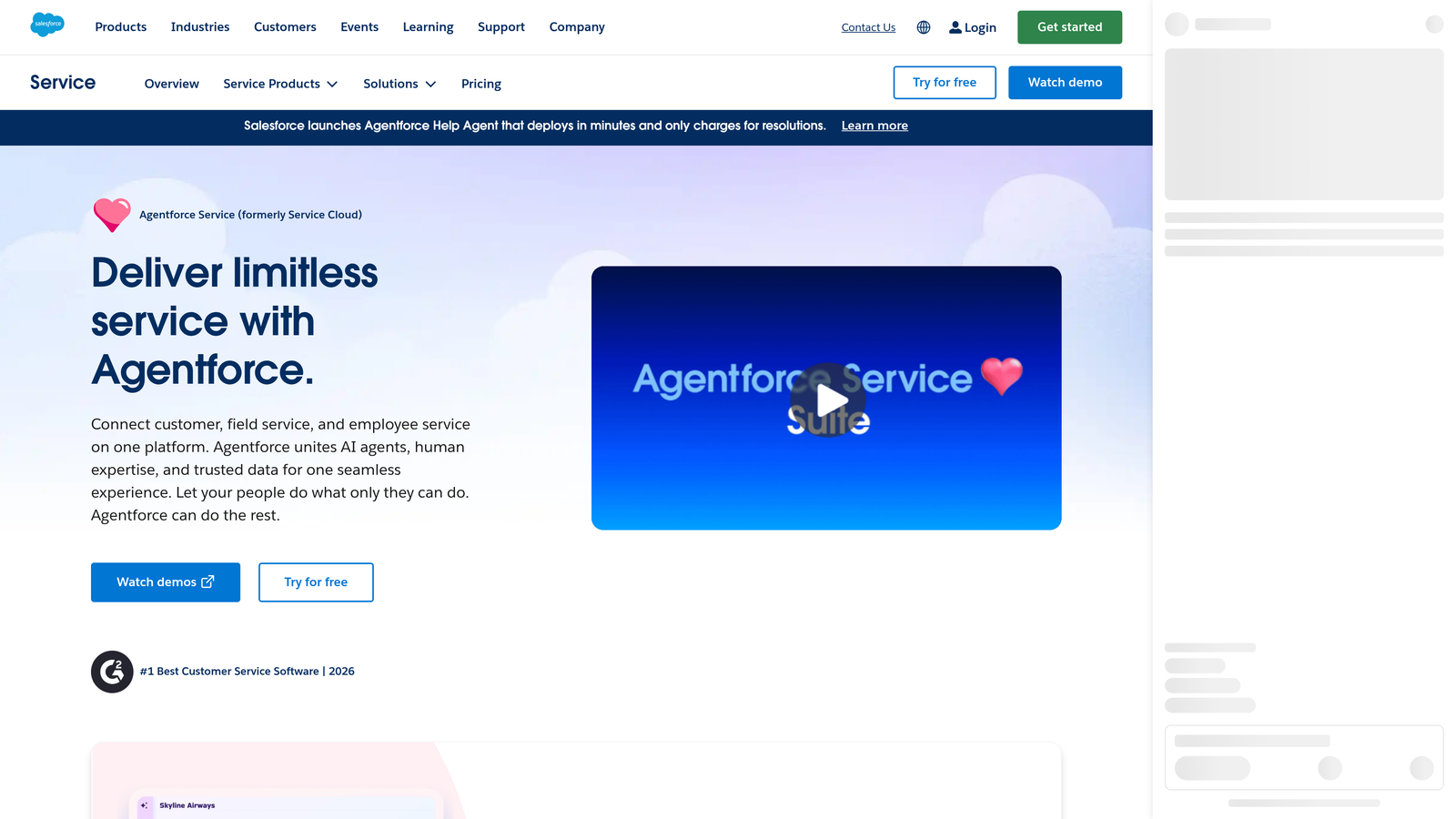
Salesforce Service Cloud is an enterprise customer service platform deeply integrated with Salesforce CRM, featuring Einstein AI across service workflows.
Where This Tool Shines
If your organization runs Salesforce for sales and marketing, Service Cloud's value proposition is compelling: a single unified customer record spanning every sales, service, and marketing interaction. Einstein AI for case classification, next-best-action, and agent assist operates on that complete data picture, which generic helpdesks cannot replicate without extensive integration work.
The Einstein 1 Service tier bundles advanced AI, Data Cloud, and generative features at the top end. For enterprises where customer data completeness is a competitive advantage, this architecture is genuinely differentiated. The tradeoff is total cost of ownership: implementation, customization, and ongoing admin overhead are significant.
Key Features
Einstein AI: Case classification, next-best-action recommendations, and agent assist powered by unified CRM data.
Unified Customer Data: Single record spanning Sales, Service, and Marketing Clouds for complete customer context.
Einstein 1 Service: Top-tier bundle including advanced AI, Data Cloud, and generative features.
Omni-Channel Routing: Intelligent case routing, field service management, and self-service portals.
Extensive Customization: Flow automation, AppExchange integrations, and deep configuration options.
Best For
Enterprises already invested in the Salesforce platform where unified CRM and service data justifies the implementation cost. Less compelling for teams starting fresh without existing Salesforce infrastructure.
Pricing
Starter around $25/user/month through Einstein 1 Service at $500+/user/month; implementation costs are typically significant additional investment. Verify current tier pricing at salesforce.com.
6. ServiceNow Customer Service Management
Best for: Large enterprises converging ITSM and customer service on a single enterprise platform
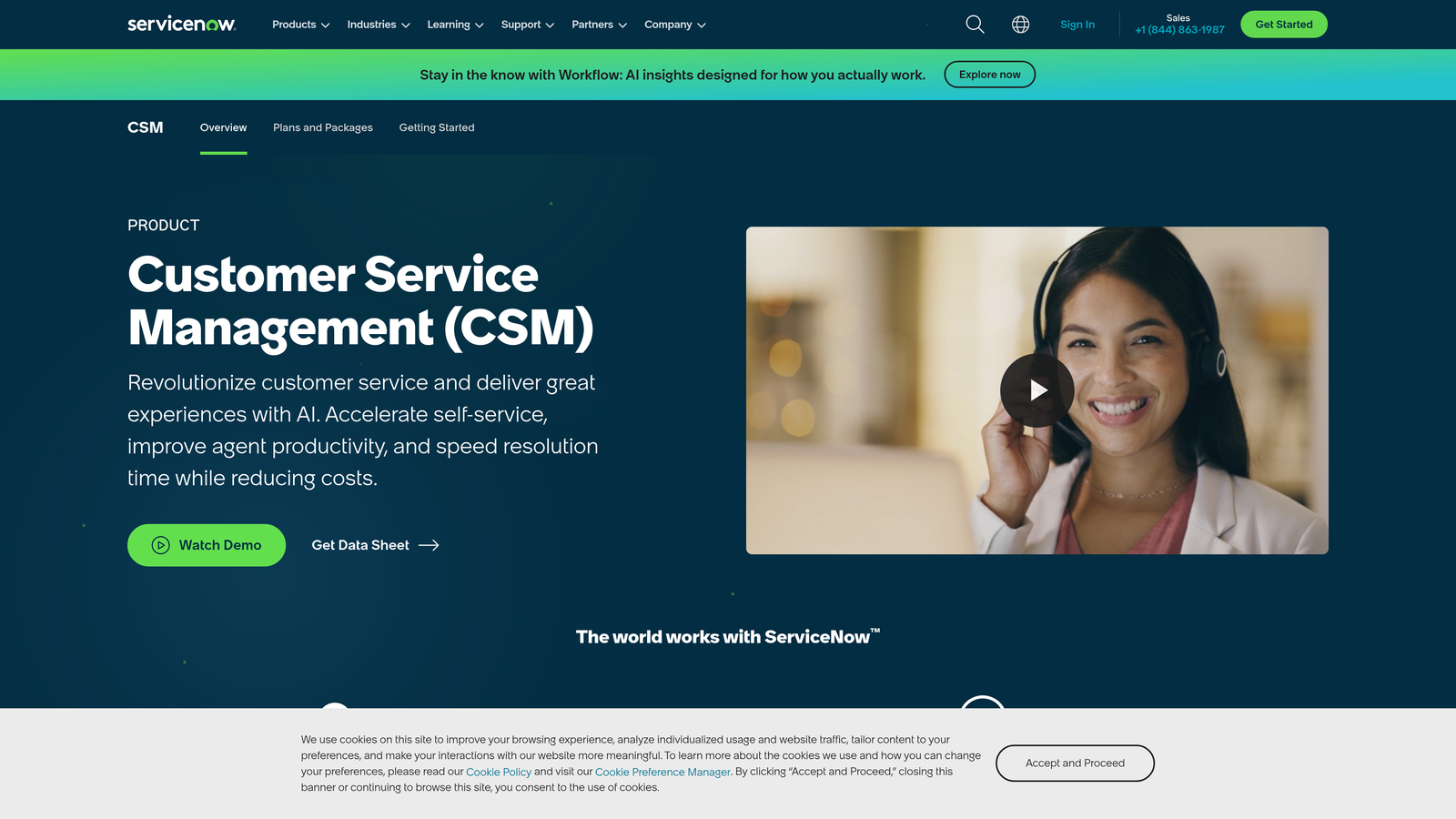
ServiceNow Customer Service Management is an enterprise-only platform converging ITSM and CSM with Now Assist generative AI, suited for large organizations managing both IT and customer service.
Where This Tool Shines
ServiceNow's core differentiation is platform convergence: ITSM and CSM running on the same infrastructure, with shared workflow automation, case management, and compliance controls. For enterprises where IT service management and customer service are organizationally connected, eliminating the boundary between those systems has real operational value.
Now Assist brings generative AI across CSM workflows, including case summarization, resolution recommendations, and knowledge article generation. The platform also supports enterprise data residency requirements and advanced compliance controls that smaller AI helpdesk vendors typically cannot match.
Key Features
Now Assist Generative AI: AI capabilities across CSM workflows including case summarization, recommendations, and knowledge generation.
Unified ITSM + CSM: Single platform for IT service management and customer service management.
Advanced Workflow Automation: Sophisticated case management and process automation at enterprise scale.
Enterprise Compliance: Data residency options, advanced SLAs, and compliance controls for regulated industries.
SI Partner Ecosystem: Typically deployed with system integrator involvement for complex enterprise configurations.
Best For
Large enterprises already running ServiceNow ITSM that want to extend the platform to customer service, or organizations in regulated industries requiring enterprise-grade compliance and data residency controls.
Pricing
Enterprise custom pricing only; no published rates. Requires direct ServiceNow engagement. Budget for significant implementation costs and SI partner involvement in addition to licensing.
7. Kustomer
Best for: High-volume B2C brands wanting CRM-style customer history with predictable per-agent pricing
Kustomer is a CRM-style helpdesk platform with a customer timeline view and per-agent pricing, designed for high-volume consumer and B2C brands.
Where This Tool Shines
Kustomer's defining feature is its people-centric model: conversations are organized around the customer, not the ticket. Agents see a complete timeline of every interaction, purchase, and communication across channels in a single view. For high-volume consumer brands where customer history context directly affects resolution quality, this architecture reduces handle time and repeat contacts.
AI features are included at Enterprise and Ultimate tiers rather than priced as separate modules, and the per-agent pricing model gives finance teams a predictable cost structure for headcount planning.
Key Features
CRM Timeline View: Complete customer history across all channels and interactions organized by person, not ticket ID.
AI at Enterprise Tiers: AI features bundled into Enterprise and Ultimate pricing rather than sold as add-ons.
Per-Agent Pricing: Predictable cost model for headcount-based budget planning.
Omnichannel: Email, chat, voice, social, and SMS unified in one agent workspace.
Intelligent Routing: Automation workflows and routing logic based on customer data and conversation context.
Best For
High-volume B2C and consumer brands where customer history context is critical to support quality, and teams that prefer predictable per-agent costs over usage-based pricing models.
Pricing
Per-agent pricing at Enterprise and Ultimate tiers; custom enterprise quotes available. Verify current rates at kustomer.com.
8. Gladly
Best for: Consumer and retail brands prioritizing relationship-based omnichannel support over ticket metrics
Gladly is a people-based omnichannel support platform with AI Sidekick for self-service, built for consumer and retail brands prioritizing customer relationships over ticket numbers.
Where This Tool Shines
Gladly takes the same people-centric philosophy as Kustomer but pushes it further: the entire platform is organized around customers rather than tickets. There are no ticket IDs in Gladly's core model. Conversations thread by customer across every channel, giving agents continuous relationship context rather than isolated case histories.
The Hero and Sidekick model is architecturally interesting for AI pricing: Sidekick handles autonomous self-service resolution, while Hero agents handle complex escalations. These are priced separately, which means you can scale AI self-service capacity independently from live agent headcount.
Key Features
People-Based Threading: All conversations organized by customer identity, not ticket numbers, across every channel.
AI Sidekick: Autonomous self-service resolution for common customer queries without agent involvement.
Hero + Sidekick Pricing: Separate pricing for live agents and AI self-service enables independent scaling.
True Omnichannel: Voice, email, chat, SMS, and social in a single unified view.
Relationship Context: Complete customer history and purchase data surfaced in every conversation.
Best For
Consumer and retail brands where customer relationship quality is a differentiator, and teams that want to scale AI self-service capacity separately from live agent headcount.
Pricing
Custom enterprise pricing; Hero and Sidekick components priced separately. Contact Gladly directly for current rates at gladly.com.
9. Tidio
Best for: SMB and lower-mid-market teams wanting transparent AI helpdesk pricing with quick setup
Tidio is an accessible AI helpdesk platform with Lyro AI agent and transparent published pricing, serving SMB through lower-mid-market teams.
Where This Tool Shines
In a comparison dominated by "contact sales" pricing, Tidio stands apart: its pricing is published, tiered, and evaluable without a discovery call. For teams at the SMB or lower-mid-market level, this transparency is genuinely valuable for budget planning and vendor comparison.
Lyro AI handles autonomous query resolution with a straightforward setup process. Tidio integrates quickly with Shopify, WordPress, and major ecommerce platforms, making it a practical entry point for ecommerce teams that want AI-assisted support without enterprise implementation complexity.
Key Features
Lyro AI Agent: Autonomous customer query resolution with transparent per-conversation or included-tier pricing.
Published Pricing: Most transparent pricing structure in this comparison; fully evaluable without sales engagement.
Ecommerce Integrations: Quick setup with Shopify, WordPress, and major ecommerce platforms.
Live Chat and Email: Live chat, email, and Messenger support channels in one workspace.
Low Implementation Overhead: Fast deployment without the SI partner involvement typical of enterprise platforms.
Best For
SMB and lower-mid-market teams, particularly in ecommerce, that want AI-assisted support with transparent pricing and quick time-to-value. Useful as a pricing benchmark even for teams evaluating enterprise options.
Pricing
Transparent published tiers; Lyro AI conversations included at growth tiers or available as a per-conversation add-on. Verify current rates at tidio.com.
Which AI Helpdesk Is Right for Your Team?
Nine platforms, four pricing models, and a wide range of AI maturity levels. The right choice depends less on feature lists and more on where your team sits today and where you're heading.
Here's a quick selection guide by use case:
AI-native SaaS teams building from scratch: Halo AI's page-aware agents, continuous learning, and business intelligence layer make it the strongest choice for B2B SaaS teams that want AI doing real work, not just routing.
Enterprises already invested in Zendesk: Zendesk's ecosystem depth and mature infrastructure make migration costly. Evaluate Advanced AI add-ons carefully against the total per-seat cost at scale.
Product-led SaaS with in-app engagement focus: Intercom's Fin AI and messenger-first architecture is genuinely differentiated for SaaS companies where support and product experience overlap.
Budget-conscious mid-market teams: Freshdesk's published pricing and Freddy AI bundling at Pro and Enterprise tiers offer the clearest value comparison without a lengthy sales process.
Salesforce-invested enterprises: Service Cloud's unified CRM and service data is compelling if you're already on the platform. Starting fresh, the implementation overhead is hard to justify.
ITSM and CSM convergence: ServiceNow is the clear choice for large enterprises that need IT and customer service on a single platform with enterprise compliance controls.
High-volume B2C brands: Kustomer's CRM timeline and predictable per-agent pricing suit consumer brands where customer history context drives resolution quality.
Omnichannel consumer and retail: Gladly's people-based model and separate Hero/Sidekick pricing give consumer brands flexibility to scale AI self-service independently.
SMB entry point: Tidio's transparent pricing and fast setup make it the most accessible option, and a useful benchmark for understanding AI helpdesk costs at accessible price points.
One final note on enterprise pricing negotiations: regardless of which platform you choose, the terms that matter most are overage caps on usage-based models, data portability provisions, AI retraining SLAs, and minimum commitment periods. These rarely appear in published pricing and are almost always negotiable.
Your support team shouldn't scale linearly with your customer base. AI agents should handle routine tickets, guide users through your product, and surface business intelligence while your team focuses on complex issues that genuinely need a human touch. See Halo in action and discover how continuous learning transforms every interaction into smarter, faster support.