9 Best AI Helpdesk Tools for Education Platforms in 2026
Education platforms face uniquely complex support demands — from students locked out of late-night exams to administrators managing enrollment at scale — and the right AI helpdesk for education platforms can resolve the majority of these requests autonomously. This guide evaluates 9 leading AI helpdesk tools in 2026 across automation depth, integration flexibility, and edtech-specific capabilities to help teams find their ideal fit.
 Matt PattoliFounder14 min read
Education platforms face a support challenge that most SaaS companies never encounter: a user base that spans students pulling all-nighters, instructors navigating unfamiliar tech, and administrators managing enrollment at scale — all with wildly different needs, urgency levels, and patience thresholds. When a student can't access their exam at 11pm, "we'll get back to you within 24 hours" isn't an answer. It's a crisis.
AI helpdesk tools have matured significantly, and the best ones can now handle the bulk of these requests autonomously: routing tickets, resolving common issues, escalating edge cases, and even flagging product bugs before they become widespread problems. The challenge is finding the right fit for your specific platform, team size, and support philosophy.
This list covers the top AI helpdesk solutions for education platforms in 2026, evaluated on automation depth, integration flexibility, scalability, and how well they handle the specific quirks of edtech support. Whether you're running an LMS, an online course marketplace, or a student success platform, there's a strong option here for your team.
1. Halo AI
Best for: Education platforms that want fully autonomous ticket resolution with product-level intelligence
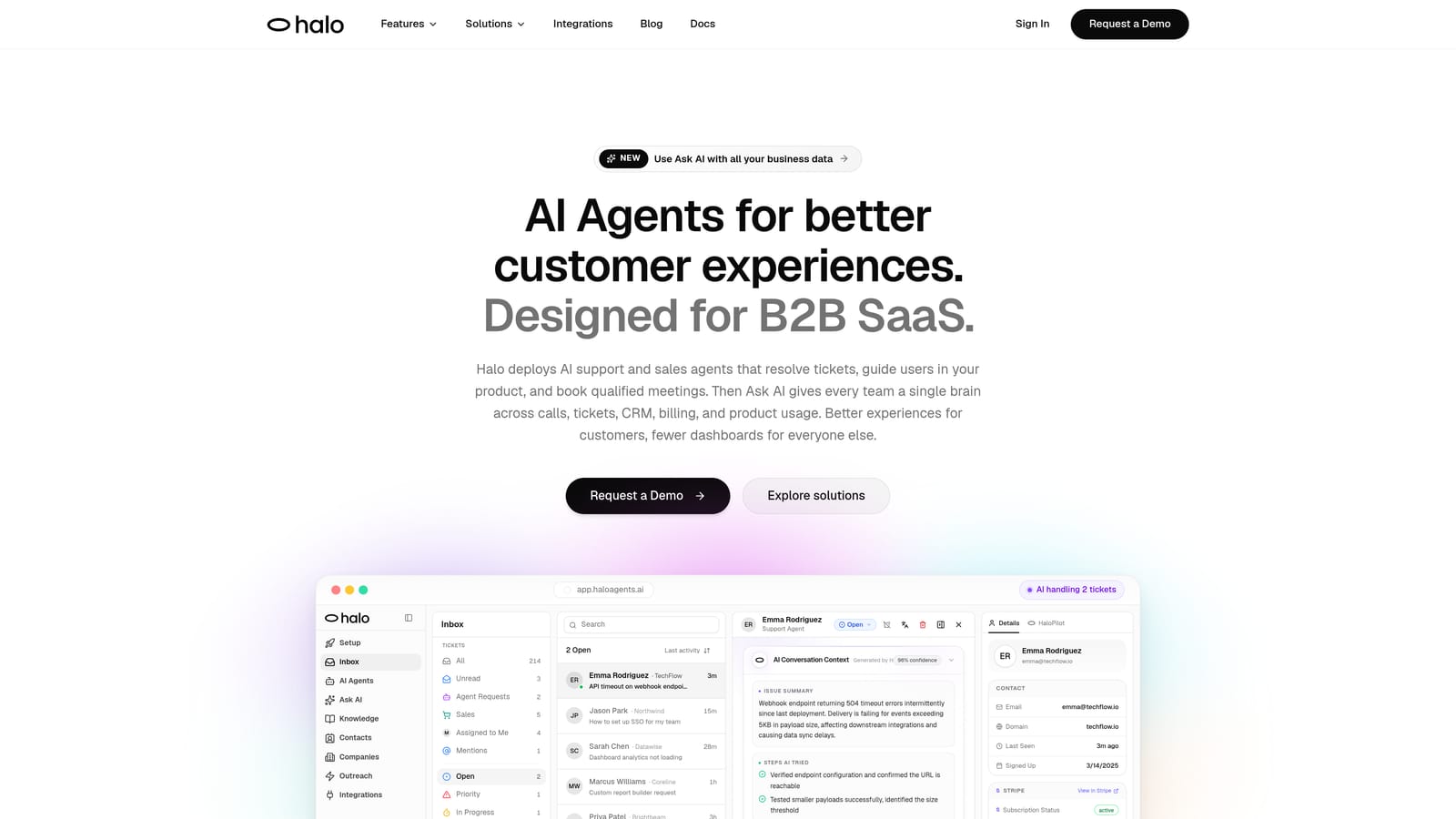
Halo AI is an AI-first customer support platform that deploys intelligent agents to resolve tickets, guide users through your product with page-aware context, auto-create bug reports, and surface business intelligence — all while learning from every resolved interaction.
Where This Tool Shines
What sets Halo apart in an edtech context is its page-aware chat widget. Rather than serving generic help content, Halo understands what page the user is currently on — a quiz submission screen, a billing portal, a video lecture — and tailors its response accordingly. For LMS platforms where issues are almost always tied to a specific context, this is a meaningful differentiator.
Halo also goes beyond ticket resolution. Its smart inbox surfaces customer health signals and anomalies, which means you can spot when an entire course cohort is struggling with the same issue before your inbox floods. That kind of proactive intelligence is rare in traditional helpdesks and genuinely useful for edtech teams managing large, synchronized learning cohorts.
Key Features
Page-Aware Chat Widget: Understands the user's current context (quiz page, billing page, course dashboard) to serve relevant, targeted help without requiring the user to explain where they are.
Autonomous Ticket Resolution: AI agents resolve tickets end-to-end, with live agent handoff triggered automatically when complexity exceeds what the AI can handle confidently.
Auto Bug Ticket Creation: Detects recurring technical issues and automatically routes bug reports to Linear or connected dev tools — critical for edtech teams where exam-time bugs have outsized impact.
Smart Inbox with Business Intelligence: Surfaces customer health signals, anomaly detection, and revenue intelligence beyond standard support metrics.
Deep Integration Stack: Connects to Slack, HubSpot, Intercom, Stripe, Zoom, Linear, PandaDoc, and Fathom — covering the typical edtech operational stack.
Continuous Learning: Every resolved interaction improves the AI's future performance, so the system gets smarter as your platform grows.
Best For
Halo is best suited for edtech teams that want AI to do the heavy lifting autonomously, not just assist human agents. If you're scaling enrollment without scaling headcount, and you want your support infrastructure to also function as a product intelligence layer, Halo is built for exactly that use case.
Pricing
Pricing is not publicly listed. A demo is required to get a quote tailored to your platform's volume and use case.
2. Intercom
Best for: Conversational-first education platforms prioritizing in-app messaging and onboarding
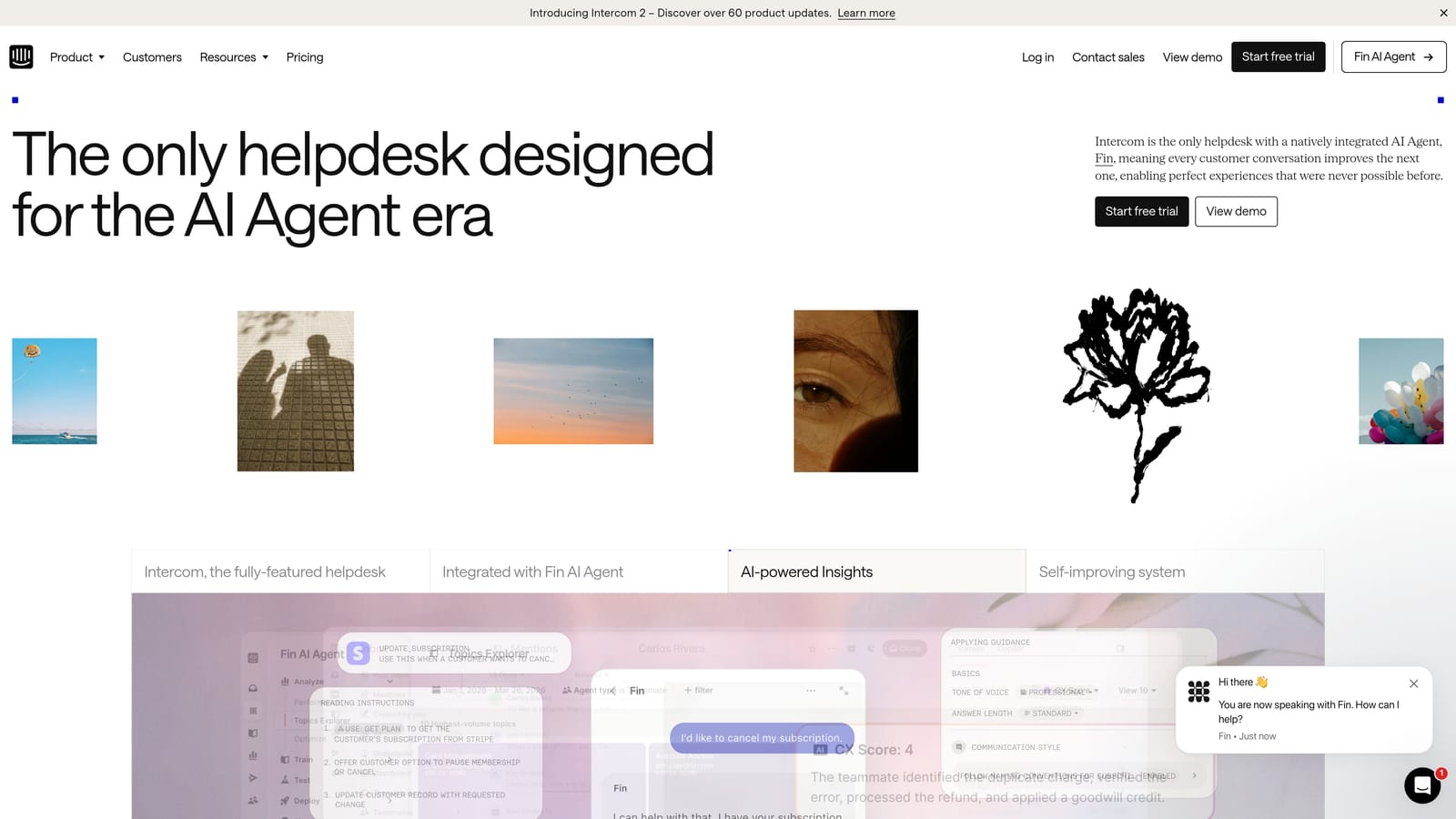
Intercom is a conversational customer platform featuring Fin, an AI agent built on large language models and trained on your help content, combined with strong in-app messaging and product tour capabilities.
Where This Tool Shines
Intercom's Fin AI agent is one of the more capable autonomous resolution tools on the market, particularly when your help center content is well-structured. For education platforms, the combination of Fin with Intercom's in-app messaging and product tours makes it a strong choice for onboarding new students or guiding instructors through course setup workflows.
The platform is well-established in the SaaS and edtech space, which means integrations with common LMS and edtech stacks are generally available. If your team is already comfortable with conversational support patterns, Intercom is a natural fit.
Key Features
Fin AI Agent: Resolves queries autonomously using your existing help content, with handoff to human agents when needed.
In-App Messaging and Product Tours: Supports student and instructor onboarding directly within your platform interface.
Robust Knowledge Base Builder: Makes it straightforward to build and maintain the help content that powers Fin's resolution capability.
Omnichannel Inbox: Handles chat, email, and social channels from a unified workspace.
Extensive Integration Marketplace: Connects with a wide range of edtech, CRM, and productivity tools.
Best For
Intercom works well for education platforms where the support experience is tightly woven into the product itself. Teams that prioritize in-app guidance, proactive messaging, and conversational onboarding alongside reactive support will get the most value here.
Pricing
Essential plan starts at $74/month. Costs scale meaningfully with seat count and usage volume, so large platforms should model out costs carefully before committing.
3. Zendesk
Best for: Large institutions and enterprise education platforms with complex SLA and compliance requirements
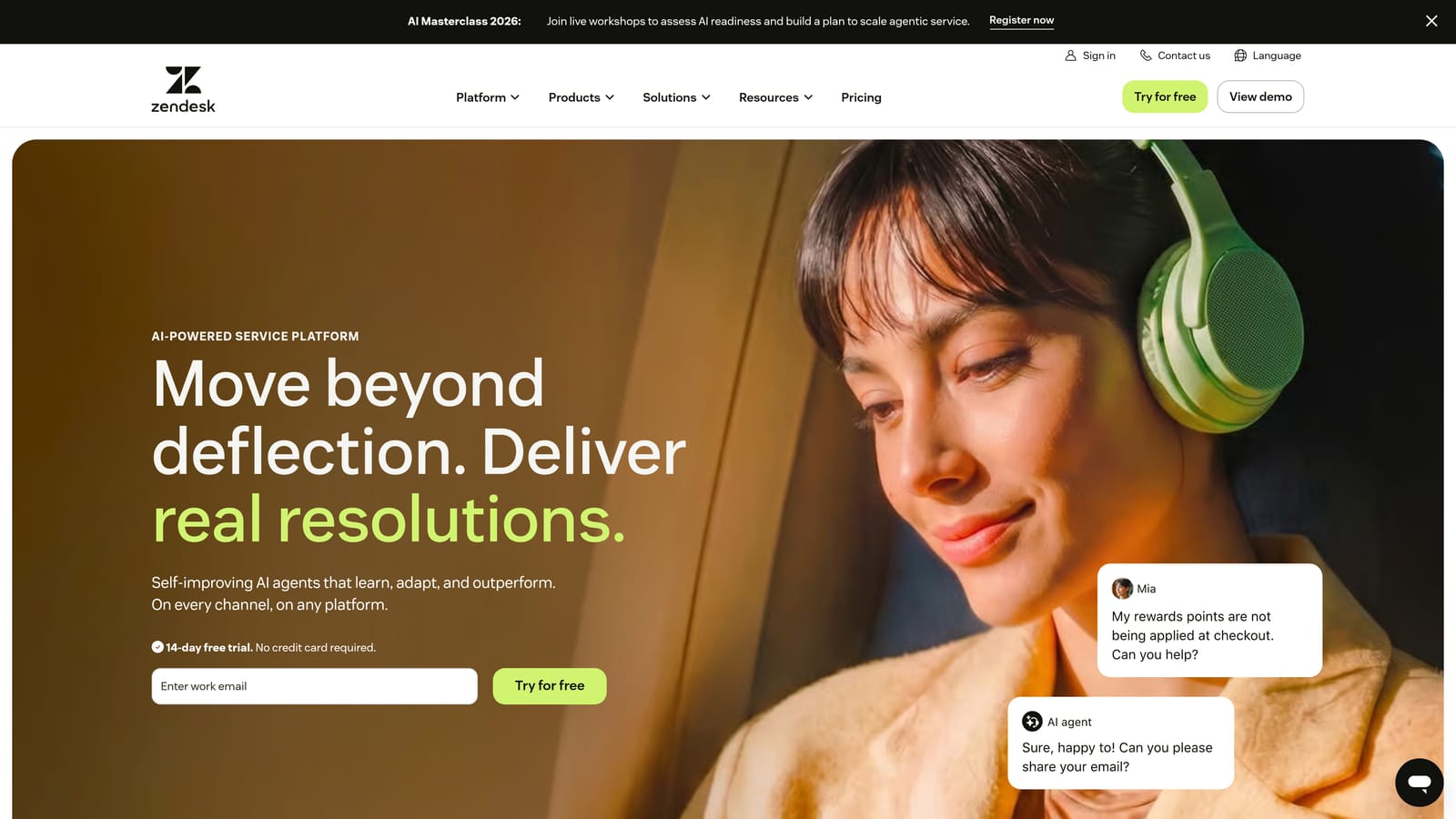
Zendesk is a mature, enterprise-grade helpdesk platform with AI features layered on top of battle-tested ticketing, SLA management, and reporting infrastructure.
Where This Tool Shines
Zendesk's core strength is reliability and depth. For large universities, enterprise LMS providers, or education platforms operating at institutional scale, the SLA management, compliance reporting, and audit trail capabilities are hard to match. The platform has decades of refinement behind it, and that shows in edge case handling and administrator control.
The AI features — including intelligent triage, intent detection, and suggested responses — are solid, though they feel more like enhancements to an agent workflow than a fully autonomous resolution layer. Teams that need both AI assistance and deep operational controls will find Zendesk capable of handling both.
Key Features
AI-Powered Intent Detection and Routing: Automatically categorizes incoming tickets and routes them to the right team or queue.
Intelligent Triage and Suggested Responses: Helps agents respond faster with AI-generated draft replies based on ticket content.
Extensive SLA Management: Supports complex service level agreements and compliance reporting requirements common in institutional education contexts.
Large Integration Marketplace: Connects with hundreds of tools across the edtech, CRM, and enterprise software landscape.
Scalable Infrastructure: Handles high ticket volumes without performance degradation, suitable for large enrollment surges.
Best For
Zendesk suits large-scale education platforms and institutions where compliance, SLA adherence, and administrative control are non-negotiable. It's less ideal for lean teams looking for a lightweight, autonomous-first setup.
Pricing
Suite Team starts at $55 per agent per month. Enterprise plans are significantly higher, and total cost scales with seat count and add-ons.
4. Freshdesk
Best for: Budget-conscious edtech teams needing omnichannel support with AI automation
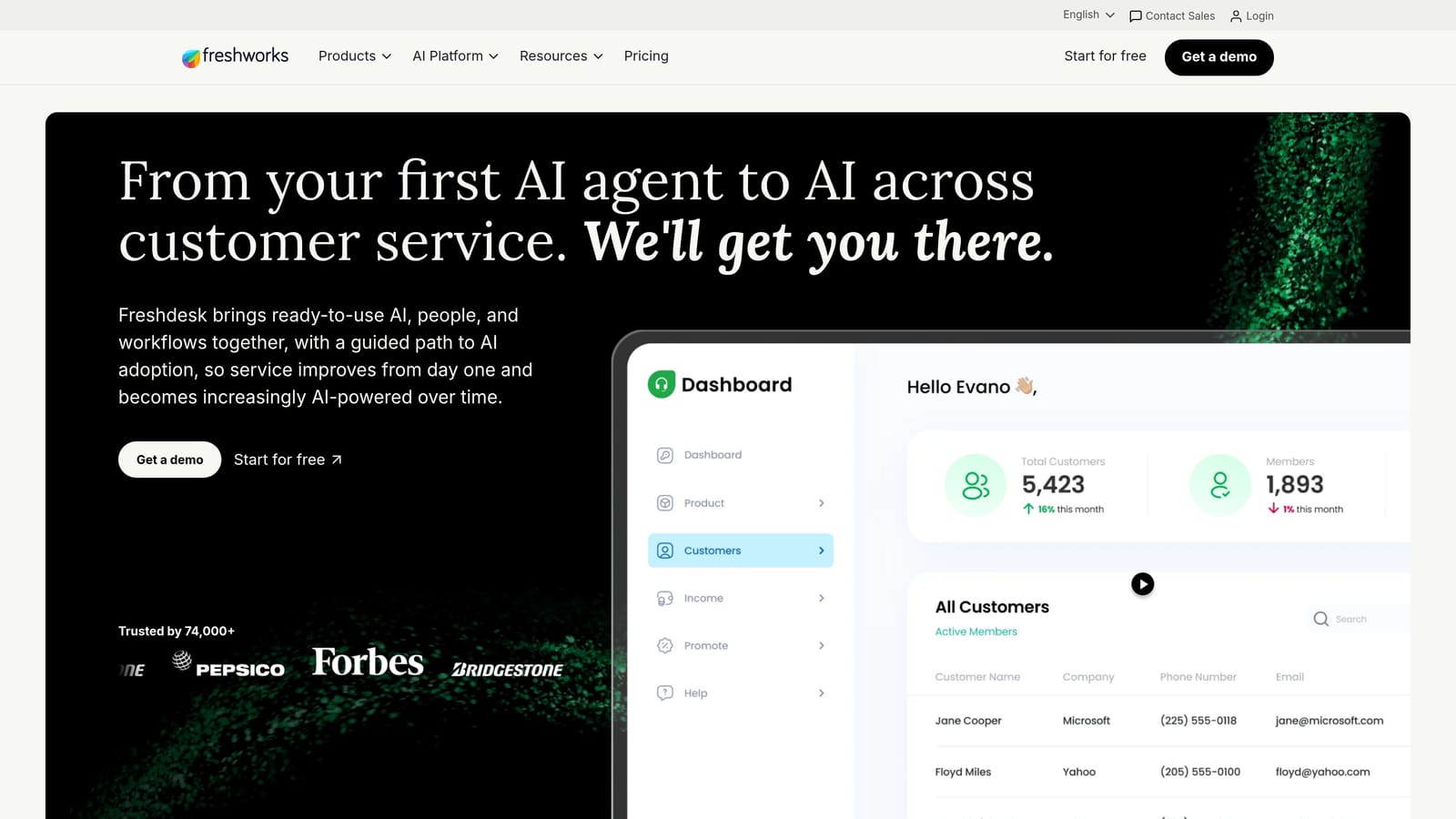
Freshdesk is a budget-accessible helpdesk with Freddy AI handling ticket automation, chatbot flows, and omnichannel support across email, chat, phone, and social.
Where This Tool Shines
Freshdesk punches above its price point. For smaller education platforms or bootstrapped edtech teams, the combination of a free tier, accessible paid plans, and Freddy AI's automation capabilities makes it one of the most cost-effective options on this list. Omnichannel coverage at this price is genuinely uncommon.
Freddy AI handles ticket categorization, suggested responses, and chatbot flows reasonably well for common education support scenarios like enrollment questions, password resets, and payment issues. It won't match the autonomous depth of AI-first platforms, but for teams with tighter budgets, it's a strong starting point.
Key Features
Freddy AI: Automates ticket categorization, generates suggested responses, and powers chatbot flows for self-service resolution.
Omnichannel Support: Covers email, chat, phone, and social from a single platform at a competitive price point.
Chatbot Builder: Visual builder for creating self-service flows without requiring developer involvement.
Free Tier: Available for small teams with limited volume, making it accessible for early-stage platforms.
Integration Marketplace: Connects with common edtech and business tools, though the ecosystem is smaller than Zendesk or Intercom.
Best For
Freshdesk is the right choice for smaller or early-stage education platforms that need reliable omnichannel support with AI assistance but can't justify enterprise-level pricing. Note that Freddy AI's more advanced features require higher-tier plans.
Pricing
Free tier available for limited use. Growth plan starts at $15 per agent per month. Freddy AI features are available on higher tiers.
5. Tidio
Best for: Small education platforms and course creators wanting quick AI chatbot deployment
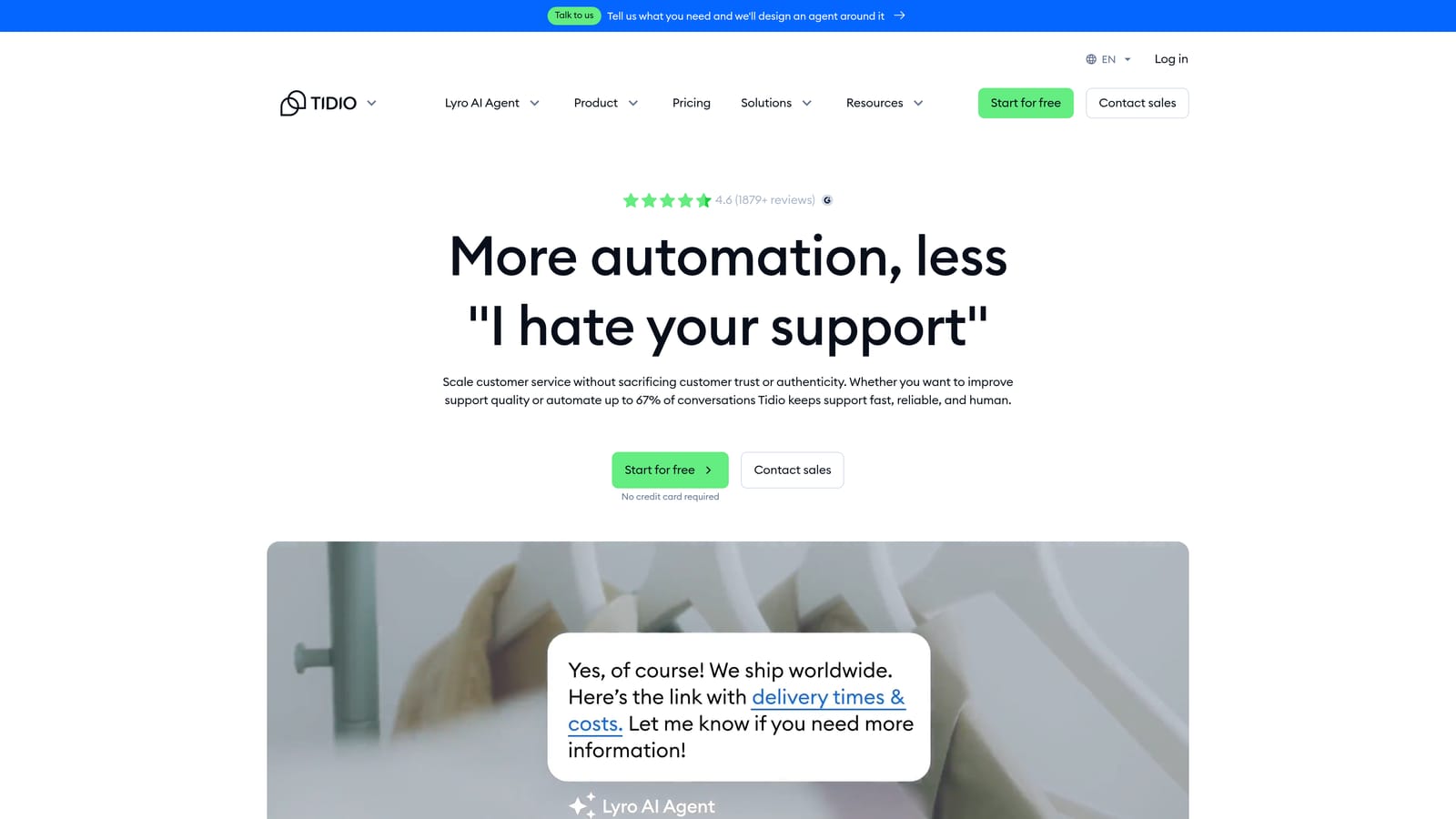
Tidio is a lightweight live chat and AI chatbot platform featuring Lyro, a conversational AI that handles common queries autonomously with minimal setup required.
Where This Tool Shines
Tidio's biggest advantage is speed to value. The visual flow builder requires no coding, and Lyro can be up and handling common student queries in a short setup window. For course creators or small education platforms that need something functional quickly without a lengthy implementation process, Tidio delivers that.
The live chat hybrid model — where Lyro handles what it can and routes to a human when it can't — works well for teams with small support headcounts who still want to offer responsive service. It's not built for enterprise complexity, but it doesn't need to be.
Key Features
Lyro AI Chatbot: Handles common conversational queries autonomously, reducing the volume that reaches human agents.
Visual Flow Builder: Drag-and-drop interface for building support flows without technical expertise.
Easy Embed: Simple to add to course pages, student portals, or learning dashboards.
Live Chat Hybrid: Smooth handoff from Lyro to a human agent when the AI reaches its limits.
Free Tier: Accessible entry point with paid AI features available as volume grows.
Best For
Tidio is best for small online course platforms, individual educators, or early-stage edtech startups that want AI-assisted chat without the complexity or cost of enterprise helpdesk platforms. It's less suited for large LMS providers or institutions with complex support workflows.
Pricing
Free tier available. Lyro AI starts at $29 per month, with costs scaling based on conversation volume.
6. Kustomer
Best for: High-touch education models like bootcamps and executive education programs
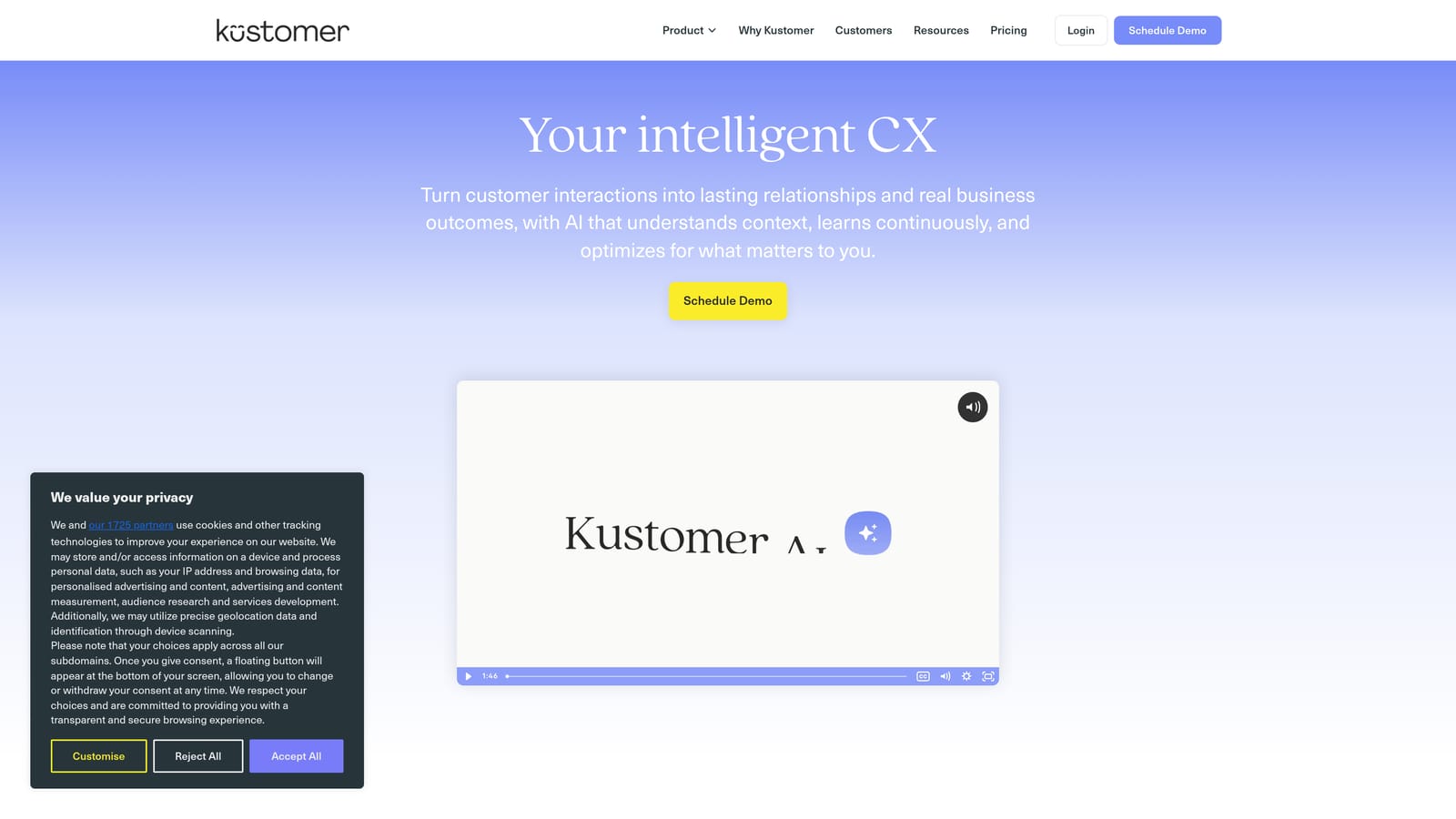
Kustomer is a CRM-native helpdesk that unifies the full customer timeline across channels, with AI routing and sentiment analysis suited to high-touch student success models.
Where This Tool Shines
Kustomer's CRM-native architecture is what makes it distinctive. Rather than treating each support interaction as an isolated ticket, Kustomer builds a unified timeline of every touchpoint a student or learner has had with your platform. For education models where the student relationship is long-term and multi-dimensional — think coding bootcamps, executive education, or professional certification programs — this longitudinal view is genuinely valuable.
The AI-powered sentiment analysis also helps support teams prioritize proactively. Knowing that a student's recent interactions suggest frustration before they churn or escalate is the kind of early warning that high-touch programs need.
Key Features
Unified Customer Timeline: Consolidates every support interaction, message, and touchpoint into a single learner profile.
AI Routing and Sentiment Analysis: Intelligently routes tickets and flags negative sentiment for proactive intervention.
CRM-Native Architecture: Eliminates the need for a separate CRM, with learner relationship data built directly into the support workflow.
Omnichannel Support: Handles email, chat, social, and SMS from one unified workspace.
Workflow Automation: Supports complex, multi-step student journey workflows beyond standard ticket routing.
Best For
Kustomer suits education platforms where the learner relationship extends well beyond individual support tickets. Bootcamps, professional development programs, and executive education providers will find the CRM-native model particularly aligned with their support philosophy.
Pricing
Enterprise-focused pricing starting around $89 per agent per month. Best suited for teams with the budget to match its capabilities.
7. Help Scout
Best for: Teams where agent relationships and response quality matter more than full automation
Help Scout is a human-first helpdesk with AI Summarize, AI Drafts, and AI Answers that accelerate agents without fully replacing them — ideal for teams where relationship quality is paramount.
Where This Tool Shines
Help Scout takes a deliberately different philosophy from the AI-first tools on this list. Rather than aiming for autonomous resolution, it focuses on making human agents faster and more effective. AI Summarize gives agents instant context on long threads. AI Drafts generate response suggestions that agents refine and send. AI Answers handle self-service before a ticket is created.
The interface is notably clean and low-friction, which matters when you're onboarding a support team that includes part-time staff or student workers — common in higher education support environments. The learning curve is genuinely short.
Key Features
AI Summarize: Instantly condenses long ticket threads so agents can get up to speed without reading every message.
AI Drafts: Generates response suggestions that agents can edit and send, reducing time-per-ticket.
AI Answers: Powers self-service resolution before a ticket is ever created, reducing inbound volume.
Beacon Widget: In-app help widget that surfaces relevant content contextually within your platform.
Clean Interface: Low learning curve makes it accessible for teams with varying technical comfort levels.
Best For
Help Scout is the right fit for education platforms where the human touch in support is a deliberate product decision — tutoring platforms, mentorship programs, or any context where learners expect a personal, relationship-driven support experience.
Pricing
Standard plan from $22 per user per month. Plus plan from $44 per user per month. Transparent, per-seat pricing with no usage-based surprises.
8. Zoho Desk
Best for: Education platforms already in the Zoho ecosystem seeking strong value and AI depth
Zoho Desk is a feature-rich helpdesk with Zia AI providing sentiment analysis, anomaly detection, and response suggestions — deeply integrated with the Zoho ecosystem.
Where This Tool Shines
Zoho Desk offers a surprisingly deep AI feature set at a price point that undercuts most competitors. Zia, Zoho's AI layer, handles sentiment analysis, automatically suggests response tags, detects anomalies in support volume, and recommends responses — capabilities that often appear only in higher-tier products elsewhere.
For education platforms already using Zoho CRM, Zoho Analytics, or other Zoho products, Desk integrates tightly with that ecosystem. The Blueprint feature also enables sophisticated workflow automation, which is useful for multi-step processes like enrollment support, refund handling, or course access restoration.
Key Features
Zia AI: Provides sentiment analysis, tag suggestions, anomaly detection, and response recommendations across your support queue.
Blueprint Workflow Automation: Enables structured, multi-step process automation for complex support scenarios.
Deep Zoho Ecosystem Integration: Connects natively with Zoho CRM, Zoho Analytics, and the broader Zoho suite.
Multichannel Support: Handles email, chat, social, and phone from a unified interface.
Competitive Pricing: Delivers enterprise-adjacent AI features at a significantly lower price than most alternatives.
Best For
Zoho Desk is an excellent choice for education platforms that want AI-assisted support with strong automation capabilities and are either already in the Zoho ecosystem or looking for the best feature-to-price ratio on this list.
Pricing
Standard plan from $14 per agent per month. Professional plan from $23 per agent per month. Strong value relative to the feature set provided.
9. Drift (Salesloft)
Best for: B2B education platforms where sales and support share the same customer touchpoints
Drift, now part of Salesloft following its 2023 acquisition, is a conversational AI platform designed to serve both sales and support use cases simultaneously — best for B2B education platforms where prospects and customers interact through the same channels.
Where This Tool Shines
Drift's core strength is blending sales and support workflows into a single conversational interface. For B2B education platforms — corporate learning providers, professional development platforms, or enterprise training solutions — the same chat widget often needs to serve both a prospect exploring pricing and a current customer troubleshooting an issue. Drift handles that dual-purpose context better than most pure support tools.
The account-based targeting features are particularly relevant for B2B edtech, where understanding which company a visitor is from shapes the response they should receive. Meeting scheduling built directly into the chat flow also reduces friction for high-value conversations.
Key Features
Conversational AI for Blended Workflows: Handles both sales qualification and support resolution within the same chat interface.
Real-Time Intent-Based Routing: Routes conversations based on visitor intent signals, not just what they type.
Account-Based Targeting: Identifies the visitor's company and tailors the conversation accordingly — valuable for B2B education contexts.
Salesloft Integration: Connects natively with Salesloft's sales engagement tools for seamless handoff between support and sales teams.
Built-In Meeting Scheduling: Allows users to book meetings directly within the chat flow without leaving the conversation.
Best For
Drift is the right fit for B2B education platforms — corporate learning, professional certification, or enterprise training providers — where the line between prospect and customer is blurry and the same team handles both. It's less suited for consumer-facing student support at scale.
Pricing
Pricing is not publicly listed. Drift operates on an enterprise-focused model; expect to engage their sales team for a custom quote.
Which AI Helpdesk Is Right for Your Education Platform?
No single tool on this list is the universal answer. The right choice depends on your platform's size, support philosophy, technical stack, and how much you want AI to do versus how much you want it to assist.
Here's a quick orientation by use case:
For autonomous resolution and product intelligence: Halo AI is built specifically for teams that want AI to handle tickets end-to-end while simultaneously surfacing business intelligence. The page-aware context and auto bug creation make it particularly well-suited to LMS and edtech product teams.
For conversational-first teams: Intercom's Fin AI agent combined with in-app messaging and product tours makes it a strong choice if your support strategy is tightly integrated with your product onboarding experience.
For enterprise scale and compliance: Zendesk remains the go-to for large institutions or platforms where SLA management, audit trails, and administrative control are non-negotiable requirements.
For budget-conscious teams: Freshdesk offers the best combination of omnichannel coverage and AI automation at a price point that works for smaller or earlier-stage platforms.
If you're evaluating whether an AI-first approach could work for your team, the best next step is seeing it in action with your actual support scenarios. Your support team shouldn't scale linearly with your customer base. See Halo in action and discover how continuous learning transforms every interaction into smarter, faster support — while your team stays focused on the complex issues that genuinely need a human touch.