9 Best AI Helpdesks for Multi-Product Companies in 2026
Choosing the right AI helpdesk for multi-product companies requires a platform that can intelligently route tickets, maintain separate product contexts, and scale support without multiplying headcount. This guide evaluates nine top AI-powered helpdesk solutions specifically suited for businesses managing distinct product lines, knowledge bases, and customer personas under one support operation.
 Grant CooperFounder13 min read
Managing customer support across multiple products is a fundamentally different challenge than supporting a single offering. When your team juggles separate knowledge bases, distinct user personas, and product-specific workflows, a generic helpdesk quickly becomes a bottleneck. Tickets get misrouted, agents lack context, and customers wait longer for answers that should be instant.
AI-powered helpdesks built for multi-product environments solve this by intelligently routing queries, maintaining product-specific context, and scaling support without requiring a dedicated team per product line. We evaluated dozens of platforms and narrowed the field to nine that handle the complexity of multi-product support particularly well.
Our selection criteria: ability to manage separate knowledge bases or product contexts, AI-driven ticket routing and resolution, integration depth with common business tools, and pricing flexibility for growing product portfolios. Here are the best options available today.
1. Halo AI
Best for: B2B product teams that need AI agents with deep, continuous product-specific context
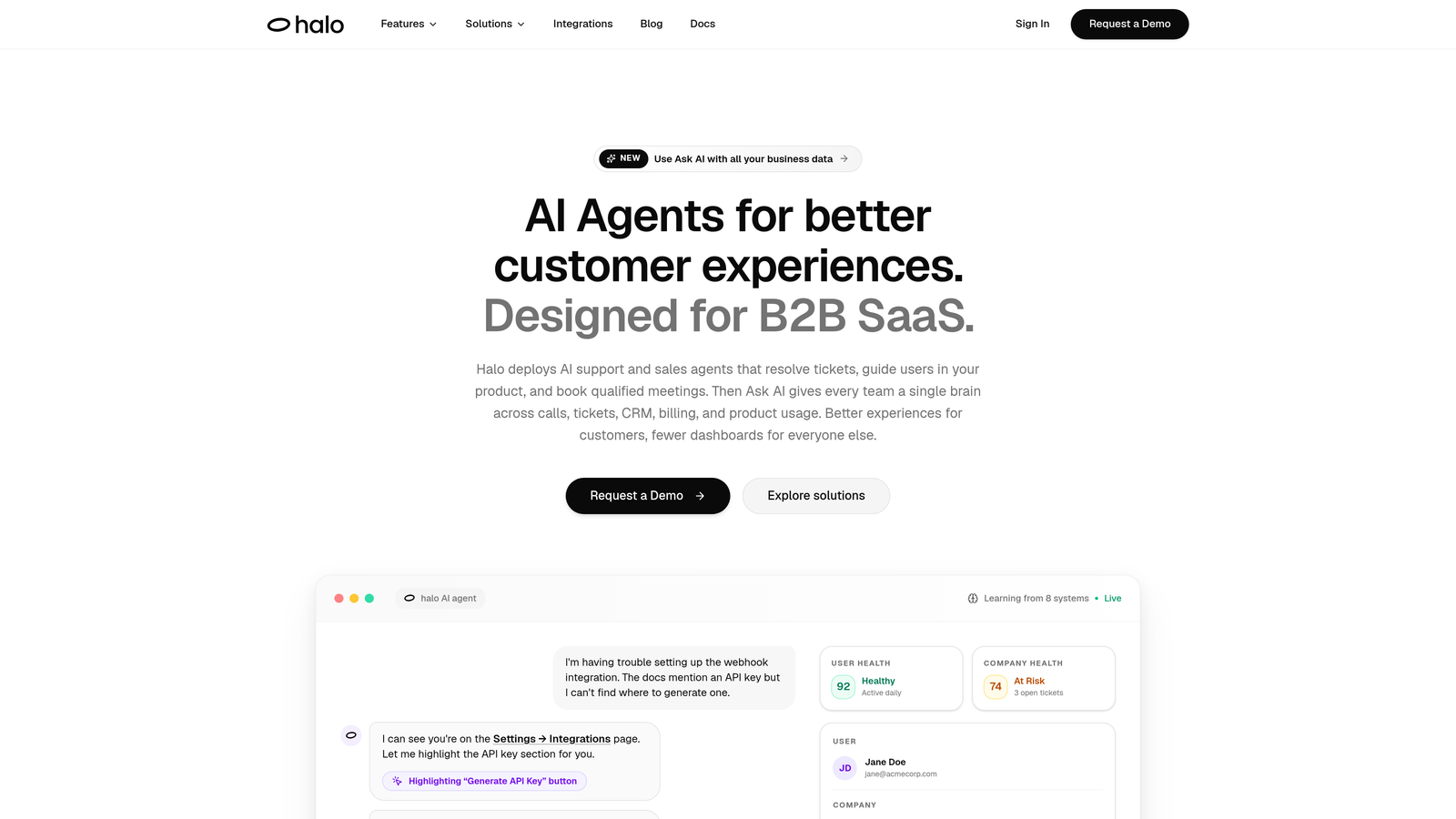
Halo AI is an AI-native customer support platform where intelligent agents resolve tickets, guide users through your products, and create bug reports while learning continuously from every interaction.
Where This Tool Shines
Most helpdesks treat multi-product support as a configuration problem: set up separate inboxes, assign different tags, and hope agents remember which knowledge base to check. Halo approaches it differently. The platform's page-aware AI agents understand the specific surface a user is on, giving them contextual awareness that traditional helpdesks simply can't replicate without heavy customization.
What makes Halo particularly compelling for multi-product companies is the continuous learning architecture. Every resolved ticket, every guided interaction, every escalated issue feeds back into the AI's understanding of your products. Over time, the agents get meaningfully smarter about your specific product suite, not just generic support patterns.
Key Features
Page-Aware AI Chat Widget: The AI agent sees what users see across different product surfaces, enabling contextually accurate responses without requiring users to explain which product they're using.
Continuous Learning Engine: Every interaction builds product-specific context, so the AI improves with your product rather than requiring manual retraining cycles.
Auto Bug Ticket Creation: Automatically generates bug tickets integrated with Linear and engineering workflows, closing the loop between customer-reported issues and your development team.
Smart Inbox with Business Intelligence: Goes beyond support metrics to surface customer health signals, revenue intelligence, and anomaly detection across your product portfolio.
Deep Integration Stack: Connects with Slack, HubSpot, Intercom, Stripe, Zoom, PandaDoc, Fathom, and more, so support data flows across your entire business stack.
Best For
B2B SaaS companies managing multiple products who want an AI-first architecture rather than AI bolted onto a traditional helpdesk. Particularly strong for product teams who need support insights to inform engineering and customer success decisions, not just ticket closure rates.
Pricing
Contact for pricing. Built for scaling B2B teams with multiple product lines where headcount-based pricing models become unsustainable.
2. Zendesk AI
Best for: Enterprise teams needing mature multi-brand infrastructure with AI layered throughout
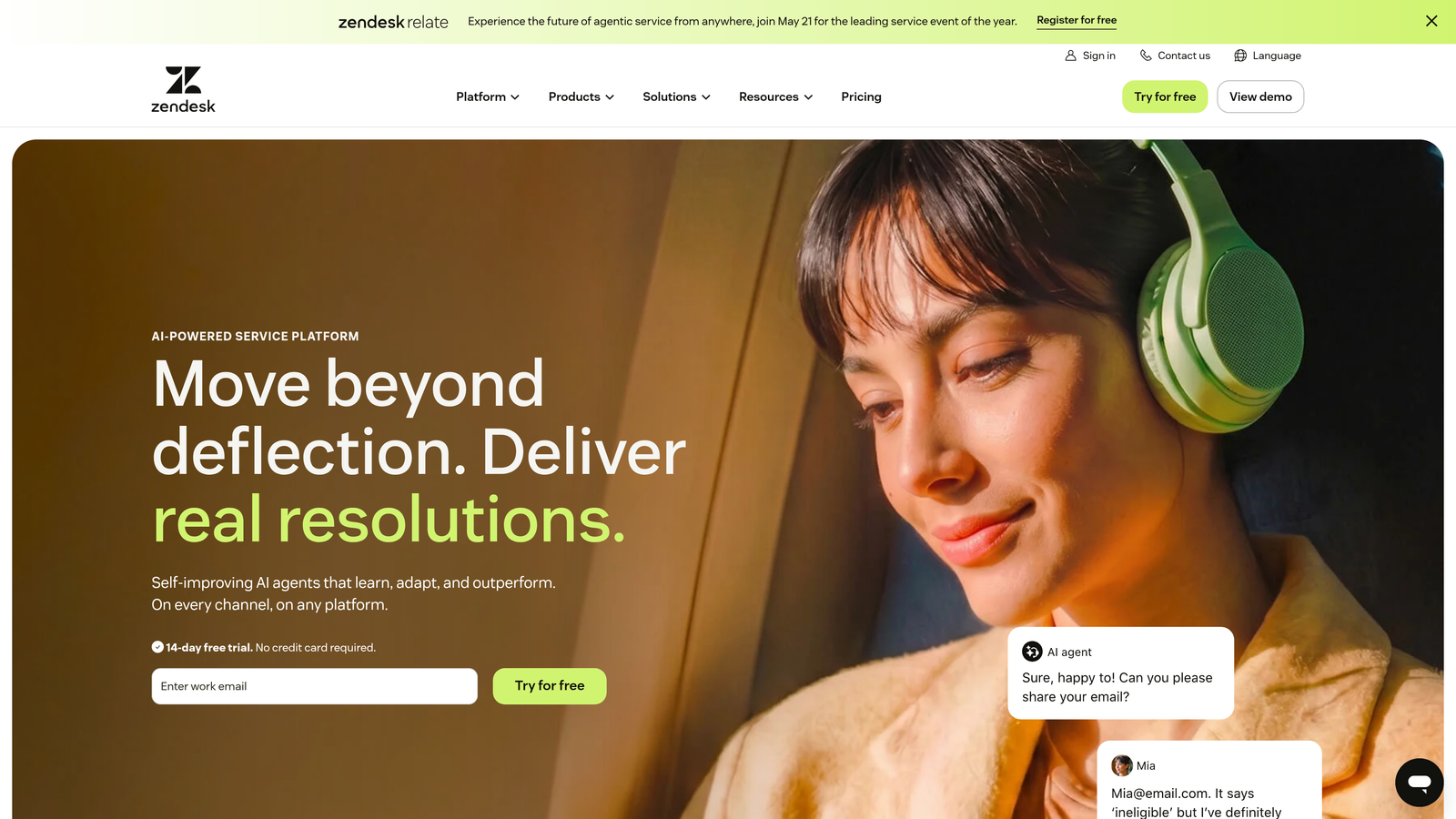
Zendesk AI is an enterprise-grade helpdesk with well-established multi-brand architecture and AI capabilities spanning routing, agent assistance, and self-service.
Where This Tool Shines
Zendesk has spent years building out its multi-brand framework, and it shows. You can configure genuinely separate help centers, SLA policies, and workflows per product line without them bleeding into each other. For enterprises managing five or more distinct products, that structural separation is genuinely valuable.
The AI layer, while not AI-native in the way newer platforms are, is mature and deeply embedded. Agent Copilot provides real-time assistance with product-specific context, and the intelligent triage system has been refined across a massive customer base.
Key Features
Multi-Brand Architecture: Separate help centers, workflows, and SLA policies per product with clean administrative separation.
AI-Powered Triage: Intelligent ticket routing that classifies and assigns tickets across brands based on content, history, and product signals.
Agent Copilot: AI-assisted response drafting with product-specific context pulled from the relevant knowledge base.
1,500+ Marketplace Integrations: Extensive ecosystem covering virtually every business tool your team might already use.
Brand-Segmented Analytics: Advanced reporting that breaks down performance metrics by product or brand, not just aggregate support volume.
Best For
Enterprise organizations with established support operations, dedicated IT resources for configuration, and complex multi-product portfolios that benefit from Zendesk's mature ecosystem and deep customization options.
Pricing
Suite plans start at $55/agent/month. AI add-on pricing varies by tier and feature set; enterprise plans include more native AI capabilities.
3. Intercom Fin
Best for: Product-led growth companies prioritizing conversational AI for front-line support
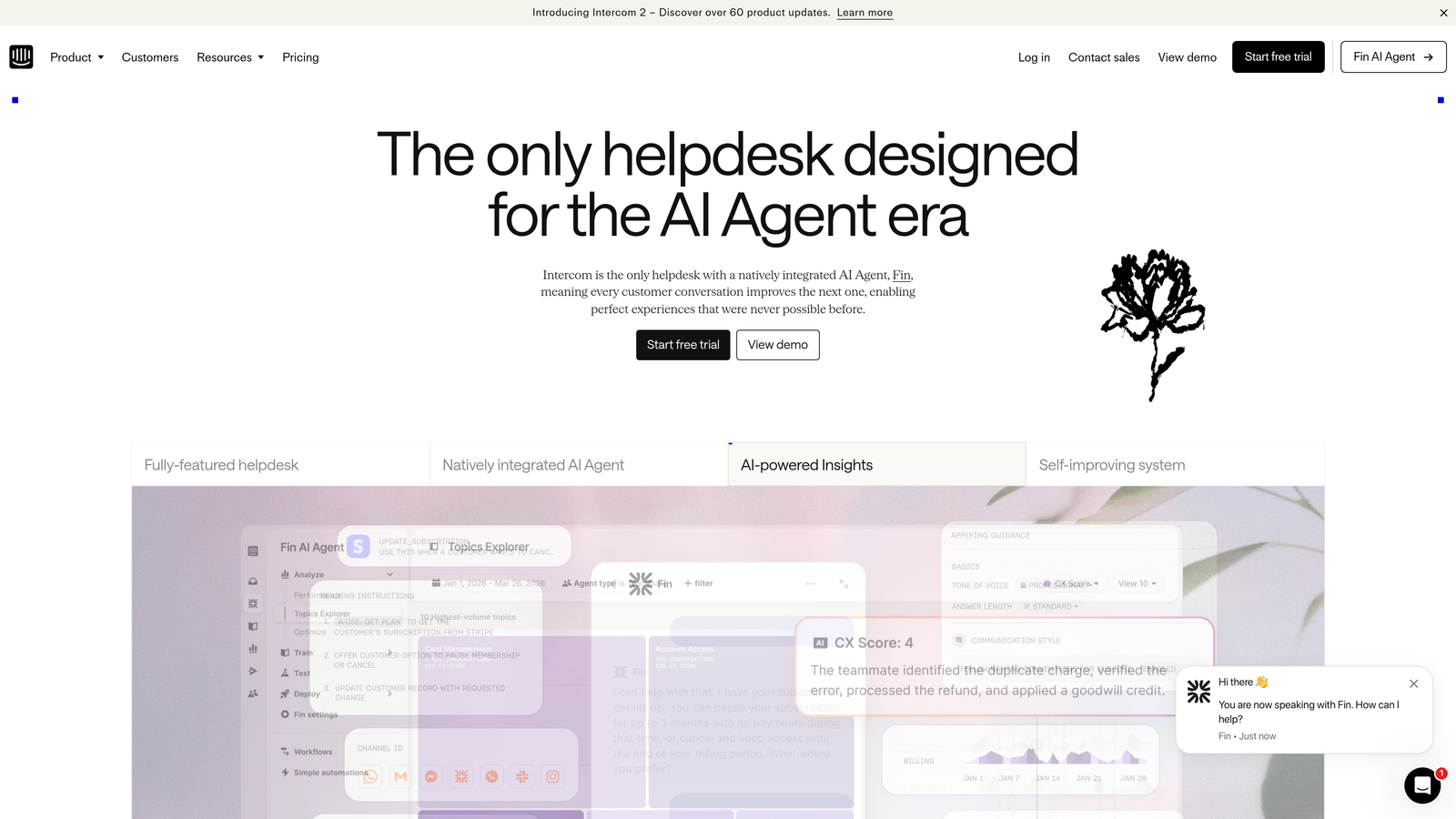
Intercom's Fin AI is a conversational AI agent that handles front-line support with strong content targeting capabilities suited to multi-product environments.
Where This Tool Shines
Intercom's strength in multi-product support comes from its audience-based targeting rules. You can train Fin on specific content collections and then target those collections to specific user segments, meaning a customer using Product A gets answers from the Product A knowledge base without any manual routing.
The in-app messaging and product tour capabilities also give Intercom an edge for companies where support and product onboarding overlap, which is common in multi-product SaaS environments where users frequently adopt new product lines.
Key Features
Fin AI with Audience Targeting: AI agent trained on help content with rules that serve product-specific responses based on user attributes and segment membership.
Content Segmentation: Collections and audience filters let you maintain separate knowledge structures for each product without duplicating agent workflows.
Product Tours and In-App Messaging: Guided support experiences embedded directly in your product, useful for cross-product onboarding and feature discovery.
Custom Bots with Conditional Logic: Build product-specific conversation flows with branching logic that handles different product scenarios.
Unified Human Agent Inbox: When Fin escalates, human agents receive full conversation context including which product the customer was using.
Best For
Product-led growth companies, SaaS businesses with strong in-app support needs, and teams that want conversational AI tightly integrated with product analytics and user segmentation.
Pricing
Essential plan starts at $29/seat/month. Fin AI is charged per resolution, so costs scale with automation volume rather than seat count.
4. Freshdesk (Freddy AI)
Best for: Value-conscious teams needing multi-product workspace separation without enterprise pricing
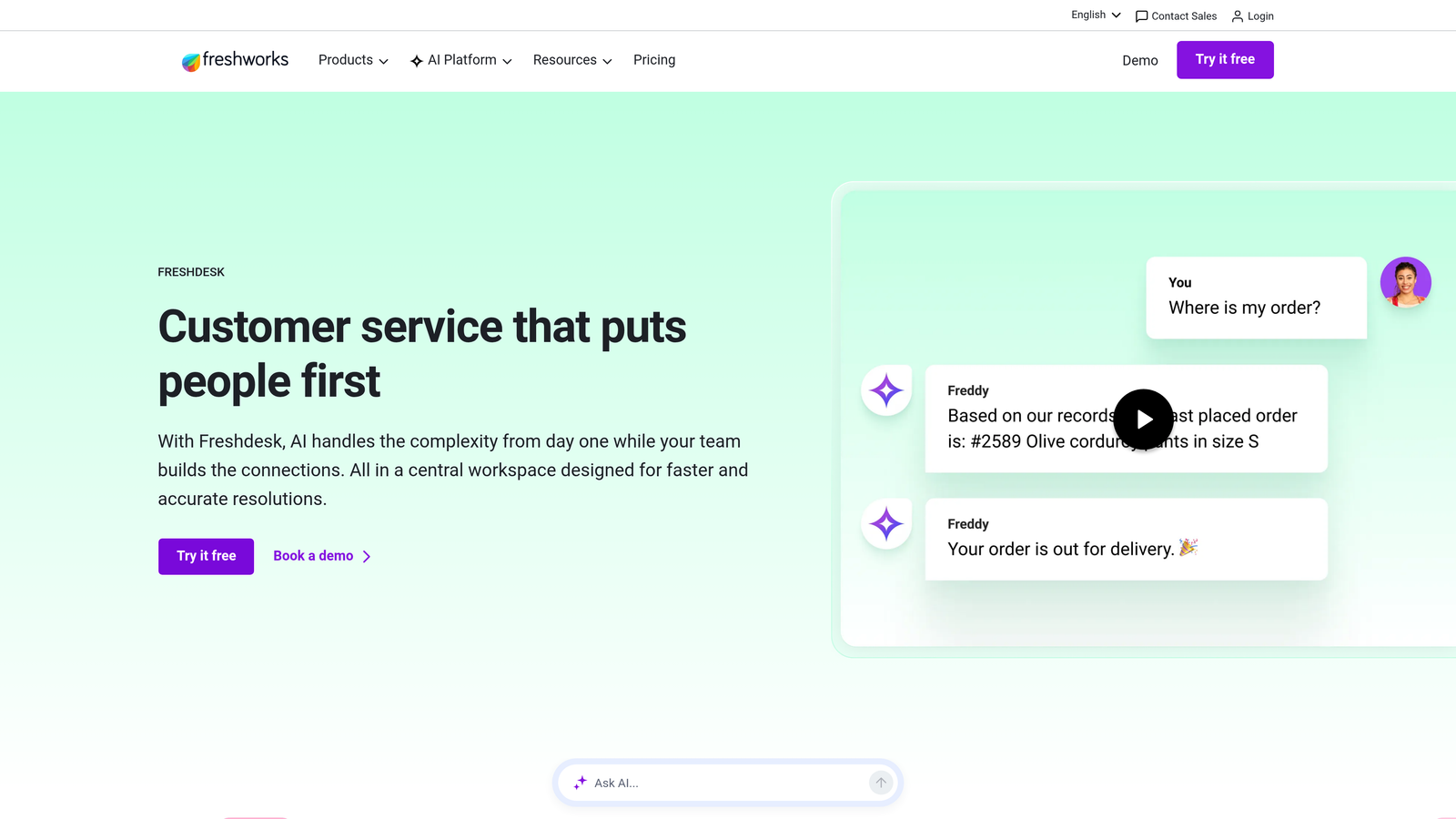
Freshdesk is a feature-rich helpdesk with multi-product workspace architecture and Freddy AI handling automated ticket triage, routing, and agent assistance.
Where This Tool Shines
Freshdesk's multi-product setup allows genuinely separate portals, knowledge bases, and SLA policies per product, which is the structural foundation any multi-product support operation needs. The workspace-level segmentation means agents only see tickets relevant to their assigned products, reducing cognitive load and misrouting errors.
For teams that need solid multi-product functionality without paying enterprise prices, Freshdesk hits a practical sweet spot. Freddy AI handles the routine automation work well, and the generous free tier makes it accessible for teams launching new product lines.
Key Features
Multi-Product Portals: Separate customer-facing portals, knowledge bases, and SLA configurations per product line within a single account.
Freddy AI Triage: Automated ticket classification, priority assignment, and suggested responses based on ticket content and historical patterns.
Workspace Segmentation: Agents see only the product tickets relevant to their role, reducing noise and improving response quality.
Cross-Product Escalation Tools: Built-in collaboration features for routing complex issues that span multiple products to the right team.
Competitive Pricing Tiers: Free plan available for small teams, with AI features unlocking at the Pro tier.
Best For
Growing companies managing two to five products who need solid multi-product architecture and AI automation without committing to enterprise-level investment. Also a strong choice for teams already using Freshworks' broader product suite.
Pricing
Free plan available. Pro plan starts at $49/agent/month with full Freddy AI features included.
5. Salesforce Service Cloud (Einstein AI)
Best for: CRM-heavy enterprises needing unified customer data across all product interactions
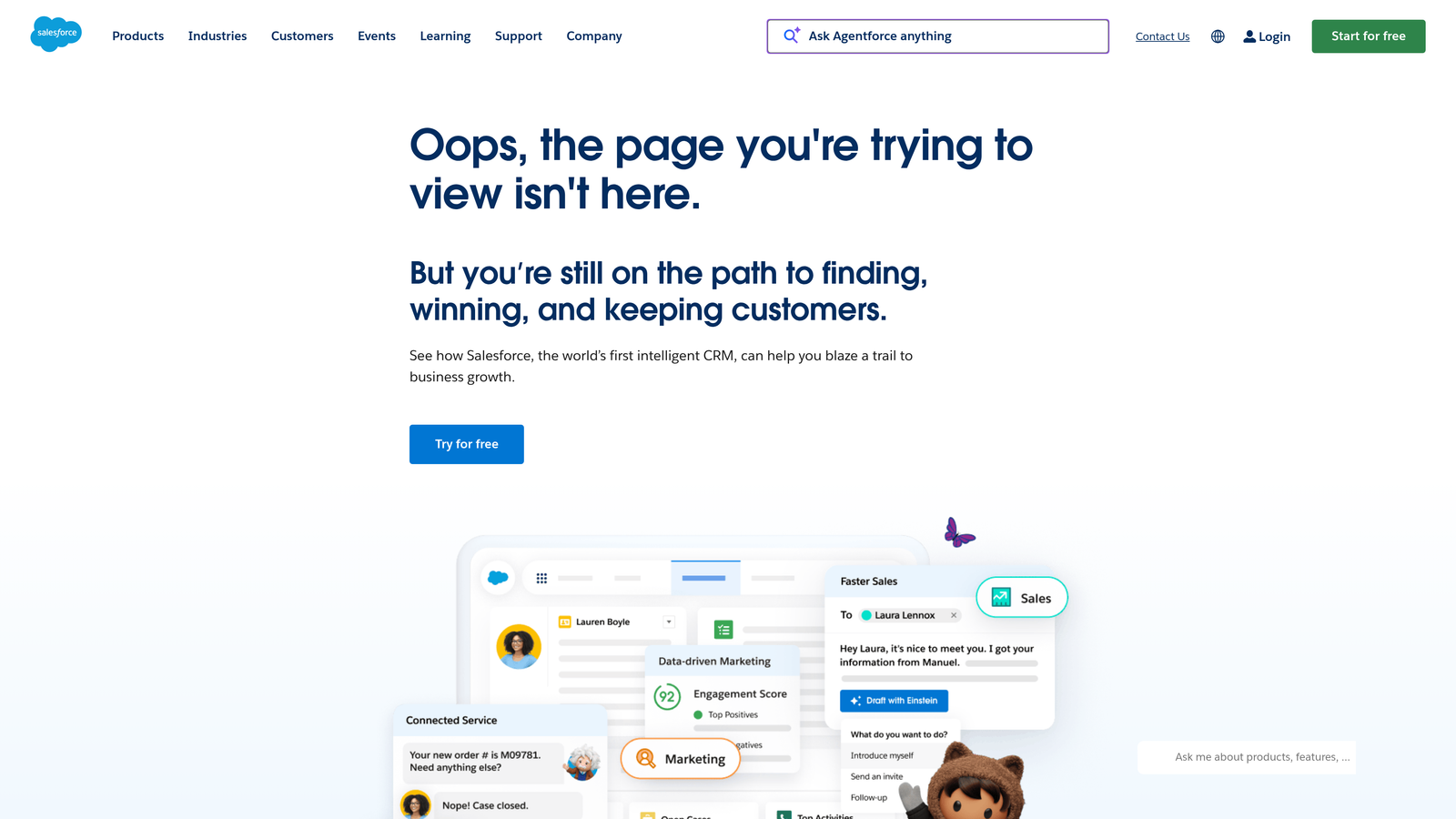
Salesforce Service Cloud is an enterprise service platform where Einstein AI connects support operations to CRM data, providing a unified customer view across every product interaction.
Where This Tool Shines
If your multi-product company lives in Salesforce, Service Cloud is the natural home for support. The unified customer profile that spans all products is genuinely powerful: when a customer contacts support, agents can see their full relationship with your company across every product they use, every deal in the pipeline, and every previous interaction.
The trade-off is complexity and cost. Service Cloud rewards organizations with Salesforce expertise and dedicated admin resources. For those teams, the customization depth via flows, Apex, and Lightning components is unmatched.
Key Features
Unified CRM-Linked Customer Profiles: Every support case is connected to the customer's full Salesforce record, spanning all product relationships and commercial history.
Einstein AI Case Management: Automated case classification, next-best-action recommendations, and knowledge article suggestions powered by Einstein.
Omni-Channel Routing: Intelligent case assignment across products using skill-based, priority-based, and capacity-based routing rules.
Cross-Product Reporting: Salesforce dashboard capabilities applied to support data, enabling deep analysis across product lines.
Extensive Customization: Flows, Apex code, and Lightning components allow virtually unlimited configuration for complex multi-product workflows.
Best For
Large enterprises already invested in the Salesforce ecosystem where connecting support data to sales, marketing, and customer success data across products is a strategic priority.
Pricing
Enterprise plan starts at $165/user/month. Einstein AI capabilities are included in higher tiers; full AI functionality typically requires the Unlimited or Einstein 1 plans.
6. Ada
Best for: High-volume support operations prioritizing automation-first resolution across product lines
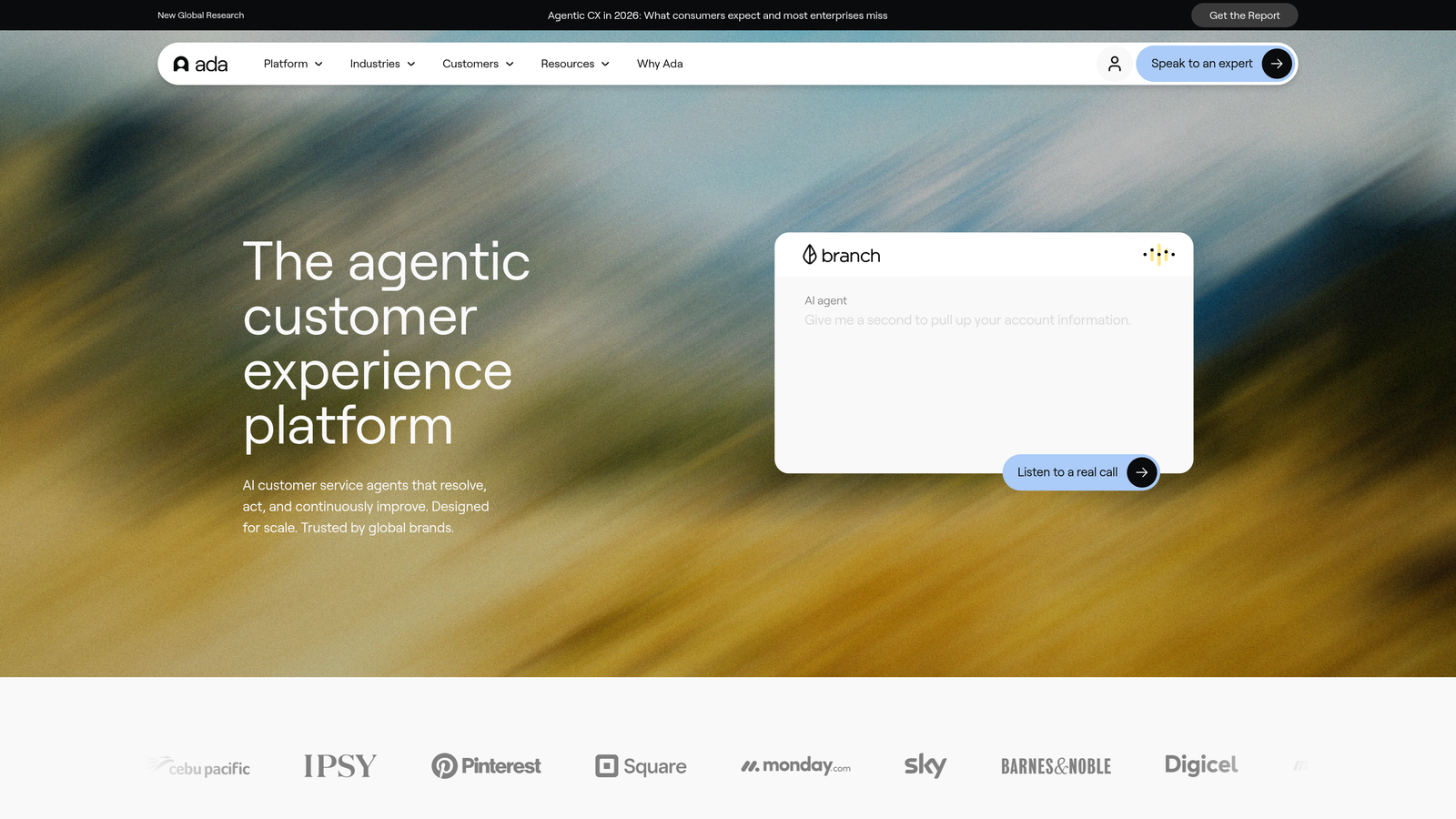
Ada is an automation-first AI platform designed to resolve customer inquiries at scale with no-code AI agent builders and multi-brand content management.
Where This Tool Shines
Ada's architecture is built around resolution, not deflection. The distinction matters: many chatbot platforms are optimized to reduce ticket volume by showing help articles. Ada's reasoning engine is designed to actually resolve complex, multi-step queries, which is a meaningfully higher bar and more valuable for multi-product companies where customer questions often span multiple systems or products.
The no-code AI agent builder with multi-brand content segmentation makes it practical for support teams to manage separate AI personas and knowledge structures per product without engineering involvement.
Key Features
No-Code Multi-Brand Agent Builder: Build and manage separate AI agents per product or brand with content segmentation and multi-language support, all without writing code.
Reasoning Engine: Handles complex, multi-step customer queries that span different product areas rather than routing to humans at the first sign of complexity.
Contextual Human Handoff: When escalation is needed, human agents receive full conversation context including product metadata and resolution attempt history.
Broad Integration Support: Connects with major CRMs, helpdesks, and e-commerce platforms to pull relevant customer data into AI responses.
Per-Product Analytics: Resolution rates, containment metrics, and escalation patterns broken down by product or brand for optimization insights.
Best For
High-volume support operations, particularly in e-commerce, fintech, and SaaS, where automated resolution at scale is the primary goal and the support team needs to manage multiple brands or product lines from a single platform.
Pricing
Custom pricing based on resolution volume. Contact Ada's sales team for quotes; pricing scales with automation usage rather than agent seats.
7. Help Scout (AI Assist)
Best for: Smaller multi-product teams that value simplicity and clean UX over enterprise feature depth
Help Scout is a clean, intuitive helpdesk with multi-mailbox and multi-Docs-site architecture, augmented by AI drafting and summarization tools.
Where This Tool Shines
Help Scout's approach to multi-product support is refreshingly straightforward. Separate mailboxes per product, separate Docs knowledge base sites per product, and a Beacon widget that's configurable per product with relevant help content. There's no complex configuration required to get meaningful product separation.
For teams that have been burned by over-engineered helpdesks that require weeks of setup, Help Scout's minimal learning curve is a genuine advantage. AI Assist handles drafting and summarization well without overwhelming agents with options.
Key Features
Per-Product Mailboxes and Docs Sites: Clean separation of inbound queues and knowledge bases by product, with straightforward administrative controls.
AI Assist: Draft reply generation, conversation summarization, and tone adjustment tools that help agents respond faster without replacing their judgment.
Configurable Beacon Widget: Deploy product-specific chat widgets that surface relevant help content based on which product the customer is using.
Workflows and Saved Replies by Product: Organize automation rules and templated responses around product context so agents always have the right tools at hand.
Minimal Onboarding Friction: Intuitive interface that new agents can learn quickly, reducing training overhead when onboarding support staff for new product lines.
Best For
Small to mid-sized teams managing two to four products who prioritize ease of use and fast onboarding. Particularly well-suited for companies where support staff handle multiple products and need clear, simple product separation without complex configuration.
Pricing
Standard plan starts at $25/user/month. Plus plan at $50/user/month includes full AI Assist features and expanded automation capabilities.
8. Tidio (Lyro AI)
Best for: Budget-conscious multi-product businesses needing AI chat without enterprise complexity
Tidio is an affordable AI chatbot platform with Lyro AI agent, suited for smaller multi-product businesses that need automated chat support at accessible price points.
Where This Tool Shines
Tidio occupies a practical niche: AI-powered chat support that doesn't require an enterprise budget or a dedicated implementation team. Lyro AI can be trained on your knowledge base content and deployed across multiple websites, making it workable for companies with separate product storefronts or web properties.
The visual chatbot flow builder is genuinely accessible, allowing non-technical team members to build product-specific conversation paths without developer support. For early-stage multi-product companies, that independence matters.
Key Features
Lyro AI Chatbot: AI agent trained on your knowledge base content with multi-source support, handling common customer questions automatically across product lines.
Visual Flow Builder: Drag-and-drop conversation path builder for creating product-specific chatbot flows without coding.
Multi-Website Deployment: Deploy separate chat widgets across different product websites or storefronts from a single Tidio account.
AI-Suggested Replies for Live Agents: When customers reach a human agent, Lyro surfaces suggested responses based on conversation context and knowledge base content.
E-Commerce and CMS Integrations: Native integrations with Shopify, WordPress, and common business tools, useful for product companies selling through these platforms.
Best For
Small businesses, early-stage startups, and e-commerce companies managing multiple product lines or storefronts who need AI chat capabilities without significant investment. Less suited for complex B2B SaaS environments with sophisticated routing needs.
Pricing
Free plan available. Lyro AI starts at $39/month for 50 conversations; higher tiers accommodate larger conversation volumes.
9. Dixa
Best for: Omnichannel teams managing multiple brands across voice, chat, email, and social
Dixa is an omnichannel customer service platform with a conversation-based architecture and intelligent routing across brands, products, and communication channels.
Where This Tool Shines
Dixa's defining architectural choice is conversations over tickets. Rather than converting every customer interaction into a ticket with a number, Dixa treats support as an ongoing conversation, which maps more naturally to how customers actually experience multi-product support. A customer who uses three of your products doesn't think in tickets; they think in relationships.
The intelligent routing engine is a genuine strength for multi-brand operations. You can configure separate routing rules, contact points, and agent skill assignments per product or brand, and the system handles the assignment logic automatically across all channels including voice.
Key Features
Conversation-Based Architecture: Treats customer interactions as ongoing conversations rather than discrete tickets, maintaining relationship context across multiple product touchpoints.
Intelligent Multi-Product Routing: Assigns conversations by product, agent skill, channel, and priority with configurable rules per brand or product line.
Unified Omnichannel Workspace: Agents handle voice, email, chat, social, and messaging from a single interface with consistent product context across all channels.
Multi-Brand Management: Separate routing rules, contact points, and brand identities managed from a central administrative console.
Dixa Mim AI: AI-powered auto-responses and agent assistance tools that work across all channels and brand configurations.
Best For
Mid-market to enterprise companies with genuine omnichannel support needs across multiple brands or products, particularly those where voice support is a significant channel alongside digital interactions.
Pricing
Essential plan starts at $49/agent/month. Contact Dixa's sales team for multi-brand pricing, which is typically negotiated based on brand count and conversation volume.
Which Tool Is Right for Your Multi-Product Stack?
The right AI helpdesk for a multi-product company depends heavily on where you are in your growth journey and what kind of intelligence you need from your support platform.
For AI-native product context: Halo AI is the strongest choice for B2B teams who want an AI that genuinely learns your product suite and surfaces business intelligence beyond ticket counts. The page-aware architecture and continuous learning engine are purpose-built for the multi-product challenge, not retrofitted onto a traditional helpdesk foundation.
For enterprise scale: Zendesk offers the most mature multi-brand infrastructure with a vast ecosystem. Salesforce Service Cloud is the right call when support data needs to live inside your CRM and connect to revenue operations.
For conversational and product-led support: Intercom Fin excels when in-app messaging and product-led growth are central to your strategy. Ada is the better fit when high-volume automated resolution is the primary goal.
For value and simplicity: Freshdesk offers the best balance of multi-product features and accessible pricing. Help Scout wins on ease of use for smaller teams. Tidio is the entry point for budget-conscious businesses. Dixa stands out when omnichannel voice and conversation-based support are priorities.
Your support team shouldn't scale linearly with your customer base. Let AI agents handle routine tickets, guide users through your product, and surface business intelligence while your team focuses on complex issues that need a human touch. See Halo in action and discover how continuous learning transforms every interaction into smarter, faster support.