9 Best AI Helpdesk Software Solutions for Smarter Support in 2026
This comprehensive AI helpdesk software comparison evaluates nine leading platforms based on actual AI sophistication, integration capabilities, and real-world B2B performance. We cut through the marketing hype to identify solutions that go beyond basic automation—focusing on platforms that learn from interactions, understand context, and autonomously resolve complex support issues while handling mounting ticket volumes.
 Matt PattoliFounder12 min read
AI helpdesk software has moved from experimental to essential. Today's B2B teams face mounting ticket volumes, rising customer expectations, and the constant pressure to do more with less. The right AI-powered helpdesk doesn't just automate responses—it learns from every interaction, understands context, and handles complex issues that once required human intervention.
But with dozens of platforms claiming AI capabilities, choosing the right solution requires cutting through the marketing noise. We evaluated leading AI helpdesk platforms based on actual AI sophistication, integration depth, learning capabilities, and real-world performance for B2B support teams. Here are the nine solutions worth your attention.
1. Halo AI
Best for: B2B product teams wanting autonomous resolution with continuous learning capabilities
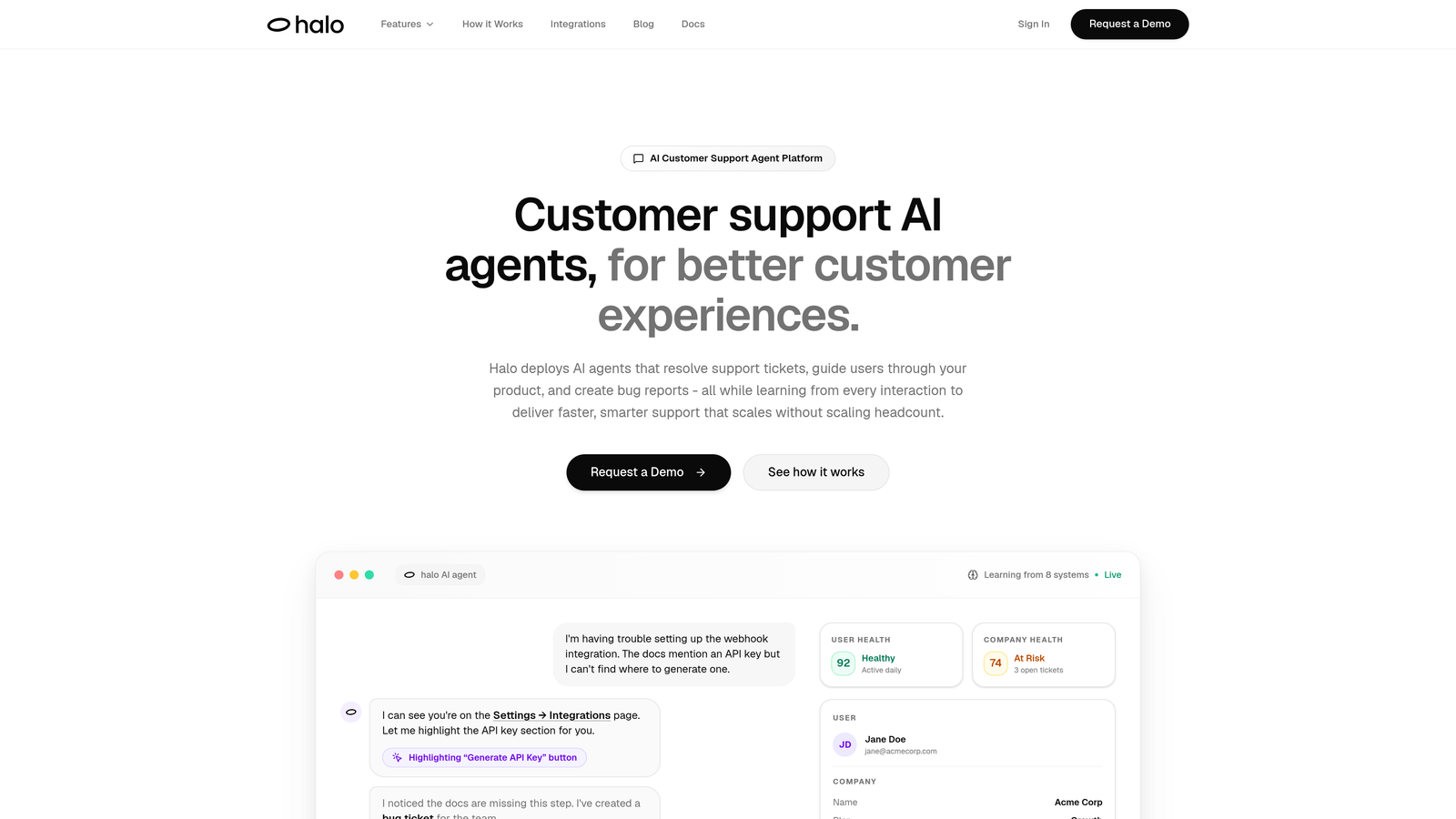
Halo AI is an AI-first customer support platform built for autonomous ticket resolution and intelligent product guidance.
Where This Tool Shines
Unlike traditional helpdesks with AI bolted on, Halo was architected from the ground up around autonomous AI agents. The platform's page-aware context means it doesn't just read what customers type—it sees exactly what they're looking at in your product, understanding visual UI state in real-time.
The continuous learning architecture sets it apart. Every interaction makes the system smarter, building institutional knowledge that compounds over time. For product teams drowning in "how do I" questions, this approach transforms repetitive support into automated resolution.
Key Features
Autonomous AI Agents: Resolve tickets end-to-end without human intervention, handling complex multi-step issues independently.
Page-Aware Context: Visual understanding of what users see in your product, enabling precise guidance based on actual UI state.
Smart Inbox Intelligence: Surface customer health signals, revenue intelligence, and anomaly detection beyond basic support metrics.
Auto Bug Ticket Creation: Automatically generate detailed bug reports in Linear when issues are detected, with full context.
Multi-System Integrations: Connect to your entire business stack including Slack, HubSpot, Intercom, Stripe, Zoom, and PandaDoc.
Best For
B2B SaaS companies with complex products where context matters. Particularly valuable for teams currently using Zendesk, Freshdesk, or Intercom who want more sophisticated AI that actually reduces ticket volume rather than just assisting agents. Works best when you want autonomous operation with intelligent human escalation for edge cases.
Pricing
Contact for pricing. Scales with usage rather than per-agent, which benefits teams wanting to deploy AI broadly without multiplying seat costs.
2. Zendesk AI
Best for: Enterprise teams already invested in Zendesk wanting to add AI capabilities
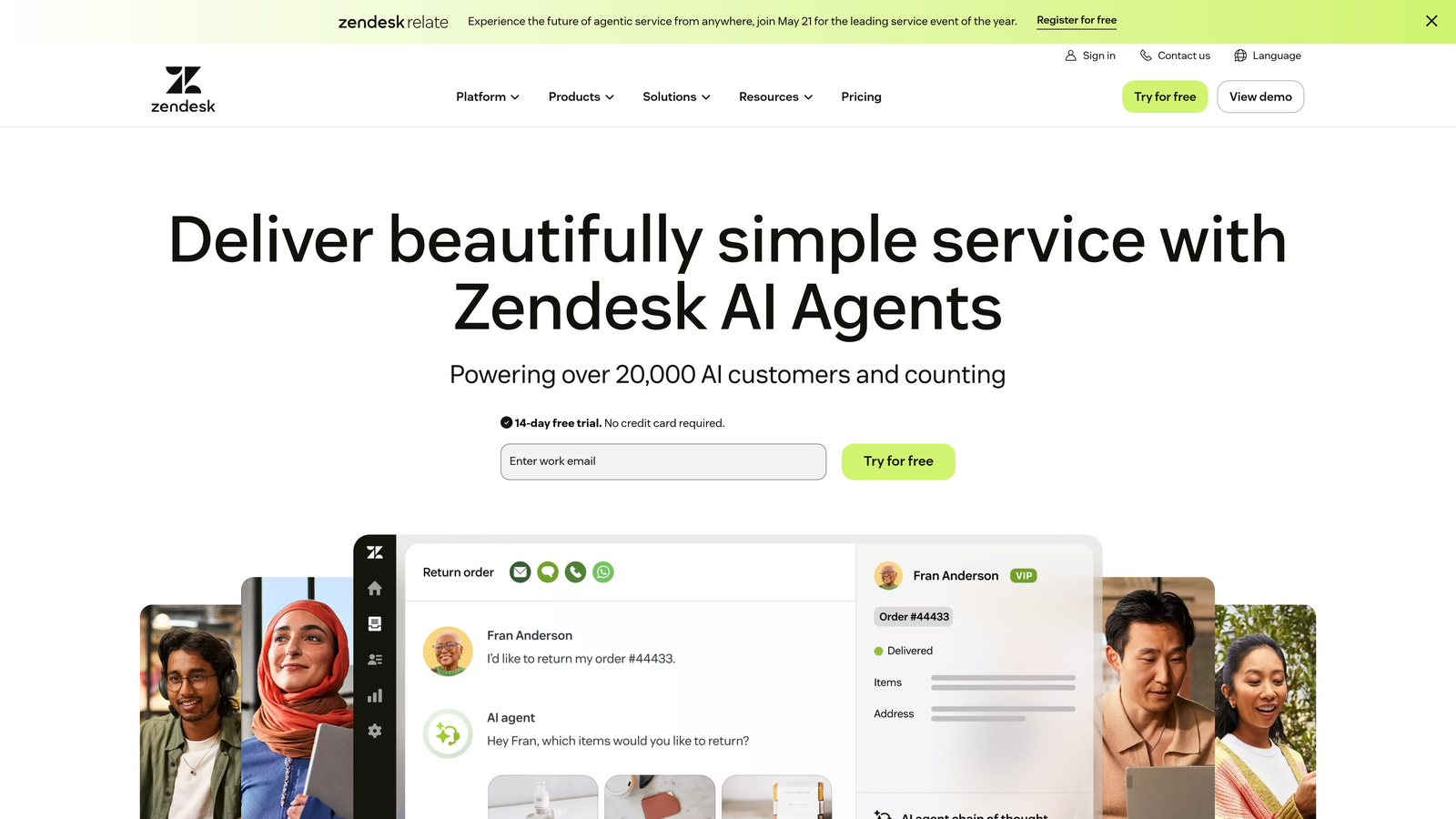
Zendesk AI is an enterprise-grade AI layer built on top of Zendesk's established helpdesk platform with intent detection and agent assistance.
Where This Tool Shines
For organizations already running Zendesk, adding AI capabilities means staying in-ecosystem without migration headaches. The platform's AI focuses on augmenting human agents rather than replacing them—detecting intent, routing intelligently, and suggesting responses.
The marketplace advantage matters here. With 1,500+ integrations already available, you can connect AI-enhanced support to virtually any business system. For enterprises with complex tech stacks, this breadth reduces integration friction significantly.
Key Features
AI Intent Detection: Automatically classify incoming tickets and route to appropriate teams based on detected customer intent.
Agent Assist: Surface suggested responses and relevant knowledge articles while agents work tickets.
Omnichannel Support: Unified AI capabilities across email, chat, social media, and phone channels.
Extensive Marketplace: Access to 1,500+ pre-built integrations spanning CRM, commerce, analytics, and productivity tools.
Advanced Analytics: Detailed reporting on AI performance, resolution rates, and customer satisfaction metrics.
Best For
Enterprise support organizations already using Zendesk Suite who want to enhance agent productivity with AI. Works well for teams handling high ticket volumes across multiple channels who need proven reliability and extensive integration options.
Pricing
AI capabilities require Suite Professional at $115 per agent per month or higher tiers. The per-agent pricing model can become expensive as teams scale.
3. Intercom Fin
Best for: Product-led companies wanting conversational AI with seamless product engagement
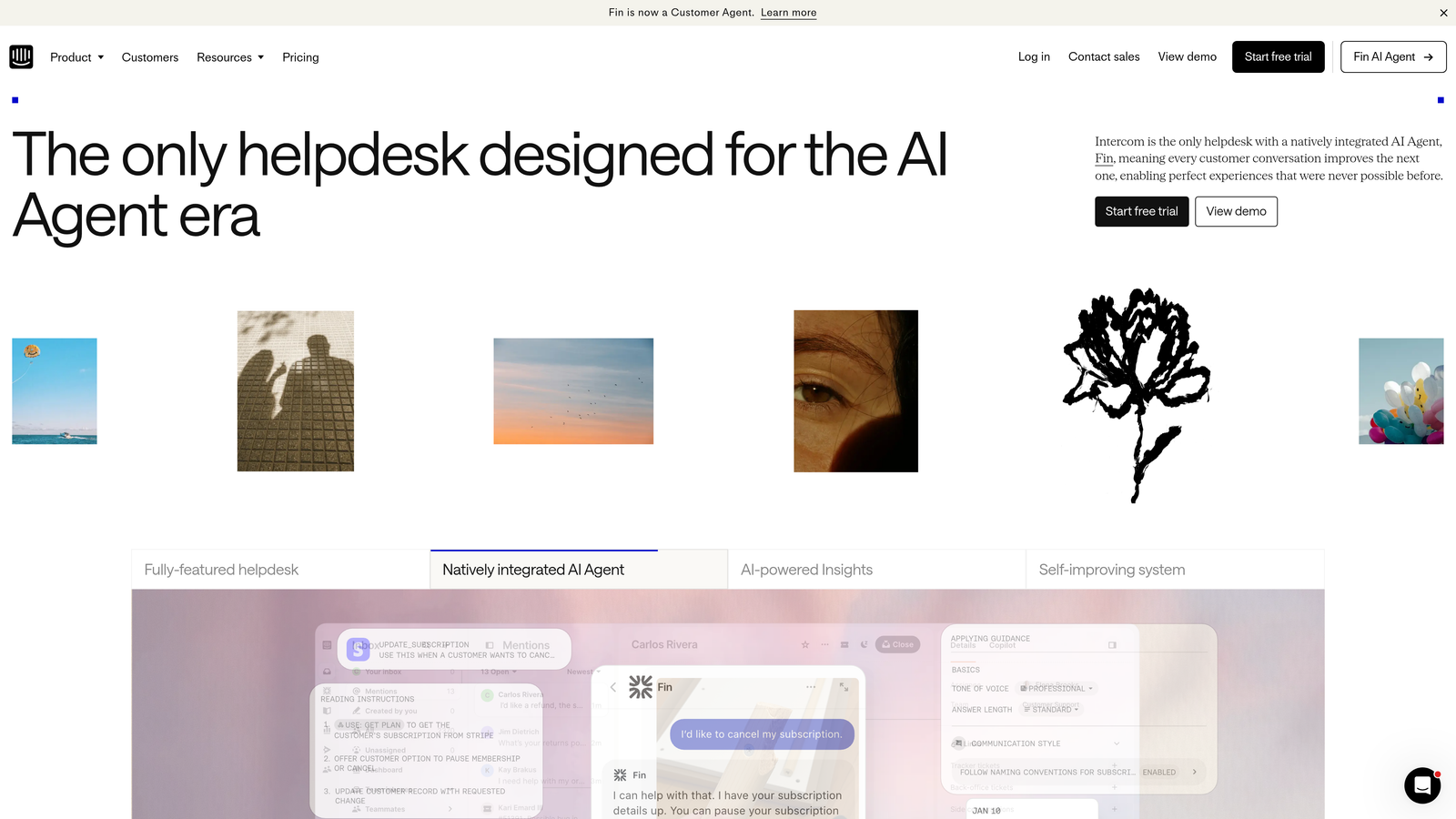
Intercom Fin is a conversational AI agent designed for product-led companies with native product tours and in-app messaging integration.
Where This Tool Shines
Fin excels at conversational support that feels natural. The AI agent trains on your help content and handles customer questions in a chat-first interface that product users expect. When Fin can't resolve something, handoff to human agents happens smoothly within the same conversation thread.
The product engagement integration sets it apart from pure support tools. You can trigger product tours, send targeted messages, and guide users through onboarding—all from the same platform handling support inquiries.
Key Features
Fin AI Agent: Conversational AI trained on your documentation and help content with natural language understanding.
Product Tours Integration: Combine support with in-app guidance and feature announcements for complete customer engagement.
Custom Answers: Create specific workflows and responses for common scenarios unique to your product.
Seamless Handoff: Escalate to human agents within the same conversation when AI reaches its limits.
Resolution Insights: Track what Fin resolves autonomously versus what requires human intervention.
Best For
Product-led SaaS companies where customer engagement blends support with onboarding and feature adoption. Particularly strong for teams wanting one platform for both reactive support and proactive product messaging.
Pricing
Fin AI costs $0.99 per resolution on top of base Intercom plans starting at $39 per seat per month. The per-resolution model means costs scale directly with usage.
4. Freshdesk Freddy AI
Best for: Mid-market teams wanting solid AI capabilities without enterprise pricing
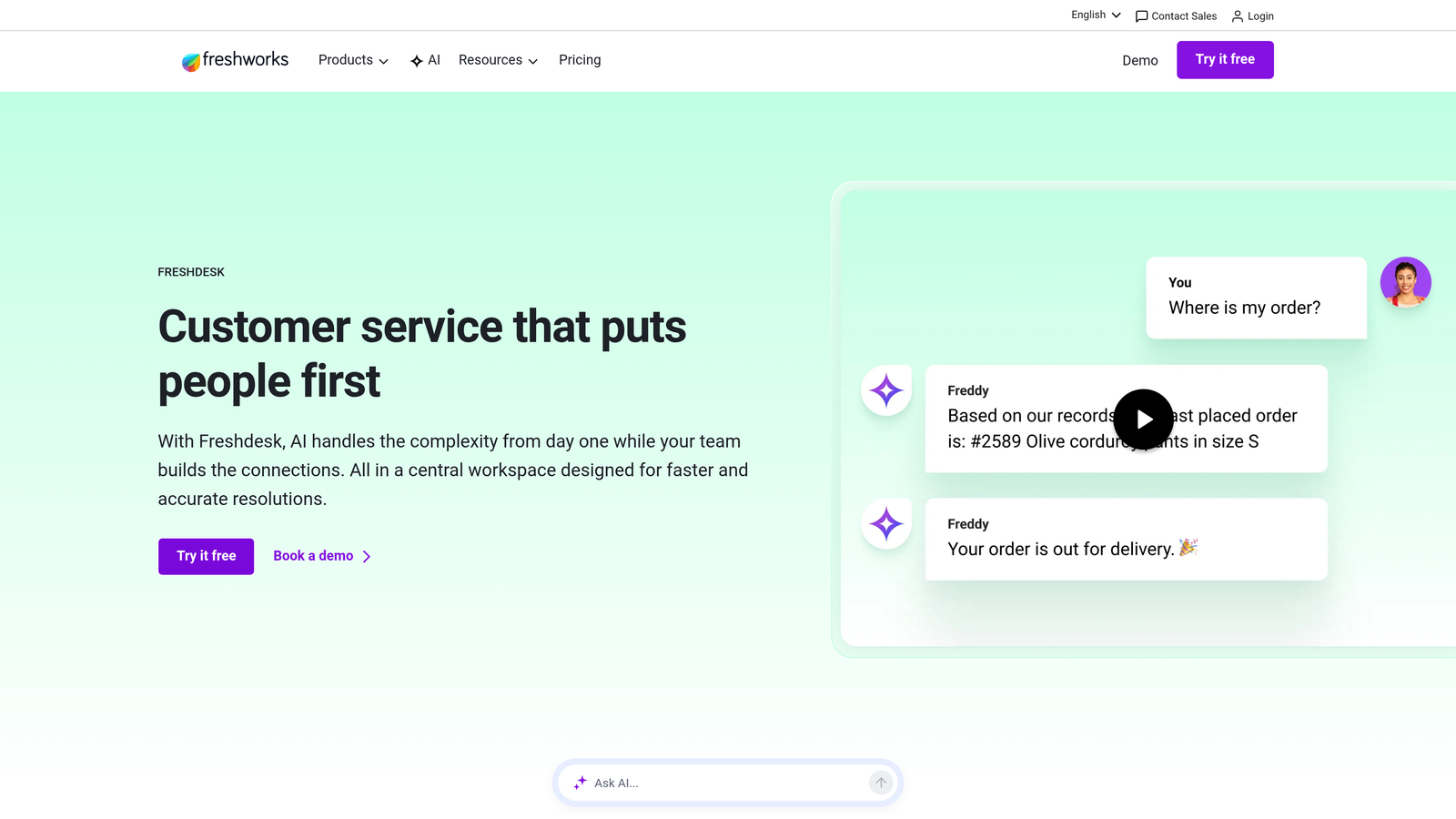
Freshdesk Freddy AI is a mid-market helpdesk offering intelligent ticket routing, auto-triage, and agent productivity tools at competitive pricing.
Where This Tool Shines
Freshdesk hits the sweet spot for growing companies that need more than basic support but aren't ready for enterprise complexity. Freddy AI handles the fundamentals well—classifying tickets, routing to the right teams, and suggesting responses—without overwhelming users with features they won't use.
The multi-channel ticketing works smoothly across email, phone, chat, and social media. For teams managing support across various channels, having AI-powered triage across all of them reduces the chaos of scattered conversations.
Key Features
Freddy AI Classification: Automatically categorize and route incoming tickets based on content, priority, and historical patterns.
Canned Response Suggestions: Surface relevant pre-written responses for agents to speed up common inquiries.
Self-Service Chatbot: Build automated chatbot flows for frequently asked questions without coding.
Multi-Channel Ticketing: Unified inbox for email, phone, chat, and social media conversations.
SLA Management: Automated workflows and escalations based on service level agreements and ticket age.
Best For
Mid-market companies with 20-200 support agents who need AI-enhanced support without enterprise overhead. Works well for teams managing moderate ticket volumes across multiple channels who want straightforward AI assistance rather than full automation.
Pricing
Pro plan at $49 per agent per month includes Freddy AI features. The pricing is competitive for mid-market teams compared to enterprise platforms.
5. Salesforce Einstein for Service
Best for: Organizations deeply invested in Salesforce CRM wanting unified customer context
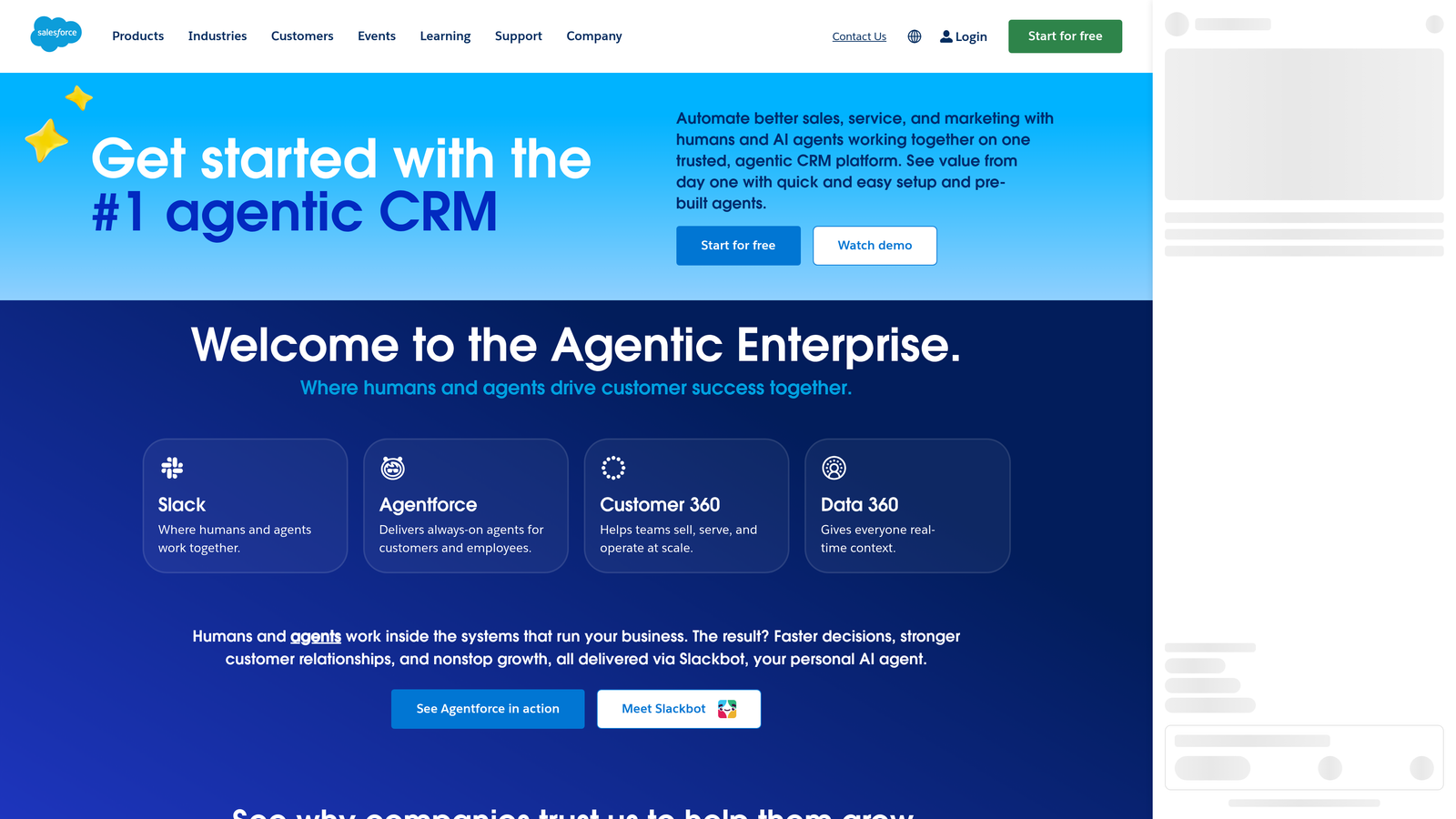
Salesforce Einstein for Service is AI-powered service capabilities integrated with Salesforce CRM for complete customer context across sales and support.
Where This Tool Shines
If your organization runs on Salesforce, Einstein brings AI to service while maintaining full context from sales, marketing, and customer data. Support agents see complete customer history, deal status, and engagement patterns—information that lives in silos with standalone helpdesk tools.
The predictive case routing uses historical patterns to assign tickets to agents most likely to resolve them quickly. For large support teams with specialized expertise, this intelligent routing reduces resolution time significantly.
Key Features
Predictive Case Routing: AI-powered assignment based on agent skills, availability, and historical resolution patterns.
Einstein Bots: Automated customer interactions for common inquiries with natural language processing.
Next Best Action: Real-time recommendations for agents on how to resolve cases based on similar historical tickets.
Full CRM Context: Complete customer view including sales opportunities, marketing engagement, and support history.
Knowledge Recommendations: Surface relevant help articles automatically based on case content and customer context.
Best For
Enterprise organizations already using Salesforce CRM who need unified customer data across sales and support. Particularly valuable when support teams need visibility into deal status, account health, and customer lifetime value.
Pricing
Service Cloud Enterprise at $165 per user per month provides the base platform. Einstein AI features require additional add-ons, making total cost higher than the base price suggests.
6. Ada
Best for: High-volume global support operations needing multilingual automation
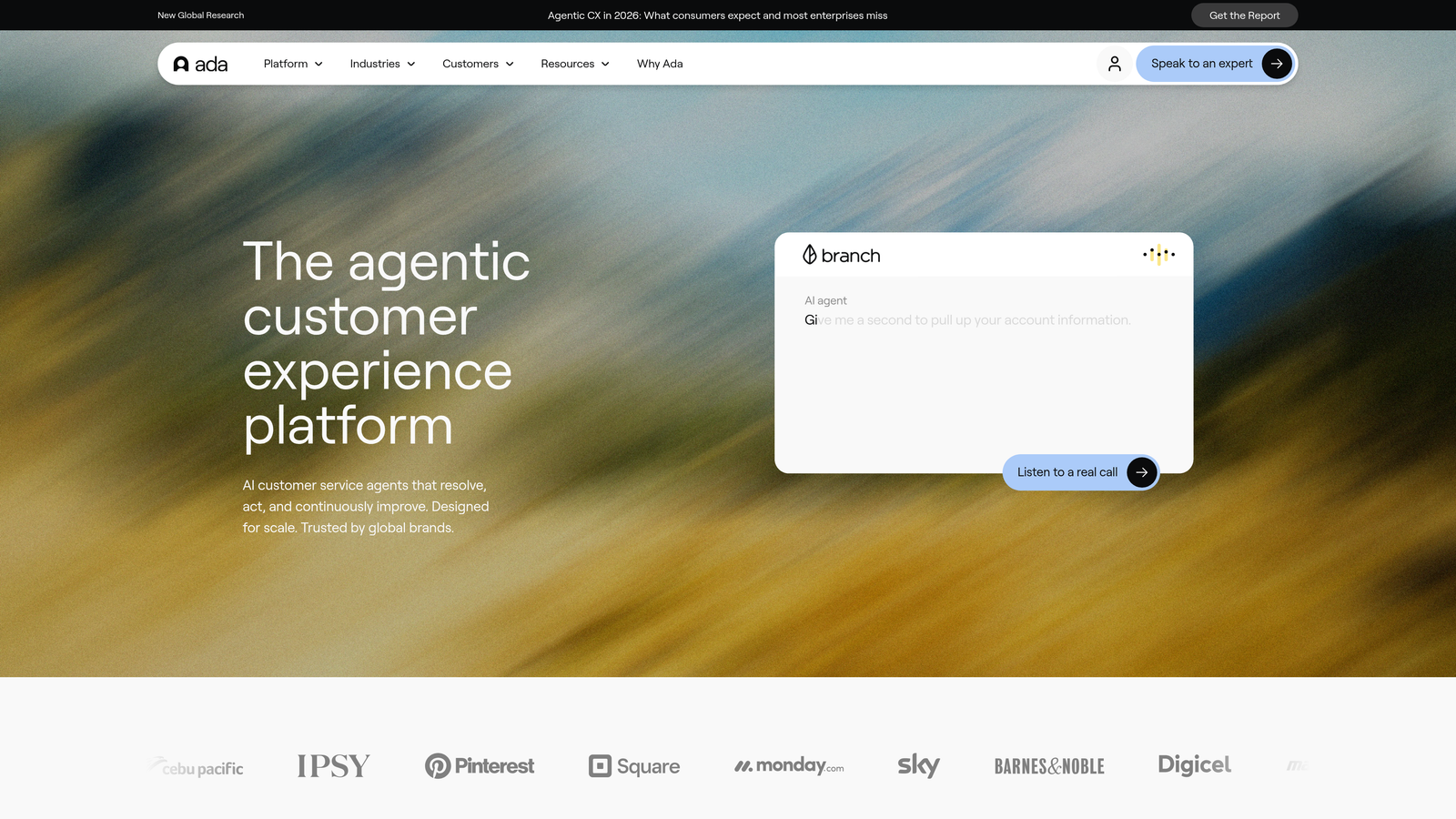
Ada is a high-volume automation platform with no-code bot builder and strong multilingual capabilities for global support operations.
Where This Tool Shines
Ada was built for automation at scale. The no-code builder lets non-technical teams create sophisticated workflows without developer involvement. For companies handling tens of thousands of inquiries monthly, this self-service approach to automation reduces both implementation time and ongoing maintenance costs.
The multilingual support stands out—50+ languages out of the box means global companies can deploy consistent AI support across regions without building separate systems for each market.
Key Features
No-Code Automation Builder: Visual workflow creator for custom support automations without requiring engineering resources.
50+ Language Support: Pre-trained multilingual capabilities for global customer bases without separate implementations.
Generative AI Responses: AI trained on your specific content and documentation for contextually relevant answers.
Proactive Campaigns: Trigger automated outreach based on customer behavior and segment characteristics.
Resolution Analytics: Detailed metrics on automation containment rates and customer satisfaction by conversation type.
Best For
Enterprise companies with high support volumes across multiple languages and regions. Works best for teams wanting deep automation capabilities with business user control rather than requiring constant developer involvement.
Pricing
Custom enterprise pricing based on automation volume and feature requirements. The usage-based model scales with conversation volume rather than agent count.
7. Tidio AI
Best for: SMBs wanting quick AI implementation without technical complexity
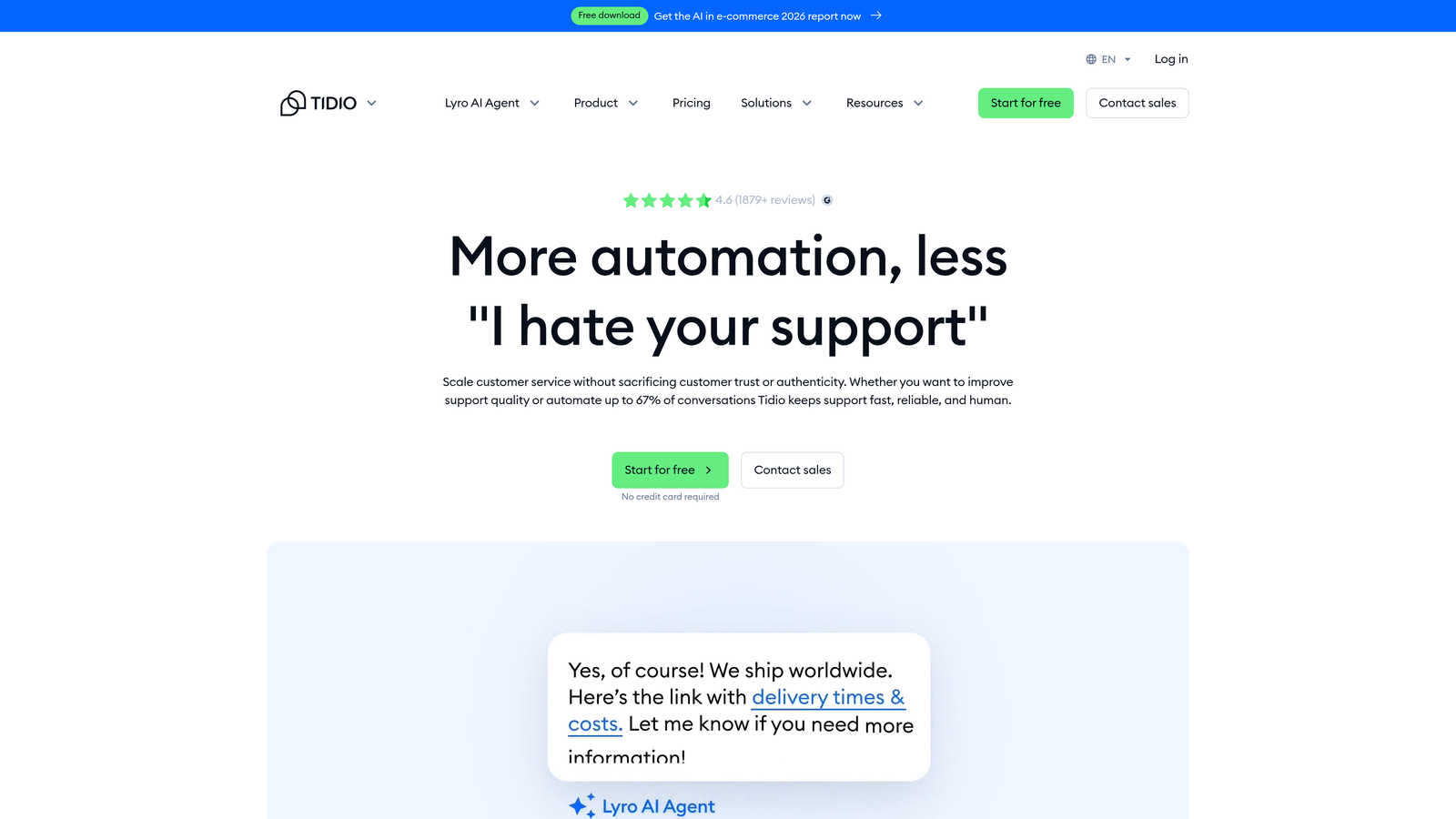
Tidio AI is an accessible AI helpdesk solution with Lyro conversational AI, designed for small businesses wanting fast deployment.
Where This Tool Shines
Tidio removes the complexity barrier for smaller teams. The visual chatbot builder uses templates and drag-and-drop logic, letting non-technical users create automated support flows in hours rather than weeks. For SMBs without dedicated support engineering, this accessibility matters.
The native Shopify and WordPress integrations work particularly well for e-commerce and content businesses. You can deploy AI chat directly on these platforms without custom development or complex configuration.
Key Features
Lyro Conversational AI: Pre-trained chatbot for common customer support scenarios with natural language understanding.
Visual Chatbot Builder: Template-based bot creation with drag-and-drop logic for custom workflows.
Live Chat Integration: Seamless handoff from bot to human agents with visitor tracking and context.
Email Marketing Tools: Basic email campaigns and automation integrated with support conversations.
E-commerce Integrations: Native connections to Shopify, WordPress, and popular e-commerce platforms.
Best For
Small businesses and e-commerce stores with limited technical resources wanting to add AI support quickly. Particularly suited for teams handling under 1,000 conversations monthly who need basic automation without enterprise features.
Pricing
Free tier available for basic features. Lyro AI starts at $39 per month for 50 conversations, with higher tiers for increased volume.
8. Kustomer IQ
Best for: Customer-centric teams prioritizing relationship context over ticket efficiency
Kustomer IQ is a customer-focused helpdesk with timeline-based views and AI-powered sentiment analysis for teams emphasizing relationship context.
Where This Tool Shines
Kustomer takes a fundamentally different approach—organizing around customers rather than tickets. The unified timeline shows every interaction, purchase, and touchpoint in chronological order. For support teams where understanding customer history matters more than closing tickets quickly, this context changes how agents work.
The AI-powered sentiment and intent detection helps agents prioritize responses based on customer emotion and urgency. When you're managing high-value accounts where relationship quality matters, catching frustrated customers early prevents churn.
Key Features
Unified Customer Timeline: Complete interaction history across all channels organized by customer rather than individual tickets.
AI Sentiment Detection: Automatic analysis of customer emotion and urgency to prioritize responses appropriately.
Proactive Service Capabilities: Trigger outreach based on customer behavior patterns and account signals.
Custom Object Support: Track complex customer data beyond standard contact and conversation information.
Customer-Level Reporting: Analytics organized around customer health and relationship metrics rather than just ticket counts.
Best For
B2B companies with complex customer relationships where account context and history matter more than ticket throughput. Works well for teams managing high-value accounts where preventing churn justifies deeper customer understanding.
Pricing
Enterprise plan at $89 per user per month includes IQ AI features. The customer-centric model works best when you have fewer, higher-value customer relationships.
9. Help Scout with AI
Best for: Teams wanting AI enhancement without sacrificing human-centered support
Help Scout with AI is a human-centered helpdesk with AI drafting assistance, designed for teams wanting AI augmentation rather than full automation.
Where This Tool Shines
Help Scout takes a deliberately measured approach to AI. Rather than pushing full automation, the platform uses AI to help human agents work better—drafting responses, summarizing long threads, and surfacing relevant knowledge. For teams that view support as a relationship-building opportunity rather than a cost center, this balance preserves the human touch.
The interface remains clean and distraction-free. Unlike platforms packed with features most teams never use, Help Scout focuses on core support workflows done well. The AI features enhance rather than complicate this simplicity.
Key Features
AI Drafts: Generate suggested responses based on conversation context and historical similar tickets.
AI Summarize: Condense long conversation threads into key points for quick agent handoff or manager review.
Clean Interface: Distraction-free design focused on conversation quality over feature quantity.
Docs Knowledge Base: Built-in help center with AI-powered search for customer self-service.
Beacon Widget: In-app support widget that surfaces knowledge articles before escalating to chat or email.
Best For
Customer-focused teams that view support as brand differentiation rather than a necessary cost. Works well for companies with moderate ticket volumes where response quality matters more than maximum automation.
Pricing
Plus plan at $40 per user per month includes AI features. The straightforward pricing without usage-based add-ons makes budgeting predictable.
Making the Right Choice
The AI helpdesk landscape offers solutions for every team size and complexity level. Your choice depends on three critical factors: how much autonomy you want AI to have, what systems you need to integrate with, and whether you're optimizing for ticket throughput or relationship depth.
For B2B product teams wanting autonomous resolution with continuous learning, Halo AI delivers page-aware intelligence that grows smarter with every interaction. The platform's ability to see what users see—not just what they type—enables contextual support that traditional helpdesks can't match. When your product complexity demands more than canned responses, this architectural advantage matters.
Enterprise Zendesk users benefit from staying in-ecosystem with Zendesk AI, gaining AI capabilities without migration risk. Product-led companies often thrive with Intercom Fin's conversational approach that blends support with product engagement. Mid-market teams find strong value in Freshdesk Freddy AI's balance of capability and cost.
Salesforce organizations gain seamless CRM context with Einstein, connecting support to sales and marketing data. High-volume operations excel with Ada's automation depth and multilingual reach. SMBs can start quickly with Tidio's accessible interface, while customer-obsessed teams appreciate Kustomer's unified view. Teams wanting human-AI collaboration find balance with Help Scout's augmentation approach.
The best choice ultimately depends on your ticket complexity, existing stack, and how much autonomy you want your AI to have. Simple FAQ automation works for straightforward products, but complex B2B software needs AI that understands product context and learns from every interaction.
Your support team shouldn't scale linearly with your customer base. Let AI agents handle routine tickets, guide users through your product, and surface business intelligence while your team focuses on complex issues that need a human touch. See Halo in action and discover how continuous learning transforms every interaction into smarter, faster support.