9 Best AI Helpdesk Software for Small Business in 2026
This guide reviews the 9 best AI helpdesk software for small business in 2026, evaluating each tool on AI capability, ease of setup, pricing transparency, and integrations to help lean support teams automate routine tickets, route complex issues efficiently, and deliver instant customer responses around the clock.
 Matt PattoliFounder14 min read
Small business support teams are stretched thin. You're handling billing questions, onboarding hiccups, bug reports, and feature requests — often with a team of two or three people. AI helpdesk software changes that equation by automating routine tickets, routing complex issues to the right person, and giving customers instant answers at any hour.
But not every AI helpdesk is built with small businesses in mind. Some are enterprise-grade platforms with enterprise-grade price tags. Others are basic chatbots dressed up as intelligent agents. This list cuts through the noise.
We evaluated these tools on four criteria: AI capability (not just keyword matching), ease of setup without a dedicated IT team, pricing transparency, and integration depth with the tools small businesses already use. Whether you're a SaaS startup, an e-commerce brand, or a growing service business, there's a fit here for you.
1. Halo AI
Best for: SaaS companies and product-led growth teams that need AI-first support with business intelligence
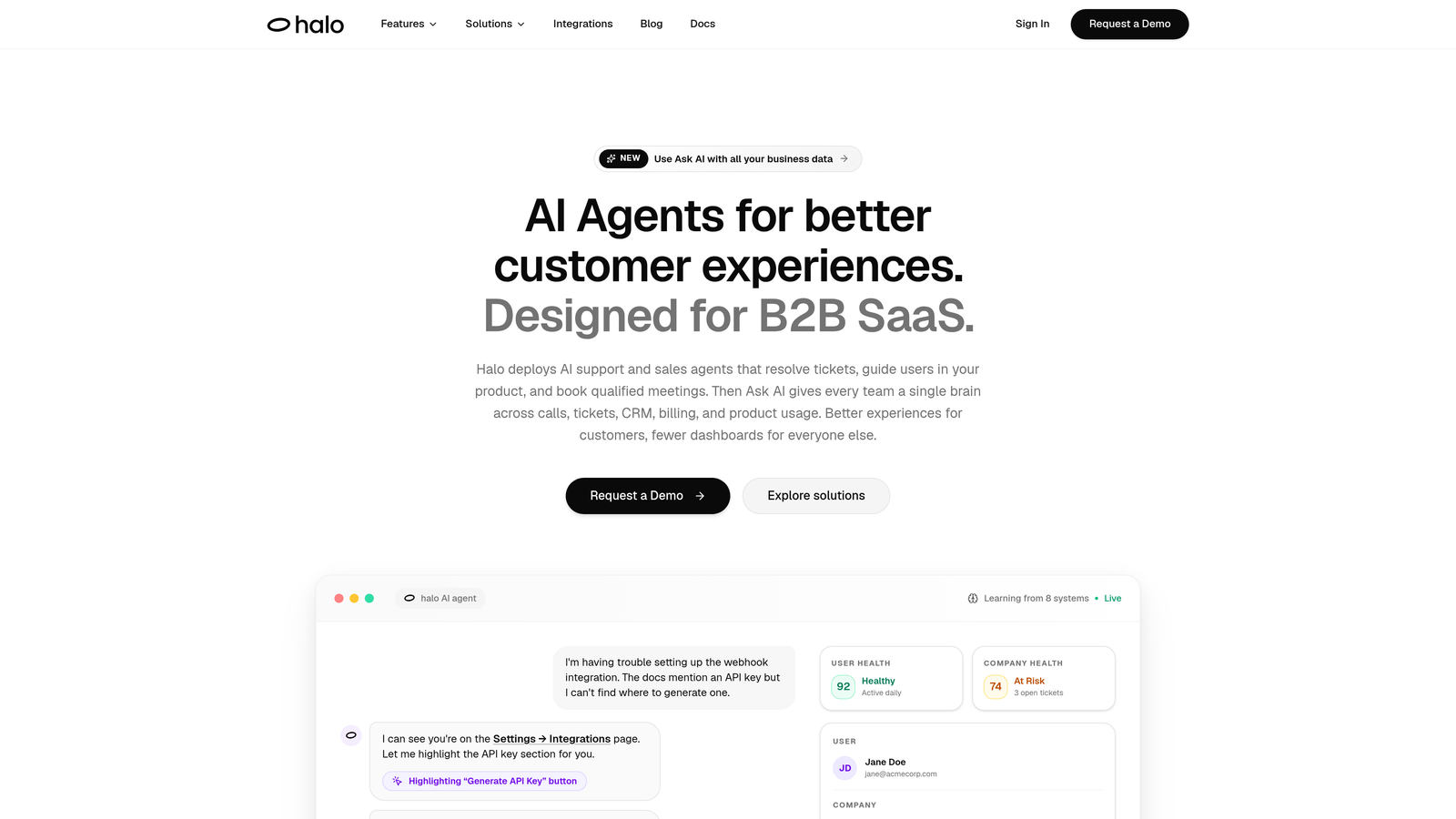
Halo AI is an AI-first customer support platform that deploys intelligent agents to resolve tickets, guide users through your product with page-aware context, and surface business intelligence signals — all while learning from every interaction.
Where This Tool Shines
Most helpdesks bolt AI onto an existing ticketing system. Halo AI is built the other way around: the AI agent is the primary resolution layer, not a feature you activate in settings. That architectural difference matters when you're a small team that needs AI to actually resolve tickets, not just suggest canned responses for a human to approve.
The standout capability here is page-aware context. Halo's chat widget sees what the user sees — the exact page they're on, what they're trying to do — and provides visual UI guidance specific to that moment. Pair that with continuous learning from every resolved interaction, and the AI gets meaningfully smarter over time rather than staying static.
Key Features
Page-Aware Chat Widget: The widget understands the user's current page and provides contextual, visual guidance rather than generic answers.
Autonomous Ticket Resolution: AI agents resolve routine tickets end-to-end, with smart escalation to live agents when issues require a human touch.
Auto Bug Ticket Creation: Automatically identifies and routes bug reports to Linear or connected project management tools, eliminating manual triage between support and engineering.
Smart Inbox with Business Intelligence: Goes beyond support metrics to surface customer health signals, revenue anomalies, and churn indicators — turning your support inbox into a business intelligence layer.
Deep Integration Stack: Connects natively with Linear, Slack, HubSpot, Intercom, Stripe, Zoom, PandaDoc, and Fathom — the tools that SaaS and product teams actually use.
Best For
SaaS startups and product-led growth companies that want AI to be the first and primary resolution layer, not a secondary feature. Particularly well-suited for teams where support tickets frequently overlap with product feedback and bug reports — Halo closes that loop automatically.
Pricing
Contact for pricing. Halo AI is designed for SaaS and product-led growth teams; pricing is tailored to your support volume and team size.
2. Freshdesk
Best for: Small teams that want omnichannel support with a free starting point
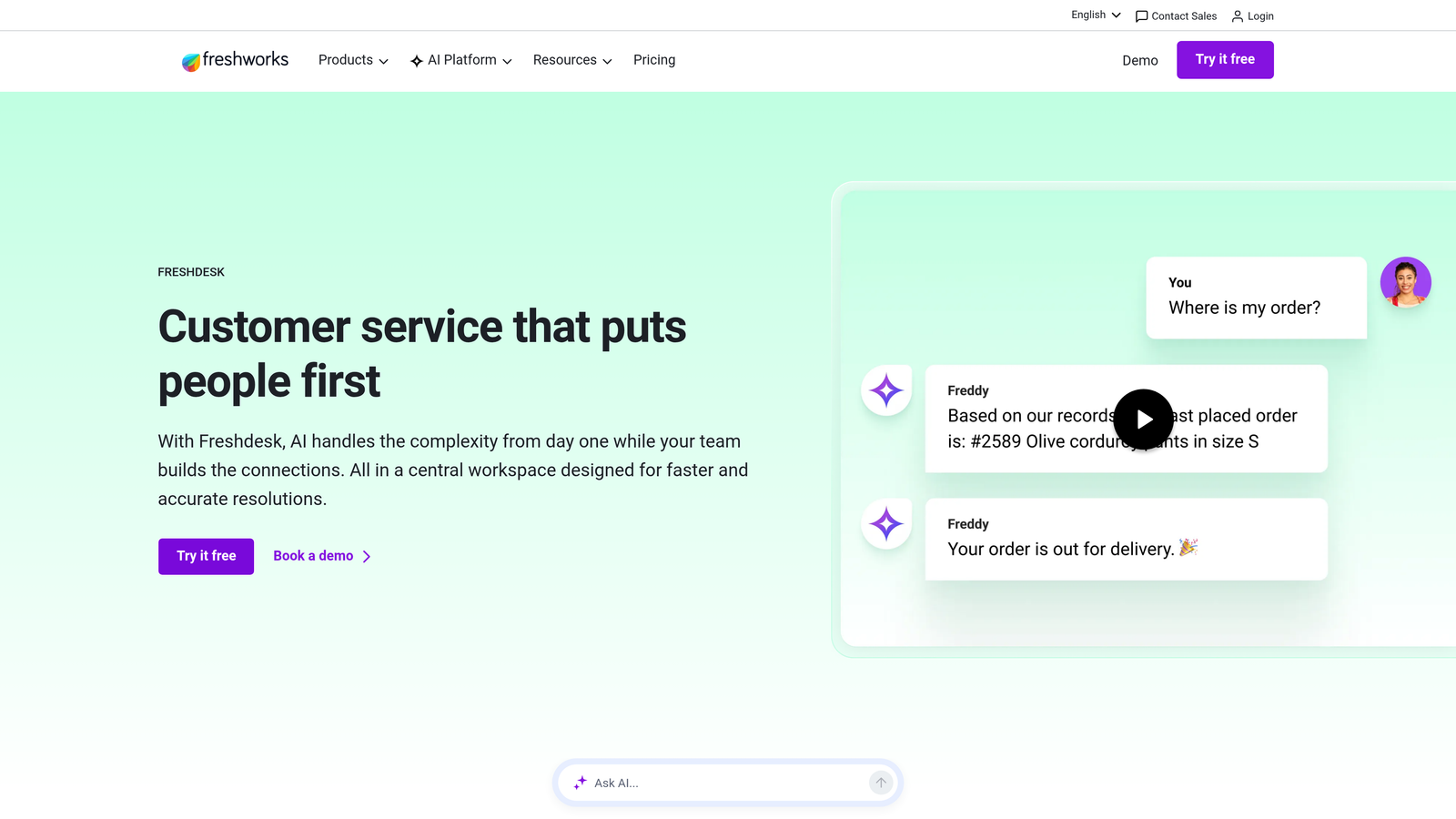
Freshdesk is a widely-used helpdesk platform from Freshworks with Freddy AI built in for ticket triage, suggested replies, and agent assistance.
Where This Tool Shines
Freshdesk's free Sprout plan is genuinely useful — unlimited agents with core ticketing features included. For a small team formalizing support for the first time, that's a meaningful on-ramp. Freddy AI handles the routine work: auto-triaging incoming tickets, suggesting canned responses, and assisting agents mid-conversation.
The omnichannel coverage is strong for the price point. Email, chat, phone, and social media all flow into one inbox, which eliminates the fragmentation that plagues small teams managing support across multiple tools.
Key Features
Freddy AI: Handles auto-triage, canned response suggestions, and real-time agent assist during live conversations.
Omnichannel Inbox: Email, chat, phone, and social media support consolidated into a single view.
Free Sprout Plan: Unlimited agents with limited features — a genuine free tier, not a 14-day trial.
Automation Rules: Ticket routing and SLA management without manual configuration for every scenario.
App Marketplace: Over 1,000 integrations available for extending functionality as your needs grow.
Best For
Small businesses that need omnichannel support without a large upfront investment. Particularly good for teams that are growing into helpdesk software for the first time and want room to scale without switching platforms.
Pricing
Free plan available (Sprout tier). Paid plans start at approximately $15 per agent per month on the Growth tier, with more advanced AI features unlocking at higher tiers.
3. Intercom
Best for: SaaS companies that want AI ticket resolution combined with in-app onboarding and messaging
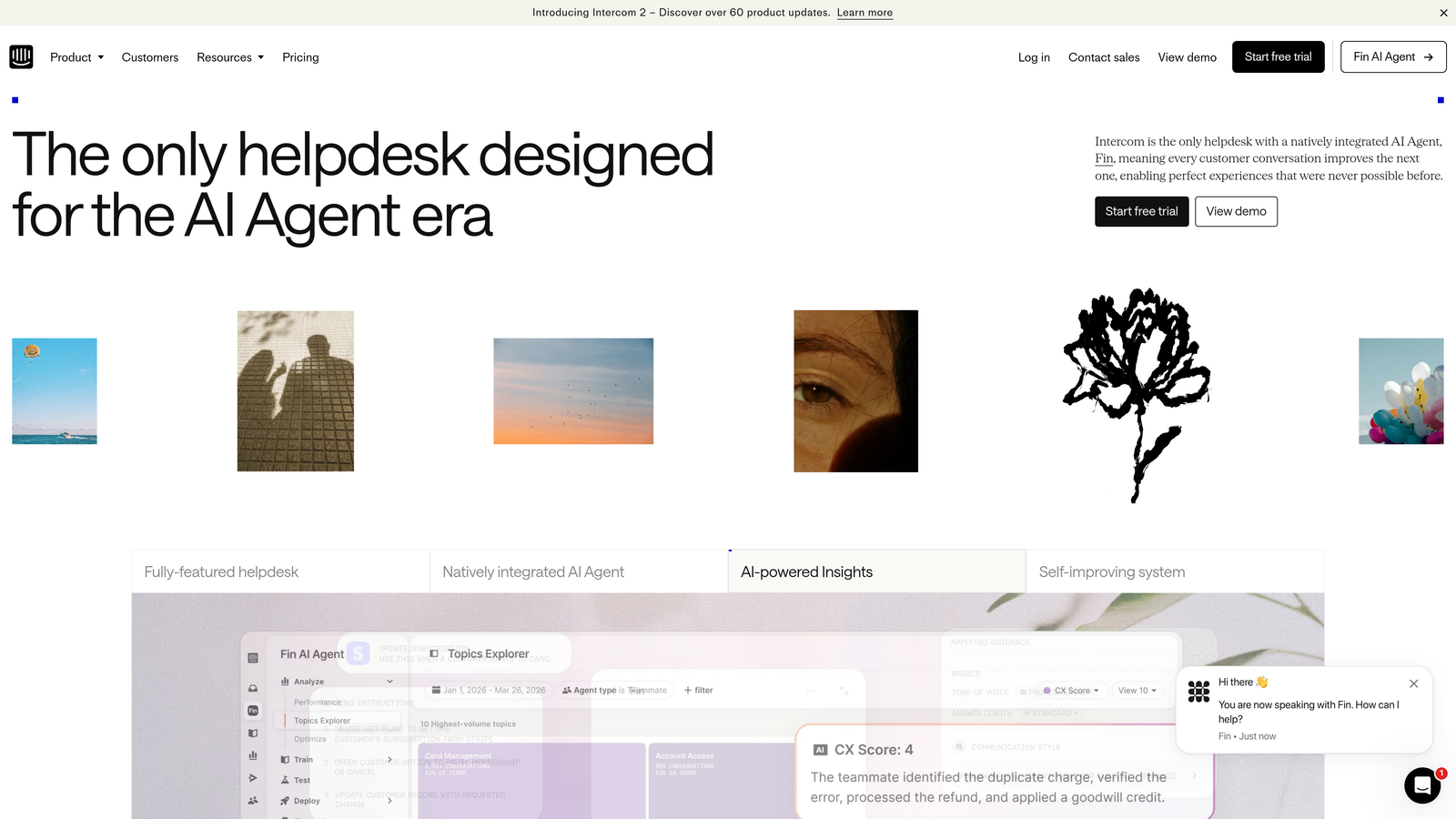
Intercom is a customer communications platform with Fin, a powerful AI agent capable of multi-step ticket resolution trained on your support content.
Where This Tool Shines
Fin is one of the more capable AI agents in this category. It's trained on your existing help content and can handle multi-step conversations — not just pattern-matching keywords to FAQ answers. For SaaS companies with a solid knowledge base already in place, Fin can resolve a meaningful portion of incoming tickets without agent involvement.
Beyond support, Intercom's in-app messaging, product tours, and onboarding flows make it a platform play rather than a pure helpdesk. If you want one tool to handle support, onboarding, and proactive customer communication, Intercom covers a lot of ground.
Key Features
Fin AI Agent: Autonomous ticket resolution trained on your support content, capable of multi-step conversation handling.
In-App Messaging and Product Tours: Onboarding flows and proactive messaging built into the same platform as support.
AI-Powered Inbox: Conversation summaries and suggested next actions to speed up agent responses.
SaaS Integrations: Native connections to Salesforce, HubSpot, and Stripe for unified customer context.
Resolution Reporting: Detailed metrics on AI resolution rates and customer satisfaction scores.
Best For
SaaS companies that want to consolidate support, onboarding, and customer communication into one platform. Best when you have existing help content to train Fin on — the AI performs better with a strong knowledge base behind it.
Pricing
Starts at approximately $39 per seat per month. Fin AI resolution fees apply per resolved conversation, so costs can scale with volume — worth modeling before committing.
4. Zendesk
Best for: Small businesses planning to scale that want enterprise-grade infrastructure from day one
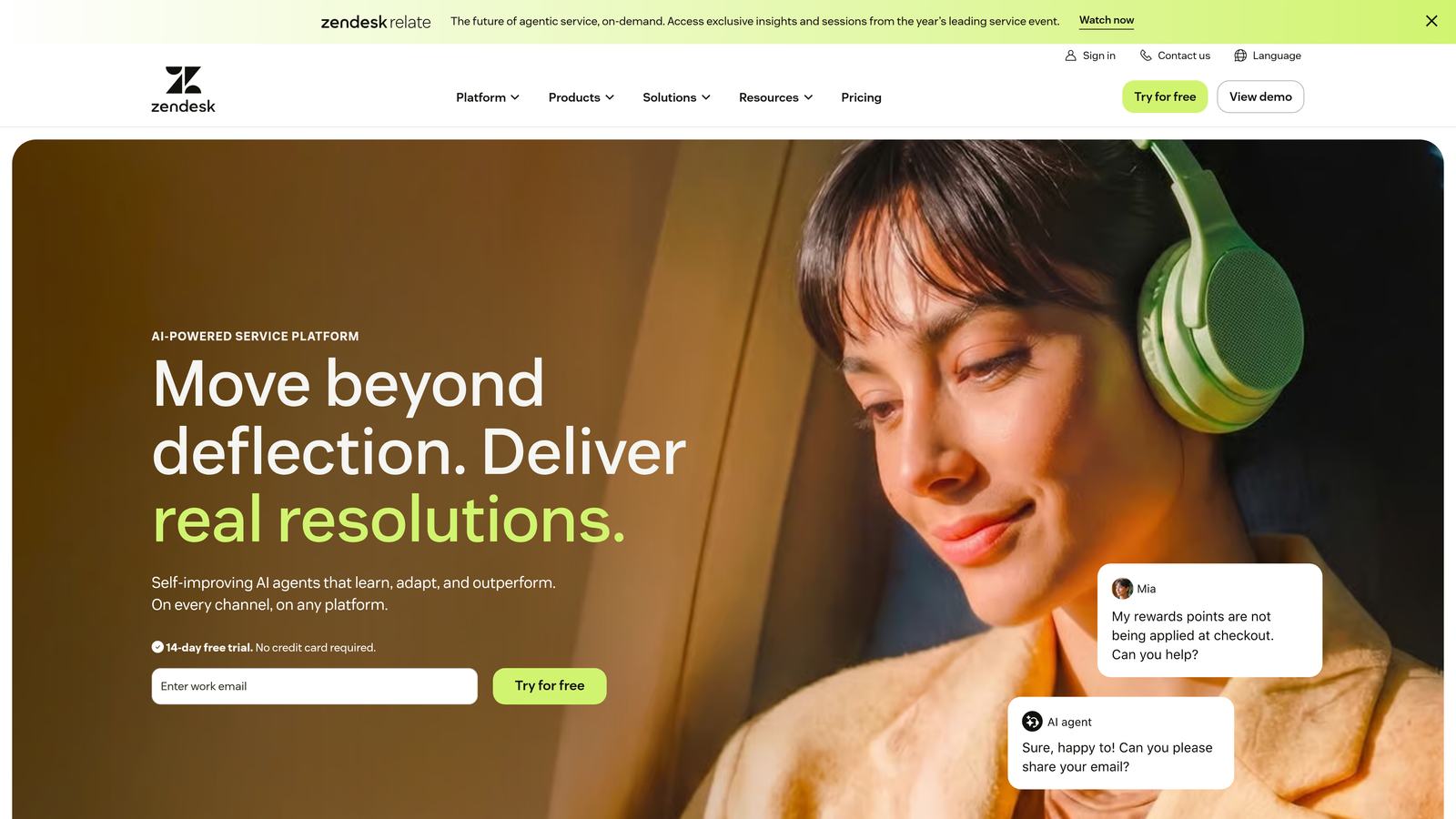
Zendesk is the enterprise-grade helpdesk standard, now with AI-powered triage, intelligent agents, and a vast app ecosystem — available to small businesses on entry-tier plans.
Where This Tool Shines
Zendesk's core strength is its infrastructure depth. The platform handles complex routing logic, multi-brand support, and advanced SLA configurations that most small businesses won't need on day one — but will appreciate when they scale. The AI features have matured significantly, with intelligent triage and AI agents handling front-line resolution at the lower tiers.
The app marketplace is unmatched in breadth. With over 1,500 integrations, Zendesk connects to virtually any tool in your stack. For businesses with non-standard workflows or niche integrations, that flexibility matters.
Key Features
AI-Powered Triage and Routing: Intelligent classification and routing of incoming tickets based on content, intent, and priority.
Zendesk AI Agents: Automated front-line resolution for common queries before tickets reach a human agent.
Macro Suggestions: AI-assisted reply recommendations to help agents respond faster and more consistently.
1,500+ App Integrations: One of the largest integration marketplaces in the helpdesk category.
Advanced Reporting: SLA tracking, team performance metrics, and customer satisfaction analytics.
Best For
Small businesses with growth ambitions that don't want to migrate platforms in 18 months. Zendesk is a long-term infrastructure investment — the learning curve and price point are higher than some alternatives, but the ceiling is much higher too.
Pricing
Suite Team starts at approximately $55 per agent per month. AI add-ons are available at higher tiers, which can push costs up for small teams watching their budget closely.
5. Tidio
Best for: E-commerce brands that need 24/7 AI chat with fast setup and native Shopify integration
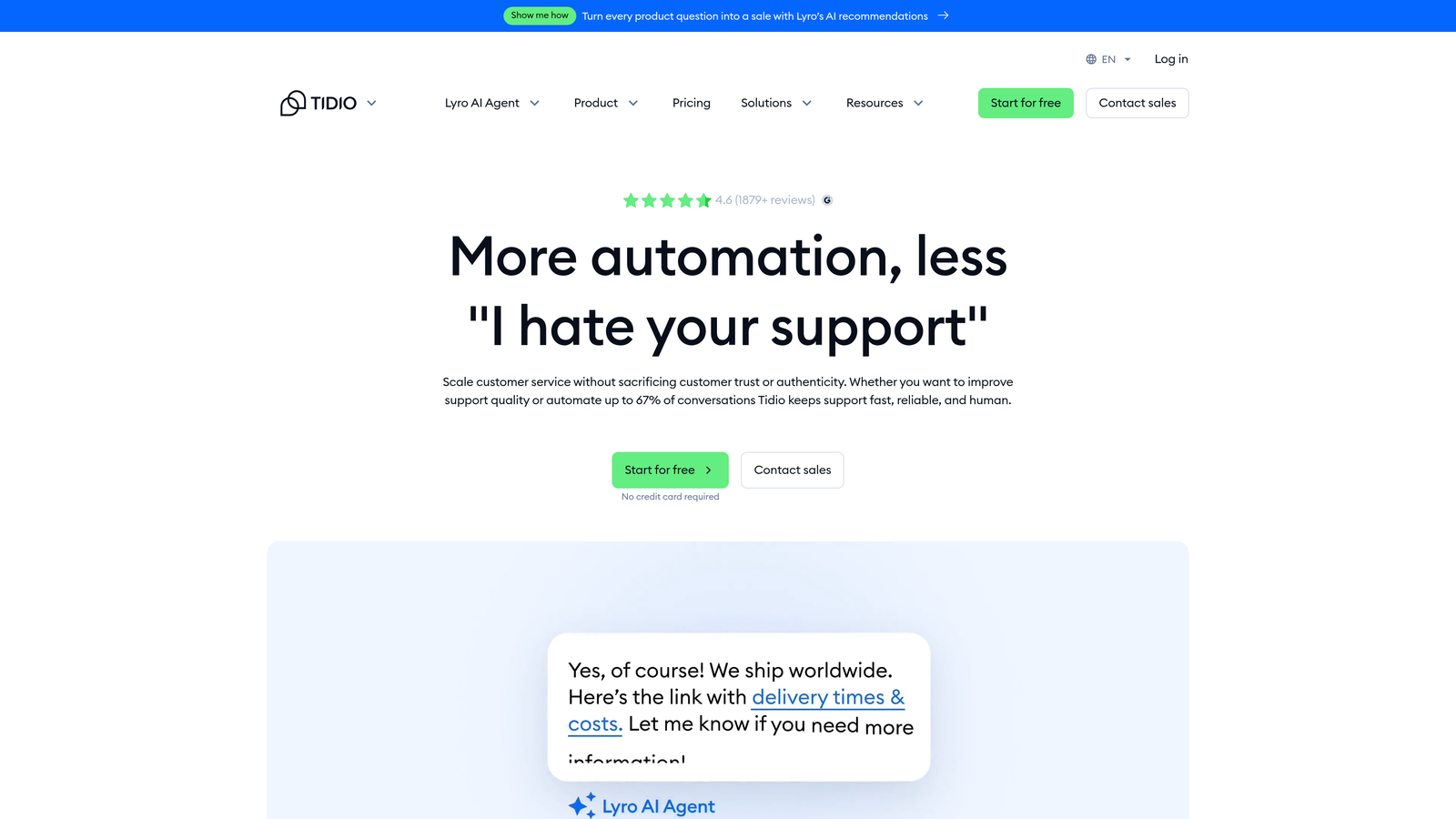
Tidio is a live chat and AI chatbot platform built for e-commerce, featuring Lyro — a conversational AI agent that handles customer queries around the clock.
Where This Tool Shines
Tidio's setup speed is genuinely impressive. Most teams are live in under 30 minutes, which matters for small businesses that don't have a technical resource to manage a multi-week implementation. Lyro handles common customer queries conversationally — order status, return policies, product questions — without requiring a human agent to be online.
The Shopify and WooCommerce integrations are native and deep, not just webhook connections. Customer order data surfaces directly in the chat context, giving Lyro the information it needs to answer purchase-related questions accurately.
Key Features
Lyro AI Chatbot: Conversational AI agent available 24/7 for automated customer query handling.
Native E-Commerce Integrations: Deep Shopify and WooCommerce connections with order data surfaced in chat context.
Live Chat with Agent Takeover: Smooth handoff from Lyro to a human agent when conversations exceed the AI's capabilities.
Multichannel Support: Email and Messenger alongside live chat, consolidated in one inbox.
Fast Setup: Typically live in under 30 minutes without technical configuration.
Best For
E-commerce brands on Shopify or WooCommerce that handle high volumes of order-related queries and need 24/7 coverage without hiring overnight support staff. Also a strong choice for businesses that want to be operational quickly.
Pricing
Free plan available with limited features. Lyro AI starts at approximately $29 per month; paid plans from approximately $29 per month depending on conversation volume and features needed.
6. Help Scout
Best for: Service businesses and teams that prioritize relationship-focused support over automation-heavy workflows
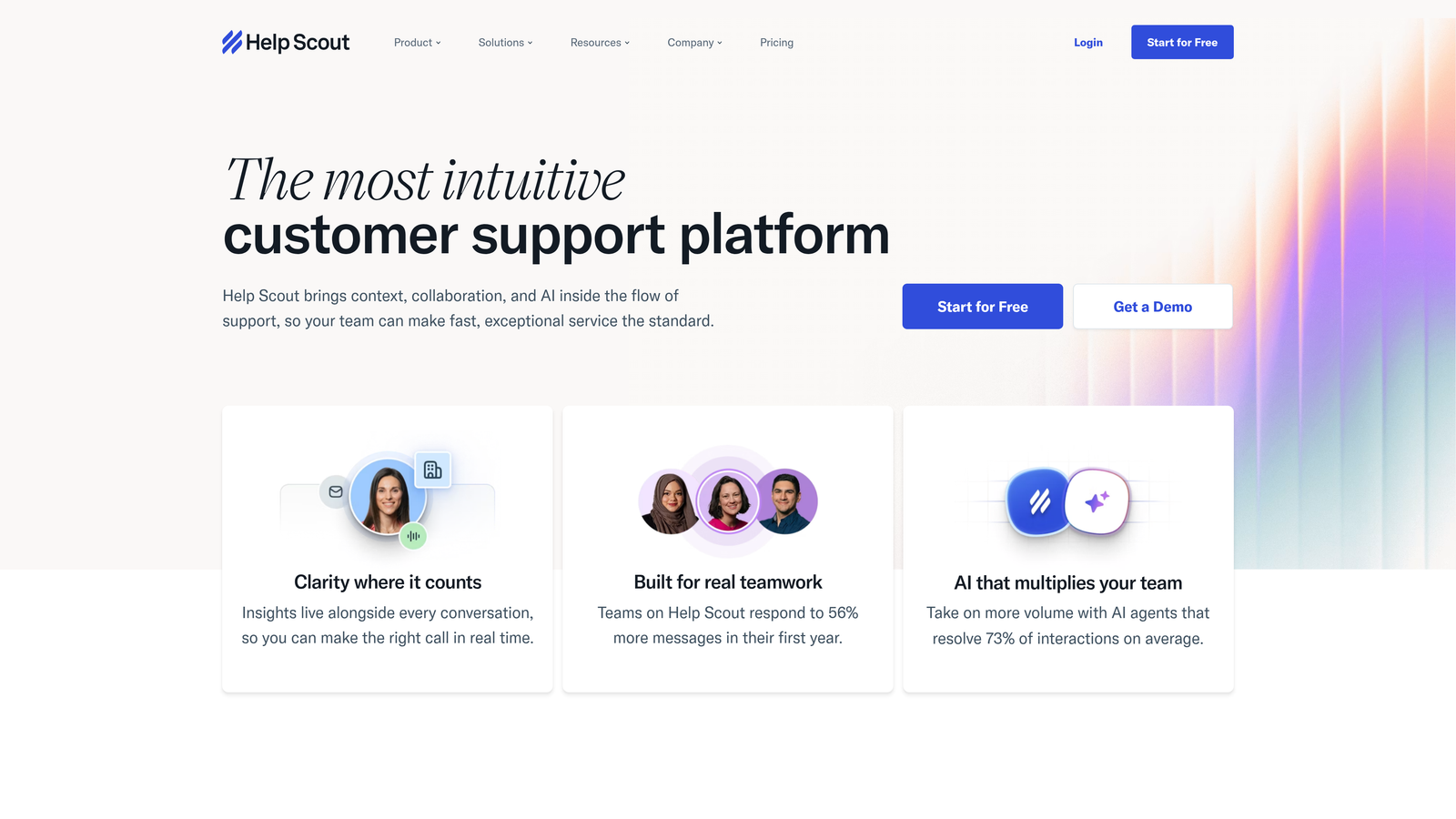
Help Scout is a human-centric helpdesk with AI Assist and AI Summarize features, designed for teams that want clean, relationship-focused support without the complexity of enterprise platforms.
Where This Tool Shines
Help Scout's design philosophy is intentionally different from most helpdesks. There's no ticket number in the UI, no per-ticket clutter — just a clean shared inbox that feels closer to email than a support system. That simplicity translates to faster agent onboarding and less friction for small teams.
The AI features are thoughtfully integrated rather than bolted on. AI Summarize condenses long email threads into the key points before an agent responds, saving meaningful time on complex conversations. AI Assist helps draft replies and adjust tone — useful for small teams where the same person handles both technical and billing queries.
Key Features
AI Summarize: Condenses long email threads into key points so agents can respond without reading every message in a chain.
AI Assist: Drafts replies and adjusts tone to match the situation, helping agents respond consistently.
Clean Shared Inbox: No per-ticket UI clutter — designed to feel like a collaborative email experience.
Docs Knowledge Base: Built-in knowledge base with AI-powered search for customer self-service.
Customer Profiles: Full conversation history across channels attached to each customer contact.
Best For
Service businesses, agencies, and teams where the quality of each customer interaction matters as much as resolution speed. Help Scout is particularly well-suited for businesses where support is relationship-building, not just ticket-closing.
Pricing
Starts at approximately $22 per user per month on the Standard plan. A 15-day free trial is available — no credit card required.
7. Zoho Desk
Best for: Small businesses already using Zoho CRM that want unified customer data across sales and support
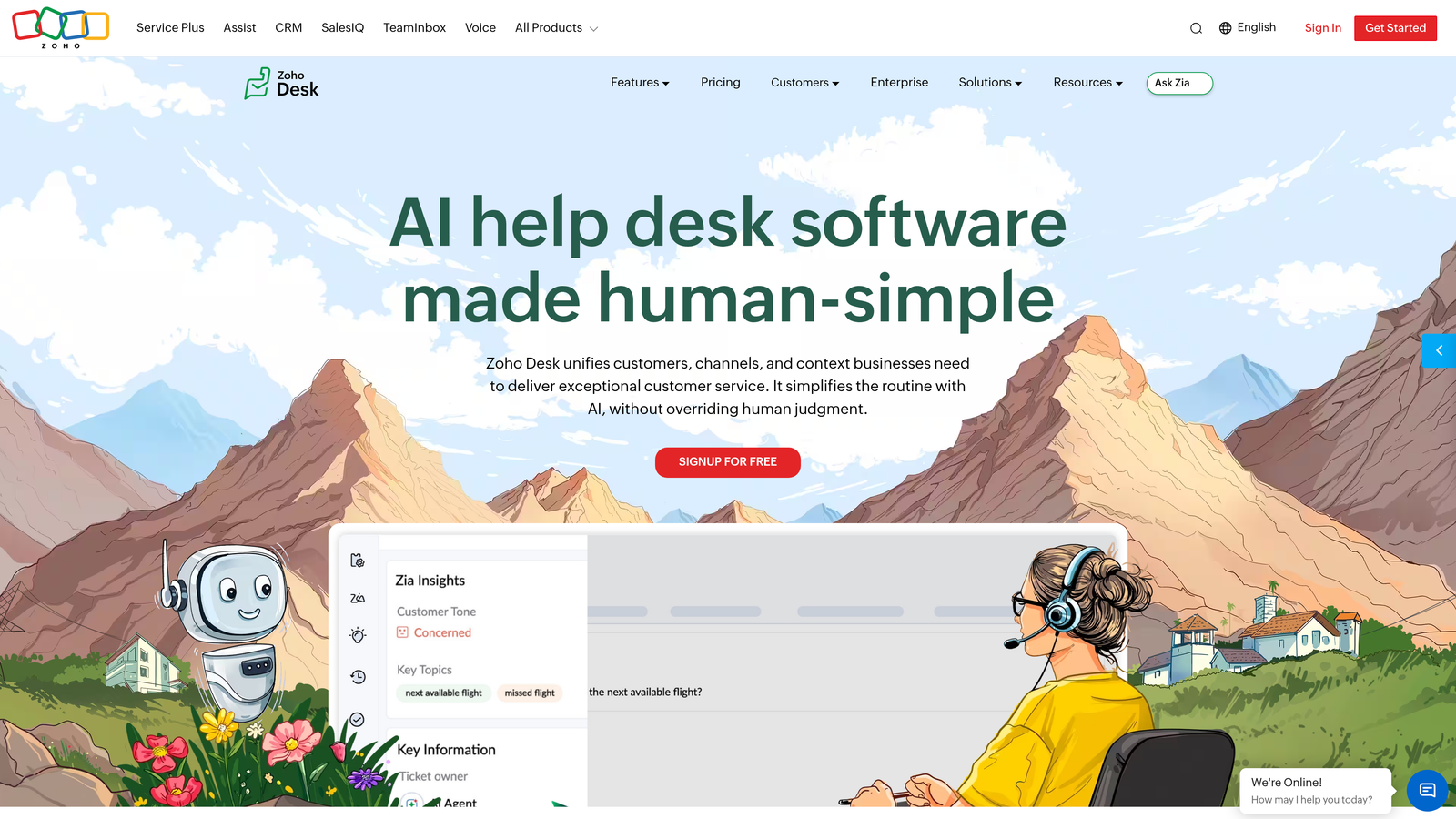
Zoho Desk is a feature-rich helpdesk with Zia, Zoho's AI assistant, offering sentiment analysis, anomaly detection, and suggested responses — tightly integrated with Zoho CRM.
Where This Tool Shines
If your business already runs on Zoho CRM, Zoho Desk is the natural support layer. Customer data flows between the two systems without manual syncing — support agents see CRM history, deal status, and account health directly in the ticket view. That context makes every conversation more informed.
Zia brings some genuinely useful AI capabilities beyond basic triage. Sentiment analysis flags tickets from frustrated customers for priority handling. Anomaly detection alerts you when ticket volume spikes unexpectedly — useful for catching product issues before they escalate into a flood of complaints.
Key Features
Zia AI Assistant: Handles sentiment analysis, automatic ticket tagging, and response suggestions for agents.
Anomaly Detection: Identifies unusual spikes in ticket volume and alerts the team before issues compound.
Deep Zoho CRM Integration: Unified customer data across sales and support without manual data entry or syncing.
Multi-Channel Support: Email, chat, social media, and phone all managed from one interface.
Blueprint Workflow Automation: Visual workflow builder for consistent, repeatable support processes.
Best For
Businesses already invested in the Zoho ecosystem, particularly those using Zoho CRM. Also a strong value pick for budget-conscious teams that need multi-channel support and AI features without a premium price tag.
Pricing
Free plan available for up to 3 agents. Paid plans start at approximately $14 per agent per month on the Standard tier — one of the more competitive price points in this category.
8. Gorgias
Best for: E-commerce brands, especially Shopify merchants, with high volumes of order-related support tickets
Gorgias is a support helpdesk purpose-built for e-commerce brands, with AI auto-close for routine queries, deep Shopify integration, and revenue-per-ticket tracking.
Where This Tool Shines
Gorgias does one thing extremely well: e-commerce support. Order data from Shopify surfaces directly in the ticket view, so agents never need to switch tabs to look up a customer's purchase history. The AI auto-close feature handles the highest-volume, lowest-complexity tickets — "where is my order?" and shipping status queries — without any agent involvement.
The revenue attribution feature is a differentiator worth noting. Gorgias tracks which support conversations lead to purchases, giving small e-commerce teams a concrete way to measure support's impact on revenue rather than treating it purely as a cost center.
Key Features
AI Auto-Close: Automatically resolves high-volume routine queries like order status and shipping updates without agent intervention.
Live Shopify Order Data: Customer order information surfaces directly in the support ticket view for context-aware responses.
Revenue Attribution: Tracks which support conversations contribute to sales, connecting support activity to business outcomes.
Macros and Rules: Automated response templates and routing rules for consistent handling of common query types.
E-Commerce Integrations: Native connections to Klaviyo, Recharge, and major e-commerce platforms beyond Shopify.
Best For
Shopify merchants and e-commerce brands with predictable, high-volume support queues dominated by order and shipping questions. Pricing by ticket volume (rather than per seat) can be cost-effective for small teams with consistent support loads.
Pricing
Starts at approximately $10 per month on the Starter plan (50 tickets included). Pricing scales with ticket volume rather than agent seats, which suits lean teams with high customer volumes.
9. Crisp
Best for: Bootstrapped startups formalizing support for the first time with minimal budget
Crisp is a shared inbox and chat platform with an AI chatbot builder and a generous free plan — a practical starting point for early-stage teams that need to look professional without a significant investment.
Where This Tool Shines
Crisp's free tier is genuinely functional, not a stripped-down teaser. Two agents, a shared inbox, and basic live chat are included at no cost — enough for a very early-stage team to handle support properly. The AI chatbot builder lets you automate responses to common questions without needing a developer to configure it.
The multichannel inbox consolidates email, live chat, Facebook Messenger, and Twitter/X into one place, which eliminates the context-switching that fragments small team attention. CRM-lite features — contact profiles and conversation history — give you basic customer context without needing a separate CRM tool.
Key Features
Generous Free Plan: Shared inbox and basic live chat for up to 2 agents at no cost — a real starting point, not a trial.
AI Chatbot Builder: Visual builder for automating responses to common queries without developer involvement.
Multichannel Inbox: Email, live chat, Messenger, and Twitter/X consolidated in one view.
CRM-Lite Features: Contact profiles and full conversation history for basic customer context.
Team Collaboration: Internal notes, mentions, and assignment features for coordinating across small teams.
Best For
Bootstrapped startups and very early-stage businesses that need to formalize support without a budget. Crisp is also a sensible choice for solopreneurs or two-person teams that want structure without the overhead of a full helpdesk platform.
Pricing
Free plan available for up to 2 agents. Pro plan starts at approximately $25 per month per workspace — pricing is per workspace rather than per seat, which is cost-effective as the team grows.
Which Tool Is Right for Your Business?
The best AI helpdesk isn't the one with the longest feature list — it's the one your team will actually use and that fits your customer base. Here's a quick way to think through the decision.
For SaaS and product-led growth teams: Halo AI is the strongest fit. The page-aware context, autonomous ticket resolution, auto bug ticket creation, and business intelligence signals are purpose-built for the way SaaS support actually works — where tickets often carry product feedback and engineering implications, not just customer service requests.
For e-commerce brands: Gorgias wins for Shopify merchants with high order-related ticket volumes. Tidio is the better choice if you want faster setup and 24/7 AI chat coverage without the per-ticket pricing model.
For service businesses and agencies: Help Scout's clean, relationship-focused design and thoughtful AI features make it the most natural fit. It doesn't feel like a ticketing system — it feels like a better version of email.
For bootstrapped teams with minimal budget: Start with Crisp's free plan or Freshdesk's Sprout tier. Both give you a real working setup at no cost, with paid tiers available when you're ready to unlock more AI capability.
For businesses scaling fast and planning ahead: Zendesk's infrastructure depth is hard to match. The higher price point pays off when you're managing multiple support channels, brands, or complex SLA requirements.
One more consideration worth naming: the AI capability gap between these tools is real. There's a meaningful difference between a platform where AI suggests a reply for a human to send and one where AI resolves the ticket autonomously. As your support volume grows, that gap compounds — which is why getting the architecture right early matters.
Your support team shouldn't scale linearly with your customer base. Let AI agents handle routine tickets, guide users through your product, and surface business intelligence while your team focuses on complex issues that need a human touch. See Halo in action and discover how continuous learning transforms every interaction into smarter, faster support.