9 Best AI Helpdesk Software for Startups in 2026
Discover the 9 best AI helpdesk software for startups in 2026, evaluated on AI capability, pricing transparency, and scalability from seed stage to Series B. This guide helps lean support teams handle high ticket volumes without sacrificing response quality, covering top platforms suited for startups building their first support workflow or optimizing an existing one.
 Matt PattoliFounder13 min read
Startups face a unique support challenge: you need enterprise-grade responsiveness with a lean team and a tight budget. Traditional helpdesks were built for headcount — the more tickets, the more agents you hire. AI helpdesk software flips that model entirely, letting a small team handle high ticket volumes without sacrificing response quality or speed.
This list covers the best AI helpdesk platforms purpose-built (or well-suited) for startups in 2026. We evaluated each tool on AI capability depth, ease of setup, integration flexibility, pricing transparency, and how well it scales from seed stage to Series B and beyond. Whether you're running a two-person support team or building your first support workflow from scratch, there's an option here that fits. Let's get into it.
1. Halo AI
Best for: B2B SaaS startups that want support to generate business intelligence, not just close tickets.
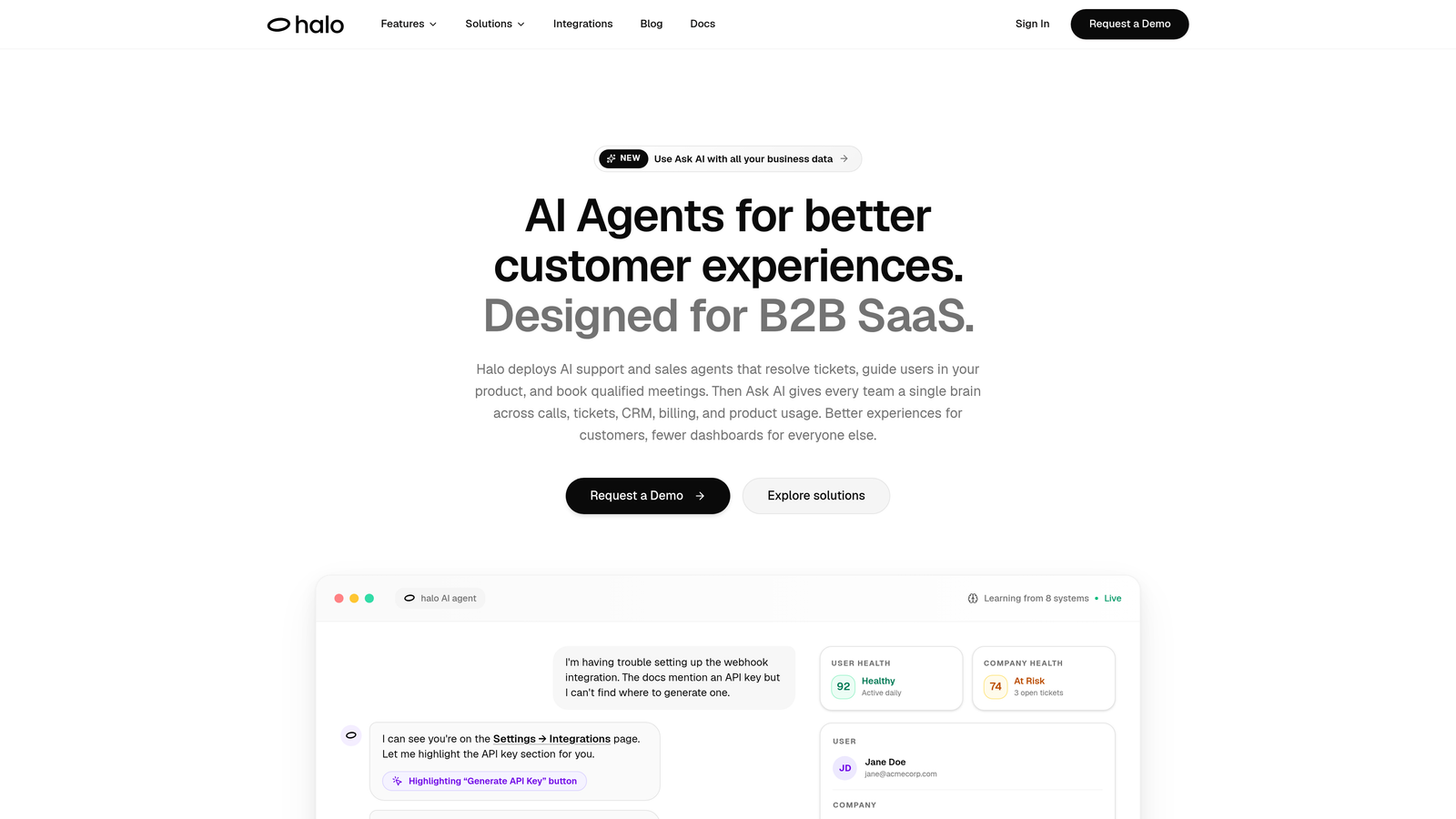
Halo AI is an AI-first customer support platform deploying autonomous agents for ticket resolution, in-product guidance, and business intelligence.
Where This Tool Shines
Most helpdesks bolt AI onto an existing ticketing foundation. Halo is built the other way around: the AI agent is the core product, not a feature layer. That distinction matters more than it sounds. When AI is central to the architecture, every part of the platform, from how tickets are routed to how context is passed during escalation, is designed around autonomous resolution rather than human-first workflows with AI assistance tacked on.
The page-aware chat widget is one of Halo's most distinctive capabilities. Rather than offering generic help content, the AI sees the specific page and product state the user is currently on. That context enables guidance that's actually relevant, not just a search box with a chatbot skin. Combine that with continuous learning from every resolved interaction, and the system gets meaningfully smarter over time without manual retraining.
Key Features
Autonomous AI Agents: Resolve tickets end-to-end without human involvement, learning and improving from every interaction.
Page-Aware Chat Widget: The AI understands which page and product state the user is on, enabling precise, contextual guidance rather than generic answers.
Smart Inbox with Business Intelligence: Surfaces customer health signals, churn risk indicators, and revenue anomalies from within support data — turning your inbox into a strategic signal layer.
Auto Bug Ticket Creation: Automatically generates structured bug reports and routes them directly to Linear or equivalent project management tools.
Live Agent Handoff: Escalates to human agents with full conversation context preserved, so nothing gets repeated or lost in translation.
Integration Stack: Connects with Linear, Slack, HubSpot, Intercom, Stripe, Zoom, PandaDoc, and Fathom.
Best For
B2B SaaS startups that want their support function to do more than deflect tickets. If you're looking for a platform that surfaces churn signals, feeds bug reports into your engineering workflow, and connects support data to your revenue stack, Halo is built for exactly that kind of cross-functional leverage.
Pricing
Pricing is not publicly listed at a fixed rate. Contact Halo AI directly or visit haloagents.ai for current plans and startup-specific options.
2. Intercom
Best for: Product-led growth startups needing in-app messaging, onboarding flows, and AI-powered support in one platform.
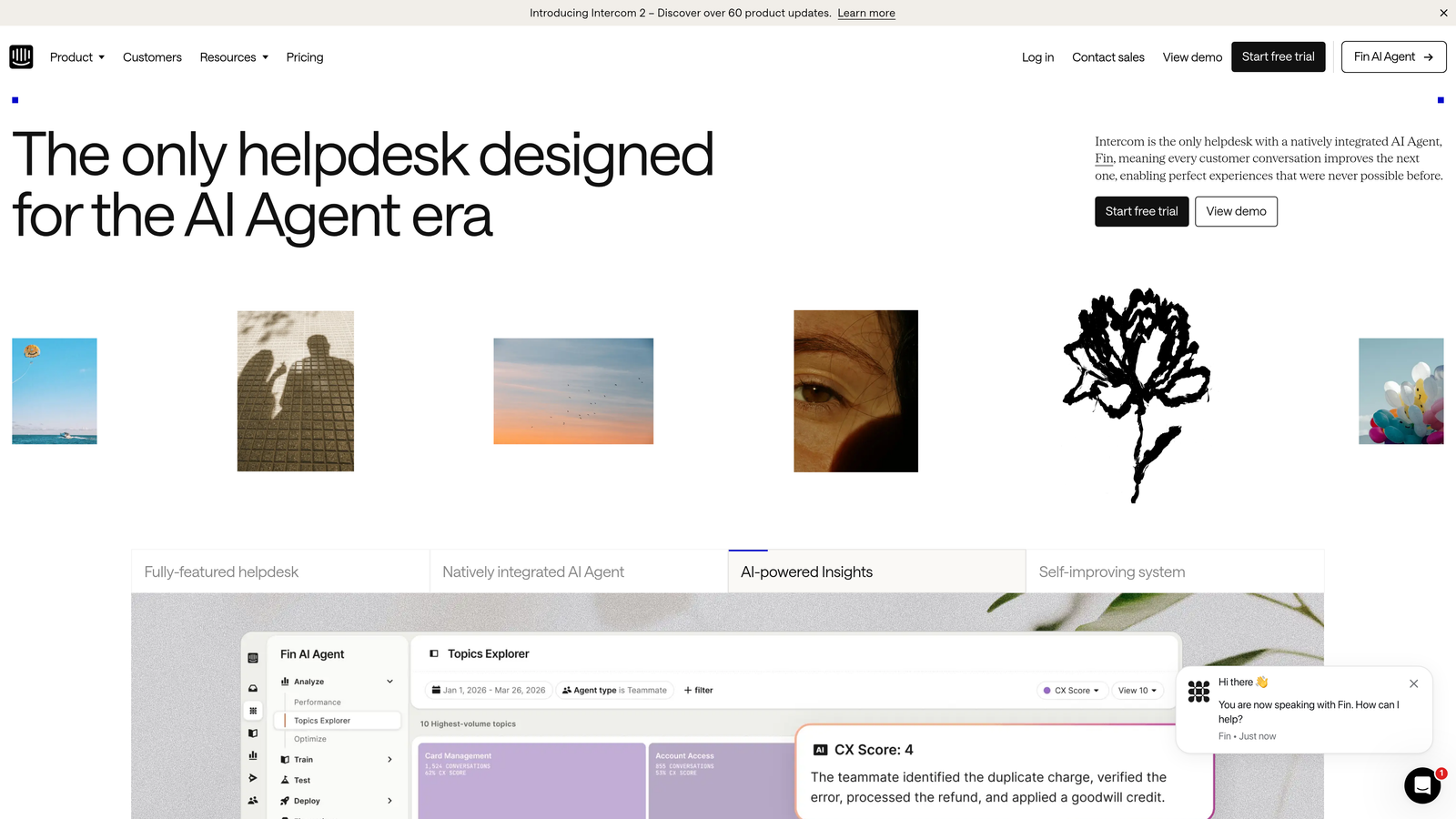
Intercom is a mature customer messaging platform with Fin, a native AI agent that resolves support queries autonomously using your help center content.
Where This Tool Shines
Intercom has been around long enough to get the fundamentals right. Fin, their AI agent, is trained on your existing help center content and can resolve common queries without any agent involvement. For PLG startups where users expect instant, in-app answers at any hour, that kind of autonomous resolution is a genuine competitive advantage.
Beyond support, Intercom bundles in product tours, onboarding checklists, and proactive messaging. That makes it particularly valuable for early-stage teams who want a single tool to handle both user activation and support, rather than stitching together separate products.
Key Features
Fin AI Agent: Resolves common support queries autonomously using your existing knowledge base content.
AI Copilot: Assists human agents with suggested replies and relevant knowledge surfacing in real time.
In-App Messaging and Product Tours: Supports onboarding flows and proactive user guidance directly inside your product.
Integration Depth: Connects with Salesforce, HubSpot, Stripe, and a wide range of SaaS tools.
Startup Program: Discounted access available for early-stage companies that qualify.
Best For
PLG startups that need support, onboarding, and in-app messaging under one roof. Intercom is a strong choice when user activation and support are closely linked and you want one platform handling both.
Pricing
Starts at approximately $39/month. Fin AI resolution is charged per resolved conversation. A startup program with meaningful discounts is available for qualifying early-stage companies.
3. Freshdesk
Best for: Pre-seed and seed-stage startups wanting a full-featured helpdesk with AI capabilities at accessible price points.
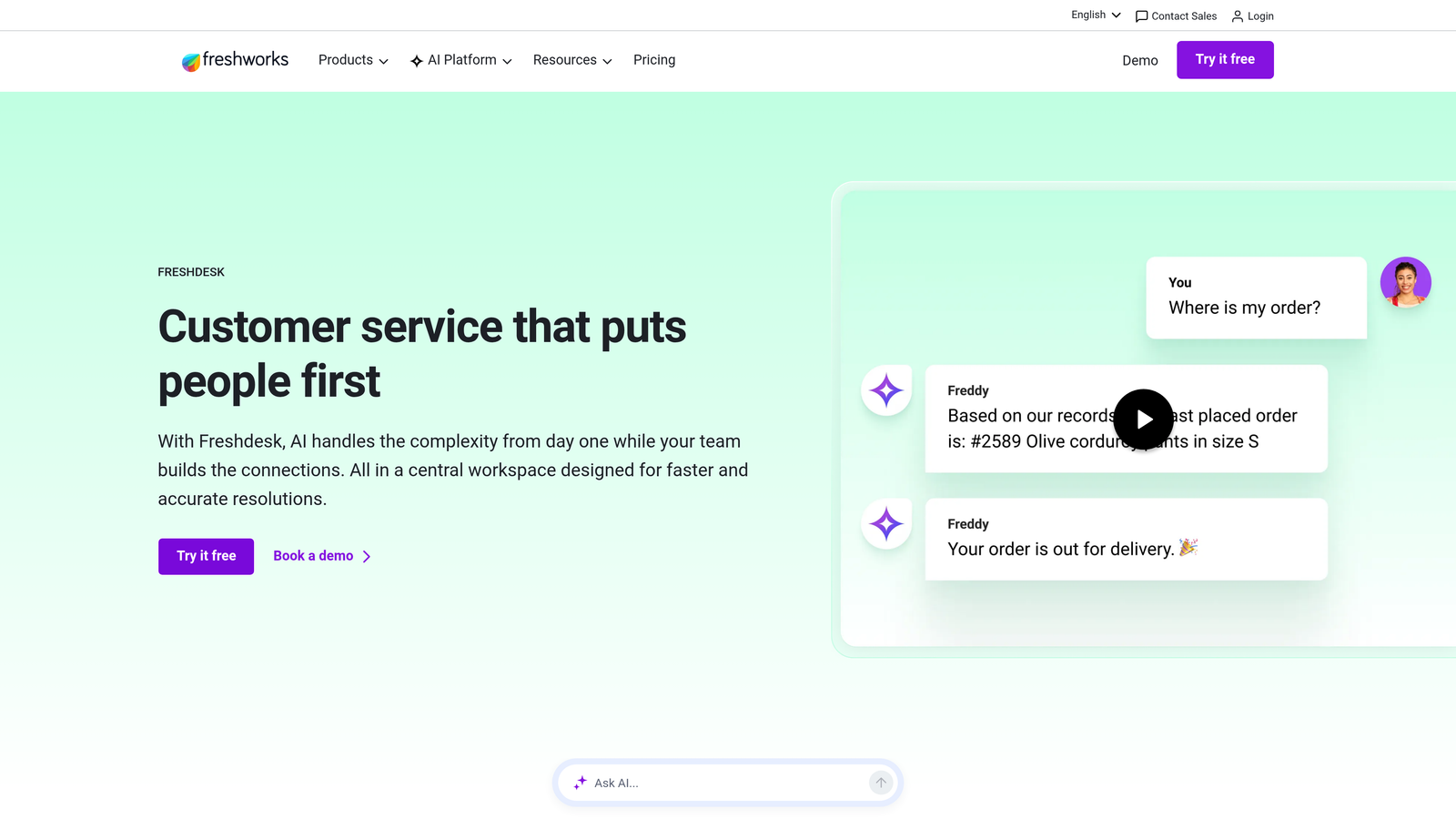
Freshdesk is a full-featured helpdesk suite from Freshworks with Freddy AI spanning self-service bots, agent assist, and analytics.
Where This Tool Shines
Freshdesk's pricing structure is one of its most compelling attributes for early-stage teams. A free tier exists for small teams, and paid plans start at a price point that doesn't require a budget conversation. That accessibility, combined with a genuinely capable AI layer through Freddy, makes it one of the more practical options for startups that can't yet justify enterprise helpdesk costs.
Freddy AI operates across three distinct layers: self-service bot for ticket deflection, Copilot for agent assist, and Insights for analytics. That layered approach means you can start with deflection and expand into more sophisticated AI use cases as your support operation matures.
Key Features
Freddy Self Service: AI bot trained on your knowledge base to deflect common tickets before they reach an agent.
Freddy Copilot: Assists agents with AI-drafted replies and conversation summarization.
Freddy Insights: AI-powered analytics that surface ticket trends and anomalies for support managers.
Omnichannel Coverage: Handles email, chat, phone, and social media from a single interface.
Free Tier: Available for small teams with limited features, providing a genuine no-cost starting point.
Best For
Budget-conscious startups at the pre-seed or seed stage who need a real helpdesk with AI features, not just a basic chat widget. Also a strong fit for startups already using other Freshworks products like CRM or ITSM.
Pricing
Free plan available. Paid plans start at approximately $15/agent/month. AI features (Freddy Copilot and Insights) are available on the Growth tier and above.
4. Zendesk
Best for: Series A+ startups planning rapid scale who need enterprise-grade infrastructure and the largest integration marketplace available.
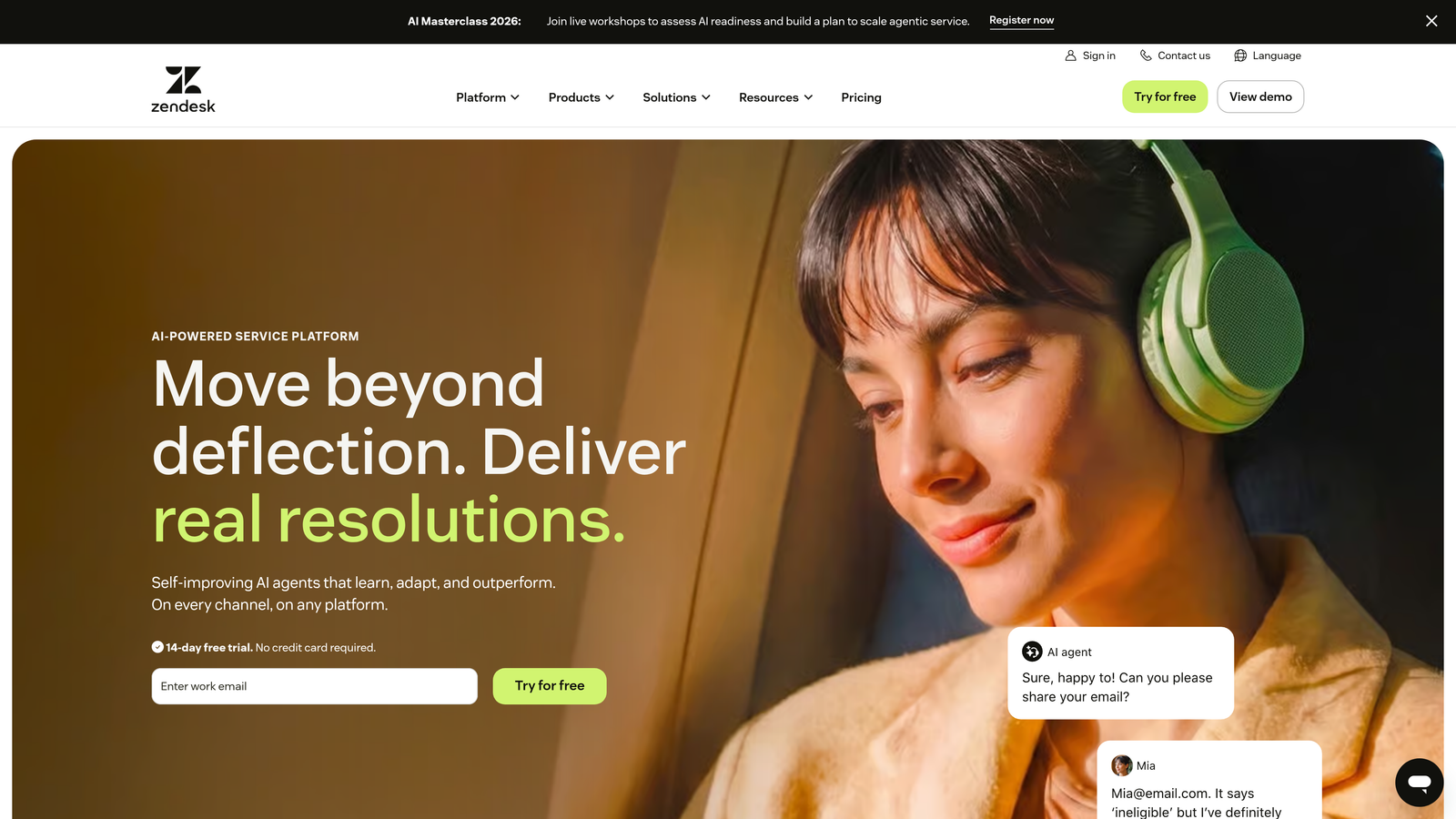
Zendesk is the industry-standard helpdesk platform with deep AI capabilities layered across triage, agent assistance, and workflow automation.
Where This Tool Shines
Zendesk's core strength is its maturity. The ticketing infrastructure is battle-tested at scale, the app marketplace has hundreds of integrations, and the SLA management and reporting tools are among the most robust in the market. For startups that know they're headed toward significant volume, there's real value in building on a foundation that won't require a platform migration later.
AI in Zendesk is layered onto that mature foundation rather than native to it. Intelligent triage, Agent Copilot for suggested replies, and automated workflows all work well, but the platform's DNA is traditional ticketing first, AI second. That's worth understanding before you commit.
Key Features
AI-Powered Triage: Automatically classifies and routes incoming tickets based on content and intent.
Agent Copilot: Surfaces relevant knowledge and suggests replies in real time as agents work tickets.
App Marketplace: Hundreds of integrations spanning CRM, billing, project management, and communication tools.
SLA Management and Reporting: Robust tools for tracking response times, resolution rates, and team performance.
Zendesk for Startups Program: Six months of free access for qualifying early-stage companies.
Best For
Startups at Series A and beyond with the budget to match and a clear need for enterprise-grade infrastructure. The startup program makes early access viable, but the full platform cost is better absorbed once you've reached meaningful scale.
Pricing
Suite Team starts at approximately $55/agent/month. The Zendesk for Startups program offers six months free for qualifying companies, which significantly reduces the barrier to entry.
5. Help Scout
Best for: Startups where brand voice and relationship quality are as important as deflection rate.
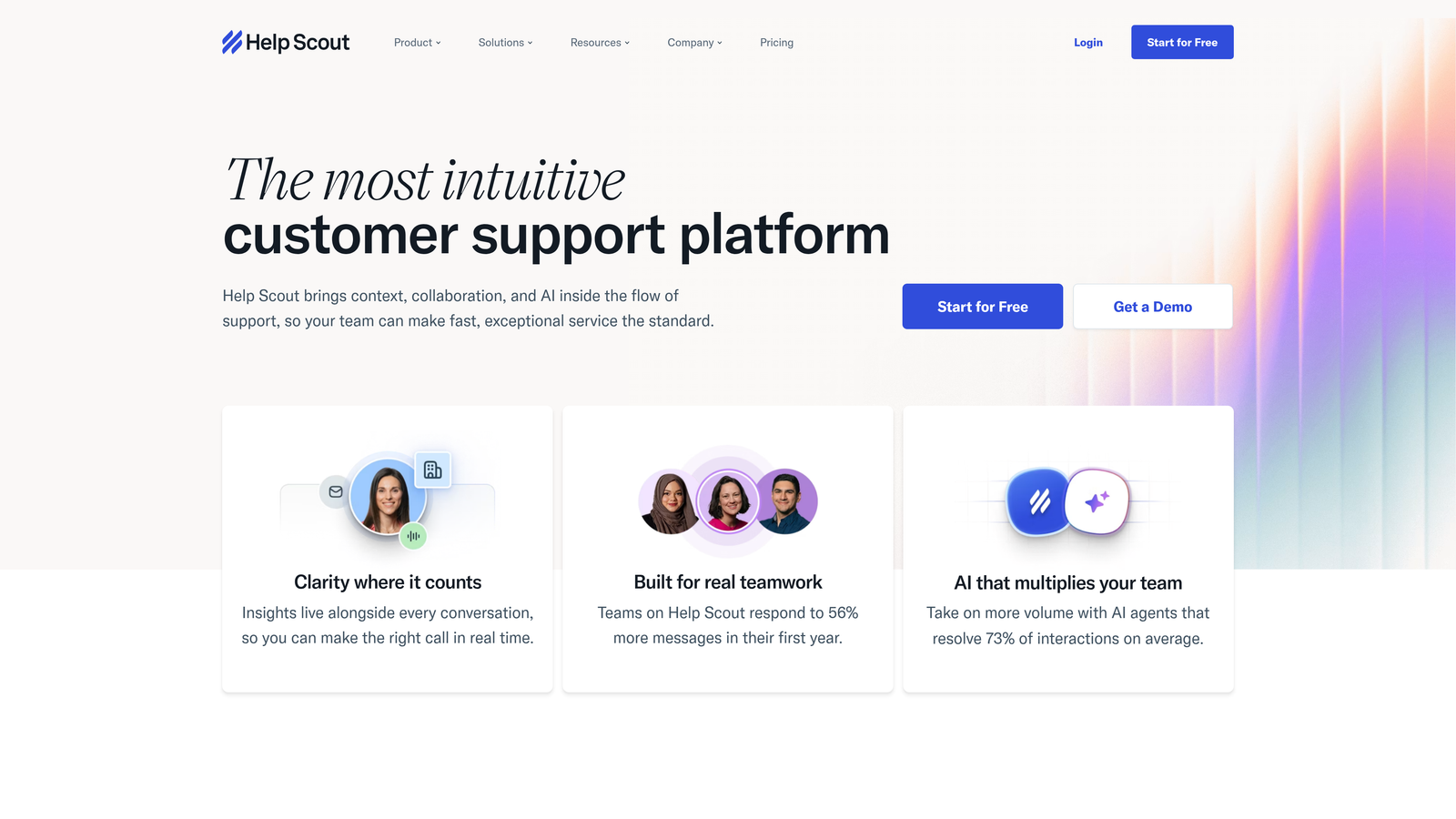
Help Scout is an email-first shared inbox platform with AI Summarize and AI Assist features, designed for teams that want a clean, human-feeling support experience.
Where This Tool Shines
Help Scout occupies a specific niche: teams that want AI to assist human agents rather than replace them. If your brand is built on thoughtful, personalized support, and you're not trying to deflect every ticket to a bot, Help Scout's philosophy aligns well with that approach. The AI features are genuinely useful without pushing you toward full automation.
Setup is refreshingly straightforward. The UX is clean enough that new agents can be productive within hours, not days. For early-stage startups where onboarding time is a real cost, that simplicity has tangible value.
Key Features
AI Summarize: Condenses long email threads into key points so agents can get up to speed instantly without reading every message.
AI Assist: Drafts reply suggestions based on conversation context, which agents can edit and send.
Beacon: Embeddable in-app widget that surfaces knowledge base content and chat within your product.
Docs: Built-in knowledge base builder included in the platform, no separate tool required.
Clean UX: Minimal learning curve, with most teams fully operational within a day.
Best For
Startups with a strong brand voice who want AI to make their human agents faster and better, not to automate them out of the conversation. Particularly well-suited for B2B companies where relationship quality drives retention.
Pricing
Starts at approximately $22/user/month on the Standard plan. A free trial is available to evaluate the platform before committing.
6. Tidio
Best for: Early-stage startups and e-commerce teams that need AI chat deployed quickly with no engineering involvement.
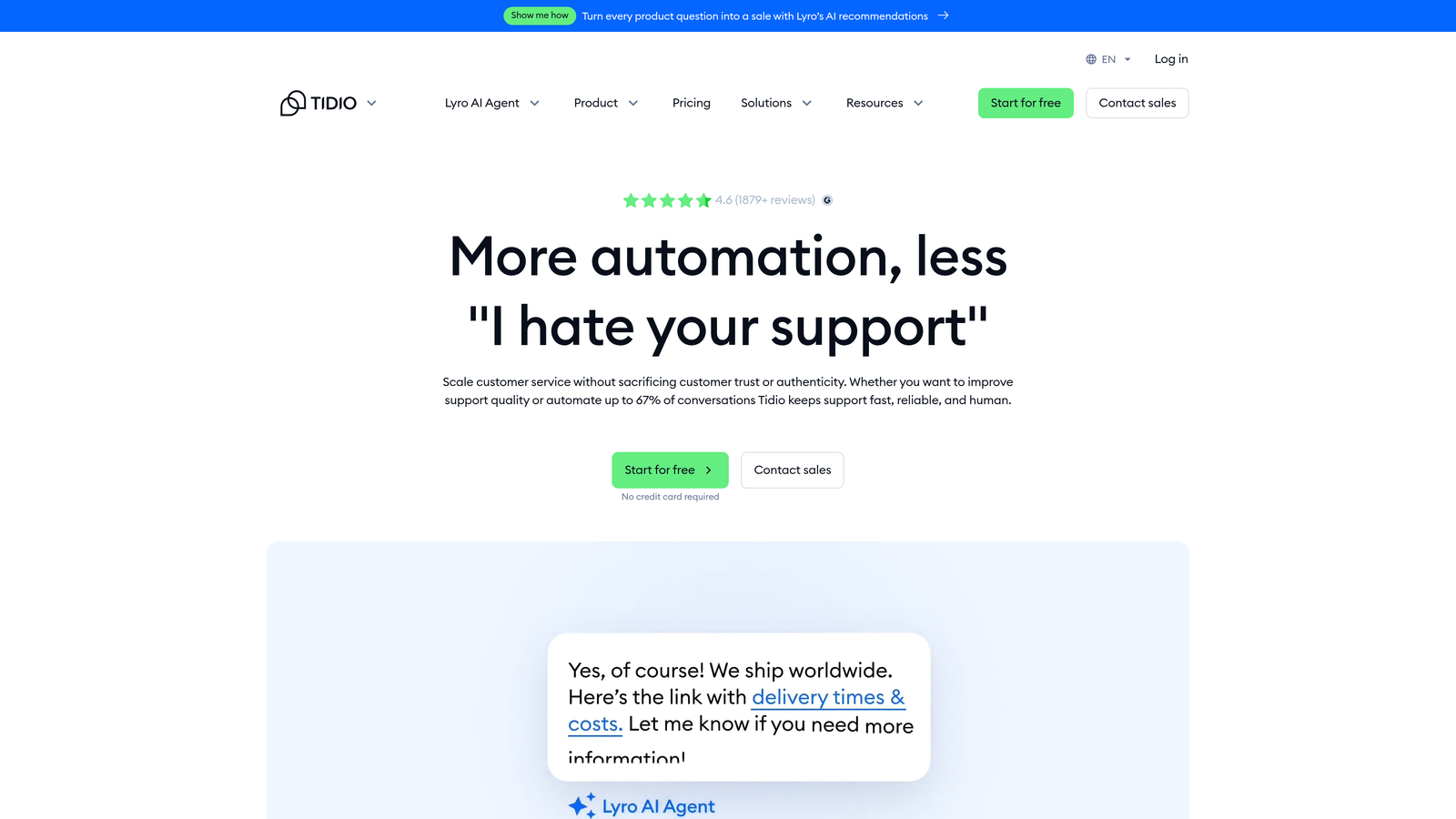
Tidio is a live chat and AI chatbot platform featuring Lyro, a conversational AI that handles common queries and routes complex ones to human agents.
Where This Tool Shines
Speed to value is Tidio's headline advantage. Lyro, their conversational AI, can be trained on your FAQ content and deployed in minutes with no code required. For a startup that needs something working today, not after a two-week implementation, that matters a great deal.
Tidio is primarily chat-focused rather than a full ticketing system, which is worth noting. It excels at handling the front-end of support: answering common questions, qualifying conversations, and routing to humans when needed. If you need deep ticket management or complex workflow automation, you'll likely outgrow it.
Key Features
Lyro AI Chatbot: Conversational AI trained on your existing FAQ and knowledge content to handle routine queries autonomously.
No-Code Setup: Fully deployable without engineering resources, typically live within minutes.
Live Chat and AI Hybrid: Lyro handles what it can and routes seamlessly to human agents for complex issues.
Proactive Chat Triggers: Visitor behavior tracking enables proactive outreach based on on-site actions.
Free Plan: Available for teams just getting started, with paid plans scaling by conversation volume.
Best For
Very early-stage startups and e-commerce teams who need AI chat up and running immediately. Also a good fit for teams testing AI support before committing to a full helpdesk platform.
Pricing
Free plan available. Lyro AI plans start at approximately $29/month, with pricing scaling based on conversation volume rather than agent seats.
7. Zoho Desk
Best for: Budget-conscious startups already using Zoho products who want AI features without paying premium pricing.
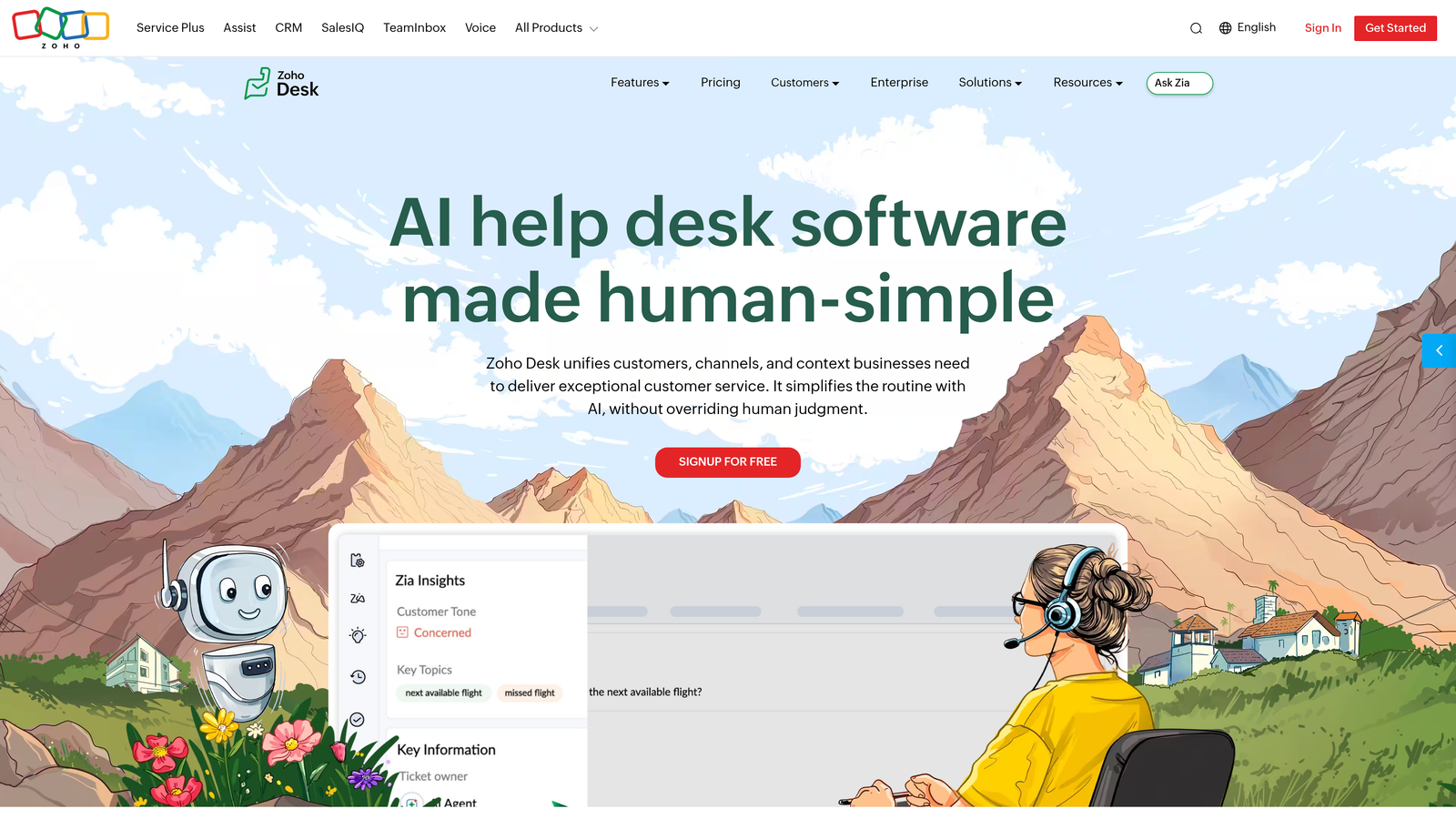
Zoho Desk is a context-aware helpdesk with Zia AI for sentiment analysis, auto-tagging, anomaly detection, and suggested responses.
Where This Tool Shines
Zoho Desk's value proposition is clear: capable AI features at a price point that doesn't strain an early-stage budget. Zia, the AI layer, handles sentiment analysis on incoming tickets, automatic tagging, anomaly detection in ticket trends, and suggested responses based on ticket content and history. That's a meaningful set of capabilities for what the platform costs.
The Zoho ecosystem integration is another genuine strength. If your startup is already running Zoho CRM or Zoho Books, the data flows between those tools and Zoho Desk in ways that would otherwise require custom integrations. That native connectivity can save meaningful engineering time.
Key Features
Zia Sentiment Analysis: Automatically reads the sentiment of incoming tickets to help agents prioritize urgent or frustrated customers.
Auto-Tagging: Zia classifies and tags tickets automatically, reducing manual triage work.
Anomaly Detection: Identifies unusual spikes or patterns in ticket trends before they become visible problems.
AI-Suggested Responses: Surfaces relevant reply suggestions based on ticket content and historical resolution data.
Zoho Ecosystem Integration: Deep native connectivity with Zoho CRM, Zoho Books, and other Zoho applications.
Best For
Startups already in the Zoho ecosystem or those prioritizing cost efficiency. The free tier for up to three agents makes it genuinely accessible for the earliest stages, and the AI capabilities on paid tiers deliver real value at competitive pricing.
Pricing
Free plan available for up to three agents. Paid plans start at approximately $14/agent/month. Zia AI features are available on the Professional tier and above.
8. Gorgias
Best for: E-commerce and DTC startups running on Shopify, WooCommerce, or Magento who need AI that can act on order data.
Gorgias is a helpdesk built specifically for e-commerce startups, with deep platform integrations that let AI agents act on order data directly from the ticket interface.
Where This Tool Shines
Gorgias solves a very specific problem exceptionally well: e-commerce support where the majority of tickets are about orders. The Shopify integration isn't just data display, it's action. Agents (and AI automation rules) can process refunds, update shipping information, and modify orders without leaving the ticket interface. That kind of operational depth is something generic helpdesks simply don't offer.
The volume-based pricing model is also worth highlighting. Rather than charging per agent seat, Gorgias charges based on ticket volume. For e-commerce startups with small teams handling high order volumes, that structure often results in more predictable and favorable costs.
Key Features
Native E-Commerce Integrations: Deep connections with Shopify, WooCommerce, and Magento, pulling order data directly into the ticket view.
Actionable AI: AI can read order data and execute actions like refunds and shipping updates directly from within tickets.
Automation Rules: High-volume repetitive queries like order status, returns, and tracking are handled automatically.
Omnichannel: Covers email, chat, SMS, and social media DMs from a single interface.
Volume-Based Pricing: Costs scale with ticket volume rather than agent count, which suits lean e-commerce teams.
Best For
E-commerce and DTC startups where order-related queries dominate the support queue. Not the right fit for B2B SaaS teams, but close to purpose-built for retail and direct-to-consumer use cases.
Pricing
Starts at approximately $10/month for up to 50 tickets. Pricing scales by ticket volume, making it predictable and accessible for growing e-commerce operations.
9. Kustomer
Best for: High-volume consumer or marketplace startups that need CRM and helpdesk in one unified platform.
Kustomer is a CRM-native helpdesk that gives every customer a unified interaction timeline across all channels, with AI automation across the full customer journey.
Where This Tool Shines
Kustomer's core differentiator is the unified customer timeline. Every interaction, regardless of channel, lives in a single chronological view tied to the customer record. For high-volume consumer businesses where a customer might contact you via email, then chat, then social DM within the same week, that unified context is operationally significant. Agents never start from scratch.
The AI automation in Kustomer operates at the journey level, not just the ticket level. Proactive workflows can trigger outreach based on customer behavior signals, which opens up use cases beyond reactive support. That said, the pricing reflects the platform's sophistication. Kustomer is better suited for growth-stage startups with the budget to match.
Key Features
Unified Customer Timeline: All interactions across every channel consolidated into one chronological view per customer.
Journey-Level AI Automation: AI workflows operate across the full customer lifecycle, not just individual ticket resolution.
Proactive AI Workflows: Trigger outreach and automated responses based on customer behavior signals.
Omnichannel Coverage: Email, chat, SMS, social media, and voice all handled from one interface.
Built-In CRM: No separate CRM integration required; customer data is native to the platform.
Best For
Consumer, marketplace, or high-volume B2C startups at the growth stage that need CRM and helpdesk unified. The pricing places it out of reach for very early-stage teams, but the capability justifies the investment at scale.
Pricing
Enterprise pricing, typically starting at approximately $89/user/month. Best suited for growth-stage startups with the budget for premium tooling and the volume to justify it.
Which Tool Is Right for Your Startup?
The right AI helpdesk depends heavily on your startup's stage, business model, and what you need support to accomplish beyond closing tickets.
If you're a B2B SaaS team that wants support to surface churn signals, feed bugs into engineering, and connect to your revenue stack, Halo AI is the most purpose-built option on this list. Its AI-first architecture and business intelligence layer make it a genuinely different kind of platform, not just a faster way to handle tickets.
For PLG startups that need in-app messaging and onboarding alongside support, Intercom remains a strong choice. For budget-conscious teams at the earliest stages, Freshdesk's free tier and Zoho Desk's competitive pricing make real AI features accessible without a significant spend. Zendesk earns its place for startups that know they're scaling fast and want enterprise-grade infrastructure from the start.
Help Scout is the right call when relationship quality matters as much as efficiency. Tidio gets you moving quickly with no engineering lift. Gorgias is the clear choice for any e-commerce or DTC startup running on Shopify. And Kustomer fits high-volume consumer businesses that need CRM and helpdesk unified in one platform.
Your support team shouldn't scale linearly with your customer base. Let AI agents handle routine tickets, guide users through your product, and surface business intelligence while your team focuses on complex issues that need a human touch. See Halo in action and discover how continuous learning transforms every interaction into smarter, faster support.