9 Best AI Helpdesk Software Solutions Reviewed for 2026
We tested nine leading AI helpdesk software solutions to help support teams choose the right platform for automating ticket resolution and scaling customer service operations. This comprehensive ai helpdesk software reviews guide evaluates each tool's automation capabilities, learning intelligence, integration options, and real-world performance—from B2B SaaS-focused platforms to enterprise solutions—so you can cut through the marketing hype and find the best fit for your team's specific needs.
 Grant CooperFounder12 min read
Support teams are drowning in tickets while customers expect instant, accurate responses around the clock. AI helpdesk software has evolved from simple chatbots to intelligent platforms that can resolve complex issues, learn from every interaction, and seamlessly hand off to humans when needed. But with dozens of options flooding the market, finding the right fit for your team requires cutting through the marketing noise.
We've tested and reviewed nine AI helpdesk platforms based on their automation capabilities, learning intelligence, integration depth, and real-world performance. Whether you're a growing startup or an enterprise scaling support operations, this guide breaks down what each tool does best—and where it falls short.
1. Halo AI
Best for: B2B SaaS teams that need autonomous ticket resolution with continuous learning capabilities
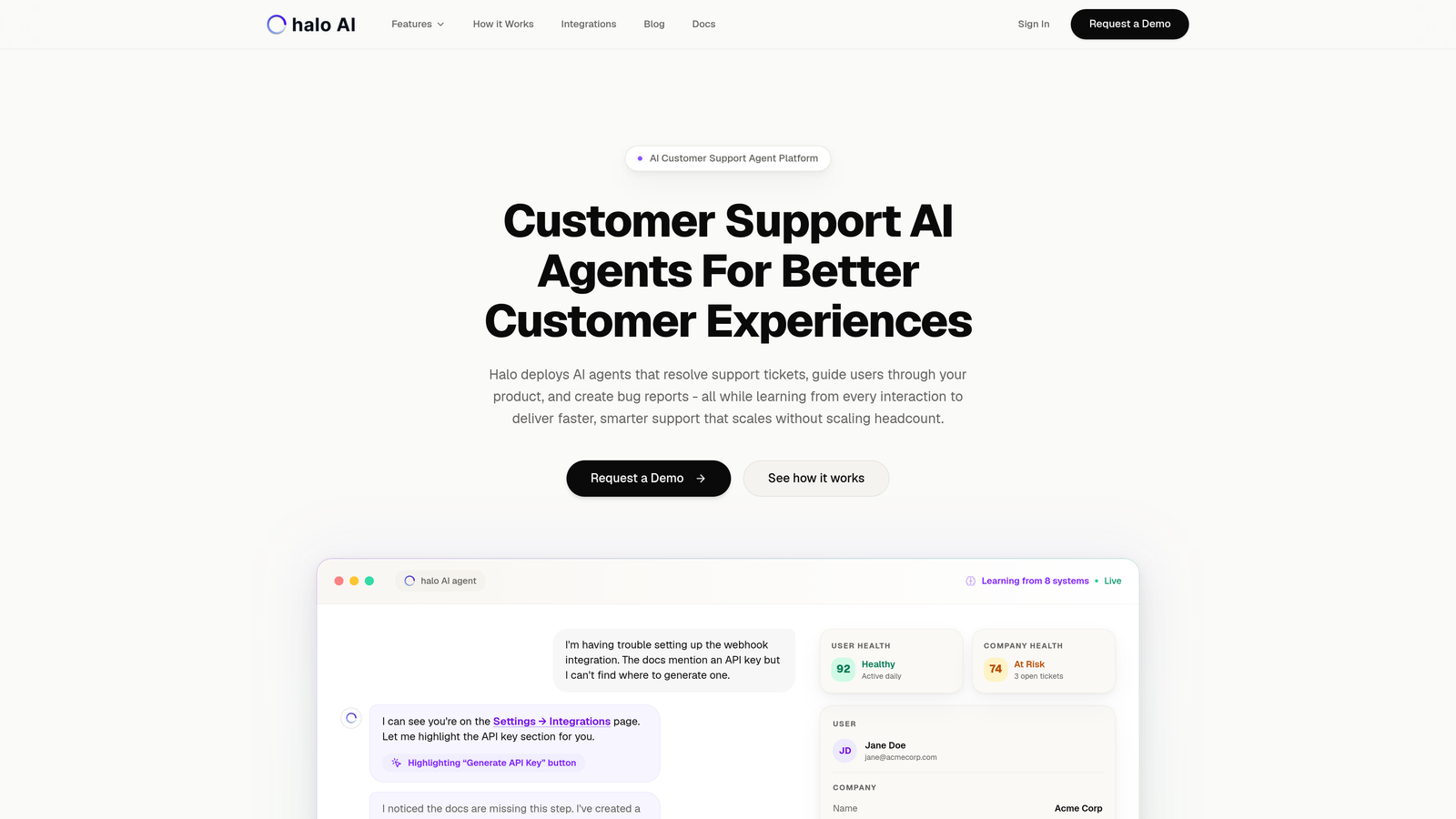
Halo AI is an AI-first customer support platform built around autonomous agents that resolve tickets, guide users through your product, and learn from every interaction.
Where This Tool Shines
Unlike traditional helpdesks with AI bolted on, Halo's architecture is designed for autonomous operation from the ground up. The platform's page-aware context means the AI can see what users see, enabling visual guidance that goes beyond text-based responses.
The continuous learning model is where Halo separates itself—every resolved ticket, every escalation, every interaction feeds back into the system's intelligence. This means your support quality improves over time without manual rule updates or constant retraining.
Key Features
Autonomous AI Agents: Resolve tickets without human intervention by understanding intent, accessing knowledge, and taking action across your systems.
Page-Aware Chat Widget: Sees the user's current screen state to provide contextual, visual guidance instead of generic instructions.
Smart Inbox with Business Intelligence: Surfaces customer health signals, revenue intelligence, and anomaly detection beyond basic support metrics.
Auto Bug Ticket Creation: Automatically creates detailed bug reports in Linear when technical issues are detected, complete with reproduction steps.
Intelligent Live Agent Handoff: Knows when complexity requires human expertise and transfers with full context so agents don't start from scratch.
Best For
B2B SaaS companies looking to scale support without scaling headcount. Particularly valuable for product teams that need support intelligence to flow back into development workflows and businesses with complex products requiring contextual understanding.
Pricing
Contact for pricing. Designed specifically for B2B SaaS teams with integration needs across their business stack including helpdesks, project management, CRM, and communication tools.
2. Zendesk AI
Best for: Enterprises already using Zendesk who want native AI without platform migration
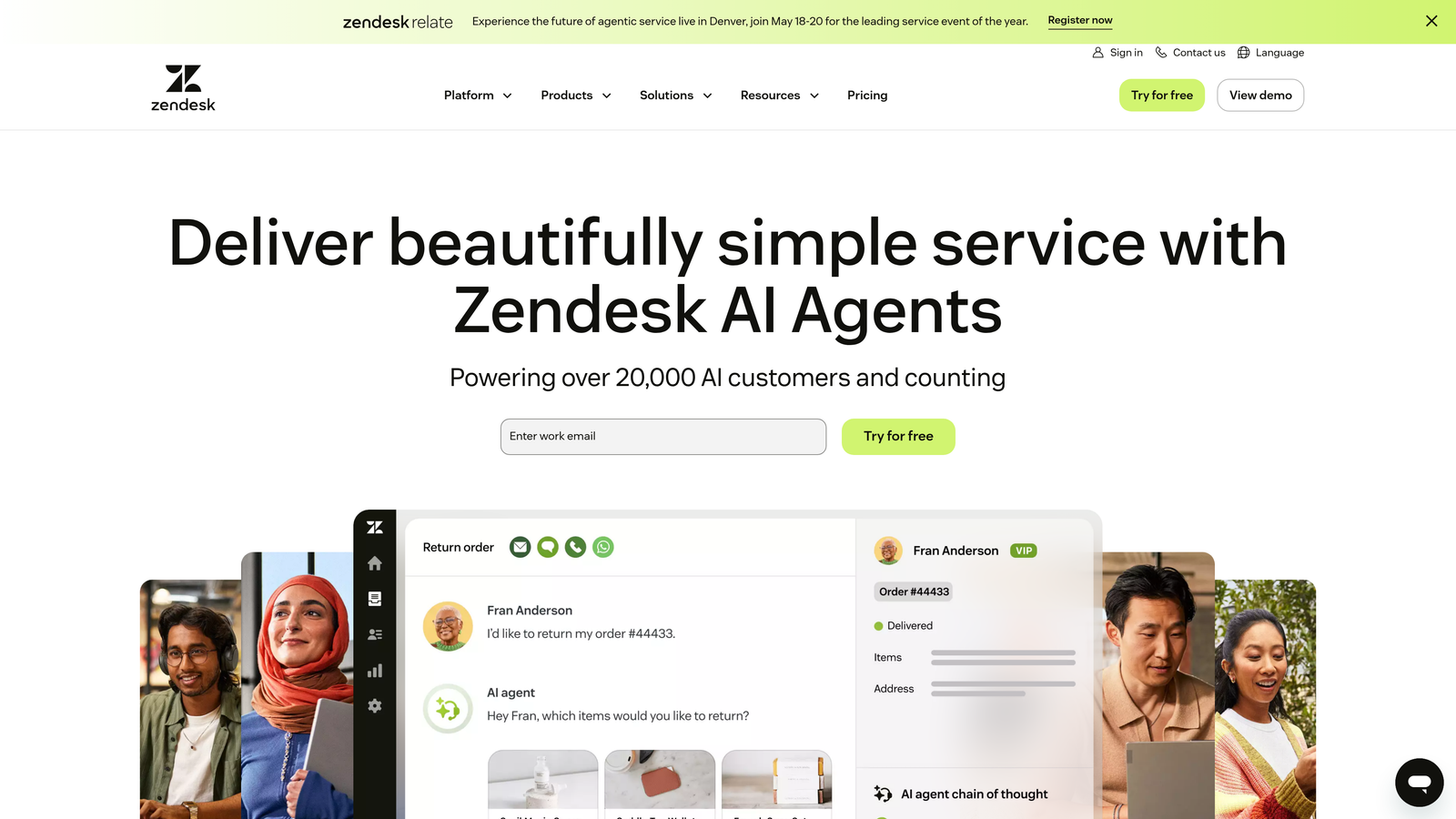
Zendesk AI is the native AI layer built directly into the established Zendesk helpdesk ecosystem, offering intelligent automation without leaving your existing workflows.
Where This Tool Shines
For teams already invested in Zendesk's ecosystem, the AI capabilities integrate seamlessly into existing workflows. There's no context switching between platforms, no duplicate ticket systems, and no retraining your team on new interfaces.
The omnichannel support is genuinely comprehensive—email, chat, phone, social media, and messaging apps all flow through the same AI-powered triage and routing system. This unified approach prevents tickets from falling through cracks when customers switch channels mid-conversation.
Key Features
Native AI Integration: Works directly within Zendesk's interface without requiring separate platforms or complicated middleware.
Intelligent Triage and Routing: Automatically categorizes incoming tickets and routes them to the right team or agent based on content analysis.
Omnichannel Support: Maintains context as customers move between email, chat, phone, and social media interactions.
Agent Assist: Suggests relevant responses and knowledge base articles while agents work, reducing handle time without full automation.
Extensive Marketplace: Thousands of pre-built integrations available through Zendesk's established app marketplace.
Best For
Enterprise teams with existing Zendesk investments who want to add AI capabilities without platform migration. Best suited for organizations with complex support operations spanning multiple channels and departments.
Pricing
AI features require Suite Professional or higher, starting around $115 per agent per month. Additional AI capabilities may require add-on purchases depending on your plan tier.
3. Intercom Fin
Best for: Product-led companies prioritizing conversational, in-app support experiences
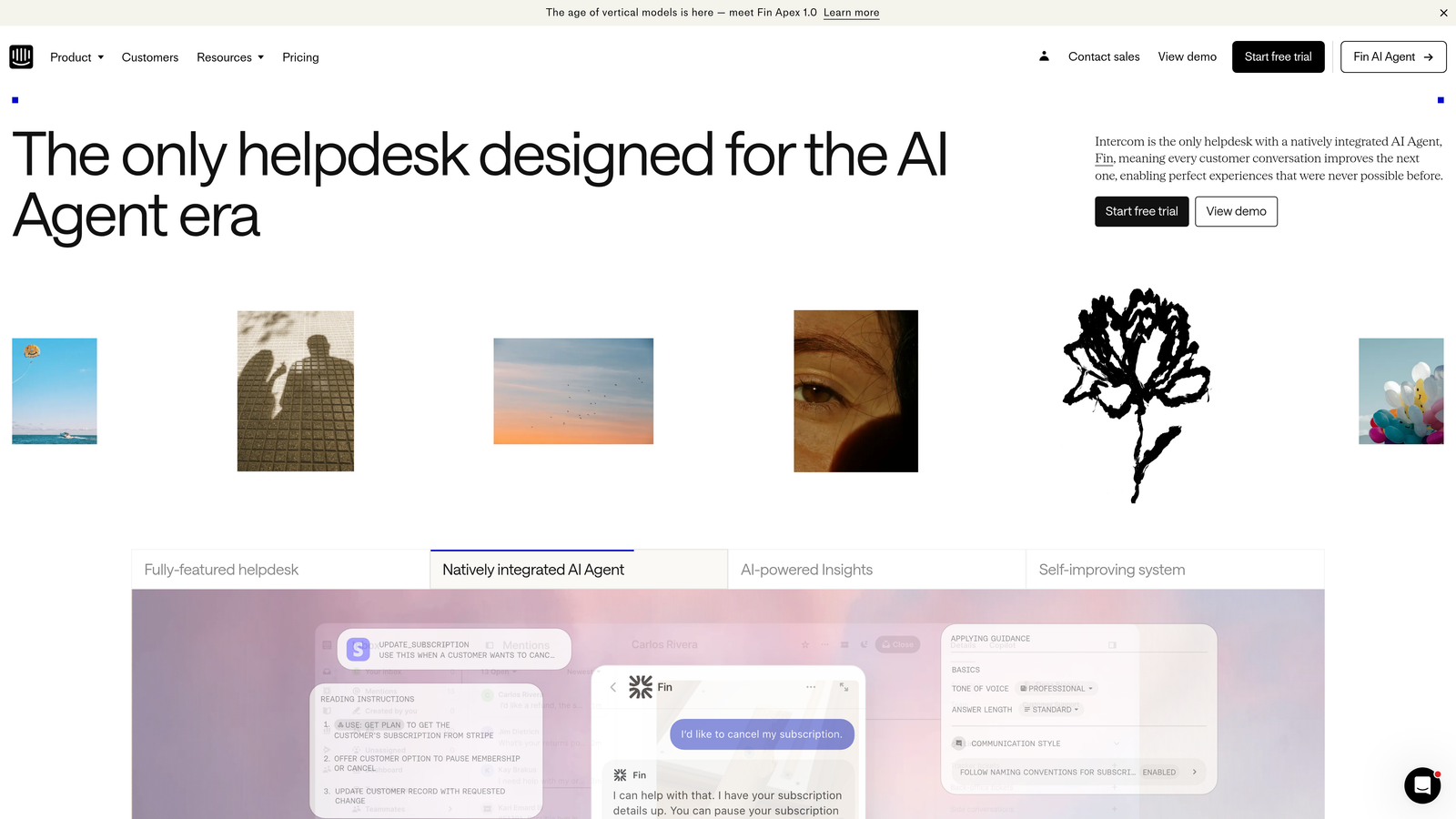
Intercom Fin is a GPT-4 powered AI agent designed specifically for conversational support that feels natural and product-integrated rather than traditional ticket-based help.
Where This Tool Shines
Fin's conversational approach feels fundamentally different from traditional helpdesk AI. Instead of treating every interaction as a ticket to close, it engages in natural dialogue that can span multiple questions and clarifications before reaching resolution.
The resolution-based pricing model aligns incentives properly—you pay when Fin actually solves problems, not for every conversation it touches. This encourages the AI to fully resolve issues rather than deflect to humans prematurely.
Key Features
GPT-4 Powered Conversations: Uses advanced language models for natural, context-aware dialogue that understands nuance and follow-up questions.
Knowledge Base Learning: Automatically learns from your help center content and past support conversations without manual training.
Seamless Human Handoff: Transfers to live agents with complete conversation history and context when needed.
Product Tours Integration: Combines support with in-app messaging and product tours for proactive guidance.
Resolution-Based Pricing: Pay per successful resolution rather than per seat or conversation volume.
Best For
Product-led SaaS companies that want support integrated directly into their product experience. Particularly effective for businesses with strong self-service content and users who prefer chat over email support.
Pricing
Fin charges $0.99 per resolution. Base Intercom plans start at $39 per seat per month, with Fin added on top based on resolution volume.
4. Freshdesk Freddy AI
Best for: Mid-market teams seeking accessible AI automation at reasonable price points
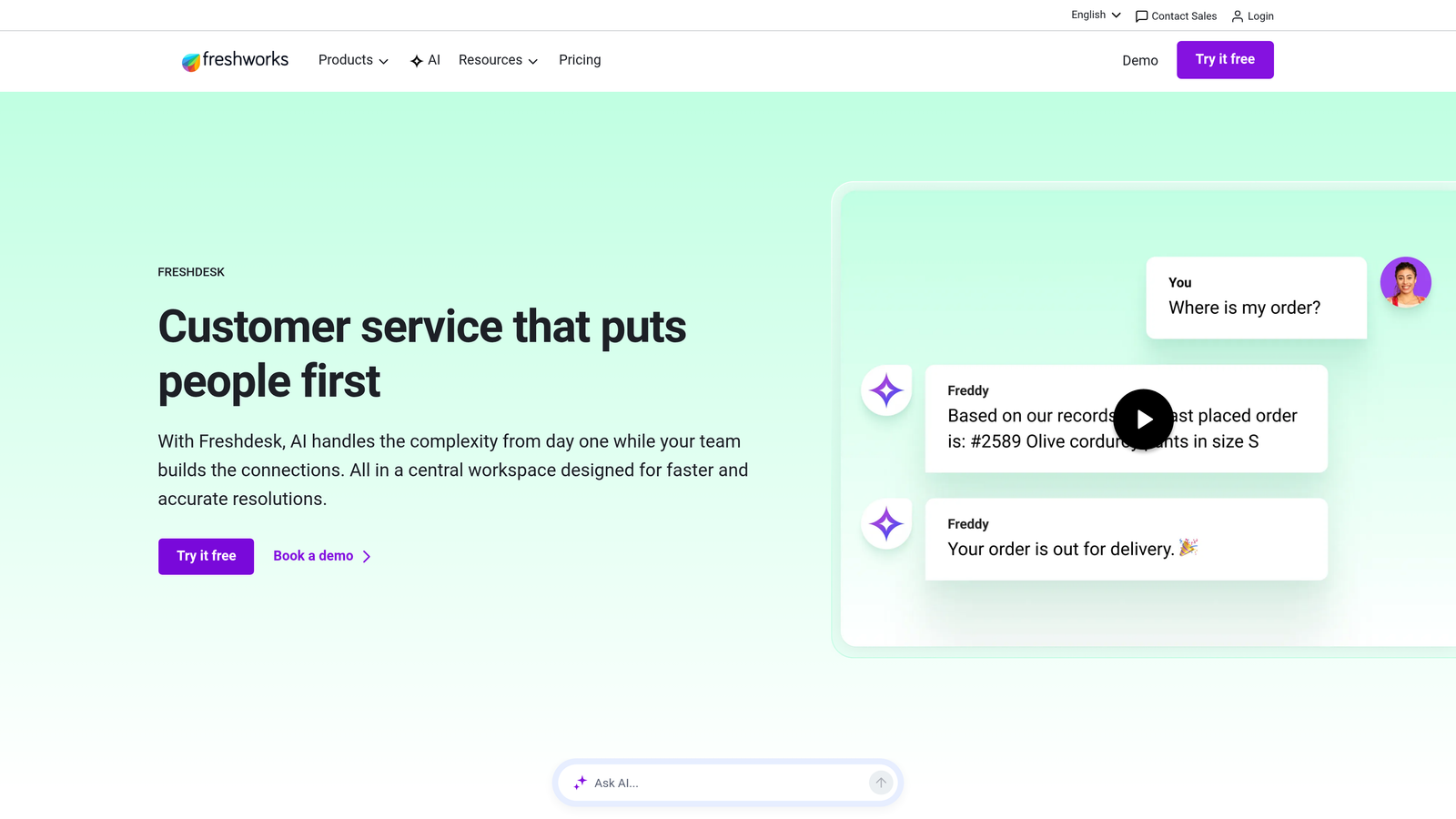
Freshdesk Freddy AI is the AI automation suite integrated into Freshworks' helpdesk platform, offering enterprise-grade intelligence without enterprise pricing.
Where This Tool Shines
Freddy AI hits a sweet spot for growing teams that need real automation capabilities but can't justify enterprise-level investments. The feature set is surprisingly robust for the price point, with intelligent categorization and agent assist that genuinely reduces workload.
The knowledge base integration is straightforward—Freddy learns from your existing articles without requiring complex training processes or AI expertise on your team. This accessibility makes it viable for teams without dedicated AI implementation resources.
Key Features
AI-Powered Ticket Categorization: Automatically tags and prioritizes incoming tickets based on content analysis and historical patterns.
Freddy Self-Service: Provides automated customer responses by pulling from knowledge base articles and past resolutions.
Agent Assist: Suggests relevant canned responses and knowledge articles while agents work on tickets.
Knowledge Base Learning: Continuously improves by analyzing which articles successfully resolve customer questions.
Affordable Entry Point: Brings AI automation to teams that couldn't previously justify the investment.
Best For
Growing companies with 10-100 support agents who need automation capabilities without enterprise complexity or pricing. Works well for teams with established knowledge bases and predictable support patterns.
Pricing
Freddy AI features are available on the Pro plan at $49 per agent per month, with additional capabilities on the Enterprise plan at $79 per agent per month.
5. Ada
Best for: High-volume consumer brands operating across multiple languages and regions
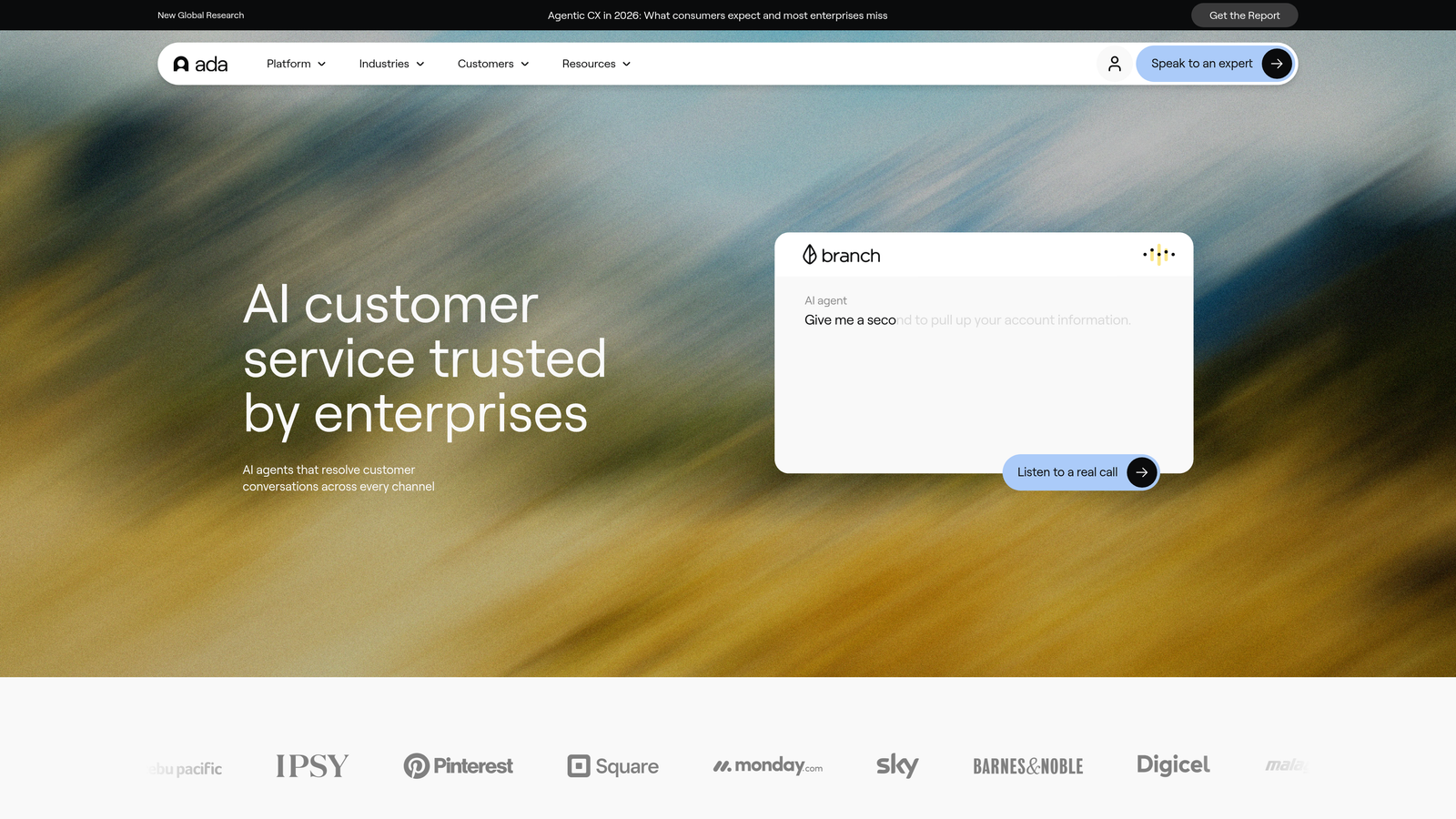
Ada is a no-code AI automation platform built specifically for consumer-facing brands that handle massive support volumes across diverse markets and languages.
Where This Tool Shines
Ada's multilingual capabilities aren't just translation—the platform understands native language nuances across 50+ languages. This makes it uniquely valuable for global consumer brands where support must feel locally relevant, not machine-translated.
The no-code builder is genuinely accessible to non-technical teams. Marketing and support leaders can create and modify conversation flows without engineering resources, enabling rapid iteration based on customer feedback and seasonal needs.
Key Features
No-Code Conversation Builder: Drag-and-drop interface lets non-technical teams design and modify AI conversation flows.
Native Multilingual Support: Understands and responds in 50+ languages with cultural context, not just word-for-word translation.
Proactive Messaging: Initiates conversations based on user behavior patterns, like abandoned carts or extended page time.
E-commerce Integrations: Deep connections to Shopify, Magento, and other platforms for order tracking, returns, and account management.
Generative AI Responses: Creates dynamic, contextual responses rather than relying solely on pre-written scripts.
Best For
Consumer brands with high support volumes, particularly in e-commerce, retail, and hospitality. Most valuable for companies operating across multiple countries and languages with seasonal volume spikes.
Pricing
Custom enterprise pricing based on conversation volume and feature requirements. Typically starts around $10,000 per year for mid-market implementations, with larger deployments reaching six figures.
6. Kustomer IQ
Best for: Teams wanting unified customer context with CRM and support in one platform
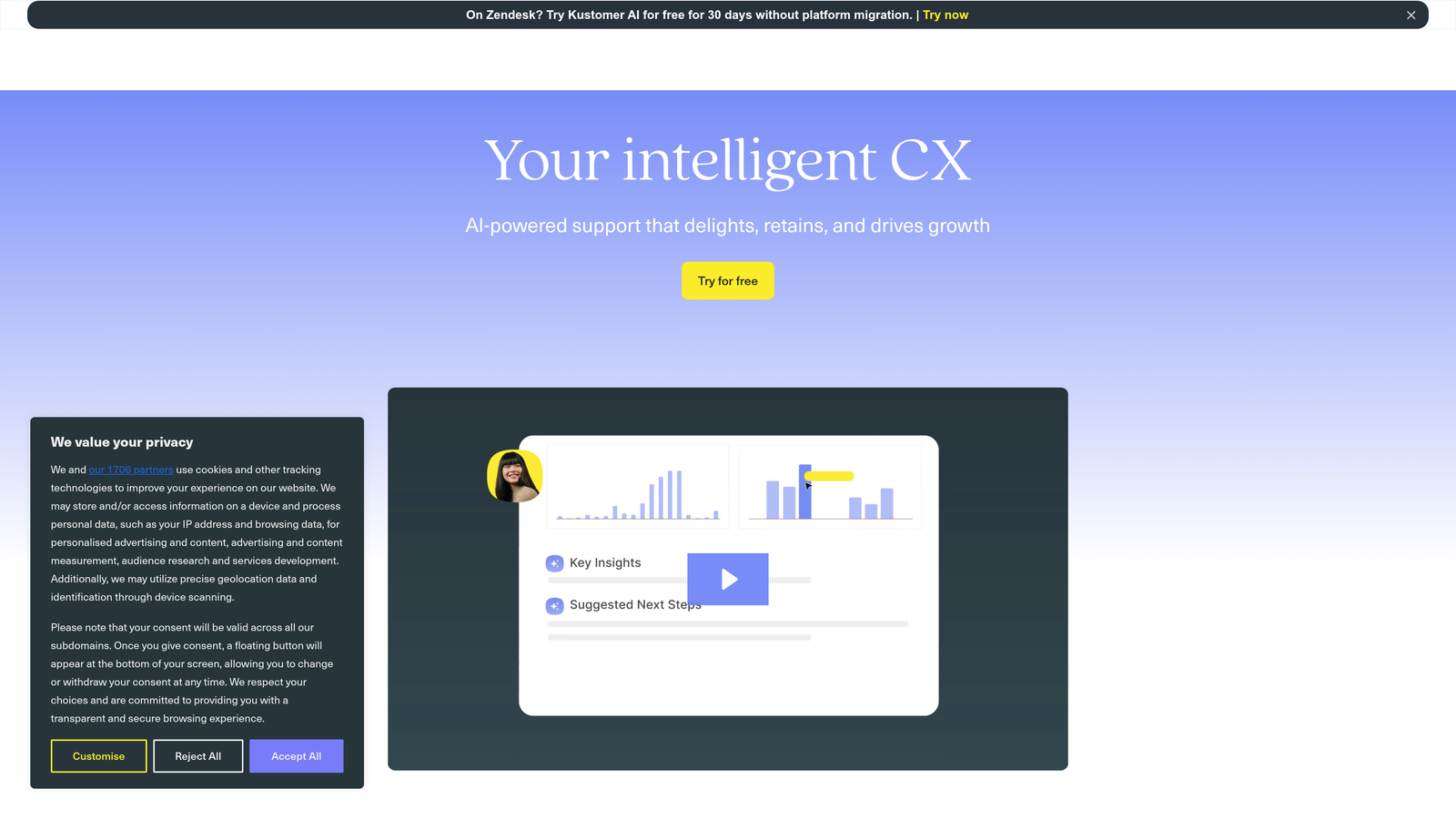
Kustomer IQ is a CRM-first platform that unifies customer history across all touchpoints with intelligent AI automation built into the core system.
Where This Tool Shines
Kustomer's unified timeline approach means agents see every customer interaction—purchases, support tickets, email opens, website visits—in one chronological view. This eliminates the context-switching and tab-juggling that slows down most support teams.
The business process automation extends beyond typical support scenarios. You can build workflows that trigger across sales, success, and support based on customer signals, making it valuable for teams that view support as part of the broader customer journey.
Key Features
Unified Customer Timeline: Single view of every customer interaction across support, sales, marketing, and product usage.
AI Intent Detection: Analyzes incoming messages to understand customer intent and route to appropriate teams or automation.
Proactive Outreach: Identifies at-risk customers or expansion opportunities based on behavior patterns and triggers appropriate workflows.
Business Process Automation: Extends beyond support to automate workflows across departments based on customer signals.
Native CRM Integration: Built as a CRM from the ground up rather than bolting support onto existing systems.
Best For
Companies that view support as part of the broader customer lifecycle and need tight integration between support, sales, and success teams. Particularly valuable for B2B companies with complex customer journeys.
Pricing
Enterprise plan with IQ features starts at $89 per user per month. Implementation and onboarding typically require additional investment for larger deployments.
7. Tidio AI
Best for: Small businesses and e-commerce stores needing affordable AI without complexity
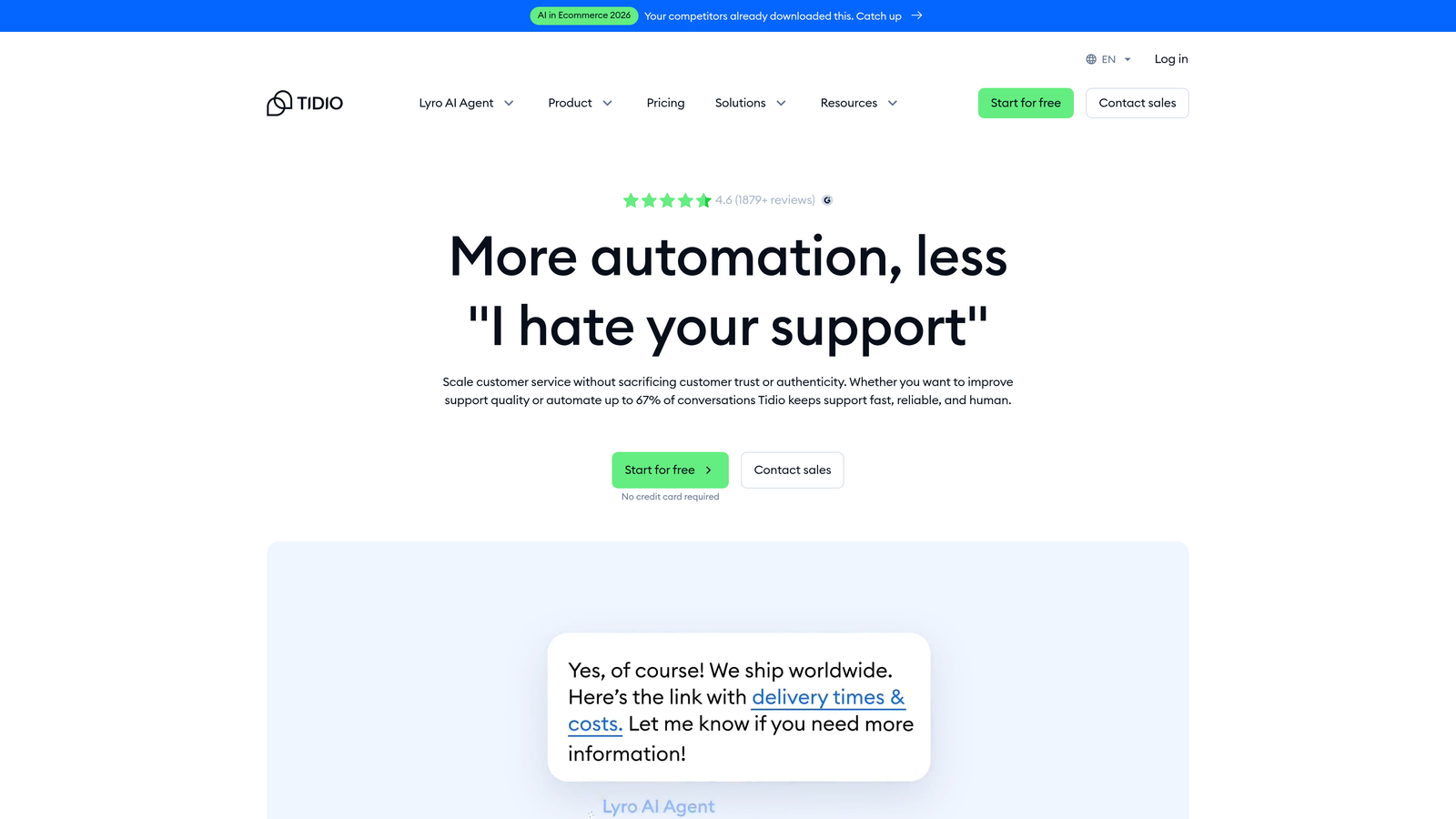
Tidio AI is an accessible chatbot solution designed specifically for small businesses, with particular strength in e-commerce integrations and lead capture.
Where This Tool Shines
Tidio removes the intimidation factor from AI support. The visual chatbot builder with pre-built templates means you can launch AI-powered chat in hours, not weeks. This speed-to-value is crucial for small teams without dedicated implementation resources.
The e-commerce focus shows in the integrations—Shopify, WooCommerce, and WordPress connections are straightforward, and the platform understands common e-commerce queries like order status, shipping tracking, and return policies without extensive training.
Key Features
Visual Chatbot Builder: Pre-built templates for common scenarios let you launch AI chat quickly without coding or AI expertise.
Lyro AI: Conversational AI that handles customer questions by learning from your website content and past conversations.
E-commerce Platform Integrations: Native connections to Shopify, WooCommerce, and WordPress with e-commerce-specific features.
Live Chat with AI Assist: Human agents get AI-suggested replies and relevant information while chatting with customers.
Visitor Tracking: Identifies high-value visitors and triggers proactive chat based on behavior patterns.
Best For
Small businesses and e-commerce stores with limited budgets and technical resources. Most effective for teams of 1-10 people who need basic automation and lead capture alongside support.
Pricing
Free tier available with basic features. Lyro AI starts at $39 per month for 50 AI conversations, with higher tiers available as volume grows.
8. Forethought
Best for: Enterprises needing intelligent ticket triage and agent augmentation alongside existing helpdesks
Forethought is an enterprise AI platform that layers intelligent automation on top of your existing helpdesk, specializing in triage, routing, and real-time agent assistance.
Where This Tool Shines
Forethought's platform-agnostic approach means you don't need to migrate from your current helpdesk to gain AI capabilities. It works alongside Zendesk, Salesforce Service Cloud, Freshdesk, and others, adding intelligence without replacing your existing investment.
The Discover feature identifies knowledge gaps by analyzing which questions repeatedly require human intervention. This intelligence helps you prioritize knowledge base improvements based on actual impact rather than guesswork.
Key Features
Solve AI: Autonomous resolution of common tickets without human involvement, learning from historical ticket data.
Intelligent Triage: Analyzes and routes tickets based on content, urgency, and required expertise before agents see them.
Agent Assist: Provides real-time recommendations, relevant knowledge articles, and suggested responses while agents work.
Knowledge Gap Discovery: Identifies which questions repeatedly require human intervention, highlighting documentation opportunities.
Platform Integration: Works alongside existing helpdesk platforms rather than requiring full migration.
Best For
Enterprise teams with significant existing helpdesk investments who want to add AI capabilities without platform migration. Most valuable for organizations handling 10,000+ tickets monthly with established support processes.
Pricing
Custom enterprise pricing based on ticket volume and required features. Implementation typically requires several weeks and dedicated resources for integration and training.
9. Capacity
Best for: Internal support teams focusing on IT helpdesk and employee self-service
Capacity is an AI-powered helpdesk designed specifically for internal support, with particular strength in IT automation and employee-facing assistance.
Where This Tool Shines
While most AI helpdesks focus on external customers, Capacity specializes in the internal support use case. The platform understands common IT requests, HR questions, and operational queries that employees face, with workflows designed around internal processes rather than customer service.
The knowledge management system goes beyond simple article storage. It understands how information connects across departments, surfacing relevant policies, procedures, and resources based on employee role and context rather than just keyword matching.
Key Features
Employee-Facing AI Assistant: Handles internal queries about IT, HR, operations, and policies through conversational interface.
IT Helpdesk Automation: Automates common IT requests like password resets, software access, and equipment provisioning.
Intelligent Knowledge Search: Finds relevant information across wikis, documents, and systems based on context and employee role.
Workflow Automation: Builds multi-step processes that span IT, HR, finance, and operations departments.
Internal System Integrations: Connects to HR systems, IT service management, communication tools, and business applications.
Best For
Companies looking to automate internal support and reduce IT helpdesk burden. Most valuable for organizations with 100+ employees where internal support requests create significant operational overhead.
Pricing
Growth plan starts at $49 per user per month. Professional plan with advanced features is $99 per user per month. Enterprise pricing available for larger deployments with custom requirements.
Finding Your Best Fit
The right AI helpdesk depends less on feature checklists and more on how you actually support customers. B2B SaaS teams benefit most from platforms like Halo AI that learn continuously and connect across business systems. If you're already invested in Zendesk, their native AI integration avoids migration pain. Product-led companies should explore Intercom Fin's conversational approach that feels natural inside your product.
Budget-conscious teams can find genuine value in Freshdesk Freddy or Tidio—both deliver meaningful automation without enterprise pricing. Global consumer brands handling massive volumes across languages will appreciate Ada's multilingual capabilities and no-code flexibility.
The key differentiators in 2026 aren't about whether platforms use AI—they all do. What matters is learning capability, context awareness, integration depth, and escalation intelligence. The best platforms improve over time, understand user environment and intent, connect to your actual business systems, and know when complexity requires human expertise.
Avoid platforms requiring extensive rule-building or constant manual training. Modern AI should learn from your knowledge base and past tickets with minimal configuration. Your support team shouldn't scale linearly with your customer base. Let AI agents handle routine tickets, guide users through your product, and surface business intelligence while your team focuses on complex issues that need a human touch. See Halo in action and discover how continuous learning transforms every interaction into smarter, faster support.