9 Best AI-Powered Customer Support Tools in 2026
This guide reviews nine of the strongest AI Powered Customer Support Tools available in 2026, evaluated across autonomous ticket resolution, integration depth, and B2B SaaS fit. Whether you're running a lean support team or scaling fast, it cuts through a crowded market to help you find a platform that genuinely learns and operates autonomously from day one.
 Grant CooperFounder14 min read
AI-powered customer support tools have moved well beyond simple chatbots. Today's platforms can autonomously resolve tickets, guide users through complex workflows, detect bugs, escalate intelligently to human agents, and surface business intelligence that goes far beyond the support queue.
For B2B SaaS teams and product-led companies, the right tool can meaningfully reduce ticket volume, improve response times, and free support teams to focus on high-value interactions. But the market is crowded, and not every tool is built the same way. Some are AI layers bolted onto legacy helpdesks. Others are purpose-built AI-first platforms that learn continuously and operate autonomously from day one.
This list covers nine of the strongest AI-powered customer support tools available in 2026, evaluated across autonomous resolution capability, integration depth, learning over time, and overall fit for B2B product teams. Whether you're running a lean support team, scaling fast, or looking to replace a clunky helpdesk setup, there's a tool here worth your attention.
1. Halo AI
Best for: B2B SaaS teams wanting an AI-first platform with autonomous resolution and business intelligence
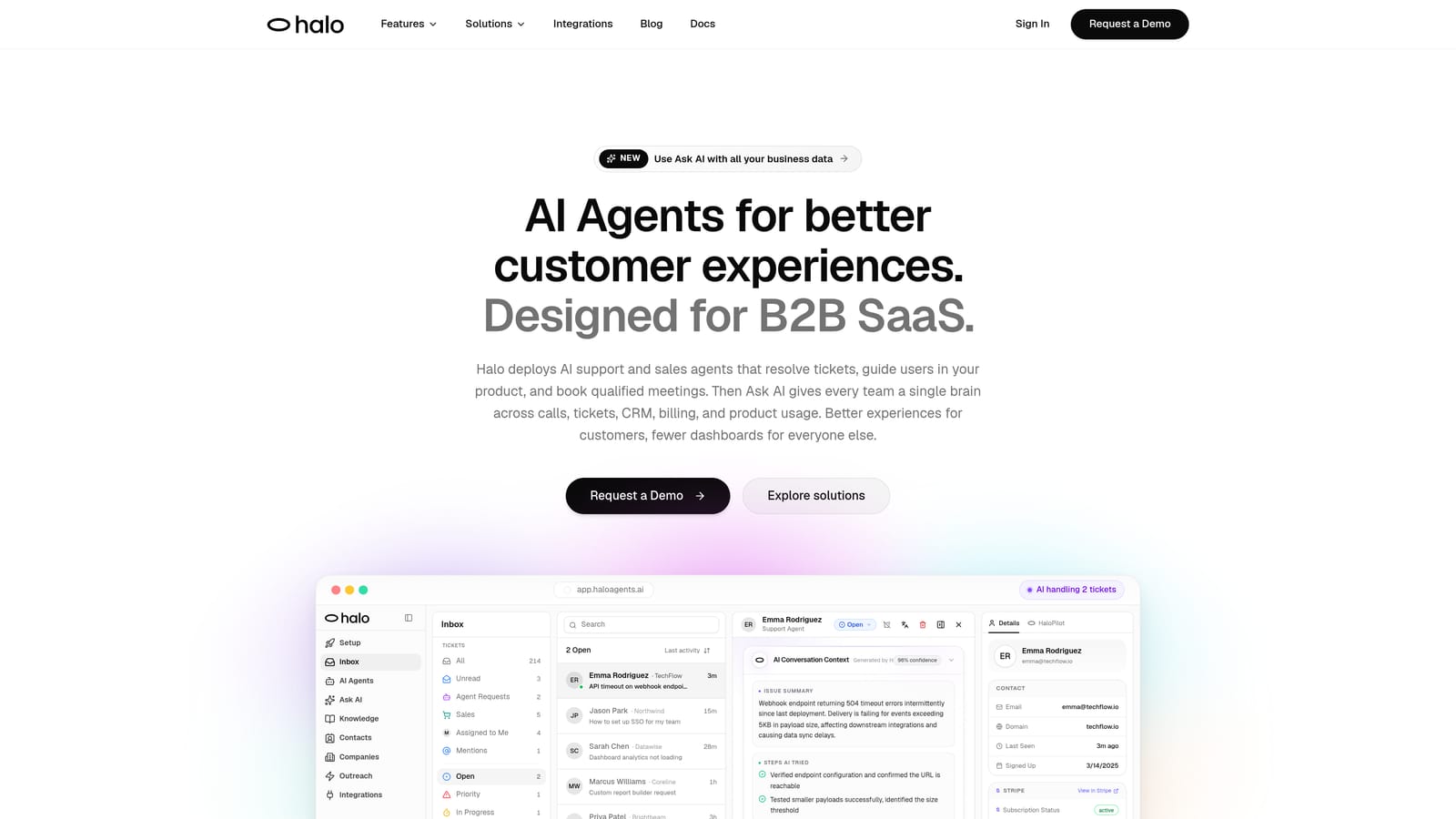
Halo AI is an AI-native customer support platform purpose-built for B2B SaaS teams, deploying intelligent agents that resolve tickets, guide users through your product, and surface actionable business signals.
Where This Tool Shines
What separates Halo from most tools on this list is that it wasn't designed as a helpdesk first with AI added later. The entire platform is built around autonomous resolution and continuous learning. Every ticket the AI handles makes it smarter, which means your support operation improves over time without requiring constant manual tuning.
The page-aware chat widget is genuinely distinctive. Rather than serving generic responses, Halo's AI understands what the user is currently looking at in your product and can deliver contextually relevant guidance, step-by-step walkthroughs, and visual UI direction in real time. For SaaS products with complex interfaces or multi-step workflows, this is a meaningful differentiator.
Key Features
Page-Aware Chat Widget: The AI sees what users see in your product, enabling context-specific guidance rather than generic answers.
Continuous Learning Loop: Every resolved interaction feeds back into the model, improving resolution accuracy over time without manual retraining.
Auto Bug Ticket Creation: When users report issues, Halo automatically generates structured bug tickets routed directly to Linear or your existing dev workflow, closing the loop between support and engineering.
Smart Inbox with Business Intelligence: Beyond ticket management, the inbox surfaces customer health signals, revenue anomalies, and trend detection, turning support data into strategic insight.
Live Agent Handoff: Complex escalations route seamlessly to human agents with full conversation context preserved, so customers never have to repeat themselves.
Deep Integration Stack: Connects natively with Linear, Slack, HubSpot, Intercom, Stripe, Zoom, PandaDoc, and Fathom, fitting into the tools B2B teams already use.
Best For
Halo is best suited for B2B SaaS companies and product-led growth teams that want autonomous resolution from day one, not a chatbot that needs years of rule-building. It's particularly strong for teams where support, product, and engineering need to stay tightly connected.
Pricing
Contact for pricing. A demo is available at haloagents.ai for teams that want to see the platform in action before committing.
2. Intercom
Best for: SaaS companies already in the Intercom ecosystem wanting AI layered onto conversational support
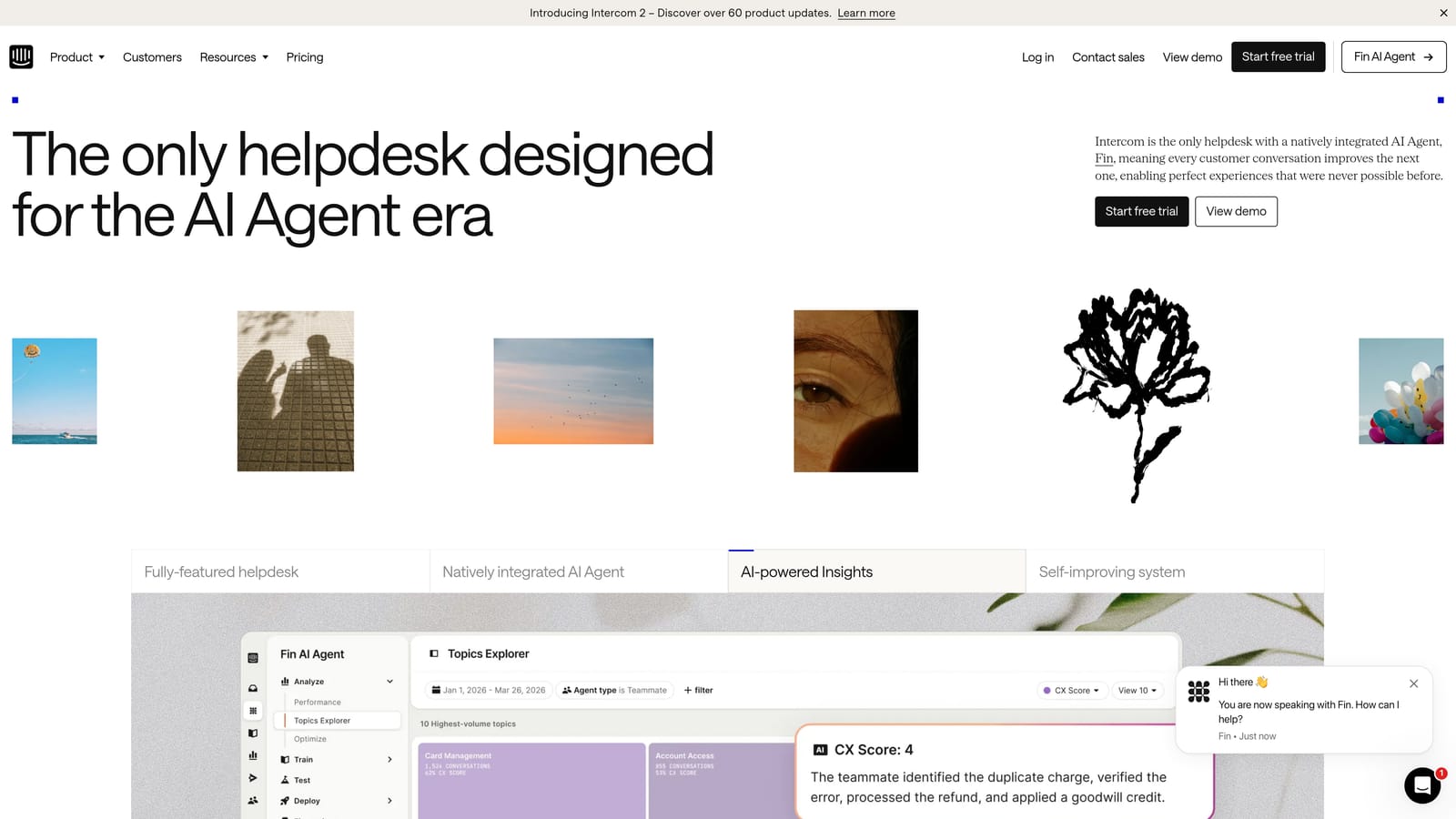
Intercom is a mature conversational support platform featuring Fin, its AI agent, built on top of a robust messenger and helpdesk infrastructure widely used across SaaS.
Where This Tool Shines
Intercom's biggest strength is its ecosystem maturity. If your team is already using Intercom for product messaging, onboarding flows, or customer communication, layering in Fin AI is a relatively low-friction upgrade. The messenger experience is polished and familiar to end users, which reduces adoption friction on the customer side.
Fin has iterated significantly since its launch and handles a solid range of common support queries autonomously. The unified inbox combining chat, email, and in-app messaging is well-designed for teams managing multiple communication channels from a single workspace.
Key Features
Fin AI Agent: Handles autonomous query resolution across chat and email using your existing knowledge base and conversation history.
Unified Inbox: Combines chat, email, and in-app messaging into a single agent workspace with clean prioritization.
AI Conversation Summarization: Automatically summarizes long threads so agents can get up to speed quickly on escalated conversations.
Suggested Replies: AI-generated response suggestions help agents reply faster without sacrificing quality.
CSAT Tracking and Reporting: Built-in satisfaction tracking and performance reporting without needing third-party tools.
Best For
Teams already invested in the Intercom platform will get the most value here. It's a strong choice for SaaS companies with established product messaging workflows who want to extend their existing setup with AI resolution, rather than migrate to a new platform.
Pricing
Starts at approximately $39 per seat per month. Fin AI usage is priced separately on a per-resolution basis, so costs can escalate with volume. Verify current pricing at intercom.com before budgeting.
3. Zendesk AI
Best for: Large enterprises with existing Zendesk investments looking to add AI triage and agent assist
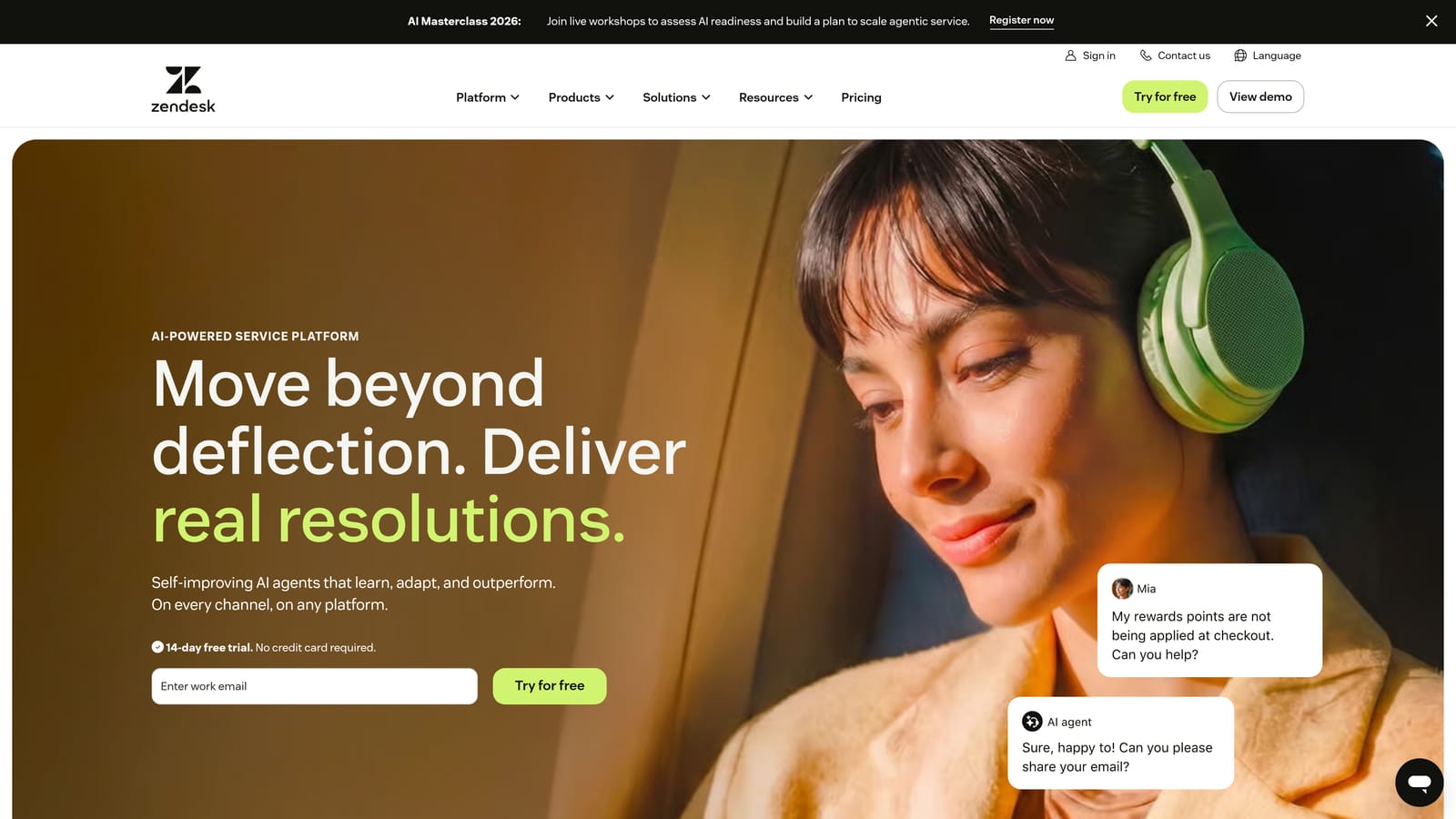
Zendesk is an enterprise helpdesk platform with a comprehensive AI suite covering intelligent triage, intent detection, agent assist, and automated workflows.
Where This Tool Shines
Zendesk's scale and breadth are hard to argue with. For organizations already running support operations on Zendesk, the AI suite adds meaningful capability without requiring a platform migration. AI-powered triage and intent classification can meaningfully reduce the manual work of routing tickets to the right team or queue.
The Agent Copilot feature is well-regarded for surfacing relevant knowledge base articles and suggesting next steps during live conversations. For large support teams handling high ticket volumes, these productivity gains add up quickly across the team.
Key Features
AI-Powered Ticket Triage: Automatically classifies tickets by intent, sentiment, and priority, reducing manual routing work.
Agent Copilot: Provides real-time suggestions, knowledge surfacing, and next-best-action guidance during active conversations.
Automated Workflows and Macro Suggestions: Identifies repetitive patterns and suggests automation opportunities to reduce manual handling.
Advanced Reporting and QA Tools: Comprehensive analytics and quality assurance features for large support operations.
Broad Integration Marketplace: Thousands of integrations covering most enterprise tech stacks.
Best For
Zendesk AI is best for large enterprises with existing Zendesk deployments who want to extend their investment with AI capabilities. For smaller teams or companies starting fresh, the complexity and cost may outweigh the benefits compared to AI-first alternatives.
Pricing
Suite plans start around $55 per agent per month. AI features are available on higher tiers, so total cost can be significantly higher depending on team size and feature requirements.
4. Freshdesk (Freddy AI)
Best for: Mid-market teams wanting AI-assisted support at pricing more accessible than enterprise alternatives
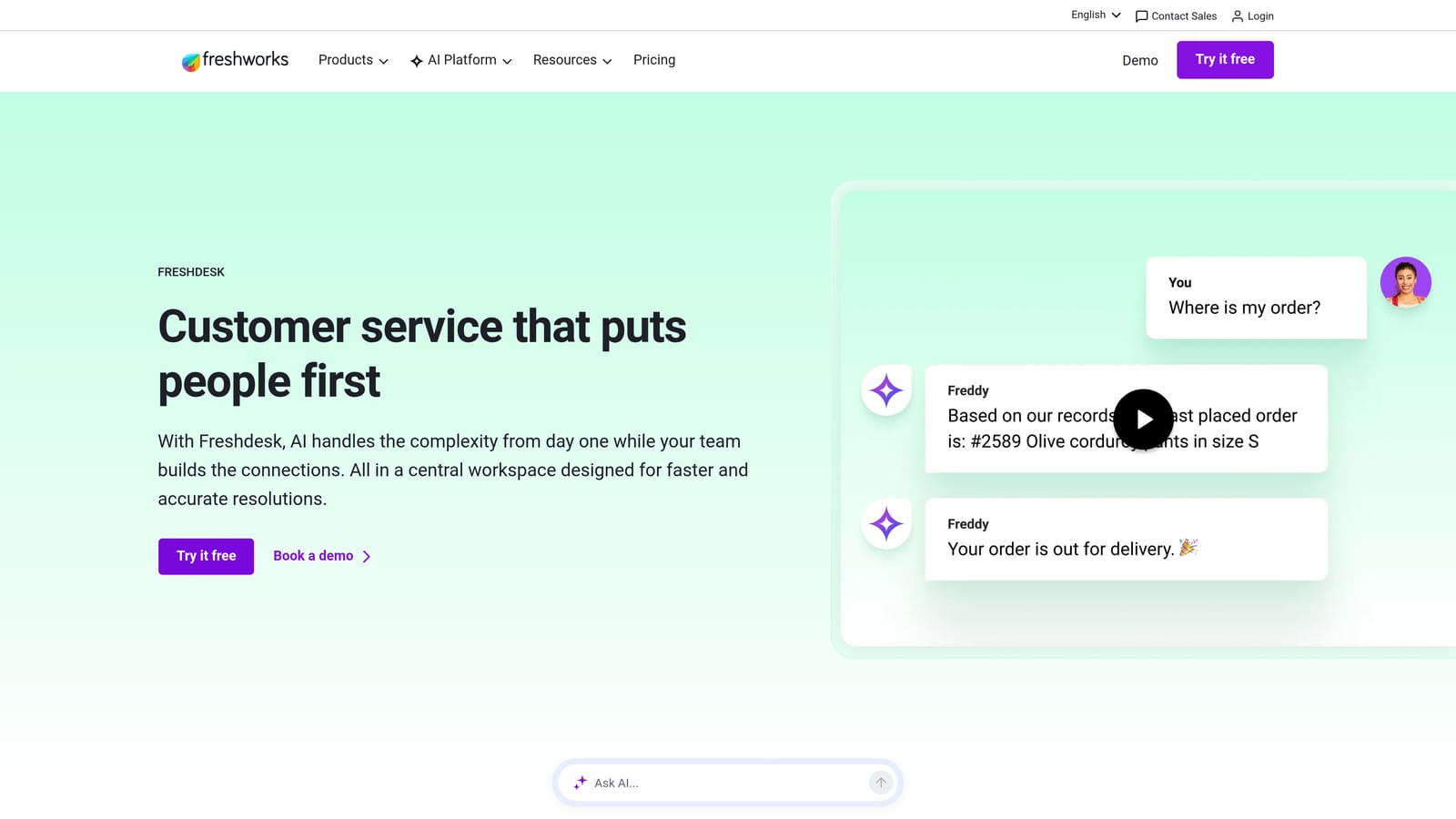
Freshdesk is Freshworks' helpdesk platform with Freddy AI providing self-service automation, agent assist, and analytics across the support workflow.
Where This Tool Shines
Freshdesk's value proposition is competitive capability at a more accessible price point than Zendesk or enterprise-focused platforms. Freddy AI covers three distinct use cases: self-service resolution for customers, productivity assistance for agents, and analytics for support managers. Having all three in one platform at mid-market pricing is genuinely useful for growing teams.
The omnichannel coverage across email, chat, phone, and social is solid, and the marketplace with a large number of integrations means most teams can connect Freshdesk to their existing stack without custom development.
Key Features
Freddy Self Service: Customer-facing AI that handles common queries autonomously, reducing inbound ticket volume.
Freddy Copilot: Agent productivity tools including AI-generated draft replies, conversation summarization, and suggested responses.
Freddy Insights: Support analytics and trend detection that help managers identify patterns and optimization opportunities.
Omnichannel Support: Unified handling across email, chat, phone, and social channels from a single workspace.
Marketplace Integrations: A broad integration library covering most common business tools.
Best For
Mid-market teams that want a capable, all-in-one helpdesk with AI features without enterprise-level pricing. Particularly strong for teams managing support across multiple channels who need a unified workspace.
Pricing
A free tier is available. Paid plans start around $15 per agent per month. Freddy AI features are priced as add-ons, so verify total cost based on your specific feature needs.
5. Tidio
Best for: Small businesses and e-commerce teams wanting fast deployment with affordable AI chatbot capabilities
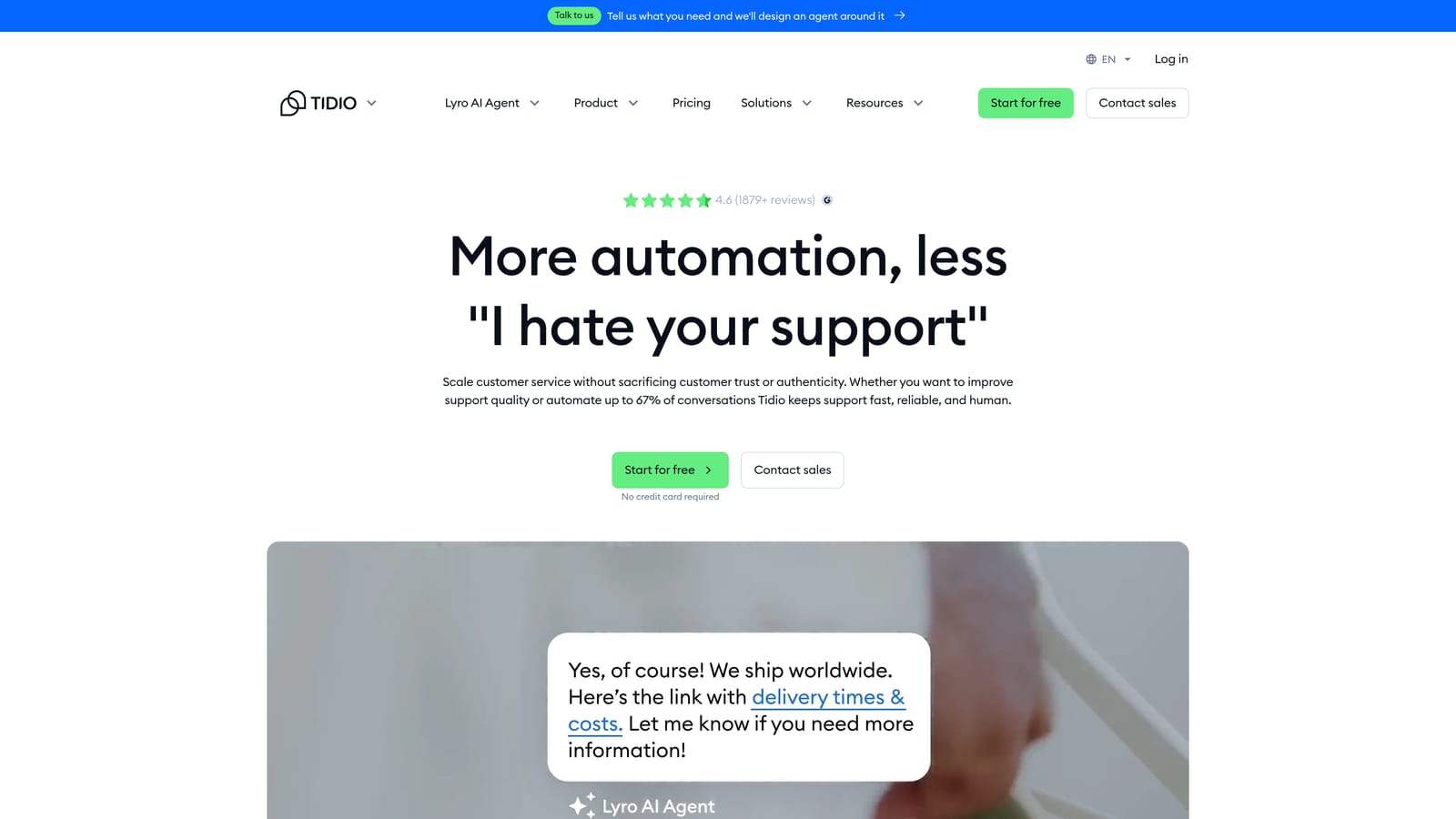
Tidio is a lightweight live chat and AI chatbot platform featuring Lyro AI for automated conversations, designed for quick deployment and SMB-friendly pricing.
Where This Tool Shines
Tidio's strength is simplicity and speed. Teams can get a functional AI chatbot live in hours rather than weeks, which matters for smaller operations without dedicated implementation resources. The visual flow builder makes it accessible to non-technical users who want to customize conversation paths without writing code.
The e-commerce integrations with Shopify and WooCommerce are particularly well-developed, making Tidio a strong choice for online retailers. That said, for complex B2B SaaS support needs, Tidio's capabilities are more limited than the enterprise-focused tools on this list.
Key Features
Lyro AI Chatbot: Handles automated query resolution using your support content, with human handoff when conversations exceed its scope.
Live Chat with Human Handoff: Clean transition from AI to human agent when escalation is needed.
E-Commerce Integrations: Native connections with Shopify and WooCommerce for order tracking and product queries.
Visual Flow Builder: No-code bot customization for teams that want to design specific conversation paths.
Real-Time Visitor Tracking: See who's on your site and proactively engage based on behavior.
Best For
Small businesses, e-commerce teams, and anyone needing a fast, affordable entry point into AI-assisted chat support. Less suited for complex B2B SaaS environments with deep integration requirements.
Pricing
A free plan is available. Paid plans start around $29 per month. Lyro AI conversations are priced per usage, so costs scale with conversation volume.
6. Drift (by Salesloft)
Best for: Teams where customer support conversations intersect with sales pipeline and buyer intent
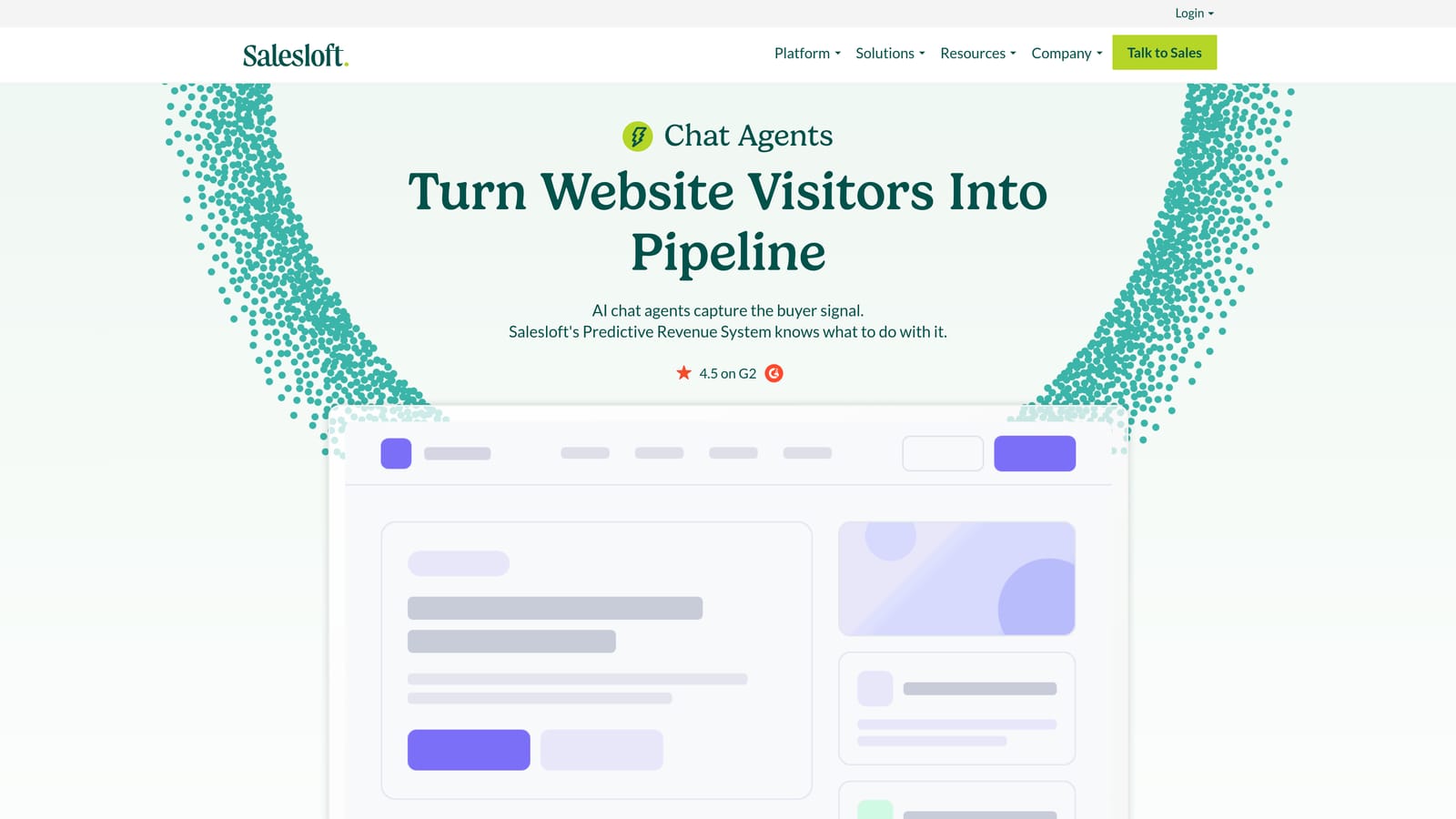
Drift is a conversational AI platform with roots in sales and marketing, now part of the Salesloft ecosystem, useful when support and revenue motions overlap.
Where This Tool Shines
Drift occupies a unique position in this list: it's not a pure support tool. Its strength is in conversations that exist at the intersection of support and sales, where a customer asking a product question might also be a buyer evaluating an upgrade or expansion. The buyer intent signals and account-based routing features reflect this revenue-first orientation.
For teams using Salesloft for sales engagement, the integration between Drift and the broader Salesloft platform creates a coherent view of prospect and customer conversations across the full lifecycle. This is valuable context that pure support tools typically don't provide.
Key Features
AI-Powered Conversational Bots: Handles chat and email conversations with automated qualification and response capabilities.
Buyer Intent Signals: Identifies accounts showing purchase or expansion intent based on conversation behavior.
Account-Based Routing: Routes conversations based on account tier, intent signals, or CRM data.
Meeting Scheduling: Integrated calendar booking so conversations can convert to meetings without leaving the chat.
Revenue Analytics: Pipeline influence reporting that connects support and sales conversations to revenue outcomes.
Best For
B2B companies where support and sales teams share responsibility for customer conversations, particularly those already using Salesloft. Less suited for teams that need deep technical support automation or high-volume ticket resolution.
Pricing
Contact for pricing. Drift is enterprise-focused with no public self-serve tier. Expect custom contracts based on team size and feature requirements.
7. Kustomer
Best for: High-volume operations needing a CRM-native support platform with omnichannel AI automation
Kustomer is a CRM-native customer service platform with AI automation across channels, offering a unified customer timeline and strong high-volume handling capabilities.
Where This Tool Shines
Kustomer's defining feature is the unified customer timeline: every interaction across every channel, combined with CRM data, visible in a single view. For support agents handling complex or long-running customer relationships, this context is enormously valuable. You're not just looking at a ticket; you're looking at the full customer story.
The AI automation layer handles routing, response suggestions, and deflection effectively, and the no-code workflow builder makes it accessible for operations teams to customize without engineering support. Kustomer is owned by Meta, which has continued to invest in the platform's AI capabilities.
Key Features
Unified Customer Timeline: Every interaction across all channels displayed in a single, chronological view with CRM data embedded.
AI-Powered Routing and Deflection: Intelligent routing based on customer data, intent, and agent availability, with automated deflection for common queries.
CRM Data in Every Conversation: Customer history, purchase data, and relationship context available to agents without switching tools.
Omnichannel Coverage: Handles email, chat, SMS, social, and voice from a unified workspace.
No-Code Workflow Builder: Visual automation builder for custom routing rules, escalation logic, and workflow design.
Best For
High-volume B2C and DTC operations, as well as B2B teams managing complex customer relationships across multiple channels. The CRM-native approach makes it particularly strong for teams where customer history and account context are critical to every support interaction.
Pricing
Enterprise plan starts around $89 per agent per month. Verify current pricing at kustomer.com, as plans and tiers may have changed.
8. Ada
Best for: Large enterprises needing a highly customizable AI agent with multilingual support and compliance controls
Ada is an enterprise-grade AI agent platform with strong no-code customization, multilingual support across 50+ languages, and security controls built for large-scale deployments.
Where This Tool Shines
Ada is genuinely AI-first, which puts it in a different category from the legacy helpdesks with AI features added on. Its no-code conversation designer gives non-technical teams significant control over how the AI behaves across different scenarios, without requiring developer involvement for every customization.
The multilingual capability is one of Ada's clearest differentiators. For global enterprises supporting customers across many languages and regions, having reliable AI resolution in 50+ languages from a single platform removes a significant operational complexity. The enterprise security and compliance controls are also well-developed, which matters for regulated industries.
Key Features
No-Code Conversation Designer: Visual builder for designing AI agent behavior across different customer scenarios without engineering resources.
Multilingual Support: AI resolution across 50+ languages, enabling consistent support quality for global customer bases.
Enterprise Security and Compliance: Built-in controls for data privacy, access management, and regulatory compliance requirements.
Helpdesk and CRM Integrations: Deep connections with major helpdesk platforms and CRMs for seamless data flow.
Automated Resolution Tracking: Performance analytics that track resolution rates, deflection, and AI accuracy over time.
Best For
Large enterprises with global customer bases, complex compliance requirements, or multilingual support needs. Ada's no-code customization also makes it accessible for enterprise teams that want AI-first resolution without heavy IT involvement.
Pricing
Contact for pricing. Ada is enterprise-focused with custom contracts. No public self-serve tier is available.
9. Help Scout
Best for: Teams that prioritize a clean, human-first support experience with light AI productivity assistance
Help Scout is a human-first, email-centric helpdesk that layers AI productivity tools on top of a clean, simple agent experience designed for teams that value quality over automation volume.
Where This Tool Shines
Help Scout is honest about its philosophy: it's built for teams that believe human connection matters in customer support, with AI in a supporting role rather than an autonomous one. The interface is genuinely clean and easy to use, which reduces onboarding time and agent frustration compared to more complex platforms.
The AI features, including draft composition, summarization, and Beacon AI for self-service suggestions, are well-integrated without feeling forced. For teams that don't need or want high-volume autonomous resolution, Help Scout's approach of using AI to make agents faster and better is a reasonable and well-executed alternative.
Key Features
AI Drafts: AI-generated reply drafts that agents can review, edit, and send, reducing composition time without removing human judgment.
Conversation Summarization: Automatically summarizes long email threads so agents can understand context quickly without reading everything.
Beacon AI: Self-service widget that suggests relevant knowledge base articles before customers submit a ticket, reducing inbound volume.
Shared Inbox with Collision Detection: Prevents two agents from replying to the same conversation simultaneously.
Docs Knowledge Base: Built-in knowledge base builder included in the platform, no additional tool required.
Best For
Small to mid-sized teams that want a clean, simple helpdesk with AI-assisted productivity rather than autonomous resolution. Particularly strong for teams with high-quality support standards where human review of every reply is preferred.
Pricing
Starts at $22 per user per month on the Standard plan. AI features are included in higher tiers. A straightforward pricing structure compared to many tools on this list.
Which Tool Is Right for Your Team?
The most important distinction to make when evaluating this list is the difference between AI-native platforms and AI-augmented legacy tools. Zendesk, Freshdesk, and Help Scout are established helpdesks that have added AI capabilities over time. They offer familiarity and lower switching costs if you're already using them. But their AI features are layers on top of an existing architecture, not the foundation.
Platforms like Halo AI and Ada were designed from the ground up around autonomous resolution and continuous learning. For B2B SaaS teams that want AI to do real work, not just assist agents, the architectural difference matters more than it might initially appear.
Here's a quick guide by use case:
Best for B2B SaaS teams wanting AI-first autonomous resolution: Halo AI, with its page-aware context, continuous learning, and business intelligence signals built in from day one.
Best for teams already on Intercom: Intercom with Fin AI, as the lowest-friction upgrade path within an existing ecosystem.
Best for large enterprises with existing Zendesk deployments: Zendesk AI Suite, extending existing investment rather than migrating.
Best for mid-market teams on a budget: Freshdesk with Freddy AI, offering solid capability at competitive pricing.
Best for global enterprises needing multilingual AI: Ada, with its 50+ language support and enterprise compliance controls.
Best for human-first support teams: Help Scout, where AI assists rather than replaces agent judgment.
Your support team shouldn't scale linearly with your customer base. Let AI agents handle routine tickets, guide users through your product, and surface business intelligence while your team focuses on complex issues that need a human touch. See Halo in action and discover how continuous learning transforms every interaction into smarter, faster support.