9 Best AI-Powered Help Desk Software Tools in 2026
A curated evaluation of nine leading AI-powered help desk software platforms in 2026, assessed on genuine AI depth, B2B SaaS scalability, and full support lifecycle management—helping teams resolve issues faster without expanding headcount.
 Grant CooperFounder13 min read
The old model of reactive, ticket-queue-driven support is being replaced by AI systems that resolve issues before agents even see them. For B2B teams managing growing user bases without proportionally growing headcount, AI-powered help desk software has shifted from a nice-to-have to a core operational tool.
This list covers nine of the best AI-powered help desk platforms available in 2026, evaluated on depth of AI capability (not just a chatbot bolted on), integration ecosystem, scalability for B2B SaaS teams, and how well they handle the full support lifecycle from first contact to resolution.
Whether you're replacing a legacy ticketing system or layering intelligence onto an existing workflow, these tools represent the current state of the market. If you're still figuring out where to start, our guides on the best customer support automation tools and support ticket handling automation offer useful context before you dive in.
1. Halo AI
Best for: B2B SaaS teams that want an AI-first support platform, not a retrofitted helpdesk.
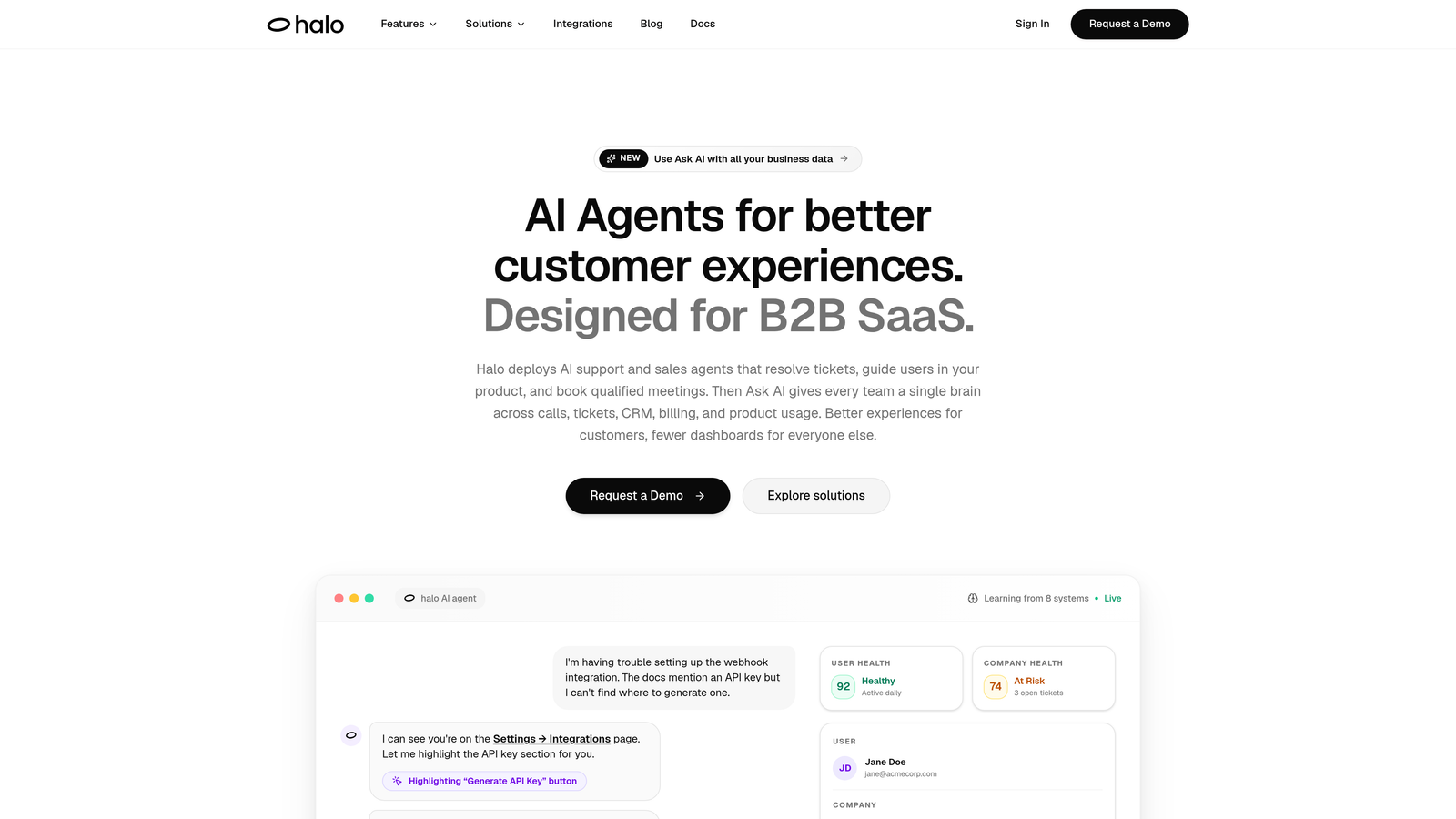
Halo AI is an AI-native customer support platform built specifically for B2B SaaS teams who need to scale support without scaling headcount.
Where This Tool Shines
The clearest differentiator here is architecture. Halo was built AI-first, which means the intelligence isn't layered on top of a legacy ticketing system. The AI agents are the product. They resolve tickets, guide users through your product with page-aware context, auto-generate bug reports, and surface business intelligence signals — all while learning continuously from every interaction.
The page-aware context capability is particularly compelling for SaaS teams. Rather than responding to a text description of a problem, Halo's agents understand what the user is actually looking at in your product. That context changes the quality of guidance dramatically, moving from generic FAQ-style answers to specific, visual, step-by-step support.
Key Features
Page-Aware AI Agents: Agents see what the user sees, enabling contextual, visual guidance rather than generic responses.
Autonomous Ticket Resolution with Smart Handoff: Handles routine tickets end-to-end and escalates complex issues to live agents with full context preserved.
Auto Bug Ticket Creation: Automatically generates and routes bug reports to Linear, Jira, or Slack without manual triage.
Smart Inbox with Business Intelligence: Surfaces customer health signals, revenue anomalies, and product usage patterns from within the support workflow.
Broad Integration Stack: Connects natively with Linear, Slack, HubSpot, Intercom, Stripe, Zoom, PandaDoc, and Fathom.
Best For
Product-led SaaS companies and B2B teams that want support to function as a business intelligence layer, not just a ticket queue. Particularly well-suited for teams already using tools like Linear, HubSpot, or Stripe who want those systems connected to their support workflow.
Pricing
Visit haloagents.ai for current pricing and free trial options. Plans are designed to scale with SaaS teams.
2. Zendesk
Best for: Enterprise teams needing a mature, deeply configurable helpdesk with broad AI coverage.
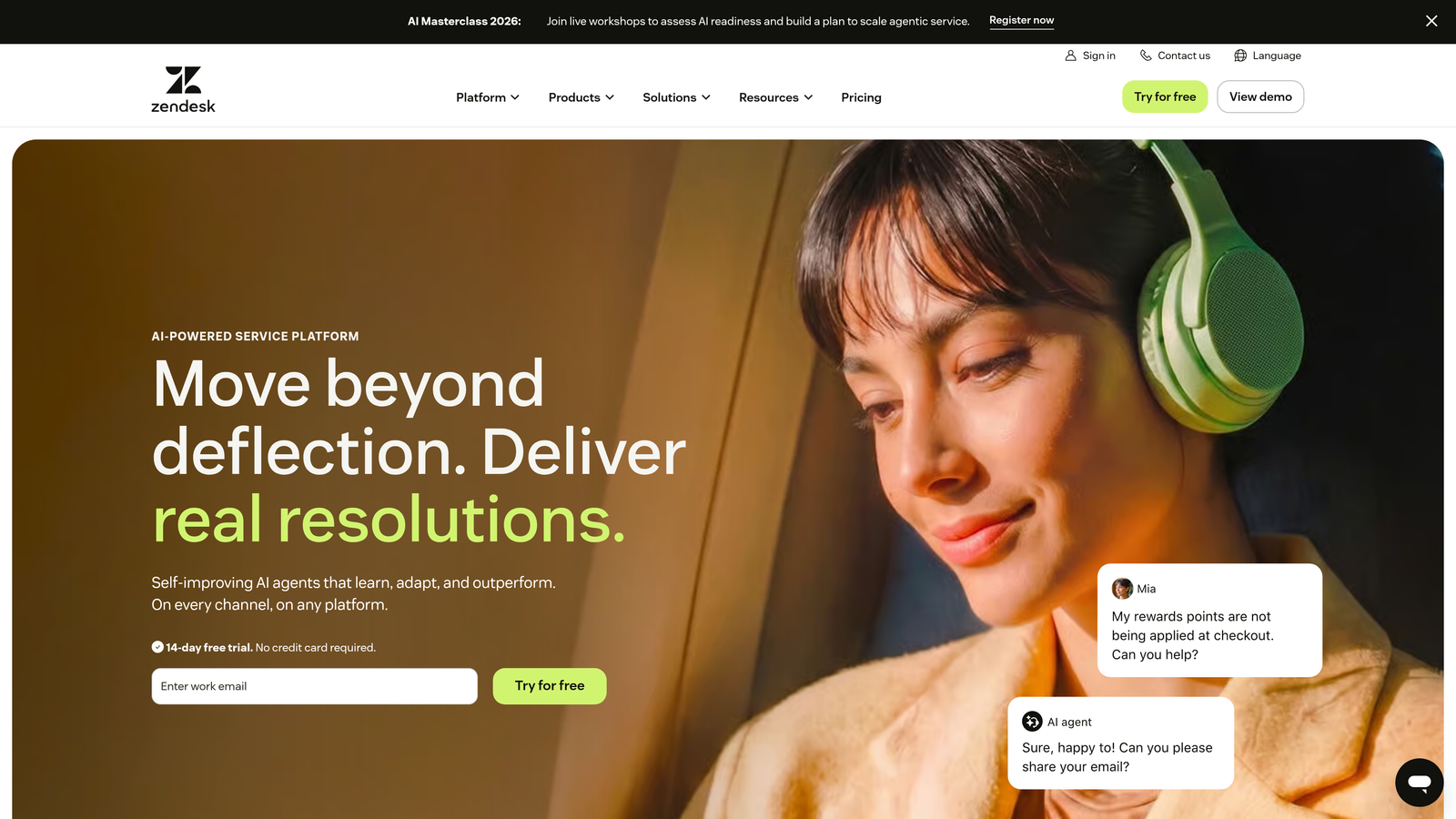
Zendesk is one of the most widely deployed helpdesk platforms globally, with AI capabilities built into its Suite and available as an Advanced AI add-on for intelligent triage, agent assistance, and automated resolutions.
Where This Tool Shines
Zendesk's strength is breadth. The platform handles enormous ticket volumes across complex organizations, and its AI features — intelligent triage, agent copilot, and resolution bots — are mature and well-documented. The 1,000+ app marketplace means it integrates with virtually any tool in your stack.
The tradeoff is complexity. Getting the most out of Zendesk AI requires meaningful configuration investment, and the full AI feature set comes at a higher price point than most alternatives. For teams with the resources to configure and maintain it, the capability ceiling is high.
Key Features
Intelligent Triage and Auto-Routing: Classifies and routes tickets based on detected intent and sentiment automatically.
Agent Copilot: Provides real-time suggestions and next-best-action guidance during live conversations.
Automated Resolution Bots: Trained on your knowledge base to resolve common questions without agent involvement.
Extensive App Marketplace: Over 1,000 integrations covering CRM, billing, analytics, and collaboration tools.
Advanced Reporting and SLA Management: Granular performance tracking across teams, channels, and ticket types.
Best For
Enterprise organizations with complex, multi-team support operations and the technical resources to configure a sophisticated platform. Less ideal for lean teams that need fast time-to-value without heavy setup.
Pricing
Suite plans start at approximately $55 per agent per month; Advanced AI is an additional add-on. Verify current pricing at zendesk.com.
3. Freshdesk
Best for: Growing SMBs that need capable AI features at a competitive price point.
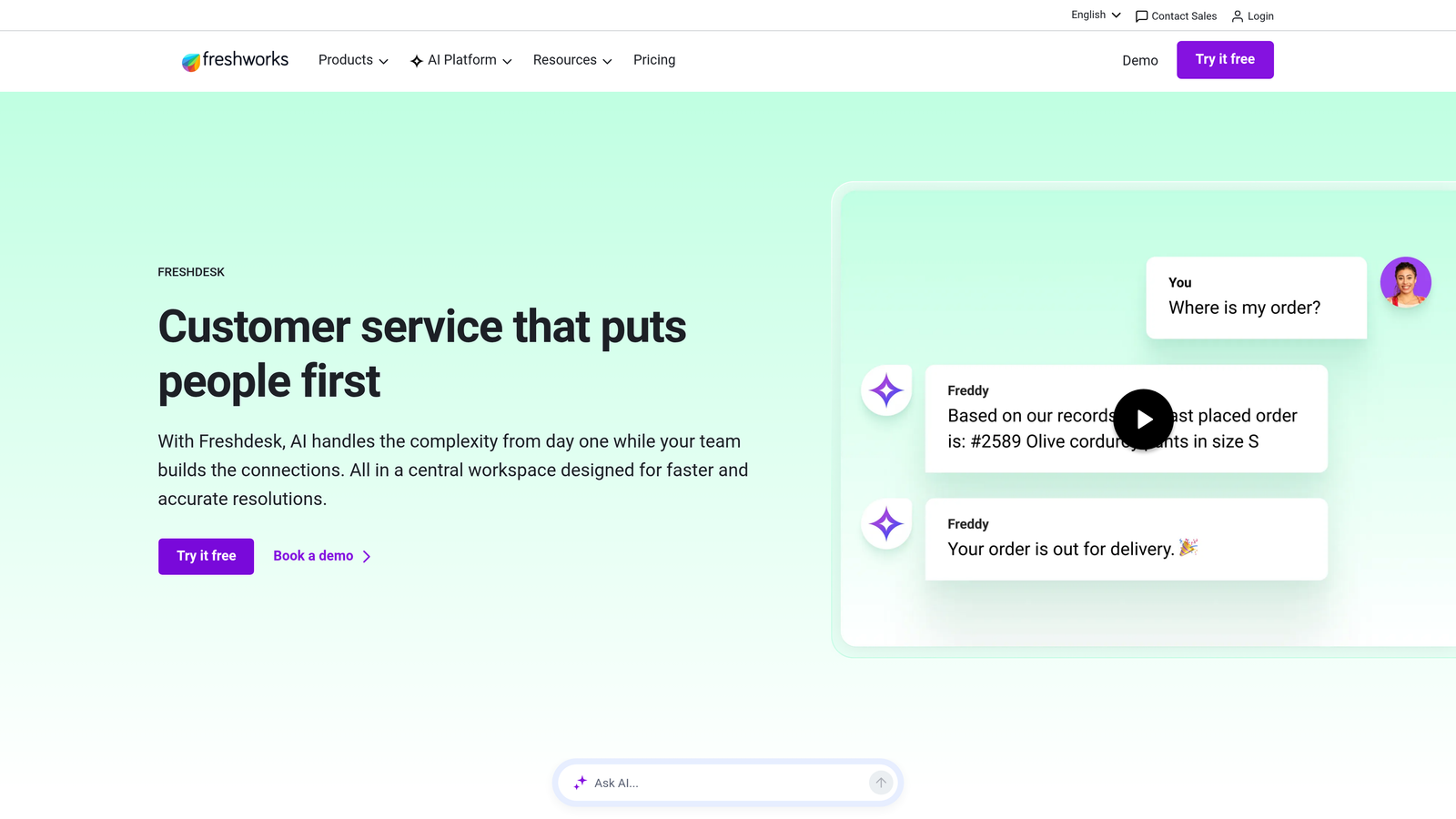
Freshdesk is a widely used helpdesk platform from Freshworks, featuring Freddy AI for ticket automation, agent assistance, and self-service at a price point accessible to growing teams.
Where This Tool Shines
Freshdesk's value proposition is strong AI capability relative to cost. Freddy AI handles ticket summarization, suggested replies, and auto-triage, while Freddy Copilot assists agents in real time. For teams that don't have the budget for Zendesk's full AI stack, Freshdesk delivers a comparable feature set at a lower entry price.
The platform also benefits from tight integration with the broader Freshworks ecosystem, including Freshsales CRM. If your team is already using Freshworks products, the unified data layer adds meaningful context to support interactions.
Key Features
Freddy AI for Ticket Automation: Handles summarization, suggested replies, and auto-triage across incoming tickets.
Freddy Copilot: Guides agents with productivity tools and response suggestions during active conversations.
Freddy Self Service: Powers AI-driven customer-facing bots for deflection and autonomous resolution.
Multi-Channel Support: Covers email, chat, phone, and social from a unified inbox.
Freshworks Ecosystem Integration: Native connection with Freshsales CRM and other Freshworks products for full customer context.
Best For
SMBs and mid-market teams looking for capable AI-assisted support without enterprise-level pricing. Also a natural fit for teams already invested in the Freshworks product suite.
Pricing
A free tier is available; paid plans start at approximately $15 per agent per month. Verify current pricing at freshdesk.com.
4. Intercom
Best for: Conversational-first SaaS teams with a strong knowledge base ready to train against.
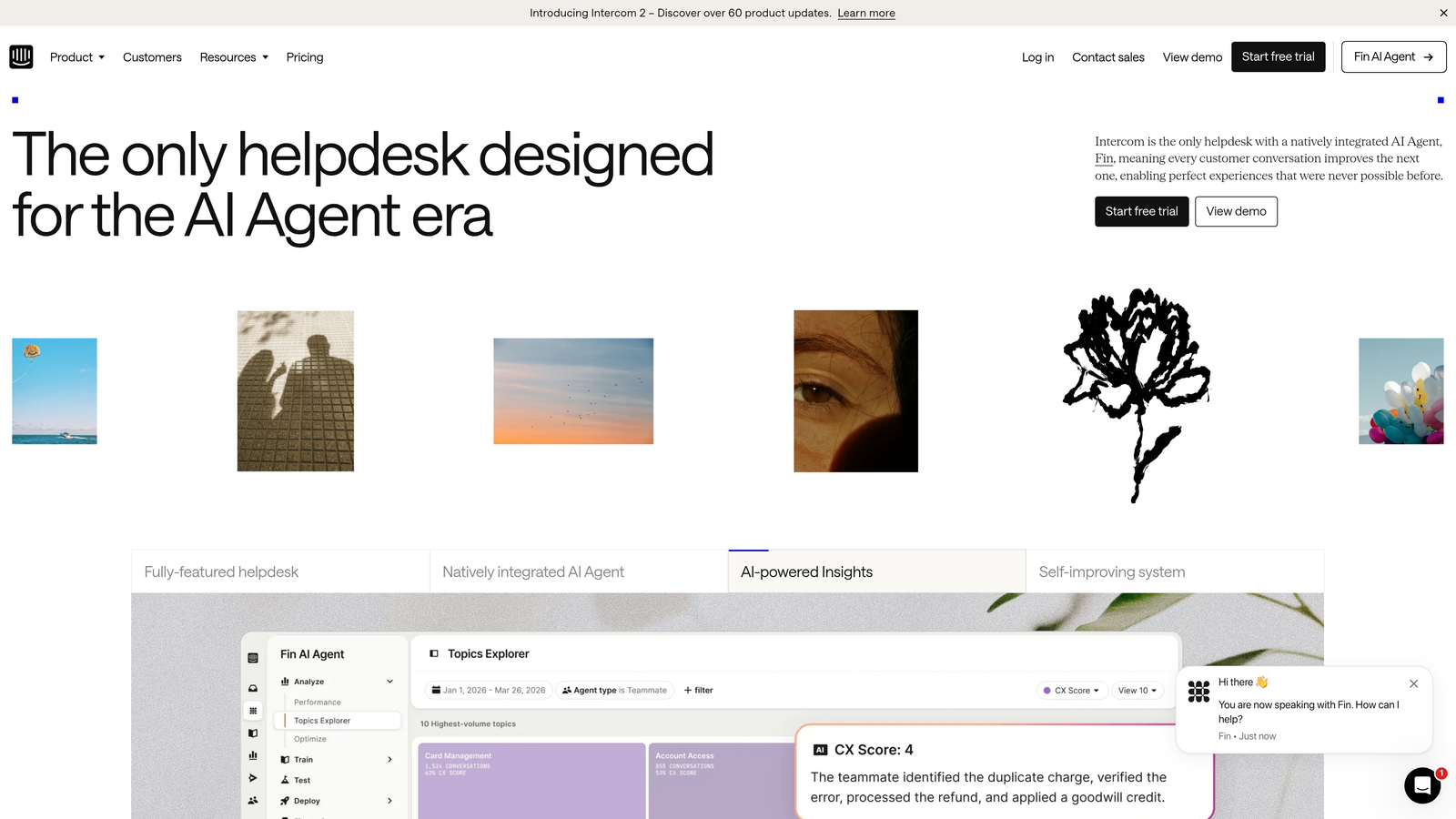
Intercom is a conversational support platform with Fin AI Agent at its core, an AI built to resolve customer questions autonomously by drawing from your knowledge base and support content.
Where This Tool Shines
Fin AI Agent is one of the more capable autonomous resolution tools on the market. It cites sources in its responses, handles multi-turn conversations naturally, and is designed to close tickets rather than just deflect them. For SaaS teams with well-maintained documentation, the resolution rate can be substantial.
Intercom's broader platform also excels at proactive support, with product tours and in-app messaging that address issues before customers need to reach out. The combination of proactive and reactive AI makes it a strong fit for product-led growth companies.
Key Features
Fin AI Agent: Resolves customer conversations autonomously with cited sources drawn from your knowledge base.
Omnichannel Inbox: Combines chat, email, and social into a single unified workspace for agents.
AI Summarize and Copilot: Productivity tools that help human agents get context quickly and draft responses efficiently.
Product Tours and In-App Messaging: Enables proactive support that addresses friction before tickets are created.
Resolution-Based Pricing: Available on some tiers, aligning cost directly with AI-driven outcomes.
Best For
SaaS companies with mature knowledge bases who prioritize conversational, chat-first support and want AI that can close conversations autonomously rather than just assist agents.
Pricing
Plans vary; Fin AI Agent pricing is partly resolution-based on some tiers. Verify current pricing at intercom.com.
5. Help Scout
Best for: Teams where brand voice, relationship quality, and personal touch are non-negotiable.
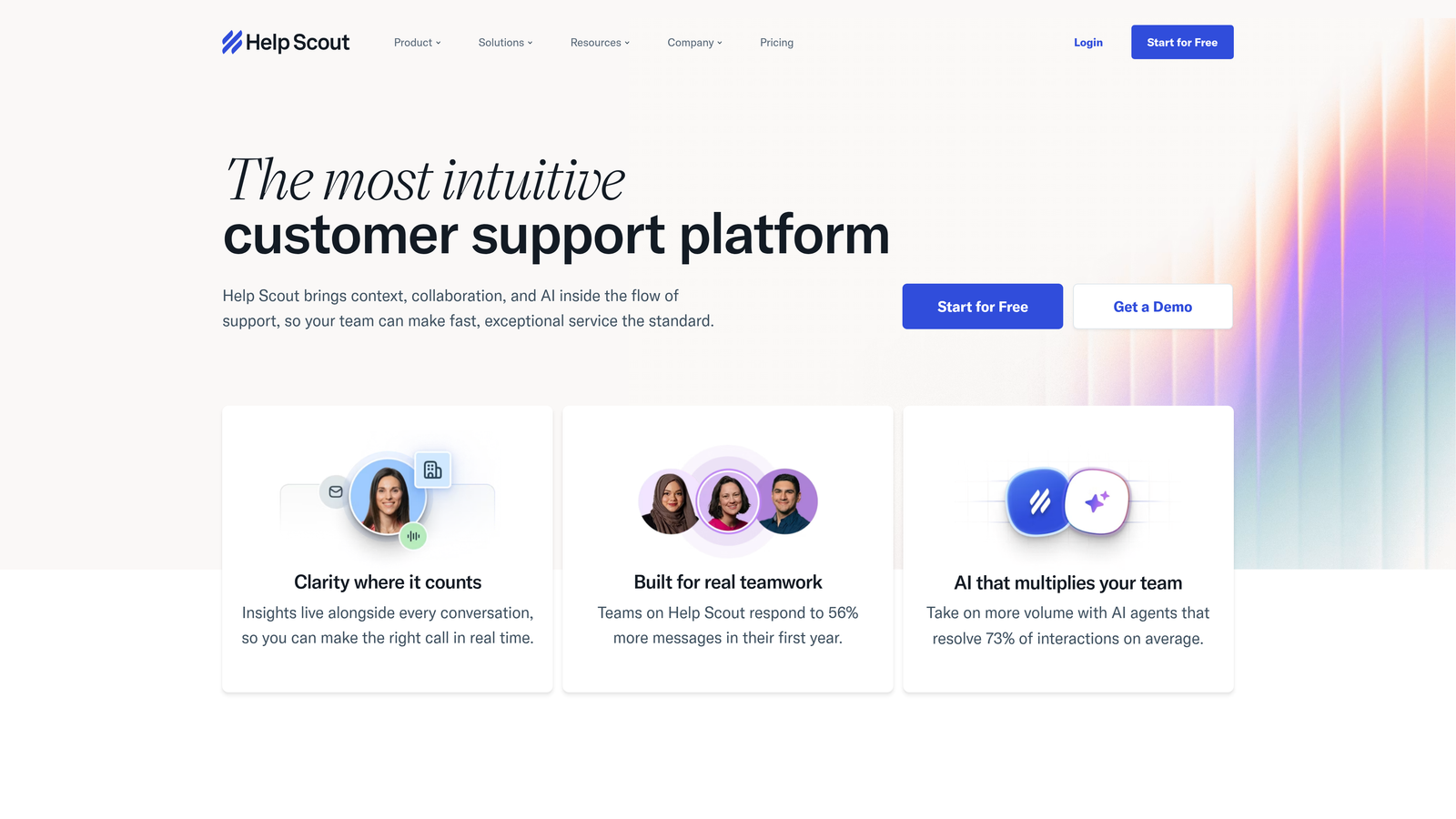
Help Scout is a customer support platform that blends AI productivity tools with a deliberately human, relationship-first design philosophy.
Where This Tool Shines
Help Scout isn't trying to maximize AI autonomy. It's designed to make human agents faster and more effective, which is a deliberate positioning choice that resonates with certain teams. The AI Summarize and AI Assist features reduce friction without removing the human from the conversation.
The platform's clean UX and shared inbox design also reduce the cognitive load for support teams, and features like collision detection prevent two agents from responding to the same ticket simultaneously. For teams where every customer interaction carries brand weight, that level of care in the tooling matters.
Key Features
AI Summarize: Gives agents instant conversation context so they can pick up threads without reading the full history.
AI Assist: Helps agents draft and refine replies for tone, clarity, and completeness.
Beacon Live Chat Widget: Embeds proactive messaging and self-service directly in your product or website.
Shared Inbox with Collision Detection: Prevents duplicate responses and keeps team communication clean with internal notes.
Docs Knowledge Base: Built-in knowledge base with AI-assisted search for customer self-service.
Best For
Customer-centric teams, especially in B2B, where long-term relationships and brand voice matter more than maximizing deflection rates. A strong fit for companies where support is a differentiator, not just a cost center.
Pricing
Plans start at approximately $22 per user per month. Verify current pricing at helpscout.com.
6. Zoho Desk
Best for: Teams already in the Zoho ecosystem who want context-aware AI without switching platforms.
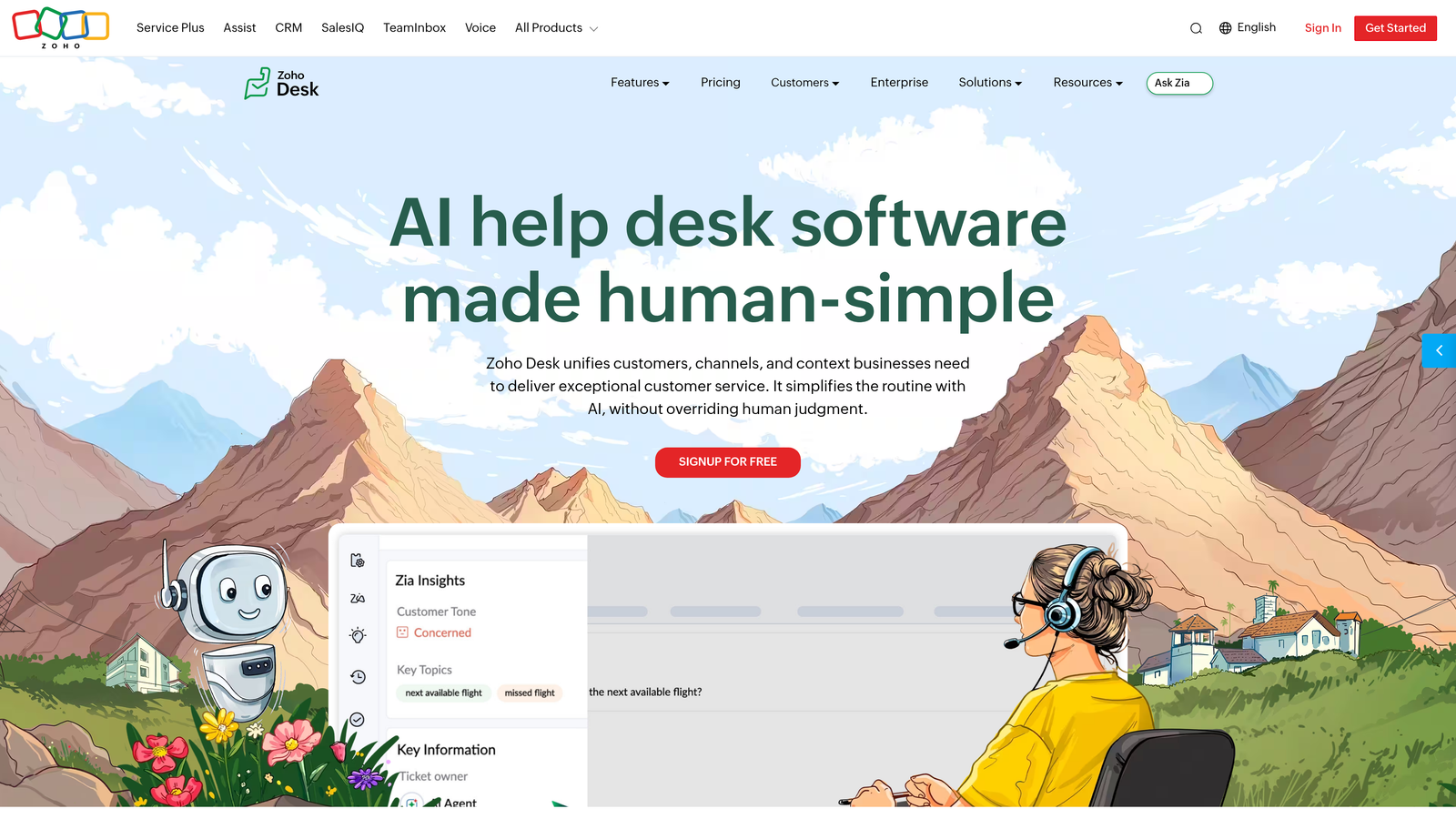
Zoho Desk is a context-aware helpdesk platform with Zia AI built in, offering sentiment analysis, anomaly detection, and smart automation at a competitive price point.
Where This Tool Shines
Zia brings a thoughtful set of AI capabilities to the helpdesk, including sentiment analysis that helps agents understand customer frustration before they respond, and anomaly detection that flags unusual spikes in ticket volume. These signals help support managers stay ahead of emerging issues rather than reacting to them.
The native integration with Zoho CRM is a genuine advantage for teams already on the Zoho stack. Having full customer context, purchase history, and account data surfaced directly in the ticket view changes how agents approach conversations.
Key Features
Zia AI: Provides sentiment analysis, automatic ticket tagging, and anomaly detection across ticket volume trends.
Auto-Suggested Knowledge Articles: Surfaces relevant knowledge base content for both agents and customers in real time.
Blueprint Workflow Automation: Enables complex, multi-step ticket processes with conditional logic and approvals.
Native Zoho CRM Integration: Pulls full customer and account context directly into the support workspace.
Multi-Department Support: Handles separate support queues and workflows across different business units with role-based access.
Best For
Organizations already using Zoho CRM or other Zoho products who want a tightly integrated support layer without adopting a new vendor ecosystem. Also attractive for budget-conscious teams that need solid AI features without enterprise pricing.
Pricing
A free tier is available for up to three agents; paid plans start at approximately $14 per agent per month. Verify current pricing at zoho.com/desk.
7. Salesforce Service Cloud
Best for: Large enterprises already running on Salesforce who need AI embedded across the full service operation.
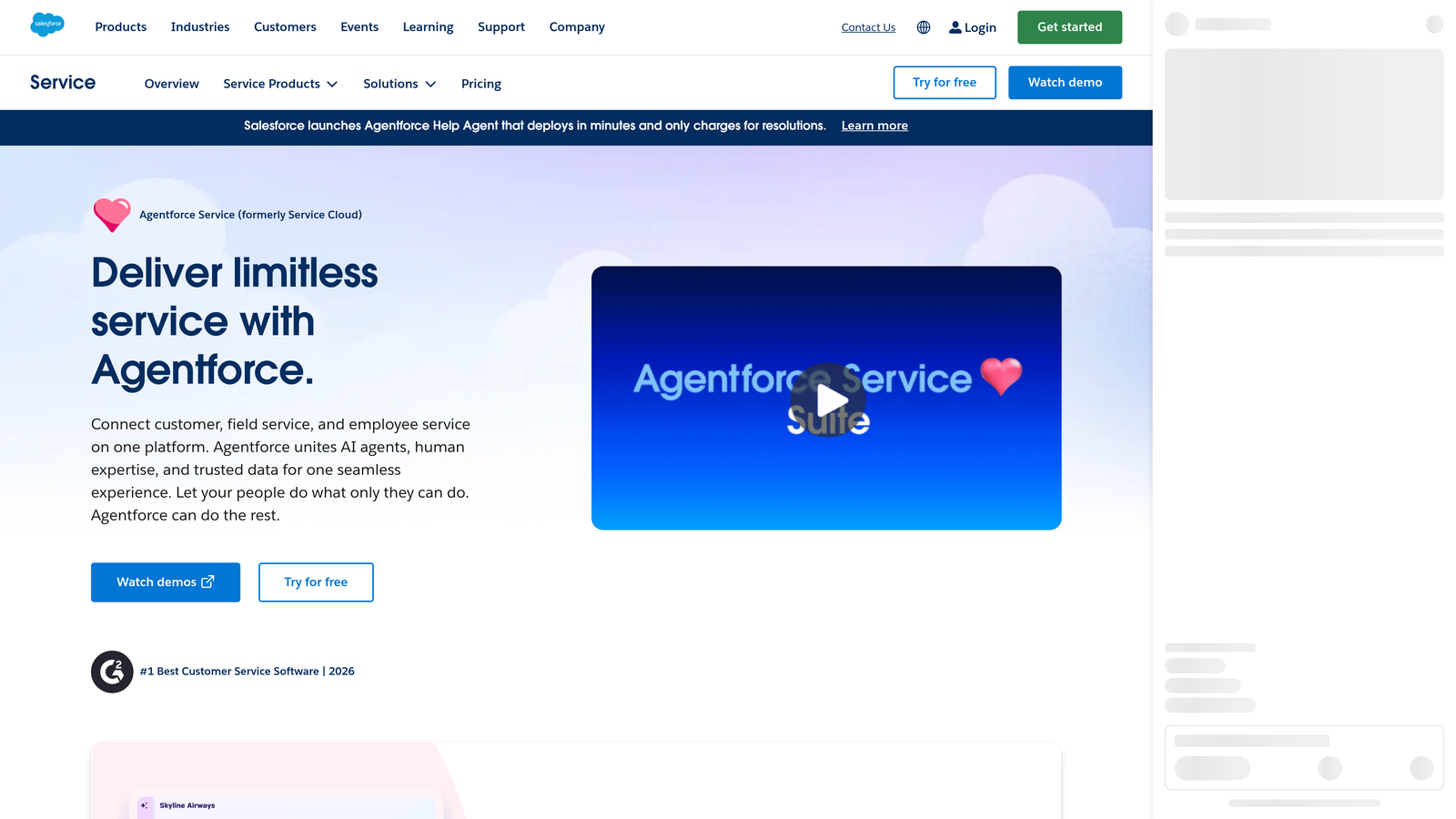
Salesforce Service Cloud is an enterprise-grade service platform with Einstein AI deeply embedded across case management, knowledge, field service, and customer self-service.
Where This Tool Shines
For organizations already on the Salesforce platform, Service Cloud is a natural extension. Einstein AI adds intelligent case classification, knowledge article recommendations, and next-best-action guidance directly within the agent workspace, all backed by the full CRM data model. The depth of integration with Sales Cloud, Marketing Cloud, and other Salesforce products is unmatched in the market.
The field service management capability is also worth noting for companies with on-site service operations. AI-optimized scheduling and dispatch, combined with mobile-first tools for field technicians, make this a genuinely comprehensive service platform rather than just a helpdesk.
Key Features
Einstein AI: Handles case classification, next-best-action recommendations, and knowledge article surfacing for agents.
Unified Agent Workspace: Surfaces full CRM data, case history, and customer context in a single view.
Einstein Bots: Powers automated self-service across chat, messaging, and digital channels.
Field Service Management: AI-optimized scheduling and dispatch for organizations with on-site service operations.
Service Cloud Einstein Dashboards: Advanced analytics with AI-driven insights across service performance metrics.
Best For
Enterprise organizations already invested in the Salesforce ecosystem who need a service platform that scales with complex, multi-channel operations. Not recommended for teams without existing Salesforce infrastructure, given the implementation investment required.
Pricing
Enterprise plans start at approximately $165 per user per month. Verify current pricing at salesforce.com/service.
8. Tidio
Best for: Lean startup and small business teams that need capable AI at an accessible price point.
Tidio is an accessible live chat and AI helpdesk platform featuring Lyro AI, a conversational AI that handles a large share of customer questions autonomously without requiring enterprise-level investment.
Where This Tool Shines
Lyro AI is Tidio's standout feature. It's designed to handle the high-frequency, repetitive questions that consume most of a small support team's time, freeing agents to focus on conversations that actually need human judgment. For lean teams fielding the same questions repeatedly, the deflection value is immediate.
Tidio also integrates well with e-commerce platforms, making it a popular choice for direct-to-consumer brands on Shopify or WordPress. The pre-built automation flows lower the barrier to getting started without deep technical configuration.
Key Features
Lyro AI Chatbot: Handles autonomous conversation resolution for common questions without agent involvement.
Live Chat with Agent Takeover: Allows human agents to step into any conversation in real time with visitor tracking context.
Ticketing System: Manages email-based support alongside chat in a unified interface.
Pre-Built Automation Flows: Ready-to-use automation templates for common support scenarios that reduce setup time.
E-Commerce Platform Integrations: Native connections with Shopify, WordPress, and other popular e-commerce platforms.
Best For
Startups, small teams, and e-commerce brands that need meaningful AI capability without complex implementation or enterprise pricing. Less suited for B2B SaaS teams with complex, multi-step support workflows or deep CRM integration needs.
Pricing
A free tier is available; Lyro AI plans start at approximately $29 per month. Verify current pricing at tidio.com.
9. Kustomer
Best for: High-volume support teams that need a full customer timeline with AI-driven routing and automation.
Kustomer is a CRM-native helpdesk platform that surfaces a unified customer timeline across every interaction, combined with AI-driven routing, suggested responses, and workflow automation.
Where This Tool Shines
Kustomer's defining feature is the unified customer timeline: every email, chat, order, return, and interaction consolidated in a single chronological view. For high-volume teams where agents frequently pick up mid-conversation or need to understand customer history quickly, this context layer significantly reduces resolution time and repetitive questioning.
The AI-powered routing and suggested reply features work well when trained on a large volume of historical conversations, which makes Kustomer increasingly effective as teams scale. It's a platform that rewards data volume.
Key Features
Unified Customer Timeline: Consolidates every interaction, transaction, and touchpoint into a single chronological view per customer.
AI-Powered Intelligent Routing: Automatically assigns incoming conversations based on content, customer history, and team capacity.
Suggested Reply AI: Generates response recommendations trained on historical conversation data.
Workflow Automation: Handles complex, multi-step support processes with conditional logic and cross-system actions.
Omnichannel Support: Covers email, chat, SMS, social, and voice from a single unified workspace.
Best For
High-volume support operations, particularly in B2C or transactional B2B contexts, where full customer history and fast context retrieval are critical. Teams that handle significant conversation volume will see the AI features perform best as the system learns from historical data.
Which Tool Is Right for Your Team?
The right AI-powered help desk comes down to where your team sits on two spectrums: how much AI autonomy you want, and how deeply embedded in an existing ecosystem you already are.
Here's a quick orientation by use case:
Halo AI: Best for B2B SaaS teams that want an AI-first platform with page-aware context, business intelligence signals, and deep integrations into their existing product stack. Built for teams that want support to do more than close tickets.
Zendesk: Best for enterprise teams with complex, multi-channel operations and the resources to configure a sophisticated platform over time.
Freshdesk: Best for budget-conscious SMBs that need capable AI assistance without committing to enterprise pricing.
Intercom: Best for conversational-first SaaS companies with strong knowledge bases who want Fin AI Agent to resolve the majority of conversations autonomously.
Help Scout: Best for relationship-driven teams where every customer interaction carries brand weight and AI should assist humans, not replace them.
Zoho Desk: Best for teams already in the Zoho ecosystem who want sentiment-aware AI and deep CRM integration without switching vendors.
Salesforce Service Cloud: Best for large enterprises already on Salesforce who need AI embedded across a full, multi-channel service operation.
Tidio: Best for lean teams and e-commerce brands that need fast, affordable AI deflection without complex setup.
Kustomer: Best for high-volume teams where full customer history and CRM-native context are the primary drivers of resolution quality.
Your support team shouldn't scale linearly with your customer base. Let AI agents handle routine tickets, guide users through your product, and surface business intelligence while your team focuses on complex issues that need a human touch. See Halo in action and discover how continuous learning transforms every interaction into smarter, faster support.
Still weighing your options? Our guides on automated customer support free trials, what to do when you can't afford more support agents, and the nuances of AI vs. human customer support agents can help you build the right case internally before you commit.