9 Best AI-Powered Helpdesk Platforms for Smarter Support in 2026
Discover the 9 best AI-powered helpdesk platforms that transform customer support by instantly resolving routine inquiries, intelligently routing complex issues, and freeing your team from ticket overload. This guide evaluates each AI-powered helpdesk platform based on true AI autonomy, integration capabilities, continuous learning features, and transparent pricing to help you cut through marketing hype and find the right solution for smarter, faster customer support in 2026.
 Grant CooperFounder10 min read
Your support team is drowning in tickets while customers wait hours for responses that should take minutes. AI-powered helpdesk platforms are changing this reality—resolving routine inquiries instantly, routing complex issues intelligently, and freeing human agents to handle work that actually requires human judgment.
But with dozens of platforms claiming AI capabilities, finding the right fit for your team requires cutting through the marketing noise. We evaluated these platforms based on actual AI autonomy (not just chatbot scripts), integration depth with existing tools, learning capabilities over time, and transparent pricing.
Here are top platforms worth your attention in 2026.
1. Halo AI
Best for: B2B SaaS teams needing autonomous AI agents with continuous learning capabilities
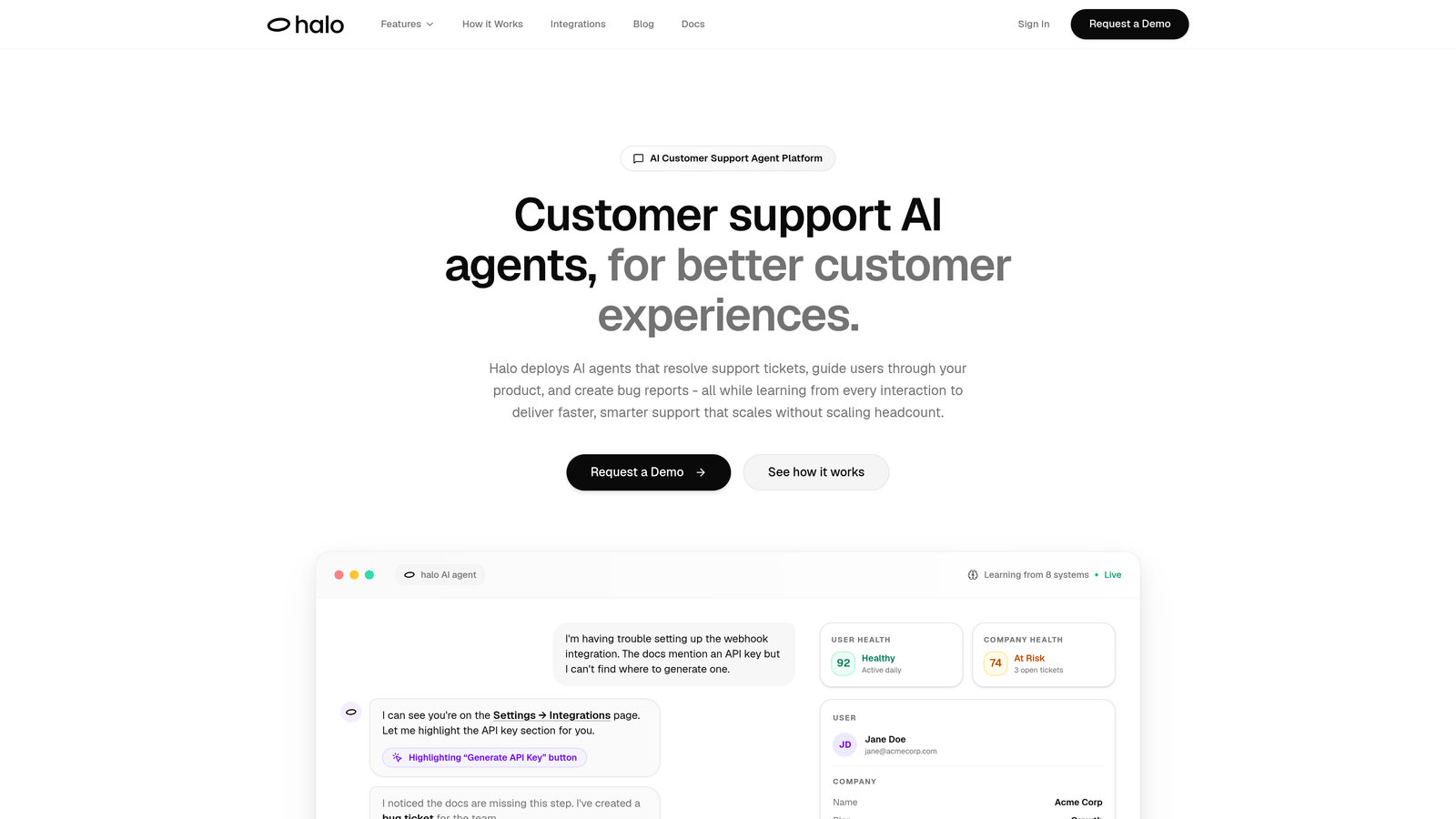
Halo AI is an AI-first customer support platform where autonomous agents resolve tickets, guide users through your product, and learn from every interaction.
Where This Tool Shines
Halo's standout feature is page-aware context—the AI actually sees what your users see, enabling it to provide visual guidance through your product interface. This isn't a chatbot following decision trees; it's an autonomous agent that understands product context and improves with every ticket.
The platform connects to your entire business stack, surfacing business intelligence beyond support. You get customer health signals, revenue intelligence, and anomaly detection—transforming support from a cost center into a strategic data source.
Key Features
Page-Aware AI: Sees user screens for contextual guidance through your product's actual UI.
Autonomous Resolution: Handles tickets independently with smart escalation to humans when needed.
Auto Bug Ticket Creation: Creates tickets in Linear automatically when issues are detected.
Business Intelligence: Surfaces customer health signals and revenue intelligence from support interactions.
Deep Integrations: Native connections to Slack, HubSpot, Stripe, Intercom, Zoom, and PandaDoc.
Best For
B2B SaaS companies that want AI agents to truly understand their product context and operate autonomously. Ideal for teams tired of scripted chatbots who need support that scales intelligence, not just capacity.
Pricing
Contact for custom pricing. Designed specifically for B2B SaaS teams with complex product support needs.
2. Zendesk AI
Best for: Enterprise teams with existing Zendesk infrastructure seeking AI augmentation
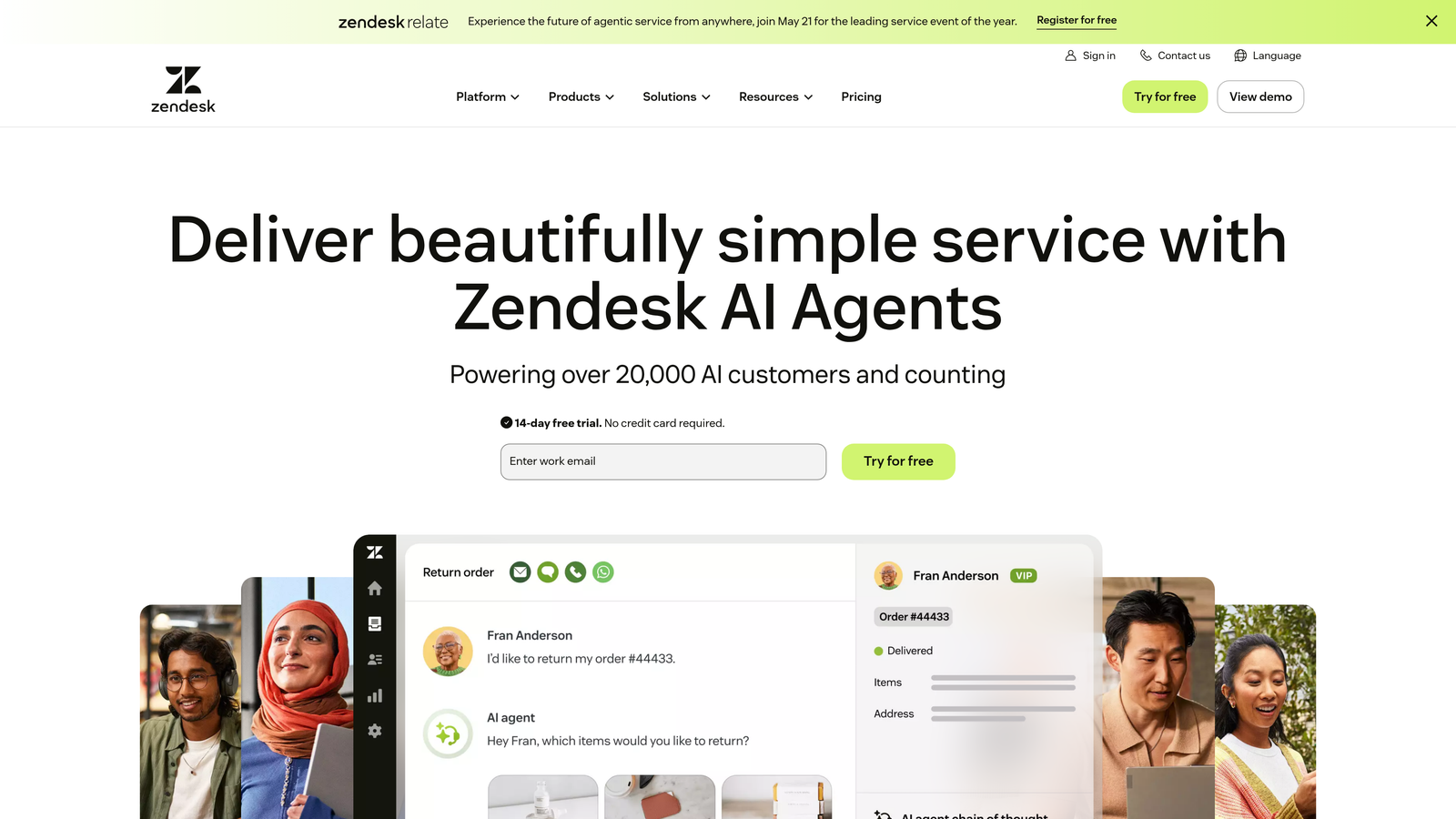
Zendesk AI is an enterprise-grade AI layer built on established helpdesk infrastructure, leveraging data from billions of customer interactions.
Where This Tool Shines
Zendesk's AI benefits from massive training data—billions of support interactions across thousands of companies. This means intent detection and ticket routing that improves from collective learning, not just your individual data.
For teams already invested in Zendesk, the AI add-ons integrate seamlessly with existing workflows. You're not ripping out infrastructure; you're augmenting what already works with intelligent automation.
Key Features
AI-Powered Routing: Automatically prioritizes and assigns tickets based on intent and urgency.
Generative AI Assistance: Suggests responses and summarizes conversations for agents.
Intent Detection: Trained on massive support datasets to understand customer needs accurately.
App Marketplace: Extensive ecosystem of integrations and custom apps.
Enterprise Security: Comprehensive compliance certifications for regulated industries.
Best For
Enterprise organizations with existing Zendesk deployments looking to add AI capabilities without platform migration. Strong fit for companies in regulated industries needing proven security compliance.
Pricing
Suite plans start at $55 per agent per month. AI features are priced as separate add-ons, with costs varying by feature set and usage volume.
3. Intercom Fin
Best for: Product-led companies prioritizing in-app messaging and engagement
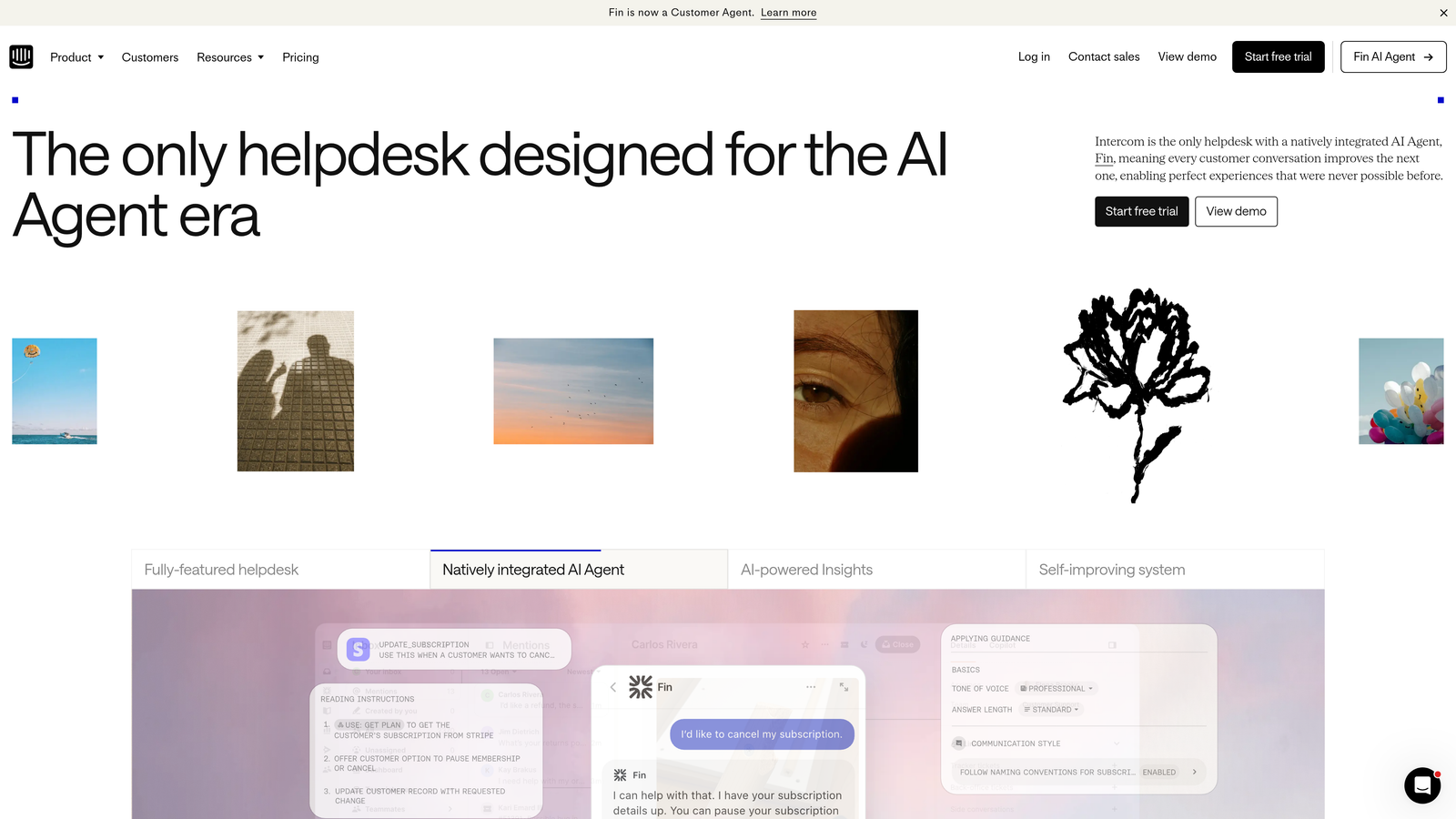
Intercom Fin is a conversational AI agent designed for product-led companies, with strong in-app messaging and resolution-based pricing.
Where This Tool Shines
Fin excels at in-app support where users never leave your product. The AI agent resolves conversations directly in your interface, making support feel native to the product experience rather than a separate helpdesk interaction.
The resolution-based pricing model aligns costs with value—you pay per resolved conversation, not per seat or message. This makes costs predictable and directly tied to AI performance.
Key Features
Autonomous AI Agent: Resolves conversations independently without human intervention.
In-App Messenger: Native product messaging with guided tours and feature announcements.
Resolution-Based Pricing: Pay per resolved conversation instead of per seat or message.
Conversation Summarization: AI summaries when handing off to human agents.
Custom Training: Train the AI on your specific help content and documentation.
Best For
Product-led SaaS companies where in-app messaging drives engagement and retention. Perfect for teams that view support as part of the product experience, not a separate function.
Pricing
Fin charges $0.99 per resolution. Platform plans start at $39 per seat per month, with Fin capabilities added on top.
4. Freshdesk Freddy AI
Best for: Mid-market teams wanting solid AI automation without enterprise pricing
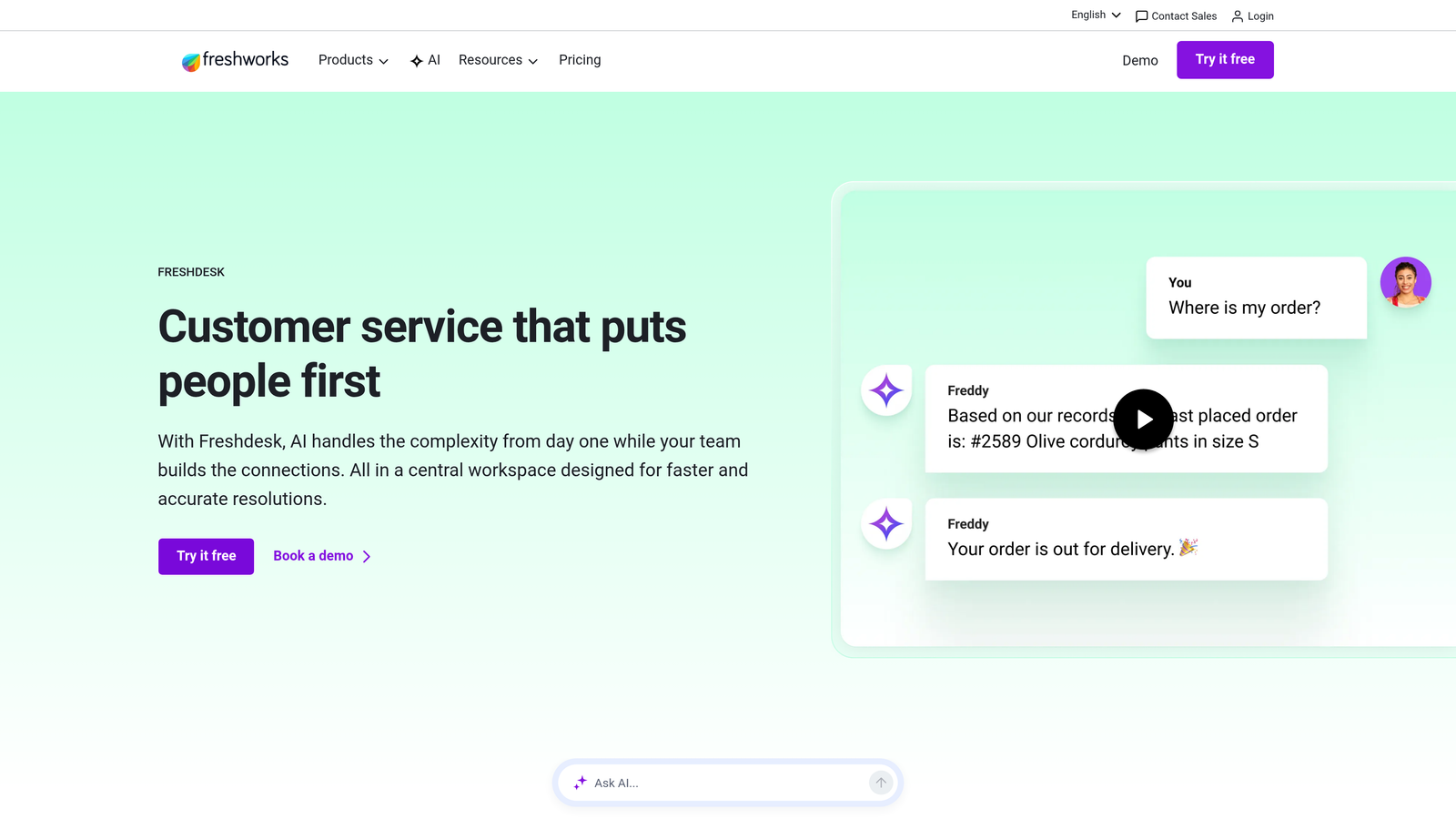
Freshdesk Freddy AI offers AI capabilities built into Freshworks' customer service suite, providing accessible automation for mid-market teams.
Where This Tool Shines
Freddy AI delivers enterprise-level features at mid-market pricing. You get intelligent ticket classification, response suggestions, and workflow automation without the premium price tags of enterprise platforms.
The omnichannel approach unifies email, chat, phone, and social media in one agent workspace. This matters when your team handles support across multiple channels but can't afford specialized tools for each.
Key Features
Freddy AI Classification: Automatically categorizes and prioritizes incoming tickets.
Omnichannel Support: Unified workspace for email, chat, phone, and social media.
Agent Workspace: Single interface with customer context and suggested responses.
AI-Powered Search: Knowledge base with intelligent search and article suggestions.
Workflow Automation: Visual builder for custom automation rules and triggers.
Best For
Mid-market companies needing comprehensive AI features without enterprise budgets. Ideal for teams handling 500-5,000 tickets monthly across multiple support channels.
Pricing
Free tier available for basic needs. Pro plan with AI features starts at $49 per agent per month.
5. Kustomer
Best for: High-volume e-commerce and DTC brands needing unified customer timelines
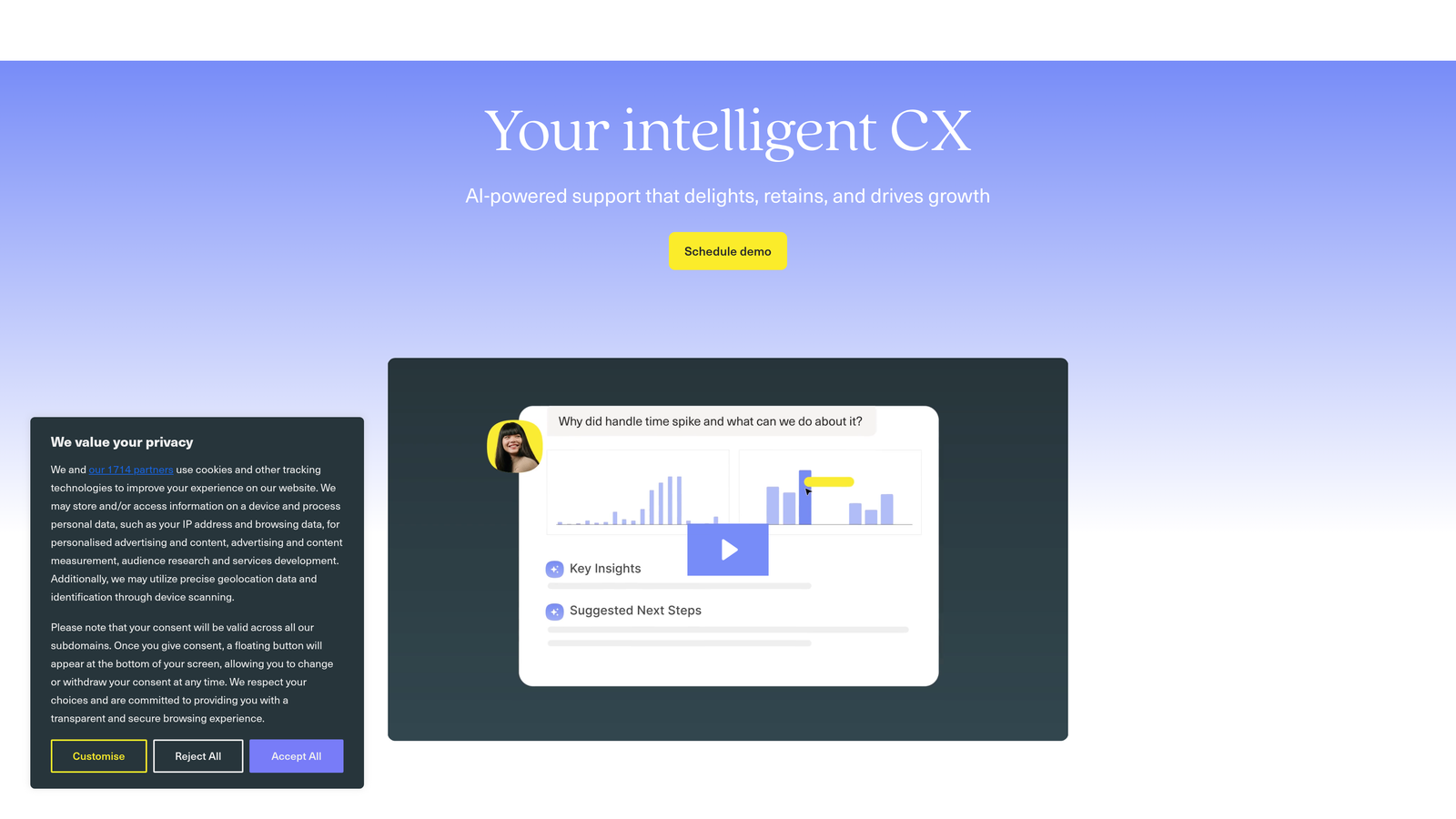
Kustomer is a customer service CRM with AI automation designed for e-commerce brands managing thousands of daily customer interactions.
Where This Tool Shines
Kustomer's timeline-based customer view shows every interaction, order, and touchpoint in one chronological feed. Support agents see the complete customer journey without switching between systems or tabs.
The platform's deep e-commerce integrations mean agents can process refunds, modify orders, and update shipping directly from the support interface. This eliminates the context-switching that slows down high-volume support teams.
Key Features
Timeline Customer View: Chronological feed of all customer interactions across channels.
AI Sentiment Detection: Automatically identifies frustrated customers for priority handling.
E-Commerce Integrations: Deep connections to Shopify, Magento, and major commerce platforms.
Proactive Outreach: Automated messaging based on customer behavior and order status.
Custom Data Objects: Model your specific business data within the CRM.
Best For
E-commerce and DTC brands processing thousands of support tickets daily, especially those with complex order management needs and multiple sales channels.
Pricing
Enterprise pricing model. Contact Kustomer directly for custom quotes based on volume and feature requirements.
6. Ada
Best for: Enterprise teams needing multilingual AI automation at global scale
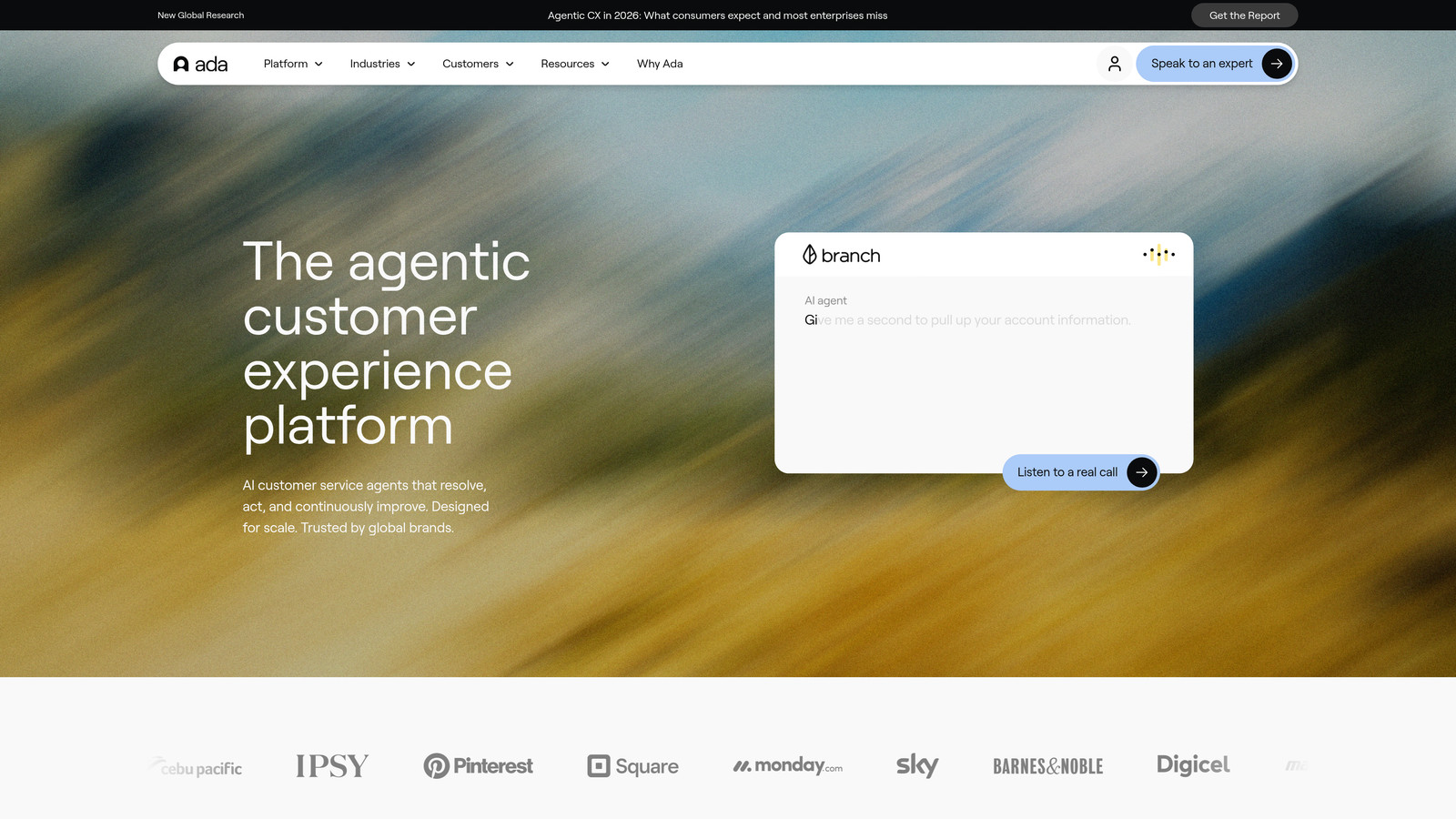
Ada is an enterprise automation platform focused on AI-powered self-service, with support for over 100 languages.
Where This Tool Shines
Ada's multilingual capabilities go beyond simple translation—the AI understands context and intent across languages, maintaining conversation quality whether customers speak English, Mandarin, or Portuguese.
The no-code automation builder lets non-technical teams create sophisticated conversation flows. You're not dependent on developers to iterate on support automation, which matters when business needs change faster than engineering sprints.
Key Features
No-Code Builder: Visual automation creation without requiring development resources.
100+ Languages: Native multilingual support with contextual understanding.
Resolution Rate Tracking: Automated metrics on AI performance and containment rates.
Generative AI Responses: Dynamic answers based on your knowledge base content.
Enterprise Security: Comprehensive compliance for regulated industries and global operations.
Best For
Global enterprises supporting customers in multiple languages, particularly those in regulated industries requiring proven security and compliance certifications.
Pricing
Enterprise pricing with custom quotes. Costs scale based on conversation volume and feature requirements.
7. Tidio
Best for: Small businesses and startups needing affordable AI chat automation
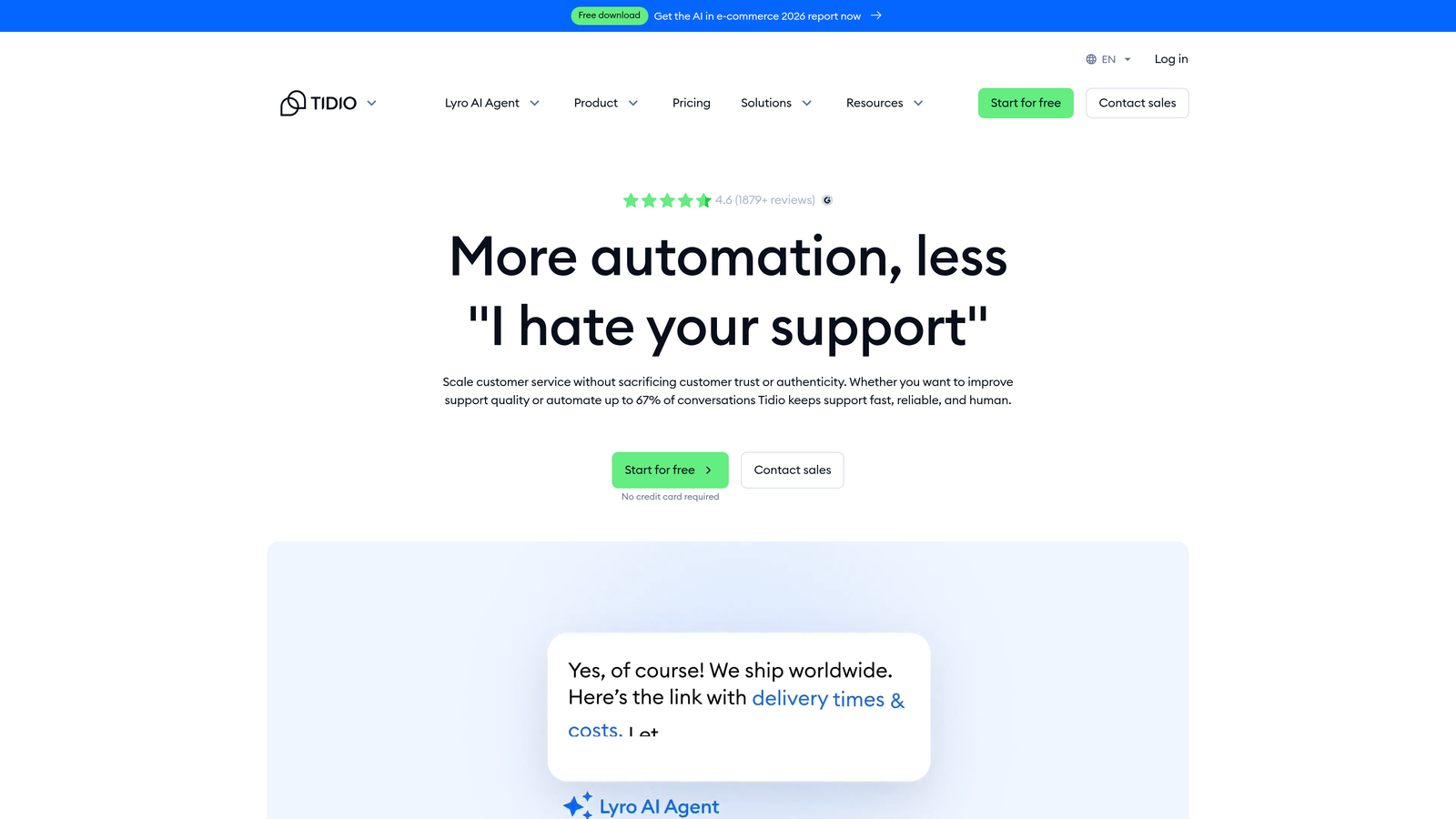
Tidio is an SMB-friendly live chat and chatbot platform combining AI automation with pricing accessible to small teams.
Where This Tool Shines
Tidio's visual chatbot builder makes automation accessible to small teams without technical resources. You can create conversation flows by dragging and dropping elements, not writing code or complex logic.
The platform's free tier and low-cost paid plans make AI automation realistic for businesses handling 100-500 monthly conversations. You get legitimate AI capabilities without enterprise pricing that assumes massive ticket volumes.
Key Features
Visual Chatbot Builder: Drag-and-drop interface for creating conversation flows.
Lyro AI: Conversational AI that generates natural responses from your content.
Live Chat: Real-time messaging with visitor tracking and context.
E-Commerce Integrations: Native connections to Shopify and WordPress.
Multi-Channel Support: Email and Facebook Messenger alongside web chat.
Best For
Small businesses, startups, and e-commerce shops handling moderate support volumes on limited budgets. Perfect for teams of 1-5 support agents.
Pricing
Free tier available with basic features. Paid plans start at $29 per month with expanded AI capabilities and conversation limits.
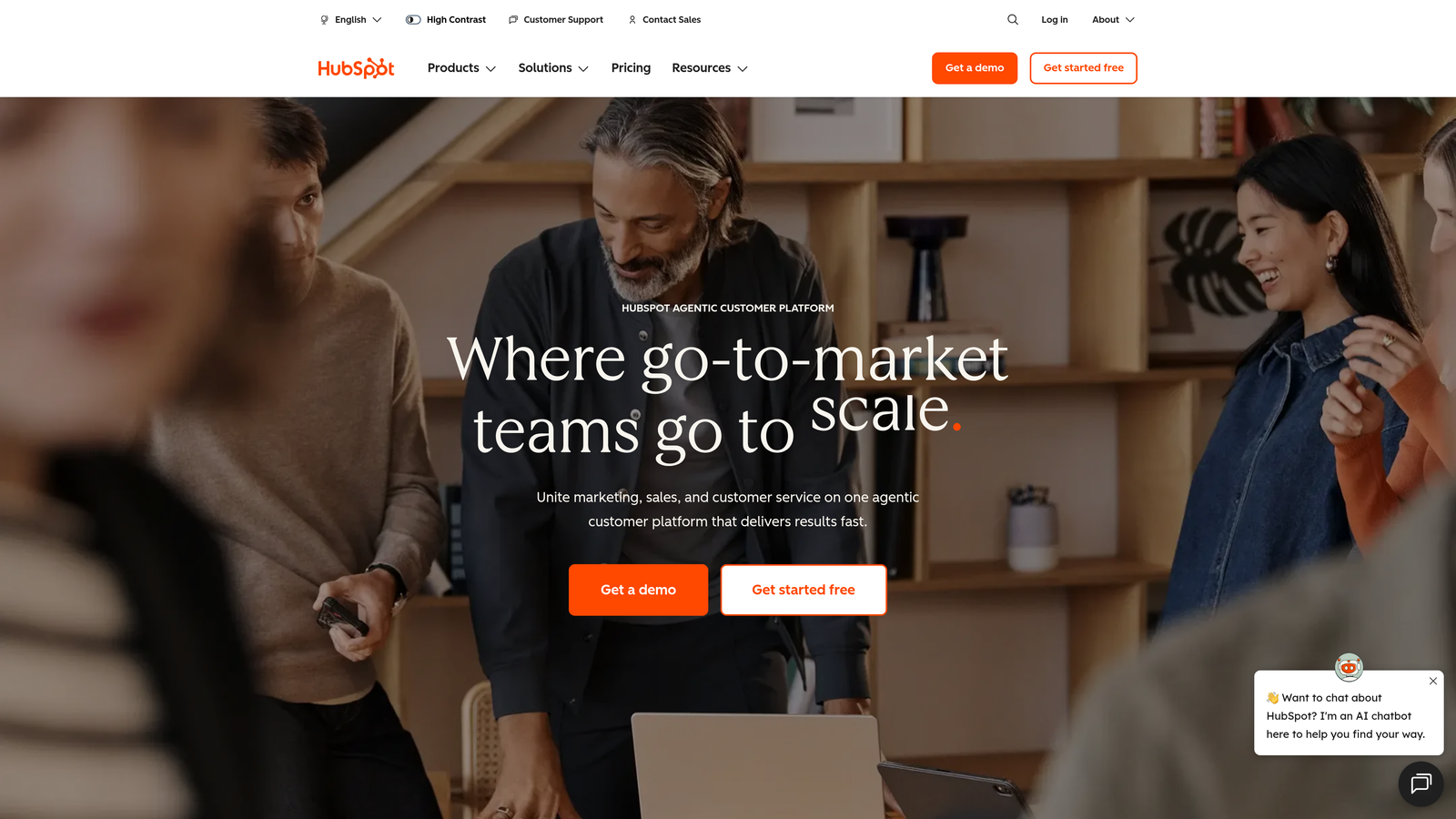
8. HubSpot Service Hub
Best for: Companies already using HubSpot CRM seeking unified customer data
HubSpot Service Hub provides customer service tools integrated with HubSpot's CRM platform, offering AI features alongside unified customer data.
Where This Tool Shines
Service Hub's power comes from CRM integration—support agents see every marketing interaction, sales conversation, and previous ticket in one unified timeline. This context eliminates the "let me look that up" delays that frustrate customers.
For companies already using HubSpot for marketing or sales, adding Service Hub means one platform, one data model, and one source of truth. You avoid the data sync headaches that plague multi-platform stacks.
Key Features
Unified CRM: Complete customer data across marketing, sales, and service teams.
AI Conversation Intelligence: Automated insights from support interactions and call recordings.
Customer Portal: Self-service portal where customers track tickets and access knowledge base.
Ticket Automation: Rules-based routing and assignment based on CRM data.
Feedback Surveys: Automated NPS and CSAT collection with CRM integration.
Best For
Companies already invested in HubSpot's ecosystem, particularly those wanting to unify marketing, sales, and support data in one platform.
Pricing
Free tools available with basic ticketing. Professional tier starts at $90 per month with advanced AI features and automation.
9. Gorgias
Best for: E-commerce brands with heavy Shopify integration needs
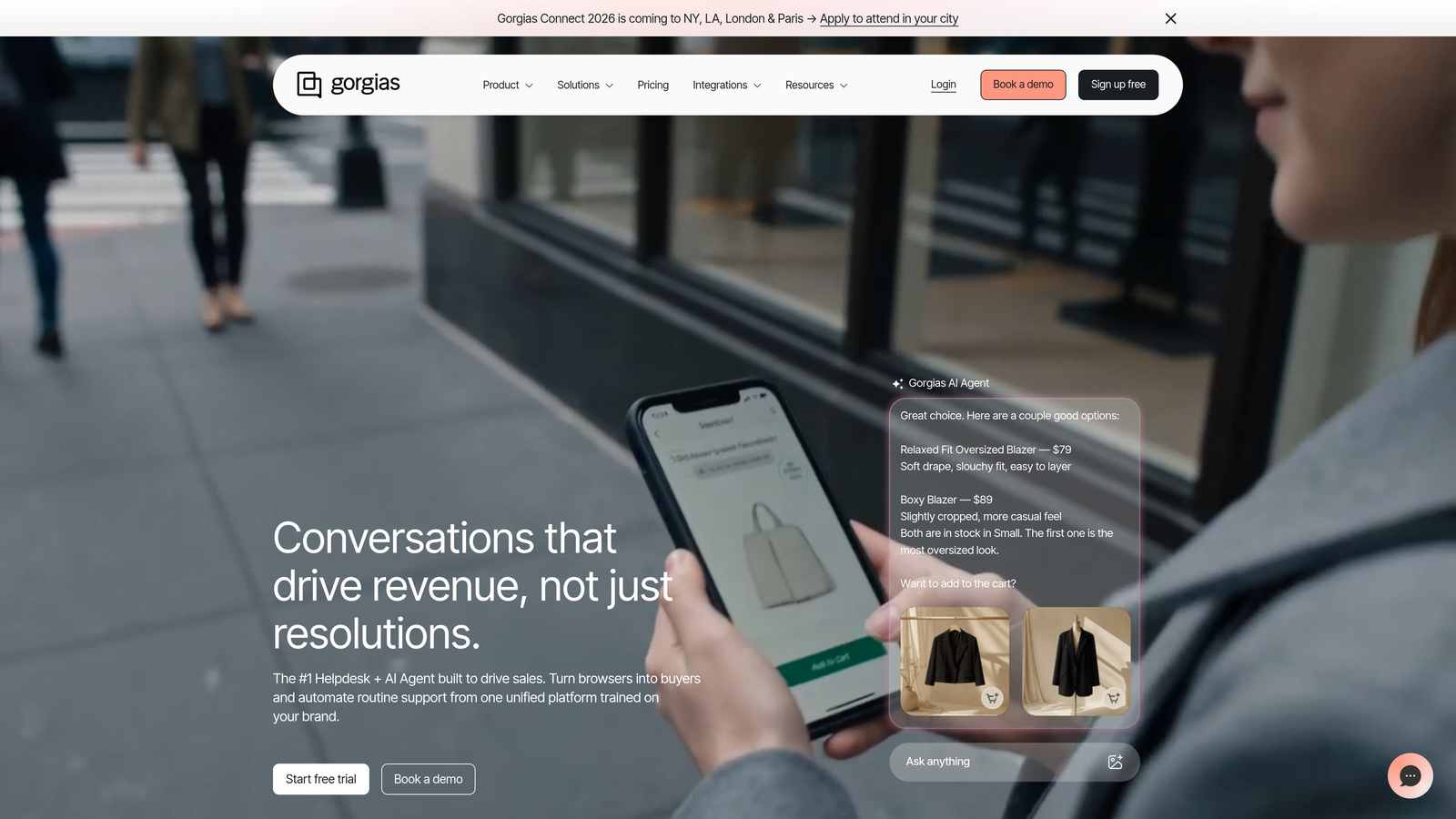
Gorgias is an e-commerce-focused helpdesk with deep Shopify integration and automation rules designed for order-related inquiries.
Where This Tool Shines
Gorgias pulls order data directly into support tickets, letting agents view purchases, modify orders, and process refunds without leaving the helpdesk. This integration depth matters when most support tickets relate to orders, shipping, or returns.
The platform tracks revenue attribution for support interactions, showing which conversations led to purchases. This transforms support from a cost center into a measurable revenue driver, making budget conversations easier.
Key Features
Deep E-Commerce Integration: Native connections to Shopify, BigCommerce, and Magento with order actions.
In-Ticket Order Management: View and modify orders directly from support conversations.
Automation Rules: Pre-built templates for common e-commerce inquiries like WISMO and returns.
Revenue Attribution: Track which support interactions lead to purchases and upsells.
Multi-Channel Support: Unified inbox for email, social media, SMS, and live chat.
Best For
E-commerce brands running on Shopify or similar platforms, especially those where most support tickets involve order status, shipping, and returns.
Pricing
Starter plan from $10 per month for 50 tickets. Pro plan starts at $360 per month for higher volumes and advanced automation.
Making the Right Choice
The right AI helpdesk platform depends on your existing stack, ticket volume, and how much autonomy you actually want AI to handle.
Choose Halo AI if you need AI agents that truly understand your product context and learn autonomously. The page-aware capabilities and continuous learning make it ideal for B2B SaaS teams tired of scripted chatbots.
Go with Zendesk AI for enterprise-scale operations with existing Zendesk investment. Pick Intercom Fin for product-led companies prioritizing in-app engagement. Select Freshdesk Freddy for mid-market teams wanting solid AI without premium pricing.
Consider Kustomer or Gorgias for e-commerce-specific needs—Kustomer for high-volume DTC brands, Gorgias for Shopify-heavy operations. Explore Ada for multilingual enterprise automation. Try Tidio for SMB budgets. Stick with HubSpot Service Hub if your CRM already lives there.
The market has moved beyond simple chatbots to genuinely autonomous AI agents. Look for platforms that demonstrate continuous learning, not just decision tree automation. Test how the AI handles edge cases and complex scenarios during demos.
Pay attention to integration depth with your existing tools. The best AI helpdesk is useless if it can't access customer data from your CRM, create tickets in your project management system, or surface insights to your business intelligence stack.
Your support team shouldn't scale linearly with your customer base. Let AI agents handle routine tickets, guide users through your product, and surface business intelligence while your team focuses on complex issues that need a human touch. See Halo in action and discover how continuous learning transforms every interaction into smarter, faster support.
Start with demos of your top two picks. Focus on real scenarios from your actual ticket queue, not vendor-prepared examples. The right platform will feel natural to your team and measurably reduce response times within the first month.