9 Best AI Support Agent Software Platforms in 2026
AI support agent software has transformed B2B customer service from reactive ticketing to proactive, intelligent problem-solving. This comprehensive guide evaluates nine leading platforms based on autonomous resolution rates, integration capabilities, learning mechanisms, and human escalation handling—helping you choose the right AI support agent software whether you're scaling a startup or modernizing enterprise support operations.
 Matt PattoliFounder10 min read
AI support agent software has fundamentally changed how B2B companies handle customer inquiries—moving from reactive ticket queues to proactive, intelligent resolution. But with dozens of platforms now claiming AI capabilities, finding the right fit for your team requires cutting through the noise.
This guide evaluates nine leading AI support agent platforms based on real-world capabilities: autonomous resolution rates, integration depth, learning mechanisms, and how well they handle the inevitable edge cases that require human judgment. Whether you're scaling a startup support team or modernizing enterprise operations, you'll find options that match your technical requirements and budget.
1. Halo AI
Best for: B2B SaaS teams needing page-aware context and continuous learning capabilities
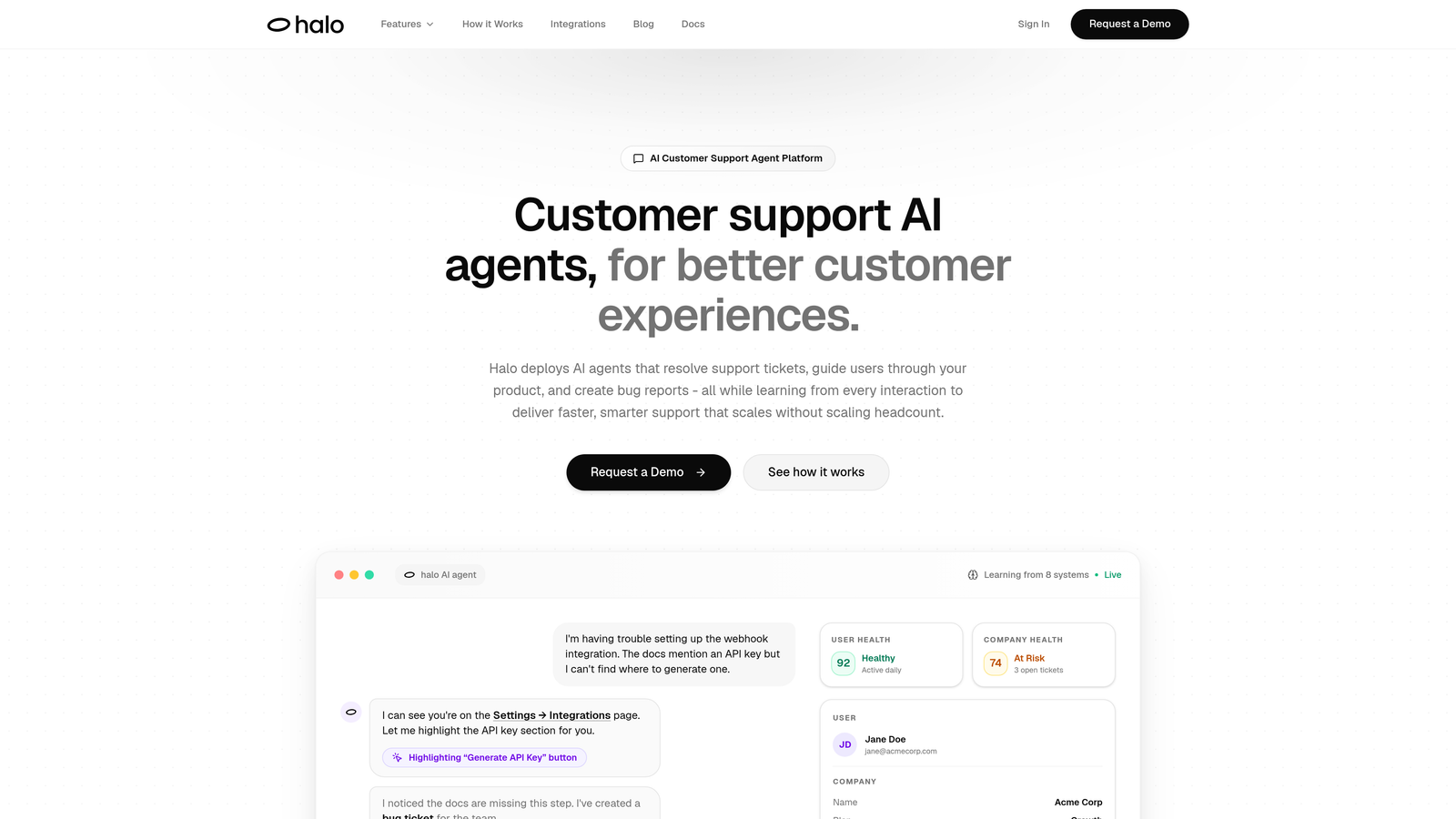
Halo AI is an AI-first customer support platform that sees what your users see and learns from every interaction.
Where This Tool Shines
Unlike traditional helpdesk add-ons, Halo was built from the ground up as an AI agent platform. The page-aware chat widget understands visual UI context, letting agents guide users through specific product features with precision.
The platform's continuous learning architecture means every resolved ticket makes the system smarter. It connects to your entire business stack—Linear for bug tracking, Slack for team communication, HubSpot for CRM, Stripe for billing context—creating a unified intelligence layer across your operations.
Key Features
Page-Aware Chat Widget: Provides visual UI guidance based on what users are actually viewing in your product.
Auto Bug Ticket Creation: Automatically generates Linear tickets from support conversations with full context.
Smart Inbox with Business Intelligence: Surfaces customer health signals, revenue intelligence, and anomaly detection beyond basic support metrics.
Live Agent Handoff: Seamlessly escalates complex issues to human agents with full conversation context.
Multi-System Integrations: Connects to Slack, HubSpot, Intercom, Stripe, Zoom, PandaDoc, and Fathom for comprehensive business context.
Best For
Product teams at B2B SaaS companies who need AI agents that understand their product interface, not just knowledge base articles. Particularly valuable for teams already using tools like Linear, Intercom, or HubSpot who want unified intelligence across their stack.
Pricing
Contact for pricing with usage-based model available. Pricing scales with ticket volume rather than seat count, making it cost-effective for growing teams.
2. Intercom Fin
Best for: Teams already using Intercom who want native GPT-4 powered automation
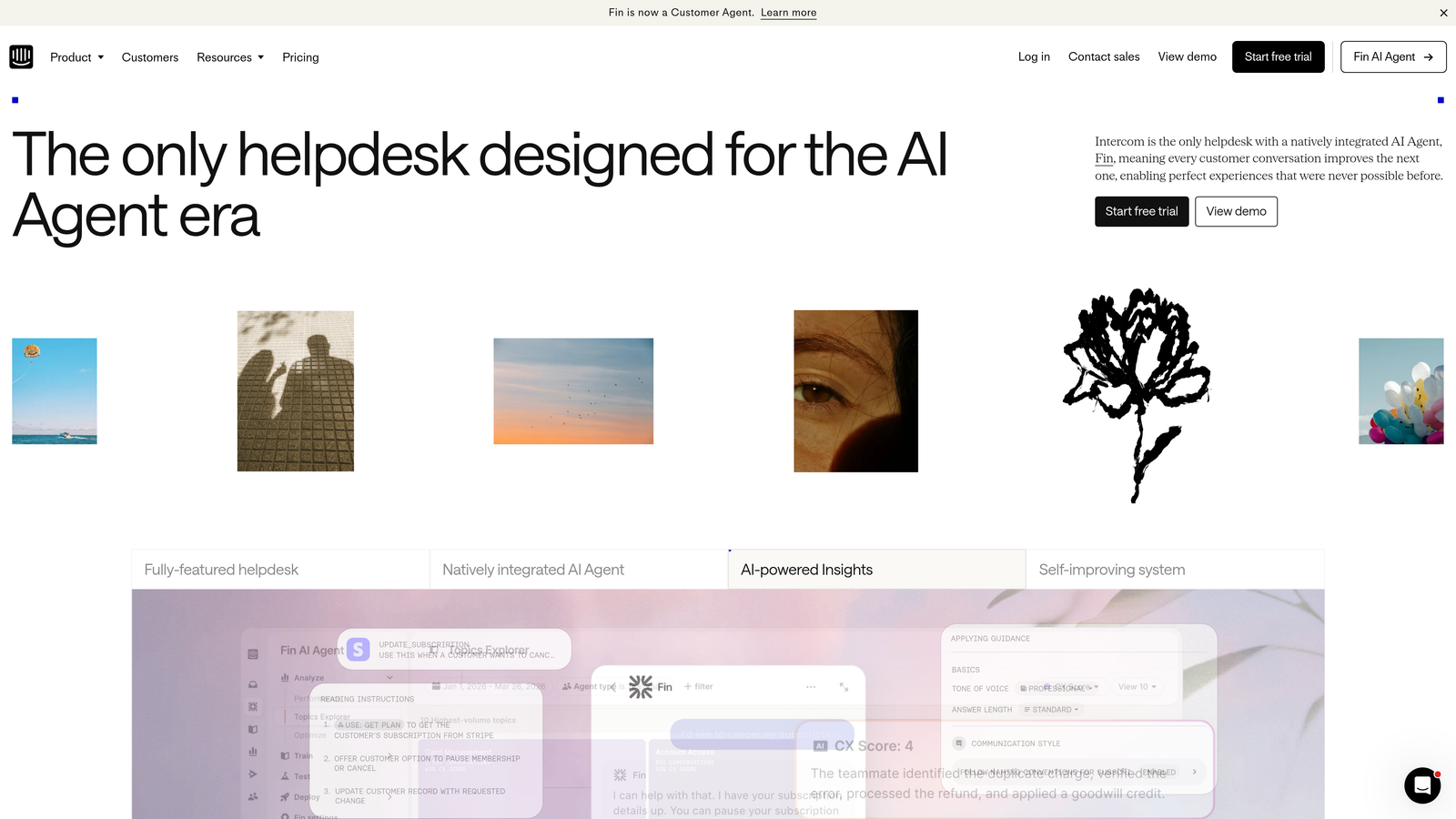
Intercom Fin is a GPT-4 powered AI agent built directly into Intercom's messaging platform.
Where This Tool Shines
Fin benefits from being native to the Intercom ecosystem. If you're already managing customer conversations in Intercom, Fin integrates without requiring new tools or workflows.
The platform trains on your help center content and learns from your team's actual responses. Multi-language support handles global customer bases, and the conversation summarization feature helps human agents quickly understand context when they need to take over.
Key Features
GPT-4 Powered Responses: Leverages advanced language models trained on your specific help documentation.
Seamless Human Handoff: Transfers conversations to live agents with complete context and conversation history.
Conversation Summarization: Automatically summarizes long threads so agents can jump in quickly.
Multi-Language Support: Handles customer inquiries across multiple languages without separate configurations.
Native Ecosystem Integration: Works with all Intercom features including workflows, reporting, and customer data.
Best For
Companies already invested in the Intercom platform who want to add AI capabilities without switching tools. Works well for teams with established help centers and consistent documentation practices.
Pricing
Starts at $0.99 per resolution. Requires an existing Intercom subscription, so factor in base platform costs when budgeting.
3. Zendesk AI Agents
Best for: Enterprise teams needing pre-trained models and compliance-ready infrastructure
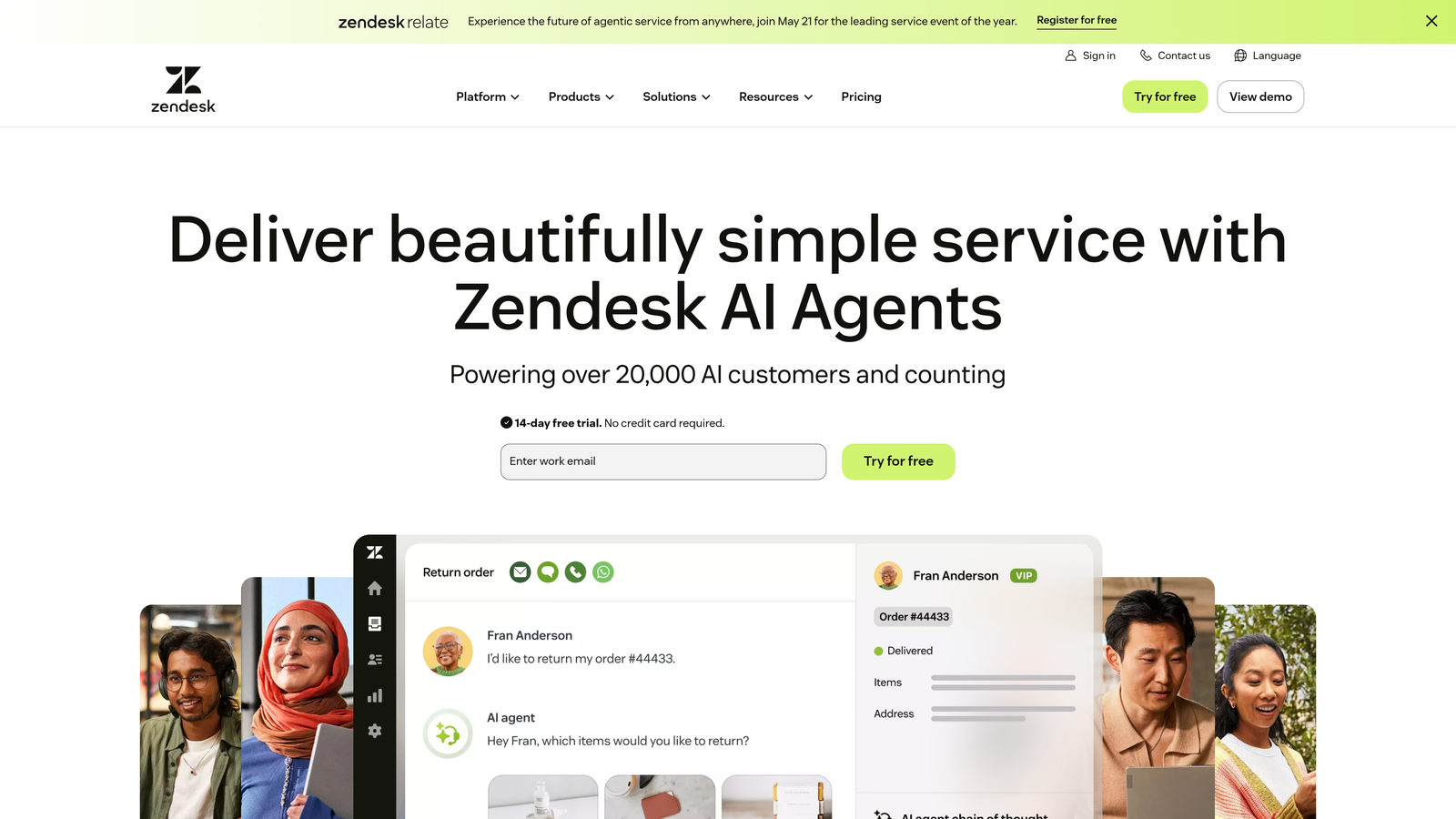
Zendesk AI Agents is an enterprise AI layer built on billions of customer service interactions across Zendesk's customer base.
Where This Tool Shines
Zendesk's AI benefits from massive training data—billions of real support interactions. The pre-trained intent models understand common customer service patterns out of the box, reducing configuration time.
For enterprise teams, the security and compliance infrastructure matters. Zendesk AI Agents meet SOC 2, GDPR, and HIPAA requirements, with granular permission controls and audit trails that satisfy IT security teams.
Key Features
Pre-Trained Intent Models: Recognizes common customer service patterns without extensive training data from your team.
Automated Ticket Routing: Intelligently assigns tickets to the right team based on content, priority, and historical patterns.
Agent Assist Suggestions: Provides real-time suggestions to human agents while they work tickets.
Analytics Dashboard: Tracks AI performance, resolution rates, and identifies improvement opportunities.
Enterprise Security: Meets SOC 2, GDPR, and HIPAA compliance requirements with detailed audit capabilities.
Best For
Enterprise organizations with complex compliance requirements and large support teams. Particularly valuable for companies in regulated industries like healthcare, finance, or government services.
Pricing
Included in Suite Professional ($115/agent/month) and above. No per-resolution charges, making costs predictable for large teams.
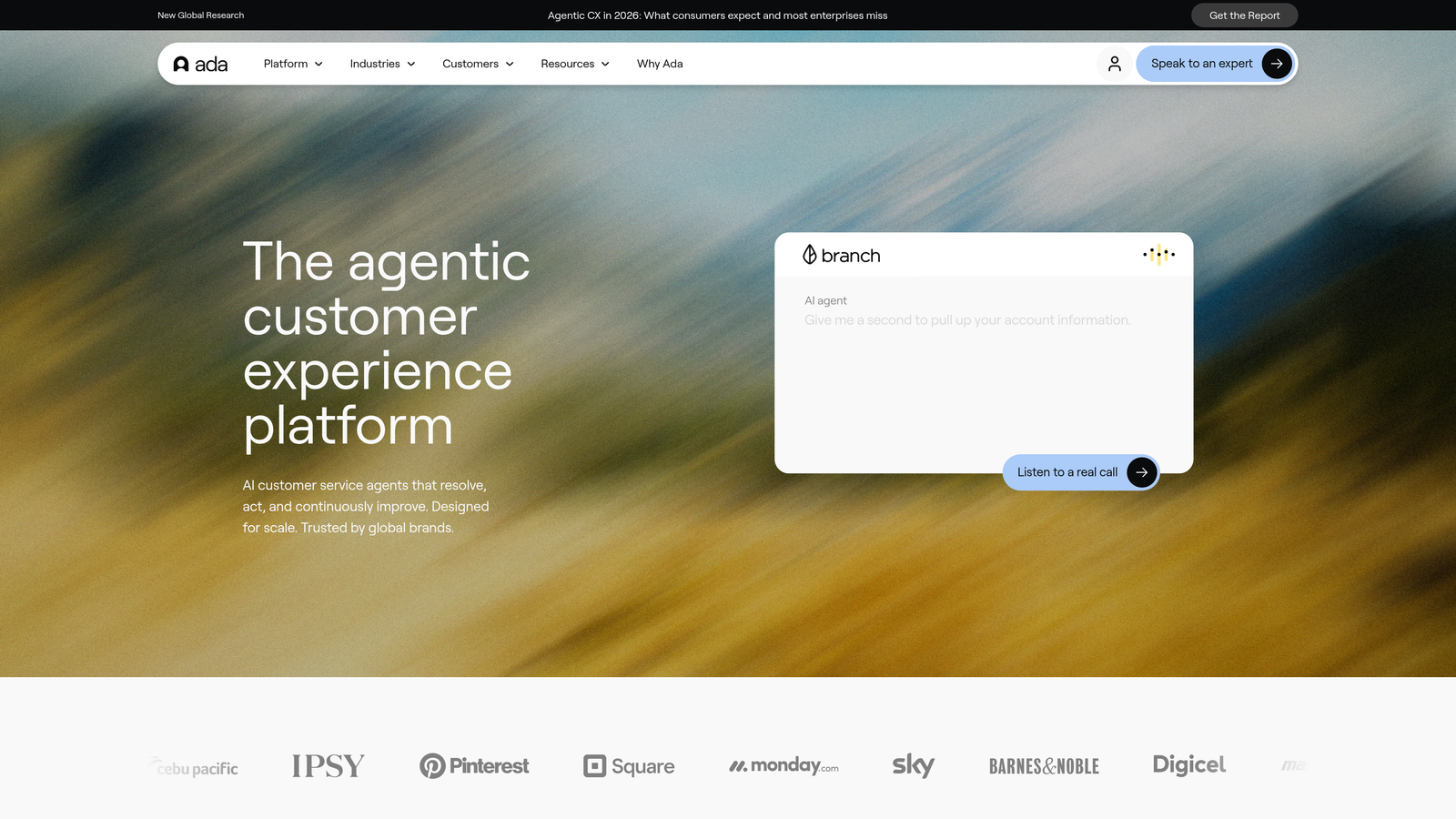
4. Ada
Best for: Non-technical teams needing complex multi-step resolution without coding
Ada is a no-code AI platform with a reasoning engine designed for complex customer queries.
Where This Tool Shines
Ada's reasoning engine handles multi-step conversations that require context retention. Think account troubleshooting where the AI needs to gather information, check multiple systems, and provide personalized solutions.
The no-code conversation builder lets support leaders design workflows without engineering resources. Industry-specific templates provide starting points for common use cases in e-commerce, SaaS, fintech, and healthcare.
Key Features
Reasoning Engine: Handles complex queries requiring multiple steps and context retention across conversation turns.
No-Code Conversation Builder: Visual workflow designer that support teams can use without developer involvement.
Omnichannel Deployment: Deploys the same AI agent across web, mobile, SMS, and social channels.
Proactive Messaging: Initiates conversations based on user behavior patterns or account status.
Industry Templates: Pre-built workflows for common scenarios in specific verticals.
Best For
Mid-market to enterprise companies with complex support workflows who want to empower support leaders to build automations independently. Works well for teams handling account management alongside traditional support.
Pricing
Custom pricing with enterprise focus. Expect annual contracts and pricing based on conversation volume and feature requirements.
5. Freshdesk Freddy AI
Best for: Growing teams wanting AI capabilities bundled with affordable helpdesk software
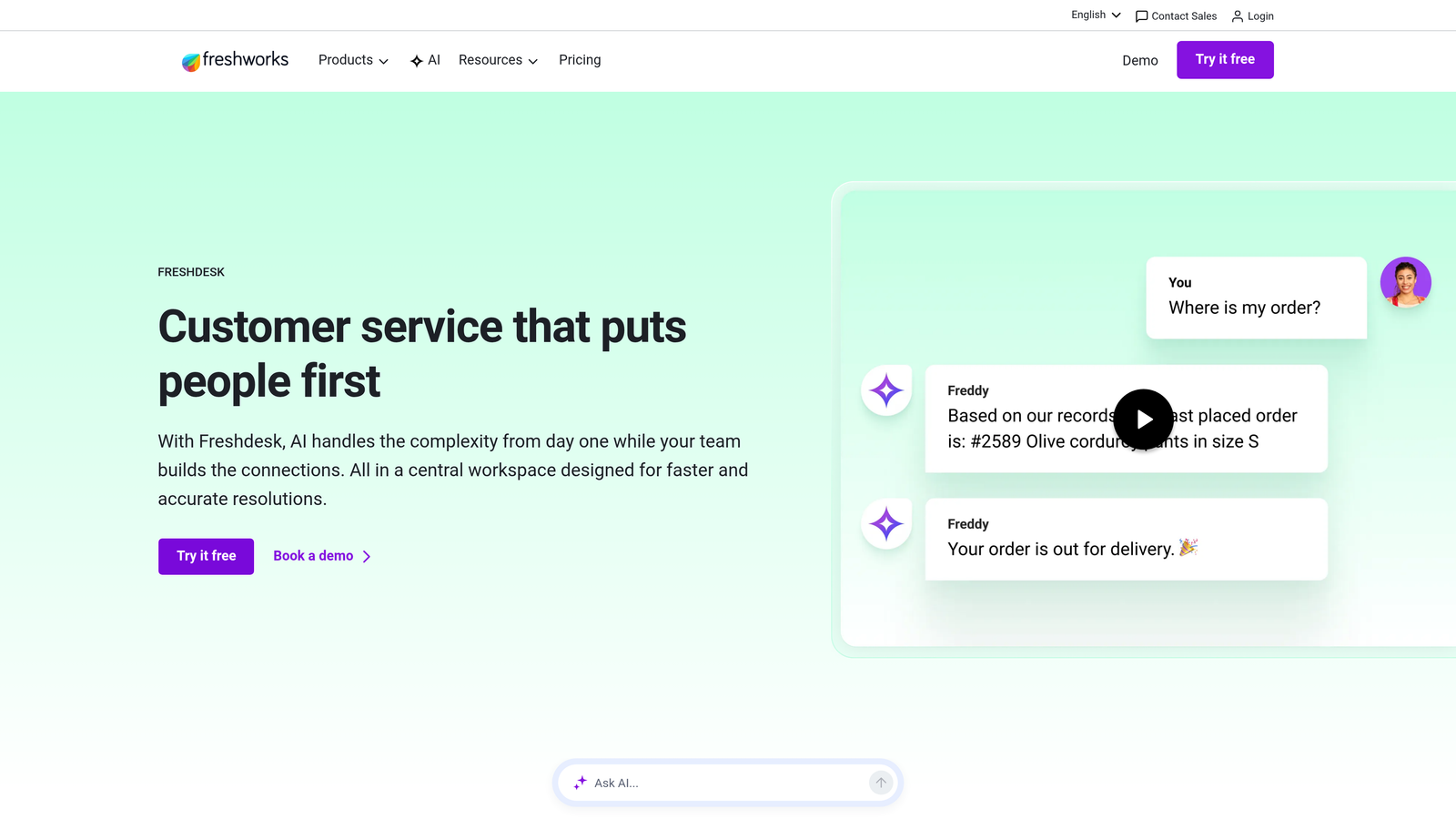
Freshdesk Freddy AI bundles AI capabilities with Freshdesk's helpdesk platform at competitive pricing.
Where This Tool Shines
Freddy AI delivers practical automation without enterprise pricing. The auto-triage and assignment features handle ticket routing based on content analysis, while sentiment detection flags frustrated customers for priority handling.
The thank you detector prevents unnecessary ticket reopening when customers send appreciation messages. It's a small feature that saves surprising amounts of agent time and keeps metrics clean.
Key Features
Auto-Triage and Assignment: Analyzes incoming tickets and routes them to appropriate teams automatically.
Sentiment Detection: Identifies frustrated or angry customers for priority escalation to senior agents.
Canned Response Suggestions: Recommends relevant pre-written responses based on ticket content.
Knowledge Base Integration: Pulls relevant help articles and suggests them to agents or customers.
Thank You Detector: Prevents ticket reopening when customers send appreciation messages rather than new issues.
Best For
Small to mid-sized teams looking for AI-enhanced helpdesk capabilities without separate tool costs. Particularly attractive for teams transitioning from basic email support to structured ticketing systems.
Pricing
Freddy AI included in Pro ($49/agent/month) and Enterprise plans. No additional per-resolution fees makes budgeting straightforward.
6. Forethought Solve
Best for: High-volume support teams optimizing for predictive routing and autonomous resolution
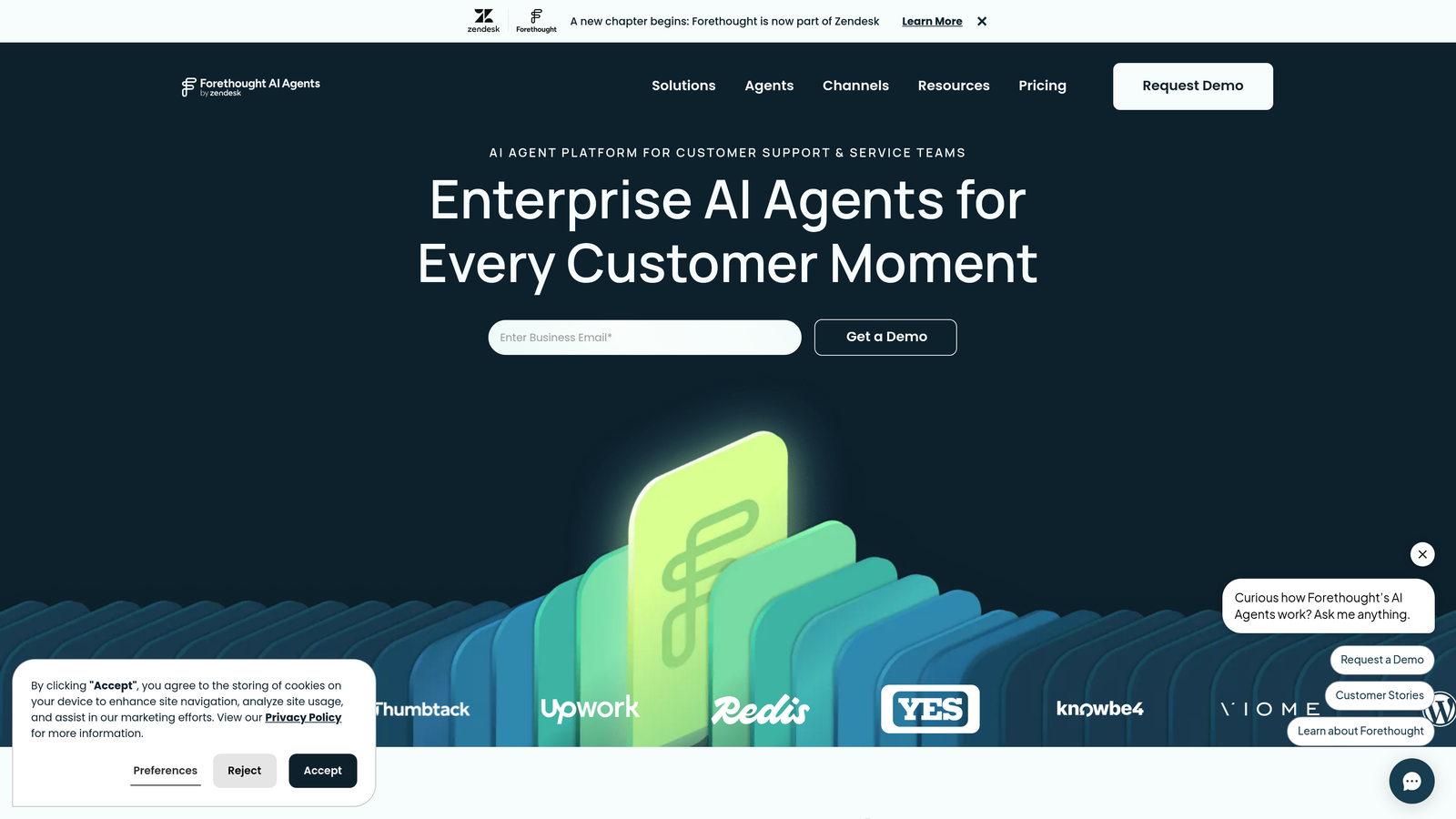
Forethought Solve uses predictive AI for intelligent ticket routing and autonomous resolution at scale.
Where This Tool Shines
Forethought's predictive ticket routing analyzes historical patterns to route tickets before agents even see them. The system learns which agents handle specific issue types most effectively and routes accordingly.
The natural language understanding goes beyond keyword matching to grasp intent and context. Workflow automation handles repetitive processes like password resets, account updates, or order status checks without human involvement.
Key Features
Predictive Ticket Routing: Routes tickets to optimal agents based on historical performance patterns and current workload.
Natural Language Understanding: Interprets customer intent beyond simple keyword matching for accurate categorization.
Workflow Automation: Automates common processes like password resets, account changes, and status updates.
Agent Assist Capabilities: Provides real-time suggestions and relevant information to agents handling complex tickets.
SOC 2 Type II Compliance: Meets enterprise security standards with comprehensive audit controls.
Best For
Enterprise teams processing thousands of tickets monthly who need sophisticated routing logic. Valuable for companies with specialized support tiers or complex escalation requirements.
Pricing
Custom pricing based on ticket volume. Expect annual contracts with pricing tiers that scale with usage.
7. Tidio AI
Best for: Small businesses and e-commerce stores needing quick-deploy AI chat
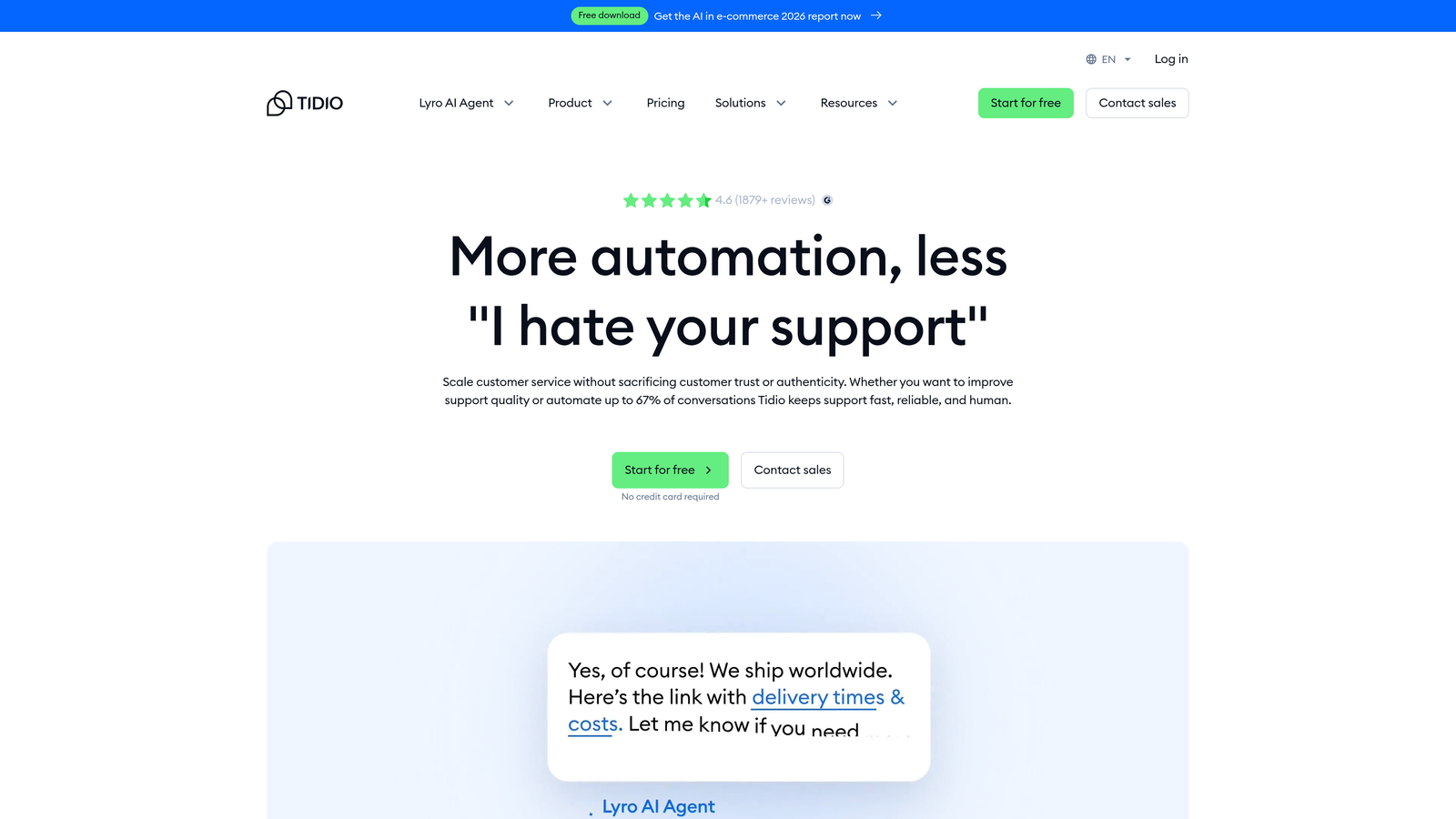
Tidio AI offers lightweight AI chat optimized for small businesses and e-commerce operations.
Where This Tool Shines
Tidio's Lyro AI conversational agent gets you up and running in minutes rather than weeks. The pre-built chatbot templates cover common e-commerce scenarios like order tracking, return policies, and product recommendations.
The Shopify and WordPress plugins integrate directly with your store, pulling product data and order information automatically. Visitor tracking shows you who's browsing, letting you proactively engage high-value prospects.
Key Features
Lyro AI Conversational Agent: Pre-trained AI chatbot that handles common customer questions without configuration.
Pre-Built Chatbot Templates: Ready-to-use conversation flows for e-commerce, lead generation, and support scenarios.
Live Chat Integration: Seamlessly transitions from AI to human agents when needed.
Shopify and WordPress Plugins: Native integrations that pull product and order data automatically.
Visitor Tracking: Shows real-time visitor activity and browsing behavior for proactive engagement.
Best For
E-commerce stores, small SaaS companies, and service businesses that need basic AI chat without complex setup. Ideal for teams without dedicated support staff who want to offer 24/7 basic assistance.
Pricing
Free tier available for basic chat. Lyro AI starts at $29/month, making it accessible for small businesses testing AI support.
8. Kustomer IQ
Best for: Subscription businesses needing unified customer timelines and proactive engagement
Kustomer IQ provides CRM-native AI with unified customer timelines and proactive outreach capabilities.
Where This Tool Shines
Kustomer's unified customer timeline displays every interaction, purchase, and support ticket in one view. Agents see the complete customer journey without switching between systems.
The proactive outreach automation identifies at-risk customers based on usage patterns or subscription status. Sentiment analysis flags negative interactions before they escalate, and subscription management integrations connect directly to billing systems for seamless account changes.
Key Features
Unified Customer Timeline: Displays complete customer history including purchases, support tickets, and interactions in single view.
AI-Powered Suggestions: Recommends next-best actions based on customer context and historical patterns.
Proactive Outreach Automation: Identifies and engages at-risk customers before they churn or escalate issues.
Sentiment Analysis: Detects negative sentiment in conversations for priority handling.
Subscription Management Integrations: Connects to billing systems for seamless account modifications.
Best For
Subscription-based businesses where customer lifetime value and retention matter more than ticket volume. Works well for SaaS companies, membership services, and recurring revenue businesses.
Pricing
Enterprise plan ($89/user/month) includes IQ features. Pricing includes CRM capabilities beyond basic support ticketing.
9. Drift
Best for: Revenue teams blending customer support with sales qualification and engagement
Drift offers conversational AI that bridges customer support and sales engagement in one platform.
Where This Tool Shines
Drift's AI chatbot handles both support questions and sales qualification simultaneously. A visitor asking about pricing gets routed to sales, while someone with a technical question gets support resources.
The account-based engagement features identify high-value accounts and trigger personalized conversation flows. Meeting scheduling automation books demos directly from chat conversations, and Salesforce integration syncs all interactions to your CRM automatically.
Key Features
Dual-Purpose AI Chatbot: Handles both support inquiries and sales qualification in unified conversations.
Account-Based Engagement: Identifies target accounts and triggers personalized conversation flows based on company data.
Meeting Scheduling Automation: Books sales meetings directly from chat without back-and-forth email scheduling.
Salesforce Integration: Syncs all conversations, leads, and customer data to Salesforce automatically.
Revenue Intelligence Features: Tracks conversation impact on pipeline and revenue generation.
Best For
B2B companies where support and sales teams work closely together. Particularly valuable for product-led growth companies where free users convert to paid customers through support interactions.
Pricing
Premium starts at $2,500/month. Pricing reflects the platform's dual support and sales capabilities.
Finding Your Match
The right AI support agent software depends on your team's specific constraints and growth trajectory. Enterprise teams with complex compliance needs gravitate toward platforms like Zendesk or Forethought that offer pre-built security frameworks. Small businesses testing AI capabilities often start with accessible options like Tidio or Freshdesk that bundle AI with core helpdesk features.
B2B SaaS companies face a different calculation. Page-aware context matters when your AI needs to understand product interfaces, not just knowledge base articles. Integration depth determines whether your AI agent operates in isolation or connects to your broader business intelligence—CRM data, billing systems, issue trackers, and communication platforms.
Resolution rate tells only part of the story. The platforms that deliver lasting value learn continuously from every interaction, getting smarter with each ticket rather than requiring constant retraining. They know when to escalate to humans rather than frustrating customers with repetitive loops.
Your support team shouldn't scale linearly with your customer base. Let AI agents handle routine tickets, guide users through your product, and surface business intelligence while your team focuses on complex issues that need a human touch. See Halo in action and discover how continuous learning transforms every interaction into smarter, faster support.