9 Best AI Support Agents for Mobile Apps in 2026
This guide ranks the 9 best AI support agents for mobile apps in 2026, evaluating each on mobile SDK availability, in-app context awareness, AI resolution quality, and escalation handling. It helps mobile-first product teams choose a tool that resolves user issues autonomously — before frustration turns into churn.
 Grant CooperFounder12 min read
Mobile app users expect instant answers. When someone hits a paywall bug at 11pm or gets stuck mid-onboarding, a ticket queue doesn't cut it — they churn. AI support agents have become the practical answer for mobile-first product teams: resolving common issues autonomously, guiding users through in-app flows, and escalating intelligently when a human is genuinely needed.
But not every AI support tool is built with mobile in mind. Some are retrofitted helpdesk chatbots. Others lack the context-awareness to understand where a user actually is in your product. This list focuses on tools that genuinely serve mobile app support needs — evaluated on mobile SDK availability, AI resolution quality, integration depth, escalation handling, and in-product context awareness.
1. Halo AI
Best for: B2B SaaS and mobile product teams that want AI-native support with deep in-app context awareness.
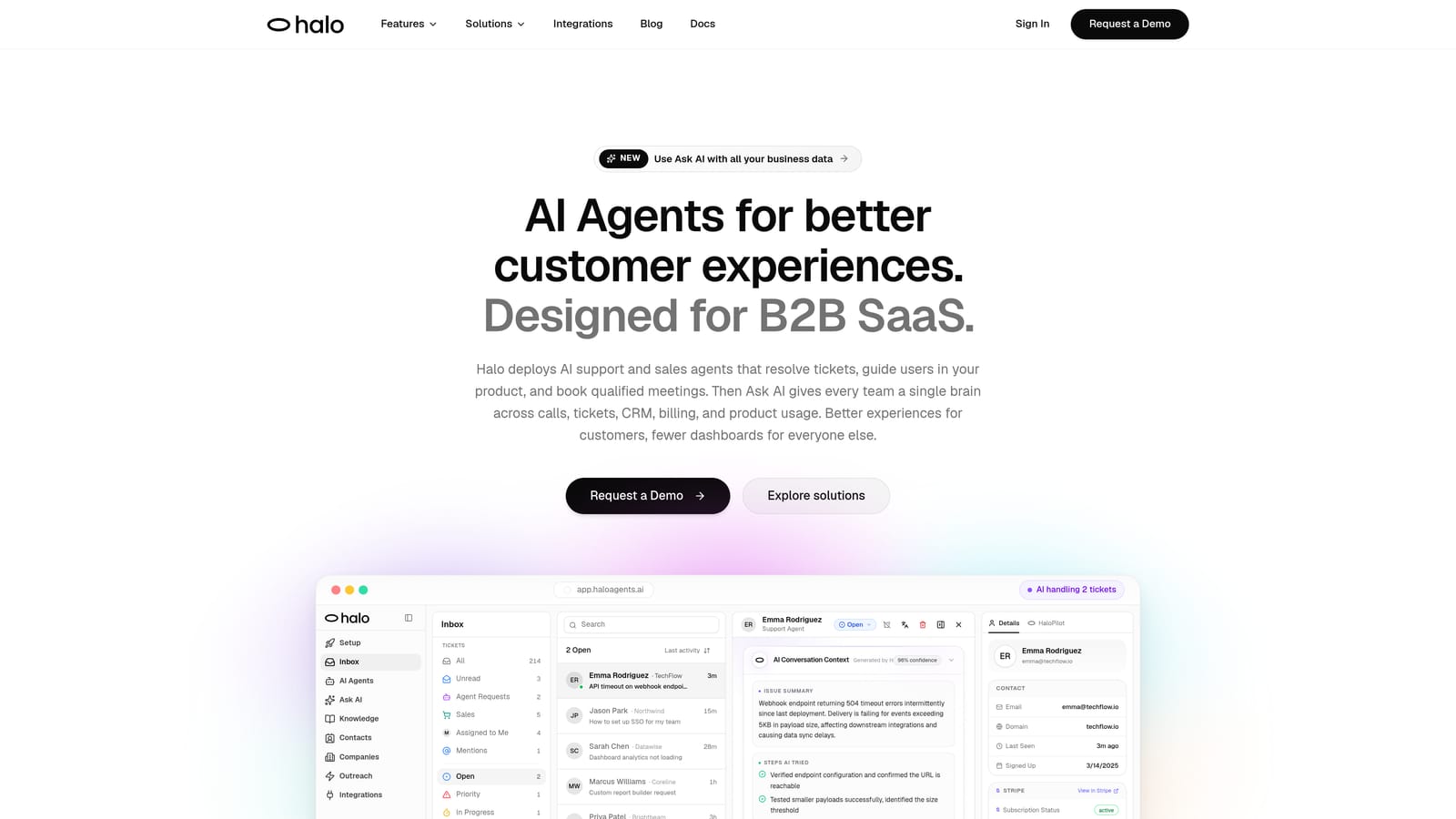
Halo AI is an AI-first customer support platform built to resolve issues autonomously — not just deflect them — with a page-aware chat widget that understands exactly where users are in your product.
Where This Tool Shines
What separates Halo from most tools on this list is its architecture. It wasn't designed as a helpdesk with AI bolted on — the AI is the foundation. The page-aware chat widget sees what the user sees, meaning it can guide someone through a specific in-app flow rather than serving generic help articles that may not apply to their current screen.
Beyond ticket resolution, Halo's smart inbox surfaces business intelligence: customer health signals, anomaly detection, and patterns that help product and support teams understand what's actually going wrong in the product — not just in the queue.
Key Features
Page-Aware Chat Widget: Understands the user's current in-app context so responses are relevant to exactly where they are, not just their query text.
Intelligent AI Agents: Resolve support tickets, guide users through product flows step-by-step, and automatically create bug reports when issues are detected.
Smart Inbox Analytics: Business intelligence layer that surfaces customer health signals, revenue anomalies, and support trends beyond basic ticket counts.
Live Agent Handoff: Smooth escalation to human agents for complex issues, with full conversation context preserved so agents don't start from scratch.
Deep Integration Stack: Connects natively with Linear, Slack, HubSpot, Intercom, Stripe, Zoom, PandaDoc, and Fathom — pulling context from across the business stack.
Continuous Learning: Every interaction improves the AI's resolution quality over time, compounding the value of each conversation.
Best For
Halo is particularly well-suited for B2B SaaS teams running mobile apps where support context overlaps with product usage data. If you want AI that genuinely resolves tickets rather than routing them, and you need business intelligence alongside support automation, Halo is worth a close look.
Pricing
Contact for pricing. A demo is available at haloagents.ai/demo — recommended before evaluating alternatives, given the platform's breadth.
2. Intercom
Best for: Teams already invested in the Intercom ecosystem wanting AI-assisted conversation management.
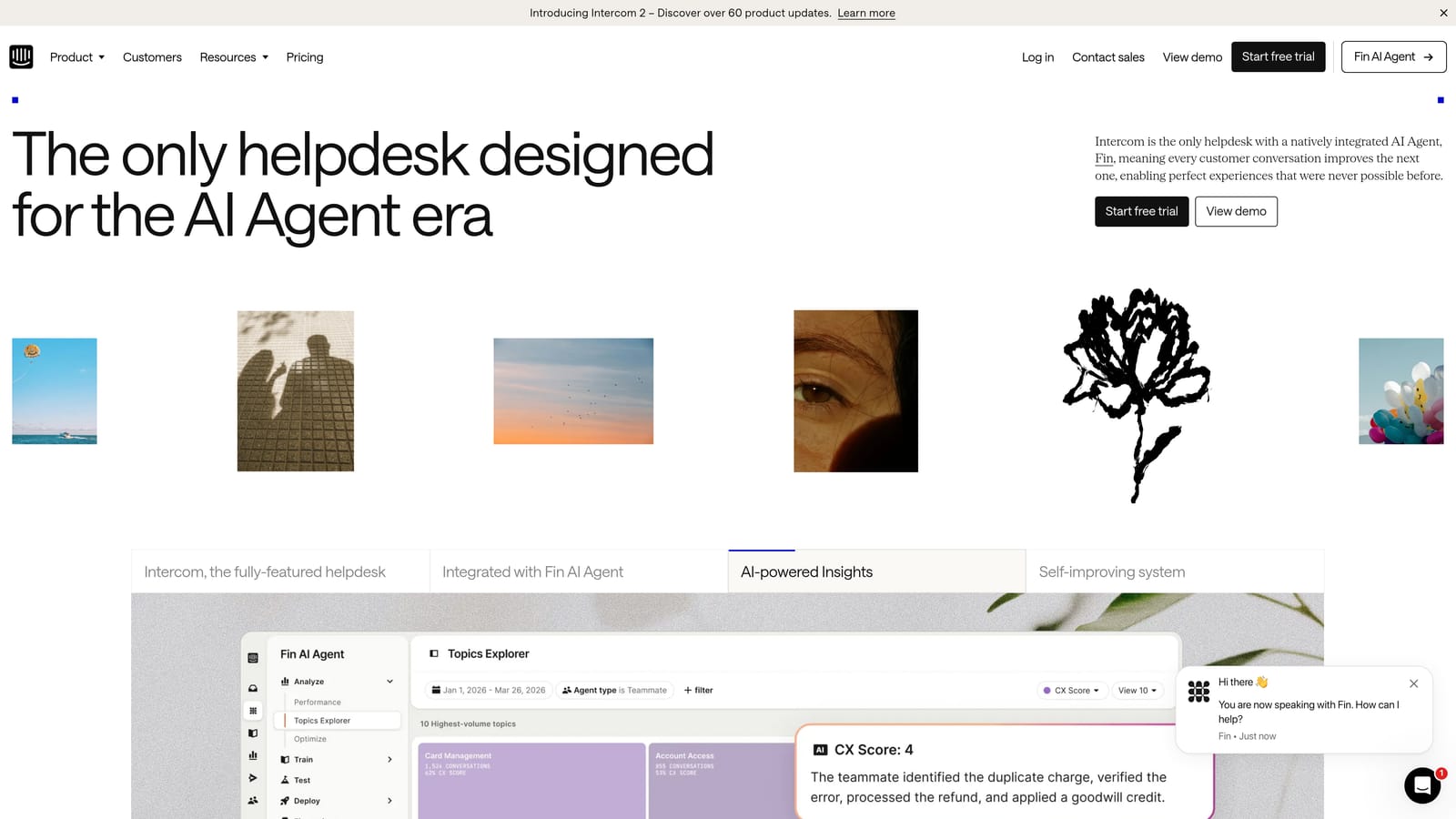
Intercom is a conversational support platform with a mature mobile SDK and Fin, its AI agent for autonomous ticket resolution.
Where This Tool Shines
Intercom's strength is its ecosystem maturity. If your team already uses Intercom for messaging, the Fin AI agent slots in naturally without a platform migration. Fin has been iterated on significantly since its launch and handles a solid range of common queries autonomously.
The mobile SDK covers iOS and Android well, and in-app messaging integrates cleanly into most app UX patterns. The shared inbox experience for human agents is polished, making handoffs manageable even for smaller support teams.
Key Features
Fin AI Agent: Handles autonomous ticket resolution using your help content and knowledge base as its source of truth.
Mobile SDK: Native iOS and Android support for in-app messaging without breaking the user experience.
Shared Inbox: AI-assisted replies and conversation management for human agents handling escalations.
In-App Messaging and Product Tours: Onboarding flows and proactive messaging triggered by user behavior.
Reporting and CSAT Tracking: Conversation analytics and customer satisfaction scoring built into the platform.
Best For
Teams already on Intercom who want to layer AI resolution on top of their existing setup without switching platforms. Less ideal if you're starting fresh and want a purpose-built AI-native architecture.
Pricing
Essential plans start at $39/seat/month; AI features are available on higher tiers. Verify current pricing at intercom.com as plans change frequently.
3. Zendesk AI
Best for: Large support organizations needing enterprise-grade AI triage, compliance, and governance.
Zendesk is an enterprise helpdesk platform with AI triage, intelligent routing, and generative AI features built for organizations with complex support operations.

Where This Tool Shines
Zendesk's AI capabilities have matured considerably, covering intent detection, intelligent routing, and generative AI for agent assist. For large teams managing high ticket volumes across multiple channels, the platform's depth is hard to match.
The compliance and audit trail features make it a practical choice for regulated industries. The mobile SDK is available, though Zendesk's overall complexity can be a friction point for smaller teams who just want fast deployment.
Key Features
AI-Powered Triage and Intent Detection: Automatically classifies and prioritizes incoming tickets based on content and urgency signals.
Intelligent Routing: Routes tickets to the right agent or team based on skills, availability, and ticket type.
Generative AI for Agent Assist: Suggests replies, summarizes conversations, and generates macros to speed up agent responses.
Mobile SDK: Available for iOS and Android, supporting in-app support experiences.
Enterprise Governance: Compliance controls, audit trails, and permission management for large organizations.
Best For
Enterprise teams with established support operations, compliance requirements, and the resources to manage a complex platform. Smaller mobile app teams may find the overhead outweighs the benefit.
Pricing
Suite plans start at approximately $55/agent/month. Verify current pricing at zendesk.com as tiers and add-ons evolve regularly.
4. Freshdesk Freddy AI
Best for: Cost-conscious teams wanting AI support automation without enterprise-level pricing.
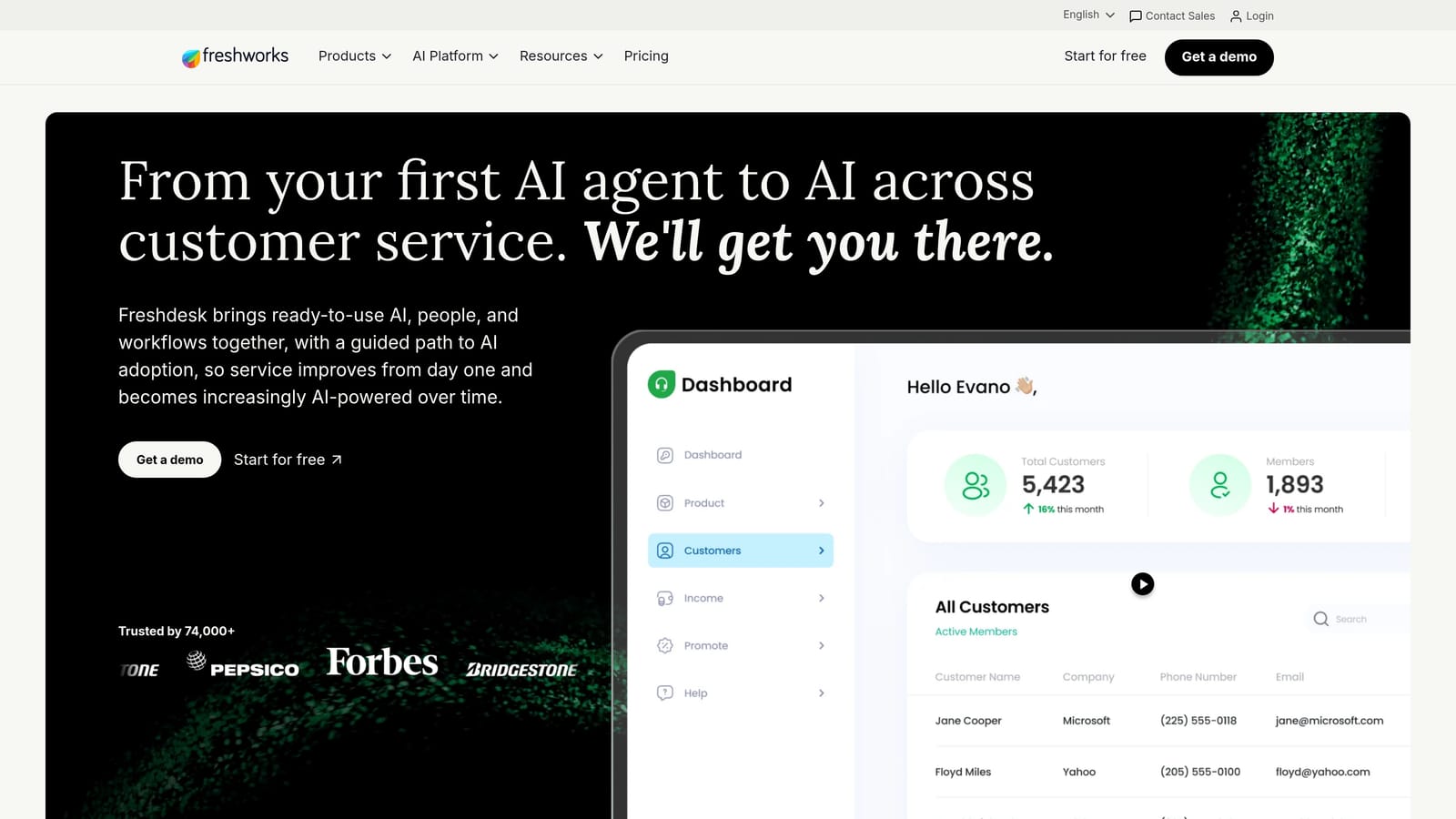
Freshdesk embeds Freddy AI across its support suite, covering self-service, agent assist, and ticket automation at a more accessible price point than most enterprise alternatives.
Where This Tool Shines
Freddy AI handles a meaningful portion of the support workflow: autonomous self-service resolution, suggested replies for agents, conversation summaries, and basic analytics. For teams already using Freshdesk or looking for a cost-effective entry into AI-assisted support, it's a practical starting point.
The omnichannel ticketing covers email, chat, and social alongside in-app support via mobile SDK — making it workable for teams that need broad channel coverage without managing multiple platforms.
Key Features
Freddy AI Self-Service: Autonomous resolution for common queries using your knowledge base and help content.
Agent Assist: Suggested replies, ticket summaries, and next-step recommendations for human agents.
Mobile SDK: In-app support for iOS and Android with Freshdesk's messaging interface.
Omnichannel Ticketing: Unified inbox across email, chat, and social media channels.
Freddy Insights: Support analytics covering volume trends, resolution rates, and team performance.
Best For
Teams on tight budgets, those already using Freshworks products, or growing mobile app teams that want AI-assisted support without committing to enterprise-tier pricing.
Pricing
A free tier is available; paid plans start at approximately $15/agent/month. Verify current pricing at freshdesk.com.
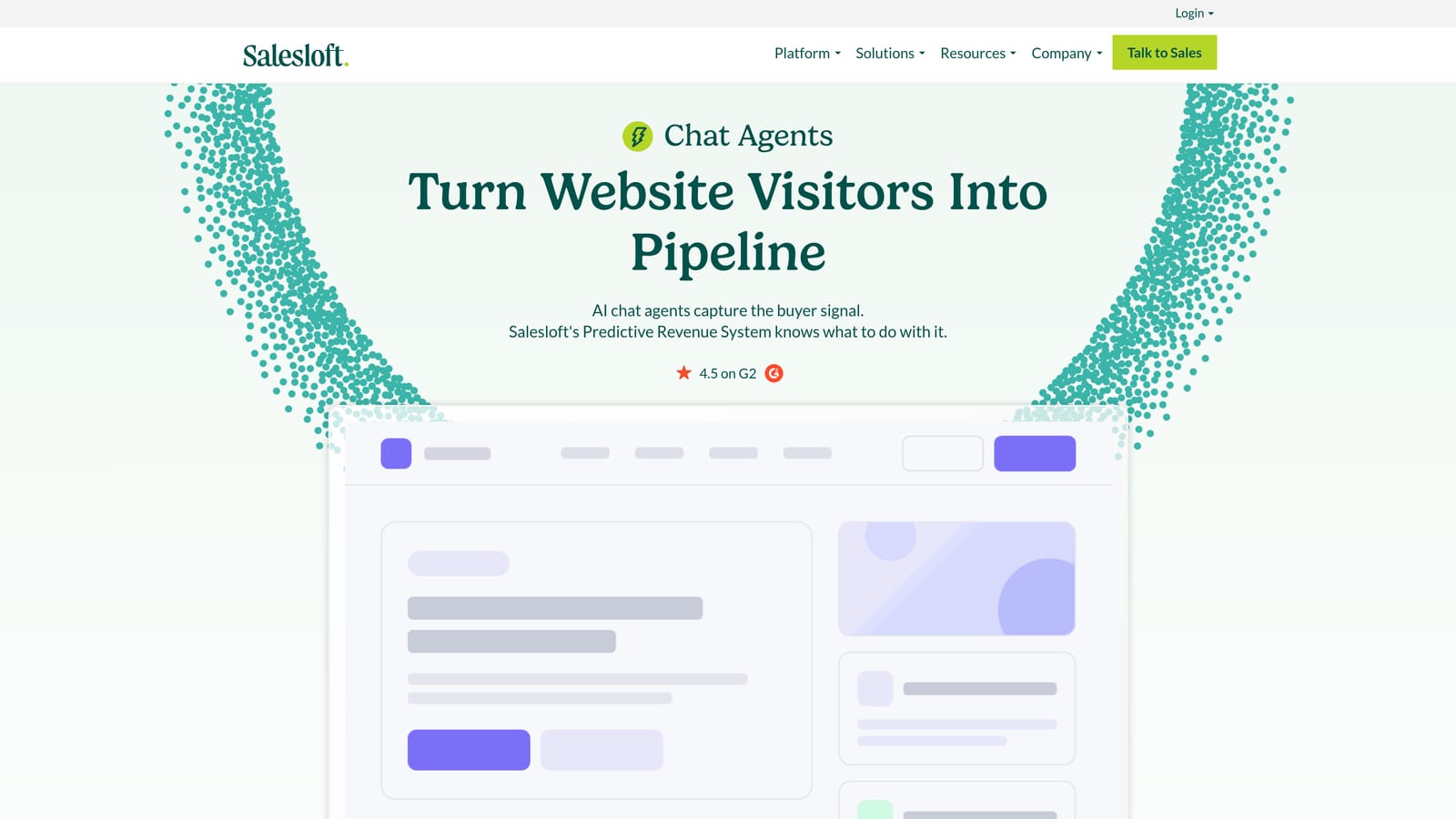
5. Drift (Salesloft)
Best for: B2B mobile apps where support conversations and sales-assist motions overlap significantly.
Drift, now part of Salesloft, is a conversational AI platform that blends support, lead qualification, and sales-assist — useful when the line between support and revenue is blurry.
Where This Tool Shines
Drift's roots are in conversational marketing and sales, which makes it an interesting option for B2B mobile apps where a support conversation can turn into a renewal discussion or an upsell moment. The AI can qualify, route, and resolve in a single conversation thread.
Integration with Salesforce and Salesloft workflows is a genuine differentiator for revenue-focused teams. That said, Drift is less specialized in pure support automation compared to purpose-built tools on this list — it's a better fit when the use case is hybrid.
Key Features
Conversational AI: Handles support queries and sales-assist conversations within the same interface.
Intelligent Routing: Directs conversations to human reps or AI agents based on intent and qualification signals.
Salesforce and Salesloft Integration: Native workflow connections for revenue teams managing pipeline alongside support.
Meeting Booking and Qualification Flows: Automates scheduling and lead qualification within the chat experience.
Conversation Analytics: Tracks outcomes across support and sales conversations for performance reporting.
Best For
B2B mobile app teams where support and sales motions overlap — particularly those already using Salesloft or Salesforce as their revenue stack.
Pricing
Contact Salesloft for current pricing. Verify at drift.com.
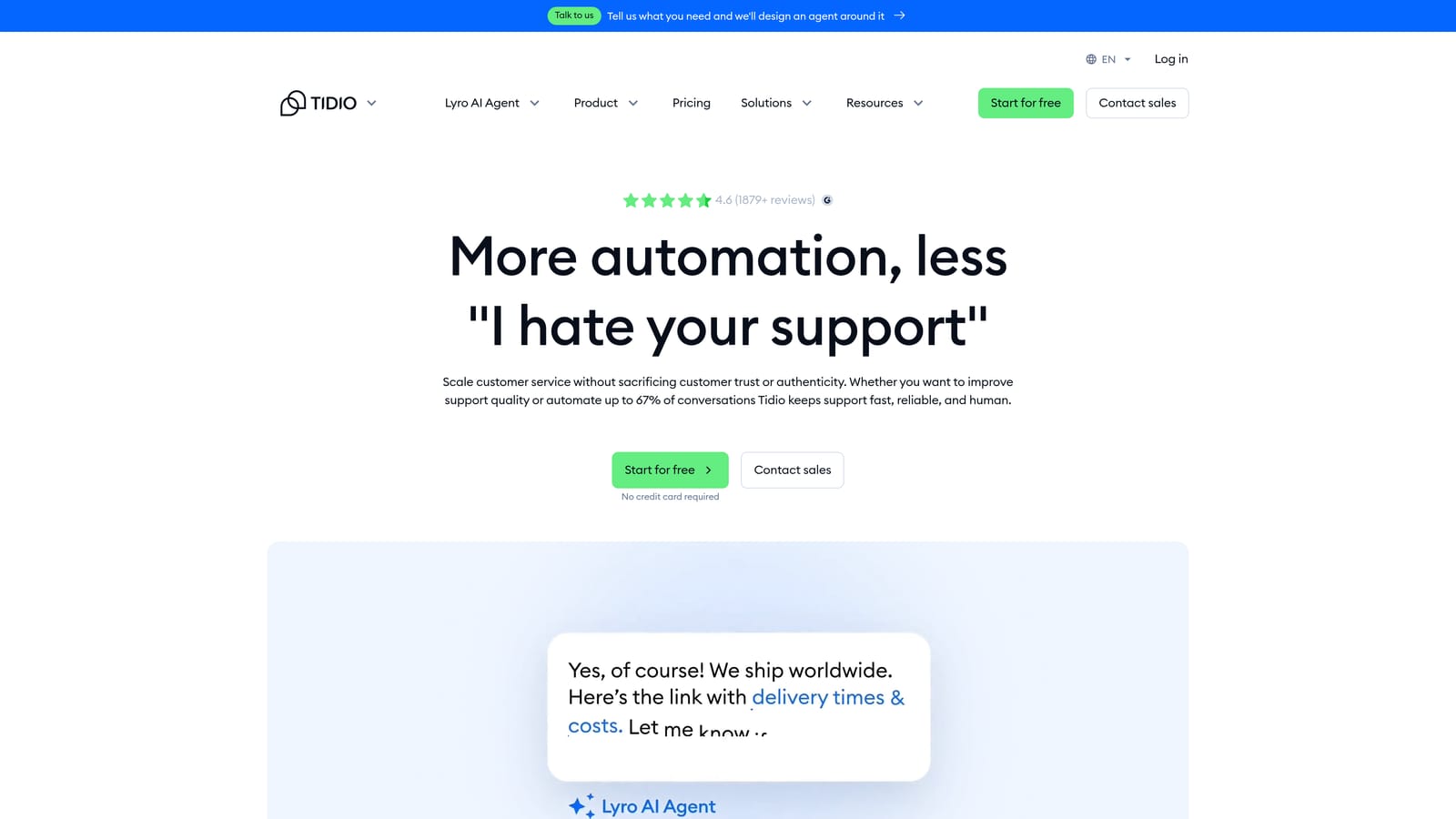
6. Tidio
Best for: Early-stage or smaller mobile app teams wanting fast setup and affordable autonomous support.
Tidio is an accessible AI chat platform featuring Lyro, its AI agent trained on your help content to handle common queries autonomously.
Where This Tool Shines
Tidio's appeal is speed and simplicity. Lyro can be configured without engineering resources, trained on your existing help content, and deployed quickly. For teams that need something working fast without a lengthy implementation, it's one of the most practical options at this price point.
It's worth noting that Tidio's mobile-native SDK is more limited than dedicated mobile-first tools like Helpshift. Most mobile deployments use a web widget embed, which works but doesn't offer the same depth of native in-app integration.
Key Features
Lyro AI Agent: Trained on your help content to autonomously resolve common support queries without human intervention.
Live Chat Fallback: Seamless handoff to human agents when Lyro reaches the edge of its knowledge.
No-Code Bot Builder: Custom conversation flows without engineering resources — drag-and-drop configuration.
Email and Messenger Integrations: Multichannel coverage beyond just in-app chat.
E-Commerce Integrations: Native Shopify integration for consumer app and retail use cases.
Best For
Small to mid-sized mobile app teams, early-stage startups, or consumer apps with straightforward support patterns who want affordable AI resolution without complex setup.
Pricing
A free tier is available; Lyro AI plans start at approximately $29/month. Verify current pricing at tidio.com.
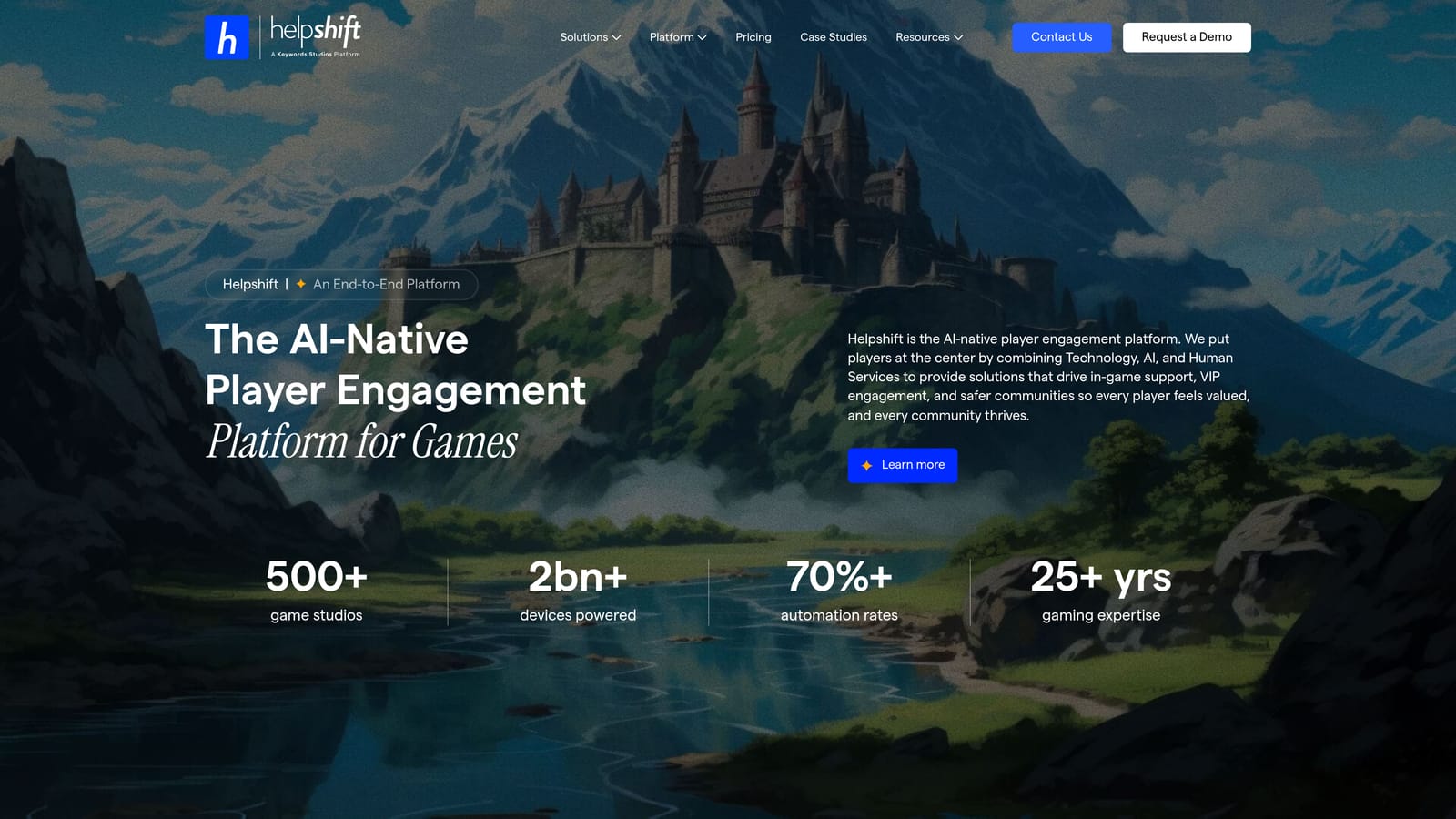
7. Helpshift
Best for: Consumer mobile apps and games requiring truly native mobile SDK support across multiple platforms.
Helpshift is a mobile-native support platform built specifically for apps — with dedicated SDKs for iOS, Android, Unity, and Unreal Engine.
Where This Tool Shines
If mobile-native is a hard requirement, Helpshift is the most specialized option on this list. Its SDKs are purpose-built for mobile UX patterns, not adapted from web interfaces. The Unity and Unreal Engine support makes it particularly strong for gaming studios managing high-volume, repetitive support at scale.
AI-powered bot flows and smart FAQs handle the common issues that dominate mobile support queues. The in-app messaging experience feels native rather than embedded, which matters for consumer apps where UX friction leads directly to uninstalls.
Key Features
Native Mobile SDKs: Dedicated SDKs for iOS, Android, Unity, Unreal Engine, and React Native — not web widget adaptations.
In-App Messaging: Designed specifically for mobile UX patterns, preserving the app experience during support interactions.
AI-Powered Bot Flows: Automated resolution paths for common issues, with smart FAQ surfacing based on user context.
Issue Classification and Auto-Routing: Automatic categorization and routing to the right support queue or agent.
Gaming and Consumer App Specialization: Purpose-built workflows for high-volume consumer support patterns common in gaming.
Best For
Consumer mobile apps and gaming studios where native SDK quality is non-negotiable and support volume is high with repetitive query patterns.
Pricing
Contact for pricing. Verify at helpshift.com.
8. Kustomer
Best for: Subscription and D2C mobile apps where customer history context is central to resolving support issues well.
Kustomer is a CRM-native support platform that unifies customer timelines across all channels, with AI automation layered on top of rich customer history data.
Where This Tool Shines
Kustomer's core differentiator is context. Rather than treating each support conversation as an isolated ticket, it surfaces the full customer timeline: purchase history, previous interactions, subscription status, and behavioral data. For subscription apps and D2C mobile products, this context often determines the right resolution path.
The omnichannel coverage across chat, email, SMS, and social is strong, and AI automation handles routing and suggested responses informed by that CRM data — not just the current message.
Key Features
Unified Customer Timeline: Full history across all channels embedded directly in the support context for every conversation.
AI-Powered Routing and Automation: Routes tickets and suggests responses using both the current query and historical customer data.
Omnichannel Support: Covers chat, email, SMS, and social media in a unified inbox experience.
Native CRM Data Integration: Customer data isn't pulled from a separate system — it's embedded in the support workflow by design.
Best For
Subscription mobile apps, D2C brands, and teams where understanding a customer's full history is as important as resolving their current issue quickly.
Pricing
Enterprise pricing — contact for current rates at kustomer.com.
9. Forethought (Supportlogic)
Best for: Teams augmenting an existing helpdesk with AI intelligence rather than replacing their current setup.
Forethought is an AI intelligence layer that sits on top of existing helpdesks — improving triage, sentiment analysis, escalation prediction, and routing without requiring a platform migration.
Where This Tool Shines
Forethought takes a different approach than most tools on this list. Rather than replacing your helpdesk, it makes your existing one smarter. Predictive AI identifies which tickets are likely to escalate before they do, sentiment detection surfaces urgent or frustrated customers early, and routing improvements reduce misassignment without manual rules management.
For teams deeply embedded in Zendesk, Salesforce, or ServiceNow who can't or won't migrate, this is a practical way to improve AI-driven outcomes without starting over. It's not a standalone support agent in the traditional sense — it's an intelligence amplifier.
Key Features
Predictive Triage and Routing: AI predicts ticket type, priority, and best routing path before agents touch the queue.
Sentiment and Urgency Detection: Identifies frustrated or at-risk customers based on language patterns in real time.
Escalation Prediction: Flags tickets likely to escalate before they worsen, enabling proactive intervention.
Helpdesk Integrations: Connects with Zendesk, Salesforce Service Cloud, and ServiceNow without replacing them.
AI-Generated Summaries and Suggested Responses: Reduces agent time-to-resolution with pre-drafted responses and conversation summaries.
Best For
Support teams committed to an existing helpdesk platform who want to improve AI-driven outcomes — triage accuracy, escalation handling, and routing efficiency — without a full platform switch.
Pricing
Contact for pricing. Verify at forethought.ai.
Which Tool Is Right for Your Mobile App?
The most important decision here isn't which tool has the best feature list — it's whether you want AI-native architecture or AI layered onto an existing helpdesk. That single choice will narrow your options significantly.
If you're building or scaling a B2B SaaS mobile app and want an AI agent that genuinely understands in-app context, resolves tickets autonomously, and surfaces business intelligence beyond support metrics, Halo AI is the strongest starting point. Its page-aware architecture and continuous learning model are designed for exactly this use case.
For teams already committed to Intercom or Zendesk, the AI features within those platforms have matured enough to be worth evaluating before switching. Freshdesk Freddy AI is worth a look if budget is a primary constraint.
If mobile-native SDKs are a hard requirement — particularly for gaming or consumer apps — Helpshift is purpose-built for that environment in a way that most platforms on this list aren't. And if you're running a subscription or D2C app where customer history drives resolution quality, Kustomer's CRM-native approach is genuinely differentiated.
For teams that want to augment rather than replace: Forethought sits on top of your existing stack and improves it. Tidio is the fastest path to affordable AI support for smaller teams. Drift makes sense when your support and sales motions are genuinely intertwined.
Your support team shouldn't scale linearly with your customer base. Let AI agents handle routine tickets, guide users through your product, and surface business intelligence while your team focuses on complex issues that need a human touch. See Halo in action and discover how continuous learning transforms every interaction into smarter, faster support.