9 Best AI Support Automation Tools for SaaS in 2026
This guide reviews the 9 best AI support automation for SaaS tools in 2026, helping teams scale customer support without proportionally growing headcount. Each platform is evaluated on automation depth, SaaS-specific integrations, deployment ease, and scalability—covering options that integrate with existing helpdesks like Zendesk or Intercom, as well as AI-first alternatives built specifically for modern SaaS support workflows.
 Grant CooperFounder13 min read
SaaS teams face a familiar tension: support volume grows with every new user, but headcount can't scale at the same rate. AI support automation changes that equation, not by replacing your team, but by handling the repetitive, high-volume work so your agents can focus on complex issues that actually need a human.
This list covers the best AI support automation tools built for SaaS companies in 2026. Whether you're running a lean startup or managing enterprise-level ticket volume, these platforms offer genuine automation depth, from intelligent ticket resolution and contextual chat to business intelligence and seamless handoffs. We evaluated each tool on automation capability, SaaS-specific integrations, ease of deployment, and how well it scales with your product.
For teams already using helpdesks like Zendesk, Freshdesk, or Intercom, several of these options layer on top of what you have. Others are built AI-first from the ground up. Both approaches have merit. The right choice depends on how deeply you want automation embedded in your support stack.
1. Halo AI
Best for: SaaS teams wanting AI-first support with page-aware context and business intelligence
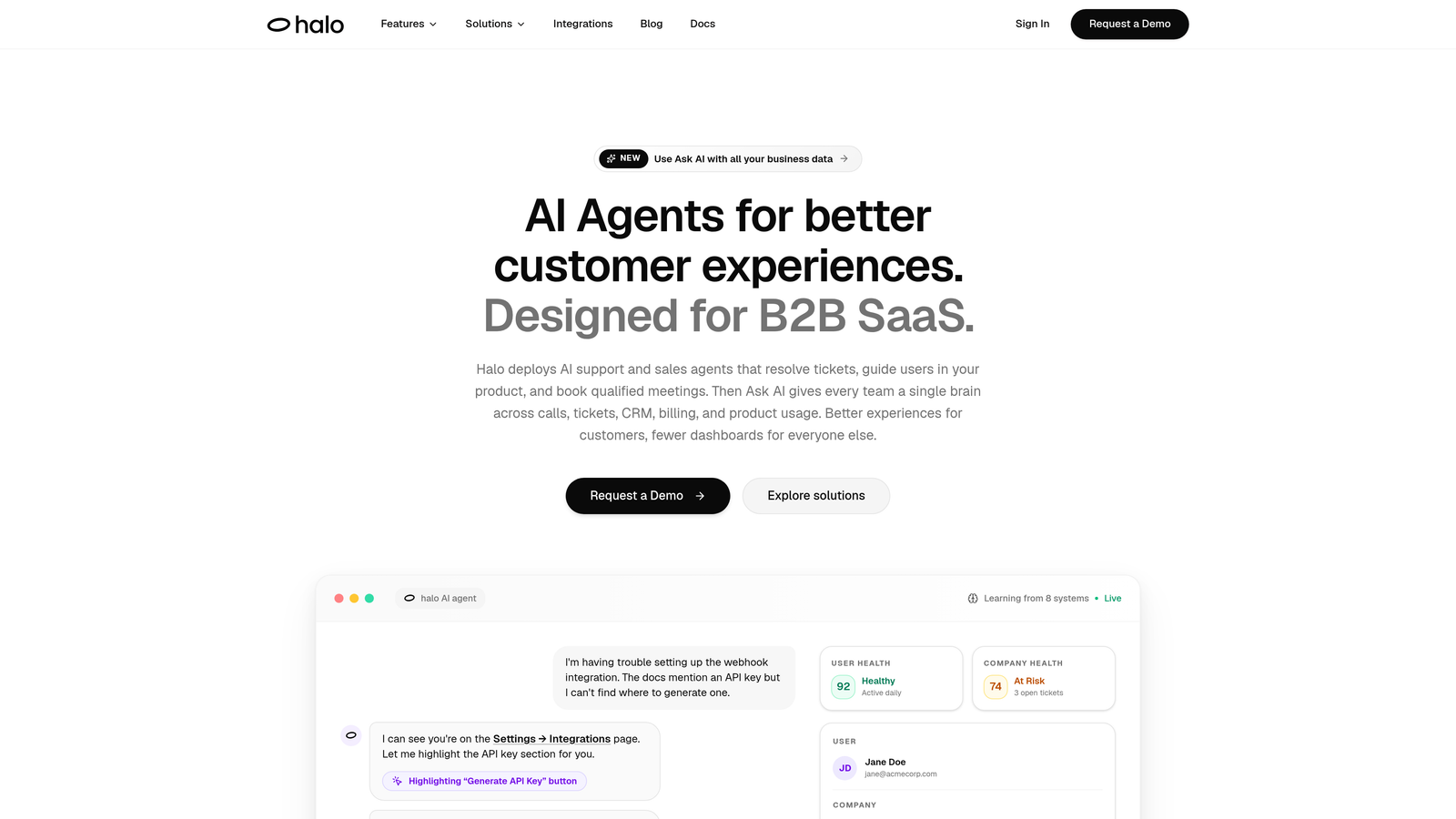
Halo AI is an AI-first customer support platform built specifically for SaaS teams that need more than basic ticket deflection.
Where This Tool Shines
What separates Halo from most tools on this list is its page-aware architecture. The AI agent doesn't just read what a user types; it sees what screen they're on, understands the product context, and delivers guidance that's actually relevant to the moment. That kind of contextual intelligence is rare, and for SaaS products with complex onboarding flows or multi-step workflows, it makes a meaningful difference.
Halo also goes beyond support and into business intelligence. The smart inbox surfaces customer health signals, revenue anomalies, and churn indicators derived from support interactions. Your support queue becomes a source of product and revenue insight, not just a list of tickets to close.
Key Features
Page-Aware AI Agents: The agent sees the user's current screen, enabling contextual guidance rather than generic responses.
Autonomous Ticket Resolution: AI resolves tickets end-to-end with continuous learning from every interaction, improving over time without manual retraining.
Auto Bug Ticket Creation: Automatically routes bug reports to Linear, Jira, or your preferred dev tool, closing the loop between support and engineering.
Smart Inbox with Business Intelligence: Surfaces customer health signals, revenue anomalies, and churn indicators directly from support data.
Live Agent Handoff: Escalates to human agents with full conversation context preserved, so nothing gets repeated or lost.
Deep Integrations: Connects with Slack, HubSpot, Intercom, Stripe, Zoom, PandaDoc, and Fathom for a genuinely connected support stack.
Best For
SaaS product teams and B2B companies that want AI support embedded at the core of their stack, not bolted on. Particularly strong for teams where support data should be feeding product and revenue decisions, not just closing tickets.
Pricing
Subscription plans available; contact Halo directly for pricing details. Current information at haloagents.ai.
2. Intercom Fin
Best for: Teams already invested in Intercom wanting native AI resolution
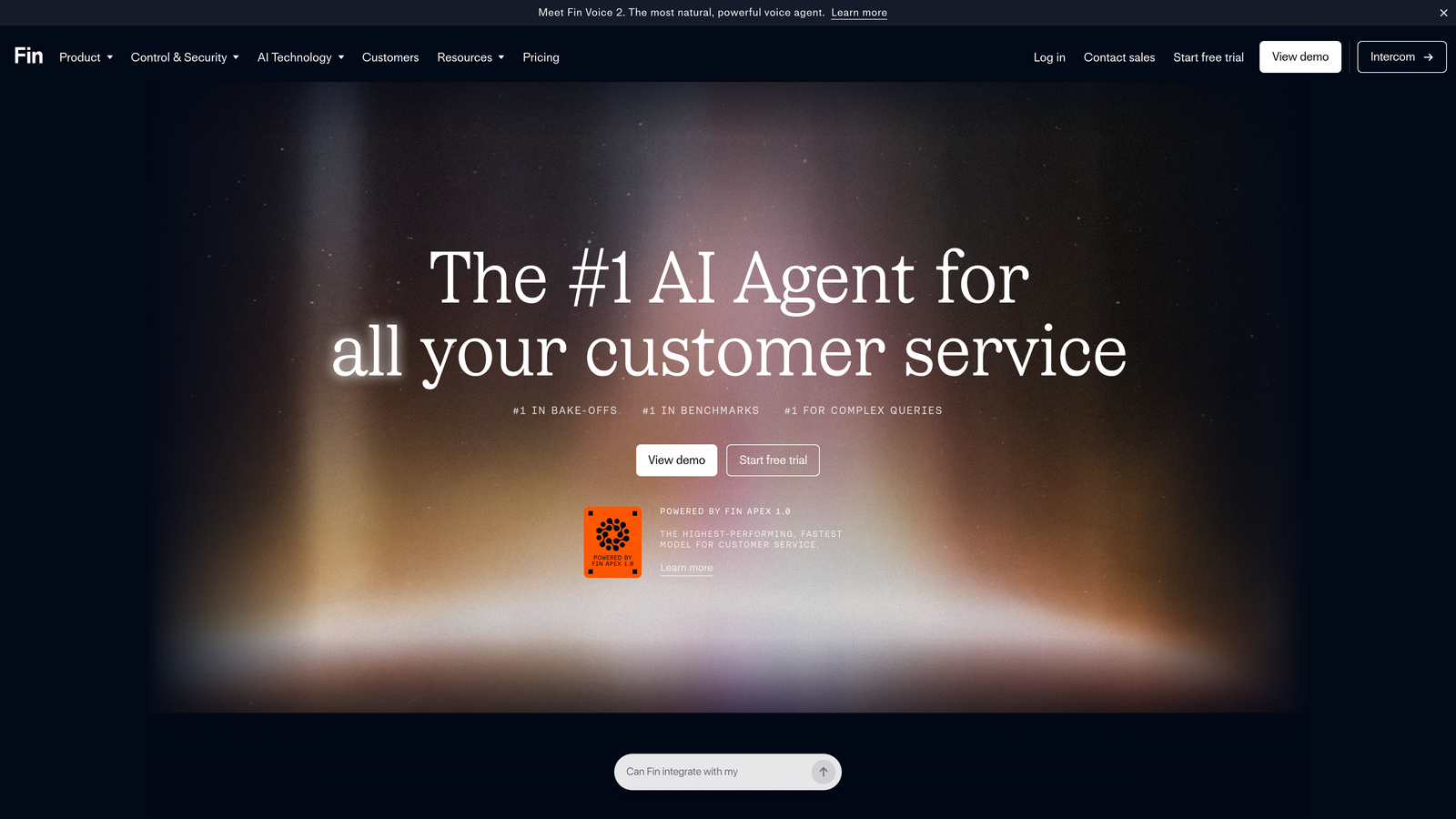
Intercom Fin is Intercom's native AI agent, powered by large language models and designed to resolve conversations using your existing help center content.
Where This Tool Shines
If your team is already running Intercom as your primary support channel, Fin is the most frictionless path to AI automation. There's no new platform to learn, no migration to plan, and no integration work to do. The AI operates directly within the Intercom messenger experience your customers already know.
Fin 2 (the current version as of 2025-2026) adds more customization depth, letting you tune tone, response behavior, and escalation logic. Resolution quality has improved significantly, and the per-resolution pricing model means you only pay for outcomes rather than seats or volume tiers.
Key Features
LLM-Powered Resolution: Uses your knowledge base content to resolve conversations without requiring manual rule-building.
Seamless Human Handoff: Transfers to live agents within Intercom when the AI reaches its limits, keeping the conversation in one thread.
Customizable Behavior: Adjust tone, response style, and escalation thresholds to match your brand and support standards.
Multichannel Coverage: Operates across web, mobile, and email channels within the Intercom ecosystem.
Resolution Analytics: Tracks resolution rates and conversation quality to help you measure AI performance over time.
Best For
SaaS teams already using Intercom as their primary support platform who want AI resolution without adding a new tool to their stack. Less compelling if you're not already on Intercom.
Pricing
Included in select Intercom plans; also available on a per-resolution pricing model. Verify current rates at intercom.com.
3. Zendesk AI
Best for: Enterprise support teams running high-volume operations on Zendesk
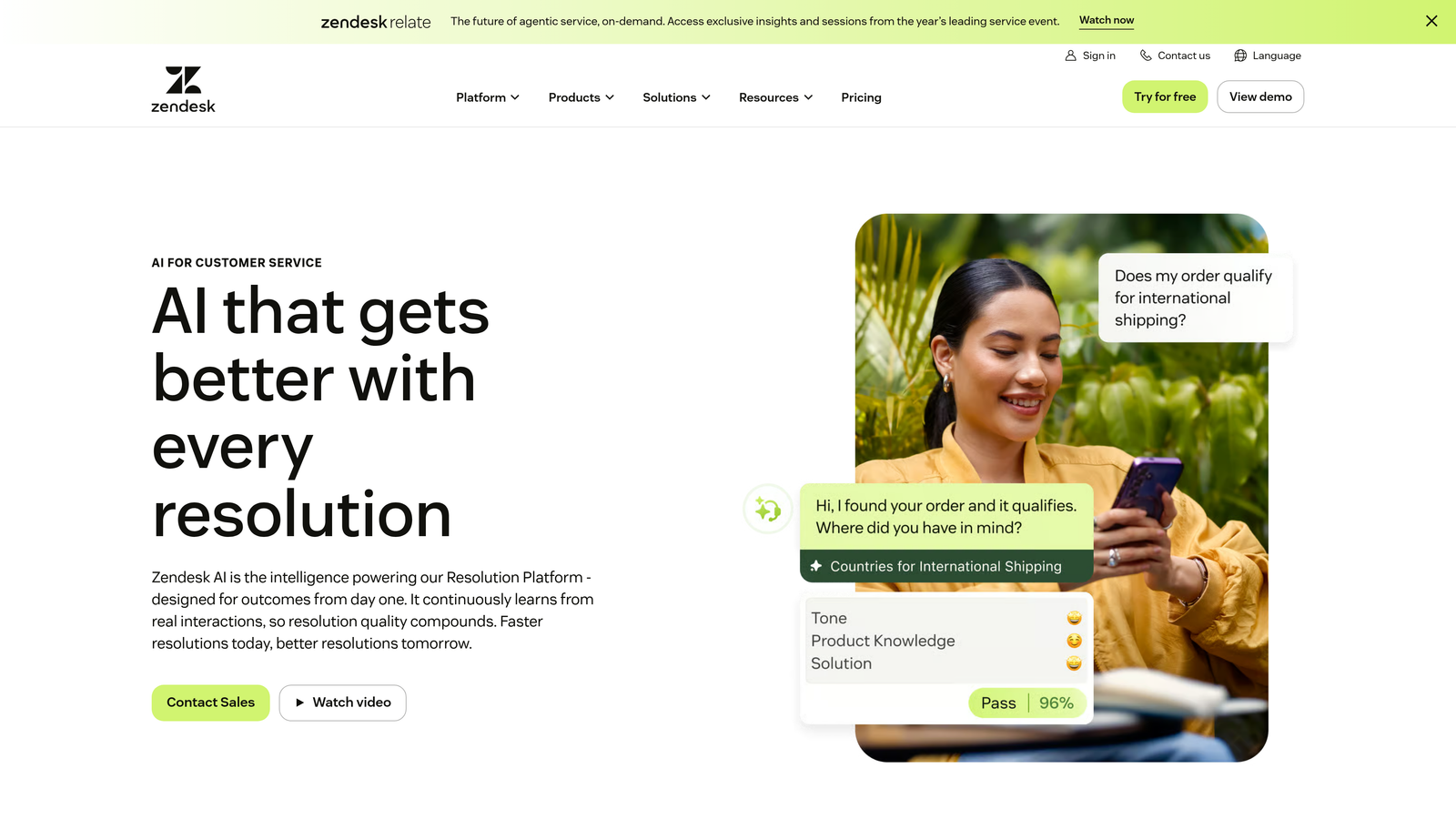
Zendesk AI is a suite of AI capabilities embedded across the Zendesk support platform, covering triage, agent assistance, workflow automation, and self-service.
Where This Tool Shines
Zendesk AI's strength is breadth. Rather than a single AI agent, it's a layer of intelligence applied across the entire support operation: routing tickets before agents see them, suggesting replies while agents are composing, and deflecting common questions before they become tickets at all. For large teams handling thousands of tickets daily, that distributed automation adds up quickly.
The Agent Copilot feature is particularly useful for teams with less experienced agents, providing real-time next-best-action guidance that reduces handle time and improves consistency without requiring extensive training.
Key Features
Intelligent Triage: Auto-categorizes tickets, analyzes sentiment, and routes to the right agent or queue without manual intervention.
Agent Copilot: Provides suggested replies and next-best-action guidance to agents while they work, reducing handle time.
Automated Workflows: Triggers macros and workflow actions based on ticket content, reducing repetitive manual steps.
AI Self-Service: Powers customer-facing bots and knowledge base surfacing to deflect common questions.
AI Performance Reporting: Tracks deflection rates, resolution quality, and automation impact across the support operation.
Best For
Enterprise SaaS teams already on Zendesk Suite who want to maximize automation across a large, established support operation. Overkill for smaller teams not yet on Zendesk.
Pricing
AI features included in Zendesk Suite plans; Advanced AI available as an add-on. Current pricing at zendesk.com.
4. Freshdesk Freddy AI
Best for: Freshdesk users wanting tiered AI automation across self-service and agent assist
Freshdesk Freddy AI is Freshworks' AI layer across the Freshdesk platform, split between customer-facing automation and agent-side assistance.
Where This Tool Shines
Freddy AI's dual-mode design is worth understanding. Freddy Self Service handles the customer-facing side, deflecting common questions through an AI bot before they reach your team. Freddy Copilot works on the agent side, providing real-time drafts, suggestions, and article recommendations while agents are actively working tickets. Together, they cover both ends of the support workflow.
For teams on Freshdesk's mid-tier plans, Freddy offers meaningful automation without requiring an enterprise contract. The tiered capability model means smaller teams can start with basic features and unlock more as they grow.
Key Features
Freddy Self Service: Customer-facing AI bot that deflects common questions using your knowledge base content.
Freddy Copilot: Provides real-time reply drafts and suggestions to agents during active ticket handling.
Auto-Triage: Automatically categorizes and routes incoming tickets based on content and intent.
Article Suggestions: Surfaces relevant knowledge base articles to both agents and customers during conversations.
Freddy Insights: Analytics layer for identifying support trends, volume patterns, and automation performance.
Best For
SaaS teams already using Freshdesk who want to add AI automation incrementally without switching platforms. Good fit for mid-market companies looking for a cost-effective path to both self-service and agent-assist automation.
Pricing
Freddy features are tiered across Freshdesk Growth, Pro, and Enterprise plans. Current pricing at freshdesk.com.
5. Forethought
Best for: Teams wanting AI triage and routing layered on top of an existing helpdesk
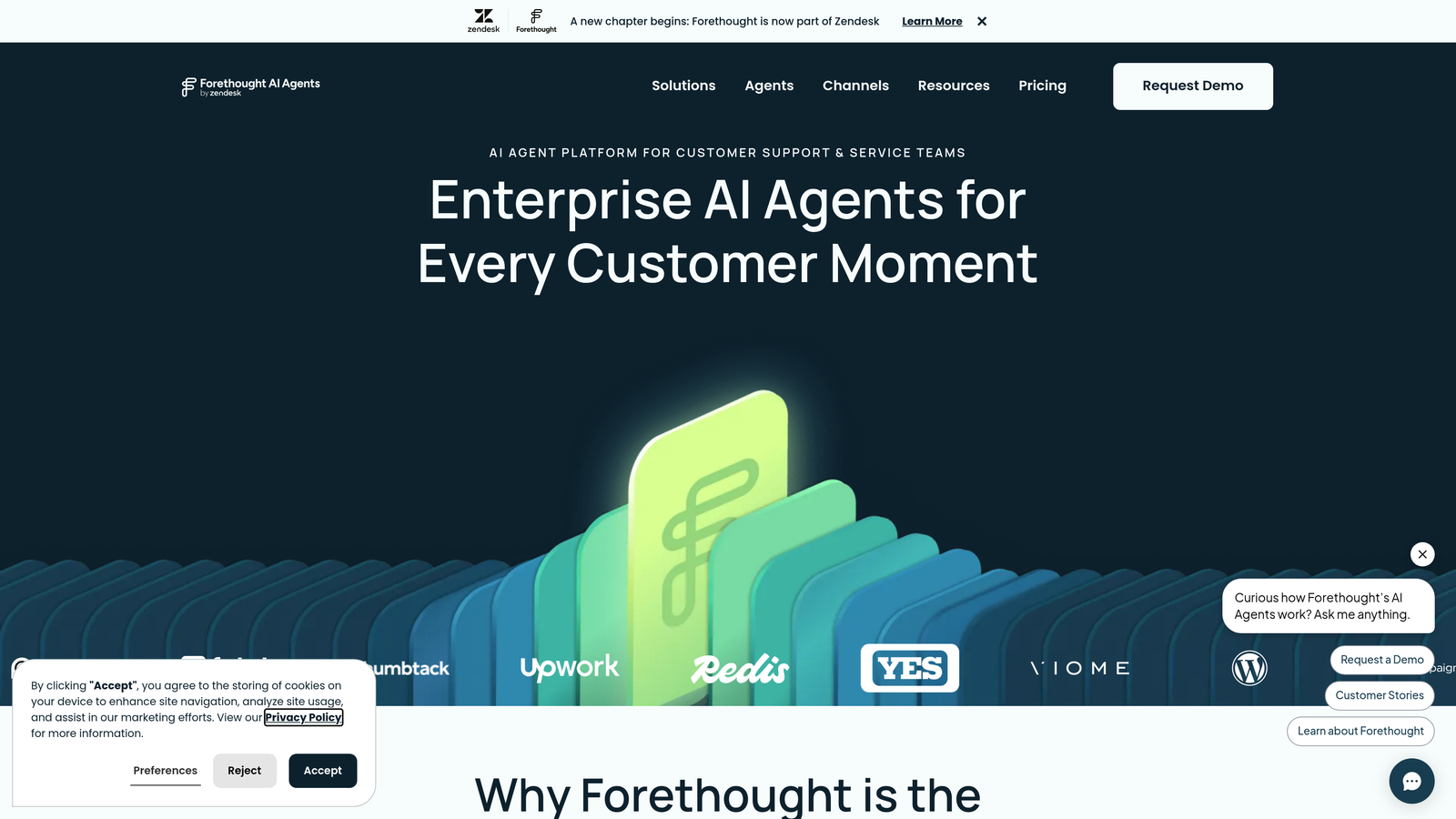
Forethought is an AI support automation platform that specializes in predictive ticket routing, intelligent triage, and resolution automation, designed to sit on top of your current helpdesk rather than replace it.
Where This Tool Shines
Forethought's core value proposition is operational efficiency. It analyzes incoming tickets, predicts the right routing path based on historical data, and prioritizes based on sentiment before a human ever looks at the queue. For support teams drowning in misrouted or misprioritized tickets, that upstream intelligence can significantly reduce handle time and escalation rates.
Its helpdesk-agnostic approach is also notable. If you're on Zendesk, Salesforce Service Cloud, or Freshdesk and don't want to migrate, Forethought integrates across all three, letting you add AI intelligence without disrupting your existing workflows.
Key Features
Predictive Routing: Routes tickets based on content analysis and historical resolution data, not just keyword rules.
Sentiment-Based Prioritization: Identifies urgent or frustrated customers and surfaces their tickets automatically.
AI Resolution Suggestions: Generates auto-responses and resolution suggestions for common ticket types.
Multi-Helpdesk Integration: Works with Zendesk, Salesforce Service Cloud, Freshdesk, and other major platforms.
Workflow Automation: Automates repetitive ticket handling processes to reduce manual queue management.
Best For
Mid-market to enterprise SaaS teams that want to improve triage and routing efficiency without migrating off their current helpdesk. Strong fit for operations-focused support leaders who need better queue management at scale.
Pricing
Custom pricing based on volume and plan configuration. Contact Forethought directly at forethought.ai.
6. Tidio (Lyro AI)
Best for: Startups and small SaaS teams starting their AI automation journey
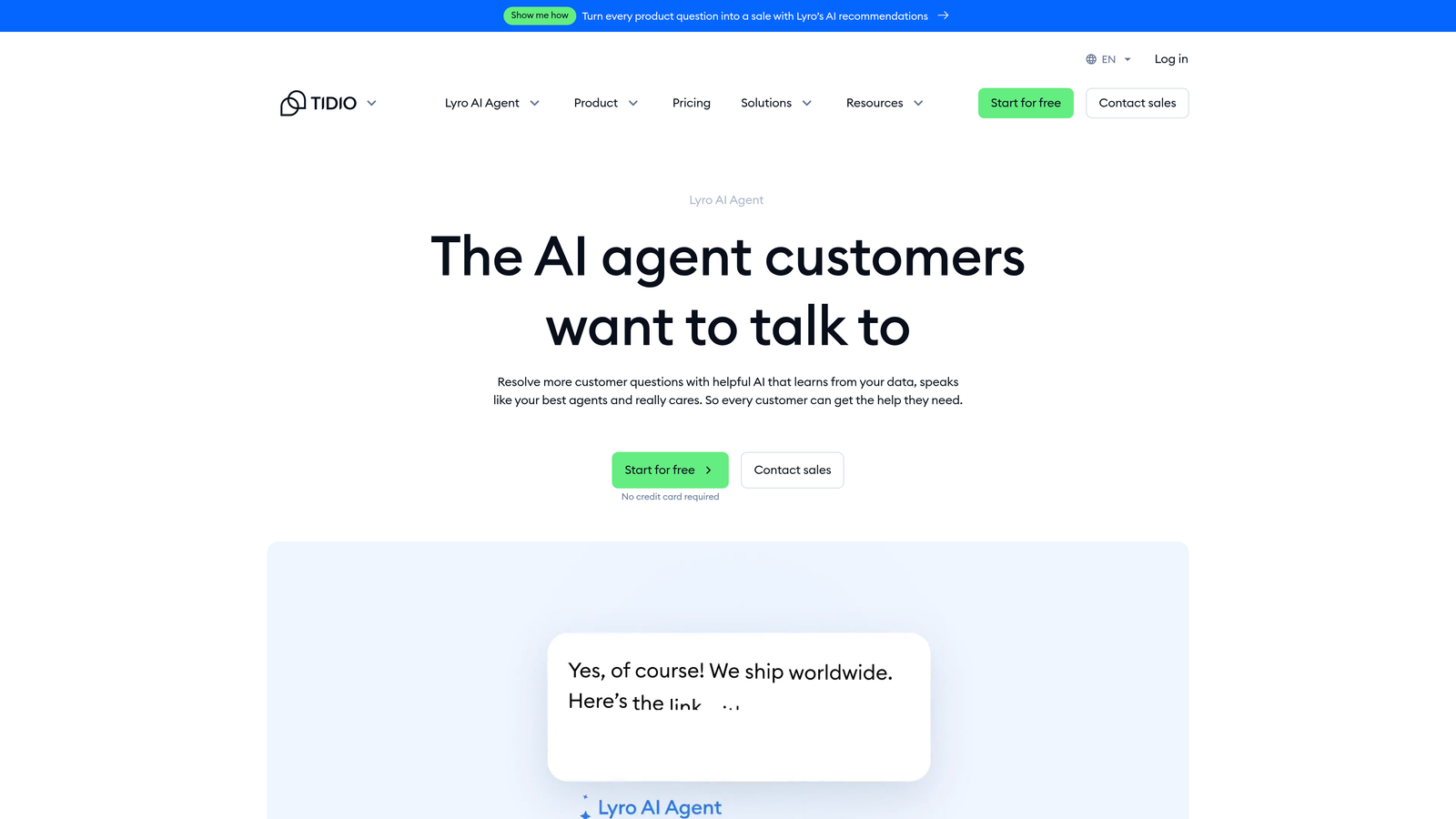
Tidio's Lyro AI is a conversational AI agent aimed at smaller SaaS teams, offering accessible chat automation without the enterprise price tag or implementation complexity.
Where This Tool Shines
Lyro's biggest advantage is accessibility. Most AI support tools require significant setup, integration work, or enterprise contracts. Lyro is designed to get smaller teams up and running quickly using their existing FAQ and knowledge content, without a dedicated implementation project.
For startups that are just beginning to experience support volume pressure, Lyro provides a practical first step into AI automation. It handles a well-defined set of common conversation types reliably, which is often enough to meaningfully reduce ticket load at an early stage.
Key Features
Lyro AI Conversations: Handles common support questions using your FAQ and knowledge content without requiring manual rule creation.
Automatic Handoff: Transfers to human agents when questions fall outside Lyro's scope, with conversation context preserved.
Multichannel Support: Covers live chat, email, and social media channels from a single platform.
Low-Overhead Setup: Designed for quick deployment without technical complexity or dedicated IT resources.
Conversation Analytics: Tracks resolution rates and conversation outcomes to measure automation performance.
Best For
Early-stage SaaS companies and small support teams that need AI automation at an accessible price point. Less suited for teams with complex, multi-step support workflows or enterprise-scale ticket volumes.
Pricing
Free plan available; Lyro AI included in paid plans starting around $29/month. Verify current pricing at tidio.com.
7. Kustomer
Best for: SaaS teams with complex, high-touch customer relationships needing CRM-native support
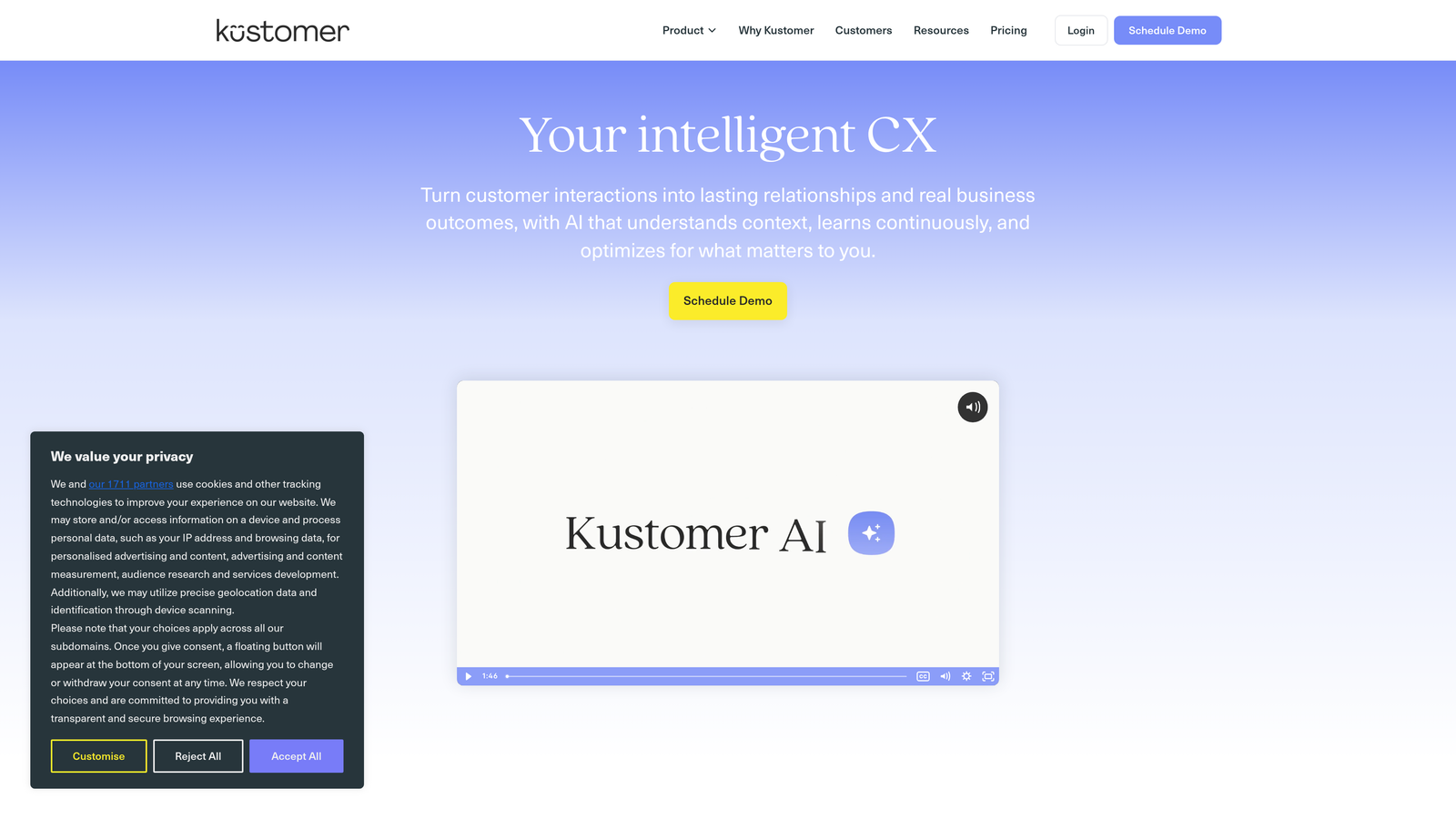
Kustomer is a CRM-native customer support platform with AI automation built around a unified customer timeline, making it well-suited for SaaS businesses where customer context is critical to every support interaction.
Where This Tool Shines
Kustomer's differentiator is the unified timeline. Every customer interaction, purchase, subscription change, and support conversation is aggregated into a single view. When AI automation triggers, it operates with that full context, making routing decisions and automated responses far more relevant than what a standard helpdesk can produce.
For SaaS companies with complex customer relationships, enterprise accounts, or high-touch onboarding, that CRM depth changes the quality of automated interactions. The AI isn't just resolving tickets; it's responding with awareness of the customer's full history with your product.
Key Features
Unified Customer Timeline: Aggregates all touchpoints and interaction history into a single customer record accessible to both AI and human agents.
AI-Powered Routing: Routes tickets and conversations based on customer data and interaction history, not just ticket content alone.
Omnichannel Support: Covers email, chat, social, SMS, and voice from a single platform.
KIQ Customer Assist: AI self-service layer for resolving common customer questions without agent involvement.
Deep CRM Integration: Connects customer data across your stack to provide context-rich support at every touchpoint.
Best For
SaaS companies with enterprise customers or complex customer relationships where support quality and context-awareness are as important as resolution speed. Less suited for teams that need lightweight, fast-to-deploy automation.
Pricing
Enterprise pricing model. Contact Kustomer directly at kustomer.com for current rates.
8. Help Scout
Best for: Teams prioritizing brand voice and relationship quality over full automation
Help Scout is a customer support platform known for its human-first philosophy, with AI features designed to assist agents rather than replace them.
Where This Tool Shines
Help Scout occupies a distinct position in this list. It's not trying to maximize automation depth. Instead, its AI features, AI Drafts, AI Summarize, and AI Answers, are deliberately designed as agent tools. The AI generates a draft, the agent reviews it and sends. The AI summarizes a long thread, the agent uses that context to respond thoughtfully. Every AI action goes through a human before reaching the customer.
For SaaS companies where brand voice, relationship quality, and personalized communication are core to the customer experience, that philosophy is a feature, not a limitation. It's the right tool for teams that want AI efficiency without sacrificing the human touch.
Key Features
AI Drafts: Generates reply suggestions that agents review and edit before sending, maintaining quality and brand voice.
AI Summarize: Condenses long conversation threads instantly so agents can get up to speed without reading every message.
AI Answers: Surfaces relevant knowledge base articles to customers proactively, reducing inbound volume.
Shared Inbox: Collaborative inbox with assignment, notes, and tagging for support team coordination.
Beacon Widget: In-product help widget for chat and self-service, embeddable directly in your SaaS product.
Best For
SaaS teams where support is a relationship-building function and brand voice matters more than maximum deflection. Also a strong fit for smaller teams that want clean, simple tooling without enterprise complexity.
Pricing
Plans start at $50/month for small teams, with higher tiers for larger teams. Current pricing at helpscout.com.
9. Capacity
Best for: SaaS companies managing both customer support and internal employee support from one platform
Capacity is an AI helpdesk platform that spans customer-facing and internal employee support, with knowledge management at its core.
Where This Tool Shines
Most tools on this list are focused purely on customer support. Capacity takes a broader view. It applies the same AI knowledge management and automation logic to both external customer tickets and internal employee requests, making it useful for SaaS companies with complex internal operations alongside their customer support function.
The knowledge base is the central engine. Capacity's AI learns from interactions over time, continuously improving its ability to surface the right answer to the right person, whether that's a customer asking about a feature or an employee asking about an internal process.
Key Features
AI Knowledge Base: Learns from interactions over time, improving resolution accuracy without constant manual updates.
Dual-Use Automation: Handles both customer-facing and internal employee support requests from a single platform.
SaaS Tool Integrations: Connects with popular communication platforms and SaaS tools across your stack.
Workflow Automation: Automates repetitive support processes with configurable escalation paths.
Contextual Escalation: Hands off to human agents with full conversation context when requests exceed automation scope.
Best For
SaaS companies with significant internal operations complexity alongside customer support needs. Particularly useful for teams that want a single AI knowledge platform serving both their customers and their internal teams.
Pricing
Custom pricing based on use case and team size. Contact Capacity at capacity.com.
Which Tool Is Right for Your Team?
The right AI support automation tool depends less on feature lists and more on where you are in your support journey and what you're trying to achieve.
For startups and early-stage teams: Tidio's Lyro AI offers the lowest barrier to entry, while Help Scout is a strong choice if you're prioritizing relationship quality over automation depth. Both are accessible without enterprise budgets or long implementation timelines.
For scale-ups adding AI to an existing helpdesk: If you're already on Intercom, Fin is the natural next step. Zendesk AI and Freshdesk Freddy AI serve the same purpose for their respective platforms. Forethought is worth considering if you want AI intelligence layered across your helpdesk without committing to a platform change.
For teams wanting AI-first architecture: Halo AI is built from the ground up for SaaS, with page-aware context, autonomous resolution, auto bug ticket creation, and business intelligence signals that go well beyond what helpdesk add-ons can offer. Kustomer is the right choice if CRM-native context is your primary requirement.
For companies with complex internal ops: Capacity's dual-use approach covers both customer and employee support from a single knowledge platform, which is a meaningful operational simplification for growing SaaS teams.
Your support team shouldn't scale linearly with your customer base. Let AI agents handle routine tickets, guide users through your product, and surface business intelligence while your team focuses on complex issues that need a human touch. See Halo in action and discover how continuous learning transforms every interaction into smarter, faster support.