9 Best AI Support Automation Platforms for Scaling Customer Service in 2026
AI support automation platforms have evolved beyond basic chatbots to intelligent systems that resolve complex customer issues, learn continuously, and integrate seamlessly with human agents. This guide evaluates the top nine AI support automation platforms for 2026 based on autonomous ticket resolution capabilities, integration depth, and real-world performance to help support teams scale efficiently while meeting customer expectations for instant, accurate responses.
 Grant CooperFounder10 min read
Support teams are drowning in tickets while customers expect instant, accurate responses around the clock. AI support automation platforms have evolved from simple chatbots into intelligent systems that can resolve complex issues, learn from every interaction, and seamlessly hand off to humans when needed. But with dozens of options flooding the market, finding the right platform for your specific needs requires cutting through the noise.
Here are the top AI support automation platforms transforming customer service in 2026, evaluated on real capabilities—from autonomous ticket resolution to integration depth—so you can identify which solution actually fits your support operations and budget.
1. Halo AI
Best for: B2B SaaS companies needing AI-first support that learns continuously from every customer interaction
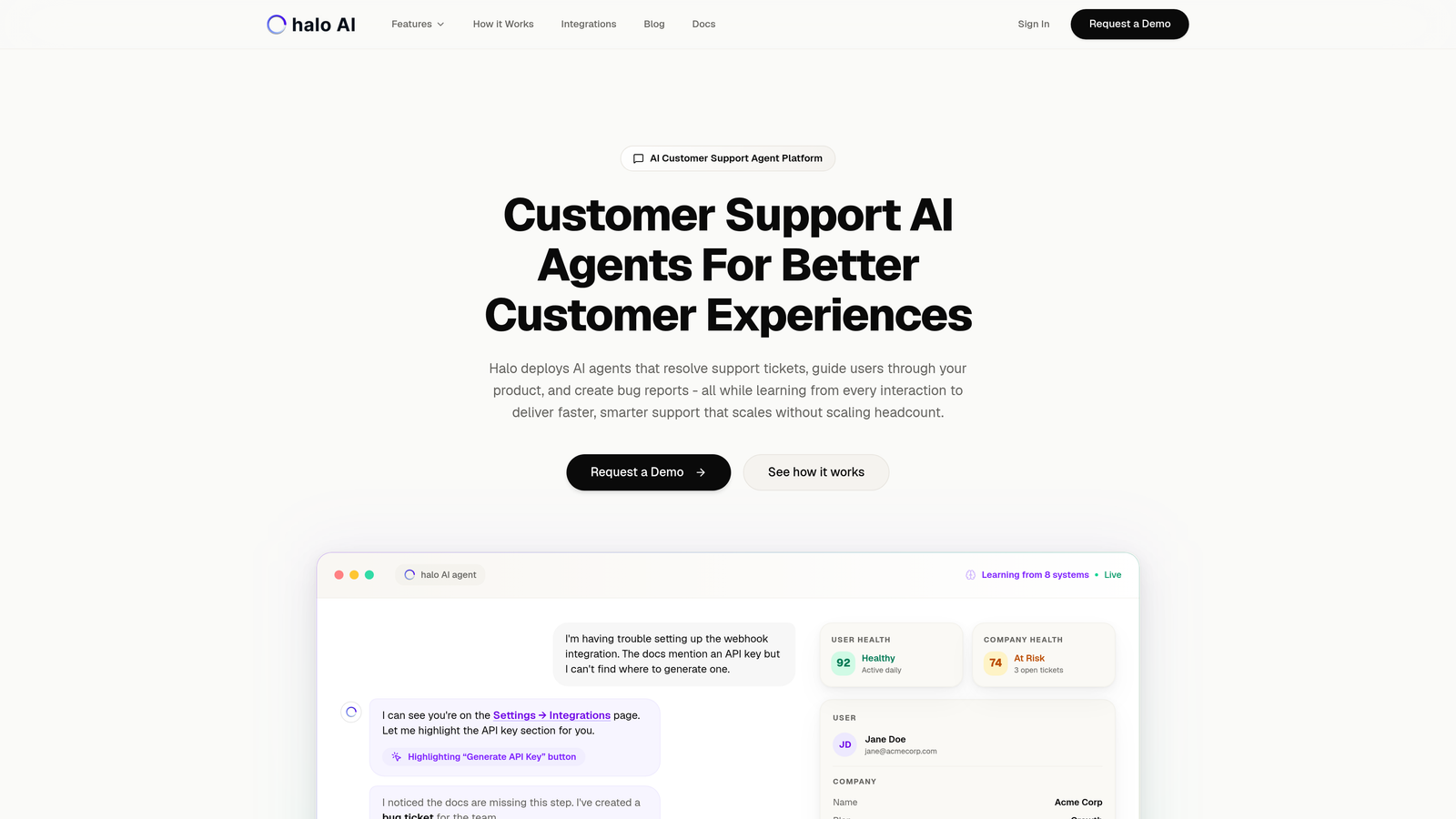
Halo AI is an AI-first customer support platform built around intelligent agents that autonomously resolve tickets while getting smarter with each interaction.
Where This Tool Shines
Unlike platforms that bolt AI onto existing helpdesk infrastructure, Halo was architected from the ground up for AI-driven support. The platform's page-aware chat widget sees exactly what users see in your product, providing context that generic chatbots can't match.
What sets Halo apart is its continuous learning mechanism. Every resolved ticket, every escalation, every customer interaction feeds back into the system's intelligence. This means your AI agents don't just execute pre-programmed responses—they evolve to handle increasingly complex scenarios specific to your product and customer base.
Key Features
Page-Aware Context: Chat widget understands user location and visual state within your product for contextual guidance.
Continuous Learning: AI agents improve autonomously from every interaction without manual retraining.
Auto Bug Ticket Creation: Automatically generates Linear tickets when product issues are detected during support conversations.
Smart Inbox with Business Intelligence: Surface customer health signals, revenue intelligence, and anomaly detection beyond basic support metrics.
Seamless Human Handoff: Escalates complex issues to live agents with full conversation context and intelligent routing.
Best For
B2B SaaS companies and product teams who need support that scales without scaling headcount. Particularly valuable for teams already using Zendesk, Freshdesk, or Intercom who want AI capabilities that go beyond basic deflection to genuine autonomous resolution and product intelligence.
Pricing
Contact for custom pricing based on ticket volume and integration requirements.
2. Intercom Fin
Best for: Existing Intercom users wanting GPT-powered automation without platform migration
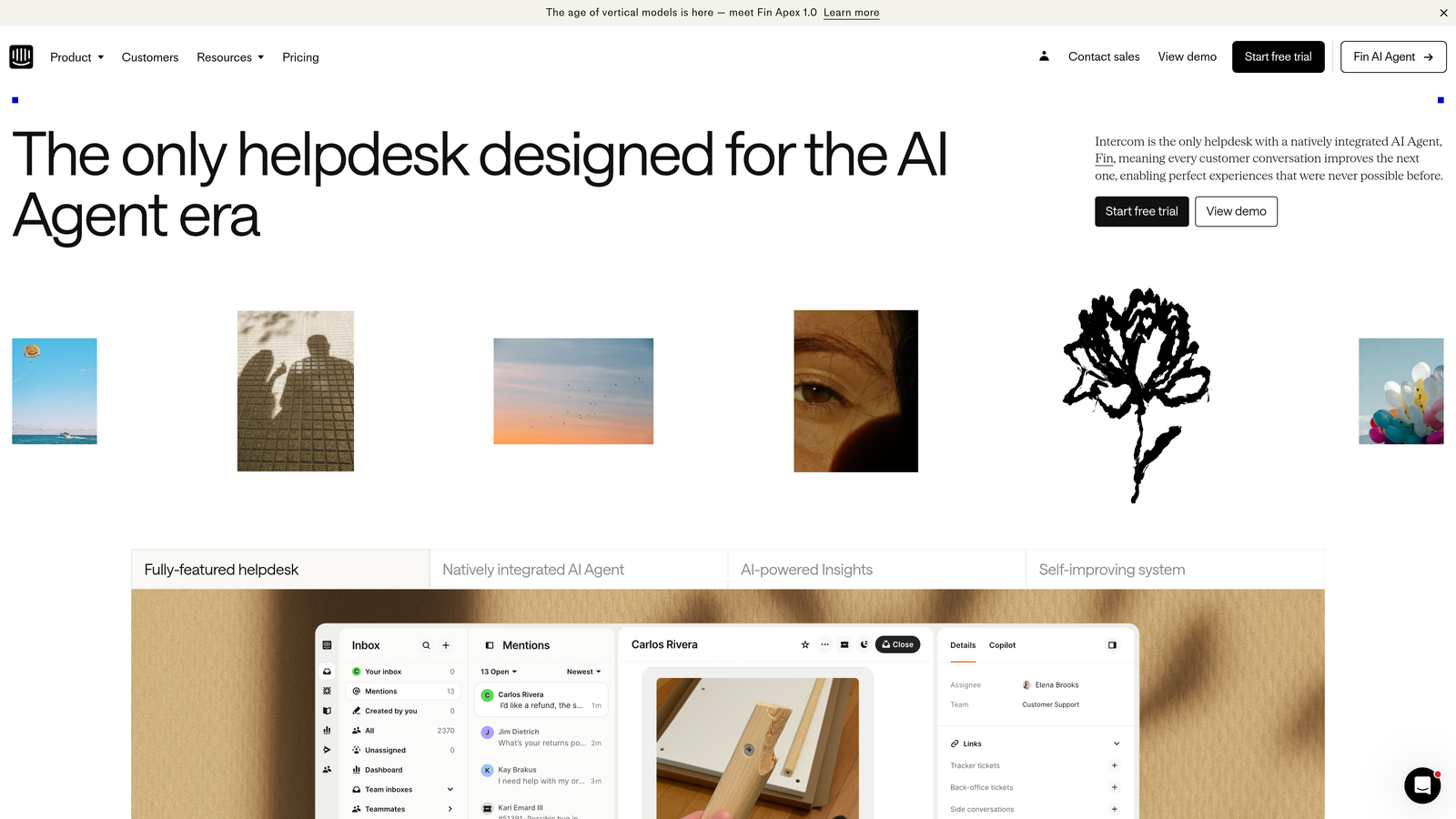
Intercom Fin is a GPT-powered AI agent that integrates natively into the Intercom ecosystem for automated customer conversations.
Where This Tool Shines
If you're already invested in Intercom's platform, Fin offers the smoothest path to AI automation. It mines your existing help center content to generate responses, which means you're not starting from scratch with training data.
The per-resolution pricing model creates interesting economics for teams with predictable query patterns. You pay only when Fin successfully resolves a conversation without human intervention, making costs directly tied to value delivered.
Key Features
Help Center Integration: Automatically leverages existing documentation to answer customer questions accurately.
Native Intercom Handoff: Seamlessly transitions complex conversations to human agents within the same interface.
Multi-Language Support: Handles customer conversations across multiple languages without separate configuration.
Custom Answer Configuration: Define specific responses and guardrails for brand-sensitive topics.
Resolution Analytics: Track which queries Fin resolves versus escalates to identify content gaps.
Best For
Companies already using Intercom who want to add AI automation without platform switching. Works particularly well for teams with comprehensive help centers and straightforward product questions.
Pricing
Starts at $0.99 per resolution, with volume discounts available for enterprise customers.
3. Zendesk AI
Best for: Enterprise teams needing AI layered into comprehensive support infrastructure
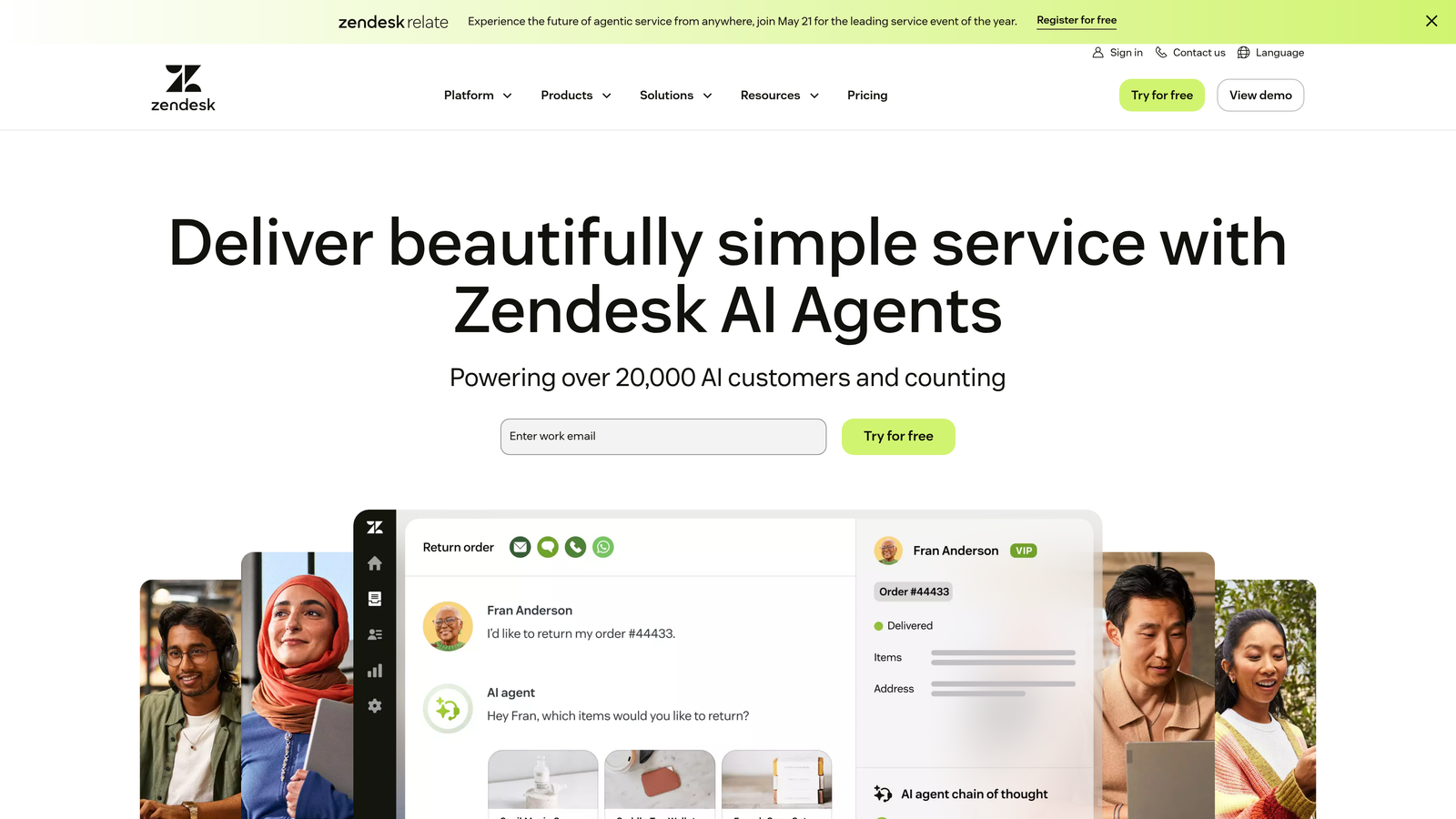
Zendesk AI brings enterprise-grade AI capabilities across the Zendesk Suite for intelligent ticket management and agent productivity.
Where This Tool Shines
Zendesk's AI focuses heavily on agent assistance rather than pure automation. Intent detection routes tickets to the right team before they become bottlenecks, while macro recommendations help agents respond faster without sacrificing quality.
For large support organizations with complex routing needs and established Zendesk workflows, these AI features integrate seamlessly into existing processes. The analytics layer provides visibility into where AI creates efficiency gains across your entire operation.
Key Features
Intent Detection and Routing: Automatically identifies ticket intent and routes to appropriate teams or agents.
Agent Assist: Suggests relevant responses and knowledge base articles while agents work tickets.
Macro Recommendations: AI analyzes ticket content to recommend pre-built response templates.
Advanced Analytics: Track AI performance impact on resolution times and customer satisfaction.
Workflow Automation: Trigger automated actions based on AI-detected ticket characteristics.
Best For
Enterprise support teams already on Zendesk Suite who want to enhance agent productivity and routing intelligence. Less focused on full automation, more on augmenting human agents.
Pricing
Included in Suite Professional at $115 per agent per month and higher tiers.
4. Freshdesk Freddy AI
Best for: Mid-market teams wanting accessible AI features at competitive pricing
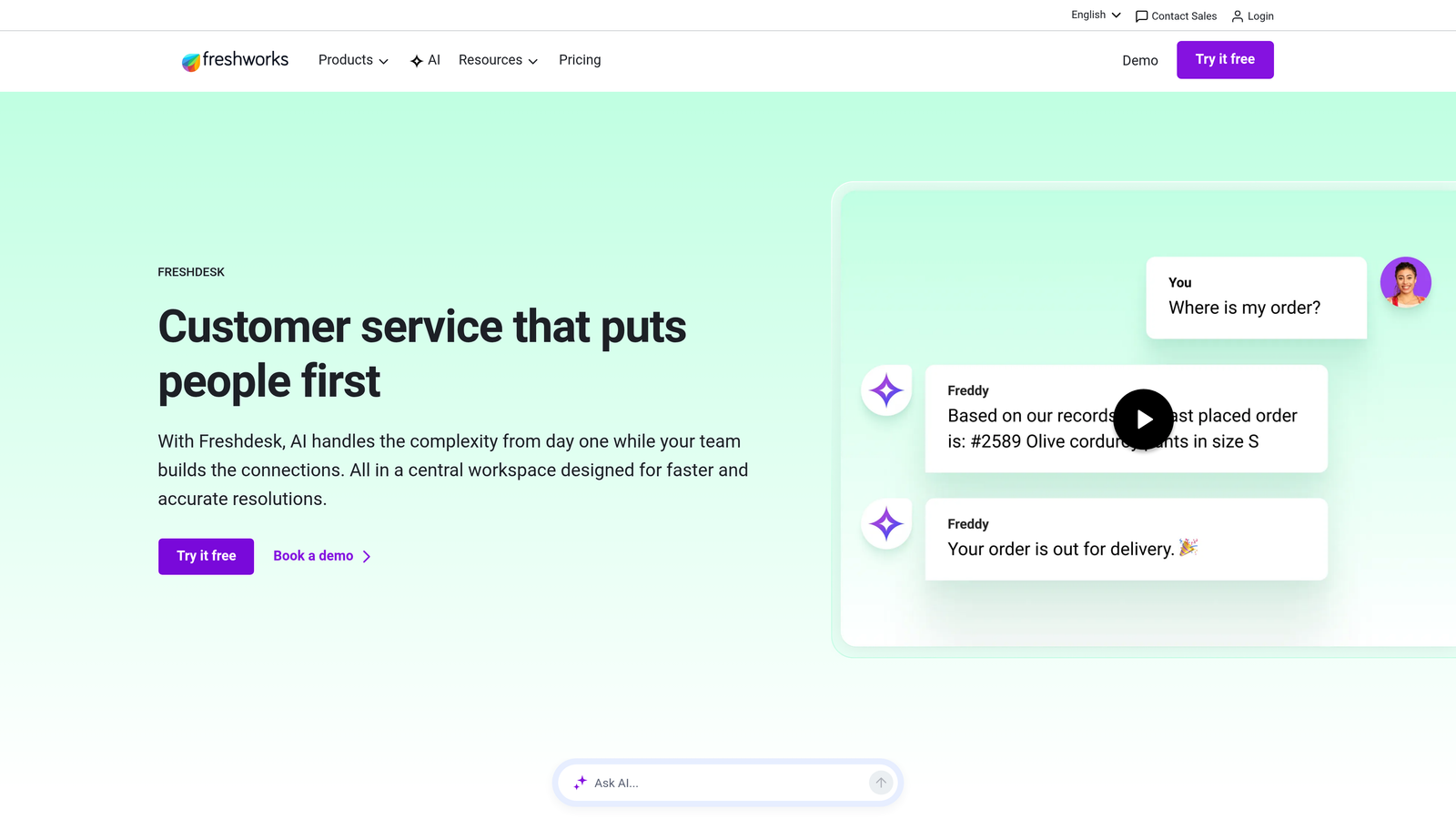
Freshdesk Freddy AI integrates AI assistance across the Freshdesk platform for ticket automation and agent support.
Where This Tool Shines
Freddy AI democratizes support automation for teams who can't justify enterprise pricing. The no-code bot builder lets non-technical support managers create automated workflows without developer resources.
Sentiment analysis adds an interesting dimension—automatically flagging frustrated customers for priority handling helps prevent churn before tickets escalate. The Freddy Copilot feature gives agents AI-powered suggestions without forcing full automation.
Key Features
Automated Ticket Field Population: AI fills in ticket properties based on conversation content to reduce manual data entry.
Freddy Copilot: Provides real-time suggestions and knowledge recommendations to agents during conversations.
No-Code Bot Builder: Create self-service automation workflows without technical expertise.
Sentiment Analysis: Automatically detect customer frustration levels and prioritize accordingly.
Predictive Support: Identify tickets likely to breach SLAs before they become problems.
Best For
Growing support teams on Freshdesk who need AI capabilities without enterprise budgets. Particularly valuable for teams transitioning from fully manual support to automation.
Pricing
AI features included in Pro plan starting at $49 per agent per month.
5. Ada
Best for: Global enterprises needing conversational AI across 50+ languages
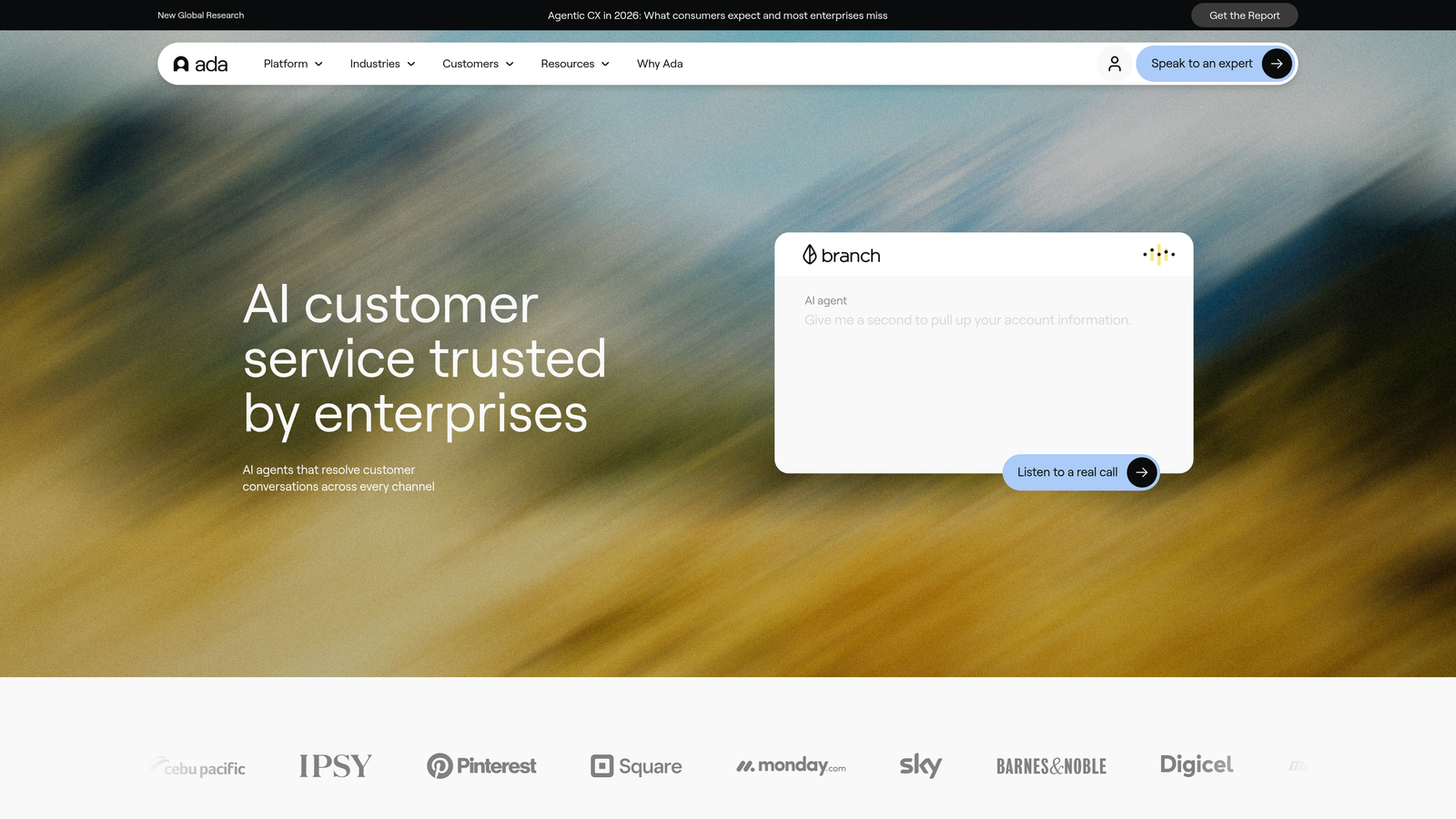
Ada is an enterprise conversational AI platform focused on automated customer service at scale across multiple channels.
Where This Tool Shines
Ada's strength lies in its language coverage and proactive messaging capabilities. For companies operating globally, the ability to maintain consistent automated support across 50+ languages without building separate bots is transformative.
The proactive messaging feature flips traditional support on its head—reaching out to customers before they encounter issues based on behavioral triggers. This works particularly well for onboarding flows and preventing common friction points.
Key Features
No-Code Automation Builder: Visual interface for creating complex conversation flows without development resources.
50+ Language Support: Deploy consistent automated support globally without separate language-specific configurations.
Proactive Messaging: Trigger automated outreach based on customer behavior or product usage patterns.
Voice and Chat Channels: Unified AI automation across text chat and voice support channels.
Analytics Dashboard: Track automation performance, conversation paths, and deflection rates.
Best For
Enterprise companies with global customer bases needing multilingual support automation. Particularly strong for consumer-facing brands with high-volume, repetitive queries.
Pricing
Custom enterprise pricing based on conversation volume and channel requirements.
6. Forethought
Best for: Teams needing intelligent ticket triage and generative AI response assistance
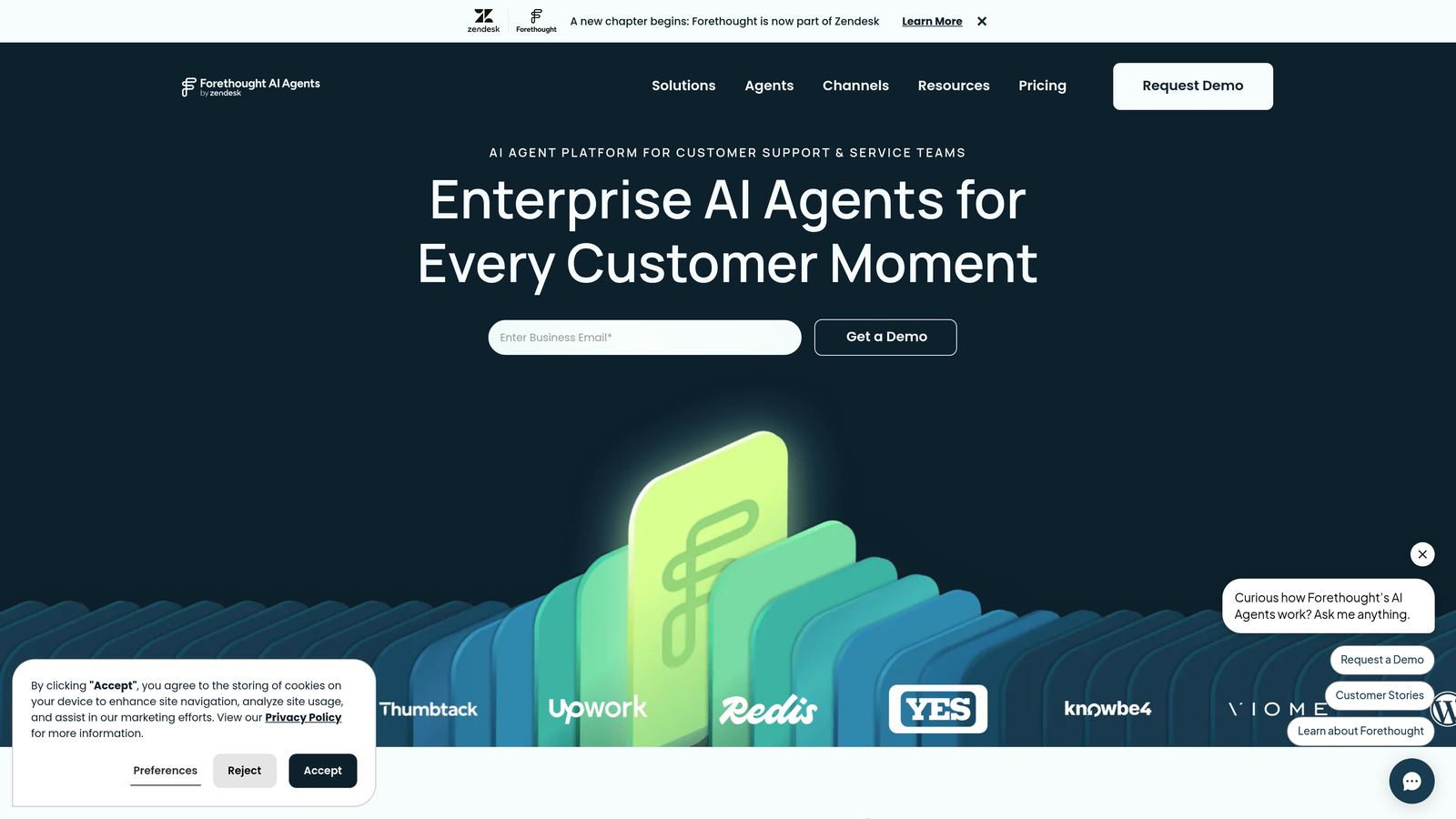
Forethought specializes in AI-powered ticket triage, routing, and generative response assistance for support teams.
Where This Tool Shines
Forethought's SupportGPT feature represents a middle ground between full automation and pure agent assistance. Instead of completely replacing humans, it generates draft responses that agents can review and send, dramatically reducing response time while maintaining quality control.
The intelligent triage capabilities shine for teams drowning in misrouted tickets. By analyzing ticket content and automatically routing to the right specialist, Forethought eliminates the back-and-forth that inflates resolution times.
Key Features
SupportGPT: Generates contextual ticket responses using generative AI for agent review and editing.
Intelligent Triage and Routing: Automatically categorizes and routes tickets to appropriate teams based on content analysis.
Workflow Automation: Create automated actions triggered by ticket characteristics or customer data.
Performance Analytics: Dashboard tracking AI impact on resolution times, agent productivity, and customer satisfaction.
Integration Ecosystem: Connects with major helpdesks including Zendesk, Salesforce, and Freshdesk.
Best For
Support organizations with complex routing needs and high ticket volumes. Teams who want AI augmentation rather than full automation benefit from the agent-assist approach.
Pricing
Custom pricing based on monthly ticket volume and feature requirements.
7. Tidio
Best for: Small businesses and e-commerce stores needing quick-setup AI chat
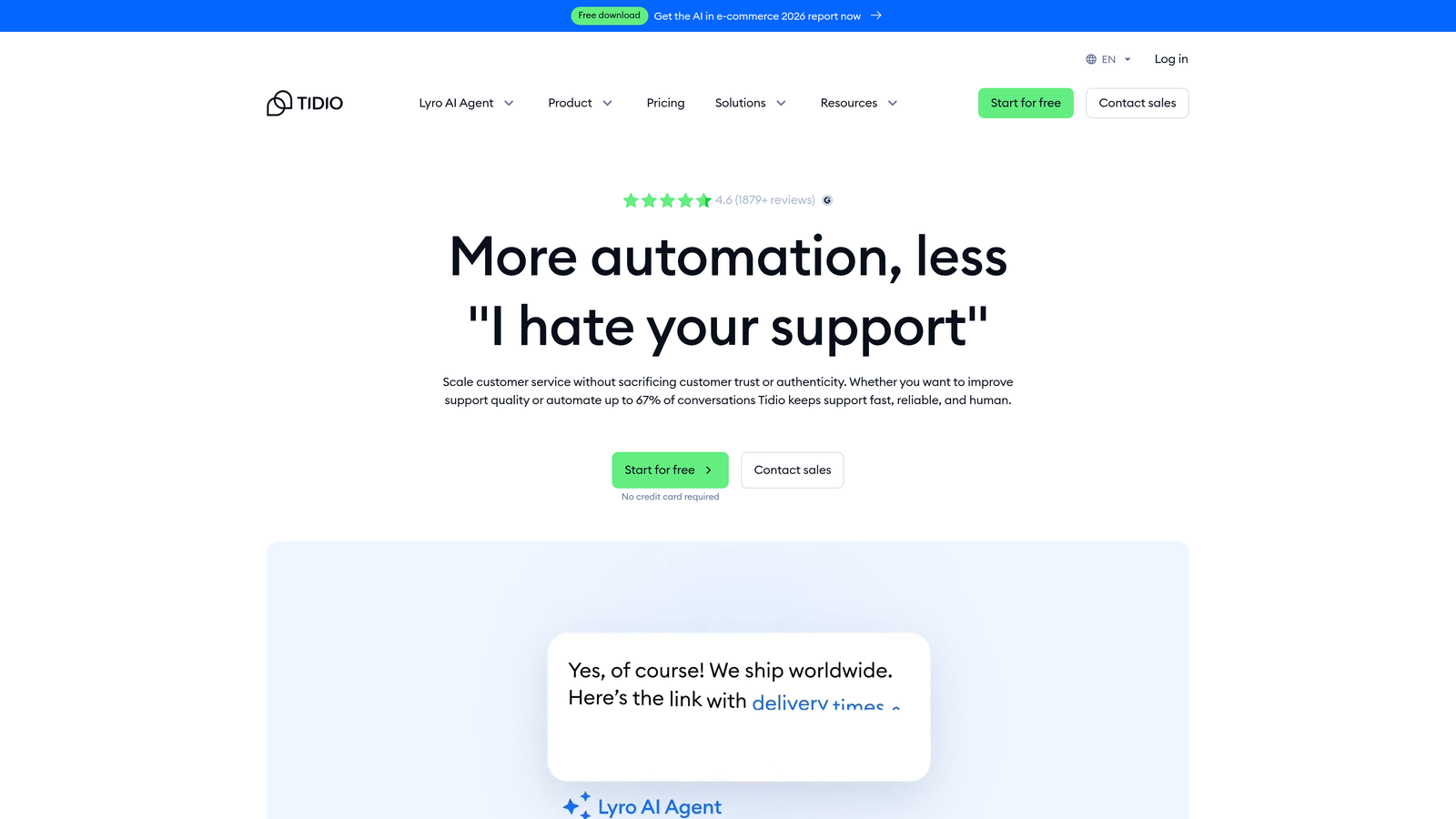
Tidio is an accessible AI chatbot platform designed for small businesses and e-commerce operations.
Where This Tool Shines
Tidio removes the complexity barrier that keeps small teams from adopting AI support. The Lyro AI chatbot can be configured and deployed in under an hour using pre-built templates for common e-commerce scenarios.
The Shopify and WooCommerce integrations make Tidio particularly valuable for online retailers. The AI can access order data, shipping status, and product information to resolve common customer questions without human intervention.
Key Features
Lyro AI Chatbot: Quick-setup conversational AI trained on common e-commerce support scenarios.
Pre-Built Templates: Ready-made conversation flows for order tracking, returns, product questions, and more.
E-Commerce Platform Integrations: Native connections to Shopify, WooCommerce, and major e-commerce platforms.
Live Chat Fallback: Seamlessly transition from bot to human agent when needed.
Mobile Apps: Manage conversations and monitor bot performance from iOS and Android apps.
Best For
Small e-commerce businesses and online retailers who need affordable AI chat without technical complexity. The free tier makes it accessible for very small operations testing automation.
Pricing
Free tier available with basic features; Lyro AI chatbot from $29 per month.
8. Kustomer
Best for: Teams needing unified customer views with AI-powered conversation management
Kustomer combines CRM-focused customer data with AI capabilities for omnichannel support management.
Where This Tool Shines
Kustomer's unified customer timeline creates context that traditional helpdesks miss. When an agent (or AI) opens a conversation, they see the complete customer journey—previous purchases, support history, website behavior—in a single view.
This context awareness makes AI classification and routing significantly more accurate. The system doesn't just analyze the current message; it considers the customer's entire relationship with your company when deciding how to respond or route.
Key Features
Unified Customer Timeline: Single view of all customer interactions across channels and touchpoints.
AI-Powered Conversation Classification: Automatically categorize and tag conversations based on content and customer context.
Omnichannel Inbox Management: Handle email, chat, social media, and voice in a unified interface.
Workflow Automation Tools: Create automated actions based on customer data and conversation triggers.
Custom Object Support: Build custom data structures to track industry-specific customer information.
Best For
Companies that need deep customer context alongside support automation. Particularly valuable for businesses where customer history significantly impacts how support should be handled.
Pricing
Enterprise plan with AI features from $89 per user per month.
9. Help Scout
Best for: Teams prioritizing human connection with AI assistance for drafting and efficiency
Help Scout is a human-centric help desk platform with AI features focused on response drafting and conversation summarization.
Where This Tool Shines
Help Scout takes a deliberately measured approach to AI—enhancing human agents rather than replacing them. The AI Drafts feature suggests responses based on conversation context, but the emphasis remains on personal, thoughtful customer interactions.
The conversation summarization feature addresses a real pain point for complex tickets. Instead of reading through 20-message threads, agents get AI-generated summaries highlighting key issues and customer needs. This accelerates handoffs and reduces context-switching overhead.
Key Features
AI Drafts: Generate suggested responses based on conversation context for agents to customize and send.
Conversation Summarization: Automatically create summaries of long ticket threads for quick context.
Clean Interface: Minimal, distraction-free design focused on conversation quality over feature bloat.
Beacon Widget: Embedded help widget for in-app support with knowledge base search.
Collision Detection: Prevent multiple agents from working the same conversation simultaneously.
Best For
Support teams who prioritize personal customer relationships but want AI to handle repetitive drafting work. Companies with moderate ticket volumes where quality matters more than pure deflection rates.
Pricing
Plus plan with AI features from $40 per user per month.
Making the Right Choice
The AI support automation landscape has matured beyond simple chatbot deflection. Today's platforms offer genuine autonomous resolution, continuous learning, and deep integration with your broader tech stack. But the right choice depends entirely on your specific support operation.
If you're a B2B SaaS company needing AI that understands product context and learns from every interaction, Halo AI's AI-first architecture and page-aware capabilities deliver automation that gets smarter over time. For existing Intercom or Zendesk users, their native AI features (Fin and Zendesk AI respectively) offer the smoothest integration path without platform migration.
E-commerce teams often find the best value in specialized solutions like Tidio, which handles order tracking and product questions out of the box. Global enterprises needing multilingual support across dozens of markets should prioritize Ada's language coverage and proactive messaging capabilities.
The pricing models vary dramatically—from per-resolution (Intercom Fin) to per-agent (most platforms) to custom enterprise contracts. Calculate your expected automation rate and ticket volume before comparing costs. A platform charging $0.99 per resolution might cost more than one charging $50 per agent if your resolution rates are high.
Consider your team's technical resources when evaluating no-code builders versus platforms requiring developer involvement. Freshdesk Freddy AI and Ada both offer accessible automation for non-technical teams, while more sophisticated platforms like Forethought and Kustomer provide deeper customization for teams with engineering support.
Your support team shouldn't scale linearly with your customer base. Let AI agents handle routine tickets, guide users through your product, and surface business intelligence while your team focuses on complex issues that need a human touch. See Halo in action and discover how continuous learning transforms every interaction into smarter, faster support.