9 Best AI Support Automation Software Tools in 2026
AI support automation software has transformed from basic chatbots into intelligent systems that resolve customer issues, learn from interactions, and integrate with existing tools. This comprehensive guide evaluates the top 9 AI support automation platforms for 2026 based on resolution accuracy, integration capabilities, and scalability to help support teams choose the right solution for handling high ticket volumes while delivering instant, accurate customer responses.
 Grant CooperFounder12 min read
Support teams are drowning in tickets while customers expect instant, accurate responses around the clock. AI support automation software has evolved from simple chatbots to intelligent systems that actually resolve issues, learn from interactions, and integrate seamlessly with your existing tech stack. But with dozens of options flooding the market, choosing the right platform can feel overwhelming.
We've evaluated the leading AI support automation tools based on resolution accuracy, integration capabilities, learning mechanisms, and real-world scalability. Whether you're a growing startup or an enterprise managing thousands of daily tickets, this guide will help you find the right fit for your team.
1. Halo AI
Best for: B2B SaaS companies needing AI agents that learn continuously and integrate deeply with their tech stack
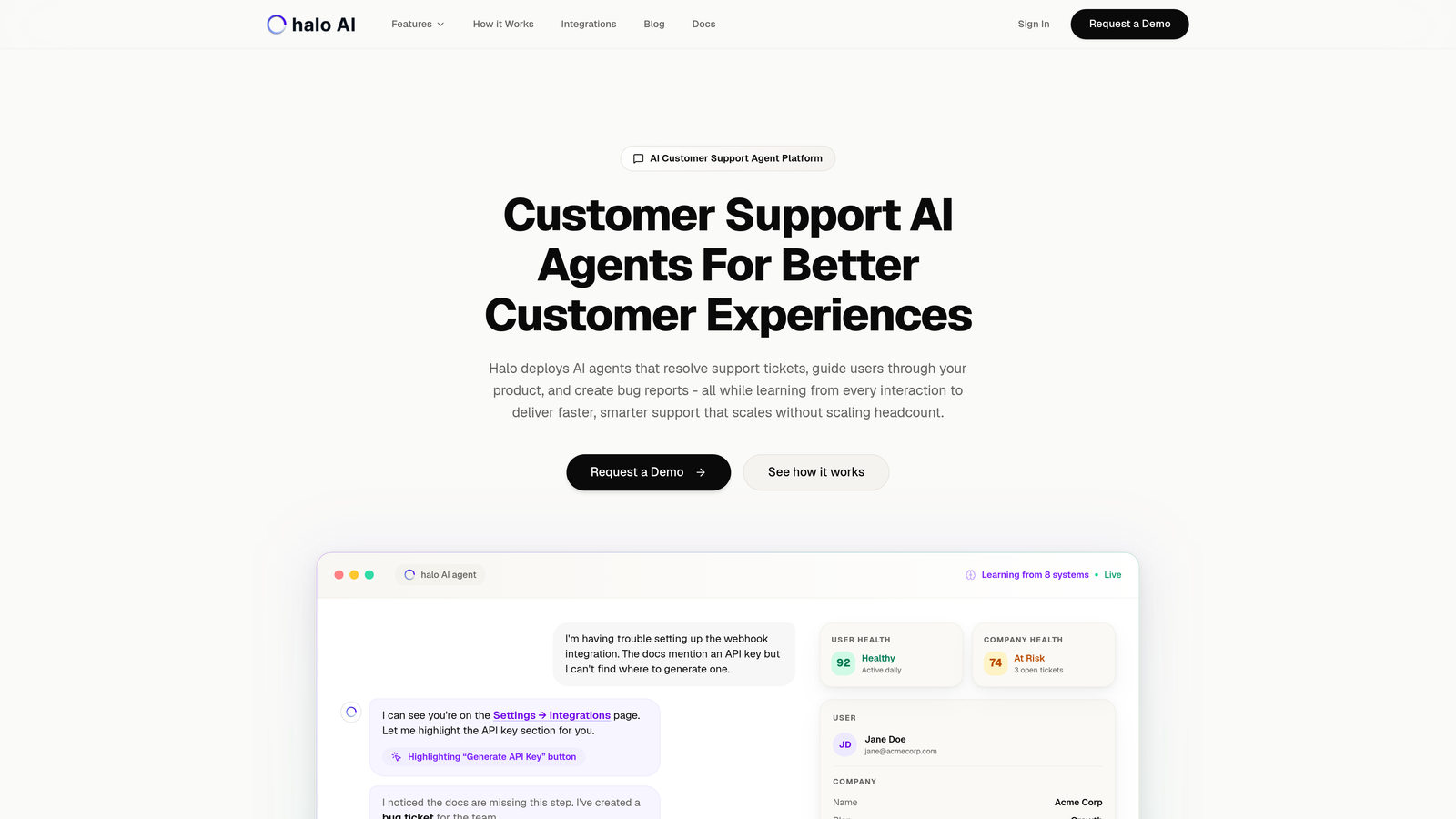
Halo AI is an AI-first customer support platform that deploys intelligent agents to resolve tickets, guide users through your product, and create bug reports—all while learning from every interaction.
Where This Tool Shines
What sets Halo apart is its page-aware intelligence. The AI doesn't just read what users type—it sees what they see on your product interface. This visual context lets the AI provide guidance that references actual UI elements, making support interactions feel like having an expert looking over the customer's shoulder.
The platform's continuous learning architecture means every resolved ticket makes the system smarter. Unlike tools that rely solely on pre-configured knowledge bases, Halo builds intelligence from real customer interactions, creating a feedback loop that improves resolution accuracy over time.
Key Features
Page-Aware Chat Widget: Sees the exact UI state users experience, enabling context-specific guidance that references actual buttons and fields.
Continuous Learning: Every interaction trains the AI, building institutional knowledge that compounds over time without manual knowledge base updates.
Auto Bug Ticket Creation: Automatically generates detailed bug reports with full context when issues are detected, streamlining the handoff to engineering.
Smart Inbox with Business Intelligence: Surfaces customer health signals, revenue intelligence, and anomaly detection beyond basic support metrics.
Deep Integrations: Native connections to Linear, Slack, HubSpot, Intercom, Stripe, Zoom, PandaDoc, and Fathom for unified workflows.
Best For
B2B product teams and SaaS companies that need AI agents capable of handling technical support queries with product-specific context. Particularly valuable for teams using multiple tools across support, project management, and CRM who want unified intelligence rather than disconnected point solutions.
Pricing
Contact for pricing. Custom plans based on ticket volume and integration requirements.
2. Intercom Fin
Best for: Companies already using Intercom who want GPT-4 powered automation with minimal setup
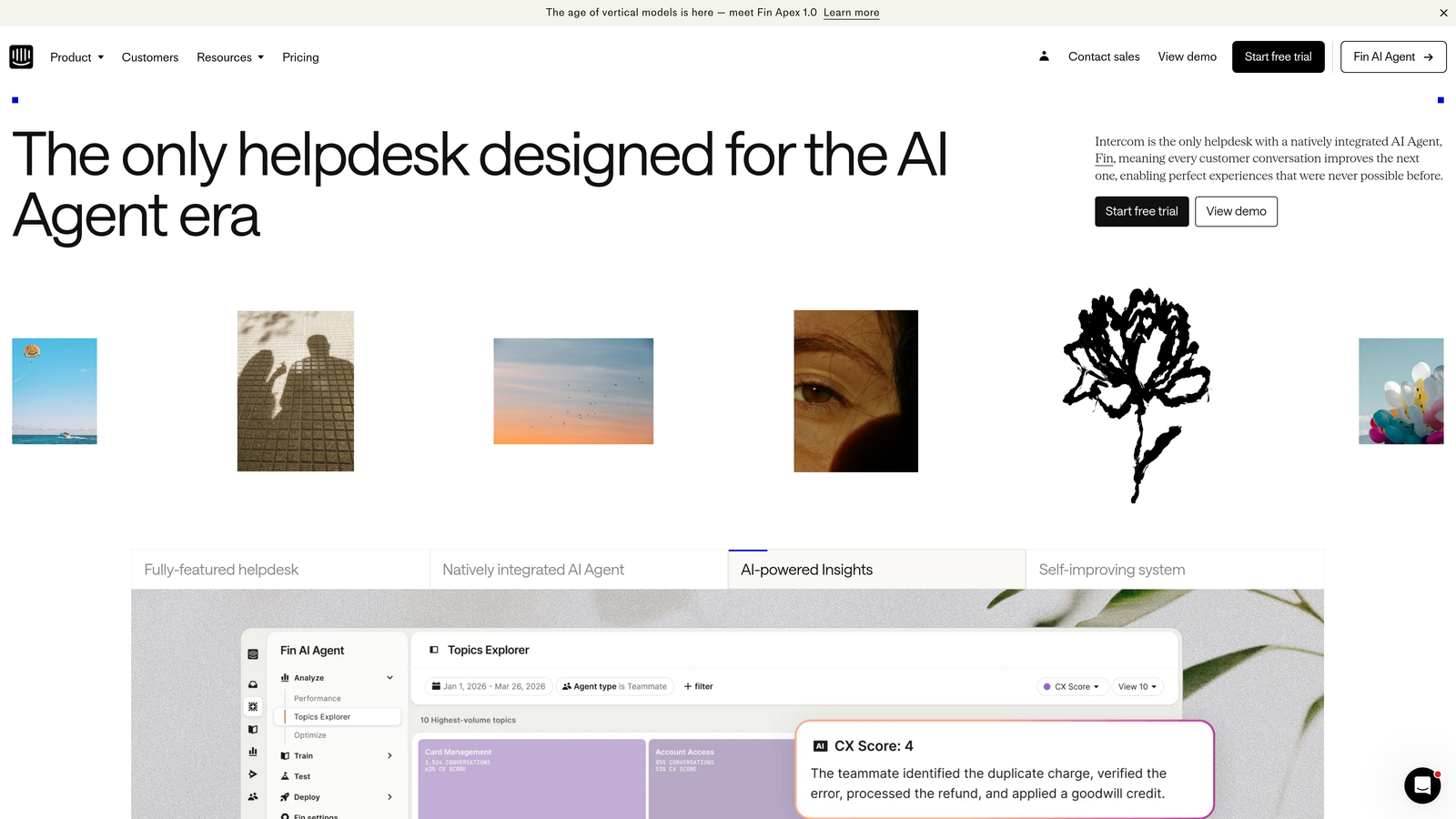
Intercom Fin is a GPT-4 powered AI agent built directly into Intercom's customer messaging platform for conversational support automation.
Where This Tool Shines
Fin leverages the full power of GPT-4's natural language understanding while being tightly integrated with Intercom's existing messaging infrastructure. If you're already using Intercom for customer communication, Fin slots in seamlessly without requiring a separate platform or complicated setup.
The AI learns from your existing help center content and can pull from multiple sources to construct accurate responses. When it encounters something beyond its capabilities, the handoff to human agents includes full conversation context, so your team doesn't start from scratch.
Key Features
GPT-4 Powered Understanding: Advanced natural language processing that handles complex, multi-part questions with nuanced comprehension.
Help Center Learning: Automatically trains on your existing documentation, articles, and knowledge base without manual configuration.
Seamless Human Handoff: Transfers conversations to live agents with complete context and conversation history.
Custom Answer Controls: Set guardrails and approval workflows to ensure AI responses align with brand voice and accuracy standards.
Multi-Language Support: Handles customer inquiries across multiple languages without separate bot configurations.
Best For
Existing Intercom customers who want to add AI automation without migrating platforms. Works particularly well for companies with comprehensive help centers and teams that prefer conversational support over traditional ticketing.
Pricing
Starts at $0.99 per resolution, with pricing scaling based on conversation volume.
3. Zendesk AI
Best for: Enterprise teams needing AI capabilities native to their existing Zendesk infrastructure
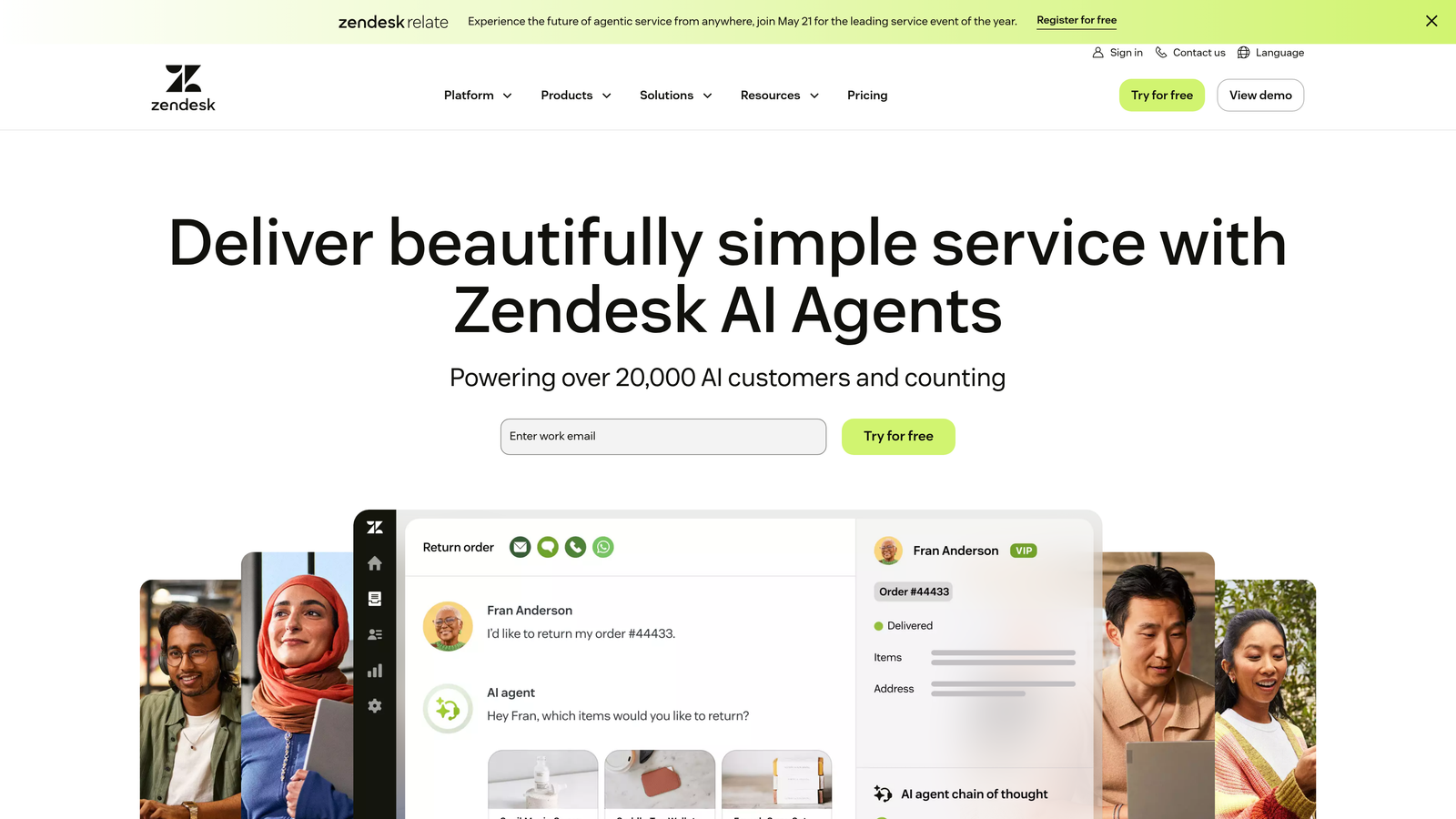
Zendesk AI delivers enterprise-grade AI capabilities built directly into the Zendesk Suite for intelligent ticket routing, agent assistance, and automated responses.
Where This Tool Shines
For organizations already invested in the Zendesk ecosystem, these AI capabilities integrate without requiring additional platforms or complex data migrations. The system analyzes ticket content to detect intent, predict customer sentiment, and route issues to the most appropriate agent or team.
Zendesk AI focuses heavily on augmenting human agents rather than replacing them. Features like macro suggestions and response recommendations help agents work faster while maintaining the human touch that complex issues require.
Key Features
Intent Detection Across Channels: Analyzes customer messages from email, chat, social, and voice to understand the underlying request.
Intelligent Ticket Routing: Automatically assigns tickets to the right team or agent based on content, priority, and historical patterns.
Agent Assist: Provides real-time response suggestions and relevant knowledge base articles as agents work tickets.
Sentiment Analysis: Detects customer emotion and predicts CSAT scores before resolution to flag at-risk interactions.
Macro Suggestions: Recommends pre-built response templates based on ticket content to accelerate resolution times.
Best For
Enterprise support organizations already using Zendesk Suite who want to add AI capabilities without introducing new tools. Particularly valuable for large teams handling high ticket volumes across multiple channels.
Pricing
Included in Suite Professional plan at $115 per agent per month and higher tiers.
4. Freshdesk Freddy AI
Best for: Mid-market teams using Freshdesk who want affordable AI automation for triage and self-service
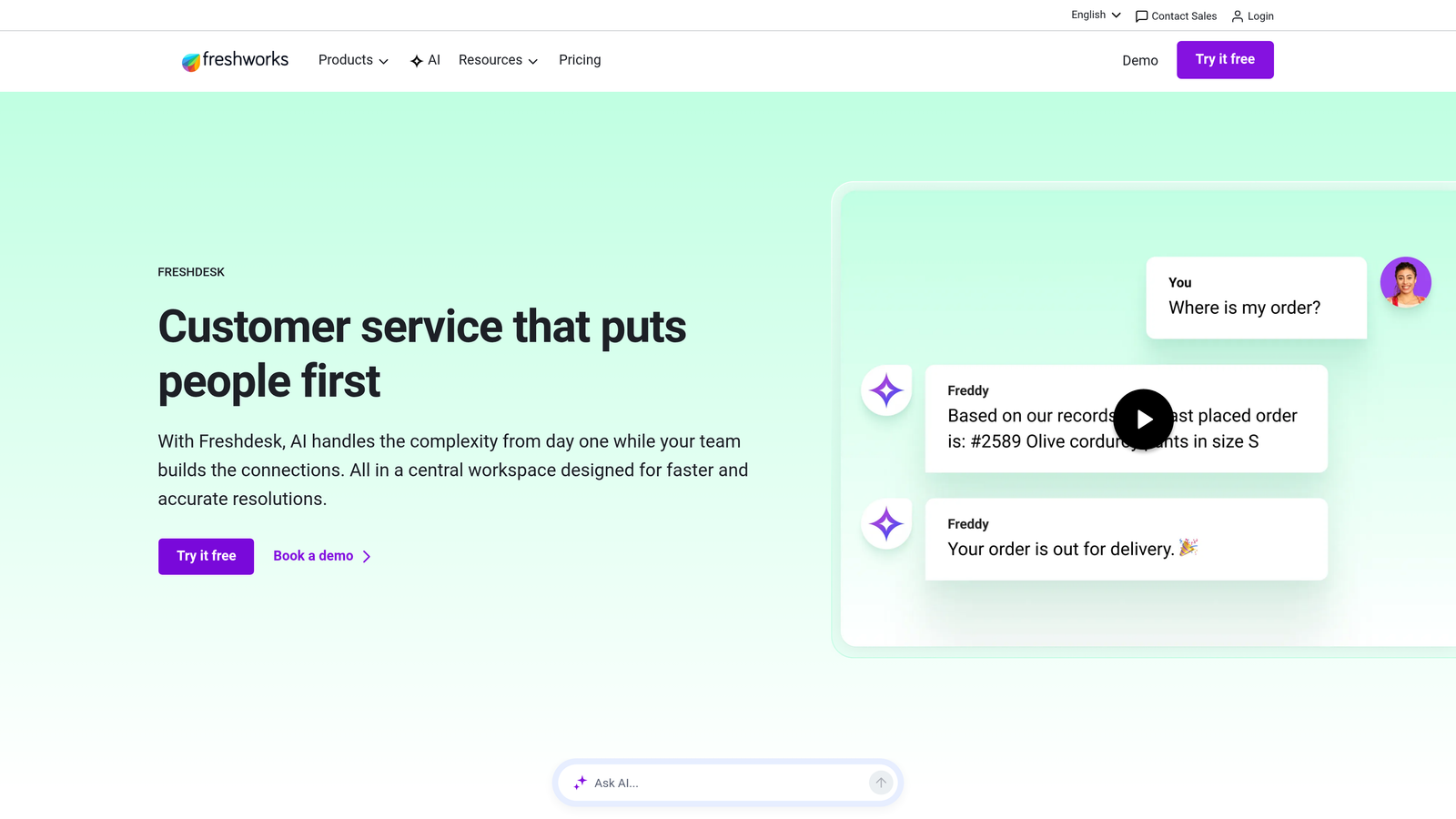
Freshdesk Freddy AI is an AI-powered automation layer for Freshdesk that handles ticket triage, customer self-service, and agent productivity tools.
Where This Tool Shines
Freddy AI tackles the time-consuming work of ticket categorization and initial triage, automatically sorting incoming requests and assigning them to the right team. This reduces manual sorting work and gets tickets into the right hands faster.
The platform includes a chatbot builder that doesn't require coding knowledge, making it accessible to support teams without dedicated developers. The AI also detects "thank you" messages that don't require action, preventing unnecessary ticket reopening.
Key Features
Auto-Triage and Categorization: Automatically tags, categorizes, and prioritizes incoming tickets based on content analysis.
AI-Powered Chatbot Builder: No-code interface for creating automated conversation flows and self-service experiences.
Canned Response Suggestions: Recommends pre-written responses based on ticket content to speed up agent replies.
Knowledge Base Recommendations: Surfaces relevant help articles to agents and customers based on the inquiry.
Thank You Detector: Identifies gratitude messages that don't need responses, preventing unnecessary ticket activity.
Best For
Growing companies using Freshdesk who want to add AI automation without enterprise-level pricing. Works well for teams that need basic triage and self-service capabilities more than advanced resolution AI.
Pricing
Freddy AI Copilot starts at $29 per agent per month as an add-on to existing Freshdesk plans.
5. Ada
Best for: Global companies handling high conversation volumes across 50+ languages
Ada is a no-code AI automation platform designed for high-volume customer service operations with strong multilingual capabilities.
Where This Tool Shines
Ada's standout feature is its exceptional multilingual support, handling conversations in over 50 languages without requiring separate bot configurations for each. This makes it particularly valuable for global companies serving diverse customer bases across different regions.
The no-code conversation builder lets support teams design and modify automation flows without developer involvement. This puts control directly in the hands of the people who understand customer needs best, enabling faster iteration and updates.
Key Features
No-Code Conversation Builder: Visual interface for creating complex conversation flows without programming knowledge.
50+ Language Support: Handles multilingual conversations natively without separate configurations per language.
Proactive Messaging Triggers: Initiates conversations based on user behavior, page visits, or specific actions.
CRM and Helpdesk Integrations: Connects with major platforms including Salesforce, Zendesk, and HubSpot.
Conversation Analytics: Detailed insights into resolution rates, conversation paths, and customer satisfaction metrics.
Best For
Enterprise companies with global customer bases who need to provide consistent support across multiple languages. Particularly valuable for organizations handling thousands of conversations daily where volume justifies significant automation investment.
Pricing
Custom pricing based on conversation volume. Typically enterprise-focused with pricing starting in the mid five figures annually.
6. Forethought
Best for: Teams focused on ticket deflection and predictive routing to reduce support costs
Forethought is an AI platform focused on ticket deflection and intelligent routing with predictive capabilities for support operations.
Where This Tool Shines
Forethought takes a multi-pronged approach to AI support automation with distinct products for different use cases. Solve handles instant resolutions, Triage predicts the best routing destination, Assist acts as an agent copilot, and Discover surfaces operational insights.
The predictive routing capabilities analyze ticket content and historical patterns to route issues to the agent or team most likely to resolve them quickly. This reduces hand-offs and accelerates time to resolution.
Key Features
Solve AI Agent: Provides instant resolutions to common inquiries before they become tickets.
Predictive Ticket Routing: Uses machine learning to route tickets to the optimal agent or team based on content and historical data.
Agent Copilot: Suggests responses and relevant information to agents as they work tickets.
Support Trend Insights: Identifies emerging issues, knowledge gaps, and opportunities for process improvements.
Multi-Platform Support: Works across Zendesk, Salesforce Service Cloud, and Freshdesk.
Best For
Enterprise support organizations looking to reduce ticket volume through intelligent deflection and optimize existing tickets through predictive routing. Best suited for teams handling complex technical support where routing accuracy significantly impacts resolution time.
Pricing
Custom pricing based on ticket volume and features needed. Typically targets enterprise customers with substantial support operations.
7. Kustomer IQ
Best for: Companies wanting unified customer views with AI capabilities across omnichannel support
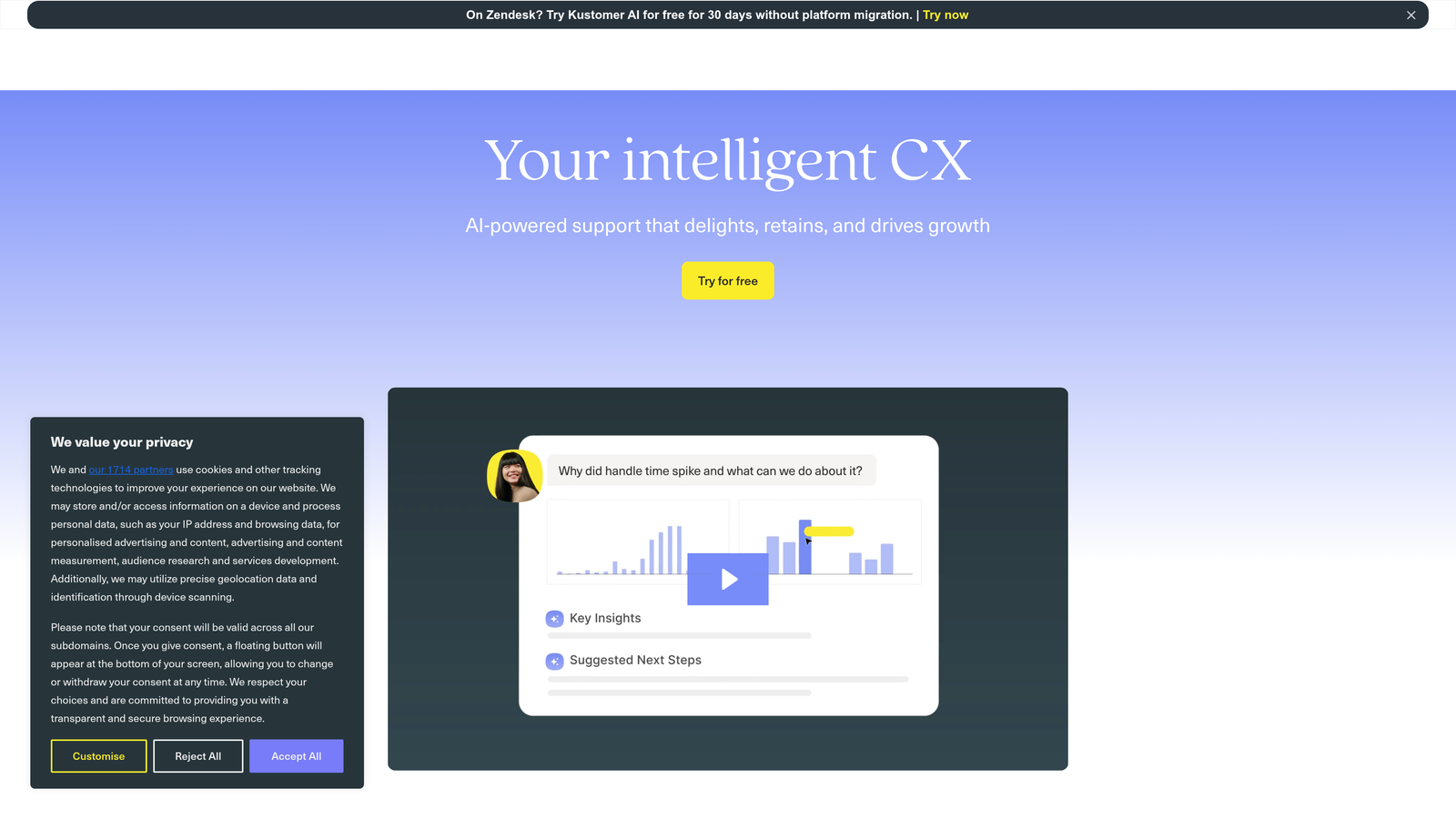
Kustomer IQ provides AI capabilities within Kustomer's CRM-focused customer service platform, emphasizing unified customer views and omnichannel support.
Where This Tool Shines
Kustomer's approach centers on the unified customer timeline, showing every interaction across channels in a single view. The AI capabilities work on top of this foundation, analyzing the complete customer relationship rather than isolated conversations.
The platform excels at proactive outreach, using AI to identify opportunities for preventive support or upselling based on customer behavior patterns and interaction history. This shifts support from purely reactive to strategically proactive.
Key Features
Unified Customer Timeline: Complete interaction history across email, chat, social, and voice in a single interface.
AI-Powered Classification: Automatically categorizes and tags conversations based on content and intent.
Proactive Outreach Automation: Triggers messages based on customer behavior, subscription status, or usage patterns.
Sentiment Detection and Routing: Analyzes emotional tone and routes negative sentiment conversations to senior agents.
Self-Service Deflection: Recommends knowledge base articles and automated solutions before escalating to live agents.
Best For
Companies that view customer service as part of the broader customer relationship rather than a cost center. Works particularly well for subscription businesses and brands where customer lifetime value justifies investment in relationship intelligence.
Pricing
Enterprise plan at $89 per user per month includes IQ features. Higher tiers available for advanced capabilities.
8. Tidio AI
Best for: Small businesses and e-commerce stores needing affordable AI chat without enterprise complexity
Tidio AI is an affordable AI chatbot and live chat platform popular with small businesses and e-commerce stores.
Where This Tool Shines
Tidio makes AI automation accessible to small businesses with pricing that doesn't require enterprise budgets. The Lyro AI chatbot uses GPT technology but packages it in a simple interface designed for teams without dedicated support staff.
The visual drag-and-drop bot builder lets non-technical users create automation flows quickly. Combined with strong e-commerce integrations for platforms like Shopify and WooCommerce, it's built specifically for online retail use cases.
Key Features
Lyro AI Chatbot: GPT-powered conversational AI that handles common customer questions automatically.
Visual Bot Builder: Drag-and-drop interface for creating custom conversation flows without coding.
E-commerce Integrations: Native connections to Shopify, WooCommerce, and other popular online store platforms.
Live Chat with AI Suggestions: Human agents get AI-powered response recommendations during live conversations.
Visitor Tracking: See who's browsing your site and trigger proactive chat based on behavior.
Best For
Small e-commerce businesses, online stores, and service providers who need basic AI chat capabilities without complex setup or enterprise pricing. Particularly valuable for teams handling straightforward product questions, order status inquiries, and basic customer service.
Pricing
Free tier available for basic live chat. Lyro AI starts at $39 per month with higher tiers for additional features and conversation volume.
9. Help Scout AI
Best for: Teams prioritizing human-centric support who want AI to assist agents, not replace them
Help Scout AI integrates AI features into Help Scout's human-centric help desk, focusing on agent assistance rather than full automation.
Where This Tool Shines
Help Scout takes a deliberately measured approach to AI, positioning it as a tool that makes human agents more effective rather than replacing them. AI Drafts suggest complete responses that agents can edit, AI Summarize condenses long conversation threads, and AI Assist helps improve writing quality.
This philosophy resonates with teams that believe complex customer issues require human judgment and empathy, but recognize that AI can eliminate repetitive work and accelerate routine tasks.
Key Features
AI Drafts: Generates suggested responses based on conversation context that agents can edit before sending.
AI Summarize: Condenses long conversation threads into brief summaries so agents can get up to speed quickly.
AI Assist: Provides real-time writing suggestions to improve clarity, tone, and grammar in agent responses.
Collision Detection: Prevents multiple agents from working the same conversation simultaneously.
Beacon Widget: Embeddable help widget with AI-powered search to help customers find answers before contacting support.
Best For
Customer-centric companies that view support as a relationship-building opportunity rather than a cost to minimize. Works well for small to mid-sized teams who want AI to enhance agent productivity without fully automating customer interactions.
Pricing
AI features included in Plus plan at $50 per user per month. Higher tiers available for additional features and integrations.
Making the Right Choice
The right AI support automation tool depends on where you are now and where you're headed. If you're already using Intercom or Zendesk, their native AI capabilities offer the smoothest implementation path. For teams prioritizing deep product integration and continuous learning, Halo AI's page-aware intelligence and business stack connections provide context that generic chatbots can't match.
Think about your primary goal. Need to deflect tickets before they're created? Forethought and Ada excel at prevention. Want to make existing agents more productive? Help Scout and Zendesk focus on augmentation over replacement. Operating globally across dozens of languages? Ada's multilingual capabilities are hard to beat.
Consider your ticket complexity too. E-commerce order status questions differ fundamentally from technical SaaS troubleshooting. Tidio handles the former beautifully at small business prices, while platforms like Halo AI and Forethought are built for the nuanced, context-dependent issues that B2B products generate.
Quick Recommendations by Use Case:
B2B SaaS with complex technical support: Halo AI for page-aware guidance and deep integrations, or Forethought for predictive routing and deflection.
Existing Intercom or Zendesk users: Start with their native AI (Fin or Zendesk AI) before adding third-party tools.
Global companies with multilingual needs: Ada's 50+ language support without separate configurations.
Small businesses and e-commerce: Tidio AI for affordable automation with e-commerce integrations.
Teams prioritizing human touch: Help Scout AI for agent assistance rather than full automation.
Your support team shouldn't scale linearly with your customer base. Let AI agents handle routine tickets, guide users through your product, and surface business intelligence while your team focuses on complex issues that need a human touch. See Halo in action and discover how continuous learning transforms every interaction into smarter, faster support.