8 Best AI Support Tools for Healthcare Companies in 2026
Healthcare companies face uniquely high-stakes support demands, from HIPAA compliance to complex billing queries — and generic helpdesk tools fall short. This guide ranks the 8 best AI support tools for healthcare companies in 2026, evaluating each on automation depth, compliance posture, integration ecosystem, and ability to handle the nuanced queries common in health tech and medical device B2B support.
 Grant CooperFounder13 min read
Healthcare companies operate in one of the most demanding support environments imaginable. Your customers need accurate answers fast, your team is navigating HIPAA requirements and complex billing questions, and a wrong response carries far higher stakes than in most industries. Generic helpdesk tools were not designed with any of this in mind.
This list focuses on AI support tools built or well-suited for healthcare companies and the SaaS platforms that serve them. Whether you're a digital health startup, a healthcare SaaS vendor, or a medical device company managing B2B customer support, we've evaluated each tool on automation depth, compliance posture, integration ecosystem, and how well the AI handles the nuanced, high-stakes queries common in healthcare contexts.
One important note before diving in: always verify current BAA availability and HIPAA compliance configurations directly with vendors, as these depend on specific plan tiers and change over time. This list covers B2B support tools for healthcare companies, not clinical decision support or EHR systems.
1. Halo AI
Best for: Health tech SaaS and digital health B2B teams wanting AI agents that learn, see page context, and surface business intelligence.
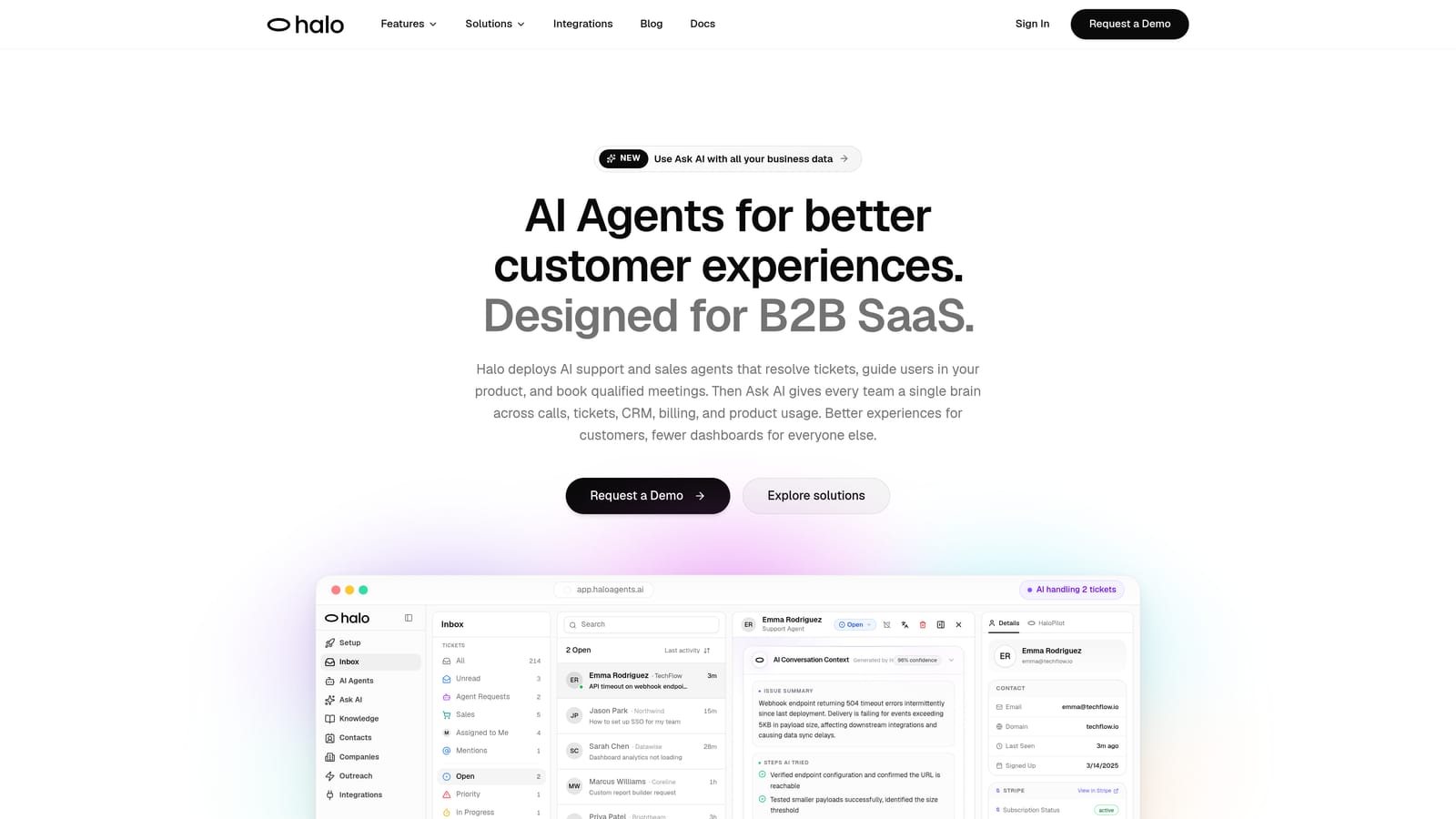
Halo AI is an AI-first customer support platform that deploys intelligent agents to resolve tickets, guide users through your product with page-aware context, and surface business intelligence signals.
Where This Tool Shines
What separates Halo from bolt-on AI features is the architecture. Rather than layering automation onto a legacy helpdesk, Halo was built AI-first, which means its agents continuously learn from every interaction and get meaningfully smarter over time. For health tech SaaS companies with complex, evolving products, that learning loop is genuinely valuable.
The page-aware context is particularly relevant in healthcare SaaS environments where users are often navigating intricate workflows. Halo's agents can see what a user sees on their current page and provide precise, in-product guidance rather than generic responses that send users hunting through a knowledge base. The smart inbox also surfaces customer health signals and anomaly detection, giving support teams early visibility into churn risk and account issues before they escalate.
Key Features
Page-Aware AI Agents: Agents understand the user's current page context and deliver specific, relevant guidance without requiring users to leave the product.
Autonomous Ticket Resolution: Resolves tickets end-to-end with a continuous learning loop that improves accuracy across every interaction.
Auto Bug Ticket Creation: Automatically identifies and routes bug reports to engineering tools like Linear, reducing manual triage for health tech product teams.
Smart Inbox with Business Intelligence: Surfaces customer health signals, revenue intelligence, and anomaly detection directly within the support workflow.
Live Agent Handoff: Smooth escalation to human agents for complex or sensitive queries, critical in healthcare contexts where accuracy and empathy matter.
Best For
Healthcare SaaS vendors, digital health platforms, and health tech B2B companies that want AI agents doing real resolution work, not just deflection. Particularly well-suited for product-led growth teams where in-product guidance and customer health visibility are strategic priorities.
Pricing
Contact for pricing; a demo is available at haloagents.ai. Demo-first model allows you to see the platform in action before committing.
2. Intercom
Best for: Health tech teams wanting a proven conversational AI agent with strong knowledge base integration and omnichannel reach.
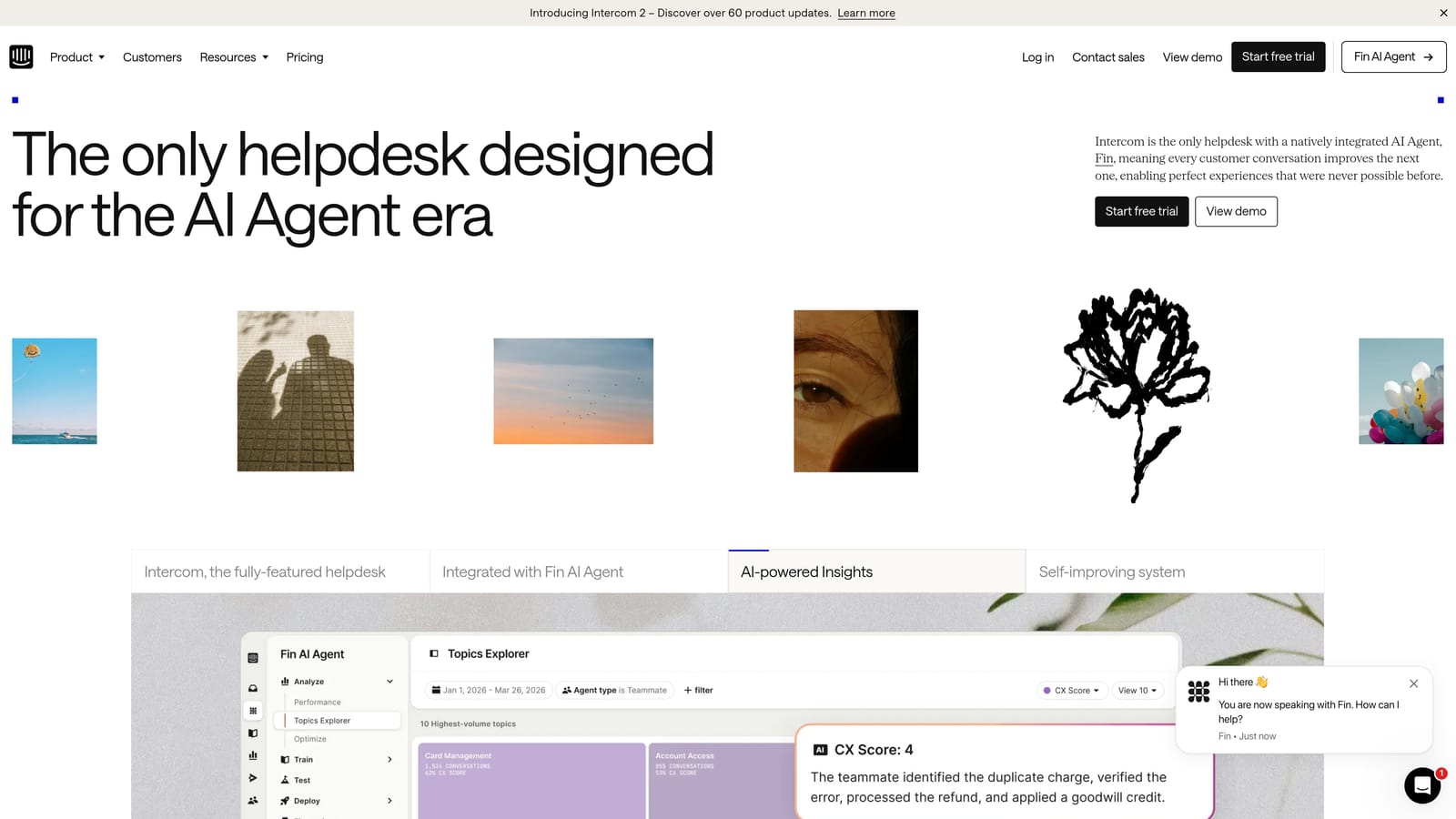
Intercom is a leading conversational support platform with a capable Fin AI agent that automates responses using your existing knowledge base, with strong routing and workflow automation.
Where This Tool Shines
Intercom's Fin AI agent has become one of the more capable out-of-the-box conversational AI products available. It trains on your existing help content and handles a wide range of queries without requiring significant configuration work upfront. For healthcare SaaS teams that already have solid documentation, Fin can start delivering value quickly.
The workflow automation and conversation routing capabilities are mature, making it easier to build triage logic that directs sensitive queries to human agents automatically. Intercom also offers HIPAA-eligible configurations with BAA availability on qualifying plans, which is a baseline requirement for many healthcare-adjacent deployments.
Key Features
Fin AI Agent: Trained on your help content to deliver accurate automated responses across common support queries.
Advanced Conversation Routing: Sophisticated triage workflows that can route by topic, urgency, or customer segment.
Omnichannel Support: Covers chat, email, and in-app messaging from a unified interface.
HIPAA-Eligible Configurations: BAA available on qualifying plans for healthcare-compliant deployments.
Integration Ecosystem: Connects with a broad range of health tech stack tools and CRM platforms.
Best For
Mid-size to enterprise health tech companies that want a well-established conversational AI platform with proven routing capabilities and strong documentation-driven automation. Also a good fit for teams already using Intercom for sales or marketing who want to unify their customer communication.
Pricing
Base plans start around $39/seat/month; Fin AI resolution pricing varies by volume. Verify current plan tiers directly with Intercom for HIPAA-eligible configurations.
3. Zendesk
Best for: Large healthcare SaaS vendors and health systems needing enterprise-grade helpdesk depth with AI layered in.
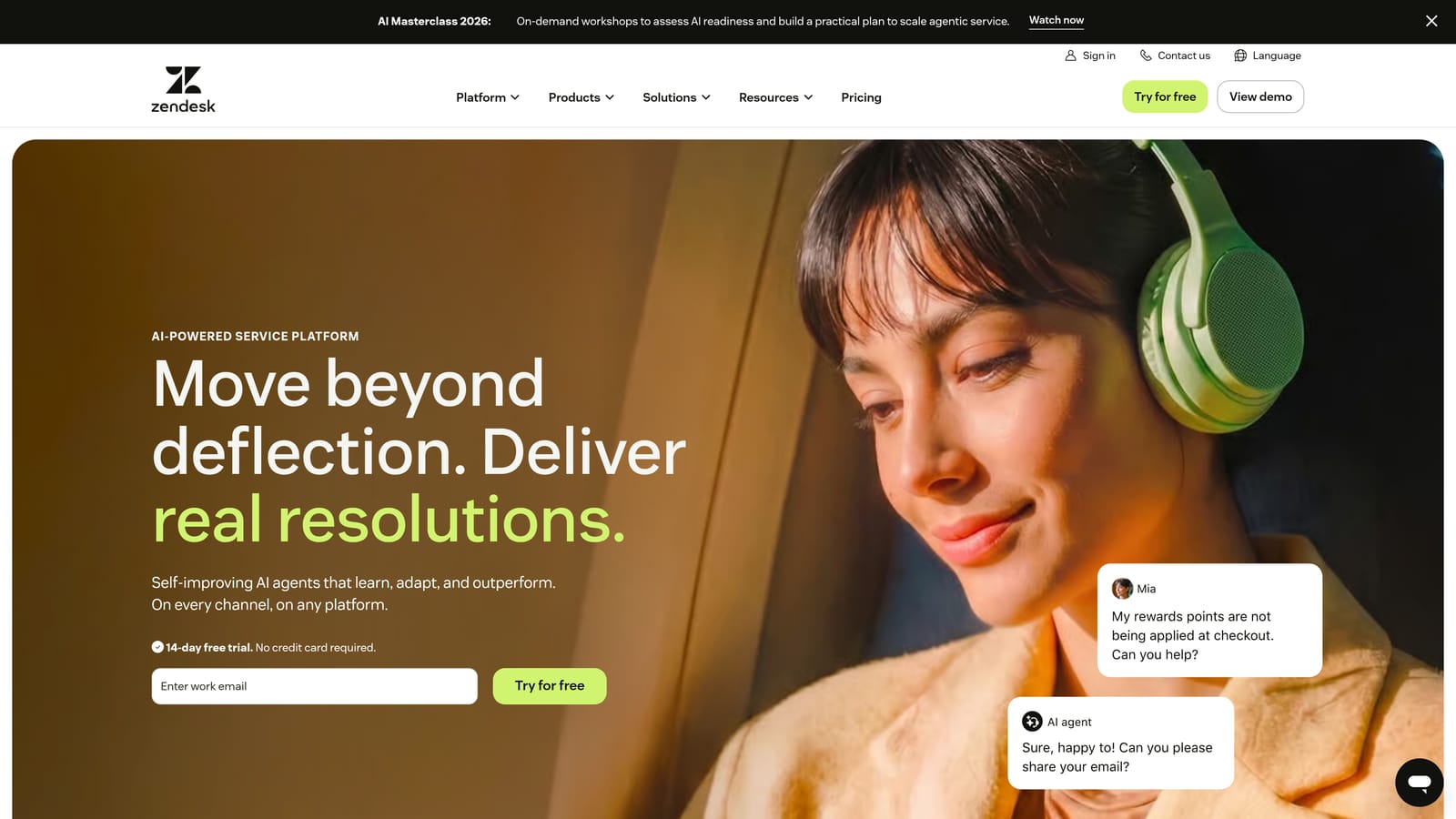
Zendesk is the industry-standard enterprise helpdesk platform with AI Agents, intelligent triage, and a mature compliance framework widely used by large healthcare SaaS vendors and health systems.
Where This Tool Shines
Zendesk's strength is breadth and maturity. Its AI Agents handle automated query resolution with smooth escalation to human agents, while its intelligent triage and routing capabilities give support operations teams fine-grained control over how tickets flow. For large healthcare organizations with established support teams, this operational depth is genuinely useful.
The compliance posture is well-developed. HIPAA-eligible configurations with BAA are available on qualifying enterprise plans, and Zendesk's extensive app marketplace means healthcare-adjacent integrations are generally available. If your organization is already running Zendesk, the AI features are a natural layer to add rather than a platform migration.
Key Features
AI Agents: Automated query resolution with configurable escalation to human agents for complex cases.
Intelligent Triage and Routing: AI-powered ticket classification and routing that reduces manual sorting for large support teams.
HIPAA-Eligible Configurations: BAA available on enterprise plans for qualifying healthcare deployments.
Extensive App Marketplace: Broad integration availability for healthcare-adjacent tools, billing systems, and CRM platforms.
Robust Reporting and Analytics: Deep support operations reporting for teams that need detailed performance visibility.
Best For
Large healthcare SaaS vendors, health systems, and enterprise digital health companies with established support operations that need proven compliance infrastructure and deep helpdesk functionality. Less suited for early-stage startups due to cost and configuration complexity.
Pricing
Suite plans start around $55/agent/month; enterprise pricing available on request. HIPAA-eligible configurations are tied to specific plan tiers.
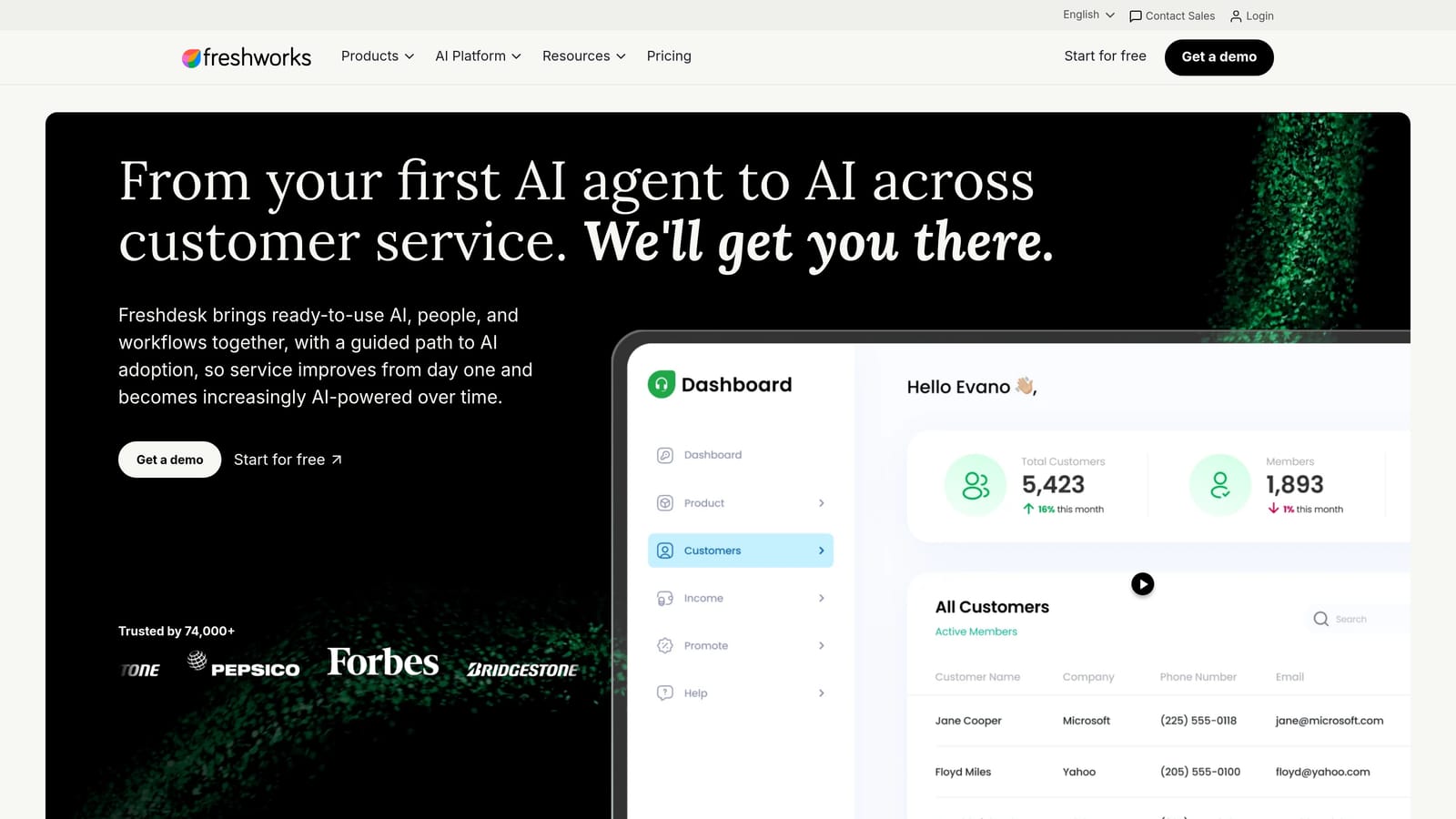
4. Freshdesk
Best for: Growing health tech startups that need solid AI-augmented support infrastructure without enterprise-level cost.
Freshdesk is an accessible, AI-augmented helpdesk platform with Freddy AI for ticket automation, offering a strong fit for health tech teams scaling their first dedicated support function.
Where This Tool Shines
Freshdesk hits a sweet spot for health tech startups: capable enough to handle real support operations, affordable enough to fit early-stage budgets, and straightforward enough that non-specialist teams can get up and running quickly. Freddy AI handles ticket categorization, response suggestions, and basic automation without requiring heavy configuration work.
The omnichannel coverage across email, chat, phone, and social is solid for teams that need to manage support across multiple channels from a single platform. Freshdesk also offers HIPAA-compliant configurations on higher-tier plans, making it viable for health tech companies that need compliance coverage but aren't ready for enterprise-level spend.
Key Features
Freddy AI: Handles ticket categorization, suggested responses, and workflow automation to reduce manual effort for support agents.
Omnichannel Support: Unified management of email, chat, phone, and social support channels.
HIPAA-Compliant Configurations: Available on higher-tier plans for healthcare-adjacent deployments requiring compliance coverage.
Intuitive Interface: Low onboarding complexity means support teams can get productive quickly without extensive training.
Free Tier Available: Accessible entry point for very small teams or teams evaluating the platform before committing.
Best For
Health tech startups and growing digital health companies building out their first structured support function. Teams that need solid AI automation at a price point that doesn't require enterprise budget approval.
Pricing
Free tier available for small teams; paid plans start around $15/agent/month. AI features are available on Growth tier and above. HIPAA configurations are on higher-tier plans.
5. Salesforce Service Cloud
Best for: Large healthcare organizations already on the Salesforce ecosystem that need unified customer data and AI-assisted support in one platform.
Salesforce Service Cloud is a CRM-native enterprise support platform with Einstein AI deeply embedded, ideal for organizations that want support and customer data fully unified.
Where This Tool Shines
If your organization is already running Salesforce as its CRM, Service Cloud is a natural extension rather than a separate tool. Einstein AI brings case classification, next-best-action recommendations, and knowledge suggestions directly into the support workflow, all with the full 360-degree account view that Salesforce's CRM provides. For healthcare SaaS companies managing complex, multi-stakeholder accounts, that context is genuinely powerful.
The compliance credentials are strong. HIPAA-eligible configurations are available, and Salesforce's enterprise security posture is well-established. The tradeoff is implementation complexity and cost, both of which are significant. This is not a tool for early-stage teams or organizations without dedicated Salesforce administrators.
Key Features
Einstein AI: Case classification, next-best-action guidance, and knowledge recommendations embedded in the support workflow.
360-Degree Customer View: Full CRM account context available within every support interaction.
HIPAA-Eligible Configurations: Enterprise-grade compliance infrastructure for healthcare deployments.
Highly Customizable Workflows: Flexible enough to accommodate complex, multi-step healthcare support processes.
Enterprise Security Credentials: Mature security and compliance framework suited for large, regulated organizations.
Best For
Large healthcare organizations and enterprise health tech companies already invested in the Salesforce ecosystem. Not well-suited for startups or teams without Salesforce expertise and implementation resources.
Pricing
Starts around $25/user/month for Starter tier; Enterprise and Unlimited tiers are significantly higher. Implementation costs are an additional consideration for most organizations.
6. Drift (Salesloft)
Best for: Health tech B2B companies where support and sales conversations overlap and consultative customer journeys are the norm.
Drift, now part of Salesloft, is a conversational AI platform that bridges sales and support, well-suited for health tech companies with complex, consultative customer relationships.
Where This Tool Shines
Drift occupies a distinct niche: it's less focused on deep ticket resolution and more focused on the intersection of support and sales conversations. For health tech B2B companies where the line between a support query and a renewal conversation is often blurry, that positioning is genuinely useful. AI-powered routing and qualification help direct conversations to the right person at the right time.
Account-based conversation targeting lets teams prioritize high-value health tech accounts and deliver contextual playbooks automatically. The conversation intelligence capabilities also connect support and sales touchpoints, giving revenue teams visibility into customer issues that might signal expansion or churn risk. Compliance posture should be verified directly with Salesloft for healthcare-specific requirements.
Key Features
AI-Powered Conversational Routing: Automatically qualifies and routes conversations to the right team based on context and account data.
Account-Based Targeting: Prioritizes and personalizes conversations for high-value accounts.
Conversation Intelligence: Connects support and sales touchpoints to give revenue teams a fuller picture of customer health.
CRM and Sales Tool Integration: Deep integration with CRM and sales engagement platforms for unified data.
Automated Playbooks: Contextual conversation flows that handle common scenarios without manual agent involvement.
Best For
Health tech B2B companies with consultative sales cycles and complex customer relationships where support and account management overlap significantly. Teams looking for a pure ticket-resolution platform should look elsewhere.
Pricing
Enterprise-focused with custom pricing on request. Contact Salesloft directly for current plan details and compliance configurations.
7. Ada
Best for: Insurance and healthcare-adjacent companies needing scalable, multilingual automated support without legacy helpdesk complexity.
Ada is a purpose-built AI-first customer service automation platform with a no-code agent builder, used by insurance and healthcare-adjacent organizations needing high automation rates at scale.
Where This Tool Shines
Ada's AI-first architecture means there's no legacy helpdesk infrastructure underneath the automation layer, which translates to cleaner, more consistent automated experiences. The no-code agent builder is a genuine differentiator for healthcare organizations where support team members are domain experts but not technical configurers. Non-technical staff can build and update AI agents without engineering involvement.
The multilingual support is particularly relevant for health companies serving diverse patient and customer populations. Ada tracks measurable automation rates, giving operations teams clear visibility into how much volume the AI is actually handling versus passing to humans. HIPAA configurations are available for qualifying enterprise customers.
Key Features
No-Code AI Agent Builder: Non-technical support teams can build, configure, and update AI agents without engineering resources.
Multilingual Support: Handles diverse patient and customer bases across multiple languages without separate configurations.
AI-First Architecture: No legacy helpdesk overhead means cleaner automated experiences and faster iteration.
Enterprise-Grade Security: HIPAA compliance configurations available for qualifying enterprise customers.
Automation Rate Tracking: Clear metrics on how much volume AI is resolving versus escalating to human agents.
Best For
Insurance companies, healthcare-adjacent organizations, and digital health platforms that need high-volume automated support across diverse, multilingual customer bases. Well-suited for teams that want non-technical staff to own and manage the AI agent configuration.
Pricing
Enterprise pricing with custom quotes available. Contact Ada directly for HIPAA-eligible plan configurations and current pricing.
8. Helpshift
Best for: Telehealth apps, digital therapeutics, and health and wellness mobile platforms that need in-app support without context switching.
Helpshift is a mobile-first in-app support platform with AI-powered automation, purpose-built for digital health apps that need to keep support within the mobile experience.
Where This Tool Shines
Helpshift solves a specific and important problem for mobile health apps: keeping users inside the app when they need help. Redirecting users to a web portal or email thread during a health app interaction creates friction and reduces trust. Helpshift's native iOS and Android SDKs embed support directly into the app experience, so users get help without ever leaving the product.
The asynchronous messaging model is well-suited to health app users who may not be available for real-time chat. AI-powered bots handle common queries automatically, while smart FAQs and in-app knowledge bases give users self-service options that feel native rather than bolted on. HIPAA compliance configurations are available for enterprise plans.
Key Features
Native iOS and Android SDK: Embeds support directly into the mobile app experience without redirecting users to external channels.
AI-Powered In-App Bots: Handles common queries automatically within the app context, without requiring users to switch channels.
Asynchronous Messaging: Supports health app users who need flexible, non-real-time communication options.
HIPAA Compliance Configurations: Available for enterprise plans for qualifying healthcare deployments.
Smart In-App Knowledge Base: Searchable, contextual self-service content embedded within the app experience.
Best For
Telehealth platforms, digital therapeutics companies, and health and wellness app developers that need support to feel like a native part of the mobile product. Less relevant for B2B healthcare SaaS companies focused on web-based support workflows.
Pricing
Custom enterprise pricing on request. Contact Helpshift directly for HIPAA-eligible plan details and mobile SDK licensing.
Choosing the Right Tool for Your Healthcare Support Stack
The right tool depends heavily on where you sit in the healthcare ecosystem and what your biggest support challenges actually are. Here's a quick way to think through the decision.
If you're a healthcare SaaS or health tech B2B company that wants AI agents that genuinely learn, understand page context, and surface business intelligence signals beyond just ticket resolution, start with Halo AI. The AI-first architecture and continuous learning loop are built for exactly the kind of complex, evolving product environments common in health tech.
For enterprise-scale compliance depth and mature helpdesk infrastructure, Zendesk and Salesforce Service Cloud are the proven choices. Zendesk is the better fit if you need a dedicated support platform with broad integration options; Salesforce Service Cloud makes more sense if your organization is already deeply invested in the Salesforce ecosystem and wants unified CRM and support data.
Growing health tech startups on a budget will find Freshdesk's Freddy AI a solid, accessible starting point that doesn't require enterprise-level spend to get real automation value. And for patient-facing or consumer health apps, Ada's multilingual, no-code automation and Helpshift's mobile-native in-app support are purpose-built for those use cases in ways that general helpdesk tools simply aren't.
Whichever tool you choose, prioritize three things: compliance posture and BAA availability on your specific plan tier, integration flexibility with your existing health tech stack, and how well the AI handles the nuanced, high-stakes nature of healthcare queries. Deflection rates are a vanity metric if the deflected answers are wrong.
Your support team shouldn't have to scale linearly with your customer base. See Halo in action and discover how continuous learning transforms every interaction into smarter, faster support, while your team focuses on the complex issues that genuinely need a human touch.