9 Best AI Support Tools for Mobile Apps in 2026
Mobile app users expect instant, in-app support — and in 2026, AI support for mobile apps has become a true competitive differentiator. This guide evaluates the 9 best AI-powered support tools on mobile SDK quality, AI autonomy, integration ecosystems, and fit for B2B or product-led teams.
 Grant CooperFounder13 min read
Mobile app users have zero patience for bad support. When something breaks mid-task on a small screen, they're not going to hunt through a help center or wait 48 hours for an email reply. They want answers inside the app, right now. That expectation has turned AI-powered support from a nice-to-have into a genuine competitive differentiator for mobile-first teams.
The challenge is that not all AI support tools are built with mobile in mind. Some are retrofitted web chat widgets wrapped in a WebView. Others lack the context-awareness to understand where a user is in your app when they reach out. The best tools combine native in-app delivery, intelligent automation, and real integrations with your product stack.
Here are the top AI support tools for mobile apps, evaluated on mobile SDK quality, AI autonomy depth, integration ecosystem, and fit for B2B or product-led teams.
1. Halo AI
Best for: B2B SaaS and product teams that want AI to resolve tickets end-to-end with full product context
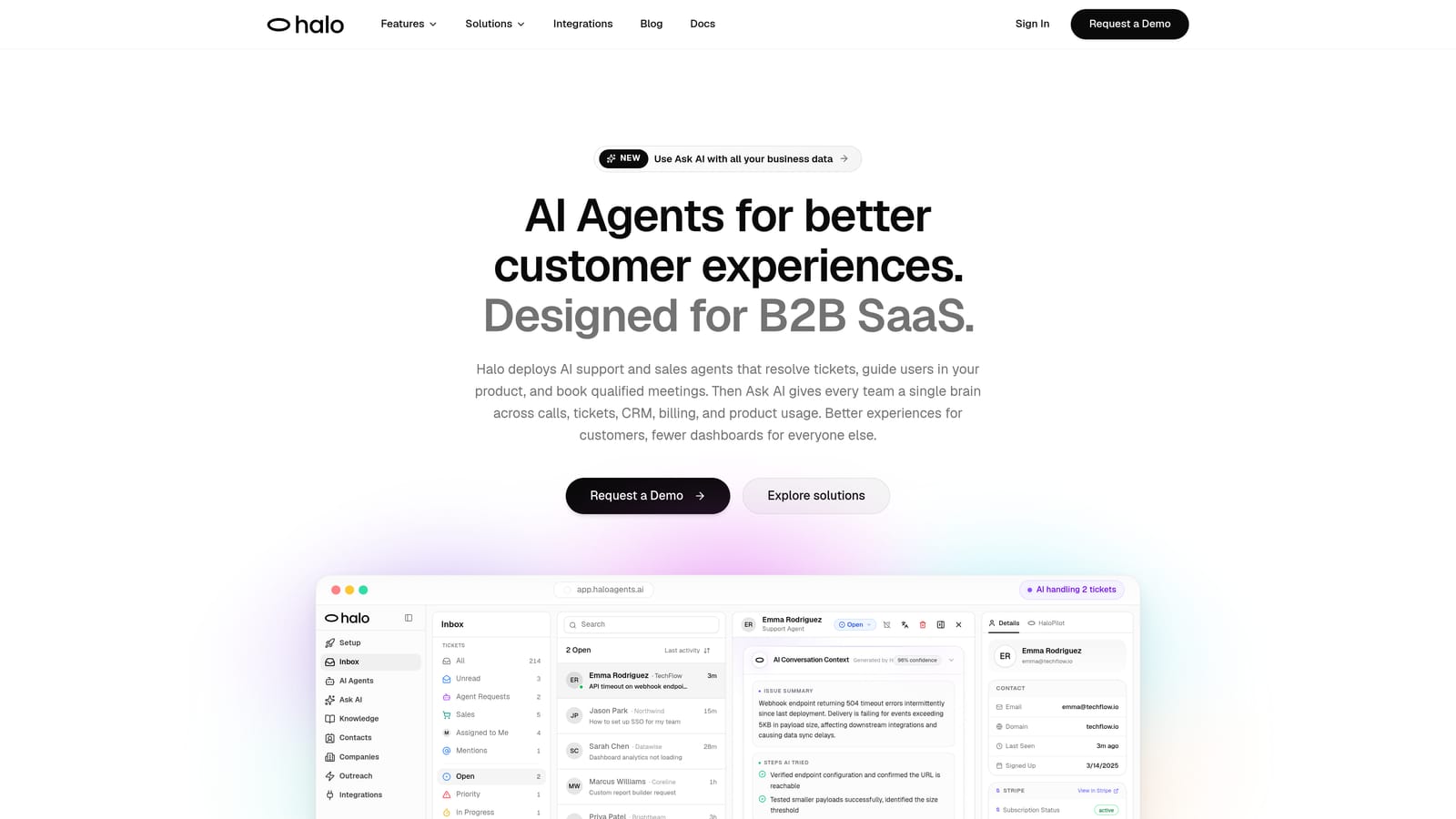
Halo AI is an AI-first customer support platform that deploys intelligent agents to resolve tickets autonomously, guide users through your product, and surface business intelligence signals from every interaction.
Where This Tool Shines
What separates Halo from most tools on this list is its page-aware context engine. The chat widget understands what screen a user is currently on, which means the AI agent isn't guessing at the problem — it already has meaningful context before the user types a single word. That's a fundamentally different experience from dropping a generic chat widget into your app.
Halo is also built AI-first rather than as a bolt-on to a legacy helpdesk. Every interaction feeds a continuous learning loop, so the system gets smarter over time. Beyond resolving tickets, it auto-creates bug reports routed to Linear, surfaces customer health signals in a smart inbox, and flags revenue anomalies — turning your support layer into a source of business intelligence, not just a cost center.
Key Features
Page-Aware Chat Widget: Understands the user's current screen context so AI responses are immediately relevant to what they're doing.
Autonomous Ticket Resolution: AI agents handle tickets end-to-end, with live agent handoff for complex issues that need a human touch.
Auto Bug Ticket Creation: Automatically generates bug reports and routes them to Linear or your preferred issue tracker without agent intervention.
Smart Inbox with Business Intelligence: Surfaces customer health signals, anomaly detection, and revenue intelligence alongside support conversations.
Deep Integration Ecosystem: Connects natively with Linear, Slack, HubSpot, Intercom, Stripe, Zoom, PandaDoc, and Fathom.
Best For
B2B SaaS teams and product-led companies that want support to do more than deflect tickets. Particularly strong for teams managing a mobile app alongside a broader product stack, where connecting support signals to engineering, sales, and customer success matters.
Pricing
Pricing is not publicly listed. Contact the Halo AI team directly for current rates and a demo.
2. Intercom
Best for: Teams wanting a mature, full-featured messenger with proven mobile SDK and AI agent capabilities
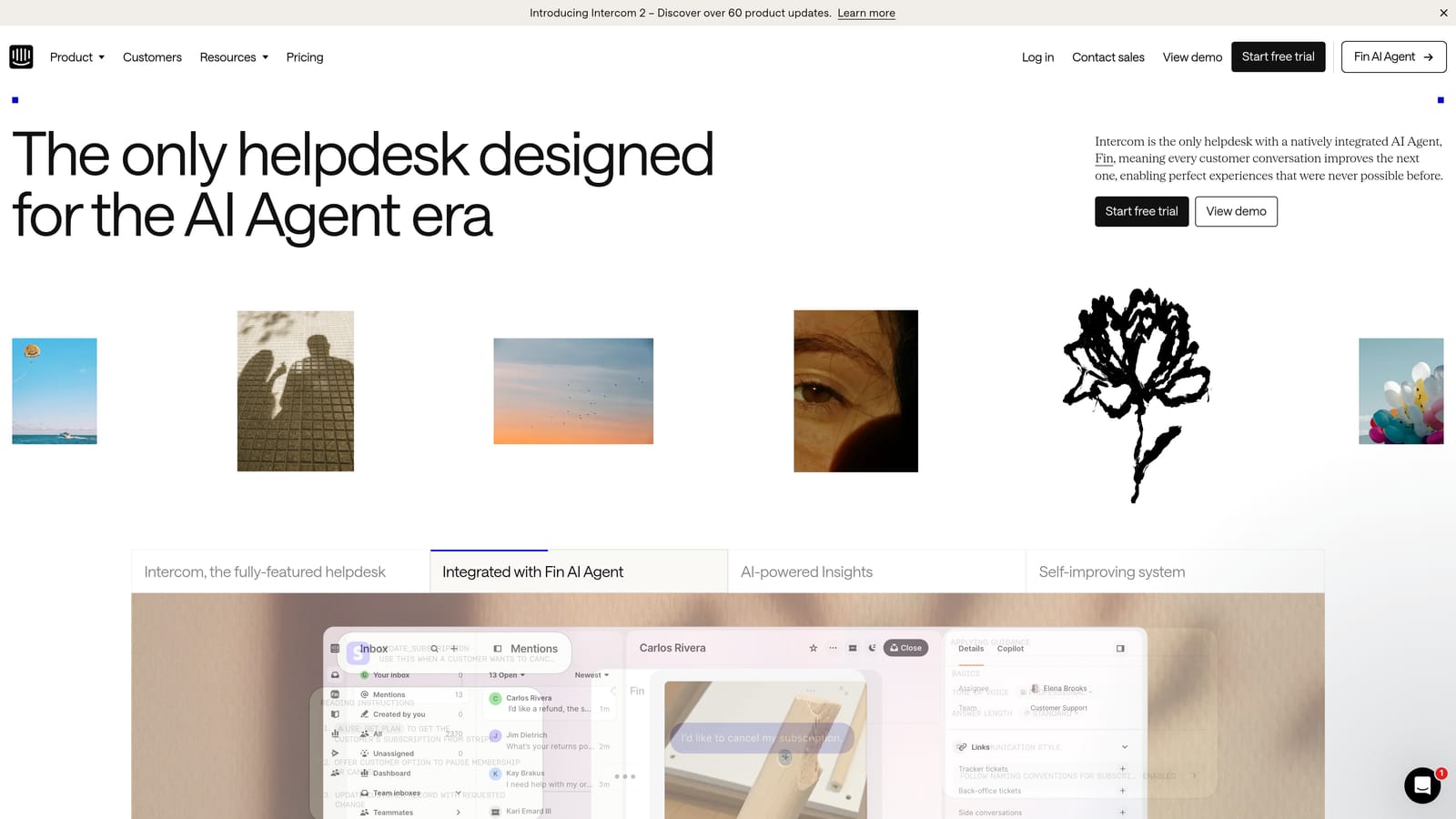
Intercom is a mature customer messaging platform with a well-established mobile SDK and Fin, its AI agent built for automated ticket resolution.
Where This Tool Shines
Intercom's native iOS and Android SDK is one of the most polished in the market. The messenger UI feels genuinely at home inside a mobile app rather than like a widget bolted on from the outside. For teams that want in-app messaging, product tours, and proactive support messages in a single platform, Intercom delivers a cohesive experience.
Fin, Intercom's AI agent, uses a GPT-based architecture to handle automated ticket resolution. It can answer questions, follow conversation flows, and escalate when needed. It's a solid starting point for teams already invested in the Intercom ecosystem, and worth noting that Halo AI integrates with Intercom for teams that want to layer more advanced AI capabilities on top.
Key Features
Fin AI Agent: GPT-powered automated ticket resolution with escalation to human agents when needed.
Native Mobile SDK: Full iOS and Android SDK for true in-app messenger experiences.
Product Tours and In-App Messages: Proactive support and onboarding flows delivered inside your app.
Integration Marketplace: Extensive third-party integrations across CRM, billing, and productivity tools.
Conversation Routing: Team inbox management with routing rules for support and sales conversations.
Best For
Product and support teams that want a single platform for in-app messaging, proactive onboarding, and AI-assisted support. Strong fit for SaaS companies with both web and mobile surfaces.
Pricing
Tiered plans at mid-market price points; Fin AI is billed per resolution. Contact Intercom for current pricing details.
3. Zendesk
Best for: Enterprise teams needing deep ticketing infrastructure, compliance features, and AI-assisted agent workflows
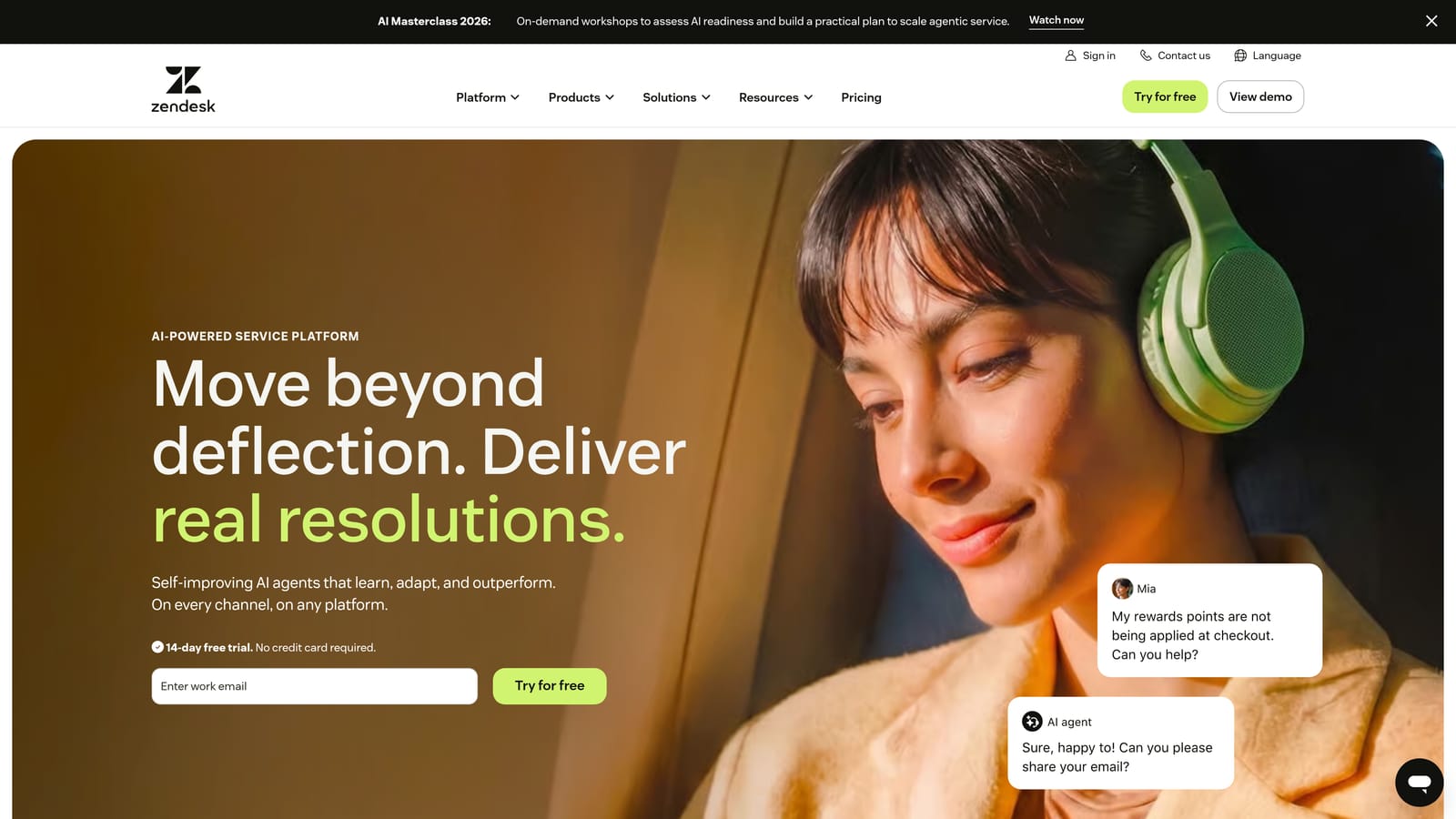
Zendesk is an enterprise-grade support platform with robust ticketing infrastructure, AI-powered automation, and a mobile SDK for in-app support delivery.
Where This Tool Shines
Zendesk's strength is its depth. For large support organizations managing high ticket volumes across multiple channels, the platform's SLA management, audit trails, and compliance features are difficult to match. The mobile SDK lets teams surface the Zendesk support experience inside a native app, keeping users from being redirected to external portals.
Zendesk AI handles automated triage, response suggestions, and routing, while AI Copilot assists agents with suggested replies and next-step guidance. For teams already running Zendesk at scale, the AI layer adds meaningful efficiency. That said, teams looking for a more AI-first alternative may want to explore how Halo AI compares as a Zendesk alternative before committing to higher-tier Zendesk plans.
Key Features
Zendesk AI: Automated triage, routing, and response suggestions across ticket channels.
Mobile SDK: Native in-app support experiences for iOS and Android.
AI Copilot: Agent assist with suggested replies and guided next steps.
Compliance and Security: Strong audit features, role-based access, and enterprise-grade security controls.
SLA Management and Reporting: Extensive reporting dashboards and SLA tracking for operations teams.
Best For
Enterprise support teams with complex workflows, strict compliance requirements, and large agent organizations. Less ideal for lean product teams that want autonomous AI resolution without heavy configuration overhead.
Pricing
Tiered plans starting at mid-market pricing; AI features are available on higher tiers. Contact Zendesk for current enterprise rates.
4. Freshdesk
Best for: Growing teams that need omnichannel support with AI assistance at accessible price points
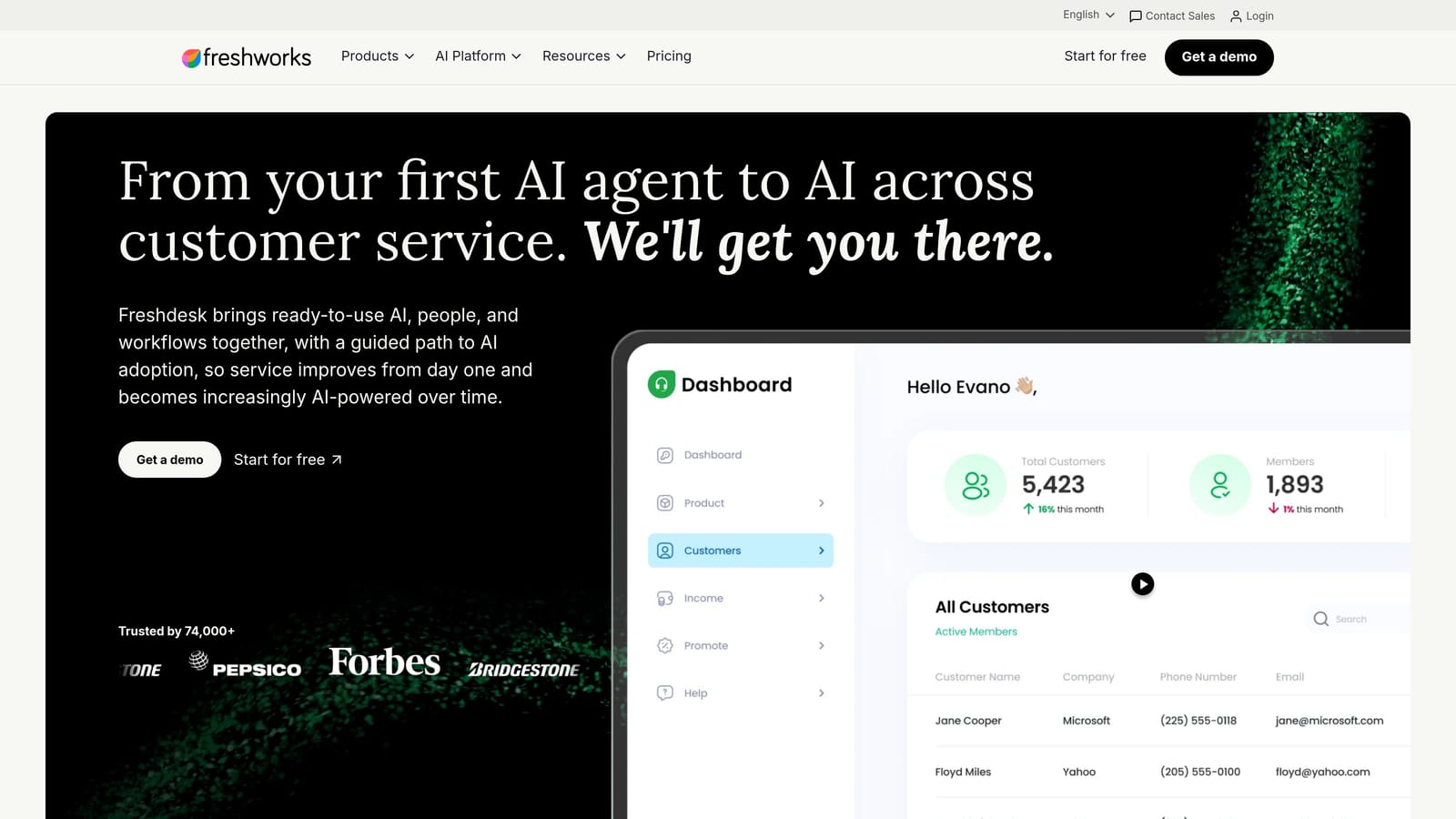
Freshdesk is a helpdesk platform with Freddy AI for automated responses and agent assist, mobile SDK support, and pricing that scales well for growing teams.
Where This Tool Shines
Freshdesk occupies a practical middle ground: more accessible than Zendesk in both pricing and setup complexity, while still offering meaningful AI capabilities through Freddy AI. For teams that need omnichannel coverage — email, chat, phone, and mobile — without a large implementation project, Freshdesk is a reasonable starting point.
The free tier is genuinely useful for small teams testing the waters, and the mobile SDK lets you deliver in-app support without requiring a full enterprise contract. Freddy AI handles automated ticket responses and surfaces agent suggestions, which reduces handling time even if it doesn't offer the same depth of autonomous resolution as newer AI-first platforms.
Key Features
Freddy AI: Automated ticket responses, agent suggestions, and AI-powered analytics.
Mobile SDK: In-app support delivery for iOS and Android.
Omnichannel Support: Unified inbox across email, chat, phone, and mobile channels.
Free Tier: Available for small teams, making it accessible for early-stage products.
AI-Powered Analytics: Reporting and trend analysis to surface common issues and team performance.
Best For
SMBs and growing product teams that need solid helpdesk fundamentals with AI assistance, without the complexity or cost of enterprise platforms. Good fit for teams managing mobile alongside other support channels.
Pricing
Free tier available; paid plans scale with features and agent count. One of the more accessible options on this list for budget-conscious teams.
5. Drift
Best for: B2B revenue teams blending sales qualification and support in a conversational AI interface
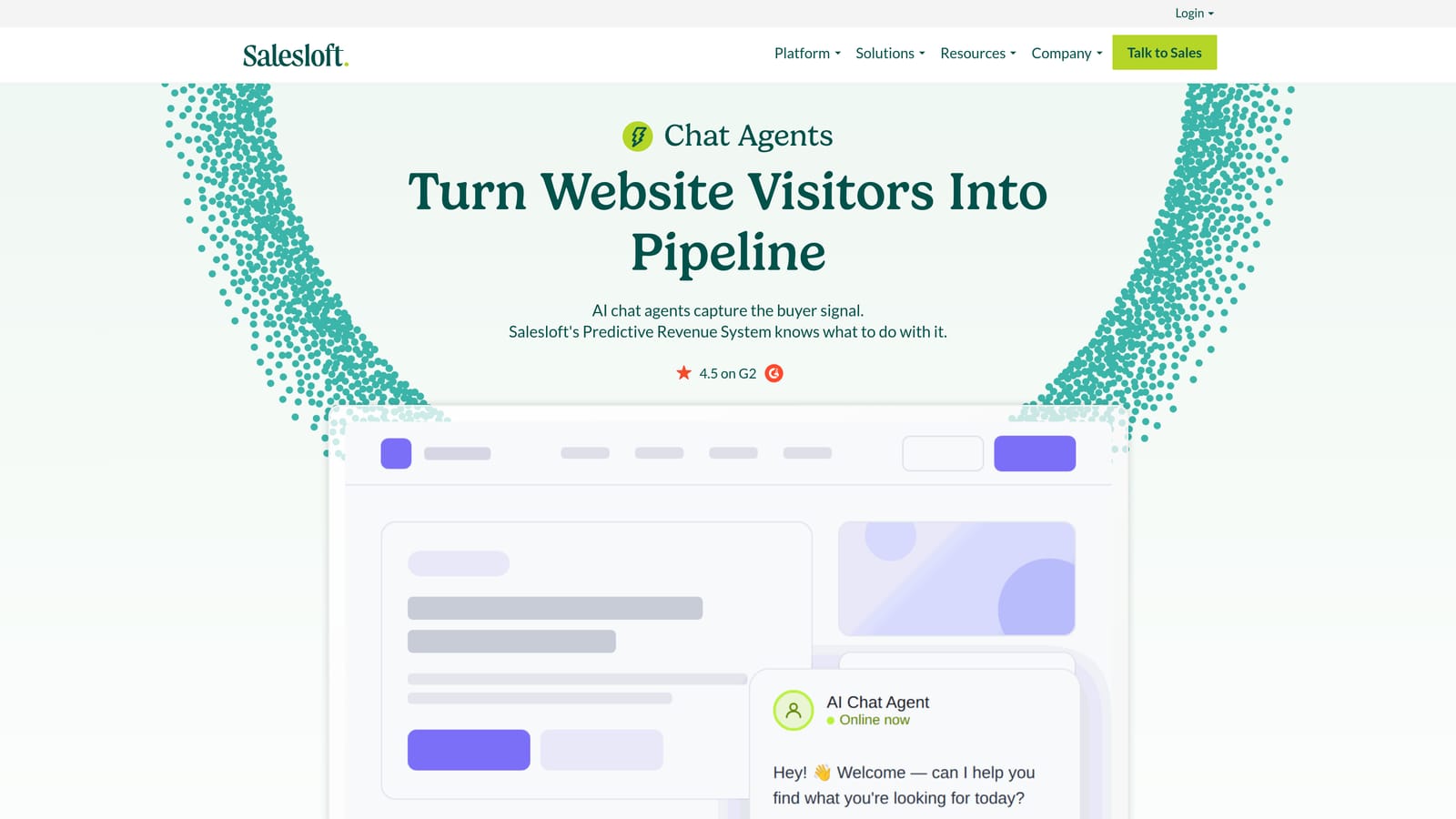
Drift is a conversational AI platform oriented toward B2B revenue teams, combining sales qualification and support automation in a mobile-accessible chat interface.
Where This Tool Shines
Drift's differentiation is its revenue-focused routing logic. Rather than treating every incoming conversation as a support ticket, Drift uses intent signals to route conversations to sales or support based on who the user is and what they're trying to do. For B2B teams where the line between support and sales is blurry, that intelligence is genuinely useful.
It's worth being clear about mobile delivery: Drift primarily operates via responsive web chat rather than a deep native mobile SDK. That's fine for mobile web experiences, but teams building native iOS or Android apps with a need for true in-app messenger experiences may find the mobile story less compelling than some other options here.
Key Features
AI-Powered Chatbot: Automated conversation handling with intent-based routing logic.
Revenue-Focused Routing: Routes conversations to sales or support based on user signals and account data.
Conversation Playbooks: Automated flows for common scenarios, from support to pipeline qualification.
CRM Integrations: Connects with Salesforce and HubSpot for lead and account context in conversations.
Mobile-Accessible: Delivered via responsive web chat; works on mobile browsers.
Best For
B2B SaaS teams where support and sales conversations overlap, and where routing intelligence based on account data adds real value. Less suited to teams needing deep native mobile SDK integration.
Pricing
Contact sales for current pricing. Drift is now part of Salesloft, which may affect packaging and pricing structures.
6. Ada
Best for: Larger teams wanting a no-code AI chatbot with strong automation depth and brand-controlled persona
Ada is a no-code AI chatbot builder with deep automation capabilities, multi-language support, and a brand-controlled AI persona suited to high-volume support at scale.
Where This Tool Shines
Ada's no-code conversation builder makes it accessible to support teams without engineering resources, while still supporting sophisticated automation flows. The ability to control the AI's tone, persona, and guardrails is particularly valuable for brands where consistency and voice matter — consumer apps with large international user bases, for instance.
Multi-language support is a genuine strength. For mobile apps with a global user base, Ada handles language detection and localized responses without requiring separate configurations per market. Mobile delivery works via SDK and web widget, giving teams flexibility in how they surface support inside the app.
Key Features
No-Code Chatbot Builder: Visual conversation design without engineering dependency for flow creation.
Multi-Language Support: Handles global mobile apps with automatic language detection and localized responses.
Brand-Controlled AI Persona: Customizable tone, voice, and guardrails to match your brand standards.
Mobile Channel Support: Delivered via SDK and web widget for in-app and mobile web experiences.
CRM and Helpdesk Integrations: Connects with major CRM and helpdesk systems for data-enriched conversations.
Best For
Enterprise and mid-market brands with high-volume support needs, global user bases, and a need for brand-consistent AI conversations. Well-suited to consumer apps where tone control and multilingual support are priorities.
Pricing
Enterprise pricing model; contact Ada for a quote. Not suited for early-stage teams or those with limited budgets.
7. Helpshift
Best for: Mobile-native consumer apps, particularly gaming, that need purpose-built in-app support with async messaging
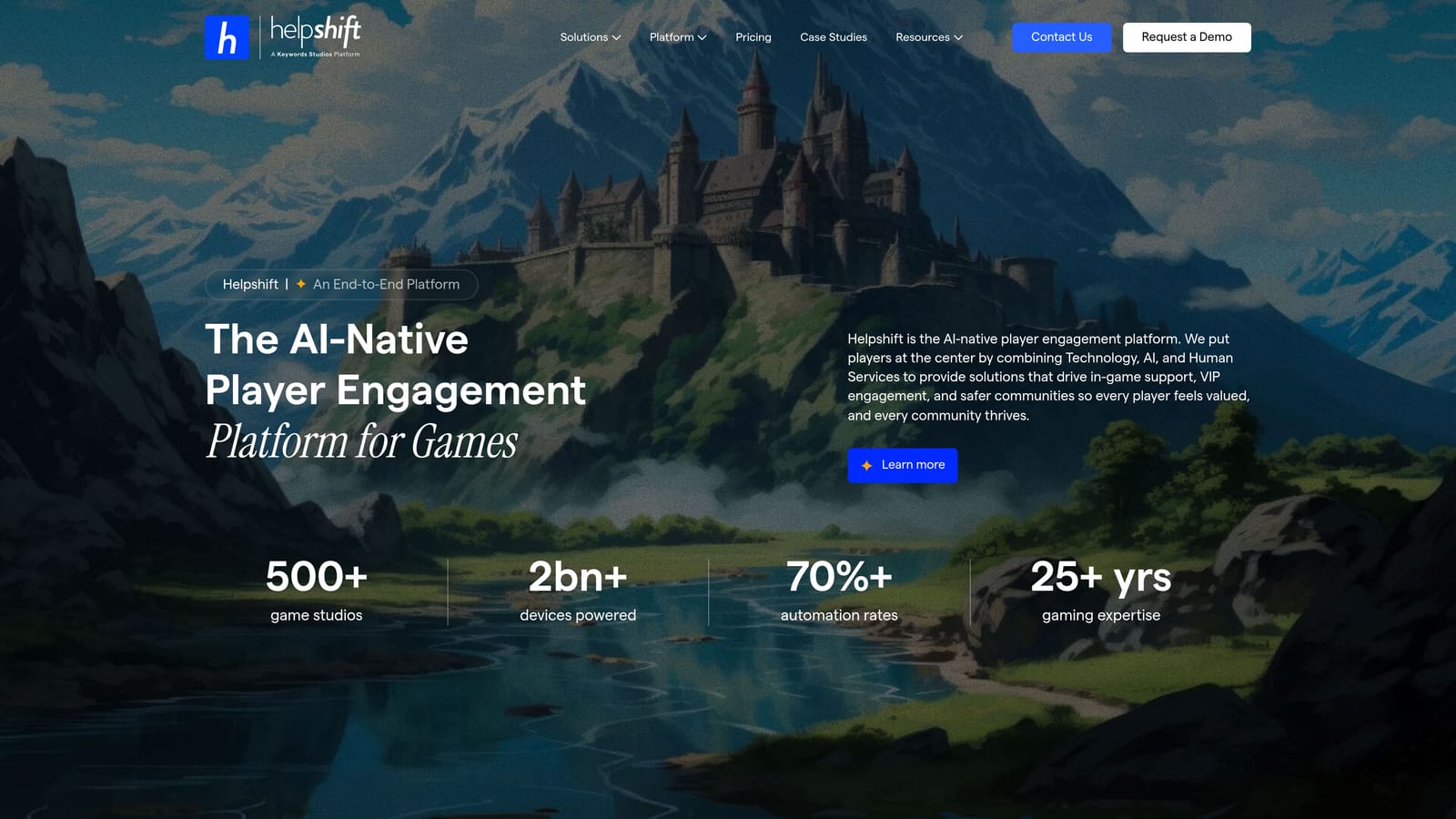
Helpshift is a mobile-native support platform purpose-built for in-app experiences, with a robust native SDK, async messaging, and AI-powered bots particularly strong in gaming and consumer apps.
Where This Tool Shines
If native mobile SDK quality is your primary criterion, Helpshift is the strongest option on this list. It was built from the ground up for mobile apps rather than adapted from a web platform, and that heritage shows in the quality of its iOS and Android SDKs. Async in-app messaging lets users send a message and come back for the response without losing context — a UX pattern that fits how people actually use mobile apps.
SmartIntents, Helpshift's AI classification layer, automatically categorizes incoming issues so the right bot flow or agent queue receives them. For gaming companies and consumer apps handling large volumes of in-app issues, this combination of native delivery and intelligent routing is a meaningful operational advantage.
Key Features
Purpose-Built Native SDK: Full iOS and Android SDK designed specifically for mobile-first in-app support.
Async In-App Messaging: Mobile-native messaging UX that lets users send and receive responses without staying in the chat.
SmartIntents AI: Automatic issue classification to route conversations to the right bot or agent queue.
AI-Powered Bots: Self-service resolution flows triggered by issue type and user context.
In-App FAQ Integration: Knowledge base content surfaced directly within the app experience.
Best For
Consumer mobile apps and gaming companies where native mobile UX quality is non-negotiable and async messaging matches user behavior patterns. Less focused on B2B SaaS workflows or deep product stack integrations.
Pricing
Tiered pricing based on monthly active users (MAUs). Contact Helpshift for current rates.
8. Tidio
Best for: Smaller teams and early-stage products needing quick AI chat setup without a large investment
Tidio is an accessible AI chat platform with Lyro AI for automated support, fast setup, and straightforward pricing suited to smaller teams and early-stage products.
Where This Tool Shines
Tidio's appeal is its low barrier to entry. Teams can get Lyro AI up and running quickly without a lengthy implementation project or enterprise contract. For early-stage products that need to offer some level of AI-assisted support without a dedicated support team, Tidio fills that gap practically and affordably.
The mobile story is worth contextualizing: Tidio delivers via a responsive widget rather than a deep native mobile SDK, which works well for mobile web but may feel less seamless inside a native app. For teams where mobile web is the primary surface or where native integration isn't a hard requirement, that trade-off is often acceptable given the pricing and setup speed.
Key Features
Lyro AI Chatbot: Conversational AI that handles automated support queries with natural language understanding.
Quick Setup: Minimal technical overhead to get AI chat running on your product.
Live Chat with AI Handoff: Smooth transition from AI to human agent when conversations need escalation.
Mobile-Accessible Widget: Responsive design that works on mobile browsers and mobile web experiences.
Affordable Pricing: Free tier plus paid plans at accessible price points for growing teams.
Best For
Startups, small teams, and early-stage products that need functional AI chat support quickly and affordably. Not the right fit for teams requiring deep native mobile SDK integration or complex enterprise workflows.
Pricing
Free tier available; paid plans start at accessible price points. One of the most budget-friendly options on this list.
9. Kustomer
Best for: High-volume D2C and B2C teams that need CRM-native support with a unified customer timeline
Kustomer is a CRM-native support platform that unifies customer data with AI-driven support workflows, offering a full customer timeline and mobile SDK for high-volume teams.
Where This Tool Shines
Kustomer's defining feature is the unified customer timeline: every interaction, purchase, support ticket, and behavioral signal from across your stack is visible in a single view. For support agents handling complex customer situations, that context dramatically reduces the time spent piecing together history from multiple systems.
The AI layer handles routing, response suggestions, and self-service automation, while the mobile SDK extends that experience into native apps. Kustomer is now owned by Meta, which has influenced its development roadmap. It's a strong fit for high-volume D2C brands and B2C operations where customer data richness and proactive outreach based on behavioral signals are priorities.
Key Features
Unified Customer Timeline: Combines CRM data, purchase history, and support interactions in a single agent view.
AI Automation: Routing, response suggestions, and self-service flows driven by customer data context.
Proactive Outreach: Trigger support or engagement messages based on customer behavior and data signals.
High-Volume Operations: Built to handle large-scale D2C and B2C support operations efficiently.
Best For
High-volume D2C brands and B2C companies where CRM data richness and proactive customer engagement are central to the support strategy. Enterprise-oriented pricing makes it less accessible for smaller teams.
Pricing
Per-agent pricing at enterprise-oriented rates. Contact Kustomer for current pricing and packaging details.
Which Tool Is Right for Your Mobile App?
The honest answer is that the best tool depends on three questions: How autonomous do you need the AI to be? How important is native mobile context? And how deeply does it need to connect to your broader stack?
If you're a B2B SaaS or product team that wants AI to genuinely resolve tickets rather than just deflect them, and you need context-aware support that understands where users are in your app, Halo AI is built for exactly that. Its page-aware architecture, deep product stack integrations, and continuous learning loop make it a fundamentally different proposition from tools that added AI as a layer on top of a legacy helpdesk.
For teams already deep in the Intercom or Zendesk ecosystem, their native AI layers are solid starting points with lower switching costs. Mobile-native consumer apps, especially in gaming, should look hard at Helpshift — its SDK quality and async messaging UX are genuinely purpose-built for mobile. Smaller teams on tight budgets will find Tidio a practical entry point that punches above its price point.
Ada suits global brands that need multilingual automation and brand-controlled AI persona. Kustomer fits high-volume D2C operations where CRM data richness drives the support experience. And Drift makes sense when your support conversations overlap significantly with sales qualification.
Your support team shouldn't scale linearly with your customer base. Let AI agents handle routine tickets, guide users through your product, and surface business intelligence while your team focuses on complex issues that need a human touch. See Halo in action and discover how continuous learning transforms every interaction into smarter, faster support.