9 Best AI Support Integration Tools in 2026
B2B support teams struggling with disconnected helpdesks, CRMs, and communication channels can eliminate costly context-switching with the right ai support integration tools. This guide evaluates the 9 best platforms of 2026 based on integration depth, AI capability, and deployment ease—helping product-led teams choose between legacy helpdesks with AI add-ons and purpose-built AI-first solutions that automatically resolve tickets, route issues, and surface actionable insights.
 Grant CooperFounder13 min read
B2B support teams are drowning in disconnected tools. Tickets live in one place, customer data in another, and engineering handoffs happen over Slack threads that nobody can find two weeks later. The result: slower resolutions, frustrated customers, and support agents spending more time context-switching than actually helping anyone.
AI support integration tools solve this by connecting your helpdesk, CRM, product stack, and communication channels into a unified, intelligent layer that can resolve tickets, route issues, and surface insights automatically. The market has matured considerably, and the key distinction in 2026 is between platforms that bolt AI onto existing helpdesk infrastructure and those built AI-first from the ground up.
This list covers the top options available today, evaluated on integration depth, AI capability, ease of deployment, and fit for product-led B2B teams. Whether you're running a lean support operation or scaling a customer success org, there's a tool here built for your workflow.
1. Halo AI
Best for: B2B SaaS teams wanting AI-first support with deep cross-stack integration
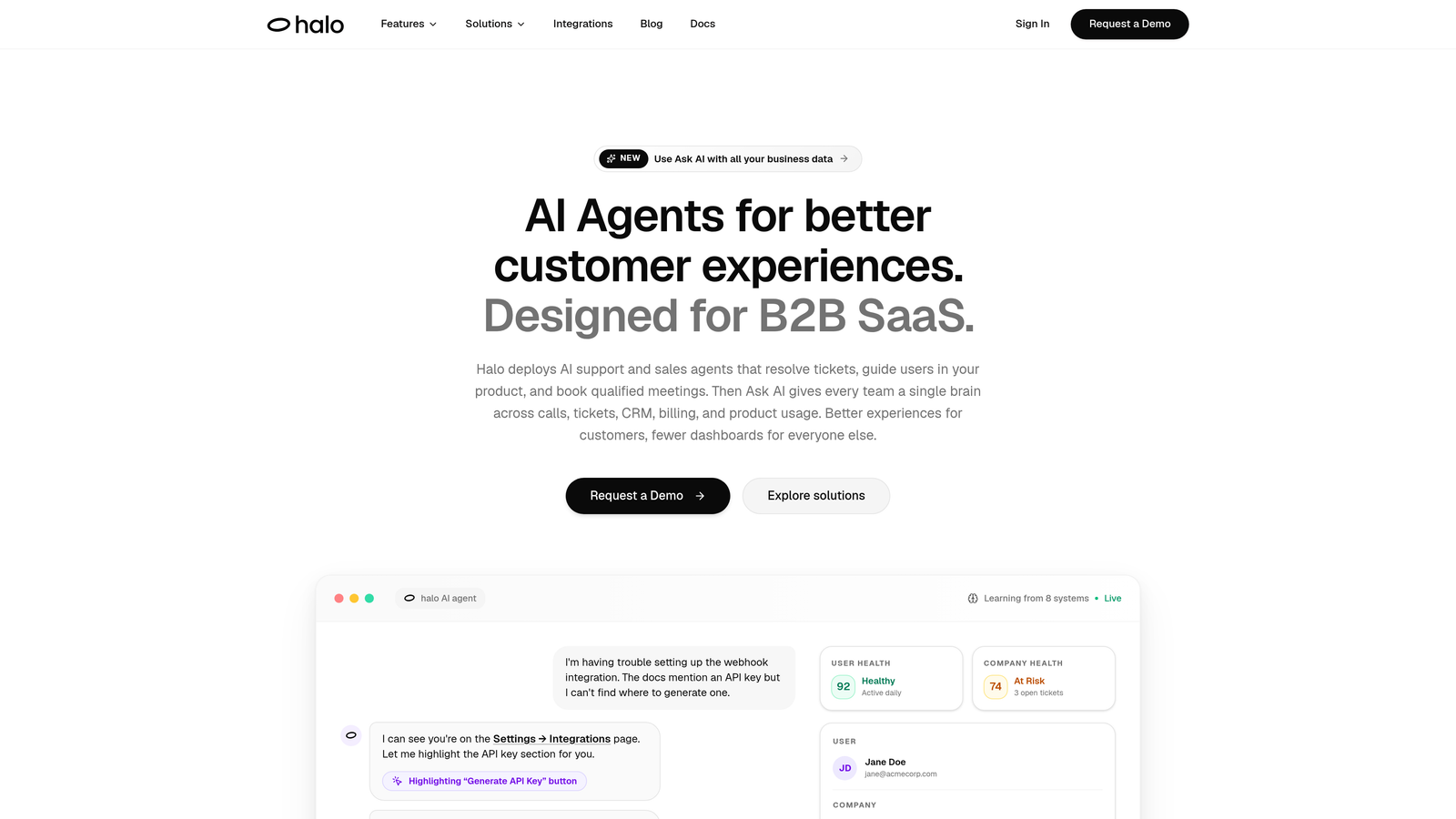
Halo AI is an AI-first customer support platform built specifically for B2B SaaS teams that need intelligent agents, not just chatbots.
Where This Tool Shines
What separates Halo from most tools on this list is its architectural philosophy. Rather than layering AI onto an existing helpdesk, Halo is built AI-first, which means every feature — from ticket resolution to bug reporting — is designed around autonomous intelligence from the start.
The page-aware chat widget is a standout capability. It sees exactly what users see within your product, giving the AI genuine context about where someone is and what they're trying to do. Combine that with live agent handoff for complex issues and auto bug ticket creation routed directly to Linear, and you have a support layer that connects your customer-facing team with your engineering team without anyone sending a Slack message.
Key Features
Page-Aware Chat Widget: Understands the user's current product context, enabling more relevant, accurate responses without requiring users to explain where they are.
Autonomous Ticket Resolution with Smart Handoff: AI agents handle routine tickets end-to-end and escalate complex issues to live agents with full context preserved.
Auto Bug Ticket Creation: Automatically generates and routes bug reports to Linear, closing the loop between support and engineering without manual effort.
Smart Inbox with Business Intelligence: Surfaces customer health signals, revenue intelligence, and anomaly detection so your support inbox becomes a source of strategic insight, not just a queue.
Native Integration Stack: Connects to Linear, Slack, HubSpot, Intercom, Stripe, Zoom, PandaDoc, and Fathom out of the box.
Best For
Product-led B2B SaaS teams that want AI agents handling routine support while surfacing business intelligence across their stack. Particularly well-suited for teams already using Linear for engineering and HubSpot or Stripe for revenue data, where connecting those layers creates compounding value.
Pricing
Contact for pricing. Halo is designed for B2B SaaS teams and positions itself as a strategic investment rather than a per-seat commodity tool.
2. Intercom
Best for: Mid-market SaaS teams wanting conversational AI with strong messenger UX
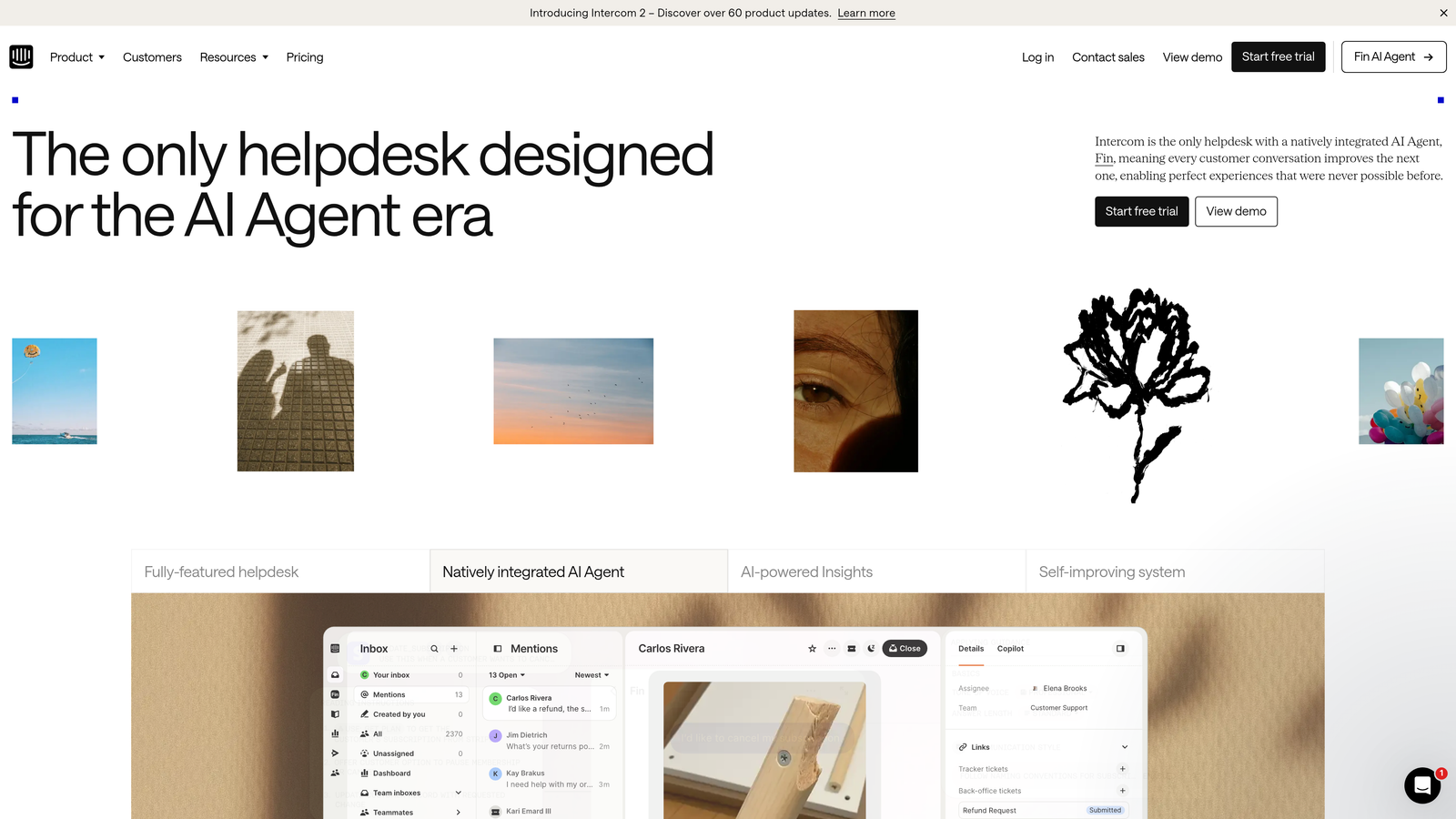
Intercom is a conversational support platform featuring Fin, an AI agent built on GPT-4 that handles common queries end-to-end across chat, email, and in-product messenger.
Where This Tool Shines
Intercom has long been the gold standard for in-product messaging, and the addition of Fin gives it genuine AI resolution capability rather than just glorified FAQ lookup. Fin handles conversations end-to-end and only escalates when it genuinely can't resolve the issue, which keeps deflection rates meaningful.
The app marketplace is one of the broadest in the category, with over 300 integrations covering CRMs, analytics tools, and productivity platforms. For teams already running their support through Intercom's messenger, adding Fin feels like a natural evolution rather than a platform change.
Key Features
Fin AI Agent: GPT-4-powered agent that resolves common support queries autonomously across multiple channels.
300+ App Marketplace: Broad integration coverage spanning CRMs, data tools, and communication platforms.
In-Product Messenger: Industry-leading UX for embedded chat experiences within web and mobile products.
AI-Assisted Inbox Routing: Automatically classifies and routes conversations based on intent and content.
Best For
Mid-market SaaS teams that want strong messenger UX combined with AI deflection. Teams already invested in the Intercom ecosystem will find the upgrade path to Fin straightforward. Less suited for teams needing deep engineering or revenue stack integration beyond standard CRM connections.
Pricing
Starts at approximately $39 per seat per month. Fin AI usage is billed per resolution, so costs scale with volume. Pricing can add up quickly for high-traffic teams.
3. Zendesk AI
Best for: Large enterprises already running the Zendesk Suite at scale
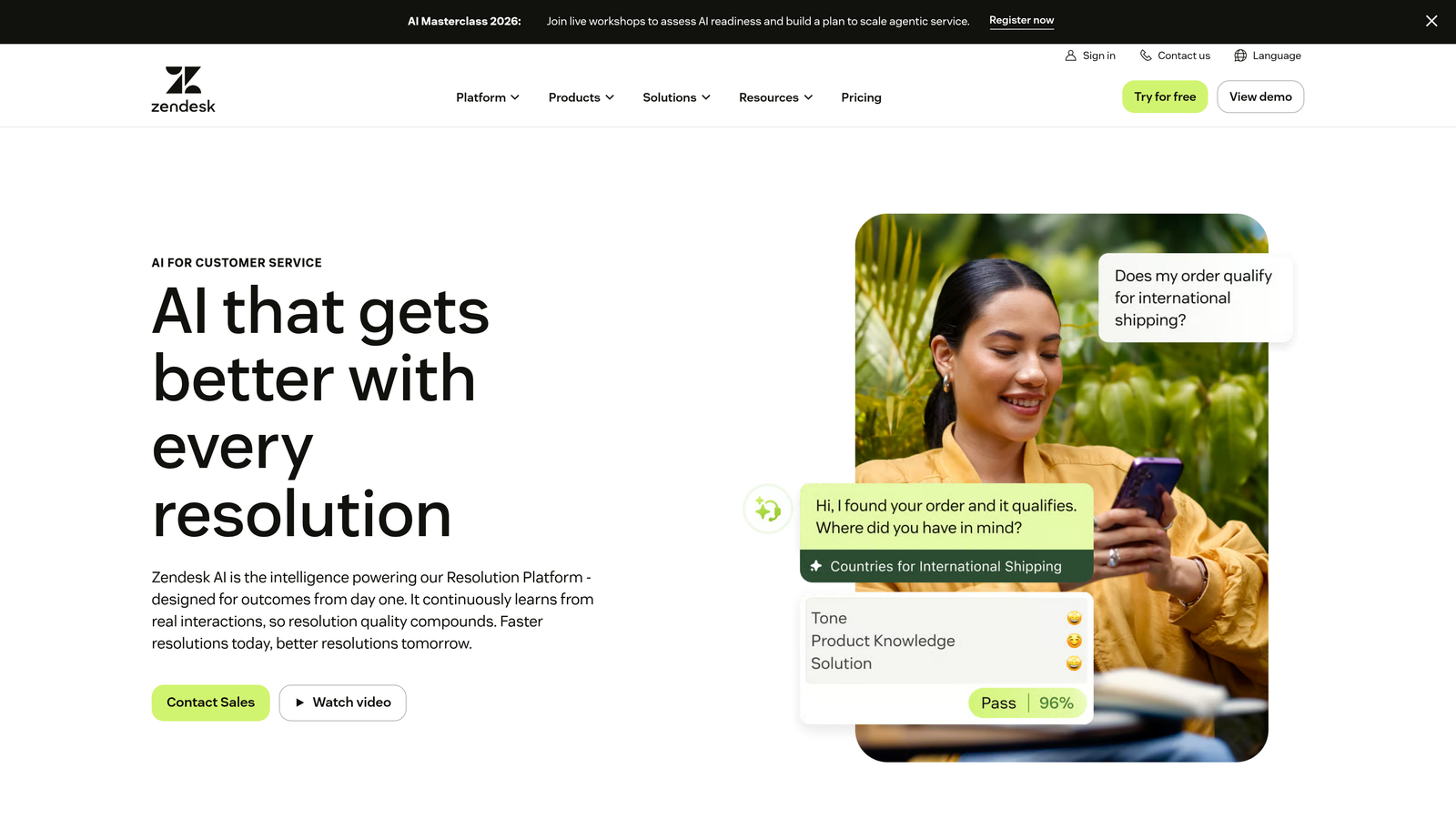
Zendesk AI is enterprise helpdesk infrastructure with AI built natively into the Zendesk Suite, covering intelligent triage, agent copilot, automated macros, and intent detection at scale.
Where This Tool Shines
If your organization has significant existing investment in Zendesk — Guide, Talk, Chat, and the broader Suite — the native AI layer makes a compelling case for staying in the ecosystem. Intent detection, sentiment analysis, and language identification happen automatically, which means triage happens before a human even opens the ticket.
Agent Copilot provides real-time response suggestions based on knowledge base content and historical ticket patterns. For large teams handling thousands of tickets daily, the efficiency gains from macro automation and intelligent routing can be substantial.
Key Features
Intelligent Triage: Automatically detects intent, sentiment, and language to classify and route tickets without manual effort.
Agent Copilot: Real-time response suggestions and next-best-action recommendations for agents handling complex conversations.
Automated Macros: AI-powered macro suggestions that reduce repetitive agent actions across high-volume queues.
Deep Suite Integration: AI features span Zendesk Talk, Chat, Guide, and Support for a unified experience across channels.
Best For
Enterprise organizations with established Zendesk deployments and large support teams. Configuration complexity and cost make it less accessible for smaller or faster-moving teams. Best when you have dedicated admin resources to manage the implementation.
Pricing
AI features are included in Suite plans starting at approximately $115 per agent per month. An advanced AI add-on is available for teams needing deeper capability.
4. Freshdesk Freddy AI
Best for: Growing SMB and mid-market teams within the Freshworks ecosystem
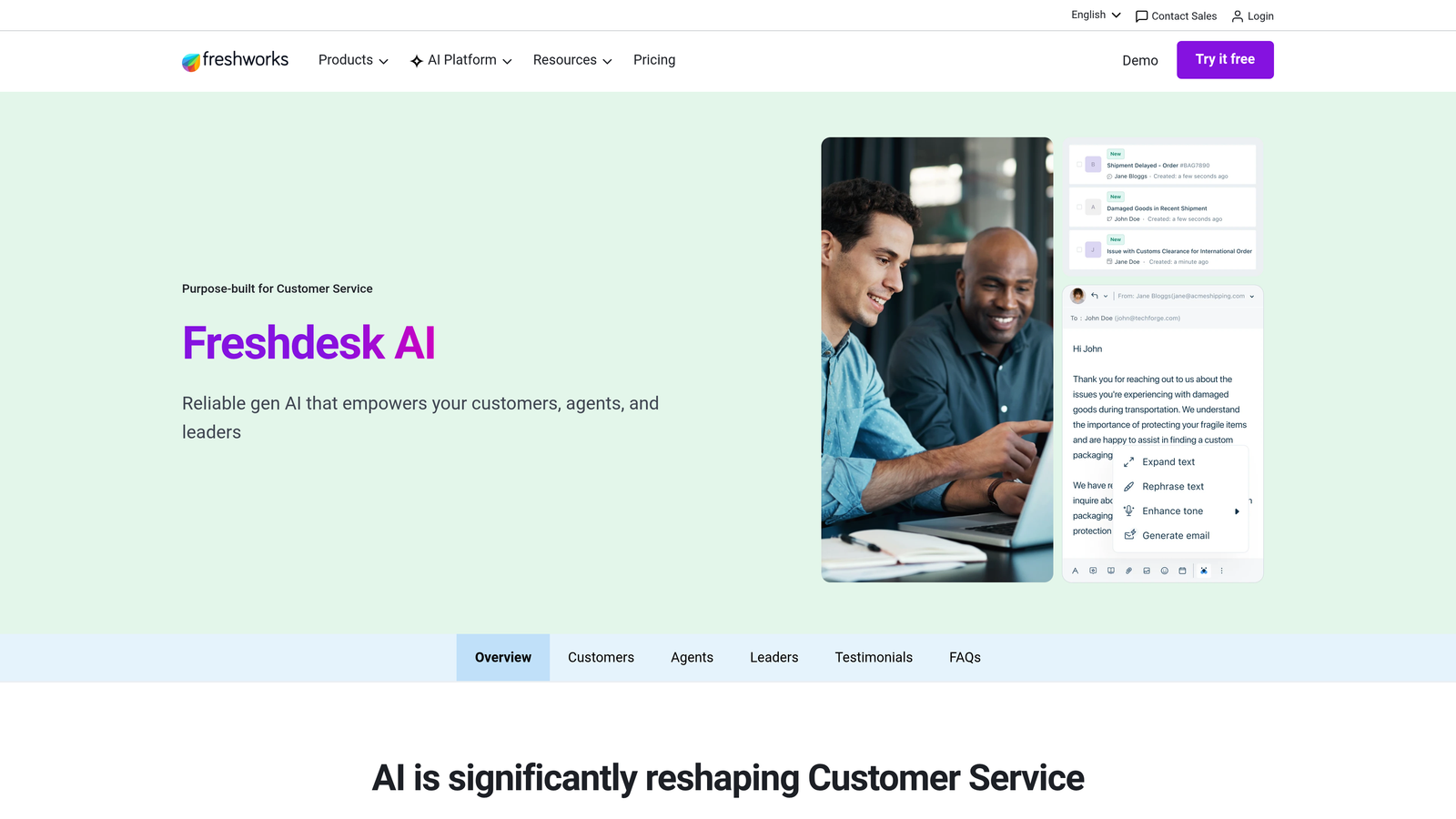
Freshdesk Freddy AI is Freshworks' AI layer spanning self-service bots, agent assist, and analytics, available across the Freshdesk and broader Freshworks ecosystem at a competitive price point.
Where This Tool Shines
Freddy AI covers the full support workflow: self-service deflection via Freddy Self Service, real-time agent assistance via Freddy Copilot, and operational analytics via Freddy Insights. The breadth of coverage at this price tier is genuinely competitive with more expensive alternatives.
For teams already using Freshsales or Freshchat, the cross-product integration creates a unified customer view that rivals what you'd otherwise need a separate CRM to achieve. The anomaly detection in Freddy Insights is a particularly useful feature for support managers who want to catch volume spikes before they become crises.
Key Features
Freddy Self Service: Deflection-focused bot that handles FAQ-style queries and guides users to relevant knowledge base articles.
Freddy Copilot: Agent assist with response suggestions, conversation summaries, and tone adjustments.
Freddy Insights: Analytics layer with anomaly detection and trend identification across support operations.
Cross-Ecosystem Integration: Native connections to Freshsales, Freshchat, and other Freshworks products for unified customer data.
Best For
Growing teams that want solid AI capability without enterprise pricing. Particularly strong for teams already in the Freshworks ecosystem where cross-product integration adds immediate value without additional configuration work.
Pricing
Base Freshdesk plans start at approximately $15 per agent per month. Freddy Copilot is available as an add-on from approximately $29 per agent per month.
5. Salesforce Service Cloud + Einstein
Best for: Enterprise orgs running Salesforce across sales, service, and success functions
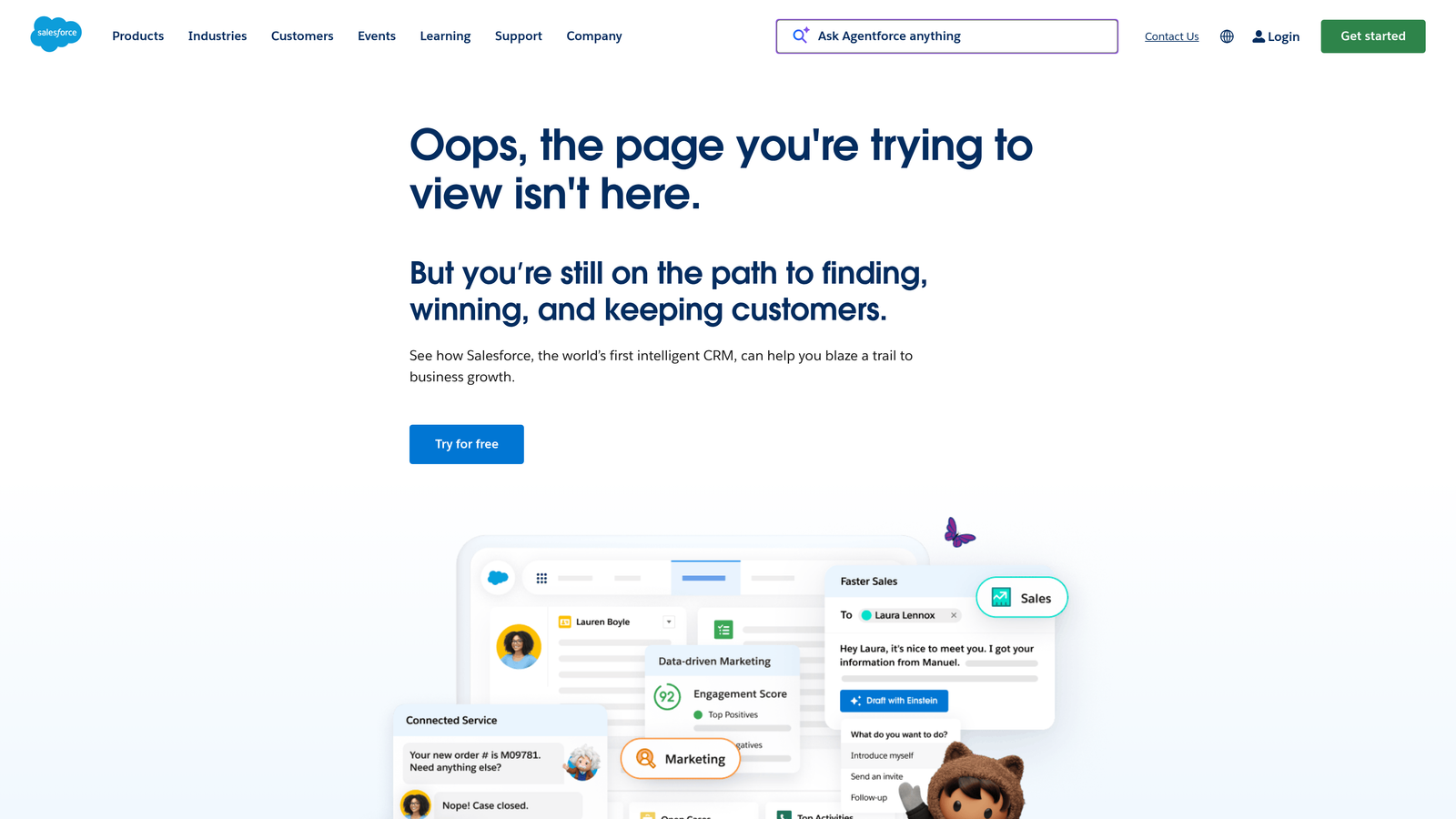
Salesforce Service Cloud is an enterprise-grade CRM-native support platform where Einstein AI connects support workflows directly to Sales Cloud customer and revenue data for a unified organizational view.
Where This Tool Shines
The core value proposition here is revenue-aware support. Because Einstein AI operates across both Service Cloud and Sales Cloud, support agents have full visibility into customer contract value, renewal dates, and sales activity when handling tickets. That context changes how you prioritize and respond to issues in ways that separate helpdesks simply can't replicate.
Einstein Copilot provides knowledge recommendations and suggested responses based on the full customer record, not just the current conversation. For enterprise teams where support outcomes have direct revenue implications, this integration depth is hard to match.
Key Features
Einstein AI Case Classification: Automatically classifies, prioritizes, and routes cases based on content and customer data.
Unified Customer Data: Support agents see the full Sales Cloud customer record alongside every ticket.
Einstein Copilot: Agent assist with knowledge recommendations and response suggestions informed by customer history.
AppExchange Marketplace: Extensive third-party integration ecosystem covering virtually every enterprise tool category.
Best For
Large enterprises already running Salesforce across multiple functions. Implementation complexity and cost are significant, so this is not a tool for lean teams or fast-moving startups. Best when you have dedicated Salesforce admin and developer resources.
Pricing
Service Cloud starts at approximately $75 per user per month for Starter tiers. Einstein AI features require higher-tier plans, and total cost of ownership increases with customization needs.
6. Tidio
Best for: Early-stage SaaS and e-commerce teams wanting fast AI chat deployment
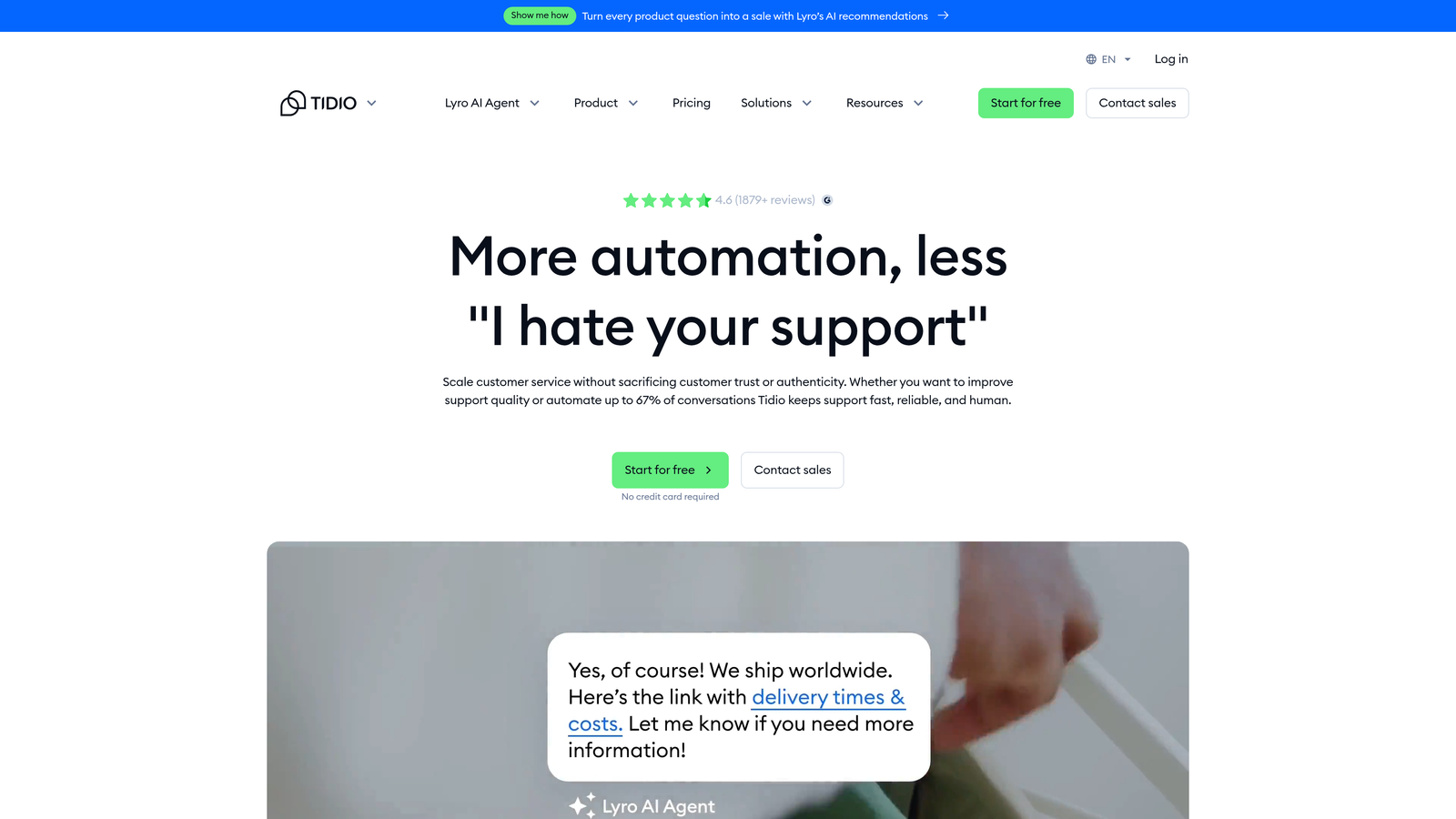
Tidio is an accessible AI chat platform featuring the Lyro AI chatbot, designed for fast deployment with integrations suited to smaller SaaS teams, e-commerce, and WordPress or Shopify environments.
Where This Tool Shines
Tidio's primary advantage is speed to value. The no-code setup means teams can have Lyro handling customer conversations within hours rather than weeks. For early-stage teams that need AI chat capability without a dedicated implementation project, that matters enormously.
Lyro handles automated customer conversations with a conversational quality that punches above its price tier. The live chat fallback with agent handoff ensures customers aren't left stranded when queries exceed the bot's capability.
Key Features
Lyro AI Chatbot: Automated conversational AI for handling common customer queries without agent involvement.
No-Code Setup: Fast deployment with pre-built integrations that require no developer resources.
E-Commerce Integrations: Native connections to Shopify, WordPress, and basic CRM tools.
Live Chat Fallback: Smooth handoff to human agents when Lyro reaches the edge of its capability.
Best For
Early-stage SaaS teams, e-commerce businesses, and WordPress-based operations that want quick AI chat deployment at an accessible price. Less suited for complex B2B workflows requiring deep integration with engineering or revenue systems.
Pricing
A free plan is available. Lyro AI starts at approximately $29 per month, with paid plans scaling based on conversation volume.
7. Forethought
Best for: Teams wanting to add AI capability on top of existing helpdesk investments
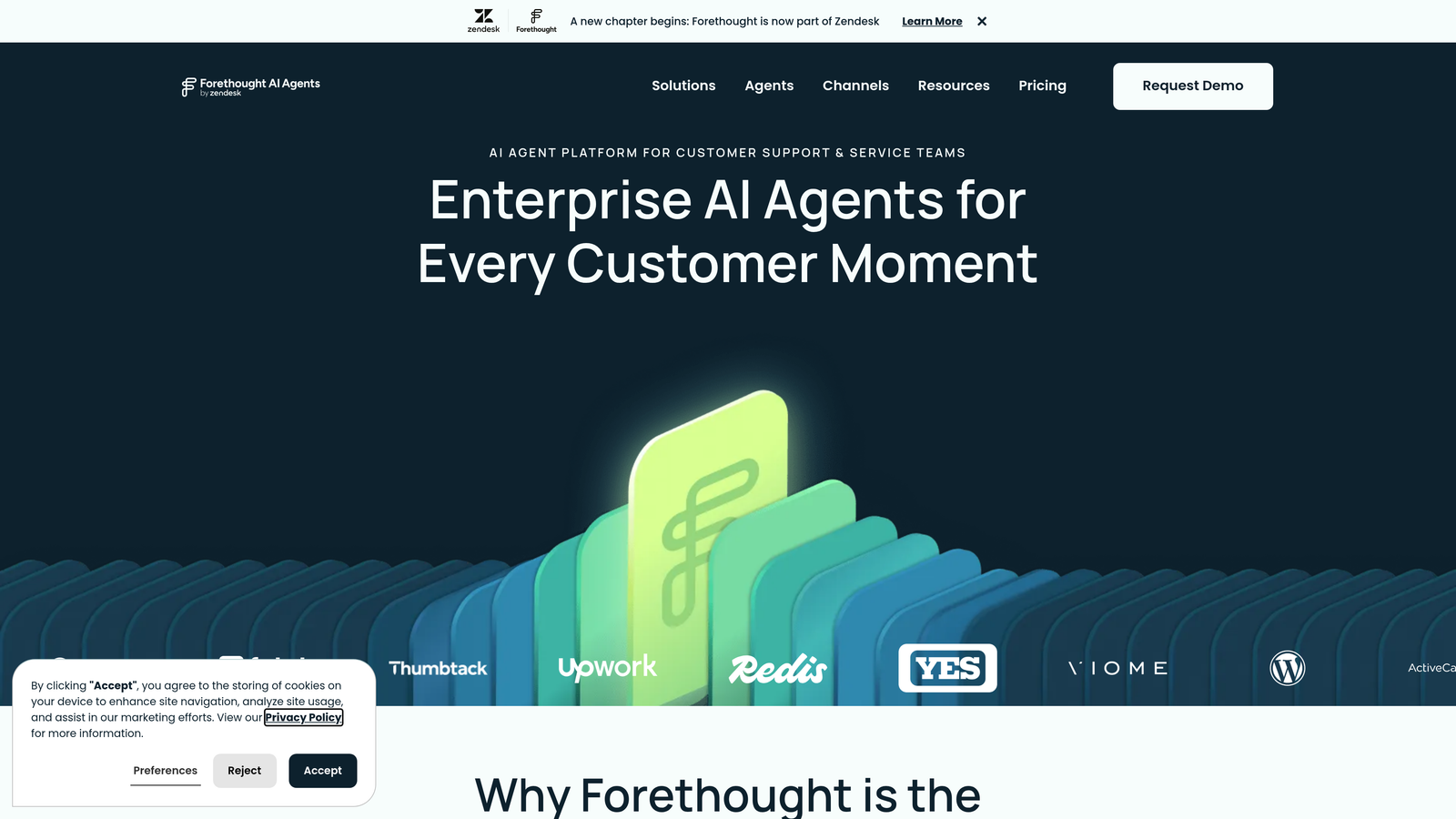
Forethought is an AI middleware platform that layers intelligent triage, routing, and deflection on top of existing helpdesks like Zendesk, Salesforce, and Freshdesk without replacing the underlying system.
Where This Tool Shines
Forethought's positioning as AI middleware is genuinely useful for teams that have significant helpdesk investments they're not ready to abandon. Rather than forcing a platform migration, it adds autonomous triage, routing, and deflection as an intelligence layer sitting above your existing infrastructure.
The Solve AI component handles deflection before a ticket is even created, which is where the real efficiency gains live. Triage AI then ensures that tickets which do get created are classified and routed accurately from the moment they arrive.
Key Features
Triage AI: Automatic ticket classification and routing based on content, intent, and historical patterns.
Solve AI: Pre-ticket deflection that surfaces relevant answers before a customer submits a support request.
Assist AI: Agent response suggestions drawn from knowledge base and similar resolved tickets.
Multi-Helpdesk Compatibility: Works alongside Zendesk, Salesforce, Freshdesk, and ServiceNow without replacing them.
Best For
Mid-market and enterprise teams with established helpdesk deployments who want to add AI capability incrementally. Particularly valuable for organizations where a full platform migration isn't feasible but AI-powered triage and deflection are immediate priorities.
Pricing
Custom pricing. Contact Forethought directly for a quote based on your ticket volume and integration requirements.
8. Kustomer
Best for: High-volume support teams managing complex customer records across multiple channels
Kustomer is a CRM-native support platform that organizes support around the unified customer timeline rather than individual tickets, with AI automation tied to full customer history.
Where This Tool Shines
Kustomer's philosophical difference from traditional helpdesks is meaningful in practice. By centering the experience on the customer timeline rather than the ticket queue, agents always have full context about who they're talking to and what that customer's history looks like. AI automation then operates against that full record, which produces more intelligent routing and more relevant responses.
Omnichannel support across chat, email, SMS, and social media is handled in a single view, which reduces the context-switching that plagues agents using separate tools for each channel.
Key Features
Unified Customer Timeline: All interactions across channels and touchpoints consolidated into a single chronological view per customer.
History-Aware AI Automation: Automation workflows that leverage the full customer record rather than just the current conversation.
Omnichannel Inbox: Chat, email, SMS, and social support managed in one unified interface.
Business Intelligence Reporting: Analytics covering both customer behavior patterns and support team performance metrics.
Best For
High-volume support teams handling complex customer relationships across multiple channels. The timeline-first approach is most valuable when customer history is rich and relevant to how issues should be handled. Less suited for simple, transactional support workflows.
Pricing
Enterprise plans start at approximately $89 per user per month. AI features are included in higher-tier plans.
9. Help Scout
Best for: Teams that want AI to augment agents rather than replace them
Help Scout is a human-first support platform with AI Assist features including AI Drafts, AI Summarize, and AI Answers that enhance agent capability rather than automate it away, with transparent per-user pricing.
Where This Tool Shines
Help Scout occupies a distinct philosophical position in this list. Where most tools optimize for maximum AI autonomy and deflection, Help Scout treats AI as a tool that makes human agents faster and better, not a replacement for them. That philosophy resonates with teams whose support quality depends on genuine human judgment and relationship-building.
AI Summarize condenses long conversation threads into actionable context, which is particularly useful when tickets change hands. AI Drafts gives agents a starting point rather than a finished response, keeping the human voice in every interaction. The Beacon widget brings in-product self-service into the mix without aggressive automation.
Key Features
AI Drafts: Response suggestions that give agents a starting point while preserving their ability to edit and personalize.
AI Summarize: Condenses long conversation threads so agents can get up to speed instantly when picking up a ticket.
AI Answers in Beacon: In-product self-service that surfaces relevant knowledge base content before a user submits a ticket.
Shared Inbox with Collision Detection: Clean collaborative inbox with tagging, assignment, and collision detection to prevent duplicate responses.
Best For
Teams where support quality and human voice matter more than maximum deflection rates. Particularly well-suited for SaaS companies with high-touch customer relationships, small-to-mid-sized teams, and organizations that value transparent, predictable pricing over usage-based billing.
Pricing
Standard plans start at approximately $22 per user per month. AI features are included across plans rather than gated behind add-ons.
Choosing the Right Tool for Your Team
The right choice comes down to four factors: how deep your integration needs are, how much AI autonomy you want, what your budget allows, and how large your team is today versus where it's headed.
For enterprise organizations already running Salesforce or Zendesk across multiple functions, the path of least resistance is deepening those investments with Einstein or Zendesk AI. The integration depth is already there; you're adding intelligence to existing infrastructure. Forethought serves a similar need for teams that want AI capability without migrating platforms.
Mid-market teams with strong conversational support needs will find Intercom and Freshdesk Freddy AI competitive on both capability and price. Kustomer is worth serious consideration for teams managing complex, high-volume customer relationships across multiple channels.
For lean SaaS teams and early-stage companies, Tidio offers the fastest path to AI chat at the lowest entry cost. Help Scout is the right call when you want AI to make your agents better without removing the human element from your support experience.
If you're building a product-led B2B SaaS company and want AI that connects your support layer to your engineering, revenue, and communication stack from day one, Halo AI is in a different category. The page-aware context, auto bug ticket creation to Linear, and business intelligence signals from the smart inbox aren't features you'll find bundled together anywhere else at this level of integration depth.
Your support team shouldn't scale linearly with your customer base. Let AI agents handle routine tickets, guide users through your product, and surface business intelligence while your team focuses on complex issues that need a human touch. See Halo in action and discover how continuous learning transforms every interaction into smarter, faster support.