9 Best AI Support Platforms Compared: Find Your Perfect Fit in 2026
This comprehensive ai support platform comparison evaluates 9 leading solutions to help you select the right fit for your business needs in 2026. We analyze each platform's AI sophistication, integration capabilities, and deployment complexity, examining which excel at high-volume ticket deflection, enterprise workflows, or product-specific guidance, so you can match your support challenges with the ideal solution for your team size and budget.
 Grant CooperFounder11 min read
Choosing an AI support platform feels overwhelming when every vendor promises revolutionary automation and instant ROI. The reality? Each platform excels in different scenarios—some shine with high-volume ticket deflection, others with complex enterprise workflows, and a few specialize in product-aware guidance.
This comparison cuts through the marketing noise to help you match your specific support challenges with the right AI solution. We've evaluated these platforms based on AI sophistication, integration depth, learning capabilities, and real-world deployment complexity.
Whether you're scaling a startup's support operation or modernizing enterprise customer service, you'll find a platform that fits your needs and budget. Here are the top AI support platforms that are reshaping how companies deliver customer service in 2026.
1. Halo AI
Best for: Companies wanting AI agents that learn continuously and understand product context
Halo AI takes a fundamentally different approach by building AI-first rather than bolting automation onto existing helpdesk systems.
Where This Tool Shines
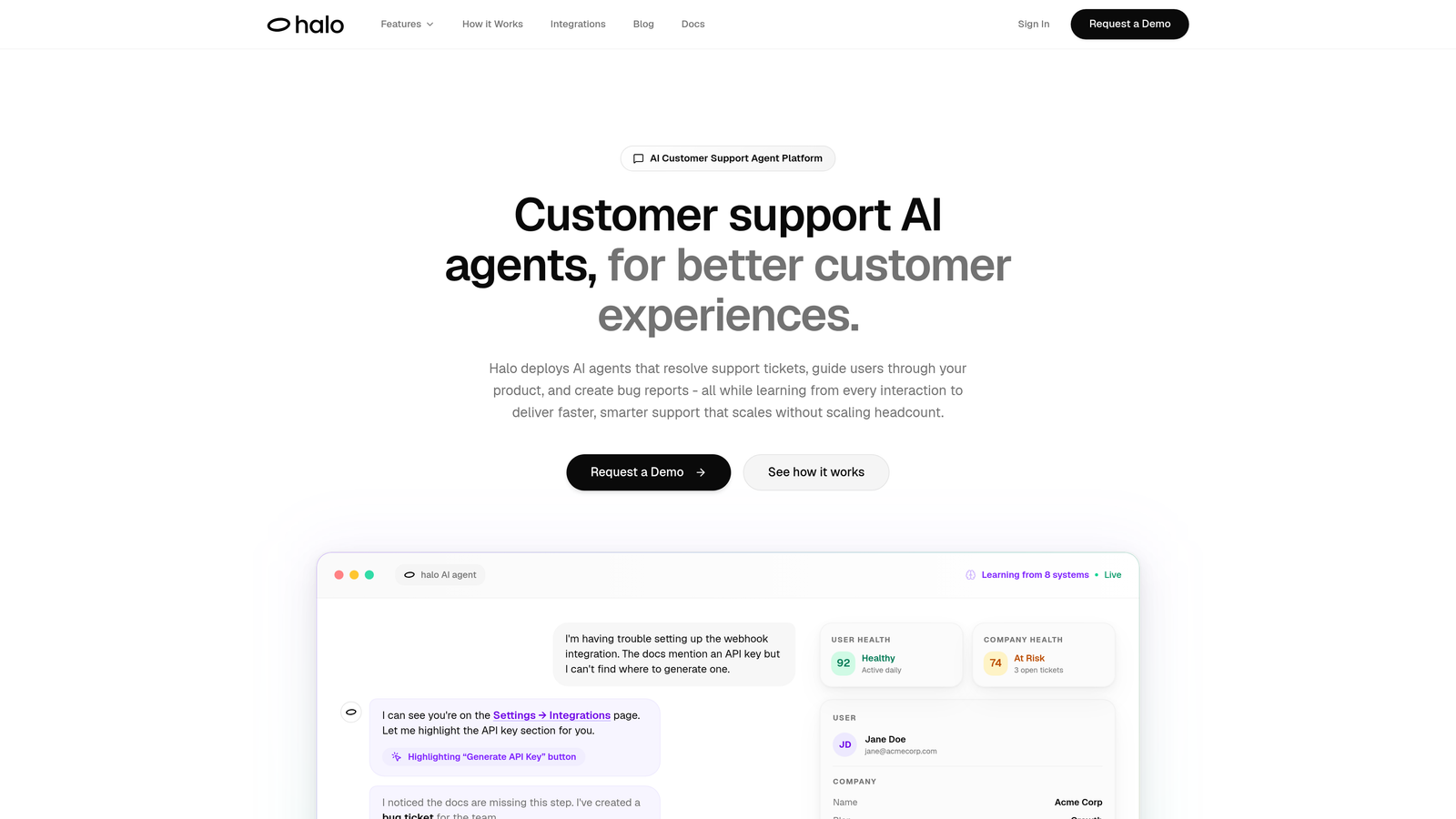
The page-aware architecture stands out immediately. When a user asks for help, Halo's AI agent sees exactly what they're looking at in your product—the same UI, the same data, the same context. This eliminates the endless back-and-forth of "What page are you on?" and "Can you send a screenshot?"
Every resolved ticket makes the system smarter. Unlike platforms that require manual training updates, Halo learns from each interaction automatically. This continuous learning means your AI gets better at handling edge cases and product-specific questions over time without constant maintenance.
Key Features
Page-Aware Chat Widget: Sees your product UI in real-time to provide visual guidance and context-specific answers.
Continuous Learning: Automatically improves from every interaction without manual retraining or knowledge base updates.
Auto Bug Ticket Creation: Detects product issues during support conversations and creates detailed Linear tickets automatically.
Smart Inbox with Business Intelligence: Surfaces customer health signals, revenue intelligence, and anomaly detection beyond basic support metrics.
Seamless Live Agent Handoff: Routes complex issues to human agents with full conversation context and product state.
Best For
B2B SaaS companies and product teams who need more than ticket deflection. Particularly valuable if your support involves product guidance, your team uses tools like Linear or Slack, or you want business intelligence from support conversations. Works best for companies ready to move beyond traditional helpdesk limitations.
Pricing
Contact for custom pricing based on your support volume and integration needs. Demo available to see the page-aware capabilities in action with your actual product.
2. Intercom Fin
Best for: Existing Intercom users wanting GPT-4 powered automation within their messenger
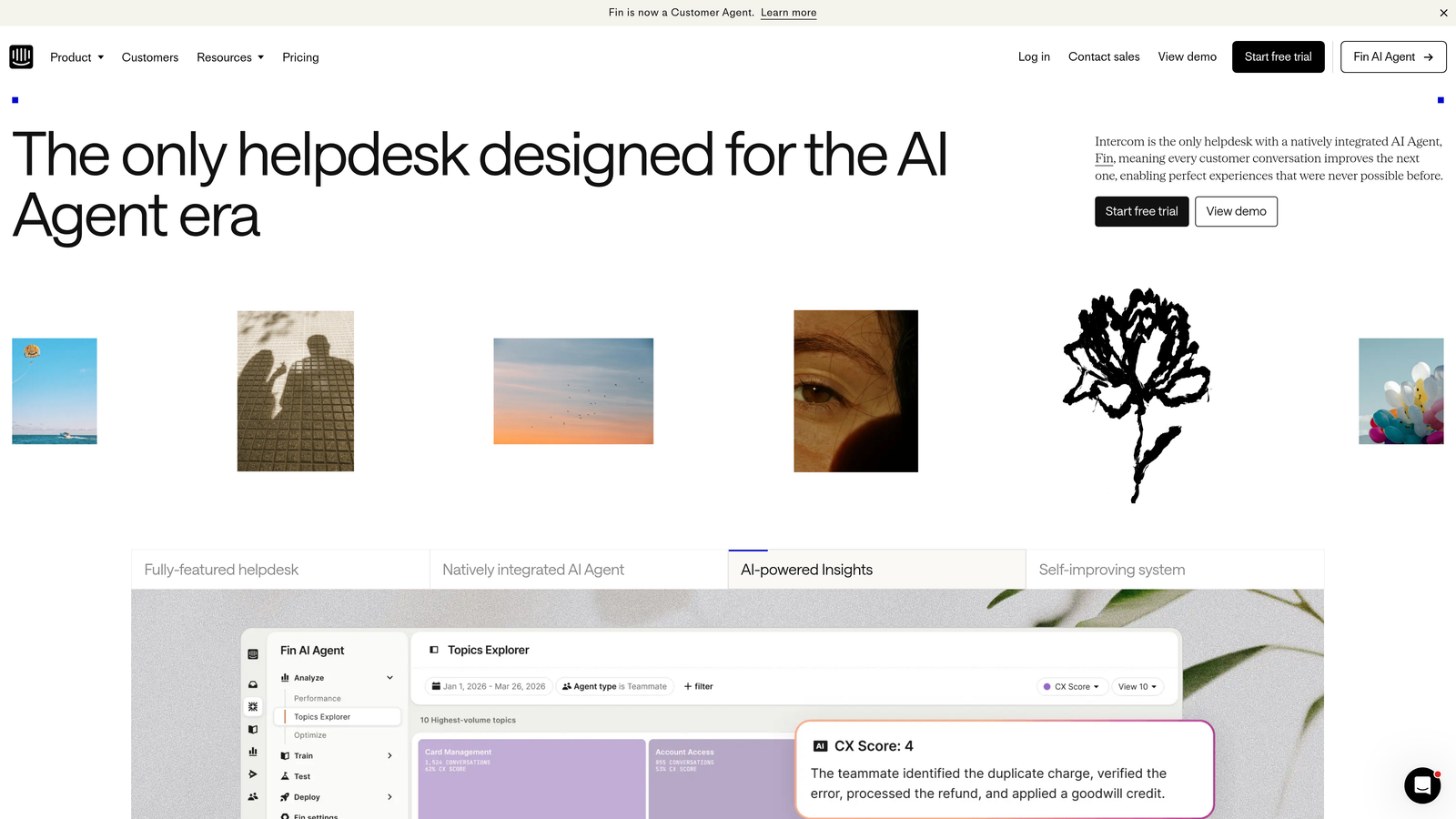
Intercom Fin brings GPT-4 directly into the Intercom messenger ecosystem with native integration.
Where This Tool Shines
If you're already using Intercom, Fin requires almost no setup. It reads your existing help center content and starts answering questions immediately. The tight integration means conversations flow naturally between AI and human agents without switching platforms or losing context.
The usage-based pricing model aligns costs with actual value delivered. You pay per successful resolution rather than per seat or conversation, which can be significantly more economical than traditional pricing structures for companies with variable support volume.
Key Features
GPT-4 Powered Conversations: Uses advanced language models for natural, context-aware responses across diverse topics.
Help Center Learning: Automatically trains on your existing documentation without manual knowledge base restructuring.
Native Messenger Integration: Works seamlessly within Intercom's interface with instant human handoff capabilities.
Resolution-Based Pricing: Pay $0.99 per resolved conversation rather than per-seat licensing.
Intercom Ecosystem Access: Connects to customer data, conversation history, and other Intercom features automatically.
Best For
Companies already invested in the Intercom ecosystem who want to add AI capabilities without platform migration. Especially valuable for businesses with strong help center content and predictable support patterns that GPT-4 can handle effectively.
Pricing
$0.99 per resolution, with a minimum monthly commitment. Requires Intercom subscription as the base platform.
3. Zendesk AI
Best for: Large enterprises with existing Zendesk deployments needing AI augmentation
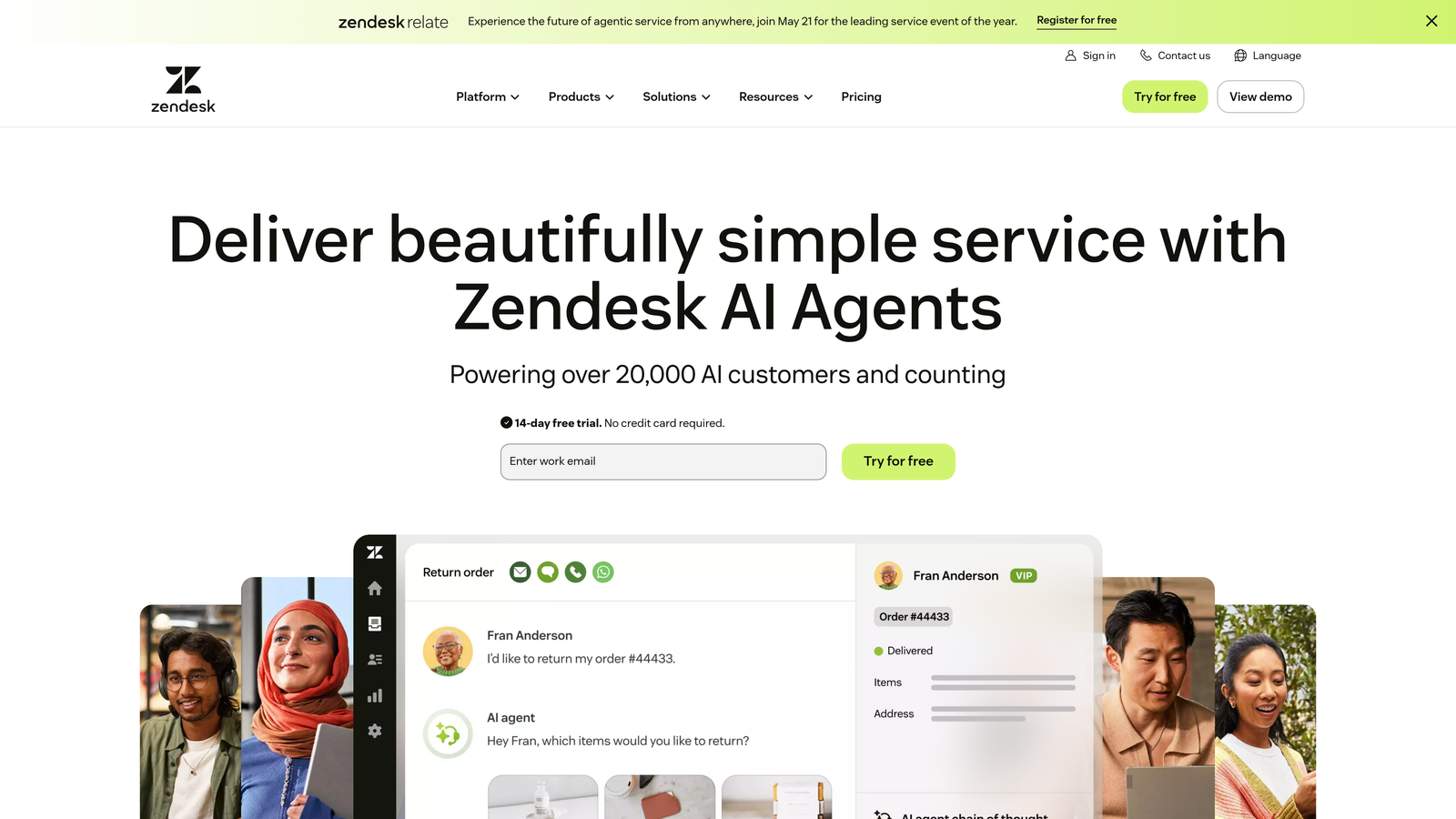
Zendesk AI adds intelligent automation and agent assistance to the Zendesk Suite platform.
Where This Tool Shines
For enterprises already running Zendesk, this AI layer integrates without disrupting established workflows. The intent detection routes tickets accurately from day one by learning from your historical ticket data, and agents get AI-suggested responses that match your brand voice.
The sentiment analysis proves particularly valuable for large support teams. It automatically flags frustrated customers for priority handling and identifies trending issues before they escalate into major problems.
Key Features
Intent Detection and Routing: Analyzes incoming tickets to route them to the right team or automation workflow.
Agent Assist: Provides real-time response suggestions to agents based on ticket content and historical resolutions.
Macro Suggestions: Recommends appropriate macros and workflows based on ticket analysis.
Sentiment Analysis: Identifies customer emotion and urgency to prioritize tickets appropriately.
Deep Suite Integration: Works across all Zendesk products with unified data and consistent automation.
Best For
Enterprises with large Zendesk deployments, multiple support teams, and high ticket volumes. Most valuable when you need both automation and agent augmentation rather than pure deflection.
Pricing
Basic AI features included in Suite Professional plans and above. Advanced AI capabilities available as add-on starting around $50 per agent monthly.
4. Freshdesk Freddy AI
Best for: Omnichannel support teams in the Freshworks ecosystem
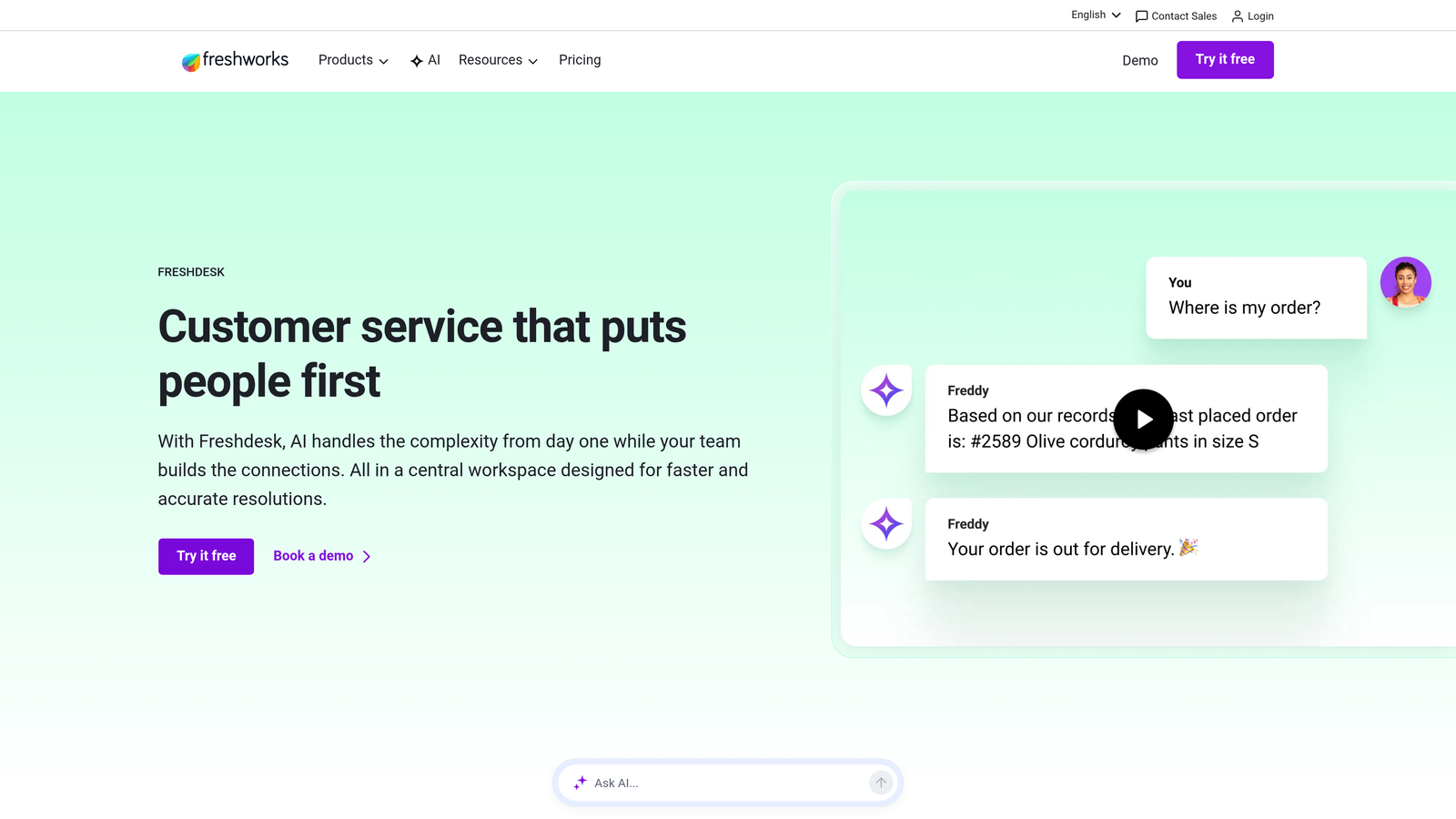
Freshdesk Freddy AI delivers automation across email, chat, phone, and social channels within Freshworks.
Where This Tool Shines
Freddy handles both customer-facing automation and agent assistance in one package. The self-service bot deflects common questions while Freddy Copilot helps agents work faster with suggested responses and auto-filled ticket fields.
The omnichannel deployment means you build automation once and deploy it everywhere. A bot conversation can start on your website, continue via email, and finish on social media without losing context or requiring separate configurations.
Key Features
Freddy Self Service: Customer-facing chatbot that handles common questions and performs simple tasks autonomously.
Freddy Copilot: Agent-facing AI assistant that suggests responses and automates repetitive ticket actions.
Omnichannel Bot Deployment: Deploy the same AI across web, mobile, email, and social channels.
Auto-Triage and Field Suggestions: Automatically categorizes tickets and fills in custom fields based on content.
Built-in Analytics: Tracks bot performance, deflection rates, and identifies automation opportunities.
Best For
Mid-market companies supporting customers across multiple channels who want unified AI automation. Particularly effective if you're already using other Freshworks products like Freshsales or Freshservice.
Pricing
Freddy AI features start at $79 per agent monthly on the Pro plan, with advanced capabilities on higher tiers.
5. Ada
Best for: Global enterprises needing automated resolution across 50+ languages
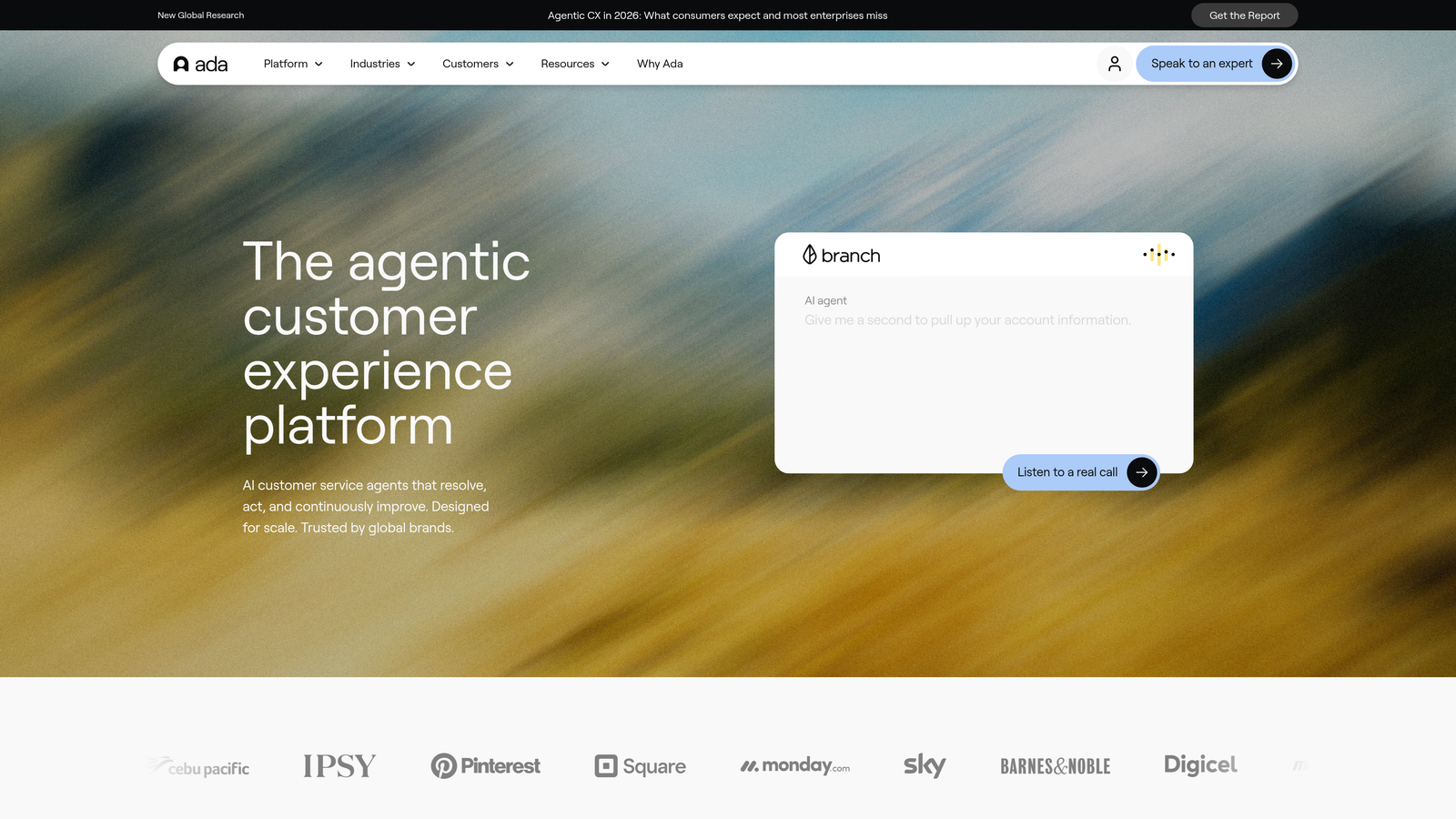
Ada focuses on automated resolution at scale with enterprise-grade customization and multilingual support.
Where This Tool Shines
The no-code bot builder lets business users create sophisticated automation without engineering resources. You build conversation flows visually, and Ada's AI reasoning handles natural language variations without scripting every possible question.
For global companies, the 50+ language support proves transformative. You build automation once in your primary language, and Ada handles localization automatically while maintaining consistent logic across all markets.
Key Features
No-Code Bot Builder: Visual interface for creating complex automation workflows without programming.
50+ Language Support: Automatic translation and localization while maintaining conversation logic.
Proactive Messaging: Trigger automated outreach based on customer behavior or account events.
API-First Architecture: Deep integration capabilities for connecting to any business system.
Resolution Metrics Dashboard: Focus on containment rate and automated resolution rather than vanity metrics.
Best For
Enterprise companies with global operations, high support volume, and complex integration requirements. Best suited for organizations prioritizing automated resolution over agent augmentation.
Pricing
Custom enterprise pricing based on conversation volume and integration complexity. Contact for detailed quote.
6. Kustomer IQ
Best for: Companies wanting CRM-native AI with complete customer context
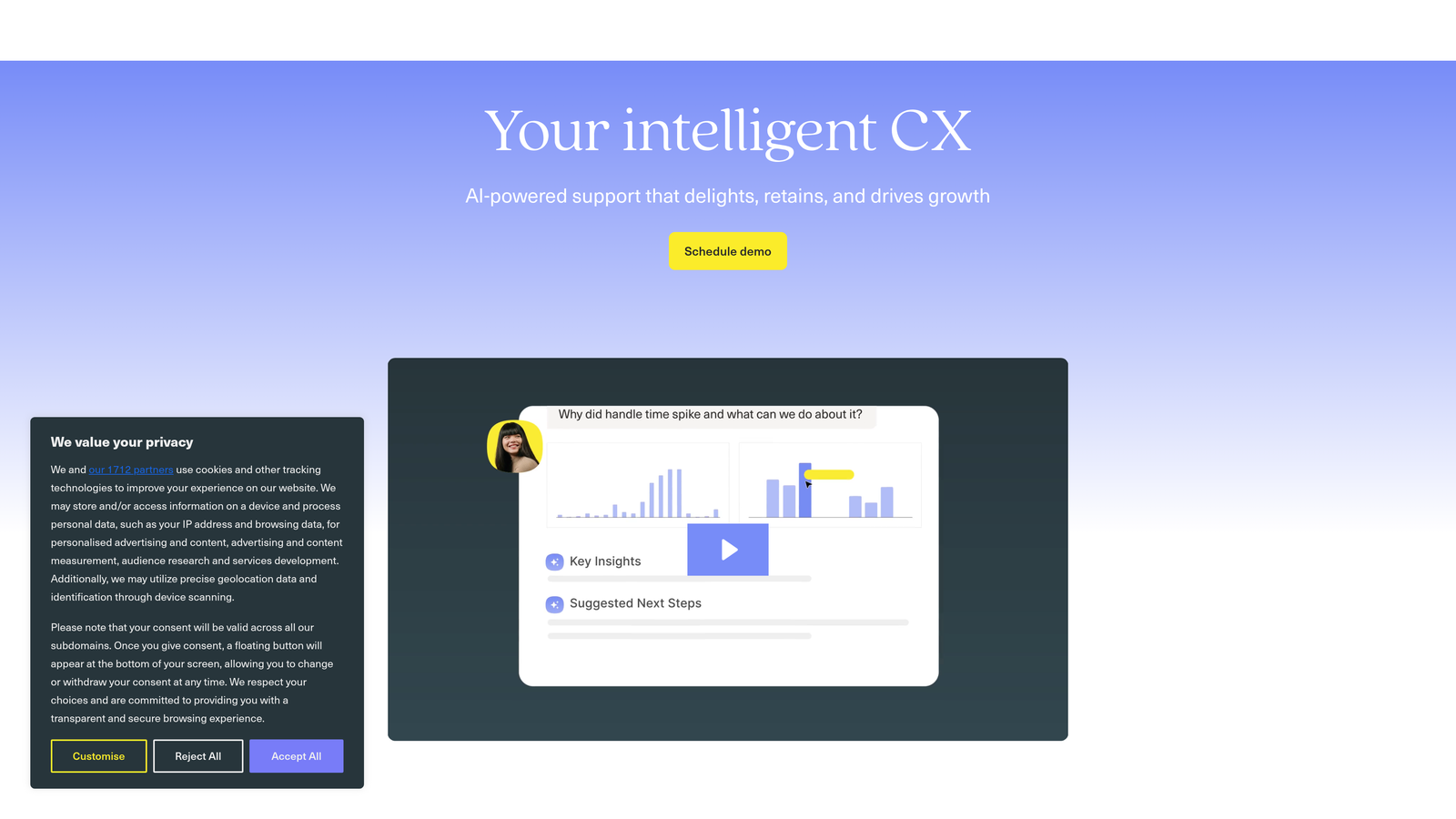
Kustomer IQ embeds AI directly into a customer data platform for context-rich automation.
Where This Tool Shines
The unified customer timeline gives AI access to purchase history, previous conversations, account status, and behavioral data in one view. This means automation can make intelligent decisions based on customer value, history, and context rather than just the current question.
Proactive automation sets Kustomer apart. The platform can trigger outreach automatically when it detects issues, renewal opportunities, or customers who might need help based on their behavior patterns.
Key Features
Unified Customer Timeline: Complete customer history including purchases, interactions, and account data in one interface.
Context-Aware Intent Detection: Routes conversations based on customer data and conversation content together.
Proactive Outreach Automation: Automatically initiates conversations based on customer behavior triggers.
Agent Assist with Customer Insights: Surfaces relevant customer data and suggests actions based on full context.
Conversation Classification: Automatically tags and categorizes conversations for reporting and workflow routing.
Best For
E-commerce and subscription businesses where customer context significantly impacts support decisions. Most valuable when support needs access to order history, subscription status, or customer lifetime value.
Pricing
Available on enterprise tier plans. Contact for pricing based on agent count and feature requirements.
7. Forethought Solve
Best for: Support teams focused on intelligent ticket triage and routing accuracy
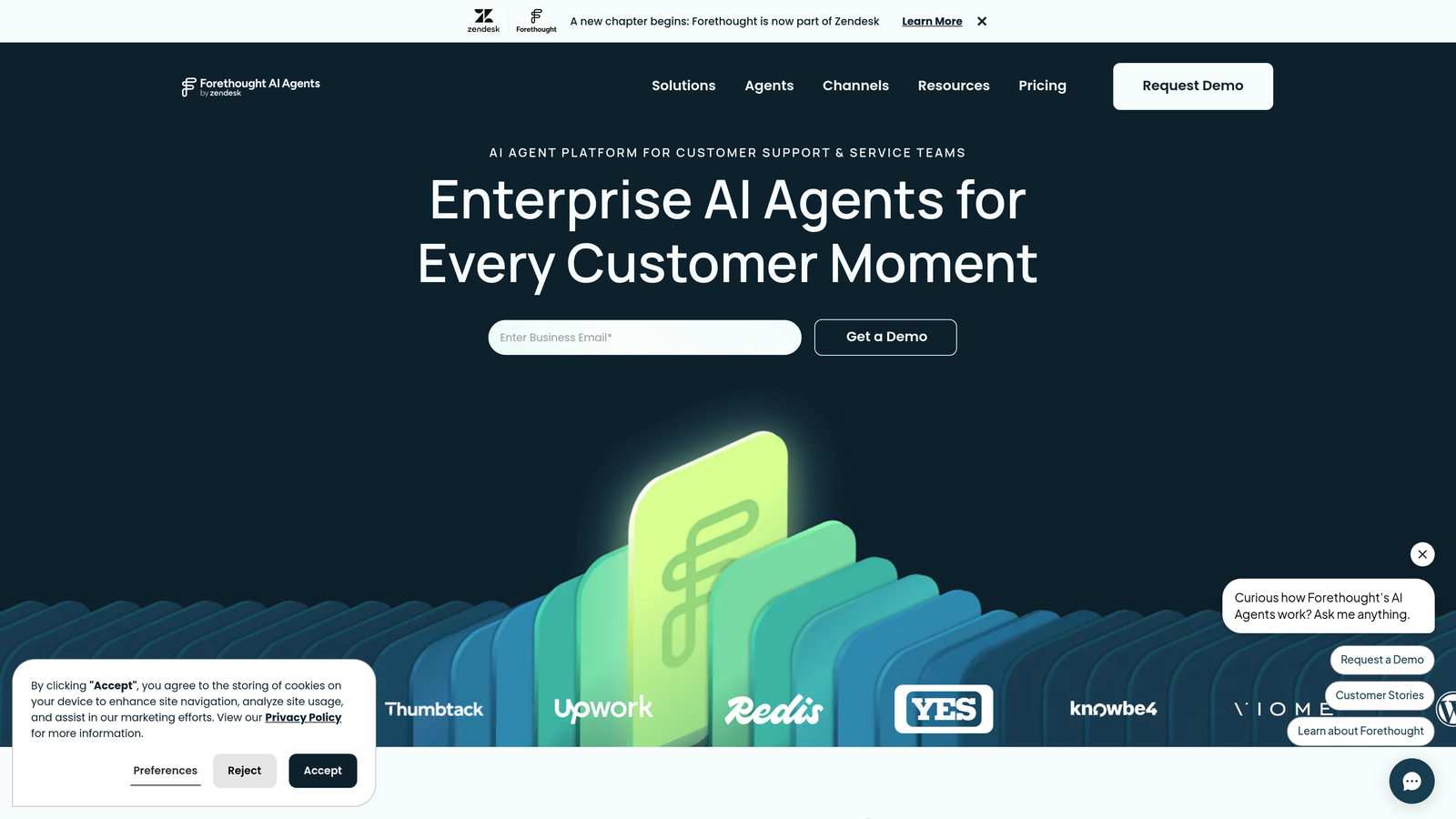
Forethought Solve specializes in predicting ticket complexity and routing conversations to the right resolution path.
Where This Tool Shines
The predictive routing analyzes incoming tickets and determines whether they can be automated, which team should handle them, and what priority level they need. This reduces the manual triage work that typically consumes agent time at the start of each shift.
Knowledge gap identification proves surprisingly valuable. Forethought tracks which questions your AI can't answer well and prioritizes which documentation to create or improve, turning support analytics into a content roadmap.
Key Features
Predictive Ticket Routing: Analyzes tickets to determine optimal handling path and team assignment automatically.
Knowledge Gap Identification: Identifies common questions that lack good answers or documentation.
Workflow Automation Builder: Create multi-step automation sequences that combine AI and human actions.
Agent Assist with Instant Answers: Provides agents with relevant knowledge base articles and suggested responses.
ROI Tracking Dashboard: Measures time saved, tickets deflected, and cost reduction from automation.
Best For
Support organizations with complex ticket types, multiple specialized teams, and significant triage overhead. Works well for companies that need both automation and better manual routing.
Pricing
Custom pricing based on monthly ticket volume and feature requirements. Typically structured with base platform fee plus usage tiers.
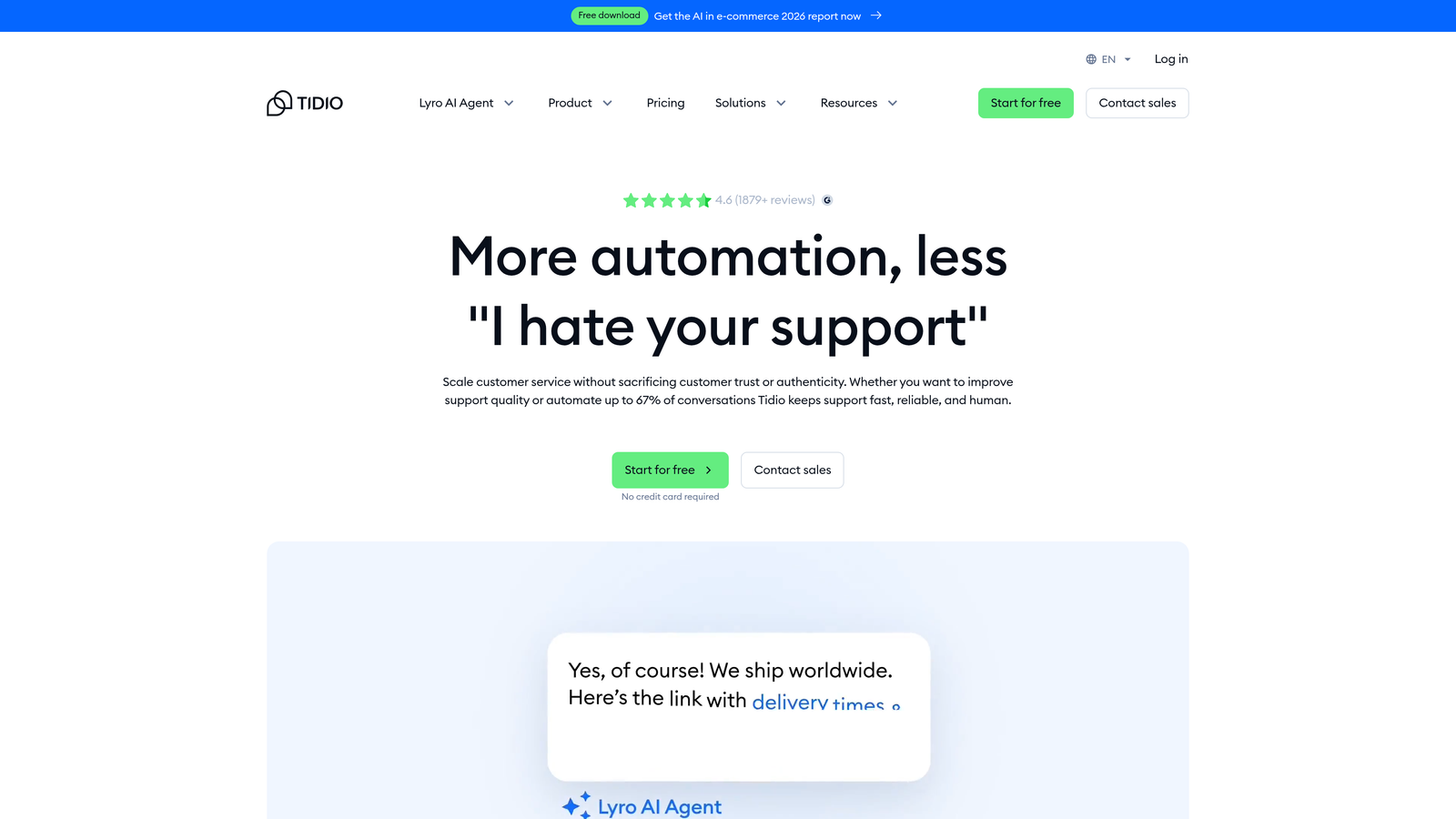
8. Tidio Lyro
Best for: Small businesses and e-commerce sites needing fast, affordable AI deployment
Tidio Lyro delivers conversational AI optimized for quick setup and e-commerce use cases.
Where This Tool Shines
The five-minute setup process gets you from signup to live chatbot faster than any enterprise platform. Lyro reads your FAQ page, trains itself, and starts answering questions without complex configuration or IT involvement.
For e-commerce specifically, the platform handles order tracking, return policies, and product questions right out of the box. The Shopify and WooCommerce integrations let customers check order status or initiate returns through the chat interface.
Key Features
5-Minute Setup: Automated training from existing FAQ content with minimal configuration required.
E-commerce Platform Integrations: Native connections to Shopify, WooCommerce, and other e-commerce systems.
Multilingual Support: Handles conversations in multiple languages without separate bot configurations.
Visual Conversation Builder: Drag-and-drop interface for creating custom conversation flows when needed.
Per-Conversation Pricing: Affordable pricing model that scales with actual usage rather than seat count.
Best For
Small to medium e-commerce businesses, startups, and companies with straightforward support needs. Ideal when you need AI quickly without enterprise complexity or budget.
Pricing
Starts at $39 monthly for 50 AI conversations, with higher tiers for increased volume. Significantly more affordable than enterprise platforms.
9. Ultimate.ai
Best for: European enterprises requiring GDPR-compliant AI with EU data residency
Ultimate.ai offers enterprise conversational AI built with European data privacy requirements as the foundation.
Where This Tool Shines
The GDPR-first architecture handles data privacy requirements that many global platforms struggle with. Customer data stays in EU data centers, processing follows strict privacy rules, and the platform provides detailed audit trails for compliance reporting.
Multi-brand management becomes straightforward when you're running support for several companies or product lines. You build shared automation logic while maintaining separate branding, knowledge bases, and reporting for each brand from one platform.
Key Features
GDPR-Compliant Data Handling: Built-in privacy controls and EU data residency for regulatory compliance.
Multi-Brand Management: Manage automation for multiple brands or products from a single platform.
Deep CRM Integrations: Connects to Salesforce, HubSpot, and other enterprise CRM systems for customer context.
Conversation Analytics: Detailed reporting on automation performance, customer satisfaction, and containment rates.
EU Data Residency Options: Keep all customer data and processing within European Union infrastructure.
Best For
European enterprises, companies with strict data privacy requirements, and organizations managing multiple brands. Particularly valuable if GDPR compliance is a deal-breaker for your AI deployment.
Pricing
Enterprise pricing model with custom quotes based on conversation volume and integration requirements. Contact for detailed pricing.
Making the Right Choice for Your Support Team
The right AI support platform depends less on features and more on your specific situation. If you're already invested in Intercom or Zendesk, their native AI options offer the smoothest deployment path. Small e-commerce businesses typically find better value and faster setup with Tidio Lyro than enterprise platforms.
For companies needing more than basic ticket deflection, platforms that understand product context make a significant difference. Halo AI's page-aware approach eliminates the context-gathering that typically consumes the first several exchanges in support conversations. Ada and Ultimate.ai excel when you need global scale with multilingual support or strict data privacy requirements.
The deployment complexity varies dramatically. Some platforms like Tidio get you live in minutes, while enterprise solutions like Kustomer or Forethought require weeks of integration and configuration. Consider whether you need a quick win or a comprehensive transformation when evaluating setup timelines.
Integration depth matters more than most buyers initially realize. Platforms that connect only to your helpdesk can automate basic questions, but those that access your CRM, billing system, and product data can resolve significantly more complex issues autonomously.
Your support team shouldn't scale linearly with your customer base. Let AI agents handle routine tickets, guide users through your product, and surface business intelligence while your team focuses on complex issues that need a human touch. See Halo in action and discover how continuous learning transforms every interaction into smarter, faster support.