9 Best AI Support Platforms for Agencies in 2026
This guide evaluates nine leading AI support platforms for agencies in 2026, comparing options based on multi-client management, white-label capabilities, automation depth, and integration flexibility. Whether you're a digital agency, BPO, or consultancy, these platforms are assessed through an agency-specific lens to help you scale service quality across diverse client portfolios without inflating costs.
 Grant CooperFounder13 min read
Agencies juggle multiple client accounts, each with unique products, workflows, and customer bases. That makes support a uniquely complex challenge. Between white-label requirements, multi-tenant management, and the constant pressure to keep costs lean while scaling service quality, you need AI support platforms built for your reality, not just generic helpdesk tools with an AI label slapped on.
This guide evaluates nine AI support platforms through an agency-specific lens: multi-client management, integration flexibility, automation depth, and the ability to deliver measurable results across diverse portfolios. Whether you're a digital agency managing SaaS clients, a BPO handling outsourced support, or a consultancy building support operations for customers, these platforms represent the strongest options available in 2026.
1. Halo AI
Best for: Agencies needing AI-first autonomous support with deep integrations and business intelligence across client accounts.
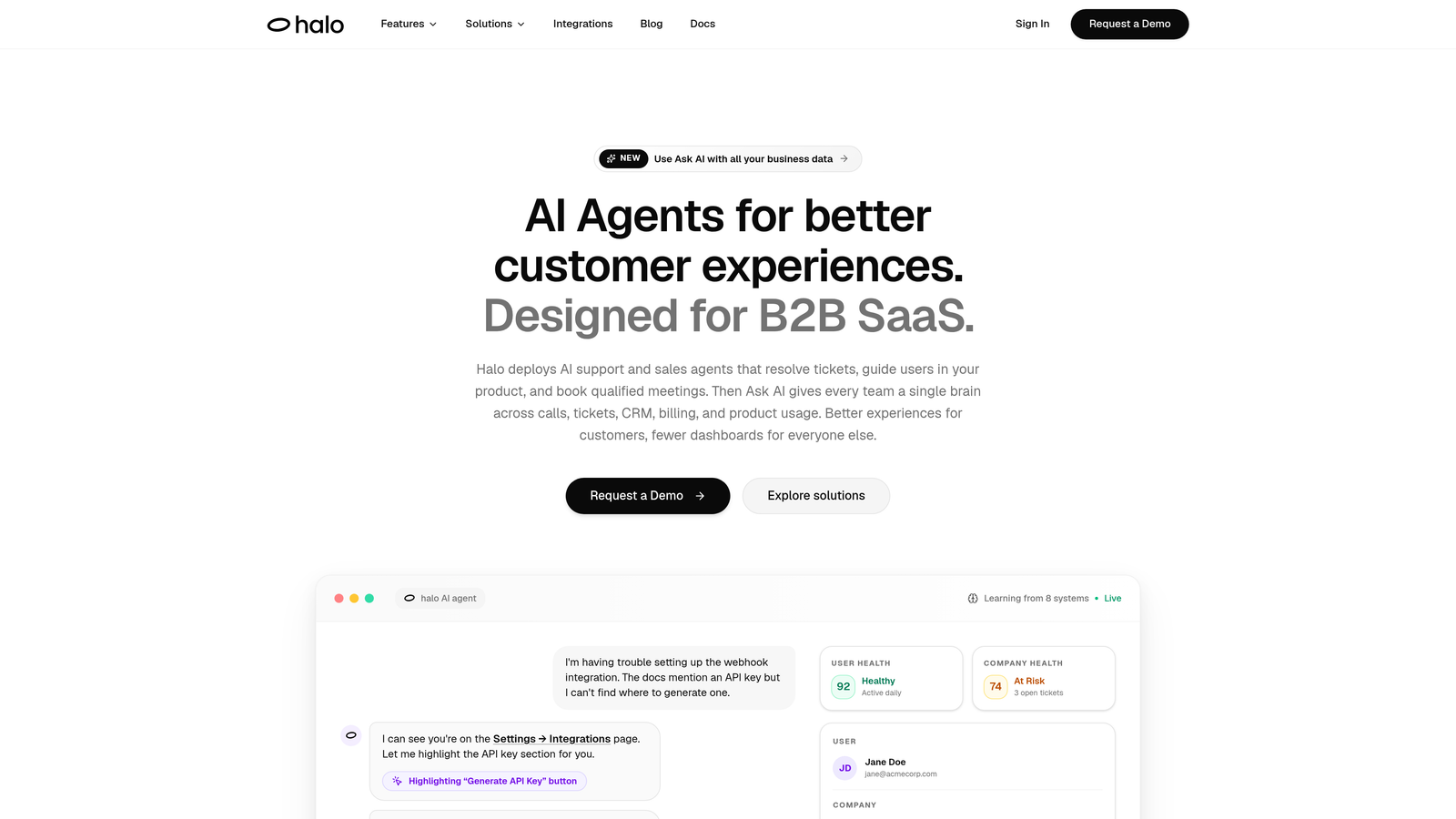
Halo AI is an AI-first customer support platform where intelligent agents autonomously resolve tickets, provide page-aware visual guidance, and surface business intelligence across the full support stack.
Where This Tool Shines
What separates Halo from legacy helpdesks with AI bolted on is its architecture. The platform was built around AI from the ground up, which means its agents don't just suggest responses — they resolve tickets autonomously and learn continuously from every interaction. For agencies, that continuous improvement loop compounds across client accounts over time.
The page-aware chat widget is a standout capability. It sees exactly what a user sees on screen and delivers visual UI guidance in context, rather than sending users off to a generic knowledge base article. Pair that with the smart inbox's business intelligence layer, which surfaces customer health signals, revenue intelligence, and anomaly detection, and you have a platform that gives agencies something genuinely valuable to show clients beyond ticket close rates.
Key Features
Autonomous AI Agents: Resolve support tickets end-to-end with continuous learning that improves resolution quality over time.
Page-Aware Chat Widget: Detects the user's current page context and delivers visual, in-product guidance rather than generic responses.
Smart Inbox with Business Intelligence: Aggregates customer health signals, revenue intelligence, and anomaly detection alongside standard support data.
Auto Bug Ticket Creation: Automatically generates bug reports from support interactions and routes complex issues to live agents when needed.
Deep Integration Stack: Connects natively with Linear, Slack, HubSpot, Intercom, Stripe, Zoom, PandaDoc, and Fathom — covering the full operational stack agencies typically manage.
Best For
Agencies managing SaaS clients who need more than ticket deflection. Halo is particularly well-suited for teams that want to deliver business intelligence and product insights to clients alongside support metrics, and for agencies building scalable support operations without scaling headcount proportionally.
Pricing
Contact Halo AI directly for pricing. Given the platform's AI-first architecture and integration depth, pricing is tailored to agency needs and client account volume.
2. Intercom
Best for: Agencies serving SaaS companies that need conversational AI with proactive messaging and a mature app ecosystem.
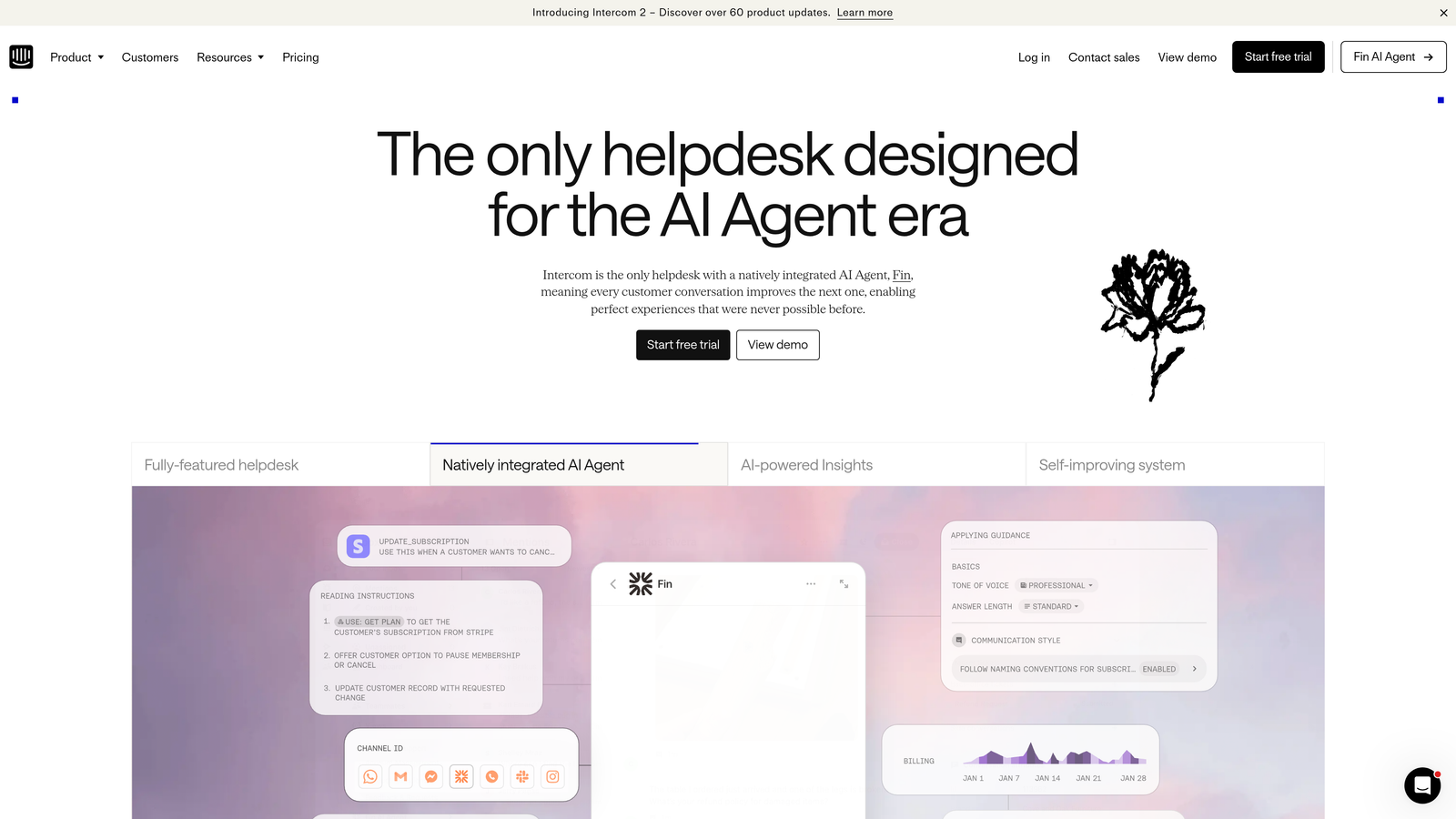
Intercom is a full-stack customer messaging platform with a Fin AI agent for conversational support automation, knowledge base integration, and proactive in-product messaging.
Where This Tool Shines
Intercom's Fin AI agent has become one of the more capable conversational AI tools in the market, trained on your knowledge base to handle common queries without human involvement. For agencies serving SaaS clients, it's a natural fit because so many SaaS companies already use or recognize Intercom, which reduces onboarding friction.
The platform's breadth is also a genuine advantage. Proactive messaging, product tours, and a unified inbox across chat, email, and social channels mean agencies can offer clients a more complete customer communication strategy, not just reactive support automation.
Key Features
Fin AI Agent: Handles conversational support resolution using knowledge base content, with billing tied to successful resolutions.
Unified Inbox: Consolidates chat, email, and social channel conversations in a single workspace.
Custom Bots and Workflow Builder: No-code tools for building automated workflows and conversation flows.
Proactive Messaging and Product Tours: Enables outbound engagement and in-product onboarding, extending beyond reactive support.
App Marketplace: Extensive third-party integrations and a robust API for custom connections.
Best For
Agencies whose clients are primarily SaaS companies or tech-forward businesses already operating in the Intercom ecosystem. Less ideal for agencies needing white-label branding or managing clients with highly varied tech stacks.
Pricing
Starts at $39 per seat per month. Fin AI resolutions are billed separately per successful resolution, so costs can scale quickly at higher volumes.
3. Zendesk AI
Best for: Agencies managing enterprise clients who need multi-brand support, advanced analytics, and a proven platform with deep marketplace integrations.
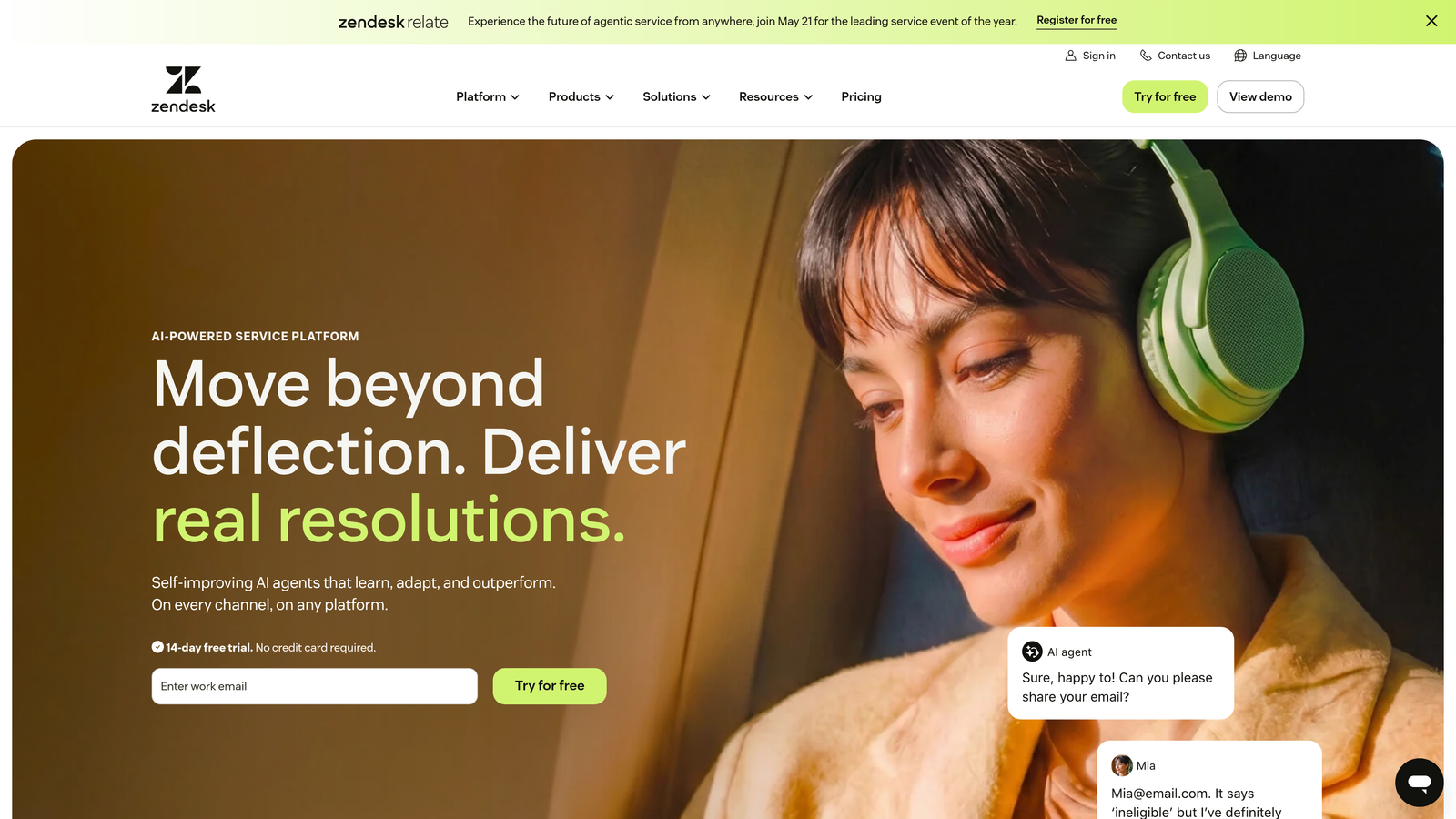
Zendesk is an enterprise-grade helpdesk platform with AI agents, intelligent triage, and advanced analytics built for complex, multi-channel support operations.
Where This Tool Shines
Zendesk's multi-brand support capability is one of its strongest selling points for agencies. You can manage multiple client identities, each with their own branded help centers, ticket workflows, and reporting, from a single instance. That kind of structural separation is critical when you're accountable to multiple clients with different SLAs and expectations.
The platform's expanded AI features, including AI agents for automated resolution and intelligent triage for ticket classification and routing, have matured considerably. The 1,500+ integration marketplace also means Zendesk can fit into almost any client's existing tech stack without custom development work.
Key Features
AI Agents: Automate ticket resolution across channels with generative AI trained on your knowledge base content.
Intelligent Triage: Automatically classifies, prioritizes, and routes incoming tickets based on content and intent.
Multi-Brand Support: Manage separate branded help centers and workflows for multiple clients within one account.
Advanced Analytics: Custom reporting dashboards with deep operational metrics across teams and channels.
Marketplace Integrations: Over 1,500 pre-built integrations covering CRM, e-commerce, communication, and productivity tools.
Best For
Agencies with enterprise clients or complex support operations that require structured multi-brand management, detailed reporting, and a large integration ecosystem. Smaller agencies may find the pricing and complexity more than they need.
Pricing
Suite Team starts at $55 per agent per month. AI features and advanced add-ons are priced separately, so total costs can increase meaningfully at scale.
4. Freshdesk (Freddy AI)
Best for: Cost-conscious agencies managing SMB clients who need solid helpdesk functionality with AI automation at accessible price points.
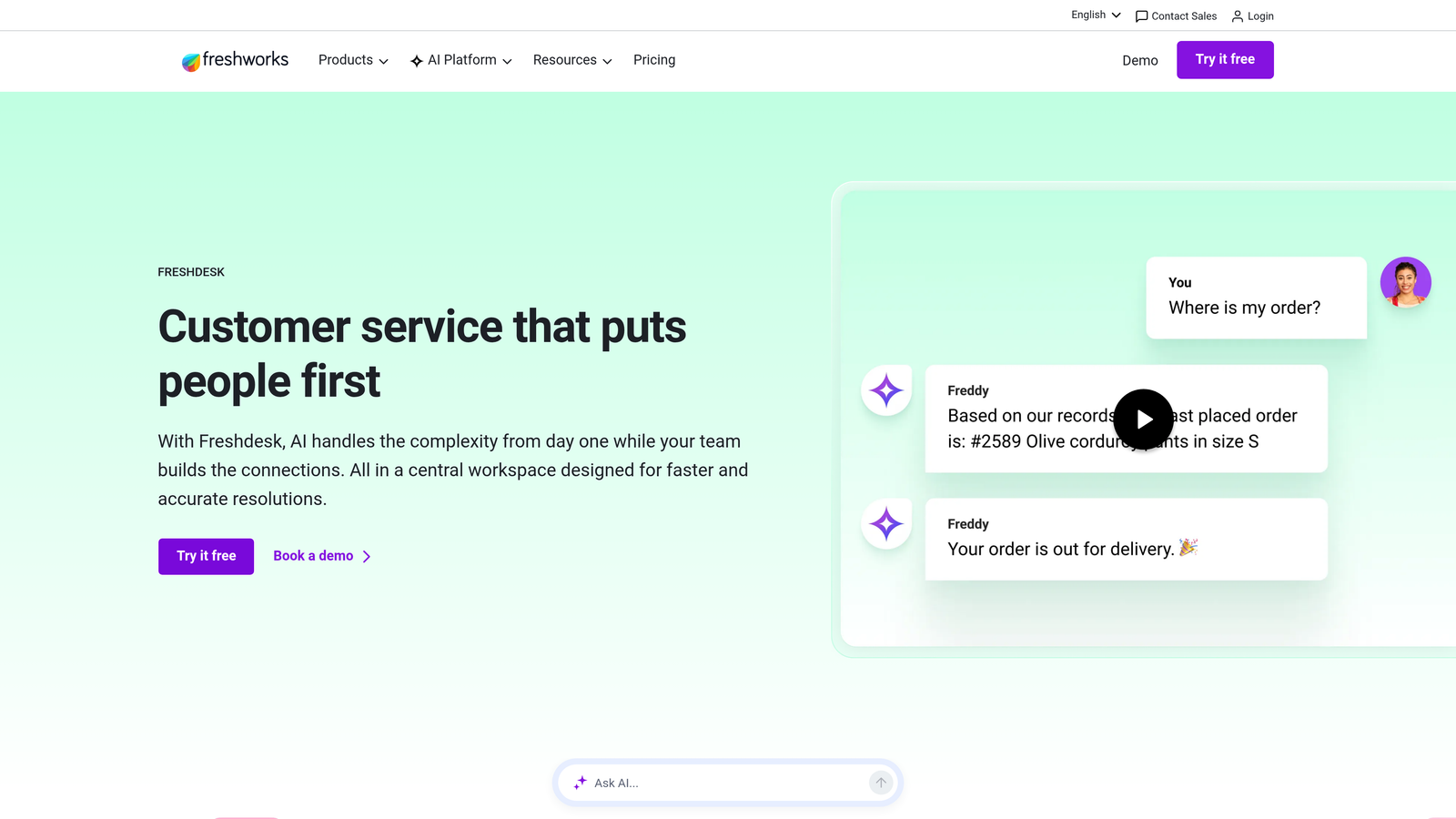
Freshdesk is a cost-effective helpdesk platform with Freddy AI for ticket automation, agent assist, and self-service bots within the broader Freshworks ecosystem.
Where This Tool Shines
Freshdesk's combination of a free tier, competitive paid plans, and the Freddy AI layer makes it one of the more accessible options for agencies that need to deliver value to SMB clients without high per-seat costs. Freddy handles auto-triage, suggested responses, and ticket summarization without requiring heavy configuration.
The broader Freshworks ecosystem is also worth noting. If your clients need CRM, marketing automation, or IT service management alongside support, Freshworks offers native products that connect cleanly, reducing integration complexity for agencies managing full-stack deployments.
Key Features
Freddy AI: Provides auto-triage, suggested responses, ticket summarization, and self-service chatbot capabilities.
Self-Service Chatbot Builder: Knowledge base-powered bot with customizable conversation flows for deflecting common queries.
Multi-Product Freshworks Suite: Native connections to Freshsales CRM, Freshmarketer, and Freshservice for broader client deployments.
SLA Management: Customizable ticket workflows and SLA policies across different client accounts.
Affordable Pricing with Free Tier: Accessible entry point for agencies onboarding smaller clients with limited budgets.
Best For
Agencies serving small to mid-sized businesses that prioritize cost efficiency and straightforward setup over cutting-edge AI capabilities. Also strong for agencies already embedded in the Freshworks ecosystem.
Pricing
Free tier available for basic use. Pro plan starts at $49 per agent per month. Freddy AI capabilities are tiered across plan levels.
5. Ada
Best for: Agencies with high-volume clients in e-commerce or fintech who want maximum automated resolution with minimal human intervention.
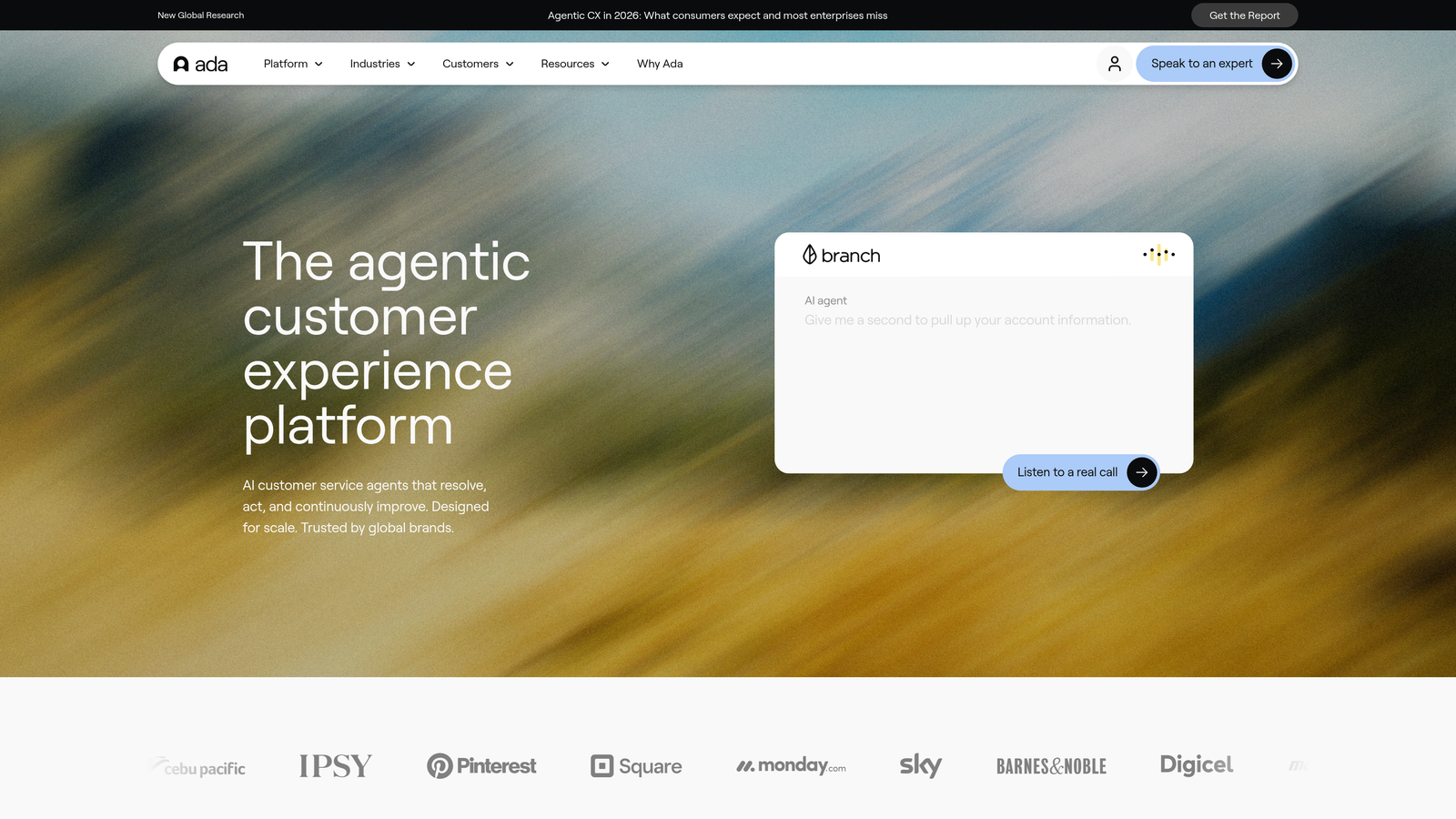
Ada is an AI-first automation platform designed for high-volume automated resolution without human handoff, using generative AI trained on company-specific knowledge.
Where This Tool Shines
Ada's positioning is distinct: it's not trying to be a full helpdesk. It's focused on automated resolution, and it's built to handle as much volume as possible without escalating to a human. That makes it particularly compelling for agencies with clients who receive large volumes of repetitive, predictable queries where automation ROI is clearest.
The no-code conversation design tools give agencies flexibility to build and iterate on bot flows without engineering resources. And Ada's enterprise-grade security and compliance certifications make it viable for clients in regulated industries like fintech or healthcare.
Key Features
Generative AI Agent: Trained on company-specific knowledge sources to handle queries with contextual, accurate responses.
No-Code Bot Builder: Conversation design tools that let agencies build and adjust flows without technical resources.
Multi-Channel Deployment: Deploys across web, mobile, social channels, and SMS from a single configuration.
Resolution Analytics: Tracks automated resolution rates and performance metrics to demonstrate ROI to clients.
Enterprise Security: Compliance certifications suitable for regulated industry clients.
Best For
Agencies managing clients in high-volume, query-heavy verticals like e-commerce, fintech, or consumer apps where automated resolution rates are the primary success metric. Less suited for agencies that need deep helpdesk functionality alongside the AI layer.
Pricing
Custom pricing based on resolution volume. Contact Ada's sales team directly. Expect enterprise-level investment given the platform's positioning.
6. Tidio
Best for: Agencies serving small e-commerce or retail businesses that need fast, affordable AI chatbot deployment with minimal setup.
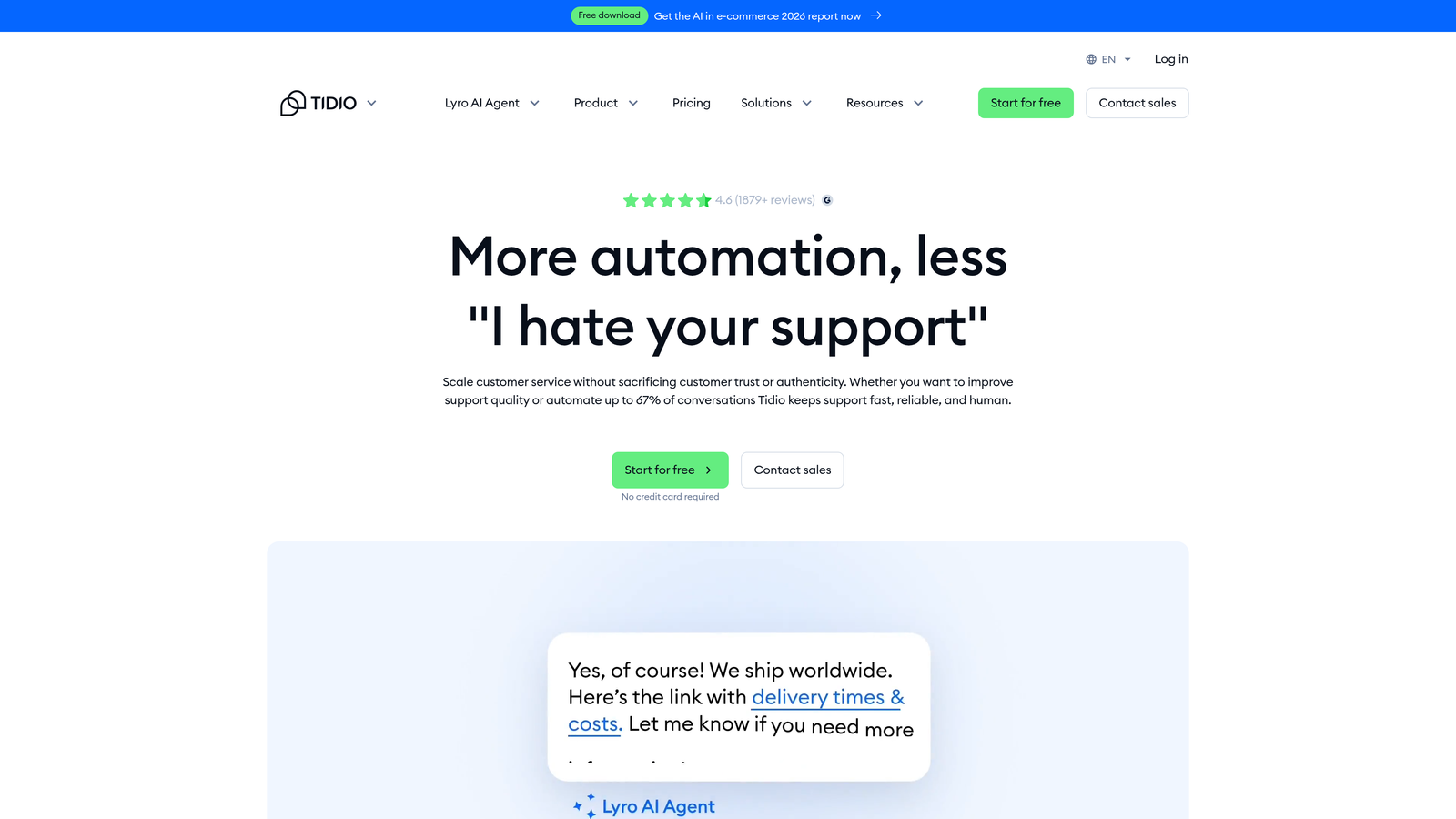
Tidio is an accessible AI chatbot platform featuring Lyro AI for fast deployment, visual flow building, and affordable support automation for smaller businesses.
Where This Tool Shines
Tidio's speed-to-value is genuinely impressive at its price point. The Lyro AI chatbot can be trained on a knowledge base and deployed in hours rather than weeks, which matters for agencies that need to onboard clients quickly and show early results. The visual drag-and-drop flow builder keeps configuration accessible for team members who aren't technical.
For agencies serving Shopify or WooCommerce merchants, Tidio's e-commerce integrations are a practical advantage. The platform connects directly to order data and product information, allowing the chatbot to answer order status queries and product questions without human involvement.
Key Features
Lyro AI Chatbot: Conversational AI trained on knowledge base content with fast setup and natural language handling.
Visual Flow Builder: Drag-and-drop interface for building chatbot conversation flows without coding.
Live Chat with AI Suggestions: Agents receive AI-powered reply suggestions during live conversations to speed up response times.
E-Commerce Integrations: Native connections to Shopify, WooCommerce, and other e-commerce platforms.
Pre-Built Templates: Ready-to-use flow templates that reduce initial configuration time significantly.
Best For
Agencies managing small business or e-commerce clients where budget is a primary constraint and fast deployment matters more than enterprise-grade customization or deep analytics.
Pricing
Free plan available for basic live chat. Lyro AI starts at $39 per month, making it one of the more affordable AI chatbot options in this list.
7. HubSpot Service Hub
Best for: Agencies already managing clients on HubSpot CRM who want to unify support, marketing, and sales data in a single platform.
HubSpot Service Hub is a support platform natively integrated with HubSpot CRM, unifying customer support data with marketing and sales for full-journey visibility.
Where This Tool Shines
If your agency already manages clients on HubSpot, Service Hub is a natural extension rather than a separate tool to integrate. The native CRM connection means the AI chatbot has full customer context, including deal history, lifecycle stage, and previous interactions, before the conversation even starts. That context makes automated responses noticeably more relevant.
The platform also gives agencies a compelling story around full-funnel visibility. Support data feeds directly into the same CRM that tracks marketing and sales activity, so clients can see how support interactions influence retention and expansion revenue without stitching together data from multiple systems.
Key Features
AI Chatbot with CRM Context: Delivers personalized automated responses using full HubSpot CRM data for each contact.
Shared Inbox with Routing: Automated ticket routing and prioritization across email and chat channels.
Customer Feedback and NPS: Built-in survey tools for tracking satisfaction and Net Promoter Score across client accounts.
Knowledge Base with AI Search: Self-service knowledge base with AI-powered search to surface relevant articles quickly.
Native HubSpot Integration: Seamless data sharing with Marketing Hub and Sales Hub for complete customer journey visibility.
Best For
Agencies that have standardized on HubSpot across marketing, sales, and CRM for their clients. The value compounds significantly when clients are already in the HubSpot ecosystem. Less compelling as a standalone support tool for non-HubSpot clients.
Pricing
Free tools available for basic ticketing and live chat. Professional plan starts at $100 per seat per month, which is on the higher end for smaller client accounts.
8. Kustomer
Best for: Agencies serving DTC brands, retail, or high-growth e-commerce clients who need omnichannel CRM-style support with AI classification and sentiment analysis.
Kustomer is an omnichannel CRM-based support platform with timeline-based customer views, AI classification, and sentiment detection for consumer-facing brands.
Where This Tool Shines
Kustomer's timeline-based customer view is its most distinctive feature. Rather than presenting support as a series of disconnected tickets, it aggregates every interaction across every channel into a single chronological view per customer. For agencies managing clients with high-volume, relationship-driven support, that context changes how agents approach every conversation.
The AI layer adds classification, routing, and sentiment analysis on top of that rich customer view, which means agents can prioritize based on customer value and emotional context, not just ticket age. For DTC and retail clients where customer lifetime value varies significantly, that kind of intelligent routing can meaningfully improve outcomes.
Key Features
Timeline Customer View: Aggregates all interactions across channels into a single chronological customer history.
AI Classification and Routing: Automatically classifies incoming messages and routes them based on content, intent, and customer data.
Sentiment Analysis: Detects customer sentiment in real time to help prioritize and personalize responses.
Omnichannel Coverage: Supports email, chat, social, SMS, and voice from a single platform.
E-Commerce Integrations: Connects with Shopify, Magento, and other platforms to pull order and transaction data into the customer view.
Best For
Agencies with DTC, retail, or high-volume consumer brand clients where relationship context and omnichannel coverage are essential. Pricing makes it better suited for mid-market and enterprise client accounts.
Pricing
Enterprise pricing starting at $89 per user per month. Best suited for client accounts where the per-seat cost is justified by support volume and complexity.
9. Kommunicate
Best for: Agencies and resellers that need white-label AI chatbot deployments with flexible human handoff and multi-language support across diverse client bases.
Kommunicate is a lightweight generative AI chatbot platform with white-label capabilities, easy bot training, and human handoff built specifically with agencies and resellers in mind.
Where This Tool Shines
Kommunicate's white-label options are a genuine differentiator for agencies that want to deliver branded support experiences to clients without the platform's own branding appearing anywhere in the product. That kind of clean agency-branded deployment is harder to achieve with most enterprise platforms, which tend to prioritize their own brand visibility.
The platform also works well as a front-end AI layer on top of existing helpdesks. If a client already uses Zendesk or Freshdesk but wants to add a conversational AI chatbot without migrating their entire support stack, Kommunicate can integrate as the customer-facing layer while tickets flow through to the existing system underneath.
Key Features
Generative AI Chatbot: Trained on custom URLs, documents, and FAQs with minimal configuration required.
White-Label Deployment: Agency-branded chatbot experiences with no Kommunicate branding visible to end users.
Human Handoff: Seamless escalation to live agents with full conversation context transferred.
Multi-Language Support: Handles conversations in multiple languages, useful for agencies with international client portfolios.
Helpdesk Integration Layer: Connects with Zendesk, Freshdesk, and other platforms as a front-end chatbot layer without replacing the underlying system.
Best For
Agencies that sell branded support solutions to clients, resellers building white-label products, and teams that need to add AI chatbot capability to clients' existing helpdesk setups without a full platform migration.
Pricing
Starts at $100 per month with custom agency plans available. The white-label and reseller pricing structure makes it one of the more agency-friendly options in the market.
Choosing the Right AI Support Platform for Your Agency
The right platform depends heavily on your agency's client mix, the support complexity you're managing, and the outcomes you need to demonstrate.
If you're building scalable support operations for SaaS clients and want to deliver business intelligence alongside ticket resolution, Halo AI is the strongest option. Its AI-first architecture, page-aware context, and continuous learning model are purpose-built for agencies that want to move beyond basic deflection metrics and show clients real operational value.
For agencies embedded in the Intercom or HubSpot ecosystems, Intercom and HubSpot Service Hub offer the deepest native value without requiring additional integration work. Zendesk AI remains the go-to for agencies with enterprise clients who need multi-brand management and a mature marketplace.
If cost efficiency is the priority, Freshdesk and Tidio offer solid AI automation at accessible price points, particularly for agencies serving SMBs. For white-label deployments specifically, Kommunicate is the most agency-native option in this list.
Here's a quick selection guide by use case:
AI-first architecture with business intelligence: Halo AI
SaaS clients in the Intercom ecosystem: Intercom
Enterprise multi-brand management: Zendesk AI
SMB clients on a budget: Freshdesk or Tidio
High-volume automated resolution: Ada
DTC and retail omnichannel support: Kustomer
White-label branded deployments: Kommunicate
Full HubSpot ecosystem clients: HubSpot Service Hub
Your support team shouldn't scale linearly with your customer base. Let AI agents handle routine tickets, guide users through your product, and surface business intelligence while your team focuses on complex issues that need a human touch. See Halo in action and discover how continuous learning transforms every interaction into smarter, faster support.