9 Best AI Support Platform Integrations in 2026
This guide ranks the 9 best AI Support Platform Integrations in 2026, evaluating each platform on the depth of its native integrations, how effectively those connections surface customer context during live interactions, and whether the platform can act across systems — not just read from them. It's an essential resource for teams replacing legacy helpdesks or layering AI onto an existing support stack.
 Matt PattoliFounder13 min read
When your AI support platform can't talk to the rest of your stack, agents end up flying blind. No customer history, no billing context, no way to escalate intelligently. The best AI support platforms in 2026 don't just resolve tickets; they connect your entire business ecosystem so every interaction is informed, contextual, and actionable.
This list covers the top AI support platforms with the strongest integration ecosystems available today. We evaluated each on depth of native integrations, how well those connections surface useful context during live interactions, and whether the platform can act across systems rather than simply read from them. Whether you're replacing a legacy helpdesk or layering AI on top of existing tools, these platforms represent the strongest options for teams that take integrations seriously.
1. Halo AI
Best for: B2B SaaS teams that need AI agents to act across their entire business stack autonomously.
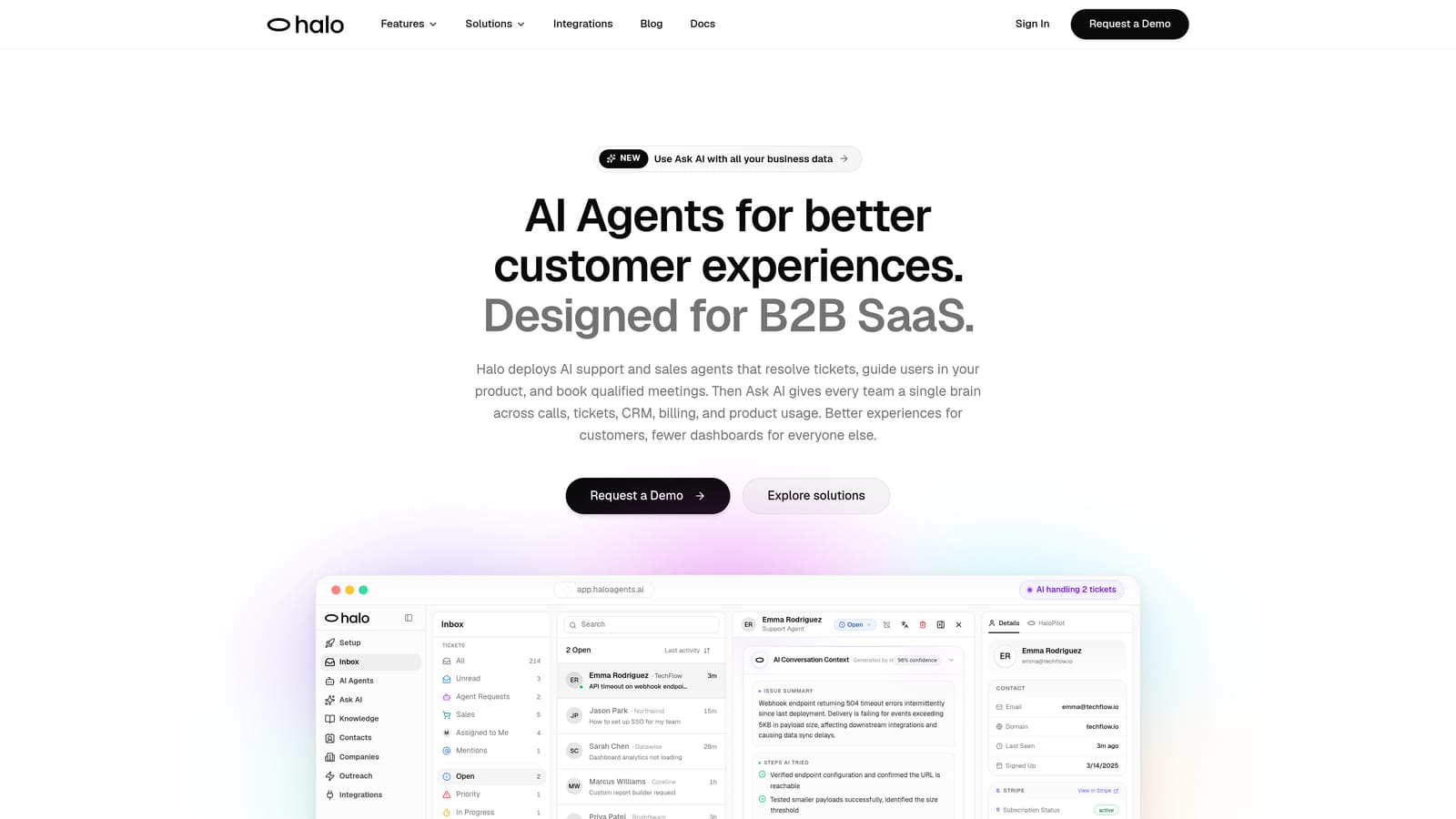
Halo AI is an AI-first customer support platform that deploys autonomous agents capable of resolving tickets, guiding users with page-aware context, and taking real actions inside connected systems.
Where This Tool Shines
Most support platforms treat integrations as a data display feature: pull the customer's Stripe subscription into the sidebar so your agent can see it. Halo AI takes a different approach. Its AI agents don't just read from connected systems; they act within them. That means automatically creating a Linear bug ticket when a user reports a reproducible issue, updating a HubSpot contact record after a resolution, or triggering a Slack notification to the right team without a human in the loop.
The page-aware chat widget is particularly distinctive. The AI sees what the user sees on screen, allowing it to offer contextual, visual guidance rather than generic instructions. Combined with continuous learning from every resolved interaction, the platform gets meaningfully smarter over time rather than staying static.
Key Features
Native Integration Suite: Connects natively to Linear, Slack, HubSpot, Intercom, Stripe, Zoom, PandaDoc, and Fathom — covering the core B2B SaaS stack.
Page-Aware Chat Widget: The AI sees the user's current screen context, enabling precise, visual product guidance rather than generic answers.
Auto Bug Ticket Creation: Automatically routes reproducible issues directly to Linear, removing manual triage from the engineering handoff process.
Smart Inbox with Business Intelligence: Surfaces customer health signals, revenue anomalies, and other business intelligence signals beyond standard support metrics.
Live Agent Handoff: Escalates complex or sensitive issues to human agents with full context preserved, so no one starts from scratch.
Continuous Learning: Improves resolution quality with every interaction, building a compounding knowledge base over time.
Best For
B2B SaaS product teams and customer success organizations that want AI agents operating autonomously across their stack, not just surfacing data for humans to act on. Particularly strong for teams already using Linear, HubSpot, and Stripe as core operational tools.
Pricing
Contact for pricing via a demo-based sales process. Visit haloagents.ai to book a demo and discuss your specific integration requirements.
2. Intercom
Best for: Teams that want a mature messenger-first platform with a broad third-party app ecosystem.
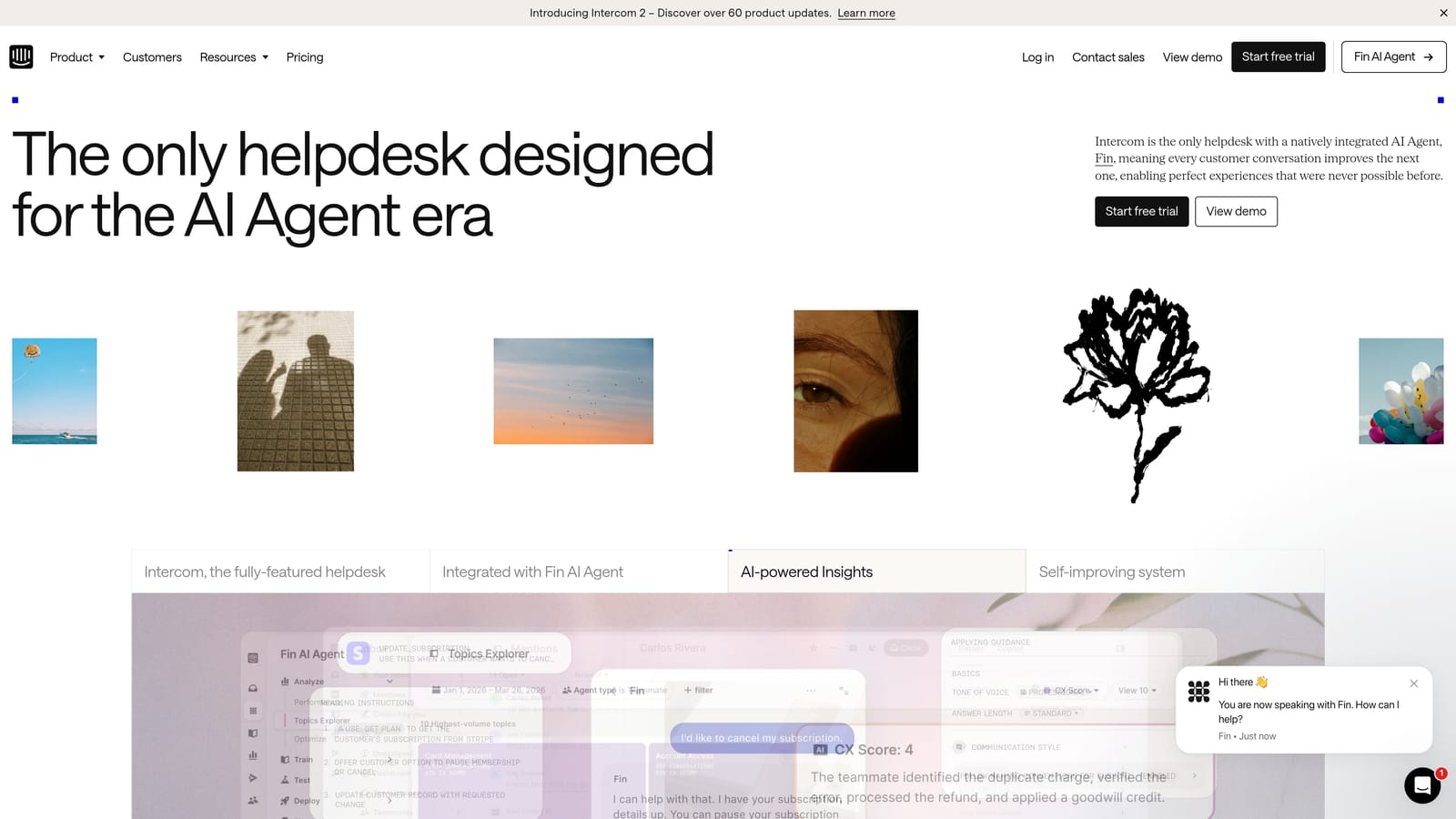
Intercom is a well-established customer communications platform featuring its Fin AI agent and a large App Store for third-party integrations.
Where This Tool Shines
Intercom's strength lies in its maturity. The platform has been refining its messenger experience and integration ecosystem for years, and it shows. The App Store gives teams access to a wide range of third-party connections, while native integrations with Salesforce, HubSpot, Stripe, and Slack cover most standard B2B support workflows.
Fin, Intercom's AI agent, handles automated ticket resolution and has improved considerably in recent releases. The platform's omnichannel coverage across chat, email, and in-app messaging makes it versatile for teams serving users across multiple touchpoints.
Key Features
Fin AI Agent: Handles automated ticket resolution using your knowledge base and connected data sources.
App Store Ecosystem: A wide range of third-party integrations available through the marketplace.
Native CRM and Billing Connections: Built-in integrations with Salesforce, HubSpot, Stripe, and Slack.
Omnichannel Messaging: Supports chat, email, and in-app messaging from a unified inbox.
Workflow Automation: Routing rules and escalation automation to direct conversations to the right team or bot.
Best For
Teams that prioritize a polished messenger experience and want broad integration coverage through a marketplace model. Works well for both B2B and B2C products that rely heavily on in-app chat as a primary support channel.
Pricing
Multiple pricing tiers available; AI features are included on higher-tier plans. Check intercom.com for current pricing details.
3. Zendesk
Best for: Enterprise teams that need maximum integration flexibility and a massive app marketplace.
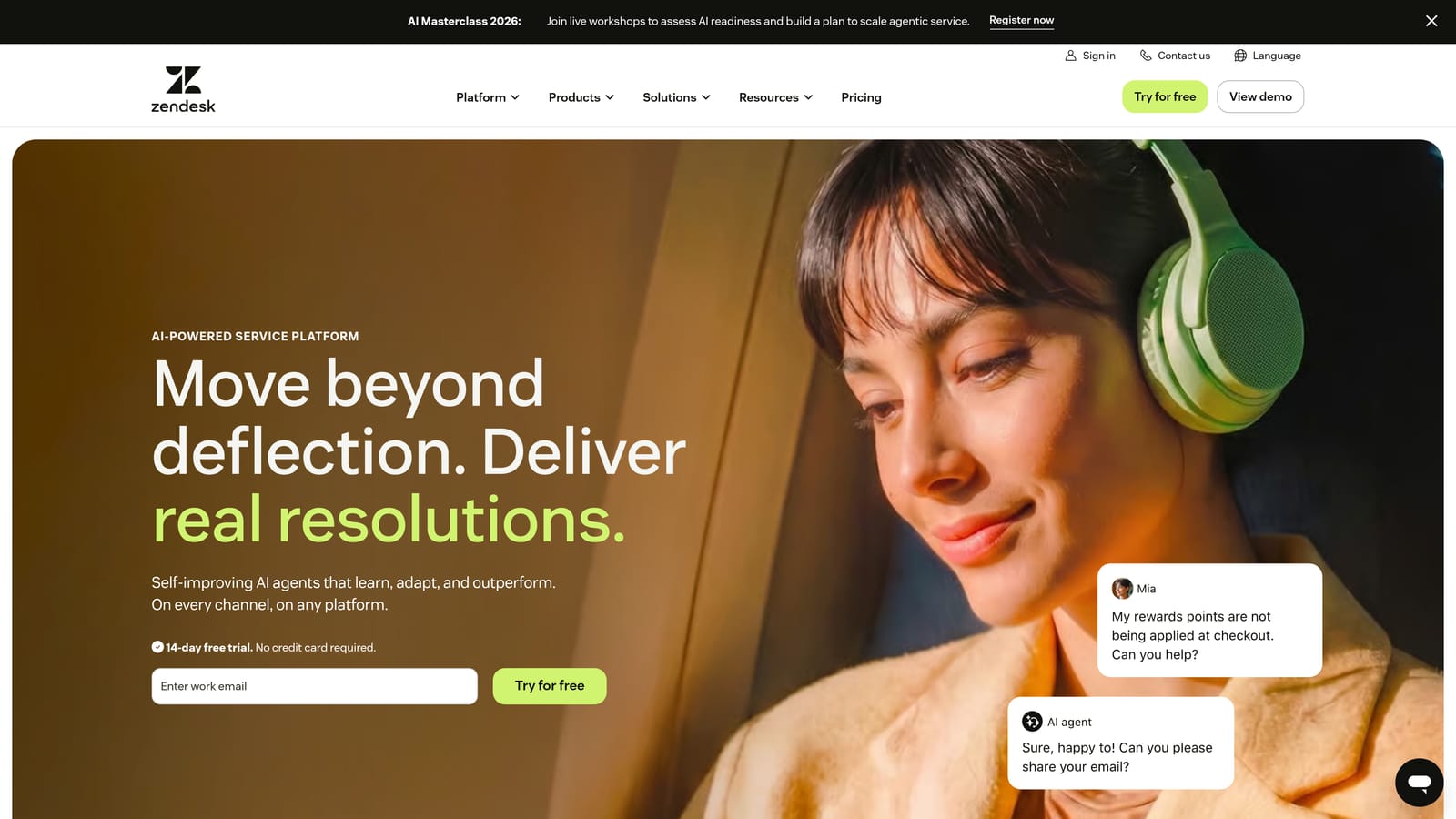
Zendesk is the industry-standard enterprise helpdesk, offering a marketplace of over 1,500 apps and robust APIs for custom integration development.
Where This Tool Shines
No platform on this list matches Zendesk's sheer breadth of available integrations. With over 1,500 apps in its marketplace and well-documented APIs, Zendesk can connect to virtually any tool in your stack — though it often requires dedicated admin time to build and maintain those connections. For enterprise teams with Salesforce admins and IT resources, that flexibility is genuinely valuable.
Zendesk AI adds ticket classification, triage, and suggested responses on top of the core helpdesk. It's a capable layer, though it operates more as an enhancement to the existing ticket system than as a fundamentally AI-native architecture.
Key Features
1,500+ App Marketplace: The largest integration marketplace in the support platform space.
Zendesk AI: Ticket classification, triage automation, and suggested responses for agents.
Flexible APIs: Well-documented REST APIs for building custom integrations when marketplace options don't cover your needs.
Advanced Workflow Automation: Sophisticated routing and escalation rules for complex support operations.
Enterprise Reporting: Comprehensive analytics and reporting across tickets, agents, and channels.
Best For
Large enterprise support teams with dedicated admin resources who need maximum integration flexibility and are comfortable investing in setup and maintenance. Less ideal for smaller teams looking for out-of-the-box simplicity.
Pricing
Per agent per month across multiple tiers, from Suite Team through Suite Enterprise. Visit zendesk.com for current pricing.
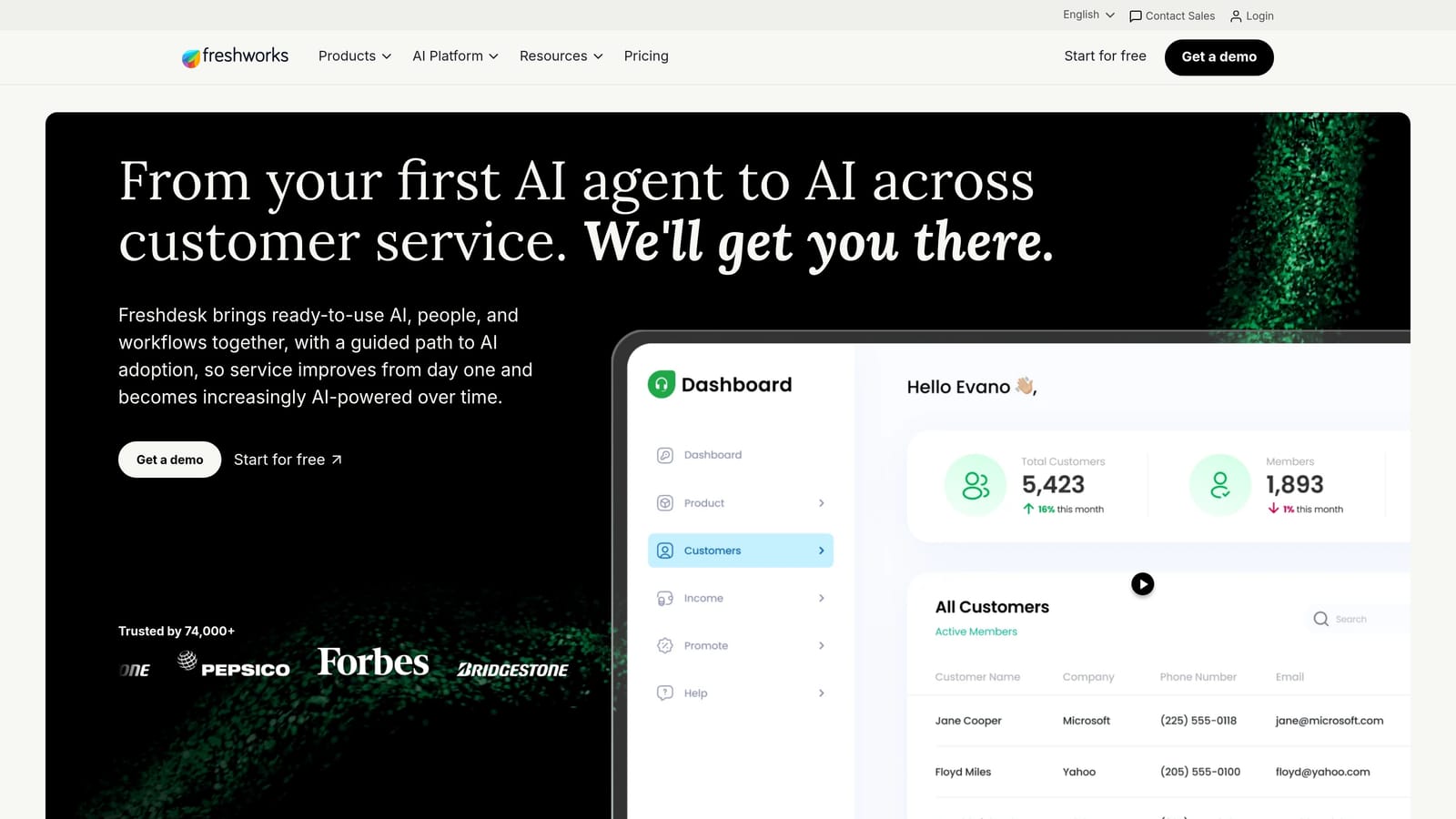
4. Freshdesk
Best for: SMBs that want solid native integrations without enterprise pricing or complexity.
Freshdesk is Freshworks' helpdesk product offering SMB-friendly pricing with reliable native integrations across popular business tools.
Where This Tool Shines
Freshdesk hits a practical sweet spot: enough integration coverage for most growing teams, without the setup complexity or per-seat pricing that makes enterprise platforms prohibitive at smaller scale. Native connections to Slack, Shopify, Salesforce, and Jira cover the most common workflows, and the free tier makes it accessible for teams just starting to formalize their support operations.
Freddy AI, Freshdesk's AI layer, handles automated responses and ticket classification. It's functional rather than transformative, but for teams whose primary goal is reducing manual triage rather than deploying fully autonomous agents, it gets the job done.
Key Features
Native Integrations: Built-in connections to Slack, Shopify, Salesforce, and Jira without marketplace add-ons required.
Freddy AI: Automated responses, ticket classification, and suggested solutions for agents.
Omnichannel Support: Handles email, chat, phone, and social from a unified inbox.
Free Tier: A genuinely usable free plan for small teams getting started.
App Marketplace: Additional integrations available for teams with more complex needs.
Best For
SMBs and growing startups that need solid helpdesk functionality with reliable integrations at a manageable price point. Particularly well-suited for e-commerce teams using Shopify alongside standard business tools.
Pricing
Free tier available; paid plans billed per agent per month. Check freshdesk.com for current tier details.
5. Salesforce Service Cloud
Best for: Enterprise teams running their entire business on Salesforce who need support natively embedded in that ecosystem.
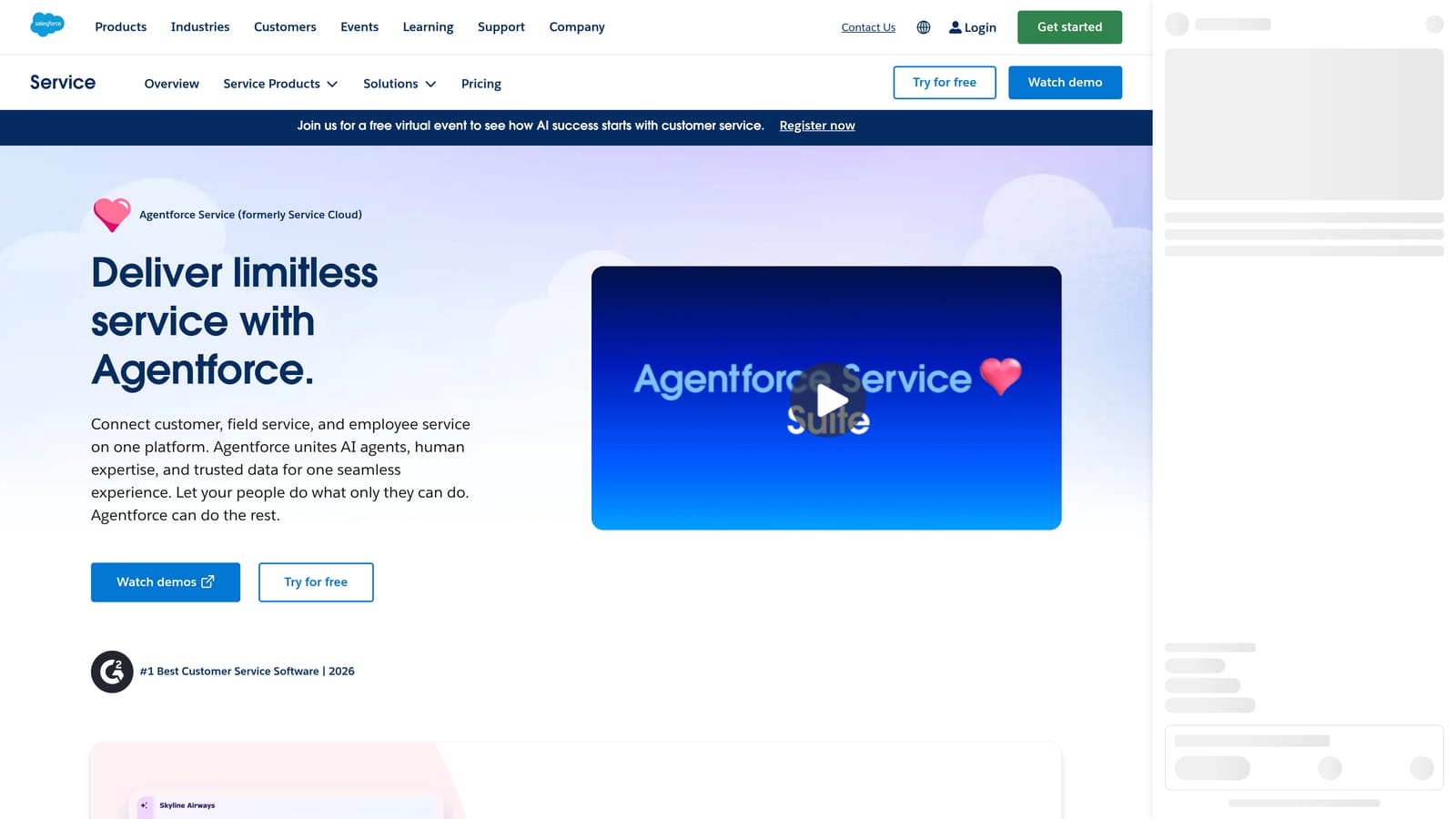
Salesforce Service Cloud is Salesforce's enterprise support platform with native access to the full CRM data layer, including deals, contracts, billing, and cases in a single view.
Where This Tool Shines
If your business runs on Salesforce, Service Cloud's core advantage is obvious: there's no integration to build or sync to maintain. Support agents see the complete customer record — open opportunities, contract history, billing status, and prior cases — without toggling between systems. For enterprise teams where a support interaction might touch an active renewal deal, that unified view is genuinely powerful.
Einstein AI adds case classification and next-best-action recommendations on top of that data richness. The tradeoff is implementation complexity: Service Cloud typically requires Salesforce admin expertise or consultant support to configure properly.
Key Features
Native Salesforce CRM Integration: Full customer lifecycle data available in the support view with no sync required.
Einstein AI: Case classification, routing recommendations, and next-best-action suggestions.
Full Lifecycle Visibility: Deals, contracts, billing, and support cases visible in a unified agent workspace.
Omnichannel Routing: Handles voice, chat, email, and social from a single platform.
Salesforce Flow and Apex: Highly customizable automation for complex enterprise workflows.
Best For
Enterprise organizations already standardized on Salesforce that need support deeply integrated with sales and account management data. Not a practical choice for teams not already in the Salesforce ecosystem.
Pricing
Enterprise pricing per user per month; contact Salesforce directly for current rates and licensing details.
6. HubSpot Service Hub
Best for: Teams already on HubSpot that want support, sales, and marketing sharing a single contact record.
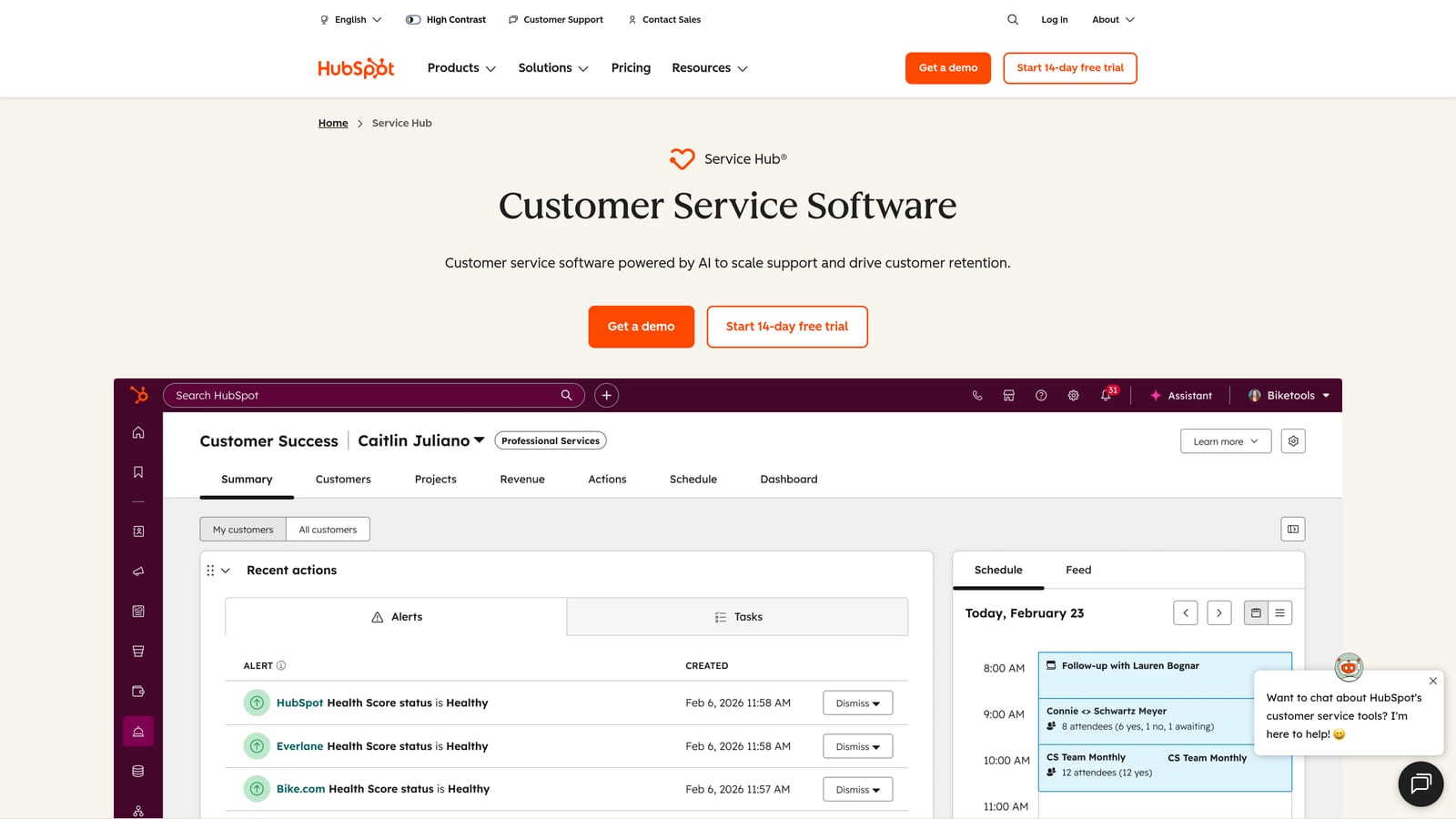
HubSpot Service Hub is HubSpot's customer service product that shares a unified data layer with HubSpot CRM, Marketing Hub, and Sales Hub, requiring no data synchronization between tools.
Where This Tool Shines
The core value proposition here is simplicity: if you're already using HubSpot for CRM and marketing, Service Hub means your support contacts are the same records your sales and marketing teams work with. No sync jobs, no duplicate records, no data lag. A support agent can see the contact's full history — marketing emails, deal stage, recent website activity — without any integration work.
Breeze AI, HubSpot's AI layer, is expanding its capabilities across the platform in 2025 and 2026, adding ticket automation and customer insights. For HubSpot-centric teams, this makes Service Hub the path of least resistance to adding AI to support workflows.
Key Features
Unified Contact Record: Support, sales, and marketing data live on the same contact object with no sync required.
Breeze AI: Ticket automation, customer insights, and AI-assisted responses integrated into the HubSpot workspace.
Built-in Knowledge Base: Knowledge base and customer portal included without additional licensing.
Native HubSpot Ecosystem: Full integration with CRM, Marketing Hub, and Sales Hub out of the box.
Free Tier: Core helpdesk features available on the free plan.
Best For
Teams already operating in the HubSpot ecosystem who want to add support capabilities without introducing a separate platform. Strong value for SMBs and mid-market companies where the same contacts appear across sales, marketing, and support.
Pricing
Free tier available; paid tiers scale with features and contact volume. Check hubspot.com for current plan details.
7. Kustomer
Best for: High-volume consumer brands needing a CRM-native support platform with omnichannel coverage.
Kustomer is a CRM-native support platform, now owned by Meta, that builds a unified customer timeline by aggregating data from e-commerce, logistics, and communication platforms.
Where This Tool Shines
Kustomer's defining architectural choice is treating customers as the core object rather than tickets. Every interaction — regardless of channel — threads into a single customer timeline that pulls in data from integrated e-commerce, logistics, and communication tools. For consumer brands handling high volumes of order-related inquiries across multiple channels, that unified view reduces context-switching significantly.
KustomerIQ handles automated routing and responses, while the omnichannel coverage across email, SMS, chat, social, and voice makes it a strong fit for consumer-facing operations. The Meta ownership adds some uncertainty for teams evaluating long-term platform stability.
Key Features
Customer Timeline: Aggregates data from all channels and integrated systems into a single chronological view.
Omnichannel Coverage: Email, SMS, chat, social, and voice handled from one platform.
KustomerIQ: AI-powered automated routing, responses, and conversation classification.
E-commerce and Logistics Integrations: Connects to order management, shipping, and commerce platforms.
CRM-Native Architecture: Contacts, not tickets, are the primary object — enabling richer longitudinal customer context.
Best For
Consumer and D2C brands handling high interaction volumes across multiple channels where order and logistics data need to be immediately visible to support agents. Less well-suited for B2B SaaS use cases.
Pricing
Per user per month with enterprise positioning; contact Kustomer directly for current rates.
8. Gorgias
Best for: E-commerce brands on Shopify, WooCommerce, or BigCommerce that need order data in the ticket view.
Gorgias is a support platform purpose-built for e-commerce brands, featuring deep integrations with major commerce platforms that surface order data directly inside the ticket view.
Where This Tool Shines
Gorgias is the most focused tool on this list, and that focus is its biggest strength. Rather than trying to serve every industry, it has built deeply into the e-commerce stack. Shopify integration is particularly thorough: agents can see order status, shipping details, and refund history directly in the ticket view, and can issue refunds or update orders without leaving the support interface.
AI automation handles the most common e-commerce queries — order status checks, return requests, exchange inquiries — at volume, which is where most e-commerce support teams spend the majority of their time. The per-ticket pricing model also aligns better with e-commerce economics than per-agent pricing.
Key Features
Deep Shopify Integration: Order status, refunds, and shipping information visible and actionable directly within the ticket view.
Multi-Platform Commerce Support: Also integrates with WooCommerce, BigCommerce, and Magento.
E-commerce AI Automation: Handles order status, returns, and exchange queries automatically at volume.
Macros and Rules: Templated responses and automation rules for high-volume repetitive request types.
Volume-Based Pricing: Priced per ticket rather than per agent, which suits high-volume, lean-team e-commerce operations.
Best For
E-commerce brands, particularly those on Shopify, that need order and fulfillment data deeply embedded in their support workflow. Not a practical fit for B2B SaaS or service businesses without a transactional commerce component.
Pricing
Priced by ticket volume per month rather than per agent; check gorgias.com for current plan details.
9. Gladly
Best for: Consumer and retail brands that want people-based conversation threading with loyalty and order data integrated.
Gladly is a people-based support platform that threads all conversations by customer rather than ticket number, integrating loyalty, order, and profile data into a unified customer timeline.
Where This Tool Shines
Gladly's "no ticket numbers" philosophy is more than a marketing angle — it reflects a genuinely different data model. Every conversation a customer has ever had with your team lives in a single chronological thread, regardless of channel. When a customer calls after sending an email and then a chat, the agent sees the full picture without asking them to repeat themselves.
The integrations with loyalty platforms and order management systems make that timeline particularly rich for retail and consumer brands, where a customer's purchase history, loyalty tier, and recent interactions are all relevant context for any support conversation.
Key Features
People-Based Threading: All conversations organized by customer rather than ticket, with no ticket numbers in the workflow.
Unified Customer Timeline: Pulls loyalty data, order history, and customer profile information into a single chronological view.
Omnichannel Coverage: Voice, email, chat, SMS, and social handled from one unified interface.
AI-Assisted Responses: AI suggestions and task automation to help agents handle volume more efficiently.
Loyalty and Order Management Integrations: Connects to loyalty platforms and order systems relevant to retail and consumer brands.
Best For
Retail and consumer brands where long-term customer relationships, loyalty program data, and purchase history are central to delivering good support. Less common in B2B SaaS environments.
Pricing
Enterprise pricing per agent per month; contact Gladly directly for current rates and packaging options.
Which Platform Is Right for Your Team?
The right AI support platform depends less on feature checklists and more on two questions: which integrations are non-negotiable for your team, and do you need AI that reads from those systems or one that acts within them?
Here's a quick guide by use case to help you narrow it down.
B2B SaaS teams wanting autonomous AI across their stack: Halo AI is built specifically for this. Its agents act within connected systems rather than just displaying data from them, and the native integrations with Linear, HubSpot, Stripe, and Slack cover the core B2B stack without custom development.
Enterprise teams on Salesforce: Service Cloud is the natural fit. The native CRM integration eliminates the data sync problem entirely, and Einstein AI adds meaningful automation on top of that rich data layer.
E-commerce brands on Shopify: Gorgias is the clear starting point. The depth of its Shopify integration, the volume-based pricing model, and the AI automation for common e-commerce queries are purpose-built for this use case.
Teams already in the HubSpot ecosystem: Service Hub is the path of least resistance. The unified contact record across support, sales, and marketing eliminates integration overhead that every other platform on this list requires.
Teams that need maximum marketplace breadth: Zendesk's 1,500+ app ecosystem is hard to match. If your stack is unusual or you need custom integrations, Zendesk's APIs and marketplace give you the most flexibility — provided you have the admin resources to build and maintain those connections.
Your support team shouldn't scale linearly with your customer base. Let AI agents handle routine tickets, guide users through your product, and surface business intelligence while your team focuses on complex issues that need a human touch. See Halo in action and discover how continuous learning transforms every interaction into smarter, faster support.